
Profile
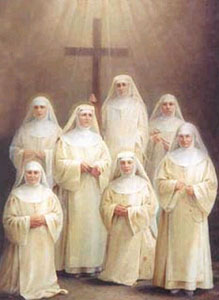
In 1898, seven sisters of the Franciscan Missionaries of Mary were sent to the Shanxi diocese in China to serve the poor in hospitals, and care for the unwanted or other destitutes in orphanages. They were
There they all died in one of the periodic crackdowns against foreign missionaries.
Died
Beatified
Canonized
Sources: https://catholicsaints.info/martyrs-of-shanxi/
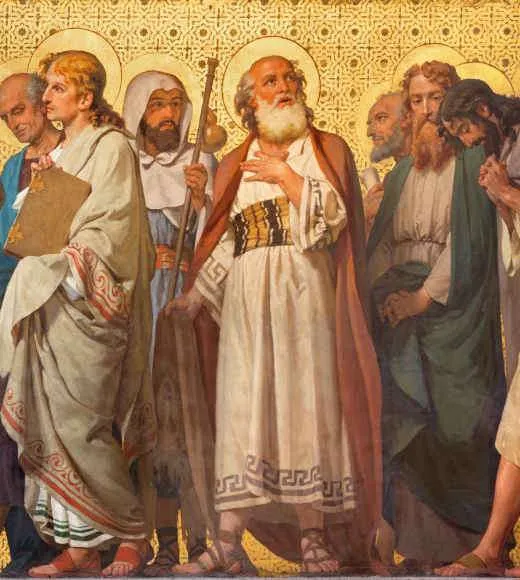
Jesus summoned his Twelve disciples and gave them authority over unclean spirits to drive them out and to cure every disease and every illness. The names of the Twelve Apostles are these…
Reflection:
Imagine being one of the Twelve. When each of them first encountered our Lord, he could never have imagined what would unfold. Eleven of them would become the foundation upon which the Messiah built His Church. Their words and actions have been recorded and proclaimed throughout the world and will continue to be until the end of time. By God’s will, they preached far and wide with divine authority. They celebrated the Holy Eucharist, transforming mere bread and wine into the Most Holy Body and Blood, Soul and Divinity, of the Lamb of God. Through the laying on of hands, they imparted the Holy Spirit in fullness. They worked miracles in Jesus’ name, and most of them bore final witness to Christ by the shedding of their blood.
The reason their lives were so fruitful for God’s Kingdom is because they were chosen and sent by the Son of God. It was not their idea. They didn’t construct their own plan for eternal salvation. They did not map out their futures and execute a vision according to their own will. Instead, they felt the gravity of the mission for which they were chosen and acted when sent by the Savior. Their obedience to the divine will opened the floodgates of Divine Mercy, and grace poured forth upon the world.
When you consider your own life, what are your goals and ambitions? What plans have you made for the future? If we want to imitate the fruitfulness of the Apostles, then we are invited to discern for what God has chosen us and to be prepared to respond with generous obedience when He sends us.
It’s easy to come up with our own plans in life. We might want to save up money, succeed at work, have a family, form friendships, retire at a certain age, and enjoy many good things. Though all these can be good and might well be part of God’s plan, we must not presume upon His will. With humility, we must continually seek His guidance, remain open to His promptings, and surrender our plans to the providence of the One who knows what will truly bear fruit for eternity.
Reflecting on the radical change of life to which Jesus called the Twelve invites us to consider whether Jesus also desires a radical change in our own lives. Certainly, some aspects of our lives are good and holy. If married with children, God’s will surely includes loving and caring for one’s family. Within every vocation, however, there are ways in which we might be called to a new depth of conversion—a radical life of loving, serving, and building the Kingdom of God in ways we never imagined possible.
By analogy, consider a person living in poverty who suddenly wins the largest lottery in history. Imagine, further, that the person is quite worldly. Such a fortune would radically change the direction of that person’s life—likely not for the better.
Though God does not promise us a material fortune, He desires to bestow upon us supernatural treasure of infinitely greater value. His Mercy is abundant—described by the saints as an ocean, vast and unfathomable, waiting to be poured out in its fullness upon all of creation. Through prayer and conversion, we open the floodgates, and God begins lavishing upon us the priceless treasure of grace. When this happens, our lives change—because God chooses us and then sends us on ever new and glorious missions.
Reflect today on the spiritual truth that God has chosen you for some holy and sacred mission. It might not be glorious in the eyes of the world, but it will be glorious in Heaven. Be open. Beg for His grace. Accept your mission. Go wherever He sends you, knowing that you cannot, now, fathom all that God has in store for you.
Source: https://catholic-daily-reflections.com/2026/07/07/chosen-and-sent/
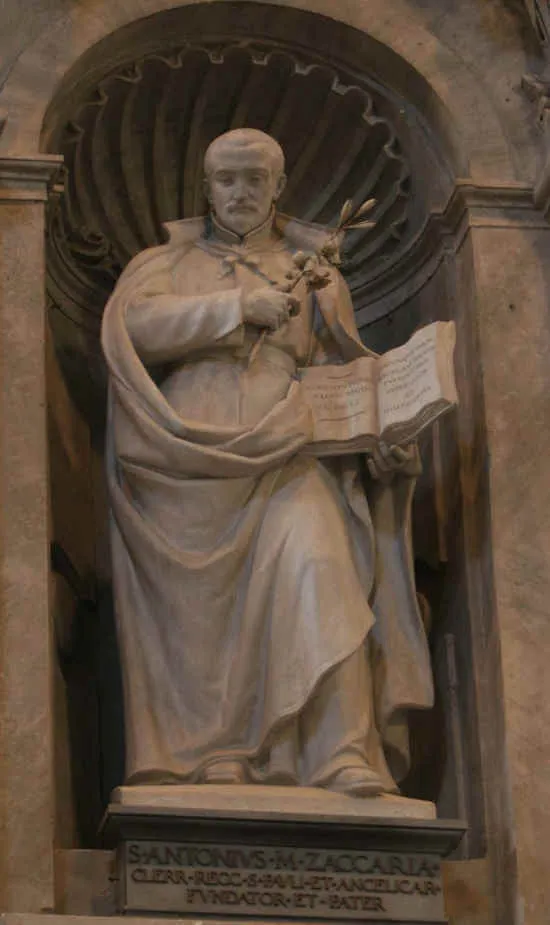
In 1502, Anthony Mary Zaccaria was born into a noble family in Cremona, a town in northern Italy. His father died when Anthony was two, leaving his eighteen-year-old mother to raise her only child. She ensured he received a good education and instilled in him a deep faith. His mother taught him to pray, leading him to spend long periods praying before a special altar dedicated to the Blessed Virgin Mary in their home, attending Mass, and preaching to his friends. Anthony was also deeply influenced by his mother’s care for the poor. Once, while returning from church, he encountered a poor, half-naked beggar who asked for alms. Having nothing on him, Anthony gave the beggar his silk cloak. His mother’s praise for this act of charity further motivated Anthony’s dedication to caring for the poor and sick.
After Anthony completed his elementary studies in Cremona, his mother sent him to Pavia to study philosophy and then to Padua to study medicine. At the age of twenty-two, he earned his doctorate in medicine and returned to Cremona, where he began his work as a physician, devoting much of his time to the care of the poor. As a physician, Doctor Anthony discovered that he could minister to both the physical and spiritual needs of the sick, especially those who were on their deathbeds. When called to the bedside of the sick, he encouraged them to turn to God in prayer, to receive the Sacraments, and to turn away from sin. He also gathered poor children together and taught them catechism. As his influence grew, members of the noble class also sought him out as a teacher for their children. Eventually, Doctor Anthony began preaching in the local church as a layman, drawing a diverse crowd of rich and poor, young and old.
Not long after starting his medical practice, Doctor Anthony realized that the salvation of souls was of far greater importance than the healing of the body. As a result, he abandoned his medical practice and devoted himself more fully to prayer so that he could discern God’s will. At the urging of his spiritual director, Anthony pursued theological studies and ordination to the priesthood, and in 1528, at the age of twenty-six, he was ordained a priest. During his first Mass, a miracle took place. At the moment of consecration, Father Anthony was enwrapped in light that remained until the Blessed Sacrament was consumed. News of this miracle spread quickly, and many wondered what would become of this new saintly priest.
As a priest, Father Anthony continued to minister to the spiritual needs of the people of Cremona. At that time, morals were in steep decline, poverty was on the rise, constant wars had taken a toll, and church attendance had greatly diminished. North of Italy, the Protestant Reformation was in full swing and confusion was prevalent. In this context, Father Anthony continued to catechize the young and old, rich and poor. Many were attracted to him due to his eloquence and manifest holiness. Indifferentism had become the “religion” of the day, but in Father Anthony, many people found an answer to their spiritual emptiness. They listened to his sermons and teaching, confessed their sins, attended his Masses, and sought out his counsel.
After laboring in Cremona for two years, divine providence led Father Anthony to Milan. Milan was a flourishing city at that time, but it was also a city without morals. Then under Spanish rule, Milan suffered from the turmoil caused by the Protestant Reformation. In Milan, Father Anthony attempted to do what he had done in Cremona, catechizing, preaching, calling people to repentance, visiting the sick and imprisoned, and caring for the poor. The moral decay in that town, however, was so great that Father Anthony knew he needed to do more. After much prayer and meditation upon the Cross, he was inspired to form a new community of religious individuals who would work for the salvation of souls. He met two kindred spirits, Bartholomew Ferrari and Anthony Morigia, who listened to his ideas and enthusiastically joined him. Together, they formed the Clerics Regular of St. Paul, a new religious order dedicated to simple and prayerful living and preaching that sought to imitate the great evangelist Saint Paul. This order later came to be known as the Barnabites, taking the name of one of Saint Paul’s faithful companions, Barnabas.
The Barnabites lived the radical Gospel message of Christ crucified, as preached by Saint Paul, by embracing radical poverty, mortification, charitable works, and the proclamation of the Gospel. Little by little, they aroused the interest of the people of Milan and hearts began to convert. The devil, furious at their victories for Christ, lashed out in numerous ways, first by disturbing them in their dwellings with noises and vile manifestations, and then by stirring up some townspeople against them. Father Anthony and his companions, however, were victorious, and the devil’s attacks were thwarted as the people turned to adoration of Christ crucified.
In addition to a new religious order for men, Father Anthony gathered some holy women together under Countess Ludovica Torelli, Countess of Guastalla, for whom Father Anthony was spiritual director. At Father Anthony’s request, the countess petitioned the pope for permission to found a new order. Once granted, Father Anthony, the countess, and other women founded the Angelic Sisters of St. Paul. They not only lived a life of prayer, penance, and poverty, but they also engaged in public works of charity, working to reform religious life as a whole by their good example. The order flourished and made a great impact in Milan and other cities.
For the next few years, Father Anthony and his followers worked to expand their ministry by offering conferences for the clergy, establishing an organization for married persons, and offering missions of evangelization. He fostered devotion to the Blessed Sacrament by instituting the practice of forty-hours devotion before the exposed Eucharist, encouraged frequent Communion, and prompted churches to ring their bells at three o’clock on Fridays to invite people to a moment of prayerful recollection on the Passion of Christ.
After years of severe penance and tireless service in his apostolate, Father Anthony died on the eve of the Solemnity of Saints Peter and Paul at the age of thirty-seven. Twenty-seven years after his death, his body was found to be incorrupt.
As we honor this fervent founder, preacher, lover of the Cross, and servant of charity, ponder Saint Anthony’s discovery that the salvation of souls is the greatest mission one can have in life. In the end, what will matter is how well we fulfilled the will of God. First and foremost, the will of God invites us all to have zeal for the proclamation of the saving message of Christ crucified in our words and deeds. Seek to imitate this servant of Saint Paul by freely embracing Saint Paul’s words, “But may I never boast except in the cross of our Lord Jesus Christ, through which the world has been crucified to me, and I to the world” (Galatians 6:14).
Source: https://mycatholic.life/saints/saints-of-the-liturgical-year/july-5—saint-anthony-zaccaria-priest/
Saint Anthony Mary Zaccaria, Priest Read More »
Quote:
In the heroic testimony of the saint of Le Ferriere, her forgiveness of the man who killed her and her desire to be able to meet him one day in Heaven deserve special attention. This spiritual and social message is of extraordinary relevance in our time…The saint’s mother, for her part, pardoned him on behalf of the family in the hall of the tribunal where his trial was taking place. We do not know whether it was the mother who taught her daughter to forgive or the martyr’s forgiveness on her death-bed that determined her mother’s conduct. Yet it is certain that the spirit of forgiveness motivated relations within the whole Goretti family, and for this reason could be so naturally expressed by both the martyr and her mother. ~Saint John Paul II
Reflection:
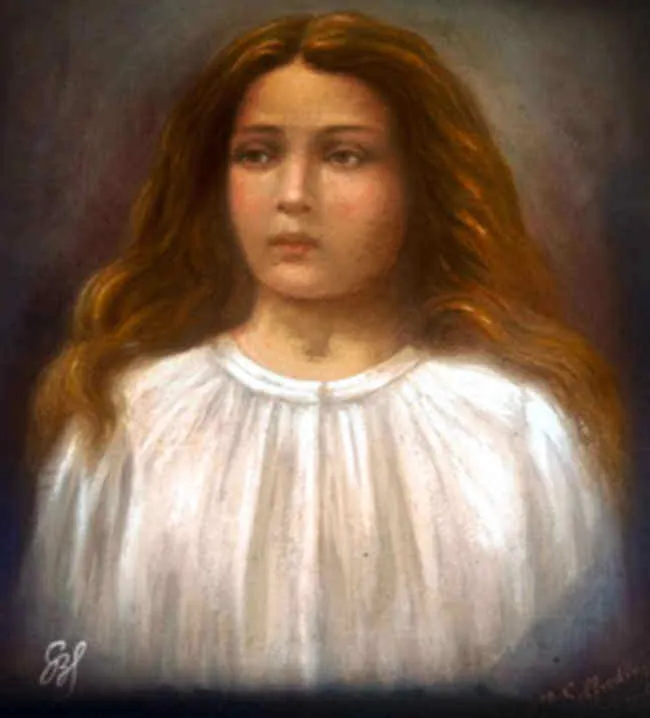
Maria Goretti was born into poverty in Corinaldo, Italy. She was the third of seven children and was affectionately called Marietta by family and friends. Due to her family’s poverty, Maria was unable to attend school. She spent most of her time in the family home, performing chores and caring for her younger siblings. Her father owned a farm but lost it when Maria was only five years old. Hiring himself out as a farmhand, Maria’s father provided enough for his family to eat, but when Maria was nine, he died of malaria. To provide for her seven children, Maria’s mother began to work in the fields, with Maria taking on increased responsibility at home. Despite her lack of formal education and inability to read, Maria had deep faith. The family’s suffering from poverty and loss of their father did not diminish her faith; it strengthened it. When her mother began to lose hope during their difficulties, Maria habitually said, “Mother, be brave, God will help us.” Maria’s hope that her father would be freed from Purgatory led her to constant prayer, particularly the rosary.
When Mr. Goretti lost his farm, the Gorettis moved into a home shared with the Serenellis, Mr. Serenelli and his son Allessandro. Alessandro’s mother had suffered from a mental disorder and died when he was young. Alessandro’s brother suffered from a similar disorder, and their father was an alcoholic. As a result, Alessandro was a young man prone to anger who engaged in immoral behavior.
During the three years Maria and her family lived with the Serenellis, Alessandro made at least three sexual advances toward her. Each time she refused him. Outraged, he threatened to kill her if she told anyone, so she remained silent. When Maria was only eleven and Alessandro was twenty, he found Maria alone in their shared home, caring for her youngest sister and mending a shirt while her mother and older siblings were in the field working. Once again, Alessandro made a sexual advance toward her and she refused him. With an awl in his hand, Alessandro threatened to kill Maria if she refused him. “No! It is a sin! God does not want it!” she cried. She ran for the door, but Alessandro caught her and stabbed her fourteen times in the neck before running out of the house. As Maria lay bleeding on the floor, her little sister began to cry, catching the attention of her mother who came to investigate. After finding Maria stabbed and bleeding, she brought her to the local hospital where Maria survived for only a day.
At the hospital, the surgeon was surprised that Maria had survived that long. He immediately performed surgery without anesthetic. During the surgery, Maria woke up, and another doctor said to her, “Maria, think of me in Paradise.” Maria replied, “Well, who knows which of us is going to be there first?” The doctor said to her, “You, Maria.” To which Maria responded, “Then I will gladly think of you.” Before her death, Maria was able to express her forgiveness of Alessandro, further expressing her hope that she would see him in Heaven. She also received the last sacraments. On her deathbed, she told the Chief of Police that it was Alessandro who attacked her and added, “I forgive him, and I want him with me in heaven!” She died the following day.
In many ways, Maria’s brutal death marked the beginning of her new life. Her family was devastated, but they were also inspired by her faith, mercy, and act of forgiveness. At her funeral, many said of her, “A saint has died!” Devotion to her immediately began to spread and continues to spread today.
Since Alessandro was young, he was sentenced to thirty years in prison rather than life. During his first several years in prison, Alessandro remained defiant, refusing to repent. Although he knew that Maria had forgiven him, he could not accept forgiveness, nor admit his sin. However, when the local bishop, Giovanni Blandini, felt inspired to visit him in prison, things began to change. Around that time, Alessandro had a dream in which he saw Maria coming to him and handing him lilies, a symbol of purity. When he took the lilies, they burnt his hands and turned to dust. He wrote to the bishop thanking him for his visit, revealing the dream, and asking for prayers. In the years to follow, Alessandro underwent a profound conversion. After serving twenty-seven years of his thirty-year sentence, he was released.
Upon his release, Alessandro went to Maria’s mother, Assunta, and begged for her forgiveness, which she bestowed. “Who am I to withhold what my daughter so readily gave?” she responded. The next day, Alessandro and Assunta attended Mass together, receiving Holy Communion as if they were mother and son.
On June 24, 1950, Pope Pius XII canonized Maria and referred to her as the “Saint Agnes of the Twentieth Century.” Most remarkably, Maria’s mother and four of her siblings were present at the canonization. This was the first time a mother attended her child’s canonization. Even more remarkably, Alessandro was also present. Saint Maria’s prayers had truly worked a miracle of mercy, forgiveness, and reconciliation. Alessandro became a lay Franciscan brother, working as a gardener until his death at the age of eighty-seven.
Saint Maria Goretti’s short life and tragic death present us with so much more than a tragedy. They present us with hope—hope that even the most hardened sinner can repent and be saved. So often our world reacts with outrage toward sin, rather than mercy. Mercy is the defining virtue in the heart of Saint Maria, and this eleven-year-old girl should inspire us to work to overcome all anger, bitterness, and resentment toward the sinner. Ponder your own depth of mercy, or lack thereof, and allow this young child to inspire you to follow her example.
Source: https://mycatholic.life/saints/saints-of-the-liturgical-year/july-6—saint-maria-goretti-virgin-and-martyr/
Saint Maria Goretti, Virgin and Martyr Read More »
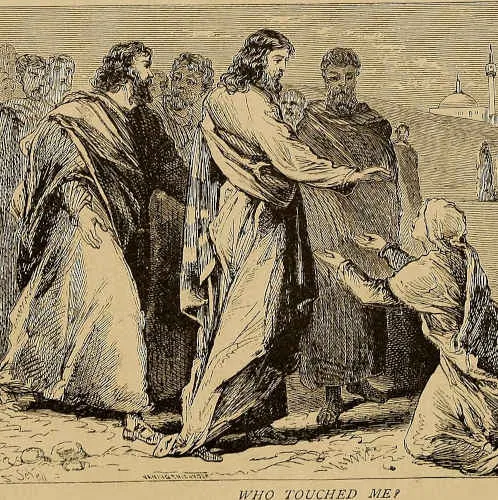
While Jesus was speaking, an official came forward, knelt down before him, and said, “My daughter has just died. But come, lay your hand on her, and she will live.” Jesus rose and followed him, and so did his disciples. A woman suffering hemorrhages for twelve years came up behind him and touched the tassel on his cloak. She said to herself, “If only I can touch his cloak, I shall be cured.”
Reflection:
Call to mind one of the most painful and difficult moments in your life. Perhaps you endured a serious illness or the illness of a loved one. Perhaps you suffered a deep humiliation or walked with someone close to you through his or her humiliation. Maybe you lost a job, faced mounting bills, and felt helpless. Suffering comes in many forms, and God only permits such trials because, in His wisdom, He perceives a greater good that can come through our patient endurance—if we place all our hope and trust in Him.
In today’s Gospel, we meet two unrelated individuals, each burdened with intense suffering. First, a father kneels before Jesus and sorrowfully announces that his daughter has just died. In a remarkable act of faith, he pleads with Jesus to come and lay His hand on her, confident that she will live again. As Jesus proceeds with him, a woman who has suffered silently for twelve years from a hemorrhage approaches from behind and touches the tassel of His cloak, believing that even such a simple act will bring her healing.
The sudden death of a beloved daughter and twelve years of physical and emotional anguish are heavy crosses. Though our own trials may differ, we are invited to see ourselves in both of these suffering souls, especially during times of great hardship.
The grieving father likely also felt powerlessness. He who had lovingly provided for his daughter from birth—feeding her, protecting her, guiding her—now stands helpless before death, a force he cannot overcome. Or so it seems.
The woman with hemorrhages suffered both the physical toll of her affliction and also the social and spiritual isolation imposed by the Mosaic Law. According to Levitical law, her continual bleeding rendered her ritually unclean and cut her off from public worship and communal life. Because her bleeding was constant, so too was her separation—a painful, unending exile. There was nothing she could do to fix her condition. Or was there?
In the face of suffering, each of us must choose: Either we turn to God in radical faith and surrender, or we fall into despair, resentment, and rebellion. Suffering rarely leaves us indifferent—it either purifies or hardens the heart. That is why every trial poses a question to us: Will I respond in faith or retreat into bitterness?
Both of these suffering souls refused to surrender to despair. Instead, they turned to Jesus with bold and humble faith—one publicly kneeling, the other quietly reaching out. In both cases, their trust was met with Divine Mercy.
What the Mosaic Law deemed unclean, Jesus welcomed and restored. He is not defiled by the woman’s touch—He makes her clean. In this, Christ reveals that He is the fulfillment of the Law, the source of every true healing, especially the healing that comes through the Sacraments. In the Eucharist, Reconciliation, and Anointing of the Sick, we too may “touch His garment,” and receive the grace that restores what is broken.
Reflect today on the consoling truth that no suffering is too deep, no exile too long, no loss too final for Christ. Whether your wounds are fresh or old, whether you can cry out or can only whisper a prayer in silence, reach for Him. Kneel before Him. Touch the hem of His garment in faith through prayer, the Sacraments, and trustful surrender. He will not turn away. He sees your pain, and if you let Him, He will enter into it, speak words of courage, and raise you up.
Source: https://catholic-daily-reflections.com/2026/07/05/responding-to-suffering/
Thus says the LORD:
Rejoice heartily, O daughter Zion,
shout for joy, O daughter Jerusalem!
See, your king shall come to you;
a just savior is he,
meek, and riding on an ass,
on a colt, the foal of an ass.
He shall banish the chariot from Ephraim,
and the horse from Jerusalem;
the warrior’s bow shall be banished,
and he shall proclaim peace to the nations.
His dominion shall be from sea to sea,
and from the River to the ends of the earth.
R. (cf. 1) I will praise your name for ever, my king and my God.
or:
R. Alleluia.
I will extol you, O my God and King,
and I will bless your name forever and ever.
Every day will I bless you,
and I will praise your name forever and ever.
R. I will praise your name for ever, my king and my God.
or:
R. Alleluia.
The LORD is gracious and merciful,
slow to anger and of great kindness.
The LORD is good to all
and compassionate toward all his works.
R. I will praise your name for ever, my king and my God.
or:
R. Alleluia.
Let all your works give you thanks, O LORD,
and let your faithful ones bless you.
Let them discourse of the glory of your kingdom
and speak of your might.
R. I will praise your name for ever, my king and my God.
or:
R. Alleluia.
The LORD is faithful in all his words
and holy in all his works.
The LORD lifts up all who are falling
and raises up all who are bowed down.
R. I will praise your name for ever, my king and my God.
or:
R. Alleluia.
Brothers and sisters:
You are not in the flesh;
on the contrary, you are in the spirit,
if only the Spirit of God dwells in you.
Whoever does not have the Spirit of Christ does not belong to him.
If the Spirit of the one who raised Jesus from the dead dwells in you,
the one who raised Christ from the dead
will give life to your mortal bodies also,
through his Spirit that dwells in you.
Consequently, brothers and sisters,
we are not debtors to the flesh,
to live according to the flesh.
For if you live according to the flesh, you will die,
but if by the Spirit you put to death the deeds of the body,
you will live.
R. Alleluia, alleluia.
Blessed are you, Father, Lord of heaven and earth;
you have revealed to little ones the mysteries of the kingdom.
R. Alleluia, alleluia.
At that time Jesus exclaimed:
“I give praise to you, Father, Lord of heaven and earth,
for although you have hidden these things
from the wise and the learned
you have revealed them to little ones.
Yes, Father, such has been your gracious will.
All things have been handed over to me by my Father.
No one knows the Son except the Father,
and no one knows the Father except the Son
and anyone to whom the Son wishes to reveal him.”
“Come to me, all you who labor and are burdened,
and I will give you rest.
Take my yoke upon you and learn from me,
for I am meek and humble of heart;
and you will find rest for yourselves.
For my yoke is easy, and my burden light.”
Source: https://bible.usccb.org/bible/readings/070526.cfm
Fourteenth Sunday in Ordinary Time Read More »

Rainha Santa Isabel, or Saint Elizabeth, was born into the royal family of Aragon, Spain. She was one of three daughters of King Peter III of Aragon and Queen Constance of Sicily. Elizabeth’s older brothers would become successive kings of Aragon, Alfonso III and James II. Her namesake was her great-aunt, Saint Elizabeth of Hungary.
As a young princess, Elizabeth enjoyed all the privileges of a royal upbringing, yet her stature did not distract her from her faith. She was deeply devout from a young age, spending hours in the castle chapel engaged in prayer. By age eight, she regularly fasted, attended Mass, and prayed the entire Divine Office daily. Unlike other girls her age, she sought virtue and glory for God rather than indulging in frivolous activities. Her humility extended to her royal status, which she saw as a platform for service rather than privilege. She consistently demonstrated a loving concern for the poor, sick, and suffering.
In 1279, Elizabeth’s father arranged her marriage to the seventeen-year-old King Denis of Portugal, who was a notable poet. This strategic union was designed to strengthen the political alliance between Spain and Portugal. In 1282, twelve-year-old Elizabeth wedded King Denis, becoming Queen Elizabeth of Portugal. Despite her husband’s infidelity and immoral lifestyle, Elizabeth showed remarkable grace, treating her husband with love and fulfilling her duties as queen with humility. They had two children: their daughter, Constance, in 1290, and a year later, their son, Afonso, who would succeed his father as King of Portugal.
Queen Elizabeth stood out in the royal court, which was marred by the king’s immoral lifestyle. Her virtuous living served as a rebuke to others. She offered the resulting ridicule she suffered to God with humility and love. As queen, she sustained her prayerful life, attending daily Mass, engaging in penance, and continuing to pray the entire Divine Office. Her deep love for the poor and sick remained steadfast, and she sought daily opportunities to aid them. Elizabeth would personally distribute food and money to those in need at the palace door, and despite the king’s anger at her generosity, she found ways to continue her charitable work secretly. Using her royal position, she also improved others’ lives by constructing monasteries, churches, and hospitals.
The royal family also included the king’s other children, born to women other than the queen. Despite their complicated family dynamic, Elizabeth treated her stepchildren with love. Her son Afonso, however, was not as accepting. He was particularly resentful of the attention his father paid to the children born out of wedlock. Tensions escalated to the point of war, but before a battle could occur, Queen Elizabeth intervened. She rode out to the scene of the battle herself, kneeling between her husband and son, begging for peace. She successfully reconciled the two, earning the title of “Angel of Peace.”
In 1325, upon King Denis’s death, Queen Elizabeth, then fifty-four, retired to a house next to a Poor Clare monastery. She joined the Third Order Franciscans, a lay order begun by Saint Francis. For the next eleven years, she lived in simplicity and poverty, continuing her charitable work and welcoming all who sought her counsel. She once again played the role of peacemaker when her son, now King Afonso, initiated a war against his own son-in-law. Elizabeth fell ill and died on July 4, 1336, after returning from this intervention. She was not buried next to her husband but in a convent she founded in Coimbra, the Convent of Santa Clara. Years later, her body was found to be incorrupt, and as recently as 1912, medical examiners and Church officials declared that her body remained free of decay, looking as if she were only sleeping.
Though Saint Elizabeth of Portugal was born into royalty, she encountered many challenges. Her arranged marriage, her husband’s infidelity, family division, and an immoral royal court were burdens she bore with dignity, peace, and strength. Her faith and virtues, fueled by deep prayer and charitable acts, guided her through these difficulties.
In honoring this Queen of Portugal, consider the passing nature of earthly honors. Queens come and go, but saints live on forever. Saint Elizabeth willingly traded her earthly crown for a higher one in Heaven, where her saintly dignity eternally glorifies God. Follow in her humble footsteps, preferring sanctity over worldly honors and ambitions. Strive for the eternal over the temporal, and you too will give eternal glory to God and dwell in His royal court forever.
Source: https://mycatholic.life/saints/saints-of-the-liturgical-year/july-4—saint-elizabeth-of-portugal/
Saint Elizabeth of Portugal Read More »
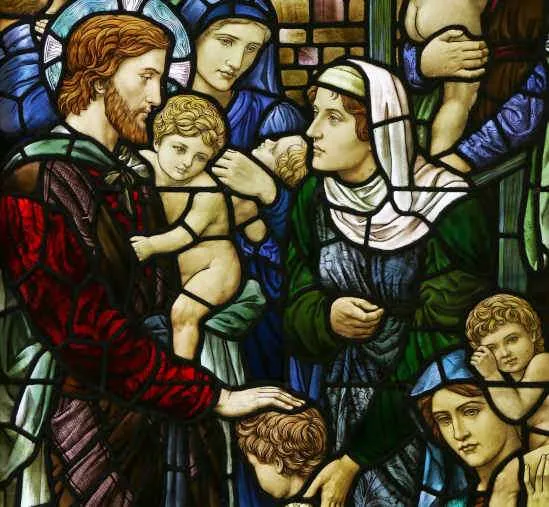
At that time Jesus exclaimed: “I give praise to you, Father, Lord of heaven and earth, for although you have hidden these things from the wise and the learned you have revealed them to little ones. Yes, Father, such has been your gracious will. All things have been handed over to me by my Father. No one knows the Son except the Father, and no one knows the Father except the Son and anyone to whom the Son wishes to reveal him.”
Reflection:
This passage beautifully summarizes the entire Christian life—the life to which we are called and in which we find our purpose, meaning, and ultimate fulfillment. Jesus begins by offering praise to the “Father, Lord of heaven and earth.” Though Jesus Himself is fully God, “one in being with the Father”—co-eternal and consubstantial—He nevertheless offers praise to the Father.
In the original Greek, the phrase “I give praise to you…” (exomologoumai) indicates an open, public, and full acknowledgment by the Son of the Father’s sovereignty and gracious will. The Father is the All-Powerful Lord of all that exists—everything in the heavens and on earth. Jesus expresses this fundamental stance toward the Father for two reasons: first, because it is eternally true; and second, so that we might humble ourselves and join Him in praying the same prayer—through, with, and in Jesus.
This prayer closely parallels the opening of the Lord’s Prayer (the “Our Father”), because both begin with a direct acknowledgment and praise of the Father’s holiness and sovereignty. The Lord’s Prayer is the perfect prayer precisely because it was given to us by Jesus Himself. After addressing the Father, it presents seven petitions. According to Saints Thomas Aquinas and Augustine, the first two petitions—“hallowed be Thy name” and “Thy Kingdom come”—reveal the central purpose of our lives: to glorify God eternally and to be caught up in, and actively participate in that glory by becoming full members of His Kingdom. In today’s prayer, Jesus says “these things” have been revealed “to little ones” and that the Son can choose to reveal the Father to whom He wishes.
We are drawn into Jesus’ prayer and intimate relationship with the Father precisely when Jesus reveals the Father to us: “No one knows the Father except the Son and anyone to whom the Son wishes to reveal him.” Because Jesus deeply desires that we come to know and love the Father with the same love He has for Him, His prayer continues by gently inviting us—especially when burdened by weariness, weakness, or sin—to lay our burdens down before His merciful power and glory: “Come to me, all you who labor and are burdened, and I will give you rest” (Matthew 11:28).
This tender invitation reveals Jesus’ deepest desire for us: that we would enter into His love for the Father, share intimately in the union between Father and Son, and thus magnify and glorify the Most Holy Trinity—not only in our earthly journey but eternally in Heaven. Indeed, what a sublime and glorious calling we have received!
Reflect today upon this beautiful prayer, knowing in your heart that Jesus Himself invites you to pray it with Him, through Him, and in Him. He longs for His voice to resonate within your voice, His love to beat within your heart, and His holy desires to shape your own. Turn your gaze toward the Father—He who is both the Source and ultimate goal of your existence—and strive lovingly and humbly to accomplish all things according to His gracious and holy will.
Source: https://catholic-daily-reflections.com/2026/07/04/praying-to-the-father-in-the-son/

On July 4, 1776, the Continental Congress of the thirteen British colonies declared their independence from British rule. Since then, the United States has annually celebrated its independence on this day.
On December 15, 1791, the United States Congress adopted the Bill of Rights, the first ten amendments to the U.S. Constitution that had governed the land since 1789. The very first amendment declares “Congress shall make no law respecting an establishment of religion, or prohibiting the free exercise thereof…” In 1802, President Thomas Jefferson wrote a letter to the Danbury Baptist Association in Connecticut in which he stated, “I contemplate with sovereign reverence that act of the whole American people which declared that their legislature should ‘make no law respecting an establishment of religion, or prohibiting the free exercise thereof,’ thus building a wall of separation between Church & State.” Especially from this letter, the concept of the “separation of Church and State” has firmly endured in the United States, affording its citizens the freedom to worship as they choose.
While Independence Day is a national holiday, the Catholic Church in the United States also recognizes it as an Optional Memorial. On this day, we are called to pray for our country but also urged to exhibit “solemn reverence” for the freedoms we enjoy as citizens of this remarkable nation. Throughout world history, the freedom to worship according to one’s conscience has seldom been codified into law. Though it is more common today in varying degrees, the freedoms enshrined in our Constitution offer abundant reasons for celebration.
The idea of the separation of Church and State, however, can be a double-edged sword. On one hand, it guarantees every citizen’s right to worship God as he or she chooses. But, when misinterpreted, it can lead some to attempt to silence the voice of the Church in public discourse. This certainly isn’t God’s intention, and many would argue that it wasn’t the intention of our Founding Fathers either.
As Catholic citizens anywhere in the world, it is our duty to allow our faith to shape who we are and then to engage in every form of civil discourse, including the enactment of laws. Faith is not something to be practiced solely at church; it must permeate who we are and influence everything we do. True freedom enables us to enjoy the blessings of life, liberty, and happiness. Christians’ life, liberty, and happiness cannot be detached from Christian citizenship. We have been endowed by our Creator with the right and duty to live and practice our faith openly in all aspects of our lives. This freedom encompasses work, school, sports, social groups, and even government. Although the Christian faith does not need to be “imposed” upon others, Christian citizens must be allowed to practice their faith anywhere and everywhere. If not, our God-given rights and even our Constitution risk being undermined.
At the end of time, when Jesus returns, our world will be governed as a monarchy. The King of Kings will rule, and we will be subjects of this great, merciful, just, and perfect Lord forever. Until that glorious day arrives, we must endeavor to govern ourselves. The United States, along with many other democracies, is governed by the will of the people. But what would happen if the “will of the people” evolved to become atheistic or immoral? The will of the people is not an infallible guide for governance; however, it serves as an excellent system when the will of the people is collectively united with the will of God. As Christian citizens, we must persistently and unabashedly strive to unite our will with God’s, allowing our faith to shape our will, and then engage in civil discourse to shape our nation to better reflect the Kingdom of God.
As we celebrate our independence today, reflect on the deeper meaning of independence. From a Christian perspective, “independence” is not the freedom to do what we want, when we want, because we want, but the freedom to do what we ought. True freedom is found only when we live in accordance with the will of God. This kind of freedom fosters internal liberty, and that liberty should become enshrined in everything we do and in every aspect of human life. You are the bridge between Church and State. While the Church does not govern the State, people of faith must.
Source: https://mycatholic.life/saints/saints-of-the-liturgical-year/july-4—independence-day—usa-optional-memorial/
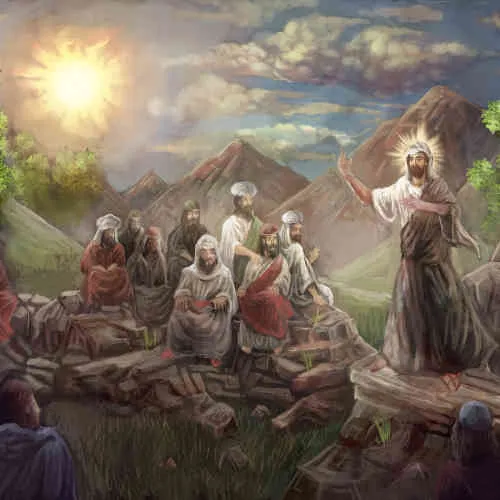
The disciples of John approached Jesus and said, “Why do we and the Pharisees fast much, but your disciples do not fast?” Jesus answered them, “Can the wedding guests mourn as long as the bridegroom is with them? The days will come when the bridegroom is taken away from them, and then they will fast.”
Reflection:
In Isaiah 54:5 and Hosea 2:16–20, God is portrayed as the divine Bridegroom who espouses Israel. By invoking this imagery, Jesus reveals His divine identity as the Bridegroom who establishes a new relationship between God and His people—a relationship initially characterized by joy, intimacy, and celebration rather than sorrow.
However, Jesus quickly adds a sobering note: “The days will come when the bridegroom is taken away from them, and then they will fast.” This verse points directly to His coming Passion and death, and to our interior participation in His Passion. It is for those moments that fasting produces a necessary preparation for the sense of loss and sacrifice we are called to make throughout life.
Everyone loves a wedding, especially when celebrated by faith-filled people who anticipate a fruitful life together. As the bride walks down the aisle, her face radiates joy, and the groom waits eagerly at the altar. A holy marriage reflects the ultimate destiny of Christ and His Bride, the Church. Fidelity, unity, fruitfulness, consolation, and permanence are all aspects of the communion we are invited to share with our loving God.
These beautiful aspects of marriage prophetically anticipate what is to come, especially when the Bridegroom returns in glory to usher in the New Heavens and the New Earth. They also represent what we are invited to experience, by grace, during our earthly pilgrimage toward the final union in Heaven—a relationship with God that is grounded in joy, intimacy, and celebration.
During this pilgrimage, the Bridegroom is at times “taken away.” Spiritually speaking, this means that Christ occasionally permits His consoling presence to be withdrawn from the soul. He does this not because He abandons us, but because, in His wisdom, He desires our growth in virtue, faith, and spiritual maturity through trials. Such purification is our participation in Christ’s Passion, which both cleanses and restores the soul, transforming us into the new creation we are called to be by fully dying with and in Christ, so as to share in His new life.
When the sensible consolations of grace diminish, the soul experiences spiritual fasting. Although initially painful, this fasting instills a greater urgency to seek Christ through deeper prayer. If we continually felt God’s consoling presence, our love might become self-centered—loving God only because He comforts us.
In the Old Testament, fasting primarily expressed external repentance. Jesus transforms fasting into a spiritual exercise that strengthens the soul during trials, dryness, and loss. Habitual fasting, such as weekly abstinence, disciplines our interior life, enabling us to love God even when consolation is absent.
When the Bridegroom is “taken away,” our spiritual senses sharpen, and our longing for Christ grows more fervent. Thus, Christ’s apparent absence becomes an opportunity for greater intimacy, guiding us toward a more profound, selfless love—seeking Christ Himself purely for His sake.
Reflect today on how you respond when God seems distant. Do you turn toward Him with increased trust and prayer, or do you withdraw? When God seems distant or when your prayer feels dry, do you recognize the value in those moments? Resolve to engage in forms of physical fasting and other penitential acts as a way of training yourself to enter spiritual fasting with hope and strength. Let spiritual fasting become an act of pure love, preparing your heart for the eternal marriage feast to come.
Source: https://catholic-daily-reflections.com/2026/07/03/the-eternal-marriage-to-come/
Add San Jose Filipino Ministry as a new recipient, Send your donation using"donate@dosjfm.org"
Payable to - San Jose Filipino Ministry
Address - Poong Jesus Nazareno Filipino Catholic Center (PJNFCC); 3700 W. Orange Ave., Anaheim CA 92804
Poong Jesus Nazareno Filipino Catholic Center (PJNFCC); 3700 W. Orange Ave., Anaheim CA 92804
Phone: (657) 214-2507
Mobile (657) 208-2038
info@dosjfm.org

Poong Jesus Nazareno Filipino Catholic Center (PJNFCC); 3700 W. Orange Ave., Anaheim CA 92804
Phone: (657) 214-2507
Mobile (657) 208-2038
info@dosjfm.org
Add San Jose Filipino Ministry as a new recipient, Send your donation using"donate@dosjfm.org"
Payable to - San Jose Filipino Ministry
Address - 1235 S Magnolia Ave
Anaheim, CA 92804-5115
San Jose Filipino Ministry. All rights reserved. 2021 © Powered by Phoenix Virtual Solutions
Sponsored by EverClear Hospice and Palliative Care