Author name: Sani

Palm Sunday of the Lord’s Passion

This day could be thought of as a day of contradiction. The Mass begins with the reading of Jesus’ triumphal entry into Jerusalem and His joyous reception by the crowds who strewed palm branches before Him, crying out, “Hosanna to the Son of David; blessed is he who comes in the name of the Lord; hosanna in the highest.” Today, this inspiring scene is commemorated by processions of the faithful carrying palm branches into their churches. The contradiction, however, is experienced as the full narrative of the Passion of Christ is read, culminating with Jesus’ death on the Cross.

But is it a contradiction? Is His glorious entrance into Jerusalem at the beginning of the week in any way opposed to His crucifixion? Certainly not. From a worldly perspective, for someone who lacks the ability to penetrate this mystery with the eyes of faith, the week ends in tragedy. But from the perspective of the Eternal Father, the welcome Jesus receives as He enters Jerusalem is the welcome given to the Savior of the World. His Cross would become the culmination of that act of salvation. For that reason, His entrance into that holy city was rightly celebrated with great joy, even though the people did not yet understand that the throne their new King would mount was the Cross.

As early as the fourth century, the diary of one traveler to Jerusalem records how the faithful reenacted Jesus’ triumphal entry:

And as the eleventh hour approaches, the passage from the Gospel is read, where the children, carrying branches and palms, met the Lord, saying; Blessed is He that cometh in the name of the Lord, and the bishop immediately rises, and all the people with him, and they all go on foot from the top of the Mount of Olives, all the people going before him with hymns and antiphons, answering one to another: Blessed is He that cometh in the Name of the Lord. And all the children in the neighborhood, even those who are too young to walk, are carried by their parents on their shoulders, all of them bearing branches, some of palms and some of olives, and thus the bishop is escorted in the same manner as the Lord was of old (The Pilgrimage of Etherea).

Though very few Christians are able to celebrate Passion Sunday in Jerusalem, walking from the Mount of Olives to the city gate, we are all invited to do so spiritually, meditatively, and interiorly. Our participation is not just the recalling of a historic event; it’s a real participation in that event. Our hearts must begin outside of Jerusalem’s gate today, and we must courageously and joyfully accompany our Lord into that holy city. During that first Holy Week, the people’s joy arose from their belief that Jesus would be an earthly ruler Who would free them from Roman oppression. Today, we are privileged to express our joyous acclamations as we spiritually accompany our Lord to the city of His crucifixion, because we know that Jesus’ Kingship is so much more than an earthly triumph. His triumph is an eternal one that invites us to share in His Eternity. His triumph is a sacrificial one that invites us to share in His Sacrificial Love. His triumph is a glorious one that invites us to share in the Glory of His Resurrection.

Walk with our Lord today into that holy city of Jerusalem. As you do, know that the earthly city of Jerusalem is also now a spiritual one. The events that took place there two millennia ago transcend and permeate all time. As a result, the events of Holy Week today are just as significant as they were long ago. Through the Mass, we are there. We walk with our Lord, witness all He accomplished, receive His Body and Blood sacrificed on the Cross and memorialized in the Eucharist, and are resurrected with Him on the third day. Commit yourself to this journey today, an eternal pilgrimage with our Lord to the Eternal City of Heaven.

Source: https://mycatholic.life/saints/saints-of-the-liturgical-year/palm-sunday-of-the-lords-passion/

Palm Sunday of the Lord’s Passion Read More »

Matthew 21:10-11

Palm Sunday—A Model of Courage and Determination

And when he entered Jerusalem the whole city was shaken and asked, “Who is this?” And the crowds replied, “This is Jesus the prophet, from Nazareth in Galilee.”

Reflection:

The commemoration of our Lord’s Passion has begun. Today, Mass begins with the reading of Matthew’s account of Jesus’ triumphal entry into Jerusalem. Riding on a donkey, Jesus is greeted by a very large crowd who “spread their cloaks on the road, while others cut branches from the trees and strewed them on the road” (Matthew 21:8). The people welcomed Him with shouts of: “Hosanna to the Son of David; blessed is he who comes in the name of the Lord; hosanna in the highest” (Matthew 21:9).

The word “Hosanna” in Hebrew means, “Save us, we pray!” Though it was originally a plea for deliverance, it became an expression of praise and joy, especially as it came to be associated with the Messiah’s arrival. The phrase “Hosanna in the highest” calls for God, enthroned in Heaven, to bring His saving power to earth. The crowds’ acclamation reveals both a hope for salvation and a recognition of Jesus as the long-awaited Messiah.

During Passover week, Jerusalem’s population increased several times over with pilgrims from across Israel. The atmosphere was vibrant with religious fervor and communal celebration. Merchants sold sacrificial animals, food, and provisions to the crowds. Central to the festivities was the Temple where sacrifices were offered and the Passover lambs were prepared for the sacred meal. Roman authorities increased security, wary of potential unrest, as the commemoration of Israel’s liberation from Egypt stirred hopes of national deliverance. The Jewish authorities were also on high alert, concerned that any disturbance might provoke harsh reprisals from the Romans.

Imagine the excitement, concern, and surprise that many of the religious and Roman leaders felt as large crowds professed their belief in Jesus as the Messiah. Was Israel’s deliverance at hand? This public acclaim highlighted why some saw Jesus as a threat. The Pharisees, in particular, feared that His messianic identity might undermine the religious authority to which they clung. Most of them dismissed the possibility that Jesus was the Messiah they awaited.

Jesus, however, had a very different understanding of the Passover that year. He knew it was the time for His hour of suffering and death, leading to His glorification. He had no interest in political maneuvering. His sole desire was to fulfill His mission as the Messiah by becoming the one perfect Lamb of Sacrifice whose blood would atone for the sins of many. Jesus was determined and confident as He rode into Jerusalem. Though He knew the suffering that awaited Him, His gaze was fixed on His mission of saving souls. In His sacred humanity, He overcame every temptation to fear or anxiety, allowing peace, strength, and joy to fill His heart.

Not only is Jesus our Savior and the one Mediator between God and us, His human life perfectly models how we are to live. Jesus’ triumphal entry into Jerusalem especially models for us how we are to face every difficult situation that tempts us to fear and anxiety. His courage must become our courage, and His determination our determination.

Reflect today on Jesus’ interior disposition during His triumphal entry. He invites us to share in His sacrificial love, laying down our lives selflessly for others. This is only possible if we allow His virtues to take root in us every time we are called to imitate His love. As we embrace our own mission, we must not allow fear or anxiety to hinder us. Pray that the courage, peace, and steadfast love that Jesus embodied during that first Holy Week may flourish in your heart. Let go of fear, worry, and selfishness, and allow Jesus’ love and strength to fill you, so that His mission may continue through you and, with our Lord, you may lay down your life for others.

Source: https://catholic-daily-reflections.com/2026/03/28/palm-sunday-a-model-of-courage-and-determination/

Matthew 21:10-11 Read More »

John 11:45-48

Good Out of Evil

Many of the Jews who had come to Mary and seen what Jesus had done began to believe in him. But some of them went to the Pharisees and told them what Jesus had done. So the chief priests and the Pharisees convened the Sanhedrin and said, “What are we going to do? This man is performing many signs. If we leave him alone, all will believe in him, and the Romans will come and take away both our land and our nation.”

Reflection:

Tomorrow we begin Holy Week with Palm Sunday, commemorating Jesus’ triumphant entry into Jerusalem. Today’s Gospel recounts events shortly after Jesus raised Lazarus from the dead, which took place in Bethany, near Jerusalem—just days before He would ride into the city on a donkey, greeted with shouts of “Hosanna! Blessed is he who comes in the name of the Lord!” (John 12:13).

During the final months of His life, Jesus often stayed out of the public eye to avoid those plotting His death. However, He briefly emerged to perform His final recorded miracle: raising Lazarus from the dead. This miracle became the decisive moment that prompted the Pharisees to actively plot against Him. Some witnesses reported it to the authorities, and the Sanhedrin feared Jesus’ growing popularity would provoke a Roman persecution upon the Jews.

At the high priest Caiaphas’ suggestion, they decided it was better for Jesus to die than for the nation to suffer. As high priest, Caiaphas spoke prophetically—even unknowingly—about Jesus’ death, saying, “It is better for you that one man should die instead of the people, so that the whole nation may not perish” (John 11:49–50). Commenting on this, Saint Augustine teaches: “This passage shows that the Spirit of prophecy can even work through wicked people to reveal future events” (Tractate 49 on the Gospel of John).

Knowing that God’s omnipotent power can use even evil actions to accomplish His divine plan should console us when we encounter injustice or malice in our own lives. Jesus was never a victim of circumstance; He remained in full control of His mission. At His arrest, He reminded His disciples: “Do you think that I cannot call upon my Father, and He will not provide me at this moment with more than twelve legions of angels?” (Matthew 26:53).

Jesus could have commanded the angels to overthrow the Sanhedrin and the Roman authorities, taking His place as an earthly king by force. But instead, He chose to submit to the Father’s will, allowing the malice of Caiaphas to set His Passion in motion. Though Caiaphas acted with selfish intent, God, in His providence, used this evil act to advance His plan of salvation for all who would turn to Him in faith.

This insight is essential as we enter the “Holy Weeks” of our lives—those times of trial, suffering, or injustice that we do not always fully understand. When we encounter crosses, it is easy to see them as obstacles to joy and peace. But Romans 8:28 reminds us: “All things work for good for those who love God, who are called according to His purpose.” Every cross, injustice, or hardship is within God’s providential care, just as Holy Week was. When we trust Him, even the evil we experience can be transformed into a path toward God’s glory and for our good.

Reflect today on the perfect wisdom of God’s plan, which used even the sins of wicked people to bring about salvation. Consider any crosses, sufferings, or injustices you currently face. Instead of giving in to anger or despair, have faith that God can use them for good. If you remain in God’s grace, trust that whatever He permits in your life is an expression of His almighty power and love, working all things for His glory and your good. Just as Jesus set His face toward Jerusalem, knowing that great suffering awaited Him, so too must we turn our eyes to our own “Jerusalem”—to the challenges and difficulties we encounter—and trust that God will work all things for good.

Source: https://catholic-daily-reflections.com/2026/03/27/good-out-of-evil/

John 11:45-48 Read More »

Saint John of Lycopolis

Profile

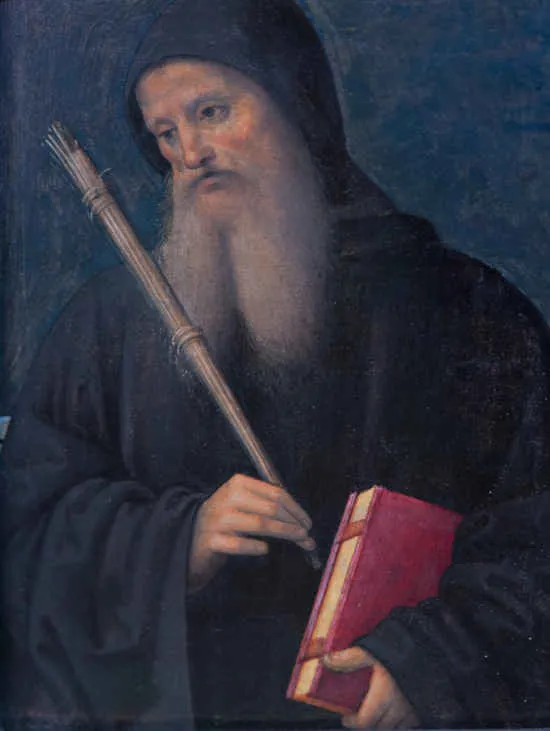
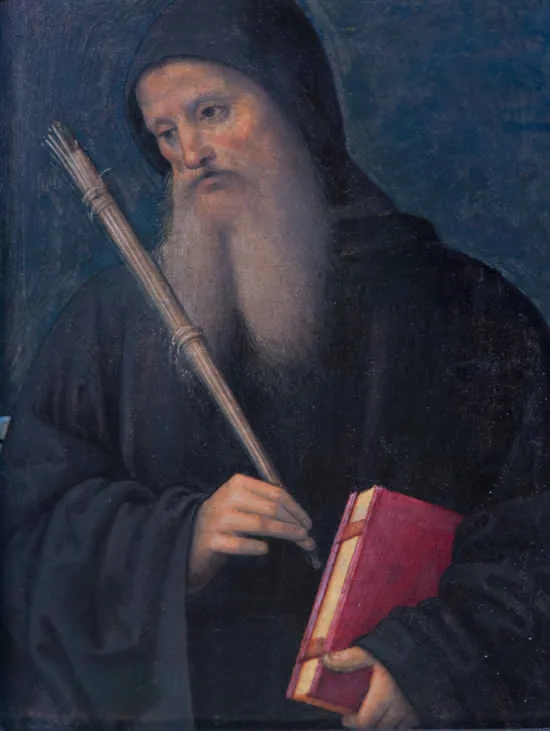
John was a carpenter. He became a hermit on a mountain near Lycopolis from ages 25 to 65, living most of his life in a small, walled-up cell. He devoted himself to prayer and meditation five days a week, spiritual direction of male students the other two days; there were so many, he had to build a hospice for them. His reputation for wisdom and holiness caused him to be chosen as advisor to Emperor Theodosius. He had the gifts of prophecy, healing, and knowledge of the hidden sins of his visitors. He was known and admired by Saint Jerome, Saint Augustine of Hippo, Saint Cassia, and Saint Palladius.

Born

  • c.305 at Assiut, Egypt

Died

  • 394 of natural causes

Canonized

  • Pre-Congregation

Source: https://catholicsaints.info/saint-john-of-lycopolis/

Saint John of Lycopolis Read More »

John 10:31-33

The Complexity of Life

The Jews picked up rocks to stone Jesus. Jesus answered them, “I have shown you many good works from my Father. For which of these are you trying to stone me?” The Jews answered him, “We are not stoning you for a good work but for blasphemy. You, a man, are making yourself God.”

Reflection:

The reason these Jews were so angry that they “picked up rocks to stone Jesus” was because He had just declared, “The Father and I are one” (John 10:30), a statement they understood as blasphemy. Through His words and works, Jesus identified Himself as the Messiah and Son of God. However, the religious leaders refused to believe.

This controversy took place during the Feast of the Dedication—Hanukkah, a celebration that commemorates the rededication of the Temple in 164 B.C. The Temple had been defiled by Antiochus IV Epiphanes in 167 B.C., who tried to eradicate Jewish worship by introducing Greek customs and pagan sacrifices. He desecrated the altar by offering unclean animals and setting up a statue of Zeus within the Temple.

In response, Judas Maccabeus led a Jewish rebellion that reclaimed the Temple, purified the altar, and rededicated it to the worship of the one true God. According to tradition, only one day’s worth of pure oil was available to light the menorah, but it miraculously burned for eight days—the foundation of Hanukkah. Although this feast was not originally prescribed in the Law of Moses, it became an important celebration of God’s faithfulness and the triumph of light over darkness.

Why is this important to understand? Just as Jesus was not only the Son of God, one with the Father, but also the Messiah and Savior, He came to establish Himself as the New Temple, Altar, High Priest, and Lamb of Sacrifice. Just as Hanukkah celebrated the light of the menorah, Jesus symbolically revealed Himself as the Light of the World, who draws His sheep out of the darkness of sin and ignorance.

Although the religious authorities tried to arrest Jesus in the Temple, He escaped their grasp and retreated across the Jordan River to the place where John the Baptist had baptized. He remained there for some time, nurturing His followers’ faith in preparation for the events of Passover. Many who came to Him during this period testified, “‘John performed no sign, but everything John said about this man was true.’ And many there began to believe in Him” (John 10:42).

During these final months, Jesus stayed with His disciples in the wilderness, preparing them for what was to come. It was in this period, just before Passover, that He raised Lazarus from the dead—an event that further agitated the religious leaders, who began plotting more seriously to kill Him.

Just as Jesus’ mission was filled with challenges, hope, and tension, so too are our lives. His journey sheds light on our own spiritual path. The three to four months between Hanukkah and Passover were a time of spiritual preparation as Jesus prepared His followers for what was to come.

Reflect today upon being with Jesus during this time. As you do, consider our Lord’s serenity as He encountered hostility in the Temple and retreated to the wilderness. Reflect on His patience and the care He showed in preparing His disciples for His final Hour of glory. Ponder the emotions and teachings that filled this period—hope, tension, and expectation—and resolve to follow our Lord faithfully as He prepares to enter Jerusalem for His Passion. Unite your own hope, tension, expectations, and uncertainties with our Lord, praying for the grace you need to fulfill your life’s mission in union with Him.

Source: https://catholic-daily-reflections.com/2026/03/26/the-complexity-of-life/

John 10:31-33 Read More »

John 8:56-59

Believing Beyond Natural Powers

“Abraham your father rejoiced to see my day; he saw it and was glad.” So the Jews said to him, “You are not yet fifty years old and you have seen Abraham?” Jesus said to them, “Amen, amen, I say to you, before Abraham came to be, I AM.” So they picked up stones to throw at him; but Jesus hid and went out of the temple area.

Reflection:

What was it that infuriated the Jews so much that they “picked up stones to throw at” Jesus? As we have reflected upon the past few days, in Chapter 8 of John’s Gospel, Jesus gradually becomes clearer and clearer about His divine identity. The final lines of that chapter, quoted above, contain Jesus’ clearest self-revelation, which was beyond what some of the Jews were willing to accept.

Jesus said that before Abraham “came to be, I AM.” That line is rich in theological meaning that might be missed in the English translation. The words “came to be,” which refer to Abraham, use the same Greek verb used in the Prologue to John’s Gospel: “All things came to be (ἐγένετο) through him, and without him nothing came to be” (John 1:3). Jesus was essentially pointing out that Abraham was created and came into existence at a particular point in history.

However, Jesus then associates Himself with the divine identity by using the Greek verb “I AM” (εἰμί), which expresses being in an absolute, eternal sense, independent of time and creation. I AM (εἰμί) is reserved for God’s self-identification as the Logos (Word) made flesh: “In the beginning was the Word, and the Word was with God, and the Word was God” (John 1:1).

This distinction between Abraham’s contingent existence (ἐγένετο) and Jesus’ eternal being (εἰμί) reveals the heart of the mystery of Christ’s identity. Jesus is not merely a historical figure; He is the eternal Word who entered into time. This profound claim of divinity explains why the Jews responded with outrage, picking up stones to throw at Him. They understood that Jesus was not simply claiming preexistence before Abraham—He was claiming to be God Himself, which they considered blasphemy. Their reaction reflects their refusal to accept that mystery.

Truth be told, what Jesus taught was a lot to take in. Imagine a powerful preacher arriving on the scene today—performing miracles, preaching with clarity and authority, and then revealing that He is the eternal Word who has come from Heaven to Earth to usher in the Final Judgment. The Book of Revelation and the Catechism clearly indicate that this will happen in a glorious way, but imagine, for the sake of reflection, if Jesus were to return first in the same humble manner in which He came the first time. Would you find it difficult to believe Him?

On a purely natural level, using our human reason alone, it would be difficult to believe. And that is why many of the Jews were so outraged. Believing something so extraordinary—that the man standing before you is the eternal Word of God, without beginning or end—is beyond what our natural minds alone can discern and believe. Though the exercise of incredible miracles might help, our natural minds need more. We need the gift of directly infused faith so that we might understand and believe. The sin of those who wanted to stone Jesus was that they obstinately refused the gift of faith, clinging instead to their own understanding and expectations of God. Their pride and reliance on human reason alone blocked them from receiving the truth.

Reflect today on how open you are to every divinely revealed supernatural truth. Faith is not just believing without knowing. Faith means we know and believe. We know because God communicates His truth to us, directly into our minds. It’s as if we had a sixth sense—a spiritual sense—by which we hear, see, understand, and then are given the opportunity to believe. Listen to every extraordinary truth God is speaking to you. Let it sink in, ponder it, believe, and profess it. That is the only way that we, along with Abraham, will be able to rejoice in Jesus’ divine identity.

Source: https://catholic-daily-reflections.com/2026/03/25/believing-beyond-natural-powers/

John 8:56-59 Read More »

Annunciation of the Lord

In the fifth century, bishops engaged in a fierce theological debate over the unity of the divine and human natures of Christ, referred to as the “hypostatic union.” Nestorius, the Archbishop of Constantinople, argued that there were two underlying hypostases, or substances, in Christ, one human and one divine. He believed that the humanity of Christ was born of the Virgin Mary, but not His divinity. Therefore, Nestorius believed Mary should only be called the “Christ-bearer” and not the “God-bearer” (Theotokos). Saint Cyril, the Archbishop of Alexandria, argued that the divine and human natures of Jesus were united in one hypostasis. Divinity and humanity were perfectly united and, therefore, Mary is properly called the Theotokos, or “Mother of God,” not just the “Mother of Christ.” God was born of her, not just His body. Mary conceived a Person in her womb, and that Person was both God and man, perfectly united as one. In 431 the Church held a council at Ephesus at which Cyril’s position was adopted and Nestorius’ position was condemned. Nestorius was then removed as Archbishop of Constantinople.

The Solemnity we celebrate today came into practice around the time of this controversy, possibly as a way of emphasizing the theological teaching that emerged from the Council of Ephesus. Throughout Church history, when a theological truth is defined, that truth is then celebrated liturgically as a lived expression of the Church’s faith.

The date of this celebration is interesting. It is set nine months before Christmas, but most likely, the date of Christmas was set nine months after the Annunciation. Many early Christians believed that Jesus’ death occurred on March 25, and, therefore, His Incarnation must have also taken place on this day. Interestingly, as early as the third century, it has been suggested that March 25 was also the date of the creation of Adam, the fall of Adam, the fall of the angels, the sacrifice of Isaac by Abraham, and the passing of the Israelites through the Red Sea.

Today’s celebration of the Solemnity of the Annunciation of the Lord recalls the historical event of the Angel Gabriel appearing to the Virgin Mary, as found in Luke 1:26–38. It also celebrates the Church’s faith in the underlying reality that took place at that moment in time. It celebrates the Incarnation, making this solemnity not only a Marian solemnity, but first and foremost a Christological one. Though Christmas commemorates the birth of Christ, the Annunciation commemorates the Incarnation within the womb of the Blessed Virgin Mary.

Most certainly, this solemnity is also a Marian celebration. We celebrate the Virgin Mary’s perfect “Yes” to the plan of the Father. We celebrate her humility, obedience, docility, and especially her motherhood of God and man.

This solemnity is also a celebration of the Father in Heaven because it reveals the beginning of the pinnacle of His perfect plan of salvation. That moment in time, the moment of the Incarnation, holds significance beyond comprehension. This moment was in the mind of the Father in Heaven from all eternity and took place in a hidden way, known only to this lowly and humble virgin.

As we celebrate this glorious solemnity, ponder all these central mysteries of our faith. Faith must be celebrated, not only believed. It must be proclaimed, rejoiced in, loved, and lived. Profess your faith in the Incarnation and seek the intercession of the Virgin Mary. Ask her to pray for you that you may imitate her “Yes” to the will of the Father in Heaven, so that you can continue to bring forth His divine Son in your soul, so that He will continue to be made manifest to the world through you.

Source: https://mycatholic.life/saints/saints-of-the-liturgical-year/march-25-annunciation-of-the-lord/

Annunciation of the Lord Read More »

Luke 1:30-33

A Solemn Day of Grace

“Do not be afraid, Mary, for you have found favor with God. Behold, you will conceive in your womb and bear a son, and you shall name him Jesus. He will be great and will be called Son of the Most High, and the Lord God will give him the throne of David his father, and he will rule over the house of Jacob forever, and of his Kingdom there will be no end.”

Reflection:

Today’s Solemnity marks one of the most important days of our calendar year. On March 25, nine months before Christmas Day, we celebrate the Incarnation of the Son of God in the womb of the Blessed Virgin Mary. This Solemnity first draws our attention to the Blessed Virgin Mary’s perfect response to God’s will: “Behold, I am the handmaid of the Lord. May it be done to me according to your word” (Luke 1:38). Her resounding “Yes” to God was beautifully expressed in this moment, echoed throughout her life, and culminated when she stood before the Cross, united with her divine Son as He offered the Sacrifice of His life to the Father for the salvation of the world.

From as early as the third and fourth centuries, Church Fathers and early Christian writers speculated that the significance of March 25 extended beyond the Incarnation. Pious tradition suggests that several pivotal events in salvation history occurred on this day: the creation of Adam and his first sin; the fall of a third of the angels; the near-sacrifice of Isaac by Abraham; the Israelites’ passing through the Red Sea led by Moses; and the Crucifixion of Christ. Some have also proposed that March 25 will mark the day of Christ’s return to judge the living and the dead, completing God’s work of creation and redemption.

The Incarnation marks the beginning of Christ’s earthly mission, which He completes on the Cross. Thus, the Annunciation is inseparably tied to the redemption achieved at Calvary, making this day an important moment to ponder God’s plan of salvation. Every day of the year is sacred when we respond to His call, but certain days, like today, stand out as opportunities to participate in His work of redemption in unique ways.

While March 25 might or might not correspond to the exact historical day of the Archangel’s announcement, today the Church invites us to celebrate this mystery liturgically. We do so with solemn joy, pondering the grace of the Incarnation, made possible through Mary’s perfect union with God’s will—her willing cooperation that opened the path to our salvation.

Liturgical commemorations of divine mysteries are more than opportunities to recall what God has done. By situating these mysteries within the liturgical year, time itself is sanctified as we mystically participate in them and are invited to share in the good fruit they bore. These mysteries are not relics of the past; they remain alive and efficacious, bearing fruit today when we open our hearts to God’s grace.

On this particular solemnity, God fulfilled His part by overshadowing the Blessed Virgin with the Holy Spirit, instituting the Incarnation. Our Blessed Mother’s part was her full consent—her perfect fiat. Today, we are invited to continue the fruitfulness of that divine mystery by uniting ourselves to her fiat, her resolute “Yes.” With the Mother of God, we must listen to the angels of God who reveal His will; then, we must wholeheartedly proclaim, “May it be done to me according to your word.” We must cast aside hesitation and trust fully in God’s power and providence, even when His will remains beyond our understanding.

Reflect today on the Annunciation as not just a moment in history but a living mystery in your life. God continues to invite you to say “Yes” to His plan, just as the Virgin Mary did. Where is God calling you to give your fiat? In what areas of your life is He asking you to allow Him to become present through your actions, choices, and faith? Pray for the grace to respond to God’s call with the same openness and trust as the Blessed Virgin Mary, so that His work may bear good fruit in and through you.

Source: https://catholic-daily-reflections.com/2026/03/24/a-solemn-day-of-grace/

Luke 1:30-33 Read More »