Uncategorized

Saint Martin of Tours, Bishop

316 or 336–397; Patron Saint of beggars, cavalry, equestrians, geese, horses, innkeepers, Pontifical Swiss Guards, quartermasters, reformed alcoholics, soldiers, tailors, and winemakers; Invoked against alcoholism and poverty; Pre-Congregation canonization

Saint Martin of Tours has been one of the most revered and loved saints in European history for two primary reasons: he lived a life of heroic sanctity, and someone wrote it all down. Sulpicius Severus is believed to have been a wealthy man who converted to Christianity through the ministry of Bishop Martin. He then became a priest, interviewed Bishop Martin before he died, and wrote a book about Martin’s incredible life. The book was copied over and over again and became one of the standard texts for religious and laity alike for many centuries. Numerous churches and monasteries bear Martin’s name as a result of his popularity.

Martin was born in Sabaria in Pannonia, within the Roman Empire, modern-day Szombathely, Hungary. Some early records state he was born in 316, others in 336. When Martin was young, his family moved to Ticinum, modern-day Pavia, northern Italy. He was born in the Roman Empire during an important period of change. In 313, Emperor Constantine issued the Edict of Milan, legalizing Christianity. Constantine then became a Christian himself, and it became known that he favored Christians over those who remained pagans. As a result, many people began converting, some for political and economic reasons.

Martin’s father was a soldier who advanced to the rank of military tribune. As a child, Martin became interested in Christianity, but his parents clung to Roman paganism, dismissing the newly legalized Christianity. Martin, however, was not satisfied with his parents’ choice. So, at the age of ten, he went to the local Catholic Church and asked to become a Christian. He was enrolled as a catechumen and began the lengthy process of preparing for Baptism, which would not take place until ten years later. When he was twelve years old, he asked his parents to permit him to become a hermit, but they refused. At the age of fifteen, in compliance with a state law requiring sons of military officers to enlist in the Roman military, Martin became a soldier. Despite being surrounded by many who lived immoral lives, Martin remained true to his faith and lived quite virtuously. His language was always respectful, he treated others with exceptional kindness, he often gave most of his money and belongings to the poor, he humbled himself by serving those who were supposed to serve him, and he continued his preparation for Baptism.

One day, while riding his horse through a town in the middle of winter, Martin came upon a poor man who was poorly dressed and shivering. The man begged people for help, but they ignored him. Martin knew he had to assist, but he had already given his money and other clothing away to the needy. All he had left was the military cloak he wore on his own back, so he dismounted his horse, took out his sword, cut the cloak in two, and gave half to the poor man. His fellow soldiers later laughed at his small funny-looking cloak. That night, Martin had a dream in which Jesus appeared to him wearing the half-cloak and said to a multitude of angels who surrounded them, “Martin, still only a catechumen, has clothed me.” When he awoke, he knew what he needed to do. He sought baptism, which he received at the age of twenty.

Martin remained in the military for two more years at the request of a friend. One day, the commanding officer was passing out bonuses to the soldiers as they prepared for battle the next day. When Martin was called forward, he stated, “I have been your soldier until now. Let me serve God henceforth. Give your bonus to someone who’ll fight for you. I am Christ’s soldier, and it’s not right for me to engage in battle.” Martin was accused of being a coward because they were going into battle the following day. To that accusation he replied, “If you believe I’m acting out of fear, I’ll stand unarmed in front of the enemy lines tomorrow. Shielded only by my faith in Jesus and the sign of the cross, I’ll face them without armor.” Martin was then thrown into prison to wait for the battle, which never happened because the opposing side sought peace. Martin was soon after released from the military.

Having heard of the renowned bishop and future Saint Hilary of Poitiers, Martin traveled to Poitiers in present-day France and stayed with the bishop for some time, learning from him the orthodox faith. He was also ordained a deacon and made an exorcist by Bishop Hilary. After Bishop Hilary was forced into exile for combating Arianism in the imperial court, and after Deacon Martin had a dream about converting his pagan parents, he decided to return to his hometown. On the way, he was attacked by robbers, but upon being asked who he was, he told one of the robbers that he was a Christian. Deacon Martin then shared the Gospel with the man, who repented, let Martin go, and later converted. When Deacon Martin arrived home, he converted his mother to the Christian faith but could not move his father. Others in his hometown also converted.

After encountering the wrath of some Arian priests whom he opposed, and even the Arian Archbishop of Milan, Deacon Martin and a priest spent time living as hermits on the Island of Gallinara. There they lived on herbs and wild roots. One day Martin ate a poisonous root by mistake, but through fervent prayer, God healed him.

Upon hearing that Bishop Hilary’s exile from Poitiers had ended, Deacon Martin moved to a town near the holy bishop and established a monastery. From there, he began preaching throughout the region and performing many miracles. He restored an unbaptized catechumen to life. When the catechumen returned to life, he stated that it was due to Martin’s prayers. On another occasion, Martin brought a slave back to life who had hung himself. 

In 371, Martin was chosen by the consent of the people as the Bishop of Tours. Though he initially opposed it and tried to hide, he was tricked and led to the cathedral where his ordination awaited. Once ordained the Bishop of Tours, Bishop Martin moved outside the city and established hermitages with other clerics where he led a life of prayer. For the next twenty-six years, he lived both an eremitical life and also engaged in an active ministry. He traveled throughout Gaul (France), preaching, converting many, performing miracles, and casting out demons. He opposed heresies, worked with other orthodox bishops—such as the future Saint Ambrose of Milan—destroyed pagan temples, and gained the respect of all. His opponents feared him, and his supporters praised God every time they witnessed his ministry in action.

Though Saint Martin of Tours lived a life of heroic virtue and deep prayer, his life and veneration reveal the importance of sharing the stories of the saints with others. After his death, his life has continued to inspire many. As we honor Saint Martin, ponder any ways that God might want to use you as He used Sulpicius Severus, Saint Martin’s biographer. Though you might not be called to write a book about a saint you know, consider ways in which you can share the Gospel by learning more about the saints and sharing their stories with others.

Source: https://mycatholic.life/saints/saints-of-the-liturgical-year/saint-martin-tours/

Saint Martin of Tours, Bishop Read More »

Proverbs 10:28

Verse: :

“The prospect of the righteous is joy, but the hopes of the wicked come to nothing.” - Proverbs 10:28

Prayer For An Unwavering Hope

Father God, in a world that is ever changing and in a society that has all but rejected the truth of Your Word, I thank You that You are our never-changing Saviour, Who knows the end from the beginning and has the universe in the palm of His hand. Develop in me an unwavering trust in the hope that is set before me, knowing that in Christ I have already received Your gift of eternal life, by grace through faith in Christ Jesus my Lord.

May I learn more and more of Your divine character and perfect attributes, for the more I know You the more I trust You, and the more I trust You the more I come to love You. Develop in me an unwavering hope in Your promises, knowing that despite the evil and wickedness that seems to be suffocating all that is good and pure, Your plans and purposes for mankind will one day be brought to fruition. On that day, Christ will be all in all, and the whole world will be brought into submission under His feet as He rules and reigns on earth as King of kings and Lord of lords. May I hope in Him unswervingly and live my life to His praise and glory. In Jesus' name I pray,

Amen.

Proverbs 10:28 Read More »

Zechariah 4:6

Verse:

“This is the word of the Lord to Zerubbabel: ‘Not by might nor by power, but by my Spirit,’ says the Lord Almighty.” - Zechariah 4:6

Prayer To Do God’s Will

Heavenly Father, it is my desire to do Your will in my life and I have been praying how I may find out how to know what Your will is, so that I can do Your will in my life. Thank You, Lord, for sending me to 1 Thessalonians chapter five, where I see that You have clearly laid out exactly what Your will for each one of us is.
 
Help me to walk in spirit and truth and encourage my brothers and sisters in the faith. Help me to esteem others as better than myself and support them in love.
 
Help me I pray, to encourage the fainthearted, help the weak, be patient with everyone, always return good for evil and seek after that which is good and lovely and pleasing in Your sight.
 
Most of all I pray that I develop a heart of ready rejoicing and an attitude of continuous prayer and praise. And give me the ability to be thankful in all things, even those times that prove to be the most difficult and frustrating. Help me to grow in grace and in a knowledge of our Lord Jesus Christ and mature in the faith, knowing that this is Your will for my life. Praise Your holy name.
 
Amen.

Zechariah 4:6 Read More »

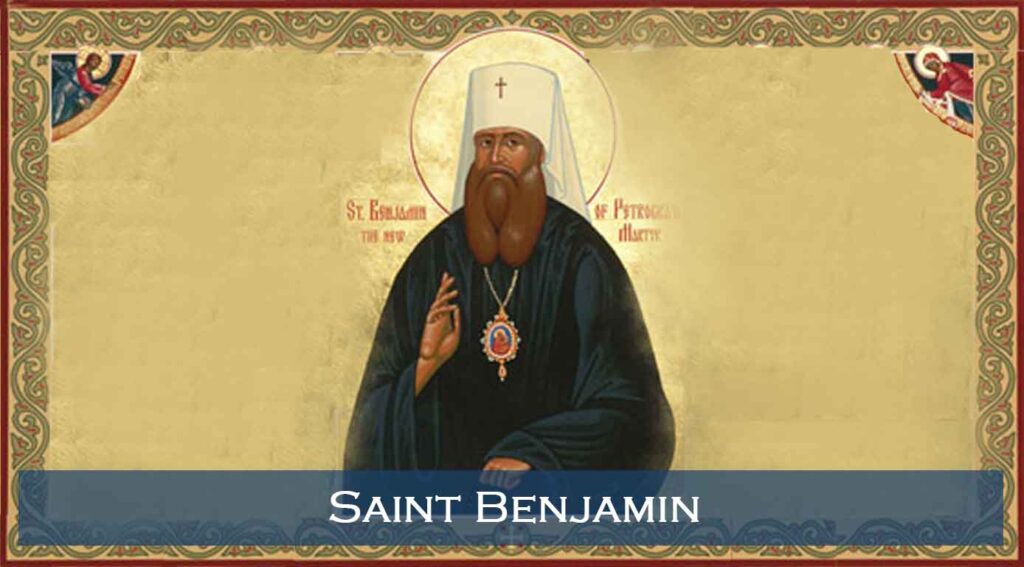
Saint Benjamin

Saint Benjamin was a deacon martyred circa 424 in Persia. He was imprisoned for a year for his Christian faith, and later released with the condition that he abandon preaching or speaking of his religion. His release was obtained by the Eastern Roman Emperor Theodosius II through an ambassador. However, Saint Benjamin declared that it was his duty to preach about Christ and that he could not be silent. As a consequence, Benjamin was tortured mercilessly until his death in the year 424, specifically, “sharpened reeds [were] stuck under the nails of his fingers and toes.”

According to his hagiography, when the king was apprised that Saint Benjamin refused to stop preaching, he “… caused reeds to be run in between the nails and the flesh, both of his hands and feet, and to be thrust into other most tender parts, and drawn out again, and this to be frequently repeated with violence. Lastly, a knotty stake was thrust into his bowels, to rend and tear them, in which torment he expired….”

Saint Benjamin was executed during a period of persecution of Christians that lasted forty years and through the reign of two Persian kings: Isdegerd I, who died in 421, and his son and successor, Varanes V. King Varanes carried on the persecution with such great fury that Christians were submitted to the most cruel tortures.

Source:

https://en.wikipedia.org/wiki/Benjamin_the_Deacon_and_Martyr
Shea, John Dawson Gilmary. “Saint Benjamin, Deacon, Martyr”. Pictorial Lives of the Saints, 1889. CatholicSaints.Info. 6 February 2014
nto his urethra, by this account: Collin (1738), p.57, the stake finally thrust up his anus was studded with sharp nails according to the same source, * Collin, Johann E. (1738). Der Kampff und Sieg der ersten Blut-Zeugen Jesu Christi: durch Glauben und Gedult, nach alphabetischer Ordnung entworffen, und in Kupffern vorgestellet. Frankfurt and Leipzig.

Saint Benjamin Read More »

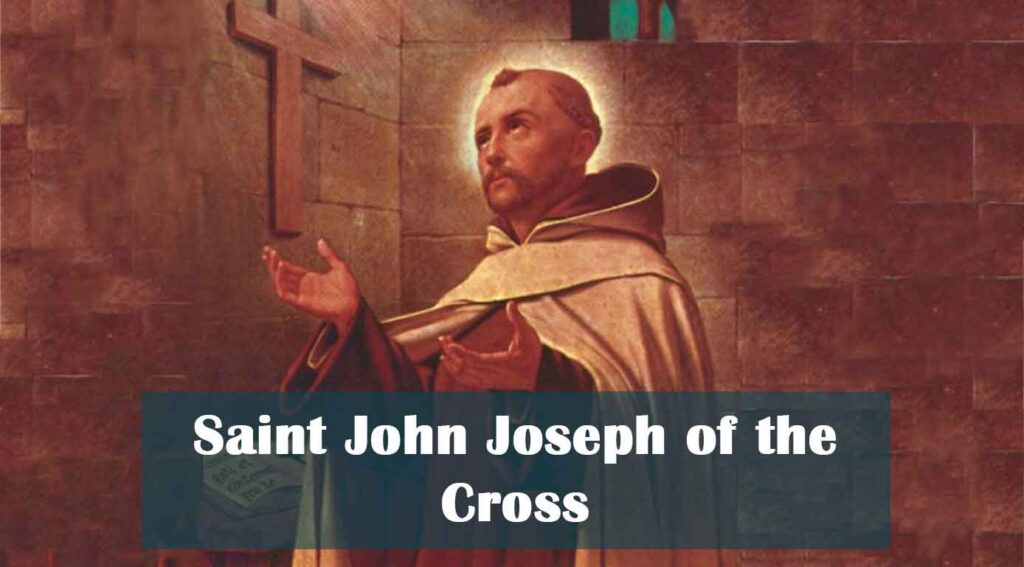
Saint John Joseph of the Cross

Self-denial is never an end in itself but is only a help toward greater charity—as the life of Saint John Joseph shows.

John Joseph was very ascetic even as a young man. At 16, he joined the Franciscans in Naples; he was the first Italian to follow the reform movement of Saint Peter Alcantara. John Joseph’s reputation for holiness prompted his superiors to put him in charge of establishing a new friary even before he was ordained.
Obedience moved John Joseph to accept appointments as novice master, guardian and, finally, provincial. His years of mortification enabled him to offer these services to the friars with great charity. As guardian he was not above working in the kitchen or carrying the wood and water needed by the friars.
When his term as provincial expired, John Joseph dedicated himself to hearing confessions and practicing mortification, two concerns contrary to the spirit of the dawning Age of Enlightenment. John Joseph of the Cross was canonized in 1839.

Sources:

https://www.franciscanmedia.org/saint-of-the-day/saint-john-joseph-of-the-cross/

Saint John Joseph of the Cross Read More »

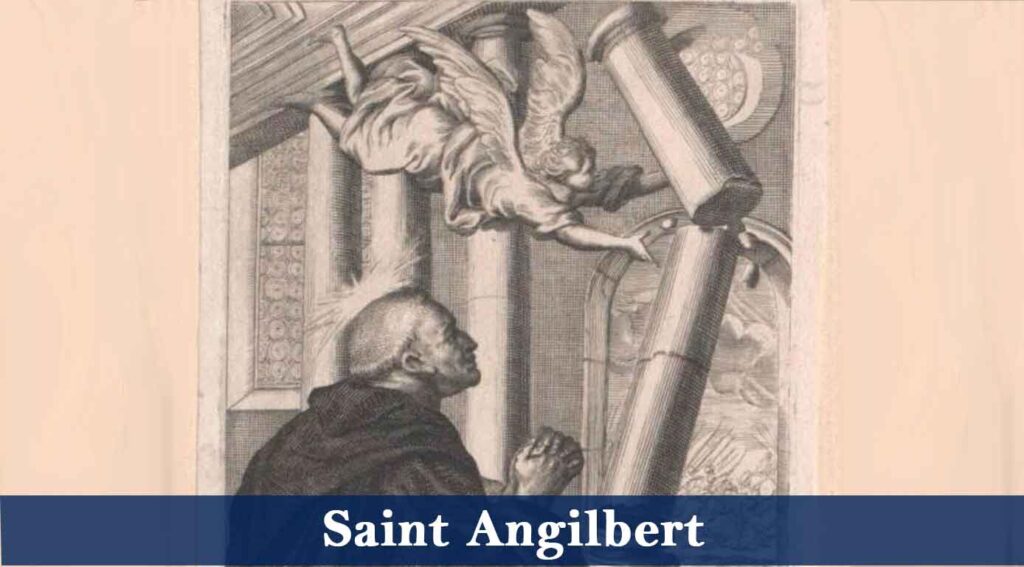
Saint Angilbert

Saint Angilbert was a noble Frankish poet who was educated under Alcuin and served Charlemagne as a secretary, diplomat, and son-in-law. He seems to have been brought up at the court of Charlemagne at the palace school in Aquae Grani. He was educated there as the pupil and then friend of the great English scholar Alcuin.

As the friend and adviser of Pepin, he assisted for a while in the government of Italy. At one time, he served an officer of the maritime provinces. He accompanied Charlemagne to Rome in 800 and was one of the witnesses to his will in 811.

In 790, Angilbert retired to the abbey of Centulum, the “Monastery of St Richarius” (Sancti Richarii monasterium) at present-day Saint-Riquier in Picardy. Elected abbot in 794, he rebuilt the monastery and endowed it with a library of 200 volumes. He spent a great deal rebuilding Saint-Riquier; when he completed it, Charlemagne spent Easter of the year 800 there. In keeping with Carolingian policies, Angilbert established a school at Saint-Riquier to educate the local boys.

Sources:

https://en.wikipedia.org/wiki/Angilbert
"St. Angilbert", Martyrology, Abiquiú, New Mexico: Monastery of Christ in the Desert, 1998, archived from the original on 11 June 2015.
Baynes, T. S., ed. (1878), "St Angilbert" , Encyclopædia Britannica, vol. 2 (9th ed.), New York: Charles Scribner's Sons, p. 29
Frassetto, Michael (2003), "St. Angilbert (c. 740–814)", Encyclopedia of Barbarian Europe, Santa Barbara, California: ABC-CLIO, p. 32, ISBN 978-1576072639

Saint Angilbert Read More »

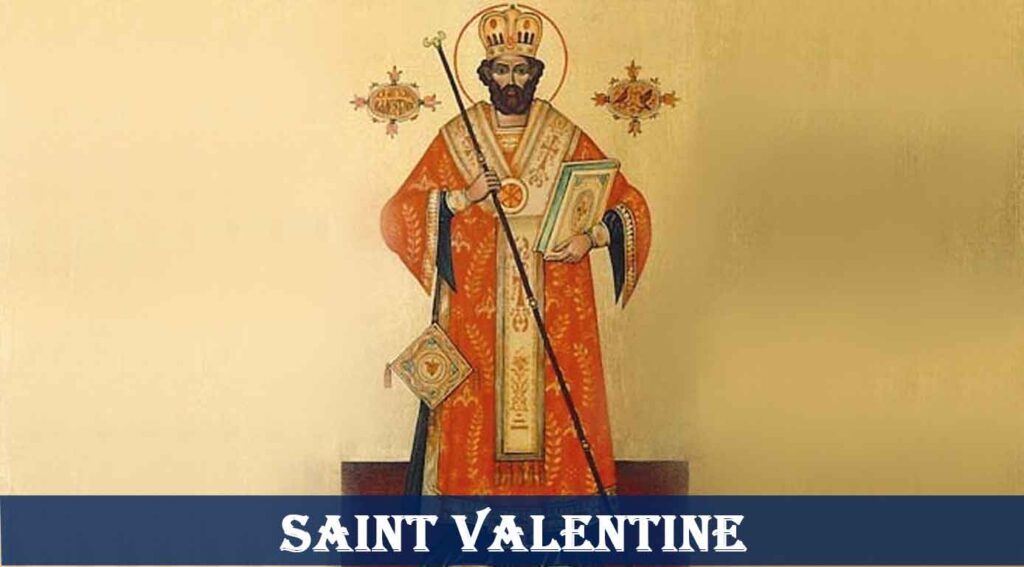
Saint Valentine

Saint Valentine was a 3rd-century Roman saint. He was a clergyman in the Roman Empire who ministered to persecuted Christians.

He was martyred and his body buried at a Christian cemetery on the Via Flaminia on February 14. Relics of him were kept in the Church and Catacombs of San Valentino in Rome, which “remained an important pilgrim site throughout the Middle Ages until the relics of St. Valentine were transferred to the church of Santa Prassede during the pontificate of Nicholas IV”.

The Roman Catholic Church continues to recognize him as a saint, listing him as such in the February 14 entry in the Roman Martyrology, and authorizing liturgical veneration of him on February 14 in any place where that day is not devoted to some other obligatory celebration, in accordance with the rule that on such a day the Mass may be that of any saint listed in the Martyrology for that day.

Saint Valentine Read More »

Deuteronomy 8:6

Verse:

“Observe the commands of the Lord your God, walking in obedience to him and revering him.” - Deuteronomy 8:6

Prayer to Saint Valentine

Dear Lord, who art high in the Heavens,
Giver of Love and Passion,
And He who strings the heart s cords,
Lead the Lovers this day, February ten plus four.
The day during the month of two,
When the date is the perfect number of God
Greater two souls and two hearts.
Some Loves are fleeting ,
But that which is built on you will never fail.
So guide the Lovers to know what is to be.
Your truths the Lovers mouths should speak,
For Your truth is that which is honest to the heart.
Only this, then, should pass over the red lips of the Lovers.
Your art, the Lovers simply a medium.
It is only with True Hearts that You can create a Masterpiece,
So let the Lovers remember that their Soul s Desire
Is the one for which You light their Fire.
And let it be You who creates the Art of the Lovers;
The art of two into one.

Amen.

Deuteronomy 8:6 Read More »

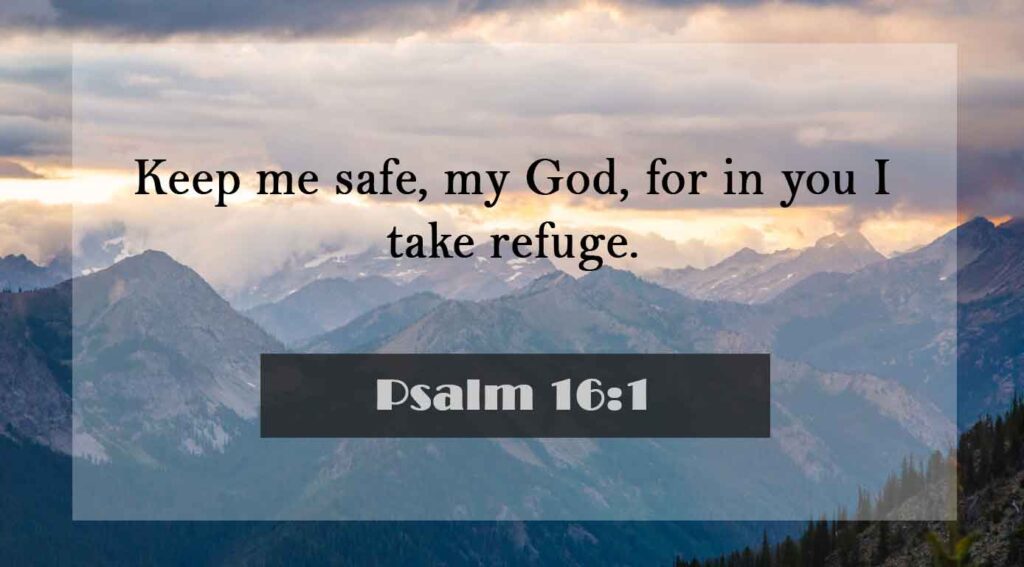
Psalm 16:1

Verse:

“Keep me safe, my God, for in you I take refuge.” - Psalm 16:1

Prayer against Depression

O Christ Jesus,
when all is darkness
and we feel our weakness and helplessness,
give us the sense of Your presence,
Your love, and Your strength.
Help us to have perfect trust
in Your protecting love
and strengthening power,
so that nothing may frighten or worry us,
for, living close to You,
we shall see Your hand,
Your purpose, Your will through all things.

By Saint Ignatius of Loyola

Psalm 16:1 Read More »