August 2025

Twentieth Sunday in Ordinary Time

First Reading Jeremiah 38:4-6, 8-10

In those days, the princes said to the king:
“Jeremiah ought to be put to death;
he is demoralizing the soldiers who are left in this city,
and all the people, by speaking such things to them;
he is not interested in the welfare of our people,
but in their ruin.”
King Zedekiah answered: “He is in your power”;
for the king could do nothing with them.
And so they took Jeremiah
and threw him into the cistern of Prince Malchiah,
which was in the quarters of the guard,
letting him down with ropes.
There was no water in the cistern, only mud,
and Jeremiah sank into the mud.

Ebed-melech, a court official,
went there from the palace and said to him:
“My lord king,
these men have been at fault
in all they have done to the prophet Jeremiah,
casting him into the cistern.
He will die of famine on the spot,
for there is no more food in the city.”
Then the king ordered Ebed-melech the Cushite
to take three men along with him,
and draw the prophet Jeremiah out of the cistern before
he should die.

Responsorial Psalm Psalms 40:2, 3, 4, 18

R. (14b)  Lord, come to my aid!
I have waited, waited for the LORD,
and he stooped toward me.
R. Lord, come to my aid!
The LORD heard my cry.
He drew me out of the pit of destruction,
 out of the mud of the swamp;
he set my feet upon a crag;
 he made firm my steps.
R. Lord, come to my aid!
And he put a new song into my mouth,
 a hymn to our God.
Many shall look on in awe
 and trust in the LORD.
R. Lord, come to my aid!
Though I am afflicted and poor,
 yet the LORD thinks of me.
You are my help and my deliverer;
 O my God, hold not back!
R. Lord, come to my aid!

Second Reading Hebrews 12:1-4

Brothers and sisters:
Since we are surrounded by so great a cloud of witnesses,
let us rid ourselves of every burden and sin that clings to us
and persevere in running the race that lies before us
while keeping our eyes fixed on Jesus,
the leader and perfecter of faith.
For the sake of the joy that lay before him
he endured the cross, despising its shame,
and has taken his seat at the right of the throne of God.
Consider how he endured such opposition from sinners,
in order that you may not grow weary and lose heart.
In your struggle against sin
you have not yet resisted to the point of shedding blood.

Alleluia John 10:27

R. Alleluia, alleluia.
My sheep hear my voice, says the Lord;
I know them, and they follow me.
R. Alleluia, alleluia.

Gospel Luke 12:49-53

Jesus said to his disciples:
“I have come to set the earth on fire,
and how I wish it were already blazing!
There is a baptism with which I must be baptized,
and how great is my anguish until it is accomplished!
Do you think that I have come to establish peace on the earth?
No, I tell you, but rather division.
From now on a household of five will be divided,
three against two and two against three;
a father will be divided against his son
and a son against his father,
a mother against her daughter
and a daughter against her mother,
a mother-in-law against her daughter-in-law
and a daughter-in-law against her mother-in-law.”

Source: https://bible.usccb.org/bible/readings/081725.cfm

Twentieth Sunday in Ordinary Time Read More »

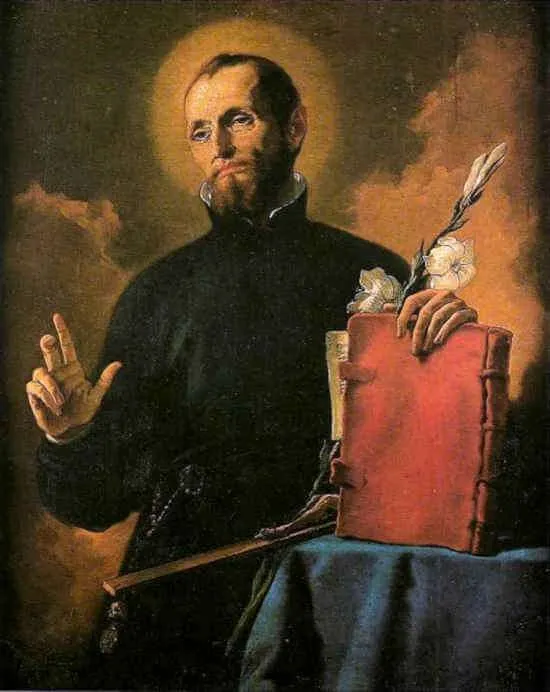
Saint Cajetan, Priest

1480–1547; Patron Saint of the unemployed; Invoked for gambling problems; Canonized by Pope Clement X in 1671

Cajetan of the Counts of Thiene was born in Vicenza, in the Republic of Venice, modern-day northeastern Italy, to wealthy and first-ranked noble parents. In the preceding century, his family line included governors, theologians, clerics, and cardinals. His father died when Cajetan was only two years old. His mother’s faith was particularly strong. She dedicated Cajetan to the Blessed Virgin Mary from a young age and raised him well. As a child, Cajetan was devout, temperate, obedient, and mindful of the poor. He practiced long periods of prayer that helped him to avoid the temptations that came from his family’s wealth and status. He was intelligent and a good student. His long periods of prayer never interfered with his studies, but only enhanced his mind and helped him grasp true knowledge on a profound level. Though Cajetan primarily learned his piety from his mother, he learned humanities and other courses of general studies at home from private tutors. Afterwards, he was sent to Padua to study law where he received a double doctorate degree in both canon and civil law by the age of twenty-four.

With his dual law degree and strong faith, Cajetan was ready for a life of service to the Church. Though his first desire was to enter into a hidden life of prayer, he caught the eye of the pope. In 1506, at the request of Pope Julius II, Cajetan entered diplomatic service in the papal court and was appointed to the high position of Apostolic Protonotary. Pope Julius II was an ambitious man who was politically minded. He received the nickname “Warrior Pope” because he was quick to lead the army of the Papal States into battle. In the pope’s service, Cajetan’s duties would have primarily been administrative legal work, but he would have also worked closely with the pope as an advisor. In 1508, Pope Julius II formed the League of Cambrai in which he allied the Papal States with France, Spain, and the Holy Roman Empire against the Republic of Venice. Cajetan is said to have played a crucial role in helping to relieve the tensions and reconcile Venice with the pope, ensuring peace for his homeland.

In 1513, Pope Julius II died and Cajetan resigned his duties in the papal household to pursue priestly ordination, which he received in 1516. Within two years, Father Cajetan returned to his hometown of Vicenza where he joined the Oratory of Saint Jerome, which was dedicated to the service of the poor. Most of the members of the Oratory were men of lower classes. As a result, many of Father Cajetan’s family and noble “friends” were deeply offended by his association with those deemed to be unworthy of association with the nobility. Father Cajetan had no concern with such petty social norms and put his heart and soul into his work. He even founded a new hospital that was dedicated to the care of the terminally ill. Such a hospital was not seen as a proper place for the nobility to serve, but Father Cajetan greatly delighted in this work of compassion in which he helped people die with dignity and faith. He later founded a similar hospital in Venice.

While in Vicenza, Father Cajetan also worked in a local parish. He became known as a sort of holy gambler because when he gave spiritual advice, he made a “bet” with the person that if his advice worked, the person had to light a votive candle. If it did not, Father Cajetan would light the candle. For this reason, he is invoked by those seeking freedom from gambling addictions.

At that time, there was much internal corruption within the Church. Father Cajetan no doubt witnessed this firsthand while working in the papal court for the Warrior Pope. He also saw the lax morals of the clergy, the political ambitions, and financial abuses within the Church, all of which helped to spark the Protestant Reformation. Unlike Martin Luther and other reformers who revolted against the Church, Father Cajetan sought to reform the Church from within. In 1523, he returned to Rome and joined the Oratory of Divine Love, an organization committed to prayer and the service of the sick and poor. It was there that he became associated with three other like-minded companions: Bishop Giovanni Pietro Carafa (the future Pope Paul IV), Bonifacio da Colle, and Paolo Ghisleri. On September 14, 1524, the Feast of the Triumph of the Cross, Father Cajetan and his three companions jointly founded the Order of the Clerics Regular, or Theatines, in the city of Rome, by making their first profession of vows.

The goal of their order was to unite the monastic aspects of religious life with the work often performed by diocesan priests. As religious, they sought evangelical perfection by jointly living in poverty, practicing a common life of prayer, and by adhering to a strict way of life. They then dedicated themselves to priestly service through the celebration of the Sacraments, education, preaching, the formation of clergy, and the care of the poor and sick.

In 1527, Rome was sacked by disgruntled soldiers; eight months of violence and looting ensued. During that time, some members of the Theatines were killed, and Father Cajetan endured torture. Eventually, the Theatines escaped the city and settled in Venice where they established a new house. Over the next two decades, until Father Cajetan’s death, the order continued to grow, expanding into Naples, Milan, Sicily, and other parts of Europe, including Germany. Father Cajetan was well known for his continual penances and life of prayer that fueled his devotion to the mission of his order. After Father Cajetan’s death in 1547, one of the co-founders of the Theatines, ​​Bishop Giovanni Pietro Carafa, became Pope Paul IV in 1555. This elevated the status and mission of the order and helped it to continue to grow.

As we honor Saint Cajetan today, we are invited to ponder the mission he was given during a time of corruption within society and the Church. He renounced worldly honors, devoted himself to a life of prayer and virtue, sought to reform the Church and clergy from within, selflessly served the poor and sick, and inspired many others to follow his path. Consider your own need to reform your life and the lives of those around you. Seek to follow Saint Cajetan’s example by reforming your life and being an inspiration that others will imitate.

Source: https://mycatholic.life/saints/saints-of-the-liturgical-year/august-7—saint-cajetan-priest/

Saint Cajetan, Priest Read More »

Luke 12:51-53

Spiritual Unity

“Do you think that I have come to establish peace on the earth? No, I tell you, but rather division. From now on a household of five will be divided, three against two and two against three; a father will be divided against his son and a son against his father, a mother against her daughter and a daughter against her mother, a mother-in-law against her daughter-in-law and a daughter-in-law against her mother-in-law.”

Reflection:

Jesus introduces this passage by saying, “I have come to set the earth on fire, and how I wish it were already blazing!” The “fire” of which He speaks is His purifying fire of mercy that He poured forth from the Cross as He offered His life for the salvation of the world. His mercy is given to free us from our sins and to cleanse our souls so that God Himself can come to dwell within us. This is why we exist. God wants to dwell within us, and He wants us to be in perfect union with Him.

One of the glorious effects of uniting yourself to God is that this union also brings about a spiritual bond with others who are united to God. We are made for communion with God, but also for communion with each other. God especially invites family members to share in this unity. Though there are many levels of friendship and unity we can have with each other, the deepest bonds come from two souls each being united to God. For example, two people may both like the same sports team or have the same interests, resulting in a bond or form of friendship. This is good. But when each of those friends also is deeply united to God, the unity comes from God and not from something more superficial.

The challenging Gospel passage above reveals to us what happens when one or more members of a household fail to open themselves to the cleansing fire of God’s love and, therefore, fail to live in union with God. The result is disunity, at least on the deepest and truest level. God is not the cause of disunity; sin is. When one person is united to God and another is immersed in a life of sin, true spiritual unity is not possible. Of course the two might still share some common interests and might even superficially get along each day, but there will never be an experience of authentic spiritual friendship and communion if God is absent from one or both hearts.

When Jesus says that He has come to establish division within a household, He is simply pointing out that there will indeed be a division within a household when all are not united to God. Additionally, Jesus is warning us that if someone within our household tries to draw us into a life of sin with them, that person’s invitation must be rejected. And when that happens, that rejection is often experienced as a rejection of the person and results in even greater disunity. The bottom line is that it is not possible to be authentically united in sin or any form of lie.

Reflect, today, upon the deepest spiritual desire you have. If you are honest with yourself, you will discover that this deepest desire in your heart is the desire for love. We are made to give and receive love. First, this desire is fulfilled by opening ourselves to the love of God. When that happens, we will be able to share God’s love with others and receive God’s love from them. Nothing in life could be more fulfilling than this.

Source: https://catholic-daily-reflections.com/2025/08/16/spiritual-unity/

Luke 12:51-53 Read More »

Saint Stephen of Hungary

c. 975–1038; Patron Saint of bricklayers, kings, stonecutters, masons, and parents who have lost a child; Canonized by Pope Gregory VII in 1083

Prior to Hungary becoming a Christian nation, its people embraced many pagan religious beliefs. They believed in numerous gods and held that every element of nature, including trees, rivers, and animals, had spiritual power. The people worshiped their ancestors, believing them to have power over the living. Shamans were sought out as mediators between the human and spiritual world, conducting rituals and interpreting dreams and omens through which they claimed to heal the sick and grant favors. The territory’s ten tribes were governed by ten chieftains who elected a Grand Prince from among them. It was into this pagan tribal world that Saint Stephen of Hungary entered, becoming king and Christianizing his newly established nation.

At the end of the tenth century, a man named Géza became Grand Prince of the Hungarians. He married a Christian woman named Sarolt, the daughter of a Hungarian chieftain. Géza was baptized but continued to participate in traditional pagan practices. He remained a fierce ruler, often governing with extreme force and spilling much blood. However, Géza did form an alliance with the Holy Roman Emperor, who sent missionaries to his lands with Géza’s permission. Géza and Sarolt had a son named Vajk, whom they had baptized, possibly by Saint Adalbert. Upon being baptized, Vajk was given the name Stephen. According to one tradition, before Vajk was born, his mother had a vision of the biblical Saint Stephen, the first martyr, who told her that she would bear a son who would continue the missionary work she and her husband had begun and abolish paganism throughout their land.

When Stephen was only fifteen, he assisted his father in spreading Christianity. His Christian faith was strong. Around 995 or 996, Stephen married Gisela of Bavaria, a daughter of Henry II, Duke of Bavaria. This marriage helped to strengthen Hungary’s bond with the Holy Roman Empire. Gisela’s brother and Stephen’s uncle later became Holy Roman Emperor Henry II, the only Holy Roman Emperor and German king to be canonized a saint. Around 997, when Géza died, Stephen, at about the age of twenty-one, became Grand Prince. Stephen had to contend for his rulership against other family members and rival factions, but ultimately he succeeded. With a firm Christian faith and a strong bond with the Holy Roman Empire, Stephen had himself crowned King of Hungary around 1000 or 1001. He received his crown from Pope Sylvester II with the consent of Holy Roman Emperor Otto III. This marked the transition from a tribal society to a Christian kingdom and strengthened King Stephen’s power among his people.

With King Stephen internationally recognized as ruling his people by the grace of God as a Christian monarch, he made the conversion of his kingdom his top priority. With the consent of the pope, he established dioceses, built monasteries, and welcomed foreign priests to evangelize his people. He instituted laws that supported the establishment of the Catholic faith and eradicated pagan practices. He and his wife had at least one son, named Emeric, who survived into adulthood. Some biographers state that they had other children, all of whom died in infancy.

King Stephen had a strong devotion to the Blessed Virgin Mary, to whom he consecrated his kingdom. He always had his Lord in his mind and on his lips. He was generous with the poor, fought only defensive wars, and did all he could to ensure the salvation of the souls under his care. He was a just ruler who established fair administrative systems and worked toward the common good of all, not just the elite.

In 1014, when Stephen’s saintly brother-in-law was crowned as the Holy Roman Emperor, the two worked in tandem to spread the faith. Stephen’s son, Emeric, was raised as a strong Catholic and was well known for his purity and piety. Emeric was educated with the intention that he would succeed his father as King of Hungary. However, in 1031, around the age of twenty-four, Emeric died in a hunting accident. In 1083, after miracles were reported at his grave by those who prayed there, Saint Emeric was canonized by Pope Gregory VII.

The final seven years of King Stephen’s life were marked with illness, mourning over the loss of his son, and concern for the future of his newly established Christian nation. Disputes quickly broke out over his succession. King Stephen eventually designated Peter Orseolo as his successor. After Saint Stephen died, King Peter I began his reign, but he was weak in morals. He was eventually exiled, and Samuel Aba became king, who tried to restore paganism. Internal wars and conflicts followed. Paganism reemerged and the Church began to experience oppression. Finally, in 1077, Ladislaus became king and followed in the footsteps of Saint Stephen, solidifying the Catholic faith in the kingdom.

The British historian Lord Acton once said, “Power tends to corrupt, and absolute power corrupts absolutely. Great men are almost always bad men.” This was not the case with Saint Stephen. He had great power, but he used that power for the sake of the Gospel. He remained humble, prayerful, mindful of the poor, and continually sought the salvation of souls. Few kings have been canonized as saints. When they are, they should be emulated and honored for the virtue it took to use their power for Christ.

As we honor Saint Stephen, King of Hungary, reflect upon your own exercise of authority. Do you abuse your power at work, home, or elsewhere? Or do you strive to humbly use any authority you have for the glory of God and the salvation of souls? Seek to imitate Saint Stephen by doing the latter.

Source: https://mycatholic.life/saints/saints-of-the-liturgical-year/august-16—saint-stephen-of-hungary/

Saint Stephen of Hungary Read More »

Matthew 19:13-14

All Are Welcome

Children were brought to Jesus that he might lay his hands on them and pray. The disciples rebuked them, but Jesus said, “Let the children come to me, and do not prevent them…”

Reflection:

In the Catechism of the Council of Trent, which was promulgated by Pope Saint Pius V, this passage is linked with infant baptism. It states, “Besides, it is not to be supposed that Christ the Lord would have withheld the Sacrament and grace of Baptism from children, of whom He said: Suffer the little children, and forbid them not to come to me…” (II, 2, 32). This teaching clearly indicates one of the best ways that this passage is fulfilled today. Inviting even infants before they reach the age of reason to receive the Sacrament of Baptism fulfills this loving command of Jesus to “Let the children come to me…”

Young children do not have the ability to rationally understand love in its purest form. That comes with the age of reason, which has traditionally been understood to be around the age of seven. But children, and even infants, are capable of receiving our love and are capable of receiving the love of God, even if they do not yet fully comprehend this gift.

As a child grows, they learn what love means as they witness it and experience it, especially through the mediation of their parents. This helps form their consciences in such a way that they become capable of making their own free choice to love as they mature in age. But if a child is to grow into a loving adult, they need more than just a good example, they need grace. The grace of Baptism is the primary source of that grace in their lives.

It’s easy for many to see Baptism only as a nice ceremony to welcome the newly born child into God’s family. And though that is true, it is so much more. The Catechism of the Catholic Church states that Baptism bestows an indelible mark which “remains for ever in the Christian as a positive disposition for grace, a promise and guarantee of divine protection, and as a vocation to divine worship and to the service of the Church” (CCC #1121). In other words, Baptism bestows upon one’s soul a gift that can never be removed and becomes an ongoing source of grace. And when an infant is baptized, it’s as if this Scripture passage above is perpetuated throughout that person’s life. Because of this sacramental grace, Jesus continually says to this baptized soul, “Come to Me.”

In addition to the grace of Baptism, we must all imitate Jesus’ action of welcome and acceptance of not only children but of every child of God. Though the disciples initially tried to prevent the children from coming to our Lord, we must not. We must understand that there is a real temptation within our fallen human nature to both withhold the love of God from others and to even prevent others from coming to God. Anger, pride, envy, jealousy and the like can cause us to object to the conversion of others and to God welcoming them to Himself. When that temptation sets in, we must hear Jesus say to us, “Let the children come to me” and “do not prevent them.”

Reflect, today, upon these gentle and inviting words of Jesus. As you do, try to call to mind anyone who you might try to prevent from coming to our Lord. Do you desire the holiness of all people? Is there anyone in your life whom you find it difficult to encourage to come to Jesus to be embraced and blessed? Take on the heart of Jesus and see it as your duty to embrace others as He embraced these children. The more you become an instrument of the love of Christ, the more you will daily rejoice in God’s blessings as they are bestowed on others.

Source: https://catholic-daily-reflections.com/2025/08/15/all-are-welcome-4/

Matthew 19:13-14 Read More »

Assumption of the Blessed Virgin Mary

First Century; Patron Saint of fishmongers, French air crews, harnessmakers, and numerous countries, cities, and dioceses

Within the history of the Church, one fascinating and inspiring phenomenon is the incorruptibility of some saints’ bodies. Over the course of history, the bodies of certain holy men and women have been exhumed from their tombs. On occasion, these bodies have been found to be incorrupt, meaning they have not decayed. Among the most notable saints are Bernadette Soubirous, Catherine Labouré, John Vianney, Padre Pio, Vincent de Paul, Clare of Assisi, and Teresa of Avila. However, the body of today’s saint, the Blessed Virgin Mary, the Mother of God, is unique. It is not just incorrupt but is also alive, resurrected, transformed, and sharing in eternal glory. Other than her Divine Son, the Mother of God is the only one to have been granted this privilege.

Traditionally, today’s Solemnity has been referred to variably as the Blessed Virgin Mary’s rest, birth into Heaven, entombment, and falling asleep. The earliest written references to the Assumption of the Blessed Virgin Mary date back to the third and fourth centuries. In the seventh century, Saint John Damascene wrote beautifully about the Assumption of the Blessed Virgin Mary in three sermons. He also narrates a story about the Roman Emperor Marcian (c. 392–457) who approached the bishops at the Council of Chalcedon in 451, requesting information about the location of the body of the Blessed Virgin Mary. The emperor wished to build a magnificent church in her honor. Saint John Damascene describes it this way:

Saint Juvenal, Bishop of Jerusalem, at the Council of Chalcedon (451), informed Emperor Marcian and Pulcheria, who wished to possess the body of the Mother of God, that Mary died in the presence of all the Apostles. However, when her tomb was opened upon the request of St. Thomas, it was found empty, leading the Apostles to conclude that her body was taken up to Heaven.

Today, just outside of the ancient city of Jerusalem, next to the Garden of Gethsemane, pilgrims can find an ancient church, believed to have been the original burial site of the Blessed Virgin Mary, from which she rose and was assumed into Heaven. Like Christ her Son, her tomb is empty.

It wasn’t until 1950 that the ancient belief in the Assumption of the Blessed Virgin Mary was elevated to the level of a dogma. As a dogma, the Church proclaimed that this belief must be held by all the Catholic faithful as true and divinely revealed. It did not begin to be true in 1950; rather, that which had always been true was given great solemnity and clarity within the teachings of the Church.

It’s important to understand that the one deposit of faith—the truths in the mind of God revealed to us in Christ Jesus—does not change. Truth doesn’t change; our comprehension of the Truth deepens over time.

In regard to our Blessed Mother, the Church teaches four dogmas. First, the Council of Ephesus, in 431, definitively taught that the Blessed Virgin Mary was properly called the “Mother of God.” She was not just the mother of Christ, or the mother of Jesus, or mother only of His flesh. She was the mother of a Person, and that Person was God; hence, she is to be called the Mother of God.

A second dogma of the Blessed Virgin Mary is that of her perpetual virginity. This belief, held and taught by the earliest Church Fathers, was definitively taught at the Council in Constantinople in 553 when Mary was referred to as “ever-virgin.” To add even more clarity, during the Lateran Council of 649, Pope Saint Martin I clarified that “ever-virgin” meant three things: Mary was a virgin before, during, and after Christ’s birth. First, this means she conceived her Son while being a virgin. Second, when she gave birth to her Son, she did not suffer from the effects of original sin as outlined in Genesis 3:16: “I will intensify your toil in childbearing; in pain, you shall bring forth children.” Third, after the birth of Jesus, she never had relations with a man and bore no other children.

A third dogma of the Blessed Virgin Mary was solemnly defined in 1854 when Pope Pius IX declared her to be the Immaculate Conception. He stated that “…the most Blessed Virgin Mary, from the first moment of her conception, by a singular grace and privilege from Almighty God and in view of the merits of Jesus Christ, was kept free of every stain of original sin.” She then remained free from sin throughout her life.

Finally, the fourth dogma of the Blessed Virgin Mary, which we celebrate today, is the logical consequence of the previous dogmas, especially the Dogma of the Immaculate Conception. If the Mother of God was free from sin, did not suffer the consequences of original sin—such as the pains of childbirth—then she would also, necessarily, not suffer the effects of sin, which are death and bodily decay. However, a few things need to be clarified in this regard.

First, the dogmatic teaching states that the Blessed Virgin Mary “…having completed the course of her earthly life, was assumed body and soul into heavenly glory.” Does that mean she died and was placed in a tomb? Or does that mean that she did not die and was taken body and soul while she was alive? The Church has not definitively answered this question. The rationale is that, since Jesus died and then rose, wouldn’t this be the sequence for our Blessed Mother followed? Regardless of the answer, what is proclaimed is that her body never experienced decay. If she died, then, just like her Son, her body slept as it anticipated sharing in the Resurrection, perhaps a few days later, or perhaps immediately. If the early account from Bishop Juvenal mentioned above is accurate, then her body rested in the tomb for a short period of time.

As we honor the Mother of God, the Ever-Virgin Mary, the Immaculate Conception, we celebrate her life, the completion of her time on earth, and her glorious entrance into Heaven, body and soul. We hope to follow where she has gone. From Heaven, she loves each one of us with her perfect maternal love. Her prayers and mediation of grace are certain. We should seek her intercession today. Doing so with great confidence, we should know that a mother so loving would never deny her children all good things granted in accord with God’s will.

Source: https://mycatholic.life/saints/saints-of-the-liturgical-year/august-15—assumption-of-the-blessed-virgin-mary/

Assumption of the Blessed Virgin Mary Read More »

Luke 1:46–49

The Assumption of the Mother of God

“My soul proclaims the greatness of the Lord; my spirit rejoices in God my Savior for he has looked with favor on his lowly servant. From this day all generations will call me blessed: the Almighty has done great things for me and holy is his Name.”

Reflection:

Today we celebrate one of seventeen different memorials, feasts and solemnities in honor of the Blessed Virgin Mary that are found on the Roman Liturgical Calendar. Today’s celebration is one of the four great Solemnities by which our Blessed Mother is honored. Obviously, no other person other than our Lord is honored and celebrated with as much solemnity as the Mother of God.

The Solemnity of the Assumption honors the fact that when the Blessed Virgin Mary completed her life on earth, she was taken body and soul into Heaven to be with her resurrected Son so as to adore the Most Holy Trinity forever. It’s an amazing fact to consider that she retains her body and soul, united as one in Heaven, in anticipation of that glorious day when the new Heavens and Earth will be created and when all the faithful will rise so as to live in a new bodily form forever with God.

Though this dogma of our faith had been held and believed by the faithful from the earliest times of our Church, especially since it was witnessed by those closest to our Blessed Mother at the time of her glorious Assumption, it wasn’t until November 1, 1950, that Pope Pius XII solemnly proclaimed it to be so, raising this teaching of our faith to the level of a dogma, meaning, it must be held and believed by all. In part, the Holy Father declared, “…we pronounce, declare, and define it to be a divinely revealed dogma: that the Immaculate Mother of God, the ever Virgin Mary, having completed the course of her earthly life, was assumed body and soul into heavenly glory.”

The Gospel passage quoted above comes from the beginning of Mary’s song of praise, her Magnificat, by which she not only gives the greatest glory to God but also reveals who she is. She is the one whom “all generations” will call “blessed.” She is the one for whom “the Almighty has done great things.” She is the one who will eternally proclaim “the greatness of the Lord” and whose spirit will forever rejoice in God her Savior. And she is that lowliest of servants whom God has raised up to the greatest glory.

Reflect, today, with the whole Church, upon the Most Glorious Ever-Virgin Mary who was conceived without sin, remained sinless throughout her life, and was taken body and soul into Heaven where she now adores the Most Holy Trinity and intercedes for you and for the whole Church. This is a Solemnity of great rejoicing! Share in this joy with the whole Church and with all the saints in Heaven!

Source: https://catholic-daily-reflections.com/2025/08/14/the-assumption-of-the-mother-of-god-4/

Luke 1:46–49 Read More »

Saint Maximilian Mary Kolbe, Priest and Martyr

1894–1941; Patron Saint of drug addicts, families, journalists, prisoners, and the pro-life movement; Canonized by Pope John Paul II on October 10, 1982

 Saint Maximilian Maria Kolbe, born as Raymond, hailed from Zduńska Wola in present-day Poland. At the time of his birth, his hometown had been under the control of the Russian Empire since 1795. Despite their material poverty, his family was spiritually rich, particularly owing to their mother, Maria, who instilled in her children a deep devotion to the Mother of God. They prayed the Angelus, the Litany of Loreto, and the rosary daily. Raymond had two surviving brothers: an older one named Francis and a younger one named Joseph. Two other brothers, Walenty and Antoni, passed away at a young age.

As a child, Raymond was known for his devoutness, as well as his mischief. Whenever he committed any transgressions, he would immediately offer himself for corporal punishment, which was common during that period. After one such prank, his mother exclaimed, “What will become of you!” This question profoundly affected young Raymond, who later prayed to the Blessed Virgin about his future. He was only twelve at the time. His mother observed a significant change in his behavior following this episode. He created an altar for the Blessed Mother in his room and spent long periods in prayer, often to the point of tears. On being questioned about his altered behavior, Raymond shared that after his mother’s reprimand, he had sought guidance from the Blessed Mother, who had appeared before him in the church, offering two crowns—one white signifying purity and one red signifying martyrdom. When she asked which one he chose, he replied, “I choose both!” This encounter further deepened his devotion to the Blessed Mother and Saint Joseph.

Due to the family’s financial constraints, Raymond received most of his early education from his mother and the parish priest. Upon recognizing Raymond’s intellect, a local pharmacist offered to tutor him. At the age of thirteen, Raymond and his older brother Francis attended a retreat organized by the Conventual Franciscans. They were then invited to join the newly established seminary in Lwów, present-day Lviv, Ukraine, which was part of the Austro-Hungarian Empire. This necessitated crossing the border without a passport, which they accomplished with the aid of their father. In 1907, Raymond and Francis entered the minor seminary.

In 1910, Raymond and Francis toyed with the idea of leaving the Franciscans to join the military. Before they could decide, their mother showed up and informed them that their younger brother was also joining the Franciscans, so they decided to stay. Their mother further shared that their father was moving to Krakow to live with the Franciscans and that she would be living in Lwów with the Felician Sisters to stay close to her sons. Raymond was given the name Maximilian upon entering the novitiate and made his first vows in 1911. He made his final vows in 1914, also adopting the name Mary, becoming Brother Maximilian Mary Kolbe. He was sent to Rome to complete his studies, earning doctorates in philosophy and theology.

During World War I in 1914, Brother Maximilian’s father joined the Polish Legions fighting for Polish independence. He was subsequently arrested and executed by the Russians. His mother moved to Krakow, entered the Felician Sisters, and adopted the name Sister Maria Felicyta. His brother Francis left the seminary to serve in the military, later marrying and having one child. Unfortunately, he died in a concentration camp in 1943.

In 1917, while praying in the seminary chapel, Brother Maximilian was inspired to form the Militia Immaculatae, the “Army of the Immaculate One,” particularly in response to witnessing anti-Catholic sentiments during the war. The organization aimed for the conversion of sinners, heretics, schismatics—particularly Freemasons—and the sanctification of all people under the guidance of the Blessed Virgin Mary. Following his ordination as a priest, Father Kolbe relocated to Krakow, where he taught Church history and expanded his Militia Immaculatae.

In 1922, Father Kolbe started publishing a monthly magazine titled “Knight of the Immaculata.” In 1927, he founded a new Franciscan friary near Warsaw called Niepokalanów, or “City of the Immaculate Mother of God.” In 1930, Father Kolbe established a religious house near Nagasaki, Japan, where the friars produced a Japanese version of their magazine, eventually printing 50,000 monthly papers. He returned to Niepokalanów in 1936. By 1939, the friary had become one of the largest religious houses in the world, also housing his Militia Immaculatae. They printed their materials from the friary, eventually reaching over a million households each month. His younger brother, now named Father Alphonse, aided him in his endeavors. 

World War II broke out in 1939 when the Germans invaded Poland. Father Kolbe and his friars did their utmost to help those being persecuted. At first, they were forced out of their friary but were later permitted to return. Once they returned, they recommitted themselves to their work. At that desperate time, their publications inspired people and gave them hope. Though the friars were careful in what they wrote, the German authorities eventually designated them as enemies. Furthermore, the friars provided refuge to thousands of Poles, including 2,000 Jews whom they protected from the concentration camps. After two years of German occupation, the Gestapo had had enough.

On February 17, 1941, the German Gestapo showed up at Niepokalanów where Father Kolbe warmly greeted them. By the end of their visit, however, the Gestapo arrested Father Kolbe and four of his friars, sending them to the Pawiak prison. In this first prison, Father Kolbe did all that he could to inspire faith and hope in his fellow inmates. He endured harsh treatment from some of the guards but always responded with charity. He heard confessions of fellow inmates, pointed them to Christ, and prayed with them.

Father Kolbe was transferred to Auschwitz as prisoner #16670 on May 28. Auschwitz was a death sentence, and those who went there knew it. This didn’t deter Father Kolbe from his divine mission. Though he exchanged his Franciscan habit for a blood-stained prisoner’s uniform, he continued to minister to the people all around him. In Auschwitz, Father Kolbe and the other prisoners endured the harshest of treatment. They were beaten to the point of death and then expected to work. After one harsh beating that Father Kolbe survived, he was brought to the infirmary by fellow prisoners. The doctor who tended to him later testified, “I can say with certainty that during my four years at Auschwitz, I have never seen such a sublime example of God’s love for one’s neighbor.”

In July, after a man escaped from Father Kolbe’s barracks, ten men were selected to die by starvation as punishment and as a deterrent to others who thought of escaping. Among the selected was Franciszek Gajowniczek, who cried out, “My poor wife, my poor children!” Father Kolbe’s heart was moved to compassion in that inhumane environment, and he requested permission to take Franciszek’s place, explaining to the guard that he had no wife or children. Permission was granted. He survived for two weeks before the impatient guards, needing the bunker for other purposes, administered a lethal injection. Father Kolbe willingly offered his arm, showing no fear of death. Soon after his death, word of his martyrdom of charity spread throughout Auschwitz and inspired many with faith and hope.

Saint Maximilian Mary Kolbe’s vision had come true. He first received the crown of purity and then the crown of martyrdom. His work to spread the Gospel through the Militia Immaculatae had a powerful effect upon the people of his time. His love, to lay his life down for a stranger, will live on until the end of time. Ponder the depth of love it would take to do such a thing, and pray that this same love will permeate your own life in imitation of this holy saint of God.

Source: https://mycatholic.life/saints/saints-of-the-liturgical-year/august-14—saint-maximilian-mary-kolbe-priest-and-martyr/
Saint Maximilian Mary Kolbe, Priest and Martyr Read More »

Matthew 18:21-22

Always and Forever Forgiving

Peter approached Jesus and asked him, “Lord, if my brother sins against me, how often must I forgive him? As many as seven times?” Jesus answered, “I say to you, not seven times but seventy-seven times.”

Reflection:

Saint John Chrysostom, in commenting upon this passage, explains that “seventy-seven times” was a way of saying “always.” In other words, Jesus was not giving a specific number to the times we must forgive, He was saying that forgiveness must be offered forever and always, without limit. This is the depth of forgiveness offered to us.

This passage also shows the contrast between the human tendency towards forgiveness and God’s. Peter, no doubt, must have thought that he was being generous by asking if he should forgive his brother as many as seven times. Perhaps he thought Jesus would be impressed by this apparently generous suggestion. But the infinite mercy of God can never be outdone. There is simply no limit to the mercy of God, and, therefore, there must be no limit to the mercy we offer others.

What is your personal practice when it comes to seeking the forgiveness of God in your life? And what is your practice in regard to offering forgiveness to another? This line quoted above introduces the Parable of the Unforgiving Servant. In that parable, the servant owed his king a “huge amount.” In mercy, the king forgave the debt just as God is willing to forgive us no matter what. But forgiveness does have one price. The price is that we must also forgive others to the same extent. Thus, when the servant who was forgiven a huge amount later sees one of his servants who owed him a much smaller amount, he demands the debt be paid in full. The result is that the king hears of this and withdraws his mercy, requiring the servant to pay him back in full.

This tells us that forgiveness is not an option unless we are perfect and owe no debt to God. Of course, if anyone thinks that, then they are not living in reality. As we read in the letter to the Romans, “all have sinned and fall short of the glory of God” (Romans 3:23). As a result, it is essential that we offer forgiveness always and everywhere, without condition, without limit and without hesitation. How easily do you do this? How fully do you forgive?

One of the hardest persons to forgive is the one who has no sorrow for their sin. When this happens, it is easy to justify our condemnation of them. One thing that might be helpful to reflect upon if you are currently withholding forgiveness from another and remain angry, bitter or hurt, is that your lack of forgiveness does more damage to your own soul than to theirs. By refusing to forgive, you do immeasurable damage to your soul and to your relationship with God. Remaining angry and hurt only leads to more anger and hurt. It leads to vengeful thinking and even acting. And that is a sin for which you will be held accountable.

Reflect, today, upon the infinite depth of mercy and forgiveness you are called to offer to each and every person who has or will hurt you. To forgive is certainly not to excuse. On the contrary, the act of forgiveness acknowledges the sin. But mercy must be offered no matter what. Always, everywhere, unending and without any conditions, it must be offered. If this is difficult to do, do it anyway and do not stop. Doing so will not only help the sinner, it will also open the gates of mercy from God in your life.

Source: https://catholic-daily-reflections.com/2025/08/13/always-and-forever-forgiving-3/

Matthew 18:21-22 Read More »

Saints Pontian, Pope and Hippolytus, Priest, Martyrs

Unknown–c. 235;
Saint Hippolytus—Patron Saint of horses;
Saint Pontian—Patron Saint of Carbonia and Montaldo Scarampi, Italy;
Pre-Congregation canonization

After Jesus commissioned the Apostles to spread the Gospel to the ends of the earth, Saint John the Evangelist is believed to have converted many, including Saint Polycarp, whom he ordained the Bishop of Smyrna, in modern-day Turkey. Saint Irenaeus became a disciple of Saint Polycarp, and was ordained first a priest and then a bishop in what is now Lyon, France. It is believed that one of today’s saints, Hippolytus, was influenced by, and perhaps even a disciple of Saint Irenaeus.

Saint Irenaeus was a staunch opponent of the emerging heresies of his time. His renowned work, Against Heresies, describes the many errors in the early heresies, especially Gnosticism. Irenaeus died approximately thirty-three years before Hippolytus died, but their paths most likely crossed. The two shared a common mission of eradicating heresy, and Hippolytus was most likely influenced by Bishop Irenaeus. One of Hippolytus’ most famous works is entitled Philosophumena, or “Refutation of All Heresies.” In this work, like Irenaeus, he systematically refutes the heresies of his time, particularly Gnosticism.

Driven by an excess of zeal, Hippolytus came into conflict with Pope Saint Zephyrinus and other presbyters in Rome, whom he believed were too lenient toward certain heresies afflicting the Church, especially modalism, a heresy that denies the distinct persons of the Trinity. When Pope Zephyrinus died and Pope Saint Callixtus was elected in 217, Hippolytus saw Pope Callixtus as too lax and disagreed with his doctrinal approach to reconciling adulterers and murderers, which included legitimizing what Hippolytus saw as invalid marriages. Hippolytus also accused Pope Callixtus, as he had Pope Zephyrinus, of modalism. This led Hippolytus to separate from the Catholic Church and declare himself an antipope. Antipope Hippolytus continued his schism through the pontificates of Pope Callixtus’ two successors, Pope Urban (c. 223–230) and Pope Pontian (230–235).

Pope Pontian’s pontificate was marked by his continued fight against heresies that were rampant in the Church. He particularly fought against heresies concerning the nature of the Holy Trinity. Pontian is also known for his condemnation of the teachings of the renowned theologian Origen. Among Origen’s teachings that were condemned were a belief in the pre-existence of souls and the eventual salvation of all. Despite Origen being an important early theologian within the Church, this condemnation prevented him from formally receiving the title of “saint.” Pope Pontian also had to deal with the ongoing schism led by the antipope Hippolytus throughout his pontificate.

In 235, Maximinus Thrax seized power with the support of his army and became the Roman Emperor. Emperor Maximinus immediately ordered the arrest and imprisonment of Christian leaders. Among the first arrested were Pope Pontian and Antipope Hippolytus, who were both sent to work in the harsh conditions of the mines on the island of Sardinia.

Though their arrest might have seemed tragic, it bore good fruit. While in prison with Pope Pontian, Hippolytus repented of his schism and reconciled with the pope, bringing an end to the division that had lasted approximately eighteen years. Unable to govern the Church from prison, Pope Pontian resigned his position as pope, making him the first pope to do so. The conditions were so severe that both men died as a result, making them martyrs. Pope Anterus succeeded Pope Pontian, but he died within a couple of months. Pope Fabian was then elected and led the Church for the next fourteen years.

The bodies of Hippolytus and Pontian were returned to Rome within a year of their deaths by Pope Fabian. Saint Pontian was buried in the papal crypt in the Catacomb of Callixtus, and Saint Hippolytus in a cemetery on the Via Tiburtina. Eventually, a basilica was erected over the tomb of Saint Hippolytus, indicating the reverence he was held in by the people of Rome and the joy they had for the reconciliation of this martyr with the Church.

Saints Pontian and Hippolytus lived during a challenging time in the history of the Church. They were both fervent defenders of the true nature of the Holy Trinity, and both died for their faith. In addition to his Philosophumena, Saint Hippolytus left us his Apostolic Traditions, which provided a detailed description of the early ordination rites, the reception of catechumens into the Church, and the celebration of the Eucharist. He also left us a commentary on the Prophet Daniel and the Song of Songs, a treatise on Christ and the antichrist found in the books of Daniel and Revelation, and various sermons. Although Saint Pontian did not leave behind any known writings, he left behind the witness of his life and death, his willingness to reconcile with his rival, and his courageous defense of the true doctrines of the Church.

As we honor these two early saints, remember that their struggles are not unlike our own today. Although heresies and challenges change throughout the centuries, they also remain the same. Draw inspiration from the courage and zeal of these two men, and pray that you will be devoted to the Gospel today as they were in their time.

Source: https://mycatholic.life/saints/saints-of-the-liturgical-year/august-13—saints-pontian-pope-and-hippolytus-priest-martyrs/

Saints Pontian, Pope and Hippolytus, Priest, Martyrs Read More »