August 2025

Queenship of Blessed Virgin Mary

A great sign appeared in the sky, a woman clothed with the sun, with the moon under her feet, and on her head a crown of twelve stars. ~Revelation 12:1

The twentieth century saw a great resurgence in devotion to the Mother of God. Several decades prior to that century, on December 8, 1854, Pope Pius IX declared the Dogma of the Immaculate Conception. Four years later, the Blessed Mother appeared to Bernadette Soubirous, a fourteen-year-old peasant girl, in Lourdes, France. In this apparition, when Bernadette asked who the Heavenly Lady was, she responded, “I am the Immaculate Conception.” This mystical confirmation of the papal dogma sparked great devotion to the Mother of God, and Lourdes became a frequent pilgrim site where many miracles have taken place.

In 1916, three shepherd children in Fátima, Portugal received three apparitions from the Angel of Peace, the Guardian Angel of Portugal. Then, in 1917 they received six apparitions from the Lady of the Rosary, as she called herself. On the day of her final apparition, some 70,000 had gathered and all witnessed the promised miracle. A pouring rain immediately stopped, the sun danced and plunged to the earth, and everything and everyone were immediately dry. This apparition and miracle continue to fuel devotion to the Mother of God.

In 1950, Pope Pius XII issued an apostolic constitution by which he declared as a dogma of our faith “that the Immaculate Mother of God, the ever Virgin Mary, having completed the course of her earthly life, was assumed body and soul into heavenly glory.” Since Jesus is the King of Kings, and since He sits on His throne at the right hand of the Father in Heaven, and since his mother was assumed into Heaven, body and soul, then the logical conclusion flowing from these truths necessarily leads us to today’s memorial.

Early Church Fathers used what is referred to as “typology” to clearly establish the continuity between the Old and New Testaments. For example, though King Solomon sinned, he is also a prefigurement, or “type” of Christ because he was a peacemaker, filled with wisdom, and built the Temple. Saint Augustine, in his commentary on Psalm 127, states that our Lord is “the true Solomon” and that “Solomon was the figure of this Peacemaker.” The true Peacemaker is Christ, and just as Solomon built the Temple, so our Lord built the true Temple of His Body, the Church.

Following this form of typology, the Book of 1 Kings states, “Then Bathsheba went to King Solomon to speak to him for Adonijah, and the king stood up to meet her and paid her homage. Then he sat down upon his throne, and a throne was provided for the king’s mother, who sat at his right. She said, ‘There is one small favor I would ask of you. Do not refuse me.’ The king said to her, ‘Ask it, my mother, for I will not refuse you’” (1 Kings 2:19–20). If King Solomon, an Old Testament type of Christ, honored his Queen Mother’s requests and sat her on a throne next to his, then so much more does our Lord, the true King of Kings, do so with His mother. Therefore, today’s memorial celebrates the fact that, in Heaven, Jesus’ mother is seated on a throne next to His, and like Solomon, Jesus says with certainty to her, “Ask it, my mother, for I will not refuse you.”

It is for these reasons, that on October 11, 1954, four years after the proclamation of the Assumption, Pope Pius XII instituted the Memorial of the Queenship of Mary with his encyclical letter, Ad Caeli Reginam (The Queen of Heaven). This memorial was first assigned the date May 31, which followed the Memorial of the Immaculate Heart of Mary. However, in 1969, Pope Paul VI moved the date to August 22, eight days after the Solemnity of the Assumption of the Blessed Virgin Mary. In large part, this was done to create an octave of anticipation and to show that the Assumption necessarily results in the Mother of God being also the Queen Mother of Heaven and Earth.

As Queen, Mother Mary not only intercedes on our behalf, she also acts as her Son’s mediator. From her heavenly throne, the Queen Mother of Heaven and Earth is entrusted with the grace of God. She is not the source, but she is privileged to be the instrument of distribution. As a loving mother, nothing pleases her more than to lavish every good thing upon her children on earth. She longs to gather all of her children together in Heaven, with and in her divine Son.

Though the liturgical and theological evolution of today’s memorial might seem complex, the heart of it is simple. We not only have a mother in Heaven, we also have a Queen Mother. As Mary is the Queen Mother of God, we must turn to her with childlike faith and simplicity. As a young child runs to a loving mother in time of need, never questioning her love, protection, and care, so we must run to her. She is our protectress, our refuge, our hope, and our sweet delight. Her affection is perfect and her motherly love unmatched.

As we honor the Queen of Heaven today, ponder the Church’s ever-deepening understanding of her role. As the Church has increased its comprehension of Mary’s exalted role through the centuries, so we must individually make this discovery throughout our lives. Turn to her, seek her prayers, rely upon her intercession, and honor her as your mother and your queen.

Source: https://mycatholic.life/saints/saints-of-the-liturgical-year/august-22—queenship-of-blessed-virgin-mary/

Queenship of Blessed Virgin Mary Read More »
Matthew 22:37-39

Loving in Difficult Situations

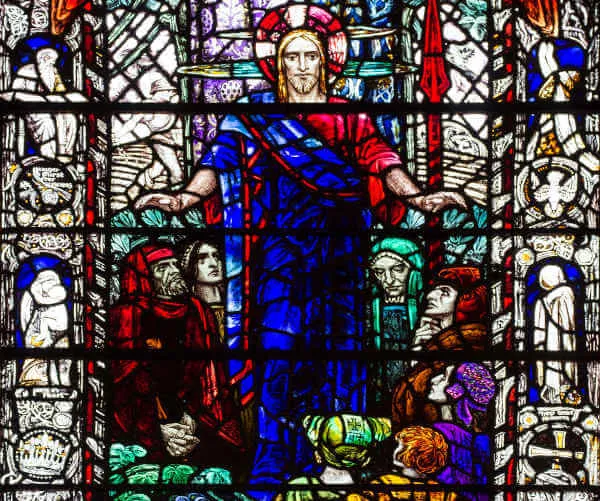
“You shall love the Lord, your God, with all your heart, with all your soul, and with all your mind. This is the greatest and the first commandment. The second is like it: You shall love your neighbor as yourself.”

Reflection:

We are very familiar with this passage above. It is Jesus’ answer to the Pharisees who came to test Jesus. Prior to this, a group of Sadducees tried to trap Jesus and failed. So now it was the Pharisees who gave it their best shot to trap our Lord. Of course, Jesus’ answer was perfect. And upon the conclusion of this answer, Jesus returned the favor by asking the Pharisees some questions that they could not answer, and they dared not ask Him any further questions at that time.

Sometimes, being challenged by another in matters of faith helps us, in that it allows us to clarify what we actually believe. Though Jesus did not need clarity for His own sake, He did offer this clarity in the face of trickery so as to help both the Pharisees as well as His followers who were listening attentively.

Have you ever been challenged by another about matters of faith? If so, what was your response? Were you able to respond by the inspiration and clarity given by the Holy Spirit? Or did you walk away confused and unable to respond? Having our faith challenged by another will either result in our own confusion or in our deeper understanding.

By answering this question in the way that Jesus did, He presented the entire Law given by Moses in the Ten Commandments in a new and summarized way. The first three of the Ten Commandments have to do with love of God, and the last seven have to do with love of neighbor. The second commandment Jesus gives, “You shall love your neighbor as yourself,” is a consequence of the first commandment. How do you “love yourself?” You do so by fulfilling the first commandment Jesus gave: “love the Lord, your God, with all your heart, with all your soul, and with all your mind.” When God is loved above all, then loving your neighbor simply means that you love God Who dwells within your neighbor in accord with the way God loves them.

It is also helpful to note that it is possible to “love” our neighbor in such a way that is contrary to the love of God. For example, if our love of neighbor is expressed in such a way that is contrary to the Love of God, then this is not true love. Let’s say that your neighbor has chosen a gravely immoral lifestyle. How do you love them with the love of God? You don’t say to them “I support you in your immoral living.” Doing so is not love of God; it’s a selfish form of love that cares more about how the person will respond back to you than caring for their eternal soul. The right form of love for one who has gone astray in an objectively immoral way is to let them know you love them but do not support the choices they are making. And though they may respond negatively to this, caring for their eternal salvation must supersede every desire to simply get along with them.

Love of neighbor, at times, especially when the “neighbor” is a family member who has turned from God, can be challenging. But when it is, think about the way that the Sadducees and Pharisees tried to constantly trap Jesus. He always gave the perfect response of love and never allowed their misguided conversation to leave confusion. So with us, we must rely upon the wisdom and love of God when loving another is difficult. God must guide our every conversation in that case so that the other knows they are loved and so that our love does not deviate from the pure love of God.

Reflect, today, upon the high calling you have been given to love God above all and to love your neighbor with that same love that you have for God. If you find loving someone is difficult, pray for the wisdom you need to remain faithful to them in God’s love alone. And if you find your love challenged, rely upon our Lord to lead you and to give you the words you need when you need them the most.

Source: https://catholic-daily-reflections.com/2025/08/21/loving-in-difficult-situations-4/

Matthew 22:37-39 Read More »

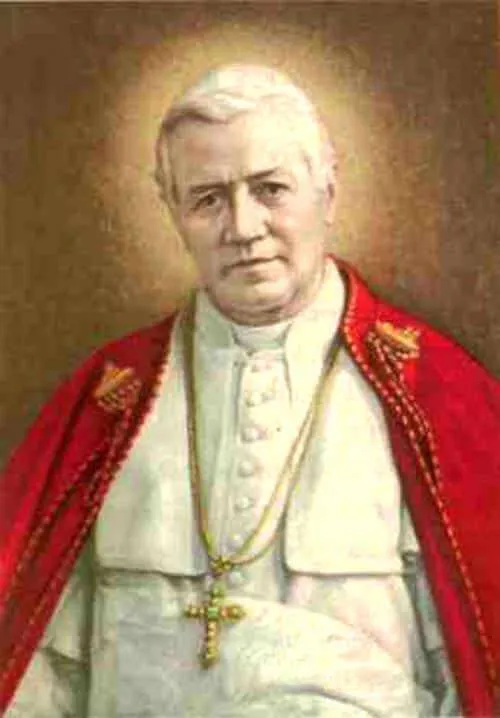
Saint Pius X, Pope

1835–1914; Patron Saint of First Communicants and pilgrims; Canonized by Pope Pius XII on May 29, 1954

Giuseppe Melchiorre Sarto was born in Riese, Kingdom of Lombardy-Venetia, present-day Italy. He was born into a poor family, the second of ten children. His father was a postman and his mother a seamstress. His family was very devout and Giuseppe learned the Catholic faith by both word and example. As a child, he was educated at home and by the local parish priest, Father Tito Fusaroni, who was very impressed by Giuseppe’s piety and intelligence. As a result, when Giuseppe was old enough, Father Fusaroni paid for his education at the gymnasium of Castelfranco Veneto, just a few miles from his home to which he walked each day. Because he was poor, he was often teased by the other students, but this only built his character. The gymnasium, as it was called, was a school geared toward academic excellence with the intent of preparing students for further studies. Around the age of fifteen, Father Fusaroni secured a scholarship for Giuseppe, who was sent to the Seminary of Padua, just over twenty miles south of his home, where he studied the classics, philosophy, and theology. He advanced to the top of his class but remained prayerful, generous, kind, and humble, while manifesting an unwavering faith throughout. Upon completing his studies, he was ordained a priest on September 18, 1858 at the age of twenty-three.

After ordination, Father Sarto became an assistant priest at the parish in Tombolo where he spent the next eight years. The pastor, Father Constantini, was older and often sick, which meant that Father Sarto quickly became the de facto pastor, fulfilling most of the priestly duties. He had a great respect for his pastor and often sought his advice. Father Constantini, in turn, grew in admiration for Father Sarto. He later said of him, “He is so zealous, so full of good sense, and other precious gifts that it is I who can learn much from him. Some day or other he will wear the mitre, of that I am sure. After that—who knows?” In Tombolo, Father Sarto was especially attentive to the needs of the poor, being raised poor himself, taught adult education classes, trained the parish choir in Gregorian Chant, carefully prepared his homilies, sought advice, and had a genuine concern for the good of his parishioners. In his spare time, he continued his studies on his own, studying the theology of Saint Thomas Aquinas as well as canon law.

In 1867, because of his excellent work in Tombolo, Father Sarto was appointed archpriest of Salzano. As archpriest, he had administrative and pastoral responsibilities over the entire territory with the assistance of priests under him. He continued the pastoral practices he had become accustomed to, as well as restoring the dilapidated church, expanding the Catholic hospital, and caring for the sick during an outbreak of cholera.

At the age of forty, Father Sarto was elevated to the prestigious responsibilities of Canon of the Cathedral at Treviso, Chancellor, and Vicar General. He also became the Spiritual Director of the diocesan seminary where he became deeply devoted to the formation of new priests. These important responsibilities, however, could not take him away from common people. He remained faithful to teaching catechism to children and adults and always reached out to the poor and needy.

In 1884, Pope Leo XIII named Canon Sarto as Bishop of Mantua, in north-central Italy. Though he at first resisted, the pope insisted. At that time, the Diocese of Mantua was in disarray. Just fourteen years prior, the Church had lost its temporal power over the Papal States, due to the establishment of the Kingdom of Italy. The Church and state were often at odds. The Church lost much of its influence, property, and internal control in those territories, including in Mantua. As a result, Bishop Sarto found a general indifference and secularism that was rampant. Bishop Sarto went to work. He invigorated the education of the laity, personally devoted himself to teaching in the seminary, reintroduced the scholastic theology of Saint Thomas Aquinas and Gregorian Chant, and breathed new life into his seminarians, presbyterate, and diocese. Because of his good work, in 1893, Pope Leo XIII, appointed Bishop Sarto as Patriarch of Venice and named him a cardinal.

In Venice, Cardinal Sarto continued to do what he had always done. He devoted himself to the seminary, where he mandated the teachings of Saint Thomas Aquinas, the use of Gregorian Chant, and introduced a faculty of canon law. He continued to catechize young and old, engaged in social works, avoided politics, and never lost his affection for the poor, ministering to them every chance he could. In 1903, after Cardinal Sarto spent nine years in Venice, Pope Leo XIII died and the cardinals gathered to choose his successor. The election of a pope at that time was governed by rules established in 1588 by Pope Sixtus V. Those rules permitted outside influence, such as vetoes, exercised by some civil authorities. In the conclave of 1903, the Emperor of Austria vetoed Cardinal Mariano Rampolla del Tindaro, the Secretary of State under Pope Leo XIII, who was the first to be elected. This veto was delivered through the Prince-Bishop of Krakow. A few ballots later, Cardinal Sarto received almost unanimous consent and was elected pope at the age of sixty-eight years, choosing the name Pius X. He later changed the rules for papal elections, eliminating outside influence such as the veto.

As pope, Pius X took as his motto, “To restore all things in Christ” (Ephesians 1:10). Remaining as he was when he was a parish priest, spiritual director, and bishop, he was humble, simple, loved teaching children, and showed concern for the poor. He introduced a universal catechism, reformed the curia, renewed seminary formation, revised the Code of Canon Law, revitalized the liturgy, encouraged Gregorian Chant, and emphasized the teachings of Saint Thomas Aquinas. At heart, he was a pastor, not a diplomat or politician. Without ambition, he never sought the elevations he received, but accepted all things in Christ with humility and surrender.

Most notably, his love for children and his long history of catechizing them led him to lower the age for First Holy Communion from twelve to seven, encouraging frequent reception of the Eucharist for them and all people. Deeply devoted to the Blessed Virgin Mary, he often spoke of her and honored her. Although he never received a doctorate degree, he was highly intelligent and firmly opposed modernism within the Catholic Church, viewing it as a synthesis of all heresies where doctrines were presented in a scattered and disjointed manner, thus creating doubts. In response, he preached that the Catholic faith was very reasonable, systematic, and clear—hence, his love for Saint Thomas Aquinas and Canon Law.

After Pius X’s death, he became the first pope to be canonized since Pope Saint Pius V, who died in 1572. His death came just weeks after the start of World War I. As he watched the growing tensions throughout the world, his pastoral heart was deeply distressed, and the sorrow he saw unfolding before him might have contributed to his death.

As we honor the first saintly pope of the last century, ponder his slow rise from an assistant priest to pastor of the world. This was done by God’s hand. All Pope Saint Pius X did was love, teach, care for the poor, pray, and be faithful to the teachings of Christ. God did the rest. For our part, our duty is to do every small thing well, loving God and others at every moment of our lives. If we do that well, repeatedly, God will be able to use us in unimaginable ways.

Source: https://mycatholic.life/saints/saints-of-the-liturgical-year/august-21—saint-pius-x-pope/

Saint Pius X, Pope Read More »

Matthew 22:2-3

An Invitation From the Father

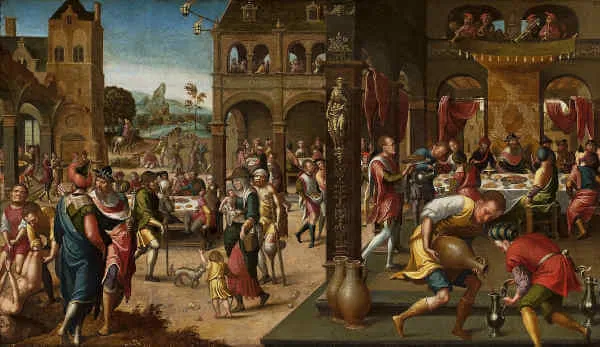
“The Kingdom of heaven may be likened to a king who gave a wedding feast for his son. He dispatched his servants to summon the invited guests to the feast, but they refused to come.”

Reflection:

The king in this parable is God the Father, and the wedding is the marriage between Christ and the Church. The Father invites each one of us to be a member of the Church and to enter into divine union with His Son Jesus, thus entering into the life of the Holy Trinity. But we see right away in the parable that the invited guests “refused to come.” As the parable goes on, the king tried even harder to invite the guests, but they all responded in one of two ways. “Some ignored the invitation and went away…” and “The rest laid hold of his servants, mistreated them, and killed them.” Clearly, this was not the response hoped for by the generous king.

We see in these two responses two levels of rejection of the Gospel that are present in our world today, just as it was at the time of Jesus. The first level of rejection is indifference. Many people are very busy today. We easily become occupied with many things that matter little in the end. Many are consumed by their smartphones, computers and tablets. Many spend countless hours watching television. Others become workaholics, spending most of their time at their occupation and leaving little time for that which is most important, such as family, prayer and service. As a result, it is very easy to become indifferent to the matters of faith and easy to fail to pray every day so as to seek out and fulfill God’s will. This indifference is quite serious.

There is also a rejection of the faith in our world through a growing hostility toward the Church and morality. There are many ways in which the secular world continues to promote a culture that is contrary to the Gospel. And when Christians speak out and oppose these new cultural tendencies, they are condemned and often characterized as being prejudiced or judgmental. Such malice was displayed by the guests in this parable who “laid hold of his servants, mistreated them, and killed them.” Hostility toward the Church, the faith and clear moral principles laid down by God appears to be growing every year. This form of rejection of the Gospel is even more damaging than the simple indifference mentioned above. In this parable for today, Jesus says that in response to those who were indifferent and hostile, the king “sent his troops, destroyed those murderers, and burned their city.”

This parable should not be read in such a way that we look at others and condemn them as if we were the king and had the right to do so. We do not have that right. Only God does. Instead, this parable should be read from the perspective of your own life. Hopefully you are not one of those who are hostile to the Gospel. But perhaps you and many other Christians struggle with the first form of rejection: indifference. We can easily become indifferent in many various ways and on many different levels. The opposite of being indifferent is to care and to care deeply about going to the wedding feast when invited.

Reflect, today, upon the Wedding Feast to which you are invited. You are invited to enter into the glorious celebration of becoming one with the Savior of the World. You are invited to surrender your life to Him without reserve. You are invited to holiness, moral integrity, unwavering fidelity to God, service of others, charity that knows no bounds and so much more. To enter the Wedding Feast of the Lamb is something that must take place every day and every moment of your day for the rest of your life. God is inviting you. Will you say “Yes” with every fiber of your being?

Source: https://catholic-daily-reflections.com/2025/08/20/an-invitation-from-the-father-3/

Matthew 22:2-3 Read More »

Saint Bernard of Clairvaux, Abbot and Doctor of the Church

1090–1153; Patron Saint of beekeepers, bees, candlemakers, chandlers, Cistercians, and Knights Templar; Canonized by Pope Alexander III on January 18, 1174; Declared a Doctor of the Church (Doctor Mellifluus, “Honey-Sweet Doctor”) by Pope Pius VIII in 1830

Bernard was born into a high-nobility family in Fontaines, France. He was the third of seven children, with five brothers and one sister. As a member of a wealthy family with high social status, Bernard likely received a comprehensive education. His devout parents instilled in him a deep faith. At a young age, he was sent to be educated by the canons of the Church of Saint-Vorles at Châtillon-sur-Seine, located about eighty miles north of his hometown. There, he studied grammar, poetry, literature, rhetoric, dialectics, Scripture, and theology. He excelled in the study of Scripture, personalizing it through prayer. He also held a profound devotion to the Blessed Virgin Mary, continually seeking her intercession.

When Bernard was around nineteen years old, his mother passed away. This event profoundly affected him and his entire family. He had already begun contemplating religious life, and his mother’s loss might have sparked a deeper resolve to abandon worldly pursuits and live solely for God. Back in Fontaines with his family, Bernard began to reveal his intention to enter the newly formed Cistercian monastery in Cîteaux, known as the Abbey of Notre Dame. Initially, he encountered resistance, as he would be relinquishing everything his noble family could provide. However, he remained resolute and eventually gained their support. In fact, his virtue, clarity of purpose, and evident holiness inspired thirty other young noblemen to join him, including all of his brothers except the youngest, who would join him later, as would his father. His sister would become a Benedictine nun.

The Cistercian order, established in 1098, sought to return to the ideals of the Rule of Saint Benedict. During that time, many Benedictine monasteries had deviated from the Rule by becoming involved in societal and political affairs, adopting excessively elaborate liturgies, and accumulating significant land and wealth. While the Rule of Saint Benedict prescribed a balanced life of prayer and work for all monks, many monasteries had developed a two-tiered structure. Lay brothers primarily performed manual labor and fulfilled minimal prayer requirements, while choir monks, often priests, spent less time laboring and focused more on chapel and study. The Cistercians aimed to restore a single-type monk practice. In 1113, Bernard and his brothers said good-bye to their father, younger brother, and sister, and accompanied by the rest of their noble companions, they journeyed thirty miles north to the Abbey of Notre Dame in Cîteaux. Upon their arrival, they prostrated themselves before the front gate, humbly begging Abbot Stephen Harding for admission, which he joyfully granted.

Abbot Stephen, who is now recognized as a saint, spent twenty-five years as abbot. His commitment to a more faithful living of the Rule of Benedict, holiness, and administrative skills enabled the newly founded Cistercian order to experience rapid growth. Numerous young men joined during its initial years, resulting in the establishment of many new monasteries. One of these monasteries was founded in what was then called the Valley of Wormwood. It was a desolate, swampy, rugged, and inhospitable place, but soon it would be transformed and receive the name Clairvaux, meaning “Clear Valley.” Abbot Stephen appointed Bernard as its founding abbot—a role he would fill for the next thirty-eight years.

During his time in Clairvaux, Abbot Bernard earned high respect for his holiness and leadership in monastic reform. He was a prolific writer, leaving behind roughly 530 letters and 300 sermons. Among his most influential sermons is a series of eighty-six sermons on the Song of Songs. These sermons were preached to his monks over several years and exemplify the nature of his spirituality. They delve deeply into contemplation, centering on divine love, the soul’s longing for God, the experience of spiritual union, and the transformative power of God’s grace. Additionally, he wrote more than twenty longer works of a theological and contemplative nature. Notably, his treatise “On Loving God” passionately and rationally articulates the reasons we should love God to an immeasurable degree. In all of his works, Abbot Bernard sought to teach not only the mind but also to draw the heart to conversion and love. He regularly emphasized the personal nature of God as revealed in Jesus Christ, our call to mystical union with Him, the need for humility, the benefits of asceticism, and the central role that the Blessed Virgin Mary must play in our lives. He was a theologian, contemplative, and mystic whose central goals were to love God and to draw others into that same love.

In addition to his roles as abbot and writer, Bernard was frequently called upon by the wider Church, requiring much travel. He founded many monasteries as extensions of the Abbey of Clairvaux, regularly assisted popes and bishops with pressing needs within the Church, was an eloquent apologist in defense of the faith against heresies, was outspoken in his defense of persecuted Jews, assisted at Church councils, preached at the second Crusade, and played a significant role in resolving many other theological, political, and societal disputes. He was a true peacemaker and unifier. Many miracles were attributed to him. He healed the sick, cast out demons, multiplied food, calmed storms, and raised the dead. He had the charism of spiritual discernment and was able to read the inner thoughts and intentions of people. His influence was strong during his time on earth, and his voluminous writings continue to profoundly impact monastic life and all who seek to know and love God and our Blessed Mother more deeply, whom he especially saw as our Mediatrix and as the Star of the Sea who guides us through the darkness of life.

By the time Abbot Bernard died, his monastery in Clairvaux numbered about 700 monks, and he had founded at least sixty-eight monasteries. He has since been given the title the mellifluus Doctor of the Church, meaning that his words were like honey—convincing, forthcoming, elegant, sweet, and effective. When he spoke, everyone listened and responded.

As we honor this great saint, reformer, theologian, mystic, unifier, and Doctor of the Church, ponder the effect that one man can have when his love of God reaches an immeasurable degree. His profound union with Christ and his burning desire to draw people to God should inspire us to exponentially increase our love of God, surrendering all to Him for His glory.

Source: https://mycatholic.life/saints/saints-of-the-liturgical-year/august-20—saint-bernard-of-clairvaux-abbot-and-doctor-of-the-church/

Saint Bernard of Clairvaux, Abbot and Doctor of the Church Read More »

Matthew 20:6-7

Overcoming Envy

Going out about five o’clock, he found others standing around, and said to them, “Why do you stand here idle all day?” They answered, “Because no one has hired us.” He said to them, “You too go into my vineyard.”

Reflection:

These are very generous words spoken by the landowner. As the parable explains, this landowner hired workers for his vineyard early in the morning, and then again at nine o’clock, noon, three o’clock and finally at five o’clock. But at the end of the day, he paid them all the same daily wage as if they had all been working since early morning. The ones hired first were upset thinking it was unfair that those who worked just an hour were paid the same wage as they were. But the landowner concludes, “What if I wish to give this last one the same as you? Or am I not free to do as I wish with my own money? Are you envious because I am generous?” God, in His mercy, is generous beyond comprehension. But we, as fallen humans, are constantly examining whether we are getting our fair share and comparing ourselves to others. We tend to want more and more and easily become envious when we see others succeed or receive blessings that we do not have. For example, if someone is more popular than us on social media, or drives a nicer car, or has a bigger home, or goes on an expensive vacation, we often tend to notice with a sort of sorrow that we do not have what they do. And that is envy.

The cure for envy is wholehearted generosity. Not just generosity with our money but generosity with our affections and our ability to rejoice in the blessings that others receive. For example, if someone were to tell you that they were going on a nice vacation next month to a place you always wanted to go, how would you react? You might jokingly say, “Wow, I’m jealous!” Jealousy can quickly turn into envy, which is a form of sorrow over the blessings another has that you do not. And that sorrow over the blessings of another can subsequently turn to anger.

These workers in the vineyard who worked all day and received the same amount as those who worked only one hour could have responded by congratulating the later workers and could have even jokingly said, “Lucky you, I wish I would have shown up at five o’clock!” But instead, they grumbled and tried to interfere with the generosity of the landowner saying, “These last ones worked only one hour, and you have made them equal to us, who bore the day’s burden and the heat.” Again, this is envy, in that their sorrow over the generosity of the landowner led them to try to interfere with the blessing the others received.

Whenever you notice this form of unholy sorrow within you, take notice. It means that you lack a selfless generosity toward others. And if you see God blessing another in spiritual riches, try to generously rejoice in that. Offer praise and thanks to God for His goodness. Don’t dwell on yourself and dismiss every temptation to compare. In many ways, everyone of us is represented by those who worked only one hour and received the full daily wage. This is because we could never earn the grace of salvation. The one and only reason we are able to receive the gift of eternal salvation and every other grace given to us by God is because God is infinitely generous. Therefore, the goodness and generosity of God must be our constant focus, and we must rejoice in that generosity when it is given to us and when it is also given to others.

Reflect, today, upon any tendency you have toward envy. Think about the blessings that others have been given that you have not. Sincerely look at your interior reaction to that and pray that God will grant you the gift of being able to be generous in your rejoicing in those blessings. Every blessing given by God must be the cause of our joy, no matter if those blessings are bestowed upon us or upon others.

Source: https://catholic-daily-reflections.com/2025/08/19/overcoming-envy-4/

Matthew 20:6-7 Read More »

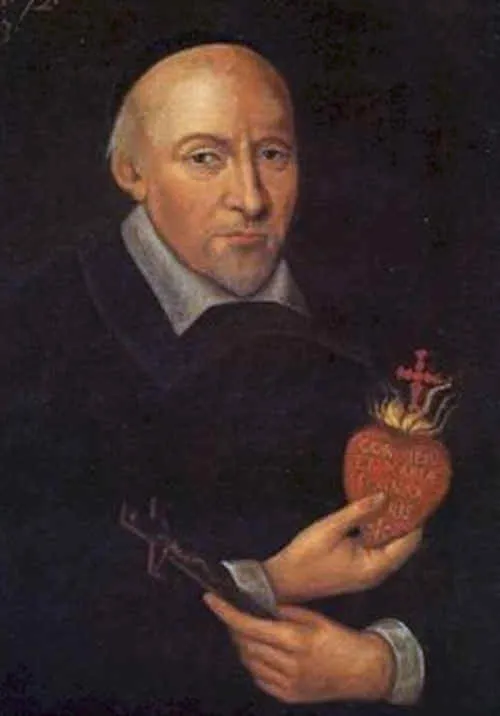
Saint John Eudes, Priest

1601–1680; Patron Saint of Eudists, Order of Our Lady of Charity, Diocese of Baie-Comeau, and Missionaries; Canonized by Pope Pius XI on May 31, 1925

In France, in 1562, tensions ran high between the Catholic majority and the Protestant Calvinist minority. Calvinism was spreading and opposition was fierce. This resulted in violent clashes from 1562–1598 in the Wars of Religion. Although the wars were primarily driven by powerful noble families, many citizens got involved, leading to multiple massacres. In 1589, Henry of Navarre, a Calvinist, ascended the throne to become King Henry IV of France. Despite his Calvinist roots, Henry converted back to Catholicism to secure his reign and to establish peace. He issued the Edict of Nantes in 1598, which granted religious tolerance to Protestants, effectively ending the internal wars. Three years later, Saint John Eudes was born.

John Eudes was born in Ri, a small farming village in the Normandy region of northwestern France. The region’s fertile soil produced abundant crops of wheat, barley, and fruit. John had two younger brothers and four sisters, and his parents were devout Catholics. Following John’s birth, they made a pilgrimage to the Church of Notre-Dame de la Recouvrance, about 120 miles from Ri, to dedicate their son to God. Their devotion paid off, as John developed a strong Catholic faith from a young age. A story recounts that when a playmate struck ten-year-old John on the cheek, John immediately fell on his knees, turning the other cheek in obedience to the Gospel command.

After being educated by a holy priest, John made his First Communion and received Confirmation around the age of twelve. It is said that he appeared like an angel in divine ecstasy on that day. Overjoyed, he soon after made a personal vow of chastity, dedicating his life to God, just as his parents had done for him upon his birth.

As a teenager, John was sent to the larger city of Caen, about thirty miles to the north, where he was educated by the Jesuits. The Jesuits, a new and respected order, were known for their excellent teaching. In Caen, John completed his philosophical studies and deepened his devotion, particularly toward the Holy Eucharist and the Blessed Virgin Mary. His devotion was so profound that his peers referred to him as “the devout Eudes.” After completing his philosophical studies, John’s father wanted him to return home and settle down. However, John explained that he had dedicated his life to God and pleaded to be allowed to continue his studies. His father relented, and John returned to Caen for theological studies under the Jesuits. After completing his studies, John joined the French Oratory of Pierre de Bérulle in Paris and was ordained a priest one year later at the age of twenty-four.

The French Oratory, distinct from the Roman Oratory of Saint Philip Neri, was founded in 1611 by Cardinal Pierre de Bérulle. Given the religious wars that had ravaged France in the late sixteenth century, Cardinal Bérulle took a new approach to Calvinism, fighting not with weapons, but with sound reasoning and faith. He is recognized as one of the founders of the French School of Spirituality, a Catholic Counter-Reformation movement that fostered personal devotion. This movement, emphasizing the Incarnation and the deeply personal nature of God, shifted away from the heavy focus on doctrine common in scholasticism. Instead, it fostered an intimate devotion through love of God and personal conversion. This movement greatly appealed to Father John Eudes, and he became a strong follower and leader within it.

After his ordination in 1625, Father Eudes fell gravely ill and was bedridden for almost a year. Once he recovered, he was sent to Aubervilliers, just outside Paris, for further theological studies. In 1627, his father informed him of a plague that had broken out in a village near his hometown. Father Eudes quickly ministered to the physical and spiritual needs of the victims, particularly encouraging them to turn to their loving mother in Heaven and to rely upon her intercession. When another nearby town experienced the same plague a few years later, he did the same. This time, out of fear that he would become infected and in turn infect others in the Oratory, he lived for a time in a barrel in an open field while ministering to the sick, unconcerned for his own well-being.

In 1633, Father Eudes began earnest preaching. He preached parish missions that would sometimes last for weeks or even longer. His sermons emphasized the mercy of God, and he rallied a large number of priests to hear confessions. He himself was an effective confessor who embodied the Heart of Christ to sinners. One parish after another was gradually transformed. During his missions, he developed a deep compassion for sinners trapped in cycles of sin, particularly prostitutes. To address their needs, he founded the Order of Our Lady of Charity of the Refuge in 1641, with the assistance of three Visitation sisters. The purpose of this order was to provide spiritual and material aid to repentant prostitutes who needed help to change their ways.

After ten years of preaching missions, Father Eudes began to notice that although people initially changed after a mission, they quickly fell back into their sins without ongoing spiritual support and guidance. To remedy this, Father Eudes turned his attention to the formation of the clergy. He realized he couldn’t single-handedly evangelize and offer ongoing spiritual support to everyone, and so, in 1643, he left the Oratory and founded the Society of Jesus and Mary, later known as the Eudists. The aim of this new congregation was to provide for the formation of seminarians and parish missions. Over the next thirty years, Father Eudes founded six major seminaries in France at Caen, Coutances, Lisieux, Rouen, Évreux, and Rennes. These seminaries not only formed seminarians but also welcomed priests for further education, formation, and retreats, and offered teachings to the laity.

Devotion was at the heart of Father Eudes’ ministry, and his most enduring legacies are his promotion of devotion to the Sacred Heart of Jesus and the Holy Heart of Mary. In 1648, with the permission of the local bishop, he instituted a feast in honor of the Holy Heart of Mary, fostering a realization of the love that the Blessed Mother had for her Son and for all people. Father Eudes later composed a Mass and Office in honor of the Sacred Heart of Jesus, which he celebrated with the bishop’s permission for the first time in 1670. His goal was to reveal the infinite and personal love of Christ Jesus for His people. Providentially, in 1673, a French nun and mystic, later to be a saint, named Sister Margaret Mary Alacoque began to have visions of Jesus, in which He conveyed the importance of devotion to His Sacred Heart. Among His requests, Jesus told her that He wanted the Feast of His Sacred Heart to be celebrated on the Friday after the octave of Corpus Christi, in reparation for the ingratitude of people for His Sacrifice. Thus, what Father Eudes was inspired to do in 1670, Jesus confirmed through a mystic shortly afterward. In 1856, Pope Pius IX extended this Feast to the Universal Church.

Saint John Eudes emerged as one of many saints within the Church in France during a time of spiritual renewal, using the weapons of personal devotion, prayer, adoration, frequent Communion, and Confession. Hearts were transformed, not just minds. To ensure that this renewal would be ongoing, he dedicated himself and his newly founded order to the formation of priests, providing good shepherds who emulated the Heart of Jesus to God’s people. As we honor this great saint, ponder all he did but especially his devotion to the Hearts of Mary and Jesus. Their hearts reveal who they are, along with their compassion and unbounded love for us all. Run to their hearts today and always, receiving from them all that you need for your own transformation. Then dispense the infinite mercy of God to others.

Source: https://mycatholic.life/saints/saints-of-the-liturgical-year/august-19—saint-john-eudes-priest/

Saint John Eudes, Priest Read More »

Matthew 19:24-26

The Eye of a Needle

Again I say to you, it is easier for a camel to pass through the eye of a needle than for one who is rich to enter the Kingdom of God.” When the disciples heard this, they were greatly astonished and said, “Who then can be saved?” Jesus looked at them and said, “For men this is impossible, but for God all things are possible.

Reflection:

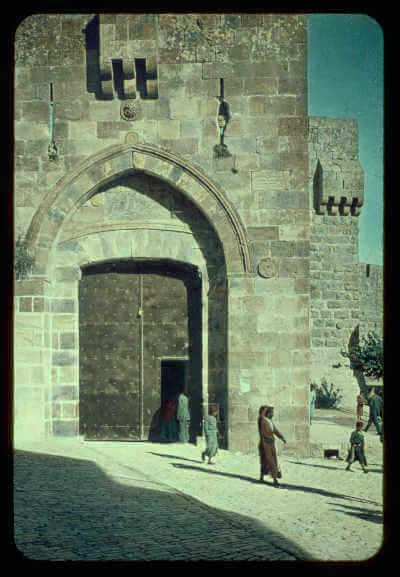
According to one tradition, the “eye of the needle” referred to a gate in the wall of Jerusalem. During the day, there was a large gate that was open through which a camel could easily pass. But at night, the larger gate was closed and there was a smaller opening in the center of the gate that allowed people to pass through. A camel, however, could not pass through that smaller opening unless it got down on its knees, had its load removed from its back, and then crawled through. In referencing this story, Saint Anselm states that “the rich should not be able to pass along the narrow way that leads to life, till he had put off the burden of sin, and of riches, that is, by ceasing to love them” (Catena Aurea). So is it possible for a camel to enter through the “eye of the needle” and, therefore, a rich man to enter into Heaven? Yes. But only under the condition of being on their knees, humbling themselves, and ridding themselves of the “baggage” of their riches.

For those who are truly rich in the things of this world, this Gospel passage may be difficult to read and reflect upon. It was spoken in reference to the rich young man who asked Jesus how he can enter into eternal life. Jesus’ answer was “go, sell what you have and give to the poor, and you will have treasure in heaven.” At that, the rich young man went away sad because he was clearly attached to his wealth.

Jesus’ explanation above, however, should give hope to anyone who struggles with this high expectation. The disciples were truly troubled by what Jesus said, and that is why Jesus followed up by saying, “For men this is impossible, but for God all things are possible.” For God all things are possible! This statement of fact should be carefully pondered and believed by anyone who struggles with being overly attached to material riches. It should also be noted that one can be attached to riches even if they do not have riches. The desire for more is the attachment that needs to be cleansed, not the actual possession of riches. In fact, it is possible to have many possessions and not be attached to them at all. This is the beauty of poverty of spirit. But be careful not to presume that you have perfected this beatitude too quickly. Jesus’ statement above was said out of love for those who are overly attached to the things of this world. So if this is you, be merciful to yourself and pay close attention to Jesus’ words and your own interior struggle with this.

Reflect, today, upon this clear and unambiguous statement of Jesus. “It is easier for a camel to pass through the eye of a needle than for one who is rich to enter the Kingdom of God.” Do you believe this? Can you accept this? Is Jesus speaking to you through this passage? Again, even if you are materially poor, is your desire for riches strong? If so, this passage equally applies to you. Allow this passage to sit within your heart in a prayerful way and try to be as honest as you can with yourself as you read it. Do not hesitate to choose the true riches of Heaven over the passing things of this world. In the end, the value of spiritual wealth infinitely outweighs anything you possess for your short time here on earth.

Source: https://catholic-daily-reflections.com/2025/08/18/the-eye-of-a-needle-4/

Matthew 19:24-26 Read More »

Saint Alberto Hurtado Cruchaga

Profile

Alberto’s father died when he was four years old. He grew up in poverty, living with a series of relatives. He was educated at the Jesuit College in Santiago, Chile.

Early in his life, Alberto felt a call to religion, and to work with those as poor as himself. He entered the Jesuit novitiate in 1923, and was ordained in 1933. He taught religion at Colegion San Ignacio, trained teachers at Catholic University in Santiago, led retreats for young men, and worked in the poor areas of the city whenever he could.

In 1941, Alberto wrote Is Chile a Catholic Country?, and became national chaplain to the youth movement Catholic Action.

During a retreat in 1944, Father Alberto started the work that would lead to El Hagar de Cristo which shelters the homeless and tries to rescue abandoned children, and was later modeled somewhat on the American Boys Town movement.

In 1947, Alberto founded the Chilean Trade Union Association (ASICH) to promote a Christian labor-union movement. He founded the journal Mensaje, dedicated to explaining the Church‘s teaching, in 1951. He wrote several works in his later years on trade unions, social humanism and the Christian social order.

Born

  • 22 January 1901 at Vina del Mar, Chile

Died

  • 18 August 1952 at Santiago, Chile of pancreatic cancer

Venerated

  • 21 December 1991 by Pope John Paul II (decree of heroic virtues)

Beatified

  • 16 October 1994 by Pope John Paul II

Canonized

  • 23 October 2005 by Pope Benedict XVI at Rome, Italy

Source: https://catholicsaints.info/saint-alberto-hurtado-cruchaga/

Saint Alberto Hurtado Cruchaga Read More »

Matthew 19:21-22

Perfection

If you wish to be perfect, go, sell what you have and give to the poor, and you will have treasure in heaven. Then come, follow me.”  When the young man heard this statement, he went away sad, for he had many possessions.

Reflection:

This is the conclusion to the conversation that Jesus had with a rich young man who came to Him and asked, “Teacher, what good must I do to gain eternal life?” Jesus went on to tell him to keep the commandments. The young man said he has done so from his youth and wanted to know what else he could do. So Jesus answered his question. But the answer was more than the young man could accept.

“If you wish to be perfect, go, sell what you have and give to the poor, and you will have treasure in heaven. Then come, follow me.” Do you want to be perfect? If so, then Jesus has set a high bar for such a goal. It seems that many followers of Christ are okay with simply being okay. In other words, it seems that it is rare to find a person who is wholeheartedly committed to perfection. Many may have good intentions, but it seems that there are few who fully commit themselves to all it takes to truly obtain the perfection to which we are all called. 

It’s interesting to note that Jesus’ initial response to this rich young man explained the requirements for entering eternal life, that is, the minimal requirement for obtaining Heaven. Simply put, Jesus said that if you refrain from serious sin by keeping the commandments, then you will inherit eternal life. Of course, that also presumes that you have the gift of faith and are thus open to the gift of salvation. So is that what you are content with? Are you satisfied with doing the minimum it takes to get to Heaven?

The idea of perfection can appear to be beyond us. Too often we can think, “I’m only human.” But as a human who is called by God, we are invited to work toward the obtainable goal of greater holiness. Though we will always fall short, we must strive to become as holy as we can, holding nothing back.

Though the invitation given to this young man to “go, sell what you have and give to the poor” is not a requirement that our Lord places on everyone, He does call some to do this literally. But for everyone else, the invitation still remains—but in a spiritual sense rather than a literal sense. This is the spiritual call to interior poverty of spirit. Everyone of us is called to be interiorly detached from the things of this world in a complete way, even though we retain our possessions. We must have as our single possession the love of God and the service of His will. This depth of spiritual detachment means that God and His holy will is all we desire in life. And if He ever were to call us to literally give everything up, we would do it without hesitation. And though that may seem extreme, it is, in fact, exactly what will benefit us the most. It is the only way to become fully human and fully the person we were meant to be. And the end reward is not only the attainment of Heaven but an incomprehensible amount of glory in Heaven. The holier we become here on earth, the greater will our eternal reward be in Heaven. Do not hesitate to do all you can to build up that treasure that will be with you forever.

Reflect, today, upon the high calling to perfection given to you by God. Ask yourself in a very sincere way whether or not you are simply okay with being okay or if you want so much more. Do you want the greatest riches in Heaven? Do you want your eternity to be one in which the spiritual treasures you build up now are with you forever? Do not hesitate to accept this high calling from Jesus. Allow His invitation to this rich young man to echo within your heart as His personal invitation to you, also. Say “Yes” to Him and know that you will be eternally grateful you did.

Source: https://catholic-daily-reflections.com/2025/08/17/perfection-4/

Matthew 19:21-22 Read More »