August 2025

Matthew 23:27-28

The Firmness and Strength of Love

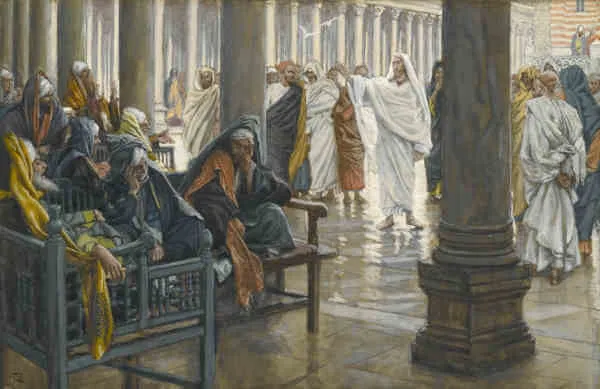
Jesus said, “Woe to you, scribes and Pharisees, you hypocrites. You are like whitewashed tombs, which appear beautiful on the outside, but inside are full of dead men’s bones and every kind of filth. Even so, on the outside you appear righteous, but inside you are filled with hypocrisy and evildoing.” 

Reflection:

This would not have been an easy thing for the scribes and Pharisees to hear. It is a hard truth, spoken by our Lord, partly in an attempt to shake them free of their sin. And even though they may not have enjoyed hearing this clear condemnation spoken, since it came from the Savior of the World, we can be sure that these are words of the deepest love and were spoken so that these men would repent and change their ways.

Perhaps each of us, at times, feels like criticizing another. Most often, when we feel this way, it stems from our own personal sin of anger. Perhaps we were hurt by another and that hurt results in a desire for a form of vengeance that comes from anger. But this was not the case with Jesus.

First, these words were spoken by Jesus to his disciples and to the crowds of people, not only to the scribes and Pharisees. So in many ways Jesus spoke this for the good of those who were suffering under the misguided leadership of these religious leaders. But Jesus knew that these leaders would also hear His words, so He spoke those words to them. But unlike us, He did it out of perfect virtue so as to care for their souls.

At times, each one of us needs to hear Jesus rebuke us in love. If any of the scribes and Pharisees were open at that time, then Jesus’ words would have first stung them to the heart but then had the powerful effect of challenging them to change. They needed this and so do we. When we become stuck in our sins, especially if obstinacy sets in, then we need to allow Jesus to challenge us firmly. Such a challenge can be rattling, but that rattling is sometimes necessary. Emotion and passion can lead to sin, but it can also lead to repentance and conversion. The passion with which Jesus spoke became an instrument by which their own passions made them sit up and take notice. The result was that they either became more steeped in their sin or they repented. And though most became even more steeped in sin, which ultimately resulted in their persecution and death of Jesus, we can hope that there were some who did repent, such as Nicodemus.

Reflect, today, upon the strength of Jesus’ words to these religious leaders. Though they were supposed to be both “religious” and “leaders,” they were neither. They needed Jesus’ strength, courage and firmness. They needed to be confronted directly and receive the hard and clear truth about their sin. Reflect upon what it is in your own life that Jesus wants to say to you. Is there an area of your life in which our Lord needs to address you with passion, strength, clarity and firmness? Most likely there is. Perhaps not in an area of serious sin like it was with these scribes and Pharisees, but if we are open, Jesus wants to powerfully go after every sin within us. Open yourself to Him and allow Him to help rid you of the sins with which you struggle the most. And be grateful for this grace when He does.

Source: https://catholic-daily-reflections.com/2025/08/26/the-firmness-and-strength-of-love-4/

Matthew 23:27-28 Read More »

Saint Joseph of Calasanz, Priest

1556–1648; Patron Saint of Catholic schools (especially ones for the poor), colleges, and schoolchildren; Canonized by Pope Clement XIII on July 16, 1767

Joseph Calasanz was born near Peralta de la Sal, in the Kingdom of Aragon, modern-day Spain. While farming was the primary means of livelihood for most people in his hometown, Joseph’s parents were members of the nobility and devout Catholics who ensured that he was well educated and learned his catechism from a young age. One story relates that, as a boy, Joseph used to gather the other children and teach them about God. One day, after learning about the devil, he gathered some youth for an important mission: he wanted to kill the devil because the devil was God’s enemy.

Around the time Joseph turned fourteen, he was sent to a school about ten miles from his home, where he learned from the friars of the Trinitarian Order. It was then that he first sensed God calling him to become a priest. He was next sent to the University of Lleida, where he studied philosophy, earning a Doctorate in Laws with honors. Then he made the long journey south to study theology in Valencia before heading west to Madrid, where he completed his education.

Around that time, when Joseph was about twenty-six years old, his mother died. Though grief-stricken, he decided to fulfill the desire in his heart, informing his father that he wanted to become a priest. His father, however, wanted him to marry, since Joseph was the only surviving son to carry on the family name. Before the issue could be resolved, Joseph became ill and almost died. This so affected Joseph’s father that he changed his mind and permitted Joseph to be ordained. His ordination took place one year later on December 17, 1583.

For the next nine years, as a newly ordained priest with a sound education, Father Calasanz served in various capacities under two different bishops. He first served as theologian and confessor to Bishop della Figuera, as well as in important administrative positions. In 1587, Father Calasanz was summoned home to attend to his sick father who died shortly after his arrival. Bishop della Figuera also died around that time, so Father Calasanz began working as the Vicar General for the Bishop of Urgell, where he was ordained.

Less than five years later, in 1592, Father Calasanz heard God calling him to something new. Administrative work was not what God was calling him to for the rest of his life. This desire grew when he experienced a vision of himself teaching large numbers of children with the help of angels in the city of Rome. This vision impressed upon his heart so much that, at the age of thirty-five, he promptly responded to the call.

In Rome, Father Calasanz met Cardinal Marcantonio Colonna, who appointed him as his personal theologian and also had him tutor his nephew. He also joined the recently formed Confraternity of Christian Doctrine, which was established in Rome with the purpose of educating children in the faith. The problem Father Calasanz encountered was that there were many poor and orphaned children in Rome who were homeless and needed assistance. Seeing this broke his heart. Among their needs was catechesis, but they needed education and formation in every area of life. In response to these needs, Father Calasanz attempted to admit these children to a local school for free, but he met with roadblocks. The teachers, who already worked for low wages, were often unwilling to accept more children without pay. A local pastor, however, offered to help by allowing Father Calasanz to use some rooms at his church for classes. Soon, some other priests offered to help with the catechesis and in 1597, five years after arriving in Rome, Father Calasanz opened a school, the first free school for children in all of Europe.

Though the work began small, with only one school, the Holy Spirit soon flooded this good priest with an abundance of children and support. While the novelty of his approach resulted in resistance from some, others were impressed. From the pope and bishops, down to local priests and laity, many began to offer their support for his good work. In 1600, Father Calasanz opened his first “Pious School” in Rome and continued to expand. Two years later, he had around 1,000 children in his schools.

Around that time, Father Calasanz rented a house in Rome for himself and the priests who were assisting him so that they could form a community life together as they engaged in their work. Over the next fifteen years, Father Calasanz’s priestly companions grew to more than a dozen. These good priests sensed God calling them to form a religious order, so Father Calasanz formed a rule and presented it to the Holy Father. In 1617, Pope Paul V approved the rule submitted by Father Calasanz, and the “Pauline Congregation of the Poor of the Mother of God of the Pious Schools” (Piarist for short) was established as a congregation with simple vows. In addition to the normal vows of poverty, chastity, and obedience, these fathers took a fourth vow of dedicating themselves to the free education of children, especially the poor. In 1621, the congregation was elevated to the status of a religious order by Pope Gregory XV, who gave them the name “Order of Poor Clerics Regular of the Mother of God of the Pious Schools.”

By the time of Father Calasanz’s death in 1648, the Piarist Fathers ran dozens of free schools throughout Europe. Father Calasanz created his own teaching methods and curriculum, which he instilled in his brother priests. They welcomed all students, including Jews and Protestants. In addition to catechism, they taught science, math, literature, and Latin. They focused on character formation, hygiene, and basic skills to promote healthy living. Though they disciplined the children, they sought to do so with mildness, preferring to anticipate problems and prevent them, rather than being harsh after the children went astray.

Saint Joseph Calasanz’ vision of educating poor children while surrounded by angels came true. He sensed God calling him to a particular mission and did not hesitate to fulfill that duty. God used him to care for the poorest and most vulnerable in society by raising those children up into well-formed adults through compassion, formation, and systematic education. His approach to free education flowed from Christian charity, and that charity grew and blossomed throughout the entire world. Today, the 1,400 Piarist Fathers extend from Europe to Asia, Africa, and North and South America.

As we honor this great saint who was both a founder and educator, ponder the important responsibility of forming children in the faith. As you do, reflect upon your role in this. If God is calling you in some way to engage in the apostolate of the education and formation of youth, do not hesitate to respond. If not, add this important mission to your daily prayers so that the laborers who are needed will fill this most important role in the lives of those who need it the most.

Source: https://mycatholic.life/saints/saints-of-the-liturgical-year/st-joseph-calasanctius—august-25/
Saint Joseph of Calasanz, Priest Read More »

Matthew 23:24-26

The Sanctuary Within You

“Blind guides, who strain out the gnat and swallow the camel! Woe to you, scribes and Pharisees, you hypocrites. You cleanse the outside of cup and dish, but inside they are full of plunder and self-indulgence. Blind Pharisee, cleanse first the inside of the cup, so that the outside also may be clean.”

Reflection:

Imagine if someone were to offer to wash the dishes after dinner and all they did was to wash the outside of the cups and bowls but left the inside untouched and then placed them back in the cupboard. The next time you would go to use them, you would find them looking good until you took them down and saw the dried liquid and food inside. This is the image that Jesus uses to describe the Pharisees. They only cared about the external appearance and ignored the more important interior of the soul.

Jesus also used the contrasting images of straining out the gnat and swallowing the camel. This was a reference to the laws in Leviticus that forbade the Israelites from eating “swarming creatures,” such as gnats and other bugs, (Leviticus 11:41–45) as well as the meat of camels (Leviticus 11:4). Saying that the Pharisees “strain out the gnat and swallow the camel” was a figure of speech by which Jesus accused the Pharisees of distorting the smallest details of the law while ignoring the most important ones. For example, the Pharisees required everyone to strain all liquid before drinking it, just in case a gnat accidentally was present in that liquid, but they cared little about true justice when it came to killing the Son of God. For these reasons, the Pharisees had become “blind guides” and “hypocrites,” incapable of leading people to holiness.

The bottom line is that Jesus is telling us that we must truly become holy, not just appear so. God sees the heart and judges the heart. The only other person who can see your heart is you. Therefore, we must also hear this condemnation of the Pharisees so that we will understand the importance of looking into our own souls first and foremost. From there, from the holiness within, our exterior will also radiate the holiness of God.

One of the documents of Vatican II, Gaudium et Spes, beautifully speaks to us about the conscience: “Conscience is the most secret core and sanctuary of a man. There he is alone with God, Whose voice echoes in his depths” (#16). This “secret core and sanctuary” within us is what Jesus is most concerned about. Very often we are tempted to be far more concerned about how we look to others than how we truly are inside. For example, the person who lives a sinful double life may go to great lengths to look holy to others, doing all they can to hide their sin from others. On the contrary, someone might be living a very holy life but be falsely accused by another publicly, causing much pain. In the former case, as long as the person is not found out, they appear at peace. In the latter case, even though the person is living a good and holy life, if they are falsely accused, they may be tempted to despair as their public image is shattered.

What others think and say about us is ultimately out of our control to a lesser or greater degree. What is within our control is that which is within us. Our interior life, that secret core, that sanctuary within where we meet God, must become the focus of our energies. Exteriorly, it ought not matter that others praise us or criticize us. What matters is that which is true, and only you and God can look into your heart to see that truth. The Pharisees failed to understand this essential truth. They put all their energy into their public image, neglecting that which was most important, making them incapable of leading others to God.

Reflect, today, upon your soul. How often do you look inside yourself? Are you able to be honest with yourself, acknowledging your sin and being grateful for your virtue? Or are you among those who are more concerned with how you look to others? Turn your eyes to the secret sanctuary within because it is there, in that secret core, that you will meet God, grow in holiness and then radiate that true holiness within our world. When that happens, God will also be able to use you to be a true guide to holiness for others.

Source: https://catholic-daily-reflections.com/2025/08/25/the-sanctuary-within-you-2/

Matthew 23:24-26 Read More »

Saint Louis, King

1214–1270; Patron Saint of barbers, hairdressers, builders, construction workers, button makers, distillers, embroiderers, needleworkers, kings, sculptors, soldiers, stoneworkers, bridegrooms, parenthood, parents of large families, prisoners, sick people, and co-patron of the Third Order of Saint Francis; Invoked against the death of children and difficult marriages; Canonized by Pope Boniface VIII in 1297

Louis IX, born in Poissy, France, was the fourth child of the Crown Prince and Princess of France, Louis VIII and Blanche of Castile. When Louis was born, his grandfather, Philip II, had been King of France for thirty-four years. When Louis IX was nine, his grandfather died, and his father, Louis VIII, became king, but would only reign for three years. After his father’s death in 1226, Louis IX became King of France at the age of twelve. Because of his age, his mother acted as his regent until he was old enough to rule on his own at the age of nineteen.

As the son of a prince and then as a young king, Louis IX was well educated in Latin, public speaking, writing, military arts, and government. His private tutors were handpicked by his devoted mother, a faith-filled Catholic who saw to it that her children were well formed in the faith. One day, his mother reportedly told young Louis, “I love you, my dear son, as much as a mother can love her child; but I would rather see you dead at my feet than that you should commit a mortal sin.” This powerful statement of love from his mother resonated in Louis’s heart throughout his life.

During her time as Queen Mother and Regent of France, Blanche ruled with virtue. She supported monasteries and convents, practiced her faith well, was generous to the poor, and governed with justice. This had a profound effect on her king son. When Louis was eighteen, his mother chose Margaret of Provence, the thirteen-year-old daughter of Ramon Berenguer IV, Count of Provence, as his wife. Margaret was an ideal wife for Louis on account of her piety and virtue. The couple fell in love and had eleven children. They enjoyed spending time with each other—reading, riding, listening to music, and praying. It is often reported that this close bond caused Louis’s mother to be jealous, and she and her daughter-in-law had a strained relationship.

After his regency ended, King Louis’ subsequent reign of thirty-six years was marked by justice, care for the poor, arbitration, strategic alliances, crusades, and deep devotion. As for his devotion to the Catholic faith, King Louis was known as a man of prayer. As acts of interior devotion, he recited the Divine Office daily, attended Mass twice each day, and wore a hairshirt under his clothing. Perhaps the most inspiring legacy of King Louis’ faith can be found in a letter he wrote to his son in which he shares his fatherly heart, giving his son, the future king, guidance on how to be a good man and king. His letter is filled with practical exhortations of faith, by which he attempts to imprint on his son’s mind and heart the path to holiness.

These acts of piety also led to external works, such as engaging in public penances to inspire his subjects, building and supporting numerous monasteries and convents, and collecting holy relics that he housed in a chapel he commissioned, called the Sainte-Chapelle, or “Holy Chapel.” Most notably, that chapel is said to house the Crown of Thorns, which was King Louis’ most sacred relic. Because of his faith, King Louis also promoted the sacred arts throughout France and laid the foundation for academic institutions of theological excellence. Additionally, he was very committed to works of charity. He built hospitals for the sick and homes of reformation for prostitutes, and he personally cared for the poor.

King Louis was also a man of justice. He was known to spend long periods of time listening to grievances from his people and issuing just resolutions. He reformed the legal system and outlawed archaic and unjust practices. He put an end to wars among the nobility, seeking common sense solutions to their disputes rather than violence. His justice and morally upright reputation were so well known that other rulers even called upon him to help settle serious conflicts in other kingdoms, such as with the King of England and the English barons.

In 1244, the city of Jerusalem was taken by the Khwarazmian Turks, in violation of the Treaty of Jaffa of 1229. Though war should never be undertaken for aggressive and conquering reasons, self-defense or the defense of others is a moral duty. King Louis recognized that duty and was aware of his unique position to help. In 1248, King Louis set out with his army of crusaders to battle the Turks in what is known as the Seventh Crusade. His aim was Egypt, the center of Muslim power. Though he was initially successful in taking the city of Damietta, his army was decimated as they tried to advance, and the king was captured. After a short imprisonment, he was ransomed for an extremely large sum of money and then spent the next four years in Crusader-controlled strongholds in the Holy Land, giving them support and encouragement. After six years, he returned home to France where his mother had been ruling as regent in his absence.

In 1267, King Louis once again sensed a duty to defend the Holy Land. After three years of careful planning, Tunisia was selected as the target with the goal of converting the Muslim king to the Catholic faith, in hopes that the king would then help establish broader peace between Christians and Muslims. Unfortunately, upon arriving in Northern Africa, disease broke out in the Crusader camp. Among the dead was King Louis IX. His body was sent back to France, and his son, Philip III, succeeded him as king. In 1297, just twenty-seven years after Louis’ death, Pope Boniface VIII canonized Saint Louis on account of his deep personal piety, his efforts to reform and improve justice, and his leadership in two Crusades.

The life of a king in the High Middle Ages, with its riches and unchecked power, brought with it numerous temptations. Saint Louis was one of those rare souls who remained simple, humble, devout, just, thoughtful, morally upright, and prayerful throughout his reign. He is the only King of France to receive the sacred title “Saint.” As we honor this holy and just ruler, ponder the temptations he would have had to overcome in order to become universally recognized as a Catholic saint. As you do, ponder the qualities you most need in your life to overcome any of the snares that tempt you, so that you will fulfill your duties in accord with the mind and heart of Christ.

Source: https://mycatholic.life/saints/saints-of-the-liturgical-year/st-louis-king—august-25/

Saint Louis, King Read More »

Matthew 23:13

Unity of Truth and Virtue

“Woe to you, scribes and Pharisees, you hypocrites. You lock the Kingdom of heaven before men. You do not enter yourselves, nor do you allow entrance to those trying to enter.”

Reflection:

Today begins Jesus’ “Woe to you…” condemnations of the scribes and Pharisees. He issues seven subsequent condemnations. The one quoted above is His first. At the time, Jesus’ condemnations of these religious leaders fell mostly on deaf ears. They were obstinate and would not listen to what Jesus had to say. But it’s useful to note that these condemnations appear to actually be spoken about the scribes and Pharisees to the disciples and the crowds to whom Jesus was speaking.

Though there are many lessons we can learn from our Lord, let’s consider the first thing He says. He condemns hypocrisy. Hypocrisy is essentially saying one thing and doing another. It’s a disconnect between what we say and what we do. Hypocrisy can also come in the form of trying to present oneself as if one has every virtue under Heaven but in reality cares little for the clear doctrine and moral precepts given us by God. In the scripture passage, the scribes and Pharisees claimed to be leading people to salvation, but they were condemning the very source of salvation. On one hand, some of what they taught was true, but they failed to teach with the virtue that comes from God. On the other hand, some of what they taught was flat-out erroneous, because they were more concerned about their public persona than they were about the truth. Essentially, they were hypocrites, because their words and actions were neither united in the truth nor lived through the virtues given by God.

These two opposing tendencies seem to be a source of much division within our Church today. On the extreme “right,” we have those who preach doctrine but fail to exercise the necessary virtue so as to be effective instruments of those truths. And on the extreme “left” are those who act as if so-called virtue is all that matters. They deemphasize the clear and unambiguous moral and doctrinal truths that were given to us by our Lord, so that others will praise them for appearing kind, accepting and compassionate toward all. The problem is that one cannot exclude truth from virtue or virtue from truth. Compassion is not compassionate if it lacks truth, and the truth is not true if it is not presented with the virtues by which our Lord wants them brought forth. And though the scribes and Pharisees appear to be more focused upon their interpretations of various truths to the exclusion of virtue, their struggle with hypocrisy is just as real for those on both extremes today.

Reflect, today, upon the importance of embracing each and every moral and doctrinal precept given by our Lord. We must embrace everything He says with every fiber of our being. Reflect, also, upon how you express these teachings of Jesus to others. Do you strive to present the full Gospel with the greatest virtue? The deeper the truth, the more necessary is the virtue with which it is presented. And the more virtue you have, the better instrument of the full truth you will be. Strive to overcome every form of hypocrisy within your life by working toward true holiness. Holiness is wholeness. The Truth united to virtue. Only then will you escape from the condemnation of our Lord, but you will also thrive as a pure instrument of His saving grace.

Source: https://catholic-daily-reflections.com/2025/08/24/unity-of-truth-and-virtue-4/

Matthew 23:13 Read More »

Twenty-first Sunday in Ordinary Time

First Reading Isaiah 66:18-21

Thus says the LORD:
I know their works and their thoughts,
and I come to gather nations of every language;
they shall come and see my glory.
I will set a sign among them;
from them I will send fugitives to the nations:
to Tarshish, Put and Lud, Mosoch, Tubal and Javan,
to the distant coastlands
that have never heard of my fame, or seen my glory;
and they shall proclaim my glory among the nations.
They shall bring all your brothers and sisters from all the nations
as an offering to the LORD,
on horses and in chariots, in carts, upon mules and dromedaries,
to Jerusalem, my holy mountain, says the LORD,
just as the Israelites bring their offering
to the house of the LORD in clean vessels.
Some of these I will take as priests and Levites, says the LORD.Thus says the LORD:
I know their works and their thoughts,
and I come to gather nations of every language;
they shall come and see my glory.
I will set a sign among them;
from them I will send fugitives to the nations:
to Tarshish, Put and Lud, Mosoch, Tubal and Javan,
to the distant coastlands
that have never heard of my fame, or seen my glory;
and they shall proclaim my glory among the nations.
They shall bring all your brothers and sisters from all the nations
as an offering to the LORD,
on horses and in chariots, in carts, upon mules and dromedaries,
to Jerusalem, my holy mountain, says the LORD,
just as the Israelites bring their offering
to the house of the LORD in clean vessels.
Some of these I will take as priests and Levites, says the LORD.

Responsorial Psalm Psalms 117:1, 2

R.(Mk 16:15) Go out to all the world and tell the Good News.
or:
R. Alleluia.
Praise the LORD, all you nations;
glorify him, all you peoples!
R. Go out to all the world and tell the Good News.
or:
R. Alleluia.
For steadfast is his kindness toward us,
and the fidelity of the LORD endures forever.
R. Go out to all the world and tell the Good News.
or:
R. Alleluia.

Second Reading Hebrews 12:5-7, 11-13

Brothers and sisters,
You have forgotten the exhortation addressed to you as children:
“My son, do not disdain the discipline of the Lord
or lose heart when reproved by him;
for whom the Lord loves, he disciplines;
he scourges every son he acknowledges.”
Endure your trials as “discipline”;
God treats you as sons.
For what “son” is there whom his father does not discipline?
At the time,
all discipline seems a cause not for joy but for pain,
yet later it brings the peaceful fruit of righteousness
to those who are trained by it.

So strengthen your drooping hands and your weak knees.
Make straight paths for your feet,
that what is lame may not be disjointed but healed.

Alleluia John 14:6

R. Alleluia, alleluia.
I am the way, the truth and the life, says the Lord;
no one comes to the Father, except through me.
R. Alleluia, alleluia.

Gospel Luke 13:22-30

Jesus passed through towns and villages,
teaching as he went and making his way to Jerusalem.
Someone asked him,
“Lord, will only a few people be saved?”
He answered them,
“Strive to enter through the narrow gate,
for many, I tell you, will attempt to enter
but will not be strong enough.
After the master of the house has arisen and locked the door,
then will you stand outside knocking and saying,
‘Lord, open the door for us.’
He will say to you in reply,
‘I do not know where you are from.
And you will say,
‘We ate and drank in your company and you taught in our streets.’
Then he will say to you,
‘I do not know where you are from.
Depart from me, all you evildoers!’
And there will be wailing and grinding of teeth
when you see Abraham, Isaac, and Jacob
and all the prophets in the kingdom of God
and you yourselves cast out.
And people will come from the east and the west
and from the north and the south
and will recline at table in the kingdom of God.
For behold, some are last who will be first,
and some are first who will be last.”

Source: https://bible.usccb.org/bible/readings/082425.cfm

Twenty-first Sunday in Ordinary Time Read More »

Saint Bartholomew the Apostle

First Century; Patron Saint of bookbinders, butchers, cobblers, leatherworkers, plasterers, shoemakers, tanners, trappers, and whiteners; Invoked against neurological diseases; Pre-Congregation canonization; Invoked against neurological diseases Pre-Congregation canonization;

Today, the Church honors one of the Twelve Apostles whom Jesus handpicked to form His Church and to go forth to the ends of the earth to share the Good News. Bartholomew, as he is named in the Synoptic Gospels, is most likely not his actual name, but a description of his lineage. His name in Aramaic is bar-Tôlmay, which is translated as “son of Tolmai.” While there are mentions of others named Tolmai in the Old Testament, nothing is known about Bartholomew’s father or background. Though nothing is certain about “Bartholomew,” most scholars agree that the Bartholomew mentioned in the Synoptics is the same person as Nathanael in John’s Gospel. Hence, it might be that “Nathanael, the son of Tolmai,” is the full name of today’s saint.

The only mentions of Bartholomew in the Synoptic Gospels are in the lists of the Apostles (Matthew 10:2–4Mark 3:16–19, and Luke 6:14–16). The Acts of the Apostles mentions him as one of the Apostles present in Jerusalem after Jesus’ ascension (Acts 1:13). In John’s Gospel, there are only two mentions of Nathanael (John 1:45–51 and John 21:2). The former relates the calling of Nathanael, and the latter identifies him as one of the seven who were present when Jesus appeared to them at the Sea of Galilee after His resurrection. Although the most significant thing we know about Nathanael from these passages is that he was chosen by our Lord to be one of the Twelve Apostles, the story of his calling and the discourse he has with Jesus provides much to ponder.

In John 1:43–51, we read that Jesus found Philip when He went to Galilee and simply said to him, “Follow me.” Philip appears to immediately follow. Philip is so excited that he finds Nathanael, who might have been his friend or relative. He says to Nathanael, “We have found the one about whom Moses wrote in the law, and also the prophets, Jesus, son of Joseph, from Nazareth.” This was the first time Nathanael heard the beginnings of the Good News, which he would later preach with all his heart. Like many people, Nathanael is initially skeptical. He retorts, “Can anything good come from Nazareth?” Philip’s response is ideal and clearly inspired by the Holy Spirit. Philip tells Nathanael, “Come and see.” And that’s what Nathanael does.

It’s important to pause here and ponder Nathanael’s response to his first invitation to come to Jesus. “Come and see” is a phrase that applies to all of us. In countless ways, God sends us that invitation every day. It’s not enough to simply hear about Jesus. It’s not enough to only read about Him, or even to study Him. We must come to meet Him, meet the Person, and encounter Him. Nathanael did this in human form; we are invited to do it in somewhat the same way.

Because of His Incarnation, the Son of God is able to come to us, personally, truly, and substantially. When we pray, we do not only speak or listen to a distant god. We are able to come to the true God Who is able to communicate to us in a way that will convince us of His love, so that we will follow Him with our whole being. This is what happened to Nathanael. Yes, he saw the physical presence of the Son of God with his eyes, but just as in our case, the Son of God came to Nathanael in hidden form. Jesus did not radiate light, He was not continuously transfigured in glory. He was hidden in the form of a man, yet truly present as God. So it is with us. Every time we turn to our Lord in prayer, attend the Holy Mass, adore the Holy Eucharist, or read the Living Word of the Bible, we encounter the same God whom Nathanael did that first day.

When Nathanael came to Jesus, Jesus said to him, “Here is a true Israelite. There is no duplicity in him.” Jesus had read Nathanael’s heart and revealed it to him. Nathanael inquired further about how Jesus knew him, and Jesus replied that He had seen Nathanael sitting under a fig tree. That’s all Jesus said! Nonetheless, this touched Nathanael so deeply that, with this short comment from Jesus, Nathanael was converted. He cries out, “Rabbi, you are the Son of God; you are the King of Israel.” It wasn’t Jesus’ words that touched Nathanael, it was His divine Person, masked behind His human form. Nathanael’s soul perceived the presence of God in Jesus, and he immediately became His follower. We must do the same.

As one of the Twelve, Nathanael accompanied Jesus throughout his public ministry. He learned from Him, was formed by Him, and gave his life to Him. He witnessed Jesus’ arrest, experienced His death from a distance, and then saw Him resurrected with his own eyes. When Jesus ascended to Heaven, Nathanael was among those whom Jesus told, “But you will receive power when the Holy Spirit comes upon you, and you will be my witnesses in Jerusalem, throughout Judea and Samaria, and to the ends of the earth” (Acts 1:8). And, “Go, therefore, and make disciples of all nations, baptizing them in the name of the Father, and of the Son, and of the Holy Spirit, teaching them to observe all that I have commanded you. And behold, I am with you always, until the end of the age” (Matthew 28:19–20).

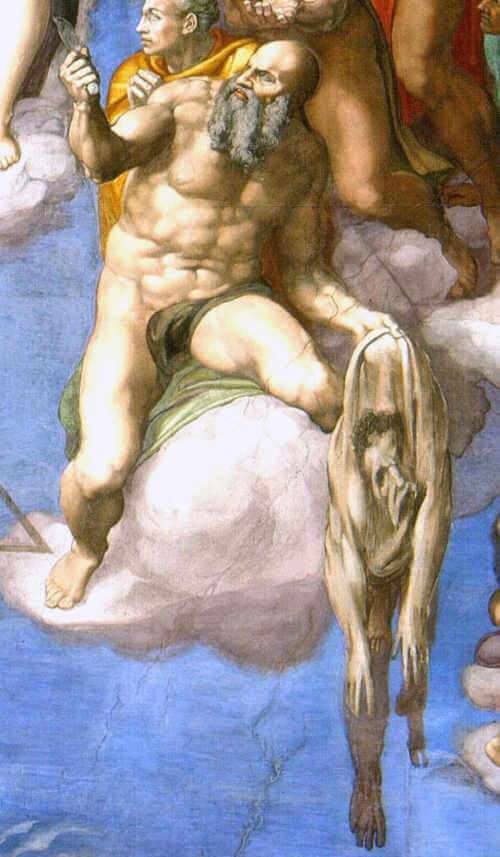
Though we do not know for certain how Nathanael, son of Tolmai (Bartholomew), fulfilled this Great Commission that he received from Jesus Himself, one early tradition from Eusebius of Caesarea, a Church historian from the third to fourth century, stated that he went to India where he left a copy of the Gospel of Matthew. Later traditions state that he also went to Armenia, Ethiopia, Mesopotamia, Parthia, and Lycaonia. Some traditions say that he was martyred in a city named Albanopolis, which might be one of two ancient towns either in modern-day Armenia or Albania. Those traditions state that he was beheaded or flayed alive and crucified upside down in retribution for converting the King of Armenia. It is for this reason that Saint Bartholomew often appears in sacred art holding his skin, such as in Michelangelo’s Last Judgment scene found in the Sistine Chapel at the Vatican.

Though legends are hard to prove or disprove, what we know for certain is that when this man met Jesus Christ, the Son of God, the King of Israel, his life was forever changed. The same must be said of each one of us. We must meet our Lord, encounter Him personally, allow His divine presence to change our lives, and never look back. Ponder your own willingness to imitate the conversion of Saint Bartholomew and seek his intercession today.

Source: https://mycatholic.life/saints/saints-of-the-liturgical-year/saint-bartholomew—august-24/

Saint Bartholomew the Apostle Read More »

Luke 13:22-24

Perceiving the Dignity of Others

Jesus passed through towns and villages, teaching as he went and making his way to Jerusalem. Someone asked him, “Lord, will only a few people be saved?” He answered them, “Strive to enter through the narrow gate, for many, I tell you, will attempt to enter but will not be strong enough.”

Reflection:

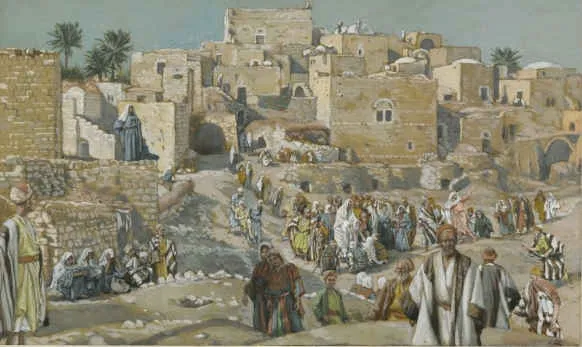
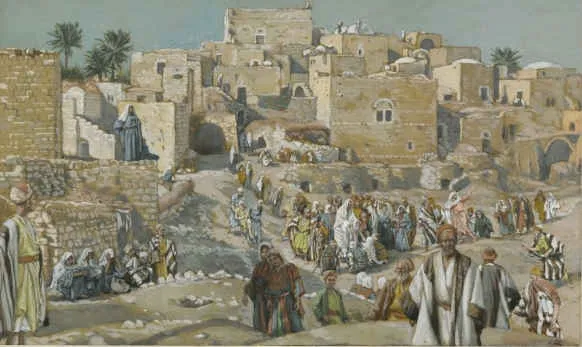
The context of this passage provides insight into Jesus’ mission and His concern for each and every person. Note that Jesus was traveling toward the large and populous city of Jerusalem. But as He traveled, He passed through “towns and villages” and taught the people as He went. This might seem like a small detail, but it is also a significant one.

A city like Jerusalem was large and often had wealthy, influential, and “important” people. The less-populated towns  had borders and often some form of local government. Villages were much smaller rural areas, often made up of poorer, less educated, less influential, and simpler people. One historian, Josephus, wrote that there were about 240 villages throughout Galilee at the time Jesus lived. It’s interesting to note that Jesus wanted to teach everyone. He didn’t care if they were wealthy and powerful people in the large city or peasant farmers and shepherds from the countryside. His mission was to all.

One thing this teaches us is that we, also, must have love and concern for everyone, regardless of their social status. Each and every person is equal in dignity. From the president of a large country, to the beggar in an alleyway, everyone deserves our respect and attention in an equal way.

Our fallen human nature experiences various forms of temptation. Among them are temptations for riches, power and prestige. For that reason, we tend to admire those who have obtained worldly success because we want it for ourselves. As a result, we tend to show greater respect for those who have achieved what we covet and give less attention to those who do not have that success. This, of course, goes to the heart of the problem.

When you think about the people whom you have encountered recently, what comes to mind? Perhaps your “encounter” was to read about someone’s great success in the financial world. Or perhaps it was to read about someone’s demise in another way. Perhaps a neighbor has done well and purchased a new car, or a friend got fired from a job. Whatever the case may be, it is important to consider the level of personal respect and love you show for each person. It must be equal. Worldly status cannot determine how we treat others. This is hard to avoid.

The teaching that Jesus gave to those in the towns and villages was an exhortation to holiness. “Strive to enter through the narrow gate, for many, I tell you, will attempt to enter but will not be strong enough.” And at the end of today’s Gospel, Jesus says, “For behold, some are last who will be first, and some are first who will be last.” The latter statement must have especially resonated with those who felt somewhat insignificant and unimportant in life. Those who felt like they were “last” would have received a certain hope. This tells us that God never measures us by our successes from a worldly standpoint. He measures us only on the level of our fidelity to His holy will.

Reflect, today, upon how you look at all people. Do you see every person in the way that God sees them? Do you see everyone with equal dignity and worth? Or do you elevate those whom you envy and whose success you covet? Seek to eliminate all worldly ways of looking at others so that you will only look at others through the lens of their dignity and fidelity to the will of God.

Source: https://catholic-daily-reflections.com/2025/08/23/perceiving-the-dignity-of-others/

Luke 13:22-24 Read More »

Saint Rose of Lima, Virgin

1586–1617; Patron Saint of the Americas, Peru, embroiderers, florists, gardeners, needleworkers, and people ridiculed for their piety; Invoked against vanity and self-love; Canonized by Pope Clement X in 1671

In 1532, Spanish explorers arrived in modern-day Peru. They soon became covetous of the silver and gold that was plentiful in this New World. Over the next several years, missionaries from the Mercedarians, Dominicans, Franciscans, and Augustinians arrived on Spanish ships with the purpose of sharing the Gospel to the ends of the earth. The missionaries tried to temper the often-brutal Spanish conquerors. In 1537, Pope Paul III, concerned about reports of Spanish cruelty to the native peoples, issued a papal bull named Sublimis Deus in which he highlighted the intrinsic dignity of the natives, called for an end to the cruelty, and encouraged missionaries to share the Gospel in these new lands so that all could come to know and love Christ. In 1541, the pope established the Diocese of Lima and appointed its first bishop, hastening the missionaries’ efforts.

Today’s saint, Saint Rose of Lima, was born in the capital city of the newly established Viceroyalty of Peru, governed by the Kingdom of Spain, fifty-five years after the first Spanish conquerors arrived and began colonizing the territory. She was born Isabel Flores de Oliva, the seventh of eleven children. She was reportedly given the nickname “Rose” shortly after birth when one of the family servants said she saw the infant’s face transform into a rose. Her father was a Spaniard and a member of the Spanish army. Though her mother was born in Peru, at least one of her mother’s parents was a Spanish settler. Both of Isabel’s parents were devout Catholics who instilled a deep faith in their children from an early age.

As a child, Isabel manifested a deep devotion to God. She is said to have often spent long periods of prayer in the middle of the night before a shrine she set up in her room. At the age of eleven, she received the Sacrament of Confirmation and formally took the name Rose. Her confirmation was most likely administered by the diocesan bishop who was later canonized as Saint Turibius of Mogrovejo.

As Rose matured into a young woman, she was known for her physical beauty, catching the attention of many young men and their families who saw her as an ideal future spouse. However, Rose had no interest in marriage and wanted to become a nun. She was concerned that her beauty was a distraction, and even a temptation, to others. Her remedy was to cut off her beautiful hair to make herself less attractive. She also rubbed pepper on her face and lime juice on her hands to make her skin less appealing to young men. Although that may seem extreme to some, her intent was to remain pure for God and to take Jesus as her sole Spouse. Though her father refused to permit her to become a nun, after several years he acquiesced to her desire not to marry, allowing her to live in a small hut on the family property where she could be with her divine Spouse through solitude and prayer.

Her hut, or hermitage, became a place in which Rose engaged in charitable works. She brought the poor and sick into her hut, fed them, and nursed the sick back to health. She worked to support herself and her family, who were facing hardship, by selling at the local market lace and embroidery she made and flowers she grew. After learning about Saint Catherine of Siena, she sought to emulate her. She practiced severe penances, slept on a hard floor, wore a crown of thorns while alone in her room, fasted, and inflicted numerous penances upon herself every day. Eventually, she chose to abstain from meat. She quickly discovered that penances opened the door to spiritual abundance. Once she discovered that, she never turned back. She went to Mass daily and adored the Blessed Sacrament at church. When she turned twenty, because she could not become a nun, she followed in the footsteps of her role model, Saint Catherine of Siena, and became a lay member of the Third Order of Saint Dominic. She carried on her life of continuous prayer and penance, sleeping only two hours a night so she could have more time for prayer. Her self-made bed consisted of broken glass, stone, potsherds, and thorns. She wore her crown of thorns continuously, which pierced her skull, but was covered with roses to conceal the metal spikes. She wore a chain of spikes around her waist. Her fasts were extreme, her penances doubled, but life for Rose was good—very good—and she could not have been happier.

For the next eleven years, Rose lived a beautiful and hidden life. She continued her charitable works and entered deeply into union with God. Some saints do great things in the world and Church in a visible way. Some give supreme witness to their faith through martyrdom. Others enter or found religious orders, or orchestrate new movements within the Church. Rose became a saint because she entered into divine union, the seventh mansion, or what has been called ‘spiritual marriage’ with her Savior. During those eleven years of her life, she frequently had visions of Jesus, the Mother of God, and the saints, with whom she conversed and received spiritual guidance. She entered into ecstasies and raptures and experienced untold interior spiritual favors from her Lord. One of the greatest gifts she received from her divine Spouse was long periods of exceptionally painful spiritual dryness. This interior cross produced abundant good fruit as she persevered in her fidelity to her Spouse, thus deepening her divine union with Him. As her interior purifications were completed and she completely detached from selfishness, her soul was flooded with the reward of Jesus’ manifest presence. He communicated with her as His beloved.

Because of her intimate union with God, Rose was able to predict the day of her own death. Her Lord wanted her fully with Him in Heaven, so at the age of thirty-one, Jesus took her to Himself where she could live forever as one with Him. The archbishop offered her funeral Mass, and she was quickly acknowledged as a saint. Around fifty years after her birth into Heaven, she was canonized a saint on earth, the first from the Americas to receive that honor. Miraculous healings had been attributed to her intercession while she was alive, and they continued after her death. One legend states that after her death, all of Lima smelled of roses that fell from the sky.

The life of Saint Rose of Lima reveals many things to us. Penance is good, but it takes great holiness to discover this mysterious and deep truth. The “good life” is not one that is filled with worldly successes, riches, or honors, but is discovered only in an act of divine union. Furthermore, those who make the biggest difference in this world for the good are those who radically and completely give themselves over to the service of God, holding nothing back, so that God can take to Himself all that they are. As we honor this great saint of Peru, ponder her simple and hidden life. Everyone can imitate her life and virtues, even though her depth of prayer and commitment to penance can, at first, be intimidating. Try to discover the truths that she discovered, and seek to imitate her by making at least one small choice each day to live a deeper life of prayer and penance. From Heaven, you will never regret such a decision.

Source: https://mycatholic.life/saints/saints-of-the-liturgical-year/august-30st-rose-of-lima/

Saint Rose of Lima, Virgin Read More »

Matthew 23:11-12

Humility…the Path to Greatness

The greatest among you must be your servant. Whoever exalts himself will be humbled; but whoever humbles himself will be exalted.

Reflection:

If you were to plan out the ideal future for yourself, what would it look like? Imagine if you were not constrained by budget or resources. Imagine if you could pick to do anything you wanted, to go anywhere you wanted, and enjoy any activity that you wanted. Imagine the greatest experience you could possibly have. What would that be? Most people would immediately think about indulging in the greatest pleasures imaginable. A life of the most luxurious accommodations, the best food, the most beautiful scenery and the most relaxing and enjoyable time possible. But would that truly be the “ideal future for yourself?”

The Gospel passage above is very clear. Greatness is found in servanthood. Exaltation is enjoyed only through humility. Is the ideal lifestyle one that is filled with indulgence, entertainment, luxury, and the like? Certainly not. The ideal life, the greatest life, the most exalted life is the life of the most humble service of others as possible. That’s essentially what Jesus tells us in this passage. Do you believe that?

Note that Jesus uses the words “greatest” and “must” in the same sentence. These two words are both quite definitive. There is no one greater than the “greatest,” and the path to that greatness requires, without exception, that the greatest be a servant of everyone else. In many ways, this truth defies most human conceptions of greatness. Most often, if someone is considered “great,” then they are served and treated with an honor and respect not given to most. For example, if you had someone of great importance over to your home for dinner, you would most likely wait on them. Of course, service in this context is much more than waiting on tables or providing a meal. Though that is a blessed way to serve others and to express love, Jesus’ concept of service goes far beyond this. How do we serve as one who is truly great? We do so especially by humbling ourselves. Humility is the greatest form of service we can render another.

Jesus was, without question, the humblest person to ever live. Only His mother shared perfectly in this holy virtue. Humility enables a person to break out of every selfish tendency and turn their love to the good of the other. Jesus did this first by becoming Incarnate in the womb of His dear mother. The Eternal Son of God did not become man because it somehow benefited Him in a self-centered way. He did it because He loved us and His Incarnation benefited us. The Son of God did not allow others to mock Him, ridicule Him and ultimately murder Him because it somehow benefitted Him. He did it so that He could enter death and destroy it so that we could rise with Him. He did it for us. And we could go through every passage of the Gospels and see that everything Jesus did was done for others and never done out of a selfish desire. This self-giving service our Lord offered every day was a fruit of the incredible humility that He lived. Jesus did everything He did out of His love for others and with humility so as to bring salvation and transformation to their eternal souls.

In our lives, we need to make a fundamental choice. Am I going to live for myself? Or am I going to live for others? It seems as though very few people live fully for others. It is difficult to take our eyes off ourselves and turn them only to the good of others. But if we realize that living for others is also the path to our own greatness and ultimate exaltation, then it becomes much easier. Serving others, especially in a spiritual way by which you do all you can to help them grow closer to God, is what will make you great. Nothing else can do so. Believe that and live it.

Reflect, today, upon a life of true greatness. Reflect, especially, upon how you can live such a life. How can you more completely serve others? How can you make their holiness your primary goal? How can you help others grow in their love of God? Humble yourself and turn your eyes from yourself to others. Doing so will make an eternal difference for others and also for yourself.

Source: https://catholic-daily-reflections.com/2025/08/22/humility-the-path-to-greatness-3/

Matthew 23:11-12 Read More »