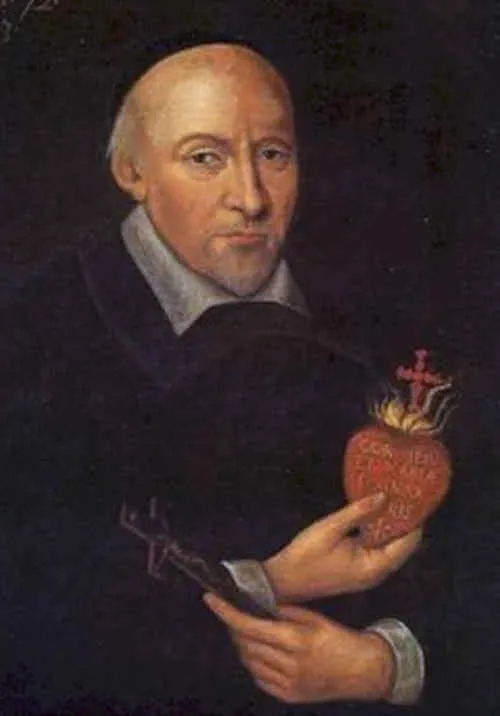
Saint John Climacus
Saint John Climacus Read More »
Profile
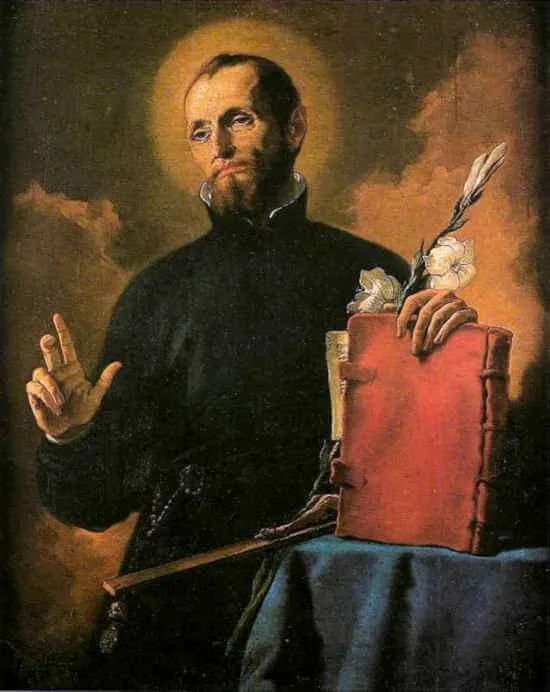
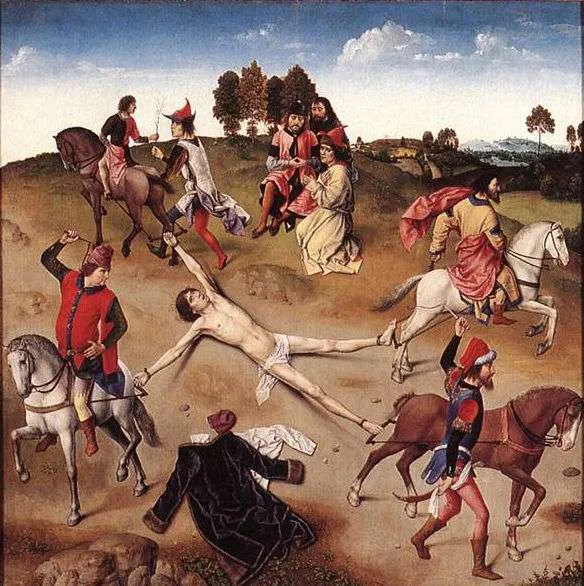
John was well-educated and came to adulthood in an intellectual environment. He became a monk on Mount Sinai at age 16 and a hermit in various places in the Arabian Desert. He became an abbot at Mount Sinai at age 75. Just before his death, he resigned his position to return to his solitary life. He was an ascetical writer whose works have for 15 centuries influenced those seeking the holy life.
Born
Died
Canonized
Representation
Source: https://catholicsaints.info/saint-john-climacus/
Saint John Climacus Read More »
This day could be thought of as a day of contradiction. The Mass begins with the reading of Jesus’ triumphal entry into Jerusalem and His joyous reception by the crowds who strewed palm branches before Him, crying out, “Hosanna to the Son of David; blessed is he who comes in the name of the Lord; hosanna in the highest.” Today, this inspiring scene is commemorated by processions of the faithful carrying palm branches into their churches. The contradiction, however, is experienced as the full narrative of the Passion of Christ is read, culminating with Jesus’ death on the Cross.
But is it a contradiction? Is His glorious entrance into Jerusalem at the beginning of the week in any way opposed to His crucifixion? Certainly not. From a worldly perspective, for someone who lacks the ability to penetrate this mystery with the eyes of faith, the week ends in tragedy. But from the perspective of the Eternal Father, the welcome Jesus receives as He enters Jerusalem is the welcome given to the Savior of the World. His Cross would become the culmination of that act of salvation. For that reason, His entrance into that holy city was rightly celebrated with great joy, even though the people did not yet understand that the throne their new King would mount was the Cross.
As early as the fourth century, the diary of one traveler to Jerusalem records how the faithful reenacted Jesus’ triumphal entry:
And as the eleventh hour approaches, the passage from the Gospel is read, where the children, carrying branches and palms, met the Lord, saying; Blessed is He that cometh in the name of the Lord, and the bishop immediately rises, and all the people with him, and they all go on foot from the top of the Mount of Olives, all the people going before him with hymns and antiphons, answering one to another: Blessed is He that cometh in the Name of the Lord. And all the children in the neighborhood, even those who are too young to walk, are carried by their parents on their shoulders, all of them bearing branches, some of palms and some of olives, and thus the bishop is escorted in the same manner as the Lord was of old (The Pilgrimage of Etherea).
Though very few Christians are able to celebrate Passion Sunday in Jerusalem, walking from the Mount of Olives to the city gate, we are all invited to do so spiritually, meditatively, and interiorly. Our participation is not just the recalling of a historic event; it’s a real participation in that event. Our hearts must begin outside of Jerusalem’s gate today, and we must courageously and joyfully accompany our Lord into that holy city. During that first Holy Week, the people’s joy arose from their belief that Jesus would be an earthly ruler Who would free them from Roman oppression. Today, we are privileged to express our joyous acclamations as we spiritually accompany our Lord to the city of His crucifixion, because we know that Jesus’ Kingship is so much more than an earthly triumph. His triumph is an eternal one that invites us to share in His Eternity. His triumph is a sacrificial one that invites us to share in His Sacrificial Love. His triumph is a glorious one that invites us to share in the Glory of His Resurrection.
Walk with our Lord today into that holy city of Jerusalem. As you do, know that the earthly city of Jerusalem is also now a spiritual one. The events that took place there two millennia ago transcend and permeate all time. As a result, the events of Holy Week today are just as significant as they were long ago. Through the Mass, we are there. We walk with our Lord, witness all He accomplished, receive His Body and Blood sacrificed on the Cross and memorialized in the Eucharist, and are resurrected with Him on the third day. Commit yourself to this journey today, an eternal pilgrimage with our Lord to the Eternal City of Heaven.
Source: https://mycatholic.life/saints/saints-of-the-liturgical-year/palm-sunday-of-the-lords-passion/
Palm Sunday of the Lord’s Passion Read More »
Profile
Hilarion was an eighth-century hegumen (abbot) of the Pelecete Abbey on Mount Olympus, Bithynia, Greece. He was persecuted for defending the use of icons and fighting the iconoclasts.
Canonized
Source: https://catholicsaints.info/saint-hilarion-of-pelecete/
Saint Hilarion of Pelecete Read More »
Profile
John was a carpenter. He became a hermit on a mountain near Lycopolis from ages 25 to 65, living most of his life in a small, walled-up cell. He devoted himself to prayer and meditation five days a week, spiritual direction of male students the other two days; there were so many, he had to build a hospice for them. His reputation for wisdom and holiness caused him to be chosen as advisor to Emperor Theodosius. He had the gifts of prophecy, healing, and knowledge of the hidden sins of his visitors. He was known and admired by Saint Jerome, Saint Augustine of Hippo, Saint Cassia, and Saint Palladius.
Born
Died
Canonized
Source: https://catholicsaints.info/saint-john-of-lycopolis/
Saint John of Lycopolis Read More »
Profile
Died
Canonized
Representation
Source: https://catholicsaints.info/saint-emmanuel/
In the fifth century, bishops engaged in a fierce theological debate over the unity of the divine and human natures of Christ, referred to as the “hypostatic union.” Nestorius, the Archbishop of Constantinople, argued that there were two underlying hypostases, or substances, in Christ, one human and one divine. He believed that the humanity of Christ was born of the Virgin Mary, but not His divinity. Therefore, Nestorius believed Mary should only be called the “Christ-bearer” and not the “God-bearer” (Theotokos). Saint Cyril, the Archbishop of Alexandria, argued that the divine and human natures of Jesus were united in one hypostasis. Divinity and humanity were perfectly united and, therefore, Mary is properly called the Theotokos, or “Mother of God,” not just the “Mother of Christ.” God was born of her, not just His body. Mary conceived a Person in her womb, and that Person was both God and man, perfectly united as one. In 431 the Church held a council at Ephesus at which Cyril’s position was adopted and Nestorius’ position was condemned. Nestorius was then removed as Archbishop of Constantinople.
The Solemnity we celebrate today came into practice around the time of this controversy, possibly as a way of emphasizing the theological teaching that emerged from the Council of Ephesus. Throughout Church history, when a theological truth is defined, that truth is then celebrated liturgically as a lived expression of the Church’s faith.
The date of this celebration is interesting. It is set nine months before Christmas, but most likely, the date of Christmas was set nine months after the Annunciation. Many early Christians believed that Jesus’ death occurred on March 25, and, therefore, His Incarnation must have also taken place on this day. Interestingly, as early as the third century, it has been suggested that March 25 was also the date of the creation of Adam, the fall of Adam, the fall of the angels, the sacrifice of Isaac by Abraham, and the passing of the Israelites through the Red Sea.
Today’s celebration of the Solemnity of the Annunciation of the Lord recalls the historical event of the Angel Gabriel appearing to the Virgin Mary, as found in Luke 1:26–38. It also celebrates the Church’s faith in the underlying reality that took place at that moment in time. It celebrates the Incarnation, making this solemnity not only a Marian solemnity, but first and foremost a Christological one. Though Christmas commemorates the birth of Christ, the Annunciation commemorates the Incarnation within the womb of the Blessed Virgin Mary.
Most certainly, this solemnity is also a Marian celebration. We celebrate the Virgin Mary’s perfect “Yes” to the plan of the Father. We celebrate her humility, obedience, docility, and especially her motherhood of God and man.
This solemnity is also a celebration of the Father in Heaven because it reveals the beginning of the pinnacle of His perfect plan of salvation. That moment in time, the moment of the Incarnation, holds significance beyond comprehension. This moment was in the mind of the Father in Heaven from all eternity and took place in a hidden way, known only to this lowly and humble virgin.
As we celebrate this glorious solemnity, ponder all these central mysteries of our faith. Faith must be celebrated, not only believed. It must be proclaimed, rejoiced in, loved, and lived. Profess your faith in the Incarnation and seek the intercession of the Virgin Mary. Ask her to pray for you that you may imitate her “Yes” to the will of the Father in Heaven, so that you can continue to bring forth His divine Son in your soul, so that He will continue to be made manifest to the world through you.
Source: https://mycatholic.life/saints/saints-of-the-liturgical-year/march-25-annunciation-of-the-lord/
Annunciation of the Lord Read More »
Profile
Macartan was a friend and disciple of Saint Patrick. He was the uncle of Saint Brigid. He was a missionary with Patrick through pagan Ireland. He was consecrated as the first bishop of Clogher, Ireland by Patrick in 454. He converted the father of Saint Tigernach of Clogher. He was a miracle worker.
Born
Died
Canonized
Patronage
Source: https://catholicsaints.info/saint-macartan-of-clogher/
Saint Macartan of Clogher Read More »
On November 16, 1532, a small group of Spanish conquerors captured the Inca ruler Atahualpa in modern-day Peru. The Spaniards arrived in the New World as explorers but were mostly interested in enriching themselves with silver and gold, of which the Incas had plenty. After receiving a room of gold and two rooms of silver as a ransom for Atahualpa, the Spaniards killed him anyway. Then they continued to conquer others, until 1572, when the last of the indigenous rulers was defeated. Despite their Christian heritage, the Spaniards could be brutal; however, their presence enabled missionaries to arrive and begin the work of sharing the Gospel with the native people. In 1541, Pope Paul III established the Diocese of Lima and appointed its first bishop who served for thirty-six years. Today’s saint, Saint Turibius of Mogrovejo, was born three years before the Diocese of Lima was established (It became an archdiocese in 1546.) and would become Lima’s third archbishop.
Toribio Alfonso de Mogrovejo (Turibius) was born of noble parents in the town of Mayorga, northwest Spain. He was named after a local fifth-century bishop and saint. Turibius was a devout child. He had a strong devotion to the Blessed Virgin Mary, prayed to her daily, and fasted every Saturday in her honor. He had a heart for the poor and was generous in caring for them. When Turibius was twelve, he was sent to study humanities in Valladolid and was later sent to the University of Salamanca to study law. Turibius’ brilliance quickly became known and caught the attention of King Phillip II, who appointed him as the Grand Inquisitor in Granada in 1571. He was only thirty-three and held that post for five years.
During these first thirty-eight years of Turibius’ life, the Spanish conquerors of the newly colonized lands of Peru were in dire need of moral reformation. Many of the generals acted as tyrants and plunderers, oppressing the indigenous peoples with cruelty. They took their lands, forced them into slave labor, and treated them as if they were subhuman. In 1537, shortly after the conquest of Peru, Pope Paul III issued the papal bull Sublimis Deus. In it, he lamented that some of the conquerors believed that the indigenous of the West and the South should be “treated as dumb brutes created for our service, pretending that they are incapable of receiving the Catholic Faith.” The pope corrected this error stating “that the Indians are truly men and that they are not only capable of understanding the Catholic Faith…they desire exceedingly to receive it.” The King of Spain agreed and issued edicts of reformation, but the laws were resisted and enforcement was nearly impossible. These troubles continued for decades.
After the death of the first archbishop of Lima in 1575, another Spanish bishop was sent to Lima, but remained there for only two years. Aware of the moral chaos, King Phillip II knew he needed to send his best bishop to Lima. He needed a saint who knew the law, could bring reform where needed, preach the Gospel with zeal, and establish communion between the settlers and natives. At that time, it was the responsibility of the King of Spain to appoint bishops whom the pope would subsequently approve or reject. King Phillip chose Turibius for the task. There was only one problem: Turibius was not even a priest; he was a layman. Turibius objected to the idea but the king insisted, and the pope approved. Turibius pleaded with the king, pointing out that only a priest could be made a bishop, and arguing that the task was beyond his ability. But his humility was only a clearer sign that he was the man for the job. Turibius finally agreed. Over the next two years, Turibius prepared for the priesthood, was ordained, served as a priest, and then was ordained a bishop. In September of 1580, at the age of forty-three, Archbishop Turibius set sail for Peru with his sister and brother-in-law, arriving several months later. He was installed in Lima on May 24, 1581, and served as the third archbishop of Lima for twenty-five years.
The archdiocese stretched about 400 miles along the coast and included three main cities, many towns and villages, and many more rural homes scattered throughout. The people he now shepherded included Spanish settlers, soldiers, and, of course, the indigenous population. Archbishop Turibius wasted no time. Within a month of his arrival he held an archdiocesan synod and a year later oversaw the Third Provincial Council of Lima, on the instruction of King Philip II. This council lasted for more than a year and addressed various abuses among the clergy and laity, promoted the evangelization of the natives, taught that the Spaniards and indigenous were equal in dignity, and commissioned the first book printed in South America, Doctrina Christiana, y Catecismo para Instrucción de los Indios, a trilingual catechism written in Spanish, Quechua, and Aymara. Other trilingual works were also commissioned to assist the clergy with confession and preaching in the native tongues. Not only did every diocese of his province implement the acts of that council, but after the acts were confirmed by the Holy See in 1588, they were implemented throughout all of South America. In 1590, Archbishop Turibius founded the first seminary in South America and in 1591 and 1601, he held two more provincial councils, as well as numerous synods within his own archdiocese.
In addition to his administrative efforts, Turibius spent seventeen of his twenty-five years as archbishop traveling on foot to every parish and community on three separate occasions. He traveled through difficult terrain, snow-covered mountains, rain, heat, and cold. He went to confession and offered Mass every day, learned the native languages, got to know his people, and made sure that every parish was in order and adhered to Church discipline. He built many churches, baptized and confirmed half a million people, had a passionate zeal for every individual soul, and made sure that both Spaniard and indigenous were equally cared for. From his flock would emerge three saints whom he confirmed: Saint Rose of Lima, Saint Martin de Porres, and Saint Juan Masías. He also became good friends with the great Franciscan missionary Saint Francis Solano, who was said to have had the gift of tongues, by which the indigenous understood him in their native tongue.
Every crisis needs a savior. Jesus is that Savior, but His servants on earth act as His divine instruments. Saint Turibius was that instrument for the early Church of Peru and throughout South America. His humility, zeal for souls, fidelity to the law, gifts of administration, concern for human dignity, and a fatherly heart enabled God to plant the seed of faith in the hearts of many, the fruit still being borne today. Be inspired by this holy shepherd and imitate his example by committing yourself to see the dignity of every person in ways that are creative, empathetic, intuitive, and firm, so that God can use you to reach them where they are.
Source: https://mycatholic.life/saints/saints-of-the-liturgical-year/march-23-saint-turibius-of-mogrovejo-bishop/
Saint Turibius of Mogrovejo, Bishop Read More »
Profile
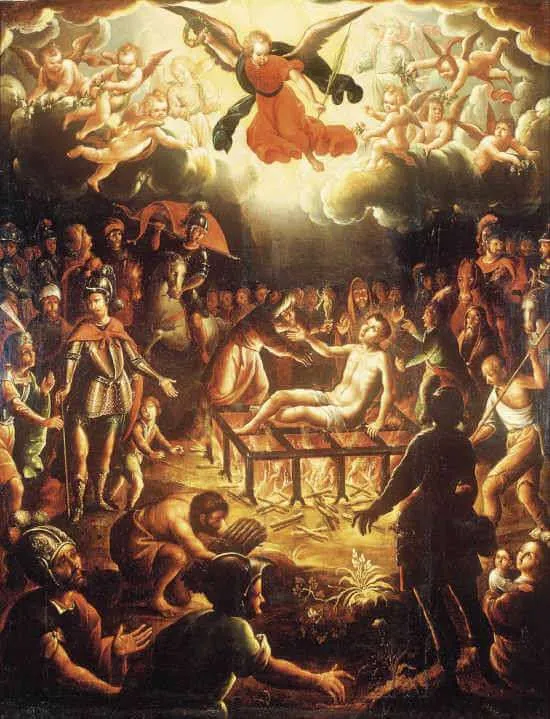
Basil was a priest in Ancyra, Galatia (in Asia Minor). He fought against the Arian heretics in the reign of emperor Constantius, and against the iconoclast heretics in the persecutions of Julian the Apostate. His defense of orthodox Christianity led to his imprisonment, torture, and execution. He was a martyr.
Died
Canonized
Source: https://catholicsaints.info/saint-basil-of-ancyra/
Saint Basil of Ancyra Read More »
Profile
Elias was one of the early evangelists on the island of San Giulio in Lake Orta in the Piedmont region of Italy. He may have been a priest, and lived on the island for a while as a hermit.
Died
Canonized
Source: https://catholicsaints.info/saint-elias-of-orta/
Saint Elias of Orta Read More »
Add San Jose Filipino Ministry as a new recipient, Send your donation using"donate@dosjfm.org"
Payable to - San Jose Filipino Ministry
Address - Poong Jesus Nazareno Filipino Catholic Center (PJNFCC); 3700 W. Orange Ave., Anaheim CA 92804
Poong Jesus Nazareno Filipino Catholic Center (PJNFCC); 3700 W. Orange Ave., Anaheim CA 92804
Phone: (657) 214-2507
Mobile (657) 208-2038
info@dosjfm.org
Poong Jesus Nazareno Filipino Catholic Center (PJNFCC); 3700 W. Orange Ave., Anaheim CA 92804
Phone: (657) 214-2507
Mobile (657) 208-2038
info@dosjfm.org
Add San Jose Filipino Ministry as a new recipient, Send your donation using"donate@dosjfm.org"
Payable to - San Jose Filipino Ministry
Address - 1235 S Magnolia Ave
Anaheim, CA 92804-5115
San Jose Filipino Ministry. All rights reserved. 2021 © Powered by Phoenix Virtual Solutions
Sponsored by EverClear Hospice and Palliative Care