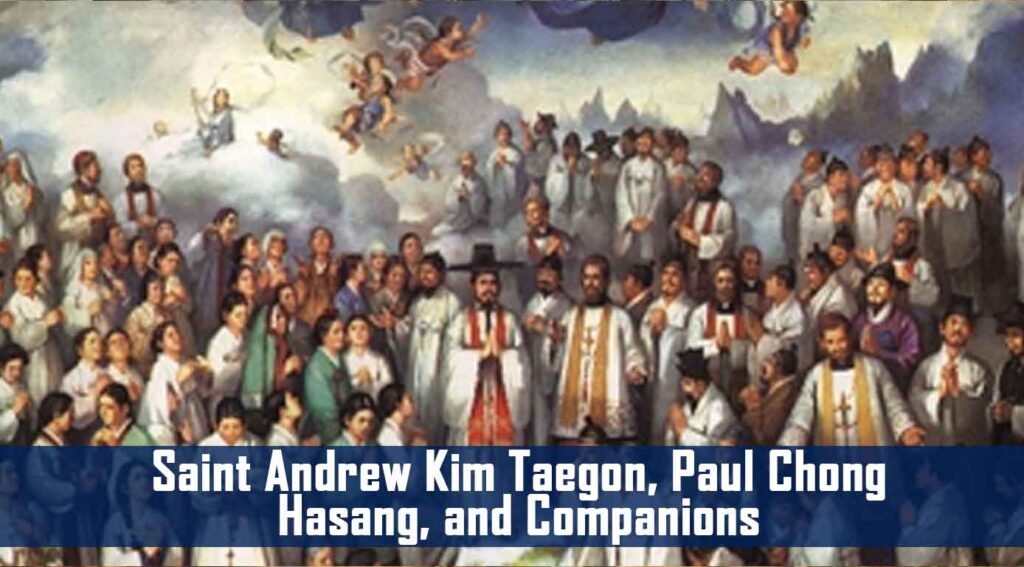
The first native Korean priest, Andrew Kim Taegon was the son of Christian converts. Following his baptism at the age of 15, Andrew traveled 1,300 miles to the seminary in Macao, China. After six years, he managed to return to his country through Manchuria. That same year he crossed the Yellow Sea to Shanghai and was ordained a priest. Back in Korea, he was assigned to arrange for more missionaries to enter by a water route that would elude the border patrol. He was arrested, tortured, and finally beheaded at the Han River near Seoul, the capital. Besides Andrew and Paul, Pope John Paul II canonized 98 Koreans and three French missionaries who had been martyred between 1839 and 1867, when he visited Korea in 1984. Among them were bishops and priests, but for the most part they were lay persons: 47 women and 45 men.
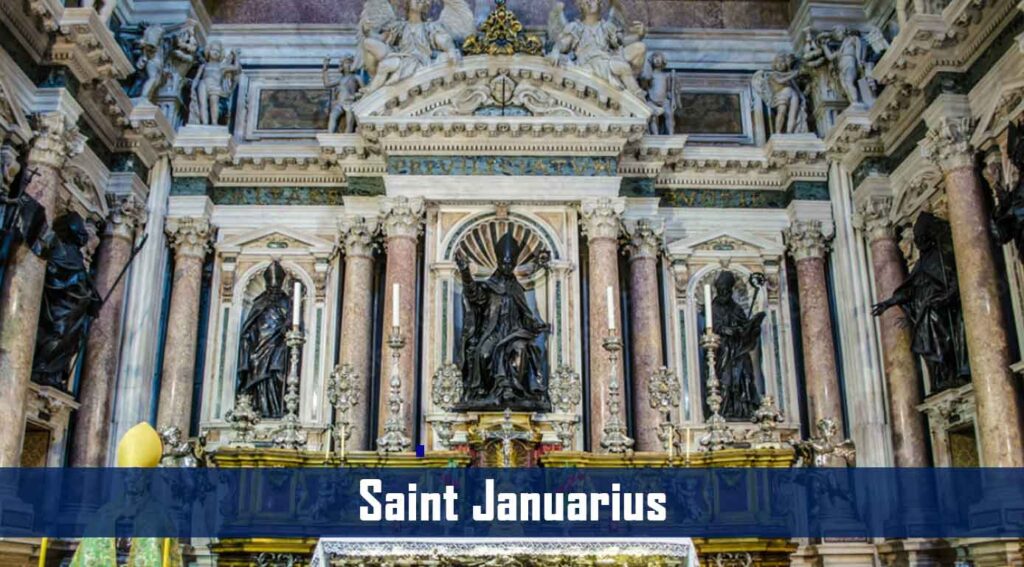
Little is known about the life of Januarius. He is believed to have been martyred in the Emperor Diocletian’s persecution of 305. Legend has it that Januarius and his companions were thrown to the bears in the amphitheater of Pozzuoli, but the animals failed to attack them. They were then beheaded, and Januarius’ blood ultimately brought to Naples.
“A dark mass that half fills a hermetically sealed four-inch glass container, and is preserved in a double reliquary in the Naples cathedral as the blood of St. Januarius, liquefies 18 times during the year…Various experiments have been applied, but the phenomenon eludes natural explanation….”
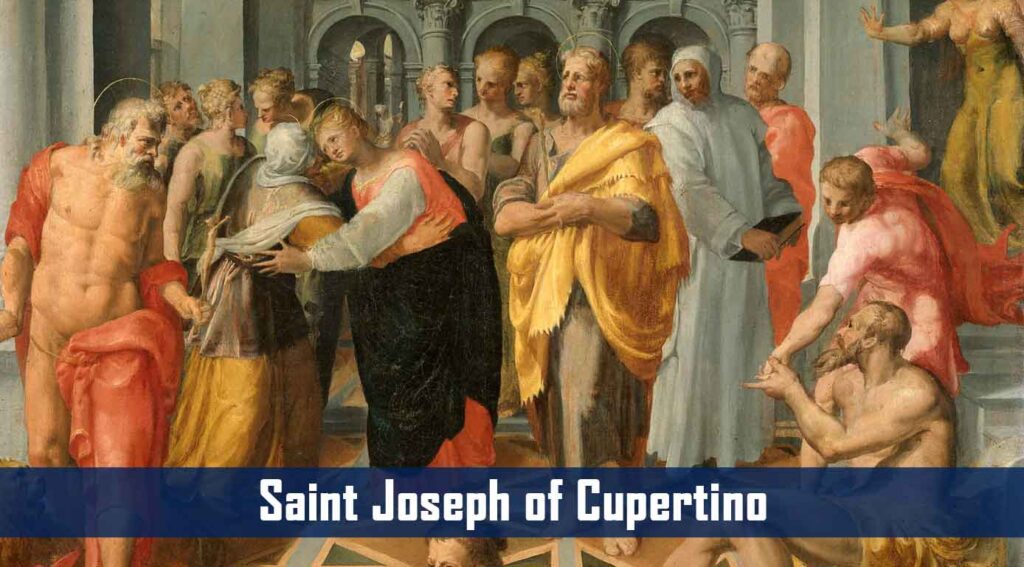
Joseph of Cupertino is most famous for levitating at prayer. Already as a child, Joseph showed a fondness for prayer. After a short career with the Capuchins, he joined the Conventual Franciscans. Following a brief assignment caring for the friary mule, Joseph began his studies for the priesthood. Though studies were very difficult for him, Joseph gained a great deal of knowledge from prayer. He was ordained in 1628. The friars transferred Joseph several times for his own good and for the good of the rest of the community. He was reported to and investigated by the Inquisition; the examiners exonerated him. He died on September 18, 1663. Joseph was canonized in 1767. In the investigation preceding the canonization, 70 incidents of levitation are recorded.
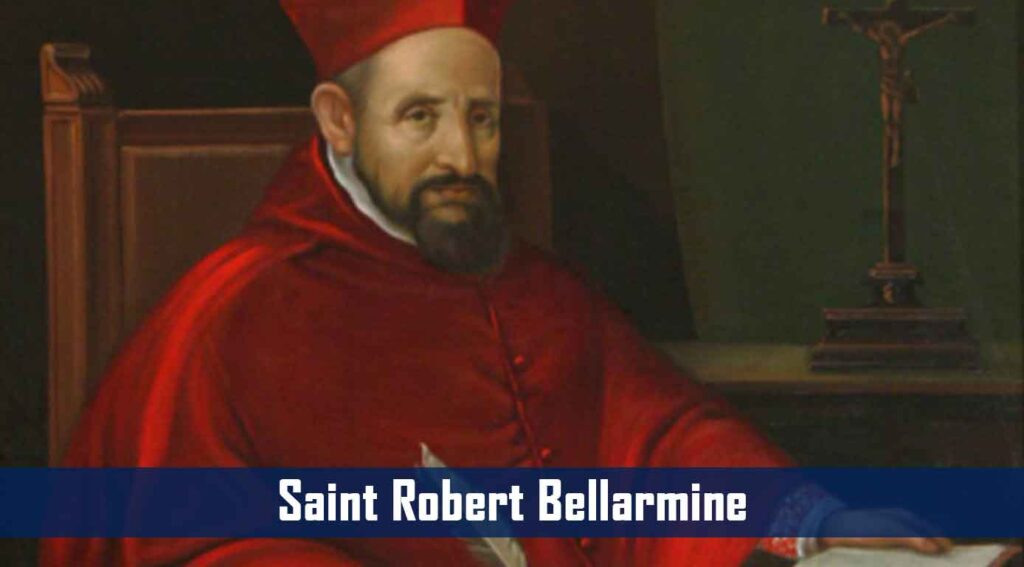
Robert was born on 1542 in Montepulciano, in Tuscany, and became a Jesuit. He taught theology in Rome, and was active in disputation against the Protestants, where his effectiveness was increased by his charity and moderation. He was a moderating influence in the Galileo affair, and gave the latter much friendly advice. In due course he was nominated a cardinal and archbishop of Capua; but it is for his writings that he is chiefly known. He did not only write controversial works: he also wrote two catechisms and some devotional commentaries on the Psalms and on the Seven Last Words of Jesus hanging on the Cross. He died in 1621.
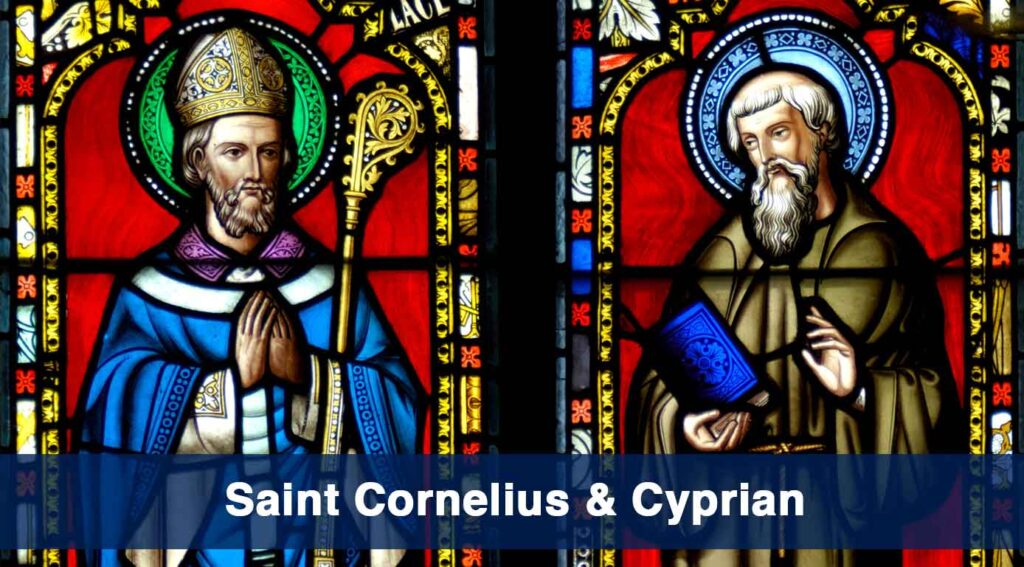
Cornelius was made bishop of the church in Rome in the year 251. He fought against the Novatian schismatics, and established his authority with the aid of Cyprian. The emperor Gallus sent him into exile, and he died at Civitavecchia in June 253. He is buried in Rome.
Cyprian was born in Carthage and spent most of his life in the practice of the law. He was converted to Christianity, and was made bishop of Carthage in 249. in 258 the persecution of the emperor Valecian began. Cyprian was first exiled and then, on the 14th of September, executed, after a trial notable for the calm and courtesy shown by both sides. Cyprian exclaimed, “Blessed be God!”
Cornelius and Cyprian encouraged each other to lead a virtuous , self-sacrificing, and loving lives for God. As Jesus said, there is no greater gift than offering one’s life for his friend.
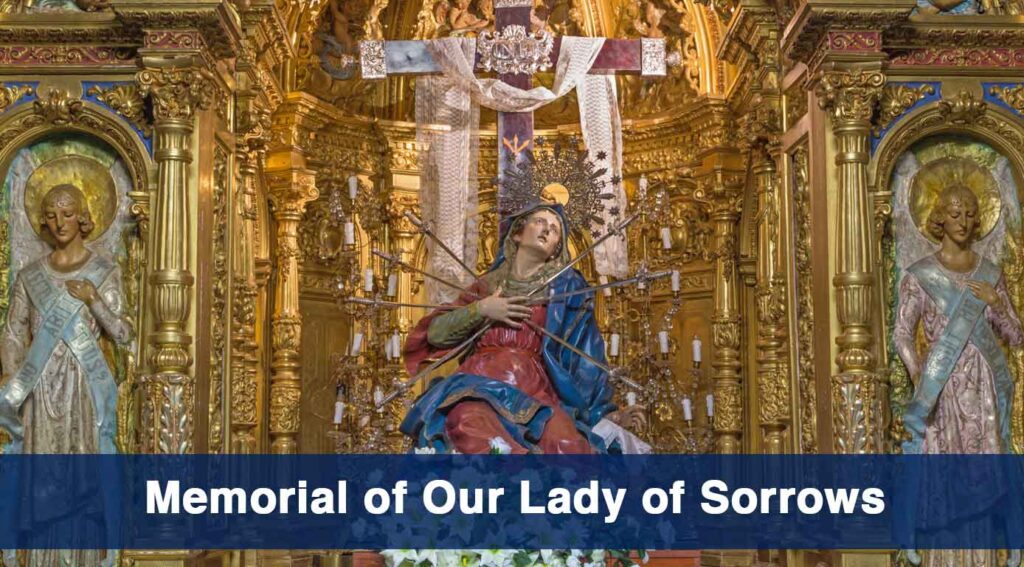
The devotion to Our Lady of Sorrows flourished in the Middle Ages, and the hymn Stabat Mater was composed for it. For a while there were two feasts in honor of the Sorrowful Mother: one going back to the 15th century, the other to the 17th century. For a while both were celebrated by the universal Church: one on the Friday before Palm Sunday, the other in September. The principal biblical references to Mary’s sorrows are in Luke 2:35 and John 19:26-27. The Lucan passage is Simeon’s prediction about a sword piercing Mary’s soul; the Johannine passage relates Jesus’ words from the cross to Mary and to the beloved disciple.
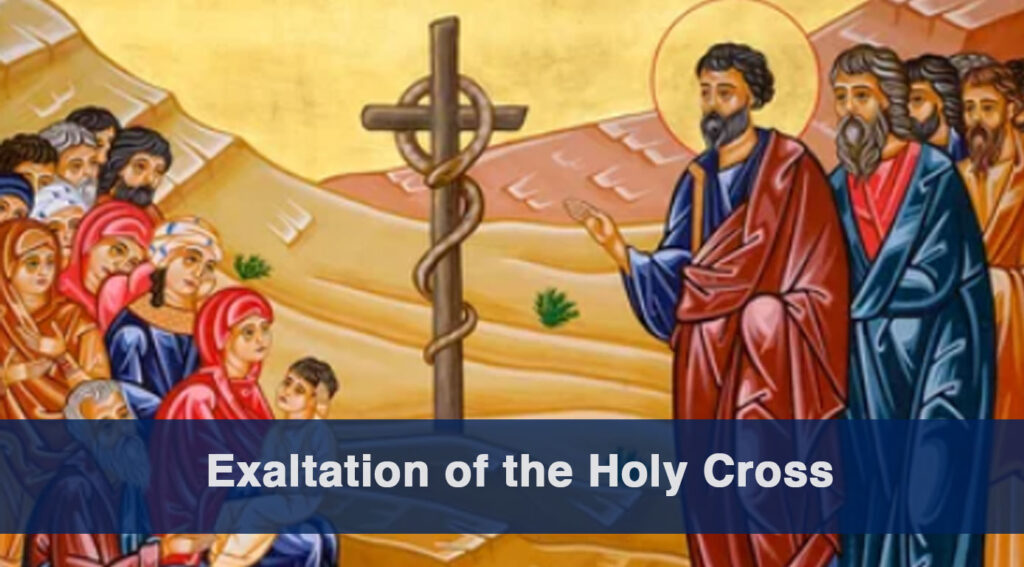
What are these Christians about, exalting an instrument of torture? First, we rejoice that something so terrible should have been transformed into a means of redemption for the whole human race.
Second, we remind ourselves of the fact that Christianity is not an abstract and spiritual religion. It springs from God’s direct intervention in the affairs of the world, a real historical event involving real people and, in the end, a real execution on a real cross. We may theorize and theologize all we like; but all our theorizings and theologizings are nothing without the history on which they are based. Take away that history – take away the Cross – and Christianity is nonsense.
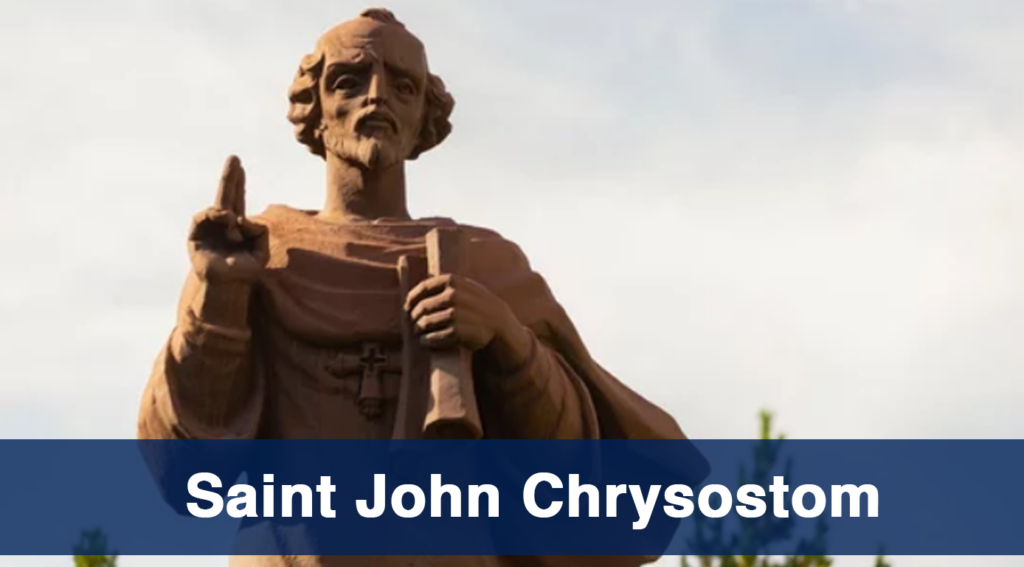
The ambiguity and intrigue surrounding John, the great preacher (“Chrysostom” means golden mouth”) from Antioch, are characteristic of the life of any great man in a capital city. Brought to Constantinople after a dozen years of priestly service in Syria, John found himself the reluctant victim of an imperial ruse to make him bishop in the greatest city of the empire. Ascetic, unimposing but dignified, and troubled by stomach ailments from his desert days as a monk, John became a bishop under the cloud of imperial politics. Theophilus and other angered bishops were supported by Eudoxia. The empress resented his sermons contrasting gospel values with the excesses of imperial court life. Whether intended or not, sermons mentioning the lurid Jezebel and impious Herodias were associated with the empress, who finally did manage to have John exiled. He died in exile in 407.
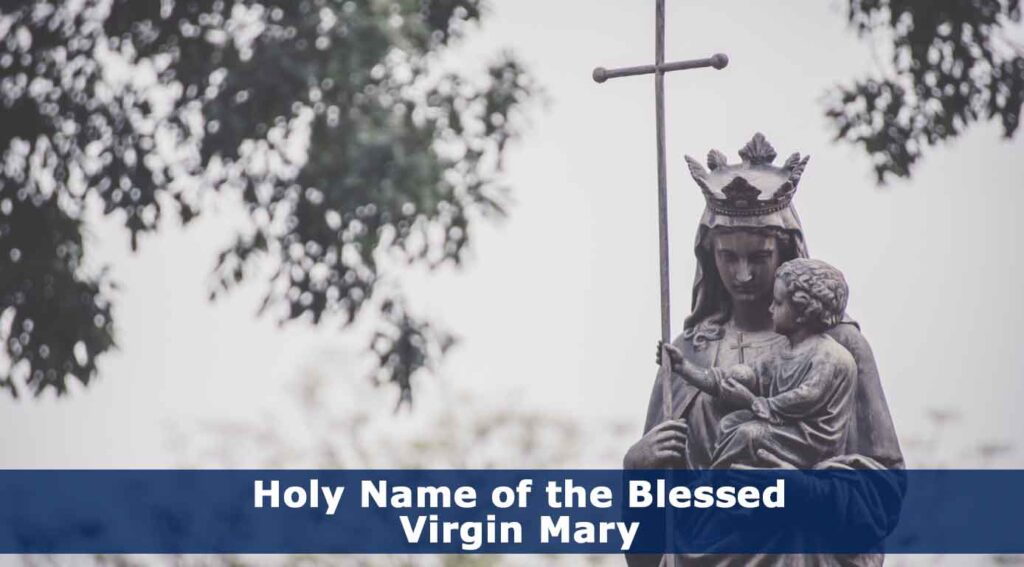
This feast is a counterpart to the Feast of the Holy Name of Jesus; both have the possibility of uniting people easily divided on other matters. The feast of the Most Holy Name of Mary began in Spain in 1513 and in 1671 was extended to all of Spain and the Kingdom of Naples. In 1683, John Sobieski, king of Poland, brought an army to the outskirts of Vienna to stop the advance of Muslim armies loyal to Mohammed IV of Constantinople. After Sobieski entrusted himself to the Blessed Virgin Mary, he and his soldiers thoroughly defeated the Muslims. Pope Innocent XI extended this feast to the entire Church.
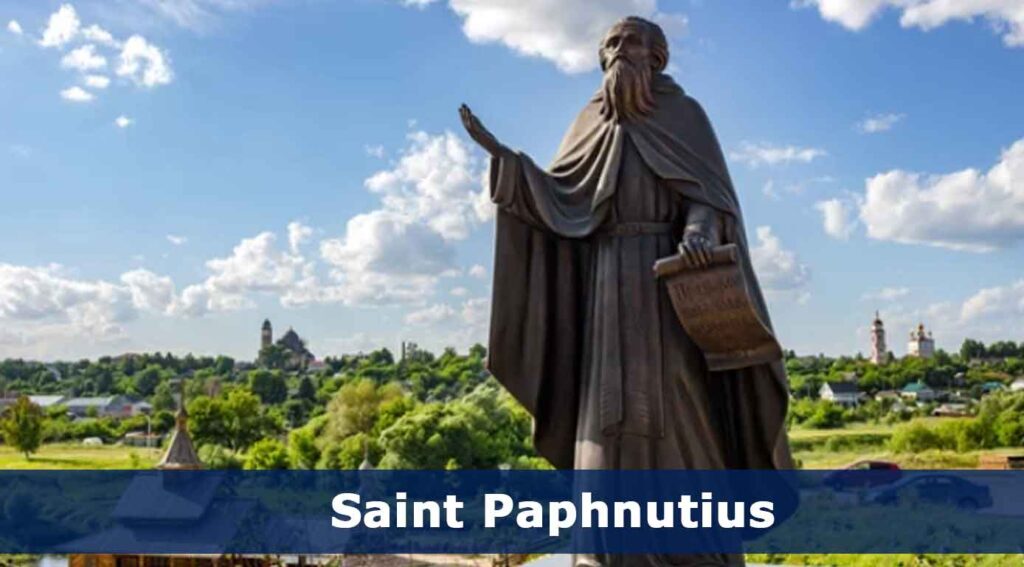
The holy confessor Paphnutius was an Egyptian who, after having spent several years in the desert under the direction of the great St. Antony, was made bishop in the Upper Thebaid. He was one of those confessors who under the Emperor Maximinus lost the right eye, were hamstrung in one leg, and were afterwards sent to work in the mines. Peace being restored to the Church, Paphnutius returned to his flock, bearing all the rest of his life the glorious marks of his sufferings for the name of his Crucified Master. St. Paphnutius is sometimes called “the Great” to distinguish him from other saints of the same name; the year of his death is not known.