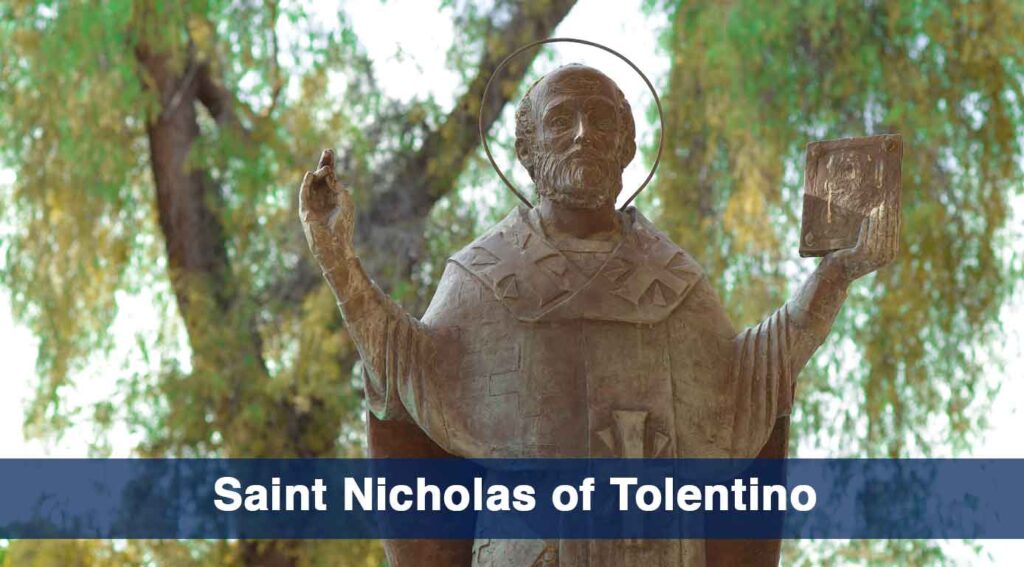
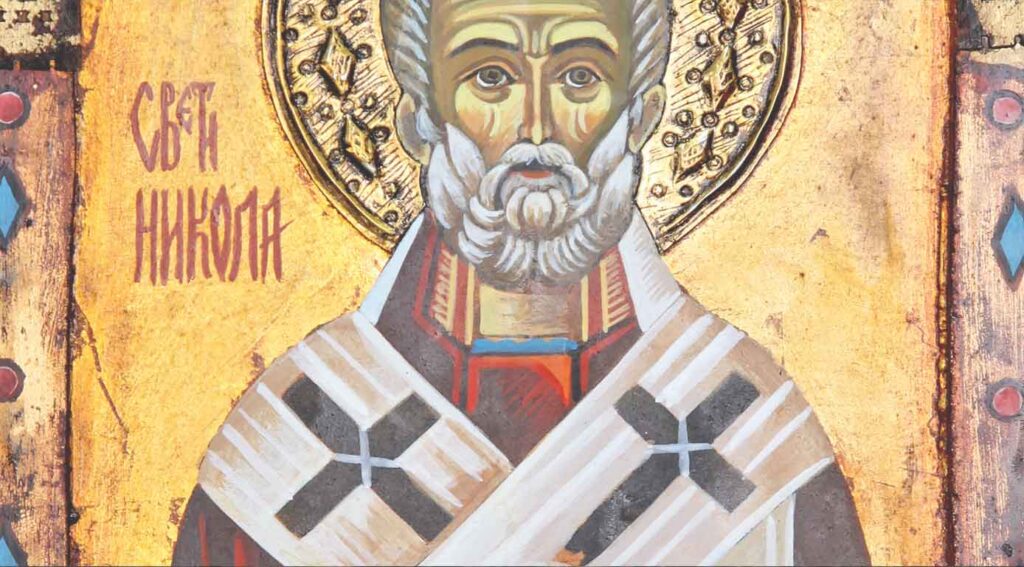
Born in 1245 in Sant’Angelo, St. Nicholas of Tolentino took his name from St. Nicholas of Myra, at whose shrine his parents prayed to have a child. Nicholas became a monk at 18, and seven years later, he was ordained a priest. He gained a reputation as a preacher and a confessor. C. 1274, he was sent to Tolentino, near his birthplace. Nicholas was primarily a pastor to his flock. He ministered to the poor and the criminal. He is said to have cured the sick with bread over which he had prayed to Mary, the mother of God. He gained a reputation as a wonder-worker. Nicholas died in 1305 after a long illness. People began immediately to petition for his canonization. Eugene IV canonized him in 1446, and his relics were rediscovered in 1926 at Tolentino. Continue reading about St. Nicholas of Tolentino.
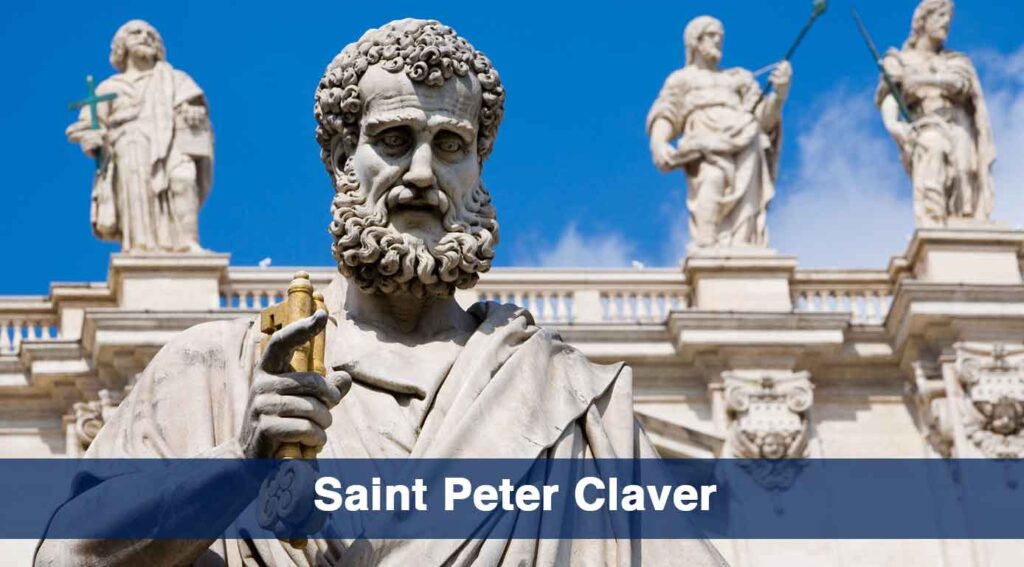
Peter Claver was born to a prosperous family in Catalonia, and earned his first degree in University of Barcelona. He entered the Jesuits in 1601. When he was in Majorca studying philosophy, Claver was encouraged by Alphonsus Rodriguez, the saintly doorkeeper of the college, to go to the missions in America. Claver listened, and in 1610 he landed in Cartagena, Colombia. After completing his studies in Bogotá, Peter was ordained in Cartagena in 1616. Towards the end of his life he fell ill with a degenerative disease and for four years he was treated neglectfully and brutally by the servant whose task it was to look after him. He did not complain but accepted his sufferings as a penance for his sins. In 1654 Peter was anointed with the oil of the Sacrament of the Sick. When Cartagenians heard the news, they crowded into his room to see him for the last time. They treated Peter Claver’s room as a shrine, and stripped it of everything but his bedclothes for mementos. Claver died September 7, 1654. St. Peter Claver was canonized in 1888.
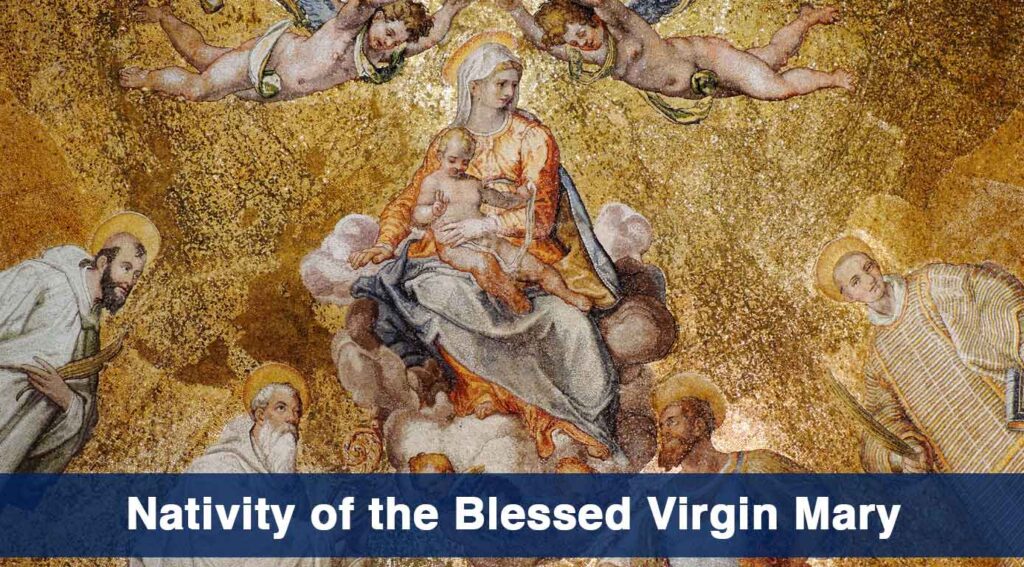
The Church has celebrated Mary’s birth since at least the sixth century. A September birth was chosen because the Eastern Church begins its Church year with September. The September 8 date helped determine the date for the feast of the Immaculate Conception on December 8.
Scripture does not give an account of Mary’s birth. However, the apocryphal Protoevangelium of James fills in the gap. This work has no historical value, but it does reflect the development of Christian piety. According to this account, Anna and Joachim are infertile but vigorously prayed for a child. They receive the promise of a child who will advance God’s plan of salvation for the world. Such a story, like many biblical counterparts, stresses the special presence of God in Mary’s life from the beginning.
Saint Augustine described the birth of the Blessed Virgin Mary as “the flower of the field from whom bloomed the precious lily of the valley.”
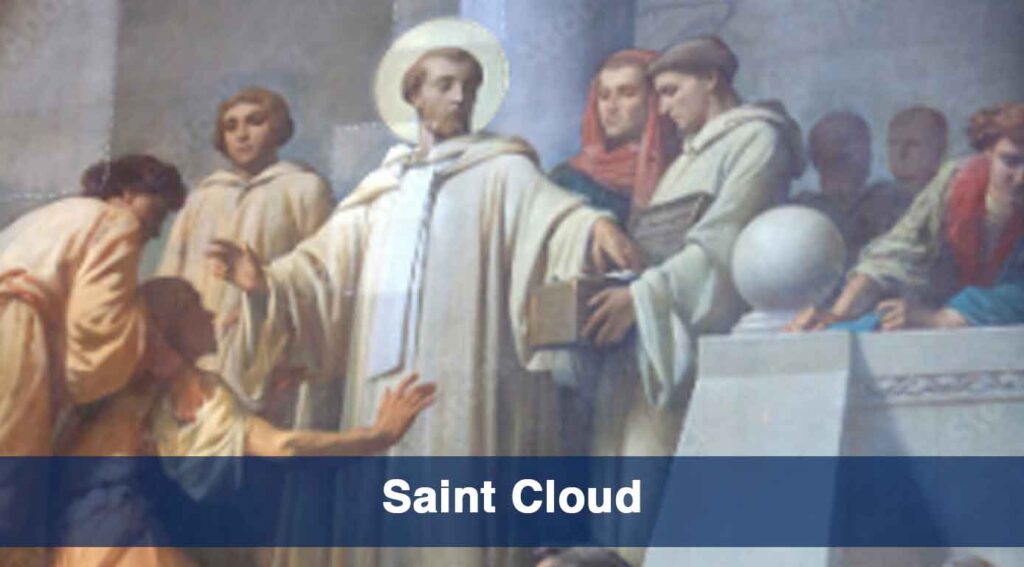
Born in 522, Clodoald was the grandson of the Frankish King Clovis I, whose conversion to orthodox Christianity rather than the Arian heresy made him the first Catholic ruler of present-day France. In 554 Clodoald returned to the monastic life, founding and leading a community of monks in the village of Nogent near Paris. There, he was known for his generosity toward the poor, and his attention to the work of religious instruction among the people. He died on Sept. 7, 560, at the age of 38.
Under the name of “St. Cloud,” Clodoald became the namesake of several cities and towns. These include the Parisian suburb of Saint-Cloud, and later St. Cloud, Minnesota, whose Catholic diocese has been placed under his patronage.
St. Eleutherius (d. 585 A.D.) was a monk living in Spoleto, Italy. Little is known of his early life. He became the Abbot of St. Mark’s Abbey and was well-known as a man of simplicity and penance. He also demonstrated the gift of miracles and exorcism, and raised a dead man to life. After he healed a boy from demonic possession and saw that the child was afterwards left unharmed, St. Eleutherius made a remark to this effect: “Since the child is among the servants of God, the devil dares not approach him.” Then the boy, who came to live at St. Mark’s Abbey to be educated by the monks, became possessed again. St. Eleutherius repented of his vain and presumptuous remark, and the whole monastery underwent a penitential fast before the devil would leave the boy for the final time. St. Eleutherius was a friend of Pope St. Gregory the Great, the latter having called upon the saint to pray for him in his illness. St. Eleutherius died in Rome in 585 A.D.
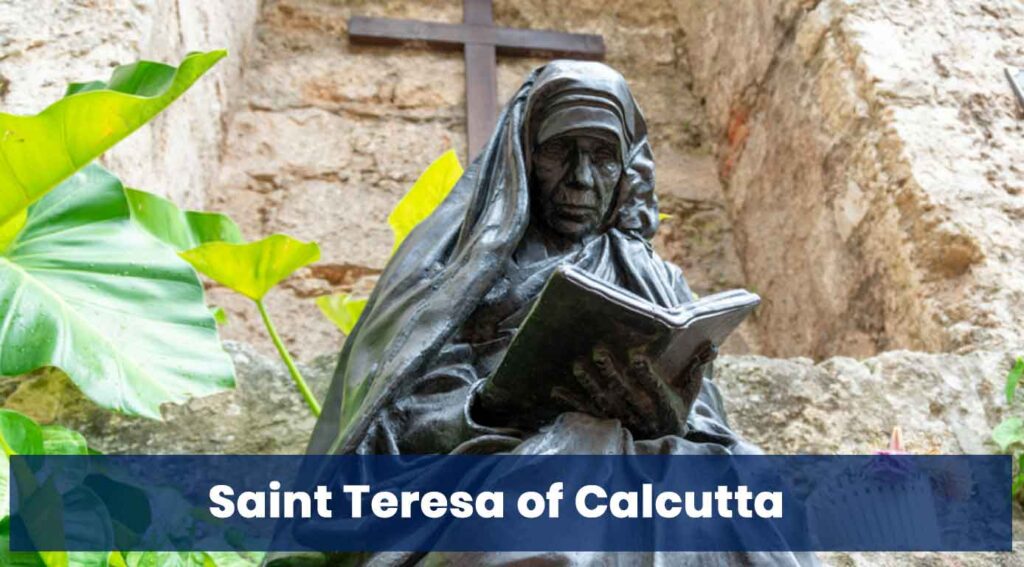
Mother Teresa of Calcutta, the tiny woman recognized throughout the world for her work among the poorest of the poor, was beatified October 19, 2003. Among those present were hundreds of Missionaries of Charity, the order she founded in 1950, as a diocesan religious community. Today the congregation also includes contemplative sisters and brothers, and an order of priests.
Born to Albanian parents in what is now Skopje, Macedonia, Gonxha (Agnes) Bojaxhiu was the youngest of the three children who survived. In 1979, she was awarded the Nobel Peace Prize. On September 5, 1997, God called her home. Blessed Teresa was canonized by Pope Francis on September 4, 2016.
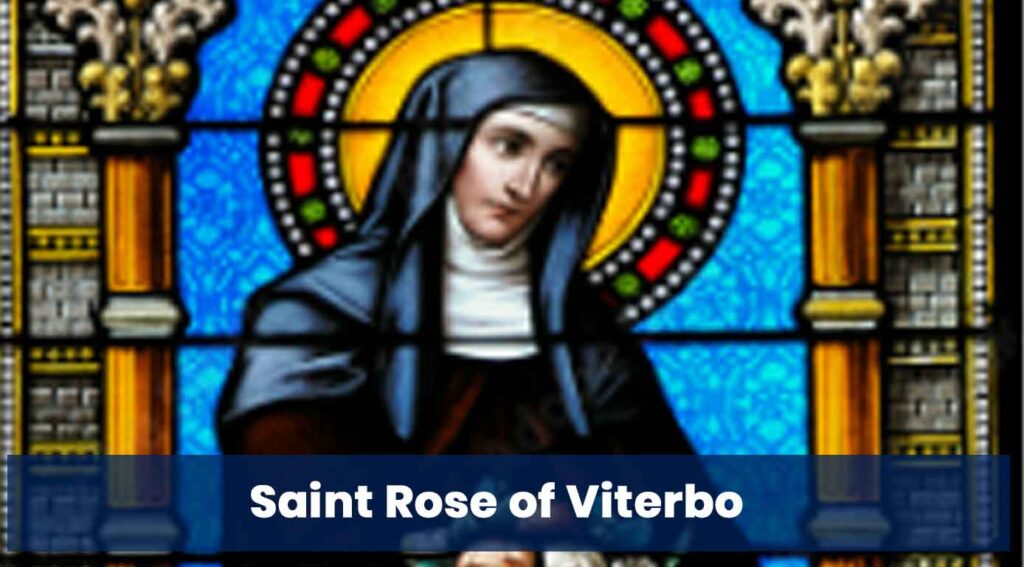
Even as a child, Rose had a great desire to pray and to aid the poor. While still very young, she began a life of penance in her parents’ house. She was as generous to the poor as she was strict with herself. At the age of 10, she became a Secular Franciscan and soon began preaching in the streets about sin and the sufferings of Jesus.
Viterbo, her native city, was then in revolt against the pope. When Rose took the pope’s side against the emperor, she and her family were exiled from the city. When the pope’s side won in Viterbo, Rose was allowed to return. Her attempt at age 15 to found a religious community failed, and she returned to a life of prayer and penance in her father’s home, where she died in 1251. Rose was canonized in 1457.
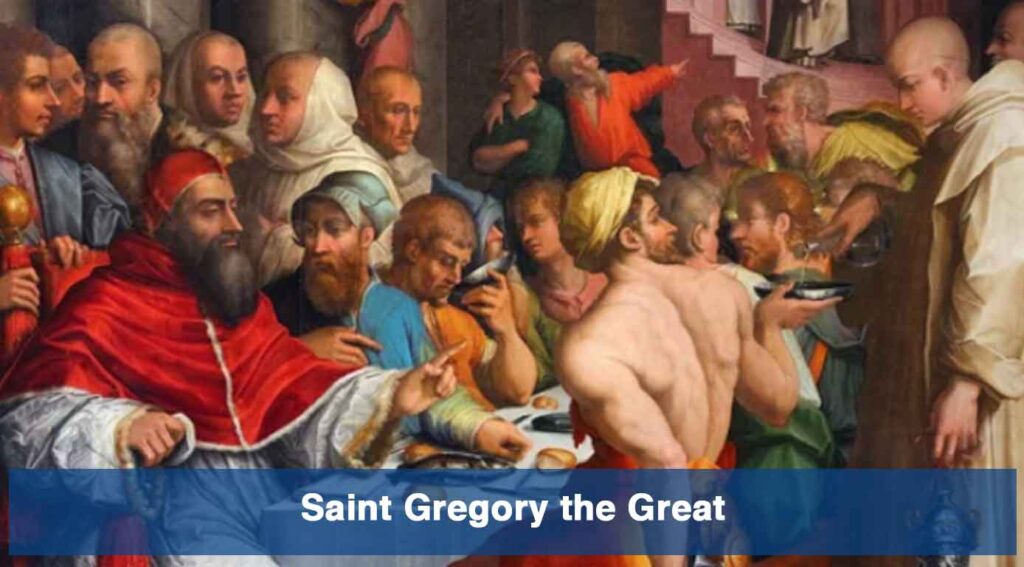
Gregory was born in Rome and followed the career of public service that was unusual for the son of an aristocratic family, finally becoming the prefect of Rome before he was 30. After five years in office he resigned, founded six monasteries on his Sicilian estate, and became a Benedictine monk in his own home at Rome. Ordained a priest, Gregory became one of the pope’s seven deacons, and also served six years in the East as papal representative in Constantinople. He was recalled to become abbot, but at the age of 50 was elected pope by the clergy and people of Rome. He is known for his reform of the liturgy, and for strengthening respect for doctrine. Whether he was largely responsible for the revision of “Gregorian” chant is disputed. An Anglican historian has written: “It is impossible to conceive what would have been the confusion, the lawlessness, the chaotic state of the Middle Ages without the medieval papacy; and of the medieval papacy, the real father is Gregory the Great.” He died on 12th of March 604, but as this date always fall within Lent, his feast is celebrated on the date of his election as Pope.
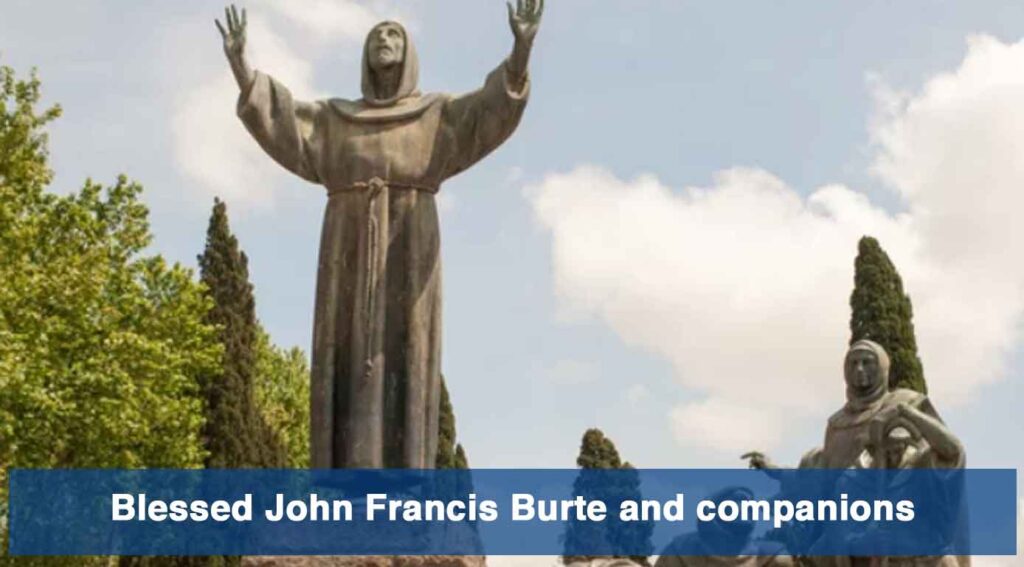
These priests were victims of the French Revolution. Though their martyrdom spans a period of several years, they stand together in the Church’s memory because they all gave their lives for the same principle. In 1791, the Civil Constitution of the Clergy required all priests to take an oath which amounted to a denial of the faith. Each of these men refused and was executed.
John Francis Burté became a Franciscan at 16 and after ordination taught theology to the young friars. Later he was guardian of the large Conventual friary in Paris until he was arrested and held in the convent of the Carmelites.
Despite the fact that much about Saint Giles is shrouded in mystery, we can say that he was one of the most popular saints in the Middle Ages. Likely, he was born in the first half of the seventh century in southeastern France. That is where he built a monastery that became a popular stopping-off point for pilgrims making their way to Compostela in Spain, and the Holy Land. In In Germany, Giles was included among the so-called 14 Holy Helpers, a popular group of saints to whom people prayed, especially for recovery from disease, and for strength at the hour of death. Also among the 14 were Saints Christopher, Barbara, and Blaise. Interestingly, Giles was the only non-martyr among them. The pilgrimage center that once drew so many fell into disrepair some centuries after Giles’ death.