Daily Saints

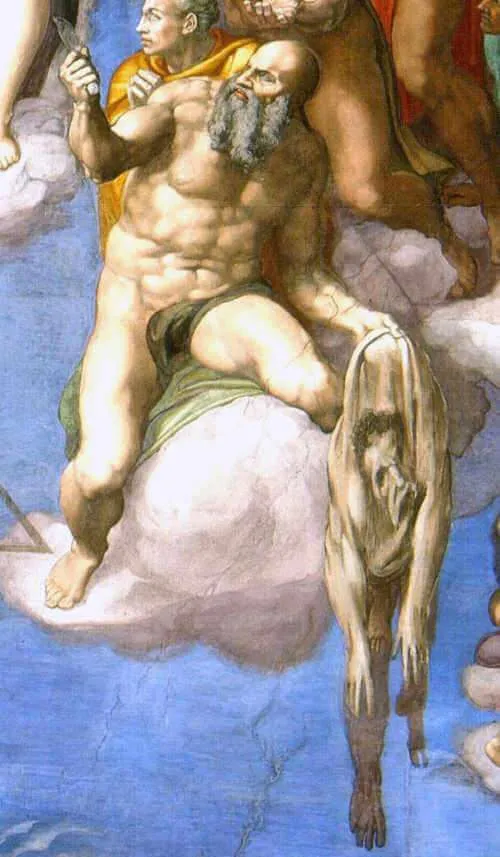
Saint Vincent Ferrer, Priest

c.1350–1419; Patron Saint of builders, plumbers, fishermen, and prisoners; Canonized by Pope Calixtus III in 1455

It can be said that today’s saint lived two sequential lives. The first forty-nine years of his life were, in many ways, a preparation for the final twenty years of his life. All sixty-nine years, however, were years of fervent study, prayer, zeal, and extraordinarily impactful preaching.

Vincent was the fourth child of noble parents born in Valencia, Spain. According to popular legend, Vincent’s father had a dream that his son would become famous throughout the whole world. This was miraculously confirmed when his mother was said not to have experienced any pains during his birth. Vincent was named after the Third Century Valencian saint, Vincent the Deacon, Protomartyr of Spain. At a young age, Vincent completed studies in philosophy and joined the Dominican friars when he was about eighteen. As a young Dominican, he spent the next several years teaching, writing, preaching, praying, fasting, and doing penance, and was very devoted to the poor. His study of the Sacred Scripture was so intense that it is said that for about three years he read nothing but Scripture, memorizing the entire Bible.

The first of the miracles that would later become commonplace in his ministry took place during a severe famine. Brother Vincent’s heart was so moved with compassion for the hungry people that he prophesied that two boats would arrive that evening at port, loaded with food. To the surprise of everyone, it happened as he said. Brother Vincent continued his studies, obtaining a Doctorate in Theology, and was ordained a Catholic priest around the age of twenty-eight.

Father Vincent was ordained during a period in the Church that is commonly referred to as the Western Schism, in which the Church found itself with two men claiming to be pope in 1378. Urban VI resided in Rome, and Clement VII resided in Avignon, France. At the time of the division, good and holy people disagreed on who the real pope should be. The future Saint Catherine of Sienna supported Urban VI in Rome, and the future Saint Vincent Ferrer supported Clement VII. This division raged on until 1417 when the matter was finally resolved by a Church council in Constance. Though Father Vincent’s choice was named the antipope by that council, Father Vincent humbly embraced this resolution and convinced many people to do the same, helping to end the schism.

During the schism, in the year 1398, Father Vincent had an experience that would open the door for the second and most remarkable period of his priestly ministry. Father Vincent had become quite ill. On what seemed to be his deathbed, he had a vision of Christ, accompanied by Saints Dominic and Francis who exhorted him to go forth to preach penance, heal the sick, and prepare the faithful for the coming Judgment. Shortly after, Father Vincent recovered and then sought and received a special commission for this new mission from the Avignon pope. He set out on an extraordinary journey that lasted about twenty years, traveling on foot from town to town all across Europe, including England, Scotland, Ireland, Spain, France, Switzerland, and Italy.

The twenty years of itinerant traveling and preaching that Father Vincent engaged in is a miracle in and of itself. Countless stories abound. During his preaching, many claim that Father Vincent had the charismatic gift of tongues. Although he spoke in his native language, everyone heard him in their own language. While he was an intellectual of the highest caliber, his style of preaching was new, more pastoral in nature, proclaiming the deep truths of the faith with a simple eloquence in which the people easily understood him. Prayer was always his immediate preparation for his sermons, while his study was the remote preparation that provided the content of his compelling messages. Among his most preached upon topics was the Final Judgment of Christ. This earned him the nickname “Angel of the Apocalypse.” Through that message, he instilled a holy fear of God and a desire for repentance among his listeners.

As Father Vincent traveled, it is said that hordes of people traveled with him, doing penance along the way. Some days he had as many as 300 followers, other days as many as 10,000. His “pulpit” was often a large field or public square, so that everyone who wanted to listen could do so.

Miracles also abounded. He raised the dead, healed the lame, cured illnesses, and did so with such regularity that people were mesmerized. As a result of his powerful sermons, backed up by miraculous signs, an estimated 25,000 Jews, 1000s of Muslims, and many pagans converted, while Catholics deepened and renewed their faith. 

Father Vincent’s reputation so preceded him that kings and nobles sought him out to come to their lands. He generously responded, over and over again. His love for the poor was also evident, and he inspired many powerful and wealthy people to practice generosity. Saint Vincent is considered the patron saint of builders due to his effectiveness in building up the Church.

Source: https://mycatholic.life/saints/saints-of-the-liturgical-year/april-5-saint-vincent-ferrer-priest/

Saint Vincent Ferrer, Priest Read More »

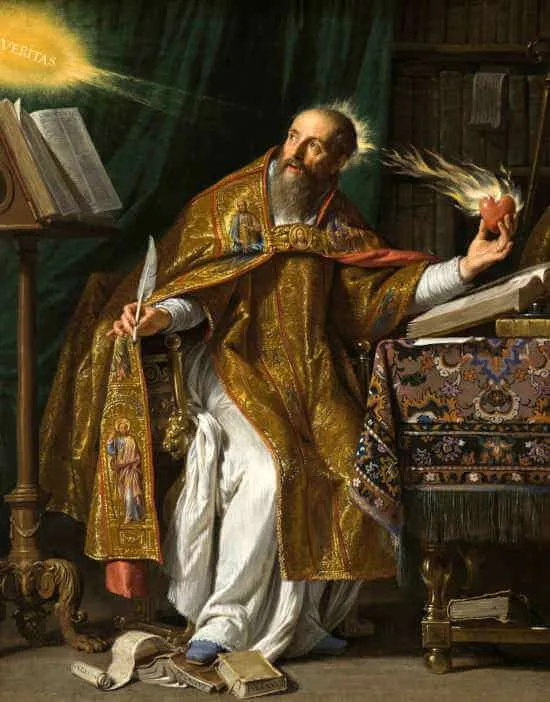
Saint Isidore, Bishop and Doctor of the Church

c.560–636; Patron Saint of computer technicians, the Internet, and students; Pre-Congregation canonization; Proclaimed a Doctor of the Church in 1722 by Pope Innocent XIII

Saint Isidore of Seville was among the most learned and prolific writers in the history of the Catholic Church. His influence was felt directly for more than a millennia, as his books were among the most copied and read books throughout the Middle Ages. Today, the world is unquestionably different because of this holy and brilliant man.

Isidore was born in Cartagena, modern-day Spain, to Severianus and Theodora, a well-respected, influential, and upper-class couple. Isidore had an older brother, Leander, who became a monk and then the Bishop of Seville. His younger brother, Fulgentius, became the Bishop of Astigi, and his sister, Florentina, became a nun of prominence. All three of Saint Isidore’s siblings are saints.

Isidore’s parents died when he was young, so his older brother, Leander, cared for him and his other two siblings. As a monk devoted to studies himself, Leander was especially attentive to the education of his siblings. Leander was quite strict in his disciplines, which resulted in Isidore obtaining a thorough education in grammar, logic, rhetoric, arithmetic, astronomy, music, geometry, Latin, Greek, Hebrew, and the Catholic faith. His interests were so vast that it has been said that Isidore knew everything. Isidore also benefited greatly from the contemplative influence of the monks he so admired and was drawn to their life of deep prayer.

At the time that Isidore was completing his education, the Visigoths were the ruling party in the Iberian Peninsula. The Visigoths were Christians who embraced the Arian heresy, which caused much division between them and the Nicene Catholics they ruled. Isidore’s brother, Leander, became the Bishop of Seville in 580 and served as bishop for about twenty years. In the first years of his episcopate, Leander, with the help of Isidore, worked tirelessly to convert the Visigoths to the Nicene Creed and to reject Arianism. When Liuvigild, the Arian Visigoth King died in 586, his younger son, Reccared, became king. A year later, through the efforts of Bishop Leander and Isidore, King Reccared renounced Arianism and embraced the true faith. In the decades to follow, most of the Visigoths also converted, bringing about Christian unity within the Iberian Peninsula.

When Bishop Leander died around the year 600, Isidore was named his successor in Seville and continued to strengthen the unified faith of Nicene Catholicism. Bishop Isidore was amazingly successful in his pastoral work. People flocked to him, listened to his preaching, were in awe of his vast knowledge, and were inspired by his holiness. As a shepherd, he was both an intellectual and a contemplative and enjoyed great confidence and trust from his people and other Church leaders.

One of Bishop Isidore’s greatest contributions to the Church and to the entire Western world was the writing of the Etymologiae, a comprehensive encyclopedia of all knowledge. This encyclopedia consisted of twenty volumes and summarized many of the great writers who had come before him, both pagan and Christian. Topics included grammar, rhetoric, logic, mathematics, geometry, music, astronomy, law, military science, languages, philosophers, architecture, clothing, food, cosmology, agriculture, mineralogy, physiology, zoology, and, of course, the Catholic faith. This encyclopedia became one of the most copied sets of books throughout the Middle Ages, directly influencing the Western world for more than 1,000 years.

In addition to his writings, Bishop Isidore presided over a number of Church councils. These councils were essential for the strengthening of the Church by further purifying it of heretical teaching, setting up administrative church structures and disciplines, and helping unify the people and bishops into one united voice and vision for the future. Bishop Isidore’s role in these councils was so crucial that in 653, just seventeen years after Bishop Isidore’s death, a subsequent Council in Toledo honored his memory and influence in these words: “The extraordinary doctor, the latest ornament of the Catholic Church, the most learned man of the latter ages, always to be named with reverence, Isidore.”

During his lifetime, Saint Isidore had an enormous influence upon the Church and Western world. He influenced popes, bishops, clergy, laity, kings, and heretics. He won over the minds and hearts of countless people for Christ, uniting them with confidence in the true faith. His intellectual gifts, coupled with his deep holiness, inspired many to turn to him for guidance. It’s hard to underestimate the influence this one man had upon the entire Western world by being a holy bishop in the Diocese of Seville. Though very few people are called to accomplish what he accomplished, we must all do our part. Ponder the legacy that you will leave behind, and pray that God will use you to not only influence those around you today, but that your influence will also be felt for generations to come.

Source: https://mycatholic.life/saints/saints-of-the-liturgical-year/april-4-saint-isidore-bishop-and-doctor-of-the-church/

Saint Isidore, Bishop and Doctor of the Church Read More »

Saint John Baptist de La Salle, Priest

1651–1719; Patron Saint of educators; Canonized by Pope Leo XIII on May 24, 1900

Saint John Baptist de La Salle died on Good Friday, perhaps as a divine sign of the sacrificial life he had lived for the salvation of souls. This wasn’t his first death. His first death was of the life he had lived and the renunciation of the world for the sake of the unexpected mission God gave him.

The Reims Cathedral in France was founded in the fifth century. The first Frankish king to be baptized was baptized there by Saint Remigius, leading to the baptism of many others and the Christianization of the kingdom. After that time, the cathedral became the place where most French kings were crowned throughout the centuries. In its thirteenth-century reconstruction, the Reims Cathedral became one of the most ornate and beautiful Gothic cathedrals in France.

Today’s saint was born into an upper-class family in Reims, and from his youth enjoyed a life of honor and social prestige, as well as an excellent and expensive education. His parents were very devout. When John was eleven, he received tonsure, and he and his parents made a promise of his lifelong service to the Church. At the age of sixteen, he became a canon of the Reims Cathedral. Canons acted as caretakers of the cathedral and advisors to the archbishop. John was then sent to complete his education at some of the finest schools in France. Shortly after beginning his studies of theology at age twenty-one, his parents both died, and he had to return home to care for his six younger siblings and to oversee the family estate. Over the next five years, he completed his theological studies and was ordained a priest at the age of twenty-six. After ordination, he completed his doctorate of theology and immersed himself in the life of a young and well-respected priest.

Father de La Salle’s spiritual director, Father Nicolas Roland, was a saintly man who had a heart for the poor and the education of children. He helped found a new religious order called the Sisters of the Child Jesus whose mission was to care for the sick and educate poor girls. Father de La Salle became their chaplain and confessor and assisted them with their work. When Father Roland was dying, he exhorted Father de La Salle to continue the work of educating the poor youth. Father de La Salle reluctantly agreed, not realizing what he was getting himself into. Soon after, Father de La Salle came in contact with a layman, Adrian Nyel, whom he assisted to found a school for poor boys in Reims, followed by a second one.

Father de La Salle found himself in a dilemma. Naturally speaking, he did not feel drawn to the work of establishing schools for the poor, but he found it difficult to resist the sisters and Adrian who were so passionate about this work, and divine inspiration tugged on his heart. He tried to withdraw but later continued to assist them. Little did he know that he had just begun what would become his life’s work—and a transforming legacy within the Church.

As time went on, Father de La Salle saw a need to better educate the teachers. He himself had received such an excellent education that he was well aware of the teachers’ lack of skills and their poor personal formation. The children that these men were teaching were often very poorly brought up and were “far from salvation,” he would later recount. In response, Father de La Salle began inviting the teachers into his own home, sharing meals with them, and teaching them how to be better teachers and men of God. Eventually, he invited them to live with him in his family home so that he could devote even more time to them. This didn’t sit well with some of his proud relatives who disdained the idea of him so closely associating himself with the lower social class.

Father de La Salle began to experience resistance and criticism. His social peers accused him of trying to make a name for himself as a founder. Some said he was ambitious. They wondered why he was not interested in maintaining the family’s good name, by associating with the peasants. What about his canonry? Would he abandon that prestigious position in favor of educating poor boys and working with simple and poorly educated teachers? Even the bishop raised similar concerns. These criticisms weighed heavily on Father de La Salle, but he prayerfully continued to follow divine inspiration. He resigned as a canon of the cathedral and devoted himself to the full-time work of the education of the poor.

When his parents had died, Father de La Salle had inherited a small fortune. Though he considered using that money to found new schools, he decided instead to give it to the poor who were suffering from a famine in another city, and to rely completely on divine providence for the establishment of more schools. Soon after, he founded the Institute of the Brothers of the Christian Schools. The brothers lived in common but did not pursue ordination to the priesthood. Instead, they devoted themselves exclusively to the education of poor young boys.

To better assist the brothers, Father de La Salle began to write and organize so as to form the brothers in the art of education. He developed a clear system and classroom structure which was new, ordered, and effective. Teaching poor boys from poorly formed families was challenging. The teachers had to become true masters of teaching, not only of academics but also of forming the boys in virtue and ordered living. Father de La Salle believed that every poor child should be educated for free. He also believed that the youth should learn to read and study in French rather than in Latin. This was a new approach to education. Though he faced much resistance within and outside of the Church, he pressed on. He opened schools for teachers, and his methods and institute grew rapidly.

Father de La Salle remarked later in life that if he had known what God would ask of him from the beginning, he would have never said “Yes.” But God, in His perfect wisdom, led him one step at a time, and Father de La Salle only had to respond to one gentle prompting of grace at a time. Ponder the way God wants to work with you in the same way. He will most likely not reveal His entire plan for your life all at once. Instead, He will lead you and guide you today, giving you the grace you need to respond to His unfolding plan each moment. Say “Yes” today, tomorrow, and every day thereafter, and at the end of your life you will be amazed at how far God has brought you.

Source: https://mycatholic.life/saints/saints-of-the-liturgical-year/april-7-saint-john-baptist-de-la-salle-priest/

Saint John Baptist de La Salle, Priest Read More »

Saint Francis of Paola, Hermit

1416–1507; Patron Saint of boatmen, mariners, and naval officers; Canonized by Pope Leo X on May 1, 1519

James Martotille and his bride wedded and lived in the town of Paola, in the southernmost region of Italy. During the first years of their marriage, they were unable to conceive a child. Being devout Catholics, they turned to prayer and beseeched the intercession of Saint Francis of Assisi. Their prayers were answered when they were blessed with the birth of a son. As an expression of gratitude to Saint Francis of Assisi, the couple named their son Francis. 

While still an infant, Francis suffered from a swelling of the eyes, which endangered his sight. The Martotilles once again turned to the intercession of Saint Francis of Assisi for healing. In keeping with a pious medieval custom, they vowed that if their son were healed, they would entrust him to a friary for a year as a youth so he could be educated and formed in the practice of the faith. Their infant was indeed cured, and his parents later fulfilled their vow.

As a youth, Francis showed many signs of piety. He regularly abstained from meat as penance, sought solitude, and found great joy in prayer. When he was entrusted to the care of the Franciscan friars at age thirteen (in the nearby Friary of Saint Mark), his love of God and devotion to prayer and penance grew stronger. Though he was not a professed brother, he lived out the Franciscan vows in ways that surpassed even the friars themselves. After faithfully fulfilling the yearlong stay, in accord with the vow made by his parents, Francis and his parents took a pilgrimage north to Assisi. After stopping in Rome and other places along the way, they completed their pilgrimage and returned home to Paola.

Back in Paola, Francis’ desire for prayer, penance, and solitude grew strong. In response, Francis sought permission from his father to live as a hermit. His father granted Francis’ request, permitting him to live on a nearby portion of his property. Francis quickly discovered that life as a hermit suited him well and was his calling. The only problem was that his solitude was too often interrupted by friendly visits. To remedy this, he moved to an even more remote spot, taking up residence in a cave by the sea. In that “hermitage,” Francis relied solely upon divine providence. He ate what he could gather from the land and what people would bring to him from time to time. His bed was the ground, and his pillow a rock or log. He lived this life for six years, alone in peace and fulfillment.

When Francis was about twenty years old, his holy example inspired two other young men to join him in the wilderness. With the help of some local townsmen, who were inspired by Francis’ vocation, they built small hermitages and a chapel in which a nearby priest would come to offer Mass for them. The three of them engaged in a common life of prayer, penance, and solitude. In the years that followed, more were drawn to join them to live as hermits. Over the next few decades, the local archbishop gave Francis and his companions permission to build a larger church and monastery, and Pope Sixtus IV asked Francis to formally write down a rule of life and submit it for approval. The pope also gave these men of God the name “Hermits of Saint Francis.” Some years later, Pope Alexander VI changed their name to the “Hermits of the Order of the Minims,” and then just to “Order of Minims,” or Minims friars. This simplified name meant they were to be seen as the least of all the friars. In everything they did, they sought lowliness and humility as their central aim.

Many quickly came to know and admire the newly established hermits who attempted to inspire a revival of the practice of Lenten penance among the faithful by practicing a perpetual Lent themselves. Their perpetual penance consisted of limiting their diet to only plants, refraining not only from meat and eggs but from everything derived from animals. This fast became a fourth vow of the order, in addition to poverty, chastity, and obedience.

When Jesus walked the earth, He continually performed miracles, which confirmed His sacred identity in the eyes of His first followers. By the grace of God, Francis of Paola also performed many miracles, read minds, and spoke prophetically. One day Francis was on a journey to Sicily and was hungry. He encountered some poor men looking for work along the way and asked the men for food, but they had none. Francis told them to look in their bags, and there they found freshly baked bread that seemed to multiply as they ate it. On another occasion, a boatman refused to take Francis to Sicily one day because Francis was poor and could not pay him, so Francis simply walked or sailed across the ocean on his cloak. On other occasions, Francis is said to have raised the dead; healed the sick and crippled; averted plagues; expelled demons; spoken prophetically to bishops, popes, and kings; and performed many other miracles.

As a result of Francis’ holy life, coupled with miraculous signs, many people sought him out, despite his vocation of solitude. Popes called on him, and kings sought his counsel. Through it all, Francis continually proclaimed that all he did was done “out of love.” Love, the pure and holy love of charity, was the sole purpose of his life.

At the age of ninety-one, Francis sensed death was coming for him, so he returned to complete solitude for his final three months. On Holy Thursday he went to confession, received Holy Communion, and prayed in preparation for death. Holy death came for him on Good Friday, April 2, 1519. He had lived a perpetual Lent throughout his life; thus, it was fitting that his Lent come to an end on Good Friday. Twelve short years later, Pope Leo X canonized Francis a saint. Fifty-three years after his death, a group of French Calvinists broke into the church where he was buried, dug up his grave and found his body incorrupt. They quickly desecrated his body and burned it so that the faithful would no longer pray before his tomb. This final act of humility that God permitted Saint Francis of Paola to embrace flowed from the glories of Heaven.

From an early age, Francis sensed God calling him to a radical vocation. Francis responded in such a way that his actions quickly became extraordinary. Each one of us is called to an extraordinary life of holiness. We are called to become radical, totally given to God, doing all out of love of God and others. Ponder how radical you are every day, and deepen your commitment to radical holiness so that “radical” eventually becomes normal for you, just as it was for Saint Francis.

Source: https://mycatholic.life/saints/saints-of-the-liturgical-year/april-2-saint-francis-of-paola-hermit/

Saint Francis of Paola, Hermit Read More »

Easter Sunday

Today’s glorious solemnity is the ultimate cause of all joy, fulfillment, happiness, and glory. If Jesus only died on the Cross, destroying death, something would be missing—the restoration of life into a transformed and glorified living. Easter is not only about the forgiveness of sins, it’s about the temporal and eternal glorification of every human soul who dies and rises with Christ. When we focus upon the Gospel and consider the many lessons Jesus taught and the example He set, the Cross is often considered the difficult message and Easter the easy message. But is it?

The message of the Cross, as presented to us through both Jesus’ teachings and His lived example, is certainly challenging. Each one of us is called to the same depth of selfless surrender of our lives to the Father’s will. We must each die completely to ourselves, be purified from every sin and every attachment to sin, from every bad habit and every worldly thought, and from everything that is not God and God alone. When our calling to die with Christ and to embrace His Cross is clearly understood, as it has been by the saints, it is likely that Christians become overwhelmed at the seemingly daunting and impossible task of dying in and with Christ.

When it comes to the Resurrection, one might be tempted to say that it is easy to accept the message it presents. New life in Christ, the fullness of joy, complete transformation, and eternal beatitude in Heaven—these initially appear easy to embrace. However, the challenge that the profound reality of Easter presents to us is that we can be certain that our current understanding of what it means to share in the Resurrection of Christ is but the faintest shadow of the reality. In truth, very few people in this life have come close to understanding the glory to which we are called on account of the Resurrection. Saints Francis of Assisi, Catherine of Sienna, John of the Cross, Thérèse of Lisieux, to name a few, are among those who penetrated the mystery of Easter while still here on earth. They achieved this spiritual knowledge only by fully dying with Christ through a life of profound prayer, penance, and charity that completely united their souls to the Most Holy Trinity.

As we celebrate Easter, it is important to know that we do not yet know all that is promised to us by the Resurrection of Christ. If we can at least know that, then our spiritual appetites will make us hungry to know. Too often, Christians go through life satisfied with the most basic understanding of the Gospel. We know that God became man, lived His life, gathered followers, taught and performed miracles, died on the Cross, rose again, ascended into Heaven, and sent the Holy Spirit. Furthermore, we have hope in His promise that if we remain in His grace, then we will share in Heaven after we die. But this is an exceptionally incomplete view of the full reality that has been comprehended in this life by the saints. It is their understanding we must seek with every power of our souls.

What does it mean to share in the new life of Christ? What does it mean to share in the glory of the Resurrection? What will Heaven be like for those who enter into the highest realms of glory in this life compared to those who only do the basics? What will the New Heavens and the New Earth be like when Jesus returns in all His glory for the Final Judgment? If these are questions you have never deeply pondered and probed, then know that the answers that await you are more glorious than you could ever imagine. In other words, if you were to sit quietly and spend all day trying to imagine the best and most glorious life, trying to use your mind to draw a picture of the happiness and full joy of Heaven, you can be certain that you could never even come close to imagining the reality. That humble fact ought not discourage you; it should fill your conscience with a desire to know what you do not know. That is the first step.

A deep and vast spiritual comprehension of the joy of sharing fully in the Resurrection of Christ can only be given to us by a direct infusion of grace by God Himself. When a soul receives this infused knowledge, they become so overwhelmed with wonder and awe that they realize that committing even the smallest sin is absolute foolishness and is the path to the loss of everything. They realize that if they were to gain everything this world has to offer—every comfort, wealth, power, and prestige—they would be absolutely miserable compared to the person who shares fully in the Resurrection. They realize that the only thing worth anything is the complete abandonment of one’s life to the will of God, a willingness to suffer anything and everything for Christ, to serve and not be served, to forgive everyone completely, to love with every fiber of their being, and to continuously remain in a state of prayerful recollection with God.

If living such a life seems impossible, it’s not. It only seems that way when we fail to grasp the prize that awaits those who strive for the perfection of divine union. The Easter message and mystery is not just about being good and happy. It’s not just about trusting in the hope of Heaven after we die. The fullness of the message and mystery of Easter can only be understood if we begin the long and difficult journey toward divine union. Only those who begin it in haste have a chance of completing it. Begin it today by acknowledging that there is so much that you do not know. There is so much that God is calling you to and wants to bestow upon you. There is more joy in the Resurrection of Christ than anything else in life. Don’t aim for the lowly and passing things of life—aim for the highest heights of glory. Seek to understand the Resurrection this Easter so that you will be able to share more fully in the higher grades of glory that God wants to bestow upon you.

Source: https://mycatholic.life/saints/saints-of-the-liturgical-year/easter-sunday/

Easter Sunday Read More »

Prayer Meditation for Holy Saturday

My Lord, today all is silent.  You have given Your precious life for the salvation of the world.  You died a horrific death, poured out all Mercy from Your wounded Heart, and now You rest in peace in the tomb as the soldiers keep vigil.

Lord, may I also keep vigil with You as You sleep.  I know that this day ends with Your glorious triumph, Your victory over sin and death.  But for now I sit quietly mourning Your death.  

Help me, dear Lord, to enter into the sorrow and the silence of this Holy Saturday.  Today no Sacraments are celebrated.  Today the world waits in mourning in anticipation of the glory of new life!  

As I keep vigil, awaiting the celebration of Your Resurrection, fill me with hope.  Help me to look forward to the celebration of Your Resurrection and also to look forward to the hope of my own share in the new life You won for the world.  I entrust my whole being to You, dear Lord, as You lay lifeless and still.  May Your rest transform the brokenness of my own soul, my weaknesses, my sin, and my frailty.  You are glorious, and You bring the greatest good out of Your apparent defeat.  I trust in Your power to do all things, and I entrust my life to You.  Jesus, I trust in You.

Source: https://mycatholic.life/catholic-prayers/triduum-and-easter-prayers/prayer-meditation-for-holy-saturday/

Prayer Meditation for Holy Saturday Read More »

Good Friday of the Lord’s Passion

Perhaps one of the most surprising practices on Good Friday is that the Mass is not celebrated. Instead, Jesus’ saving Sacrifice is commemorated by the full reading of the Passion account, the veneration of the Cross, and the distribution of Holy Communion that was consecrated the day before. Why wouldn’t we celebrate the Sacrifice of the Mass on Good Friday? Saint Thomas Aquinas gives a profound answer to this question in his masterful work, Summa Theologica (See III.83). In part, he says the following:

Reply to Objection 2. The figure ceases on the advent of the reality. But this sacrament is a figure and a representation of our Lord’s Passion, as stated above. And therefore on the day on which our Lord’s Passion is recalled as it was really accomplished, this sacrament is not consecrated.

A careful reading of that passage, as well as the rest of that article, tells us that there is great power in the Liturgical Year, and in our annual Commemoration of the Lord’s Passion on Good Friday. We celebrate Mass daily throughout the year, except on Good Friday, so that we can receive the fruit of the Passion every day. The Church teaches that Mass is an efficacious sign, meaning that the Mass both signifies Christ’s sacrifice and actually makes it present. But on Good Friday, we celebrate our Lord’s Passion in the reality of time. Therefore, in terms of grace, nothing is lost by the absence of Mass on Good Friday. Instead, we must understand that the day of Good Friday itself becomes a powerful instrument of grace. Our liturgical Commemoration of our Lord’s Passion on Good Friday enables us to share in His saving act of redemption, just as the Mass does every other day of the year.

Setting aside the profound depth of theology present in this teaching, what does this mean, practically, for those who participate in the Good Friday Liturgy today? Here are a few thoughts for pondering.

As you prayerfully participate in the Liturgical Commemoration of the Lord’s Passion, know that this day itself is endowed with grace and power. The grace does not come through the sacramental “Memorial” of the Lord’s Passion but from the reality encountered in this once-a-year Commemoration. This day itself is a real and sanctifying participation in the fruit of Jesus’ saving Sacrifice.

To better understand this, look into your own soul and consider any ways that you have experienced God’s grace powerfully and uniquely on Good Friday. Perhaps, in years past, you entered into the Triduum in a prayerful and recollected way. Call that experience to mind, and understand that this deep encounter with our Lord was especially made possible because those days are holy.

Today, as you celebrate Good Friday, understand that the floodgates of Heaven are opened to you in a way unlike any other day of the year. Seize this moment in time. Seize this once-a-year opportunity to enter into our Lord’s suffering and death. Do so prayerfully, meditatively, truly, and intentionally. Especially honor the hours between noon and three o’clock. Try to set that time aside for nothing other than prayer and recollection. This day is sanctified. Time is sanctified. By entering into prayer during these hours of sanctified time, you will discover that God is especially present to you.

Read the Passion. Pray the Stations of the Cross. Recite the Sorrowful Mysteries of the Rosary. Gaze at a crucifix. Fast, keep vigil, be attentive, and be open to the abundance of grace our Lord wishes to bestow upon you this Good Friday, especially by participating in the liturgical Commemoration of the Lord’s Passion during the sacred hours when our Lord hung on the Cross. Today, “the figure ceases on the advent of the reality.” Today, the reality is here, captured in time, made present to you. Stand before His sacred Cross, and allow His mercy to pour forth upon you from His wounded side.

Source: https://mycatholic.life/saints/saints-of-the-liturgical-year/good-friday/

Good Friday of the Lord’s Passion Read More »

Holy Thursday

Holy Thursday is also called Maundy Thursday. “Maundy” comes from the Latin word mandatum, which is translated “mandate.” It is on this night that our Lord gave the mandate to “do this in remembrance of me.” That mandate was the command to celebrate the Most Holy Eucharist until the end of time, a mandate that the faithful continue to keep.

According to Sacred Scripture, Holy Thursday was a power-packed day and night. It began with Jesus sending Peter and John ahead to prepare the Upper Room for the celebration of the Passover meal. That meal would become the beginning of the New Passover. During the meal, Jesus gave a witness of selfless, sacrificial service by fulfilling the role of a servant and washing the feet of the disciples. After that, Jesus transformed the bread and wine into His Body and Blood, Soul and Divinity for the very first time, and the disciples received Holy Communion. By commanding them to “do this in remembrance of me,” Jesus instituted the new sacramental priesthood. He also predicted that one of those priests would betray Him and another would deny Him, a sign that His chosen priests then and now are also sinners. In John’s Gospel, Jesus gave a lengthy sermon and then went out to the Garden of Gethsemane to pray in agony as He awaited His arrest. Peter, James, and John went with Him but fell asleep, abandoning our Lord in His last agony. Jesus was arrested, endured the scrutiny of the High Priests Annas and Caiaphas, and then was imprisoned so that He could be sent for judgment by Pilate. During the interrogations, the disciples fled, and Peter, the future leader of the Church, denied he knew Jesus three times.

Was this truly a “holy” night? Indeed. True holiness is not a matter of having everything in your life be easy. It’s not about having the most entertaining and comfortable life possible. It’s not about avoiding every obstacle and difficulty that might befall you. Holiness is about fidelity to the fulfillment of the will of the Father in Heaven. Jesus fulfilled the Father’s will that night flawlessly. He set the stage for the coming of the Holy Spirit, instituted the Sacraments, and prepared to empower those Sacraments with His very life, which would be sacrificed the following day.

During the evening of Holy Thursday, after the conclusion of the Mass, the faithful accompany Jesus on a procession from the church to an altar of repose where our Lord’s sacred Body is placed until midnight. Whether you are able to kneel before that altar tonight or not, be with our Lord in prayer. Keep vigil with Him. Hear our Lord say to you, “My soul is sorrowful even to death. Remain here and keep watch with me” (Matthew 26:38). If you struggle with accompanying our Lord in prayer, then hear Him say to you what He said to Peter, “So you could not keep watch with me for one hour? Watch and pray that you may not undergo the test. The spirit is willing, but the flesh is weak” (Matthew 26:40–41). If you bring burdens with you tonight, say with our Lord, “My Father, if it is not possible that this cup pass without my drinking it, your will be done!” (Matthew 26:42). With a concerted effort, remain recollected throughout this night, tomorrow, and Saturday. It all begins tonight but culminates with Easter joy on Sunday. Enter Jesus’ suffering and death so that you can also share in His Resurrection!

Source: https://mycatholic.life/saints/saints-of-the-liturgical-year/holy-thursday/

Holy Thursday Read More »

Saint Melito of Sardis

Profile

Melito was a Bishop of Sardis, Lydia (part of modern Turkey). He was an ecclesiastical writer; he wrote an Apology (defense of Christianity) addressed to emperor Marcus Aurelius. Almost nothing else is known about his life.

Died

  • c.180 of natural causes
  • interred at Sardis, Lydia (part of modern Turkey)

Canonized

  • Pre-Congregation

Source: https://catholicsaints.info/saint-melito-of-sardis/

Saint Melito of Sardis Read More »

Saint Benjamin the Deacon

Profile

Benjamin was a deacon. He was imprisoned for a year for his faith. He was released on condition that he never speak about Christianity where he could be heard by any of the royal court. Benjamin then became a street preacher, proclaiming the word in any place he could find people. For his obstinate evangelization during the persecutions of king Vardanes, he was arrested, tortured and martyred.

Born

  • Persian

Died

  • impaled on a stake c.424 in Persia

Canonized

  • Pre-Congregation

Source: https://catholicsaints.info/saint-benjamin-the-deacon/

Saint Benjamin the Deacon Read More »