Saint Expeditus of Melitene
Saint Expeditus of Melitene Read More »
Profile
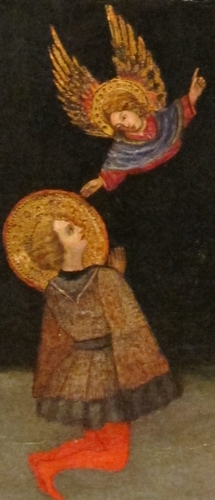
Expeditus is possibly legendary. It is unclear whether his name led to his association with expeditious matters, or the other way around. This association led to his becoming the patron of people who had to deliver things on time.
Canonized
Patronage
Representation
Source: https://catholicsaints.info/saint-expeditus-of-melitene/
Saint Expeditus of Melitene Read More »
Profile
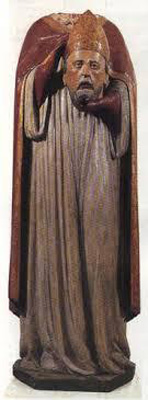
Agia was the wife of Saint Hidulphus of Hainault. They separated to enter religious life, Agia becoming a Benedictine nun at the abbey at Mons, Belgium. She was a widow. Legend says that she managed to avert an injustice by speaking from the tomb.
Died
Canonized
Patronage
Source: https://catholicsaints.info/saint-agia-of-hainault/
Saint Agia of Hainault Read More »
Profile
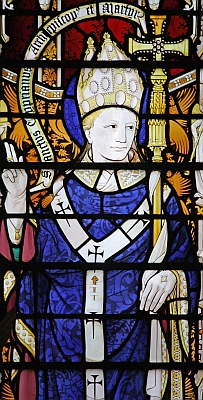
Landericus was the eldest son of Saint Madelgarus and Saint Waldetrudis. He was a soldier and priest. He became the bishop of Meaux, France from 641 to 650. He was a Benedictine abbot in Soignies, Belgium and abbot of Hautmont, France.
Born
Died
Canonized
Patronage
Representation
Source: https://catholicsaints.info/saint-landericus-of-soignies/
Saint Landericus of Soignies Read More »
Profile
Tubius was a Bishop of Astorga in northwest Spain. He was known as a stern disciplinarian. He was a fierce opponent of Priscillianism heresy. He was a great supporter of Pope Saint Leo the Great.
Born
Died
Canonized
Patronage
Source: https://catholicsaints.info/saint-turibius-of-astorga/
Saint Turibius of Astorga Read More »
Profile
Maro was a friend of Saint Flavia Domitilla, whom they accompanied in exile to the island of Ponza. He was martyred in the persecutions of Trajan.
Died
Canonized
Patronage
Source: https://catholicsaints.info/saint-maro-of-rome/
Saint Maro of Rome Read More »
Profile
Bernard was a monk in the Poitou area of France. He was a hermit and a traveling preacher. He founded a Benedictine monastery in the Tiron Forest and served as its abbot. Monks from his house spread throughout the British Isles, spreading the faith and building monasteries.
Born
Died
Patronage
Source: https://catholicsaints.info/saint-bernard-of-tiron/
Saint Bernard of Tiron Read More »
In the seventh century, theological and political tension prevailed between the Western church centered in Rome and the Eastern church centered in Constantinople, largely due to the interference of the Byzantine emperor. The emperor and Patriarch in Constantinople (modern-day Istanbul, Turkey) had enjoyed a strong religious and political influence over the entire Church ever since Constantine the Great Christianized the Roman Empire in the fourth century. This influence grew after the Western Roman Empire fell in the fifth century and was strengthened further in the sixth century when the Byzantine emperor, Justinian I, conquered Italy and forced the Goth-appointed pope to resign in 537, naming the papal legate to Constantinople as the new pope. From that time on, until 752, newly elected popes were required to obtain approval from the emperor before being consecrated. Many emperors saw themselves not only as political leaders, but also as those ultimately in charge of the governance of the Church. It is within this tension that today’s saint lived.
Martin was born in a small town about 100 miles north of Rome. He was of noble birth, an excellent student, and exercised great charity to the poor. As a cleric, he assisted two popes in important roles. In 641, he was sent by Pope John IV across the Adriatic Sea to Dalmatia and Istria (modern-day Croatia) where he assisted those who had suffered the effects of war. After the death of John IV, Theodore I was elected pope. Martin became his papal legate to Constantinople, where he worked closely with the emperor and patriarch, representing Pope Theodore in all matters.
As papal legate to Constantinople, the most pressing theological issue that Martin faced was the ongoing debate about the nature of Christ. Many within the Eastern Church adhered to monothelitism, a heresy claiming that Christ had only one will: a divine will but not a human will. This was contrary to the orthodox position held by the pope that Jesus had both a human and divine will. In 648, in an apparent attempt to bring an end to the debate, the Byzantine emperor Constans II issued an edict, the Type of Constans (Type), in which he tried to forge a middle way by forbidding discussion of the controversy, permitting everyone to adhere to their own position. Though the Patriarch of Constantinople, Paul II, at first held the orthodox position, he embraced the Type issued by the emperor. Martin, however, did not.
One year later, in 649, Pope Theodore died and named Martin as his successor. As had been the custom, the newly elected pope was supposed to receive approval of his appointment from the Byzantine emperor before his installation. However, for the first time in more than 100 years, Martin immediately moved forward with his coronation without the express consent of Constans II. This angered Constans, but he did nothing about it—at first.
Pope Martin, well aware of the most pressing issues within the Church, wasted no time addressing them. He called the Lateran Council of 649, a council that his predecessor Pope Theodore had intended to call, and made monothelitism the topic of discussion. Though the council did not reach the level of an official ecumenical council of the entire Church, given the fact that the Roman emperor was not involved, it was one of the earliest attempts of a pope to act on his own authority without the emperor. Hence, not only the teaching that this council produced, but also the way it was orchestrated, provided much direction for the future of the Church when the role of the emperor would eventually be fully excluded from the governance of the Church. The Lateran Council was attended by 105 bishops, held five sessions, and issued twenty decrees condemning monothelitism. It also condemned Constans’ edict, the Type, as well as some other earlier imperial edicts.
When Pope Martin began publishing this new teaching throughout Rome and beyond, the enraged emperor sought to have him arrested, or killed if necessary. This proved difficult. The emperor first sent a bishop of lower rank to Rome to oppose the pope and cause a schism. He was unsuccessful, so the bishop is said to have ordered a soldier to murder the pope during Mass. That soldier was struck blind, and the bishop repented. Later, the emperor sent another bishop with a Byzantine army to the pope. This time they were successful in capturing the pope and in bringing him back to Constantinople. Pope Martin was already ill when he was captured; abuse and lack of decent food caused his condition to worsen during the three months at sea.
Once he arrived in Constantinople, Pope Martin was placed on trial and found guilty of treason, the primary charge being that he would not accept the emperor’s edict, the Type. Because Patriarch Paul II intervened with the emperor, the emperor exiled Martin to Crimea instead of sentencing him to death. Throughout his imprisonment and exile, though elderly and sick, he was continually abused, malnourished, and ridiculed.
The emperor ordered the Church in Rome to elect a new pope, even though Pope Martin was still alive. The Church in Rome consented and elected a new pope as one final blow to the abused pontiff. Pope Martin, seeking only the good of the Church, acquiesced to this humiliation, and embraced being abandoned by the leaders of the Church in Rome. Of all he suffered, it is said that his abandonment by the Church leaders caused him the most suffering. Not long after being exiled, Pope Martin died because of the abuses, exposure, and malnourishment he endured. For that reason, the Church considers him a martyr, the last pope to receive that crown.
Popes must be courageous, even in the face of persecution and death. They need to set an example to all people so that all the faithful will follow their example. Pope Martin did this well, and his witness has had a profound effect upon generations after him. More than 1,100 years later, Pope Pius VII honored the memory and witness of Pope Martin when he wrote, in part, “Indeed, the famous Martin who long ago won great praise for this See, commends faithfulness and fortitude to Us by his strengthening and defense of the truth and by the endurance of labors and pains…”
Ponder the ways that God is calling you to act with greater courage in the face of persecution, opposition, ridicule, or any form of suffering. Do what is right, no matter the cost, and you will one day be among the saints alongside Saint Martin in Heaven.
Source: https://mycatholic.life/saints/saints-of-the-liturgical-year/april-13-saint-martin-i-pope-and-martyr/
Saint Martin I, Pope and Martyr Read More »
In the year 2000, Pope John Paul II canonized Saint Maria Faustina Kowolska and added the Feast of Divine Mercy to the Church’s official calendar. Saint Faustina, who died in 1938, was a member of the Congregation of Sisters of Our Lady of Mercy in Krakow, Poland. She came from a simple and poor family of farmers, had only three years of rudimentary education, and performed the humblest of tasks in her convent. But she also was a mystic who was privileged to have many private revelations from our Lord. In obedience to her superior and spiritual director, she recorded these private revelations in six notebooks. Those notebooks are known today under the title: Divine Mercy in My Soul: Diary of Saint Maria Faustina Kowalska. The messages contained within her diary present profound communications from God for our day and age. Though the messages are many, there are several new ways that God is calling us to a new form of devotion.
A first way is through meditation on the image of Divine Mercy. Of this, Saint Faustina wrote:
In the evening, when I was in my cell, I became aware of the Lord Jesus clothed in a white garment. One hand was raised in blessing, the other was touching the garment at the breast. From the opening of the garment at the breast there came forth two large rays, one red and the other pale. In silence I gazed intently at the Lord; my soul was overwhelmed with fear, but also with great joy. After a while Jesus said to me, “paint an image according to the pattern you see, with the inscription: Jesus, I trust in You” (#47).
“The pale ray stands for the Water which makes souls righteous; the red ray stands for the Blood which is the life of souls. These two rays issued forth from the depths of My most tender Mercy at that time when My agonizing Heart was opened by a lance on the Cross….Fortunate is the one who will dwell in their shelter, for the just hand of God shall not lay hold of him” (#299).
A second way is through our participation in the Solemnity of Divine Mercy:
“On that day (the 8th day of Easter each year) the very depths of My tender mercy are open. I pour out a whole ocean of graces upon those souls who approach the fount of My mercy. The soul that will go to Confession and receive Holy Communion shall obtain complete forgiveness of sins and punishment. On that day all the divine floodgates through which grace flow are opened. Let no soul fear to draw near to Me, even though its sins be as scarlet. My mercy is so great that no mind, be it of man or of angel, will be able to fathom it throughout all eternity” (#699).
A third way is through the recitation of the Chaplet of Divine Mercy:
Once, as I was going down the hall to the kitchen, I heard these words in my soul: “Say unceasingly the chaplet that I have taught you. Whoever will recite it will receive great mercy at the hour of death. Priests will recommend it to sinners as their last hope of salvation. Even if there were a sinner most hardened, if he were to recite this chaplet only once, he would receive grace from My infinite mercy. I desire that the whole world know My infinite mercy. I desire to grant unimaginable graces to those souls who trust in My mercy” (#687).
A fourth way is by honoring Jesus’ passion at the 3 o’clock hour:
At three o’clock, implore My mercy, especially for sinners; and, if only for a brief moment, immerse yourself in My Passion, particularly in My abandonment at the moment of agony. This is the hour of great mercy for the whole world. I will allow you to enter into My mortal sorrow. In this hour, I will refuse nothing to the soul that makes a request of me in virtue of My Passion” (#1320).
A fifth way is through an apostolic movement to spread the message of Divine Mercy. During her lifetime, Sister Faustina believed Jesus was calling her to found a new congregation, but that never materialized. Jesus, nonetheless, spoke to her in ways that revealed His desire that this “new congregation” be established. Since a formal religious congregation was never founded in her lifetime, we must look to the founding of subsequent congregations and apostolic movements that seek to spread the messages of Divine Mercy. God is calling each of us not only to receive His mercy but to spread that mercy to others in personal and organized ways.
Though Saint Faustina died in 1938, we should see the messages in her Diary as messages God especially desires we learn and live today. God moves slowly and methodically. He first revealed these messages, then allowed them to be studied by the Church for decades, then led Pope John Paul to canonize her and establish the universal Feast of Mercy on the last day of the octave of Easter in the year 2000. For these reasons, we should see this as one of the newest and most relevant devotions in our lifetimes.
As we celebrate Divine Mercy Sunday, ponder the profound significance of this new form of devotion for the Church and world today. We need God’s abundant Divine Mercy to flow from the gates of Heaven upon us more than ever. Only in Heaven will we understand the full depths of God’s Mercy. For now, we must trust all that He has revealed through his humble servant Saint Faustina and respond to the requests He has given to us through her. Commit yourself to the various ways God has called us to call upon His Mercy and do so with as much vigor and devotion you can offer Him. The following is the 3 o’clock prayer Jesus gave to Saint Faustina:
Prayer: You expired, Jesus, but the source of life gushed forth for souls, and the ocean of mercy opened up for the whole world. O Fount of Life, unfathomable Divine Mercy, envelop the whole world and empty Yourself out upon us (#1319). Jesus, I trust in You.
Source: https://mycatholic.life/catholic-prayers/triduum-and-easter-prayers/divine-mercy-sunday/
Divine Mercy Sunday Read More »
In 966, Mieszko I, duke and ruler of Poland, along with many others in his ruling court, converted to the Catholic faith. Their conversion marked the beginning of what is often referred to as “The Baptism of Poland.” In the years that followed, many more conversions took place throughout the land, especially through the efforts of missionary bishop Saint Adalbert. Just over a century later, another significant event took place in Poland. The Archbishop of Krakow, Stanislaus of Szczepanów, was brutally martyred by King Bolesław II. In 1979, Pope Saint John Paul II, the former Archbishop of Krakow himself, referred to Saint Stanislaus’ martyrdom analogously as “Poland’s Confirmation” (see above).
Very little is known for certain about Saint Stanislaus, since his first biography was not written until more than a century after his death. Nonetheless, his influence upon Poland has been great. He is believed to have been born and raised in southern Poland, in the village of Szczepanów. His town and the surrounding area stood out from the rest of Poland for their unique culture, architecture, traditional costumes, dances, food, and dialect. The capital and largest city of the territory was Krakow. His parents were prominent and wealthy, as well as devout and charitable. For most of their marriage, they were without children. When his mother conceived Stanislaus later in their lives, his parents saw their child as a gift from Heaven.
As a youth, Stanislaus became very devout, charitable toward the poor, fervent in mortifications, and dedicated to growth in virtue. As a young man, it is believed that he was sent to study in the then capital of Poland, Gniezno, and later completed his theological studies in Paris. After his parents died, Stanislaus received a huge inheritance, which he immediately gave to the poor. He was ordained to the priesthood by the Bishop of Krakow and appointed canon at the cathedral, became a well-respected preacher, was later appointed as a pastor, and eventually became the Vicar General of Krakow, a position of great importance in the local church. When the Bishop of Krakow died, Stanislaus was chosen as his successor by popular acclaim. At first he refused the position, but on the explicit order of the pope, he accepted and was ordained a bishop around the age of forty-two.
As a bishop, Stanislaus vigorously preached against immoralities at all social levels. He even confronted the king. When he was met with opposition, he remained steadfast in his convictions. It is believed that, to help solve various ecclesiastical matters, he brought papal legates to Poland, reestablished the Diocese of Gniezno as an archdiocese, and worked with the king to found new monasteries to help with the ongoing efforts of evangelization.
At that time, Bolesław II was King of Poland. Legend has it that Bishop Stanislaus had purchased land for the church from a man named Piotr. After Piotr’s death, however, his three sons disputed the sale and took the matter to the king. The king, agitated with Bishop Stanislaus for condemning his immoralities, sided with the sons and ordered that the bishop return the property. Bishop Stanislaus is said to have asked for three days to produce Piotr as his witness of the sale. The king and his court laughed and gave him his three days. After three days of prayer and fasting, Bishop Stanislaus led a procession to the cemetery where Piotr’s body was exhumed and the bishop ordered him to rise, which he did. The group then proceeded to the king and Piotr testified that he did indeed sell the property, scolding his sons before returning to his grave.
Though King Bolesław enjoyed many honors as a successful military leader, he also continued to manifestly indulge in immoralities, such as lusts and heavy-handed cruelty to anyone who opposed him. Tensions continued to grow between the bishop and the king. Eventually, after the king ignored the bishop’s warnings, Bishop Stanislaus excommunicated Bolesław. Outraged, Bolesław held a mock trial and found the bishop guilty of treason, punishable by death. When Bolesław’s soldiers refused to carry out the order, Bolesław himself slew the bishop with his sword while the bishop was celebrating Mass. The legend continues that after Stanislaus’ death, the soldiers were ordered to dismember the bishop’s body and scatter the pieces on the land to be devoured by wild beasts. Miraculously, eagles guarded the pieces until the canons of the cathedral were able to gather them and bury them properly. Outrage against Bolesław’s actions quickly reached a fever pitch in the kingdom, and the king had to flee to Hungary, where he died an unhappy death.
Saint Stanislaus has become a legend and inspiration for all of Poland for many centuries. Like many kingdoms throughout the ages, Poland has gone through times of division, later to be reunited once again. Through it all, Saint Stanislaus has been a guiding light to Poles and a source of hope when it was needed the most. There is little doubt that his martyrdom confirmed Poland as a Christian country, strengthening its people throughout the years to become true witnesses to Christ no matter the cost.
Ponder your own call to courageously lay down your life for the faith. When fear keeps you from fidelity, turn to prayer and seek to imitate Saint Stanislaus. Allow his prayers and witness to confirm you more firmly in the faith so that you will be a witness to those who need it the most.
Source: https://mycatholic.life/saints/saints-of-the-liturgical-year/april-11-saint-stanislaus-bishop-and-martyr/
Saint Stanislaus, Bishop and Martyr Read More »
Profile
One of five children born to a wealthy and famous family, Maddalena’s father died and her mother abandoned them all to a governess when she was five years old. She was a nun, who studied in the Carmel of Trent, Italy and then in Conegliano, Italy. She developed a ministry to the poor in Verona, Italy based in the Canossa Castle of her family. She was the founder of the Canossian Daughters of Charity and the Canossian Sons of Charity with a mission of providing free education to poor children. By the end of the 20th century, there were more than 2,600 Canossians working around the world.
Born
Died
Canonized
Source: https://catholicsaints.info/saint-maddalena-of-canossa/
Saint Maddalena of Canossa Read More »
Add San Jose Filipino Ministry as a new recipient, Send your donation using"donate@dosjfm.org"
Payable to - San Jose Filipino Ministry
Address - Poong Jesus Nazareno Filipino Catholic Center (PJNFCC); 3700 W. Orange Ave., Anaheim CA 92804
Poong Jesus Nazareno Filipino Catholic Center (PJNFCC); 3700 W. Orange Ave., Anaheim CA 92804
Phone: (657) 214-2507
Mobile (657) 208-2038
info@dosjfm.org
Poong Jesus Nazareno Filipino Catholic Center (PJNFCC); 3700 W. Orange Ave., Anaheim CA 92804
Phone: (657) 214-2507
Mobile (657) 208-2038
info@dosjfm.org
Add San Jose Filipino Ministry as a new recipient, Send your donation using"donate@dosjfm.org"
Payable to - San Jose Filipino Ministry
Address - 1235 S Magnolia Ave
Anaheim, CA 92804-5115
San Jose Filipino Ministry. All rights reserved. 2021 © Powered by Phoenix Virtual Solutions
Sponsored by EverClear Hospice and Palliative Care