Author name: Sani

Matthew 9:12-13

Dining with Sinners

Those who are well do not need a physician, but the sick do.  Go and learn the meaning of the words, I desire mercy, not sacrifice.  I did not come to call the righteous but sinners.

Reflection:

Would you describe yourself as one who is “well” or one who is “sick?” Are you among the “righteous” or the “sinners?” Be careful how you answer this question. Of course, the pride that comes with our fallen human nature often tempts us to claim that we are “well” and “righteous.” But humility will reveal the truth that we are among the “sick” and “sinners.”

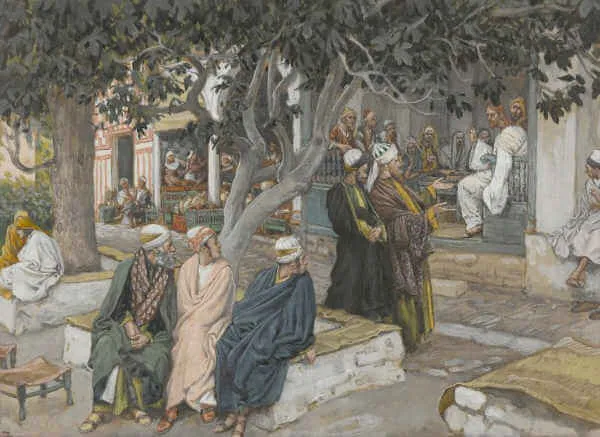
This statement of Jesus is a response to the Pharisees who noticed that Jesus was dining at the house of Matthew, the tax collector, whom He had just called to follow Him. Matthew did indeed leave everything behind and followed Jesus, and then he hosted dinner for Jesus at his house. At that dinner, there were “many tax collectors and sinners” who came and sat with Jesus and His disciples, which led the Pharisees to ridicule them all.

Jesus’ response is very important for us to hear. By stating that He came not for those who were well and righteous but for those who were sick and sinners, it tells us two important things. First, it tells us that we are all spiritually sick and sinful. Second, it tells us that if we cannot humbly admit to that, and in our pride claim that we are well and are righteous, then we essentially reject Jesus, the Divine Physician, from our lives. We essentially say, “Lord, I do not need You.”

It’s also helpful to notice that Jesus was not embarrassed to be seen with sinners. He did not hesitate at all and, in fact, clearly stated that they were those whom He came for. For that reason, we should not be afraid or embarrassed to admit we are sinners who are spiritually ill and in need of our Lord. To deny that fact is to deny reality and to deny the very source of the ongoing healing we most certainly need in life. It’s a denial of our need for Christ Jesus Himself.

Do you need our Lord? Do you need interior cleansing, healing, and forgiveness every day? If it’s difficult for you to wholeheartedly say “Yes” to that question, then perhaps you struggle with the pride of the Pharisees more than you know. No matter how holy you become, no matter how deeply you pray and no matter how charitable you are, you will always need the healing and forgiveness of the Divine Physician each and every day. 

Reflect, today, upon the need you have in your life today for forgiveness. What sin do you struggle with the most? Interestingly, the holier one becomes, the more clearly they see their daily sins and their need for forgiveness and healing. If you struggle with this at all, spend time examining your conscience. Look for ways to do it more thoroughly and honestly. If you do, you can be certain that our Lord, the Divine Physician, will deeply desire to dine with you today and always.

Source: https://catholic-daily-reflections.com/2025/07/03/dining-with-sinners-4/

Matthew 9:12-13 Read More »

Saint Thomas the Apostle

Died c. 72; Patron Saint of doubters, architects, blind people, builders, geometricians, masons, surveyors, and theologians; Pre-Congregation canonization

Saint Thomas the Apostle is best known for doubting the Resurrection of Jesus, when he said, “Unless I see the mark of the nails in his hands, and put my finger into the nailmarks and put my hand into his side, I will not believe” (John 20:25). Prior to this, the Gospels refer to Thomas several times. The Gospels of Matthew, Mark, and Luke list him among the Apostles but do not provide details about his call. One of the few personal details given about Thomas is found in John’s Gospel, which refers to him as “Didymus,” meaning, “Twin.” It is reasonable, then, to presume that he had a twin.

The first detailed mention of Saint Thomas comes just prior to the seventh and final “sign” performed by Jesus in John’s Gospel. Jesus’ signs were his miracles, performed so that people “may come to believe that Jesus is the Messiah, the Son of God, and that through this belief, you may have life in his name” (John 20:31). The seventh sign was the raising of Lazarus from the dead. Prior to this miracle, the Sanhedrin was growing increasingly agitated and hostile toward Jesus. The disciples knew this, understanding that if Jesus performed more miracles, the Sanhedrin would react. When Jesus learned that his friend Lazarus had died, he told his disciples that he was going to raise Lazarus back to life. The disciples challenged Jesus out of fear of persecution, saying, “Rabbi, the Jews were just trying to stone you, and you want to go back there?” (John 11:8). Thomas then courageously said to the other disciples, “Let us also go to die with him” (John 11:16).

The second time Saint Thomas appears in John’s Gospel is at the beginning of Jesus’ Last Supper discourse. Jesus informed the Apostles that he would return to the Father and prepare a place for them, after which he would return to take them with him. Thomas objects, saying, “Master, we do not know where you are going; how can we know the way?” Jesus responds with his often-quoted statement, “I am the way and the truth and the life. No one comes to the Father except through me” (John 14:5–6).

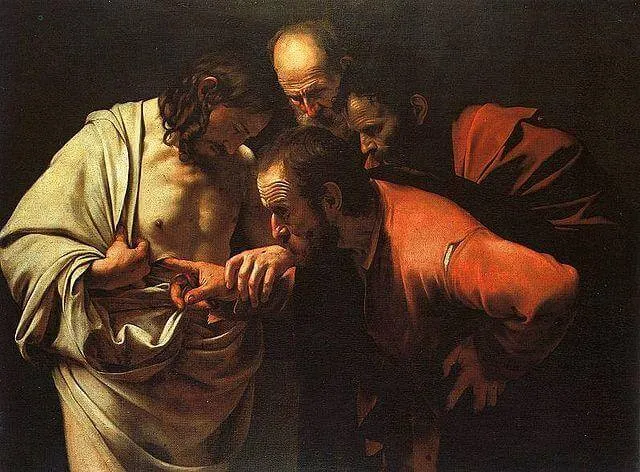
The final, and most well-known, time Thomas is included in John’s Gospel is when he is absent from the other Apostles after Jesus’ Resurrection, and Jesus appears to the ten. When Thomas hears about this later, he strongly voices his doubts. However, a week later, Thomas’ doubt is transformed into belief when he cries out, “My Lord and my God!” Traditionally, the faithful repeat Thomas’ statement during Mass after the words of consecration as a way of expressing faith in Jesus’ True Presence. It was Thomas who provided us with these words of faith.

The Acts of the Apostles mentions Thomas in the list of Apostles who gathered in the upper room after Jesus’ ascension into Heaven. Otherwise, Thomas is not mentioned again by name but is referred to generally with the other Apostles, such as at Pentecost. However, various ancient traditions widely believe that Thomas took Jesus’ final words seriously when Jesus said to the disciples, “…you will be my witnesses in Jerusalem, throughout Judea and Samaria, and to the ends of the earth” (Acts 1:8).

Regarding Thomas’ journey “to the ends of the earth,” Pope Benedict XVI stated in a general audience, “Lastly, let us remember that an ancient tradition claims that Thomas first evangelized Syria and Persia (mentioned by Origen, according to Eusebius of Caesarea, Ecclesiastical History 3, 1) then went on to Western India (cf. Acts of Thomas 1–2 and 17ff.), from where he also finally reached Southern India” (September 27, 2006). The certainty of this cannot be definitively confirmed, but there is substantial evidence to support it. In addition to Origen and Eusebius, other early Church Fathers spoke of his missions to India. In the fourth century, Saint Ephrem the Syrian composed a hymn in which he spoke of Thomas ministering in India, and Saint Gregory of Nazianzus mentioned the same. Later in the fourth century, Saint Ambrose of Milan spoke of Thomas’ missionary work in India, and in the late sixth century, Gregory, the bishop of Tours, records that the Apostle was martyred in India and his remains were brought back to Edessa, Syria, modern-day Turkey, a place that tradition says Thomas visited and preached in on his way to India.

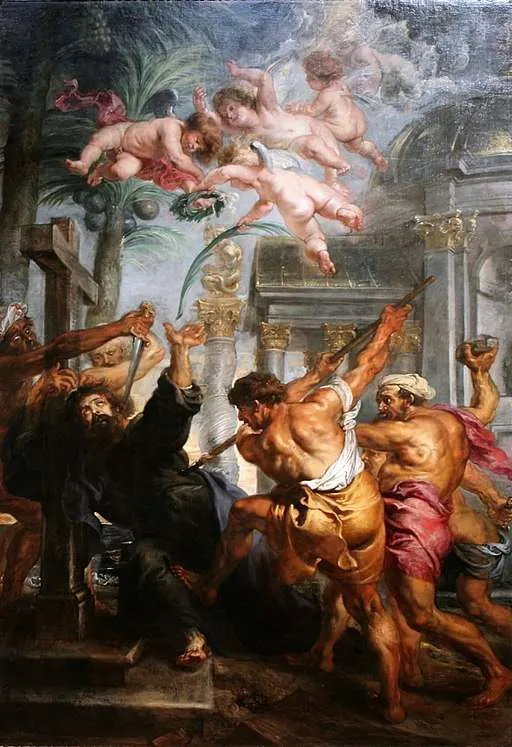
According to the most reliable traditions, Thomas arrived in India around the year 52. He preached along the Malabar Coast of southwestern India, as well as farther north in the Deccan Plateau. One ancient text called “The Acts of Thomas” speaks of many conversions and miracles that Thomas performed. Around the year 68, it is believed that Thomas and his companions traveled to eastern India, in modern-day Chennai, where he preached the Gospel, cared for the poor and sick, and erected churches. Tradition further states that Thomas worked to convert kings and their families as a way of gaining their support to convert the people. In Chennai, there is a hill called “Saint Thomas Hill,” believed to be the location of his martyrdom. Around the year 72, legend has it that while praying on that hill, Thomas was pierced in the back with a spear by order of the king for converting his wife and other family members to Christianity.

As we honor this great Apostle of the Lord, ponder the zeal he must have had to leave his home, family, and community, and travel to the far regions of India where he spent the rest of his life sharing the Gospel, baptizing, and establishing the Church. He died a martyr, which is fitting for such a courageous man. Though he struggled with doubts at first, his doubts were transformed by Christ.  Filled with the Holy Spirit at Pentecost, Thomas never looked back. As you ponder his life, reflect on any ways you can learn from him and imitate him. If you struggle with doubts, know that the Holy Spirit can transform those doubts and fill you with the same depth of zeal and commitment as Saint Thomas.

Source: https://mycatholic.life/saints/saints-of-the-liturgical-year/july-3—saint-thomas-the-apostle/

Saint Thomas the Apostle Read More »

John 20:27-29

Rejoiving in the Blessings Given to Others

Put your finger here and see my hands, and bring your hand and put it into my side, and do not be unbelieving, but believe.” Thomas answered and said to him, “My Lord and my God!” Jesus said to him, “Have you come to believe because you have seen me? Blessed are those who have not seen and have believed.

Reflection:

Thomas the Apostle, in many ways, represents each and every one of us in this exchange with Jesus. We’d like to believe that we always believe and are not unbelieving. But it’s important to admit the humble truth that we may not believe as deeply as we should. And it’s important to reflect upon our own reaction to the blessings that others receive that we do not.

Recall that Thomas was not among the other Apostles when Jesus first appeared to them. Therefore, when Thomas returned and heard that Jesus had appeared and that he missed His appearance, he clearly felt bad. Unfortunately, the sorrow Thomas felt at not being present when the Lord appeared to the others left him with a certain bitterness rather than joy. This is the sin of envy. Envy is a certain sorrow over the blessings others receive that we do not. Ideally, Thomas would have rejoiced at the blessing that the other Apostles received by encountering the risen Lord. But, instead, his sorrow at missing this even left him sad. He said, “Unless I see the mark of the nails in his hands and put my finger into the nail marks and put my hand into his side, I will not believe.”

Why was Thomas absent from this encounter with our Lord? Perhaps it was by divine providence, in that God wanted Thomas to set an example for us. If so, then one example Thomas set was that we must humbly rejoice in the blessings others receive when we are not also the recipient. Of course, if Thomas were there, then it would have been easier for him to share in the joy. But, in many ways, Thomas’ absence provided him an even greater opportunity. An opportunity that he failed to embrace.

When you see others receive blessings from God, how do you respond? Many people respond by immediately looking at themselves, wishing they were blessed in the same way. They struggle with envy. They think, “I wish I had received that blessing.” This form of envy is not always easy to see. For that reason, Thomas is given to us as a witness of what not to do in this situation.

Of course, Thomas is not a horrible person, which is why Jesus does later appear to him. That time, Thomas spoke words that are traditionally spoken as a devotion by the faithful at Mass when the Consecration occurs. He said, “My Lord and my God!” Jesus then gently rebukes Thomas by saying, “Have you come to believe because you have seen me? Blessed are those who have not seen and have believed.” But this gentle rebuke was an act of love, in that Jesus wanted Thomas to ponder the reason for his unbelief. Jesus clearly wanted Thomas to examine the unbelief caused by envy, which appears to have led to an intentional lack of faith.

Reflect, today, upon this holy Apostle. Today, Saint Thomas the Apostle is among the great saints in the Kingdom of Heaven. God used him to teach us these important lessons about envy, humility and faith. Let his weakness, from which he fully recovered, help you examine your own struggle with envy over the blessings that others receive that you do not. Learn to rejoice always in the ways that God is at work in our world and learn to grow in humility, so that when others are blessed in ways that you are not, you react as Saint Thomas ultimately did: “My Lord and my God!”

Source: https://catholic-daily-reflections.com/2025/07/02/rejoicing-in-the-blessings-given-to-others-4/

John 20:27-29 Read More »

Saint Irenaeus, Bishop and Martyr

c. 135–c. 202 Patron Saint of those who work for the unity of the Eastern and Western Churches Invoked against Christological heresies, and by apologists and catechists Pre-Congregation canonization Declared a Doctor of the Church (Doctor of Unity) by Pope Francis in 2022

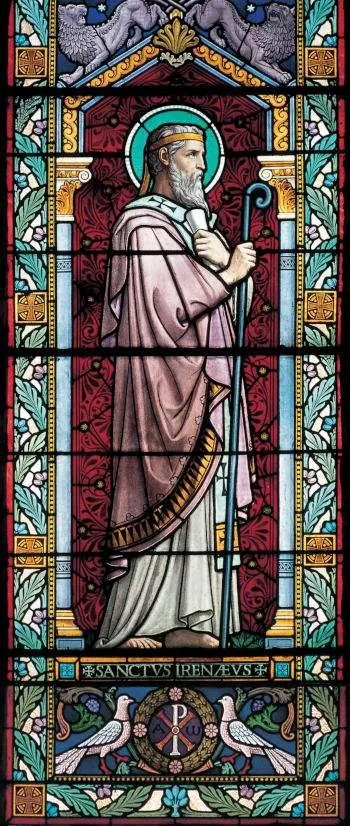
After Pentecost, the Apostles preached the Gospel and established the Church in numerous cities. Saint John the Apostle is believed to have preached in Ephesus, modern-day Turkey. It was there that Saint Polycarp learned from him about Christ, was ordained a bishop, and was sent to the town of Smyrna, just fifty miles north, to govern the Church for approximately sixty-five years. In Smyrna, a young man named Irenaeus, raised in a Christian family, became Polycarp’s disciple, learning more about the faith from this disciple of the Apostle John. After his ordination as a priest, Irenaeus ministered in modern-day Lyon, France, under Bishop Pothinus.

Around the year 177, the Christian community of Lyon sent Irenaeus to Rome to assist the pope with a theological dispute over a heretical teaching. The teaching, later referred to as Montanism, claimed that certain individuals possessed superior prophetic insights directly inspired by the Holy Spirit. This mission attests to the respect Irenaeus commanded among the Christians of Lyon and his grasp of vital theological concepts. Providentially, the mission to Rome likely spared Irenaeus’s life. While Irenaeus was in Rome, a severe persecution of the Church broke out in Lyon and roughly fifty Christians were martyred, among them Bishop Pothinus. Upon returning to Lyon, Irenaeus was chosen as the next bishop.

As Bishop of Lyon, Irenaeus was a faithful pastor with a profound understanding of the Gospel as communicated from Jesus through the Apostles, and he articulated the faith with great clarity. He was energetic in his evangelization efforts throughout the region, sending missionaries to convert the many citizens who adhered to pagan beliefs. As the faith began to spread, errors concerning the faith started to emerge alongside Apostolic teachings. Although many of the early heretics might have had good intentions, they were not rooted in the pure faith and required correction to ensure the Church stayed on the straight and narrow path towards salvation. Irenaeus was one of the most influential figures in the early Church to guide the newly formed Christian communities down that safe road. He is especially known for two of his surviving writings: “Against Heresies” and “Demonstration of the Apostolic Teaching.” These two works constitute what is considered the very first catechism of the Catholic faith.

The most prevalent heresy in the early Church was what is now known as Gnosticism. Gnosticism is a broad term for many smaller deviations, all sharing similar premises. Generally, Gnosticism claimed that true knowledge was beyond the grasp of the ordinary person, and that the true intellectuals were privileged to possess a secret knowledge or insight necessary for eternal salvation. This secret knowledge was related to human nature, God, and the universe. 

Irenaeus begins his defense of the faith by highlighting the “absurd ideas” of the heretical group called the Valentinians: “They maintain, then, that in the invisible and ineffable heights above there exists a certain perfect, pre-existent Æon, whom they call Proarche, Propator, and Bythus, and describe as being invisible and incomprehensible. Eternal and unbegotten, he remained throughout innumerable cycles of ages in profound serenity and quiescence.” Irenaeus went on to describe the Valentinians’ fantasy-like view that an offspring of one of these Æons, named the Demiurge, foolishly created the universe. The Valentinians identified this Demiurge as the evil god of the Old Testament. Jesus and His Father, by contrast, were good and were attempting to rescue humanity from their physical natures by helping them to obtain full knowledge of this spiritual history so that the enlightened ones could then enter into a purely spiritual realm, shedding the evil of the material world. After exposing the errors of the Valentinians, Irenaeus went on to expose the errors of others who fell into similar Gnostic camps.

Irenaeus’ approach was first to explain the errors by demonstrating the absurdity of the complex and confusing views of the Gnostics, that they employed poor reasoning in their beliefs, borrowed their ideas from other popular stories, and rejected the Rule of Faith handed down through Tradition from the Apostles. He then took a more positive approach by clearly articulating that the life, sufferings, death, and resurrection of Christ were central to human salvation, and that, in the humanity of Christ, we are all saved and made one with Him, being reunited with the Father. This was achieved by carefully expounding on the Scriptures, both the Old and the New Testaments, and showing that the faith handed down from Jesus to the Apostles to the wider Church was comprehensible by all and easily embraced with simplicity and faith.

In a General Audience, Pope Benedict XVI explained it this way: “Irenaeus tells us, there is no secret doctrine concealed in the Church’s common Creed. There is no superior Christianity for intellectuals. The faith publicly confessed by the Church is the common faith of all. This faith alone is apostolic, it is handed down from the Apostles, that is, from Jesus and from God” (March 28, 2007). Thus, this so-called special “knowledge” that the Gnostics claimed to possess was purely fabricated by them, as it did not originate from the Apostles.

It’s hard to overestimate the importance of Irenaeus’ teachings for two main reasons. First, he aided the early Church in navigating through the initial confusion it encountered as new and erroneous ideas emerged. Second, his writings were among the first comprehensive catechetical instructions of the early Church, and those writings enabled numerous others who came after him to build upon what he had taught. Jesus promised the Apostles that the Holy Spirit would lead the Church into all truth. This happens when holy men and women listen to all that is handed down to them, remain faithful to that sacred Tradition, build upon it, and pass it on to others to develop it further. The Gospels were the first and most important foundation for this ongoing process. Irenaeus’ writings came shortly afterwards and remain an important foundation today. In fact, even in the most recent Church council, the Second Vatican Council, Irenaeus was one of the most quoted of the Church Fathers, showing an unbroken succession of faith from the early Church until today. Interestingly, it was not until 2022 that Saint Irenaeus was declared a Doctor of the Church under the title “Doctor of Unity.” This unique title particularly points Catholics of the East and West to the foundations of faith that we share with every other Apostolic Church, such as the Orthodox, with whom reunification is continuously sought.

As we honor this great Doctor of the Church, ponder the fact that your own faith has been believed and lived since the time of Christ. At times, our modern world seeks to undermine this ancient faith by labeling it as “old-fashioned” or “out-of-date.” Nothing could be further from the truth. The Truth that was revealed by Christ and His Apostles is as true today as it was at that time. Seek to immerse yourself in that unchanging yet ever-deepening deposit of faith, and you will discover that your family of faith includes all Christians of every era, making up the one Body of Christ.

Source: https://mycatholic.life/saints/saints-of-the-liturgical-year/june-28—saint-irenaeus-bishop-and-martyr/

Saint Irenaeus, Bishop and Martyr Read More »

Matthew 8:33-34

Rejoicing in the Goodness of Others

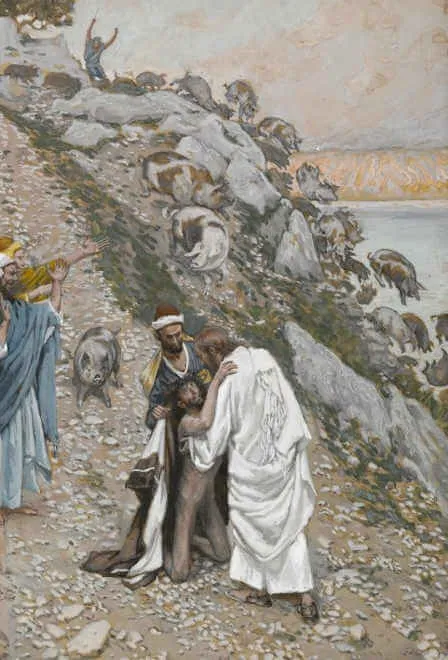
The swineherds ran away, and when they came to the town they reported everything, including what had happened to the demoniacs. Thereupon the whole town came out to meet Jesus, and when they saw him they begged him to leave their district.

Reflection:

Why would “the whole town” beg Jesus to leave their district as a result of Jesus delivering two of their fellow townsmen from demons? This event took place on the northeast edge of the Sea of Galilee near a town of the Gadarenes who were not of Jewish background, which accounts for the fact that there was such a large herd of swine (the Jewish people did not eat pork). Two of the Gadarenes were possessed by demons, and Scripture reports that “They were so savage that no one could travel by that road.” And when Jesus delivers them from this awful plight, instead of rejoicing in gratitude, the townspeople begged Jesus to leave.

Saint Jerome says that it is possible that the people were actually acting in humility, in that they did not consider themselves worthy to be in the presence of someone as great as Jesus. Like Saint Peter who fell at the feet of Jesus and cried out, “Depart from me, for I am a sinful man, O Lord” (Luke 5:8), these townspeople may have been in such awe at what Jesus did for them that they did not see themselves as being worthy of His presence. However, other Church Fathers point out that it is more likely that these townspeople signify those who are stuck in their life of sin and do not want to come face-to-face with the Gospel or with the Person of Jesus. They prefer to close their ears to the truth and to remain in their life of ignorance and sin.

It’s also helpful to reflect upon the relationship between the townspeople and these two demoniacs. Ideally, when the townspeople saw these two men completely freed of the demons who tormented them, they would have rejoiced in a way similar to the way the father of the Prodigal Son rejoiced when his son returned to him. Sadly, in this case, there seems to be a tremendous lack of excitement by their fellow townsmen over the freedom these two demoniacs experienced. This shows a clear lack of love for these two men within the town. Perhaps many of the townspeople took a twisted form of pleasure in their mockery of these two men over the years, and they enjoyed telling stories about how crazy they were. Now, they were faced with these two men who were completely changed, and they may have found it difficult to speak well of them because of their pride.

This negative example set by these townspeople gives us an opportunity to reflect upon how we think about and treat those who have changed their ways and have turned from evil to good. Perhaps you have a family member who has sincerely tried to change. Or perhaps someone at work, a neighbor or some other acquaintance has gone from a life of sin to a life seeking virtue. The real question to ponder is whether you rejoice over the goodness of others, over their ongoing conversion and pursuit of holiness, or whether you struggle with truly expressing joy as you see people you know change for the good. It’s often very easy to criticize but much more difficult to rejoice in the holy transformation of another.

Reflect, today, upon those in your life, those close to you and those with whom you are mere acquaintances, who have been set free by our Lord in some way and have moved from a life of sin toward a life of virtue. How do you react to them? Are you able to sincerely rejoice in the goodness of others? Or do you find yourself struggling with jealousy, anger, envy and the like? As you do see the goodness of God at work in others, try to put on the mentality suggested by Saint Jerome above. Allow yourself to be in awe of God’s action in their lives. As you do, humble yourself before the transforming power of God, admitting that you are not worthy to witness His transforming power but rejoice in gratitude nonetheless.

Source: https://catholic-daily-reflections.com/2025/07/01/rejoicing-in-the-goodness-of-others-3/

Matthew 8:33-34 Read More »

Saint Junípero Serra, Priest

1713–1784; Patron Saint of vocations, Hispanic-Americans, California; Canonized by Pope Francis on September 23, 2015

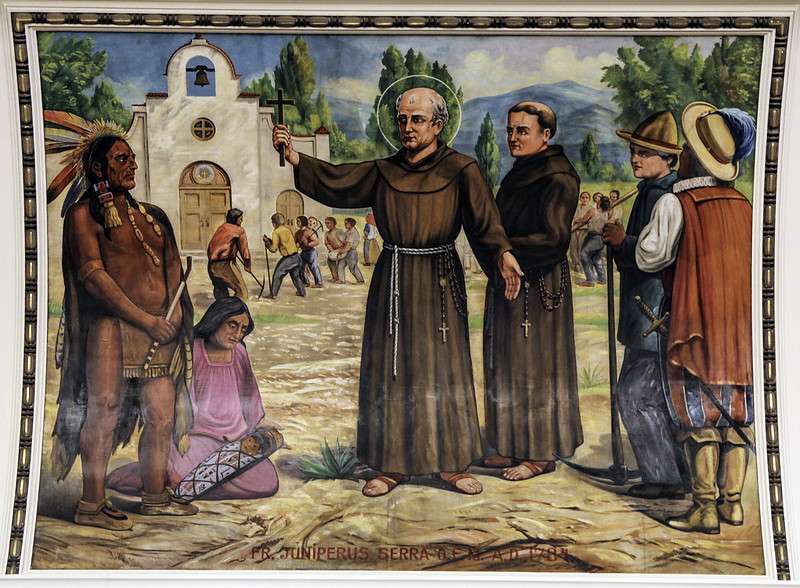
Miguel José Serra y Ferrer was born as the third of five children in the village of Petra, on the island of Majorca, Spain, in the Mediterranean Sea. In his youth, he worked on the family farm but frequently visited the nearby Franciscan church where he was enrolled in school. The friars were so impressed with him that they encouraged him to join them in their vocation. Around the age of sixteen, Miguel moved to Palma, the capital of Majorca, where he entered the Franciscan order. After taking his vows, he was given the name Junípero, in honor of one of Saint Francis of Assisi’s companions. At the age of twenty-four, Brother Junípero was ordained a priest.

Following his ordination, Father Junípero continued his studies, earning a license in philosophy and a doctorate in theology. Word of his gifts as a brilliant scholar and preacher quickly spread, leading to his appointment as a teacher at the University of Palma. He lived a prayerful, penitential, and simple life as a friar, and enjoyed reading about Franciscan missionaries in his free time. These missionaries so inspired Father Junípero that, in 1748, at the age of thirty-five, he requested permission from his superiors to travel to New Spain, modern-day Mexico, to become a missionary himself. Permission was granted.

In 1749, Father Junípero sailed to the Spanish port city of Cádiz where he and a close companion waited for a Spanish ship to take them to New Spain. While at the port, he wrote a touching letter to his parents, whom he knew he would never see again, encouraging them to rejoice in the mission on which he was being sent. After setting sail on August 30, Father Junípero arrived in Veracruz, modern-day Mexico, on December 7, 1749. He spent the next month walking nearly 300 miles to Mexico City through tropical forests, plains, and high mountain ranges, enduring extreme weather conditions. During the journey, Father Junípero was bitten either by a bug or a snake, leaving him with a serious leg wound that would plague him for the rest of his life. Despite this, in the decades that followed, Father Junípero would travel many thousands of miles on foot, up and down the coast of what are today northern Mexico and southern California.

After arriving in Mexico City, Father Junípero was assigned to the Sierra Gorda Missions, just north of Mexico City, where he worked for the next nine years. During that time, he helped to found five missions among the indigenous Pame people, learning their language, evangelizing, baptizing, and teaching them European skills, such as farming, construction, and governance.

From 1758–1767, Father Junípero served as Guardian of the Convent of San Fernando in Mexico City, where he also taught. During this time, he made frequent trips into the surrounding mission territory to evangelize the natives. In 1767, he was sent to the Baja Peninsula where the Jesuits had founded eighteen missions over the previous seventy years. With the Jesuits suppressed and expelled from all Spanish territories in 1767, the Baja missions were turned over to the Franciscans with Father Junípero put in charge. He oversaw those missions until 1769 when he was sent north into what is modern-day California (Alta California), to assist with Spanish expansion by establishing new missions among those who had never heard the Gospel. This was Father Junípero’s dream. Up until that point, his missionary activity was directed towards those who had already begun to be evangelized. In Alta California, however, he and his companions would be the first to preach Christ to the native people.

At the age of fifty-six, Father Junípero and his companions made a 900-mile journey north into the unknown world of Alta California. In July of 1769, they arrived in the territory of what is now San Diego and founded the Mission of San Diego de Alcalá, named for the fifteenth-century Franciscan missionary Brother Diego of Alcalá. This was the first of twenty-one missions that would be founded along the California coast over the next fifteen years, nine of which Father Junípero founded himself.

Though the establishment of the California missions by Father Junípero and his Franciscan companions was for the purpose of evangelization, the Kingdom of Spain had ulterior motives. Alongside the missions, military forts and civilian towns were established. The Spanish government wanted to colonize California for economic and political reasons. By claiming California for itself and establishing a military presence there, Russia, England, and other nations were deterred from claiming the land. Despite the Spanish government’s ulterior motives, Father Junípero and the Franciscans worked tirelessly to treat the natives as true children of God.

A mission was set up as a self-contained area of land and buildings. When the natives chose to join the mission, they separated themselves from their former community and lived on the mission lands, in housing provided by the Friars. They were not only taught about the faith and instructed in prayer, they were also taught how to raise and harvest crops, tend animals, and European trades such as weaving and construction.

The policies that governed the California missions have drawn modern-day critics. For example, to guard the newly developing faith within the converts, the friars had strict rules about the converts leaving and returning to their native communities, even for visits. Punishment for such unapproved departures often included corporal punishment. Many natives also suffered from exposure to diseases that the European settlers brought with them, to which the natives had not developed immunity. While twenty-first-century anti-Catholic critics tend to overemphasize and misrepresent these aspects of the missions, it is abundantly clear from his diary and many letters that Father Junípero and his friars had a deep love for the native people and sought only to introduce them to the saving grace of Christ, which they did in great numbers. By the time of his death, it is estimated that Father Junípero had personally baptized as many as 6,000 natives, with many more thousands being baptized by the other friars at the missions he established. Father Junípero also succeeded in protecting the natives from the many abuses of the Spanish military and colonizers, one time even walking 1,800 miles to Mexico City to convince the Spanish Viceroy to enact a new bill of rights for the native people. This “Reglamento” was the first of its kind, written more than 150 years before the United States government would guarantee Native Americans similar rights.

As we honor Saint Junípero, we also honor his companion friars, as well as all those who came to receive the gift of eternal salvation through them. Had Saint Junípero chosen to remain in Spain, living a more comfortable and easy life, the evangelization effort in California might have taken a different turn. Today, many souls have been saved on account of his selfless sacrifices, and those souls are honored as much today as is Saint Junípero Serra.

Source: https://mycatholic.life/saints/saints-of-the-liturgical-year/july-1—saint-junipero-serra-priest—usa-optional-memorial/

Saint Junípero Serra, Priest Read More »

Matthew 8:23-24

Save Us Lord!

As Jesus got into a boat, his disciples followed him. Suddenly a violent storm came up on the sea, so that the boat was being swamped by waves; but he was asleep.

Reflection:

This experience had quite an impression upon the disciples, which is evidenced by the fact that it is recorded in all three Synoptic Gospels. We also see this in the concluding words of the story after Jesus calmed the storm: “The men were amazed and said, ‘What sort of man is this, whom even the winds and the sea obey?’”

Traditionally, this story has been interpreted as both an image of the Church as a whole, as well as the individual soul. The boat is an image of the Church through which we Christians navigate the perils of this life. We must remain in the Church to survive. Each person within the boat represents each one of us who is a member of the Church. The violent storm is an image of the many personal struggles we endure in  life, as well as the persecutions that the Church has endured and will continue to endure until the end of time.

As the storm took hold of the boat, Jesus was asleep. But He was asleep for a reason. As we look at human history, especially the history of the Church, we find many times when God has seemed absent or “asleep” when turmoil, persecution, and hardship have arisen. Many people, if not all, have had the same experience at one time or another in life. As the disciples experience this storm, they offer us an ideal way to pray when we are tempted to despair in life. They wake Jesus and say, “Lord, save us!  We are perishing!” And though Jesus rebukes them for their lack of faith and their fear, He also responds to their pleas and calms the storm.

What should the disciples have done in this case? Should they have trusted and allowed Jesus to remain asleep? Though our Lord did rebuke them for lacking faith, this story is primarily a revelation about God’s mercy when we are tempted to fear. God knows that at times we will all feel overwhelmed and find ourselves tempted in this way. He knows our faith is not perfect, and so He allowed His disciples to set this example for us. Thus, whenever we do find ourselves overwhelmed and fearful in life, we should cry out to Him to save us. He wants us to turn to Him.

Reflect, today, upon this prayer of the disciples. If you find that you are facing some personal crisis, or a larger family difficulty that remains unresolved, or are increasingly aware of other struggles afflicting the Church or society as a whole, then try to imitate this prayer of the disciples: “Lord, save us!  We are perishing!” Though these words, at first, may seem to be words of despair, they are actually words of hope and trust. They point us to Him Who is the only source of the peace we seek in our souls, families, the Church and our world. Look for the many ways that you and others experience the feeling of “perishing,” and cry out with all your heart to our Lord to save you and all who are in need.

Source: https://catholic-daily-reflections.com/2025/06/30/save-us-lord-3/

Matthew 8:23-24 Read More »

First Martyrs of the Church of Rome

Died c. 64; Pre-Congregation canonizations

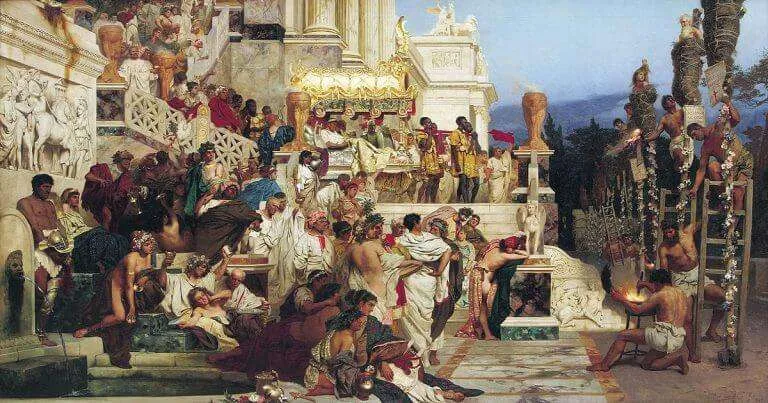
 Nero Claudius Caesar Augustus Germanicus was the fifth Roman Emperor who reigned from 54–68 A.D. He was known to be extravagant, impulsive, tyrannical, violent, and a madman. He murdered his first wife and even his own mother. In the year 64, when Nero was twenty-seven and had been Roman emperor for ten years, a fire broke out in Rome. The fire burned for nine days, destroying most of the city. Many believe that Nero himself had the fire set to make room for a new palace. When people started to question him, he blamed the Christians for the fire. At that time, Christians were a small minority within Rome and were seen as a menace and disruption to the traditional Roman way of life and the traditional Roman gods. Nero then systematically had as many Christians as he could arrested, tried, and murdered in the most brutal ways. One ancient pagan historian from that time named Tacitus recounts it this way:

Nero fastened the guilt and inflicted the most exquisite tortures on a class hated for their abominations, called Christians by the populace…Accordingly, an arrest was first made of all who pleaded guilty; then, upon their information, an immense multitude was convicted, not so much of the crime of firing the city, as of hatred against mankind. Mockery of every sort was added to their deaths. Covered with the skins of beasts, they were torn by dogs and perished, or were nailed to crosses, or were doomed to the flames and burnt, to serve as a nightly illumination, when daylight had expired.

Nero offered his gardens for the spectacle, and was exhibiting a show in the circus, while he mingled with the people in the dress of a charioteer or stood aloft on a car. Hence, even for criminals who deserved extreme and exemplary punishment, there arose a feeling of compassion; for it was not, as it seemed, for the public good, but to glut one man’s cruelty, that they were being destroyed.

These first Christian martyrs in the city of Rome are remembered and honored by the Church today. Saints Peter and Paul were among them, but numerous unknown others also gave their lives. Some of them were sewn into the bellies of animals while still alive and then fed to wild dogs to be torn to pieces. Others were coated with wax and lit on fire at night as torches in Nero’s gardens while he entertained guests. Still others were crucified like our Lord. These persecutions went beyond mere execution for a crime. They manifested an evil of the most diabolical nature.

Though these martyrdoms were expected to eliminate Christianity from the Roman Empire, those expectations were never realized. Instead, the courageous witness of these men and women planted and watered the seeds of faith that would continue to grow, blossom, and produce an abundance of good fruit.

For nearly three centuries, the persecution of Christians varied under different Roman Emperors. The most severe persecutions within the empire would occur two centuries later during the reigns of Emperors Decius (249–251) and Diocletian (284–305). It was not until the year 313, when Emperor Constantine the Great legalized Christianity with the Edict of Milan, that imperial persecutions ceased.

Today’s feast is strategically placed just one day after the Church honors Saints Peter and Paul, the two most notable martyrs during this Neronian persecution. By celebrating Saints Peter and Paul first, followed by a feast for every other martyr who died alongside them, the Church invites us to place ourselves not only in the shadow of Saints Peter and Paul, but also to join with these many unknown Christians who shed their blood for their faith. Though the physical shedding of one’s blood for Christ is a rare occurrence today, the depth of resolve Christians must have is the same. Every Christian, of every time and circumstance, must be so completely devoted to Christ that nothing, not even martyrdom, must deter us from our resolve.

As we ponder these unnamed heroes of our faith, prayerfully unite yourself to them. Look to Saints Peter and Paul as your chief inspiration and then resolve to become one of these unnamed witnesses who follow behind them. In Heaven, every sacrifice will be known and will become a cause for the glory of God. For now, many of our sacrifices are hidden and known only to us and to God. Rejoice in your own hidden sacrifices and know that those sacrifices unite you with those whom we honor today.

Source: https://mycatholic.life/saints/saints-of-the-liturgical-year/june-30—first-martyrs-of-the-church-of-rome/

First Martyrs of the Church of Rome Read More »

Matthew 8:19-20

Wherever God Leads You

Teacher, I will follow you wherever you go.” Jesus answered him, “Foxes have dens and birds of the sky have nests, but the Son of Man has nowhere to rest his head.

Reflection:

It is unclear from this passage alone why Jesus answered this scribe the way He did. At first, the statement of the scribe seems very devout: “Teacher, I will follow you wherever you go.” But many of the Church Fathers, in their reflections of this conversation between Jesus and the scribe, offer helpful insights.

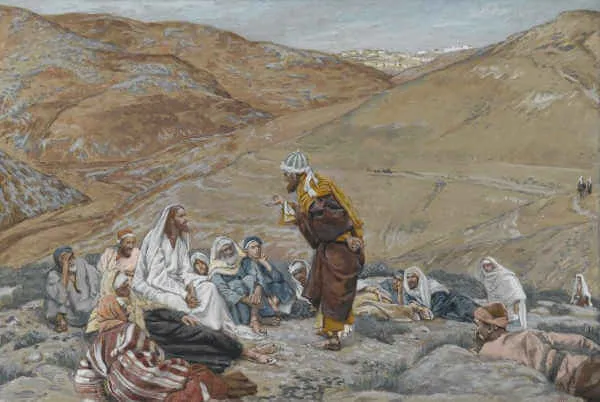
First of all, note that Jesus neither accepts the proposal of the scribe to be His follower nor rejects it. Rather, Jesus simply makes a statement which clarifies just what is involved in being His follower. Some Church Fathers suggest that this scribe was desirous of following Jesus because he thought there would be great rewards given to him by doing so. After all, Jesus was a miracle worker, was becoming quite popular, and showed potential to be a great leader. Therefore, the interior motivation of this scribe to follow Jesus wherever Jesus went was a questionable motivation. Did he want to follow Jesus because he thought it would benefit him in some worldly way?

Jesus’ response to this scribe does two things. First, it removes all misconceptions of what it means to follow Jesus. If the scribe wanted to follow Jesus, then he had to be prepared to follow Him into poverty and homelessness rather than riches and possessions. Jesus wanted it to be clear to the scribe just what he was choosing. Secondly, Jesus’ response was certainly an invitation to the scribe to follow Him, but only in the light of this new knowledge. In other words, Jesus was saying, “Yes, come follow me. But be aware of what that means. Following me will not result in your earthly riches but in your earthly poverty.”

Why do you follow Jesus? It’s important to consider your motivations at times. Some choose to follow Jesus because this was simply the way they were raised. Others do so because it makes them feel better to do so. And still others do so because they think it will make their lives better in various ways. But what is the ideal motivation for following our Lord? The ideal motivation for following Jesus in a total and unwavering way is very simple: we follow Him because He is the Son of God and the Savior of the World. Jesus came to call us to Himself and has invited us to live in union with Him through faith. So ideally, we will follow Jesus simply because it is the right thing to do. We will not do so because of the so-called benefits. Love, in its purest form, does not love the other because of what we get out of it. Pure love is a gift given to another because they are worthy of our love. And with Jesus, He is worthy of our love and worship simply because of Who He is.

Reflect, today, upon Jesus inviting you to follow Him into poverty, detachment from all, simplicity of life and ultimately the sacrifice of your entire life. Do you understand what it means to be a follower of Christ Jesus? Do you understand that following Jesus cannot be done for selfish reasons? Do you realize that saying “Yes” to our Lord is saying “Yes” to His Cross? Ponder Jesus’ life and reflect upon whether or not you are willing to follow Him to the poverty of the Cross. If you can make the choice to follow our Lord, knowing full well what you are saying “Yes” to, then the end result will also be a glorious sharing in His resurrected life.

Source: https://catholic-daily-reflections.com/2025/06/29/wherever-god-leads-you-3/

Matthew 8:19-20 Read More »

Solemnity of Saints Peter and Paul, Apostles

First Reading Acts 12:1-11

In those days, King Herod laid hands upon some members of the Church to harm them.
He had James, the brother of John, killed by the sword,
and when he saw that this was pleasing to the Jews
he proceeded to arrest Peter also.
–It was the feast of Unleavened Bread.–
He had him taken into custody and put in prison
under the guard of four squads of four soldiers each.
He intended to bring him before the people after Passover.
Peter thus was being kept in prison,
but prayer by the Church was fervently being made
to God on his behalf.

On the very night before Herod was to bring him to trial,
Peter, secured by double chains,
was sleeping between two soldiers,
while outside the door guards kept watch on the prison.
Suddenly the angel of the Lord stood by him
and a light shone in the cell.
He tapped Peter on the side and awakened him, saying,
“Get up quickly.”
The chains fell from his wrists.
The angel said to him, “Put on your belt and your sandals.”
He did so.
Then he said to him, “Put on your cloak and follow me.”
So he followed him out,
not realizing that what was happening through the angel was real;
he thought he was seeing a vision.
They passed the first guard, then the second,
and came to the iron gate leading out to the city,
which opened for them by itself.
They emerged and made their way down an alley,
and suddenly the angel left him.
Then Peter recovered his senses and said,
            “Now I know for certain
            that the Lord sent his angel
            and rescued me from the hand of Herod
            and from all that the Jewish people had been expecting.”

Responsorial Psalm Psalms 34:2-3, 4-5, 6-7, 8-9

R.        (5) The angel of the Lord will rescue those who fear him.
I will bless the LORD at all times;
            his praise shall be ever in my mouth.
Let my soul glory in the LORD;
            the lowly will hear me and be glad.
R.        The angel of the Lord will rescue those who fear him.
Glorify the LORD with me,
            let us together extol his name.
I sought the LORD, and he answered me
            and delivered me from all my fears.
R.        The angel of the Lord will rescue those who fear him.
Look to him that you may be radiant with joy,
            and your faces may not blush with shame.
When the poor one called out, the LORD heard,
            and from all his distress he saved him.
R.        The angel of the Lord will rescue those who fear him.
The angel of the LORD encamps
            around those who fear him, and delivers them.
Taste and see how good the LORD is;
            blessed the man who takes refuge in him.
R.        The angel of the Lord will rescue those who fear him.

Second Reading 2 Timothy 4:6-8, 17-18

I, Paul, am already being poured out like a libation,
and the time of my departure is at hand.
I have competed well; I have finished the race;
I have kept the faith.
From now on the crown of righteousness awaits me,
which the Lord, the just judge,
will award to me on that day, and not only to me,
but to all who have longed for his appearance.

The Lord stood by me and gave me strength,
so that through me the proclamation might be completed
and all the Gentiles might hear it.
And I was rescued from the lion’s mouth.
The Lord will rescue me from every evil threat
and will bring me safe to his heavenly Kingdom.
To him be glory forever and ever.  Amen.

Alleluia Matthew 16:18

R. Alleluia, alleluia.
You are Peter and upon this rock I will build my Church,
and the gates of the netherworld shall not prevail against it.
R. Alleluia, alleluia.

Gospel Matthew 16:13-19

When Jesus went into the region of Caesarea Philippi
he asked his disciples,
“Who do people say that the Son of Man is?”
They replied, “Some say John the Baptist, others Elijah,
still others Jeremiah or one of the prophets.”
He said to them, “But who do you say that I am?”
Simon Peter said in reply,
“You are the Christ, the Son of the living God.”
Jesus said to him in reply, “Blessed are you, Simon son of Jonah.
For flesh and blood has not revealed this to you, but my heavenly Father.
And so I say to you, you are Peter,
and upon this rock I will build my Church,
and the gates of the netherworld shall not prevail against it.
I will give you the keys to the Kingdom of heaven.
Whatever you bind on earth shall be bound in heaven;
and whatever you loose on earth shall be loosed in heaven.”

Source: https://bible.usccb.org/bible/readings/062925-Mass.cfm

Solemnity of Saints Peter and Paul, Apostles Read More »