Author name: Sani

Saint Sunniva of Bergen

Profile

Sunniva was the daughter of a tenth century Irish king. To avoid an arranged marriage with an invading pagan king, she, her brother Alban, and several female companions fled her home to settle in a cave on the island of Selje off the Norwegian coast. Some time later, Viking locals decided that the group was stealing cattle, and sent an armed band to attack them. When they arrived, they found the cave sealed by a landslide; none of the group of exiles were ever seen alive again. Years later, around 995, after reports of strange lights in the area, King Olaf Tryggvason had the cave opened; Sunniva’s body was found incorrupt, and the king built a church there in her honor.

Sunniva’s story was retold and revised over the years, often combining elements of Saint Ursula‘s history. Sometimes she is a nun leading a group of pious sisters seeking solitude.

According to post-Reformation sources, Sunniva had two sisters, Saint Borni and Saint Marita, and her brother was Saint Alban.

Canonized

  • Pre-Congregation

Patronage

  • Bergen, Norway
  • Norwegian west coast

Source: https://catholicsaints.info/saint-sunniva-of-bergen/

Saint Sunniva of Bergen Read More »

Matthew 9:35-36

Zeal for Souls

Jesus went around to all the towns and villages, teaching in their synagogues, proclaiming the Gospel of the Kingdom, and curing every disease and illness. At the sight of the crowds, his heart was moved with pity for them because they were troubled and abandoned, like sheep without a shepherd.

Reflection:

Jesus was quite zealous for souls. Zeal is an energy, a passion and a drive to accomplish some task. The task that Jesus was zealous for was the conversion of every heart that He encountered. As He walked from town to town, encountering person after person, Jesus could see into their hearts. He saw that so many people were “troubled and abandoned.” He could see they were like “sheep without a shepherd.” And this moved Him to compassion with a zeal to become their Shepherd, to remove the trouble from their hearts and to let them know they were invited to belong to His new Kingdom.

The image of Jesus encountering numerous people who were troubled and abandoned is a good image to ponder. The reason is that this is us. Each one of us has our own interior troubles. We can feel alone, confused, uncertain and lost at times. The person who doesn’t feel this way is either a perfect saint or is not being honest. Deep holiness and union with God does, of course, cure this interior struggle that many have. In that case, the person clearly knows they belong to the family of God, understands himself or herself as a son or daughter of God, and finds deep peace in this truth. But for those who struggle, this Scripture passage is especially for you.

First of all, to be “troubled” could be caused by many things. For some, they struggle with memories of the past, broken relationships, a lack of direction, serious sin, anger and the like. So the first question to honestly ponder is whether or not you have a troubled heart. Even the greatest of saints will find some areas they struggle with. So what is that for you?

Secondly, feeling “abandoned” is a heavy cross. The reason Jesus came was to enable us to belong to His family. That is accomplished by the gift of eternal salvation which must begin now. By receiving the forgiveness of sins and growing in a life of prayer, we come to know God in a very intimate and personal way. Yes, He is the Almighty God and Creator of all. But He is also deeply personal and intimate, and He wants to form a real relationship of love with you.

If you struggle with either of these, being troubled and/or abandoned, then consider the zeal that Jesus has for you. His tireless and extensive travels, by foot, while He was engaging in His public ministry, should be seen as a sign to you of His zeal to come to you, personally, to become your Shepherd. He wants to lift every burden and clear the way for you to discover your place in His family. The “Gospel of the Kingdom” that Jesus preached was one that invited everyone to become a member of that Kingdom. As He comes to you, know that His heart is filled with compassion for you, just as it was when He traveled the countryside so long ago. He sees you, gazes at your heart with love, and never takes His eyes off of you in your need, weakness and sin.

Reflect, today, upon the zeal that Jesus has for your own eternal salvation and holiness of life. You cannot make it through this world without Him. Let Jesus seek you out, come to you, speak to you and invite you to allow Him to shepherd you. He wants to do so with every fiber of His being; let Jesus fulfill His mission in you.

Source: https://catholic-daily-reflections.com/2025/07/07/zeal-for-souls-4/

Matthew 9:35-36 Read More »

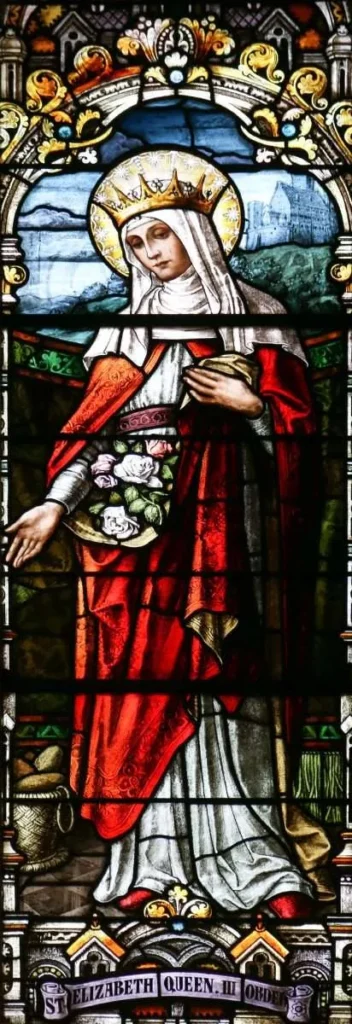
Saint Elizabeth of Portugal

1271–1336; Patron Saint of widows, brides, charity workers, those falsely accused, victims of adultery, and the Canary Islands, Spain; Invoked against jealousy, war, and difficult marriages; Canonized by Pope Urban VIII on June 24, 1625

Rainha Santa Isabel, or Saint Elizabeth, was born into the royal family of Aragon, Spain. She was one of three daughters of King Peter III of Aragon and Queen Constance of Sicily. Elizabeth’s older brothers would become successive kings of Aragon, Alfonso III and James II. Her namesake was her great-aunt, Saint Elizabeth of Hungary.

As a young princess, Elizabeth enjoyed all the privileges of a royal upbringing, yet her stature did not distract her from her faith. She was deeply devout from a young age, spending hours in the castle chapel engaged in prayer. By age eight, she regularly fasted, attended Mass, and prayed the entire Divine Office daily. Unlike other girls her age, she sought virtue and glory for God rather than indulging in frivolous activities. Her humility extended to her royal status, which she saw as a platform for service rather than privilege. She consistently demonstrated a loving concern for the poor, sick, and suffering.

In 1279, Elizabeth’s father arranged her marriage to the seventeen-year-old King Denis of Portugal, who was a notable poet. This strategic union was designed to strengthen the political alliance between Spain and Portugal. In 1282, twelve-year-old Elizabeth wedded King Denis, becoming Queen Elizabeth of Portugal. Despite her husband’s infidelity and immoral lifestyle, Elizabeth showed remarkable grace, treating her husband with love and fulfilling her duties as queen with humility. They had two children: their daughter, Constance, in 1290, and a year later, their son, Afonso, who would succeed his father as King of Portugal.

Queen Elizabeth stood out in the royal court, which was marred by the king’s immoral lifestyle. Her virtuous living served as a rebuke to others. She offered the resulting ridicule she suffered to God with humility and love. As queen, she sustained her prayerful life, attending daily Mass, engaging in penance, and continuing to pray the entire Divine Office. Her deep love for the poor and sick remained steadfast, and she sought daily opportunities to aid them. Elizabeth would personally distribute food and money to those in need at the palace door, and despite the king’s anger at her generosity, she found ways to continue her charitable work secretly. Using her royal position, she also improved others’ lives by constructing monasteries, churches, and hospitals.

The royal family also included the king’s other children, born to women other than the queen. Despite their complicated family dynamic, Elizabeth treated her stepchildren with love. Her son Afonso, however, was not as accepting. He was particularly resentful of the attention his father paid to the children born out of wedlock. Tensions escalated to the point of war, but before a battle could occur, Queen Elizabeth intervened. She rode out to the scene of the battle herself, kneeling between her husband and son, begging for peace. She successfully reconciled the two, earning the title of “Angel of Peace.”

In 1325, upon King Denis’s death, Queen Elizabeth, then fifty-four, retired to a house next to a Poor Clare monastery. She joined the Third Order Franciscans, a lay order begun by Saint Francis. For the next eleven years, she lived in simplicity and poverty, continuing her charitable work and welcoming all who sought her counsel. She once again played the role of peacemaker when her son, now King Afonso, initiated a war against his own son-in-law. Elizabeth fell ill and died on July 4, 1336, after returning from this intervention. She was not buried next to her husband but in a convent she founded in Coimbra, the Convent of Santa Clara. Years later, her body was found to be incorrupt, and as recently as 1912, medical examiners and Church officials declared that her body remained free of decay, looking as if she were only sleeping.

Though Saint Elizabeth of Portugal was born into royalty, she encountered many challenges. Her arranged marriage, her husband’s infidelity, family division, and an immoral royal court were burdens she bore with dignity, peace, and strength. Her faith and virtues, fueled by deep prayer and charitable acts, guided her through these difficulties.

In honoring this Queen of Portugal, consider the passing nature of earthly honors. Queens come and go, but saints live on forever. Saint Elizabeth willingly traded her earthly crown for a higher one in Heaven, where her saintly dignity eternally glorifies God. Follow in her humble footsteps, preferring sanctity over worldly honors and ambitions. Strive for the eternal over the temporal, and you too will give eternal glory to God and dwell in His royal court forever.

Source: https://mycatholic.life/saints/saints-of-the-liturgical-year/july-4—saint-elizabeth-of-portugal/

Saint Elizabeth of Portugal Read More »

Matthew 9:20-21

Responding to the Voice of God

A woman suffering hemorrhages for twelve years came up behind him and touched the tassel on his cloak. She said to herself, “If only I can touch his cloak, I shall be cured.” Jesus turned around and saw her, and said, “Courage, daughter!  Your faith has saved you.” And from that hour the woman was cured.

Reflection:

What a tremendous amount of faith this woman had! She had suffered for many years and continued to suffer with her hemorrhages. How did she know that touching Jesus’ cloak would cure her? The only answer to that is faith. Faith is not just wishful thinking or hoping. Faith is a certain knowledge, given by a special grace and revelation from God, by which a person freely assents to belief. God spoke to her heart, she listened, she responded, and she was cured.

One thing that is very inspiring in this Gospel story is the humility with which this woman approached Jesus. She didn’t feel as though she needed to bother Jesus, to speak to Him, or to trouble Him with her problem. Instead, in her humility, she presented her need to Jesus through her gift of faith, interiorly and silently, and the grace of God was given her because God sees the heart and responds to such humble and sincere faith.

Imagine if everyone had this depth of faith in our Lord. Imagine if all of us knew, with the deepest conviction of certitude, that God would take care of every need we have. And imagine if we turned to our Lord with this deep conviction of certitude every day with every need. If we could do that, then our Lord would be able to continually care for us in every way.

One key component to this woman’s healing is that it was God the Father who spoke to her and invited her to touch the cloak of His Son Jesus. And it was Jesus who sensed the healing she received, since He was in perfect union with the will of His Father. Therefore, touching Jesus’ cloak was not simply a magical act by which whatever this woman wanted would be granted to her. Instead, it was a response to the interior invitation she was given by the Father.

In our lives, we must work to do the same. Too often we present our preferences to God and tell Him what we want Him to do. God does not respond to such requests. Instead, we must seek His will…and His will alone. This woman knew she would be healed, because God the Father spoke to her in her mind and heart and inspired her to touch the cloak of Jesus His Son, and she responded, and the healing took place. God must speak first, we must hear and respond, and then His will is accomplished.

Reflect, today, upon the gentle Voice of God as He speaks to you in the depths of your heart. Do you hear Him? What is He inviting you to do? What healing does He want to bestow? As you ponder God’s Voice, try to respond only to Him. Set aside all of your own preferences and ideas of what God should do and seek only what He is speaking to you. Say “Yes” to Him, do so with certitude and conviction, and trust that whatever He speaks to you, if you have faith in what He says, He will do it.

Source: https://catholic-daily-reflections.com/2025/07/06/responding-to-the-voice-of-god-4/

Matthew 9:20-21 Read More »

Fourteenth Sunday in Ordinary Time

First Reading Isaiah 66:10-14c

Thus says the LORD:
 Rejoice with Jerusalem and be glad because of her,
 all you who love her;
 exult, exult with her,
 all you who were mourning over her!
 Oh, that you may suck fully
 of the milk of her comfort,
 that you may nurse with delight
 at her abundant breasts!
 For thus says the LORD:
 Lo, I will spread prosperity over Jerusalem like a river,
 and the wealth of the nations like an overflowing torrent.
 As nurslings, you shall be carried in her arms,
 and fondled in her lap;
 as a mother comforts her child,
 so will I comfort you;
 in Jerusalem you shall find your comfort.

 When you see this, your heart shall rejoice
 and your bodies flourish like the grass;
 the LORD’s power shall be known to his servants.

Responsorial Psalm Psalms 66:1-3, 4-5, 6-7, 16, 20

R. (1) Let all the earth cry out to God with joy.
Shout joyfully to God, all the earth,
 sing praise to the glory of his name;
 proclaim his glorious praise.
Say to God, “How tremendous are your deeds!”
R. Let all the earth cry out to God with joy.
“Let all on earth worship and sing praise to you,
 sing praise to your name!”
Come and see the works of God,
 his tremendous deeds among the children of Adam.
R. Let all the earth cry out to God with joy.
He has changed the sea into dry land;
 through the river they passed on foot;
 therefore let us rejoice in him.
He rules by his might forever.
R. Let all the earth cry out to God with joy.
Hear now, all you who fear God, while I declare
 what he has done for me.
Blessed be God who refused me not
 my prayer or his kindness!
R. Let all the earth cry out to God with joy.

Second Reading Galatians 6:14-18

Brothers and sisters:
May I never boast except in the cross of our Lord Jesus Christ,
through which the world has been crucified to me,
and I to the world.
For neither does circumcision mean anything, nor does uncircumcision,
but only a new creation.
Peace and mercy be to all who follow this rule
and to the Israel of God.

From now on, let no one make troubles for me;
for I bear the marks of Jesus on my body.

The grace of our Lord Jesus Christ be with your spirit,
brothers and sisters. Amen.

Alleluia Colossians 3:15a, 16a

R. Alleluia, alleluia.
Let the peace of Christ control your hearts;
let the word of Christ dwell in you richly.
R. Alleluia, alleluia.

Gospel Luke 10:1-12, 17-20

At that time the Lord appointed seventy-two others
whom he sent ahead of him in pairs
to every town and place he intended to visit.
He said to them,
“The harvest is abundant but the laborers are few;
so ask the master of the harvest
to send out laborers for his harvest.
Go on your way;
behold, I am sending you like lambs among wolves.
Carry no money bag, no sack, no sandals;
and greet no one along the way.
Into whatever house you enter, first say,
‘Peace to this household.’
If a peaceful person lives there,
your peace will rest on him;
but if not, it will return to you.
Stay in the same house and eat and drink what is offered to you,
for the laborer deserves his payment.
Do not move about from one house to another.
Whatever town you enter and they welcome you,
eat what is set before you,
cure the sick in it and say to them,
‘The kingdom of God is at hand for you.’
Whatever town you enter and they do not receive you,
go out into the streets and say,
‘The dust of your town that clings to our feet,
even that we shake off against you.’
Yet know this: the kingdom of God is at hand.
I tell you,
it will be more tolerable for Sodom on that day than for that town.”

The seventy-two returned rejoicing, and said,
“Lord, even the demons are subject to us because of your name.”
Jesus said, “I have observed Satan fall like lightning from the sky.
Behold, I have given you the power to ‘tread upon serpents’ and  scorpions
and upon the full force of the enemy and nothing will harm you.  Nevertheless, do not rejoice because the spirits are subject to you,
but rejoice because your names are written in heaven.”

Source: https://bible.usccb.org/bible/readings/070625.cfm

Fourteenth Sunday in Ordinary Time Read More »

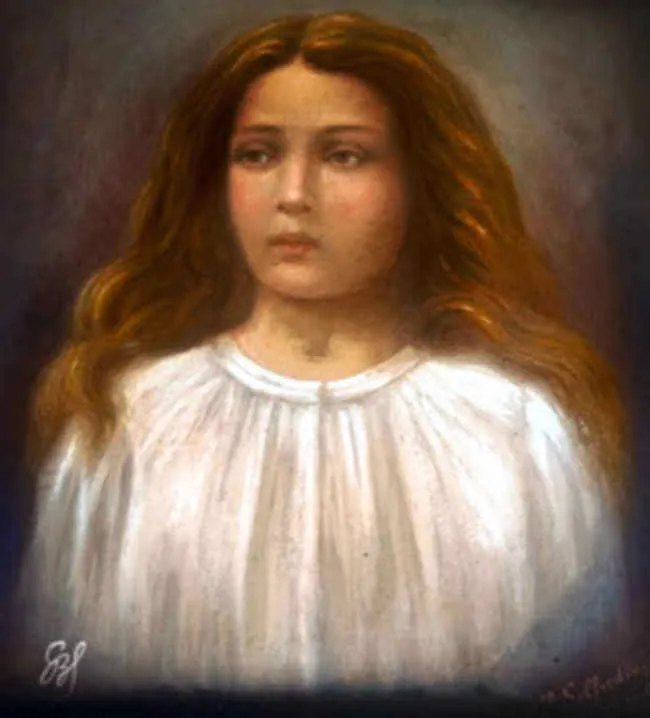
Saint Maria Goretti, Virgin and Martyr

1890–1902; Patron Saint of young people (especially girls), rape victims, and the poor; Invoked for the grace of mercy and forgiveness; Canonized by Pope Pius XII on June 24, 1950

Maria Goretti was born into poverty in Corinaldo, Italy. She was the third of seven children and was affectionately called Marietta by family and friends. Due to her family’s poverty, Maria was unable to attend school. She spent most of her time in the family home, performing chores and caring for her younger siblings. Her father owned a farm but lost it when Maria was only five years old. Hiring himself out as a farmhand, Maria’s father provided enough for his family to eat, but when Maria was nine, he died of malaria. To provide for her seven children, Maria’s mother began to work in the fields, with Maria taking on increased responsibility at home. Despite her lack of formal education and inability to read, Maria had deep faith. The family’s suffering from poverty and loss of their father did not diminish her faith; it strengthened it. When her mother began to lose hope during their difficulties, Maria habitually said, “Mother, be brave, God will help us.” Maria’s hope that her father would be freed from Purgatory led her to constant prayer, particularly the rosary.

When Mr. Goretti lost his farm, the Gorettis moved into a home shared with the Serenellis, Mr. Serenelli and his son Allessandro. Alessandro’s mother had suffered from a mental disorder and died when he was young. Alessandro’s brother suffered from a similar disorder, and their father was an alcoholic. As a result, Alessandro was a young man prone to anger who engaged in immoral behavior.

During the three years Maria and her family lived with the Serenellis, Alessandro made at least three sexual advances toward her. Each time she refused him. Outraged, he threatened to kill her if she told anyone, so she remained silent. When Maria was only eleven and Alessandro was twenty, he found Maria alone in their shared home, caring for her youngest sister and mending a shirt while her mother and older siblings were in the field working. Once again, Alessandro made a sexual advance toward her and she refused him. With an awl in his hand, Alessandro threatened to kill Maria if she refused him. “No! It is a sin! God does not want it!” she cried. She ran for the door, but Alessandro caught her and stabbed her fourteen times in the neck before running out of the house. As Maria lay bleeding on the floor, her little sister began to cry, catching the attention of her mother who came to investigate. After finding Maria stabbed and bleeding, she brought her to the local hospital where Maria survived for only a day.

At the hospital, the surgeon was surprised that Maria had survived that long. He immediately performed surgery without anesthetic. During the surgery, Maria woke up, and another doctor said to her, “Maria, think of me in Paradise.” Maria replied, “Well, who knows which of us is going to be there first?” The doctor said to her, “You, Maria.” To which Maria responded, “Then I will gladly think of you.” Before her death, Maria was able to express her forgiveness of Alessandro, further expressing her hope that she would see him in Heaven. She also received the last sacraments. On her deathbed, she told the Chief of Police that it was Alessandro who attacked her and added, “I forgive him, and I want him with me in heaven!” She died the following day.

In many ways, Maria’s brutal death marked the beginning of her new life. Her family was devastated, but they were also inspired by her faith, mercy, and act of forgiveness. At her funeral, many said of her, “A saint has died!” Devotion to her immediately began to spread and continues to spread today.

Since Alessandro was young, he was sentenced to thirty years in prison rather than life. During his first several years in prison, Alessandro remained defiant, refusing to repent. Although he knew that Maria had forgiven him, he could not accept forgiveness, nor admit his sin. However, when the local bishop, Giovanni Blandini, felt inspired to visit him in prison, things began to change. Around that time, Alessandro had a dream in which he saw Maria coming to him and handing him lilies, a symbol of purity. When he took the lilies, they burnt his hands and turned to dust. He wrote to the bishop thanking him for his visit, revealing the dream, and asking for prayers. In the years to follow, Alessandro underwent a profound conversion. After serving twenty-seven years of his thirty-year sentence, he was released.

Upon his release, Alessandro went to Maria’s mother, Assunta, and begged for her forgiveness, which she bestowed. “Who am I to withhold what my daughter so readily gave?” she responded. The next day, Alessandro and Assunta attended Mass together, receiving Holy Communion as if they were mother and son.

On June 24, 1950, Pope Pius XII canonized Maria and referred to her as the “Saint Agnes of the Twentieth Century.” Most remarkably, Maria’s mother and four of her siblings were present at the canonization. This was the first time a mother attended her child’s canonization. Even more remarkably, Alessandro was also present. Saint Maria’s prayers had truly worked a miracle of mercy, forgiveness, and reconciliation. Alessandro became a lay Franciscan brother, working as a gardener until his death at the age of eighty-seven.

Saint Maria Goretti’s short life and tragic death present us with so much more than a tragedy. They present us with hope—hope that even the most hardened sinner can repent and be saved. So often our world reacts with outrage toward sin, rather than mercy. Mercy is the defining virtue in the heart of Saint Maria, and this eleven-year-old girl should inspire us to work to overcome all anger, bitterness, and resentment toward the sinner. Ponder your own depth of mercy, or lack thereof, and allow this young child to inspire you to follow her example.

Source: https://mycatholic.life/saints/saints-of-the-liturgical-year/july-6—saint-maria-goretti-virgin-and-martyr/

Saint Maria Goretti, Virgin and Martyr Read More »

Luke 10:1

The Apostolic Mission

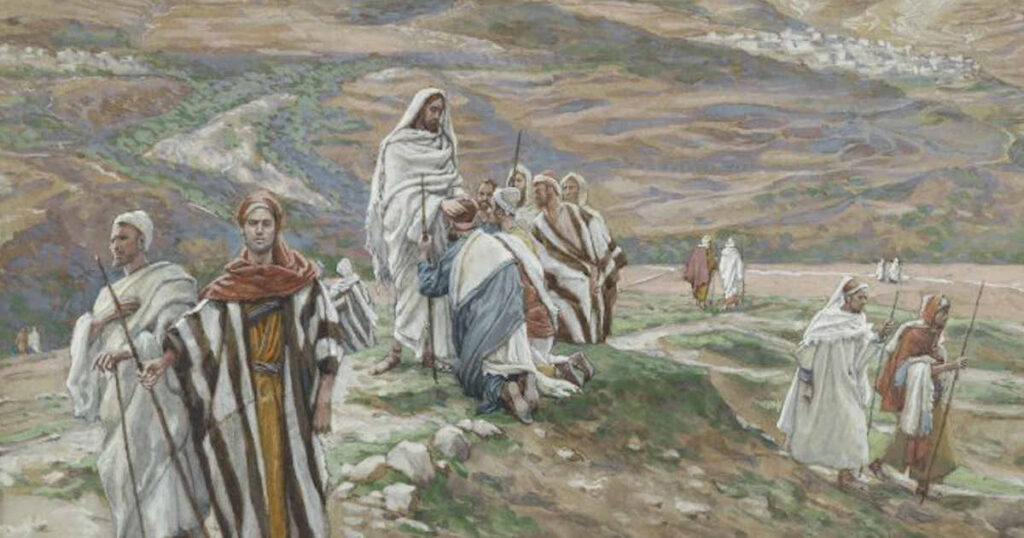
At that time the Lord appointed seventy-two others whom he sent ahead of him in pairs to every town and place he intended to visit.

Reflection:

Jesus had many followers who were deeply devoted to Him, abandoning everything to serve Him and to cooperate in the fulfillment of His mission. Oftentimes we give most of our attention to the Twelve Apostles when we speak of Jesus’ first followers. But in today’s Gospel, Jesus sent seventy-two disciples to go forth to all the towns that He would soon visit. Think about that for a moment. Seventy-two is quite a few people. These would not have been casual followers of Jesus. Rather, they clearly were people who were all in and fully committed to Christ. To them, Jesus entrusted the mission of preaching and gave them authority over demons.

Try to imagine organizing and sending forth seventy-two different people. Jesus would have come to know these disciples personally, witnessed their faith firsthand, taught them at length, and recognized that they were ready to fulfill His sacred mission. We should also presume that there were many others who were His faithful followers but were not yet ready to be entrusted with divine authority and sent on a mission. Thus, the movement that Jesus started was truly transforming for many people during those first years of His public ministry.

The same is true for us today. Jesus is not finished sending missionaries on mission. He continues to gather a vast army of servants whom He calls close to Himself, with whom He establishes a very personal relationship, teaches, forms, bestows with special graces and charisms, and then sends forth to continue His apostolic work. Are you among those who are ready to be sent forth by our Lord?

One way to test your readiness for the mission of Christ is to consider the command that Jesus gave to these seventy-two. He said in part, “Go on your way; behold, I am sending you like lambs among wolves. Carry no money bag, no sack, no sandals; and greet no one along the way.” In other words, our Lord was telling them that His mission required sacrifice, courage, trust in divine providence, and single-minded determination. His mission is not for the casual follower. It’s for those who are serious about their faith and do not hesitate to do all they need to do to get ready to fulfill Jesus’ divine command.

Reflect, today, upon whether you are ready to fulfill the apostolic mission Jesus wants to entrust to you. Are you willing to sacrifice everything for this mission? Are you courageous enough to do whatever He calls you to do? Do you trust that God will provide for you so that you can accomplish the task He has given to you? And are you single-minded and fully determined? Do not hesitate. Place yourself at the service of our Lord and await His glorious calling in your life.

Source: https://catholic-daily-reflections.com/2025/07/05/the-apostolic-mission/

Luke 10:1 Read More »

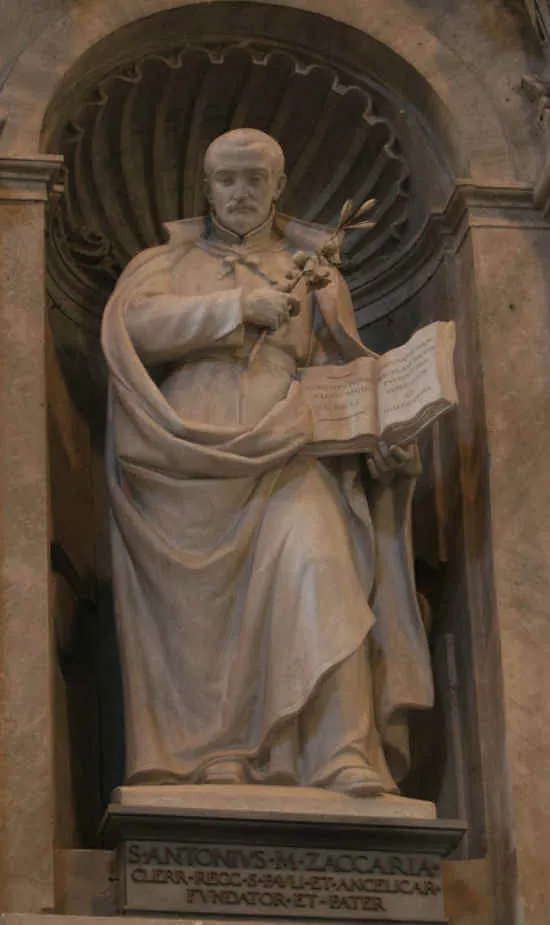
Saint Anthony Mary Zaccaria, Priest

1502–1539 Patron Saint of physicians Canonized by Pope Leo XIII on May 27, 1897

In 1502, Anthony Mary Zaccaria was born into a noble family in Cremona, a town in northern Italy. His father died when Anthony was two, leaving his eighteen-year-old mother to raise her only child. She ensured he received a good education and instilled in him a deep faith. His mother taught him to pray, leading him to spend long periods praying before a special altar dedicated to the Blessed Virgin Mary in their home, attending Mass, and preaching to his friends. Anthony was also deeply influenced by his mother’s care for the poor. Once, while returning from church, he encountered a poor, half-naked beggar who asked for alms. Having nothing on him, Anthony gave the beggar his silk cloak. His mother’s praise for this act of charity further motivated Anthony’s dedication to caring for the poor and sick.

After Anthony completed his elementary studies in Cremona, his mother sent him to Pavia to study philosophy and then to Padua to study medicine. At the age of twenty-two, he earned his doctorate in medicine and returned to Cremona, where he began his work as a physician, devoting much of his time to the care of the poor. As a physician, Doctor Anthony discovered that he could minister to both the physical and spiritual needs of the sick, especially those who were on their deathbeds. When called to the bedside of the sick, he encouraged them to turn to God in prayer, to receive the Sacraments, and to turn away from sin. He also gathered poor children together and taught them catechism. As his influence grew, members of the noble class also sought him out as a teacher for their children. Eventually, Doctor Anthony began preaching in the local church as a layman, drawing a diverse crowd of rich and poor, young and old.

Not long after starting his medical practice, Doctor Anthony realized that the salvation of souls was of far greater importance than the healing of the body. As a result, he abandoned his medical practice and devoted himself more fully to prayer so that he could discern God’s will. At the urging of his spiritual director, Anthony pursued theological studies and ordination to the priesthood, and in 1528, at the age of twenty-six, he was ordained a priest. During his first Mass, a miracle took place. At the moment of consecration, Father Anthony was enwrapped in light that remained until the Blessed Sacrament was consumed. News of this miracle spread quickly, and many wondered what would become of this new saintly priest.

As a priest, Father Anthony continued to minister to the spiritual needs of the people of Cremona. At that time, morals were in steep decline, poverty was on the rise, constant wars had taken a toll, and church attendance had greatly diminished. North of Italy, the Protestant Reformation was in full swing and confusion was prevalent. In this context, Father Anthony continued to catechize the young and old, rich and poor. Many were attracted to him due to his eloquence and manifest holiness. Indifferentism had become the “religion” of the day, but in Father Anthony, many people found an answer to their spiritual emptiness. They listened to his sermons and teaching, confessed their sins, attended his Masses, and sought out his counsel.

After laboring in Cremona for two years, divine providence led Father Anthony to Milan. Milan was a flourishing city at that time, but it was also a city without morals. Then under Spanish rule, Milan suffered from the turmoil caused by the Protestant Reformation. In Milan, Father Anthony attempted to do what he had done in Cremona, catechizing, preaching, calling people to repentance, visiting the sick and imprisoned, and caring for the poor. The moral decay in that town, however, was so great that Father Anthony knew he needed to do more. After much prayer and meditation upon the Cross, he was inspired to form a new community of religious individuals who would work for the salvation of souls. He met two kindred spirits, Bartholomew Ferrari and Anthony Morigia, who listened to his ideas and enthusiastically joined him. Together, they formed the Clerics Regular of St. Paul, a new religious order dedicated to simple and prayerful living and preaching that sought to imitate the great evangelist Saint Paul. This order later came to be known as the Barnabites, taking the name of one of Saint Paul’s faithful companions, Barnabas.

The Barnabites lived the radical Gospel message of Christ crucified, as preached by Saint Paul, by embracing radical poverty, mortification, charitable works, and the proclamation of the Gospel. Little by little, they aroused the interest of the people of Milan and hearts began to convert. The devil, furious at their victories for Christ, lashed out in numerous ways, first by disturbing them in their dwellings with noises and vile manifestations, and then by stirring up some townspeople against them. Father Anthony and his companions, however, were victorious, and the devil’s attacks were thwarted as the people turned to adoration of Christ crucified.

In addition to a new religious order for men, Father Anthony gathered some holy women together under Countess Ludovica Torelli, Countess of Guastalla, for whom Father Anthony was spiritual director. At Father Anthony’s request, the countess petitioned the pope for permission to found a new order. Once granted, Father Anthony, the countess, and other women founded the Angelic Sisters of St. Paul. They not only lived a life of prayer, penance, and poverty, but they also engaged in public works of charity, working to reform religious life as a whole by their good example. The order flourished and made a great impact in Milan and other cities.

For the next few years, Father Anthony and his followers worked to expand their ministry by offering conferences for the clergy, establishing an organization for married persons, and offering missions of evangelization. He fostered devotion to the Blessed Sacrament by instituting the practice of forty-hours devotion before the exposed Eucharist, encouraged frequent Communion, and prompted churches to ring their bells at three o’clock on Fridays to invite people to a moment of prayerful recollection on the Passion of Christ.

After years of severe penance and tireless service in his apostolate, Father Anthony died on the eve of the Solemnity of Saints Peter and Paul at the age of thirty-seven. Twenty-seven years after his death, his body was found to be incorrupt.

As we honor this fervent founder, preacher, lover of the Cross, and servant of charity, ponder Saint Anthony’s discovery that the salvation of souls is the greatest mission one can have in life. In the end, what will matter is how well we fulfilled the will of God. First and foremost, the will of God invites us all to have zeal for the proclamation of the saving message of Christ crucified in our words and deeds. Seek to imitate this servant of Saint Paul by freely embracing Saint Paul’s words, “But may I never boast except in the cross of our Lord Jesus Christ, through which the world has been crucified to me, and I to the world” (Galatians 6:14).

Source: https://mycatholic.life/saints/saints-of-the-liturgical-year/july-5—saint-anthony-zaccaria-priest/

Saint Anthony Mary Zaccaria, Priest Read More »

Matthew 9:16-17

The Newness of Grace

No one patches an old cloak with a piece of unshrunken cloth, for its fullness pulls away from the cloak and the tear gets worse. People do not put new wine into old wineskins. Otherwise the skins burst, the wine spills out, and the skins are ruined. Rather, they pour new wine into fresh wineskins, and both are preserved.

Reflection:

The parable above teaches us that even if someone were to faithfully understand and live the authentic Law that was given through Moses and the prophets, Jesus’ new teaching of grace, the New Law, was so different that it was not simply an improvement of the old, it completely replaced it. Furthermore, many of the customs taught by the Pharisees were unfaithful representations of the Law of Moses. They had deviated from the Law’s meaning and replaced it with their own scrupulous and erroneous multiplication of external practices. Thus, Jesus’ New Law needed to break away from these deviations completely.

To use a modern example, if you were to have an old phone that had become obsolete or stopped working, you wouldn’t buy a new phone so as to remove various parts from it to try to add those parts to the old phone to fix it. Instead, you use the new phone as a complete replacement for the old one.

A central quality of the New Law of grace is that it is entirely new and transforming. Therefore, by embracing this New Law, we become entirely new creations in Christ. Grace doesn’t simply patch that which is weak and sinful in us. It transforms us, elevating our human nature to an entirely new existence. This teaching is not only directed at the misguided teachings that the Pharisees had developed over the years, it was directed at human life itself. Not only were the Jewish customs to go through a transformation, humanity itself was to go through a transformation. Everything is made new in Christ.

This teaching applies just as much to us today as it did to the Jewish people of old. Today, we not only receive the new life of grace in Baptism, but we also receive it anew and share in this ongoing transforming renewal every time we allow grace to touch us more deeply and transform us more fully into the people God wants us to be. The “new patch” and the “new wine” are always transforming, and we must look forward to this newness throughout our lives.

Reflect, today, upon the joyful discovery that awaits you every day. Discovering the New Law of grace, accepting it into your life, and allowing it to transform you will set you on a path of discovery that will never get old. It is an ongoing discovery that is far greater than anything this world has to offer. Nothing can ever compare to the gift of God alive in our lives. It will never get old. It will always be transforming. And it will always be new. Ponder this gift God offers you today and say “Yes” to it with all your heart.

Source: https://catholic-daily-reflections.com/2025/07/04/the-newness-of-grace-3/

Matthew 9:16-17 Read More »

Independence Day

On July 4, 1776, the Continental Congress of the thirteen British colonies declared their independence from British rule. Since then, the United States has annually celebrated its independence on this day.

On December 15, 1791, the United States Congress adopted the Bill of Rights, the first ten amendments to the U.S. Constitution that had governed the land since 1789. The very first amendment declares “Congress shall make no law respecting an establishment of religion, or prohibiting the free exercise thereof…” In 1802, President Thomas Jefferson wrote a letter to the Danbury Baptist Association in Connecticut in which he stated, “I contemplate with sovereign reverence that act of the whole American people which declared that their legislature should ‘make no law respecting an establishment of religion, or prohibiting the free exercise thereof,’ thus building a wall of separation between Church & State.” Especially from this letter, the concept of the “separation of Church and State” has firmly endured in the United States, affording its citizens the freedom to worship as they choose.

While Independence Day is a national holiday, the Catholic Church in the United States also recognizes it as an Optional Memorial. On this day, we are called to pray for our country but also urged to exhibit “solemn reverence” for the freedoms we enjoy as citizens of this remarkable nation. Throughout world history, the freedom to worship according to one’s conscience has seldom been codified into law. Though it is more common today in varying degrees, the freedoms enshrined in our Constitution offer abundant reasons for celebration.

The idea of the separation of Church and State, however, can be a double-edged sword. On one hand, it guarantees every citizen’s right to worship God as he or she chooses. But, when misinterpreted, it can lead some to attempt to silence the voice of the Church in public discourse. This certainly isn’t God’s intention, and many would argue that it wasn’t the intention of our Founding Fathers either.

As Catholic citizens anywhere in the world, it is our duty to allow our faith to shape who we are and then to engage in every form of civil discourse, including the enactment of laws. Faith is not something to be practiced solely at church; it must permeate who we are and influence everything we do. True freedom enables us to enjoy the blessings of life, liberty, and happiness. Christians’ life, liberty, and happiness cannot be detached from Christian citizenship. We have been endowed by our Creator with the right and duty to live and practice our faith openly in all aspects of our lives. This freedom encompasses work, school, sports, social groups, and even government. Although the Christian faith does not need to be “imposed” upon others, Christian citizens must be allowed to practice their faith anywhere and everywhere. If not, our God-given rights and even our Constitution risk being undermined.

At the end of time, when Jesus returns, our world will be governed as a monarchy. The King of Kings will rule, and we will be subjects of this great, merciful, just, and perfect Lord forever. Until that glorious day arrives, we must endeavor to govern ourselves. The United States, along with many other democracies, is governed by the will of the people. But what would happen if the “will of the people” evolved to become atheistic or immoral? The will of the people is not an infallible guide for governance; however, it serves as an excellent system when the will of the people is collectively united with the will of God. As Christian citizens, we must persistently and unabashedly strive to unite our will with God’s, allowing our faith to shape our will, and then engage in civil discourse to shape our nation to better reflect the Kingdom of God.

As we celebrate our independence today, reflect on the deeper meaning of independence. From a Christian perspective, “independence” is not the freedom to do what we want, when we want, because we want, but the freedom to do what we ought. True freedom is found only when we live in accordance with the will of God. This kind of freedom fosters internal liberty, and that liberty should become enshrined in everything we do and in every aspect of human life. You are the bridge between Church and State. While the Church does not govern the State, people of faith must.

Source: https://mycatholic.life/saints/saints-of-the-liturgical-year/july-4—independence-day—usa-optional-memorial/

Independence Day Read More »