Author name: Sani

Saint Anselm of Canterbury, Bishop and Doctor of the Church

c. 1033–1109; Especially invoked by scholastic philosophers and in Canterbury; Possibly canonized prior to 1170, canonization confirmed by Pope Alexander VI on October 4, 1494; Declared a Doctor of the Church by Pope Clement XI in 1720

He was an Italian, Frenchman, and Englishman; a monk, prior, abbot, archbishop, philosopher, theologian, and spiritual writer; today he is a saint, a Doctor of the Church, and commonly referred to as the “Father of Scholasticism.” Anselm was born into a noble family in the town of Aosta, located in the Italian Alps. As a youth, his devout mother set a pious example which he readily followed. When Anselm was fifteen, he wanted to enter the monastic life, but his father would not give consent. So the abbot refused his entrance. His mother had since passed, so she could not intervene. Disillusioned, Anselm’s faith wavered for the next several years. Coming to his senses, he pursued studies in France and eventually arrived at the Benedictine Abbey of Bec around the age of twenty-six. Anselm quickly became close to and a devoted student of the prior, Lanfranc. When Anselm’s father died, Anselm was in a quandary about what to do. Should he return home to receive the inheritance of his father’s estate and put it to good use? Or should he abandon it and become a monk? Lanfranc directed him to a holy bishop for spiritual advice, and Anselm decided on religious life. He returned to the Abbey of Bec and became a monk at the age of twenty-seven.

After Anselm enjoyed three blessed years of monastic life, Lanfranc, the prior, was appointed abbot of another abbey. Anselm was chosen as the prior of Bec at the age of thirty under the elderly founding abbot, Herluin. Though some of the monks disapproved of this appointment due to Anselm’s youth, his wisdom, personality, heartfelt kindness, and holiness soon won them over. He remained the prior for the next fifteen years.

As prior, Anselm studied, prayed, taught, and administered the abbey remarkably well. He was such a success that the Abbey of Bec became one of the most respected institutions in all of Europe. At Bec, Anselm wrote seven of his thirteen works, including two of his most famous ones: Monologion and Proslogion. Anselm had a profound faith, fueled by a life of intense mystical prayer, and it was his prayer and faith that directed his thinking and writing. He believed that unless God first revealed Himself, our minds could never grasp Him, could never grasp Truth.

One of Anselm’s greatest philosophical contributions is his ontological argument for the existence of God. In his first great work, Monologion, Anselm argued that we can arrive at the existence of God using deductive reasoning. For example, if we consider the idea of “good,” we are aware of varying degrees of goodness. Therefore, there must be that which is supreme goodness itself. This supreme good must also be responsible for all else that is good. God is that Goodness. He does not simply have goodness, He is Goodness. In his great work, Proslogion, Anselm began with the concept of a being than which no greater can be conceived. From that concept, he goes through logical deductions that lead him to conclude that a being than which no greater can be conceived necessarily exists. This argument has been one of the most discussed and contested arguments in philosophy.

Philosophy was not Anselm’s only love. He was also a profound spiritual writer, theologian, and composer of many beautiful prayers. His spiritual writings are not only theoretical, they are also personal and intimate. His deep love for God and for our Blessed Mother shines through.

In 1078, Abbot Herluin died and Anselm was elected his successor by the unanimous consent of the monks, a role he would valiantly fulfill for the next fifteen years. As abbot, Anselm periodically traveled on various properties that had been donated to the abbey across the English Channel. His counsel was also regularly sought out by the English king and his good friend Lanfranc, who had since been made the Archbishop of Canterbury. Anselm’s visits to Canterbury, coupled with the domineering intellectual influence of the Abbey of Bec, made him the ideal successor to Archbishop Lanfranc of Canterbury. When Lanfranc died, Anselm became the next Archbishop of Canterbury at the age of sixty.

Anselm’s consecration as archbishop was at first delayed because of conflicts with King William II regarding the confiscation of church property and the king’s perceived right to appoint bishops independently of the pope. King William eventually became quite ill, and, for fear of hell, he repented, and Anselm was installed. Once installed as Archbishop of Canterbury, Anselm came into conflict with King William once again and was exiled from his see. After the death of King William, the new king, King Henry, welcomed Anselm back, but Anselm soon found himself engaged in yet another dispute about the appointment of new bishops. He was once again exiled. Even in exile, God used Archbishop Anselm in powerful ways. He continued writing beautiful and profound theology, defended the nature of the Trinity at a Church council in Rome, and acted as a counselor to the pope. His times in exile also gave a lasting witness to the truths for which he was exiled. That witness not only had an impact on those in his time but also for the generations to follow. Anselm’s final years were more peaceful after he and the king worked out a compromise, and he returned to his see in Canterbury.

Saint Anselm is considered a “confessor” because he suffered for his defense of the Church and the Gospel. He fiercely defended the autonomous spiritual authority of the Church and refused to participate in financial abuses between the state and church. In addition to being a confessor, Saint Anselm’s writings continue to have a profound impact upon the Church. He stands out as one of the greatest theologians between Saint Augustine and Saint Thomas Aquinas. His prayers inflame hearts with deep devotion. His love for our Blessed Mother is inspiring. His theological explanation of the Trinity, grace, truth, and the Incarnation have provided a firm foundation for a deeper understanding of our faith. Above all, we can ponder Saint Anselm’s deep conviction that when faith in God comes first, understanding follows. If you struggle in life in any way, follow this saint’s example by placing your trust in God first, and then wait upon Him to lead you.

Source: https://mycatholic.life/saints/saints-of-the-liturgical-year/april-21-st-anselm-archbishop/

Saint Anselm of Canterbury, Bishop and Doctor of the Church Read More »

John 6:30–31

Manna or the Bread of Life

The crowd said to Jesus: “What sign can you do, that we may see and believe in you? What can you do? Our ancestors ate manna in the desert, as it is written: ‘He gave them bread from heaven to eat.’”

Reflection:

Today’s Gospel begins the beautiful Bread of Life Discourse, which we read at Mass for the rest of the week. In this discourse, we read the conversation Jesus had with some of the crowd who, the previous day, were among the more than 5,000 who were miraculously fed by the multiplication of the loaves and fishes. The conversation begins with the crowd’s search for physical sustenance and gradually unfolds into a revelation of a deeper, spiritual nourishment as Jesus points them to the “food that endures for eternal life” (John 6:27).

Jesus had their attention. They understood that He was talking about something mysterious—more than just the miraculous multiplication of loaves and fishes. Therefore, they asked Him for a sign and quoted the Exodus account in which God provided manna in the desert. Understanding their question is key to understanding Jesus’ response.

After Moses led the Israelites out of Egypt and they wandered in the desert for forty years on their way to the Promised Land, God provided them with manna as “bread from heaven” (cf. Exodus 16:4–34). About 820 years after the Israelites entered the Promised Land and established their kingdom, Jerusalem fell to the Babylonians in 586 B.C. During this time, the prophet Jeremiah is said to have hidden the Ark of the Covenant, which contained a pot of manna, in a secret place before the Jews were taken into exile (cf. 2 Maccabees 2:5–8). This hidden manna held symbolic significance, and tradition suggests there was a belief that it would miraculously reappear at Passover when the Messiah came, beginning the dawn of the last days and a new era of divine fulfillment.

Some traditions suggest that there was an expectation of the hidden manna’s return, leading the crowd to wonder if Jesus would reveal such treasures—true spiritual gifts that would confirm that He was the long-awaited Messiah. However, the people misunderstood Jeremiah’s actions and the deeper significance of the hidden manna. While the tradition spoke of a miraculous return, Jesus intended to fulfill that prophecy not by uncovering the old Ark but by revealing Himself as the new Manna: “…my Father gives you the true bread from heaven. For the bread of God is that which comes down from heaven and gives life to the world” (John 6:32–33).

When Jesus revealed this, the people asked Him, “Sir, give us this bread always” (John 6:34). Unfortunately, the people still did not understand. As they recalled the Exodus story about the manna in the desert, they thought Jesus was promising a new physical food that would sustain them. Therefore, Jesus clearly exclaims, “I am the bread of life; whoever comes to me will never hunger, and whoever believes in me will never thirst” (John 6:35). With that, Jesus begins to teach about the Eucharist, a teaching that would find its fulfillment at the Last Supper, where He offered Himself as true food and drink for the life of the world.

As we begin reading the Bread of Life Discourse, we are invited into the greatest mystery of our faith. As a divine mystery—a mysterium fidei—the Eucharist is not something we can figure out by study alone. The Eucharist is God’s Presence into which we are invited to enter, and Jesus must teach us the way. The Eucharist is only understood properly through prayer—a prayer in which God reveals His hidden presence to us.

Reflect today on your understanding of the Eucharist. Only the spiritual Gift of Understanding will enable us to more fully comprehend this most precious Gift. As we read through the Bread of Life Discourse this week, make an effort to pray over the words. Ask for enlightenment. Like the members of the crowd who conversed with Jesus in today’s Gospel, commit yourself to participate in their discussion. Seek to understand so that you will believe and share in the abundant blessings given to those who partake of the Bread of Life.

Source: https://catholic-daily-reflections.com/2026/04/20/manna-or-the-bread-of-life/

John 6:30–31 Read More »

Saint Sara of Antioch

Profile

Sara was born to a wealthy Imperial Roman family. She was married to a Roman army officer. She was publicly exposed as a Christian when she baptized her children against the wishes of her non-Christian husband when the ship they was traveling on was in danger of wrecking in a storm. She was martyred in the persecutions of Diocletian.

Born

  • Antioch (modern Antakya, Turkey)

Died

  • burned at the stake c.305 in Antioch (modern Antakya, Turkey)

Representation

  • palm of martyrdom

Canonized

  • Pre-Congregation

Source: https://catholicsaints.info/saint-sara-of-antioch/

Saint Sara of Antioch Read More »

 John 6:26–27

Redirecting Your Desire

“Rabbi, when did you get here?” Jesus answered them and said, “Amen, amen, I say to you, you are looking for me not because you saw signs but because you ate the loaves and were filled. Do not work for food that perishes but for the food that endures for eternal life, which the Son of Man will give you. For on him the Father, God, has set his seal.”

Reflection:

The crowd desired one thing, but Jesus desired another. This reality is common to us all. Earlier in this chapter from John’s Gospel, Jesus miraculously fed 5,000 men—not counting the women and children—with five barley loaves and two fish. The crowd was so ecstatic that they wanted to carry Jesus off and crown Him king. Jesus, however, had no desire to be an earthly king, so He withdrew to a mountain to be alone.

The next morning, when the crowd discovered Jesus had left, they searched for Him and found Him in Capernaum with the Twelve. When they found Him, they asked, “Rabbi, when did you get here?” Jesus’ response revealed their true motivation: “You are looking for me not because you saw signs but because you ate the loaves and were filled.” In other words, they desired another meal. Their interest in Jesus was superficial.

In John’s Gospel, Jesus’ miracles are referred to as “signs.” These signs point to His divine Sonship and salvific mission, revealing Him as the source of eternal life. Jesus recognized that the people sought Him not because they sought spiritual understanding or insight into His divine nature, but solely for material satisfaction—another meal.

The crowd desired physical food, but Jesus desired to give them spiritual nourishment to strengthen their faith so that they would believe and receive the eternal and superabundant treasures He came to bestow. Jesus then exhorted them to work for “food that endures for eternal life.” That “food” is their belief in Him, whom the Father sent to bring eternal life.

We often find ourselves desiring the passing things of this world more than we desire God. It is natural, not sinful, to experience physical hunger and desire food. But if such desires become the driving force in our lives, then they become disordered.

In addition to natural desires, our spiritual desires can also become misguided. For example, if we seek Jesus in prayer solely because we have a favor to ask of Him, then we are acting much like the crowd in today’s Gospel, and Jesus’ words to them would apply to us: “Do not work for food that perishes but for the food that endures for eternal life, which the Son of Man will give you.”

Our pursuit of Jesus must not be centered on our own ideas of what is best for us. Only God knows what is best. We must understand this and allow Him to redirect our desires to seek what is eternal. We must not only seek but also desire God’s work in our lives. His greatest work is that we “believe in the one he sent.” We must desire faith in Jesus and His eternal plan, abandoning every superficial or misguided pursuit.

Reflect today on what you desire most from your relationship with our Lord. If your ambitions are earthly and fleeting, look higher. Seek the eternal realities God wishes to bestow, and work to realign your desires toward those alone. God is aware of our natural needs and will provide for them according to His will when we prioritize understanding Him, His divine Sonship, and His mission. Learn from the crowd in today’s Gospel and heed Jesus’ gentle rebuke. Believe in the One the Father sent—Jesus, the Son of God—and all good and eternal things will be lavished upon you according to His will.

Source: https://catholic-daily-reflections.com/2026/04/19/redirecting-your-desire/

 John 6:26–27 Read More »

Third Sunday of Easter

First Reading Acts 2:14, 22-33

Then Peter stood up with the Eleven,
raised his voice, and proclaimed:
“You who are Jews, indeed all of you staying in Jerusalem.
Let this be known to you, and listen to my words.
You who are Israelites, hear these words.
Jesus the Nazarene was a man commended to you by God
with mighty deeds, wonders, and signs,
which God worked through him in your midst, as you yourselves know.
This man, delivered up by the set plan and foreknowledge of God,
you killed, using lawless men to crucify him.
But God raised him up, releasing him from the throes of death,
because it was impossible for him to be held by it.
For David says of him:
I saw the Lord ever before me,
with him at my right hand I shall not be disturbed.
Therefore my heart has been glad and my tongue has exulted;
my flesh, too, will dwell in hope, 
because you will not abandon my soul to the netherworld,
nor will you suffer your holy one to see corruption.
You have made known to me the paths of life;
you will fill me with joy in your presence.

“My brothers, one can confidently say to you
about the patriarch David that he died and was buried,
and his tomb is in our midst to this day.
But since he was a prophet and knew that God had sworn an oath to him
that he would set one of his descendants upon his throne,
he foresaw and spoke of the resurrection of the Christ,
that neither was he abandoned to the netherworld
nor did his flesh see corruption.
God raised this Jesus;
of this we are all witnesses.
Exalted at the right hand of God,
he received the promise of the Holy Spirit from the Father
and poured him forth, as you see and hear.”

Responsorial Psalm Psalms 16:1-2, 5, 7-8, 9-10, 11

R. (11a) Lord, you will show us the path of life.
or:
R. Alleluia.
Keep me, O God, for in you I take refuge;
I say to the LORD, “My Lord are you.”
O LORD, my allotted portion and my cup,
you it is who hold fast my lot.
R. Lord, you will show us the path of life.
or:
R. Alleluia.
I bless the LORD who counsels me;
even in the night my heart exhorts me.
I set the LORD ever before me;
with him at my right hand I shall not be disturbed.
R. Lord, you will show us the path of life.
or:
R. Alleluia.
Therefore my heart is glad and my soul rejoices, 
my body, too, abides in confidence;
because you will not abandon my soul to the netherworld,
nor will you suffer your faithful one to undergo corruption.
R. Lord, you will show us the path of life.
or:
R. Alleluia.
You will show me the path to life,
abounding joy in your presence,
the delights at your right hand forever.
R. Lord, you will show us the path of life.
or:
R. Alleluia.

Second Reading 1 Peter 1:17-21

Beloved:
If you invoke as Father him who judges impartially
according to each one’s works,
conduct yourselves with reverence during the time of your sojourning,
realizing that you were ransomed from your futile conduct,
handed on by your ancestors,
not with perishable things like silver or gold
but with the precious blood of Christ
as of a spotless unblemished lamb.

He was known before the foundation of the world 
but revealed in the final time for you,
who through him believe in God
who raised him from the dead and gave him glory,
so that your faith and hope are in God.

Alleluia Cf. Luke 24:32

R. Alleluia, alleluia.
Lord Jesus, open the Scriptures to us;
make our hearts burn while you speak to us.
R. Alleluia, alleluia.

Gospel Luke 24:13-35

That very day, the first day of the week, 
two of Jesus’ disciples were going
to a village seven miles from Jerusalem called Emmaus,
and they were conversing about all the things that had occurred.
And it happened that while they were conversing and debating,
Jesus himself drew near and walked with them,
but their eyes were prevented from recognizing him.
He asked them, 
“What are you discussing as you walk along?”
They stopped, looking downcast.
One of them, named Cleopas, said to him in reply,
“Are you the only visitor to Jerusalem
who does not know of the things
that have taken place there in these days?”
And he replied to them, “What sort of things?”
They said to him, 
“The things that happened to Jesus the Nazarene,
who was a prophet mighty in deed and word
before God and all the people,
how our chief priests and rulers both handed him over
to a sentence of death and crucified him.
But we were hoping that he would be the one to redeem Israel;
and besides all this,
it is now the third day since this took place.
Some women from our group, however, have astounded us:
they were at the tomb early in the morning 
and did not find his body;
they came back and reported
that they had indeed seen a vision of angels
who announced that he was alive.
Then some of those with us went to the tomb
and found things just as the women had described,
but him they did not see.”
And he said to them, “Oh, how foolish you are!
How slow of heart to believe all that the prophets spoke!
Was it not necessary that the Christ should suffer these things
and enter into his glory?”
Then beginning with Moses and all the prophets,
he interpreted to them what referred to him
in all the Scriptures.
As they approached the village to which they were going,
he gave the impression that he was going on farther.
But they urged him, “Stay with us,
for it is nearly evening and the day is almost over.”
So he went in to stay with them.
And it happened that, while he was with them at table,
he took bread, said the blessing,
broke it, and gave it to them.
With that their eyes were opened and they recognized him,
but he vanished from their sight.
Then they said to each other,
“Were not our hearts burning within us
while he spoke to us on the way and opened the Scriptures to us?”
So they set out at once and returned to Jerusalem
where they found gathered together
the eleven and those with them who were saying,
“The Lord has truly been raised and has appeared to Simon!”
Then the two recounted 
what had taken place on the way
and how he was made known to them in the breaking of bread.

Source: https://bible.usccb.org/bible/readings/041926.cfm

Third Sunday of Easter Read More »

Saint Expeditus of Melitene

Profile

Expeditus is possibly legendary. It is unclear whether his name led to his association with expeditious matters, or the other way around. This association led to his becoming the patron of people who had to deliver things on time.

Canonized

  • Pre-Congregation

Patronage

  • against procrastination
  • for expeditious solutions
  • merchants
  • navigators
  • prompt solutions; urgent cases
  • test takers

Representation

  • young Roman soldier holding aloft a cross
  • young Roman soldier holding aloft a banner with the word “hodie” (latin for ‘today’)

Source: https://catholicsaints.info/saint-expeditus-of-melitene/

Saint Expeditus of Melitene Read More »

Luke 24:13–16

Dispelling Confusion

That very day, the first day of the week, two of Jesus’ disciples were going to a village seven miles from Jerusalem called Emmaus, and they were conversing about all the things that had occurred. And it happened that while they were conversing and debating, Jesus himself drew near and walked with them, but their eyes were prevented from recognizing him.

Reflection:

These two disciples were overwhelmed by grief and bewildered by the events that had taken place. As they walked the seven-mile journey from Jerusalem to Emmaus, they expressed their sadness and confusion. Jesus, Whom they had hoped “would be the one to redeem Israel,” was brutally tortured and crucified before their eyes. After His death, He was buried, and that very morning they heard reports from some of the women, as well as Peter and John, that His body was missing from the tomb. What’s more, the burial cloth was neatly rolled up in the tomb, and the women informed the disciples that they saw “a vision of angels who announced that he was alive.” The two did not know what to think.

As the story unfolds, Jesus appeared to them as they walked and conversed with them, “but their eyes were prevented from recognizing him.” Jesus’ hidden presence teaches us that He is often with us, in our midst, yet we do not recognize Him. Distractions, trials, or our own misconceptions can dull our spiritual senses. We often fail to perceive His presence in the Eucharist, the Scriptures, the Church, during our prayer, and in one another.

Jesus’ loving rebuke of these two disciples was intended to wake them up: “Oh, how foolish you are! How slow of heart to believe all that the prophets spoke! Was it not necessary that the Christ should suffer these things and enter into his glory?” Every time we stumble from spiritual blindness, which leads to confusion, our Lord lovingly says the same to us. We must take that rebuke with humility, acknowledging our blindness and inability to perceive His constant presence.

Jesus then “interpreted to them what referred to him in all the Scriptures.” This opening of their minds to the spiritual Gift of Understanding is key. By humbly acknowledging our spiritual blindness and the foolish way we often go about our daily lives, we dispose ourselves to this precious gift. The Gift of Understanding cannot be acquired by our own effort. Only after we honestly humble ourselves before God will He open our minds to all we need to know and understand.

Once they arrived in Emmaus and invited this divine Stranger to stay with them for the night, Jesus agreed. As they dined, “while he was with them at table, he took bread, said the blessing, broke it, and gave it to them.” The Lord Himself, the great High Priest, gave them the Eucharist, and suddenly “their eyes were opened and they recognized him, but he vanished from their sight.”

Though our Lord vanished from their sight, He remained with them, as He does with us today. His presence in the Eucharist is His True Presence, His Divine Essence. By revealing Himself in the Scriptures and the Breaking of the Bread, He teaches us that He is always with us in His Word and in the Sacraments. We consume His Word through daily meditation, study, and the teachings of the Church. His True Presence is with us when we attend Mass and participate in the Sacraments.

Reflect today on the initial confusion of these two disciples, filled with sorrow and bewilderment as they grappled with recent events. Contrast this with the growth in faith they likely experienced in the months and years ahead. Little by little, they grew in understanding and belief, allowing their misconceptions about who the Messiah would be—not a political leader, but the Savior of the World—to be dispelled. Whenever you face confusion, turn to the example of these disciples and learn from the lessons taught through them. Seek Christ in His Word and Sacraments, trusting that He will dispel doubts and guide you to greater faith.

Source: https://catholic-daily-reflections.com/2026/04/18/dispelling-confusion/

Luke 24:13–16 Read More »

Saint Agia of Hainault

Profile

Agia was the wife of Saint Hidulphus of Hainault. They separated to enter religious life, Agia becoming a Benedictine nun at the abbey at Mons, Belgium. She was a widow. Legend says that she managed to avert an injustice by speaking from the tomb.

Died

  • c.711 of natural causes

Canonized

  • Pre-Congregation

Patronage

  • lawsuits; people unjustly involved in lawsuits

Source: https://catholicsaints.info/saint-agia-of-hainault/

Saint Agia of Hainault Read More »

John 6:19–20

Traversing the Darkness of Fear

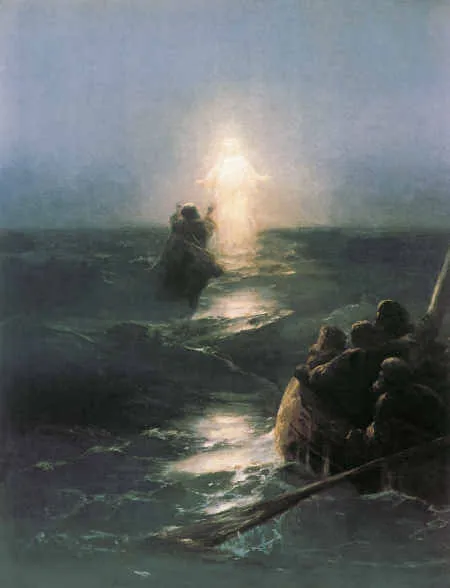
When they had rowed about three or four miles, they saw Jesus walking on the sea and coming near the boat, and they began to be afraid. But he said to them, “It is I. Do not be afraid.”

Reflection:

One of the most consoling things we can hear is our Lord saying to us, “It is I. Do not be afraid.” Every time we encounter His divine presence in our lives, we should hear those words. Though we do not always perceive Him, He is there, and when we reach out to Him in faith, He responds, dispelling the fear that cripples us, replacing it with confidence in His presence.

What causes you to fear? Though some forms of fear are good—such as fear of falling off a cliff while hiking on a narrow ledge—other forms of fear that we struggle with every day are not good. Fear of what people think about us, fear of failure, or fear of being mistreated are all fears that stem from our own weakness and lack of surrender to God’s grace. In today’s Gospel, Jesus’ miraculous act of walking on the water, coming toward the disciples in their boat at night during the storm, teaches us a lesson about unhealthy fear.

Fear ultimately stems from a lack of humility. It’s the fruit of pride, which is rooted in an excessive reliance on oneself rather than on God. Pride seeks control and resists vulnerability, whereas humility acknowledges one’s dependence on God and His providence. This misplaced trust in one’s own abilities or judgments leads to fear when faced with uncertainties or challenges that exceed personal power. This is beautifully presented in the difficult-to-pray Litany of Humility: “From the fear of being humiliated… despised… suffering rebukes… calumniated… being forgotten… being ridiculed… being wronged… being suspected—deliver me, Jesus!”

In today’s Gospel, after Jesus had performed the miracle of the multiplication of the loaves and fishes, He sent His disciples ahead of Him. It was evening when they entered their boat and began rowing across the sea. After they “had rowed about three or four miles” and “it had already grown dark,” a fearful situation arose: “the sea was stirred up because a strong wind was blowing.”

Many Church Fathers look at this passage as a literal story that is filled with symbolism, presenting us with deeper spiritual lessons. John frequently uses the images of light and darkness in his Gospel. Darkness symbolizes the absence of Christ, the Light of the World. The Apostles in the boat at night in the darkness, rowing against the wind and waves, symbolize our journey in life. The sea is the world and the boat is the Church, which enables us to traverse the difficulties we face in the world. Though Jesus is not in the boat during the waves and wind, He is not far away. He is attentive to them from a distance but allows them to endure the storm.

Each of us encounters storms. Though they sometimes lead to confusion, God permits them to help us overcome fear. Humility is the virtue that especially dispels fear because humility enables us to trust in God, rather than in ourselves. By ourselves, we cannot traverse the seas of the world. Not only will we be tossed about, making progress difficult or impossible, we sometimes lose our way and remain in one storm after another.

Reflect today on anything that causes fear or anxiety in your life. What weighs you down and sets you off course toward the freedom and joy God wants to grant you? What is it that is more than you can handle on your own? Whatever it is, humbly admit to yourself and to God that you need Him, because you are incapable of handling it on your own. As you do, listen for His gentle promptings of grace. Hear Him say to you, “It is I. Do not be afraid.” Allow Him to enter your life, calm the waves, and guide you safely to the destination He desires for you. Your humble reliance on our Lord will enable you to traverse any darkness in which you find yourself.

Source: https://catholic-daily-reflections.com/2026/04/17/traversing-the-darkness-of-fear/

John 6:19–20 Read More »

Saint Landericus of Soignies

Profile

Landericus was the eldest son of Saint Madelgarus and Saint Waldetrudis. He was a soldier and priest. He became the bishop of Meaux, France from 641 to 650. He was a Benedictine abbot in Soignies, Belgium and abbot of Hautmont, France.

Born

  • France

Died

  • 7th century in Soignies, Belgium of natural causes
  • relics rest in the Church of Saint-Vincent in Soignies

Canonized

  • Pre-Congregation

Patronage

  • in Belgium
    Hainault
    Mons
    Soignies
    in France
    Meaux

Representation

  • bishop with a book and razor (refers to his tonsure)
    with Saint Vincent Madelgaire

Source: https://catholicsaints.info/saint-landericus-of-soignies/

Saint Landericus of Soignies Read More »