Author name: Sani

John 10:11–13

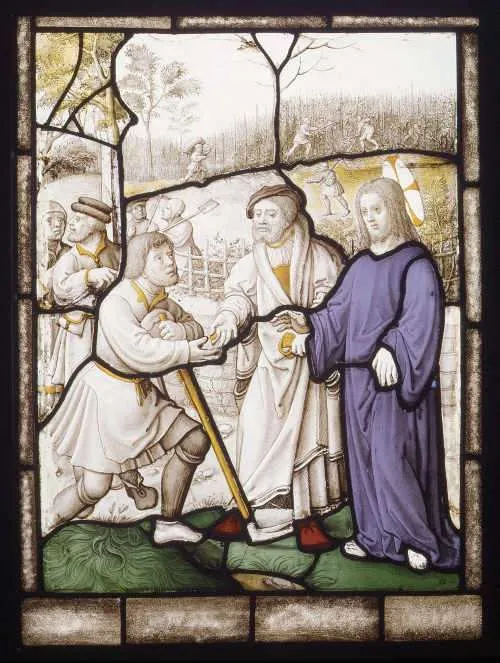
The Courage of the Good Shepherd

Jesus said: “I am the good shepherd. A good shepherd lays down his life for the sheep. A hired man, who is not a shepherd and whose sheep are not his own, sees a wolf coming and leaves the sheep and runs away, and the wolf catches and scatters them. This is because he works for pay and has no concern for the sheep.”

Reflection:

What is it that makes a shepherd “good?” A shepherd’s duties require great sacrifice and time. Like a mother who is always attentive to her newborn, a shepherd devotes his time and energies to the care of his flock. In biblical times, shepherds often lived in caves on the outskirts of towns, where there were plenty of green pastures, space for the sheep to roam, and water sources. The caves provided a place of safety at night and shelter from the elements. During the day, the shepherd watched over the flock in an almost fatherly way, knowing that if he were to neglect his duties and become inattentive, a sheep could wander off or fall victim to a pack of wolves.

Jesus expands this familiar image to convey an even greater reality of divine love and sacrifice. In today’s Gospel, Jesus takes this image of a shepherd to a whole new level. He says: “A good shepherd lays down his life for the sheep.” Though this might not have been part of the normal job description of a shepherd, perhaps those who were listening would have made a connection. Some might have understood what Jesus taught in a figurative way, calling to mind the time and commitment shepherds make. And though there is a figurative lesson to be learned, Jesus’ teaching was more than that.

Jesus first identified Himself as the Good Shepherd. He then defines what that means: He will lay down His life for His sheep. Though His listeners likely missed His meaning, Saint John, while writing his Gospel, fully understood Jesus’ words to be not only figurative but also literal—Jesus would die on the Cross for the sins of His sheep.

The metaphor continues with Jesus contrasting a hired worker with a true shepherd of his own sheep. In the face of danger, a hired worker flees for his own safety, while the shepherd stands and fights for his sheep, even to death. This clearly depicts what Jesus has done for us, but it also reveals our duty toward all of God’s people, His flock.

As members of Christ’s Body, the Church, we are called to share in His shepherding mission. Our vocations will especially dictate to us ways in which we are called to do so. Parents, for example, must be so devoted to their children that they value their children’s lives more than their own. Priests and religious are called to be shepherds who guide and protect their flocks spiritually. Each of us, however, must participate in Christ’s shepherding mission in the ways we are called. While the way this is lived will vary, the degree to which it is lived must not. We are all called to lead lives that are sacrificial, selfless, and wholly self-giving. Courageously and completely, we must lay our lives down for others, imitating the Good Shepherd’s commitment to His flock.

In communion with the Good Shepherd, we are invited to show this courage in daily acts of charity, fidelity to our commitments, and steadfast love for those entrusted to our care. Through this radical love, we reveal Christ’s presence to the world and share in His mission to gather all into one fold under the divine Shepherd. As we continue to celebrate the joy of the Resurrection, we remember that this joy was won through the courageous love of our Good Shepherd.

Reflect today on Jesus’ perfect fulfillment of His mission to be the Good Shepherd. As you ponder His courage, sacrifice, and selfless love, know that He not only acts as the Good Shepherd to you, but He also invites you to share in His shepherding. How courageous are you when given the opportunity to be selfless for the good of another? How willing are you to seek the others’ salvation, even at great cost to yourself? Charity is at the heart of Jesus’ mission, and that same charity must permeate everything we do as we relate to those whom we are called to love. Honor and thank the Good Shepherd by participating in His mission and laying down your life for God’s flock.

Source: https://catholic-daily-reflections.com/2026/04/26/the-courage-of-the-good-shepherd/

John 10:11–13 Read More »

Fourth Sunday of Easter

First Reading Acts 2:14a, 36-41

Then Peter stood up with the Eleven,
raised his voice, and proclaimed:
“Let the whole house of Israel know for certain
that God has made both Lord and Christ,
this Jesus whom you crucified.”

Now when they heard this, they were cut to the heart,
and they asked Peter and the other apostles,
“What are we to do, my brothers?”
Peter said to them,
“Repent and be baptized, every one of you,
in the name of Jesus Christ for the forgiveness of your sins;
and you will receive the gift of the Holy Spirit.
For the promise is made to you and to your children
and to all those far off,
whomever the Lord our God will call.”
He testified with many other arguments, and was exhorting them,
“Save yourselves from this corrupt generation.”
Those who accepted his message were baptized,
and about three thousand persons were added that day.

Responsorial Psalm Psalms 23: 1-3a, 3b4, 5, 6

R. (1) The Lord is my shepherd; there is nothing I shall want.
or:
R. Alleluia.
The LORD is my shepherd; I shall not want.
In verdant pastures he gives me repose;
beside restful waters he leads me;
he refreshes my soul.
R. The Lord is my shepherd; there is nothing I shall want.
or:
R. Alleluia.
He guides me in right paths
for his name’s sake.
Even though I walk in the dark valley
I fear no evil; for you are at my side.
With your rod and your staff
that give me courage.
R. The Lord is my shepherd; there is nothing I shall want.
or:
R. Alleluia.
You spread the table before me
in the sight of my foes;
you anoint my head with oil;
my cup overflows.
R. The Lord is my shepherd; there is nothing I shall want.
or:
R. Alleluia.
Only goodness and kindness follow me
all the days of my life;
and I shall dwell in the house of the LORD
for years to come.
R. The Lord is my shepherd; there is nothing I shall want.
or:
R. Alleluia.

Second Reading 1 Peter 2:20b-25

Beloved:
If you are patient when you suffer for doing what is good,
this is a grace before God.
For to this you have been called,
because Christ also suffered for you,
leaving you an example that you should follow in his footsteps.
He committed no sin, and no deceit was found in his mouth.

When he was insulted, he returned no insult;
when he suffered, he did not threaten;
instead, he handed himself over to the one who judges justly.
He himself bore our sins in his body upon the cross,
so that, free from sin, we might live for righteousness.
By his wounds you have been healed.
For you had gone astray like sheep,
but you have now returned to the shepherd and guardian of your souls.

Alleluia John 10:14

R. Alleluia, alleluia.
I am the good shepherd, says the Lord;
I know my sheep, and mine know me.
R. Alleluia, alleluia.

Gospel John 10:1-10

Jesus said:
“Amen, amen, I say to you,
whoever does not enter a sheepfold through the gate
but climbs over elsewhere is a thief and a robber.
But whoever enters through the gate is the shepherd of the sheep.
The gatekeeper opens it for him, and the sheep hear his voice,
as the shepherd calls his own sheep by name and leads them out.
When he has driven out all his own,
he walks ahead of them, and the sheep follow him,
because they recognize his voice.
But they will not follow a stranger;
they will run away from him,
because they do not recognize the voice of strangers.”
Although Jesus used this figure of speech,
the Pharisees did not realize what he was trying to tell them.

So Jesus said again, “Amen, amen, I say to you,
I am the gate for the sheep.
All who came before me are thieves and robbers,
but the sheep did not listen to them.
I am the gate.
Whoever enters through me will be saved,
and will come in and go out and find pasture.
A thief comes only to steal and slaughter and destroy;
I came so that they might have life and have it more abundantly.”

Source: http://bible.usccb.org/bible/readings/042626.cfm

Fourth Sunday of Easter Read More »

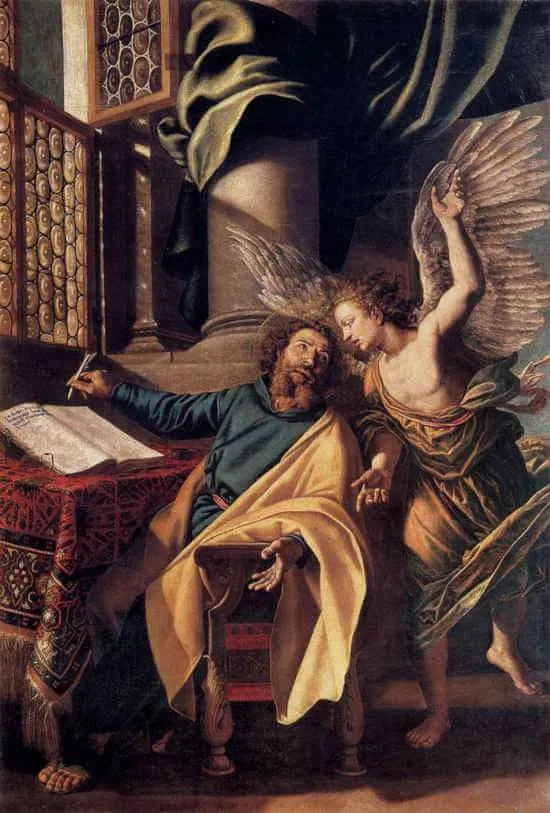
Saint Mark the Evangelist

c. 12–c. 68; Patron Saint of attorneys, captives, shoemakers, lions, notaries, glass workers, Egypt, and Venice; Invoked against impenitence, insect bites, scrofulous & struma diseases; Pre-Congregation canonization

Though little is known for certain about Saint Mark’s life, the Gospel attributed to him is unquestionably one of the most important scripts ever written. In a nearly breathless way, Mark recounts Jesus’ public ministry in concise and vivid detail. The shortest of the four Gospels is packed with information. Mark’s Gospel was most likely written primarily for Roman Gentiles, rather than for Jews, which is why he often describes various Jewish customs to the reader.

The Acts of the Apostles and various Epistles speak of “Mark” as well as “John Mark.” Most scholars believe that Mark and John Mark are the same person and the Gospel writer. Saint Mark is believed to have been born in Cyrenaica, modern-day Libya, which was under Roman rule at the time. “John” is his Jewish name, and “Mark” his Roman name. His father might have died when he was young, and his mother, named Mary, most likely moved with Mark to Jerusalem. His mother’s home might have been the location of the Last Supper and also the place where Peter went after the angel released him from prison. “When he realized this, he went to the house of Mary, the mother of John who is called Mark, where there were many people gathered in prayer” (Acts 12:12). As a teenager, Mark might have been nearby when Jesus was arrested. “Now a young man followed him wearing nothing but a linen cloth about his body. They seized him, but he left the cloth behind and ran off naked” (Mark 14:51–52). Many scholars believe that this young man is Mark. Saint Barnabas, the missionary companion of Saint Paul, was either Mark’s cousin or uncle (See Colossians 4:10).

Shortly after Peter escaped from prison and arrived at Mark’s home, Mark traveled north to Antioch in Syria with Barnabas and Paul. From Antioch, he accompanied Barnabas and Paul on a missionary journey to another Antioch in Pisidia, modern-day Turkey. Before completing their journey, Mark left Paul and Barnabas and returned to Jerusalem. It is unclear why Mark left, but Paul was not pleased and saw his departure as Mark abandoning them. Later, when Paul and Barnabas were going to set out on another missionary journey, Barnabas wanted to take Mark with them. Paul was so opposed to the idea that Barnabas and Paul went their separate ways (see Acts 15:37–40). Barnabas took Mark with him to Cyprus, and Paul took another companion with him through Syria and Cilicia.

Mark appears to have been close to the Apostle Peter, because Peter refers to him as “Mark, my son” (1 Peter 5:13) in a letter addressed to several Christian communities. Peter sent greetings to them all from Mark, indicating that Mark was also well known to those communities. That letter from Peter was most likely written from Rome where Peter would later be martyred. It might be that, while Mark was with Peter in Rome, he wrote his Gospel at Peter’s request, basing it on Peter’s preaching.

Though Saint Paul and Mark initially had a difficult relationship as a result of Mark’s early departure from Paul and Barnabas’ missionary journey, they became close toward the end of Paul’s life. Paul refers to him affectionately in a few letters he wrote from prison, calling him his co-worker and indicating that Mark had been very helpful to him (see Philemon 1:24; Colossians 4:10–11; 2 Timothy 4:11).

According to later traditions, Mark was ordained a bishop and sent to Alexandria, Egypt, to preach the Gospel (that he himself wrote) and establish the first Church in Africa. He is therefore considered the first bishop of Alexandria. In Alexandria, Mark encountered the wrath of the local Alexandrians and was martyred after almost twenty years of ministering to them. In the eighth century, Saint Bede describes Mark’s death in this way:

Afterwards, being arrested for the faith, he was bound, dragged over stones and endured great afflictions. Finally he was confined to prison, where, being comforted by the visit of an angel, and even by an apparition of our Lord himself, he was called to the heavenly kingdom in the eighth year of the reign of Nero.

As a child, Saint Mark could never have imagined what would become of his life. Not only did he come to know the Messiah as a youth, he later became a bishop and the first to bring the Gospel to the continent of Africa. Most importantly, he became one of God’s most powerful evangelists by faithfully writing down the life of Christ for others to read. Since that time, countless people have read his words, meditated on their meaning, been converted in the depths of their hearts, and given their lives over to Christ.

Ponder the significance of this one man. It appears he began his life fearful of his mission. He ran when Jesus was arrested, left Barnabas and Paul on their missionary journey, but he didn’t give up. He turned back to the mission and ultimately died a martyr, bestowing on us one of the greatest treasures ever given. If you feel regret at any failure, or even numerous failures in your life, take inspiration from Saint Mark. Failures can be remedied. Recommit yourself to God’s mission, and know that, if you do, God will use you in unimaginable ways.

Source: https://mycatholic.life/saints/saints-of-the-liturgical-year/april-25—saint-mark-the-evangelist/

Saint Mark the Evangelist Read More »

 John 10:4–5

The Voice of a Stranger

“When he has driven out all his own, he walks ahead of them, and the sheep follow him, because they recognize his voice. But they will not follow a stranger; they will run away from him, because they do not recognize the voice of strangers.”

Reflection:

Young children are often frightened by strangers. Infants, for example, form a strong bond with their mothers who feed them, hold them close, talk to them, and lavish love upon them. It often happens that when other family members, such as grandparents or even the father, attempt to hold the child, tears emerge until the child is placed once again in the familiar and safe arms of his or her mother.

An infant’s reaction to strangers can teach us much about today’s Gospel on Jesus, the Good Shepherd. Like an infant, sheep become familiar with the voice and presence of their shepherd. The shepherd lives with the sheep night and day. He calls to them, speaks to them, keeps them safe, and leads them to green pastures and water. If a stranger were to call to them, they would not listen, similar to how an infant reacts to a stranger.

Jesus’ teaching is in response to the criticism He received from the Pharisees after He healed a man born blind. After healing the man, Jesus said, “I came into this world for judgment, so that those who do not see might see, and those who do see might become blind” (John 9:39). When the Pharisees heard Jesus say that, they inquired whether He was suggesting that they were blind, to which Jesus replied, “If you were blind, you would have no sin; but now you are saying, ‘We see,’ so your sin remains” (John 9:41).

An infant’s unfamiliarity with a stranger is instinctive and innocent, yet it teaches us about the deeper spiritual reality Jesus describes. Just as sheep recognize the voice of their shepherd and follow him because they trust in his care, so too does a soul attuned to God respond to His voice. In contrast, the Pharisees, who prided themselves on their religious knowledge, failed to recognize Jesus as the true Shepherd. This failure was not innocent ignorance; it was willful blindness rooted in their rejection of His divine mission. The healed blind man perceived Jesus’ voice with the simplicity of faith, while the Pharisees, claiming to ‘see’ with their own wisdom, remained in sin because they refused to hear and follow the voice of the Good Shepherd.

The Pharisees saw Jesus as a stranger to their religious beliefs and practices. They labeled Him an imposter. Unlike the innocent reaction of an infant or the natural response of sheep, the Pharisees’ unfamiliarity with Jesus was a sin stemming from pride. It was a blindness of their own making that closed their hearts to the comforting and supernaturally familiar voice of God. To recognize Jesus’ voice is to respond to the call of grace, trust in His teachings, and follow into the fullness of life He offers. Only by humbly admitting our need for His guidance can we, like the sheep, allow Him to lead us to green pastures and salvation.

Reflect today on the fact that God calls out to you day and night. Do you recognize His voice? Or do you, like the Pharisees, turn away from Him? Following the Good Shepherd begins with an intimate familiarity with His divine presence in our lives. We must become as familiar with Him as an infant is with its mother or as sheep are with their faithful shepherd. Failure to recognize the Good Shepherd’s voice leaves us lost and unable to care for ourselves. Jesus desires to lead us, care for us, and bring us to the abundant pastures of new life. Become familiar with Him and listen to His voice alone, and like the blind man, you will begin to see in ways you never have before, through the eyes of faith.

Source: https://catholic-daily-reflections.com/2026/04/25/the-voice-of-a-stranger/

 John 10:4–5 Read More »

Saint Fidelis of Sigmaringen, Priest and Martyr

c. 1577–1622; Patron Saint of lawyers and the Congregation for the Evangelization of Peoples; Canonized by Pope Benedict XIV in 1746

Isaac Newton, the English physicist and mathematician, famously stated that “for every action, there is an equal and opposite reaction.” In the year 1517, an Augustinian priest named Martin Luther issued his ninety-five theses in Wittenberg, Germany. It was this action that began what is known as the Protestant Reformation. That action brought about an equal and opposite reaction, commonly called the Catholic Counter-Reformation. Today’s saint was born into the period when this counterreaction was gaining momentum.

Mark Roy was born in the small town of Sigmaringen, modern-day Germany. His father was a wealthy businessman who later became the town’s mayor, and his mother was a Protestant who converted to Catholicism when she married Mark’s father. Mark had three older siblings and one younger. His loving parents saw to it that as a youth he was well educated in the one, holy, catholic, and apostolic faith, as well as in etiquette, self-discipline, and reverence for God.

After completing his elementary studies, Mark was sent to study philosophy and law at the University of Freiburg, modern-day Germany. He was an excellent student and later a teacher who won the admiration of many. In 1603, at the age of twenty-five, he was invited to accompany a few young men from noble families on what would become a six-year journey through Europe, visiting many of the principal cities of France, Italy, and parts of Spain. Throughout this journey, Mark acted as a mentor-teacher to the young men, forming them in virtue and the Catholic faith. He remained very devout, visited churches regularly, attended Mass daily when possible, and was always attentive to the poor and sick.

After completing his journey, Mark returned to the University of Freiburg where he completed a doctorate in law and then began working as a lawyer in France. As a lawyer, Mark especially advocated for the poor. He chose to conduct his work with complete honesty rather than for selfish gain. After only a short time in the legal profession, Mark became disenchanted by the corruption common in his colleagues, many of whom were intent on making dishonest profit from lawsuits rather than act with honesty and integrity.

Disillusioned by the legal system, Mark decided to follow in the footsteps of his brother who had become a Capuchin friar. In 1612, at the age of thirty-four, Mark was ordained a priest, entered the Capuchins, and took the name “Fidelis,” which means “faithful.” Finally realizing his true vocation as a Capuchin priest, he initially struggled with temptations of despair over what seemed to be thirty-four “lost years” of his life. The move to religious life was initially challenging because the freedoms he enjoyed as a layman were no more, but he persevered through this period with prayer and resolute determination. During this first year, he wrote a book for his own personal use that would be published more than a century later called Exercitia spiritualia seraphicae devotionis, a compilation of prayers and meditations. After four years of continued theological studies and formation, he was sent to the friary in modern-day Switzerland where he quickly became known for his preaching and strong defense of the Catholic faith against the ongoing battles with Protestantism, especially Zwinglianism and Calvinism.

The year 1618 marked the beginning of what came to be one of the longest and deadliest wars in all of Europe, the Thirty Years’ War. The war primarily resulted from the ongoing tensions of the Protestant Reformation and the Catholic Counter-Reformation. During this period, Father Fidelis continued his life of deep prayer and penance and preached with zeal, winning many back to the Catholic faith. He also shared the Gospel by writing pamphlets on the faith that were secretly delivered to those who had abandoned the Church for Protestantism.

In 1621, Fidelis was sent to modern-day Austria where he continued to preach with great success. He won many people back to the Catholic faith, including nobility and rulers. When an epidemic broke out, he helped care for the sick, especially soldiers, and his compassion, genuine care, and sanctity did not go unnoticed. Among those who noticed him were many of the Calvinists who were outraged at his success at winning others back to the Catholic Church.

In 1622, the newly established Sacred Congregation for the Propagation of the Faith commissioned Father Fidelis as a missionary to what is today Eastern Switzerland. He was accompanied on this mission by eight of his fellow Capuchins. There, by the authority of his mandate from Rome, he published what was called “The Ten Articles of Religion.” This mandate enabled the civil rulers to halt Protestant worship and enforce Catholic worship. Many of those who had abandoned the Catholic faith were furious at this, but Father Fidelis pressed on with vigor, seeking only the salvation of souls. The hostility he faced, however, led him to joyfully predict his pending martyrdom.

On April 24, Father Fidelis was preaching in a Swiss church when an angry mob arrived. A shot was fired but missed him, and he quickly departed from the Church. As he journeyed to the next village where he was staying, the mob, which included a Zwinglian minister, caught up with him and demanded that he renounce the Catholic faith and embrace the teachings of Zwingli. To them he responded, “I am sent to you to confute, not to embrace your heresy. The Catholic religion is the faith of all ages, I fear not death.” With that, Father Fidelis was struck to the ground with a sword to his head. He then knelt and prayed, “Pardon my enemies, O Lord: blinded by passion they know not what they do. Lord Jesus, have mercy on me. Mary, Mother of God, assist me.” After that, he received many more blows, was stabbed repeatedly, and one of his legs was dismembered from his body in retaliation against him for the many missionary journeys he had made throughout their land. Father Fidelis was only forty-five, ten of those years being a religious.

The martyrdom of Father Fidelis had a profound effect upon many. The Zwinglian minister who participated in his martyrdom later repented and returned to the Catholic faith. The local authorities soon crushed the rebellion, and peace was restored. Six months later, Father Fidelis’ body was discovered to be incorrupt, so it was transferred to the Cathedral of Coire and buried under the main altar. Over the next century, as many as 305 miracles were attributed to his intercession by those who prayed at his tomb.

As you seek his intercession today, pray that you, too, will desire only the glory of God and the salvation of souls. The world is filled with false teachings, confusion about the faith, and ignorance of God. With Saint Fidelis, renew your own resolute determination to become an instrument of the one, holy, catholic, and apostolic faith of Christ.

Source: https://mycatholic.life/saints/saints-of-the-liturgical-year/april-24-saint-fidelis-of-sigmaringen-priest-and-martyr/

Saint Fidelis of Sigmaringen, Priest and Martyr Read More »

John 6:53–55

Certitude of Faith

“Amen, amen, I say to you, unless you eat the Flesh of the Son of Man and drink his Blood, you do not have life within you. Whoever eats my Flesh and drinks my Blood has eternal life, and I will raise him on the last day. For my Flesh is true food, and my Blood is true drink.”

Reflection:

Human reason and free will are the most precious natural gifts God gave us. They are what separate us from every other animal. Human reason enables us to think critically, understand concepts, and arrive at conclusions. Central to our human reason is our free will, which enables us to act upon the conclusions we reach or to reject them, choosing instead to follow our disordered appetites and misguided desires. Though human reason was wounded by Original Sin, it was not completely destroyed. We must diligently strive to act rationally and in accord with our common sense, adhering to the natural law that God has written on our souls. However, even though a rational approach to natural law will bring us a long way toward right living, it is not sufficient to lead us into the deeper truths of eternal salvation, promised to us in Jesus’ discourse on the Bread of Life, on which we have been reflecting.

By natural reason alone, the Eucharist makes no sense. How could that which appears to be a piece of bread be the “Flesh of the Son of Man” and a cup that appears to be wine be His Blood? Yet when we incorporate divine revelation into our reasoning, the Eucharist as the Flesh and Blood of Jesus, the Son of God, makes perfect sense: “…my Flesh is true food, and my Blood is true drink.” The Eucharist makes sense, but only when we listen with faith to the revelation Jesus gave to us. Today’s Gospel provides the clearest teaching we have ever received on this Precious Gift.

Today’s Gospel begins by relating that “The Jews quarreled among themselves, saying, ‘How can this man give us his Flesh to eat?’” (John 6:52). They were quarreling because they were not opening their human reason to the light of Jesus’ revealed truth. In this exchange, the Eternal and Incarnate Son of God was speaking a divine truth to them. Jesus spoke clearly and plainly, but their minds remained closed. They heard His words, but they closed themselves off to the Father’s Voice, which testified on Jesus’ behalf that all He said was true. It seems that some who listened began to understand and believe, prompting the quarrel among them.

When you read our Lord’s words, what do you hear? Do you hear the Father’s Voice in the depths of your conscience, confirming the truthfulness of what you read? Do you hear the Living Word of God echoing within your mind and soul? Do you allow that Word to inform your human reason so that you can conclude that the Eucharist is real, that it is the Flesh and Blood of the Son of God, offered to you so that you can share in eternal life? No amount of human study or intelligence alone will ever convince us of divine truths. God alone can convince us, but only if we listen to His Voice.

Truths of faith, such as our belief in the Eucharist, must be more certain than any other natural truth we believe. No rational person would deny the reality of the physical world we see with our eyes or touch with our hands. The noises we hear, the food we taste, and the aroma we smell are all judged as real because we believe what our five senses perceive. When our consciences perceive divine truths, those truths are more certain than all sensory knowledge. Why? Because God is the one directly communicating to us.

Reflect today on Jesus’ crystal-clear teaching on the Eucharist. We must hear and understand what He said. Our faith in the Eucharist must become certain. Allow the Father’s Voice to resonate within your mind so that you are more certain that the Eucharist is the Flesh and Blood of the Son of God than anything else you believe. Strengthen your faith, knowing that His Flesh and Blood bring you to eternal life.

Source: https://catholic-daily-reflections.com/2026/04/23/certitude-of-faith/

John 6:53–55 Read More »

Saint George, Martyr

Died c. 303; Patron Saint of agricultural workers, soldiers, archers, equestrians, chivalry, peacekeeping missions, sheep, shepherds, scouting, England and many other countries, cities, and dioceses; Invoked against skin diseases and syphilis; Pre-Congregation canonization

Very little is known about Saint George, other than that he was martyred by the Roman Emperor Diocletian around the year 303 for refusing to renounce his Christian faith and offer sacrifice to the Roman gods. Eusebius, a fourth century bishop, stated that Constantine the Great, Roman Emperor from 306–337, dedicated a church to “a man of the highest distinction.” This unnamed man is believed to be Saint George. By the end of the fourth century, Saint George was revered throughout Palestine and the Eastern Byzantine Empire. By the fifth century, devotion to him spread to the Western Roman Empire. Over the centuries, he became the patron saint of more than a dozen countries, as well as cities and dioceses within many more. In the thirteenth century, Saint George appeared in the famous Golden Legend, a popular medieval devotional on the lives of the saints. In the fourteenth century, Saint George became known as one of the Fourteen Holy Helpers whose intercession was readily sought, especially during the Black Death, a European plague that took the lives of countless millions. Though the details of his life have been lost to history, his influence has been great and his legends have been prayerfully pondered far and wide. Unquestionably, he is one of the most venerated saints in history.

According to the eleventh-century Greek monk Symeon of Metaphrastes, Saint George was born to noble Christian parents in Cappadocia, modern-day Turkey. When his father died, George and his mother moved to Lydda, Palestine, located near modern-day Tel Aviv, Israel, where his mother had been born and where she inherited a large estate. George eventually joined the army of the Roman Emperor Diocletian and advanced to the rank of colonel.

Around the year 299, Diocletian participated in a pagan Roman religious ceremony in which he sought to predict the future. When it failed, Diocletian believed that Christians were to blame, so he began a process of purifying the empire by forcing his subjects to honor the Roman gods. In 303, Diocletian issued an edict with the aim of eradicating Christians across the empire. Churches were to be destroyed, Scripture burned, public worship forbidden, and Christians, especially those in the military, were forced to offer sacrifice to the Roman gods. Those who refused faced imprisonment or death.

When George heard about this edict, he seized a copy and tore it up and then personally confronted the emperor and chastised him for his cruelty. George went on to profess to the emperor that he was a Christian. He was immediately arrested and jailed, and the emperor attempted to convert him back to the pagan Roman gods. George refused. As a result, he endured one torture after another. One legend says he first had heavy blocks of stone placed upon his chest. Then he was tied to a wheel that, when spun, sliced his flesh with knives. He miraculously endured it all. The emperor then tried to entice George with promises of favors if he returned to the Roman gods. To this, the legend goes on, George responded to his jailer, “I despise your promises and do not fear your threats. The emperor’s power is of short duration, and his reign will soon end. It is better for you, to acknowledge the true God and to seek His kingdom.” The next day, George was led through the city and then beheaded. His witness was so powerful that many Roman pagans are said to have converted. One account even states that Empress Alexandra of Rome, possibly Diocletian’s wife, also converted and died a martyr as a result.

Saint George is the patron saint of soldiers in part because he was in the military. However, devotion to him exploded during the first Crusade when, in 1098, during the Battle of Antioch, a priest had a vision of Saint George telling him where to find the spear that pierced Christ’s Heart on the Cross. Once the Crusaders discovered the spear, they were encouraged and were led into battle with another priest leading the way with the spear. During the battle, the Crusaders were said to have had visions of three saint martyrs riding with them into battle: Saint George, Saint Mercurius, and Saint Demetrius.

Saint George’s popularity in England began when King Richard the Lionheart visited a church dedicated to Saint George on his way to help with the first Crusade. It is believed that he and his men had a vision of the saint, which encouraged them in their battle. About 250 years later, King Edward III named Saint George as the patron saint of England, referring to him as “the most invincible athlete of Christ, whose name and protection the English nation invoke as that of their patron, especially in war.”

One legend about Saint George has left him with the nickname “Saint George the Dragonslayer.” The Golden Legend relates that a fierce dragon lived in the province of Libya, in the town of Silene. The villagers used to feed it two sheep every day, but when the sheep failed to suffice, they selected one villager each day, along with a sheep. One day, the lot fell on the king’s own daughter, and, as she went out to give herself to the dragon, Saint George rode in on horseback, slew the dragon, and converted the entire town to the Catholic faith, with about 15,000 men receiving baptism.

Though the story is clearly fictional, it has provided inspiration for generations, especially to soldiers in war. Some have interpreted the dragon in the story as the devil and have seen Saint George’s slaying of the dragon as an indication of the power of his intercession. The legend, then, can be seen as a parable, meant to encourage Saint George’s intercession when confronting the worst of evils.

As we honor Saint George, as so many others have done throughout history, don’t hesitate to call upon his intercession. If you struggle with any “dragon” in your life—any evil, or suffering that seems unbearable—then especially turn to this greatly venerated saint, and trust that he will intercede for you, just as he has throughout history.

Source: https://mycatholic.life/saints/saints-of-the-liturgical-year/april-23-saint-george-martyr/

Saint George, Martyr Read More »

John 6:44

Drawn by the Father

Jesus said to the crowds: “No one can come to me unless the Father who sent me draw him, and I will raise him on the last day.”

Reflection:

In today’s Gospel, Jesus continues His conversation with the crowd who sought Him out after performing the miracle of the multiplication of the loaves and fishes. As the conversation continues, Jesus deepens His clarity about His relationship with the Father, His divine identity, the Father’s action in our lives, and the gift of Himself as the Bread of Life.

The passage above reveals an essential spiritual principle we must understand as we work to strengthen our relationship with God: Faith is a response to the Father’s call, not something we initiate on our own. This principle is crucial because faith is not primarily a resolution we make to grow closer to God; rather, it begins as a resolution from the Father in Heaven Who draws us to Himself by drawing us to His Son, Jesus, especially in the Eucharist.

Practically speaking, this principle must guide our prayer lives. Though it’s good to make a conscious effort to pray every day, to meditate on the Scriptures, recite devotions, and attend Mass as often as possible, we must always see those efforts as a response to God’s invitation rather than our own good idea. It’s a subtle, though important, distinction.

To illustrate, consider the Gospel story of the contrasting prayer of the Pharisee and the tax collector in Luke 18:9–14. In that parable, the Pharisee offered many prayers each day and fasted regularly, but his prayers went unheard and his fasting was unfruitful. Why? Because his actions were not initiated by God but were works of his own doing. In contrast, the tax collector, aware of his sin and need for God’s mercy, humbled himself and prayed, “O God, be merciful to me a sinner.” That prayer was beautiful and fruitful because it was a response to God Who revealed his sin to him and called him to repent, which he did.

Today’s Gospel lesson comes to us within the context of Jesus’ teaching on the Eucharist. Therefore, we must especially apply His opening words to the way we participate in the Mass. Our choice to attend Mass is not something we do as a favor to God. Instead, our participation in the Mass must be a response to the Father Who offers us the Body and Blood, Soul and Divinity of Jesus, His Son, as the spiritual food we need in order to attain everlasting life. Participation in the Mass is God’s gift to us, and our response must be authentic prayer.

Our participation in the Mass becomes authentic when we recognize that the Father is inviting us to receive the Eucharist as “the living bread that came down from heaven” and Jesus’ “Flesh for the life of the world.” The Mass is about receiving God into our lives, not because we choose to put Him there, but because we say “Yes” to His invitation to be drawn to Him. The word “Eucharist” means “thanksgiving,” and this must be our prayerful response to such a great gift. We must foster an attitude of sincere gratitude for the Father’s invitation to share in the Sacrifice of His Son so as to be given the unmerited gift of eternal life.

Reflect today on your participation in the Mass. If you ever feel that your attendance is a favor to God, pause and listen to the Father’s voice calling you. Try to hear Him invite you to this most precious Feast. Become aware of the Father drawing you to the Mass, to His Son, the source of eternal life. Respond with humble gratitude, knowing that there is no greater gift you can receive.

Source: https://catholic-daily-reflections.com/2026/04/22/drawn-by-the-father/

John 6:44 Read More »

Pope Saint Soter

Profile

Nothing is known of Soter’s life before he was chosen 12th pope c.166, and not much is known of his pontificate. He forbade women to burn incense in services. He ratified that matrimony was a valid sacrament only if blessed by a priest. He inaugurated Easter as an annual festival in Rome.

Born

  • at Fondi, Italy

Papal Ascension

  • c.166

Died

  • tradition says he was martyred c.175, though no evidence has survived
  • buried in the Callistus cemetery in Rome, Italy

Canonized

  • Pre-Congregation

Source: https://catholicsaints.info/pope-saint-soter/

Pope Saint Soter Read More »

John 6:35–36

The Satiation You Desire

Jesus said to the crowds, “I am the bread of life; whoever comes to me will never hunger, and whoever believes in me will never thirst. But I told you that although you have seen me, you do not believe.”

Reflection:

Some who listened to Jesus’ Bread of Life Discourse must have been shocked. Those who listened with faith began to believe in Him, even though their understanding was not complete. Those who listened with skepticism were not only shocked but angered, as evidenced by their reaction. Today’s Gospel marks Jesus’ clearest revelation of His divine identity and mission, inviting us to accept Him into our lives.

After proclaiming Himself to be the Bread of Life, Jesus reveals His unity with the Father in Heaven Who sent Him on His mission. He proclaims that He “will not reject anyone who comes to” Him because He “came down from heaven” to do the will of the Father Who sent Him. Jesus concludes with a declaration about the Father’s will and Jesus’ mission: “Everyone who sees the Son and believes in him may have eternal life, and I shall raise him on the last day” (cf. John 6:37–40). Again, without the ears of faith, what Jesus revealed must have been shocking.

At that time, the people of Israel were used to listening to rabbis who interpreted the Law of Moses, the psalms, and the prophets for them. These educated teachers often spoke clearly and with authority, but never like Jesus. His clarity and authority were pronounced, and His message He taught was new. Not even the prophets of old spoke like Him. When they prophesied, they usually began by saying, “Thus says the Lord…” Jesus’ teaching took a drastic shift by essentially proclaiming, “I AM the Lord…”

Though some might have been skeptical and critical, it’s important for us to consider those who were humble of heart who listened to Jesus’ words with openness and faith. As they heard this new and amazing teaching, their hearts would have responded, “Yes!”, while their minds would have said, “I don’t understand.”

When we experience the gift of faith, we will find we have that same reaction. God’s revealed and mysterious truths often stir our spirits first, calling us to believe, and only once we believe, is clarity given. In fact, faith often precedes understanding, inviting us to trust first and receive deeper insights in time. For that reason, we must understand that belief does not require perfect understanding. It’s appropriate to believe in our spirit, even though our minds have not yet grasped the truth we believe. This is especially the case with the Eucharist.

Saint John Vianney once said, “There is nothing so great as the Eucharist. If God had something more precious, He would have given it to us.” Do you believe that? Of all the material possessions we might obtain in this life, nothing is more valuable, important, or precious than the Eucharist. Why? Because the Eucharist is Jesus Himself. He is the Bread of Life. His Body and Blood, Soul and Divinity enter our souls when we receive this precious gift.

After Jesus said to the crowds, “whoever comes to me will never hunger, and whoever believes in me will never thirst,” He said that some would not believe in Him. But those who do believe, despite an incomplete understanding of the Eucharist, are promised they will “never hunger” and “never thirst.” Clearly, the hunger and thirst Jesus speaks of are far greater than physical needs. It’s the longing that comes from the depths of our being, desiring fulfillment, contentment, and peace. It’s a desire to be made whole, free from guilt and shame, satisfied beyond any natural satisfaction. This is the Eucharist. Jesus is truly present in the Eucharist, desiring to satisfy our souls’ every longing.

Reflect today on Jesus’ invitation to satiate your soul’s deepest hunger and thirst through the Eucharist. He calls you to a personal encounter, to find in Him the true satisfaction that the world cannot give. We attempt to acquire that satiation through many passing means, such as pleasures, comforts, indulgences, wealth, and prestige. None of it works. As you look into your soul and identify the many longings you have, turn to Him alone Who satisfies. Renew your faith in the Eucharist and receive the satiation He desires to bestow.

Source: https://catholic-daily-reflections.com/2026/04/21/the-satiation-you-desire/

John 6:35–36 Read More »