Author name: Sani

John 14:4–6

The Way to the Father

“Where I am going you know the way.” Thomas said to him, “Master, we do not know where you are going; how can we know the way?” Jesus said to him, “I am the way and the truth and the life. No one comes to the Father except through me.”

Reflection:

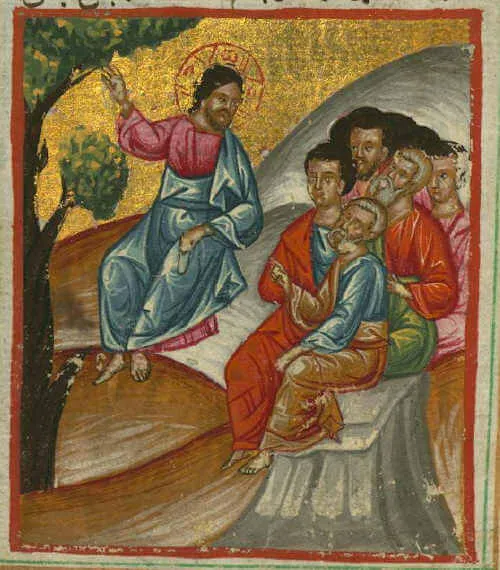
In addition to His parables and moral teachings, Jesus revealed to His disciples deep mysteries in a direct way that they did not immediately comprehend, especially when He spoke to the Twelve in intimate settings, such as the Last Supper, the context for today’s Gospel. In this discourse, Jesus explains, in veiled form, that He will soon ascend into Heaven where He will prepare a place for His followers. He explains that because they know Him, they know the way to where He is going—the way to the Father—because He Himself is that Way. As Jesus spoke these mysterious truths, we can imagine the Twelve listening attentively, yet with confusion.

Everything Jesus taught was true. His words, recorded in the Gospels, reveal to us the deepest divine mysteries. Within the Scriptures, we find all we need to know to attain perfect holiness and the eternal life of Heaven. Yet we cannot quickly digest Jesus’ words as we might an intriguing novel or history book. There are many layers of depth to what He says, and we can only understand those layers through prayer.

As the conversation continued, “Philip said to him, ‘Master, show us the Father, and that will be enough for us.’ Jesus said to him, ‘Have I been with you for so long a time and you still do not know me, Philip? Whoever has seen me has seen the Father. How can you say, ‘Show us the Father’?’” (John 14:8–9).

Jesus’ response likely surprised Philip and the other disciples because they did not understand what He was saying. Their intention was good—they wanted to understand—but Jesus’ words were more than they could comprehend at that moment. Despite this, Jesus gently rebuked Philip as a way of drawing him deeper into the mystery He was revealing.

God often treats us the same way. There are many things that we do not understand. Why do innocent people suffer? Why doesn’t God heal my loved one in answer to my prayers? Why do my children no longer practice the faith? What am I supposed to do with my life?

Just as Philip struggled to understand Jesus’ words, we, too, face moments of confusion when God’s ways seem beyond our grasp. God’s answer to life’s most challenging questions is rarely straightforward or immediate. Why? Because such an approach can never fully satisfy the depth of our hearts. Instead, God reveals a kernel of truth to us and then invites us to ponder it, revealing the divine mystery we seek to understand little by little, to the degree we are open.

The answers we seek come only as we conform our wills to God’s, patiently opening ourselves to His Wisdom. Divine mysteries can only be understood through prayer and deep attentiveness to the truths in God’s mind. Jesus is the Way, the Truth, and the Life. Only by uniting ourselves to Him in prayer will we discover the path we must walk, the truth we need to hear, and the life we are called to live.

Reflect today on anything you struggle to understand. See yourself as one of the Twelve, listening to Jesus speak, but failing to comprehend. Do not be discouraged; instead, allow the fullness of Jesus’ divine Truth to sink in gradually. Spend time in prayer, read the Gospels, be open, and listen from the depths of your heart. Seek out His gentle voice and know that He is your Way, Truth, and Life. Let Him lead you and reveal to you the mysteries of His divine Wisdom so that you, too, know the way to the Father in Heaven.

Source: https://catholic-daily-reflections.com/2026/05/02/the-way-to-the-father/

John 14:4–6 Read More »

Saint Joseph the Worker

Patron Saint of workers

Every age has its challenges. Therefore, every age needs a role model to look up to and to help the faithful navigate the particular challenges of their day and age. During the nineteenth and twentieth centuries, Saint Joseph was especially held up to the faithful who engaged in the daily toil of work to support themselves and their families with dignity and love.

Work was not part of God’s original plan for humanity. Recall that when Adam and Eve were cast out of the Garden of Eden, God said to Adam, “Cursed is the ground because of you! In toil you shall eat its yield…” Thus, working “by the sweat of your brow” is a consequence of Original Sin. However, we must not see this consequence as something evil, but as a means by which we now fulfill our human mission. Human labor has dignity because it is an act of obedience to the will of God and is a participation in the work of God, the work of creation.

The invitation to turn to Saint Joseph as the patron saint of workers emerged over the past two centuries as societies went through drastic social and economic changes. Through the eighteenth century, most societies remained the same as they had always been. The majority of people tilled the land and raised animals to provide food for their families. Some engaged in various trades: a carpenter, blacksmith, tailor, baker, or shoemaker. With the rise of the Industrial Revolution in the nineteenth century, societies began to change. Machines were developed to perform tasks that had been performed by hand. Workers moved into cities to labor in factories of mass production, and many of the individual tradesmen were left behind. And though production increased, new abuses also arose. Child labor, long hours, unsafe work environments, and low wages were among the new problems. These problems especially affected family life. In response to these new societal problems, the Church held up Saint Joseph as a model for all to emulate.

In 1889, Pope Leo XIII pointed the faithful to Saint Joseph. Unchecked capitalism began to tear families apart as profit started to become the goal of work, rather than as a means of providing for one’s family. An even greater concern was the introduction of the philosophy of socialism, which was coupled with atheism. Socialism presented itself as a friend and ally to the worker, but it did so through objectively distorted means. It sought to eliminate religion, the family, and private ownership of property. Instead, each individual was to become a subject of the state, while the state took the place of God. Work was for the fatherland or motherland, not primarily to care for one’s family. In Saint Joseph, workers had someone to emulate. Saint Joseph did not work to get rich. He was not a servant of the state. He was not an oppressed laborer who needed liberating. He was a family man who found dignity in work as he provided for his family in a humble way.

On May 1, 1955, in an address to the Catholic Association of Italian Workers, Pope Pius XII took devotion to Saint Joseph one step further. He confronted the growing concerns posed by communism and its socialist philosophy on human labor and family life by instituting the Feast of Saint Joseph the Worker. “The humble craftsman of Nazareth not only personifies to God and the Holy Church the dignity of the laborer, but he is also always the provident guardian of you and your families.” May 1 (May Day) was chosen for the feast because socialist countries celebrated “International Workers’ Day” on that date. A Catholic feast, honoring the laborer in the person of Saint Joseph, was a fitting way of combating socialist ideology and restoring the dignity of labor to its proper place.

Though socialism and communism have faded in many parts of the world, they certainly have not gone away. Their philosophies continue to permeate many political systems. Unchecked capitalism also remains a threat to healthy human development and family life when the common good is overshadowed by selfish gain. The answer is simple: Go to Saint Joseph! We do not have to become intellectuals who comprehend all of the economic and political systems of our times. Instead, we must all turn to holy role models whom we can imitate. For the laborer and the family, Saint Joseph is a just man, a faithful spouse and father, a hard worker whose primary concern is for his family, a guardian and protector, an obedient servant of God, one who is humble and hidden from the spotlight, but faithful in all he does.

As we honor Saint Joseph the Worker, ponder your own call to engage in the dignity of work. As you do, put your work into proper perspective. What is the goal of your work? Do you work in an excessive way, seeking excessive gain? Do you grumble about your work and feel as though it is beneath you, holding you back from personal fulfillment? Strive for the virtuous way of Saint Joseph. Work hard to fulfill your vocation in life, and avoid excesses and extremes. We are made for love, for family, for faith, for charity, and for the glory of God and the salvation of souls. If your goals in life are anything other than these, then go to Saint Joseph the Worker and choose him as your model.

Source: https://mycatholic.life/saints/saints-of-the-liturgical-year/may-1—saint-joseph-the-worker/

Saint Joseph the Worker Read More »

John 14:1–2

Hope During the Uncertainties of Life

Jesus said to his disciples: “Do not let your hearts be troubled. You have faith in God; have faith also in me. In my Father’s house there are many dwelling places. If there were not, would I have told you that I am going to prepare a place for you?”

Reflection:

We all need hope, especially in the face of life’s uncertainties. The inspired virtue of hope is much more than wishful thinking. It’s a supernatural gift by which we are strengthened to persevere through challenges, trusting in God’s promises and His fidelity. Hope sustains us, even in the darkest and most painful moments.

In today’s Gospel, Jesus offers His disciples—and us—the antidote to fear and uncertainty: hope rooted in faith. His words at the Last Supper are intended to strengthen the Apostles for the sorrowful events of His Passion. Though they did not yet fully understand what was about to unfold, Jesus gave them this loving command: “Do not let your hearts be troubled. You have faith in God; have faith also in me.”

In the light of the Resurrection, imagine the Apostles reflecting on these words. They would have recalled the confusion and despair they experienced during Jesus’ arrest, crucifixion, and burial. But after encountering the risen Christ, their sorrow turned to joy, and their doubt to unshakable faith. In hindsight, they would have realized they didn’t need to let their hearts be troubled—they should have trusted in His promise.

The Apostles’ journey from fear and guilt to hope and strength is a reminder for us all. We, too, can look back on moments when we failed to trust in God during painful times. Despair, one of the most painful human experiences, extinguishes hope and leaves us feeling abandoned. But even in our failures, God is present, ready to transform our weakness into supernatural hope. By humbly confessing our lack of trust, we open our hearts to His healing grace and allow Him to prepare us for future trials.

Just as the Apostles grew in hope through their encounter with the risen Christ, so too did Mary, the Mother of Hope, model unwavering faith even in the midst of profound sorrow. Standing at the foot of the Cross, her heart was pierced with sorrow, but she remained firm in faith and trust. Her hope was based on her certainty that God’s plan would be fulfilled through her Son’s Passion. In times of trial, turn to Mary, who will guide you in placing your trust in her Son and in the eternal promises of His love.

Reflect today on Jesus’ loving command: “Do not let your hearts be troubled. You have faith in God; have faith also in me.” He has prepared a place for you in His Father’s house—a place where there will be no more sin and suffering. By keeping your eyes fixed on this eternal promise, you can overcome the fears and struggles of this life, trusting that God’s providence will guide you. Trust that He is already preparing a place for you in His Father’s house, and let this hope sustain you, transforming every sorrow into joy and every trial into a step closer to the eternal happiness that awaits you.

Source: https://catholic-daily-reflections.com/2026/04/30/hope-during-the-uncertainties-of-life/

John 14:1–2 Read More »

Saint Pius V, Pope

1504–1572; Patron Saint of the Dicastery for the Doctrine of the Faith; Invoked for the reform and defense of the Church; Canonized by Pope Clement XI on May 22, 1712

In 1517, when Martin Luther published his Ninety-five Theses in Germany, igniting the Protestant Reformation, European kingdoms faced many challenges, and the Church was greatly in need of reform. Relations between the Church and State were constantly strained. Some civil rulers fought to keep their territory Catholic, while others fought to eliminate the Catholic faith. Many of these kingdoms warred against each other, and they were all in constant threat of Muslim invaders. Within the Church, reform was needed to address financial abuses, nepotism, poorly formed clergy, poorly structured governance, theological debates, and a lack of uniform liturgical worship. It was into this historical situation that today’s saint was born.

Antonio Ghislieri was born in the town of Bosco Marengo in northwest Italy. As a child, Antonio was poor and worked to help support his family. At the age of fourteen, he took the name Michele when he joined the Dominican order and received his education from the friars in Vigevano, Bologna, and Genoa. Throughout his formation, he was an excellent and hardworking student who was especially drawn to the study of Sacred Scripture and the teachings of Saint Thomas Aquinas. At the age of twenty-four, he was ordained a priest, and over the next sixteen years he taught theology and philosophy, formed Dominican novices, and served as prior in various friaries. As a young priest, Father Michele continued to deepen his life of prayer, developed a strong devotion to the Blessed Virgin Mary and the Rosary, made all-night vigils, embraced the Dominican charism, fasted, did penance, embraced poverty, and practiced interior silence by which he strove to remain continually recollected, refusing to engage in idle talk.

In 1542, as a way of addressing the ongoing threat posed by the errors introduced by the Protestant Reformation that was slowly finding its way into the Italian states, Pope Paul III reorganized the Italian Inquisition. Shortly afterwards, Father Michele was appointed to serve on several inquisitorial missions, which he did with unwavering determination. In 1556 Pope Paul IV made him Bishop of Sutri, a diocese just north of Rome, and one year later was made a cardinal. As a bishop and then cardinal, he continued to work with zeal, vigorously defending the true faith, weeding out heresy, correcting abuses, tightening Church structures, and personally living out the life of faith and morals to which he was called. He became so well respected, and his courage, clarity, and zeal were so beneficial to the Church, that the Holy Father made him the Grand Inquisitor to all of Christendom. In 1559, he was transferred further north to the Diocese of Mondovì but was regularly called to Rome to consult with the pope. In Mondovì, he vigorously sought to rebuild that diocese after it had been ravaged by wars, fueled by the theological confusion caused by the Protestant Reformation.

Bishop Michele was not a pushover, not even when it came to the pope. One of the ongoing abuses within the Church at that time was nepotism, the practice of bestowing ecclesiastical favors on one’s relatives. When Pope Paul IV announced to his court that he wanted to make his fourteen-year-old nephew a cardinal, Bishop Michele firmly opposed him and stopped that abuse. Though this led the pope to diminish some of Bishop Michele’s inquisitorial authority, it also led many of the cardinals to admire him. As a result, in 1566, Bishop Michele was elected as the new pope and took the name Pius V.

Just three years prior to Pius V’s papal election, the eighteen-year-long Council of Trent completed its final session. That council was the beginning of the Catholic Counter-Reformation that directly addressed theological and liturgical issues and sought to eliminate various abuses within the Church. All that was left to do was to implement the council’s decrees. That was no easy task, but Pope Pius V was unquestionably the man for the job.

From the beginning of his pontificate, Pope Pius V continued to be the holy, prayerful, conscientious, and determined man of God he had been since his youth. Rather than acting like royalty, he acted like a servant. He continued to wear his white Dominican habit (of which he kept only one), which is why the pope wears white today. He took the money set aside for extravagant papal banquets and distributed it to the poor. He visited the sick, built hospitals, prayed twice daily before the Blessed Sacrament, and resisted the entrapments that come with power and wealth. The Papal States, in particular, soon became more like a monastery rather than a kingdom.

To address the theological confusions dividing the Church, he promulgated a new catechism especially for parish priests, instituted catechetical classes for youth, introduced the teachings of Saint Thomas Aquinas in the universities, and continued the good work of the Holy Office of the Inquisition with pastoral zeal. To address ecclesiastical issues, he railed against immoralities within the clergy, more closely attached them to one diocese, mandated the seminary system, reaffirmed the practice of celibacy, exhorted bishops to remain in and serve their diocese as true shepherds, and renewed the weakening discipline within religious houses. To address the spiritual needs of the Church, he especially spread devotion to the holy Rosary, which he himself prayed in its entirety daily, and promulgated a new Breviary and Roman Missal. On a political level, he did not hesitate to chastise, or even penalize, wayward rulers. He defended Europe from Muslim invaders by working with various rulers to form the Holy League, a cooperative effort of Catholic kingdoms within Spain and Italy, that included the Order of Malta.

Throughout history, the Church has always been in need of internal reform. Though Christ never leaves His Church, those who are entrusted with its care are sinners. But among those sinners, God always raises up saints to redirect the Church and Her institutions down the correct path. In the sixteenth century, one of the most notable saints who God used for this purpose was Pope Saint Pius V.

As we honor this saintly pope, ponder your own calling to support the ongoing needs of reform within the Church. Those needs will always be there. Though you are not called to do so from the vantagepoint of the papacy, you are called to do so within the context of your own vocation. Ponder ways that you can reform your own life, your family, your local parish, and the community. Commit yourself to prayerful submission to the will of God, and seek the gift of courage so that God will use you in ways that are beyond your natural abilities.

Source: https://mycatholic.life/saints/saints-of-the-liturgical-year/april-30-saint-pius-v-pope/

Saint Pius V, Pope Read More »

John 13:16–17

Love Perfected by Humility

When Jesus had washed the disciples’ feet, he said to them: “Amen, amen, I say to you, no slave is greater than his master nor any messenger greater than the one who sent him. If you understand this, blessed are you if you do it.”

Reflection:

Today’s Gospel comes from the Last Supper, just after Jesus washed His disciples’ feet. What an act of humility! By analogy, it would be as if a king knelt before his servants to polish their shoes, setting aside his glory to attend to their most basic needs. This act would teach them that true greatness lies not in power but in love and humble service. Such an act would make quite an impression on those servants, helping them understand their duty within the king’s royal court and their responsibility toward the people of the kingdom.

The Apostles might not have understood the full meaning of Jesus’ act of humility that Holy Thursday evening. As time went on, however, and the Apostles embraced their roles as spiritual leaders of the early Church, Jesus’ actions would have become the foundation of their understanding of servant leadership—one that they themselves were called to imitate as shepherds of Christ’s flock. Leadership in the Kingdom of God is not about seeking honors or recognition but about humbling oneself in selfless service to others. This includes not only leaders within the Church, but also leaders within the community and within families.

Jesus’ example becomes even more impactful when we consider the presence of Judas at this intimate moment. The Gospel goes on to reveal that Jesus acknowledged that one of those whose feet He washed would betray Him. He served Judas anyway. In this one act, Jesus not only demonstrated humility but also showed that His love knows no boundaries, extending even to those who would reject and betray Him.

In our lives, when we encounter those who betray us or sin against us in any way, we are immediately tempted to lash out. Imitating Jesus, however, requires us to humble ourselves even before the worst of sinners, rather than condemn them. Jesus did not approve of Judas’ betrayal. Instead, He identified it by quoting Psalm 41:10: “The one who ate my food has raised his heel against me.” Then, to reassure the remaining disciples of His divine mission, He said: “From now on I am telling you before it happens, so that when it happens you may believe that I AM” (John 13:19).

Jesus was essentially saying that once the other eleven Apostles learned of Judas’ betrayal, they would understand that only God—I AM—is capable of humbly loving and serving those who sin against Him. As the Apostles reflected on Jesus’ act in the days and years to come, they would have recognized that such love transcends human capacity and points to the divine. Jesus’ willingness to serve Judas, knowing full well the betrayal to come, reveals that God’s love is not dependent on human strength but flows unconditionally, offering even sinners the chance for redemption. Each of us is called to participate in that same depth of love.

Reflect today on Jesus’ unconditional humility and love and His call to imitate Him. Consider the relationships in your life: Are there people from whom you have withheld love or forgiveness? Is there anyone whom you refuse to serve with humility? Ask for the grace to love as Jesus loved, to serve even those who have hurt you, and to bear witness to the divine humility of Christ, who loved without limits. Pray for the grace to take a concrete step today to reconcile with someone you struggle to love or forgive, imitating Christ’s humility and boundless love. In doing so, you not only follow His example but also become a living witness to His ongoing presence in the world.

Source: https://catholic-daily-reflections.com/2026/04/29/love-perfected-by-humility/

John 13:16–17 Read More »

Saint Catherine of Siena, Virgin and Doctor of the Church

1347–1380; Patron Saint of Europe, Italy, nurses, the sick, and those ridiculed for their piety; Invoked against fires, miscarriages, temptations; Canonized by Pope Pius II on June 29, 1461; Proclaimed a Doctor of the Church by Pope Paul VI on October 4, 1970; Proclaimed Co-Patron of Europe by Pope John Paul II on October 1, 1999

Caterina di Jacopo di Benincasa (Catherine) was the twenty-third or twenty-fourth child born to loving parents in the thriving city of Siena, Italy. Her twin, as well as half of her twenty-four siblings, did not survive infancy. As a child, Catherine stood out. She was given the nickname “Euphrosyne,” which means “joy,” because of her joyful disposition and deep devotion to God from an early age. At the age of five, she would climb the stairs in her home on her knees as she prayed the Hail Mary on each step. At the age of six, while she was out walking with her brother, she had the first of many visions. She saw Jesus, sitting on a throne, crowned as King, surrounded by Saints Peter, Paul, and John. This supernatural experience drew Catherine even more deeply into a life of childhood prayer, penance, and devotion. Within a year, she had made a personal vow to give her whole life to God. Her prayer life was so evident that her parents gave her a bedroom in the basement so that she could use it as her own personal place of prayer. This “cell” in which she lived and prayed was also in her soul. She would later relate to her spiritual director that when she was troubled or tempted, she would build a cell inside her mind, from which she could never flee. Her prayer life also increased her virtues, and she treated her father as Jesus, her mother as Mary, and her siblings as the Apostles.

When Catherine was a teenager, she firmly opposed her parents’ desire that she marry. She wanted to be devoted to God alone, so she began fasting and praying. She even went so far as to cut her hair short so that she would be less attractive to young men. Eventually, her parents accepted her vocation.

In 1363, just three days after her sixteenth birthday, Catherine joined the Third Order of Saint Dominic. The Third Order was made up of lay people who wore a religious habit but lived at home and worked in the world rather than in a cloister. They served the poor and sick and performed charitable works. For the first several years as a Third Order Dominican, Catherine lived mostly a life of seclusion and prayer. Around the age of twenty-one, she entered into what would later be described as “mystical marriage” with our Lord. While praying, Jesus appeared to her, along with the Virgin Mary and King David as a harpist. Jesus placed a ring on her finger and departed. The ring remained for the rest of her life, although Catherine was the only one who could see it.

Two centuries later, the Spanish Mystic, Saint Teresa of Ávila, would describe mystical marriage this way in her spiritual classic, Interior Castle:

When our Lord is pleased to take pity on the sufferings, both past and present, endured through her longing for Him by this soul which He has spiritually taken for His bride, He, before consummating the celestial marriage, brings her into this His mansion or presence chamber. This is the seventh Mansion, for as He has a dwelling-place in heaven, so has He in the soul, where none but He may abide and which may be termed a second heaven.

Saint Teresa went on to explain that this celestial marriage, this second heaven, is a permanent gift bestowed upon a soul. By His divine foreknowledge, when He is aware of the permanent sanctity of a soul, He bestows this gift of divine union upon the soul. Catherine was one of those who received this rare gift.

After receiving the gift of spiritual marriage, Catherine began a more active ministry to the poor, sick, and imprisoned of Siena. When the bubonic plague—“Black Death”—struck Siena, Catherine and her companions remained hard at work, caring for those affected. Catherine also began to get involved in controversies that were plaguing the Church and State. She wrote hundreds of letters to kings, queens, nobility, religious, priests, and even to the pope himself. At that time, the divisions in the Church were so profound that Catherine engaged in severe penance and prayer. For example, she no longer ate or drank, living only on the Holy Eucharist which she received every day. While in Pisa in 1375, Catherine learned of rebellions within the Church. She fell into ecstasy and received the gift of an invisible stigmata, which appeared physically on her body only after her death. She saw a vision of our crucified Lord and rays of light extended from Jesus’ body to hers, piercing her through.

A dominant focus of her letters to the pope was to urge him to return to Rome. At that time, the papacy had moved to Avignon, France, which became the cause of much internal Church conflict. Anti-popes were elected and confusion was widespread. Catherine knew that the Holy Father, “daddy” as she called him, needed to return to the Eternal City to end the chaos. Her letters, and later her face-to-face conversations, were not only directed to the Holy Father with the affection and sincerity of a loving spiritual daughter, they were also firm, direct, and challenging. In one letter to Pope Gregory XI, she wrote urging him to return to Rome: “I tell you, father in Christ Jesus, come swiftly like a gentle lamb. Respond to the Holy Spirit Who calls you. I tell you, Come, come, come, and do not wait for time, since time does not wait for you.” The pope listened and returned to Rome in 1377. The last few years of Catherine’s life were spent writing letters, visiting towns that were warring against the papacy, and consulting two popes, first Pope Gregory XI and then his successor Pope Urban VI. She rallied the people, gained many followers, addressed political, cultural, and moral abuses, and gave an ongoing witness to Christ crucified through her penitential life.

Her last, and perhaps greatest, gift to the Church was her book entitled, The Dialogue of Divine Providence. It is believed that this book was dictated by Catherine while she remained in ecstasy. It is a conversation between a soul and the Father in Heaven. In addition to this great spiritual masterpiece, 382 of her letters and twenty-six of her prayers have survived.

Saint Catherine was one of the greatest and most influential saints in the history of the Church. In her lifetime she had a powerful impact upon those she encountered, including the pope. In her death, she continues to have a profound impact upon the Church as a Doctor of the Church. None of that would have been possible had she not engaged in fervent prayer and penance throughout her life. Ponder your own prayer life as we honor Saint Catherine, and strive to imitate her burning love for her Lord, her Divine Spouse. That love, fueled by a unquenchable desire for God, is beautifully seen in the following prayer that she herself wrote:

Prayer: Eternal God, eternal Trinity, You have made the Blood of Christ so precious through His sharing in Your Divine nature. You are a mystery as deep as the sea; the more I search, the more I find, and the more I find, the more I search for You. But I can never be satisfied; what I receive will ever leave me desiring more. When You fill my soul, I have an ever greater hunger, and I grow more famished for Your light. I desire above all to see You, the true Light, as You really are. Amen.

Saint Catherine of Siena, pray for me. Jesus, I trust in You.

Source: https://mycatholic.life/saints/saints-of-the-liturgical-year/april-29-saint-catherine-of-siena-virgin-and-doctor-of-the-church/

Saint Catherine of Siena, Virgin and Doctor of the Church Read More »

John 12:44–46

Truly Seeing God

Jesus cried out and said, “Whoever believes in me believes not only in me but also in the one who sent me, and whoever sees me sees the one who sent me. I came into the world as light, so that everyone who believes in me might not remain in darkness.”

Reflection:

Do you want to see God? Our faith teaches that those who die in a state of grace will enjoy the Beatific Vision, the clearest and most intense perception of God’s essence and glory. For those still in need of purification, God’s mercy provides the gift of Purgatory, preparing them to gaze upon Him for eternity. In Heaven, all will see God face-to-face and experience perfect happiness in communion with Him and all the saints. But the promise of seeing God does not begin only in Heaven. Through faith, we begin to see Him even now. Do you see the Father?

Jesus promises, “Whoever believes in me also believes in the one who sent me, and whoever sees me sees the one who sent me.” On earth, Jesus revealed the Father as “the image of the invisible God” (Colossians 1:15). Though Jesus’ divinity was veiled within His humanity, faith allowed His followers to perceive the Father’s presence through Him. To look upon Jesus was truly to gaze upon God, even if God’s full glory was hidden.

Today, after Jesus’ Ascension, His presence remains with us, especially in the Eucharist. Though our senses perceive only bread and wine, faith reveals that we are gazing upon God. As Saint Thomas Aquinas proclaimed in Tantum Ergo, “Faith for all defects supplying, where the feeble senses fail.” When we approach the Eucharist with faith, we see Jesus, and through Him, we see the Father.

Beyond the Eucharist, we encounter God’s presence every time we are touched by grace, perform an act of charity, receive the Sacraments, or prayerfully read His Word. God reveals Himself in hidden form through these moments, inviting us to recognize Him with the eyes of faith.

Jesus also said, “I came into the world as light, so that everyone who believes in me might not remain in darkness.” The light is perceived in our souls through an interior illumination that assures us of God’s presence and action in our lives. Faith enables us to see His work and know for certain that He is near. Do you see this Light? Do you see the Son, the Father, and the Holy Spirit?

Doubt, the opposite of faith, brings darkness into our lives. While doubt is a common human struggle, God invites us to move beyond it. Authentic faith, bestowed by God, grants certitude more profound than anything we perceive with our physical senses.

Reflect today on Jesus’ promise that when we see Him, we also see the Father. Is your spiritual vision clear? Do you perceive God’s presence daily? If not, seek Him in prayer, the sacraments, and the grace-filled moments of life. The more we form the habit of seeing God, the more attuned we will become to His presence. This habit prepares us for the glorious day when we will see Him face-to-face in Heaven, beholding Him in eternal joy and love.

Source: https://catholic-daily-reflections.com/2026/04/28/truly-seeing-god/

John 12:44–46 Read More »

Saint Peter Chanel, Priest and Martyr

1803–1841; Patron Saint of Oceania; Canonized by Pope Pius XII on June 12, 1954

Today’s saint, Saint Pierre Louis Marie Chanel (Peter), was the fifth of eight children. Peter’s father was later described as a good man, but also a man “more inclined to the bottle than to religion.” Peter’s uneducated mother was a strong Christian. As a youth, Peter worked as a shepherd on their sixty-five acre family farm. Their land had recently belonged to the Church but was confiscated by the state at the beginning of the French Revolution and sold to Peter’s father. Aware of this fact, Peter had a desire to make reparation for his family. By the end of his life he would do so, and more, by laying his life down as a priest-martyr on the tiny, remote, and barbaric island of Futuna, in the Pacific Ocean, Oceania.

In the neighboring village of Cras, the parish priest, Father Jean-Marie Trompier, ran a small school for boys that Peter entered. Father Trompier taught the boys throughout the day as he went about his own duties of visiting the sick, celebrating Mass, doing chores, and conversing at meals. Father Trompier had a profound effect upon Peter, instilling in him a desire for both the priesthood and the life of a foreign missionary. When Peter was about sixteen, he was sent to the diocesan minor seminary in Lyons and later to the major seminary in Brou. On July 15, 1827, Peter was ordained a diocesan priest at the age of twenty-four.

Father Peter was first assigned as an assistant parish priest in the town of Ambérieu. Only a few of his sermons from that assignment remain, but they show him to be a zealous and devoted preacher who carefully prepared his sermons. After a year, Father Peter approached the bishop about going on a foreign mission. Instead, the bishop assigned him to a remote parish as pastor, near the Swiss border, in the town of Crozet. The parish in Crozet was in need. Mass attendance was low, and the previous priest had left in frustration. Father Peter spent three years showing great devotion to the sick, preaching with zeal, and organizing Eucharistic processions. By the time of his departure, he had won the hearts of the people and revived the struggling parish.

Though Father Peter was an excellent parish priest, his heart was drawn to the missions. After serving in Crozet for three years, he sought and obtained permission to enter the Society of Mary (Marists). The Marists were a newly formed order whose mission was to live as Mary had—hidden, humble, and simple. Among their charisms was to be missionaries to remote and hidden lands, especially in Oceania.

Although he had hoped to be sent on mission, Father Peter spent the next five years in the minor seminary in Belley where he taught twelve-year-old boys before becoming the spiritual director and bursar. Two years later, he was made Vice-Superior and in 1833 traveled to Rome to assist the community’s founder in gaining final approval for the society. On February 10, 1836, the Marists were approved by Pope Gregory XVI as a Religious Congregation of the universal Church and given the responsibility of evangelizing the peoples of Western Oceania. At the age of thirty-three, Father Peter’s childhood desire came true when he was appointed as superior of a group of seven Marists (four priests and three brothers) and a newly ordained bishop who set out on a ten-month voyage by ship to Oceania. The journey was a brutal one, so much so that one of the priests died of illness along the way.

The group set sail from the port of La Havre, France, on December 24, 1836, and sailed to the Canary Islands; then south around Cape Horn to Valparaíso, Chile; west to the Gambier Islands; then to Fiji, Tongo; and eventually arrived at the small island of Futuna on November 12, 1837. Father Peter and Brother Marie-Nizier Delorme were chosen to disembark on that island.

Futuna and its neighboring island were small, being only about forty-five square miles between the two of them. The 1,000 inhabitants at the time were farmers and fishermen. The people were organized into smaller tribes who banded together into two larger kingdoms. These two kingdoms frequently went to war with each other, one emerging as the Victors and the others as the Vanquished. They were religious people, appeasing angry gods through pagan rituals and worshiping great spirits who often spoke through the chiefs and pagan priests. In earlier years, they had even practiced cannibalism.

King Niuliki, then of the Victor tribe, at first welcomed these visitors warmly. He fed them, invited them into his home, and kept them safe. The first year on the island bore the fruit of only about ten baptisms, mostly children who were dying. The missionaries worked tirelessly at learning the local language. Additionally, they offered Mass openly while intrigued islanders looked on, gave them farming tips, and simply showed them kindness, which was a language the Marists understood and appreciated. After a year and a half on the island, another ship carrying Marist missionaries arrived, to the delight of all.

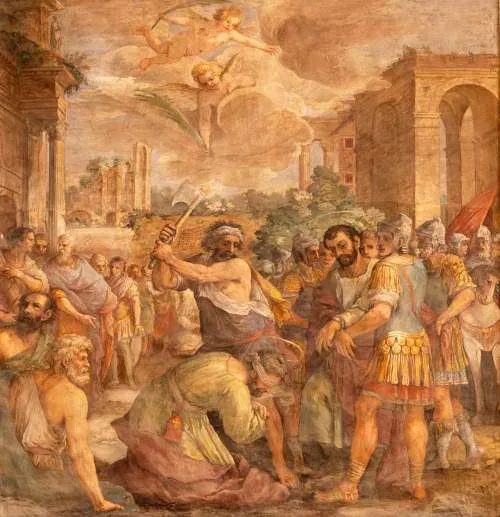
Over the next year, the work of catechesis continued. When the king’s infant son became ill, Father Peter was given permission to baptize him. He hoped this would open the door to more converts, for he knew that if the king were to agree, everyone would be baptized and abandon their pagan rituals that Father Peter saw as demonic. However, by the end of 1840, the king began to turn on Father Peter because more islanders were becoming catechumens. The king feared the loss of his own power, especially his pagan spiritual authority, so he withdrew his kindnesses and started to become hostile toward the Marists and catechumens. When the king heard that all the inhabitants of the nearby island of Wallis were preparing for baptism, he decided something must be done to keep this from happening on his island. The final spark came when the king’s own son, Meitala, became a catechumen. On April 27, 1841, the king had a long talk with his son, trying to convince him to change his mind. His son refused, so King Niuliki called his son-in-law Musumusu and instructed him to kill both the catechumens and the missionaries. The next day, after unsuccessfully trying to kill the catechumens, Musumusu and some companions went to where Father Peter was staying. First they clubbed Father Peter; then Musumusu delivered a deadly blow to his head with a hatchet. But this brutal end was only the beginning of great things to come.

Soon after, the king regretted what he had done. Many of the islanders who had grown fond of Father Peter mourned his death. This mourning and regret was turned into joy when, over the next few years, all of the inhabitants were baptized. War between the two tribes eventually ceased and peace was established. Today, those islands live their Catholic faith well and rejoice in their martyr who did more for them in death than in life.

As we honor Saint Peter Chanel, ponder the mysterious fact that the Father uses suffering and death for His glory and the salvation of souls when that suffering and death are offered to Him, sacrificially, in union with the death of His divine Son. Ponder the incredible power of God who is able to bring good from evil, and salvation from death itself. Unite your own sufferings to Christ, and know that God wants the unyielding gift of the sacrifice of your life to be given to Him for His glory and for the salvation of souls.

Source: https://mycatholic.life/saints/saints-of-the-liturgical-year/april-28-saint-peter-chanel-priest-and-martyr/

Saint Peter Chanel, Priest and Martyr Read More »

John 10:22–25

Do We Listen?

The feast of the Dedication was taking place in Jerusalem. It was winter. And Jesus walked about in the temple area on the Portico of Solomon. So the Jews gathered around him and said to him, “How long are you going to keep us in suspense? If you are the Christ, tell us plainly.” Jesus answered them, “I told you and you do not believe…”

Reflection:

How often does the Lord speak to us, yet we fail to listen? Like the Jews in today’s Gospel, we might ask, “Lord, tell me plainly Your will!” Jesus responds, “I told you, and you do not listen.” His voice is constant, but we must become attuned to it.

Jesus speaks first through Scripture, especially the Gospels. As Saint Jerome reminds us, “Ignorance of Scripture is ignorance of Christ.” Through Scripture and the teaching of the Magisterium, which safeguards and interprets God’s Word, we receive clarity and direction for every age. At times, the Holy Spirit even illuminates a particular passage to guide us in a specific way.

God speaks through the Sacraments, especially the Eucharist and Reconciliation, where His grace cleanses, strengthens, and reveals His will. Prayer, too, is essential. Fidelity to daily prayer deepens our ability to hear God, fostering the silence and trust needed for intimacy with Him. Finally, God speaks through daily life—through others, the beauty of creation, and even our crosses.

Despite the abundant ways God speaks to us, distractions, fear, pride, and a lack of trust often prevent us from hearing Him. We may expect God to speak dramatically or on our terms, missing His gentle, consistent voice. But the more we quiet our hearts, immerse ourselves in His Word, and trust in His providence, the more we will hear and follow our divine Shepherd.

Jesus goes on to say, “The works I do in my Father’s name testify to me” (John 10:25). Though He was speaking to the Jews about His miracles, the authority of His sermons, and the witness of His sacred life, He says the same to us. Jesus’ works illuminate His Word and will in our lives.

If we want to be among Jesus’ sheep, we must hear His voice and follow Him. What’s most consoling about today’s Gospel is that Jesus says of His sheep: “No one can take them out of my hand” (John 10:28). If we do our part in listening and following His voice, His promise is to keep us safe, firmly united with Him. When that happens, nothing can harm us, nothing can steal away our peace, and nothing can keep us from God.

Reflect today on how well you listen and are attentive to God’s guiding voice. What distractions or fears prevent you from hearing Him? Begin by removing one barrier and committing to moments of daily silence to grow in prayerful attentiveness. Immerse yourself in the Scriptures, align yourself with the teachings of His Church, participate faithfully in the Sacraments, and foster greater fidelity to daily prayer. Trust in Jesus’ promise that as you strive to hear His voice and follow Him, He will hold you securely in His loving care. Allow His voice to guide you daily, leading you to the peace and joy only He can give.

Source: https://catholic-daily-reflections.com/2026/04/27/do-we-listen/

John 10:22–25 Read More »

Saint Adalbert, Bishop and Martyr

c. 956–997; Patron Saint of Poland, Hungary, and the Czech Republic; Canonized by Pope Sylvester II in 999

Duke Slavník and his wife Střezislava, the parents of today’s saint, both came from noble ruling families in the Duchy of Bohemia, present-day Czech Republic. They had five sons, one of whom was Vojtěch. As a youth, Vojtěch became quite ill, so his faith-filled parents dedicated him to God as a priest if God would heal him. Vojtěch did recover and was sent to Magdeburg, Germany, to study under Bishop Adalbert, the first bishop of that diocese. During his ten years of study, Vojtěch grew in knowledge and holiness. He spent long hours in prayer and was very devoted to the care of the poor. Vojtěch had such a great respect for the Bishop of Magdeburg that he took his name when he received the Sacrament of Confirmation. Bishop Adalbert of Magdeburg was later canonized a saint, as was his student, Saint Adalbert of Prague, whose feast we celebrate today.

When the Bishop of Magdeburg died in 981, the young Adalbert returned home to Bohemia and was ordained a priest two years later by the Bishop of Prague. Soon after, the Bishop of Prague became quite ill and on his deathbed was filled with a fear of hell. He had lived a worldly life, seeking riches and comfort rather than holiness. The bishop’s dying witness had an effect upon Father Adalbert, causing him to deepen his commitment to the pursuit of holiness through penance, prayer, and simplicity of life. Shortly thereafter, Father Adalbert was chosen as the next bishop of Prague. Though resistant at first, he eventually accepted and was ordained a bishop in 983. It is said that once he became a bishop, Adalbert rarely smiled. He later remarked, “It is an easy thing to wear the mitre and a cross; but it is a most dreadful circumstance to have an account to give of a bishopric to the Judge of the living and the dead.” He truly felt the weight of his responsibility.

Bishop Adalbert was, at first, joyfully welcomed in Prague. From the beginning of his bishopric, he embraced a life of simplicity, prayed and fasted often, slept on the floor as penance, preached almost every day, and frequently visited the sick and imprisoned. Though the people in his diocese were Christian, they had not been Christian for long, and many of them held on to their former pagan ways. They commonly practiced polygamy, idolatry, slavery, and various other immoralities. Bishop Adalbert worked hard to address these evils but was met with such strong resistance that he had to flee to Rome. In Rome, the Holy Father permitted him to enter the Benedictine monastery of Saint Boniface. As a bishop-monk, he humbled himself, performing the most menial tasks in the monastery. During this time, he might have also visited Hungary to preach the Gospel, where he is believed to have baptized the soon-to-be king and future Saint Stephen of Hungary.

After about five years in the monastery, the pope sent Bishop Adalbert back to Prague with the instruction that, if the people remained hostile, he could once again leave. Bishop Adalbert arrived in Prague and was, at first, received with great joy. But after renewing the fight against the evils in his diocese, his life was again threatened. As a result, he returned to Rome and reentered the Benedictine monastery where he was made prior. Not long after, he traveled to Poland to assist his friend Duke Bolesław I and exercised his episcopacy in Gniezno, Poland.

After converting many in Poland, Bishop Adalbert obeyed Boleslaw’s wish that he travel north into Prussian territory along the Baltic Sea to convert the rough pagans of that land. Poland had just recently become a Christian nation, and Duke Bolesław wanted to convert the Prussians and bring them under his rule. The Prussians were a religious people who believed that everything in the created world had spirits. Animals, trees, and lands were revered and worshiped. Pagan priests practiced magic rituals, seeking favors from these countless spirits and also regularly sought to communicate with the dead. One fourteenth-century missionary described the Prussian people this way: “Because they did not know God, therefore, in their error, they worshiped every creature as divine, namely the sun, moon and stars, thunder, birds, even four-legged animals, even the toad. They also had forests, fields and bodies of water, which they held so sacred that they neither chopped wood nor dared to cultivate fields or fish in them” (Father Peter of Dusburg).

When Bishop Adalbert arrived in Prussia, his preaching was initially successful. However, his life was soon threatened, and he had to move on to other places. He continued to endure the wrath of the locals, including a pagan priest who saw him as a threat to their way of life. That pagan priest, together with a mob, killed the bishop one day, cut off his head, and placed it on a pole. Two years later, Bolesław I bought Adalbert’s body from the pagans at the cost of the weight of his body in gold. Once his body was back in Poland, Bishop Adalbert’s funeral was celebrated, and he was buried in the Cathedral of Gniezno. In 999, Pope Sylvester II canonized him a saint, and a year later, the Holy Roman Emperor Otto III came to the Cathedral of Gniezno and prayed at Saint Adalbert’s grave. Devotion to him rapidly grew, and his intercession for the newly converted lands in which he ministered was readily sought for centuries.

Though in some lights Saint Adalbert’s ministry as a bishop could be judged as unsuccessful, his courage, fidelity to the Gospel, and the shedding of his blood are credited for the ongoing conversion of many throughout Bohemia, Poland, and Hungary. In the late second century, the famous Christian writer Tertulian wrote, “The blood of martyrs is the seed of Christians.” Though the preaching of God’s Word opens minds and hearts to the Truth, history shows that the joyful embrace of suffering, especially martyrdom for the Gospel, powerfully nourishes the seeds of the Word of God that has been preached. Saint Adalbert first sowed the seed of God’s Word and then watered those seeds with his blood. The result was that the lands in which he ministered began to grow abundantly in the faith of Christ, becoming Christian nations for the centuries that followed.

As you ponder Saint Adalbert’s life, consider whether you find any similarities in your life. Do you work to share the Gospel with family and friends, only to find your efforts bear little or no evident fruit? If so, take inspiration from today’s saint, and follow his example of courageous dedication to the end, laying down your life sacrificially so that the witness of your love will nourish the seed that God has sown through you.

Source: https://mycatholic.life/saints/saints-of-the-liturgical-year/april-23-saint-adalbert-bishop-and-martyr/

Saint Adalbert, Bishop and Martyr Read More »