Saint Flavia Domitilla of Terracina
Saint Flavia Domitilla of Terracina Read More »
Profile
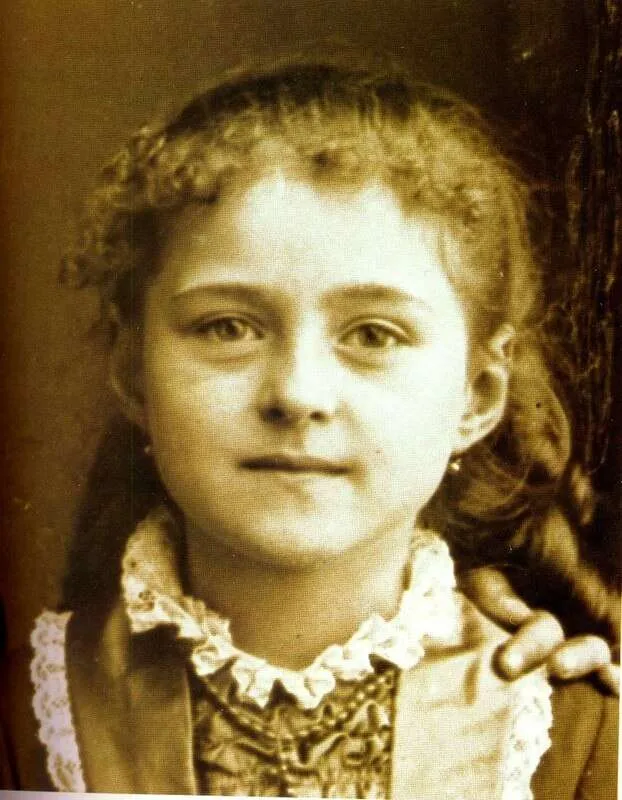
Flavia was a Roman noble lay woman. She was the granddaughter of Emperor Vespasian; niece of Emperors Titus and Domitian. She was married to Titus Flavius Clemens, a Roman consul, nephew of Emperor Vespasian, and first cousin of Emperors Titus and Domitian; She was the foster sister of Saint Ephyrosyna of Terracina and Saint Theodora of Terracina. She converted to Christianity. She was widowed when her husband was martyred in 96. She was banished to the island of Pandataria in the Tyrrhenian Sea. She was possibly martyred, though records are sketchy.
Died
Canonized
Patronage
Source: https://catholicsaints.info/saint-flavia-domitilla-of-terracina/
Saint Flavia Domitilla of Terracina Read More »
Jesus said to his disciples: “As the Father loves me, so I also love you. Remain in my love. If you keep my commandments, you will remain in my love, just as I have kept my Father’s commandments and remain in his love.”
Reflection:
Imagine being loved by someone with a perfect love. Perfect love has no bounds, and experiencing it would be the source of indescribable joy. Now imagine further that the one who loves you is all-powerful and all-knowing. When combined with being all-loving, there is no limit to what such a relationship can do in your life.
Of course, we do not need to only imagine such a love; we can receive that love from God. Jesus’ words are deep, personal, and intimate: “As the Father loves me, so I also love you.” His love for you is not conditional, limited, or selfish. When He says to you, “I love you,” He means it with every power of His divine soul.
Jesus beautifully describes His love for us: “As the Father loves me…” The love the Father has for the Son is so deep, perfect, and all-consuming that we cannot fully comprehend it, even in Heaven. For all eternity, we will gaze with wonder and awe at this shared love and never tire of contemplating it. What’s more, the love between Father and Son is so strong that it cannot be contained within Themselves. Their love overflows in superabundance, pouring out upon us, inviting us to enjoy perfect fulfillment within it.
Jesus’ next words are both an invitation and a command: “Remain in my love.” God’s love for us is far more than an emotion or affectionate concern. His love is a gift of His very Self, drawing us into communion with Him. To “remain” in His love means to live, move, and exist in His presence. Divine love is transforming, enduring, and life-changing. It unites us to the divine Lover and establishes the life-giving communion for which we were made.
After inviting us to remain in His love, Jesus clarifies how we can receive His ongoing and transformative gift: “If you keep my commandments, you will remain in my love, just as I have kept my Father’s commandments and remain in His love.” At first, these words might seem challenging, especially when we consider our fallen nature and tendency toward pride. Yet they only feel burdensome if we misunderstand His commandments.
In order to fully embrace Jesus’ commandments, we need to see them for what they are: expressions of pure love gushing forth from the shared love of the Father and the Son. Note that Jesus doesn’t ask anything of us that He Himself was unwilling to do. His love for the Father was perfect because He kept the Father’s commandments. What did the Father command the Son to do? He commanded Him to love with a selfless, sacrificial love, culminating in laying down His life for us.
If we want to receive God’s love and share in its perfection, we too must love—just as the Father loves the Son, the Son loves the Father, and they both love us. Like Jesus, we must become an unconditional gift of self for others. This is the nature of true love.
By becoming an unconditional gift of self, we do not become anyone’s savior; rather, we allow the one true Savior to touch others through us. True love is divine. It does not originate within us but flows from God to us and through us. If we attempt to keep that love to ourselves, it is extinguished.
Reflect today on the perfect love within the Most Holy Trinity. Hear Jesus invite you to share in that perfect love on the condition that you become an instrument of it for others. This is His commandment: “Love one another as I love you” (John 15:12). Only in this way will we share in the perfect joy God desires to bestow upon us for all eternity.
Source: https://catholic-daily-reflections.com/2026/05/06/eternal-love-and-joy/
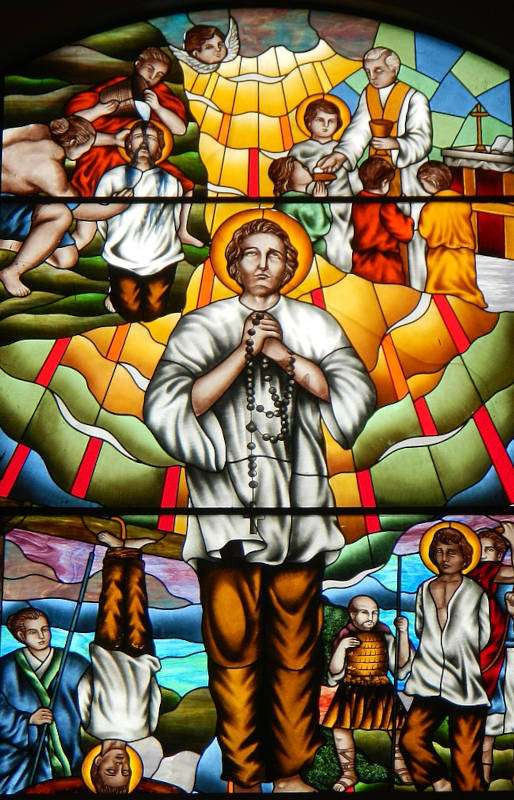
Commemorates the attempted martyrdom of Saint John the Apostle in 95. John was bound and brought to Rome, Italy from Ephesus by the order of Domitian; the Senate condemned him to be taken to the Latin Gate and thrown in a cauldron of boiling oil. John stepped out of the cauldron without injury, and instead was exiled to Patmos.
Source: https://catholicsaints.info/saint-john-before-the-latin-gate/
Saint John Before the Latin Gate Read More »
“Remain in me, as I remain in you. Just as a branch cannot bear fruit on its own unless it remains on the vine, so neither can you unless you remain in me. I am the vine, you are the branches. Whoever remains in me and I in him will bear much fruit, because without me you can do nothing.”
Reflection:
Jesus is the source of life and fruitfulness. Yet, too often, we try to bear fruit of our own making. Truly good fruit can only come forth if we remain in Christ, for He is the source of all good fruit in our lives.
Bearing good fruit, meaning performing good works, does not save us by itself. Salvation is a gift of grace through Christ. However, good works, as fruits of grace, reveal the depth of our union with Him and are necessary expressions of a life transformed by God’s love. Just as a healthy vine naturally produces abundant grapes, so too does a soul united to Christ bear abundant spiritual fruit for the glory of God and the good of others. This fruit, above all, is charity—the eternal gift that reflects the presence of Christ in us and draws others to Him.
By analogy, a grapevine produces good grapes when it is healthy and well-nourished. A diseased or poorly nourished vine will produce useless grapes. If we want to make a difference in the world and in the lives of others, we have only one choice: We must remain firmly attached to our Lord, living in Him as He lives in us, so that the spiritual nourishment He provides will produce an abundance of grace in and through us.
Consider the people whom you love. If you could do anything for them, what might it be? You might wish to alleviate all their sufferings, such as a chronic illness, financial struggle, or some heavy cross they bear. While such desires reflect our care for them, even the greatest worldly comforts pale in comparison to the spiritual blessings of faith and divine grace. The greatest good we can do for others is to allow God to use us as instruments of His love, inspiring faith and leading them closer to Him.
The best way to make a difference in others’ lives is to first care for our own souls by ensuring we are united to our Lord. We must pray daily, seeking ways to deepen and extend our time of prayer. We must be faithful to the Commandments, regularly attend Mass, celebrate the Sacrament of Reconciliation, meditate on and read the Scriptures, familiarize ourselves with the lives of the saints, and know the teachings of Christ’s Church. All of this is for two purposes: First, it transforms us and more fully unites us with God. Second, it enables God to produce charity in our lives, which is His way of using us to touch others with His mercy.
In the end, every good we do for another passes away except for the greater good—charity. Charity alone remains throughout our lives and even into the next. In Heaven, the treasure of charity will remain with us and will be our eternal delight, and the recipients of that charity will forever be grateful for the gift God gave them through us.
Reflect today on the charity that is borne from your life and how it affects others. Can you point to concrete ways that God has used you to make a difference in their lives? Especially ponder the works of charity that touch their souls, drawing them closer to our divine Lord. Set your eyes on this goal, for if you do bear good fruit in this way, you will know with certainty that your life is in Christ, and His life is in you.
Source: https://catholic-daily-reflections.com/2026/05/05/bearing-fruit/
Louis Grignion was the second of eighteen children born to Jean-Baptiste and Jeanne Robert Grignion in the small town of Montfort-sur-Meu, northwest France. Several of their children died in infancy, including the firstborn, leaving Louis as the oldest of the surviving siblings. He was given the name Louis at his baptism and later added Marie to his name at his confirmation, a fitting name for one who would later become the definitive source on total consecration to Jesus through Mary.
Louis’ parents were strong Catholics. Three of their sons became priests, and two of their daughters became nuns. However, the family was not without difficulties. Louis’ father had a fierce temper, and Louis was often the recipient of his outbursts. His father longed for wealth and prestige, yet he could not pull the family out of poverty, which often left him frustrated. His father’s outbursts affected Louis such that he himself was tempted with the same vice throughout his life. Nonetheless, those who knew Louis as a child saw him as an “angelic boy” whose spiritual depth was beyond his years. His deep compassion for his mother, who also suffered from her husband’s outbursts, was also well noted. Perhaps it was this compassion for his mother that later led him to a profound devotion to the Blessed Mother.
When he turned twelve, Louis-Marie was sent to the nearby town of Rennes, where he entered a large free school run by the Jesuits. He remained there for about eight years and completed his elementary education, as well as courses in philosophy and theology. During those years, Louis lived a virtuous life, had a strong love for the poor and sick, practiced severe penances, became devoted to the Blessed Virgin Mary and the angels, and prayed often. His mother’s brother, a priest in Rennes, later remarked that Louis was so virtuous that he almost appeared “immune from Adam’s sin.” At that time, he also enjoyed listening to stories from a local priest about his missionary work as an itinerant preacher. This fueled a desire in Louis’ heart for the same.
In 1693, at the age of twenty, Louis’ dream of the priesthood moved forward. He received a scholarship from a benefactor to study in Paris at the famed Seminary of Saint-Sulpice. The school was about 200 miles away from his home, and his father wanted him to arrive in style. He offered Louis a horse, money, and new clothing. Louis, however, wanted to walk to Paris as penance and to do so in poverty, so he rejected the horse but reluctantly accepted the money and new clothing. On his journey, he gave away all his money to the poor, exchanged his new clothing for tattered rags, and begged for food. When he finally arrived in Paris, he discovered that the benefactor had not given enough money for him to enter and reside at Saint-Sulpice, so he obtained modest boarding elsewhere and instead attended school at Sorbonne University for the next two years. Though his meager accommodations and diet were penitential in and of themselves, he continued to add to these mortifications through his own acts of penance. Two years later, after recovering from a serious illness, he was able to move into the poorer accommodations offered at Saint-Sulpice and complete his studies while working at the school library.
As a librarian, Louis-Marie became very familiar with some of the greatest books of theology, especially on Mariology. His faith and devotional practices grew so strong that some of the worldly clergy ridiculed him, thinking him to be a fraud. His frequent visits to the chapel before and after every class, his profound devotion to Mary, his penances, and his loving devotion to the poor and infirm made him stand out. After completing his studies, he was ordained a priest but not given faculties to preach or hear confessions. Eventually, he was invited to assist a priest in Nantes, just south of where he grew up.
Over the next six years, Father Louis had a series of ups and downs. He was especially drawn to the poor and worked on and off as a chaplain at a hospital for the poor. On a spiritual level, his ministry was a great success and the people loved him, especially those who were poor. However, he continually met with opposition from some of the worldly clergy and the social elite, so he was forced to move over and over again, even being without an assignment for a year. Finally, in 1706, discouraged by his ministerial struggles, he decided to walk 1,000 miles to Rome to consult with the Holy Father. On June 6, he was granted an audience with Pope Clement XI who saw through the veneer of this impoverished beggar priest and perceived his God-given vocation. The Holy Father appointed him as Apostolic Missionary and sent him back to France.
Over the next ten years, Father Louis thrived in his new ministry. He began preaching missions from town to town, regularly performed miracles, encountered apparitions of our Blessed Mother, lived a life of extreme poverty and penance, constructed Calvary grottos to foster devotion, and won the hearts of countless people. He confronted the heresies of the day, rejoiced in every persecution he endured (even attempts on his life by heretics), and remained faithful to the commission he was given by our Lady through the pope. Though he continued to endure persecution from the local bishop and clergy, he pressed on. Toward the end of his life, Father Louis wrote a rule of life for a community of priests and brothers, but that community was never fully established before his death. In the years after his death, however, the seeds he planted evolved into two strong communities that continue to thrive today: the Daughters of Wisdom and the Company of Mary.
His most enduring legacy would not become known to the Church for more than a century after his death. During his life, Father Louis wrote several books and many hymns. His books remained unknown until April 22, 1842, when a priest of the community he founded discovered the manuscripts in an old trunk. Soon after, his writings on the Blessed Virgin Mary, especially True Devotion, Secrets of Mary, and Secrets of the Rosary, became among the most widely loved and influential Marian books ever written. Since then, six popes have honored Saint Louis de Montfort and praised his writings and virtues. Saint Pope John Paul II even took his papal motto from the saint’s writings: Totus Tuus, “totally yours.”
Saint Louis de Montfort lived for “God alone” by consecrating himself totally to God through the instrumentality of the Blessed Virgin Mary. He was poor, penitential, devout, and fully committed to the salvation of souls and the care of the poor. Miracles accompanied his ministry, and, when the time was right, the Holy Spirit introduced the Blessed Virgin Mary more fully to the world through him.
As we ponder this great saint today, reflect upon your own devotion to our Blessed Mother. Saint Louis believed that the quickest and safest way to Jesus was through the Blessed Mother. Consider reading through his consecration found in his work, True Devotion, so that Saint Louis’ profound faith will also spark deep faith in your life.
Source: https://mycatholic.life/saints/saints-of-the-liturgical-year/april-28-saint-louis-grignon-de-montfort-priest/
Saint Louis Grignion de Montfort, Priest Read More »
Jesus said to his disciples: “Peace I leave with you; my peace I give to you. Not as the world gives do I give it to you. Do not let your hearts be troubled or afraid.”
Reflection:
There are two types of peace we can enjoy. First, there is worldly peace. This peace is the absence of conflict, war, or external turmoil. Civil governments must work to ensure this peace by protecting their societies from outside aggressors, maintaining order within their communities, and assisting with basic human needs, such as economic development, healthcare, and justice. This form of peace aligns with human reason and is based in the natural law, which is written on the consciences of every person.
Though that form of natural peace and justice is good, it is not the highest form of peace we are called to enjoy. The peace that our Lord came to bestow is supernatural, enabling us not only to survive, but to thrive on a moral and spiritual level, even in the absence of worldly peace. Jesus’ spiritual gift of peace enables us to find fulfillment in the midst of every external difficulty.
If we seek only worldly peace, then any difficulty or disorder will trouble and unsettle our hearts. For that reason, Jesus said, “Do not let your hearts be troubled or afraid.” Wars, oppression, crime, poverty, and disease have plagued humanity from the beginning and will persist, in varying degrees, until the end of time. Only when Jesus returns to establish His visible Kingdom as the Universal King will external peace be fully and permanently established. What a glorious day that will be!
For now, until the Second Coming, we must learn not only to survive but to thrive within the world. Given the inevitable challenges every human life will encounter, if we want to live in true peace then we must seek out the peace that our Lord promises in today’s Gospel. This Gospel comes from Jesus’ Last Supper Discourse with His Apostles. As that discourse concludes two chapters later, Jesus prays His High Priestly prayer to the Father: “I do not ask that you take them out of the world but that you keep them from the evil one” (John 17:15). We must live within this fallen world for now, but we do not have to suffer interior afflictions.
The evil one has great influence in this world, yet our Lord promises that if we receive His peace, we will be kept safe from the devil’s attacks. Though we might suffer some form of external oppression, internally we will be at peace, no matter what we face.
The gift of peace that Jesus promises confounds the powers of darkness and is freely given to all who turn to Him and submit to His spiritual governance. The martyrs are the prime example of this interior peace in the midst of exterior persecution. They imitate our Lord, Who permitted the evil one to afflict Him with earthly suffering and death. Jesus confronted that evil with perfect confidence and peace, overcoming it through divine love that won the final victory. In the Eucharist, He continues to share His peace with us, strengthening our hearts against every trial.
Reflect today on Jesus’ words to His disciples at the Last Supper. At that time, they did not realize they were about to witness Jesus’ Passion. Nor did they realize that, in the years to come, they would endure many hardships in their faithful service to God’s will. Similarly, if we listen to Jesus’ discourse and heed His words, we must embrace them as the Apostles eventually did, once they received the Holy Spirit. We must rely on grace to find courage in the face of life’s afflictions—poverty, illness, loss, persecution, and temptation. As you ponder yourself being with the Apostles during this discourse on Holy Thursday, resolve to accept Jesus’ promise so that you are spiritually prepared to live in interior peace, no matter the exterior circumstances you might face.
Source: https://catholic-daily-reflections.com/2026/05/04/jesus-transforming-peace/
Can something be 100% black and 100% white at the same time? Certainly not. It was logic similar to this that created a fierce controversy known as Arianism in the fourth-century Church. Among the greatest opponents of Arianism was Saint Athanasius, whom we honor today.
Arius was a priest from Alexandria, modern-day Egypt. The belief that Jesus was 100% human and 100% divine seemed logically incompatible to him. As a result, Arius taught that the Father created the Son, making the Son subordinate to the Father and neither co-eternal nor co-equal with Him. The debate would finally be resolved at a Church council in Nicaea, called by the Roman Emperor Constantine the Great. The answer came by way of the formulation of the Nicene Creed, which we continue to profess as a Church today. The Nicene Creed got it right, and today’s saint made sure of it.
Little is known about the early life of Saint Athanasius, but much is known about his unwavering leadership, courage, and depth of faith, due to the voluminous writings he left behind. One story relates that when Athanasius was only a child, he and two friends were playing on the beach when the Bishop of Alexandria noticed them. The bishop observed that young Athanasius was pretending to baptize the other boys, in imitation of the bishop himself. After examining Athanasius’ faith and understanding of the sacrament, the bishop declared that Athanasius’ baptisms of the other boys were truly valid. The bishop then took Athanasius under his wing and saw to it that he received the best education the flourishing Christian city of Alexandria could offer him. He became an excellent student and especially immersed himself in the Holy Scriptures.
At that time, Alexandria was an important trade center, with a mixture of Greek and Roman culture. The faith was strong and the city’s schools were renowned. What came out of Alexandria affected the entire Church. In 311, the Bishop of Alexandria was martyred in one of the final Roman persecutions of the faith. In 313, the Emperor Constantine issued the Edict of Milan, legalizing the practice of the Christian faith. Upon completing his education, Athanasius was ordained a deacon in Alexandria. As a deacon, his knowledge of Scripture would especially be made known through his first great work, On the Incarnation of the Word, in which he powerfully articulates that Jesus is the divine and eternal Word of the Father.
With the legalization of Christianity and the end of external persecutions of the Church, a new attack on the Church began—this time from within. Around the year 318, Arius, a priest in a wealthy parish in Alexandria, pronounced from the pulpit that his bishop was a heretic. He promoted his belief that the Son of God was subordinate to the Father, did not share in His divinity, and was, therefore, neither eternal nor co-eternal. The Bishop of Alexandria worked hard to reconcile Arius but to no avail. In 321 a synod of nearly 100 bishops was held in Alexandria, and they rejected the teachings of Arius. Arius subsequently rejected the bishops and fled to Palestine where he continued to spread his errors. With Christianity legal throughout the empire, Arius went on a preaching campaign, even going so far as to compose short hymns he taught the people with words such as, “there was a time when He was not…” Eventually, the Emperor Constantine heard about the controversy and wanted it resolved.
In 325, Constantine called the first ecumenical Church council in the city of Nicaea, near Constantinople, with the cooperation of Pope Sylvester. As the bishops gathered from across the empire, many of them bore the physical marks of persecution by the Roman emperors that had endured throughout their lives. Now, they faced a new enemy, one which sought to deny the divinity of Christ. At the council, Arius was given the freedom to make his case within the hearing of all. The Bishop of Alexandria also made his case. Later testimony also states that Deacon Athanasius was one of the clearest and most convincing voices in support of the divinity of Christ, basing his arguments upon his work On the Incarnation of the Word of God. Of the more than 300 bishops in attendance, only two refused to support the position articulated by the Bishop of Alexandria and Deacon Athanasius. A creed was formulated to clearly and concisely articulate the pure faith of the Church: the Nicene Creed. Those two bishops who refused to accept it, along with Arius, were exiled. Shortly after the council, the Bishop of Alexandria died and thirty-year-old Athanasius was chosen as his successor, to the delight of all of the people.
One might think that the Council of Nicaea, with its issuance of the Nicene Creed, would have ended the troubles, but it did not. Soon after, the exiled bishops who supported Arius gained the support of the Emperor Constantine and convinced him to exile Bishop Athanasius from Alexandria. This was the first of five exiles Bishop Athanasius would endure from four different Roman emperors. In fact, seventeen of his forty-eight years as Bishop of Alexandria were spent in exile.
Romans 8:28 states, “We know that all things work for good for those who love God, who are called according to his purpose.” This Scripture was certainly fulfilled in the life of Saint Athanasius. During his five exiles, he wrote over fifty letters that have survived, numerous works on the faith, and the first detailed biography of a saint, Saint Anthony of the Desert. His book on Saint Anthony was based on his firsthand knowledge of the life of this desert monk. It is believed that Athanasius spent at least a year with Anthony prior to Anthony’s death, and then spent five or six more years with the community of desert monks Anthony had helped to form. Athanasius’ knowledge of this unique vocation, as well as his participation in it, provided the early Church with a powerful witness of the vocation of solitude and prayer. His book became one of the most copied books of that time and remains very popular today. There is little doubt that that work alone contributed greatly to an understanding of the contemplative life not only of desert monks, but also for religious, clergy, and laity. Additionally, Athanasius’ other works not only eventually led to the complete repudiation of the Arian heresy but provided theologians since that time with treasured insights into the faith, especially into the Incarnation and divinity of Christ.
As we honor this great Doctor of the Church, ponder especially his unwavering devotion to the truth, despite enduring lifelong persecution for it. It would have been easier for him to remain silent, but he did not. If you find yourself compromising your faith at times, take inspiration from Saint Athanasius and seek his intercession today.
Source: https://mycatholic.life/saints/saints-of-the-liturgical-year/may-2–st-athanasius-bishop/
Saint Athanasius, Bishop and Doctor Read More »
Jesus said to his disciples: “Whoever has my commandments and observes them is the one who loves me. Whoever loves me will be loved by my Father, and I will love him and reveal myself to him.”
Reflection:
Most people would not think of “love” as obedience to commandments. Yet, that is precisely how Jesus defines it. To understand the truthfulness of His teaching, we must first consider the nature of love.
Saint Thomas Aquinas defines love as both an emotion and an action. As an emotion, it is part of our human nature and is the first response of the concupiscible appetite to a good perceived as desirable. This natural love is directed toward goods apprehended through the senses, such as food, people, or enjoyable activities. Since love as an emotion pertains to the sensory appetite and is tied to physical or sensible goods, it plays an essential role in the human experience. However, it’s important to note that just because a good is perceived as desirable does not mean it is truly good for us or in accord with God’s perfect will.
The love that Jesus speaks of in today’s Gospel, however, far transcends natural love. While it does involve desire and emotion when perfected, it is ultimately charity—a supernatural, spiritual love flowing from our union with Him. Charity, infused by grace, elevates love to a higher, rational act of the will, seeking the good of another for the other’s sake and fulfilling God’s commandments as an expression of that love.
This distinction invites us to examine the type of love we have toward God and others. If our love for God is purely emotional, it will be dictated by superficial and sometimes misguided desires. When we feel consolation on an emotional level, we might respond with an emotionally loving sentiment toward God. When something inspires us and we feel His presence, we might desire Him intensely. Yet, while this form of love has its place and will play a role in our relationship with God when our soul is fully perfected, it is initially a poor guide to charity. The same principle applies to our relationships with others.
Sometimes the pure love of charity hurts on a natural level. The demands of charity often call us to act contrary to our immediate desires and to love even when we do not feel like loving. Earlier in Chapter 14 of John’s Gospel, Jesus expresses the ideal of charity even more clearly: “If you love me, you will keep my commandments” (John 14:15). At the very heart of charity toward God is obedience. This obedience involves a three-fold process.
First, with our minds, we must understand God’s will, believe it, and assent to it as the highest good, even if our disordered appetites initially resist His will. Once our minds clearly perceive and understand the highest good to which we are called—God’s perfect commandments—our wills must choose to follow them. When our disordered appetites interfere, we must rely on grace to strengthen our resolve and enable us to choose the higher good.
When this process becomes habitual, and our minds and wills are regularly directed toward God’s will, even our emotions and appetites begin to conform. We come to delight in His commandments, finding refreshment and fulfillment in them. This spiritual delight far surpasses emotional satiation. This is because only God’s will—expressed through His commandments—can make us whole and enable us to become who we are created to be. Though the journey is often challenging, what joy we experience when we delight in God’s will through grace!
Reflect today on Jesus’ clear invitation to love Him through obedience to His will. Because His love for us is perfect, His commands are always for our good. Sometimes we are like children with erratic emotions and desires who need the gentle direction of a loving parent. Don’t see God’s commands as a burden; the opposite is true. God’s commands set us free to love through charity and to experience both spiritual and emotional joy in the process. When we love Jesus with this highest form of love, we will be gifted with a relationship with Him and His Father, Who will reveal themselves to us, satisfying our every desire.
Source: https://catholic-daily-reflections.com/2026/05/03/obedience-the-gateway-to-intimate-love/
As the number of disciples continued to grow,
the Hellenists complained against the Hebrews
because their widows
were being neglected in the daily distribution.
So the Twelve called together the community of the disciples and said,
“It is not right for us to neglect the word of God to serve at table.
Brothers, select from among you seven reputable men,
filled with the Spirit and wisdom,
whom we shall appoint to this task,
whereas we shall devote ourselves to prayer
and to the ministry of the word.”
The proposal was acceptable to the whole community,
so they chose Stephen, a man filled with faith and the Holy Spirit,
also Philip, Prochorus, Nicanor, Timon, Parmenas,
and Nicholas of Antioch, a convert to Judaism.
They presented these men to the apostles
who prayed and laid hands on them.
The word of God continued to spread,
and the number of the disciples in Jerusalem increased greatly;
even a large group of priests were becoming obedient to the faith.
R. (22) Lord, let your mercy be on us, as we place our trust in you.
or:
R. Alleluia.
Exult, you just, in the LORD;
praise from the upright is fitting.
Give thanks to the LORD on the harp;
with the ten-stringed lyre chant his praises.
R. Lord, let your mercy be on us, as we place our trust in you.
or:
R. Alleluia.
Upright is the word of the LORD,
and all his works are trustworthy.
He loves justice and right;
of the kindness of the LORD the earth is full.
R. Lord, let your mercy be on us, as we place our trust in you.
or:
R. Alleluia.
See, the eyes of the LORD are upon those who fear him,
upon those who hope for his kindness,
To deliver them from death
and preserve them in spite of famine.
R. Lord, let your mercy be on us, as we place our trust in you.
or:
R. Alleluia.
Beloved:
Come to him, a living stone, rejected by human beings
but chosen and precious in the sight of God,
and, like living stones,
let yourselves be built into a spiritual house
to be a holy priesthood to offer spiritual sacrifices
acceptable to God through Jesus Christ.
For it says in Scripture:
Behold, I am laying a stone in Zion,
a cornerstone, chosen and precious,
and whoever believes in it shall not be put to shame.
Therefore, its value is for you who have faith, but for those without faith:
The stone that the builders rejected
has become the cornerstone, and
A stone that will make people stumble,
and a rock that will make them fall.
They stumble by disobeying the word, as is their destiny.
You are “a chosen race, a royal priesthood,
a holy nation, a people of his own,
so that you may announce the praises” of him
who called you out of darkness into his wonderful light.
R. Alleluia, alleluia.
I am the way, the truth and the life, says the Lord;
no one comes to the Father, except through me.
R. Alleluia, alleluia.
Jesus said to his disciples:
“Do not let your hearts be troubled.
You have faith in God; have faith also in me.
In my Father’s house there are many dwelling places.
If there were not,
would I have told you that I am going to prepare a place for you?
And if I go and prepare a place for you,
I will come back again and take you to myself,
so that where I am you also may be.
Where I am going you know the way.”
Thomas said to him,
“Master, we do not know where you are going;
how can we know the way?”
Jesus said to him, I am the way and the truth and the life.
No one comes to the Father except through me.
If you know me, then you will also know my Father.
From now on you do know him and have seen him.”
Philip said to him,
“Master, show us the Father, and that will be enough for us.”
Jesus said to him, “Have I been with you for so long a time
and you still do not know me, Philip?
Whoever has seen me has seen the Father.
How can you say, ‘Show us the Father’?
Do you not believe that I am in the Father and the Father is in me?
The words that I speak to you I do not speak on my own.
The Father who dwells in me is doing his works.
Believe me that I am in the Father and the Father is in me,
or else, believe because of the works themselves.
Amen, amen, I say to you,
whoever believes in me will do the works that I do,
and will do greater ones than these,
because I am going to the Father.”
Source: https://bible.usccb.org/bible/readings/050326.cfm
Fifth Sunday of Easter Read More »
In the sixth century, Pope Pelagius I traveled to Constantinople and brought the relics of the Apostles Philip and James back to Rome, placing them in what is today called the Church of the Holy Apostles. It is for this reason that we honor these two Apostles together with one feast.
Saint Philip was one of the Twelve Apostles. He was most likely a follower of Saint John the Baptist and was aware of John pointing to Jesus as the Messiah. Philip might have been a brother to Simon Peter and Andrew, making him a fisherman by trade. The day after Simon and Andrew were invited to follow Jesus, Jesus encountered Philip and said, “Follow me” (John 1:43). Philip obeyed. He was from the town of Bethsaida, just north of the Sea of Galilee. Philip’s first act of evangelization was to tell his friend, Nathanael, that they had found the Messiah. Nathanael was reluctant at first, stating to Philip, “Can anything good come from Nazareth?” Philip’s response was ideal. He said to his friend, “Come and see” (John 1: 46). When Nathanael came and saw, he immediately professed his faith in Jesus as the Messiah, the Son of God. Early Church theologians believe that Philip followed our Lord from that time forward, witnessing Jesus’ first miracle at Cana.
When Jesus established the Twelve, Philip was among them. He is mentioned in John’s Gospel during the feeding of the 5,000 when Jesus sees the large crowd and then turns to Philip and says, “Where can we buy enough food for them to eat?” (John 6:6). Philip is also mentioned in connection with Greek-speaking Gentiles who want to see Jesus (see John 12:21), possibly indicating that Philip could speak Greek and was known to the Greek community. At the Last Supper, as Jesus was speaking about the Father, Philip said to him, “Master, show us the Father, and that will be enough for us”, to which Jesus gently responded, “Have I been with you for so long a time and you still do not know me, Philip? Whoever has seen me has seen the Father” (John 14:8–14).
After Pentecost, little is known about Philip’s missionary activity. Ancient traditions state he preached in Greece, Phrygia, and Syria, being martyred at an old age in Hierapolis, Phrygia, modern-day southwest Turkey, not far from Ephesus where Saint Paul established a church. Philip is believed to have died either by being crucified upside down or by beheading.
Saint James is also one of the Twelve. The traditional view, from as early as the second century, is that there are only two disciples of Christ in the New Testament with the name James. Some modern scholars identify three or more. If we stick with the traditional view, which was also held by Saint Jerome in the fourth century, then the two Jameses are James the Son of Zebedee and James the Less (also referred to as James the brother of the Lord, and James the Son of Alphaeus). Later authors call him James the Just. If James the Less is also the James who is the Lord’s brother, then James’ father was Alphaeus and his mother was Mary of Clopas, the sister of the Blessed Virgin Mary. This would make James the nephew of the Blessed Virgin and a first cousin to Jesus. He is referred to as Jesus’ “brother” because it was common at that time to refer to cousins and other relatives as brothers and sisters. In Mark’s Gospel, Levi (better known as Matthew) is also referred to as the son of Alphaeus (Mark 2:14) which could make James and Matthew brothers.
In his letter to the Corinthians, Saint Paul relates that the Lord appeared to James after His Resurrection (1 Corinthians 15:7). After Pentecost, James became the first bishop of the Church in Jerusalem. The Acts of the Apostles relates that it was James, as the head of the Jerusalem Church, who oversaw the First Council of Jerusalem and declared the final judgment on behalf of Peter (see Acts 15). Eusebius, a fourth-century bishop, writes that James spent long hours in the Temple of Jerusalem: “…he was in the habit of entering alone into the temple, and was frequently found upon his knees begging forgiveness for the people, so that his knees became hard like those of a camel.” Eusebius also wrote about James’ martyrdom, “…he was thrown from the pinnacle of the temple, and was beaten to death with a club.” Traditionally, the New Testament letter of James is believed to have been written by James the Less, although modern scholars question this fact. That letter was a general letter, most likely sent to all of the Jewish Christian communities. It begins, “James, a slave of God and of the Lord Jesus Christ, to the twelve tribes in the dispersion, greetings” (James 1:1). The letter then goes on to give encouragement in trials and persecutions, exhortations and warnings, and concludes by speaking of the power of prayer.
What we know for certain about these two disciples is that they were among the Twelve Apostles. They were uniquely chosen by the Savior to continue His divine mission of evangelizing the world. They embraced their ministry heroically, establishing communities of believers, preaching the Gospel, offering the sacraments, performing miracles, and governing the early Church. Allow the apostolic zeal and the courageous martyrdom of these apostles to inspire you today with the same zeal and courage, so that God can also send you forth on mission.
Source: https://mycatholic.life/saints/saints-of-the-liturgical-year/may-3—saints-philip-and-james-apostles/
Saints Philip and James, Apostles Read More »
Add San Jose Filipino Ministry as a new recipient, Send your donation using"donate@dosjfm.org"
Payable to - San Jose Filipino Ministry
Address - Poong Jesus Nazareno Filipino Catholic Center (PJNFCC); 3700 W. Orange Ave., Anaheim CA 92804
Poong Jesus Nazareno Filipino Catholic Center (PJNFCC); 3700 W. Orange Ave., Anaheim CA 92804
Phone: (657) 214-2507
Mobile (657) 208-2038
info@dosjfm.org
Poong Jesus Nazareno Filipino Catholic Center (PJNFCC); 3700 W. Orange Ave., Anaheim CA 92804
Phone: (657) 214-2507
Mobile (657) 208-2038
info@dosjfm.org
Add San Jose Filipino Ministry as a new recipient, Send your donation using"donate@dosjfm.org"
Payable to - San Jose Filipino Ministry
Address - 1235 S Magnolia Ave
Anaheim, CA 92804-5115
San Jose Filipino Ministry. All rights reserved. 2021 © Powered by Phoenix Virtual Solutions
Sponsored by EverClear Hospice and Palliative Care