Author name: Sani

John 15:26–27

Giving Bold Witness

Jesus said to his disciples: “When the Advocate comes whom I will send you from the Father, the Spirit of truth who proceeds from the Father, he will testify to me. And you also testify, because you have been with me from the beginning.”

Reflection:

The Last Supper Discourse spans from Chapters 13–17 in John’s Gospel, making it Jesus’ longest continuous teaching in the Gospels. While Chapter 13 begins with Jesus washing the disciples’ feet and teaching humility, it also introduces the promise of the Holy Spirit, the Advocate. Today’s Gospel begins a deeper teaching on the role of the Holy Spirit, a theme we will explore further as we approach the Solemnity of Pentecost in less than two weeks.

The role of the Holy Spirit in this passage is twofold. First, the Holy Spirit is identified as the Spirit of Truth Who will testify to the disciples on Jesus’ behalf. To testify is to bear witness to the truth. A witness in a court of law testifies under oath to safeguard the truthfulness of his or her statement. Even more so, the Holy Spirit’s testimony, spoken deep within the conscience of every soul aligned with God’s will, brings with it moral certitude. When the Holy Spirit speaks, we know what He says is true. This is how we arrive at the certitude of faith in Jesus as our Savior and in the truthfulness of all He taught.

Second, Jesus says, “You also testify.” The Holy Spirit not only testifies to Jesus but also equips the disciples to give testimony about Him to the world. This testimony, as Jesus explains, will not be without cost: “They will expel you from the synagogues; in fact, the hour is coming when everyone who kills you will think he is offering worship to God” (John 16:2). Jesus warns His disciples of this coming hostility so they “may not fall away.” The Holy Spirit will enable them to testify courageously, even in the face of persecution. This assurance was essential for the early Church and remains vital for believers today as we navigate a world often resistant to the Gospel.

The testimony we must give as Christians is rooted in proclaiming the Truth: Jesus is the one and only way to the Father. He alone offers the forgiveness of sins and the gift of salvation. Without turning to Him, we cannot be saved.

In addition to this central message, we must testify to the supporting truths of our faith through both word and action. Faithful attendance at Mass is essential. Confession restores us to grace. Daily prayer draws us closer to God. Mortal sin destroys our union with Him, and Hell is a sobering reality. But the hope of Heaven shines brightly for all who embrace God’s mercy and live in His grace. Penance helps us overcome habitual sin. We are called to love our neighbor, pray for those who persecute us, forgive every offense, and show boundless mercy, even to the most unlovable. Ultimately, we are called to lay down our lives for others in imitation of Christ.

Only the Holy Spirit can equip us with understanding and courage to give this testimony wholeheartedly. Without the Spirit, we are incapable of being faithful witnesses to God’s truth and love. Just as Jesus prepared His disciples for their mission, He now calls us to prepare ourselves through prayer and reliance on the Holy Spirit’s guidance.

To be a witness is to be a martyr in the broadest sense, with a willingness to live a life of sacrificial love, imitating Christ’s offering on the Cross. This is the greatest testimony we can give to a world in need of salvation.

Reflect today on the ways the Holy Spirit might be calling you to give witness to Christ. Are there moments when fear or complacency holds you back from testifying to the truth? Pray for the courage and grace to live boldly as His witness. To be used by God is the greatest honor we can receive. Embrace that honor by allowing the Holy Spirit, the Spirit of Truth, to dwell in you and bear witness through you that Jesus is the Savior of the world and the sole path to eternal life.

Source: https://catholic-daily-reflections.com/2026/05/10/giving-bold-witness/

John 15:26–27 Read More »

Saints Nereus and Achilleus, Martyrs

Died c. 98; Pre-Congregation canonization

Not long after Jesus’ death and resurrection, Saint Stephen, a deacon of the Church in Jerusalem, became the first Christian martyr. Then came James, the son of Zebedee; James the brother of the Lord; Saints Peter and Paul; and other apostles. Before the turn of the first century, dozens would follow. It is believed that today’s martyrs were among these first witnesses to the faith who shed their blood for Christ.

Very little is known for certain about Saints Nereus and Achilleus. Today theirs are among the 140 statues of saints towering over Saint Peter’s Square, Rome. In 1874, when the Catacomb of Domitilla was discovered and excavated, a fourth-century basilica dedicated to Saints Nereus and Achilleus was found. In that basilica was discovered a well-preserved pillar with the name Achilleus on it, images depicting the men’s decapitation, and the above inscription from Pope Saint Damasus (c. 304–384). In the sixth century, the relics of these saints were moved to another Roman church built in their honor in which they lie today.

Though details are uncertain, Saints Nereus and Achilleus might have been soldiers in the army of the Roman Emperor Domitian. They might have been brothers who were eunuchs responsible for the protection of Emperor Domitian’s niece, Domitilla. Domitilla and Clemens, to whom she was betrothed, were arrested by the emperor for “sacrilege or godlessness,” because they rejected the Roman gods and converted to Christianity. Clemens was put to death and Domitilla was exiled. Her guards, Nereus and Achilleus, also converted and fled their post, and might have even been responsible for converting Domitilla and Clemens. The brothers were arrested and sent into exile. Emperor Domitian died in 96 and was succeeded briefly by Emperor Nerva and then by Emperor Trajan in 98, who is believed to have ordered the beheading of the brothers while they were in exile. Their bodies were later buried in the family catacomb of Domitilla, one of the earliest Christian cemeteries in existence. One tradition states that Saint Peter himself baptized the brothers in Rome.

On May 12, 592, Pope Saint Gregory the Great celebrated Mass at the tomb of these martyrs and said in his sermon, “These saints before whose tomb we are assembled, despised the world and trampled it under their feet, when peace, plenty, riches, and health gave it charms. And this world, which was still so flourishing in itself, was already withered in their hearts.”

Regardless of the lack of certainty regarding the historical details of the lives of these saints, it is certain that they were greatly honored in the early Church. Their witness inspired Christians of their time and for centuries to follow. They are among the earliest witnesses to Christ; and, with the blood they shed, undoubtedly planted the seeds of faith in the hearts of many. Today, their influence is hard to estimate; but in Heaven, the veil will be lifted, and we will be in awe of the effect that their sacrifice had not only on the early Church but also on the Church throughout the ages.

As we ponder these great saints today, reflect upon the important fact that the seeds you plant in the hearts of others is not only for them, it is also for everyone that they will touch with God’s grace. The seeds we plant do grow, and though we might not always be able to point to the fruit that is borne, we can be certain that God will reveal this to us with great joy in the glories of Heaven.

Source: https://mycatholic.life/saints/saints-of-the-liturgical-year/may-12—saints-nereus-and-achilleus-martyrs/

Saints Nereus and Achilleus, Martyrs Read More »

John 16:5–7

Finding Hope in Grief

Jesus said to his disciples: “Now I am going to the one who sent me, and not one of you asks me, ‘Where are you going?’ But because I told you this, grief has filled your hearts. But I tell you the truth, it is better for you that I go. For if I do not go, the Advocate will not come to you. But if I go, I will send him to you.”

Reflection:

Each of us experiences grief. The death of a loved one, the loss of a job, and a serious illness are a few of many immediate causes of grief. Jesus addresses the grief the disciples were experiencing as they listened to Him explain that He was going to the One Who sent Him, to the Father: “But because I told you this, grief has filled your hearts.”

It’s easy to relate to the disciples’ grief. Imagine that you find out that your best friend is moving to another state. You would have a deep sense of loss upon hearing the news. This is what the disciples were experiencing. The closeness they shared with Jesus was profoundly consoling to them. In Him, they learned so much and began to understand the purity and power of divine love, likely for the first time. The news of His departure filled them with grief.

Emotions are neither good nor bad; they are natural reactions to perceived goods or evils. The disciples’ initial perception of Jesus’ earthly departure was as an undesirable loss, so they felt grief. Jesus, fully understanding human nature, addressed their grief with great empathy. Simply identifying what they were feeling would have been a comfort to them. But Jesus goes further: “But I tell you the truth, it is better for you that I go. For if I do not go, the Advocate will not come to you. But if I go, I will send him to you.”

At Jesus’ words, the disciples might have experienced the beginnings of hope, but they did not fully understand. Only after Jesus left them, ascended to the Father, and sent the Holy Spirit at Pentecost did they begin to understand. And only after living with the presence of the Holy Spirit in their lives for some time did they more fully comprehend the depth of this promise. This reflects our own spiritual journey; it takes time and openness for the wisdom of God’s plan to unfold in our lives.

Whenever we face grief or confusion, we would benefit from pondering this exchange between Jesus and the disciples. Romans 8:28 tells us, “We know that all things work for good for those who love God, who are called according to his purpose.” That means “all things,” not just some things. When we fully commit ourselves to God and His perfect will, everything we encounter has the potential to produce good fruit. Every sorrow, joy, cross, victory, or persecution, as well as all the emotions that accompany these experiences, is able to be used as an instrument of God’s grace in our lives, and through us, in the lives of others.

The reason this is so is because of God’s perfect wisdom. From the divine perspective, Jesus transformed suffering and death through His Cross and Resurrection, and nothing is beyond the reach of God’s power. God can use even something as painful as the tragic and sudden loss of a loved one for good.

Believing this instills hope in our lives, which is among the three most important virtues. Faith is the certain belief that God can work all things for good, and hope is the drive that moves us toward the fulfillment of that belief. Together, faith and hope produce charity, the greatest gift of all, the only gift that endures even in Heaven. Just as the disciples later understood the value of Jesus’ departure—when they received the Holy Spirit and discovered that the Lord they loved now lived within them, never to leave—so we too will come to that same realization when we open ourselves to the indwelling of the Holy Spirit through prayer, trust, and surrender to His guidance.

Reflect today on the moment in your life when you faced grief or loss. Offer that memory to God in prayer, asking Him to reveal how His grace was at work in that situation, bringing growth, healing, or a deeper understanding of His love. Ask the Holy Spirit to fill your heart with faith and hope, trusting that even in the face of sorrow, God’s perfect plan is unfolding for good.

Source: https://catholic-daily-reflections.com/2026/05/11/finding-hope-in-grief/

John 16:5–7 Read More »

Sixth Sunday of Easter

First Reading Acts 8:5-8, 14-17

Philip went down to the city of Samaria
and proclaimed the Christ to them.
With one accord, the crowds paid attention to what was said by Philip
when they heard it and saw the signs he was doing.
For unclean spirits, crying out in a loud voice,
came out of many possessed people,
and many paralyzed or crippled people were cured.
There was great joy in that city.

Now when the apostles in Jerusalem
heard that Samaria had accepted the word of God,
they sent them Peter and John,
who went down and prayed for them,
that they might receive the Holy Spirit,
for it had not yet fallen upon any of them;
they had only been baptized in the name of the Lord Jesus.
Then they laid hands on them
and they received the Holy Spirit.

Responsorial Psalm Psalms 66:1-3, 4-5, 6-7, 16, 20

R. (1) Let all the earth cry out to God with joy.
or:
R. Alleluia.
Shout joyfully to God, all the earth,
sing praise to the glory of his name;
proclaim his glorious praise.
Say to God, “How tremendous are your deeds!”
R. Let all the earth cry out to God with joy.
or:
R. Alleluia.
“Let all on earth worship and sing praise to you,
sing praise to your name!”
Come and see the works of God,
his tremendous deeds among the children of Adam.
R. Let all the earth cry out to God with joy.
or:
R. Alleluia.
He has changed the sea into dry land;
through the river they passed on foot;
therefore let us rejoice in him.
He rules by his might forever.
R. Let all the earth cry out to God with joy.
or:
R. Alleluia.
Hear now, all you who fear God, while I declare
what he has done for me.
Blessed be God who refused me not
my prayer or his kindness!
R. Let all the earth cry out to God with joy.
or:
R. Alleluia.

Second Reading 1 Peter 3:15-18

Beloved:
Sanctify Christ as Lord in your hearts.
Always be ready to give an explanation
to anyone who asks you for a reason for your hope,
but do it with gentleness and reverence,
keeping your conscience clear,
so that, when you are maligned,
those who defame your good conduct in Christ
may themselves be put to shame.
For it is better to suffer for doing good,
if that be the will of God, than for doing evil.

For Christ also suffered for sins once,
the righteous for the sake of the unrighteous,
that he might lead you to God.
Put to death in the flesh,
he was brought to life in the Spirit.

Alleluia John 14:23

R. Alleluia, alleluia.
Whoever loves me will keep my word, says the Lord,
and my Father will love him and we will come to him.
R. Alleluia, alleluia.

Gospel John 14:15-21

Jesus said to his disciples:
“If you love me, you will keep my commandments.
And I will ask the Father,
and he will give you another Advocate to be with you always,
the Spirit of truth, whom the world cannot accept,
because it neither sees nor knows him.
But you know him, because he remains with you,
and will be in you.
I will not leave you orphans; I will come to you.
In a little while the world will no longer see me,
but you will see me, because I live and you will live.
On that day you will realize that I am in my Father
and you are in me and I in you.
Whoever has my commandments and observes them
is the one who loves me.
And whoever loves me will be loved by my Father,
and I will love him and reveal myself to him.”

Source: https://bible.usccb.org/bible/readings/051026.cfm

Sixth Sunday of Easter Read More »

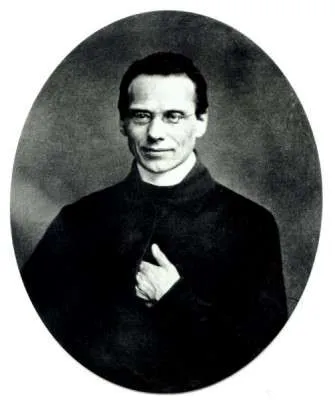
Saint Damien de Veuster of Molokai, Priest

1840–1889; Patron Saint of outcasts and those suffering from leprosy; Canonized by Pope Benedict XVI on October 11, 2009

Jozef De Veuster was the youngest of seven children born into a poor farming family in central Belgium. Jozef went to school until the age of thirteen, at which time he had to assist his father on the family farm. A few years later, after his older brother entered religious life, Jozef’s father sent Jozef to college to prepare him to take over the family business. At school, during a mission, he heard God calling him to religious life. At the age of twenty, Jozef followed in his brother’s footsteps and entered the Congregation of the Sacred Hearts of Jesus and Mary. Jozef later took the name Damien after a fourth-century saint who was a physician and martyr. His brother Auguste took the name Pamphile. Two of their sisters also entered religious life.

During his formation, Brother Damien had to work diligently on his studies to catch up to the other students. His older brother tutored him, satisfying the superiors who then permitted him to the priesthood. During those first few years in formation, Brother Damien often prayed before an image of Saint Francis Xavier, seeking his intercession for the grace of being sent on a foreign mission.

In 1863, Brother Damien’s brother, Father Pamphile, received word from his superiors that he was being sent to Hawaii as a missionary. Before Pamphile could leave, he became seriously ill. Brother Damien stepped in and asked for permission to go to Hawaii in his brother’s place. The superiors agreed, and Brother Damien arrived in Honolulu on March 19, 1864, after six months on a ship. Two months later, he was ordained a priest.

At that time in the Kingdom of Hawaii, a serious health crisis was taking place. During the previous century, European explorers and traders brought with them various diseases, such as influenza, smallpox, syphilis, cholera, and whooping cough. It is believed that in the 1830’s, Chinese ships brought the dreaded disease of leprosy to the islands. In response to this growing crisis, on January 1, 1865, the Hawaiian government passed legislation to stop the spread of leprosy. The legislation forced those who contracted leprosy to be sent to a settlement on a remote part of the island of Molokai where they were to live and ultimately die. This law tore families apart and devastated those who became infected. Over the next decade, many who were sent to Molokai fell victim to alcohol abuse and immoral conduct. There was scarcely enough food for them all, and morale was quite low.

In 1873, after being a priest for nine years, Father Damien volunteered to go to the leper colony to meet the spiritual needs of this community of outcasts. Shortly after his arrival, Father Damien sent a letter to the Hawaiian Board of Health, describing the state of the approximately 700 lepers. He wrote that “these wretches, banished from society, live together, without any distinction being made regarding age or gender, and without anyone being classified according to whether their illness is advanced or in its early stages, and all of them, more or less, unknown to each other. They pass all their time playing cards, drinking some kind of rice beer and giving themselves over to various excesses.” His superiors had ordered him not to touch the lepers, not to be touched by them, and not to eat with them. But Father Damien could not obey that command, knowing that Jesus freely touched the lepers. In a letter to his brother, Father Damien said, “As for me, I make myself a leper with the lepers to gain all for Christ. Because of this, when I preach I normally say, ‘We lepers.’”

Over the next fifteen years, Father Damien worked tirelessly as a true father, doctor, construction worker, farmer, gravedigger, and priest. Throughout his ministry to the lepers, he personally dug more than 1,000 graves and built as many coffins for the people he buried, giving them a dignified funeral. For the living, he built hundreds of homes, chapels, roads, hospitals, and even a fresh water system. He taught catechism, celebrated the sacraments, and converted many souls. He regularly visited every person under his care—Catholic, Protestant, and atheist alike. In 1885, he wrote, “During the week I visit my numerous sick and busy myself with orphans, who are all lepers. At times it can be quite unpleasant to be always surrounded by these unfortunate children, but I find consolation in it. They learn their catechism well, and are present daily at morning Mass and the evening rosary.” Father Damien transformed that wretched community into a community of believers, giving them the hope of the Gospel and the dignity they deserved.

It soon became clear that Father Damien’s ministry was not only to those on the island. Many in Europe began to hear about and were inspired by his ministry. Letters he had written home were published in newspapers and as his fame grew, donations poured in to assist with the work. Though many held him up as a modern hero, others criticized him as reckless for touching the lepers and allowing himself to be touched. Even some within the Hawaiian government were critical, given his constant pleas for assistance for his lepers.

After eleven years of ministering to the lepers, Father Damien contracted leprosy himself. He suffered with the disease for five more years, dying during Holy Week in his sixteenth year of ministry on the island. On his deathbed, he announced to his companions that the Lord was calling him to celebrate Easter that year in Heaven. He died with a heart filled with joy.

Throughout history, the Church has always honored martyrs. Those who willingly endured suffering and death rather than renounce their faith give us a powerful witness. Father Damien, though not a martyr by blood, was a martyr of charity. His love for the rejects of society led him to lay his life down for them all, holding nothing back. The result of his heroic sacrifice was the transformation of a disordered society of outcasts into a community of faith and hope.

Ponder your own calling to reach out to those who experience isolation within your community. The poor, sick, mentally ill, and sinner are all in need of God’s mercy. Be open to any way that God may want to use you as an instrument of His limitless charity by pledging to be a martyr of charity yourself.

Source: https://mycatholic.life/saints/saints-of-the-liturgical-year/may-10—saint-damien-de-veuster-of-molokai-priest—usa-optional-memorial/

Saint Damien de Veuster of Molokai, Priest Read More »

John 14:18–20

Members of God’s Family

“I will not leave you orphans; I will come to you. In a little while the world will no longer see me, but you will see me, because I live and you will live. On that day you will realize that I am in my Father and you are in me and I in you.”

Reflection:

The feeling of being an orphan, of longing for belonging, reflects a deeper spiritual reality Jesus addressed with His disciples in today’s Gospel. Those with close families are truly blessed, as a supportive family fosters personal growth and a sense of identity. When one is orphaned, the absence of these natural bonds can leave a lasting sense of loss. Yet even the strongest earthly family relationships point to a greater truth: our ultimate belonging is found in God’s family.

Jesus understood the sense of loss His disciples would feel after His Passion, Resurrection, and Ascension. When He said, “In a little while the world will no longer see me…” He was preparing them for His physical departure through the Ascension. But He reassures them: “I will not leave you orphans; I will come to you…you will see me, because I live and you will live.”

Initially, the disciples struggled to grasp the meaning of these words. Only after the outpouring of the Holy Spirit did they begin to understand. The same promise Jesus made to them applies to us today. Though we were not among those who witnessed His earthly presence, we too have a longing for His nearness—a longing to belong, to be loved, and to find our place within a family. This longing is fulfilled supernaturally through the gift of faith and our incorporation into God’s divine family, the Church.

Faith is the key to this relationship. It is more than intellectual belief; it is the acceptance of a personal revelation from God and a choice to live according to that revelation. Jesus promises that those who love Him and obey His commandments will experience His presence and that of the Father. This experience begins through faith, which is a gift by which God communicates Himself to us, revealing His love and will. It is both certain and mysterious, a knowledge that leads us to divine hope and sustains us in the pursuit of God’s will.

Faith also unites us with one another. Through faith, we are no longer orphans but brothers and sisters in Christ. Our natural longing to belong finds its ultimate fulfillment in God’s glorious family, which begins on earth and is perfected in Heaven.

Reflect today on the desire in your heart to belong, to be loved, and to be part of a family. Recognize that this longing finds its ultimate fulfillment in the family of God. Though we await the fullness of this communion in Heaven, we can experience it even now. Commit yourself to respond to Jesus’ invitation by embracing your place in His family through prayer, the sacraments, and daily acts of love. Recognize that He is in the Father, we are in Him, and He is in us. Embrace this reality, allowing the gift of faith to draw you more deeply into the divine family to which we are called.

Source: https://catholic-daily-reflections.com/2026/05/09/members-of-gods-family/

John 14:18–20 Read More »

 Saint John of Ávila, Priest and Doctor of the Church

1499–1569; Patron Saint of Spanish priests; Canonized by Pope Paul VI on May 31, 1970; Proclaimed a Doctor of the Church by Pope Benedict XVI on October 7, 2012

Though today’s saint bears the name of Ávila, that was simply his name, not where he was from. John of Ávila was born in the town of Almodóvar del Campo, Spain, less than a decade after Spain was liberated from almost 800 years of Muslim rule. He was an only child born later in life to his parents who had struggled to conceive. His noble, wealthy, and devout parents attributed John’s birth to the intercession of Saint Bridget of Sweden. Notably, John was born on the Feast of the Epiphany.

At the age of fourteen, John was sent to study law at the renowned University of Salamanca, but he never completed his law degree. After four years of study, John had a profound conversion experience, after which he returned to his parents’ home for a three-year period of prayer and discernment. During that time, John began to hear God calling him to the priesthood. He sought spiritual advice from a Franciscan friar who told John that he believed him to be called to the priesthood and that he must go. That spiritual advice confirmed John’s interior calling, and in 1520 he began his theological studies. While in seminary, John was blessed with excellent teachers who were well versed in the theology of Saint Thomas Aquinas. John was smart, a good student, and very devout, especially regarding the Holy Eucharist. When John returned home in 1526, he was ordained a priest and celebrated his first Mass in his home parish.

Toward the end of his studies, both of John’s parents died. Being an only child of wealthy parents, John received a large inheritance. Though he could have used some of that money to throw a large ordination party for himself, he chose to do something more radical. He went out into the streets, found twelve poor people, and invited them to share a feast with him. He then sold the property he inherited and gave his money to the poor.

With his parents and childhood home gone, Father John decided to become a missionary to the West Indies. To achieve that goal, he contacted the newly appointed first bishop of Mexico who was waiting to sail to the New World. After receiving permission to travel with him, Father John went to Seville to wait for a ship. While waiting, he began to engage in public ministry in Seville, quickly drawing admiration for his devout celebration of the Mass, his preaching, and his catechetical approach. A local priest named Father Contreras, with whom he might have been living, became very impressed with Father John. Father Contreras spoke to the Archbishop of Seville, asking him to intervene and convince Father John to stay in the archdiocese. The archbishop did intervene and convinced Father John to abandon his desire to travel to the New World so he could remain in Spain to help revive the faith that had been so severely damaged by centuries of Muslim rule, as well as the confusion that was emerging from the Protestant Reformation.

In 1529, at the age of thirty, just three years a priest, Father John of Ávila began his ministry in the town of Andalusia. He would later be known affectionately as “the apostle of Andalusia.” He continued his studies at the local university and eventually earned the impressive title of “Master.” Father “Master” Ávila’s priestly ministry was abundantly fruitful in Andalusia. He often preached on repentance and on the value of the Sacrament of Confession, preparing for his sermons and celebration of Mass with long periods of prayer. After his sermons to an overflowing congregation, he would often enter the confessional and remain there for hours until everyone who wanted to confess their sins was able to do so.

Father John’s preaching not only bore good fruit, it also stirred up animosity. Father John lived a life of radical poverty and regularly preached about the dangers of excessive wealth. Some of the local clergy were convicted by his preaching because of their lavish lifestyles, so Father John was reported to the Inquisition, subsequently arrested, and imprisoned. The charge was that he had preached in a sermon that “the doors of Heaven are closed to the rich…” Though many would despair during such a personal persecution, Father John did not. During his yearlong imprisonment he devoted himself to prayer, study, and writing. He translated the book, Imitation of Christ, and wrote much of his most famous book Audi, filia (Listen, O Daughter), a spiritual masterpiece on Christian perfection and the universal call to holiness, written at the request of a Spanish nun, a spiritual directee of Father John. After a year, the Inquisition found him not guilty of any crime, and he was released in 1533. For the next eighteen years, Father John engaged in active ministry in Andalusia and the surrounding towns where he gained quite a following. In 1551 he began to experience ill health and lived a semi-retired life until his death in 1569.

Throughout his ministry, Father John became a saint among other saints, offering spiritual direction and counsel to many. He became a mentor to Saint Ignatius of Loyola and inspired many young men to join Ignatius’ newly founded Society of Jesus. He advised the great Saint Teresa of Ávila, who sought his counsel on her writings. Saint John of God was converted by John of Ávila’s preaching and then founded the Brothers Hospitallers, a religious congregation devoted to the poor, sick, and mentally ill. He counseled Saint Francis Borgia, the third General Superior of the Jesuits, the Franciscan friar Saint Peter of Alcántara, the bishop Saint Thomas of Villanova, as well as other bishops, religious, civil rulers, and numerous spiritual directees. Not only did he leave behind a legacy by affecting so many people during his lifetime, he also left behind his spiritual classic Audi, filia, eighty-two sermons, Scripture commentaries, 257 letters, and various other minor works on reform in the Church in the spirit of the great Council of Trent in which he participated.

Though he lived in the sixteenth century, Saint John of Ávila was not canonized until 1970 and was made a Doctor of the Church in 2012. Why did it take so long? Perhaps one reason is that the Church of the twenty-first century needs to revisit John’s preaching. We need to return to his teachings on simplicity, poverty, the universal call to holiness, his vigorous attempts to reform the clergy, his devotion to the holy Mass, and his passionate pleas for repentance from sin.

As we honor this sixteenth-century saint, look to him also as a role model for the Church. He began with a desire to be a foreign missionary but found his homeland to be the mission field to which he was called. Ponder your own call to evangelize those closest to you. Doing great things for God often starts at home. Commit yourself to that mission field, and pray that God will bear much good fruit through your efforts. If you suffer as a result, be encouraged by Saint John’s imprisonment and know that God can bring forth good from everything you are called to endure.

Source: https://mycatholic.life/saints/saints-of-the-liturgical-year/saint-john-of-avila/

 Saint John of Ávila, Priest and Doctor of the Church Read More »

John 15:18-19

Chosen Out of the World

Jesus said to his disciples: “If the world hates you, realize that it hated me first. If you belonged to the world, the world would love its own; but because you do not belong to the world, and I have chosen you out of the world, the world hates you.”

Reflection:

No one wants to be hated. Yet our Lord makes it very clear that because He has “chosen you out of the world, the world hates you.” He doesn’t say that the world “might” hate you or that you “might” suffer some injustice. He declares that those whom He has chosen out of the world will be hated by the world. This is one of the paradoxes of our faith: Living in Christ brings love from Him but hatred and persecution from the world. Yet this hatred is a sign of a deeper reality: We are no longer bound by the fleeting values of this fallen world but are participants in God’s eternal Kingdom, where peace and true freedom are found.

The “world” in this context is not Creation itself. All that God created is good. The world represents the fallen spiritual order, caught up in sin. Those who “belong to the world” are those who conform to diabolical values, such as seeking power for power’s sake, wealth as a selfish means to fulfillment, or carnal indulgence in an attempt to satiate oneself. Living in accord with the values of the fallen world is foolishness. It leads to a superficial life that cannot ultimately satisfy our deeper spiritual cravings and shares in the envy and hatred of the demons.

Breaking free of worldly attachments is difficult at first because those who have become worldly are blinded by their disordered desires. Sin is a slippery slope. Compromising even in small ways to gain acceptance risks losing clarity of purpose and rootedness in Christ. The more people sin, the more miserable they become, and the more miserable they become, the more they seek satisfaction from sin. Only when that cycle is broken does peace begin to take hold and freedom is found. Yet, in the midst of this struggle to detach from worldly illusions, Jesus offers a profound truth: “I have chosen you out of the world.”

To be chosen by Christ is to be set apart for a life of divine purpose and eternal fulfillment. This call draws us into communion with Him, transforming suffering into a path to glory. The disciples’ identity is not self-made but rooted in His choice. This divine election sets them apart for a mission that challenges the temptation to worldly ambitions. Their call to holiness and truth inevitably provokes hostility because it shines a light on the darkness of the world’s sin and draws others to conversion. Yet with this call also comes the promise of eternal joy.

This raises an important question for each of us: Does the world love or hate you? Do you fit in or stand in opposition to worldly values? If we try to gain the world’s love, from those who have embraced worldly ambitions and values, then we will find ourselves compromising to gain acceptance. But if we remain steadfast, even when persecuted, we share in Jesus’ victory and the promise of eternal life.

Jesus tells us this sober truth as a way of preparing us for the inevitable: “Remember the word I spoke to you, ‘No slave is greater than his master.’ If they persecuted me, they will also persecute you” (John 15:20). We must remember His word, His warning, so that if we experience persecution, hatred, or any form of judgment or criticism, we will not become discouraged or fearful. Understanding the consequences of living contrary to worldly values will prepare us for the rejection that our Lord Himself experienced.

Reflect today on being chosen by God and the consequences of being called out of the world. Consider any ways that living your faith openly results in criticism or persecution. As you do, recall that you are called to be like Jesus, including being given a share in His sufferings, but also a share in His glory. As Saint Paul reminds us, “I consider that the sufferings of this present time are as nothing compared with the glory to be revealed for us” (Romans 8:18). Do not give in to fear. Remain courageous and confident that along with Jesus’ call comes the grace to respond to and endure whatever comes your way, knowing that the joy of the Resurrection awaits.

Source: https://catholic-daily-reflections.com/2026/05/08/chosen-out-of-the-world/

John 15:18-19 Read More »

Apparition of Saint Michael the Archangel

Profile

Archangel. Leader of the army of God during the Lucifer uprising. Devotion is common to Muslims, Christians and Jews, and there are writings about him in all three cultures. Considered the guardian angel of Israel, and the guardian and protector of the Church. In the Book of Daniel (12:1), Michael is described as rising up to defend the Church against the Anti-Christ.

The feast of the Apparition of Saint Michael commemorates appearance of the archangel to a man named Gargan in 492 on Mount Gargano near Manfredonia in southern Italy. Gargan and others were pasturing cattle on the mountain; a bull wandered off and hid in a cave. An arrow was shot into the cave, but it came flying back out and wounded the archer. The cowherds went to their bishop who ordered three days of fasting and prayer to seek an explanation for the mystery. At the end of the three days Michael appeared to the bishop and requested a church built in the honour of the Holy Angels in the cave. If you find medals or holy cards with ‘relics‘ of Michael, they are probably rock chips from the cave, or pieces of cloth that have touched it.

Canonized

  • Pre-Congregation

Name Meaning

  • Who is like God? (the battle cry of the army of heaven)

Source: https://catholicsaints.info/michael-the-archangel/

Apparition of Saint Michael the Archangel Read More »

John 15:13–15

Increasing Your Capacity to Love

“No one has greater love than this, to lay down one’s life for one’s friends. You are my friends if you do what I command you. I no longer call you slaves, because a slave does not know what his master is doing. I have called you friends, because I have told you everything I have heard from my Father.”

Reflection:

Is it possible to know everything that Jesus knows? Certainly not. Yet, Jesus says in today’s Gospel, “I have told you everything I have heard from my Father.” Jesus Himself is the full revelation of the Father. Therefore, in Him we have been given perfect access to the life of God. Even though God has revealed everything to us, we are limited in our ability to receive it because we are finite creatures. Nonetheless, our imperfect natures do not limit what Jesus has told us from the Father.

By analogy, consider water. When we are thirsty, we drink a glass of water. If we are very thirsty, we might drink several glasses. However, we are limited in how much water we can consume in one sitting. All that Jesus has revealed to us from the Father is like an infinite ocean of grace. He doesn’t offer us only one glass or even several. He offers us the ocean. Though He bestows it on us fully, we are limited in what we can receive by our finite nature and sin.

The goal of the Christian life is not to take one “sip” or “glass” of grace. Our goal is to continuously increase our capacity for receptivity. The greatest of saints spent their lives doing so. The more grace they received, the greater their capacity, and the greater their capacity, the more they received. Saint Teresa of Ávila described this process as progressing through the “mansions” of the interior castle, with each step drawing the soul closer to union with God. Saint John of the Cross taught that detachment from worldly attachments and the purification of the soul increase our receptivity to God’s grace. Saint Thomas Aquinas explained that the theological virtues, especially charity, expand the soul’s capacity for divine love.

The presence of grace in any soul ensures that the soul will attain Heaven upon death. However, the level of glory that each will experience for eternity is determined by how much the soul’s capacity for grace expands in this life. This capacity is built through love. Jesus teaches, “No one has greater love than this, to lay down one’s life for one’s friends.” The love of charity is the process by which we lay down our lives for others. Jesus is not only the source of such love, He is also the Model. His choice to die on the Cross in His human nature exemplifies the kind of sacrificial love we are called to embody.

That form of sacrificial charity can be difficult to comprehend and live. Our fallen human nature tempts us toward selfishness. We can easily become deceived into thinking that taking is better than giving, being served is better than serving, and looking out for ourselves is better than putting others before us. The only way out of such deception is to enter into friendship with Jesus: “You are my friends if you do what I command you.”

The freedom to love is found through obedience to God. Though we cannot arrive at such obedience instantaneously, we can grow into it through prayer, penance, and fidelity to His commands. What does He command us to do? “This is my commandment: love one another as I love you” (John 15:12). Jesus loved us by laying down His life for us. In turn, we are called to lay down our lives for others. This means thinking of others before ourselves, anticipating their true needs, and working for their highest good—the salvation of their souls.

Reflect today on how Christ’s infinite ocean of grace flows into your life. What areas of selfishness or fear prevent you from receiving more of His love? Commit to growing in charity by laying down your life in concrete ways for those whom God has placed in your path. Seek to imitate Jesus who calls you His friend and shares everything with you that He has heard from the Father. Remember His command: “Love one another as I love you.” The more you love, the more your soul will expand, and the more you will share in His eternal glory.

Source: https://catholic-daily-reflections.com/2026/05/07/increasing-your-capacity-to-love/

John 15:13–15 Read More »