Author name: Sani

John 6:3–5

Divine Providence Never Fails

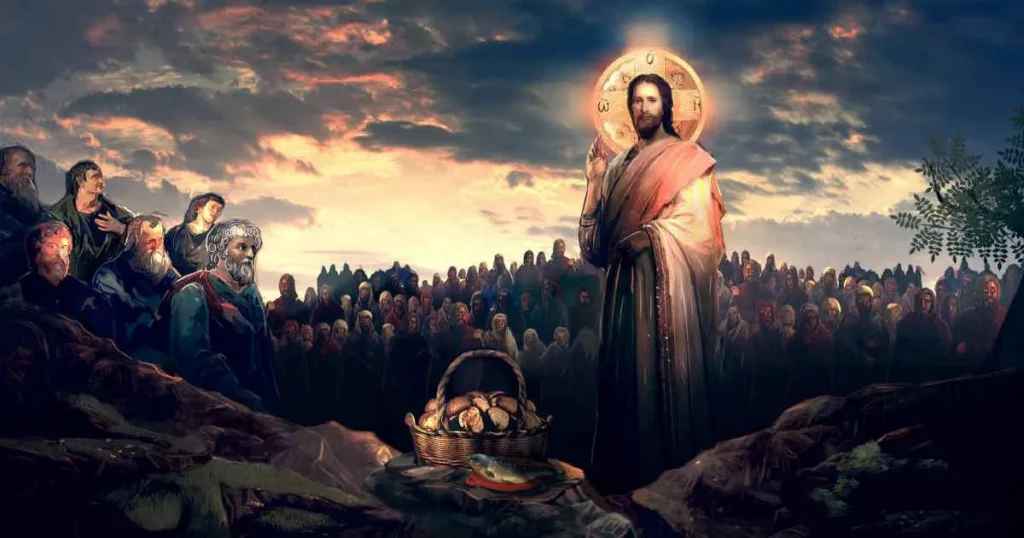
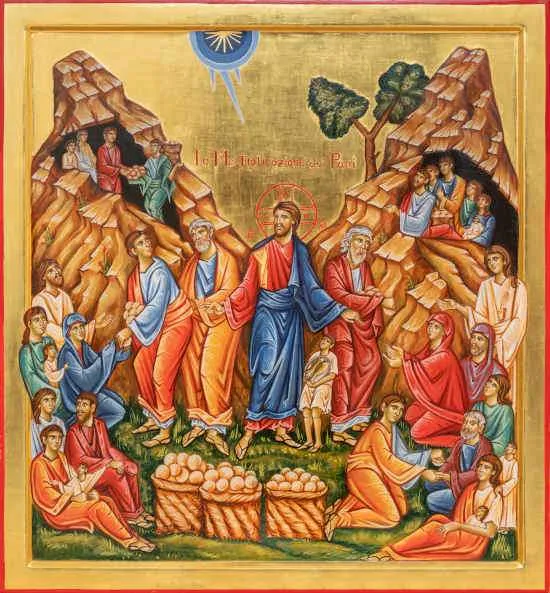
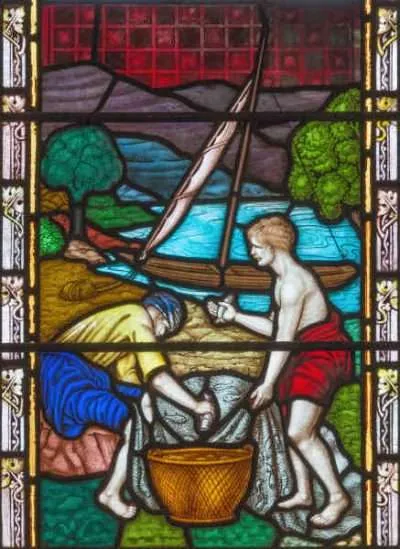
Jesus went up on the mountain, and there he sat down with his disciples. The Jewish feast of Passover was near. When Jesus raised his eyes and saw that a large crowd was coming to him, he said to Philip, “Where can we buy enough food for them to eat?”

Reflection:

Have you ever faced a situation in which you felt desperate? Some people endure severe poverty, unsure of where their next meal will come from. Others struggle with family disunity, leading to deep fear and anxiety. Some battle addiction, uncertain how they will ever break free. Still others face obstacles that seem insurmountable. Today’s Gospel reminds us that nothing is impossible for God.

The story of the multiplication of the loaves and fishes begins with an intriguing exchange between Jesus and two of His disciples. Jesus asked Philip where they could buy food for the crowd, even though He knew they did not have enough money nor a place to buy food. This question was more of a statement, showing us that we must always rely on divine providence, especially when faced with the impossible.

From a human perspective, feeding such a vast crowd on a mountaintop was impossible. Similarly, we all encounter situations in life that, by human means, present insurmountable challenges. If the crowd had numbered only about twenty people, one of the disciples might have managed to meet the need with a practical solution, such as purchasing food from a nearby village. Thus, when a challenge in life has a reasonable solution within our capacity, we should pursue it. When human effort alone is not enough, we must turn to divine providence.

Philip’s response reveals his purely rational perspective: “Two hundred days’ wages worth of food would not be enough for each of them to have a little.” In contrast, Andrew shows a glimmer of faith and hope when he points out, “There is a boy here who has five barley loaves and two fish; but what good are these for so many?” The role of the boy is often overlooked. Although the Gospel says little about him, it is clear that he entrusted everything he had to Jesus. Perhaps it was this small act of trust that allowed Jesus to perform the miracle.

After Jesus had the vast crowd of 5,000 men—not counting women and children—recline in the grass, He did the unimaginable. He transformed the five barley loaves and two fish into more than the crowd could eat. The twelve baskets of food left over symbolize God’s superabundant providence, given to those who are members of His Kingdom—the new Twelve Tribes of Israel, His Church.

We must read this miracle from both a literal and a spiritual point of view. First, Jesus literally fed this vast crowd with a few loaves and fish. In our lives, He promises the same when we entrust all we have to Him. Though we must act responsibly to provide for ourselves and our families, in the end, we must believe that Jesus will provide all we need. His concern extends to our material needs, relieving us of worry and anxiety when we trust in Him.

Spiritually speaking, God’s providence assures us that every desperate situation in which we find ourselves can be transformed by grace if we trust Him. Family disunity, addictions, poverty, and every other human struggle can and will be transformed by His grace if we fully surrender to Him. For example, even if a family relationship is beyond reconciliation, by fully surrendering that relationship to Him, His grace will either heal it or use the suffering as a source of grace in ways we could never imagine. Nothing is beyond the power of God.

Reflect today on this vast crowd coming to Jesus on the mountain. See yourself in that crowd. See yourself as hungry and even desperate, journeying toward Him Who is the answer to every problem. See yourself as that boy who gives all he has to Jesus. Don’t hold anything back. Trust in Him and know that His divine providence will transform anything you bring to Him in superabundance.

Source: https://catholic-daily-reflections.com/2026/04/16/divine-providence-never-fails/

John 6:3–5 Read More »

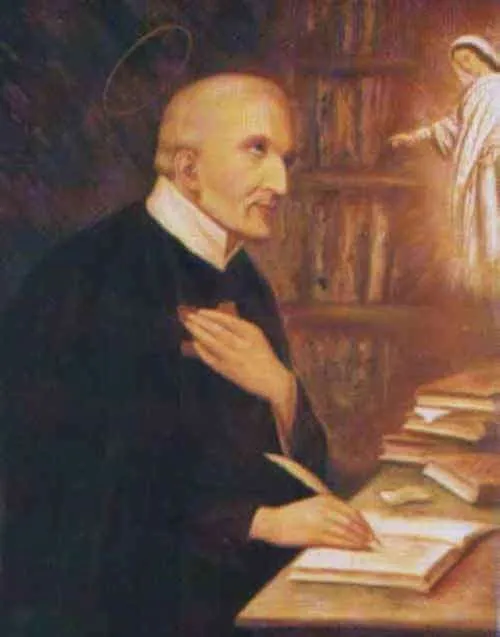
Saint Turibius of Astorga

Profile

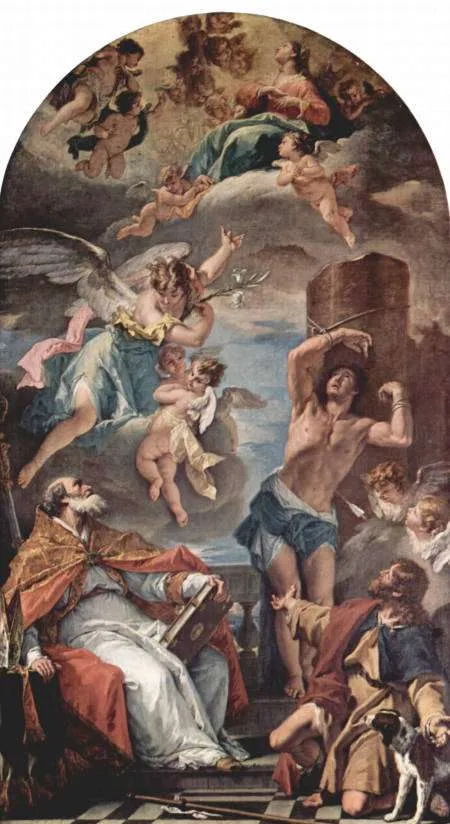
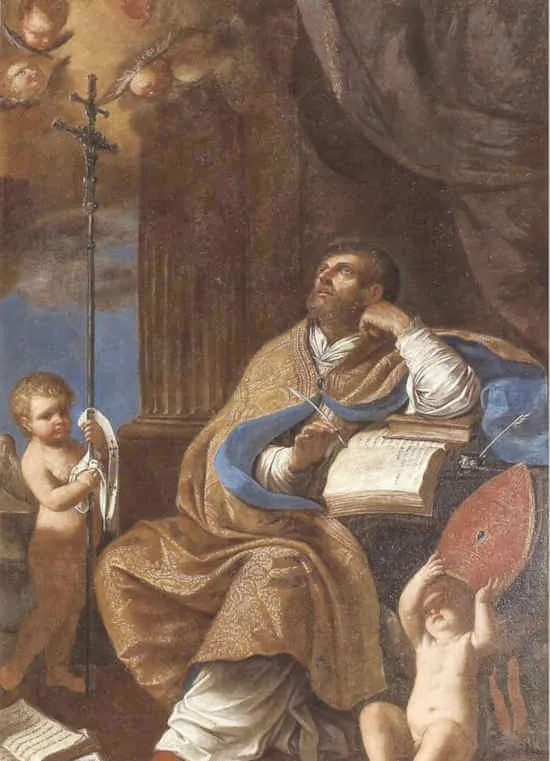
Tubius was a Bishop of Astorga in northwest Spain. He was known as a stern disciplinarian. He was a fierce opponent of Priscillianism heresy. He was a great supporter of Pope Saint Leo the Great.

Born

  • bc.402 in Betanzos, Visigothic kingdom of Toledo (in modern Spain

Died

  • c.460 in Tui, Spain of natural causes
  • buried at the monastery of Santo Toribio de Liébana, Cantabria, Spain

Canonized

  • Pre-Congregation

Patronage

  • Astorga, Spain
  • Astorga, Spain, diocese of

Source: https://catholicsaints.info/saint-turibius-of-astorga/

Saint Turibius of Astorga Read More »

John 3:35–36

A Belief that Transforms

“The Father loves the Son and has given everything over to him. Whoever believes in the Son has eternal life, but whoever disobeys the Son will not see life, but the wrath of God remains upon him.”

Reflection:

A holy fear, one of the seven Gifts of the Holy Spirit, begins with a fear of punishment. We should foster within our minds and hearts a healthy fear of experiencing the “wrath of God.” God’s holy wrath is not an emotional reaction to those who reject Him but rather the necessary consequence of disobeying Him and refusing to receive and foster the transforming gift of faith. God’s wrath is His pure justice. He respects our freedom and will not impose Himself upon us. God will not force the gift of eternal life upon those who reject it by rejecting the means of obtaining it.

What is the means of obtaining eternal life? Believing in the Son. In biblical terms, believing is much more than intellectual assent. Even the demons believe in God intellectually. Their belief, however, lacks the spiritual gift of faith, which is what today’s Gospel addresses.

Faith in God involves listening to Him, understanding His Word, and responding positively in our daily actions. It means we choose to allow ourselves to be changed by God’s Word. True faith cannot be separated from hope and charity. Once our minds perceive God and the Truth that He imparts, the divine gift of hope compels us to act on and in accordance with the truth we understand. Faith and hope together produce charity, which perfects faith and leads to a love of God and others, inspiring us to act according to God’s will.

For these reasons, it is clear that being a Christian is far more than believing a philosophical thesis. Sadly, it seems that there are many who profess to be Christian but do so only in an intellectual way. If that is you sometimes, then prayerfully ponder the phrase “the wrath of God remains upon him.”

Though the gift of Fear of the Lord begins with the fear of losing out on eternal life, it culminates in a burning desire to do all we can to further God’s Kingdom and implement His will in our lives. This higher form of fear drives us away from anything that keeps us from offending God, even slightly, or failing to serve Him with all the powers of our souls. This is the fear of a son or daughter who strives to please God in all things.

As we continue our Easter Season, we are invited to consider all that Jesus revealed in His public ministry through the lens of His final victory over death and restoration of eternal life, promised by the Resurrection. Today, we are especially challenged to examine what we believe and whether that intellectual assent has mixed with the grace of hope to compel us to act.

Reflect today on whether your belief in the Son of God drives your will to action. As you listen to the Word of God, do you allow it to change you? Do you make conscious decisions to move in a new direction because you have listened to and acted upon all that Jesus has revealed? Are you closer to God today than you were last year or in the years before that? Choose to believe in the Son of God today in the way Jesus wants you to believe, and you will be one step closer to the incalculable riches of eternal life.

Source: https://catholic-daily-reflections.com/2026/04/15/a-belief-that-transforms/

John 3:35–36 Read More »

Saint Maro of Rome

Profile

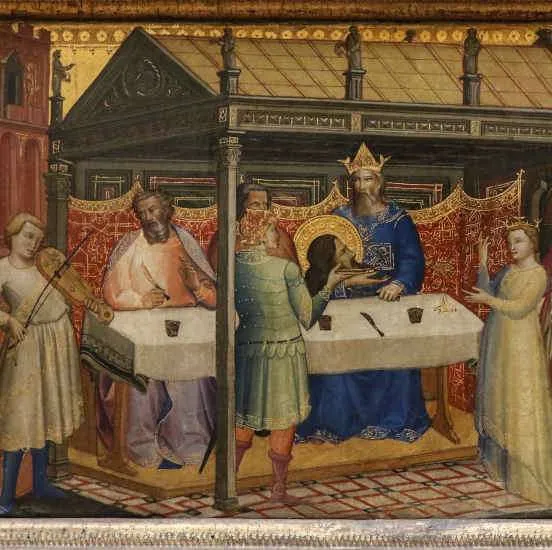
Maro was a friend of Saint Flavia Domitilla, whom they accompanied in exile to the island of Ponza. He was martyred in the persecutions of Trajan.

Died

  • beheaded c.99 in Rome, Italy

Canonized

  • Pre-Congregation

Patronage

  • Civitanova Marche, Italy
  • Monteleone, Italy

Source: https://catholicsaints.info/saint-maro-of-rome/

Saint Maro of Rome Read More »

John 3:19–21

Light or Darkness?

“And this is the verdict, that the light came into the world, but people preferred darkness to light, because their works were evil. For everyone who does wicked things hates the light and does not come toward the light, so that his works might not be exposed. But whoever lives the truth comes to the light, so that his works may be clearly seen as done in God.

Reflection:

The contrast of light and darkness is a beautiful concept to ponder in prayer. They are not two opposing forces. Darkness is simply the absence of light. In the visual spectrum, darkness does not exist. It is nothingness—no light, no color—making it impossible for our eyes to see. Similarly, within the spiritual realm, the absence of God leaves us spiritually blind. Darkness does not remove our capacity for seeing; rather, our sight is rendered useless without the light that reveals truth and guides our way. In this spiritual darkness, we stumble, unable to discern good from evil or to find the path to holiness. Yet, when we invite the divine light of Christ into our souls, the darkness dissipates and we begin to see clearly, walking confidently in God’s grace and truth.

If you’ve ever been in complete darkness, perhaps at home on a cloudy night when the power goes out, you know that even one small candle is enough to find your way around. So it is with the Light of Christ. Even the faintest presence of grace in our souls enables us to begin to find our way back to God.

Today’s Gospel begins with that familiar passage from John 3:16: “God so loved the world that he gave his only-begotten Son, so that everyone who believes in him might not perish but might have eternal life.” This line comes toward the end of Jesus’ conversation with Nicodemus, the Pharisee who came to Jesus at night to converse with Him. Nicodemus was searching. Perhaps after he heard some of Jesus’ teachings and witnessed His miracles, Nicodemus discovered a small flickering flame of faith within his soul. That flame enabled him to find his way to Jesus that night in search of greater light. At the beginning of their conversation, Jesus gently but firmly challenged Nicodemus to move beyond what his human reason alone could comprehend and to walk with the light of faith. As Nicodemus listened and conversed, it seems that his mind and heart were opened, which enabled Jesus to teach him and us the beautiful truth found in today’s Gospel.

Perhaps as a way of softening His initial challenge, which was meant to help Nicodemus open himself further to the gift of faith, Jesus continued, “For God did not send his Son into the world to condemn the world, but that the world might be saved through him” (John 3:17). Though God is a perfectly just Judge, Jesus’ earthly mission was to save us from condemnation, to set us free, to flood our souls with the light of truth, and to enable us to see God through faith in this life and face-to-face in the next.

As with Nicodemus, Jesus is able to see any flickering flame of faith within our souls. When He sees it, He will engage us, challenge us, and seek to shine His light more fully within us. He wants not only a flickering flame of light but a radiant light. The more clearly we see, the more firmly our feet are on the path to holiness and the quicker we are able to journey to the source of all light—Jesus Himself.

Reflect today on the contrast of light and darkness within your soul. How clearly is your spiritual mind able to perceive all that God wants to reveal to you? If you find yourself lost at times or confused about life, turn to Jesus and beg for light. We must not be among those who prefer “darkness to light.” If the light of the Gospel reveals your sin, do not turn away. Believe that Jesus does not want to condemn you; He wants to free you. He wants you to believe in Him, so that you “might not perish but might have eternal life.” Allow the light to shine brightly within you so that you will find your way to all the treasures God wants to bestow on you.

Source: https://catholic-daily-reflections.com/2026/04/14/light-or-darkness/

John 3:19–21 Read More »

Saint Bernard of Tiron

Profile

Bernard was a monk in the Poitou area of France. He was a hermit and a traveling preacher. He founded a Benedictine monastery in the Tiron Forest and served as its abbot. Monks from his house spread throughout the British Isles, spreading the faith and building monasteries.

Born

  • c.1047 in France

Died

  • 1117

Patronage

  • turners

Source: https://catholicsaints.info/saint-bernard-of-tiron/

Saint Bernard of Tiron Read More »

John 3:10-12

Penetrating Divine Mysteries

“You are the teacher of Israel and you do not understand this? Amen, amen, I say to you, we speak of what we know and we testify to what we have seen, but you people do not accept our testimony. If I tell you about earthly things and you do not believe, how will you believe if I tell you about heavenly things?”

Reflection:

Today’s Gospel continues Jesus’ conversation with Nicodemus, a respected Pharisee who came to Jesus at night. Nicodemus began by professing a small amount of faith in Jesus: “Rabbi, we know that you are a teacher who has come from God, for no one can do these signs that you are doing unless God is with him” (John 3:2). Perhaps he expected Jesus to be pleased by this acknowledgment, but Jesus, desiring the complete conversion of Nicodemus’ soul, went deeper.

Their conversation focused on Jesus’ statement, “You must be born from above.” This theme recurs throughout their dialogue, forming the backdrop of today’s Gospel. Jesus gently encouraged Nicodemus to move beyond amazement toward a faith made possible only by openness to the Holy Spirit.

Like Nicodemus, many of us approach God in prayer with an initial or superficial faith. We acknowledge Jesus’ divinity, but this is only the starting point. Once we make that first step, Jesus invites us further, challenging us to delve into divine mysteries with hearts open to grace.

Jesus’ question, “You are the teacher of Israel and you do not understand this?” signals both a challenge and an invitation. Unlike the harsh rebukes He gave to those who approached with skepticism and disdain, His tone with Nicodemus was firm yet compassionate. Without condemning Nicodemus, Jesus exposed his limited understanding and called him to greater openness to the truth of Jesus’ identity and His divine mission.

This call to deeper understanding must resonate with us. Jesus invites us to look beyond the surface, beyond what our eyes can see, to the divine mysteries He reveals. He alludes to His crucifixion and His messianic identity when He says, “And just as Moses lifted up the serpent in the desert, so must the Son of Man be lifted up, so that everyone who believes in him may have eternal life” (John 3:14–15). This revelation, veiled and profound, speaks of the mystery of salvation—Jesus, both God and man, being lifted up on the Cross, shedding His blood so that all who believe in Him may attain eternal life.

Why does Jesus speak in mysteries? Because the truths He shares can only be fully grasped when we listen to the Holy Spirit within us, guiding and enlightening our souls. Just as the invisible wind can be felt, so too does the Holy Spirit move in our lives, unseen, yet powerful and transformative.

Reflect today on how you might be like Nicodemus. The good news is that this Pharisee, once hesitant and questioning, ultimately grew in faith and is commemorated as a saint in the Roman Martyrology on August 31. Like him, we are called to move beyond the surface and deepen our openness to the Holy Spirit. Where in your life can you seek deeper understanding and greater surrender to God’s mysterious work? Resolve to listen more intently and to be guided by the Spirit so that you might comprehend the divine mysteries and believe with greater conviction.

Source: https://catholic-daily-reflections.com/2026/04/13/penetrating-divine-mysteries/

John 3:10-12 Read More »

Saint Martin I, Pope and Martyr

c. 595–655; Pre-Congregation canonization; Invoked by those persecuted by the state

In the seventh century, theological and political tension prevailed between the Western church centered in Rome and the Eastern church centered in Constantinople, largely due to the interference of the Byzantine emperor. The emperor and Patriarch in Constantinople (modern-day Istanbul, Turkey) had enjoyed a strong religious and political influence over the entire Church ever since Constantine the Great Christianized the Roman Empire in the fourth century. This influence grew after the Western Roman Empire fell in the fifth century and was strengthened further in the sixth century when the Byzantine emperor, Justinian I, conquered Italy and forced the Goth-appointed pope to resign in 537, naming the papal legate to Constantinople as the new pope. From that time on, until 752, newly elected popes were required to obtain approval from the emperor before being consecrated. Many emperors saw themselves not only as political leaders, but also as those ultimately in charge of the governance of the Church. It is within this tension that today’s saint lived.

Martin was born in a small town about 100 miles north of Rome. He was of noble birth, an excellent student, and exercised great charity to the poor. As a cleric, he assisted two popes in important roles. In 641, he was sent by Pope John IV across the Adriatic Sea to Dalmatia and Istria (modern-day Croatia) where he assisted those who had suffered the effects of war. After the death of John IV, Theodore I was elected pope. Martin became his papal legate to Constantinople, where he worked closely with the emperor and patriarch, representing Pope Theodore in all matters.

As papal legate to Constantinople, the most pressing theological issue that Martin faced was the ongoing debate about the nature of Christ. Many within the Eastern Church adhered to monothelitism, a heresy claiming that Christ had only one will: a divine will but not a human will. This was contrary to the orthodox position held by the pope that Jesus had both a human and divine will. In 648, in an apparent attempt to bring an end to the debate, the Byzantine emperor Constans II issued an edict, the Type of Constans (Type), in which he tried to forge a middle way by forbidding discussion of the controversy, permitting everyone to adhere to their own position. Though the Patriarch of Constantinople, Paul II, at first held the orthodox position, he embraced the Type issued by the emperor. Martin, however, did not.

One year later, in 649, Pope Theodore died and named Martin as his successor. As had been the custom, the newly elected pope was supposed to receive approval of his appointment from the Byzantine emperor before his installation. However, for the first time in more than 100 years, Martin immediately moved forward with his coronation without the express consent of Constans II. This angered Constans, but he did nothing about it—at first.

Pope Martin, well aware of the most pressing issues within the Church, wasted no time addressing them. He called the Lateran Council of 649, a council that his predecessor Pope Theodore had intended to call, and made monothelitism the topic of discussion. Though the council did not reach the level of an official ecumenical council of the entire Church, given the fact that the Roman emperor was not involved, it was one of the earliest attempts of a pope to act on his own authority without the emperor. Hence, not only the teaching that this council produced, but also the way it was orchestrated, provided much direction for the future of the Church when the role of the emperor would eventually be fully excluded from the governance of the Church. The Lateran Council was attended by 105 bishops, held five sessions, and issued twenty decrees condemning monothelitism. It also condemned Constans’ edict, the Type, as well as some other earlier imperial edicts.

When Pope Martin began publishing this new teaching throughout Rome and beyond, the enraged emperor sought to have him arrested, or killed if necessary. This proved difficult. The emperor first sent a bishop of lower rank to Rome to oppose the pope and cause a schism. He was unsuccessful, so the bishop is said to have ordered a soldier to murder the pope during Mass. That soldier was struck blind, and the bishop repented. Later, the emperor sent another bishop with a Byzantine army to the pope. This time they were successful in capturing the pope and in bringing him back to Constantinople. Pope Martin was already ill when he was captured; abuse and lack of decent food caused his condition to worsen during the three months at sea.

Once he arrived in Constantinople, Pope Martin was placed on trial and found guilty of treason, the primary charge being that he would not accept the emperor’s edict, the Type. Because Patriarch Paul II intervened with the emperor, the emperor exiled Martin to Crimea instead of sentencing him to death. Throughout his imprisonment and exile, though elderly and sick, he was continually abused, malnourished, and ridiculed.

The emperor ordered the Church in Rome to elect a new pope, even though Pope Martin was still alive. The Church in Rome consented and elected a new pope as one final blow to the abused pontiff. Pope Martin, seeking only the good of the Church, acquiesced to this humiliation, and embraced being abandoned by the leaders of the Church in Rome. Of all he suffered, it is said that his abandonment by the Church leaders caused him the most suffering. Not long after being exiled, Pope Martin died because of the abuses, exposure, and malnourishment he endured. For that reason, the Church considers him a martyr, the last pope to receive that crown.

Popes must be courageous, even in the face of persecution and death. They need to set an example to all people so that all the faithful will follow their example. Pope Martin did this well, and his witness has had a profound effect upon generations after him. More than 1,100 years later, Pope Pius VII honored the memory and witness of Pope Martin when he wrote, in part, “Indeed, the famous Martin who long ago won great praise for this See, commends faithfulness and fortitude to Us by his strengthening and defense of the truth and by the endurance of labors and pains…”

Ponder the ways that God is calling you to act with greater courage in the face of persecution, opposition, ridicule, or any form of suffering. Do what is right, no matter the cost, and you will one day be among the saints alongside Saint Martin in Heaven.

Source: https://mycatholic.life/saints/saints-of-the-liturgical-year/april-13-saint-martin-i-pope-and-martyr/

Saint Martin I, Pope and Martyr Read More »

John 3:6-8

Faith and Reason

“Do not be amazed that I told you, ‘You must be born from above.’ The wind blows where it wills, and you can hear the sound it makes, but you do not know where it comes from or where it goes; so it is with everyone who is born of the Spirit.”

Reflection:

Today’s Gospel offers us an opportunity to ponder the relationship between faith and reason. Is it good to live our lives according to human reason? Certainly! The natural virtue of prudence is the ability to use our human reason to discern the right course of action in any given situation, choosing what is most reasonable to achieve good and avoid harm. Unfortunately, we often make choices based not on prudence but on unruly passions and disordered desires. Prudence helps us cut through the confusion so we can choose the most reasonable course of action.

Natural prudence, however, is not enough if we want to choose God’s will in all circumstances. God’s will is not contrary to reason and natural prudence; it is above what our natural minds alone can discern. This was the struggle Nicodemus had in today’s Gospel.

Nicodemus, a well-respected Pharisee, “came to Jesus at night” to converse with Him. Jesus warmly welcomed him and their conversation ensued. Some Church Fathers have interpreted the detail that it was at night as a symbol of Nicodemus’ faith: it had not yet been enlightened by divinely revealed truth. He was clearly open and curious, knowing there was something special about Jesus, which is evidenced by his initial greeting: “Rabbi, we know that you are a teacher who has come from God, for no one can do these signs that you are doing unless God is with him” (John 3:2). Nicodemus, familiar with Jesus’ miracles, understood that only God could empower one to do such things. This opened the door to his curiosity, which led him to seek Jesus out for a conversation.

What a beautiful starting point for faith! Like Nicodemus, when we encounter God’s almighty power in some way—such as during prayer, the holy virtues of another, or through our reading of the Scriptures—we will experience a certain tug on our hearts. We might not fully understand such an experience, but we must act on it. If we do not, we silence the gentle promptings of the Holy Spirit.

Nicodemus sought understanding, and Jesus’ response to him was exactly what he needed. Jesus did not address Nicodemus’ compliment; instead, He addressed Nicodemus as a person and said what he needed to hear: “Amen, amen, I say to you, unless one is born from above, he cannot see the Kingdom of God” (John 3:3).

Nicodemus responded in a way we are all tempted to do when we face a divine mystery—he tried to figure it out through the use of his natural reason alone: “How can a person once grown old be born again? Surely he cannot reenter his mother’s womb and be born again, can he?” (John 3:4). This is a common tendency. We want to figure things out so they make sense. However, the only way to make sense of life is to allow our human reason to be informed and elevated by the grace of the Holy Spirit. For that reason, Jesus continued to insist on speaking mysteriously, to draw Nicodemus beyond natural prudential judgments into supernatural understanding.

Reflect today on the mysterious ways the Holy Spirit communicates to you. Like the wind, the Holy Spirit moves through our lives, unseen yet transformative, refreshing our souls with His gentle guidance. We cannot direct His movements, but we can recognize His presence in the stirrings of grace and the fruits of goodness in our lives. When we allow ourselves to be carried by the Spirit, we find ourselves led in directions we might never have chosen on our own but that always lead us closer to God’s will and His Kingdom.

Source: https://catholic-daily-reflections.com/2026/04/12/faith-and-reason/

John 3:6-8 Read More »

Second Sunday of Easter (or Sunday of Divine Mercy)

First Reading Acts 2:42-47

They devoted themselves
to the teaching of the apostles and to the communal life,
to the breaking of bread and to the prayers.
Awe came upon everyone,
and many wonders and signs were done through the apostles.
All who believed were together and had all things in common;
they would sell their property and possessions
and divide them among all according to each one’s need.
Every day they devoted themselves
to meeting together in the temple area
and to breaking bread in their homes.
They ate their meals with exultation and sincerity of heart,
praising God and enjoying favor with all the people.
And every day the Lord added to their number those who were being saved.

Responsorial Psalm Psalms 118:2-4, 13-15, 22-24

R. (1) Give thanks to the LORD for he is good, his love is everlasting.
or:
R. Alleluia.
Let the house of Israel say,
“His mercy endures forever.”
Let the house of Aaron say,
“His mercy endures forever.”
Let those who fear the LORD say,
“His mercy endures forever.”
R. Give thanks to the LORD for he is good, his love is everlasting.
or:
R. Alleluia.
I was hard pressed and was falling,
but the LORD helped me.
My strength and my courage is the LORD,
and he has been my savior.
The joyful shout of victory
in the tents of the just:
R. Give thanks to the LORD for he is good, his love is everlasting.
or:
R. Alleluia.
The stone which the builders rejected
has become the cornerstone.
By the LORD has this been done;
it is wonderful in our eyes.
This is the day the LORD has made;
let us be glad and rejoice in it.
R. Give thanks to the LORD for he is good, his love is everlasting.
or:
R. Alleluia.

Second Reading 1 Peter 1:3-9

Blessed be the God and Father of our Lord Jesus Christ,
who in his great mercy gave us a new birth to a living hope
through the resurrection of Jesus Christ from the dead,
to an inheritance that is imperishable, undefiled, and unfading,
kept in heaven for you
who by the power of God are safeguarded through faith,
to a salvation that is ready to be revealed in the final time.
In this you rejoice, although now for a little while
you may have to suffer through various trials,
so that the genuineness of your faith,
more precious than gold that is perishable even though tested by fire,
may prove to be for praise, glory, and honor
at the revelation of Jesus Christ.
Although you have not seen him you love him;
even though you do not see him now yet believe in him,
you rejoice with an indescribable and glorious joy,
as you attain the goal of your faith, the salvation of your souls.

Alleluia John 20:29

R. Alleluia, alleluia.
You believe in me, Thomas, because you have seen me, says the Lord;
blessed are they who have not seen me, but still believe!
R. Alleluia, alleluia.

Gospel John 20:19-31

On the evening of that first day of the week,
when the doors were locked, where the disciples were,
for fear of the Jews,
Jesus came and stood in their midst
and said to them, “Peace be with you.”
When he had said this, he showed them his hands and his side.
The disciples rejoiced when they saw the Lord.
Jesus said to them again, “Peace be with you.
As the Father has sent me, so I send you.”
And when he had said this, he breathed on them and said to them,
“Receive the Holy Spirit.
Whose sins you forgive are forgiven them,
and whose sins you retain are retained.”

Thomas, called Didymus, one of the Twelve,
was not with them when Jesus came.
So the other disciples said to him, “We have seen the Lord.”
But he said to them,
“Unless I see the mark of the nails in his hands
and put my finger into the nailmarks
and put my hand into his side, I will not believe.”

Now a week later his disciples were again inside
and Thomas was with them.
Jesus came, although the doors were locked,
and stood in their midst and said, “Peace be with you.”
Then he said to Thomas, “Put your finger here and see my hands,
and bring your hand and put it into my side,
and do not be unbelieving, but believe.”
Thomas answered and said to him, “My Lord and my God!”
Jesus said to him, “Have you come to believe because you have seen me?
Blessed are those who have not seen and have believed.”

Now, Jesus did many other signs in the presence of his disciples
that are not written in this book.
But these are written that you may come to believe
that Jesus is the Christ, the Son of God,
and that through this belief you may have life in his name.

Source: https://bible.usccb.org/bible/readings/041226.cfm

Second Sunday of Easter (or Sunday of Divine Mercy) Read More »