Author name: Sani

Luke 1:26-29

Hail, Full of Grace!

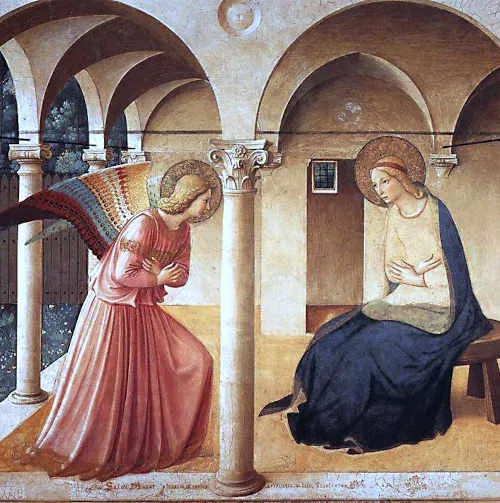
In the sixth month, the angel Gabriel was sent from God to a town of Galilee called Nazareth, to a virgin betrothed to a man named Joseph, of the house of David, and the virgin’s name was Mary. And coming to her, he said, “Hail, full of grace! The Lord is with you.” But she was greatly troubled at what was said and pondered what sort of greeting this might be.”

Reflection:

The phrase “full of grace” is a translation of the Greek word kecharitomene. It can be translated more literally as “having been graced” or “you who have been fully graced.” The tense of the word indicates that Mary has been graced by God in a unique and ongoing way, implying that this grace was not a one-time event but something encompassing her entire being and continuing to have effect.

What was the Blessed Virgin Mary’s response to this amazing greeting? She pondered the archangel’s greeting with humility and initially responded with silence and in awe. Gabriel, aware of Mary’s humility in her silence, says, “Do not be afraid, Mary, for you have found favor with God…” Gabriel then goes on to tell her she will conceive the Son of God within her womb.

Given her immaculate nature and the fullness of grace within her soul, Mary immediately obeyed the archangel’s command and did not give into fear. Yet her “greatly troubled” heart led her to ongoing pondering and contemplation of all that was said to her.

As we draw closer to the Solemnity of Christmas, we are invited to share in the Blessed Mother’s contemplation of the mystery of the Incarnation. We can be certain that as Gabriel departed from her, her prayerful pondering did not cease. The ongoing fullness of grace within her soul led her to the deepest contemplation of this divine mystery that was humanly possible. Her mind would have penetrated the words spoken to her and perceived the mystery of the Incarnation taking place within her womb in ways that even she could not explain. With the fullness of grace came the fullness of infused knowledge, which is beyond human articulation.

In our lives, we often fail to humbly ponder the profound reality of the Incarnation. We must have a “troubled heart” in the sense of remaining in awe of what God has done for us by taking on our human nature. We must allow Mary’s pondering to become our own so that we enter more deeply into the great mystery we celebrate.

As we prepare for the celebration of Christmas, reflect upon Mary’s pondering mind and heart. Though we will never engage in her depth of contemplative prayer, she is our model. We must accept every divine mystery revealed to us with faith and then grapple with each mystery on a deeper level that can only be accomplished by contemplative prayer. Those who attain this depth of prayer are drawn exceptionally close to God Who uses them to continue the effect of the Incarnation by spiritually giving birth to Christ in their lives.

Source: https://catholic-daily-reflections.com/2025/12/19/hail-full-of-grace/

Luke 1:26-29 Read More »

Saint Bernard Valeara of Teramo

Profile

Bernard was born to the nobility; He was the brother of Blessed Colomba of Mount Brancastello. He was a Benedictine monk at Monte Cassino abbey and a priest Bishop of Teramo, Italy in 1115. He was known as a zealous reformer, evangelist, and for his charity.

Born

  • c.1050 in the castle of Pagliara near Castelli, Isola del Gran Sasso, Teramo, Abruzzo, Italy

Died

  • 19 December 1122 of natural causes
  • buried in the chapel of Saint Anne in the Old Cathedral of Teramo, Italy
  • relics transferred to the new cathedral in 1174
  • relics transferred to a chapel devoted to Saint Bernard in 1776

Patronage

  • Teramo, Italy, city of
  • Teramo-Atri, Italy, diocese of

Source: https://catholicsaints.info/saint-bernard-valeara-of-teramo/

Saint Bernard Valeara of Teramo Read More »

Luke 1:13-15

Chastisements of Love

But the angel said to him, “Do not be afraid, Zechariah, because your prayer has been heard. Your wife Elizabeth will bear you a son, and you shall name him John. And you will have joy and gladness, and many will rejoice at his birth, for he will be great in the sight of the Lord.”

Reflection:

Unlike Saint Joseph and the Blessed Virgin Mary, Zechariah doubted the angel of the Lord’s revelation. Our Blessed Mother encountered the Archangel Gabriel at the Annunciation and responded, “Behold, I am the handmaid of the Lord. May it be done to me according to your word” (Luke 1:38). An angel of the Lord appeared to Joseph in a dream, and when Joseph awoke, “he did as the angel of the Lord had commanded him” (Matthew 1:24).

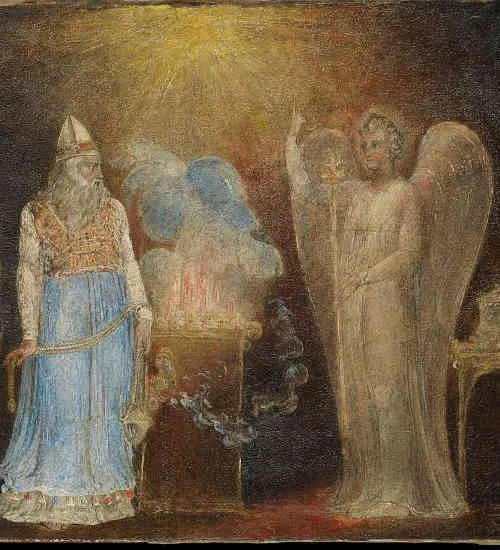
Today, we are given a similar scene to ponder. Zechariah and Elizabeth are identified as being “righteous in the eyes of God, observing all the commandments and ordinances of the Lord blamelessly” (Luke 1:6). In other words, Zechariah was a holy man of God. While he was standing at the altar of incense located in the Holy Place, just outside the veil of the Holy of Holies, the Archangel Gabriel appeared to him to announce that his wife had conceived a child in her old age. Gabriel further reveals, “He will be filled with the Holy Spirit even from his mother’s womb, and he will turn many of the children of Israel to the Lord their God” (Luke 1:15–16).

Given Zechariah’s personal holiness and the extraordinary revelation he received from Gabriel, he should have believed what Gabriel said without hesitation. When he failed to do so, Gabriel said to him, “I am Gabriel, who stand before God. I was sent to speak to you and to announce to you this good news. But now you will be speechless and unable to talk until the day these things take place, because you did not believe my words…” (Luke 1:19–20).

This chastisement was clearly for Zechariah’s benefit. Despite his lack of faith, God wanted him to participate in His divine plan of salvation. The chastisement was not a punishment in a punitive way. It was meant to instill greater faith in him, and it accomplished its purpose.

Most of us are more like Zechariah than we are like our Blessed Mother and Saint Joseph. Despite our best intentions and attempts to remain faithful to God’s will, we stumble. When that happens, we must see any consequences as a gift of love from God. Chastisements come in many forms. They are meant to wake us up to a greater obedience to God’s will.

Reflect today on any ways that your sins have resulted in consequences. It takes deep humility to admit our sins and take responsibility for their effects. Though it is easy to be angry, to point the finger elsewhere, and to justify our actions, doing so is a rejection of God’s loving chastisement meant for our good. Strive to imitate Zecharaiah by humbly changing when your sin results in consequences so that God can bring good into your life, even from a lack of faith and obedience to His will.

Source: https://catholic-daily-reflections.com/2025/12/18/chastisements-of-love/

Luke 1:13-15 Read More »

Saint Lazarus of Bethany

Profile

Lazarus was the brother of Saint Martha and Saint Mary of Bethany. He was the man whom Jesus raised from the dead after having been dead and in his tomb for four days. The Bible does not trace his history after the miracle, but tradition says he became a missionary to Gaul, the first bishop of Marseilles, France, and a martyr in the persecutions of Domitian.

Died

  • beheaded in the 1st century in a cave near Marseilles, France
  • some relics remain in Marseilles
  • some relics later enshrined in the Cathedral of Saint Lazare, Autun, France

Canonized

  • Pre-Congregation

Patronage

  • gravediggers
  • homemakers
  • Cyprus
  • in France
    – Aix-en-Provence
    – Autun, city of
    – Autun – Châlon-sur-Saône – Mâcon – Cluny, diocese of
    – Marseille, archdiocese of
    – Marseille, city of
  • San Lazzaro di Sarzana, Italy

Source: https://catholicsaints.info/saint-lazarus-of-bethany/

Saint Lazarus of Bethany Read More »

Matthew 1:1; 17

Fidelity to God’s Eternal Plan

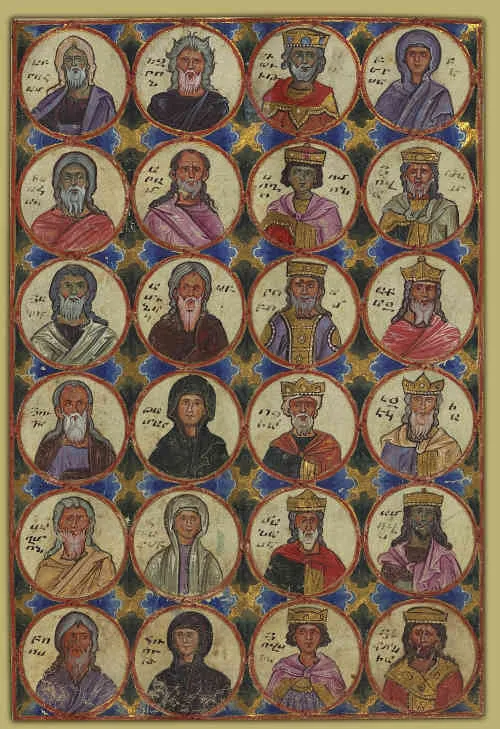
The book of the genealogy of Jesus Christ, the son of David, the son of Abraham… Thus the total number of generations from Abraham to David is fourteen generations; from David to the Babylonian exile, fourteen generations; from the Babylonian exile to the Messiah, fourteen generations.”

Reflection:

This lengthy list of Abraham’s and David’s descendents, leading to Jesus, is much more than a listing of names. It’s an illustration of God’s fidelity to His promises. To Abraham, God promised “All the families of the earth will find blessing in you” (Genesis 12:3). To David, God promised “Your house and your kingdom are firm forever before me; your throne shall be firmly established forever” (2 Samuel 7:16).

Certain divine qualities are revealed in these passages. Unwavering fidelity, continuity through the ages, and God’s eternal plan to bless all people through the descendants of Abraham and David are among them. These qualities are not only important for Scripture study, enabling scholars to better understand the whole of salvation history, they also are important to each one of our lives today.

When God makes a promise, He is faithful to that promise. What promises has God made to you? He has promised the gifts of grace, happiness, holiness, and eternal life to all who become members of His Kingdom. This promise of unwavering fidelity should inspire hope within our hearts, especially when life is difficult. Difficulties can tempt us to despair, anxiety, and fear. Confidence in God’s fidelity will keep us firmly grounded in the certainty of hope that God will never let us down when we remain faithful to Him.

In our fast-paced and ever changing world, continuity and consistency are often absent. Many people change their views based on the latest trends. The barrage of constant news, political and moral opinions, and changing economic and social conditions tempt us to change with the latest ideas. God’s ideas, however, never change. These promises should lead us to establish our lives not on the latest opinions or popular culture, but on the rock-solid principles of faith, as revealed by God.

We are among those who receive blessings promised to “all the families of the earth” through Abraham. Jesus is that final descendent through Whom every good blessing comes. His mission opens the floodgates of grace to all who turn to Him in their need. Don’t ever doubt that perfect and eternal plan of salvation.

Reflect today on God’s perfect fidelity, continuity, and promise of eternal salvation to all who become members of His Kingdom. That Kingdom will remain forever while every other kingdom will pass away. Resolve to remain a full citizen of that Kingdom by being unwaveringly faithful to God’s promises, and you will be blessed now and forever to share in the eternal plan of our saving God.

Source: https://catholic-daily-reflections.com/2025/12/16/fidelity-to-gods-eternal-plan/

Matthew 1:1; 17 Read More »

Saint Ado of Vienne

Profile

Ado was born to the French nobility. He was educated at Ferrières Abbey. Ado renounced his title and inheritance, and became a Benedictine monk at Ferrières. He taught at Prüm Abbey at the request of its abbot, but dissension among the brothers forced him to return home. He was a pilgrim to Rome, Italy for two years. He moved to Ravenna, Italy where he revised and published a version of the Roman Martyrology in 858. He became a pastor of Saint Romanus church at Lyon, and was appointed by the archbishop, Saint Remigius. He became the Archbishop of Vienne, France in 859, appointed by Pope Saint Nicholas I. He was a noted reformer in his diocese. He wrote biographies of Saint Desiderius and Saint Theuderius, and a world history text. He opposed the efforts of Lothair II of Lorraine to put aside his wife, Theutberga, in favour of his mistress, and he led the effort to annul the synod of Metz’s approval of Lothair’s actions.

Born

  • Sens, France

Died

  • 875 in Vienne, France of natural causes
  • relics destroyed by the Huguenots

Canonized

  • Pre-Congregation

Representation

  • monk studying Scripture in a library

Source: https://catholicsaints.info/saint-ado-of-vienne/

Saint Ado of Vienne Read More »

Matthew 21:28-31

Humbly Repent and Obey

“What is your opinion? A man had two sons. He came to the first and said, ‘Son, go out and work in the vineyard today.’ The son said in reply, ‘I will not,’ but afterwards he changed his mind and went. The man came to the other son and gave the same order. He said in reply, ‘Yes, sir,’ but did not go. Which of the two did his father’s will?”

Reflection:

Jesus addressed this question to the chief priests and elders of the people. As the passage continues, Jesus humbles them by saying, “Amen, I say to you, tax collectors and prostitutes are entering the Kingdom of God before you.” He explains that the chief priests and elders of the people were like the second son. They gave lip service to God’s commands but failed to humbly repent and obey.

The fact that “tax collectors and prostitutes” were entering the Kingdom of God should give us great hope. No one is beyond God’s mercy if they humbly listen to Him, repent, and begin to obey. Though neither son’s response is ideal, hopefully we are more like the first son.

When we hear God’s Word and understand His continuously deepening call to holiness, we will find it challenging. Often, our first reaction to a deeper revelation of the Gospel is “No!” Our sinful habits are hard to break, and our fallen human nature is difficult to align with God’s will. Don’t be surprised if you find God’s will initially challenging.

As God’s voice and His will become clearer, our first response must always be repentance. This should not surprise us. We must learn to build a habit of repentance if we want to grow closer to God and live His will. Initially, we often react to repentance in a negative way, but we shouldn’t. Though we might be like the first son and say “no” when God calls us to obedience, if we build a habit of repentance, then we will eventually find great joy in that act. Over time, we will find that our response becomes “Yes, I will go,” and then we go, having discovered the value in obedience.

Reflect today on whether you often pay lip service to God, pretending to do His will, or if you regularly experience God’s call to repentance on a deepening level. Identify yourself with the repentant tax collectors and prostitutes, and imitate their humility when they were confronted with their sins. Know that repentance is the beginning of freedom and is the first step toward greater unity with God.

Source: http://catholic-daily-reflections.com/2025/12/15/humbly-repent-and-obey/

Matthew 21:28-31 Read More »

Saint Mary di Rosa

Profile

Mary was one of nine children born to the industrialist Clement di Rosa and Countess Camilla Albani. Her father owned a large spinning mill, and Mary grew up in a happy and pious family. She was educated by Visitandine nuns. Mary’s mother died when the she was seventeen, and she left school to help manage her father‘s estate. Her heart set on a religious life; she turned down many suitors. She worked with young girls in her community, those who worked in her father‘s mills, and the sick in local hospital, including endless work during the cholera epidemic of 1836. She founded a home dedicated to the spiritual needs of young girls, and a school for deaf children. In 1840, she became the superior of the Handmaids of Charity, nuns who cared for the sick, and she took the name Mary Crucifixa. The community received their bishop‘s approval in 1843 and papal approval in 1850. Mary led them until her death.

Born

  • 6 November 1813 in Brescia, Italy as Paula Frances Mary di Rosa

Died

  • 15 December 1855 in Brescia, Italy of natural causes

Venerated

  • 10 July 1932 by Pope Pius XI (decree of heroic virtues)

Beatified

  • 26 May 1940 by Pope Pius XII

Canonized

  • 12 June 1954 by Pope Pius XII

Source: https://catholicsaints.info/saint-mary-di-rosa/

Saint Mary di Rosa Read More »

Matthew 21:25-27

Confronting Irrationality

When Jesus had come into the temple area, the chief priests and the elders of the people approached him as he was teaching and said, “By what authority are you doing these things? And who gave you this authority?”

Reflection:

The chief priests and the elders of the people were supposed to shepherd the people into eternal salvation. They were supposed to be instruments of God’s divine will, prophetic voices, and priests who offered holy sacrifices for the atonement of sin. In practice, they were none of those things.

As this Gospel passage progresses, we see more clearly why Jesus rebuked them so firmly. “Jesus said to them in reply, ‘I shall ask you one question, and if you answer it for me, then I shall tell you by what authority I do these things. Where was John’s baptism from? Was it of heavenly or of human origin?’” (Matthew 21:24–25). The religious leaders refused to answer the question because neither answer suited their agenda. If they said John’s baptism was of heavenly origin, they feared that Jesus would ask them why they didn’t believe John. If they said of earthly origin, they feared the crowd who believed John to be a prophet. So they took the easy way out and said, “We do not know.” As a result, Jesus did not answer their question.

Jesus’ response to these religious leaders gives us insight into how to respond to those in our lives who directly challenge our faith. At times, we might encounter criticism that is irrational. We might be tempted to get angry and engage that irrational criticism. This often leads to an unproductive conversation.

Our Lord’s approach to irrationality in this passage was quite different. Though Jesus judged these religious leaders as God, His human interaction with them was not judgmental or defensive. Instead, He asked a question that forced them to face their irrationality, bringing it into the light. When they refused to admit their irrationality, Jesus remained silent.

One thing this tells us is that it is rarely beneficial to engage a person on the level of their irrationality. Silently forgiving their judgment does not mean we need to engage them in it. If someone confronts us with humility and sincerity, this opens the door to a healthy conversation. If their questioning of our actions is irrational, it’s often best ignored. This approach is loving because it imitates our Lord and diffuses the irrational criticism, opening the door to a more healthy conversation later.

Reflect today on whether Jesus’ experience with the irrational religious leaders of His time is something you experience with those in your life. Though some people are blessed to be surrounded by very supportive and faith-filled family and friends, others are not. Ponder the ways God wants you to live your faith openly, even if it draws criticism. When it does, try to imitate the humility and wisdom Jesus manifested so that you are not drawn into unhealthy and irrational conversations.

Source: https://catholic-daily-reflections.com/2025/12/14/confronting-irrationality/

Matthew 21:25-27 Read More »

Saint John of the Cross, Priest and Doctor

c. 1542–1591; Patron Saint of contemplatives, mystical theology, and Spanish poets; Canonized by Pope Benedict XIII on December 27, 1726; Declared a Doctor of the Church by Pope Pius XI in 1926; Commonly referred to as the “Mystical Doctor”

Juan de Yepes y Álvarez was born in Fontiveros, Ávila, Spain. His family descended from Jewish converts who settled in Fontiveros. His father, Gonzalo, was an accountant who worked for relatives who were involved in the silk trade. In 1529, Gonzalo married Catalina who was poor and an orphan. Gonzalo’s wealthy family did not receive the news well. As a result, he was shunned by his relatives and no longer able to work as their accountant. Therefore, Gonzalo joined his new bride in her trade of weaving to support his own family. Gonzalo and Catalina had three boys: Francisco, Luis, and Juan.

In 1545, when Juan was only three years old, his father died, leaving Catalina to raise and provide for their boys, a difficult responsibility for a widow at that time. She sought assistance from Gonzalo’s family but was rejected. Therefore, she and her boys lived in destitution. Two years after Gonzalo’s death, Luis died of malnutrition. Eventually, Catalina took Francisco and Juan and moved to Medina del Campo, a larger city, and resumed her work as a weaver.

In Medina, Juan was able to attend a boarding school for poor children. He received a basic education, housing, and food. Juan proved to be an excellent student and, in 1559, was invited to study at the nearby newly founded Jesuit school at the age of seventeen. With the Jesuits, Juan studied the humanities, grammar, rhetoric, Latin, and Greek. Four years later, in 1563, he entered the Carmelite Order, taking the name John of Saint Matthias.

John made his profession as a Carmelite in 1564 and subsequently received special permission from his superiors to follow the ancient Carmelite rule to the letter, rather than embrace the various changes to the rule that occurred over the years. After his professions, he was sent to study theology and philosophy at the prestigious university in Salamanca. There he excelled in his studies and was known for his intelligence and insights. At the end of his studies, John had second thoughts about his vocation as a Carmelite, preferring instead to live a more contemplative life. As a result, he decided that he would enter the Carthusians once he was ordained. John was ordained a priest in 1567.

Father John returned to Medina to offer his first Mass. However, his intention to join the Carthusians all changed after meeting the Carmelite nun Teresa of Ávila. Mother Teresa was a reformer of the Carmelite Order and was in Medina to found a new convent. While there, she heard of the newly ordained priest, Father John, and attended his first Mass. Later, she spoke to him about her ideas on reforming the Carmelites in hopes that he would become her first friar in the reform. Father John was intrigued and accepted her invitation to remain a Carmelite and assist her with the new reforms, reviving the ancient rule.

After returning with Mother Teresa to Valladolid, he participated in a period of formation under her guidance and founded the first house for friars, along with two other Carmelite brothers. This first house began formally on November 28, 1568. Father John gave up his old name and took on the new name of Father John of the Cross. As more friars joined them, Father John, now the subprior and novice master, moved to a larger house in nearby Alcalá where he also became the rector of the university.

In May of 1572, Mother Teresa asked him to move to Ávila to become the spiritual director for the sisters at the Monastery of the Incarnation. He remained there for five years, working closely with the sisters and growing deep in his own spiritual life. He was especially blessed to act as spiritual director to Mother Teresa who, in many ways, acted as a spiritual guide to him. Shortly after his arrival in 1572, Mother Teresa entered into the spiritual transformation of the Divine Union while Father John acted as her spiritual director. At times, their conversations led both of them into ecstasy as the Holy Spirit worked powerfully in their lives and through their spiritual friendship.

Sadly, politics had its place in the Church at that time, and there were some who did not like the idea of reforming the Carmelite order. In January of 1576, Father John was arrested for the first time by the more contemporary and well-established Carmelites of the Observance. They wanted to end the reforms of Father John and Mother Teresa and their Discalced Carmelites (meaning those who wore sandals rather than shoes). His arrest was quickly ended by the intervention of the papal nuncio, Nicolás Ormaneto, who was favorable toward the reforms of the Discalced Carmelites. However, the following year, in June of 1577, the nuncio died. A new nuncio was appointed who was not in favor of the reforms. In December of that year, Father John was once again arrested by the Carmelites of the Observance and put in prison in their monastery in Toledo, where he remained for nine months.

After Father John’s arrest, the Provincial ordered him to “repent” of his reforms and to return to the monastery in Medina. Father John refused to do so, arguing that he was not bound by the Provincial’s demands, since he had received permission for his work on the reform from the nuncio Ormaneto while he was alive. As a result, Father John was judged as being rebellious and willfully disobedient to their authority and was imprisoned in a six-by-ten-foot dungeon cell.

During the nine months of his imprisonment, Father John was regularly abused by the friars in attempts to get him to “repent.” He was given no change of clothing, very little food, endured a severe case of lice, and had only his breviary to read. He endured the severe cold of the winter and the heat of the summer in the small dark cell that had only one small window high up on the wall. However, it was during this time of abuse that some of the greatest spiritual treasures to fill our Church were born. Father John, in the darkness of this prison, composed numerous poems, including Dark Night of the Soul and portions of the Spiritual Canticle. God did not allow this abuse to go fruitless. Father John grew deep in the spiritual life and entered into interior freedom through his prayer and surrender to God.

In August of 1578, it is said that God miraculously enabled Father John to escape at night “in the darkness,” as his poem relates, and find refuge with Mother Teresa’s sisters in Toledo. Eventually, he escaped to Santa Cruz, where he was cared for secretly and nursed back to full health. Over the coming years, his prison experience, the poems he composed, and his life of deep prayer and study prepared him to write four of the greatest works on mystical theology the Church has ever known: Ascent to Mount Carmel, Dark Night of the Soul, Living Flame of Love, and Spiritual Canticles. Each book was a commentary on the mystical poems he had composed. The poems themselves are considered to be among the most beautiful poems written in the Spanish language.

During the year after Father John escaped imprisonment, the Discalced Carmelites did all they could to regularize their situation within the larger Carmelite order and within the Church. Though the new nuncio tried to stop them, the king intervened. In April of 1579, a new provincial was appointed to oversee the Discalced Carmelites and to assist them with their reforms. In 1580, the Holy See allowed the Discalced Carmelites to enjoy independence from the Carmelites of the Observance, and Father John was appointed as prior of one of the new monasteries. Mother Teresa died in 1582. In 1585, the Discalced Carmelites were given even greater independence from the Carmelites of the Observance when they were established as an independent province. Father John was elected Vicar Provincial.

The charisms of this reform in which Father John and Mother Teresa were so instrumental included the following: 1) a strong Marian devotion, 2) a daily plan carefully set forth to maintain a life of continual prayer, and 3) a strict rule of enclosure focused on the asceticism of solitude, manual labor, perpetual abstinence, fasting, and fraternal charity. Many were attracted to this new strict Carmelite life. Therefore, monasteries of both nuns and friars continued to be founded.

Father John continued to found monasteries and oversee the reform until September of 1591, when he developed gangrene on his leg. He went to a monastery in Ubeda to receive care for his illness. Instead, the superior treated him coldly, arguing that Father John was a burden to the monastery. On December 13, just hours before his death, Father John called the prior to his cell and humbly begged his forgiveness for being a burden. This act of humility completely transformed the prior who was overwhelmed by Father John’s sanctity. At midnight, the saintly friar went home to Heaven to his Beloved to sing Matins with the angels, thus completing his mystical journey to divine union.

Saint John of the Cross endured many trials throughout his life, but God used those trials as a foundation for the spiritual formation he would provide to the Church through his masterful mystical theology. It could be argued that no one has captured the depths of the spiritual life, leading us to Divine Union and Mystical Marriage, better than Saint John of the Cross. He did not shy away from describing, in great detail, the interior purifications a soul must endure on that journey to complete freedom.

As we honor that great saint and mystical doctor of the Church, ponder the profound spiritual truth—that complete union with God is an ongoing process that requires total surrender, interior purgations of the senses and spirit, mortification, and mystical annihilation. Though these concepts are deep and utterly otherworldly, they are beautiful truths that the Church continues to uphold. Allow Saint John to inspire you to go deeper in your faith journey so that your divine union will evolve and blossom into the glorious life God desires for you.

Source: https://mycatholic.life/saints/saints-of-the-liturgical-year/14-december-saint-john-of-the-cross-priest-and-doctor–memorial/

Saint John of the Cross, Priest and Doctor Read More »