Author name: Sani

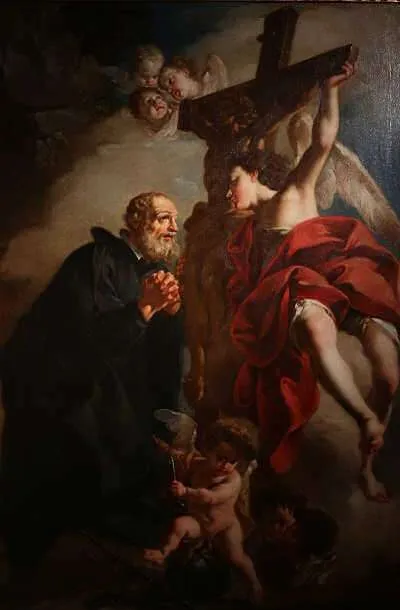
Saint Jerome Emiliani, Priest

Patron Saint of orphans and abandoned children; Canonized on July 16, 1767 by Pope Clement XIII

For some, the greatest tragedies in life lead them down a dark path. For others, tragedy is met with faith and hope and becomes the beginning of personal transformation. Such was the case with today’s saint.

Jerome was born into an upper-class ruling family in Venice. When Jerome was around the age of ten, his father died. Jerome continued to grow in virtue and pursue his studies. He was not known for excelling, but for being sociable, friendly, cheerful, strong-minded, and enthusiastic.

When he was a teenager, Jerome joined the military, as was common in his family. While in the military, Jerome became more ambitious about obtaining honors than growing in virtue. His ambitions were realized as he was honored with promotions in rank. At the age of twenty-five, he participated in the War of the League of Cambrai and was given command of the fortress of Castelnuovo, just west of Venice. In 1511, after many of his soldiers abandoned him, he and three others were captured and imprisoned.

At first, Jerome perceived his capture as a defeat, but it would be the beginning of his lasting victory in Christ. While chained from head to foot and imprisoned, Jerome had time to reflect upon his life. Though his imprisonment lasted only a month, it was a powerful and transforming month. He returned to the faith of his youth, opened his heart to Christ, and especially turned to the intercession of the Mother of God. He vowed to her that if she were to set him free, he would change his life and devote himself to the will of God. And that’s what happened, to an extraordinary degree.

On September 27, 1511, Jerome encountered the Mother of God in his cell as a woman clothed in white. She accepted his promise, gave him the keys to his chains, and then led him through the compound and out of the city without being noticed by the guards. By her inspiration, he walked to the town of Treviso where he entered the church, presented himself before a statue of Our Lady, and his life began to change. Jerome remained in military service for the next few years but then abandoned his worldly ambitions and began to study theology.

By the year 1526, Jerome’s mother and two of his brothers had died, leaving him to care for one of his brother’s orphaned sons. By then, Jerome had a heart for charity; just like his imprisonment, this tragedy became the beginning of his future calling to care for abandoned and orphaned children. Of this period in his life, a close friend would later write, “By often listening to the word of God, he started to recall his ingratitude. He remembered his sins against the Lord. He wept often and, at the foot of the Crucified Lord, prayed to him not to be his judge, but his savior.”

In 1528, a severe famine and plague struck Venice, and many children were left orphaned. In addition to caring for his nephews, Jerome began to care for other orphans, providing for them out of his own means. He was a man energized by love and tireless in his care of the poor, abandoned, sick, and orphaned. He even took care of those who had died by ensuring their proper burial. In the years to follow, his warm and energetic personality, coupled with his faith and devotion to the suffering Christ, enabled him to build hospitals, orphanages, and places of refuge for reformed prostitutes.

In 1532, Jerome moved to Somasca, a city between Venice and Milan, and with two priests, founded the “Company of the Servants of the Poor” (later called the Order of the Somascan Fathers). These priests committed themselves to a life of poverty and service of the poor, sick, and especially orphaned children.

Jerome devoted himself to the wholehearted proclamation of the Gospel in both his words and deeds. He organized his brothers and their homes with great skill. Many converted and grew fervent in their faith. His devotion to those suffering from the plague was so great that he himself contracted the disease and died a martyr of the plague in early February, 1537.

Saint Jerome was, at first, seduced by the glory and honor one can attain from the world. Apparent tragedy, for him, turned into glory. His imprisonment and suffering opened his eyes; he repented and turned his life toward Christ. He found his Lord in the poor, suffering, sick, and orphaned. He loved His Lord in them and became single-minded in his service.

Ponder your own ambitions in life. It is easy to become seduced by the passing “glory” of this world. But that false glory is fleeting. Seek to imitate this holy man by discovering the presence of God in those most in need of your love. Love them. See their dignity. Become an instrument of God’s mercy for them, and you, like Saint Jerome, will have discovered your purpose in life.

Source: https://mycatholic.life/saints/saints-of-the-liturgical-year/february-8-saint-jerome-emiliani-priest/

Saint Jerome Emiliani, Priest Read More »
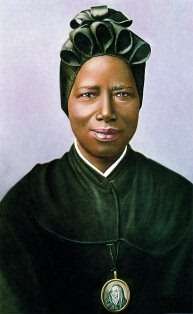
Saint Josephine Bakhita, Virgin

Patron Saint of Sudan and human-trafficking survivors; Canonized October 1, 2000 by Saint Pope John Paul II

In 1869, a daughter was born into a loving and well-respected family in western Sudan, in a village of the Daju tribe. Until the age of six, she and her three brothers and three sisters lived a happy and carefree life. That would all change around the year 1875 when one sister was abducted by Arab slave traders.

Two years later, she also became their victim. When her captor asked her name, she couldn’t remember so she didn’t respond. She might have forgotten her given name due to the trauma she faced. Her captor sarcastically gave her the name “Bakhita,” which means “fortunate,” claiming that he would bring her good luck.

After her captivity, Bakhita was forced to travel hundreds of miles on foot to the city of El-Obeid. On her journey, she was bought and sold more than once, and over the next several years she was bought and sold several more times.

During Bakhita’s captivity, she was forced to convert to Islam and was continually abused. She was beaten most days, one time so severely that she could barely move for more than a month, and she often was bound firmly with chains to prevent her escape. On her deathbed, she would still have painful memories of those chains.

One of the worst tortures she endured was the customary scarring of her breasts, belly, and arm with a sharp razor. Once the wound was inflicted, salt was then ground into it, causing permanent scarring and identifying the person as property.

Around the age of thirteen, the city in which she lived, El-Obeid, was threatened by revolutionaries. Bakhita’s owner, a Turkish general, decided to sell his slaves and return to his homeland. Bakhita was sold to an Italian Vice Consul working in the city of Khartoum, named Callisto Legnani.

For the next two years, Callisto treated Bakhita well, despite her being his slave. As a result, when the revolutionaries began to make advancements on the city and Callisto made plans to escape to save his life, Bakhita begged him to take her with him, preferring his kindness over a new owner. He did so and, with the help of a friend named Augusto Michieli, they safely arrived in Italy. Upon their arrival, Callisto gifted Bakhita to Augusto and his wife Maria.

In the Michielis’ home, Bakhita continued to be treated well, working as a nanny for their newborn daughter. Three years later, the Michieli family decided to move back to Sudan for business reasons and sold their property in Italy. During the transition, they entrusted Bakhita and their young daughter to the care of the Canossian Sisters in Venice. It was with those loving sisters that Bakhita was introduced to Jesus Christ, her true Master, and began her formation in the Catholic faith.

Within the Catholic faith, Bakhita began to discover the God Whom she had sensed in her heart from childhood. Through the sisters’ teaching and virtuous witness, Bakhita began to understand Who this great God is and to love Him all the more. When the Michielis returned to take their daughter and Bakhita to Sudan, Bakhita refused to go with them.

After days of trying to convince her, the Canossian Sisters involved the civil authorities, and in 1889, an Italian court ruled in Bakhita’s favor, declaring her free. She stayed with the sisters and on January 9, 1890, she was baptized, confirmed, and given her First Holy Communion by the Archbishop of Venice (later, Pope Pius X). She was given the baptismal name Josephine Margaret Fortunata, “Fortunata” being the Latin translation of the Arabic name “Bakhita.”

Thus, at the age of twenty-one, this fortunate young girl was flooded with God’s grace, and her formerly abused body and soul began a transformation. Josephine stayed with the sisters, entered their novitiate in 1893, and made her vows in 1896, becoming Sister Josephine Margaret Fortunata.

In 1902, Sister Josephine was assigned to the convent in Schio in northern Italy where she spent the rest of her life. In that convent, she was given the responsibilities of welcoming guests as the doorkeeper and worked as a cook and sacristan. She became well known and well loved by the locals for her beautiful and warm smile, kindness, and calm demeanor.

Many of the people affectionately referred to her as the “black mother.” She evangelized through her virtues and evident love of God and did not shy away from sharing her story, including her merciful heart that forgave her abusers. She served the people of God and grew in holiness in that convent for forty-two years.

At the end of her life, Sister Josephine suffered again, this time from illness. On her deathbed, she relived the horrors of her captivity but now confronted those horrors with God’s grace. Her last words were cries of love for our Blessed Mother. After her death, her effect upon the people of God was evident as she lay in state for three days while countless faithful came to express their love for her.

Shortly after her death, cries for her canonization stirred among the faithful. Twelve years later, her cause for canonization was opened, and she was canonized by Pope John Paul II during the great jubilee year of 2000 in Saint Peter’s Square. Three years after her canonization, Pope John Paul II made an official visit to Khartoum, Sudan, honoring her on her home soil.

Saint Josephine was more than fortunate; she was greatly blessed by God. Later in life she not only forgave her captors, she also expressed her gratitude to them because God used their cruelty to lead her into the Catholic faith and consecrated life. Her witness reveals that God is all-powerful. He is able to take the worst and bring from it the best. He is able to transform tragedy into grace, abuse into mercy, hatred into love.

Ponder any way that you have been mistreated in life. If you find yourself angry or bitter, turn to this great saint and let her witness inspire you. In the end, she never lost hope. That hope led her from the cruelty of earthly masters to a holy slavery in the service of the divine King. If you find yourself bound by earthly masters, sins, or abuses, turn to the One Who promises complete liberation. Jesus must become our Master, and Saint Josephine shows us the way.

Source: https://mycatholic.life/saints/saints-of-the-liturgical-year/february-8-saint-josephine-bakhita-virgin/

Saint Josephine Bakhita, Virgin Read More »

Mark 7:25-26

A Gentile's Faith

“Soon a woman whose daughter had an unclean spirit heard about him. She came and fell at his feet. The woman was a Greek, a Syrophoenician by birth, and she begged him to drive the demon out of her daughter.”

Reflection:

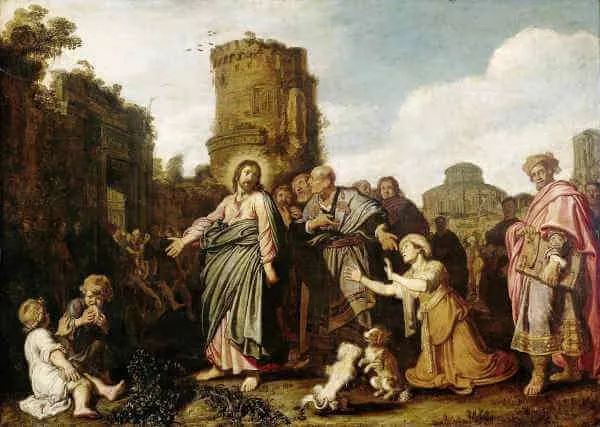
A parent’s love is powerful. And the woman in this story clearly loves her daughter. It is that love that drives this mother to seek out Jesus in the hope that He will free her daughter from the demon who possessed her. Interestingly, this woman was not of the Jewish faith. She was a Gentile, a foreigner, but her faith was very real and very deep.

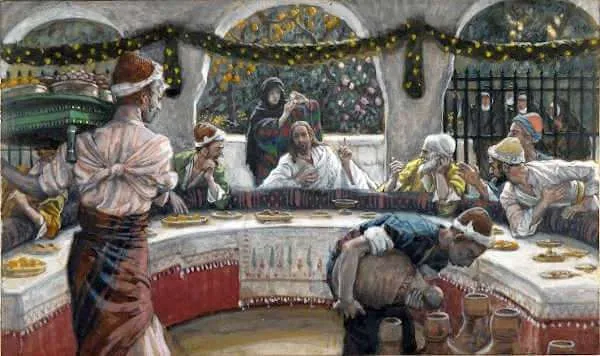
When Jesus first encountered this woman, she begged Him to free her daughter from the demon. Jesus’ response was at first surprising. He said to her, “Let the children be fed first. For it is not right to take the food of the children and throw it to the dogs.”

In other words, Jesus was saying that His mission was first to the people of Israel, the chosen people of the Jewish faith. They were the “children” of whom Jesus was speaking, and the Gentiles, such as this woman, were the ones referred to as “the dogs.” Jesus spoke this way to this woman not out of rudeness but because He could see her deep faith, and He wanted to give her an opportunity to manifest that faith for all to see. And so she did.

The woman responded to Jesus, “Lord, even the dogs under the table eat the children’s scraps.” Her words were not only exceptionally humble but were also based on deep faith and a deep love for her daughter. As a result, Jesus responds with generosity and immediately frees her daughter from the demon.

In our own lives, it’s easy to fall into the trap of thinking we deserve the mercy of God. We can think that we have a right to God’s grace. And even though Jesus deeply desires to pour forth His grace and mercy in superabundance on our lives, it is essential that we fully understand our unworthiness before Him. The disposition of this woman’s heart sets for us a perfect example of how we must come to our Lord.

Reflect, today, upon the beautiful example of this woman of deep faith. Prayerfully read her words over and over. Try to understand her humility, her hope, and her love for her daughter. As you do, pray that you will be able to imitate her goodness so as to share in the blessings she and her daughter received.

Source: https://catholic-daily-reflections.com/2024/02/07/a-gentiles-faith-3/

Mark 7:25-26 Read More »

Saint Giovanni of Triora

Profile

The son of Antonio Maria Lantrua and Maria Pasqua Ferraironi, Francesco was educated in Barnabite schools. He joined the Franciscan Friars Minor in Rome, Italy on 9 March 1777, just a few days before he turned 17, taking the name Giovanni. He was ordained a priest in 1784, and taught theology in Tivoli and Tarquinia, Italy. He also became a superior of Franciscan convents in Tarquinia, Velletri and Montecelio, Italy.

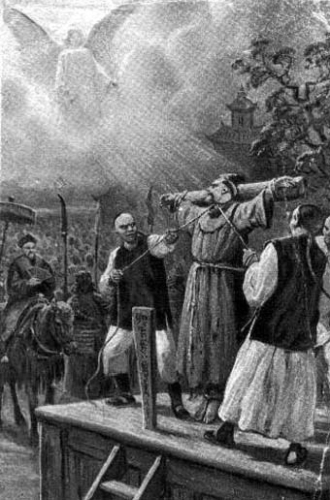
In 1799 Giovanni joined the missions and was sent to China. In Macau, he learned the language, learned the culture, dressed like the locals, and began his work. In the summer of 1815, the Chinese authorities began a concerted effort to persecute and suppress Christianity. Father Giovanni was imprisoned on 26 July 1815 with several of his parishioners just after Mass. He was repeatedly tortured for several months, and repeatedly ordered to renounce his faith; However, he refused and he was martyred.

Born

  • 15 March 1760 at Triora, Imperia, Italy as Francesco Maria Lantrua

Died

  • tied to a cross and then strangled to death on 7 February 1816 at Ch’angsha Fu, Hunan, China
  • buried in the cathedral of San Paolo in Macao, China
  • re-interred in the Basilica of Santa Maria in Ara Coeli, Rome, Italy

Venerated

  • 25 March 1900 by Pope Leo XIII (decree of martyrdom)

Beatified

  • 27 May 1900 by Pope Leo XIII

Canonized

  • 1 October 2000 by Pope John Paul II

Source: https://catholicsaints.info/saint-giovanni-of-triora/

Saint Giovanni of Triora Read More »

Mark 7:14-15

That Which is Within

“Jesus summoned the crowd again and said to them, ‘Hear me, all of you, and understand. Nothing that enters one from outside can defile that person; but the things that come out from within are what defile.'”

Reflection:

What is within you? What is in your heart? Today’s Gospel concludes with a list of vices that sadly come from within: “evil thoughts, unchastity, theft, murder, adultery, greed, malice, deceit, licentiousness, envy, blasphemy, arrogance, folly.” Of course, none of these vices are desirable when looked at objectively. They are all quite repulsive. And yet too often they are sins that people deal with on a regular basis to one extent or another.

Take greed, for example. When understood clearly, no one wants to be known as one who is greedy. It’s a shameful attribute to have. But when greed is not looked at as greed, it’s easy to fall into the trap of living it. One who is greedy desires an excessive amount of this or that. More money, a better house, a nicer car, more luxurious vacations, etc. Thus, when a person is acting in a greedy way, greed does not seem undesirable. It’s only when greed is looked at in an objective way that it is understood for what it is.

In this Gospel, by naming this long list of vices, Jesus does us an incredible act of mercy. He rattles us and calls us to step back and look at sin for what it is. Jesus also makes it clear that when you live one or more of these vices, you become defiled. You become greedy, a liar, cruel, a gossip, hateful, arrogant, etc. Objectively speaking, no one wants this.

What is it in that list of vices that you struggle with the most? What do you see within your own heart? Be honest with yourself before God. Jesus desires that your heart be pure and holy, freed from these and every filth. But unless you are able to look at your own heart with honesty, it will be difficult to reject the sin with which you struggle.

Reflect, today, upon this list of sins identified by our Lord. Consider each one and allow yourself to see each sin for what it truly is. Allow yourself to despise these sins with a holy wrath and then turn your eyes to that sin with which you struggle the most. Know that as you consciously see that sin and reject it, our Lord will begin to strengthen you and purify your heart so that you become freed from that defilement and become, instead, the beautiful child of God you were made to be.

Source: https://catholic-daily-reflections.com/2024/02/06/that-which-is-within-5/

Mark 7:14-15 Read More »

Saint Paul Miki and Companions

Patron Saints of Japan; Canonized by Pope Pius IX on June 8, 1862

On the Feast of the Assumption of the Blessed Virgin Mary in 1549, Saint Francis Xavier and two other Jesuits arrived at the harbor of Kagoshima, becoming the first missionaries to enter Japan. Fewer than sixty-five years later, the Catholic faith was flourishing in Japan, with upwards of 300,000 converts.

Of the people of Japan, Saint Francis Xavier said, “These are the best people so far discovered, and it seems to me that among unbelievers no people can be found to excel them.” The Jesuits were successful in their missionary activity within the highly civilized Japanese culture because the members of the order respected the cultural norms, acted with great dignity and respect, and learned the language.

In 1587, however, things began to change. The Buddhist monks were increasingly concerned about the growing number of Christians, causing political tension for the ruler of Japan, Hideyoshi. Hideyoshi and his predecessor had been friendly and welcoming to the missionaries, perhaps in large part because they saw befriending these Europeans as politically and financially advantageous.

But because of new tensions, caused in part by some fanatical Christians, Hideyoshi outlawed Christianity, giving the missionaries six months to leave. Many remained, however, continuing their good work quietly, and Hideyoshi let them be.

In 1593, Spanish Franciscans began to arrive; they took a more confrontational approach to conversion than the Jesuits did. Tensions continued to grow, and in 1597, the situation came to a head. A Spanish ship became shipwrecked off the coast of Japan, and Hideyoshi seized its merchandise. The angry captain spoke recklessly to Hideyoshi, threatening that the Spanish missionaries were sent to prepare for a Spanish invasion of the island.

At that, Hideyoshi began to enforce his decade-old edict outlawing Christianity by arresting twenty-six Catholics—six Franciscan missionaries, seventeen Japanese and Korean lay Franciscans (three of whom were young boys), and three Jesuits. The Jesuits were Brother Paul Miki, only months away from being ordained a priest, another brother, and a priest.

Paul was born into an affluent Japanese family and became a Catholic when his whole family converted. At the age of twenty, he attended a new Jesuit seminary in Japan and became a brother two years later. He spent thirteen years as a Jesuit, during which time he was known as a gifted preacher who helped convert many of his countrymen.

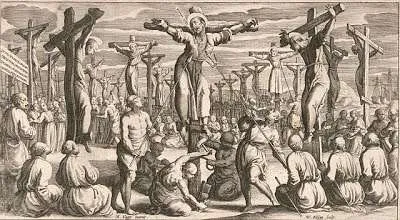
When Brother Paul and his companions were arrested, they were tortured, had one of their ears severed, and were paraded 600 miles through many towns for 30 straight days, on display for all the people to see to dissuade them from being Christian. When they arrived in Nagasaki, the center of Christianity in Japan at that time, the soon-to-be martyrs were permitted to go to Confession one last time, chained to their crosses, secured with an iron collar, and lined up next to each other as four soldiers stood beneath them, each with spear in hand.

During it all, Father Pasio and Father Rodriguez kept encouraging the others. Brother Martin continually repeated, “Into your hands, Lord, I entrust my life.” Brother Francis and Brother Gonsalvo prayed aloud in thanksgiving. And Brother Paul Miki preached his final sermon, professing Jesus as the only way to salvation, forgiving his persecutors, and praying that they would turn to Christ and receive baptism.

Brother Paul continued to encourage the others, and as they all awaited death, they were filled with joy and continually cried out, “Jesus, Mary!” Then, with one thrust of the spear and one blow, each martyr went home to God.

Over the next 250 years, hundreds of thousands of Christians were martyred and many others were tortured mercilessly until they publicly renounced their faith. Despite this, pockets of Catholics remained and secretly practiced their faith. In 1854, Japan’s borders opened to the West, and numerous missionaries returned to feed the faith of these hidden Christians. By 1871, religious toleration returned, making public worship possible. Today, a national monument marks the place of the executions in Nagasaki.

Sometimes our attempts to share the faith with others appear to be silenced by the diabolical influences within the world. These martyrs of Nagasaki teach us that the seeds of faith can live on. The many martyrs that followed give witness to the power of God’s grace and the transforming character of His Word. How strong is your faith? Is it strong enough to endure torture and death? Allow the witness of these saints to inspire you to be more fervent.

Source: https://mycatholic.life/saints/saints-of-the-liturgical-year/february-6-saints-paul-miki-and-companions-martyrs/

Saint Paul Miki and Companions Read More »

Mark 7:6-8

Worship From the Heart

“When the Pharisees with some scribes who had come from Jerusalem gathered around Jesus, they observed that some of his disciples ate their meals with unclean, that is, unwashed, hands.”

Reflection:

It seems quite clear that Jesus’ instant fame led these religious leaders to jealousy and envy, and they wanted to find fault with Him. As a result, they carefully observed Jesus and His disciples, and they noticed that Jesus’ disciples were not following the traditions of the elders. So the leaders began questioning Jesus about this fact.

Jesus’ response was one of severe criticism of them. He quoted Isaiah the prophet who said, “This people honors me with their lips, but their hearts are far from me; in vain do they worship me, teaching as doctrines human precepts.”

Jesus strongly criticized them because their hearts were lacking true worship. The various traditions of the elders were not necessarily bad, such as the careful ceremonial washing of one’s hands before eating. But these traditions were empty if they were not motivated by a deep faith and love of God.

The external following of human traditions was not truly an act of divine worship, and that’s what Jesus wanted for them. He wanted their hearts to be set ablaze with a love of God and with true divine worship.

What our Lord wants of each one of us is worship. Pure, heartfelt, sincere worship. He wants us to love God with a deep interior devotion. He wants us to pray, to listen to Him, and to serve His holy will with all the powers of our soul. And this is only possible when we engage in authentic worship.

As Catholics, our life of prayer and worship is grounded in the holy Liturgy. The Liturgy incorporates many traditions and practices that reflect our faith and become a vehicle of the grace of God. And though the Liturgy itself is far different from the mere “tradition of the elders” that Jesus was criticizing, it’s useful to remind ourselves that the many Liturgies of our Church must move from the external actions to interior worship. Going through the motions alone is pointless. We must allow God to act on us and within us as we engage in the external celebration of the Sacraments.

Reflect, today, upon the burning desire in the heart of our Lord to draw you into worship. Reflect upon how well you allow yourself to be drawn into this worship every time you attend the holy Mass. Seek to make your participation not only an exterior one but, first and foremost, an interior one. Doing so will help ensure that the rebuke of our Lord upon the scribes and Pharisees does not also fall upon you.

Source: https://catholic-daily-reflections.com/2024/02/05/worship-from-the-heart-3/

Mark 7:6-8 Read More »

Saint Agatha, Virgin and Martyr

Patron Saint of breast cancer patients, martyrs, rape victims, bellfounders, and bakers; Invoked against earthquakes, natural disasters, and fires; Pre-Congregation canonization, later confirmed by Pope Saint

As with many of the early and most revered martyrs in our Church, very little is known about the life and death of Saint Agatha. She was born in either Palermo or Catania, Sicily around the year 231 and died a martyr’s death in Catania around the year 251 during the persecution of Christians ordered by the Roman emperor Decius.

Early devotion to her is attested to by the fact that she is one of the seven virgin martyrs listed in the Roman Canon (Eucharisitic Prayer I in today’s Missal). Since the fifth or sixth century, other details, hymns, art, and stories about her life and death have emerged. Much of what is written about her life, however, emerged centuries later, leaving its historical accuracy in question.

According to those later traditions, Agatha was born into a wealthy noble family. At the age of fifteen, she made a vow of virginity, choosing to devote herself and her wealth solely to Christ, her divine Spouse. Because she was very beautiful and wealthy, the local Roman Prefect Quintianus wanted to take her for his wife for impure reasons and to attain her wealth. She refused his every attempt.

When Emperor Decius issued a decree in 250, requiring all citizens to offer sacrifice to the Roman gods, Quintianus had an idea. He decided that if he arrested Agatha and threatened her with torture and death, she would renounce her Catholic faith and accept his offer of marriage. Instead, she deepened her devotion to Christ and once again refused him saying, “If you threaten me with wild beasts, know that at the Name of Christ they grow tame; if you use fire, from heaven angels will drop healing dew on me.”

Faced with another failure to steal her purity, Quintianus devised another plan. He imprisoned Agatha in the local brothel, thinking she would lose her virginity and then change her mind. However, she remained steadfast in her purity and faith in that ungodly environment.

After a monthlong stay in the brothel, Agatha was summoned before Quintianus again. Filled with rage, he threatened her with torture and death. She faced him with courage and remained at peace, exuding joy at the opportunity to suffer for Christ. Her peaceful and joyful disposition only angered Quintianus further, so he had her stretched on a rack, her flesh torn with iron hoods, burned with torches, and whipped.

Finally, the sick and diabolical Quintianus ordered that her breasts be twisted and torn and then be cut off. To this, Agatha responded, “You cruel, impious, sacrilegious tyrant, do you feel no shame to torture a woman in her breasts, you, who from a mother’s breast drew your first nourishment?

You may destroy my body, for it is but weak and perishable; yet my soul, consecrated from my childhood to its Saviour, you cannot reach nor destroy.” After being sent back to prison in this mutilated state, Agatha saw Saint Peter appear to her and miraculously heal her wounds with a father’s love. The prison cell then radiated with light, frightening and confusing the guards.

Four days later, Quintianus summoned Agatha again. When she appeared before him healed of her wounds, Quintianus was shocked but his heart remained obstinate. This time he stripped her of her clothing and made her roll over burning coals and sharp stones. The wrath of God, however, flared up and there was an earthquake.

Part of the building they were in crumbled, killing two of Quintianus’ companions. The people of the town were outraged at what Quintianus had done to Agatha and blamed him for the earthquake. Again, Quintianus did not budge. After being sent back to prison, Agatha prayed and surrendered her spirit to the Lord, Who received her into her heavenly home.

It is shocking what people are capable of doing. Some are capable of the most hideous, diabolical, and self-serving acts. Others are capable of enduring those evils for the love of Christ with peace, strength, and joy. Regardless of the historical accuracy of the details of Saint Agatha’s life and death, her story, as it has been handed down, reveals the potential in every human heart.

We have the potential to be great sinners, the potential to be great saints, or somewhere in-between. Allow the witness of Quintianus to fill your heart with a holy fear of sin and the witness of Saint Agatha to move you from that “in-between.” Her courage and unwavering fidelity to Christ have shone a light for countless people throughout the centuries. One day, in Heaven, we will meet the true Saint Agatha and rejoice as we gaze upon the beauty and purity of her soul. Seek to make your soul radiate with that same glory by the grace of God and your fidelity to His holy will.

Source: https://mycatholic.life/saints/saints-of-the-liturgical-year/february-5-st-agatha-virgin-martyr/

Saint Agatha, Virgin and Martyr Read More »

Mark 6:56

Seeking Healing

“Whatever villages or towns or countryside he entered, they laid the sick in the marketplaces and begged him that they might touch only the tassel on his cloak; and as many as touched it were healed.”

Reflection:

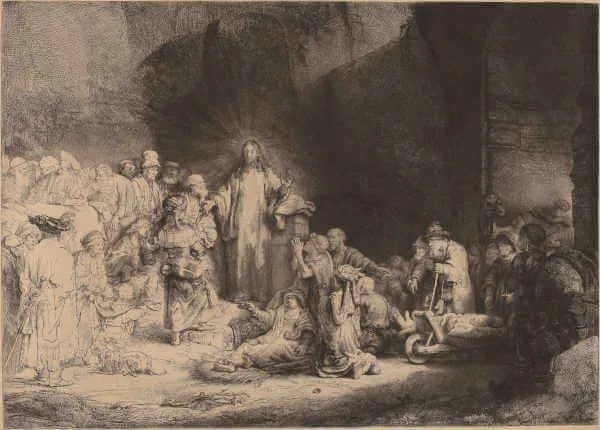
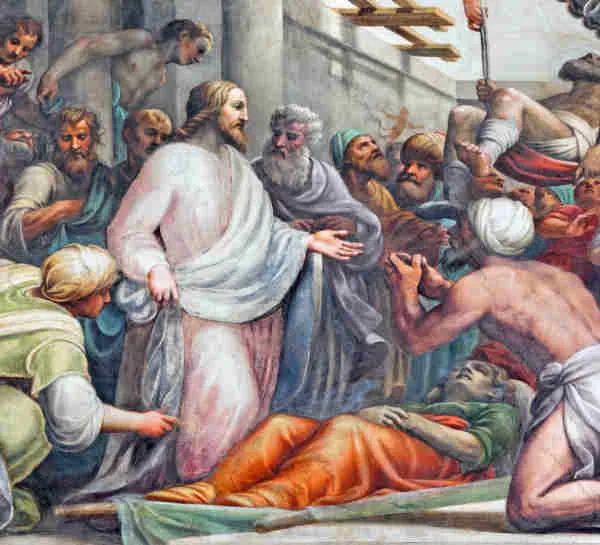
It would have been truly awe-inspiring to witness Jesus healing the sick. The people who witnessed this clearly had never seen anything like it before. For those who were sick, or whose loved ones were sick, each healing would have had a powerful effect upon them and upon their whole family.

Today, modern science, with its ability to treat so many illnesses, has lessened the fear and anxiety over getting sick. But in Jesus’ time, serious illness was of far greater concern. For that reason, the desire of so many people to bring their sick to Jesus so that they could be healed was very strong. This desire drove them to Jesus so that “they might touch only the tassel on his cloak” and be healed. And Jesus didn’t disappoint.

Though Jesus’ physical healings were unquestionably an act of charity given to those who were sick and to their families, they obviously weren’t the most important thing Jesus did. And it’s important for us to remind ourselves of that fact. Jesus’ healings were primarily for the purpose of preparing the people to listen to His Word and to ultimately receive the spiritual healing of the forgiveness of their sins.

In your own life, if you were seriously ill and were given the option to receive either a physical healing or to receive the spiritual healing of the forgiveness of your sins, which would you choose? Clearly, the spiritual healing of the forgiveness of your sins is of infinitely greater value. It will affect your soul for all eternity.

The truth is that this far greater healing is available to us all, especially in the Sacrament of Reconciliation. In that Sacrament, we are invited to “touch the tassel on his cloak,” so to speak, and be spiritually healed. For that reason, we should have a much deeper desire to seek out Jesus in the confessional than the people of Jesus’ day had for physical healing. And yet, too often we ignore the priceless gift of God’s mercy and healing offered so freely to us.

Reflect, today, upon the desire in the hearts of the people in this Gospel story. Think, especially, about those who were seriously ill and about their burning desire to come to Jesus for healing. Compare that desire in their hearts to the desire, or lack of desire, in your heart to run to our Lord for the spiritual healings your soul so desperately needs. Seek to foster a greater desire for this healing, especially as it comes to you through the Sacrament of Reconciliation.

Source: https://catholic-daily-reflections.com/2024/02/04/seeking-healing-3/

Mark 6:56 Read More »

Mark 1:32-34

Enthralled by Jesus

“When it was evening, after sunset, they brought to him all who were ill or possessed by demons. The whole town was gathered at the door. He cured many who were sick with various diseases, and he drove out many demons, not permitting them to speak because they knew him.”

Reflection:

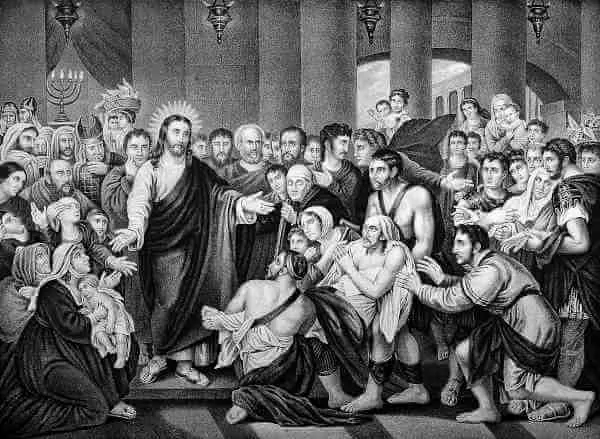
Jesus was in the home of Simon Peter whose mother-in-law He had just cured. “The whole town gathered at the door” when evening came. This was Jesus’ first time being in Capernaum after beginning His public ministry, and already people were flocking to Him in droves. The next morning, Jesus got up before dawn and went away alone to pray. Soon, some of the disciples found Him and told Him that, once again, the whole town was looking for Him.

The excitement was great. So many were amazed. And their amazement at Jesus was not simply a form of curiosity. It was an amazement fueled by faith, which is why Jesus was able to perform so many miracles there. The people quickly realized that Jesus was the One of Whom the prophets of old had spoken. He was the Messiah, and the people gave Him their full attention.

This is a good image for us to ponder. As you think of the crowds and their unwavering desire to be near our Lord, consider your own desires pertaining to God. Do you regularly find yourself consumed with a desire to find our Lord, to be with Him, to listen to Him and to receive His grace and mercy? Or are you tempted to see Jesus and the practice of your faith as boring and uninteresting?

One of the unfortunate effects of modern technology is that we easily become fascinated by and intrigued with many superficial things. Perhaps it’s the latest short video on a mobile app, or the latest episode of a favorite television series, or a new post by a friend on social media. There are many things today that compete for our attention, intrigue us and even amaze us. Is Jesus one of those things in your life?

In our modern world of constant stimulation and entertainment, we need to understand the difference between being amazed at the latest pop trend and being amazed by the grace and divine actions of our Lord. When we come face-to-face with the power of God in our lives, we will be amazed in a way that fulfills and satisfies us on the deepest level.

It will be a spiritual amazement, which is a gift of the Holy Spirit. And the satisfaction we receive from this form of amazement is transforming, deep and sustaining. But when we turn to lesser and more sensory “amazements” common within our world today, we will find that they last only for a moment, and we are quickly left dry and wanting for more.

Reflect, today, upon the people in today’s Gospel who were so enthralled by Jesus that they continually sought Him out. Consider their excitement, their hope and their genuine joy at their discovery of the Messiah. As you think about them, consider whether you share in their excitement about Jesus. If that excitement is lacking, recommit yourself to seeking out our Lord. And where you see that excitement present, rejoice and give glory to God.

Source: https://catholic-daily-reflections.com/2024/02/03/enthralled-by-jesus/

Mark 1:32-34 Read More »