Author name: Sani

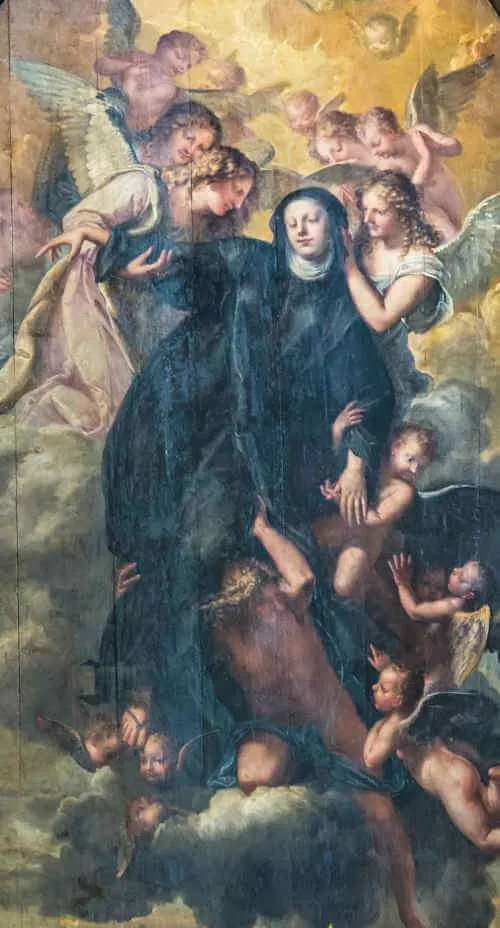
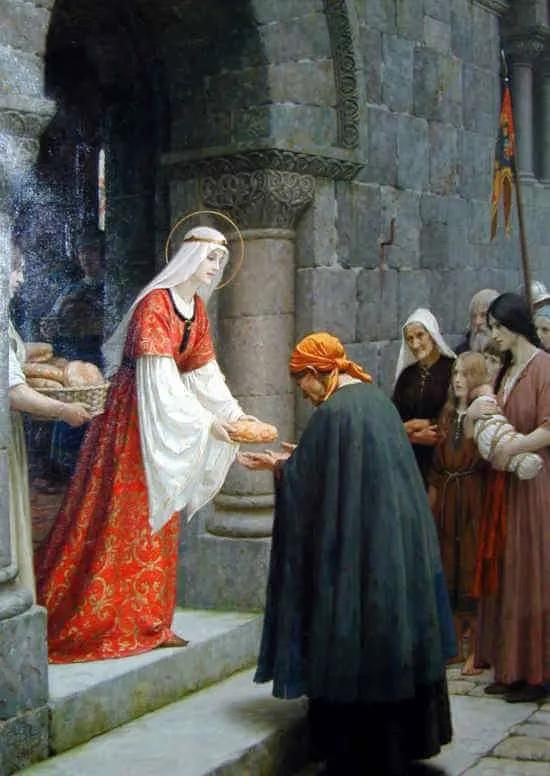
Saint Elizabeth of Hungary, Religious

1207–1231; Patron Saint of Third Order Franciscans, bakers, beggars, brides, charitable societies and workers, exiles, falsely accused people, homeless people, hospitals, lacemakers, nursing homes, nursing services, people ridiculed for their piety, widows; Invoked against in-law problems, the death of children, and toothache; Canonized by Pope Gregory IX on May 27, 1235

Elizabeth was born to King Andrew II and Queen Gertrude of Hungary. Her aunt on her mother’s side was Saint Hedwig, Duchess of Silesia. As was the common practice at that time for nobility, marriages were arranged at an early age to secure alliances between powerful ruling families. When Elizabeth was only four, knights arrived to take her to Thuringia, about five hundred miles away, where she was brought up in the court of Hermann I, Landgrave (ruler) of Thuringia. Her upbringing was alongside Hermann I’s eleven-year-old son, Louis IV, to whom Elizabeth was betrothed in marriage, which took place ten years later. Elizabeth’s mother was from the powerful House of Andechs and had similarly married King Andrew for political reasons. Because Queen Gertrude was not from Hungary, she was queen consort, meaning she was queen by virtue of marriage, not enjoying direct authority in Hungary on account of her royal lineage. Nonetheless, Gertrude regularly exerted her influence within Hungary’s royal court, causing conflict among the nobles and royal family. As a result, Queen Gertrude was assassinated when her daughter, Elizabeth, was six years old.

Two years before, a large entourage and dowry from her father had accompanied Elizabeth to the court of the Landgrave of Thuringia. There, she received a Catholic upbringing, an excellent education, and was cared for by attendants (ladies-in-waiting). She learned culture, manners, and royal protocol; attended banquets; wore fine clothing; and witnessed the intrigue and power struggles common in the royal court. The Castle of Wartburg in which she lived was a magnificent castle, and the Landgrave of Thuringia one of the richest in the empire. Life was extravagant, with poets and musicians, fine meals and social gatherings, and the best of what the world at that time had to offer. Behind the scenes, many factions plotted and formed alliances, seeking power and favors. Despite the challenges and worldly temptations she was thrust into at such a young age, Elizabeth grew in faith. She prayed, practiced mortification, and fell deeply in love with her Lord.

During the first ten years in Wartburg Castle, Elizabeth and her future husband, Louis IV, were raised together and formed a deep personal and spiritual bond. Though the marriage was arranged, they put their minds, hearts, and wills into what would soon become their future together. Louis’ father died when he was sixteen years old, and Louis became the Landgrave of Thuringia. Four years later, Elizabeth and Louis were wed.

From the very beginning, Elizabeth did not fit in with the courtly life. She was sensitive to the poor, sought virtue, and preferred simplicity, which made her an object of gossip and slander among the more “refined” members of the court. In Louis, however, she found a strong support. He admired her virtues and goodness and dismissed any criticism that came to his ears, defending her before all.

About two years after their marriage, when Elizabeth was sixteen, Franciscan friars arrived at the castle to care for the spiritual needs of the royal court. The holy Friar Conrad of Marburg became Elizabeth’s spiritual director. Through him, she learned about the saintly life of Saint Francis who probed the highest heights of holiness, even being pierced with the stigmata at the end of his life by a Seraphim, the highest of the choirs of angels, earning him the revered title “the Seraphic Father.” Stories of Saint Francis, the influence of the friars, and her own devotional life drew her deeper into the mysteries of faith. One story relates that one time, while praying in the castle chapel, she took off her royal crown, placed it before the Crucifix, and then lay prostrate before her Lord in prayer. When her mother-in-law saw this, she chastised Elizabeth, telling her such a gesture was beneath her dignity. Elizabeth responded, “How can I, a wretched creature, continue to wear a crown of earthly dignity, when I see my King Jesus Christ crowned with thorns?”

Elizabeth’s heart was inflamed with a desire for charity and justice. If she saw an injustice, she quickly sought to remedy it. Rather than eat food that was unjustly obtained, she preferred to go hungry. If the poor were cheated, she paid the debt owed them out of her own money. She loved to go down to the villagers, especially the poor, and bring them food, clothing, and whatever else they needed. She distributed these goods personally, in the company of her maids. This humility and generosity won her the love and respect of the peasant class, despite the ongoing ridicule of the nobility. When the nobility complained to her husband, he continued to support her and her charitable works.

One day, when Elizabeth was secretly bringing bread from the castle to the poor, she encountered her husband in the street. He had been told that she was stealing from the castle, so he asked her what she was carrying in her apron. When she opened it, beautiful roses appeared, to the delight of Louis who saw that as a sign of divine favor that humbled her detractors. On another occasion, she brought a leper into her own bedroom and laid him on her bed to care for him. Later, when Louis was told what Elizabeth did by her indignant mother-in-law, Louis went to strip the infected sheets from their shared bed. When he did so, he either saw in a vision, or was given an infused spiritual intuition that it was Christ Himself Whom Elizabeth cared for in the person of the leper. This only deepened Louis’ admiration for his young wife.

In 1227, at the age of twenty-six, Louis joined the army of Holy Roman Emperor Frederick II for the sixth crusade against the Muslims to take back the Holy Land which had been lost in 1187. On the way, disease spread through the troops and Louis fell ill, dying shortly afterwards. News of her husband’s death was devastating to the twenty-year-old Elizabeth. She and Louis had previously made vows to each other not to remarry if either of them died, so Elizabeth turned her eyes more fully to Chirst, devoting herself to His mission, no matter where He led.

Elizabeth and Louis had three children together. Their youngest, Gertrude, with whom Elizabeth was still pregnant when Louis died, grew up and became abbess of Altenburg Abbey. Their middle child, Sophie, married Henry II, Duke of Brabant. Their oldest, Hermann, initially succeeded his father as Landgrave of Thuringia when he was only four. Though Elizabeth acted on her son’s behalf in the governance of the Landgrave, Louis’ brother, Henry, seized control as regent for young Hermann and ran Elizabeth and her children out of the castle, causing many of the nobles to reject her. Hermann died unexpectedly several years later before he could make his claim as Landgrave, and Henry assumed full control.

Wandering for a while with two of her handmaids, Elizabeth entrusted her children to the care of some of Louis’ sympathetic family members. Eventually, the family members were able to secure Elizabeth refuge in the Castle of Marburg where, with the guidance of Friar Conrad, she fully dedicated herself to God’s service with private vows, took a gray habit, and formed a small community with other friends. Louis’ family secured for her the remainder of her dowry, which she used to build a hospital for the poor. She spent the next three years caring for the sick in the humblest of ways. In 1231, at the age of twenty-four, Elizabeth came down with a high fever and after days of suffering, offered herself to God. When the people heard of her illness, they flocked to her in prayer. Soon after her death, miracles were attributed to her intercession. People became so devoted to her that only four years after her death, Pope Gregoy IX canonized her and built a church in Marburg in her honor. 

Saint Elizabeth of Hungary was given all the privileges and wealth this world had to offer her at a very young age, yet in her heart, none of that compared to the privilege of serving her Lord, especially as he was present to her in the sick and poor. She chose the better part and will forever rejoice with her God in Heaven.

As we honor this saintly noblewoman, ponder her choice to follow Christ in the midst of so many temptations and trials. As you do, follow her example by making the will of God the greatest treasure of your life.

Source: https://mycatholic.life/saints/saints-of-the-liturgical-year/november-17st-elizabeth-of-hungary/

Saint Elizabeth of Hungary, Religious Read More »
Mark 13:24-25

The Tribulations to Come

Jesus said to his disciples: “In those days after that tribulation the sun will be darkened, and the moon will not give its light, and the stars will be falling from the sky, and the powers in the heavens will be shaken.”

Reflection:

The “tribulation” of which our Lord speaks, refers to a great persecution of the Church and of those with faith. Regarding this tribulation, the Catechism of the Catholic Church states:

Before Christ’s second coming the Church must pass through a final trial that will shake the faith of many believers. The persecution that accompanies her pilgrimage on earth will unveil the “mystery of iniquity” in the form of a religious deception offering men an apparent solution to their problems at the price of apostasy from the truth. (#675).

Is this “final trial” happening today? Though it is impossible to apply Jesus’ prophecy and the Catechism’s teaching to one specific moment in time, the fact remains that this trial and tribulation will take place. That is for certain. But how and when it will take place we do not know. It might be that it already has taken place or that it is taking place right now. Only God can properly interpret these prophetic words.

With that said, this final trial and “mystery of iniquity” does take place in all of our lives in various ways. When we devote ourselves to the love and service of God, we can be certain that our faith will be tested and that persecution will be experienced in one way or another. Knowing this, however, should not frighten us. On the contrary, it was spoken by our Lord to prepare us and to help us endure whatever trials we experience in life. Jesus’ words must instill hope within us when we endure the suffering caused by evil.

Jesus also said that when we see persecutions, trials and tribulation, we must “know that he is near, at the gates.” In other words, the greater the suffering one endures for their faith, the more present God is. He is there, at the gate of your heart, waiting for you to run to Him in trust and hope.

As we approach the end of our current Church year, most of our readings at Mass will focus upon the end times. We will read about Jesus’ glorious return in glory, the end of the world, and the establishment of His permanent Kingdom as Heaven and earth are united as one. It could take place today or tomorrow, or it might not take place for thousands of years. But it will happen. On that day, the day of the final judgment, the only thing that will matter is our fidelity to God. For that reason, we must daily strive to live as if that day were today. We must diligently prepare for that day and live for that glorious moment alone. If life is easy right now, we should work to be more selfless and sacrificial so as to be prepared. If life is challenging right now, we must enter those challenges with hope and trust, uniting every suffering to Christ’s sufferings as a sacrifice of love.

Reflect, today, upon Jesus’ prophecy that “the sun will be darkened, and the moon will not give its light, and the stars will be falling from the sky, and the powers in the heavens will be shaken.” As you do, know that these are words spoken not only to the Church as a whole, but also to you. Jesus wants you to know that any suffering and tribulation you endure, every “darkening of the sun” or any way that you feel “shaken” are opportunities for you to turn to God in trust. Invite our Lord into these experiences and know that they are signs of His closeness to help purify you and prepare you for the glorious day of His return.

Source: https://catholic-daily-reflections.com/2024/11/16/the-tribulations-to-come/

Mark 13:24-25 Read More »

Saint Gertrude the Great, Virgin

1256–1302; Patron Saint of nuns; Invoked for poor souls in Purgatory; Equivalent canonization in 1606; Added to the Universal Roman Calendar by Pope Clement XII in 1677

Saint Gertrude the Great is the only female saint to be given the title “the Great,” which Pope Benedict XIV bestowed on her in the mid-eighteenth century as a way of highlighting her extraordinary contribution to mystical theology. Nothing is known about Gertrude’s early childhood or family origin, other than that she was born in Eisleben, Thuringia, in the Holy Roman Empire, modern-day Germany. At the age of five, she was entrusted to the Monastery of Saint Mary in the neighboring town of Helfta, which was later moved to Hackeborn property. Why she entered the convent at such a young age is not known. Most likely, either her parents offered their daughter to God in this then-customary way, or Gertrude might have been an orphan.

When little Gertrude entered the convent, the abbess was of the same name, Gertrude of Hackeborn (now Blessed Gertrude of Hackeborn). Abbess Gertrude was an outstanding woman who governed the monastery for forty-one years, helping it to flourish and produce much good fruit. It is often called “the crown of German convents.” She was exceptionally devout and saw to it that the sisters regularly contemplated the boundless love of Christ, were serious about their souls’ journey toward divine union, had a profound love for the Sacred Heart of Jesus, and manifested a deep devotion to the Most Holy Eucharist. Daily life at the monastery consisted of singing, praying the Divine Office, celebrating the Mass, and studying Scripture and the Church Fathers. In addition, the sisters engaged in ascetical practices, manual labor, community life, and menial daily duties. When little Gertrude entered the convent, Abbess Gertrude was around twenty-nine years old. Also in the convent was the abbess’s younger sister, Matilda of Hackeborn (now Saint Matilda), who was about twenty, and to whose care the five-year-old Gertrude was entrusted. Sister Matilda went on to become her dearest friend and spiritual mentor.

Sister Matilda had been at the convent since she was very young, and she quickly grew in sanctity and virtue, eventually probing the highest heights of holiness. This had a profound impact upon the community and drew the other sisters into deeper prayer. After young Gertrude had been at the convent for about ten or fifteen years, Sister Matilda began to have visions of Christ, the Blessed Virgin Mary, angels, and saints in which she became intimately aware of the finest and most splendid details of their lives, especially the life and Passion of Christ and the life of the Blessed Mother. She also was infused with profound knowledge and insights into the mysteries of our faith, such as the Sacraments, virtues, and the end of time. Finally, she was the recipient of  many beautiful prayers. Unbeknownst to her, her sisters, under the direction of Abbess Gertrude, began to write down everything Sister Matilda experienced and received.

Around the same time, another Matilda—of Magdeburg—moved into the convent in Hackeborn at the age of sixty-five. Matilda of Magdeburg had lived a solitary life of prayer and charity and was also a mystic. At the age of twelve she had her first vision, a vision of the Holy Spirit, and later began writing these visions down. By the time she moved into the convent in Hackeborn, she had written six volumes. At Hackeborn she completed her seventh book, The Flowing Light of Divinity.

This bigger picture of life at the Monastery of Saint Mary paints the background for Saint Gertrude the Great, whom we honor today. Sister Gertrude was blessed with a holy and disciplined mother abbess. Her mentor and dear friend, Sister Matilda of Hackeborn, was a mystic. When the aged Matilda of Magdeburg moved into the convent (most likely not taking formal vows), she was in the presence of another mystic. What could she do but become a mystic herself? The problem was that up until that point, Sister Gertrude had not yet fully given herself to Christ. She was an excellent student with a strong desire to study all the sciences and other subjects of that time. She excelled in literature, music, and art. She prayed and was also strong-willed and determined in all she did. However, as she aged, she began to see the futility of the things of this world and grieved over her lukewarmness.

In January 1281, when Sister Gertrude was twenty-five years old, she had her first mystical vision. Jesus, in the form of a most beautiful young man about sixteen years old, appeared to her saying, “Your salvation is at hand; why are you consumed with grief?…I will save you, I will deliver you; fear not.” After that, the youthful Jesus placed His hand on her to ratify His promise. Jesus then said to her, “You have licked the dust with My enemies, and you have sucked honey amidst thorns; but return now to Me—I will receive you, and inebriate you with the torrent of My celestial delights.” She then saw a thorny hedge that divided her and Jesus, representing her many sins, and she saw Jesus stretch out His hand, which bore the marks of the nails but communicated to her His promise to draw her to Himself. Of this encounter she later wrote:

By these and other illuminations, You did enlighten and soften my mind, detaching me powerfully, by an interior unction, from an inordinate love of literature and from all my vanities. I only despised those things which had formerly pleased me; and all that was not You, O God of my heart, appeared vile to me. You alone were pleasing to my soul. And I praise, bless, adore, and thank from my inmost soul, as far as I am able, but not as far as I ought, Your wise mercy and Your merciful wisdom. You, my Creator and Redeemer, did endeavor in so loving a manner to submit my unconquerable self-opinionatedness to the sweetness of Your yoke, composing a beverage suitable to my temperament.

For the next twenty-one years, Sister Gertrude lived a life of ongoing mystical prayer, especially during the Divine Office and the Holy Mass. She began to have regular visions and received spiritual knowledge, writing much of it down. She turned from interest in the vain things of this world to the exclusive contemplation of God and experience of mystical prayer, aided by her study of Scripture and the Fathers of the Church.

The legacy of Saint Gertrude the Great is one of the most important ones from the thirteenth-century mystics. During her final twenty-one years of life, she entered into deep union with God and shared those experiences in numerous writings, some of which have been lost. Her most important surviving work is The Herald of Divine Love, consisting of five chapters, the second of which she herself wrote and the rest which were written by other nuns, recording her life, spiritual experiences, and insights as she related them. Her book, Spiritual Exercises, a compilation of prayers, meditations, and spiritual practices, helps the reader grow in devotion, virtue, a love for the Eucharist, and devotion to the Sacred Heart, to which she was especially faithful. Saint Gertrude also learned from Jesus about the importance of praying for the poor souls in Purgatory. He gave her a prayer that we will use to conclude this reflection in honor of Jesus’ command to her.

Saint Gertrude was never formally canonized, and her writings were nearly lost until they were discovered centuries after her death. In the seventeenth century, she was honored by the Church and received an “equivalent” canonization. In the eighteenth century she was placed on the Universal Roman Calendar, and her prayers and revelations began to be more widely known. It might be that God especially wanted to use her to reveal His inner life to the Church today, many centuries after her death. Consider learning more about this mystic and her writings so that God can infuse you with some of the same insights and grace He gave to her.

Source: https://mycatholic.life/saints/saints-of-the-liturgical-year/november-16—saint-gertrude-the-great-virgin/

Saint Gertrude the Great, Virgin Read More »

Luke 18:6-8

Praying for the Will of God

The Lord said, “Pay attention to what the dishonest judge says. Will not God then secure the rights of his chosen ones who call out to him day and night? Will he be slow to answer them? I tell you, he will see to it that justice is done for them speedily.” 

Reflection:

It’s interesting that Jesus uses the example of a dishonest judge to illustrate the importance of praying to God, calling out to Him day and night for justice. As the parable goes, this judge cared little about a widow in his town who continually came to him asking for a just decision. He felt as though she was continually bothering him. Because she was so persistent, the judge thought to himself, “…because this widow keeps bothering me I shall deliver a just decision for her lest she finally come and strike me.” Jesus’ conclusion from this parable is quoted above.

The simple lesson we ought to learn from this parable is that we must be persistent in prayer. God will always answer our prayers, seeing to it that “justice is done” speedily. But many people have prayed and prayed and prayed for some situation, prayed even for justice, and it appeared that God did not answer their prayer. Thus, some may question the promise of Jesus that persistent prayer will always be answered and justice always be rendered.

If this is your experience, it is essential that you remind yourself of two things. First, Jesus’ words are true. When we persevere in prayer and trust in God, He hears us and answers. This is our Lord’s unwavering promise. But secondly, the “justice” that God delivers may often be different than the justice we expect. It may be that we want someone to pay for a wrong they did to us, but after praying fervently, our expectation is not met by our Lord. For this reason, it is essential that we know that God answers every prayer we pray, but in accord with His perfect will and wisdom. Therefore, God’s view of justice at times may be very different than ours. At times, His justice is satisfied by His invitation to us to show mercy in abundance. True mercy always satisfies justice.

Take, for example, the case of someone speaking in a rude manner to you. If you offer that situation to our Lord, He will enter in and provide His grace for you to deal with it in accord with His will. Perhaps He will soften the other person’s heart so that they apologize, or perhaps, if they don’t apologize and their heart is not softened, then God’s answer to your prayer will be to give you the grace of humility so that you can love that person despite their unrepentance. Regardless of the way our Lord intervenes, the fact remains that He will intervene and enable you to fulfill His perfect will. If, however, your prayer is that the person be held accountable and condemned, then you are trying to tell God what to do, and He will not accede to your request. All of our prayer must ultimately be for the fulfillment of God’s perfect will in accord with His wisdom.

Reflect, today, upon how completely you trust in God. Do you know, with certainty, that He will answer every prayer that you fervently pray with faith in accord with His divine will? Believing this is freeing and enables you to live more fully in union with Him. If there is some issue with which you struggle right now, even some apparent injustice, then entrust it to our Lord, day and night without ceasing, and know that His grace will guide you as He answers you in accord with His will.

Source: https://catholic-daily-reflections.com/2024/11/15/praying-for-the-will-of-god-7/

Luke 18:6-8 Read More »

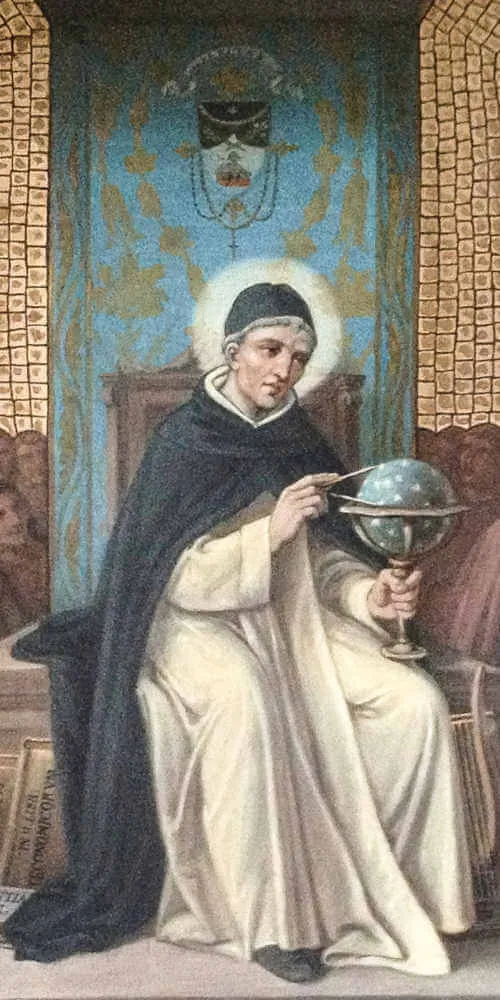
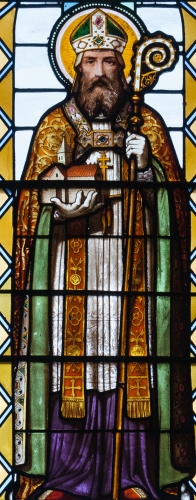
Saint Albert the Great, Bishop and Doctor

c. 1200–1280; Patron Saint of scientists, medical technicians, natural sciences, philosophers, schoolchildren, and theology students; Canonized by Pope Pius XI on December 16, 1931; Declared a Doctor of the Church (Universal Doctor) during his canonization

One of the greatest minds in the history of the Church was born in the Holy Roman Empire around the turn of the thirteenth century in the town of Lauingen, modern-day Germany. Different sources date his birth in various years between 1193 and 1206. He was known as Albert of Lauingen when born, but even before his death he was often referred to as Albert the Great (Albertus Magnus).

Albert was born into a noble family, with some accounts identifying his father as a count. Because of his noble status, he enjoyed the blessing of an excellent education, either at home from private tutors or in a neighboring school. At some point after completing his elementary studies, he was sent to the University of Padua to study the liberal arts and was also introduced to the philosophy of Aristotle that would become foundational for his later writings. Around 1223, Albert joined the Dominican order, possibly as a result of an apparition in which the Blessed Virgin Mary instructed him to do so. He continued his studies in important schools in Padua, Paris, and Cologne to complete his education in philosophy and theology.

Around the time that Brother Albert finished his studies, he was ordained to the sacred priesthood and was assigned to various teaching posts throughout Europe, most notably in Cologne for several years. Around 1245, Father Albert earned the distinction of “Master of  Theology” from the prestigious Saint-Jacques at the University of Paris, where he also was given the Chair of Theology.

It is difficult to know what was taking place within the mind and soul of Father Albert during these first twenty-two years as a Dominican, but it is clear from the abundant good fruit borne from his life that he was intimately united to God. Later biographers describe him as having a voracious appetite for sacred knowledge, with the heavens opening up upon him, filling his mind with divine light. Unique to his thought was the incorporation of Aristotle’s philosophical principles in logic and metaphysics with theology. Before Father Albert, no one had thoroughly incorporated the two strains of thought. This was partly due to the fact that all of Aristotle’s works had only recently been translated into Latin from ancient Greek.

Father Albert was not only a philosopher and theologian, he was a walking encyclopedia who seemed to have mastered all subjects. The compilation of his writings fills thirty-nine encyclopedic volumes and covers a multitude of topics, including logic, metaphysics, rhetoric, theology, botany, geography, astronomy, astrology, mineralogy, alchemy, zoology, physiology, phrenology, justice, law, politics, economics, friendship, and love. One might ask what most of these have to do with theology. Father Albert would reply that they all have to do with theology because they all come from God and are all in perfect harmony with each other. Today some suggest that science and faith contradict each other. Father Albert would be the first to challenge that belief and would thoroughly defend his position. The simple answer is that if God is the source of all the natural sciences, logic, revelation, law, and order, and all that is true, then God cannot contradict Himself. He cannot create the natural sciences with one truth and then reveal in theology another truth. What is true is that which is in the mind of God, no matter the subject, and that which is in the mind of God is perfectly harmonious. All creation reveals and glorifies God in its own perfect way!

Though Father Albert was one of the most prolific and profound writers in the Church, God also used him to help form a man who became the Church’s greatest theologian: Saint Thomas Aquinas, the Angelic Doctor. Father Thomas Aquinas was about twenty-five years younger than Father Albert but died five years before him. It was in Paris that the twenty-year-old Father Thomas became Father Albert’s student. Their teacher-student bond grew into a profound mutual respect and friendship. In many ways, Father Albert laid the foundation for Father Thomas by helping him embrace and “Christianize” Aristotelian logic and metaphysics. Father Albert was the first of the Church’s theologians to write upon every aspect of Aristotle, and Father Thomas soaked it all up, later building upon it to produce what is arguably the most important theological work ever written: the Summa Theologiae (“Summary of Theology” or “Compendium of Theology”). 

Together, these men were among the greatest theologians to show that faith and reason are not exclusive of each other; rather, they are intimately interwoven and inseparable. When pure human reason is used to analyze the content of divine revelation (faith), the mind is able to extrapolate deeper truths and bring them to their logical conclusion, even to the highest degrees of abstraction. The bond and respect between Fathers Albert and Thomas was so deep that when Father Albert was transferred to Cologne in 1248, Father Thomas followed him.

In 1254, Father Albert was made the provincial superior of the Dominican Order, adding administrative duties to his academic pursuits. In 1260, Pope Alexander IV appointed him as the Bishop of Regensburg, where he remained for the next three years. During that time, though Bishop Albert was among the greatest minds in the Church, his humility won the hearts of his people, and he was able to bring healing to divisions that plagued that diocese. After Bishop Albert resigned his position, the pope employed him for diplomatic missions while Bishop Albert continued his academic pursuits.

Because Bishop Albert and Father Thomas Aquinas were groundbreakers in the use of Aristotelian logic and metaphysics, there were some who criticized them. In 1277, two years after Father Thomas died, the Bishop of Paris issued an edict condemning 219 theological propositions that were deduced from Aristotelian logic by various theologians, stating that God’s Almighty Power was so transcendent that the propositions violated God’s Omnipotence. Twenty of those 219 were from Father Thomas. Some stories state that despite his age (about seventy-seven), Bishop Albert traveled to Paris to personally defend his saintly student. In the end, both teacher and student became saints and Doctors of the Church, thus pointing to the true omnipotence of God.

Saint Albert the Great was a man with a mind on fire with the Holy Spirit. Mere human intellectual capacity could never achieve what he achieved. Some saints are filled with the fortitude necessary to die as martyrs, some are mystics whose lives reveal the the holiness of God, some are founders who build up the Church through new charisms and religious communities, and some, like Saints Albert and Thomas, receive the gift of intellect, infused with the highest degree of the virtues of wisdom, knowledge, understanding, and prudence, by which they are able to leave the Church a solid theological foundation upon which it can continue to be built.

As we honor the “Great” Saint Albert, Doctor of the Church, who was designated as Universal Doctor because he mastered every subject, ponder the simple fact that, despite his having one of the greatest minds in the history of thought, his proficiency is but a drop of water in the ocean compared to the mind of God. This humble truth is something Saint Albert would have readily professed, yet it never stopped him from striving to become that one drop, given that it was one small way of comprehending and articulating what God has revealed to us. And that which comes from God, no matter how small in comparison to the Reality, has infinite value. Seek to imitate Saint Albert by renewing your commitment to the study of your faith so that your mind will experience but a drop of the grace given to this greatest of men.

Source: https://mycatholic.life/saints/saints-of-the-liturgical-year/november-15—saint-albert-the-great-bishop-and-doctor/

Saint Albert the Great, Bishop and Doctor Read More »

Luke 17:26-27

Embracing the Present Moment

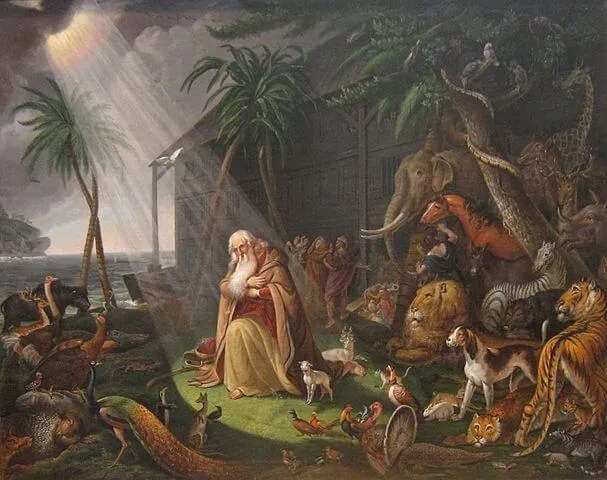
Jesus said to his disciples: “As it was in the days of Noah, so it will be in the days of the Son of Man; they were eating and drinking, marrying and giving in marriage up to the day that Noah entered the ark, and the flood came and destroyed them all.”

Reflection:

As we enter into the final weeks of the liturgical year, we begin to turn our attention to the final coming of Christ. In today’s Gospel, Jesus gives us the example of Noah and Lot. In both of their stories, people were eating, drinking, marrying, buying, selling, planting and building up, until the very day that the floods came to destroy the earth at the time of Noah and fire rained down from the sky at the time of Lot. Both Noah and Lot were saved, but many others alive at that time met with sudden and unexpected destruction.

Jesus says that the “days of the Son of Man” will be similar to these previous two events. At an unexpected time, Jesus will return to earth, and the Final Judgment will ensue. So His message is clear: Be ready at all times.

Though we are familiar with this teaching of our Lord, spoken many times and in various ways in the Gospels, many people do not heed the message. It is easy to believe that you always have tomorrow to change, and so you give into temptation today. And then tomorrow comes, and the temptation is once again embraced with the thought that you will work on it tomorrow, and henceforth. We can easily go about perpetuating our sins and embracing our temptations while we have the ongoing good intention of changing tomorrow. This is a mistake for two reasons.

First of all, it always remains a possibility that our Lord will indeed come today and that today truly will be the end of the world. Or, it always remains a distinct possibility that your life will come to an end today, suddenly and unexpectedly. If that were to happen, would you be fully ready to stand before the judgment seat of Christ? Most people would not, at least not fully ready. Thus, this should be motivation enough to work tirelessly today to be ready now and every moment hereafter.

But we should also see this prophecy of our Lord as applying to every present moment of every day. Jesus is always coming to us, suddenly and without warning, inviting us to serve Him by grace. This Gospel passage states that “Whoever seeks to preserve his life will lose it, but whoever loses it will save it.” This applies to the end of our lives and to the end of the world, but it also applies to every present moment of every day. If we continually seek to lose our lives, meaning, to choose the Heavenly realities over the temporal earthly indulgences we are daily tempted with, then we will also daily experience the grace of salvation, here and now, in every present moment of our lives. 

Reflect, today, upon whether or not you regularly seek to lose your life for the sake of the Kingdom of God. Do you continually choose grace, mercy, Heaven, obedience, love, self-sacrifice, compassion, forgiveness and the like, every moment of every day of your life? If so, then our Lord will continually bestow the gift of His saving grace upon you here and now, preparing you for the ultimate moment of judgment. If not, then you will be more like the people of Noah’s and Lot’s time who met with sudden destruction when they least expected it. Live for God now, today, in this moment, and you will be eternally grateful you did.

Source: https://catholic-daily-reflections.com/2024/11/14/embracing-the-present-moment-3/

Luke 17:26-27 Read More »

Saint Lawrence O’Toole

Profile

Lawrence was the son of the chief of Hy Murray. He was taken as a hostage by King Dermot McMurrogh Leinster in 1138 when he was ten years old; Dermot later married Lawrence’s sister, Mor. He was released in 1140 at age twelve to the Bishop of Glendalough, Ireland. and raised and educated at the monastic school there. He became a monk at Glendalough, and an abbot in 1153. He declined the bishopric of Glendalough in 1160, citing his unworthiness. He ordered to accept the archbishopric of Dublin, Ireland in 1161, and became the first native-born Irishman to hold the see.

Lawrence reformed much of the administration and clerical life in his diocese. He worked to restore and rebuild Christ Church cathedral. As archbishop, he accepted the imposition onto Ireland of the English form of liturgy in 1172. Noted for his personal austerity, he wore a hair shirt under his ecclesiastical robes, made an annual 40 day retreat in Saint Kevin‘s cave, never ate meat, fasted every Friday, and never drank wine – though he would color his water to make it look like wine and not bring attention to himself at table. He acted as peacemaker and mediator at the second seige of Dublin in 1170.

In 1171, Lawrence traveled to Canterbury, England on diocesan business. While preparing for Mass there, he was attacked by a lunatic who wanted to make Lawrence another Saint Thomas Beckett. Everyone in the church thought Lawrence had been killed by the severe blow to the head. Instead, he asked for water, blessed it, and washed the wound; the bleeding stopped, and the archbishop celebrated Mass.

Lawrence negotiated the 1175 Treaty of Windsor which made upstart Irish king Rory O’Connor and vassal of king Henry II of England, but ended in combat. He attended the General Lateran Council in Rome, Italy in 1179. He was the Papal legate to Ireland. He died while travelling with King Henry II, a trip taken as a peacemaker and on behalf of Rory O’Conner. It resulted in his imprisonment and ill-treatment by the king who decided he had had his fill of meddling priests.

Born

  • 1128 at Castledermot, County Kildare, Ireland

Died

  • 14 November 1180 at Eu, diocese of Rouen, Normandy, France of natural causes
  • buried at the abbey church at Eu
  • so many miracles were reported at his tomb that his relics were soon translated a place of honour before the altar
  • his heart was removed and returned to Christ Church Cathedral, Dublin, Ireland

Canonized

  • 1225 by Pope Honorius III

Patronage

  • archdiocese of Dublin, Ireland

Source: https://catholicsaints.info/saint-lawrence-otoole/

Saint Lawrence O’Toole Read More »

Luke 17:20-21

Perceiving the Kingdom of God

Asked by the Pharisees when the Kingdom of God would come, Jesus said in reply, “The coming of the Kingdom of God cannot be observed, and no one will announce, ‘Look, here it is,’ or, ‘There it is.’ For behold, the Kingdom of God is among you.”

Reflection:

Why did the Pharisees ask Jesus this question? Why did they want to know when the Kingdom of God would come? To answer this question, we must first look at the full context of the various communications between Jesus and the Pharisees. When we do this and see the many ways that the Pharisees attempted to trap Jesus in speech and the times in which our Lord firmly rebuked the Pharisees, it seems clear that the Pharisees did not ask Jesus this question in innocence and openness. Instead, they once again were trying to trap Him. They posed a question by which they gave the appearance of believing Jesus’ teachings that the Kingdom of God was coming, but they asked not in faith but in mockery and in an attempt to trip Jesus up in His answer.

Jesus’ answer is mysterious. It leaves little room for the Pharisees to use Jesus’ speech against Him. Perhaps the Pharisees were hoping that Jesus would say that the Kingdom was coming soon, or next month, or within the year. But Jesus’ answer leaves them with confusion in the face of this mystery that “the Kingdom of God is among you.”

Much of what Jesus says can only be fully understood through faith. He often speaks in veiled language intentionally, because the only way to lift the veil to perceive the meaning of His teachings is to rely upon the inspired gift of faith. Faith is like a key to unlock the secrets of the mysteries of God. Faith becomes a lens through which every parable, every figure of speech, and every mystery taught by our Lord is understood. But without this inspired gift of faith, Jesus’ teachings remain mysterious and incomprehensible.

When you ponder these words that “the Kingdom of God is among you,” what do you understand? Are you able to use the gift of faith to unlock the meaning of this sacred teaching? Interestingly, reading Jesus’ words, spoken in a veiled way, offer us the opportunity to test our own faith. If we read these words and are left in confusion, then this is a clear sign that we need to pray for and be open to the gift of faith. But if we do read Jesus’ mysterious teachings and the light of understanding is given to us, then this is a clear reason to rejoice, since this comprehension is only possible through the gift of faith.

Reflect, today, upon this sacred teaching of our Lord: “The Kingdom of God is among you.” Meditate on those words and pray for insight and understanding. Jesus’ words are true. His Kingdom truly is everywhere, all around us and within us. It is alive and well. Do you see it? Do you perceive it? Do you see your role in building it? Use these questions as a test of your own level of faith and know that God wants to reveal to you these mysteries that are only able to be comprehended by His grace.

Source: https://catholic-daily-reflections.com/2024/11/13/perceiving-the-kingdom-of-god-3/

Luke 17:20-21 Read More »

Saint Frances Xavier Cabrini, Virgin

1850–1917; Patron Saint of immigrants, emigrants, hospital administrators, and orphans; Invoked against malaria; Canonized by Pope Pius XII on July 7, 1946

Maria Francesca Cabrini (Frances) was born in the small town of Sant’Angelo Lodigiano, Lombardy, modern-day Italy. At the time of her birth, this culturally Italian town was under the control of the Austrian Empire. She was the youngest of thirteen children, only four of whom survived to maturity. As a child, she listened attentively as her father inspired her with stories about foreign missionaries. Her parents were quite devout and formed their children well in the Catholic faith. Following the example of her mother and older sister Rosa, Frances learned to pray at an early age and grew in devotion to the Sacred Heart of Jesus, especially after Pope Pius IX extended the Feast of the Sacred Heart to the Universal Church when she was six years old. Around the age of eight, Frances received the Sacrament of Confirmation and later remarked of that day, “from that moment I was no longer of the earth.” She sensed she was deeply united with the Holy Spirit.

At the age of thirteen, Frances attended school at the convent of the Daughters of the Sacred Heart in a neighboring town. While with them, her love for the Sacred Heart grew. She wanted to join the sisters and enter the convent, but the mother superior turned her down because she suffered from poor health. After five years of schooling, she graduated with honors, received a teaching certificate, and returned to her hometown to teach in the parish school. Shortly afterward, she transferred to the parish school in the neighboring town of Vidardo. After two years of teaching, when she was twenty, her parents died just months apart. Soon afterward, she suffered through smallpox. When Frances recovered, she took it as a sign that God wanted something more from her, so she applied for acceptance to the Canossian Sisters of Crema, about forty miles away, but was yet again turned away.

In 1874, when Frances was twenty-four years old, the bishop invited her to assist at the House of Providence orphanage for girls about twenty miles away in Codogno. The bishop wanted the orphanage to be run as religious sisters would run it, and he believed Frances could help the two older women who were poorly operating the facility. Frances soon found that some of the girls in the orphanage were also interested in religious life, so in 1877, at the age of twenty-seven, Frances and five of the girls made a religious profession of vows at the hands of the bishop. Frances added Xavier to her name in honor of the great Jesuit missionary Saint Francis Xavier, and the bishop named her as the mother superior. Within three years, Mother Frances Xavier Cabrini’s attempt at religious life in the House of Providence suffered, due to calumnies from the other two women. Mindful of this, in 1880, at the age of thirty, the bishop invited Mother Cabrini and the girls who professed with her to form a new missionary convent in Codogno, which eventually became the Institute of the Missionary Sisters of the Sacred Heart of Jesus. Mother Cabrini remained mother superior for the next thirty-seven years until her death.

Mother Cabrini was humble and prayerful, but also determined, hardworking, well organized, and zealous. She quickly arranged the new convent, despite arriving with very little means. An altar was set up in the chapel with an image of the Sacred Heart, which became the source of meditation and prayer for the young sisters. During the first several years after the order’s founding, the Missionary Sisters of the Sacred Heart experienced rapid growth, with many girls joining. Within a year, an orphanage and day school were established next to the convent. Within two years, another convent was established, and within five years there were seven convents. The sisters made needlework and embroidery to support their work.

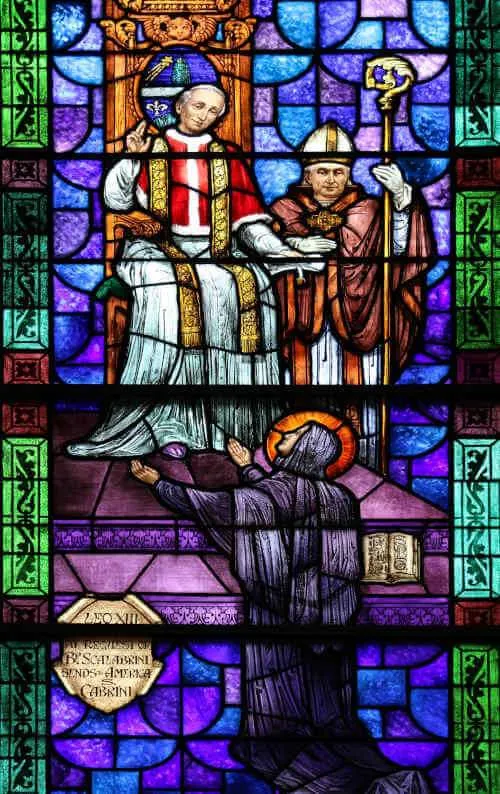
In September 1887, with the permission of her bishop, Mother Cabrini set out for Rome with the hope of founding a convent in the Eternal City and to request the Holy Father’s final approval of her institute. Despite some difficulties in dealing with the Roman Curia, in March 1888, Pope Leo XIII approved her rule and constitutions, and the sisters were invited to establish houses in Rome. Now that they were an institute approved by the pope, they were free to travel wherever the pope would send them. While in Rome, Mother Cabrini met Bishop Scalabrini of the Diocese of Piacenza, who encouraged her to found a convent in the United States to care for the destitute Italian immigrants. Mother Cabrini, however, had her heart set on China, just as her patron saint, Saint Francis Xavier, had done. In the meantime, Bishop Scalabrini sent a letter to the Archbishop Corrigan of New York who replied that he would welcome the sisters. Mother Cabrini decided to ask the Holy Father himself. At an audience, she told the Holy Father of her desire to establish a mission in China. The Holy Father quickly said to her, “You will go not to the East, but to the West!” The matter was settled and almost immediately, Mother Cabrini and her sisters set out by ship to the United States. Though this was a new and unexpected challenge, contrary to her initial desire, she would often remind herself, “I can do all things in Christ Who strengthens me” (Philippians 4:13).

Mother Cabrini and six sisters arrived in New York on March 31, 1889. Upon arrival, the archbishop was surprised they had arrived so soon. The convent wasn’t prepared for them, so he urged them to return to Italy for the time being. Mother Cabrini refused, stating that she was sent by the pope and had to obey him. Without a convent ready, the sisters found hospitality with the Sisters of Charity. Shortly afterward, Mother Cabrini lovingly persuaded the archbishop to permit her and her sisters to move into the convent. He agreed, and the sisters began their work in the poor Italian section of Manhattan. They established a free school, taught in the local parish, and founded an orphanage, which soon had hundreds of children for whom the sisters would beg for alms. Many young Italian girls also joined in the work with the sisters.

Once everything was in working order, Mother Cabrini returned to Italy with some of the postulants who had joined them in America so they could enter the novitiate at the mother house in Codogno. After visiting all of her houses in Italy and with Pope Leo XIII to update him and receive his encouraging blessing, Mother Cabrini returned to the United States in April 1890 with seven more sisters. After founding a new convent and orphanage in West Park, which a year later would also become a novitiate for North America, Mother Cabrini returned to Italy once again to visit all her convents.

Over the next twenty-seven years, Mother Cabrini sailed across the ocean about twenty-three more times, founding over sixty hospitals, orphanages, schools, and convents in New Orleans, Brooklyn, Denver, Newark, Philadelphia, Scranton, Chicago, Seattle, Los Angeles, Argentina, Brazil, Nicaragua, England, France and Spain. During her time at sea, she became accustomed to writing letters to her sisters, amounting to thousands of letters that well document her travels and work. She was a tireless foundress who was directed and empowered by the Holy Spirit. She was compassionate and humble, learning from her continuous meditation on the Sacred Heart. She was an inspiration to all, drawing more than 1,000 young girls to join her mission in her lifetime. Nine years after her death, her sisters established their first home in China, no doubt due to her intercession. In 1946, she became the first United States citizen to be canonized.

Saint Frances Xavier Cabrini knew from an early age that God was calling her to serve Him as a religious sister, but she had no idea what abundant fruit her life would produce. She worked one day at a time, fulfilling the will of God each moment, continually entering into the humility, suffering, compassion, and mercy of Jesus’ Sacred Heart. In His Heart she discovered His love for the poor, sick, abandoned, and destitute, and she ministered to them from His Heart, being His mercy for all.

Honor this holy foundress by honoring the Sacred Heart of Jesus. This devotion is especially relevant for those who suffer. Ponder Jesus’ wounded Heart and the love that pours forth from that wound, and you will become a recipient of the mercy Mother Cabrini discovered and shared.

Source: https://mycatholic.life/saints/saints-of-the-liturgical-year/november-13—saint-frances-xavier-cabrini-virgin—usa-memorial/

Saint Frances Xavier Cabrini, Virgin Read More »

Luke 17:17-19

Thank You, My Lord

Jesus said in reply, “Ten were cleansed, were they not? Where are the other nine? Has none but this foreigner returned to give thanks to God?” Then he said to him, “Stand up and go; your faith has saved you.”

Reflection:

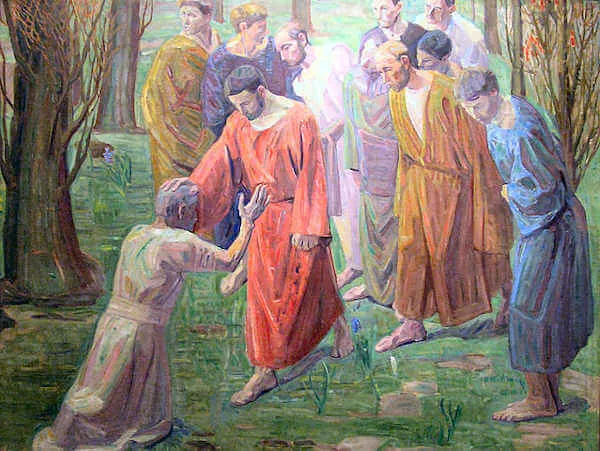
This reply from our Lord came in response to the one leper who returned to Jesus to thank Him. Ten lepers had come to Jesus, stood at a distance, cried out, “Jesus, Master! Have pity on us!” And with that, Jesus healed them all. But the heart of this healing is not as much the healing itself as it is the gratitude expressed by only one of the ten.

This Gospel relates to us that this one leper did five things to profoundly express his gratitude. He returned, glorified God, did so in a loud voice, fell at the feet of Jesus, and thanked him. What a wonderful witness for us all!

By analogy, children often take the loving care of their parents for granted. That’s why many good parents regularly remind their children to say “thank you.” In our relationship with God, we can also easily take God’s saving actions for granted. We can easily see all the grace we receive as something we deserve rather than as an infinitely merciful gift. When that happens, we become more like the other nine who failed to properly express their gratitude to Jesus.

First of all, it must be noted that expressing gratitude to God is not done because God needs these accolades. He does not depend upon our gratitude to affirm His self-worth. This is obvious. God is God, and He does not need our praise in any way. However, giving profound praise and glory to God is essential. It is essential because we need this virtue of gratitude so as to daily be reminded that all we receive from God is an unmerited gift. We cannot earn His love and grace. We do not deserve it. But He chooses to bestow it anyway out of mercy. And the only appropriate response to mercy is gratitude. Profound gratitude.

Gratitude is essential because it is the truth. We should always return to our Lord after He has graced us. We should glorify Him with much fervor, crying out to Him with passion. We should, literally and interiorly, fall on our face before Him, at His feet, and thank Him, over and over and over again. Doing so will always help us to remember the truth that everything we have and everything we are is a gift from God. An unmerited and undeserved gift of grace.

Reflect, today, upon the depth of gratitude in your own heart. Do you often act more like a spoiled and selfish child, or do you regularly perceive the graciousness of God? If you lack in any way this fullness of gratitude, then ponder this one leper. His gratitude, expressed with the fullness of passion, is the most important part of this story. In the end, he was graced far more than the other nine because his healing produced faith; and it was that faith that saved not only his body but his soul. Seek to save your soul by imitating the faith of this one holy and healed leper.

Source: https://catholic-daily-reflections.com/2024/11/12/thank-you-my-lord-3/

Luke 17:17-19 Read More »