Author name: Sani

Luke 19:47-48

Consoled by Fervent Preaching

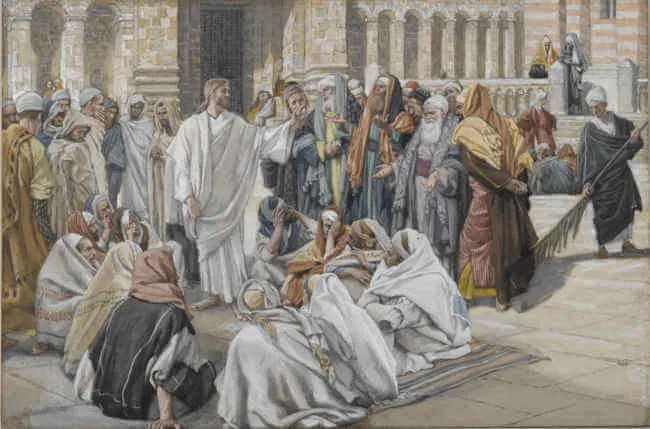
And every day he was teaching in the temple area. The chief priests, the scribes, and the leaders of the people, meanwhile, were seeking to put him to death, but they could find no way to accomplish their purpose because all the people were hanging on his words. 

Reflection:

Jesus had just entered Jerusalem for the upcoming Feast of Passover. He arrived in that holy city and then returned again the next day and entered the Temple area. As He witnessed the corruption of those selling animals for the Temple sacrifices, Jesus responded with fervent preaching in an attempt to cleanse the Temple from this corruption. He quoted the Prophet Isaiah and cried out, “It is written, My house shall be a house of prayer, but you have made it a den of thieves.” Luke’s Gospel points out the reaction of the chief priests, the scribes and the leaders of the people. They were “seeking to put him to death.” However, as the Gospel further relates, “they could find no way to accomplish their purpose because all the people were hanging on his words.”

It’s important to consider this passage within its context. The words that Jesus spoke were words that sought to cleanse the Temple of corruption. With the approval of the temple priests, who benefitted from the temple tax, there were many people who were using the practice of divine worship to make a profit for selfish gain, turning the Temple into a marketplace. Jesus could see this clearly, and many of the people would have also sensed the corruption of these practices. Though they needed to purchase animals for the ritual sacrifices and Passover meal, many of them were most likely disturbed by this abuse. Therefore, as Jesus spoke with fervor and condemnation, it angered those who were responsible for the corruption but left the people with consolation. Hence, they were “hanging on his words.”

The Gospel is always consoling, and, for those who are open, it leads them to hang on every word that is spoken. It refreshes and invigorates, clarifies and motivates. Usually when we think of the Gospel, we think of words that are gentle and inviting—words of mercy to the sinner and compassion for those who are struggling. But sometimes the pure Gospel message from our Lord fiercely attacks sin and evil. And though this may be shocking to the evil doers, to those with pure faith, these words also refresh and strengthen.

Today, we need the full Gospel message. Many need to hear Jesus’ gentle invitation to conversion by which their heavy burdens are lifted. But many others need to hear His firm words of condemnation. And the Church as a whole needs both of these messages to be proclaimed if we are to fully participate in the apostolic ministry of our Lord. Only our Lord has the right to condemn, chastise, and call others to repentance. But we are all called to share in this mission of our Lord. And though we do not have the right to judge the hearts of others, when we see objective evil and disorder within our world and even within our Church, we must cry out with our Lord, “My house shall be a house of prayer, but you have made it a den of thieves.” And when we do hear the holy and inspired words of God’s messengers who boldly and courageously proclaim the truth and call others to repentance, it should inspire, invigorate and console us as we find ourselves hanging on their every word.

Reflect, today, upon the Gospel messages that need to be preached in our day and age that are both inspired by God and are also fervently directed at corruption within the world and even within our Church. Allow yourself to support such holy preaching and to be inspired by it. Hang on these holy words of God’s prophets today. As you do, God will protect them and inspire them to continue His holy mission of purification.

Source: https://catholic-daily-reflections.com/2024/11/21/consoled-by-fervent-preaching-3/
Luke 19:47-48 Read More »

Presentation of the Blessed Virgin Mary

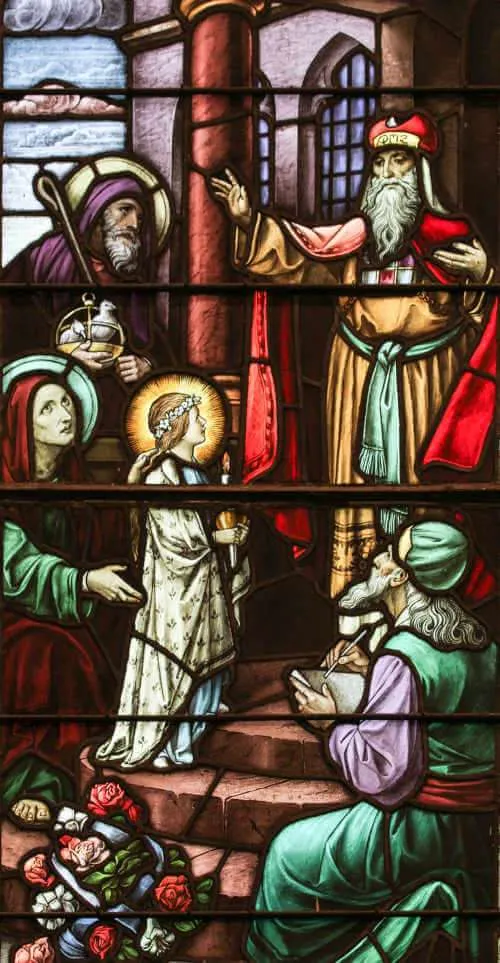
There are three “gospels” which are believed to have heavily influenced today’s memorial—the Protoevangelium of James, the Gospel of Pseudo-Matthew, and the Gospel of the Nativity of Mary. The earliest of these writings was the Protoevangelium of James (also called the “Apocryphal Gospel of James”), which was most likely written sometime in the second century. It is not considered to be part of the inspired word of God, i.e., the canon of Scripture, because it does not appear to have actually been written by the Apostle James. Nonetheless, like many early Christian documents, this apocryphal gospel held great influence in the early Church. It is from this writing that the Church takes the traditional names of the Blessed Virgin Mary’s parents—Saints Joachim and Anne—since that is the only record of their names we have.

The Protoevangelium of James gives a detailed account of the Blessed Virgin Mary’s life. It details her Immaculate Conception, birth, presentation in the Temple, and her life in the Temple where she prayed continuously and was ministered to by angels until the age of twelve. The story continues with her miraculously arranged marriage to Saint Joseph, Jesus’ birth, Herod’s encounter with the Magi, the slaughter of the Holy Innocents, and the martyrdom of Zechariah, Saint John the Baptist’s father. Though the Apocryphal Gospel of James does not contradict anything in the canonical Gospels, many more details are added that could be true.

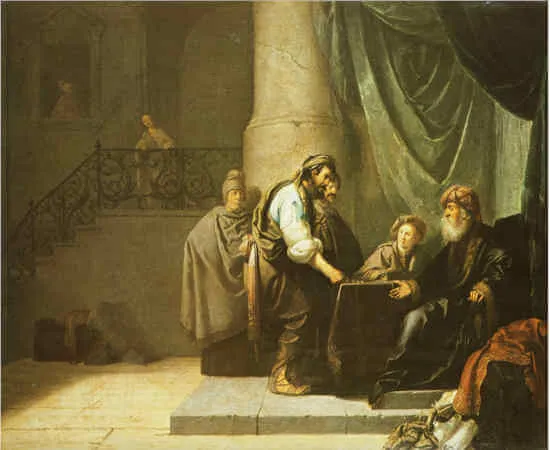
At the time of the birth of the Blessed Virgin Mary, it was not uncommon for some children to be presented in the Temple at a young age, to be raised there, and to enter into service at the Temple. They assisted the priests and acted as servants of charity. Though every firstborn boy was ritually presented to the priest in the Temple eight days after birth so as to be consecrated to God, sometimes girls were also presented, but for the purpose of entering into the Temple’s service. Saint Alphonsus Liguori, an eighteenth-century Doctor of the Church who wrote extensively on the Blessed Virgin Mary, offers this description of her presentation in the Temple, which mirrors the aforementioned apocryphal gospel accounts:

Having barely reached the age of three years, the holy child Mary entreated her parents that she might be placed in the temple according to the promise they had made. The appointed day having arrived, the immaculate young Virgin left Nazareth with St. Joachim and St. Anne, accompanied by a host of angels attending that holy child destined to become the mother of their Creator…Upon their arrival at the temple in Jerusalem, the holy child turned to her parents. Kneeling, she kissed their hands, asked for their blessing, and then, without looking back, ascended the steps of the temple. There, renouncing the world and all it could offer her, she wholly offered and consecrated herself to God. From then on, Mary’s life in the temple was a continuous exercise of love, offering her entire being to her Lord…As a young virgin in the temple, Mary did nothing but pray, desiring to be the servant of the blessed Virgin chosen to be the mother of God (Glories of Mary, On the Feast of the Presentation of Mary).

It is believed that this feast originated in the Eastern Byzantine liturgy around the sixth century at the time that Byzantine Roman Emperor Justinian I built a church in Jerusalem near the ruins of the Temple called the Basilica of Saint Mary the New. By the ninth century, several monasteries in the Latin Church began to observe this feast, and it was added to the Universal Church calendar in the fifteenth century. 

In 1953, Pope Pius XII tied this memorial of the Presentation of Mary to an annual commemoration of the World Day of Cloistered Life. He did so because of the belief that the Blessed Virgin Mary was not only presented in the Temple as a child, she then lived out her childhood in constant prayer and solitude, becoming the most excellent model for those in the cloister.

In 1974, Pope Saint Paul VI wrote a beautiful apostolic exhortation, Marialis Cultus (For the Right Ordering and Development of Devotion to the Blessed Virgin Mary), in which he speaks of the development of Marian devotion in the life of the Church. Regarding feasts like today’s, which come to us in part from apocryphal sources, he says, “There are still others [feasts] which, apart from their apocryphal content, present lofty and exemplary values and carry on venerable traditions having their origin especially in the East.”

As we celebrate the liturgical memorial of the Presentation of Mary in the Temple, we especially honor the fact that, regardless of the lack of certainty of the historical details, the Blessed Virgin Mary lived a life of profound prayer and contemplation from her earliest years and continued to do so throughout her life. She always has been, and continues to be, the Immaculate One, the sinless Spouse of the Holy Spirit, the first contemplative, and one who dedicated her whole life to the service of the will of God. Even if the account of her presentation and childhood service in the Temple is not accurately represented in these early sources, the spiritual reality of her total dedication to the will of God throughout her life is an indisputable dogma of our faith.

As we ponder the early life and dedication of the Blessed Virgin Mary to God’s will today, reflect upon the fact that every child is capable of a profound faith and commitment to God’s will. For those who are entrusted with the guardianship and raising of children, allow your prayerful reflection on the holy life of Blessed Mary as a child to inspire you to help all young people imitate her profound faith and holiness.

Source: https://mycatholic.life/saints/saints-of-the-liturgical-year/november-21—presentation-of-the-blessed-virgin-mary–memorial/

Presentation of the Blessed Virgin Mary Read More »

Luke 19:43-44

Holy Sorrow

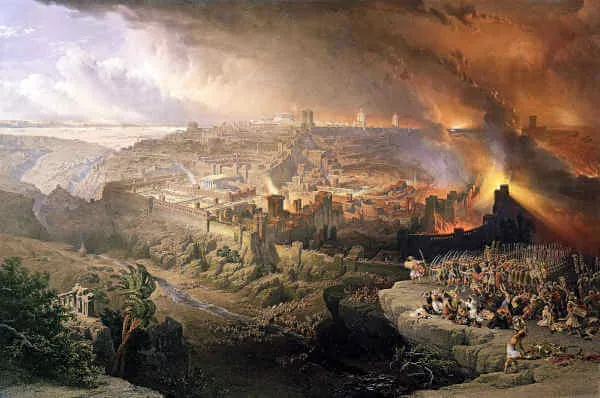
For the days are coming upon you when your enemies will raise a palisade against you; they will encircle you and hem you in on all sides. They will smash you to the ground and your children within you, and they will not leave one stone upon another within you because you did not recognize the time of your visitation.

Reflection:

Jesus spoke these words as He looked at Jerusalem from a distance, preparing to enter that holy city for the last time in preparation for His passion and death. As He spoke these words, the Gospel says that Jesus wept over the city. Of course, it wasn’t primarily tears over the future physical destruction of the Temple and invasion by Roman forces. It was first and foremost tears over the lack of faith of so many which was the true destruction He mourned.

As mentioned above, the city of Jerusalem was indeed sieged by the military commander Titus in the year 70 A.D. Titus was acting under the authority of his father, the emperor, and destroyed not only the Temple but also much of the city itself, as well as the Jewish inhabitants.

As Jesus approached the city of Jerusalem, so as to enter the Temple one last time to offer His life as the definitive Sacrificial Lamb for the salvation of the world, Jesus knew that many within this holy city would not accept His saving sacrifice. He knew that many within that city would become the instruments of His pending death and would have no remorse for killing the Savior of the World. And though this one point can easily be missed, it should be emphasized that Jesus’ reaction was not fear, it was not anger, it was not disgust. Rather, His reaction was holy sorrow. He wept over the city and its inhabitants despite what many of them would soon do to Him.

When you suffer injustice, how do you react? Do you lash out? Condemn? Get defensive? Or do you imitate our Lord and allow your soul to be filled with holy sorrow? Holy sorrow is an act of love and is the appropriate Christian response to persecution and injustice. Too often, however, our response is not holy sorrow but anger. The problem with this is that reacting in unholy anger does not accomplish anything good. It does not help us to imitate Jesus, and it doesn’t help those with whom we are angry. Though the passion of anger can be used for good at times, it becomes a sin when it is selfish and a reaction to some injustice done to us. Instead of this unholy anger, seek to foster holy sorrow in imitation of Jesus. This virtue will not only help your soul grow in love of those who have hurt you, it will also help them to see more clearly what they have done so that they can repent.

Reflect, today, upon your own approach to the evil you face in your life. Consider carefully your interior and exterior reaction. Do you mourn with love over sins you witness and experience? Do you mourn, with a holy sorrow, over your own sins and the sins of others? Work to foster this form of love within you and you will find that it can become a motivation for you to help transform the sins you commit and the sins of others you endure.

Source: https://catholic-daily-reflections.com/2024/11/20/holy-sorrow-3/

Luke 19:43-44 Read More »

Saint Rose Philippine Duchesne, Virgin

1769–1852; Invoked for perseverance amid adversity and against the opposition of Church authorities; Canonized by Pope John Paul II on July 3, 1988

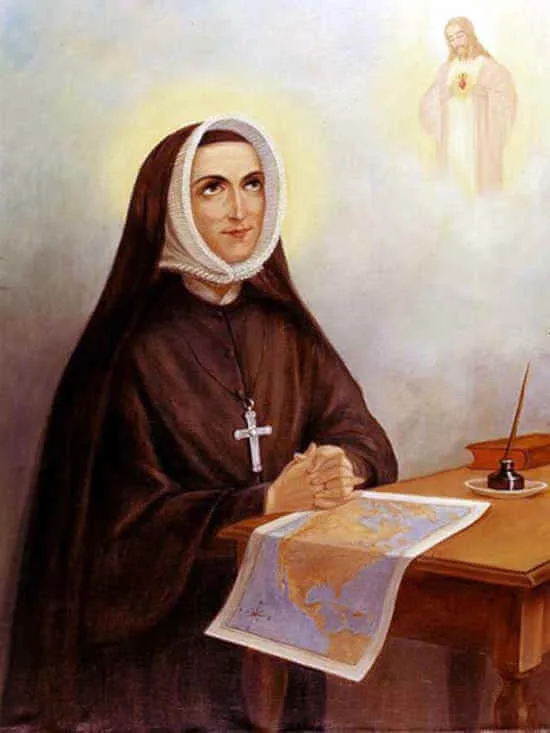
Rose Philippine Duchesne was born into an upper-class family in the city of Grenoble in the Kingdom of France. She was the second of eight children, seven girls and one boy. As a child, Rose’s education took place at home by private tutors. When she was eight, she was inspired by the preaching of a Jesuit missionary who spoke about the ripe new mission field of the Americas. This planted a seed within her heart that began to grow. At the age of twelve, she attended school at a convent of Visitation nuns in Grenoble. While there, she became intimately drawn to their life of contemplation within the walls of the cloister. When she informed her father that she wanted to join the community, he firmly opposed the idea and withdrew her from the school to keep her from considering it further, so she continued her education at home from tutors.

As events unfolded that would lead to the French Revolution, Rose came up with a secret plan to become a nun. In 1788, she asked her aunt to accompany her on a visit to the Visitation sisters. Once there, Rose requested permission to enter the convent. Permission was granted immediately, and Rose entered. Her aunt returned home and informed Rose’s father and the rest of her family what Rose had done. Sister Rose spent the next four years with the sisters, growing deep in prayer and being nurtured through the community and rule of life.

Once the French Revolution entered into full force, the Church became a central target. With the formation of a new National Assembly, church property was seized and clergy were forced to choose between swearing an oath of allegiance to the state or arrest and possible execution. Public worship and monastic vows were outlawed, and chaos ensued. In 1792, the monarchy was abolished, and the First French Republic was proclaimed. In that same year, the Visitation convent in Grenoble was seized by the state and turned into a prison, and the sisters were forced to disband. For the next nine years, Sister Rose lived in her family home where she attempted to continue practicing her religious vocation, along with two aunts who were also Visitation nuns.

In late 1799, Napoleon Bonaparte led a coup and disbanded the revolutionary French government, becoming the First Consul of the new French Consulate. A little more than a year later, Napoleon and Pope Pius VII signed the Concordat of 1801, which acknowledged Catholicism as the religion of the majority of the French and permitted its public practice to continue under certain state regulations. At that time, Sister Rose and some of her disbanded sisters attempted to return to their convent, but it was in disrepair due to its interim use as a military barracks and prison. Nonetheless, some of the sisters moved in with Sister Rose who was made superior. By 1804, due to the difficult living conditions at the convent, only three sisters remained with Sister Rose.

In 1804, Mother Madeleine Sophie Barat (who was canonized in 1925), the founder of a new religious order called the Society of the Sacred Heart, invited the small convent of Visitation sisters into her order. The sisters agreed, and, in November of that year, Mother Barat traveled to Grenoble to receive them. Once the Visitation convent merged with the Society of the Sacred Heart, Sister Rose made her final vows and was made superior of the new convent, known henceforth as Mother Duchesne. For the next eleven years, tensions remained high in France due to the ongoing Napoleonic Wars that lasted until the Battle of Waterloo in 1815, in which Napoleon was defeated and exiled. During this chaotic period, Mother Duchesne managed life at the convent, reopened a school, and founded new convents and schools. 

In 1815, Mother Barat invited Mother Duchesne to found a new convent in Paris that would function as the novitiate for the order, as well as operate a school. In 1817, a French missionary named Father William Dubourg returned to Europe from the United States to recruit missionaries for the new territory gained by the Louisiana Purchase. Father Dubourg had been appointed Apostolic Administrator of the territory in 1812, but it lacked priests and religious. Upon his return, Pope Pius VII appointed him as Bishop of Louisiana and the Two Floridas and ordained him in Rome. He then spent the next two years traveling through Europe to recruit missionaries. In Paris, he met Mother Duchesne whose heart was immediately inflamed with a desire to assist. This desire had been in her heart since her childhood, and now it was on the verge of becoming a reality. With the approval and blessing of Mother Barat, the forty-eight-year-old Mother Duchesne and four of her sisters set sail for New Orleans in 1818 to become missionaries on the new frontier of the United States of America.

Upon their arrival, they learned that Bishop Dubourg had moved to Saint Louis out of concern for his safety, and he had not made any arrangements for the newly arrived sisters in New Orleans. The sisters then boarded a steamboat and traveled up the Mississippi to Saint Louis, settling in the nearby town of Saint Charles, where they founded their first convent (a log cabin) in the United States. It was one of the most remote parts of the country at that time and brought with it many hardships, uncertainties, and trials. But the sisters persevered, opened a free school for the poor, established their community life of prayer, and persevered in their work of building the Kingdom of God in mission territory.

Over the next thirty-four years, Mother Duchesne became a tireless founder. The next convent was founded in Florissant, which would become the mother house and novitiate for the congregation in the United States, and also served a free school. She founded new convents and schools in Saint Louis, New Orleans, and other parts of Louisiana as her order continued to grow.

Throughout her first twenty years, Mother Duchesne always had a strong desire to minister to the native tribes but was unable to do so. In 1841, her dream became a reality when she was invited to found a convent to serve the Potawatomi tribe in Sugar Creek, Kansas. Since she was seventy-one at that time, she wasn’t an ideal candidate for the job and further was unable to learn the Potawatomi language. Nonetheless, the Jesuits who were leading the expedition insisted she come for prayer support, which she did to the greatest degree. In fact, she prayed so long and so often that the natives gave her the affectionate name “Quah-kah-ka-num-ad,” which means, “Woman-who-prays-always.” One story relates that the children were so impressed by her prayerfulness that they would often place pebbles on the hem of her garment as she knelt in prayer at night and then return the next morning to see if the pebbles were still in place, and they usually were, giving a powerful witness to the mystical nature of her all-night vigils.

After about a year in Sugar Creek with the Potawatomi, Mother Duchesne’s health took a turn for the worse, compelling her to return to the mother house near Saint Louis to rest and be cared for. Just as she was the “woman who prays always” while among the Potawatomi, so she spent the final decade of her life in continuous prayer, uniting her sufferings to Christ, and spiritually mentoring the younger sisters as the community grew.

This courageous woman gave up all that she knew and all that she had, except for her religious habit and the companionship of a few sisters, so that she could bring the Gospel to the frontier of the United States as the people slowly moved West. Her deepest desire to share the faith with the natives became a reality because of her perseverance and reliance on prayer. As we honor Saint Rose today, we honor her as a true spiritual mother who saw everyone as her children whom she needed to nurture in love by instilling faith and hope. In imitation of her, allow the desire to be a missionary to be enkindled within your heart. Though you might not be called to travel the seas to share the faith, you will certainly be called to share the love of Christ in accord with your own vocation. Submit yourself fully to that mission, and God will use you, as He used Mother Duchesne, for glorious things.

Source: https://mycatholic.life/saints/saints-of-the-liturgical-year/november-18—saint-rose-philippine-duchesne/

Saint Rose Philippine Duchesne, Virgin Read More »

Luke 19:12-14

Your Apostolic Calling

“A nobleman went off to a distant country to obtain the kingship for himself and then to return. He called ten of his servants and gave them ten gold coins and told them, ‘Engage in trade with these until I return.’ His fellow citizens, however, despised him and sent a delegation after him to announce, ‘We do not want this man to be our king.’”

Reflection:

There are three categories of people in this parable. The first includes those who received a gold coin and followed the master’s request to “engage in trade” until he returned. The second has those who received the same command but were lazy and failed to produce any good fruit from that which our Lord has given them. And the third includes those who “despise” our Lord and do not want Him as their King.

Upon the king’s return, this first category of people are represented by the two servants who took the gold coins, engaged in trade, and made five and ten more. These are those who have much apostolic zeal. God not only calls us to use the gifts we have received to expand His Kingdom on earth, He also expects it of us. His expectation is a command of love. For those who understand this command, they see it as a glorious invitation to make an eternal difference in the lives of many. They do not see the apostolic works to which they are called as a burden. Rather, they see them as a joy, and that joy fuels their efforts. The result will have exponential effects for God’s Kingdom.

The second category of people is illustrated by the one servant who kept the one gold coin “stored away in a handkerchief” out of fear. These are the people who avoid evangelizing and furthering the Kingdom of God out of fear. Fear is paralyzing. But giving in to fear is a sin. It’s a lack of faith and trust in God. Serving God will inevitably require courage on our part. It will demand that we step out of our comfort zone and do that which we may not immediately feel comfortable doing. But as that servant in the parable foretold, God is a demanding God. And He will not accept fear as an acceptable excuse not to zealously help to build the Kingdom of God.

The third category of people is the category in which you definitely do not want to fall. These are those who actively work to undermine God’s Kingship and reject Him as God. The world is filled with these people. The only thing we need to say about those who fall into this category is that which our Lord said of them. “Now as for those enemies of mine who did not want me as their king, bring them here and slay them before me.”

Reflect, today, upon which category of people your life most fully resembles. Most likely it is one of the first two. Do you have great zeal for God’s Kingdom? Are you willing to do all that you can to help build His Kingdom? Are you willing to do so even at the cost of great personal sacrifice? If so, then rejoice and know that an abundant reward awaits. But if you are one who struggles with fear, specifically, if you struggle with a fear to evangelize, to share the Gospel and to live your faith openly with humility and love, then spend more time with this parable and the fate of that one servant who hid the coin in the handkerchief. Engage in the apostolate. Commit yourself to the furtherance of God’s Kingdom. Dispel all fear and know that you will never regret putting your whole heart and soul into the service of God and the building of His Kingdom.

Source: https://catholic-daily-reflections.com/2024/11/19/your-apostolic-calling-3/


Luke 19:12-14 Read More »

Saint Margaret of Scotland

c. 1045–1093; Patron Saint of learning, parents of large families, parents who have lost a child, queens, and widows; Canonized by Pope Innocent IV in 1251

Margaret of Wessex was born into English royalty. Her grandfather was King Edmund the Ironside, who reigned as king for less than a year. After King Edmund’s death, Margaret’s father, Edward, might have been sent to the court of the King of Sweden for protection, and later to Kyiv when he was only an infant. For that reason, he is commonly referred to as Edward the Exile. In 1046, Prince Andrew of Hungary became King of Hungary, and Edward the Exile entered into his service, eventually marrying Agatha and having three children: Margaret, Christina, and Edgar Ætheling. Little is known about Agatha, but one theory is that she was the granddaughter of Saint Stephen, King of Hungary, and the daughter of Holy Roman Emperor Henry II. Agatha and Edward the Exile were good parents to their three children, seeing to it that they were well educated and raised in a strong Catholic home.

In 1042, Edward the Confessor became King of England—and was later canonized, the only English king to become a saint. King Edward the Confessor did not have any heirs to whom he could pass on the crown, so he called Edward the Exile (Margaret’s father) and his family back to England where they entered the royal court. Edward the Exile died soon afterward, making Margaret’s brother, Edgar Ætheling, a potential heir to the throne.

In 1066, when King Edward the Confessor died, conflict arose as to who had the right of succession. During the confusion, the nobles quickly chose Harold II and had him crowned as king. However, a distant relative, William of Normandy (also known as William the Conqueror), made a claim to the throne. William offered many reasons, including a claim that Harold had sworn an oath to him to support him as King of England and had sworn the oath over the relics of a saint, making it binding. Even the pope agreed with William’s claim. Shortly after Harold II was crowned as king, William attacked England, and Harold II was killed in battle. The nobles supported Edgar Ætheling, Margaret’s brother, as the next king, but when William rode into London, the nobility surrendered and Edgar relinquished his claim to the throne, never having been crowned.

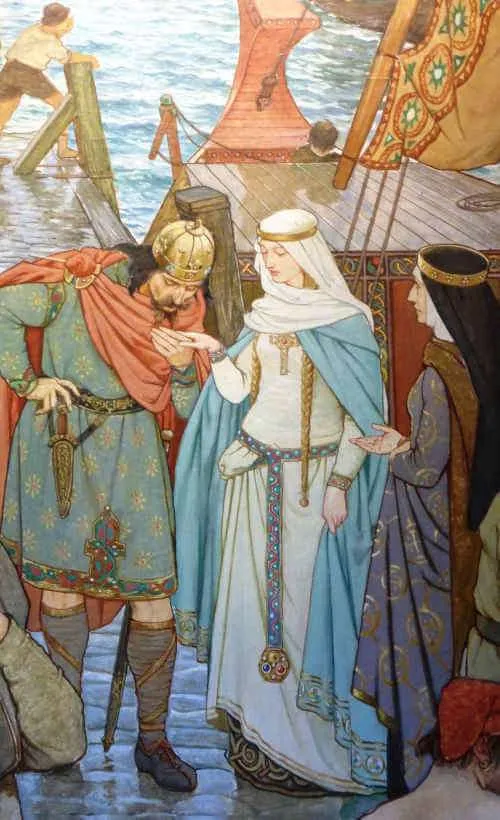
In 1068, the widowed Agatha decided to protect her children from the Norman conquerors and from potential chaos that might result from a rebellion against them. She boarded a ship with Edgar, Margaret, and Cristina, and set sail for her home, probably Hungary. Legend has it that the ship was tossed off course and wrecked on the shores of Scotland. In Scotland, King Malcolm III welcomed the exiled royal family and provided for their safety.

Since childhood, Margaret had grown in a profound love of God. She lived a very strict and ordered life, studied the Sacred Scriptures and other pious books, and grew in a keen understanding of the things of God. Her earliest biographer described her as another Mary of Bethany, who sat at the feet of Jesus, listening to His Word and pondering it in her heart.

When this royal family arrived in Scotland, the young King Malcom, a widower with two sons, immediately noticed Margaret’s beauty. Her physical beauty was greatly enhanced by the beauty of her soul, manifested in her piety, virtue, and intelligence. It didn’t take long before the two fell in love and were married, making Margaret Queen of Scotland.

Queen Margaret quickly realized that the power and influence she had received ought not be used for her own selfish purposes but for the betterment of Scotland and, especially, for the increase of the Kingdom of God. As queen, Margaret quickly won the love and admiration of the people. As her first biography stated, “Nothing was firmer than her fidelity, steadier than her favor, or juster than her decisions; nothing was more enduring than her patience, graver than her advice, or more pleasant than her conversation.”

Prior to Margaret’s arrival in Scotland, the Scottish Church followed the old Celtic traditions. When the Romans withdrew from Britain in the fifth century, the Scottish Church became isolated from the Roman Empire and the Church’s development. In Scotland, abbots of monasteries provided the main source of Church influence and governance, rather than bishops of dioceses. Liturgical practices differed, including the liturgical calendar and customs.

Queen Margaret had been raised within the Roman tradition through her mother’s influence. She was immediately aware of the differences between the Celtic practices of the Scots and the rest of the Roman Catholic world. Therefore, with loving reverence, strength, and virtue, she began to initiate change in the Church of Scotland. She was said to have had a great influence over her husband on account of her goodness and clarity of thought, so he supported her in the reforms. She was said to have regularly read to him from the Bible, since he was unable to read.

Queen Margaret convened synods to address the different practices of the Celts from the rest of the Roman Catholic Church, such as the time in which Lent and Easter were observed, the way Mass was celebrated, observance of the Lord’s Day, and the laws on marriage. In doing this, she strengthened ties to the pope in Rome, freeing the Scottish from their lengthy isolation. In addition to synods, Queen Margaret refurbished dilapidated churches, built new ones, and introduced Benedictine monks to Scotland by building the renowned Dunfermline Abbey, in which several Scottish monarchs were later buried. She is also known for her exceptional charity by which she fed the hungry, stooped down and washed the feet of the poor, cared for orphans, and organized religious education throughout the kingdom.

King Malcolm and Queen Margaret had eight children together, six sons and two daughters. Three of their sons went on to become kings of Scotland, one became an abbot, and a daughter became the Queen of England. In 1093, King Malcolm and Margaret’s oldest son, Edward, were killed in battle. When the forty-nine year old Margaret, bedridden in Edinburgh Castle due to ill health, heard the news, she died of grief three days later.

Jesus holds those with power and wealth to high standards: “Again I say to you, it is easier for a camel to pass through the eye of a needle than for one who is rich to enter the kingdom of God” (Matthew 19:24). Saint Margaret was as rich as one could be in her day, but she overcame the temptations of earthly wealth and power, and prayerfully devoted her life to the glory of God and the salvation of souls. She was a fitting representation on earth of the Queen of Heaven, the Mother of God, and she especially provides those of wealth and influence with an example they can follow.

Source: https://mycatholic.life/saints/saints-of-the-liturgical-year/november-16–st-margaret-of-scotland/

Saint Margaret of Scotland Read More »

Luke 19:1-3

The Desire of the Heart

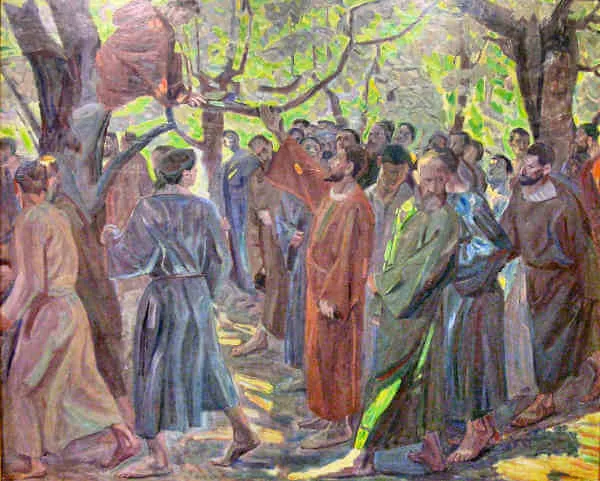
At that time Jesus came to Jericho and intended to pass through the town. Now a man there named Zacchaeus, who was a chief tax collector and also a wealthy man, was seeking to see who Jesus was; but he could not see him because of the crowd, for he was short in stature. So he ran ahead and climbed a sycamore tree in order to see Jesus, who was about to pass that way.

Reflection:

Once again, our Lord reaches out to someone who comes to Him in humility and need. Zaccheaus was a wealthy man, materially speaking. But interiorly he was poor and in need. And it was this spiritual poverty he was experiencing that led him to seek out Jesus with much determination.

Zacchaeus probably never imagined that day that Jesus would offer to come to his home. Clearly, he climbed the tree to get a glimpse of Jesus because he felt a strong desire to know our Lord. Since he was physically wealthy, it seems clear that he no longer was satisfied in life simply because of a comfortable lifestyle. Something was missing, and he couldn’t help but know that Jesus held the answer. So Zacchaeus did what some may have thought unusual. He climbed a tree to be able to see Jesus.

Why did Jesus stop, look up at Zacchaeus, and call him down, stating that He was going to stay at Zacchaeus’ home? It’s because Jesus was able to sense the need within the heart of Zacchaeus. Hearts that are poor, in need, and open are very attractive to Jesus. He never misses the opportunity to come to humble souls like this.

Zacchaeus responds to our Lord immediately by promising to right the wrongs he has done in the past. He promises to give away half of his possessions and to repay anyone he has extorted fourfold. This reveals the authenticity of Zacchaeus’ heart. 

As Jesus passes by you, what does He sense? Is He drawn to your heart? Is He drawn to you because of your interior disposition of humility and need? It is easy for us to go through life acting as if we have it all together. We can put on a facade that portrays an attitude of strength and success. But Jesus rarely comes to the soul who expresses little need. If we want to draw Jesus to ourselves, then we must acknowledge the poverty within ourselves, even if we are materially wealthy and successful in a worldly way. Every one of us must humble ourselves like Zacchaeus by knowing that Jesus is the only answer in life.

Reflect, today, upon the fact that you and you alone have the ability to draw Jesus to yourself. You can do this by looking at your need for Him. Do not hide it. Climb the figurative tree by which you will be able to look for Jesus and, more importantly, by which Jesus can see your manifest desire for Him. As you express your need for Him, know that He will be compelled, by His unshakable love and mercy, to come to you and to stay with you in the house of your soul. And when He does, be ready and willing to abandon all that has been a hindrance to your meeting with Christ in the past.

Source: https://catholic-daily-reflections.com/2024/11/18/the-desire-of-the-heart-3/

Luke 19:1-3 Read More »

Dedication of the Basilicas of Saints Peter and Paul, Apostles

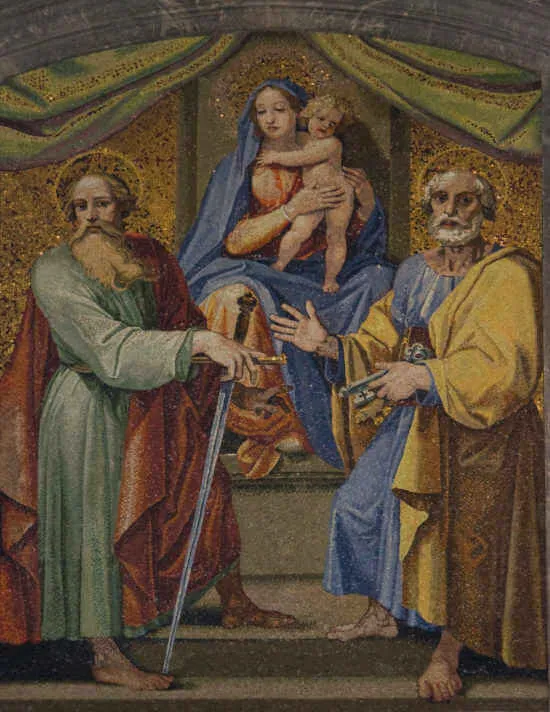
After Emperor Constantine the Great legalized Christianity in the Roman Empire in 313, he began to construct churches, particularly in Rome, Jerusalem, and Constantinople. In Rome, he constructed four basilicas: Saint John Lateran, Saint Peter’s on Vatican Hill, Holy Cross of Jerusalem, and Saint Paul Outside the Walls. Today, the Church celebrates the dedication of two of those basilicas: Saint Peter’s on Vatican Hill and Saint Paul Outside the Walls.

The foundation of these two churches goes back to the first century when Peter and Paul shed their blood and were buried where the basilicas stand today. In 64, a great fire destroyed much of the city of Rome. Many historians believe Emperor Nero set the fires himself so he could have an excuse to rebuild portions of the city as he desired. Nero blamed the fire on the Christians and implemented the first organized persecution of Christians in the Roman Empire.  Among the many who were arrested and martyred were Saints Peter and Paul.

Peter was the Prince of the Apostles and Bishop of Rome. He is believed to have been crucified upside-down in the Circus of Nero near the ancient Egyptian obelisk that now stands in the center of Saint Peter’s Square. He was buried in the nearby cemetery on Vatican Hill, and his grave became a place of pilgrimage for early Christians. After Constantine legalized Christianity, he became aware of the reverence with which this Prince of the Apostles’ grave was held, so he constructed what is now referred to as Old Saint Peter’s Basilica to help foster devotion and encourage pilgrimages to the site. The first basilica was dedicated by Pope Sylvester around the year 324 or 326 and remained for more than a millenia, with additions and reconstructions taking place during that time. 

Until 1305, popes lived at the Basilica of Saint John Lateran, not at Saint Peter’s. When Pope Clement V was elected to the papacy, he moved the entire papal court to Avignon, France in 1309, where it remained until Pope Gregory XI returned to Rome from Avignon in 1377. At the time of the pope’s return to Rome, the Lateran Palace was in disrepair due to two fires, so the pope built a new papal palace next to Old Saint Peter’s on Vatican Hill, where every subsequent pope has resided. By the turn of the sixteenth century, Old Saint Peter’s was in serious disrepair, so in 1505, Pope Julius II ordered its demolition and began a process of reconstruction that spanned twenty-one subsequent papacies and was completed 120 years later. In 1626, the present-day Basilica of Saint Peter’s at the Vatican was dedicated by Pope Urban VIII.

Saint Paul was the tireless evangelist and the Church’s preeminent theologian, spreading the Gospel far and wide, and directly establishing and nourishing numerous Christian communities. He is also recognized as one of the earliest and most important converts to the faith. After an exceptional ministry of evangelization, Paul was arrested in Jerusalem. Because he was a Roman citizen, he appealed to the Roman emperor. He was subsequently imprisoned and two years later transported to Rome for his trial. When Nero’s persecutions were enacted shortly afterwards, Paul was beheaded on or around the same day that Saint Peter was crucified. Paul’s beheading is believed to have taken place just outside the walls of the city on the Ostian Way. He was buried near that spot. 

Like the Old Saint Peter’s Basilica, the Basilica of Saint Paul Outside the Walls was built by Emperor Constantine over the grave of Saint Paul and dedicated by Pope Sylvester in 324. Over the next 1,500 years, successive popes added on to the basilica, renovated it, and decorated it. In 1823, almost the entire basilica was destroyed by a fire. Over the thirty years that followed, the church was redesigned and reconstructed into the church we have today. It was completed and dedicated in 1854 by Pope Pius IX.

As we honor the dedication of these two Roman basilicas, we honor much more than churches; we honor the apostles to whom they are dedicated. On June 29 each year, the Church celebrates the Solemnity of Saints Peter and Paul, honoring their unique and foundational ministries. Today, on November 18, we honor these two saints once again as we commemorate the dedication of the basilicas dedicated to them, which were built upon their graves.

Symbolically, as their graves stand as a foundation for these two churches, so their lives and ministry stand as a foundation for the entire Church. Saint Peter was the first pope and source of unity who was given the keys to the Kingdom of Heaven and of whom Jesus said, “And so I say to you, you are Peter, and upon this rock I will build my church, and the gates of the netherworld shall not prevail against it” (Matthew 16:18). Saint Paul was the great evangelist to the Gentiles and is a symbol of the Church missionary life and theological articulation of the faith, due to his extensive writings that make up most of the New Testament. Though we are centered and unified by Saint Peter the Rock, we must go forth to the ends of the earth, sharing the Gospel with all, like Saint Paul. Because of the significance of these apostles, every bishop throughout the world is obliged to make an “ad limina apostolorum” visit to Rome once  every five years, during which time he gives a report to the pope about his diocese and visits the tombs of these two apostles.

As we honor these two great saints and revere their graves, ponder the fact that we are all called to become foundations on which the Church continues to be built. Our lives must become a source of unity for those who believe and a means by which God sends forth His Word to others. Renew today the dedication of your own life to the mission of Christ so that you more fully imitate the heroic and holy lives of these two men of God.

Source: https://mycatholic.life/saints/saints-of-the-liturgical-year/november-18—dedication-of-the-basilicas-of-saints-peter-and-paul-apostles/

Dedication of the Basilicas of Saints Peter and Paul, Apostles Read More »

Luke 18:35-39

A Model for Prayer

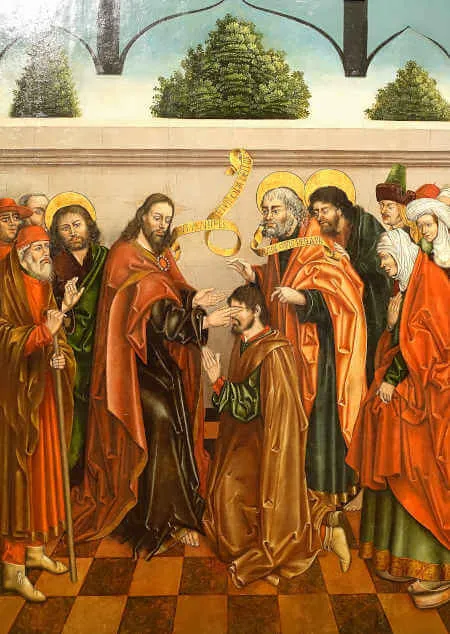
As Jesus approached Jericho a blind man was sitting by the roadside begging, and hearing a crowd going by, he inquired what was happening. They told him, “Jesus of Nazareth is passing by.” He shouted, “Jesus, Son of David, have pity on me!” The people walking in front rebuked him, telling him to be silent, but he kept calling out all the more, “Son of David, have pity on me!”

Reflection:

This beautiful story of the healing of this blind man, named Bartimaeus in the Gospel of Luke, sets for us a model of how we must come to Jesus in prayer. Bartimaeus and his encounter with Christ is an icon upon which we must meditate so as to imitate him in his weakness, openness, confidence and perseverance.

To begin, this “blind man was sitting by the roadside begging.” We must see this as an ideal image of how to begin our prayer. When we start to pray, we must see our littleness, weakness and extreme poverty in our spiritual life. We come to God with nothing. Unable to see. A beggar. And one who is incapable of meeting our own spiritual needs. This is Bartimaeus, and this must be the way we come to our Lord in prayer. Sometimes we can fall into the illusion that our prayers are so elevated and pious that God must be very impressed. If that’s your struggle, then you are more like the Pharisees. This blind man, however, is the ideal to aim for. So when you begin your prayer, come to our Lord as a spiritually poor and needy beggar.

In this state of humility, just as it happened in this Gospel story, you can be certain that “Jesus of Nazareth is passing by.” So as you sit in your humble and needy state, wait and be attentive to Jesus passing by. Wait upon His gentle voice, His quiet inspiration, His calming and unmistakable presence. 

If you can humble yourself this way and then sense our Lord’s divine presence touching you in some way, then further imitate Bartimaeus by calling out interiorly, “Jesus, Son of David, have pity on me!” The cry from the depths of your heart in prayer must come as a result of Jesus “passing by.” It must be a response to Him coming to you on His own. As Jesus passes by, spiritually speaking, He waits for you to call to Him. He desires that you call to Him. And He desires that you do it with firm confidence and perseverance.

Notice that as this blind beggar cried out, there were obstacles put in his way. The people “rebuked him, telling him to be silent.” But even this was a gift, because it enabled Bartimaeus to cry out all the more. So also with us, when obstacles arise in our prayer, such as distractions, temptations, a lack of consolation, or any other challenge to our prayer, we must see these obstacles as hurdles that must be overcome. Doing so will deepen our union with Jesus, turning that apparent obstacle into a source of blessing.

Reflect, today, upon these four aspects of a deep prayer life that are presented to us through the witness of this blind beggar. First, ponder your weakness and poverty as you turn to God in prayer. Second, be attentive to the presence of God as He passes by, waiting for you to call to Him. Third, cry out to Him and beg Him to come closer. And fourth, work to overcome every obstacle to prayer and see those obstacles as opportunities to call out to God all the more.

Source: https://catholic-daily-reflections.com/2024/11/17/a-model-for-prayer-3/

Luke 18:35-39 Read More »

Thirty-third Sunday in Ordinary Time

First Reading Daniel 12:1-3

In those days, I Daniel, 
    heard this word of the Lord:
“At that time there shall arise
    Michael, the great prince,
    guardian of your people;
it shall be a time unsurpassed in distress
    since nations began until that time.
At that time your people shall escape,
    everyone who is found written in the book.

“Many of those who sleep in the dust of the earth shall awake;
    some shall live forever,
    others shall be an everlasting horror and disgrace.

“But the wise shall shine brightly
    like the splendor of the firmament,
and those who lead the many to justice
    shall be like the stars forever.”

Responsorial Psalm Psalms 16:5, 8, 9-10, 11

R. (1) You are my inheritance, O Lord!
O LORD, my allotted portion and my cup,
    you it is who hold fast my lot.
I set the LORD ever before me;
    with him at my right hand I shall not be disturbed.
R. You are my inheritance, O Lord!
Therefore my heart is glad and my soul rejoices,
    my body, too, abides in confidence;
because you will not abandon my soul to the netherworld,
    nor will you suffer your faithful one to undergo corruption.
R. You are my inheritance, O Lord!
You will show me the path to life,
    fullness of joys in your presence,
    the delights at your right hand forever.
R. You are my inheritance, O Lord!

Second Reading Hebrews 10:11-14, 18

Brothers and sisters:
Every priest stands daily at his ministry,
offering frequently those same sacrifices
that can never take away sins. 
But this one offered one sacrifice for sins,
and took his seat forever at the right hand of God;
now he waits until his enemies are made his footstool. 
For by one offering
he has made perfect forever those who are being consecrated.

Where there is forgiveness of these,
there is no longer offering for sin.

Alleluia Luke 21:36

R. Alleluia, alleluia.
Be vigilant at all times
and pray that you have the strength to stand before the Son of Man.
R. Alleluia, alleluia.

Gospel Mark 13:24-32

Jesus said to his disciples:
“In those days after that tribulation
the sun will be darkened,
and the moon will not give its light,
and the stars will be falling from the sky,
and the powers in the heavens will be shaken.

“And then they will see ‘the Son of Man coming in the clouds’
with great power and glory,
and then he will send out the angels
and gather his elect from the four winds,
from the end of the earth to the end of the sky.

“Learn a lesson from the fig tree.
When its branch becomes tender and sprouts leaves,
you know that summer is near.
In the same way, when you see these things happening,
know that he is near, at the gates. 
Amen, I say to you,
this generation will not pass away
until all these things have taken place. 
Heaven and earth will pass away,
but my words will not pass away.

“But of that day or hour, no one knows,
neither the angels in heaven, nor the Son, but only the Father.”

Source: https://bible.usccb.org/bible/readings/111724.cfm

Thirty-third Sunday in Ordinary Time Read More »