Author name: Sani

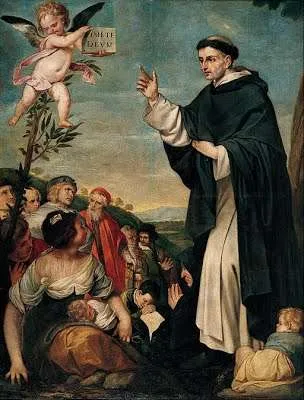
Saint Vincent Ferrer, Priest

c.1350–1419; Patron Saint of builders, plumbers, fishermen, and prisoners; Canonized by Pope Calixtus III in 1455

It can be said that today’s saint lived two sequential lives. The first forty-nine years of his life were, in many ways, a preparation for the final twenty years of his life. All sixty-nine years, however, were years of fervent study, prayer, zeal, and extraordinarily impactful preaching.

Vincent was the fourth child of noble parents born in Valencia, Spain. According to popular legend, Vincent’s father had a dream that his son would become famous throughout the whole world. This was miraculously confirmed when his mother was said not to have experienced any pains during his birth. Vincent was named after the Third Century Valencian saint, Vincent the Deacon, Protomartyr of Spain. At a young age, Vincent completed studies in philosophy and joined the Dominican friars when he was about eighteen. As a young Dominican, he spent the next several years teaching, writing, preaching, praying, fasting, and doing penance, and was very devoted to the poor. His study of the Sacred Scripture was so intense that it is said that for about three years he read nothing but Scripture, memorizing the entire Bible.

The first of the miracles that would later become commonplace in his ministry took place during a severe famine. Brother Vincent’s heart was so moved with compassion for the hungry people that he prophesied that two boats would arrive that evening at port, loaded with food. To the surprise of everyone, it happened as he said. Brother Vincent continued his studies, obtaining a Doctorate in Theology, and was ordained a Catholic priest around the age of twenty-eight.

Father Vincent was ordained during a period in the Church that is commonly referred to as the Western Schism, in which the Church found itself with two men claiming to be pope in 1378. Urban VI resided in Rome, and Clement VII resided in Avignon, France. At the time of the division, good and holy people disagreed on who the real pope should be. The future Saint Catherine of Sienna supported Urban VI in Rome, and the future Saint Vincent Ferrer supported Clement VII. This division raged on until 1417 when the matter was finally resolved by a Church council in Constance. Though Father Vincent’s choice was named the antipope by that council, Father Vincent humbly embraced this resolution and convinced many people to do the same, helping to end the schism.

During the schism, in the year 1398, Father Vincent had an experience that would open the door for the second and most remarkable period of his priestly ministry. Father Vincent had become quite ill. On what seemed to be his deathbed, he had a vision of Christ, accompanied by Saints Dominic and Francis who exhorted him to go forth to preach penance, heal the sick, and prepare the faithful for the coming Judgment. Shortly after, Father Vincent recovered and then sought and received a special commission for this new mission from the Avignon pope. He set out on an extraordinary journey that lasted about twenty years, traveling on foot from town to town all across Europe, including England, Scotland, Ireland, Spain, France, Switzerland, and Italy.

The twenty years of itinerant traveling and preaching that Father Vincent engaged in is a miracle in and of itself. Countless stories abound. During his preaching, many claim that Father Vincent had the charismatic gift of tongues. Although he spoke in his native language, everyone heard him in their own language. While he was an intellectual of the highest caliber, his style of preaching was new, more pastoral in nature, proclaiming the deep truths of the faith with a simple eloquence in which the people easily understood him. Prayer was always his immediate preparation for his sermons, while his study was the remote preparation that provided the content of his compelling messages. Among his most preached upon topics was the Final Judgment of Christ. This earned him the nickname “Angel of the Apocalypse.” Through that message, he instilled a holy fear of God and a desire for repentance among his listeners.

As Father Vincent traveled, it is said that hordes of people traveled with him, doing penance along the way. Some days he had as many as 300 followers, other days as many as 10,000. His “pulpit” was often a large field or public square, so that everyone who wanted to listen could do so.

Miracles also abounded. He raised the dead, healed the lame, cured illnesses, and did so with such regularity that people were mesmerized. As a result of his powerful sermons, backed up by miraculous signs, an estimated 25,000 Jews, 1000s of Muslims, and many pagans converted, while Catholics deepened and renewed their faith. 

Father Vincent’s reputation so preceded him that kings and nobles sought him out to come to their lands. He generously responded, over and over again. His love for the poor was also evident, and he inspired many powerful and wealthy people to practice generosity. Saint Vincent is considered the patron saint of builders due to his effectiveness in building up the Church.

Source: https://mycatholic.life/saints/saints-of-the-liturgical-year/april-5-saint-vincent-ferrer-priest/

Saint Vincent Ferrer, Priest Read More »
John 7:46-49

Attacks From the evil one

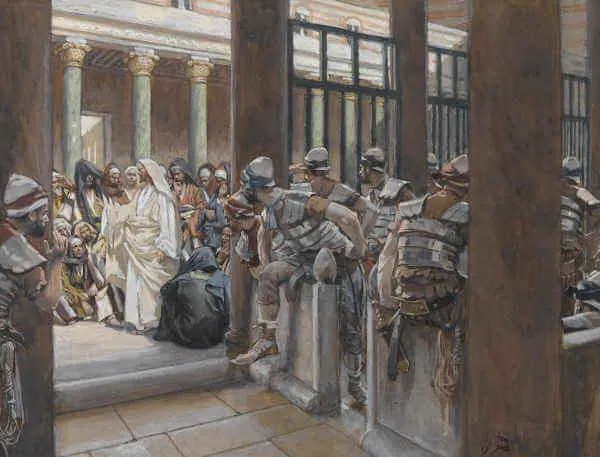
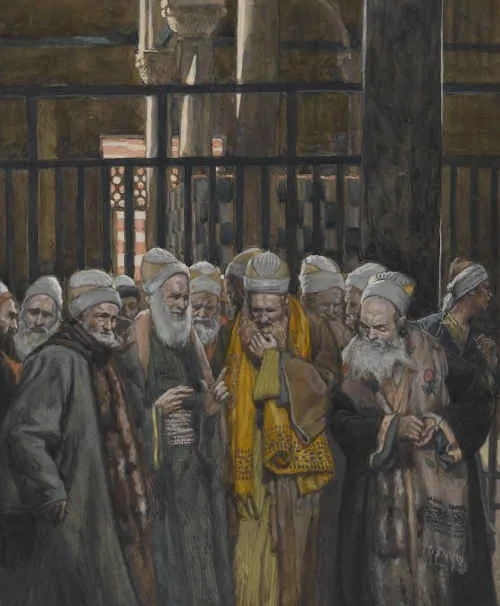
The guards answered, “Never before has anyone spoken like this man.” So the Pharisees answered them, “Have you also been deceived? Have any of the authorities or the Pharisees believed in him? But this crowd, which does not know the law, is accursed.”

Reflection:

Hopefully the Pharisees mentioned above went through a deep interior conversion before they died. If they did not, then their day of particular judgment would have been shocking and frightening to them. The greatest act of love ever known was God becoming one of us, being conceived by the Holy Spirit in the womb of the Blessed Virgin Mary, growing up in the household of Saint Joseph, and eventually beginning His public ministry by which the saving truth of the Gospel was proclaimed so that all may come to know God and be saved. And it was of this act of perfect love given to us by God that the Pharisees attacked and called those who believed in it “deceived” and “accursed.”

Though the Pharisees do not offer us much by way of inspiration, they do provide us with many lessons. In the passage above, the Pharisees model for us one of the most common tactics of the evil one. In his spiritual classic, The Spiritual Exercises, Saint Ignatius of Loyola explains that when a person is moving from a life of sin to a life of holiness, the evil one will attack in various ways. He will try to unsettle you and cause an undue anxiety about serving God, he will try to sadden you with an unexplained sorrow, put obstacles in your way of virtue causing you to feel overwhelmed and think you are too weak to live a good Christian life of virtue, and he will tempt you to lose your peace of heart by doubting God’s love or His action in your life. It seems clear that this attack by the Pharisees also has these goals.

Again, though this may not appear “inspiring,” it is very useful to understand. The Pharisees were vicious in their attacks, not only to Jesus but also upon anyone who began to believe in Jesus. They said to the guards who were impressed by Jesus, “Have you also been deceived?” This was clearly the evil one at work through them trying to intimidate the guards and anyone who dared believe in Jesus.

But understanding the tactics of the evil one and his messengers is of great value, because it helps us reject the lies and deceptions spewed out at us. Sometimes these lies come from individuals and are directed directly at us, and sometimes the lies are more universal, coming through the media, the culture and even the government, at times.

Reflect, today, upon the distasteful and bitter words of these Pharisees. But do so to help yourself understand the tactics the evil one often takes as you seek greater holiness in life. Be assured that the closer you get to God, the more you will be attacked. But do not be afraid. Identify any personal, social, cultural or even governmental attack for what it is. Have confidence and do not be deterred as you seek to follow Christ more completely every day.

Source: https://catholic-daily-reflections.com/2025/04/04/attacks-from-the-evil-one-3/

John 7:46-49 Read More »

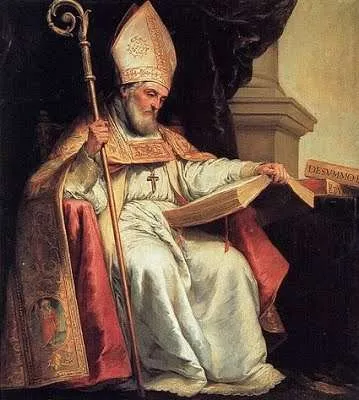
Saint Isidore, Bishop and Doctor of the Church

c.560–636; Patron Saint of computer technicians, the Internet, and students; Pre-Congregation canonization; Proclaimed a Doctor of the Church in 1722 by Pope Innocent XIII

Saint Isidore of Seville was among the most learned and prolific writers in the history of the Catholic Church. His influence was felt directly for more than a millennia, as his books were among the most copied and read books throughout the Middle Ages. Today, the world is unquestionably different because of this holy and brilliant man.

Isidore was born in Cartagena, modern-day Spain, to Severianus and Theodora, a well-respected, influential, and upper-class couple. Isidore had an older brother, Leander, who became a monk and then the Bishop of Seville. His younger brother, Fulgentius, became the Bishop of Astigi, and his sister, Florentina, became a nun of prominence. All three of Saint Isidore’s siblings are saints.

Isidore’s parents died when he was young, so his older brother, Leander, cared for him and his other two siblings. As a monk devoted to studies himself, Leander was especially attentive to the education of his siblings. Leander was quite strict in his disciplines, which resulted in Isidore obtaining a thorough education in grammar, logic, rhetoric, arithmetic, astronomy, music, geometry, Latin, Greek, Hebrew, and the Catholic faith. His interests were so vast that it has been said that Isidore knew everything. Isidore also benefited greatly from the contemplative influence of the monks he so admired and was drawn to their life of deep prayer.

At the time that Isidore was completing his education, the Visigoths were the ruling party in the Iberian Peninsula. The Visigoths were Christians who embraced the Arian heresy, which caused much division between them and the Nicene Catholics they ruled. Isidore’s brother, Leander, became the Bishop of Seville in 580 and served as bishop for about twenty years. In the first years of his episcopate, Leander, with the help of Isidore, worked tirelessly to convert the Visigoths to the Nicene Creed and to reject Arianism. When Liuvigild, the Arian Visigoth King died in 586, his younger son, Reccared, became king. A year later, through the efforts of Bishop Leander and Isidore, King Reccared renounced Arianism and embraced the true faith. In the decades to follow, most of the Visigoths also converted, bringing about Christian unity within the Iberian Peninsula.

When Bishop Leander died around the year 600, Isidore was named his successor in Seville and continued to strengthen the unified faith of Nicene Catholicism. Bishop Isidore was amazingly successful in his pastoral work. People flocked to him, listened to his preaching, were in awe of his vast knowledge, and were inspired by his holiness. As a shepherd, he was both an intellectual and a contemplative and enjoyed great confidence and trust from his people and other Church leaders.

One of Bishop Isidore’s greatest contributions to the Church and to the entire Western world was the writing of the Etymologiae, a comprehensive encyclopedia of all knowledge. This encyclopedia consisted of twenty volumes and summarized many of the great writers who had come before him, both pagan and Christian. Topics included grammar, rhetoric, logic, mathematics, geometry, music, astronomy, law, military science, languages, philosophers, architecture, clothing, food, cosmology, agriculture, mineralogy, physiology, zoology, and, of course, the Catholic faith. This encyclopedia became one of the most copied sets of books throughout the Middle Ages, directly influencing the Western world for more than 1,000 years.

In addition to his writings, Bishop Isidore presided over a number of Church councils. These councils were essential for the strengthening of the Church by further purifying it of heretical teaching, setting up administrative church structures and disciplines, and helping unify the people and bishops into one united voice and vision for the future. Bishop Isidore’s role in these councils was so crucial that in 653, just seventeen years after Bishop Isidore’s death, a subsequent Council in Toledo honored his memory and influence in these words: “The extraordinary doctor, the latest ornament of the Catholic Church, the most learned man of the latter ages, always to be named with reverence, Isidore.”

During his lifetime, Saint Isidore had an enormous influence upon the Church and Western world. He influenced popes, bishops, clergy, laity, kings, and heretics. He won over the minds and hearts of countless people for Christ, uniting them with confidence in the true faith. His intellectual gifts, coupled with his deep holiness, inspired many to turn to him for guidance. It’s hard to underestimate the influence this one man had upon the entire Western world by being a holy bishop in the Diocese of Seville. Though very few people are called to accomplish what he accomplished, we must all do our part. Ponder the legacy that you will leave behind, and pray that God will use you to not only influence those around you today, but that your influence will also be felt for generations to come.

Source: https://mycatholic.life/saints/saints-of-the-liturgical-year/april-4-saint-isidore-bishop-and-doctor-of-the-church/

Saint Isidore, Bishop and Doctor of the Church Read More »

John 7:1-2;10

The New Moses

Jesus moved about within Galilee; he did not wish to travel in Judea, because the Jews were trying to kill him. But the Jewish feast of Tabernacles was near. But when his brothers had gone up to the feast, he himself also went up, not openly but as it were in secret.

Reflection:

The Jewish Feast of Tabernacles was one of three great feasts during which the people made a pilgrimage to the Temple in Jerusalem to commemorate God’s saving action in their lives. This particular feast was to commemorate the 40 years that the Israelites traveled through the desert and dwelt in tents, or booths, as they wandered and were led by Moses. Therefore, the feast is also referred to as the “Feast of Booths.” During the seven days of this feast, people would set up tents (booths) around the Temple area and live in them to commemorate the journey of their ancestors.

In the Gospel passage quoted above, we read that Jesus went up to the feast secretly. Saint Augustine explains that this means that though Jesus was present, the full revelation of His divine identity was hidden from many. He was physically there, but many did not know Who He was.

That particular year, when the feast was half over, Jesus appeared in the Temple area and began to teach. Many were amazed at His words, and others thought He was possessed. After teaching the people, there was much disagreement among them about our Lord’s identity. Jesus said to them, “You know me and also know where I am from. Yet I did not come on my own, but the one who sent me, whom you do not know, is true. I know him, because I am from him, and he sent me.” In that statement, Jesus essentially was saying that among those listening to Him, some had come to faith in Him and discovered His true identity as the Messiah, while others lacked the gift of faith and remained blind to Him. To them, His divine essence remained a secret.

In a symbolic way, Jesus’ presence at the Feast of Tabernacles reveals Him as the new Moses. It was Moses who led the people through the desert for 40 years toward the promised land while they dwelt in tents. Our Lord now took on that role of leading the people who were commemorating this 40-year journey by appearing in the Temple and pointing the people to Heaven, the true Promised Land.

Today, our Lord continues to lead His people through the journey of life by coming to each of us to teach us and to reveal His divine presence. Some listen and believe and continue on the journey. To them, the secrets of our Lord are revealed. Others do not believe and, as a result of their lack of faith, fail to discover the hidden presence of our Lord all around them.

Reflect, today, upon the image of Jesus coming to you during your long journey through the desert of this life. He initially comes to you in secret, veiled in His true essence. As He teaches you, He desires to lift that veil and reveal to You His true glory. He desires that you dwell with Him through prayer and remain attentive to His Word. As you gaze upon our Lord, reflect upon the question of how clearly you hear Him speak each day. He is here, with you always. But are you with Him? Do you hear Him, believe in Him, follow Him and serve Him? Do you allow Him to lead you every day toward His promises of new life? Allow our Lord to pitch His tent next to yours so that You will daily be attentive to His teaching and be led by Him to the glories of Heaven.

Source: https://catholic-daily-reflections.com/2025/04/03/the-new-moses-3/

John 7:1-2;10 Read More »

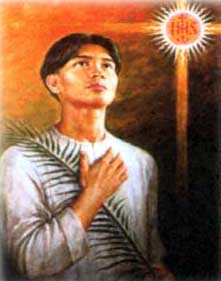
Saint Pedro Calungsod

Profile

Pedro was educated by the Jesuits in the Visayas, a section of the Philippines. Pedro could read, write and speak Visayan, Spanish, and Chamorro, paint, draw, sing, and worked as a carpenter. He was a teenage catechist who worked with Spanish Jesuit missionaries to the violent Chamorros in the Ladrones Islands (modern Marianas) in 1668. Because he was a Christian on a mission to catechize the Chamorros, and Baptisms, Calungsod was murdered by two natives. He died trying to defend Father Diego Luis de San Vitores. He was a martyr.

Born

  • c.1654 in Ginatilan, Cebu, Philippines
    named for Saint Peter the Apostle

Died

  • hacked to death with a catana on 2 April 1672 at Tomhom, Guam
  • mutilated body thrown into the sea

Venerated

  • 27 January 2000 by Pope John Paul II (decree of martyrdom)

Beatified

  • 5 March 2000 by Pope John Paul II at Vatican City
  • the investigation proved the miraculous cure of bone cancer through Pedro’s intercession

Canonized

  • 21 October 2012 by Pope Benedict XVI

Patronage

  • young people

Source: https://catholicsaints.info/saint-pedro-calungsod/

Saint Pedro Calungsod Read More »

John 5:44

Human or Divine Praise?

How can you believe, when you accept praise from one another and do not seek the praise that comes from the only God?

Reflection:

It’s quite normal and healthy for a parent to praise a young child for the good that they do. This healthy positive reinforcement is a way of teaching them the importance of doing good and avoiding what’s wrong. But human praise is not an infallible guide of what is right and wrong. In fact, when human praise is not based in the truth of God, it does great damage.

This short Scripture quote above comes from a lengthy teaching from Jesus about the difference between human praise and “the praise that comes only from God.” Jesus makes it clear that the only thing that has value is the praise that comes from God alone. In fact, earlier in this Gospel, Jesus says clearly, “I do not accept human praise…” Why is that?

Turning back to the example of a parent praising a child for the good they do, when the praise they offer is truly a praise of their goodness, then this is much more than human praise. It is praise from God given through a parent. A parent’s duty must be to teach right from wrong in accord with the will of God.

As for the “human praise” of which Jesus speaks, this is clearly praise of another that is void of the truthfulness of God. In other words, Jesus is saying that if someone were to praise Him for something that did not originate from the Father in Heaven, He would reject it. For example, if someone were to say of Jesus, “I think He would be a great governor of our nation because he could lead a revolt against the current leadership.” Obviously such “praise” would be rejected.

The bottom line is that we must praise one another, but our praise must only be that which originates from God. Our words must be spoken only in accord with the Truth. Our admiration must only be of that which is the presence of God alive in others. Otherwise, if we praise others based on worldly or self-centered values, we only encourage them in sin.

Reflect, today, upon the praise you give and receive. Do you allow misguided praise of others to misdirect you in life? And when you compliment and praise another, is that praise based on the Truth of God and directed to His glory? Seek to give and receive praise only when it is grounded in the Truth of God and directs all to His glory.

Source: https://catholic-daily-reflections.com/2025/04/02/human-or-divine-praise-4/

John 5:44 Read More »

Saint Francis of Paola, Hermit

1416–1507; Patron Saint of boatmen, mariners, and naval officers; Canonized by Pope Leo X on May 1, 1519

James Martotille and his bride wedded and lived in the town of Paola, in the southernmost region of Italy. During the first years of their marriage, they were unable to conceive a child. Being devout Catholics, they turned to prayer and beseeched the intercession of Saint Francis of Assisi. Their prayers were answered when they were blessed with the birth of a son. As an expression of gratitude to Saint Francis of Assisi, the couple named their son Francis. 

While still an infant, Francis suffered from a swelling of the eyes, which endangered his sight. The Martotilles once again turned to the intercession of Saint Francis of Assisi for healing. In keeping with a pious medieval custom, they vowed that if their son were healed, they would entrust him to a friary for a year as a youth so he could be educated and formed in the practice of the faith. Their infant was indeed cured, and his parents later fulfilled their vow.

As a youth, Francis showed many signs of piety. He regularly abstained from meat as penance, sought solitude, and found great joy in prayer. When he was entrusted to the care of the Franciscan friars at age thirteen (in the nearby Friary of Saint Mark), his love of God and devotion to prayer and penance grew stronger. Though he was not a professed brother, he lived out the Franciscan vows in ways that surpassed even the friars themselves. After faithfully fulfilling the yearlong stay, in accord with the vow made by his parents, Francis and his parents took a pilgrimage north to Assisi. After stopping in Rome and other places along the way, they completed their pilgrimage and returned home to Paola.

Back in Paola, Francis’ desire for prayer, penance, and solitude grew strong. In response, Francis sought permission from his father to live as a hermit. His father granted Francis’ request, permitting him to live on a nearby portion of his property. Francis quickly discovered that life as a hermit suited him well and was his calling. The only problem was that his solitude was too often interrupted by friendly visits. To remedy this, he moved to an even more remote spot, taking up residence in a cave by the sea. In that “hermitage,” Francis relied solely upon divine providence. He ate what he could gather from the land and what people would bring to him from time to time. His bed was the ground, and his pillow a rock or log. He lived this life for six years, alone in peace and fulfillment.

When Francis was about twenty years old, his holy example inspired two other young men to join him in the wilderness. With the help of some local townsmen, who were inspired by Francis’ vocation, they built small hermitages and a chapel in which a nearby priest would come to offer Mass for them. The three of them engaged in a common life of prayer, penance, and solitude. In the years that followed, more were drawn to join them to live as hermits. Over the next few decades, the local archbishop gave Francis and his companions permission to build a larger church and monastery, and Pope Sixtus IV asked Francis to formally write down a rule of life and submit it for approval. The pope also gave these men of God the name “Hermits of Saint Francis.” Some years later, Pope Alexander VI changed their name to the “Hermits of the Order of the Minims,” and then just to “Order of Minims,” or Minims friars. This simplified name meant they were to be seen as the least of all the friars. In everything they did, they sought lowliness and humility as their central aim.

Many quickly came to know and admire the newly established hermits who attempted to inspire a revival of the practice of Lenten penance among the faithful by practicing a perpetual Lent themselves. Their perpetual penance consisted of limiting their diet to only plants, refraining not only from meat and eggs but from everything derived from animals. This fast became a fourth vow of the order, in addition to poverty, chastity, and obedience.

When Jesus walked the earth, He continually performed miracles, which confirmed His sacred identity in the eyes of His first followers. By the grace of God, Francis of Paola also performed many miracles, read minds, and spoke prophetically. One day Francis was on a journey to Sicily and was hungry. He encountered some poor men looking for work along the way and asked the men for food, but they had none. Francis told them to look in their bags, and there they found freshly baked bread that seemed to multiply as they ate it. On another occasion, a boatman refused to take Francis to Sicily one day because Francis was poor and could not pay him, so Francis simply walked or sailed across the ocean on his cloak. On other occasions, Francis is said to have raised the dead; healed the sick and crippled; averted plagues; expelled demons; spoken prophetically to bishops, popes, and kings; and performed many other miracles.

As a result of Francis’ holy life, coupled with miraculous signs, many people sought him out, despite his vocation of solitude. Popes called on him, and kings sought his counsel. Through it all, Francis continually proclaimed that all he did was done “out of love.” Love, the pure and holy love of charity, was the sole purpose of his life.

At the age of ninety-one, Francis sensed death was coming for him, so he returned to complete solitude for his final three months. On Holy Thursday he went to confession, received Holy Communion, and prayed in preparation for death. Holy death came for him on Good Friday, April 2, 1519. He had lived a perpetual Lent throughout his life; thus, it was fitting that his Lent come to an end on Good Friday. Twelve short years later, Pope Leo X canonized Francis a saint. Fifty-three years after his death, a group of French Calvinists broke into the church where he was buried, dug up his grave and found his body incorrupt. They quickly desecrated his body and burned it so that the faithful would no longer pray before his tomb. This final act of humility that God permitted Saint Francis of Paola to embrace flowed from the glories of Heaven.

From an early age, Francis sensed God calling him to a radical vocation. Francis responded in such a way that his actions quickly became extraordinary. Each one of us is called to an extraordinary life of holiness. We are called to become radical, totally given to God, doing all out of love of God and others. Ponder how radical you are every day, and deepen your commitment to radical holiness so that “radical” eventually becomes normal for you, just as it was for Saint Francis.

Source: https://mycatholic.life/saints/saints-of-the-liturgical-year/april-2-saint-francis-of-paola-hermit/

Saint Francis of Paola, Hermit Read More »

John 5:19-20

Amazement and Awe

“Amen, amen, I say to you, the Son cannot do anything on his own, but only what he sees the Father doing; for what he does, the Son will do also. For the Father loves the Son and shows him everything that he himself does, and he will show him greater works than these, so that you may be amazed.”

Reflection:

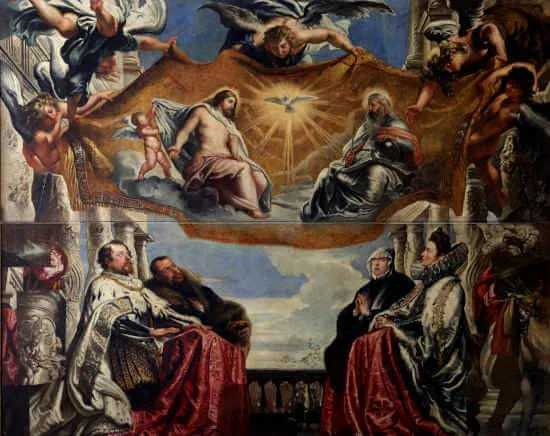
The most central and most glorious mystery of our faith is that of the Most Holy Trinity. God the Father, Son and Holy Spirit are one God yet three distinct Persons. As divine “Persons,” each one is distinct; but as one God, each Person acts in perfect union with the others. In today’s Gospel, Jesus clearly identifies the Father in Heaven as His Father and clearly states that He and His Father are one. For this reason, there were those who wanted to kill Jesus because He “called God his own father, making himself equal to God.”

The sad reality is that the greatest and most glorious truth of God’s inner life, the mystery of the Most Holy Trinity, was one of the primary reasons that some chose to hate Jesus and sought His life. Clearly, it was their ignorance of this glorious truth that drove them to this hatred.

We call the Holy Trinity a “mystery,” not because they cannot be known but because our knowledge of Who They are can never be fully understood. For eternity, we will enter deeper and deeper into our knowledge of the Trinity and be “amazed” on a continually deepening level.

One additional aspect of the mystery of the Trinity is that each one of us is called to share in Their very life. We will forever remain distinct from God; but, as many of the early Church Fathers liked to say, we must become “divinized,” meaning, we must share in God’s divine life through our union of body and soul with Christ Jesus. That union also unites us with the Father and the Spirit. This truth should also leave us “amazed,” as we read in the passage above.

As we continue to read this week from the Gospel of John and continue to ponder the mysterious and profound teaching of Jesus on His relationship with the Father in Heaven, it is essential that we not simply gloss over the mysterious language Jesus uses. Rather, we must prayerfully enter the mystery and allow our penetration of this mystery to leave us truly amazed. Amazement and transforming edification is the only good response. We will never fully understand the Trinity, but we must allow the truth of our Triune God to take hold of us and enrichen us, at very least, in a way that knows how much we do not know—and that knowledge leaves us in awe.

Reflect, today, upon the sacred mystery of the Most Holy Trinity. Pray that God reveals Himself more fully to your mind and more completely consume your will. Pray that you will be able to share deeply in the life of the Trinity so that you will be filled with a holy amazement and awe.

Source: https://catholic-daily-reflections.com/2025/04/01/amazement-and-awe-4/

John 5:19-20 Read More »

Saint Ludovico Pavoni

Profile

Ludovico was trained in theology by the Dominican Father Carlo Ferrari, future bishop of Brescia, Italy. He was ordained in 1807. He founded an Oratory for Christian education of poor boys in Brescia. He was a secretary to bishop Gabrio Nava in 1812.

Ludovico was a rector of Saint Barnabas church in 1818 where soon after he founded an orphanage and associated trade school, basing his work on the idea that improving social conditions will improve the spiritual life, and improving the spiritual life will improve social conditions. In 1821, the school became the Institute of Saint Barnabas. Along with carpentry, silversmithing, blacksmithing, shoemaking, agriculture, and tool and dye makers, the school stressed the trades of printing and publishing. In 1823, Ludivico established The Publishing House of the Institute of Saint Barnabas; it exists today under the name Ancora. That same year, the school began taking in deaf and mute students.

In 1825, he founded a religious congregation of priests and brothers to run the school; it became the Sons of Mary Immaculate or Pavoniani, Pavonians. Pope Gregory XVI authorized it for Brescia in 1843, and on 8 December 1847, Ludovico and the first members made their religious profession. Today, there are 210 members in Brazil, Colombia, Eritrea, Germany, Italy and Spain, and they still publish books.

On 24 March 1849, Brescia was in rebellion against the Austrians. Both sides were ready to pillage the city and Father Ludovico led his boys to safety at Saiano, seven miles away. He died a week later as Brescia was in flames, but his boys were safe.

Born

  • 11 September 1784 at Brescia, Italy

Died

  • Palm Sunday, 1 April 1849 at Saianco, Italy of natural causes

Venerated

  • 5 June 1947 by Pope Pius XII (decree of heroic virtues)

Beatified

  • 14 April 2002 by Pope John Paul II
  • beatification celebrated in Saint Peter’s Square, Vatican City, Rome, Italy
  • the beatification miracle involved the 1909 cure of Maria Stevani from typhoid fever

Canonized

  • 16 October 2016 by Pope Francis
  • canonization celebrated in Saint Peter’s Square, Vatican City, Rome, Italy
  • the canonization miracle involves the healing of a man from “acute postoperative cerebrovascular accident; bilateral aspiration pneumonia complicated by acute respiratory failure; kidney failure” in the archdiocese of São Paulo, Brazil through the intercession of Saint Ludovico

Patronage

  • Sons of Mary Immaculate

Source: https://catholicsaints.info/saint-ludovico-pavoni/

Saint Ludovico Pavoni Read More »

John 5:5-6

Patient Endurance

One man was there who had been ill for thirty-eight years. When Jesus saw him lying there and knew that he had been ill for a long time, he said to him, “Do you want to be well?”

Reflection:

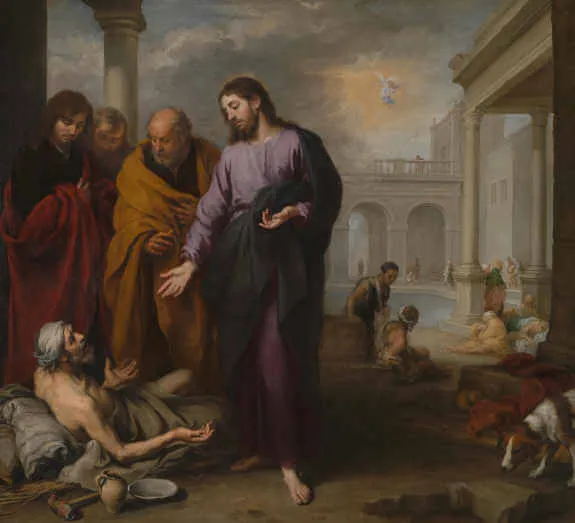
Only those who have been crippled for many years could understand what this man endured in life. He was crippled and unable to walk for thirty-eight years. The pool he was laying next to was believed to have the power of healing. Therefore, many who were sick and crippled would sit by the pool and try to be the first to enter it when the waters were stirred up. From time to time, that person was said to have received healing.

Jesus sees this man and clearly perceives his desire for healing after so many years. Most likely, his desire for healing was the dominant desire in his life. Without the ability to walk, he could not work and provide for himself. He would have had to rely upon begging and the generosity of others. Thinking about this man, his sufferings and his ongoing attempts for healing from this pool should move any heart to compassion. And since Jesus’ heart was one that was full of compassion, He was moved to offer this man not only the healing he so deeply desired but so much more.

One virtue in the heart of this man that would have especially moved Jesus to compassion is the virtue of patient endurance. This virtue is an ability to have hope in the midst of some ongoing and lengthy trial. It is also referred to as “longsuffering” or “longanimity.” Usually, when one faces a difficulty, the immediate reaction is to look for a way out. As time moves on and that difficulty is not removed, it’s easy to fall into discouragement and even despair. Patient endurance is the cure for this temptation. When one can patiently endure anything and everything they suffer in life, there is a spiritual strength within them that benefits them in numerous ways. Other little challenges are more easily endured. Hope is born within them to a powerful degree. Even joy comes with this virtue despite the ongoing struggle.

When Jesus saw this virtue alive in this man, He was moved to reach out and heal him. And the primary reason Jesus healed this man was not just to help him physically but so that the man would come to believe in Jesus and follow Him.

Reflect, today, upon this beautiful virtue of patient endurance. The trials of life should ideally be seen not in a negative way but as an invitation to patient endurance. Ponder the way you endure your own trials. Is it with deep and ongoing patience, hope and joy? Or is it with anger, bitterness and despair. Pray for the gift of this virtue and seek to imitate this crippled man.

Source: https://catholic-daily-reflections.com/2025/03/31/patient-endurance-4/

John 5:5-6 Read More »