Author name: Sani

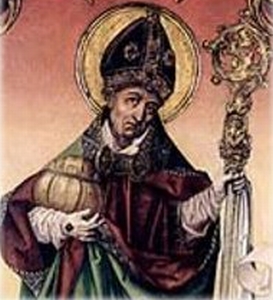
Saint Guy of Pomposa

Profile

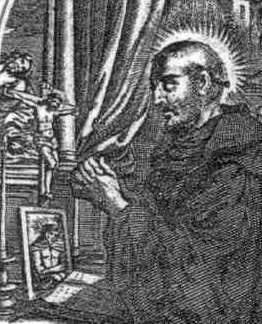
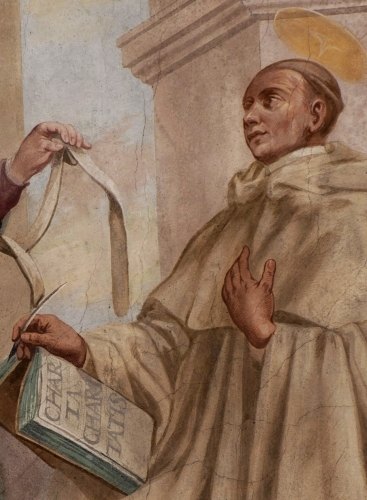
Guy was known in his youth for being meticulous about his clothing and appearance – until the day he realized it was simply vanity and traded his fine clothes for a beggar‘s rags. He became a pilgrim to Rome, Italy. He was a spiritual student for three years of a hermit name Martin on an island in the River Po. He became a monk at Pomposa abbey near Ferrera, Italy. He became a Benedictine monk at Saint Severus abbey, Ravenna, Italy. He became an Abbot Ravenna and Pomposa. A student of scripture, he taught Bible studies for two years at the request of Saint Peter Damian. So many were attracted to his teaching, his leadership, and his example of the Christian life that his house doubled in size; his father and brother joined the order. Guy finally handed off the administrative elements of his position to concentrate on spiritual direction. He periodically retreated to a hermitage near Ferrara to spend his days in prayer and fasting. Near the end of his life he was unjustly persecuted for personal reasons by archbishop Heribert of Ravenna. He died while on a trip to Piacenza, Italy to advise Emperor Henry III on spiritual matters.

Born

  • at Ravenna, Italy

Died

  • 1046 at Borgo San Donnino, Italy of natural causes
  • interred in the church of Saint John the Evangelist, Speyer, Germany, which was renamed Saint Guido-Stift

Patronage

  • Speyer, Germany

Source: https://catholicsaints.info/saint-guy-of-pomposa/

Saint Guy of Pomposa Read More »

John 4:46-48

Faith in All Things

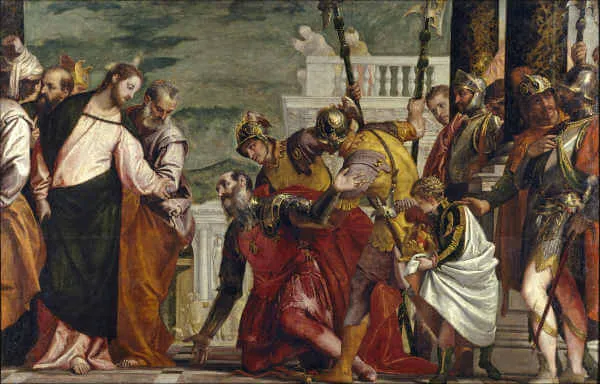
Now there was a royal official whose son was ill in Capernaum. When he heard that Jesus had arrived in Galilee from Judea, he went to him and asked him to come down and heal his son, who was near death. Jesus said to him, “Unless you people see signs and wonders, you will not believe.”

Reflection:

Jesus did end up healing the royal official’s son. And when the royal official returned to discover his son healed, we are told that “he and his whole household came to believe.” Some came to believe in Jesus only after He performed miracles. There are two lessons we should take from this.

First of all, the fact that Jesus performed miracles is a testimony to Who He is. He is a God of abundant mercy. As God, Jesus could have expected faith from those to whom He ministered without offering them the “proof” of signs and wonders. This is because true faith is not based upon external evidence, such as seeing miracles; rather, authentic faith is based upon an interior revelation from God by which He communicates His very self to us and we believe. Therefore, the fact that Jesus did signs and wonders shows just how merciful He is. He offered these miracles, not because anyone deserved them but simply because of His abundant generosity to help spark faith in the lives of those who found it hard to believe through the interior gift of faith alone.

With that said, it’s important to understand that we should work to develop our faith without relying upon external signs. Imagine, for example, if Jesus would have never performed any miracles. How many would have come to believe in Him? Perhaps very few. But there would have been some who came to believe, and those who did would have had a faith that was exceptionally deep and authentic. Imagine, for example, if this royal official did not receive a miracle for his son but, nonetheless, chose to believe in Jesus anyway through the transforming interior gift of faith.

In each one of our lives, it is essential that we work to develop our faith, even if God doesn’t seem to act in powerful and evident ways. In fact, the deepest form of faith is born in our lives when we choose to love God and serve Him, even when things are very difficult. Faith in the midst of difficulty is a sign of very authentic faith.

Reflect, today, upon the depth of your own faith. When life is hard, do you love God and serve Him anyway? Even if He doesn’t remove the crosses you carry? Seek to have true faith at all times and in every circumstance and you will be amazed at how real and sustaining your faith becomes.

Source: https://catholic-daily-reflections.com/2025/03/30/faith-in-all-things-3/

John 4:46-48 Read More »

Fourth Sunday of Lent

First Reading Joshua 5:9a, 10-12

The LORD said to Joshua,
“Today I have removed the reproach of Egypt from you.”

While the Israelites were encamped at Gilgal on the plains of Jericho,
they celebrated the Passover
on the evening of the fourteenth of the month.
On the day after the Passover,
they ate of the produce of the land
in the form of unleavened cakes and parched grain.
On that same day after the Passover,
on which they ate of the produce of the land, the manna ceased.
No longer was there manna for the Israelites,
who that year ate of the yield of the land of Canaan.

Responsorial Psalm Psalms 34:2-3, 4-5, 6-7

R. (9a)  Taste and see the goodness of the Lord.
I will bless the LORD at all times;
            his praise shall be ever in my mouth.
Let my soul glory in the LORD;
            the lowly will hear me and be glad.
R. Taste and see the goodness of the Lord.
Glorify the LORD with me,
            let us together extol his name.
I sought the LORD, and he answered me
            and delivered me from all my fears.
R. Taste and see the goodness of the Lord.
Look to him that you may be radiant with joy,
            and your faces may not blush with shame.
When the poor one called out, the LORD heard,
            and from all his distress he saved him.
R. Taste and see the goodness of the Lord.

Second Reading 2 Corinthians 5:17-21

Brothers and sisters:
Whoever is in Christ is a new creation:
the old things have passed away;
behold, new things have come.
And all this is from God,
who has reconciled us to himself through Christ
and given us the ministry of reconciliation,
namely, God was reconciling the world to himself in Christ,
not counting their trespasses against them
and entrusting to us the message of reconciliation.
So we are ambassadors for Christ,
as if God were appealing through us.
We implore you on behalf of Christ,
be reconciled to God.
For our sake he made him to be sin who did not know sin,
so that we might become the righteousness of God in him.

Verse before the Gospel Luke 15:18

I will get up and go to my Father and shall say to him:
Father, I have sinned against heaven and against you.

Gospel Luke 15:1-3, 11-32

Tax collectors and sinners were all drawing near to listen to Jesus,
but the Pharisees and scribes began to complain, saying,
“This man welcomes sinners and eats with them.”
So to them Jesus addressed this parable:
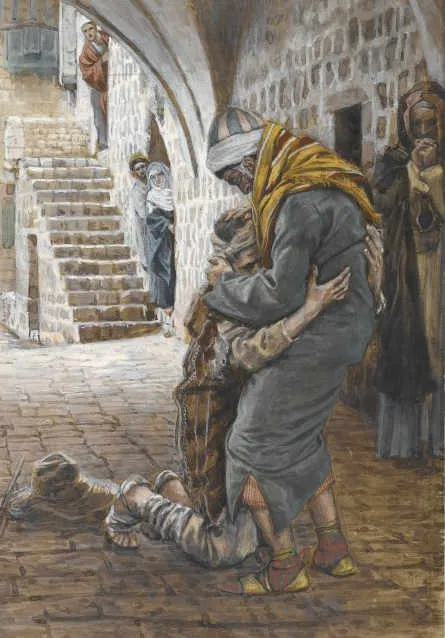
“A man had two sons, and the younger son said to his father,
‘Father give me the share of your estate that should come to me.’
So the father divided the property between them.
After a few days, the younger son collected all his belongings
and set off to a distant country
where he squandered his inheritance on a life of dissipation.
When he had freely spent everything,
a severe famine struck that country,
and he found himself in dire need.
So he hired himself out to one of the local citizens
who sent him to his farm to tend the swine.
And he longed to eat his fill of the pods on which the swine fed,
but nobody gave him any.
Coming to his senses he thought,
‘How many of my father’s hired workers
have more than enough food to eat,
but here am I, dying from hunger.
I shall get up and go to my father and I shall say to him,
“Father, I have sinned against heaven and against you.
I no longer deserve to be called your son;
treat me as you would treat one of your hired workers.”’
So he got up and went back to his father.
While he was still a long way off,
his father caught sight of him, and was filled with compassion.
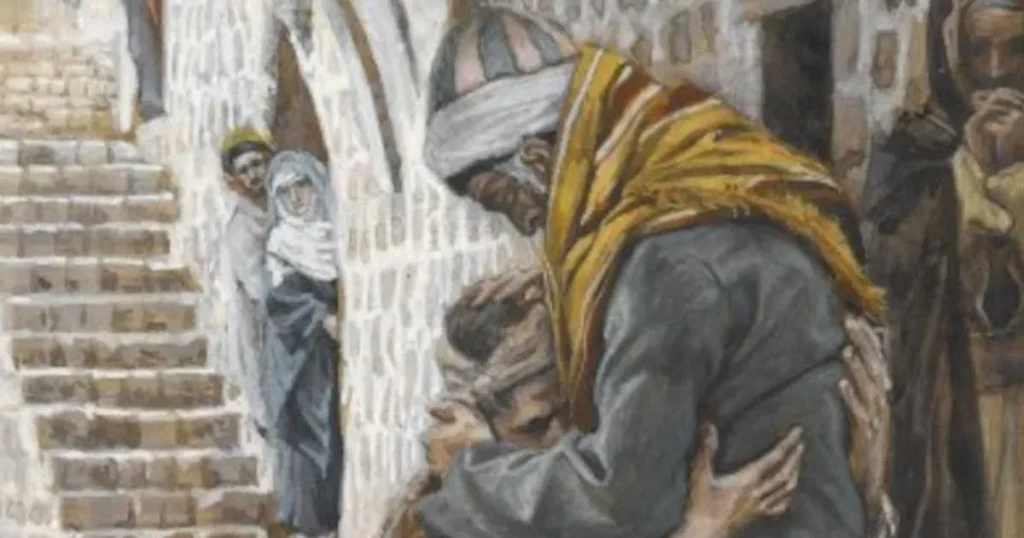
He ran to his son, embraced him and kissed him.
His son said to him,
‘Father, I have sinned against heaven and against you;
I no longer deserve to be called your son.’
But his father ordered his servants,
‘Quickly bring the finest robe and put it on him;
put a ring on his finger and sandals on his feet.
Take the fattened calf and slaughter it.
Then let us celebrate with a feast,
because this son of mine was dead, and has come to life again;
he was lost, and has been found.’
Then the celebration began.
Now the older son had been out in the field
and, on his way back, as he neared the house,
he heard the sound of music and dancing.
He called one of the servants and asked what this might mean.
The servant said to him,
‘Your brother has returned
and your father has slaughtered the fattened calf
because he has him back safe and sound.’
He became angry,
and when he refused to enter the house,
his father came out and pleaded with him.
He said to his father in reply,
‘Look, all these years I served you
and not once did I disobey your orders;
yet you never gave me even a young goat to feast on with my friends.
But when your son returns
who swallowed up your property with prostitutes,
for him you slaughter the fattened calf.’
He said to him,
‘My son, you are here with me always;
everything I have is yours.
But now we must celebrate and rejoice,
because your brother was dead and has come to life again;
he was lost and has been found.'”

Source: https://bible.usccb.org/bible/readings/033025-YearC.cfm

Fourth Sunday of Lent Read More »

Saint Pierre Aumaître

Profile

Pierre was the eldest of five children in a peasant family; his father was a farmer, his mother a seamstress. Pierre was baptized in Verteuil, France on 26 May 1837, confirmed in Aizecq, France on 21 May 1844, and made his first Communion on 2 May 1847. He felt a call to the priesthood, walked seven miles a day to take Latin lessons, and entered the Petit Séminaire de Richemont near Cognac, France in 1852, then the Société des Missions Etrangères (Paris Foreign Missions Society) seminary in Paris, France in 1857. He was ordained as a priest on 14 June 1862. He left for missionary work in Korea on 18 August 1862, arriving in June 1863; he studied the language and customs in Seoul and Saemgol, and then began working in the Naep’o region. He worked with Saint Marie-Nicolas-Antoine Daveluy and his bishop, Saint Siméon-François Berneux. To prevent his parishioners in Saemgol from being interrogated and abused by government authorities, he surrendered in March 1866; he was taken to Seoul, imprisoned, tortured, and finally executed for his faith and his work. Martyr.

Born

  • 8 April 1837 in Aizecq, Charente, France

Died

  • beheaded on 30 March 1866 in Galmaemot, Boryeong, Chungcheong-do, South Korea
  • buried in the sand at the execution site
  • remains later recovered and buried in the cathedral in Seoul, South Korea
  • some relics in the Salle des Martyrs des Missions Étrangères in Paris, France

Venerated

  • 4 July 1968 by Pope Pauli VI (decree of martyrdom)

Beatified

  • 6 October 1968 by Pope Paul VI

Canonized

  • 6 May 1984 by Pope John Paul II

Source: https://catholicsaints.info/saint-pierre-aumaitre/

Saint Pierre Aumaître Read More »

Luke 15:1-3

Seeking the Lost

Tax collectors and sinners were all drawing near to listen to Jesus, but the Pharisees and scribes began to complain, saying, “This man welcomes sinners and eats with them.” So to them Jesus addressed this parable.

Reflection:

This is good news! Our Lord “welcomes sinners and eats with them.” For that reason, there is room at His table for you!

Sometimes it’s hard to admit that we are sinners. Of course we know in our minds that we are. But our pride can easily lead us to justify our sin, downplay it and conclude that we are not that bad after all. If you find yourself thinking this way, be careful. Doing so will make you like the Pharisees and scribes in the passage above. Clearly they did not see themselves as sinners, which is why they condemned Jesus for welcoming sinners and eating with them. 

The passage above comes from the beginning of Chapter 15 of Luke’s Gospel and serves as an introduction to three subsequent parables. First, our Lord tells the Parable of the Lost Sheep, then the Parable of the Lost Coin, and then the Parable found in the rest of today’s Gospel passage, the Parable of the Lost Son. In the first parable, the shepherd who finds his lost sheep rejoices. In the second parable, the woman who finds her lost coin rejoices. And in the parable we read today, the father who finds his lost son rejoices and throws a party to celebrate.

Return, again, to the passage above that introduces these three parables: “Tax collectors and sinners were all drawing near to listen to Jesus.” Once they drew near, Jesus spoke to them about the joy of finding that which was lost. Perhaps as Jesus initially spoke about the finding of the lost sheep and lost coin, this would have resonated with these tax collectors and sinners to a certain degree. But then our Lord tells them the long and detailed story about this boy who disrespects his father, takes his inheritance, squanders it on illicit living, and ends up with nothing. The story expresses the confusion of this boy, his desperation, his guilt and his shame. We learn of his interior thinking, reasoning, fears and anxiety.

As you ponder this parable, try to understand the effect that it would have had upon the tax collectors and sinners who all drew near to our Lord. They were spiritually hungry, just as the prodigal son was. They had a past full of regret, just as this boy. They were unsatisfied in life and were looking for a way out, just as this son of the loving father was. For these reasons, those tax collectors and sinners who drew near Jesus would have been mesmerized by all that Jesus taught them and filled with hope that they, too, could share in the joy that was so generously bestowed upon this wayward son.

Reflect, today, upon the touching image of these tax collectors and sinners drawing near to Jesus. Though they may have had a certain fear and caution, they would have also had hope. Try to understand what they must have thought and felt as they heard this story of the father’s abundant mercy. Think about how they would have related as they discovered that there was hope for them, too. If you struggle with being like the scribes and Pharisees, reject that temptation. Instead, see yourself as one of those sinners who drew near to our Lord and you will be the cause of joy in the Heart of the Father in Heaven.

Source: https://catholic-daily-reflections.com/2025/03/29/seeking-the-lost/

Luke 15:1-3 Read More »

Saint Jonas of Hubaham

Profile

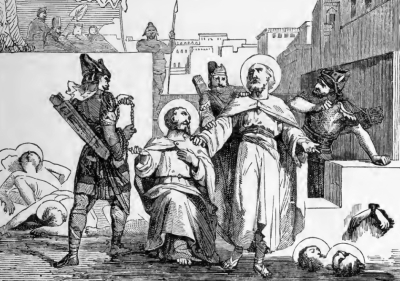
Jonas was a monk. He went with Saint Barachisius, his brother and fellow monk, to Hubaham, Persia, to minister to Chistians imprisoned for their faith during the reign of King Sapor II. They were arrested, beaten, tortured, and martyred for this service, and for refusing to worship the sun, moon, fire and water. Eyewitness descriptions of their trial and execution have survived to today.

Born

  • at Beth-Asa, Persia

Died

  • martyred 24 December 327 by being beaten with clubs, a stake pushed into his abdomen, and left in a freezing pond; when he survived the night, his fingers and toes were cut off, and he was crushed to death in a wine press
  • his corpse was cut in two, thrown in a dry cistern, and guarded to keep other Christians from recovering relics

Canonized

  • Pre-Congregation

Source: https://catholicsaints.info/saint-jonas-of-hubaham/

Saint Jonas of Hubaham Read More »

Luke 18:9-10

Being Justified by Mercy

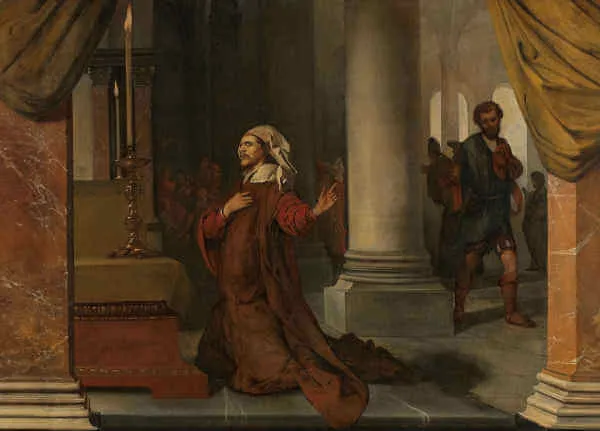
Jesus addressed this parable to those who were convinced of their own righteousness and despised everyone else. “Two people went up to the temple area to pray; one was a Pharisee and the other was a tax collector.”

Reflection:

This Scripture passage introduces the Parable of the Pharisee and the Tax Collector. They both go to the Temple to pray, but their prayers are very different from each other. The prayer of the Pharisee is very dishonest, whereas the prayer of the tax collector is exceptionally sincere and honest. Jesus concludes by saying that the tax collector went home justified but not the Pharisee. He states, “…for everyone who exalts himself will be humbled, and the one who humbles himself will be exalted.”

True humility is simply being honest. Too often in life we are not honest with ourselves and, therefore, are not honest with God. Thus, for our prayer to be true prayer, it must be honest and humble. And the humble truth for all of our lives is best expressed by the prayer of the tax collector who prayed, “O God, be merciful to me a sinner.”

How easy is it for you to admit your sin? When we understand the mercy of God, this humility is much easier. God is not a God of harshness but is a God of the utmost mercy. When we understand that God’s deepest desire is to forgive us and to reconcile us to Himself, then we will deeply desire honest humility before Him.

Lent is an important time for us to deeply examine our conscience and make new resolutions for the future. Doing so will bring new freedom and grace into our lives. So do not be afraid to honestly examine your conscience so as to see your sin clearly in the way God sees it. Doing so will put you in a position to pray this prayer of the tax collector: “O God, be merciful to me a sinner.”

Reflect, today, upon your sin. What do you struggle with the most right now? Are there sins from your past that you have never confessed? Are there ongoing sins that you justify, ignore and are afraid to face? Take courage and know that honest humility is the road to freedom and the only way to experience justification before God.

Source: https://catholic-daily-reflections.com/2025/03/28/being-justified-by-mercy-4/

Luke 18:9-10 Read More »

Saint Stephen Harding

Profile

Stephen was born to the English nobility. After a somewhat misspent youth, he was drawn to religious life and entered the Benedictine Sherborne Abbey. Following the Norman conquest of England in 1066, Stephen left the monastic life, moved to Scotland and then to Paris, France to study. He was a pilgrim to Rome, Italy, seeking forgiveness for having abandoned monasticism. He became a monk at Molesme Abbey. With Saint Robert of Molesme, he helped begin the Cistercian reform by helping found Citeaux Abbey in 1098. Chosen abbot of the house in 1109, he came in with a reformer’s zeal and administrative skill. He accepted Saint Bernard of Clairvaux into the Order with all the reform and expansion that he and his brothers brought with them. He helped found a dozen other Cistercian houses. and gave the statutes that started the Cistician nuns. His reform work aimed at simplicity in all things including liturgical rites, church decor, monastic dress, and life in the Order.

Born

  • c.1060 in Meriot, Sherborne, England

Died

  • 28 March 1134 at Citeaux, France of natural causes
  • buried at Citeaux Abbey

Canonized

  • 1623 by Pope Urban VIII

Patronage

  • Cîteaux Abbey
    Sherborne, Dorset, England

Source: https://catholicsaints.info/saint-stephen-harding/

Saint Stephen Harding Read More »

Mark 12:29-30

Hold Nothing Back

Hear, O Israel! The Lord our God is Lord alone!  You shall love the Lord your God with all your heart, with all your soul, with all your mind, and with all your strength.

Reflection:

Why would you choose anything less than to love the Lord your God with ALL your heart, with ALL your soul, with ALL your mind, and with ALL your strength? Why would you choose anything less? Of course, we do choose many other things to love in life, even though Jesus is clear with this commandment.

The truth is that the only way to love others, and even to love ourselves, is to choose to love God with ALL we are. God must be the one and only focus of our love. But what’s amazing is that the more we do this, the more we realize that the love we have in our lives is the kind of love that overflows and overflows in superabundance. And it is this overflowing love of God that then pours forth on others.

On the other hand, if we try to divide our loves by our own effort, giving God only part of our heart, soul, mind and strength, then the love we have for God cannot grow and overflow in the way God wants. We limit our capacity for love, and we fall into selfishness. Love of God is a truly amazing gift when it is total and all-consuming.

Each one of these parts of our lives are worth pondering and examining. Think about your heart and how you are called to love God with your heart. And how does this differ from loving God with your soul? Perhaps your heart is more focused on your feelings, emotions and compassion. Perhaps your soul is more spiritual in nature. Your mind loves God the more it probes the depth of His Truth, and your strength is your passion and drive in life. Regardless of how you understand the various parts of your being, the key is that every part must love God in fullness.

Reflect, today, upon the beautiful commandment of our Lord. It’s a command of love, and it is given to us not so much for God’s sake but for ours. God wants to fill us to the point of overflowing love. Why would we ever choose anything less?

Source: https://catholic-daily-reflections.com/2025/03/27/hold-nothing-back-4/

Mark 12:29-30 Read More »

Saint Rupert of Salzburg

Profile

Rupert was a relative of Saint Ermentrude. Rupert was a Benedictine and became a Bishop of Worms, Germany. He was an evangelist to southern Germany. In 696, Theodo, Duke of Bavaria, gave him the ruined town of Iuvavum, which Rupert rebuilt. There, he founded the monastery of Saint Peter, serving as its first abbot. He also founded a Benedictine convent. He worked with Saint Chuniald, Saint Vitalis of Salzburg, and Saint Gislar. To support the houses and his missionary work, he promoted the mining of salt, which led to the renaming of the place as Salzburg (salt mountain). He became the Bishop of Salzburg. He was considered a confessor of the faith.

Born

  • probably in France

Died

  • 718 in Salzburg, Austria

Canonized

  • Pre-Congregation

Patronage

  • in Austria
    – Gurk, diocese of
    – Klosterneuburg
    – Salzburg, city of
    – Salzburg, province of

Representation

  • man holding a container of salt (refers to Salzburg and the salt mining there)

Source: https://catholicsaints.info/saint-rupert-of-salzburg/

Saint Rupert of Salzburg Read More »