2026

Matthew 10:34-36

The Sword of Truth and Peace

Jesus said to his Apostles: “Do not think that I have come to bring peace upon the earth. I have come to bring not peace but the sword. For I have come to set a man against his father, a daughter against her mother, and a daughter-in-law against her mother-in-law; and one’s enemies will be those of his household.”

Reflection:

At first glance, this Gospel sounds like a mistake. Did Jesus really say this? He certainly did. Understanding this passage requires a deep and clear awareness of Christ’s mission. He came to bring the true and lasting peace that comes only through adherence to the fullness of truth and cooperation with the fullness of grace.

Note that this teaching was not delivered to the crowds but to the Twelve. Jesus often spoke to the crowds in parables, gently nourishing them with truths they could gradually grasp. But to the Twelve, He spoke with increasing clarity and depth. Today’s Gospel is one such instance.

This passage comes from what is sometimes referred to as the Missionary Discourse, in which Jesus prepares His Apostles for the upheaval their mission will bring—first as they go out two by two to the towns of Israel, and later, after the Ascension, when they are sent to the ends of the earth. At first, Jesus’ words seem jarring, even paradoxical, coming from Him who is the Prince of Peace. But when we grasp their meaning, we discover the “tough love” this Gospel both encourages and demands.

We all desire peace, especially within our families and communities, but peace is multifaceted and can have different meanings. On a superficial level, peace simply means the absence of conflict. While such tranquility has its place, Jesus came to offer a far greater and more enduring peace: the peace of shalom.

Shalom, the Hebrew word for “peace,” signifies far more than the absence of strife. It encompasses the fullness of harmony, justice, and blessing that flow from a right relationship with God. It is a peace rooted in truth and communion with Him. Ironically, true peace can provoke division, especially when the Gospel confronts the sins and falsehoods people are unwilling to abandon. The “sword” our Lord brings is not for destruction, but for purification. It cuts away what is false so that the peace of shalom may take root.

The sword Christ promises is the Truth: the living and active Word of God, “sharper than any two-edged sword” (Hebrews 4:12). It cuts through deception, pierces the heart, and forces a choice—a decisive turning toward or away from Him. God directs that sword at each of us, and through us, toward others. Even familial bonds will be tested and purified by the Gospel. Sometimes that purification results in visible division. But often, such division is necessary to bring about a deeper and more lasting unity in God’s truth.

Which do you prefer? The mere absence of conflict at any cost—or a peace so deeply rooted in divine truth that it heals, unites, and strengthens bonds of love after purifying them? Certainly, the former is easier. Avoiding conflict is good when it means refraining from sinning against another—whether through anger, harsh judgment, or rudeness. But when conflict arises from purifying love, conveyed through the power of God’s saving Word, then such conflict becomes an act of charity. It does not seek division for its own sake, but aims at the heart—at conversion and truth—rather than at preserving what is fleeting and passing.

Reflect today on the kind of peace you seek in your own life. Are there areas in which you’ve settled for comfort rather than truth? Have you avoided necessary spiritual conflict for fear of tension, even when it might have led to growth or reconciliation? Pray for the courage to welcome the “sword” of God’s Word—not to cause division, but to purify—so that the peace of shalom may take root more deeply in your heart, your relationships, and your mission.

Source: https://catholic-daily-reflections.com/2026/07/12/the-sword-of-truth-and-peace/

Matthew 10:34-36 Read More »

Fifteenth Sunday in Ordinary Time

First Reading Isaiah 55:10-11

Thus says the LORD:
Just as from the heavens
the rain and snow come down
and do not return there
till they have watered the earth,
making it fertile and fruitful,
giving seed to the one who sows
and bread to the one who eats,
so shall my word be
that goes forth from my mouth;
my word shall not return to me void,
but shall do my will,
achieving the end for which I sent it.

Responsorial Psalm Psalms 65:10, 11, 12-13, 14

R. (Lk 8:8) The seed that falls on good ground will yield a fruitful harvest.
You have visited the land and watered it;
greatly have you enriched it.
God’s watercourses are filled;
you have prepared the grain.
R. The seed that falls on good ground will yield a fruitful harvest.
Thus have you prepared the land: drenching its furrows,
breaking up its clods,
Softening it with showers,
blessing its yield.
R. The seed that falls on good ground will yield a fruitful harvest.
You have crowned the year with your bounty,
and your paths overflow with a rich harvest;
The untilled meadows overflow with it,
and rejoicing clothes the hills.
R. The seed that falls on good ground will yield a fruitful harvest.
The fields are garmented with flocks
and the valleys blanketed with grain.
They shout and sing for joy.
R. The seed that falls on good ground will yield a fruitful harvest.

Second Reading Romans 8:18-23

Brothers and sisters:
I consider that the sufferings of this present time are as nothing
compared with the glory to be revealed for us. 
For creation awaits with eager expectation
the revelation of the children of God;
for creation was made subject to futility,
not of its own accord but because of the one who subjected it,
in hope that creation itself
would be set free from slavery to corruption
and share in the glorious freedom of the children of God. 
We know that all creation is groaning in labor pains even until now;
and not only that, but we ourselves,
who have the first fruits of the Spirit,
we also groan within ourselves
as we wait for adoption, the redemption of our bodies.

Alleluia

R. Alleluia, alleluia.
The seed is the word of God, Christ is the sower.
All who come to him will have life forever.
R. Alleluia, alleluia.

Gospel Matthew 13:1-23

On that day, Jesus went out of the house and sat down by the sea.
Such large crowds gathered around him
that he got into a boat and sat down,
and the whole crowd stood along the shore. 
And he spoke to them at length in parables, saying:
“A sower went out to sow. 
And as he sowed, some seed fell on the path,
and birds came and ate it up. 
Some fell on rocky ground, where it had little soil. 
It sprang up at once because the soil was not deep,
and when the sun rose it was scorched,
and it withered for lack of roots. 
Some seed fell among thorns, and the thorns grew up and choked it. 
But some seed fell on rich soil, and produced fruit,
a hundred or sixty or thirtyfold. 
Whoever has ears ought to hear.”

The disciples approached him and said,
“Why do you speak to them in parables?” 
He said to them in reply,
“Because knowledge of the mysteries of the kingdom of heaven
has been granted to you, but to them it has not been granted. 
To anyone who has, more will be given and he will grow rich;
from anyone who has not, even what he has will be taken away. 
This is why I speak to them in parables, because
they look but do not see and hear but do not listen or understand. 
Isaiah’s prophecy is fulfilled in them, which says:
You shall indeed hear but not understand,
you shall indeed look but never see.
Gross is the heart of this people,
they will hardly hear with their ears,
they have closed their eyes,
lest they see with their eyes
and hear with their ears
and understand with their hearts and be converted,
and I heal them. 

“But blessed are your eyes, because they see,
and your ears, because they hear. 
Amen, I say to you, many prophets and righteous people
longed to see what you see but did not see it,
and to hear what you hear but did not hear it.

“Hear then the parable of the sower.
The seed sown on the path is the one
who hears the word of the kingdom without understanding it,
and the evil one comes and steals away
what was sown in his heart.
The seed sown on rocky ground
is the one who hears the word and receives it at once with joy. 
But he has no root and lasts only for a time. 
When some tribulation or persecution comes because of the word,
he immediately falls away. 
The seed sown among thorns is the one who hears the word,
but then worldly anxiety and the lure of riches choke the word
and it bears no fruit. 
But the seed sown on rich soil
is the one who hears the word and understands it,
who indeed bears fruit and yields a hundred or sixty or thirtyfold.”

Source: https://bible.usccb.org/bible/readings/071226.cfm

Fifteenth Sunday in Ordinary Time Read More »

Saint Benedict, Abbot

c. 480–c. 547; Patron Saint of Europe, monks and religious orders, ​​architects, dying people, cave explorers, schoolchildren, agricultural workers, civil engineers, and coppersmiths; Invoked against erysipelas, fever, gallstones, inflammatory diseases, kidney disease, nettle rash, poison, temptations, and witchcraft; Canonized by Pope Honorius III in 1220; Declared Patron Saint of Europe by Pope Paul VI in 1964

Benedict was born into Roman nobility in Nursia, central Italy, roughly 100 miles northeast of Rome. His father was a prefect for the Western Roman Empire, which had fallen to the barbarians a decade prior to his birth. He had a twin sister named Scholastica, who also became a saint. As a youth, Benedict was sent to Rome for studies. However, he quickly became disillusioned by the prevalent immorality and disorder, particularly among his classmates. At the age of twenty, to find peace in his soul and avoid the traps that had ensnared many of his peers, he moved to the countryside of the town of Affile, about forty miles from Rome. Accompanying him was his nurse who cared for him like a mother. They moved in with some virtuous men in the Church of Saint Peter. While there, his nurse accidentally broke a dish used to sift wheat and was distraught. Witnessing this, Benedict miraculously mended the dish and returned it to her. News of this miracle spread quickly, and Benedict became the talk of the town.

Benedict wasn’t interested in the praise of men; he sought only holiness. Leaving his nurse behind, he moved closer to the town of Subiaco and took up residence in a cave. Nearby, he met a holy monk, Romanus, whom Benedict consulted for spiritual advice. At Romanus’ encouragement, Benedict took on the monastic habit and lived in the cave for the next three years as a hermit. Romanus visited him frequently, bringing him food as needed. As a hermit, Benedict prayerfully sought to root out all sin in his life, especially the three temptations common to most men: “the temptation of self-affirmation and the desire to put oneself at the center, the temptation of sensuality and, lastly, the temptation of anger and revenge” (Pope Benedict XVI, General Audience, April 9, 2008).

After having conquered these temptations, Benedict was invited by a group of local monks to become their abbot. He reluctantly agreed, recognizing that his form of religious life contrasted sharply with theirs. After a brief time as abbot, the monks so opposed him that, according to legend, they attempted to kill him by poisoning his wine. When Benedict blessed the wine, the glass shattered, and the scheme was revealed. Shortly afterward, Benedict left the monks and returned to his cave before emerging to found monasteries in the area over the following years. Many admired him and were attracted to his radical way of living, while others envied him and sought his life. Numerous miracles are said to have taken place through his intervention, such as raising a monk from the dead, healing a boy, foreseeing future events, multiplying food and wine, expelling demons, and walking across water.

After founding twelve small monasteries in the Subiaco area, Benedict felt it was time for a fresh start. One of the local priests had tried to poison him and was relentless in his persecutions. He even sent a naked woman to one of Benedict’s monasteries to tempt him and the monks. In addition to this persecution, some monks found his way of life challenging, and the locals were more taken with the stories of his miracles than with his devotion to God. Therefore, he moved about sixty miles southeast to the mountaintop of Monte Cassino, where, at the age of fifty, he founded his most famous monastery.

Upon arriving at Monte Cassino, Benedict found a temple built to the Roman god Apollo. He destroyed it, built two chapels in its place, and then constructed a monastery nearby. Before this, most monasteries consisted of loosely associated hermits living independently but also somewhat communally. Having seen the failure of this form of monasticism in Subiaco, Benedict adopted a new approach. Instead of several smaller monasteries, he built one large monastery where numerous monks could live. He wrote a rule, later known as “The Rule of Saint Benedict,” that guided his newly established monastery at Monte Cassino and eventually became the normative rule for Western monasticism for the next 1,500 years. Hence, Saint Benedict is often referred to as the “Father of Western Monasticism.”

The “Rule” consists of seventy-three short chapters that address both the spiritual and administrative aspects of a healthy monastery. The Rule lays out guidelines for monastic living, particularly in areas of stability, conversion of life, obedience, prayer, work, community life, hospitality, and humility. The Rule takes into consideration the fact that most monks governed under the Rule did not engage in extreme penances or other radical charisms. Instead, the Rule fosters a balanced community life in which individual monks can discover a daily rhythm of prayer, work, and study conducive to a deeper and personal calling to holiness.

While Benedict set up his community at Monte Cassino, his sister, Scholastica, helped found a monastery for women. It’s likely that Benedict played a role in this founding and that his Rule guided the nuns’ daily life. Benedict and Scholastica remained close until her death, which he prophesied. Upon her death, Benedict had a vision of Scholastica being taken to Heaven. He brought her body back to Monte Cassino, where she was buried in his future grave, and which they still share.

After fewer than ten years at Monte Cassino, Benedict died, but his influence on the Church and all of Europe was just beginning. Monasteries across Europe, guided by the Rule of Saint Benedict, developed into important centers for education, medicine, culture, and social development. From these monasteries, universities were born. The monasteries helped to preserve ancient texts, stabilize communities, influence nobility, and draw many to Christ. Their liturgies flourished and influenced the wider Church, making many of these monasteries the central teachers of prayer and worship. For these reasons, many have referred to Saint Benedict as not only the father of monasticism but also the father of modern Europe, given the influence that monasteries using his Rule have had on Europe and the world as a whole. For this reason, Pope Paul VI declared Saint Benedict the Patron Saint of Europe in 1964.

As we honor this important figure in Church and world history, reflect on his humble beginnings. He witnessed the immoralities of his day and fled from those temptations to embrace a life of holiness. At that time, it would have been difficult for him to comprehend the influence he would have had on all of Europe and, in fact, upon the whole world for many centuries to come. Reflect on the fact that God also calls you to flee from sin and embrace a life of holiness. When that happens, God can do great things through you in ways you may never comprehend. Follow the example of Saint Benedict and commit yourself to holy daily living, and leave it up to God to use you as He wills.

Source: https://mycatholic.life/saints/saints-of-the-liturgical-year/july-11—saint-benedict-abbot/

Saint Benedict, Abbot Read More »

Matthew 13:3-4

The Generous Sower

“A sower went out to sow. And as he sowed, some seed fell on the path, and birds came and ate it up…”

Reflection:

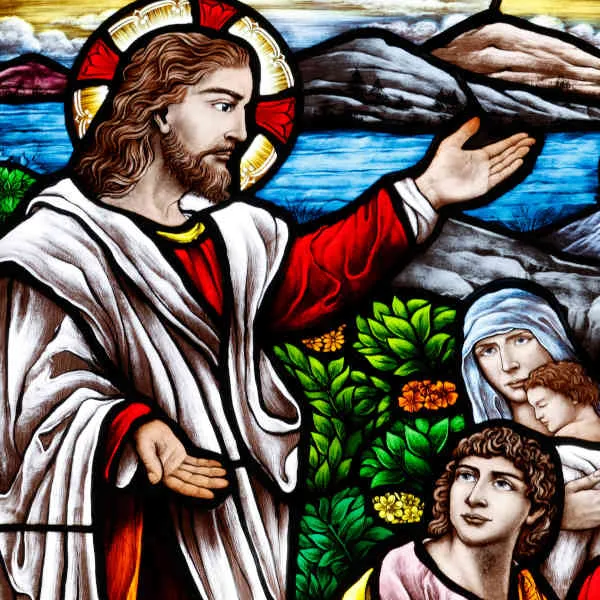
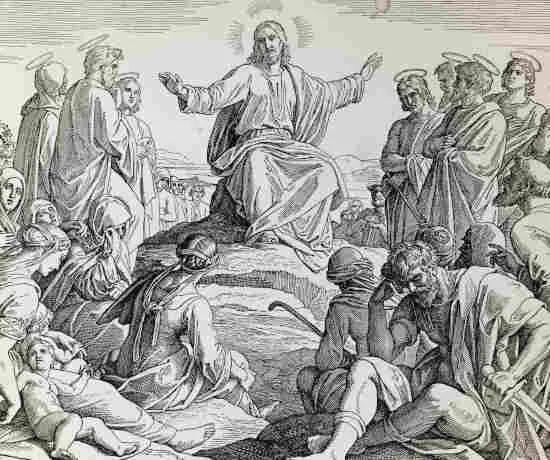
In today’s Gospel, the Parable of the Sower is delivered from a boat, as Jesus addresses a large crowd along the shoreline. Jesus uses the natural acoustics of the water to carry His voice to the eager multitude who came to hear Him. Their earnestness offers us an opportunity for self-examination: Am I among that crowd, attentively listening as God speaks to me today? Do I go out of my way to seek, listen, and respond to the Word of God?

A parable is a method that both reveals and conceals. It reveals divine truth to those who are humble and receptive, and conceals that same truth from those whose hearts are closed. The truths of the Kingdom are not concepts that can be quickly grasped. They are divine mysteries that must enter the soul and be pondered and nourished. Only the spiritually docile can penetrate their depths and allow God’s Word to transform their lives.

The Sower is Christ. The seed is the Word of God, and the soil represents the human heart, in all its various conditions of readiness and receptivity. Some souls await God’s Word like freshly tilled, moist, and fertilized soil. As soon as the seed enters, it begins to grow rapidly—until fully grown and producing good fruit.

Other souls are less receptive. Like the path, some hearts are hardened, stubborn, refusing to receive divine truth. The Word is heard, but not truly received. The enemy snatches it away before it can penetrate.

Hearts that are like rocky ground are those who initially receive the Word with joy but lack perseverance. When trials come, they fall away. They may attend Mass, read Scripture, or begin with fervor, but without deep interior conversion rooted in prayer, they cannot endure the heat of testing.

The thorny heart is the divided heart, where the Word of God is mixed with anxieties, riches, and pleasures. The Gospel is heard—perhaps even cherished—but it is suffocated by worldly attachments, ambition, or fear. Earthly anxieties and the fascination of riches are thorns that smother the soul and prevent it from growing.

The good news is that God, the Divine Sower, is not passive. He sows the seed Himself—personally, directly, and abundantly. He is not like a remote monarch seated on a distant throne, waiting for us to come to Him. No—God always takes the initiative. He goes forth like the sower, casting His seed upon us even before we ask.

The seed comes to us in two essential ways: truth and grace. As truth, God’s Word enlightens the intellect to know His eternal mysteries. As grace, God’s Word strengthens the will to embrace and live those truths with faith and charity.

The Divine Sower sows lavishly. He casts the seed everywhere—on the path, among the rocks, amidst thorns, and upon rich earth. This is not careless, but the work of Divine Mercy. God desires that all be saved and come to the knowledge of the truth. Even where the ground seems hardened, shallow, or choked with thorns, He still sows. He never ceases to speak, to reach out, to invite. He sows even in places we might deem hopeless—until the final moment, when the time for sowing is ended.

Reflect today on God’s generous and continuous sowing in your soul. He never ceases speaking to you, calling to you, and planting His Word within you. How receptive are you? Which soil best describes your soul? It’s never too late to respond in this life. God’s Word can grow rapidly within us when our souls are fertile and receptive. Remove the rocks, cut down the thorns, and till the hardened path, so that the abundant seed will make its way into your heart.

Divine Sower, You ceaselessly send forth Your truth and grace to enlighten and strengthen us in the mission of building Your Kingdom. Please till the soil of my heart and make it fertile, so that Your Word may take root in me, growing and producing an abundance of good fruit. Jesus, I trust in You.

Source: https://catholic-daily-reflections.com/2026/07/11/the-generous-sower/

Matthew 13:3-4 Read More »

Saint Knud

Profile

Knud was the illegimate son of King Sweyn Estrithson of Denmark. He was the nephew of King Knud of England. He was King of Denmark as Knud IV in c.1080. He was married to Adela, sister of Count Roberts of Flanders (in modern Belgium. He spread the gospel through his kingdom, supported missionaries, and built churches. He tried and failed to conquer England to press his claim to the throne which he saw as his through his kinship to his uncle, King Knud. Following his defeat, he fled to the island of Fünen. He was murdered with his brother and 17 followers while kneeling at an altar immediately following confession. There were miracles reported at his tomb.

Born

  • c.1043

Died

  • murdered in 1086 in the church of Saint Alban on the island of Fünen, Denmark

Canonized

  • 1101 by Pope Paschal II

Patronage

  • Denmark

Representation

  • Nordic king with royal insignia, dagger, lance or arrow
  • barefoot king with his hair in a fillet
  • with Saint Charles Borromeo
  • being murdered at the altar

Source: https://catholicsaints.info/saint-knud/

Saint Knud Read More »

Matthew 10:16–18

Heralds of the Gospel

Jesus said to his Apostles: “Behold, I am sending you like sheep in the midst of wolves; so be shrewd as serpents and simple as doves. But beware of men, for they will hand you over to courts and scourge you in their synagogues, and you will be led before governors and kings for my sake as a witness before them and the pagans.”

Reflection:

No one is naturally drawn to persecution. We flee from it. We are made for communion with one another. In Heaven, and in the New Heavens and New Earth at the end of time, our eternal experience will be of peace, unity, and solidarity with all as we jointly gaze upon and adore the Beatific Vision of the King of the Universe.

Today, however, the kingdom of darkness retains a great hold on this fallen world. War, violence, injustice, and divisions of every kind affect families, communities, and nations because hostility is much easier to achieve than the peace and harmony that Christ seeks to establish through the inauguration of His Kingdom.

One of the surest ways to avoid persecution is to stand for nothing. Those who hold no moral convictions or remain silent about the truths of the faith are unlikely to draw the world’s wrath. But those who speak with clarity and charity about the eternal truths of the Gospel often find themselves the object of rejection.

This was the reality for which Jesus was preparing the Twelve Apostles. Today’s Gospel comes from a lengthy exhortation Jesus delivered to His Twelve as He was sending them out two by two to proclaim the arrival of the Kingdom of God. They were to go forth with courage, rely on divine providence, perform miracles, and prepare the various towns and villages to which they were sent for Jesus’ coming.

At first, one might think that entering a Jewish town to share the good news that the Messiah had arrived—and was soon coming to them in person—would be met with much rejoicing. However, that’s not the reality for which Jesus prepared them. He offers a striking image, saying He is sending the Twelve “like sheep in the midst of wolves.” This evokes both the innocence they were to embody and the hostility they would inevitably face. As sheep, they were to act with meekness, vulnerability, and complete dependence on the Good Shepherd’s providence.

Today, as our Lord sends us forth to proclaim the Gospel within our families, communities, and world, we should expect nothing other than what the Twelve encountered. For example, those who uphold the Church’s moral teachings publicly often provoke strong resistance. Even proclaiming that salvation is found solely through Jesus Christ can lead to hostility. The accusation is frequently made that such beliefs are intolerant or judgmental, when in truth they are rooted in love and fidelity to God’s revelation—and in genuine concern for the good of every soul.

If we wish to continue Jesus’ mission of establishing His Kingdom, we must be prepared for persecution by knowing how to respond to it. Returning hatred for hatred or persecution for persecution is not the Gospel. Instead, we must expect and anticipate hostility when we become messengers of the Truth—and respond with serpent-like shrewdness and dove-like simplicity. We must perceive dangers, avoid traps, and navigate persecution without being naïve. We must also embrace sincerity of heart, freedom from malice, and unwavering peace.

Reflect today on whether you are willing to endure hardship for the sake of Christ. Is your heart prepared to speak the truth in love and to receive rejection with peace? Pray for the grace to imitate the Apostles, who went forth not in fear but in trust. Resolve to bring the light of the Gospel into a dark and hostile world with shrewdness, simplicity, fidelity, courage, and meekness, knowing that the Good Shepherd will guide and protect you always, when you act in accord with His perfect will for the mission on which you are sent.

Source: https://catholic-daily-reflections.com/2026/07/09/heralds-of-the-gospel/

Matthew 10:16–18 Read More »

Saint Augustine Zhao Rong and 119 Companions, Martyrs

1648–1930; Invoked for the people of China; Canonized by Pope John Paul II on October 1, 2000

 The Syro-Persian Church of the East is believed to have first reached China around the year 630 when two monks arrived to engage in silk trade. Although they were Christians, they followed the Nestorian heresy, which denied the divinity of Christ. The Chinese emperor welcomed them and permitted them to share their faith. Over the next two centuries, some Christian churches were erected and converts were made. However, by the mid-ninth century, Christians were being persecuted. In the year 987, an Arab writer from Baghdad wrote of a conversation he had with a monk who had traveled to China. The monk explained, “Christianity is extinct in China; the native Christians have perished in one way or another; the church which they had has been destroyed and there is only one Christian left in the land.”

In the mid- to late-thirteenth century, Emperor Kublai Khan, the grandson of Genghis Khan, showed greater tolerance of Christianity, especially since his mother was a Nestorian Christian. Franciscan and Dominican friars were permitted to spread the faith, but their efforts yielded little. By the following century, with the rise of the Ming Dynasty, Christianity was once again all but driven out.

In 1552, Saint Francis Xavier began his missionary activity in India, Malaysia, and Japan. Though he never made it to China, his missions paved the way for the Italian Jesuit Matteo Ricci and his companions to help found the Chinese Jesuit Mission on mainland China in 1582. Their approach was to learn the language and culture and try to assimilate as much as possible, winning over hearts and minds with kindness and teaching the people math, science, astronomy, and mapmaking. Ricci and his companions won over some influential converts and managed to translate a catechism into the Chinese language. However, their efforts later drew criticism from the Church hierarchy for blending Confucian religious beliefs with the Catholic faith.

The 120 saints we honor today spilled their blood for the faith during the four centuries that followed. The first to be martyred was Father Francisco Fernández de Capillas, a Spanish Dominican priest. Father de Capillas spent his first two decades as a priest working in the Philippines as a missionary. In 1642, Father de Capillas arrived for his final mission in mainland China. He and his companions worked fervently for the next several years, winning over many converts and even establishing a lay order of Dominicans. In 1644, the less-tolerant Qing Dynasty replaced the Ming Dynasty, immediately threatening the missions. In 1647, Father de Capillas was captured, imprisoned, and tortured. While in prison, he wrote a letter in which he said, “I am here with other prisoners and we have developed a fellowship. They ask me about the Gospel of the Lord. I am not concerned about getting out of here because here I know I am doing the will of God. They do not let me stay up at night to pray, so I pray in bed before dawn. I live here in great joy without any worry, knowing that I am here because of Jesus Christ. The pearls I have found here these days are not always easy to find.” Two months later, he was sentenced to death and immediately decapitated on the charge of teaching false doctrine and opposing the new emperor. He died while praying the sorrowful mysteries of the rosary.

From the martyrdom of Father de Capillas until 1930, 119 other Catholic saints would follow in his footsteps as martyrs in China. Eighty-seven were native Chinese Christians who were lay catechists, merchants, cooks, farmers, and even a young boy. Thirty-three were foreign missionaries from various religious orders, working to spread the Gospel at the risk of their lives.

The next several decades after Father de Capillas’ death were relatively peaceful, as successive emperors tolerated Christians. That all changed, however, when in 1707 the Pope issued a decree forbidding the co-mingling of Confucian religious practices with the Catholic faith, such as ancestor worship. This infuriated the emperor, and over the next fifteen years, most of the Catholic missions were suppressed. In 1724, the new emperor officially banned Christianity and expelled all Catholic priests. Churches were confiscated and turned into public buildings. By the end of the eighteenth century, there remained just a little over 100,000 Catholics in China who practiced their faith in secret.

In 1747–1748, five more Spanish Dominicans were martyred. In 1814, persecutions picked up again as a result of new imperial decrees forbidding the practice of the Christian faith. This time, the persecutions were directed towards native-born Chinese Christians. Among them was Father Augustine Zhao Rong, a priest of the Diocese of Chengdu, China.

Father Augustine, whose name is attached to today’s memorial, was the first native-born Chinese priest and the first Chinese priest to be martyred. He was originally a soldier entrusted with the task of transporting to Beijing French Bishop John Gabriel Taurin Dufresse who had been arrested and would also be martyred. During the long journey, the bishop greatly impressed Zhao Rong with his kindness and peaceful demeanor in the face of persecution. Zhao Rong requested and received baptism after learning about the Catholic faith. Taking the name Augustine, he was later ordained a priest. After his arrest, he was offered the opportunity to renounce the Catholic faith but refused. After horrific tortures, Father Augustine died of his injuries in prison.

Between 1814 and 1862, twenty-six Christians were martyred in China. In the summer of 1900, a fierce persecution of foreigners and Christians broke out. The Boxer Rebellion claimed the lives of eighty-six martyrs, including many religious sisters, priests, catechists, and other laity. In addition to the eighty-six canonized martyrs, thousands of other Christians died. The final two martyrs honored today, an Italian priest and bishop, died in 1930.

As the Church Father Tertullian famously said, “The blood of martyrs is the seed of the Church.” Such is the case in China. The proclamation of the Gospel in this populous land continues today, and much resistance continues. As we honor these Chinese martyrs, pray for the Chinese people, begging God to continue to send holy men and women to that land to share the saving message of Jesus Christ.

Source: https://mycatholic.life/saints/saints-of-the-liturgical-year/july-9—saint-augustine-zhao-rong-and-companions-martyrs/

Saint Augustine Zhao Rong and 119 Companions, Martyrs Read More »

Matthew 10:7-8

An Ever Deepening Mission

Jesus said to his Apostles: “As you go, make this proclamation: ‘The Kingdom of heaven is at hand.’ Cure the sick, raise the dead, cleanse the lepers, drive out demons. Without cost you have received; without cost you are to give.”

Reflection:

And they were off! After choosing Twelve of His disciples and naming them Apostles—that is, those who are sent—Jesus sends them out, two by two, into the towns and villages of Israel, places where He Himself would later come. They go before Him, preparing hearts to receive the fullness of the Gospel when the Lord Himself arrives.

At this stage, their mission is directed solely “to the lost sheep of the house of Israel” (Matthew 10:6). They are not to go into pagan or Samaritan regions—not yet. Only after the Passion, Resurrection, and the outpouring of the Holy Spirit at Pentecost will they go to the ends of the earth, empowered to “make disciples of all nations” (Matthew 28:19). This first mission, therefore, is a foretaste—a seed of the universal mission that will blossom in the early Church and continue through missionary efforts today.

In this twofold sending—first to Israel, then to all nations—we glimpse the pattern of the spiritual life: God first works inwardly, forming and healing the soul, and then sends it outward in love. Our evangelization must arise from an interior communion with Christ, deepened by grace and empowered by the Holy Spirit. Just as the Apostles could not be sent to the world until Pentecost, neither can we bear lasting fruit unless we, too, are first transformed by His Spirit.

Consider this twofold process in your life. The Apostles’ first mission can be likened to our calling to witness to the faith within our homes—to spouses, children, relatives, and close friends. But just as the Twelve had to be formed by Christ before proclaiming His Kingdom, we, too, must be formed in the school of grace. The Apostles were first called, taught, shown signs and wonders, drawn to deeper faith, and only then prepared for this first mission.

Likewise, before we can effectively evangelize even within our families, our own conversion must be sincere. For example, parents hand on the faith to their children not merely by teaching doctrine, but by living a faith that is visibly alive. Daily prayer, faithful attendance at Mass, and a genuine love for Christ in the home form the atmosphere in which grace can flourish. This must flow from an interior transformation—similar to the Apostles, who left everything to follow Jesus and were gradually conformed to His mind and heart.

That the Apostles were sufficiently prepared to proclaim the Kingdom is evident in Jesus’ words as He sends them forth. To “cure the sick, raise the dead, cleanse the lepers, drive out demons,” and to give freely what they themselves had received, reveals that they had already been entrusted with much. Their transformation was not yet complete, but it was real. And Christ, knowing their weaknesses, still entrusted them with His power—because their hearts were open and receptive to grace.

So it is with us. Unless we allow Christ to heal, instruct, and sanctify us—unless we live in daily communion with Him—we will struggle to pass on the faith, even to those closest to us. Evangelization does not begin with strategies or words, but with lives deeply conformed to Christ. Only then will we be able to proclaim, with credibility and power, that the Kingdom of Heaven is at hand.

Reflect today on this first mission upon which Jesus sent His Apostles. See in their example your own calling: to be formed interiorly by grace so that you become a living witness to the Kingdom of God within you. Begin with those closest to you and, from there, remain attentive to the ways the Holy Spirit leads you to bring the Gospel even farther. As with the Apostles, trust that your response to grace will bear fruit in ways fully known only to God.

Source: https://catholic-daily-reflections.com/2026/07/08/an-ever-deepening-mission/

Matthew 10:7-8 Read More »

Martyrs of Shanxi

Profile

In 1898, seven sisters of the Franciscan Missionaries of Mary were sent to the Shanxi diocese in China to serve the poor in hospitals, and care for the unwanted or other destitutes in orphanages. They were

  • Anne-Catherine Dierks
  • Anne-Francoise Moreau
  • Clelia Nanetti
  • Irma Grivot
  • Jeanne-Marie Kuergin
  • Marianna Giuliani
  • Pauline Jeuris

There they all died in one of the periodic crackdowns against foreign missionaries.

Died

  • beheaded on 9 July 1900 at Taiyuanfu, China

Beatified

  • 24 November 1946 by Pope Pius XII

Canonized

  • 1 October 2000 by Pope John Paul II

Sources: https://catholicsaints.info/martyrs-of-shanxi/

Martyrs of Shanxi Read More »

Matthew 10:1-2

Chosen and Sent

Jesus summoned his Twelve disciples and gave them authority over unclean spirits to drive them out and to cure every disease and every illness. The names of the Twelve Apostles are these…

Reflection:

Imagine being one of the Twelve. When each of them first encountered our Lord, he could never have imagined what would unfold. Eleven of them would become the foundation upon which the Messiah built His Church. Their words and actions have been recorded and proclaimed throughout the world and will continue to be until the end of time. By God’s will, they preached far and wide with divine authority. They celebrated the Holy Eucharist, transforming mere bread and wine into the Most Holy Body and Blood, Soul and Divinity, of the Lamb of God. Through the laying on of hands, they imparted the Holy Spirit in fullness. They worked miracles in Jesus’ name, and most of them bore final witness to Christ by the shedding of their blood.

The reason their lives were so fruitful for God’s Kingdom is because they were chosen and sent by the Son of God. It was not their idea. They didn’t construct their own plan for eternal salvation. They did not map out their futures and execute a vision according to their own will. Instead, they felt the gravity of the mission for which they were chosen and acted when sent by the Savior. Their obedience to the divine will opened the floodgates of Divine Mercy, and grace poured forth upon the world.

When you consider your own life, what are your goals and ambitions? What plans have you made for the future? If we want to imitate the fruitfulness of the Apostles, then we are invited to discern for what God has chosen us and to be prepared to respond with generous obedience when He sends us.

It’s easy to come up with our own plans in life. We might want to save up money, succeed at work, have a family, form friendships, retire at a certain age, and enjoy many good things. Though all these can be good and might well be part of God’s plan, we must not presume upon His will. With humility, we must continually seek His guidance, remain open to His promptings, and surrender our plans to the providence of the One who knows what will truly bear fruit for eternity.

Reflecting on the radical change of life to which Jesus called the Twelve invites us to consider whether Jesus also desires a radical change in our own lives. Certainly, some aspects of our lives are good and holy. If married with children, God’s will surely includes loving and caring for one’s family. Within every vocation, however, there are ways in which we might be called to a new depth of conversion—a radical life of loving, serving, and building the Kingdom of God in ways we never imagined possible.

By analogy, consider a person living in poverty who suddenly wins the largest lottery in history. Imagine, further, that the person is quite worldly. Such a fortune would radically change the direction of that person’s life—likely not for the better.

Though God does not promise us a material fortune, He desires to bestow upon us supernatural treasure of infinitely greater value. His Mercy is abundant—described by the saints as an ocean, vast and unfathomable, waiting to be poured out in its fullness upon all of creation. Through prayer and conversion, we open the floodgates, and God begins lavishing upon us the priceless treasure of grace. When this happens, our lives change—because God chooses us and then sends us on ever new and glorious missions.

Reflect today on the spiritual truth that God has chosen you for some holy and sacred mission. It might not be glorious in the eyes of the world, but it will be glorious in Heaven. Be open. Beg for His grace. Accept your mission. Go wherever He sends you, knowing that you cannot, now, fathom all that God has in store for you.

Source: https://catholic-daily-reflections.com/2026/07/07/chosen-and-sent/

Matthew 10:1-2 Read More »