2026

Saint Anthony of Egypt, Abbot

251–356; Patron Saint of basketmakers, gravediggers, butchers, swineherds, motorists, amputees, monks, and farmers; Invoked against skin diseases and epilepsy; Pre-Congregation canonization

Anthony was born into an upper-class Catholic home. His parents raised Anthony and his younger sister in a small village in southern Egypt. He received a basic education and was twenty years old when his parents suddenly died. He was left with a large inheritance and the responsibility of caring for his sister. Some months later, Anthony was attending Mass and heard the Gospel story of Jesus’ command to the rich young man: “If you wish to be perfect, go, sell what you have and give to the poor, and you will have treasure in heaven” (Matthew 19:21). As Anthony heard these words, he knew Jesus was speaking directly to him. Shortly after, he gave away most of his property, sold almost everything else, and kept only what he needed to care for himself and his sister. But that’s not exactly what the Lord had commanded! Jesus said that perfection is obtained only if one were to sell everything and give it to the poor.

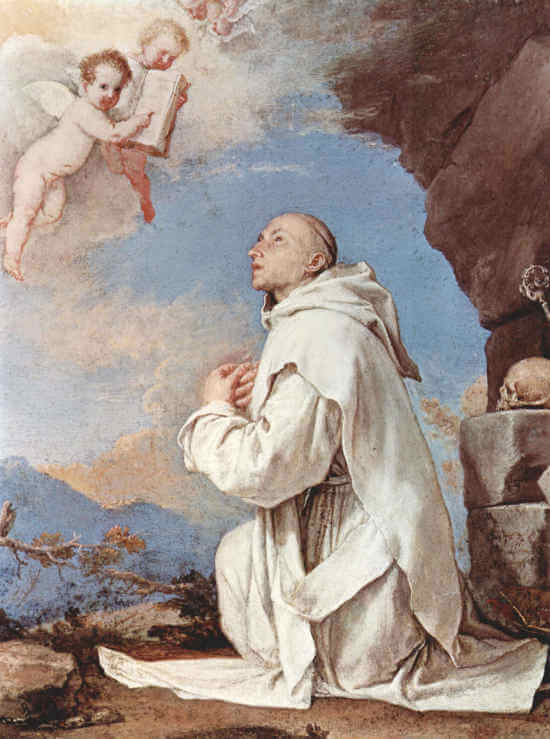
Not long afterward, Anthony was at Mass once again and heard the Gospel passage, “Do not worry about tomorrow; tomorrow will take care of itself” (Matthew 6:34). Again, he knew Jesus was speaking directly to him, so he gave away even the little he had saved back, entrusted his sister to the care of some holy women, and entered the desert to live a life of poverty, solitude, prayer, and mortification.

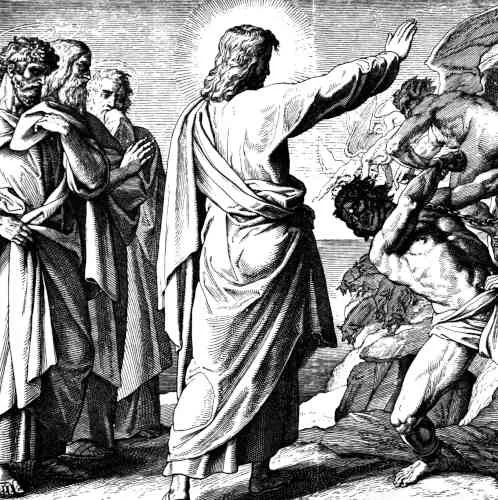
In that harsh desert landscape, the devil attacked him in countless ways. “Think about all the good you could have done with that money you gave away!” These were the words of the evil one, trying to deter Anthony from embracing his unique vocation as a hermit. Then the devil appeared to him in physical form and sent vile creatures to frighten him. Satan tempted Anthony with boredom, laziness, and even appeared as a female temptress to seduce him. Firm in prayer and mortification, Anthony fought off the devil and his manifestations. Though beaten senseless during these spiritual battles, he recovered in the care of some friends who visited him.

After spending fifteen years living in a desert cave once used as a tomb, Anthony retreated even deeper into solitude, spending another twenty years in self-imposed solitary confinement. He ate only bread that friends threw over the wall of the abandoned Roman fort he called home. He never opened his mouth to speak to anyone, for God called him to the unique life of complete solitude.

Eventually, Anthony’s holy example stirred up devotion and admiration in the hearts of others. Though they could not speak to him, many wanted to imitate him. They began to build huts nearby and imitate his vocation. Then, after twenty years of solitude, God directed Anthony to exit his fort and assist the other nearby hermits with their vocations. For the next five years, he instructed the new hermits on how to organize their lives.

Anthony then withdrew once again into seclusion for the last forty-five years of his very long life. However, this time he did accept visitors from time to time and even entered nearby cities to occasionally preach and teach. Most notably, he preached firmly against the rampant Arian heresy, directly opposed the emperor for persecuting Christians, and fearlessly offered himself up to be martyred. God did not grant his desire for martyrdom, however. Instead, Anthony lived to the ripe old age of 105. He made a powerful impact upon the lives of many by his radical obedience to God’s will, through his life devoted to prayer, his embrace of poverty, his courageous preaching against heresy, and his assistance to those daring to live as hermits. He was so influential that another heroic saint of that time, the bishop Saint Athanasius, wrote a biography of Saint Anthony, supplying much of what we know about him today.

Source: https://mycatholic.life/saints/saints-of-the-liturgical-year/january-17-st-antony-patriarch-of-monks/

Saint Anthony of Egypt, Abbot Read More »

Mark 2:16-17

A Sinner’s Gathering

Some scribes who were Pharisees saw that Jesus was eating with sinners and tax collectors and said to his disciples, “Why does he eat with tax collectors and sinners?” Jesus heard this and said to them, “Those who are well do not need a physician, but the sick do. I did not come to call the righteous but sinners.”

Reflection:

Today’s Gospel presents very good news: Jesus “did not come to call the righteous but sinners.” None of us is righteous; we are all sinners. From the divine perspective, each of us is in need of God’s mercy. Admitting this truth and embracing God’s mercy is often difficult for two reasons.

First, we might struggle to view our lives honestly through God’s eyes. This often stems from pride—the sin that gives us a false, elevated image of ourselves. Pride distorts reality, making it difficult to see our weaknesses. Secondly, we often fail to admit our sinfulness because we fail to recognize God’s mercy. If we did recognize and understand God’s infinite mercy, we would not fear to acknowledge our sins.

Imagine this: In an ancient kingdom, a person breaks the law, is arrested, and is brought before the king. Out of fear of punishment, the person might try to hide the truth or downplay the crime. But what if the king were perfectly merciful, only desiring the conversion of his subjects and not their punishment? The guilty person would have no reason to hide. Instead, he could admit his guilt, express sorrow, and resolve to change. In response, the king would not only forgive him but also offer everything necessary to help him begin anew.

This is our God. We do not need to fear being honest with ourselves or with Him. He is the Divine Physician, and we are the sick who need His healing touch. We need to see our sins clearly, confess them humbly, and rely on God’s mercy to change.

In today’s Gospel, Jesus calls the tax collector Levi—also known as Matthew—to follow Him. Levi was a Jew who cooperated with the Roman occupiers, burdening his fellow Jews with unjust taxes. He likely used fear and intimidation to extract more than was owed, enriching himself at their expense. As a result, Levi would have experienced deep guilt and the disdain of Jewish authorities, including the scribes and Pharisees.

Although we do not know the exact workings of Levi’s soul when Jesus called him, we do know his response: He left his customs post, changed his life, and followed Jesus. Levi then welcomed Jesus and His disciples into his home for a meal, where other tax collectors and sinners were present.

The fact that these sinners gathered at Levi’s table and shared a meal with Jesus reveals something extraordinary: They sensed His merciful heart. In Jesus’ presence, they did not feel condemned but loved. His gaze was one of healing, not judgment, inviting them to a new life. That meal was, in essence, a sinners’ gathering—souls who found in Jesus the freedom and hope to change.

The scribes and Pharisees, in contrast, represent more than judgmental attitudes. They symbolize the thoughts of guilt, shame, and unworthiness that often plague those who struggle with habitual sin. These inner voices can lead us to fear repentance, falsely believing that our sins are too great for God’s mercy. We must reject those voices and remember Jesus’ words: “Those who are well do not need a physician, but the sick do.”

Reflect today on the freedom that awaits those who discover Jesus as the Divine Physician who heals our wounds. If you allow guilt, shame, or fear to keep you from God’s mercy, then place yourself at that sinners’ meal with Jesus. Sin is a heavy burden to carry, but like Levi, we are invited to turn away from it with humble repentance. Let God forgive your past, heal your wounds, and lead you forward as His disciple.

Source: https://catholic-daily-reflections.com/2026/01/16/a-sinners-gathering/

Mark 2:16-17 Read More »

Pope Saint Marcellus I

Profile

Nothing of his life before the papacy has survived the centuries. He was a Pope at the end of the persecutions of Diocletian; the persecutions had so disrupted the Church that there had been a gap of over a year with no Pope. He was faced with reconstituting the clergy which had been decimated and whose remnant had practiced their vocation covertly and with the expectation of martyrdom. He worked to recover and welcome back those who had denied the faith to keep from being murdered.

When a group people apostatized before and during a period of persecution, they refused to do penance in order to return to the Church (they were known as the Lapsi), Marcellus refused to allow their return to the Church. This group had some political pull, and caused such civil disruption that Emperor Maxentius exiled the Pope in order to settle the matter. Legend says that Marcellus was forced to work as a stable slave as punishment, but this appears to be fiction. He was considered a martyr as he died of the terrible conditions he suffered in exile.

Papal Ascension

  • May-June 308

Died

  • 309
  • initially buried in the cemetery of Saint Priscilla in Rome, Italy
  • relics later translated to beneath the altar of San Marcello al Corso church in Rome where they remain today

Canonized

  • Pre-Congregation

Patronage

  • horses
  • stablemen
  • in Italy
    – Anversa degli Abruzzi
    – Montemarzo di Asti

Representation

  • pope with a donkey or horse nearby
  • pope standing in a stable

Source: https://catholicsaints.info/pope-saint-marcellus-i/

Pope Saint Marcellus I Read More »

Mark 2:9-11

Preaching, Forgiveness, and Miracles

“Which is easier, to say to the paralytic, ‘Your sins are forgiven,’ or to say, ‘Rise, pick up your mat and walk’? But that you may know that the Son of Man has authority to forgive sins on earth”—he said to the paralytic, “I say to you, rise, pick up your mat, and go home.”

Reflection:

In Mark’s Gospel, Jesus began His ministry in Capernaum. Shortly after calling His first Apostles, Jesus preached in the synagogue, leaving many amazed. After healing a demoniac and Peter’s mother-in-law, the whole town gathered at the house where Jesus was staying, and “He cured many who were sick with various diseases, and he drove out many demons, not permitting them to speak because they knew him” (Mark 1:34).

After this, Jesus withdrew to a deserted place to pray, despite the people’s growing fascination with His miracles. When the Apostles found Him, He revealed the essence of His mission: “Let us go on to the nearby villages that I may preach there also. For this purpose have I come” (Mark 1:38). From there, He and His Apostles traveled to other towns, fulfilling His primary mission: to preach the Good News of repentance and reconciliation with God.

In one of these towns, out of deep compassion, Jesus healed a leper. However, this miracle only intensified the people’s focus on His power to heal, overshadowing His preaching. When crowds pursued Him seeking miracles, He returned to Capernaum, which brings us to today’s Gospel.

In Capernaum, Jesus resumed His primary mission: “He preached the word to them” (Mark 2:2). Yet the people, who were focused more on His miraculous works, crowded around Him. As Jesus preached—likely in Peter’s house—some men arrived carrying a paralytic. They were unable to enter because of the crowd, so they climbed to the roof, opened it, and lowered the man down.

What happens next is profound: Jesus looks at the man and says, “Child, your sins are forgiven” (Mark 2:5). Jesus does not first address the man’s physical paralysis. Instead, He speaks to the man’s deeper need—his spiritual healing. Jesus recognized the faith of the paralytic and that of those who brought him and forgave the man’s sins. Why does Jesus do this? Because spiritual healing takes precedence over physical healing. Jesus’ primary mission was to call sinners to repentance and bring about reconciliation with God. Physical healing was always secondary.

When the scribes question Jesus’ authority to forgive sins, they fail to recognize that Jesus is not just a miracle worker—He is the Son of God. To teach them about His authority to forgive sins, Jesus says: “‘But that you may know that the Son of Man has authority to forgive sins on earth’—he said to the paralytic, ‘I say to you, rise, pick up your mat, and go home.’” The man did just that in full view of everyone, leaving the crowd astonished. The physical healing is a visible sign of Jesus’ invisible power to forgive sins. Hence, the miracle in today’s Gospel, which is of secondary importance, was performed to teach the people about Jesus’ primary mission.

In each of our lives, Jesus wants to fulfill His primary mission. He wants to forgive our sins and reconcile us with the Father and with Himself. First and foremost, this takes place through the powerful and transforming Sacrament of Reconciliation. It’s amazing that even though that Sacrament fulfills the essence of Jesus’ mission, many fail to take advantage of that grace, preferring instead to seek other favors from God of their own choosing.

Reflect today on your approach to the Sacrament of Reconciliation. Do you regularly bring your sins to Jesus in faith, allowing Him to heal and reconcile you to the Father? As you ponder today’s Gospel, place yourself in the shoes of the paralytic. See yourself as Jesus sees you—someone in need of His mercy and grace. Though He may grant us many blessings, the greatest gift He desires to bestow is the forgiveness of our sins. Yearn to hear His words echo in your heart in the Sacrament of Reconciliation: “Child, your sins are forgiven.”

Source: https://catholic-daily-reflections.com/2026/01/15/preaching-forgiveness-and-miracles/

Mark 2:9-11 Read More »

Saint John Calabytes

Profile

John was born wealthy. He ran away from home as a child, and became a monk at Gomon on the Bosphorus at age 12. When he finally returned home as a beggar at age 18, his family did not recognize him. However, they did recognize that he was a holy man, and the family allowed him to live as a hermit in a small hut (a calybe in Greek) near their front door. Only on his death were they were informed of his real identity. His story has led to his being a symbol of homelessness, and how we may not recognize the humanity in the poor and homeless in our midst.

Born

  • at Constantinople (modern Istanbul, Turkey)

Died

  • c.450 of natural causes

Representation

  • beggar with a Gospel in his hand
  • beggar revealing his identity to his parents on his death bed

Source: https://catholicsaints.info/saint-john-calabytes/

Saint John Calabytes Read More »

Mark 1:44

Messianic Secret

“See that you tell no one anything, but go, show yourself to the priest and offer for your cleansing what Moses prescribed; that will be proof for them.”

Reflection:

Miracles amaze and inspire us. For that reason, it is common for people of faith to pray for them. They are acts of God’s great mercy, but the miracles we pray for are not always part of God’s plan. In today’s Gospel, Jesus heals a leper who comes to Him, kneels down, and says, “If you wish, you can make me clean” (Mark 1:40). After that, Jesus’ Sacred Heart is moved with compassion, so He says to the leper, “I do will it. Be made clean” (Mark 1:41). Once healed, Jesus does something that might surprise us: He tells the man not to tell anyone about the healing. Why the secrecy?

This pattern of a divine manifestation of Jesus’ power, followed by His command not to publicize the experience, is often referred to as Jesus’ “Messianic Secret.” We see this invitation to secrecy especially throughout the Synoptic Gospels. For example, after Peter’s confession of Jesus as the Christ, Jesus “warned them not to tell anyone about him.” (Mark 8:30). Similarly, following the Transfiguration, He commands Peter, James, and John, “Do not tell the vision to anyone until the Son of Man has been raised from the dead” (Matthew 17:9). Even when Jesus silences demons who proclaim His identity, such as when they cry out, “You are the Son of God,” He “rebuked them and did not allow them to speak because they knew that he was the Messiah” (Luke 4:41).

This pattern of secrecy highlights an important truth: Jesus’ identity as the Messiah could not be fully understood apart from the Cross and the Resurrection. At this early stage in His ministry, publicizing His miracles risked distorting His mission, as many people expected a political or earthly Messiah. The fact that Jesus manifested His divine power at times led many to seek Him out for that power rather than for the real purpose of His mission. We must learn from this pattern and seek out Jesus for the right reasons.

The Messianic Secret reminds us that while miracles reveal God’s mercy and power, they are not ends in themselves. Rather, they point to the deeper truth of Christ’s mission. He came to reconcile humanity to the Father through His Passion, Death, and Resurrection. This truth calls us to embrace God’s will over our own preferences, humbly recognizing that God’s plan unfolds according to His ways and timing, not ours.

Do you desire miracles in your life? It’s understandable that when we encounter some heavy burden we might ask God to intervene and resolve the situation. God sometimes does so, but only when, in His wisdom, He sees that the answered prayer will bear the most important fruit He desires to bestow: the sanctification of our souls, leading to our salvation.

If we want to be followers of Christ, it’s important that we follow Him on His terms. The heart of the Gospel message is not, “Ask me for favors and I will grant them.” Rather, it is, “Repent, and believe in the Gospel.” Freedom from sin is more important than physical healings or resolutions to earthly issues. In fact, God often uses physical ailments and other crosses to deepen our trust in Him because they give us an opportunity to unite ourselves to His Passion. This leads to greater holiness and eternal blessings, rather than earthly and passing rewards.

Reflect today on the miracles you might be hoping for in your own life. Are you willing to trust in God’s wisdom and timing, even if His answer is not what you want? Rather than focusing solely on temporal favors, resolve to deepen your faith in Christ’s mission. Commit to embrace His will, especially in moments of suffering or uncertainty, knowing that God’s greatest desire is your salvation. Seek first His Kingdom, confident that His plan—whether through miracles, crosses, or quiet moments of grace—will always lead you to a deeper union with Him.

Source: https://catholic-daily-reflections.com/2026/01/14/messianic-secret/

Mark 1:44 Read More »

Saint Nino of Georgia

Profile

Nino was a Slave. She was not originally from Georgia and may have been brought there by her master when he emigrated. She may have been the spoils of war, or she may have fled her own war-racked homeland and become enslaved after her move to more peaceful Georgia.

Nino cured a dying child by placing her hair shirt on him, and praying over him. News of this miracle reached the Queen of Georgia, who was suffering an unspecified but untreatable malady. She sent for Nino who replied, “I am a slave. My place is not in a palace.” The Queen went to Nino, who cured her by prayer.

The royal family offered her any reward; she asked that they convert. The recently healed queen was willing, but King Mirian was not. However, soon after, while on a hunt, he found himself surrounded by wild animals. He made one of those well-known deals with God, offering to convert if he survived. The animals left, and in 325 the king asked Constantine for priests and bishops to spread the faith throughout Georgia.

This good work begun. Nino retired to live as a prayerful recluse on a mountainside at Bodbe Monastery,  Kakheti, Georgia.

Born

  • various sources place this as Cappadocia (most sources), Rome, Jerusalem, or Gaul (modern France)

Died

  • c.320 at Bodbe Monastery, Kakheti, Georgia of natural causes
  • buried in the Cathedral of Mtskheta, Georgia

Canonized

  • Pre-Congregation

Patronage

  • Congregation of the Sisters of Saint Christiana
  • Georgia
  • Azov region of Russia
  • Caspian region of Russia
  • Caucasus region of Russia

Representation

  • Georgian cross
  • grapevine cross

Source: https://catholicsaints.info/saint-nino-of-georgia/

Saint Nino of Georgia Read More »

Mark 1:35-39

The Priority of Prayer

Rising very early before dawn, he left and went off to a deserted place, where he prayed. Simon and those who were with him pursued him and on finding him said, “Everyone is looking for you.” He told them, “Let us go on to the nearby villages that I may preach there also. For this purpose have I come.” So he went into their synagogues, preaching and driving out demons throughout the whole of Galilee.

Reflection:

Jesus’ prayer was unique. He did not pray because He needed God in His life—He was and is God. Yet, in His human nature, He regularly withdrew to be alone and to pray to His Father. Jesus’ prayer teaches us two primary lessons.

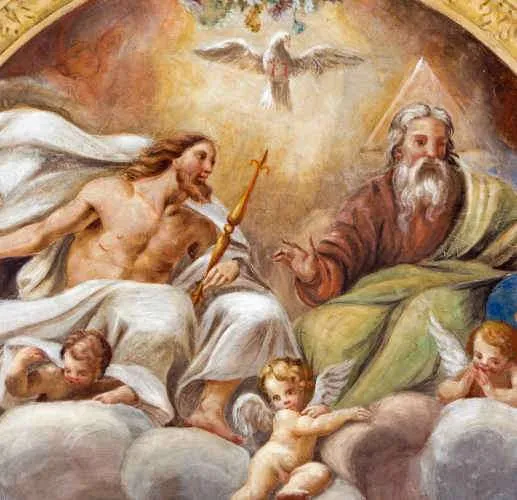
First, Jesus’ prayer reveals Who He is. He is the Second Person of the Most Holy Trinity. As a member of the Trinity, Jesus prayed in solitude, not to become closer to the Father, for He and the Father are eternally one in essence; rather, His prayer expressed and revealed that perfect union to us. Unity with and love of the Father are at the center of Who He is.

Though we are not God, we are made for oneness with God. This is not an external invitation but an essential part of who we are and who we must become. In Heaven, our lives will be one ongoing and eternal expression of prayer—a perfect union with God. That union must begin now, and the foundation of its growth is prayer.

By going off alone to pray to the Father, Jesus also models for us the way to the Father. His action is prophetic, calling us to set aside moments each day for nothing other than prayer. While we are called to pray continually throughout the day, this habit is nourished by intentional moments of silence in which we immerse ourselves in God’s presence. In our fallen nature, daily moments of focused prayer are necessary for clearing the distractions of life, overcoming sin, and allowing God’s grace to draw us into deeper union with Him.

Jesus’ prayer invites us to examine our own daily prayer life. How often do you pray each day? How do you pray? Does your prayer change you, transforming you into who God made you to be? Most people easily find time every day for less important things, such as entertainment, idle conversations, and daily work. Though these things have their place, they must never overshadow that which is most important. We must learn to pray and be faithful to prayer every day.

One of the best ways to pray is to participate in the Mass. In the Mass, we most fully share in Christ’s human life, sacrifice, and divine presence. The Mass is the summit of prayer and the foundation of our spiritual life. We receive Him into our lives as we consume His Body and Blood, Soul and Divinity. To participate in the Mass well, daily moments of prayer are essential. At times, we must silence every other thought and actively offer our praise to God. Meditation on the Word of God is also essential. Taking time to read the Gospel, in particular, and meditating on those passages disposes us to hear God’s voice. His Word counters the many lies and temptations we face during our daily activities, preparing us to live more fully as God’s sons and daughters.

Reflect today on your commitment to daily prayer by following Jesus’ example. Resolve to find a moment of solitude in which you silence your heart and simply dwell in God’s presence. Let this time of prayer become the cornerstone of your day and a foretaste of the union with God in Heaven for which you were created. Prayer is not an option; it is the very path to becoming who we are meant to be—united with God in love, now and for all eternity.

Source: https://catholic-daily-reflections.com/2026/01/13/the-priority-of-prayer/

Mark 1:35-39 Read More »

Saint Hilary of Poitiers, Bishop and Doctor

c. 315–367; Patron Saint of children academically behind, children learning to walk, mothers, and the sick; Invoked against rheumatism and snakebites; Pre-Congregation canonization; Proclaimed a Doctor of the Church in 1851 by Pope Pius IX

Born into a wealthy pagan family in Poitiers, France, Hilary was well educated in the classics. As he looked into his own soul, however, he knew that he did not exist for the sole purpose of seeking pleasure, enjoying leisure, obtaining wealth, or merely satisfying his fleshly desires. Hilary reasoned that the human soul did not exist simply to die. Instead, it must exist for something more, something eternal, something glorious. When his pagan culture did not suffice and philosophy fell short, Hilary finally found what he was searching for when he stumbled upon the Scriptures.

Hilary was first struck by the mysterious name of God in the Old Testament: “I AM WHO I AM.” God had revealed Himself as eternal, without beginning or end—Existence itself. Then Hilary discovered the Son of God in the Gospel of John 1:1–14. Of this discovery, Hilary said, “My soul measured the mighty workings of God, wrought on the scale of His eternal omnipotence . . .by a boundless faith . . .that God was in the beginning with God, and that the Word became flesh and dwelt among us . . .” (De Trinitate 1.12).

Hilary had the will to believe, and in the years that followed he was given the power and gift to understand the beauty, mystery, omnipotence, and nature of the Most Holy Trinity. Shortly after these discoveries of faith, Hilary was baptized a Christian and went on to defend the doctrine of the Trinity against the “insanity and ignorance of men.” He so impressed the faithful that they chose him to be their bishop, a dignity to which he reluctantly agreed.

Among those who shared in the “insanity and ignorance” of that time were a group of bishops and laity who followed the heresy of Arianism, which denied the divinity of Christ, instead holding that the Son was inferior to the Father. This heresy was especially strong in the Eastern Church but was starting to spread throughout France. After Hilary was a bishop for only about five years, the emperor, an Arian himself, ordered every bishop to pledge their support for this heresy. Hilary refused. Instead, he vigorously defended the truth, and for his brave stance was exiled to Phrygia, in modern-day Turkey. In His love and providence, God used Hilary’s time of exile in powerful ways.

While in Phrygia, Bishop Hilary spent much time studying and writing. He had already composed a marvelous commentary on the Gospel of Matthew while in Poitiers, and now he set his mind to his greatest work, De Trinitate (On the Trinity). Drawing from his classical education, his knowledge of Greek, his love of the Scriptures, and from the “insanity” and “ignorance” of Arianism itself, Bishop Hilary composed a comprehensive defense of the doctrine of the Trinity as it was taught in the Nicene Creed. Bishop Hilary caused so much trouble for the Arians in Phrygia that the Arian bishops pleaded with the emperor to send him back home, a request the emperor honored.

On his return to Poitiers, Bishop Hilary took the long way home through Greece and Italy, preaching all the way, weeding out the beginnings of Arianism in the Western Church. His effectiveness came not only from his clear teaching, but also from his conciliatory approach and resolute determination. Back in Poitiers, he continued to preach, write, attend councils, and even to compose hymns. The hymns were his way of introducing the doctrines of the faith to the people of God in song. He was a true pastor who burned with a desire that everyone come to a deeper knowledge of the One God—Father, Son, and Holy Spirit.

Source: https://mycatholic.life/saints/saints-of-the-liturgical-year/january-13-saint-hilary-of-poitiers-bishop-and-doctor/

Saint Hilary of Poitiers, Bishop and Doctor Read More »

Mark 1:21-22

The Author and Teacher

Jesus came to Capernaum with his followers, and on the sabbath he entered the synagogue and taught. The people were astonished at his teaching, for he taught them as one having authority and not as the scribes.

Reflection:

Imagine attending a book study for a profound and challenging book. The group leader has read it thoroughly and consulted reviews; he shares various interpretations, offering valuable insights. You leave with a deeper understanding and gratitude for the leader’s guidance. Now imagine years later you attend another study on the same book, but this time the author leads it. The author alone can speak with absolute authority—explaining the backstory, the intent behind the words, and the true meaning of the text. Nothing compares to hearing from the one who wrote the book.

Jesus, as the eternal Son of God, is not just a teacher of Truth, but is its Co-Author, together with the Father and the Holy Spirit. From the beginning of time, God’s Truth—His Eternal Word—has been gradually revealed through creation, the covenants, the Law, and the prophets. Yet only the Word Made Flesh could reveal Himself fully.

When Jesus entered the synagogue in Capernaum, His teaching astonished the people. The scribes, though learned and revered, taught by relying on the traditions of their ancestors and the interpretations of others. Jesus, however, spoke with divine authority. His words were not secondhand interpretations but the living, authoritative proclamation of Truth. Those who were open to faith recognized something far greater than human wisdom; they encountered the very voice of God.

The people’s astonishment reveals the transformative nature of the Word of God. Jesus did not merely interpret the Scriptures for the people; He fulfilled them and identified Himself with them. As the Author of all Truth, His words—and His very Person—carried the power to liberate and transform. This power was immediately demonstrated when He cast out the unclean spirit in the verses that follow, revealing that His word does not simply teach—it acts, healing and restoring those in bondage.

The question of Truth remains as relevant today as it was when Jesus walked the earth. In a world flooded with opinions, interpretations, and ideologies, only one thing ultimately matters: that which God speaks. We desperately need Christ’s authoritative voice in our lives today. We need Him to cut through the confusion caused by our fallen and disordered human nature and the countless erroneous ideologies that permeate our world.

Reflect today on whether you recognize the Voice of God. Are you familiar with His definitive and authoritative Word that sheds light on your life and the world around you? Do you allow yourself to be regularly astounded by God’s revelation? As we begin Ordinary Time, we enter a season during which we must hear and internalize Jesus’ many authoritative teachings during His public ministry. When properly encountered, His Word is alive and transformative. Place yourself in the synagogue in Capernaum as Jesus begins to reveal the Truth established from the foundation of the world. Allow that Truth to affect you, change you, and set you on the path that leads to eternal glory.

Source: https://catholic-daily-reflections.com/2026/01/12/the-author-and-teacher/

Mark 1:21-22 Read More »