2026

Epiphany of the Lord

All of God’s creation gives Him glory and praises Him by its very existence. Psalm 143 states, “Praise him, sun and moon; praise him, all shining stars. Praise him, highest heavens, you waters above the heavens. Let them all praise the LORD’s name; for he commanded and they were created…” Though creation gives praise to God simply by existing and thus, revealing its Creator, today’s solemnity commemorates the one moment in time when God used a star to manifest His eternal glory.

At the time of Jesus’ birth, it was commonly believed that a new star would appear whenever a new ruler was born. The Father in Heaven used this belief to honor His Son Who was born as the new King. The three Magi from the East were astrologers. When they saw this “new star,” they chose to follow it to discover the new King. Creation itself, in the form of a star, pointed the way, thus giving glory to the newborn King, manifesting Him to the whole world as symbolized by the Magi.

The word “Epiphany” means “manifestation.” Therefore, as we honor this moment in time when the Christ Child was made manifest to the world, we need to look into our own hearts. There, we discover Christ’s ongoing manifestation to us so that we can worship Him Who has also chosen to be born within our hearts. We must diligently seek out that manifestation of God within us and respond to it in the same ways that the Magi responded.

First of all, the Magi were determined. When they saw a sign from the heavens that pointed to a new King, they stopped everything and departed in haste to find Him. When God speaks to you and manifests Himself to you in some way, nothing could be more important than to be attentive to His voice and follow His manifestation with the same haste.

The Magi brought the Christ Child gifts of gold, frankincense, and myrrh. God was honored and glorified through His creation by the giving of these gifts. God created gold to manifest His beauty and dignity. It was a gift that symbolized kingship. When we ponder the natural gift of gold given to the Christ Child, we are inspired to give Him our own gift of symbolic gold by prayerfully acknowledging Him as our own King to whom we pledge our complete submission.

Made from the sap of trees found in India, northeastern Africa, and the Arabian peninsula, frankincense and myrrh are also fruits of God’s creation. Used in worship to symbolize prayers rising to heaven, frankincense symbolizes the Christ Child’s divinity. We offer frankincense to Christ when we acknowledge His divine nature, since He is God in the flesh. Often used in burial, myrrh honors the Christ Child Who came to give His life as a sacrifice for many. We offer myrrh to profess our belief in the saving power of Christ’s death on the Cross and our need for that gift of salvation.

As we celebrate the Solemnity of the Epiphany, try to see it as a historical event in which you are invited to share. God wants to manifest Himself to you today. When this happens, you must respond with faith and worship, giving God the greatest glory by giving Him your very life and offering Him your spiritual gifts of gold, frankincense, and myrrh.

Source: https://mycatholic.life/saints/saints-of-the-liturgical-year/january-6-epiphany/

Epiphany of the Lord Read More »

Matthew 2:1-3

The Star of Bethlehem

When Jesus was born in Bethlehem of Judea, in the days of King Herod, behold, magi from the east arrived in Jerusalem, saying, “Where is the newborn king of the Jews? We saw his star at its rising and have come to do him homage.” When King Herod heard this, he was greatly troubled, and all Jerusalem with him.

Reflection:

Why did God use a star to reveal the birth of the King of Kings to foreigners from the East? To Mary, Joseph, and even the shepherds, God sent an angel to announce the Good News. But to the Magi, He chose to use a medium they understood—a star.

The Magi, originally a priestly caste from Persia, were skilled in astrology, astronomy, dream interpretation, and other forms of wisdom and divination. The three Magi mentioned in Matthew’s Gospel were clearly experts in astrology, carefully studying the night sky. On the night of Christ’s birth, they made an extraordinary discovery: a new star had appeared in the sky. They knew it was a sign of great significance. According to their beliefs, the appearance of a new star heralded the birth of a new king.

This star was not just a celestial phenomenon; it symbolized the light of Christ breaking into the world, guiding all nations—Jew and Gentile alike—toward the Savior. Just as God drew humble Jewish shepherds to the newborn King, He also drew representatives of the Gentiles to adore Him, for Jesus came to save all of humanity.

The divine initiative to include the Gentiles was not a new concept but a fulfillment of a promise made to Abraham: “All the families of the earth will find blessing in you” (Genesis 12:3). The prophets and Psalms echo this theme, emphasizing that all nations will come to the Lord (see Isaiah 2:2-4; Psalm 67). In Jesus’ public ministry, we see His outreach to the Gentiles, a mission that continued in the early Church, as recorded in the Acts of the Apostles. At the time of Jesus’ birth, however, the Jewish emphasis was primarily on being the chosen people. The story of the Epiphany reveals God’s universal call to holiness from the very beginning of Jesus’ life, establishing that His mission was for all people, not just for Israel.

Because of this universal call to holiness, we who believe in Christ and live our Catholic faith must avoid becoming isolated or insular, creating a small, self-contained world. Instead, we are called to live our faith in a way that is welcoming to all and engaged with the broader world, reflecting the universal mission of the Church. Being Catholic is not merely a cultural heritage; it is the spiritual means of eternal salvation that everyone needs. The word “epiphany” means “manifestation,” and Christ must be made manifest to all, becoming the King of every soul.

As we celebrate the Epiphany, be open to the ways God might want to use you to share the light of faith with those who are not yet faithful Catholics. We must be like the star of Bethlehem, drawing others to Christ in ways they can understand and accept. This is best accomplished when we place ourselves at God’s service, ready to be used as instruments of His grace. God alone knows how to draw all people to Himself, and when we offer ourselves to His service, He will inspire us and use us to be that shining light, guiding others out of darkness and into His marvelous light.

Source: https://catholic-daily-reflections.com/2026/01/03/the-star-of-bethlehem/

Matthew 2:1-3 Read More »

The Most Holy Name of Jesus

Everything about our divine Lord is holy, including His Name. It was the Archangel Gabriel who first spoke the name of Jesus to His mother, “Behold, you will conceive in your womb and bear a son, and you shall name him Jesus” (Luke 1:31). The Archangel was only a messenger, so the name of Jesus was given to Him by the Father in Heaven.

Saint Peter was one of the first Apostles to speak with authority in the Holy Name of Jesus when he healed a crippled man saying, “I have neither silver nor gold, but what I do have I give you: in the name of Jesus Christ the Nazorean, rise and walk” (Acts 3:6). Saint Paul also exalted the holy name of Jesus when he said, “…at the name of Jesus every knee should bend, of those in heaven and on earth and under the earth, and every tongue confess that Jesus Christ is Lord, to the glory of God the Father” (Philippians 2:9–10). Saint Paul preached with power in the name of Jesus so often that even some itinerant Jewish exorcists tried to imitate him by commanding demons, “I adjure you by the Jesus whom Paul preaches” (Acts 19:13). 

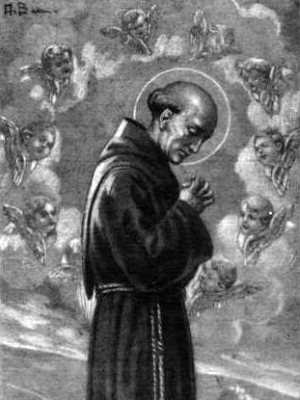
Throughout the history of the Church, Jesus’ name has been invoked as an instrument of personal faith in the Son of God, especially to command demons or simply to pray to Jesus in a repetitive and personal way. The liturgical Feast of the Most Holy Name of Jesus has been celebrated by the Church for many centuries, especially within various religious orders. In the fifteenth century, Saint Bernardine of Siena, a Franciscan friar, went on a preaching mission promoting devotion to the Most Holy Name. He encouraged people to revere Jesus’ name by placing the first three Greek letters of His name on their doors: IHS. Today, this Greek monogram of Jesus’ name is commonly seen in churches on tabernacles, altars, and in stained glass windows. In the sixteenth century, Saint Ignatius of Loyola had such a strong devotion to the Most Holy Name of Jesus that he adopted it as his seal as general of his newly founded order of the Jesuits; that monogram remains the Jesuits’ official seal today.

There is great power in the spoken name of Jesus. Repeating His name prayerfully or speaking it aloud brings Him close and gives you strength, provided you recite His name in faith. The name of Jesus casts out fear, arouses trust, and unites your heart to His. Sadly, the Most Holy Name of Jesus is so holy that the evil one often tempts people to invoke it as a curse when angry, without even considering what they are doing.

As we celebrate this holy memorial today, ponder the prayer below that is attributed to Saint Bernardine of Sienna, the Franciscan who spoke so fervently of Jesus’ name. Also, take time to close your eyes and prayerfully repeat His name over and over. As you go about your day, anytime you feel anxious or fearful, speak the name of Jesus. Know and believe that the divine name of our Lord brings Him close to you and bestows His grace in abundance.

Source: https://mycatholic.life/saints/saints-of-the-liturgical-year/january-3-the-most-holy-name-of-jesus/

The Most Holy Name of Jesus Read More »

John 1:29-31

Behold Him with Wonder and Awe

John the Baptist saw Jesus coming toward him and said, “Behold, the Lamb of God, who takes away the sin of the world. He is the one of whom I said, ‘A man is coming after me who ranks ahead of me because he existed before me.’ I did not know him, but the reason why I came baptizing with water was that he might be made known to Israel.”

Reflection:

Though John grew up in the hill country of Judea near Jerusalem and Jesus grew up in Nazareth, it is very likely that their families visited each other regularly, allowing John and Jesus to spend time together as cousins. Despite this, when John first saw His cousin coming to him in the wilderness, he said, “I did not know him.” John did not fully understand who Jesus was—that He was the Messiah, the Lamb of God who takes away the sin of the world—until John began his public ministry and witnessed the Holy Spirit descending upon his Lord, his cousin.

What an awe-inspiring and joyous moment that must have been for John. He had discerned that his mission was to prepare the way for the Messiah, to be the Messiah’s immediate precursor, preparing the way for Him. He embraced that mission and fulfilled it by preaching and offering a baptism of repentance to those who believed. He lived in the wilderness, fasting, praying, and anticipating the day the Messiah would arrive. Imagine his surprise and delight at that moment when he saw the Holy Spirit descend upon his cousin.

Though the Holy Spirit descended upon Jesus in a singularly unique way, since He is the Second Person of the Holy Trinity, John’s experience offers us an invitation to remain vigilant as we await Jesus’ ongoing coming among us. Though our Lord came and walked the Earth 2,000 years ago, He continues to do so today through His Body, the Church. Like John, we must be on the lookout, and when we see Him, we must cry out in faith, “Behold the Lamb of God!”

The most important way our Lord comes to us is within the Mass. The priest repeats John the Baptist’s familiar words as he holds up our Lord, hidden within the Sacred Host, for all to see. Additionally, our Lord comes to us as the Holy Spirit descends and makes Him known. This happens in sermons, reflections, Church teachings, within the charity of others’ actions, through personal prayer, and in numerous other ways. We must see the Lamb of God every time He comes to us, ideally with the same wonder and awe that filled John’s mind and heart during those first encounters.

Reflect today on those sacred words with which we are very familiar: “Behold the Lamb of God…” As you do, ponder how often you personally “behold” Him. Are you filled with wonder and awe at Mass? Within your daily prayer? In the life of the Church and in the lives of faithful Christians you encounter? As we continue our Christmas season, which focuses on the Incarnation, make the words of the Baptist your own as you discover the ongoing presence of our Lord made possible through the Incarnation.

Source: https://catholic-daily-reflections.com/2026/01/02/behold-him-with-wonder-and-awe/

John 1:29-31 Read More »

Saints Basil the Great and Gregory Nazianzen, Bishops and Doctors

St. Basil: 329–379; Patron Saint of monks, hospital administrators, reformers, and Russia

St. Gregory: c. 329–389; Patron Saint of harvests and poets; Pre-Congregation canonizations

Saints Basil the Great and Gregory of Nazianzen were among the most devoted defenders of the faith in the fourth century. Both were bishops and both are now saints and doctors of the Church. These two men met while studying in Caesarea Cappadocia and strengthened their tight friendship in Athens. After Basil’s death, Gregory wrote of their bond, “We seemed to have one soul, inhabiting two bodies” (Orationes of Saint Gregory 43:20).

Both saints came from families of saints. Basil’s maternal grandmother was a martyr; his paternal grandmother, his parents, and three of his siblings are also saints. Gregory’s father was converted to Catholicism by his wife. After his conversion, he was ordained a priest and then consecrated as Bishop of Nazianzen. He served as bishop for about forty-five years, living into his nineties. These saintly parents had three children, all of whom became saints.

At the time that Saints Gregory and Basil lived, the Church, the body of Christ, was suffering from the pandemic of Arianism, a heresy that denied the divinity of Christ. This heresy was like a disease infecting the Church. Arianism entered the bloodstream of Christ’s body and weakened every limb and muscle, causing convulsions, violent outbursts, and deep divisions among both bishops and the faithful. The clear teaching and brave episcopal leadership of Saints Basil and Gregory helped the Church to heal, to eradicate this heresy, and to restore unity of faith in the East. But not all warmly welcomed their efforts. They both suffered greatly. From the emperor, many bishops, and other clergy and laity, they received many abuses, calumnies, physical attacks, and threats. Through it all, they remained faithful to their preaching and calm and focused in their resolve, restoring a deeper and more ancient unity to Christ’s faithful. Today, their voluminous writings are among the most inspiring, insightful, and convincing teachings of the early Church, particularly as they pertain to Christ’s divinity and the Most Holy Trinity.

These two men did not become saints simply because they were smart. They were also holy. And their holiness came from a life of deep prayer. After they both received an excellent education at the finest universities, they mutually sought to live as hermits, with Basil leading the way by forming what would become the model for monasticism in the East. They both spent years in solitude and prayer at different stages of their lives. Their interior communion with God through prayer, more than anything else, prepared them for their common mission.

Consider following the example of these two great saints by turning to God in prayer. Though you might not be called to become a hermit, you can certainly set aside time every day to focus on a deeper life of prayer. As you do, you will discover God calling you to approach Him more closely, and then entrusting you with some greater mission to be accomplished for His glory.

Source: https://mycatholic.life/saints/saints-of-the-liturgical-year/2-january-saints-basil-the-great-and-gregory-nazianzen-bishops-and-doctors-memorial/

Saints Basil the Great and Gregory Nazianzen, Bishops and Doctors Read More »

John 1:26-28

Humility Prepares the Way

“I baptize with water; but there is one among you whom you do not recognize, the one who is coming after me, whose sandal strap I am not worthy to untie.” This happened in Bethany across the Jordan, where John was baptizing.

Reflection:

Though John the Baptist prepared the people of Israel for the beginning of Jesus’ ministry, he also prepares us to receive the fruit of that ministry and mission. One way he does this is by revealing the identity of the Messiah with great clarity.

Of John, Jesus said, “Among those born of women there has been none greater than John the Baptist; yet the least in the kingdom of heaven is greater than he” (Matthew 11:11). This is high praise! One of the most important qualities that made John so great was his humility. It was his humility that enabled him to turn the attention of his followers away from himself and toward the Messiah.

During this transitional period between the octave of Christmas and Ordinary Time, we are invited to anticipate all that this newborn King came to do in our lives. He came to set us free from all sin so that we can enter into union with Him. One of the best ways to embrace our Lord’s mission is to understand who He is—His identity and mission.

With John, we are invited to acknowledge the unfathomable glory of the Messiah. With John, we must profess that we are not worthy even to untie His sandal strap. In the cultural context, that function was delegated to the lowest servant in a household, who untied the master’s sandals upon his return home and washed his feet. If we understand who Jesus is in relation to us, we will believe and profess that we are not worthy even to be His lowliest servant. This is the truth: in regard to worthiness, we have none in the presence of the Messiah.

Once we understand and believe this truth, we will be better prepared to embrace the even more glorious truth that our King, Master, and Messiah has chosen to stoop down to wash our feet and serve us by laying down His life for our eternal salvation. He takes all our sins upon Himself and suffers their consequences, death on a cross.

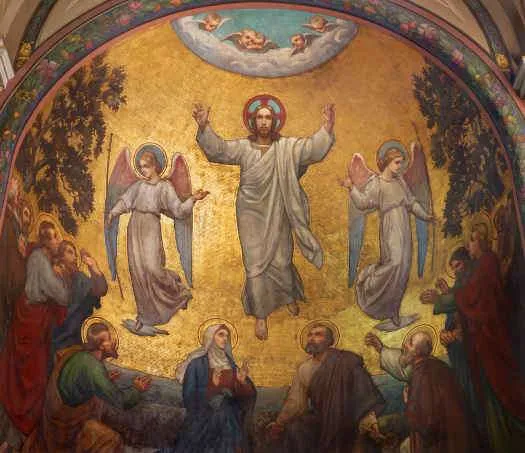
Without imitating and participating in John’s humility, we cannot experience the depth of gratitude that we must have for Jesus’ life and mission. Acknowledging our complete unworthiness with John is not demeaning, nor does it make us any more unworthy. Instead, this act of true humility prepares us for the gift that began with the Incarnation and culminated in the Ascension into Heaven.

Reflect today on the humble truth of your complete unworthiness before the life and mission of the Messiah. Ponder John the Baptist as your model. Look at Jesus as John looked at Him, and believe what John believed. As you do, allow that realization to fill you with gratitude as you ponder God’s choice to meet you in that lowly state so as to serve you with the gift of His very life.

Source: https://catholic-daily-reflections.com/2026/01/01/humility-prepares-the-way/

John 1:26-28 Read More »

Solemnity of Mary, Mother of God

Holy Day of Obligation

Only a mother could begin to understand the great mystery and beauty of motherhood. But only one mother could begin to understand the unfathomable beauty of being the mother of the Son of God. After the birth of Jesus, the shepherds came to adore her Child and recounted how a multitude of heavenly hosts appeared to them, revealing that Mary’s Child was the Messiah. As Mary heard those words, she pondered them, reflected upon them, and kept them in her heart. This was but the first time we are told of Mary’s pondering heart after the birth of her Son, but we can be certain that she pondered Him over and over, entering ever more deeply into the mystery of her motherhood of the Son of God.

As the Mother of God, Mary’s prayerful pondering was beyond our comprehension. The bond she shared with her divine Son far surpassed a mere human bond. Jesus was not only her Son, He was also her Savior. Therefore, she adored Him as a mother loves her child, but also as a servant worships her God. The relationship between this unique mother and Son is infinitely awe-inspiring.

Our Blessed Mother is given the unique title of “Mother of God” first and foremost to express our faith in the divinity of Jesus. Jesus was both human and divine, but in Him these two natures were perfectly united. Therefore, one cannot say that Mary was only the mother of the humanity of Jesus, she was the mother of the Person. And that one Person was, at the same time, God and man.

Recall that once Jesus began His public ministry and was teaching, there was a woman in the crowd who cried out, “Blessed is the womb that carried you and the breasts at which you nursed.” Jesus corrected her by saying, “Rather, blessed are those who hear the word of God and observe it” (Luke 11:27). At first read, one could conclude that Jesus was downplaying the role of His own mother, but He was actually doing the opposite. Jesus was actually highlighting the most unifying aspect of His relationship with His mother. Mary was not His mother only in a biological sense. She wasn’t blessed only because she bore Him in her womb. Rather, her deepest union with her divine Son came from her spiritual union with His will and that of the Father in Heaven. She said, “Behold, I am the handmaid of the Lord. May it be done to me according to your word” (Luke 1:38). She heard the word of God and observed it perfectly. She did that at the Annunciation, she continued to do so as she raised her Child, and she did it most perfectly as she stood before the Cross, offering her dying Son to the Father for the salvation of the world. Mary’s motherhood was one that encompassed her whole being. It was one that united her to her Son in ways we will never fully comprehend.

Mary is the Mother of God and, therefore, is the mother of all of God’s children, including you. Honor and love your heavenly mother today and rejoice as you reflect upon this glorious queen and holy mother. As we celebrate this greatest saint in the history of the world, ponder the ponderer. Ponder her love for her Son. Ponder her obedience to His divine will. Ponder Him as her Savior. Ponder every human and divine aspect of their loving relationship. 

Source: https://mycatholic.life/saints/saints-of-the-liturgical-year/january-1—octave-day-of-christmas-solemnity-of-mary-mother-of-god/

Solemnity of Mary, Mother of God Read More »

Luke 2:16-19

The Overflowing Heart of the Mother of God

The shepherds went in haste to Bethlehem and found Mary and Joseph, and the infant lying in the manger. When they saw this, they made known the message that had been told them about this child. All who heard it were amazed by what had been told them by the shepherds. And Mary kept all these things, reflecting on them in her heart. 

Reflection:

At the birth of Christ, the Blessed Mother’s Immaculate Heart was full of love and grace, so full that it overflowed in superabundance. Her human heart could not contain all that consumed it. Seeing her Child, having Saint Joseph near, and being accompanied by God’s creatures within that sacred cave near Bethlehem was all that she needed for her complete fulfillment. But God gave her even more.

As that holy night unfolded, an angel of the Lord appeared to the poor shepherds tending their flocks in the fields. The angel announced “good news of great joy that will be for all the people” (Luke 2:10). The angel went on to declare, “Today in the city of David a savior has been born for you who is Messiah and Lord. And this will be a sign for you: you will find an infant wrapped in swaddling clothes and lying in a manger” (Luke 2:11–12). Then, a multitude of heavenly hosts appeared, glorifying God with their song of praise.

Such an experience compelled these lowly shepherds to immediately seek out this newborn Messiah. When they found Him, they revealed to our Blessed Mother and Saint Joseph what the angel had said to them, and “Mary kept all these things, reflecting on them in her heart” (Luke 2:19). It is this Immaculate Heart and the motherhood of the Blessed Virgin Mary that we celebrate today.

Because Mary’s Immaculate Heart was overflowing with love and grace, these humble shepherds gave her the opportunity to share that love and grace. While they blessed her and Saint Joseph by their presence and adoration, she blessed them even more by being an instrument and mediatrix of God’s love through her newborn Son.

Mary was not only the mother of the flesh of her Son, but the mother of the Person Who is the Son of God. For this reason, the Church, in Her wisdom, has ascribed to her the title, “Mother of God.” Jesus was her Son, and Jesus is God. Therefore, she is rightly honored as the Mother of God.

As the Mother of God, Mary’s Immaculate Heart continues to overflow with love and grace. Just as she did with the shepherds on that first Christmas night, her heart continues to pour forth all that it contains upon us, her spiritual sons and daughters. The extent to which we are members of Christ’s Body, the Church, is the extent to which the Blessed Mother’s motherhood is active in our lives, just as it was in the life of her Son and as it touched the lives of the shepherds.

Reflect today on this glorious title given to Jesus’ mother—the Mother of God. As you do, ponder the role she plays in your life and in the life of the entire Church. By giving birth to the Messiah, the Son of God, she gave birth to the Church, becoming mother and mediatrix to us all. Seek her intercession, mediation, and motherhood, knowing that doing so not only honors her Son, but also cooperates with His divine plan of salvation.

Source: https://catholic-daily-reflections.com/2025/12/31/the-overflowing-heart-of-the-mother-of-god/

Luke 2:16-19 Read More »