2026

Luke 5:12

A Model of Prayer

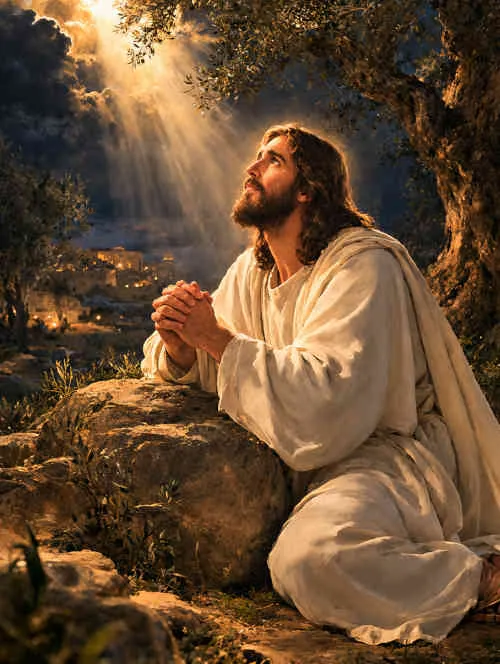
It happened that there was a man full of leprosy in one of the towns where Jesus was; and when he saw Jesus, he fell prostrate, pleaded with him, and said, “Lord, if you wish, you can make me clean.”

Reflection:

What a perfect prayer! This leper, likely shunned by the townspeople, including his own family, had been reduced to a life of isolation and rejection. Some might have pitied him, but out of fear of contracting his dread disease, they kept their distance. The emotional and social isolation he endured would have been even more painful than the physical suffering caused by leprosy.

This miracle takes place shortly after the people in Jesus’ hometown of Nazareth rejected Him. The Nazarenes’ rejection stemmed from a sense of entitlement; they saw themselves as God’s chosen people and thus believed they were entitled to His grace and blessings. When Jesus confronted their false beliefs, they became hostile and even attempted to kill Him. As a result, He left Nazareth and continued His ministry in Capernaum and other towns.

Jesus did not perform miracles to impress others or to win their esteem. Instead, He performed miracles for those who already exhibited deep faith. The miracles were not only intended to reveal His identity but were primarily acts of love meant to invite the faithful to believe more deeply. This leper is a perfect example of such faith.

First, the man approached Jesus and “fell prostrate” before Him. In doing so, he professed his faith in Jesus as the Messiah. This act of faith was enough to open the floodgates of God’s blessings. The leper believed and worshiped first, and because of this, God’s grace was poured out upon him. Too often, we seek blessings first, as if we are entitled to anything from God. We might say, “Please do me this favor, Lord, and then I will believe.” But that is not how it works. Jesus is God and must be treated as such. Whether we are blessed or not, whether we suffer or not, we must worship God because He is God. This leper understood that.

The leper’s prayer for healing is also a model of humility and trust. He did not directly ask Jesus to heal him. Instead, he professed his faith in Jesus’ ability to heal, saying, “Lord, if you wish, you can make me clean.” This expression of faith unlocked the tender compassion of our Lord, who responded, “I do will it. Be made clean.”

When you pray, do you tell God what He should do for you? Do you present Him with a list of your ideas and expectations? If so, try setting those aside. Begin your prayer by worshiping God simply because He is God. When it comes to your needs, place them before Him with trust, but avoid telling God what to do. God knows what is best for you. Presenting your needs to Him should not be a plea for Him to fulfill your will; rather, it should be an act of trust, believing that He will do what is best according to His will. We must desire nothing other than that.

Reflect today on the example of this leper. Though the disease of leprosy is a dreadful affliction, the leper’s model of prayer is truly admirable. Consider whether you follow his example. Love, worship, and profess your faith in God, and then entrust yourself to His providential care, ready to embrace His will no matter what it may be. This form of holy detachment will unleash God’s mercy and provide you with what you need most—God’s will.

Source: https://catholic-daily-reflections.com/2026/01/08/a-model-of-prayer/

Luke 5:12 Read More »

Saint Elizabeth Ann Seton, Religious

1774–1821; Patron Saint of Catholic schools, widows, loss of parents and children, and people ridiculed for their piety; Invoked against in-law problems and those who oppose the Church; Canonized by Pope Paul VI on September 14, 1975

Saint Elizabeth Ann Seton was the first citizen of the United States to be canonized a saint. She was born in New York into a prestigious and loving Anglican family of strong faith just two years before the Declaration of Independence was written. Her father was a well-respected physician. Unfortunately, her mother died when Elizabeth was only three. One of her sisters would die a year later. Her father remarried shortly after, and he and his new wife had seven children. Elizabeth was very fond of her stepmother and often accompanied her on charitable rounds caring for the poor. Sadly, when her stepmother and her father eventually separated, Elizabeth’s stepmother abandoned her, leaving young Elizabeth without a mother once again.

After a materially comfortable but difficult childhood, Elizabeth entered into a beautiful marriage at the age of nineteen with a wealthy shipping magnate named William Seton, with whom she had five children. While Elizabeth was pregnant with their third child, her father-in-law died, so the couple took William’s six younger siblings into their home to care for them. Soon after, a shocking event occurred. William’s business went bankrupt and the entire family had to abandon their home and move in with Elizabeth’s father who died shortly afterward in 1801.

By 1803, William was suffering from tuberculosis. At the recommendation of a physician, Elizabeth, her husband, and their eldest daughter spent their last bit of money to travel to the warmer climate of Italy to see if William could regain his health. Shortly after their arrival, William died. Elizabeth, only twenty-nine years old, was now fatherless, twice motherless, widowed, in a foreign land, and far from four of her children, for whom she had no way to provide.

When one has faith, heavy crosses can elicit much grace, which is what happened to Elizabeth. A month before her beloved William died, Elizabeth wrote in a journal, “Oh well may I love God—well may my whole soul strive to please him, for what but the strain of an Angel can ever express what he has done and is constantly doing for me—While I live—while I have my being in Time and thro’ Eternity let me sing praises to my God.” She was not bitter or resentful; instead, she praised God for all the good He had done for her.

While in Italy, before returning to New York to be reunited with the rest of her children, Elizabeth stayed with a devout Catholic family whose father had been a business partner of her husband. Through their inspiration and example, Elizabeth began to discover the Catholic faith. She visited many churches, discovered the Memorare prayer to the Virgin Mary, experienced the Sacred Liturgy, inquired about Christ’s Real Presence in the Eucharist, and began to understand the Church’s unbroken Apostolic succession.

When she arrived back in New York the following summer, her sister-in-law and closest friend, Rebecca, also died. Though heartbroken, Elizabeth strengthened her faith, deepened her devotion to our Blessed Mother, and continued seeking the will of God. When family and friends learned of her interest in Catholicism, she was shunned. Despite personally experiencing the anti-Catholicism so rampant in that era, Elizabeth persevered and entered the Church the following Ash Wednesday.

The journey that God had in mind for Elizabeth from that point forward would turn out to be monumental. She became a teacher in New York, but when word of her conversion to Catholicism spread, the Episcopalian parents whose children she taught withdrew them. Eventually, in 1809 at the invitation of the Sulpician Order, she moved to Maryland where she founded a congregation of sisters and started the first Catholic grade school in America. The school offered a free education to poor girls. Elizabeth was elected superior of the congregation and was henceforth called “Mother Seton.” Her daughters were able to live with her and continue their education at the school, and her sons lived and were educated at the nearby boys’ school. She remained superior until her death at the age of forty-six. She continued her childhood love of caring for the poor and inspiring many others to do the same.

Mother Seton faced many challenges in life, but she faced them with faith, with the tenderness of her personality, and with affection, determination, and concern for the poor and outcasts. She was a woman of great personal faith who discovered the true objective faith in the Catholic Church. For these and many other reasons, this poor woman became rich in eternity, while also enriching the lives of many others along the way.

Source: https://mycatholic.life/saints/saints-of-the-liturgical-year/january-4-saint-elizabeth-ann-seton-religious-usa-memorial/

Saint Elizabeth Ann Seton, Religious Read More »

Luke 4:14-15

God’s Perfect Timing

Jesus returned to Galilee in the power of the Spirit, and news of him spread throughout the whole region. He taught in their synagogues and was praised by all. 

Reflection:

This passage from Luke’s Gospel takes place immediately after Jesus was baptized by John and spent forty days in the desert, enduring and overcoming the temptations of the evil one. He returned to Galilee “in the power of the Spirit.” Although Luke had not yet recorded any of Jesus’ miracles, it becomes clear later in the chapter that Jesus had already performed some in Capernaum, and “news of him spread throughout the whole region.”

What was it that caught the attention of so many people? In addition to the word spreading about His miracles, it’s likely that the aura of sanctity He had begun to manifest also drew people in. Until that time, Jesus had lived a hidden life. Though He was perfect in every way, His divinity remained concealed within His humanity until the appointed time for His manifestation. Now that the time had come, the veil began to lift, and people started to take notice.

Similarly, in our lives, there are times when God calls us to keep our faith concealed within the depths of our souls, to deepen our personal conversion. Then there are times when God lifts the veil and manifests His grace and mercy through us to others. This intentional manifestation of God’s grace and glory must happen according to the power and timing of the Holy Spirit. It’s not for us to decide how God wants to shine through us—it’s up to Him.

When you examine your life, what do you see as God’s will for you right now? Perhaps your conversion is recent, and much is taking place interiorly. Maybe you are facing temptations and need to rest with our Lord in the desert, confronting and overcoming the evil one. Or perhaps this is a time when God wants to begin manifesting His holiness through you more clearly to others.

Today’s Gospel ends on a high note: “all spoke highly of him and were amazed at the gracious words that came from his mouth.” That quickly changed, however, when our Lord chastised the people of Nazareth for being more interested in seeing a miracle than in embracing Him as the Anointed One of God, spoken of in the passage He had just read from Isaiah. Jesus’ mission was to convert hearts and reveal His true identity as the Messiah. Because the people in His hometown were more interested in seeing a miracle, as if it were a magic trick, they missed the true purpose of His mission and blamed their hardness of heart on Jesus.

Likewise, in our lives, when God chooses to manifest His divine grace through us, we should not expect everyone to be receptive. When we are changed by grace, that change will challenge others. Just as the people in Jesus’ hometown were not ready to accept Who He was and is, we should anticipate that some might not accept that God is manifesting His grace and truth through us and reject us as those in Nazareth rejected our Lord.

Reflect today on the beginning of Jesus’ public ministry. As you do, consider whether God might be calling you to begin a “public ministry” of your own, in the way He wills. Be at peace with whatever reaction you receive. While some will rejoice with you, others might not. Have courage, listen to the Holy Spirit, and allow God’s anointing to manifest Himself through you in any way He chooses.

Source: https://catholic-daily-reflections.com/2026/01/07/gods-perfect-timing/

Luke 4:14-15 Read More »

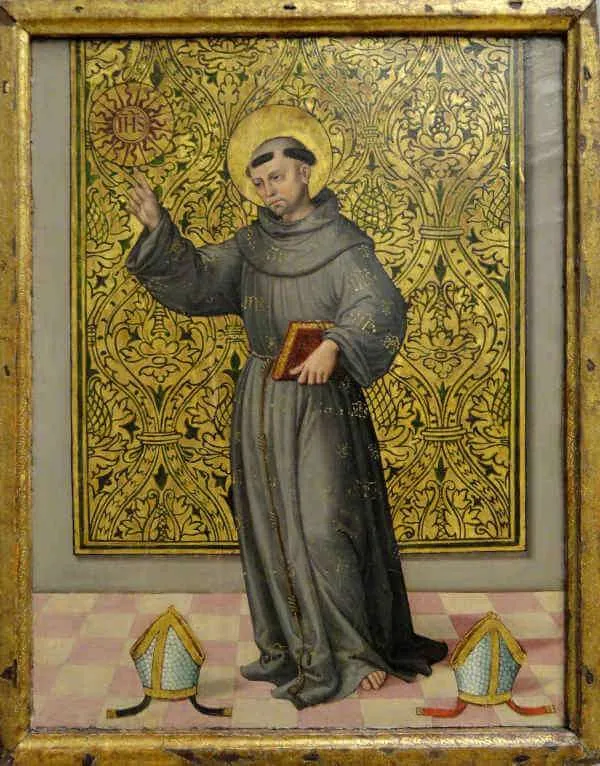
Saint Raymond of Peñafort, Priest

1175–1275; Patron Saint of attorneys, canonists, and medical record librarians; Canonized by Pope Clement VIII on April 29, 1601

He was a century old when he died, and his legacy and influence have lived on for many more centuries. Saint Raymond was an evangelist at heart, but he was an educator, lawyer, canonist, organizer, preacher, and penitent by trade. He served the Church in numerous ways throughout his 100 years.

Raymond was born into a noble family in a small town near Barcelona, Spain. He was well educated and began teaching philosophy at the age of twenty. In his thirties, he obtained a doctorate degree in both civil and canon law, becoming an admired teacher for several years. Raymond’s gifts were soon noticed by many people, saints and sinners alike. Among the sinners was the King of Aragon; among the saints were the Bishop of Barcelona and even the pope himself.

While Raymond was still a layman, the Bishop of Barcelona became aware of Raymond’s brilliance and excellent reputation as a professor in Bologna, Italy. The bishop called Raymond back home to Spain to be an archdeacon, grand vicar, and official in his home diocese. Soon after, in his forties, Raymond joined the Dominican Order and began his life as a friar. As a Dominican friar, he gained a reputation for being humble, obedient, and fervent in his devotion and service to others, especially the poor. When he asked his superiors to impose upon him some penance so that he could more fully imitate his Lord, Who was humbly obedient even unto death, the superiors gave him the penance of writing a manual for priests to help them be better confessors. Father Raymond thus composed a magnificent manual of moral theology for confessors, one of the first of its kind. In addition to writing about Confession, Fr. Raymond also became known as a great confessor himself.

Among his penitents was the King of Aragon. Legend has it that on one occasion, the King of Aragon took Fr. Raymond with him on a journey to the Island of Majorca. Though the king was a good man, he suffered from a weakness of sinning with women. Father Raymond confronted the king after he refused to abandon this sin. Father Raymond then asked permission to return to Barcelona. The king refused. At that, the saint was said to have placed his cloak on the sea, stepped onto his “ship,” and speedily sailed across the water to mainland Spain with lightning speed.

In his fifties, Fr. Raymond was summoned to Rome by Pope Gregory IX and was given the monumental task of organizing the many legal decrees of the Church into a single collection, something which had not been done for eighty years. Three years and five volumes later, the Decretals were completed and published by the pope. They became the basis of the Church’s canon law for centuries to come.

The pope was so pleased with Fr. Raymond that he appointed him the Archbishop of Tarragon in Spain. Father Raymond, whose only desire was to be a humble friar, pleaded with the pope to excuse him from the appointment. By divine providence, Fr. Raymond became quite sick before he was ordained a bishop, which helped convince the pope to permit him to remain a humble friar and to return home.

Three years later, while in his early sixties, Fr. Raymond was chosen to be the third Superior General of the Dominican Order. He held the position for only two years before retiring and returning to the life of a humble friar.

Father Raymond could finally do what he loved. He preached, evangelized, catechized, and heard confessions. He felt especially called to preach to Jews and Muslims and helped establish schools where his fellow friars could learn Hebrew and Arabic to help them better evangelize these non-Christians. To help this endeavor, he encouraged another soon-to-be saint, Saint Thomas Aquinas, to write one of his greatest works, Against the Gentiles, to provide a theological basis for this evangelization. When Fr. Raymond was in his early eighties, he wrote a letter to his Superior General stating that 10,000 Muslims had been converted and baptized through his evangelical efforts.

On his deathbed he was visited by princes, princesses, two kings, and one queen. He prayed and fasted continuously, and miracles were even attributed to his intercession. He now rests in Heaven while his earthly body lies in the Cathedral of Barcelona, Spain.

Source: https://mycatholic.life/saints/saints-of-the-liturgical-year/january-7-saint-raymond-of-penyafort/

Saint Raymond of Peñafort, Priest Read More »

Mark 6:50-52

It is I, Do Not Be Afraid!

“Take courage, it is I, do not be afraid!” He got into the boat with them and the wind died down. They were completely astounded. They had not understood the incident of the loaves. On the contrary, their hearts were hardened.

Reflection:

When Jesus appeared to the Apostles, walking on the sea, they were filled with fear. His words to them are the same words He speaks to us: “Take courage, it is I, do not be afraid!” We need to hear those words more often than we realize. Many things in life can cause us to fear, worry, obsess, fall into depression, or even despair. This is because, like the Apostles, we often fail to fully grasp Who God is. As a result, our hearts remain hardened.

A hardened heart is the direct result of not understanding Who God is in our lives. Unless we come to know Him, comprehend His love for us, and place our full trust in Him, our hearts cannot be fully set free. Despite witnessing miracle after miracle, listening to sermon after sermon, and even preaching and performing miracles themselves, the Apostles still did not fully understand and believe. The Gospel tells us that “their hearts were hardened” because “they had not understood the incident of the loaves.”

When Jesus said to His Apostles, “Take courage, it is I, do not be afraid!” He wanted to instill profound faith within them. We must also allow those words to resonate deeply within us. Courage dispels fear. By saying “it is I,” our Lord is revealing, “I AM God!” The Greek phrase ego eimi used here is the same one found in Exodus 3:14 when God reveals His name: “I AM.” Though we might believe this with our minds, we often fail to let God’s revelation penetrate our hearts and dispel the fears and doubts we face in life.

The symbolism of this Gospel passage is powerful. The sea represents the world, and the waves and the wind symbolize the chaos and turmoil we often encounter within it. The boat is the Church. By walking on the water at night, our Lord reveals His complete mastery over everything in this world. By entering the boat as it was being tossed by the waves and wind, He shows that He is always present within His Church and will bring peace and calm if we let Him.

Reflect today on our Lord looking directly at you and saying, “Take courage, it is I, do not be afraid!” Give your full attention to Him. No matter what struggles you face, no matter the chaos that seems to surround you, there is nothing beyond God’s power. Believe this, do not be afraid, invite Him into your heart, and His peace will abound.

Source: https://catholic-daily-reflections.com/2026/01/06/it-is-i-do-not-be-afraid/

Mark 6:50-52 Read More »

Saint André Bessette, Religious

1845–1937; Patron saint of family caregivers in Canada; Canonized by Pope Benedict XVI on October 17, 2010

During His Sermon on the Mount, Jesus said, “Knock and the door will be opened to you” (Matthew 7:7). In many ways, these words summarize the life of Saint André Bessette. The only caveat is that Brother André was the one opening the door for countless thousands of others during his life, not having the door opened for him. For forty years, Brother André was the doorkeeper at the Collège Notre-Dame in Côte-des-Neiges, Quebec, while serving as a professed Religious of the Congregation of the Holy Cross.

He was born Alfred Bessette in Saint-Grégoire d’Iberville, Quebec, Canada, and was the eighth of twelve children. His father was crushed by a falling tree and died when Alfred was only three. His mother died three years later of tuberculosis, leaving him and his siblings orphans. From birth, Alfred was a sickly child and remained so throughout his life. Most people thought he would die at a young age, but he lived until he was ninety-one!

Alfred had a distinct smile. It was serious, warm, welcoming, pleasant, and calming. He was a hard worker, but his poor health made it difficult for him to maintain a steady job. At the age of twenty-five, Alfred sought spiritual direction from his pastor, who encouraged him to present himself to the Congregation of the Holy Cross in Montreal for acceptance into religious life. The pastor sent along a letter to the superior, which said in part, “I am sending you a saint.” The problem was that Alfred could hardly read, and the order was a teaching order of well-educated men. After some initial hesitation, the superior welcomed him into the novitiate at the encouragement of the bishop.

Upon making his vows, Alfred chose the name Brother André, and his first assignment was one he would keep for the rest of his life—doorkeeper. In addition to minding the door, he spent his time washing floors and windows, cleaning lamps, carrying firewood, and delivering messages. He was a humble servant content to carry out the most menial of tasks.

How does an illiterate doorkeeper become a saint? Brother André’s path of holiness consisted of living the most attractive virtue of humility, of listening attentively to troubled hearts, of showing a compassion that lifted countless burdens, and of showing a gentleness that put even the worst sinner at ease. Above all, Brother André showed a love of God and trust in the intercession of Saint Joseph that was calm, steadfast, and more certain to him than life itself. In his role of doorkeeper, Brother André had the joy of interacting with countless people for forty years. Over and over, Brother André inspired faith in both the saint and the sinner, the proud and the humble, the well-to-do and the poorest of the poor. Through his lowliness, soul after soul was drawn to God. Every time a life was changed, Brother André gave the credit to Saint Joseph. “Go to Saint Joseph, he will help you,” he would say throughout his life.

Not only was the soul of Brother André filled with the most beautiful virtues, his prayers also worked countless miracles. When people spoke to Brother André and asked for his prayers, a surprising pattern began to emerge—his prayers were answered! The sick were healed, the lame could walk, problems did disappear, and hearts were converted. By the time of his death, the brothers of his order attributed as many as 10,000 miracles to his intercession. But, according to Brother André, it wasn’t he who worked the miracles but Saint Joseph.

At first, word of Brother André’s powerful prayers slowly trickled from person to person, but eventually his renown flowed like a river, roaring from one end of Canada to the other. Lines of people came streaming to him. He prayed for the sick, spent time with those who visited, went out of his way to speak to souls in need, and dispensed mercy and compassion to all. Towards the end of his life, this holy man who struggled with reading received as many as 80,000 letters each year from people asking for his prayers. He entrusted them all to Saint Joseph.

“It is with the smallest brushes that the artist paints the best paintings,” Brother André was fond of saying. The artist was God, and Brother André was the smallest and most humble brush. The living work of art God painted with Brother André was on full display at his wake and funeral. It is estimated that a million people paid their respects during the week that his body lay in state outside of St. Joseph’s Oratory! Brother André’s beautiful legacy was memorialized in a humble chapel he built to Saint Joseph. Over time, that chapel has been transformed and enlarged into the massive St. Joseph Oratory on Mount Royal near the Collège Notre-Dame. The Oratory sits on a hill and towers over its surroundings. It is crowned by one of the largest domes in the world and remains a place of pilgrimage and prayer. On the walls of its crypt hangs a moving testament to Brother André’s healing powers—hundreds of pairs of discarded crutches. The humble are not always exalted in this world, but Brother André truly was.

Source: https://mycatholic.life/saints/saints-of-the-liturgical-year/january-6-blessed-andr-bessette-religious-usa-optional-memorial/

Saint André Bessette, Religious Read More »

Mark 6:35-36

Practicality is Not Enough

By now it was already late and his disciples approached him and said, “This is a deserted place and it is already very late. Dismiss them so that they can go to the surrounding farms and villages and buy themselves something to eat.”

Reflection:

It is wise to be practical, realistic, and pragmatic. But when it comes to Christ and our call to participate in His divine mission, pragmatism can sometimes be a hindrance. Today’s Gospel illustrates this truth powerfully.

The passage begins by showing the compassionate heart of Christ, who looked out upon the vast crowds of spiritually hungry people who were “like sheep without a shepherd.” Without a shepherd, sheep wander aimlessly, often missing the greenest pastures. Moved with compassion, Jesus feeds His flock by teaching them “many things.”

Then came a test—not so much for the crowd, but for Jesus’ Apostles whom He was training to continue His mission. Though the Apostles eventually shared in Jesus’ mission as the first bishops of the Church, we are all called to participate in His mission in our unique ways. Therefore, the test Jesus gave to His Apostles is just as relevant to us today.

When the Apostles suggested dismissing the crowd to find food, Jesus surprised them with a challenging command: “Give them some food yourselves.” This was the test. Jesus knew full well that they lacked the resources to feed thousands, but He posed the challenge to draw out their faith. Rather than acting themselves or turning to Him in confident trust, they responded with human logic and doubt. It was only when they presented their meager resources—five loaves and two fish—that Jesus performed the miracle, showing them that divine power begins where human resources end. This moment taught the Apostles that their role in Christ’s mission would not depend on their sufficiency, but on their obedience, trust, and cooperation with His grace.

Consider how this test applies to your life. First, reflect on the crowd. Do you know people who are “like sheep without a shepherd?” Who are the wandering, the searching, and the hungry? Some are physically hungry—the poor and destitute. Others might be materially well-off but are spiritually starving. The first step in our “test” is to recognize those in need, whether physical or spiritual.

Once we perceive the needs of others, we must consider how our Lord wants to use us to meet those needs. This is where practicality or pragmatism must be harmonized with supernatural prudence. It’s easy to look at another’s needs and think, “There is little I can do.” Indeed, by ourselves, we are powerless to provide what others truly need. But when we offer the little we have to Christ, trusting in His supernatural power, our small offering is divinely transformed into a source of abundant blessings. Our “five loaves and two fish” represent our willingness to give what we have, knowing that, with God’s grace, it can feed the multitudes.

Reflect today on this Gospel passage as if you were standing with the Twelve Apostles. Consider those God has placed in your life who are hungry and wandering. As you identify them, offer to God everything you have and all that you are, trusting that He desires to work through you. With deep faith, you will be amazed at what God can accomplish through your humble offering.

Source: https://catholic-daily-reflections.com/2026/01/05/practicality-is-not-enough/

Mark 6:35-36 Read More »

Saint André Bessette, Religious

1845–1937; Patron saint of family caregivers in Canada; Canonized by Pope Benedict XVI on October 17, 2010

During His Sermon on the Mount, Jesus said, “Knock and the door will be opened to you” (Matthew 7:7). In many ways, these words summarize the life of Saint André Bessette. The only caveat is that Brother André was the one opening the door for countless thousands of others during his life, not having the door opened for him. For forty years, Brother André was the doorkeeper at the Collège Notre-Dame in Côte-des-Neiges, Quebec, while serving as a professed Religious of the Congregation of the Holy Cross.

He was born Alfred Bessette in Saint-Grégoire d’Iberville, Quebec, Canada, and was the eighth of twelve children. His father was crushed by a falling tree and died when Alfred was only three. His mother died three years later of tuberculosis, leaving him and his siblings orphans. From birth, Alfred was a sickly child and remained so throughout his life. Most people thought he would die at a young age, but he lived until he was ninety-one!

Alfred had a distinct smile. It was serious, warm, welcoming, pleasant, and calming. He was a hard worker, but his poor health made it difficult for him to maintain a steady job. At the age of twenty-five, Alfred sought spiritual direction from his pastor, who encouraged him to present himself to the Congregation of the Holy Cross in Montreal for acceptance into religious life. The pastor sent along a letter to the superior, which said in part, “I am sending you a saint.” The problem was that Alfred could hardly read, and the order was a teaching order of well-educated men. After some initial hesitation, the superior welcomed him into the novitiate at the encouragement of the bishop.

Upon making his vows, Alfred chose the name Brother André, and his first assignment was one he would keep for the rest of his life—doorkeeper. In addition to minding the door, he spent his time washing floors and windows, cleaning lamps, carrying firewood, and delivering messages. He was a humble servant content to carry out the most menial of tasks.

How does an illiterate doorkeeper become a saint? Brother André’s path of holiness consisted of living the most attractive virtue of humility, of listening attentively to troubled hearts, of showing a compassion that lifted countless burdens, and of showing a gentleness that put even the worst sinner at ease. Above all, Brother André showed a love of God and trust in the intercession of Saint Joseph that was calm, steadfast, and more certain to him than life itself. In his role of doorkeeper, Brother André had the joy of interacting with countless people for forty years. Over and over, Brother André inspired faith in both the saint and the sinner, the proud and the humble, the well-to-do and the poorest of the poor. Through his lowliness, soul after soul was drawn to God. Every time a life was changed, Brother André gave the credit to Saint Joseph. “Go to Saint Joseph, he will help you,” he would say throughout his life.

Not only was the soul of Brother André filled with the most beautiful virtues, his prayers also worked countless miracles. When people spoke to Brother André and asked for his prayers, a surprising pattern began to emerge—his prayers were answered! The sick were healed, the lame could walk, problems did disappear, and hearts were converted. By the time of his death, the brothers of his order attributed as many as 10,000 miracles to his intercession. But, according to Brother André, it wasn’t he who worked the miracles but Saint Joseph.

At first, word of Brother André’s powerful prayers slowly trickled from person to person, but eventually his renown flowed like a river, roaring from one end of Canada to the other. Lines of people came streaming to him. He prayed for the sick, spent time with those who visited, went out of his way to speak to souls in need, and dispensed mercy and compassion to all. Towards the end of his life, this holy man who struggled with reading received as many as 80,000 letters each year from people asking for his prayers. He entrusted them all to Saint Joseph.

“It is with the smallest brushes that the artist paints the best paintings,” Brother André was fond of saying. The artist was God, and Brother André was the smallest and most humble brush. The living work of art God painted with Brother André was on full display at his wake and funeral. It is estimated that a million people paid their respects during the week that his body lay in state outside of St. Joseph’s Oratory! Brother André’s beautiful legacy was memorialized in a humble chapel he built to Saint Joseph. Over time, that chapel has been transformed and enlarged into the massive St. Joseph Oratory on Mount Royal near the Collège Notre-Dame. The Oratory sits on a hill and towers over its surroundings. It is crowned by one of the largest domes in the world and remains a place of pilgrimage and prayer. On the walls of its crypt hangs a moving testament to Brother André’s healing powers—hundreds of pairs of discarded crutches. The humble are not always exalted in this world, but Brother André truly was.

Source: https://mycatholic.life/saints/saints-of-the-liturgical-year/january-6-blessed-andr-bessette-religious-usa-optional-memorial/

Saint André Bessette, Religious Read More »

Mark 6:35-36

Practicality is Not Enough

By now it was already late and his disciples approached him and said, “This is a deserted place and it is already very late. Dismiss them so that they can go to the surrounding farms and villages and buy themselves something to eat.”

Reflection:

It is wise to be practical, realistic, and pragmatic. But when it comes to Christ and our call to participate in His divine mission, pragmatism can sometimes be a hindrance. Today’s Gospel illustrates this truth powerfully.

The passage begins by showing the compassionate heart of Christ, who looked out upon the vast crowds of spiritually hungry people who were “like sheep without a shepherd.” Without a shepherd, sheep wander aimlessly, often missing the greenest pastures. Moved with compassion, Jesus feeds His flock by teaching them “many things.”

Then came a test—not so much for the crowd, but for Jesus’ Apostles whom He was training to continue His mission. Though the Apostles eventually shared in Jesus’ mission as the first bishops of the Church, we are all called to participate in His mission in our unique ways. Therefore, the test Jesus gave to His Apostles is just as relevant to us today.

When the Apostles suggested dismissing the crowd to find food, Jesus surprised them with a challenging command: “Give them some food yourselves.” This was the test. Jesus knew full well that they lacked the resources to feed thousands, but He posed the challenge to draw out their faith. Rather than acting themselves or turning to Him in confident trust, they responded with human logic and doubt. It was only when they presented their meager resources—five loaves and two fish—that Jesus performed the miracle, showing them that divine power begins where human resources end. This moment taught the Apostles that their role in Christ’s mission would not depend on their sufficiency, but on their obedience, trust, and cooperation with His grace.

Consider how this test applies to your life. First, reflect on the crowd. Do you know people who are “like sheep without a shepherd?” Who are the wandering, the searching, and the hungry? Some are physically hungry—the poor and destitute. Others might be materially well-off but are spiritually starving. The first step in our “test” is to recognize those in need, whether physical or spiritual.

Once we perceive the needs of others, we must consider how our Lord wants to use us to meet those needs. This is where practicality or pragmatism must be harmonized with supernatural prudence. It’s easy to look at another’s needs and think, “There is little I can do.” Indeed, by ourselves, we are powerless to provide what others truly need. But when we offer the little we have to Christ, trusting in His supernatural power, our small offering is divinely transformed into a source of abundant blessings. Our “five loaves and two fish” represent our willingness to give what we have, knowing that, with God’s grace, it can feed the multitudes.

Reflect today on this Gospel passage as if you were standing with the Twelve Apostles. Consider those God has placed in your life who are hungry and wandering. As you identify them, offer to God everything you have and all that you are, trusting that He desires to work through you. With deep faith, you will be amazed at what God can accomplish through your humble offering.

Source: https://catholic-daily-reflections.com/2026/01/05/practicality-is-not-enough/

Mark 6:35-36 Read More »

The Epiphany of the Lord

First Reading Isaiah 60:1-6

Rise up in splendor, Jerusalem!  Your light has come,
the glory of the Lord shines upon you.
See, darkness covers the earth,
and thick clouds cover the peoples;
but upon you the LORD shines,
and over you appears his glory.
Nations shall walk by your light,
and kings by your shining radiance.
Raise your eyes and look about;
they all gather and come to you:
your sons come from afar,
and your daughters in the arms of their nurses.

Then you shall be radiant at what you see,
your heart shall throb and overflow,
for the riches of the sea shall be emptied out before you,
the wealth of nations shall be brought to you.
Caravans of camels shall fill you,
dromedaries from Midian and Ephah;
all from Sheba shall come
bearing gold and frankincense,
and proclaiming the praises of the LORD.

Responsorial Psalm Psalms 72:1-2, 7-8, 10-11, 12-13

R. (cf. 11)  Lord, every nation on earth will adore you.
O God, with your judgment endow the king,
and with your justice, the king’s son;
He shall govern your people with justice
and your afflicted ones with judgment.
R. Lord, every nation on earth will adore you.
Justice shall flower in his days,
and profound peace, till the moon be no more.
May he rule from sea to sea,
and from the River to the ends of the earth.
R. Lord, every nation on earth will adore you.
The kings of Tarshish and the Isles shall offer gifts;
the kings of Arabia and Seba shall bring tribute.
All kings shall pay him homage,
all nations shall serve him.
R. Lord, every nation on earth will adore you.
For he shall rescue the poor when he cries out,
and the afflicted when he has no one to help him.
He shall have pity for the lowly and the poor;
the lives of the poor he shall save.
R. Lord, every nation on earth will adore you.

Second Reading Ephesians 3:2-3a, 5-6

Brothers and sisters:
You have heard of the stewardship of God’s grace 
that was given to me for your benefit, 
namely, that the mystery was made known to me by revelation.
It was not made known to people in other generations 
as it has now been revealed
to his holy apostles and prophets by the Spirit: 
that the Gentiles are coheirs, members of the same body,
and copartners in the promise in Christ Jesus through the gospel.

Alleluia Matthew 2:2

R. Alleluia, alleluia.
We saw his star at its rising
and have come to do him homage.
R. Alleluia, alleluia.

Gospel Matthew 2:1-12

When Jesus was born in Bethlehem of Judea,
in the days of King Herod, 
behold, magi from the east arrived in Jerusalem, saying, 
“Where is the newborn king of the Jews?
We saw his star at its rising
and have come to do him homage.”
When King Herod heard this,
he was greatly troubled, 
and all Jerusalem with him.
Assembling all the chief priests and the scribes of the people, 
He inquired of them where the Christ was to be born.
They said to him, “In Bethlehem of Judea, 
for thus it has been written through the prophet:
And you, Bethlehem, land of Judah,
are by no means least among the rulers of Judah;
since from you shall come a ruler,
who is to shepherd my people Israel.

Then Herod called the magi secretly 
and ascertained from them the time of the star’s appearance.
He sent them to Bethlehem and said, 
“Go and search diligently for the child.
When you have found him, bring me word, 
that I too may go and do him homage.”
After their audience with the king they set out.
And behold, the star that they had seen at its rising preceded them, 
until it came and stopped over the place where the child was.
They were overjoyed at seeing the star, 
and on entering the house
they saw the child with Mary his mother.
They prostrated themselves and did him homage.
Then they opened their treasures 
and offered him gifts of gold, frankincense, and myrrh.
And having been warned in a dream not to return to Herod, 
they departed for their country by another way.

Source: https://bible.usccb.org/bible/readings/010426.cfm

The Epiphany of the Lord Read More »