May 2026

Mark 10:33–34

The Love of Human Empathy

“Behold, we are going up to Jerusalem, and the Son of Man will be handed over to the chief priests and the scribes, and they will condemn him to death and hand him over to the Gentiles who will mock him, spit upon him, scourge him, and put him to death, but after three days he will rise.”

Reflection:

How often do we fail to grasp the suffering of others, consumed instead by our own concerns? This was the struggle of the Twelve as Jesus prepared to endure His Passion. Today’s Gospel presents the third time Jesus clearly told them about His Passion and Death, yet they still didn’t get it.

After Jesus revealed His Passion for the first time, “Peter took him aside and began to rebuke him.” In the presence of the other disciples, Jesus responded, “Get behind me, Satan. You are thinking not as God does, but as human beings do” (cf. Mark 8:31–33). The second time Jesus revealed His Passion they “did not understand the saying, and they were afraid to question him.” Instead, they engaged in a childish conversation, “discussing among themselves on the way who was the greatest” (cf. Mark 9:30–37).

Today’s Gospel, presenting the third time Jesus revealed His Passion, depicts a similar scenario. Jesus is very explicit: In Jerusalem, He “will be handed over to the chief priests and the scribes, and they will condemn him to death and hand him over to the Gentiles who will mock him, spit upon him, scourge him, and put him to death, but after three days he will rise.” Once again, despite the seriousness of Jesus’ revelation, James and John immediately ask Jesus, “Grant that in your glory we may sit one at your right and the other at your left” (Mark 10:37). The Apostles were so consumed with their own ambitions that they failed to grasp the gravity of Jesus’ words and were unable to offer Him the charity of empathy.

Fortunately for them—and for us—Jesus had perfect patience. He understood their weaknesses and showed mercy. Humanly speaking, the disciples could have offered Him the charity of human empathy and compassion, walking more firmly with Jesus toward His agony and death, but they were unprepared and unable to do so.

While the Apostles failed to console Jesus, His mother consoled His Sacred Heart. With her Immaculate Heart in perfect union with His, the Blessed Mother modeled perfect empathy as she pondered her Son’s life in her heart and stood faithfully at the foot of the Cross. She walked with Jesus every step of the way. Her love consoled Him even as the Twelve failed to do so. The Blessed Mother teaches us how to accompany, with love and presence, those who suffer.

We must see ourselves in the Apostles, listening to Jesus share news of His Passion. As we consider their apathy and lack of understanding, we should seek the grace of a loving and empathetic heart by seeing our Lord present in those around us, especially family, who carry heavy burdens. This grace will enable us to be attentive to those burdens and better imitate our Blessed Mother who consoled the heart of her Son. Though the Apostles initially failed in this mission, they were learning and growing. Empowered by the Holy Spirit, they would later console others by sharing Christ’s love and proclaiming His Passion with courage, especially as they lived it.

Reflect today on Jesus’ interaction with His Apostles. Learn from their shortcomings and be grateful for Jesus’ patience. Pray for the grace of an empathetic heart, for this virtue enables us to console the Heart of Christ by sharing in His Passion with attentiveness and compassion. In doing so, we imitate the perfect love of the Blessed Mother, who teaches us how to truly love.

Source: https://catholic-daily-reflections.com/2026/05/26/the-love-of-human-empathy/
Mark 10:33–34 Read More »

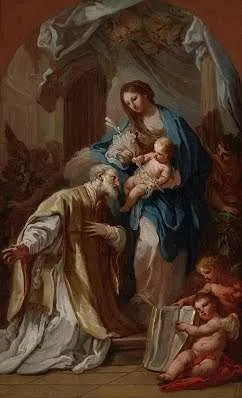
Saint Philip Neri, Priest

1515–1595; Patron Saint of Rome, joy, comedians, and artists; Canonized by Pope Gregory XV on March 12, 1622

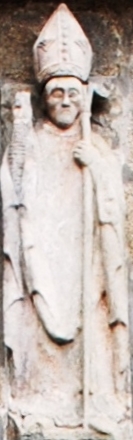
Philip Romulus Neri, the third of five children, was born into a middle class family in Florence, modern-day Italy. As a child, his friends and family often called him, “Pippo Buono” (good little Philip), because of his cheerfulness and moral character. Philip’s mother died when he was only about five years old, so he and his two sisters were cared for by their grandmother. He was well educated by the Dominican friars in Florence and later in life acknowledged the good influence they had upon him. By the age of eleven, Philip was known for his piety and prayerfulness, and for making frequent visits to the churches in Florence. When he turned eighteen, Philip was sent to live with his father’s wealthy cousin, Romolo, whom he referred to as his uncle, near the Benedictine monastery of Montecassino. Romolo had no children, so Philip was sent to him to become his heir.

Shortly after moving in with his uncle, Philip had a profound conversion. This conversion might have taken place in a seaside chapel called the Sanctuary of the Holy Trinity. Legend holds that the huge cliff overshadowing the chapel was split in two when Jesus died, opening a sanctuary overlooking the sea. Philip’s conversion had already been in full motion when he left Florence to live with his uncle, but once he arrived at his uncle’s and faced the real possibility of inheriting enough to live a stable life in the world, Philip had to make a choice. Did he want a comfortable life as a businessman, or did he want to follow the Holy Spirit Who was tugging on his heart? He chose the latter.

In 1533, Philip thanked his uncle and informed him that the Holy Spirit wanted him to go to Rome. He arrived penniless but found housing in the attic of a customs official. He paid for his simple accommodations by being a tutor for the man’s two sons. In Rome, Philip frequented the holy sites, prayed at the tombs of the Apostles Peter and Paul and the other Roman martyrs, and waited for God to direct him. His food was simple, usually only bread and water once a day. He enrolled in university where he studied philosophy, theology, and human sciences. While studying theology at the University of Saint Augustine, Philip was interiorly moved as he gazed at a large crucifix. As a result, he quit his studies, sold his books, and dedicated himself to full-time prayer. For the next ten years, until the age of thirty-three, Philip lived an eremitical life, often praying in the catacombs of the martyrs, frequently making all-night vigils. He refrained from idle pastimes, dividing his time between prayer and charity. He visited hospitals, conversed about holy subjects with the poor, converted sinners, and injected humor and laughter wherever he went. This one-on-one ministry as a layman, coupled with his life of prayer, set the foundation for what was to come next.

Around the year 1544, just before the Solemnity of Pentecost, Philip was praying in a catacomb and had a profound mystical experience. A ring of fire descended and entered his mouth, settling in his heart. The flame filled him with such an intense love for God that he fell to the ground and cried out, “Enough, Lord, I can bear it no more!” When he recovered, he noticed a visible swelling on his chest over his heart. For the rest of Philip’s life, especially when engaged in prayer and holy conversation, his heart would noticeably palpitate. Though some thought this to be a physical ailment, others saw it as the result of divine love filling his heart and flowing over. It is said that when people saw Philip, they were drawn to him, and especially drawn to his heart. A post-mortem exam revealed that he had an enlarged heart, so much so that two of his ribs were dislocated.

After this mystical experience, Philip began to engage in a more active apostolate as a street preacher in Rome. His approach to “preaching” was much different than that of others. Rather than railing against the immoralities of the day, he gathered young men around him as his companions, and with his joyful and affectionate personality, began to inspire others with the joy of following Christ. He and his companions spent much time serving the sick in the hospitals and doing many menial acts of service, such as cleaning, making beds, conversing, and helping in any way they could. He often started his conversations by saying, “Well, my brothers, when shall we begin to do good?” Doing good, with joy and enthusiasm, drew many to listen to him and follow his example. Philip converted one soul at a time to the life of virtue.

In 1548, a priest who served as Philip’s confessor assisted him in forming the Confraternity of the Holy Trinity. Members would regularly meet for prayer, especially Eucharistic adoration, and engage in holy conversations and comradery. In 1551, again with the encouragement and assistance of his confessor, Philip agreed to become a priest at the age of thirty-five, joining a community of priests at the Church of San Girolamo della Carita. As a priest, Father Phillip quickly entered into a new ministry that would occupy him for the rest of his life. He became a confessor to countless sinners, poor and rich alike. At first, he spent a few hours every day in the confessional, but eventually he would spend most of the day. As a confessor, Father Philip had profound spiritual gifts. He could read souls, identify sins that needed to be confessed, give supernatural counsel, perform miracles, and speak words of divine love that flowed directly from the Heart of Christ.

Within a year of his ordination, Father Philip began to gather young men in his room for prayer and holy conversation. They would talk, read about the saints, share meals, sing songs, go on walks, and pray together. Eventually, the number of his followers grew large, and he built an oratory for their meetings. Over the next fifteen years, this loose association continued to grow and in 1575, with the approval of the pope, Father Philip founded the Congregation of the Oratory whose ministry included prayer, preaching, and the sacraments.

Saint Philip Neri was a true missionary who re-evangelized the Christians of Rome, one soul at a time. His miracles, ecstasies during prayer, and ability to read souls were enough to convince everyone of his holiness. But setting those supernatural phenomena aside, it was the joy that radiated from his heart, a heart united to the Divine Heart of Christ, that was the surest sign of his sanctity. As we honor this saint of joy, ponder the importance of the gift of joy in your own life. Joy is a spiritual gift, not just a natural emotion. Joy comes from God alone. Open your heart to that gift, and ask Saint Philip Neri to pray that you receive it in abundance.

Source: https://mycatholic.life/saints/saints-of-the-liturgical-year/may-26—saint-philip-neri-priest/

Saint Philip Neri, Priest Read More »

Mark 10:28

Forsaking All to Follow Christ

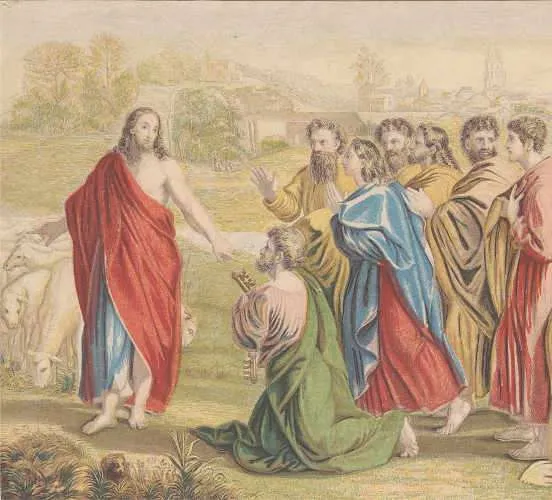
Peter began to say to Jesus, “We have given up everything and followed you.”

Reflection:

Peter had just witnessed Jesus’ conversation with the rich young man, to whom Jesus said, “Go, sell what you have, and give to the poor, and you will have treasure in heaven; then come, follow me” (Mark 10:21). After the young man went away sad because he had many possessions, Jesus turned to the disciples and lovingly explained the radical demands of the Gospel: “It is easier for a camel to pass through the eye of a needle than for one who is rich to enter the kingdom of God” (Mark 10:25). This statement was astonishing to the disciples, and Peter’s response reveals a common tendency for us all: He began to think about himself.

The Gospel can be embraced in two ways. First, with a more intellectual approach, we can study, understand, and explain Jesus’ teaching. This is important, especially for preachers and teachers. The second way is more challenging: We must hear the Gospel, believe it, and, with the help of grace, live it. When engaging the Gospel in this second way, we often do exactly what Peter did: We think about ourselves and whether or not we live up to it.

Both approaches are necessary. Understanding the Gospel intellectually is a crucial starting point. Too often, we water it down to an exhortation to be kind to others, say some daily prayers, go to church, and avoid serious sin. Those who intensely study the Word of God, however, will discover so much more. Jesus’ many teachings, when clearly understood, will challenge even the greatest saint to greater holiness. Even those who “have given up everything” to follow Jesus will be challenged as they are confronted with the depth of our Lord’s Word.

Once we understand the radical demands of the Gospel, we must do what Peter did: We must apply it to our particular situation. This introspection is good and necessary and is a sign that the Gospel is sinking in. Like Peter, we might at first justify ourselves, saying, “I have given up everything to follow You, Lord.” But we must then look deeper, more honestly at ourselves, and evaluate our lives in the clearest way possible.

Jesus’ response to Peter is the response He makes to us as we go through this self-evaluation, even if it tends to be more of a self-justification. Jesus gently explains that those who radically follow Him without reserve, giving up “everything” to follow Him, will receive two blessings.

First, they will receive “a hundred times more now in this present age.” This is not a promise of riches, material prosperity, good health, or freedom from suffering, which Jesus emphasizes by His follow-up statement: “with persecutions.” However, it does mean that the spiritual blessings we will receive in this life, if we radically give up everything to follow Him, are far greater than anything this life can offer and will flood our souls with peace and satisfaction, even in the midst of persecutions and every form of hardship.

Second, Jesus also promises “eternal life in the age to come.” This promise, though desirable, can at times feel abstract. It is sometimes difficult to get excited about the promise of eternal life while we are still immersed in the concerns of this life. Of course, we will not think that way once our life on earth is complete. On that day, the promise will become very real and remain so for eternity.

Reflect today on Jesus making these two promises to you. Do you believe that giving up “everything” and following Jesus will produce “a hundred times” more than what you give up? What attachments does our Lord ask you to relinquish? Believe what Jesus says. The life of holiness, as modeled by the saints, makes great demands upon us. If we believe this and live it, then the second promise will become our hope and eternal delight. This life is short. Turn your eyes to eternal life in the age to come, strive for that gift, and both promises will become a reality in your life.

Source: https://catholic-daily-reflections.com/2026/05/25/forsaking-all-to-follow-christ/

Mark 10:28 Read More »

Blessed Virgin Mary, Mother of the Church

Celebrated the Monday after Pentecost

Little is said about the most glorious Mother of God in the Scriptures. In many ways, she lived a quiet and hidden life. Since her Assumption into Heaven, the Church has prayerfully pondered her life and role in the mystery of salvation. Little by little, saint after saint and pope after pope have shed greater light upon her singularly unique and glorious role in the Father’s eternal plan. As the Church’s understanding of the Blessed Mother has deepened, new titles and new dogmas have been proclaimed about Mary. In 2018, a new liturgical memorial honored her with the title “Blessed Virgin Mary, Mother of the Church.”

To understand the Blessed Virgin Mary’s role as Mother of the Church, we need to begin with Scripture. As Jesus hung on the Cross, John’s Gospel records that the mother of Jesus and two other women stood before Him, alongside John, the disciple whom Jesus loved. From the Cross, Jesus entrusted His mother to John’s care. “When Jesus saw his mother and the disciple there whom he loved, he said to his mother, ‘Woman, behold, your son.’ Then he said to the disciple, ‘Behold, your mother.’ And from that hour the disciple took her into his home” (John 19:26–27).

In 1895, in his encyclical on the rosary, Pope Leo XIII wrote about that Gospel passage:

Now in John, as the Church has constantly taught, Christ designated the whole human race, and in the first rank are they who are joined with Him by faith…She was, in very truth, the Mother of the Church, the Teacher and Queen of the Apostles, to whom, besides, she confided no small part of the divine mysteries which she kept in her heart” (Adiutricem #6).

In 1964, Pope Saint Paul VI promulgated the Vatican II document Lumen Gentium (Dogmatic Constitution on the Church). After presenting a complete picture of the mystery of the Church, the final chapter of that constitution presents “The Blessed Virgin Mary, Mother of God in the Mystery of Christ and the Church.” That chapter highlights her singularly unique and maternal role within the Church. Lumen Gentium did not go so far as to ascribe the title “Mother of the Church” to the Blessed Mother, but it did go into great detail about her maternal role within the Church. Four years later, in a motu proprio letter, Pope Paul VI referenced Lumen Gentium and took it a step further by bestowing upon the Mother of God the title “Mother of the Church.”

…we believe that the Blessed Mother of God, the New Eve, Mother of the Church, continues in heaven her maternal role with regard to Christ’s members, cooperating with the birth and growth of divine life in the souls of the redeemed (Solemni Hac Liturgia #15).

Since that time, Pope John Paul II, Pope Benedict XVI, and Pope Francis have continually referred to the Mother of God as the Mother of the Church. What does the title “Mother of the Church” mean? On September 17, 1997, Pope John Paul II defined it this way in a Wednesday catechesis:

The title “Mother of the Church” thus reflects the deep conviction of the Christian faithful, who see in Mary not only the mother of the person of Christ, but also of the faithful. She who is recognized as mother of salvation, life and grace, mother of the saved and mother of the living, is rightly proclaimed Mother of the Church. (#5).

On March 3, 2018, Pope Francis announced that a new memorial would be added to the General Roman Calendar and celebrated on the Monday after Pentecost Sunday, entitled “The Blessed Virgin Mary, Mother of the Church.”

In the decree instituting this memorial, Cardinal Robert Sarah, Prefect of the Congregation for Divine Worship, said:

This celebration will help us to remember that growth in the Christian life must be anchored to the Mystery of the Cross, to the oblation of Christ in the Eucharistic Banquet and to the Mother of the Redeemer and Mother of the Redeemed, the Virgin who makes her offering to God.

It is significant that the Blessed Virgin Mary, Mother of God, was entrusted to the Church in the person of Saint John the Apostle at the foot of the Cross. From the Cross, the Church was conceived by the outpouring of grace that flowed from Jesus’ Sacred Heart. At Pentecost, our Blessed Mother was present as the Church was born.

Today, the Mother of the Church reigns in Heaven next to her Son; from there, she continues to nurture the Church as a loving mother. She not only intercedes for us but also mediates her Son’s saving grace, making her the ongoing instrument of grace and mother of all.

Because our understanding of the role of the Blessed Virgin Mary has continually unfolded over the centuries, it is fair to say that we do not yet fully understand her glorious role in the Father’s plan of salvation. Some have proposed that she be given the dogmatic titles “Mediatrix of All Grace” and “Co-Redemptrix.” Regardless of what comes next in our ever deepening understanding of the role of the Blessed Mother, we can be certain that those who one day gaze upon the essence of God Himself as he reveals all truth will immediately become aware of the most profound mysteries of Mary’s hidden life.

As we honor the Blessed Virgin Mary, Mother of the Church, know that she is your spiritual mother insofar as you are a member of Christ’s Body, the Church. By giving birth to the Head, she gives birth to the members. As members of that Body, it is essential that we seek spiritual nourishment from the Blessed Virgin Mary. She is our mother and queen. From her, we are born into God’s grace. She is the chosen instrument and mediatrix of grace. Rely upon her motherly intercession and mediation, and entrust yourself more fully to her care.

Most glorious Blessed Virgin Mary, Mother of the Church, to you I entrust myself just as Jesus entrusted John to your care. Receive me as your spiritual child, and nurture me with your Son’s divine grace. Thank you for your “Yes” to the Father’s plan, for your life, and for your continuous “Yes” through time and eternity. May my “Yes” echo yours as I surrender fully to God’s plan. Mother Mary, Mother of the Church, pray for me. Jesus, I trust in You.

Source: https://mycatholic.life/saints/saints-of-the-liturgical-year/mary-mother-of-the-church-memorial/

Blessed Virgin Mary, Mother of the Church Read More »

John 19:25–27

The Mother of the Redeemed

Standing by the cross of Jesus were his mother and his mother’s sister, Mary the wife of Clopas, and Mary of Magdala. When Jesus saw his mother and the disciple there whom he loved, he said to his mother, “Woman, behold, your son.” Then he said to the disciple, “Behold, your mother.” And from that hour the disciple took her into his home.

Reflection:

Yesterday, we celebrated the great Solemnity of Pentecost, commemorating the outpouring of the Holy Spirit upon the first disciples and the birth of the Church. Just as God “breathed” life into Adam at the creation, so the Holy Spirit, the Breath of God, gives new life to the Church, the Body of Christ. At Pentecost, the Blessed Virgin Mary was present, embodying the Gift of Fortitude in her unwavering trust in God’s plan.

Fortitude, one of the Gifts of the Holy Spirit, strengthens us to persevere in doing good, especially amid trials, suffering, or temptation. It acts as an anchor, holding us steady during life’s storms and uniting us more deeply to the Mystery of the Cross.

When this memorial was instituted in 2018, Cardinal Robert Sarah beautifully reminded us that “the Christian life must be anchored to the Mystery of the Cross, to the oblation of Christ in the Eucharistic Banquet, and to the Mother of the Redeemer and Mother of the Redeemed….” Today, we honor her not only as the Mother of the Redeemer but also as our Mother—the Mother of the Redeemed. What a profound gift it is to share a spiritual mother with the Son of God! Through her maternal care and intercession, she leads us to her Son and strengthens us on our journey of faith.

The Gospel for today’s memorial recalls one of the most sacred images in the Scriptures—the Blessed Virgin Mary standing at the foot of the Cross, gazing with perfect faith, hope, and love at her divine Son. Her fidelity to Him was unwavering. With a motherly empathy, strengthened by the fullness of grace, she felt His pains and endured His suffering until the end. Though Jesus embodied every virtue and spiritual gift, He allowed Himself to receive strength and consolation from His mother as He hung upon the Cross.

This act of shared love and mutual consolation—Christ receiving strength from His mother as she shared in His suffering—invites us to embrace this same love, allowing our Blessed Mother’s maternal care to unite us more fully to Christ. When Jesus turned to His mother and said, “Woman, behold, your son,” and to John, “Behold, your mother,” He was speaking to each of us, entrusting His mother to us and us to her. As the Blessed Mother stood by her Son in His suffering, she also stands by us, teaching us to remain steadfast in our faith, rooted in Christ’s sacrifice and strengthened by His Eucharistic presence. God strengthens and consoles us in accord with His divine plan, which includes the grace dispensed through the Sacraments—especially the Eucharist—the charitable intercession of others, the ministry of angels, and the unique motherly mediation of the Mother of God, our mother.

Reflect today on the many ways God sanctifies and strengthens you for your mission. Through the Eucharist, we are united to Christ’s Cross and receive the grace to rise triumphantly with Him. Along this journey, we are strengthened by the Blessed Mother, the Mother of the Church and the Mediatrix of grace. As the Spirit filled the Church at Pentecost, so too does He fill our hearts today, leading us to Mary, whose love and intercession anchor us to her Son and His saving grace.

Source: https://catholic-daily-reflections.com/2026/05/24/the-mother-of-the-redeemed/

John 19:25–27 Read More »

Pentecost Sunday

First Reading Acts 2:1-11

When the time for Pentecost was fulfilled,
they were all in one place together.
And suddenly there came from the sky
a noise like a strong driving wind,
and it filled the entire house in which they were.
Then there appeared to them tongues as of fire,
which parted and came to rest on each one of them.
And they were all filled with the Holy Spirit
and began to speak in different tongues,
as the Spirit enabled them to proclaim.

Now there were devout Jews from every nation under heaven
staying in Jerusalem.
At this sound, they gathered in a large crowd,
but they were confused
because each one heard them speaking in his own language.
They were astounded, and in amazement they asked,
“Are not all these people who are speaking Galileans?
Then how does each of us hear them in his native language?
We are Parthians, Medes, and Elamites,
inhabitants of Mesopotamia, Judea and Cappadocia,
Pontus and Asia, Phrygia and Pamphylia,
Egypt and the districts of Libya near Cyrene,
as well as travelers from Rome,
both Jews and converts to Judaism, Cretans and Arabs,
yet we hear them speaking in our own tongues
of the mighty acts of God.”

Responsorial Psalm Psalms 104:1, 24, 29-30, 31, 34

R. (cf. 30) Lord, send out your Spirit, and renew the face of the earth.
or:
R. Alleluia.
Bless the LORD, O my soul!
O LORD, my God, you are great indeed!
How manifold are your works, O LORD!
the earth is full of your creatures;
R. Lord, send out your Spirit, and renew the face of the earth.
or:
R. Alleluia.
May the glory of the LORD endure forever;
may the LORD be glad in his works!
Pleasing to him be my theme;
I will be glad in the LORD.
R. Lord, send out your Spirit, and renew the face of the earth.
or:
R. Alleluia.
If you take away their breath, they perish
and return to their dust.
When you send forth your spirit, they are created,
and you renew the face of the earth.
R. Lord, send out your Spirit, and renew the face of the earth.
or:
R. Alleluia.

Second Reading 1 Corinthians 12:3b-7, 12-13

Brothers and sisters:
No one can say, “Jesus is Lord,” except by the Holy Spirit.

There are different kinds of spiritual gifts but the same Spirit;
there are different forms of service but the same Lord;
there are different workings but the same God
who produces all of them in everyone.
To each individual the manifestation of the Spirit
is given for some benefit.

As a body is one though it has many parts,
and all the parts of the body, though many, are one body,
so also Christ.
For in one Spirit we were all baptized into one body,
whether Jews or Greeks, slaves or free persons,
and we were all given to drink of one Spirit.

Sequence — Veni, Sancte Spiritus

Come, Holy Spirit, come!
And from your celestial home
Shed a ray of light divine!

Come, Father of the poor!
Come, source of all our store!
Come, within our bosoms shine.

You, of comforters the best;
You, the soul’s most welcome guest;
Sweet refreshment here below;

In our labor, rest most sweet;
Grateful coolness in the heat;
Solace in the midst of woe.

O most blessed Light divine,
Shine within these hearts of yours,
And our inmost being fill!

Where you are not, we have naught,
Nothing good in deed or thought,
Nothing free from taint of ill.

Heal our wounds, our strength renew;
On our dryness pour your dew;
Wash the stains of guilt away:

Bend the stubborn heart and will;
Melt the frozen, warm the chill;
Guide the steps that go astray.

On the faithful, who adore
And confess you, evermore
In your sevenfold gift descend;

Give them virtue’s sure reward;
Give them your salvation, Lord;
Give them joys that never end. Amen.
Alleluia.

Alleluia

R. Alleluia, alleluia.
Come, Holy Spirit, fill the hearts of your faithful
and kindle in them the fire of your love.
R. Alleluia, alleluia.

Gospel John 20:19-23

On the evening of that first day of the week,
when the doors were locked, where the disciples were,
for fear of the Jews,
Jesus came and stood in their midst
and said to them, “Peace be with you.”
When he had said this, he showed them his hands and his side.
The disciples rejoiced when they saw the Lord.
Jesus said to them again, “Peace be with you.
As the Father has sent me, so I send you.”
And when he had said this, he breathed on them and said to them,
“Receive the Holy Spirit.
Whose sins you forgive are forgiven them,
and whose sins you retain are retained.”

Source: https://bible.usccb.org/bible/readings/052426-Day

Pentecost Sunday Read More »

Pentecost Sunday

Sunday after the Seventh Week of Easter

Today, we celebrate the most glorious Solemnity of Pentecost, the promised Gift of the Father and the Son to Jesus’ disciples. After rising from the dead, Jesus appeared to His disciples for forty days. During those appearances, He offered them proof of His resurrection, continued to teach them, and reminded them of all He had revealed to them about His death and Resurrection, preparing them for the next step of their mission. “While meeting with them, he enjoined them not to depart from Jerusalem, but to wait for ‘the promise of the Father about which you have heard me speak; for John baptized with water, but in a few days you will be baptized with the holy Spirit’” (Acts 1:4–5).

During the ten days after Jesus’ Ascension, the eleven Apostles gathered together in the upper room with the mother of Jesus and many other disciples, totaling 120 in all. The gathering place was most likely the same place that the Apostles ate the Passover meal, the first Eucharist, with Jesus. As they met, the first order of business was to choose a successor to Judas. They cast lots, and Matthias was chosen to be one of the Twelve.

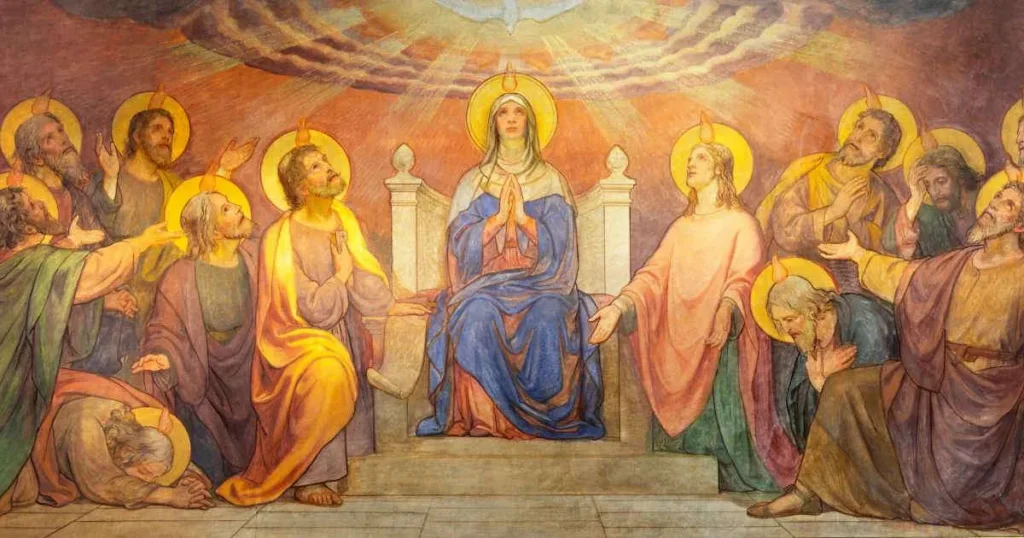
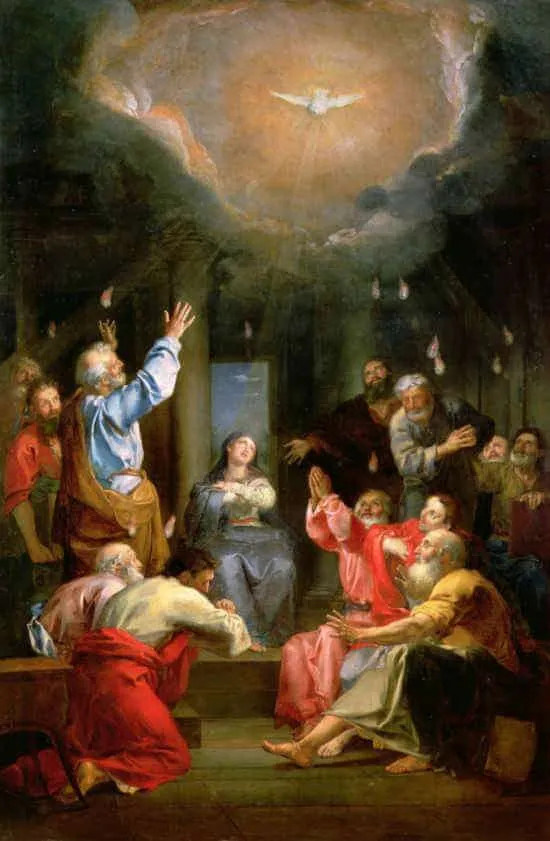
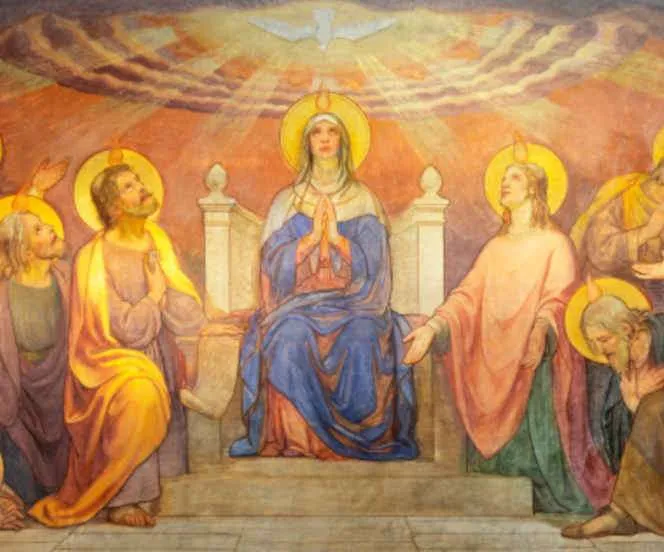
On the fiftieth day after Jesus’ Resurrection, ten days after His Ascension, the 120 disciples were once again gathered in the upper room when they experienced something beyond their imagination. From the sky came a noise like a strong driving wind. It filled the room they were in. Tongues, as of fire, fell upon all gathered, and they were given the gift of tongues, which enabled them to speak in different languages—by the power of the Holy Spirit—to the diverse groups of people in Jerusalem. This is what Jesus had promised them, and suddenly they understood as they received the Gift of God.

After receiving the Holy Spirit, the disciples went out into the community of Jerusalem and began to boldly proclaim the Gospel to all. The inhabitants of Jerusalem were shocked and confused. Some accused the disciples of being drunk and scoffed at them. Some, however, quickly believed. Peter then stood up and gave a stirring and powerful sermon that presented the whole mystery of salvation. He spoke of Jesus as the Savior and the need to repent and be baptized. “Those who accepted his message were baptized, and about three thousand persons were added that day” (Acts 2:41). The new followers then devoted themselves to the teaching of the Apostles and to the celebration of the Eucharist. A strong Christian community was formed in Jerusalem.

As the community continued to grow, learn the teachings of the Apostles, and receive the outpouring of the Holy Spirit, miracles took place. Peter and John cured a blind man. Soon, there were 5,000 converts to Christ who were filled with the Holy Spirit. More miracles took place at the hands of all of the Apostles, people from the surrounding villages came and were converted, and the new believers lived as one, sharing their food and resources with others.

Soon the members of the Sanhedrin became concerned. They thought they had stopped Jesus, but they saw that the Apostles were converting thousands. The Apostles were arrested and jailed, but an angel let them out in the night, and they appeared in the Temple the next day, continuing to preach and heal. The bewildered Sanhedrin members did not know what to do. They hoped that the new excitement would soon subside and everything would go back to normal—but it didn’t.

Recognizing the need to better care for the poor with the money and provisions the thousands of disciples held in common, the Apostles appointed seven men to be deacons for the task, so that the Apostles could continue to preach, heal, and offer the sacraments. Shortly afterward, blood was shed. Stephen, one of the newly ordained deacons, was martyred. “On that day, there broke out a severe persecution of the church in Jerusalem, and all were scattered throughout the countryside of Judea and Samaria, except the apostles” (Acts 8:1).

The above illustrates the role of the Holy Spirit. Pentecost was the birthday of the Church. The Holy Spirit’s mission was to form the Church and empower each baptized member of Christ’s body to fulfill his or her specific duty. Some were to preach, some cared for the poor, some shed their blood for their faith, and others were to be sent to other towns and villages. The scattering of the community of the believers in Jerusalem was clearly permitted by the Holy Spirit as a way of expanding the Church beyond Jerusalem. The newly converted and empowered disciples traveled far and wide to expand the newborn Church that grew at a rapid pace as the new Body of Christ matured and fulfilled its mission.

In the years and centuries ahead, the Holy Spirit continued to form the Church. The Apostles were inspired to write what is today the New Testament so that future believers would have firsthand accounts of the Gospel. From there, the successors to the Apostles, in union with the successor of Saint Peter, helped to form the Sacred Tradition, which is the ongoing deepening revelation of the Word of God to address new questions that arose. Jesus’ promise to Peter and his successors that He would give to him the keys to the Kingdom of Heaven, so that he and his successors could bind and loose on earth as it is in Heaven, evolved and helped the Church to mature. The Holy Spirit enabled the growing communities to continue to take nourishment through the Sacraments. The believers were empowered to pray and to enter into a personal relationship with Him Who rose and is now seated at the right hand of the Father. Other believers were filled with charisms needed to build up the Church. The Gospel continued to be preached to the ends of the earth, and the people of God were drawn into lives of profound holiness and union with God. This is all effected by the Gift of the Holy Spirit first given at Pentecost and continually given today.

In addition to building up the Church and enabling it to fulfill its divine mission, the Holy Spirit also sanctifies every individual believer, especially through the bestowal of the Seven Gifts of the Holy Spirit. According to the Catechism of the Catholic Church, “The seven gifts of the Holy Spirit are wisdom, understanding, counsel, fortitude, knowledge, piety, and fear of the Lord…They complete and perfect the virtues of those who receive them. They make the faithful docile in readily obeying divine inspirations” (#1831). Additionally, the Holy Spirit instills twelve fruits: “The fruits of the Spirit are perfections that the Holy Spirit forms in us as the first fruits of eternal glory. The tradition of the Church lists twelve of them: ‘charity, joy, peace, patience, kindness, goodness, generosity, gentleness, faithfulness, modesty, self-control, chastity’” (#1832). These graces are first given in Baptism and perfected in Confirmation. Each baptized and confirmed member of Christ has the potential to fully realize these graces so as to grow in holiness and fulfill their divine mission.

As we celebrate the great Solemnity of Pentecost, call on the Holy Spirit in your life. Too often we receive Baptism and Confirmation with a closed mind and heart. We fail to allow the Holy Spirit to become fully active in our lives. Pray to the Holy Spirit today, and open yourself more fully to all that God wishes to bestow upon you so that you will become holy and a more active member of His Body, the Church.

Source: https://mycatholic.life/saints/saints-of-the-liturgical-year/pentecost/

Pentecost Sunday Read More »

John 20:21–23

The Wind and Fire of Pentecost

Jesus said to them again, “Peace be with you. As the Father has sent me, so I send you.” And when he had said this, he breathed on them and said to them, “Receive the Holy Spirit. Whose sins you forgive are forgiven them, and whose sins you retain are retained.”

Reflection:

Today we celebrate the Solemnity of Pentecost, which took place fifty days after Jesus rose from the dead. Today’s Gospel recounts Jesus’ first appearance to the Apostles as a group—Thomas being absent—on the evening of the Resurrection. During this appearance, Jesus conferred on them the authority to forgive sins, a power foundational to the Sacrament of Reconciliation. This gift anticipates the fuller outpouring of the Holy Spirit at Pentecost, when the Apostles were empowered to carry out their mission with boldness and divine strength.

By breathing on the Apostles, Jesus recalls the creation account in Genesis, when God breathed life into Adam (Genesis 2:7). Now Christ, the New Adam, breathes new life—the divine life of grace—into His Apostles. While this breathing conveys the Holy Spirit in an anticipatory manner, Pentecost represents the full bestowal of the Spirit upon the Church, sanctifying and empowering the Apostles and all disciples.

Our knowledge of Pentecost comes to us from the Acts of the Apostles, Luke’s continuation of his Gospel in which he details the beginning of the Church: “And suddenly there came from the sky a noise like a strong driving wind, and it filled the entire house in which they were. Then there appeared to them tongues as of fire, which parted and came to rest on each one of them” (Acts 2:2–3).

When the Holy Spirit came upon the Apostles at Pentecost, there were physical manifestations. God often accompanies significant biblical actions with visible signs to reveal the invisible reality of His presence and activity. Though the transforming reality of Pentecost was the outpouring of the Holy Spirit, the accompanying signs teach us about the Spirit’s nature and work.

The “strong driving wind” that “filled the entire house” symbolizes the ongoing, life-giving presence of the Holy Spirit. Like the wind, the Spirit is unseen yet powerful, moving where He wills and producing visible effects in the lives of believers. Though we understand the natural causes of wind today, its mystery and uncontrollable nature remain, reflecting the Holy Spirit’s divine origin and unstoppable work in the world. He comes from God’s hidden presence, unseen but active, bringing about a new creation in the Church and in every soul He touches.

The “tongues as of fire” signify the Spirit’s purifying and transforming action, burning away sin and igniting hearts with zeal for God’s mission. Together, these signs reveal the Spirit as the powerful, life-giving, and sanctifying presence of God, animating the Church and guiding her to proclaim the Gospel to the ends of the earth.

Before Pentecost, the disciples hid in the Upper Room, fearful and uncertain. Though Jesus had taught them, performed miracles, and revealed His perfect love, their hearts were not yet fully transformed. At Pentecost, the Holy Spirit came as a divine fire, emboldening them to become fearless witnesses.

When we receive the Sacrament of Confirmation, we receive the same gift bestowed upon the disciples at Pentecost. We might not feel a strong driving wind or see tongues of fire descend from Heaven, but the reality is the same. The signs at Pentecost were not only for the disciples, they were also for us, revealing the Holy Spirit’s workings and power in our lives.

Reflect today on the transforming power of the Holy Spirit. Have you experienced the Spirit’s presence in your life? Like the first disciples, have you allowed the Holy Spirit to fill you with power from on high, emboldening you, purifying you, and setting you on fire with zeal to fulfill the mission God has entrusted to you? The Holy Spirit will transform us—if we let Him—setting our feet on the path to eternal glory.

Source: https://catholic-daily-reflections.com/2026/05/24/the-mother-of-the-redeemed/

John 20:21–23 Read More »

John 21:20–22

Disordered Curiosity

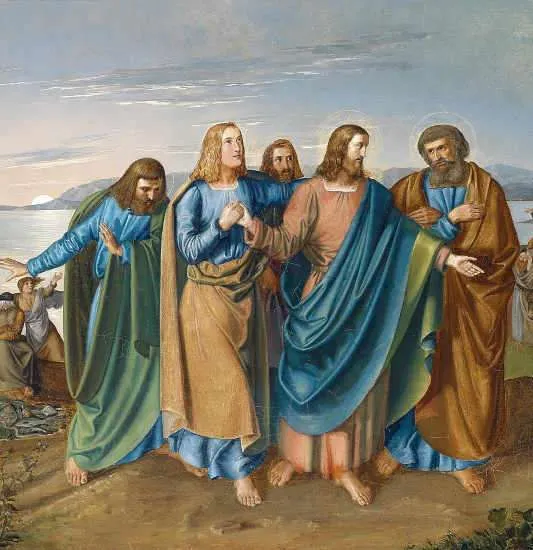
Peter turned and saw the disciple following whom Jesus loved, the one who had also reclined upon his chest during the supper and had said, “Master, who is the one who will betray you?” When Peter saw him, he said to Jesus, “Lord, what about him?” Jesus said to him, “What if I want him to remain until I come? What concern is it of yours? You follow me.”

Reflection:

Just before today’s Gospel, Jesus foretold Peter’s martyrdom and concluded by saying, “Follow me,” calling Peter to focus on his mission of discipleship. Upon learning of his own fate, however, Peter became curious about John’s: “Lord, what about him?” Jesus gently redirects him: “What if I want him to remain until I come? What concern is it of yours? You follow me.” Jesus’ words remind us of a crucial truth: We must focus on our personal call to follow Him rather than giving in to unhealthy curiosity.

Knowing and loving others as friends, listening to their joys and struggles with charity, differs from idle curiosity. True knowledge of someone builds selfless and loving relationships, giving us a share in God’s relational nature. The Father knows and loves the Son, and the Son knows and loves the Father, and from that love the Holy Spirit proceeds. In contrast, idle curiosity—“knowing about” someone for the wrong reasons—can lead to pride, judgment, or distraction.

In and of itself, the desire for knowledge is neither good nor bad; it is a natural inclination given to us by God. It becomes good when it leads to a desire to know the truth, particularly about God, Creation, and all matters that lead us to greater holiness. Saint Thomas Aquinas distinguishes between curiosity, the disordered pursuit of knowledge, and studiousness, a moral virtue that directs our natural desire for knowledge toward good and necessary ends. He describes studiousness as a form of temperance for the mind—a habit that moderates and orders our desire for knowledge so that it serves truth, virtue, and ultimately, God’s glory.

The desire for knowledge becomes disordered when it serves no good purpose, distracts us from our duties, or stems from pride, sensual desire, or an unhealthy fascination with evil. It is also disordered when worldly knowledge dominates our minds, drawing us away from God and spiritual matters. For example, our world is often flooded by shocking and sensational stories. Though there is a value in news stories, they can distract us from our mission and lead us into sin. 

Adam and Eve’s fall resulted from pride and an unholy desire for knowledge they did not need, as the fruit was “desirable for gaining wisdom” (Genesis 3:6). Like Peter’s question about John, their distraction led them away from trust in God’s plan. Jesus’ gentle correction reminds Peter—and us—of what truly matters.

Reflect today on the importance of getting to know others and the danger of being overly curious to know about them. There are many things we do not need to know; it takes temperance of the mind to discipline ourselves so that we remain focused on our God-given responsibilities. Intemperance of the mind, stemming from pride, leads to gossip and judgment. Hence, we must continuously hear Jesus remind us: “What concern is it of yours? You follow me.”

Source: https://catholic-daily-reflections.com/2026/05/22/disordered-curiosity/

John 21:20–22 Read More »