May 2026

Fifth Sunday of Easter

First Reading Acts 6:1-7

As the number of disciples continued to grow,
the Hellenists complained against the Hebrews
because their widows
were being neglected in the daily distribution.
So the Twelve called together the community of the disciples and said,
“It is not right for us to neglect the word of God to serve at table.
Brothers, select from among you seven reputable men,
filled with the Spirit and wisdom,
whom we shall appoint to this task,
whereas we shall devote ourselves to prayer
and to the ministry of the word.”
The proposal was acceptable to the whole community,
so they chose Stephen, a man filled with faith and the Holy Spirit,
also Philip, Prochorus, Nicanor, Timon, Parmenas,
and Nicholas of Antioch, a convert to Judaism.
They presented these men to the apostles
who prayed and laid hands on them.
The word of God continued to spread,
and the number of the disciples in Jerusalem increased greatly;
even a large group of priests were becoming obedient to the faith.

Responsorial Psalm Psalms 33:1-2, 4-5, 18-19

R. (22) Lord, let your mercy be on us, as we place our trust in you.
or:
R. Alleluia.
Exult, you just, in the LORD;
praise from the upright is fitting.
Give thanks to the LORD on the harp;
with the ten-stringed lyre chant his praises.
R. Lord, let your mercy be on us, as we place our trust in you.
or:
R. Alleluia.
Upright is the word of the LORD,
and all his works are trustworthy.
He loves justice and right;
of the kindness of the LORD the earth is full.
R. Lord, let your mercy be on us, as we place our trust in you.
or:
R. Alleluia.
See, the eyes of the LORD are upon those who fear him,
upon those who hope for his kindness,
To deliver them from death
and preserve them in spite of famine.
R. Lord, let your mercy be on us, as we place our trust in you.
or:
R. Alleluia.

Second Reading 1 Peter 2:4-9

Beloved:
Come to him, a living stone, rejected by human beings
but chosen and precious in the sight of God,
and, like living stones,
let yourselves be built into a spiritual house
to be a holy priesthood to offer spiritual sacrifices
acceptable to God through Jesus Christ.
For it says in Scripture:
Behold, I am laying a stone in Zion,
a cornerstone, chosen and precious,
and whoever believes in it shall not be put to shame.
Therefore, its value is for you who have faith, but for those without faith:
The stone that the builders rejected
has become the cornerstone, and
A stone that will make people stumble,
and a rock that will make them fall.
They stumble by disobeying the word, as is their destiny.

You are “a chosen race, a royal priesthood,
a holy nation, a people of his own,
so that you may announce the praises” of him
who called you out of darkness into his wonderful light.

Alleluia John 14:6

R. Alleluia, alleluia.
I am the way, the truth and the life, says the Lord;
no one comes to the Father, except through me.
R. Alleluia, alleluia.

Gospel John 14:1-12

Jesus said to his disciples:
“Do not let your hearts be troubled.
You have faith in God; have faith also in me.
In my Father’s house there are many dwelling places.
If there were not,
would I have told you that I am going to prepare a place for you?
And if I go and prepare a place for you,
I will come back again and take you to myself,
so that where I am you also may be.
Where I am going you know the way.”
Thomas said to him,
“Master, we do not know where you are going;
how can we know the way?”
Jesus said to him, I am the way and the truth and the life.
No one comes to the Father except through me.
If you know me, then you will also know my Father.
From now on you do know him and have seen him.”
Philip said to him,
“Master, show us the Father, and that will be enough for us.”
Jesus said to him, “Have I been with you for so long a time
and you still do not know me, Philip?
Whoever has seen me has seen the Father.
How can you say, ‘Show us the Father’?
Do you not believe that I am in the Father and the Father is in me?
The words that I speak to you I do not speak on my own.
The Father who dwells in me is doing his works.
Believe me that I am in the Father and the Father is in me,
or else, believe because of the works themselves.
Amen, amen, I say to you,
whoever believes in me will do the works that I do,
and will do greater ones than these,
because I am going to the Father.”

Source: https://bible.usccb.org/bible/readings/050326.cfm

Fifth Sunday of Easter Read More »
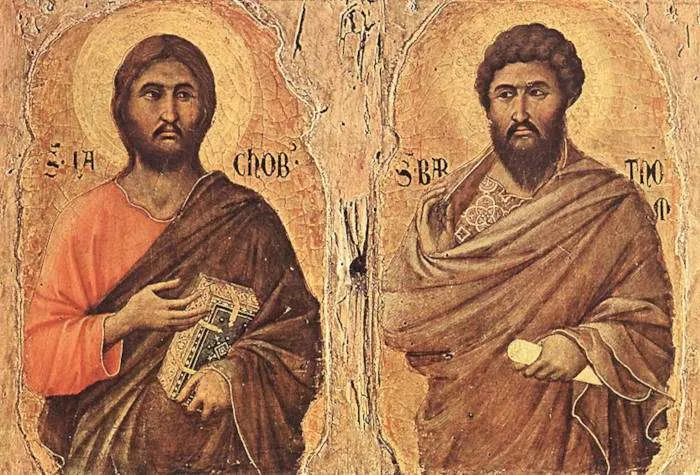
Saints Philip and James, Apostles

Saint Philip: c. 4–c. 80 Patron Saint of hatmakers and pastry chefs; Saint James: First century BC–c. 62; Patron Saint of pharmacists and the dying; Pre-Congregation canonizations

In the sixth century, Pope Pelagius I traveled to Constantinople and brought the relics of the Apostles Philip and James back to Rome, placing them in what is today called the Church of the Holy Apostles. It is for this reason that we honor these two Apostles together with one feast.

Saint Philip was one of the Twelve Apostles. He was most likely a follower of Saint John the Baptist and was aware of John pointing to Jesus as the Messiah. Philip might have been a brother to Simon Peter and Andrew, making him a fisherman by trade. The day after Simon and Andrew were invited to follow Jesus, Jesus encountered Philip and said, “Follow me” (John 1:43). Philip obeyed. He was from the town of Bethsaida, just north of the Sea of Galilee. Philip’s first act of evangelization was to tell his friend, Nathanael, that they had found the Messiah. Nathanael was reluctant at first, stating to Philip, “​​Can anything good come from Nazareth?” Philip’s response was ideal. He said to his friend, “Come and see” (John 1: 46). When Nathanael came and saw, he immediately professed his faith in Jesus as the Messiah, the Son of God. Early Church theologians believe that Philip followed our Lord from that time forward, witnessing Jesus’ first miracle at Cana.

When Jesus established the Twelve, Philip was among them. He is mentioned in John’s Gospel during the feeding of the 5,000 when Jesus sees the large crowd and then turns to Philip and says, “Where can we buy enough food for them to eat?” (John 6:6). Philip is also mentioned in connection with Greek-speaking Gentiles who want to see Jesus (see John 12:21), possibly indicating that Philip could speak Greek and was known to the Greek community. At the Last Supper, as Jesus was speaking about the Father, Philip said to him, “Master, show us the Father, and that will be enough for us”, to which Jesus gently responded, “Have I been with you for so long a time and you still do not know me, Philip? Whoever has seen me has seen the Father” (John 14:8–14).

After Pentecost, little is known about Philip’s missionary activity. Ancient traditions state he preached in Greece, Phrygia, and Syria, being martyred at an old age in Hierapolis, Phrygia, modern-day southwest Turkey, not far from Ephesus where Saint Paul established a church. Philip is believed to have died either by being crucified upside down or by beheading.

Saint James is also one of the Twelve. The traditional view, from as early as the second century, is that there are only two disciples of Christ in the New Testament with the name James. Some modern scholars identify three or more. If we stick with the traditional view, which was also held by Saint Jerome in the fourth century, then the two Jameses are James the Son of Zebedee and James the Less (also referred to as James the brother of the Lord, and James the Son of Alphaeus). Later authors call him James the Just. If James the Less is also the James who is the Lord’s brother, then James’ father was Alphaeus and his mother was Mary of Clopas, the sister of the Blessed Virgin Mary. This would make James the nephew of the Blessed Virgin and a first cousin to Jesus. He is referred to as Jesus’ “brother” because it was common at that time to refer to cousins and other relatives as brothers and sisters. In Mark’s Gospel, Levi (better known as Matthew) is also referred to as the son of Alphaeus (Mark 2:14) which could make James and Matthew brothers.

In his letter to the Corinthians, Saint Paul relates that the Lord appeared to James after His Resurrection (1 Corinthians 15:7). After Pentecost, James became the first bishop of the Church in Jerusalem. The Acts of the Apostles relates that it was James, as the head of the Jerusalem Church, who oversaw the First Council of Jerusalem and declared the final judgment on behalf of Peter (see Acts 15). Eusebius, a fourth-century bishop, writes that James spent long hours in the Temple of Jerusalem: “…he was in the habit of entering alone into the temple, and was frequently found upon his knees begging forgiveness for the people, so that his knees became hard like those of a camel.” Eusebius also wrote about James’ martyrdom, “…he was thrown from the pinnacle of the temple, and was beaten to death with a club.” Traditionally, the New Testament letter of James is believed to have been written by James the Less, although modern scholars question this fact. That letter was a general letter, most likely sent to all of the Jewish Christian communities. It begins, “James, a slave of God and of the Lord Jesus Christ, to the twelve tribes in the dispersion, greetings” (James 1:1). The letter then goes on to give encouragement in trials and persecutions, exhortations and warnings, and concludes by speaking of the power of prayer.

What we know for certain about these two disciples is that they were among the Twelve Apostles. They were uniquely chosen by the Savior to continue His divine mission of evangelizing the world. They embraced their ministry heroically, establishing communities of believers, preaching the Gospel, offering the sacraments, performing miracles, and governing the early Church. Allow the apostolic zeal and the courageous martyrdom of these apostles to inspire you today with the same zeal and courage, so that God can also send you forth on mission.

Source: https://mycatholic.life/saints/saints-of-the-liturgical-year/may-3—saints-philip-and-james-apostles/

Saints Philip and James, Apostles Read More »

John 14:4–6

The Way to the Father

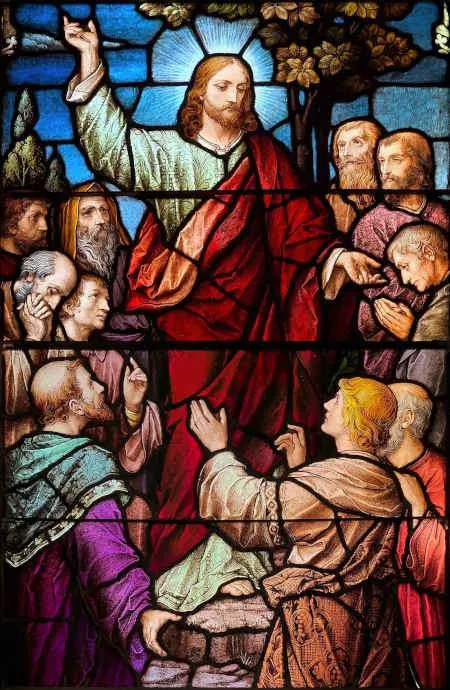
“Where I am going you know the way.” Thomas said to him, “Master, we do not know where you are going; how can we know the way?” Jesus said to him, “I am the way and the truth and the life. No one comes to the Father except through me.”

Reflection:

In addition to His parables and moral teachings, Jesus revealed to His disciples deep mysteries in a direct way that they did not immediately comprehend, especially when He spoke to the Twelve in intimate settings, such as the Last Supper, the context for today’s Gospel. In this discourse, Jesus explains, in veiled form, that He will soon ascend into Heaven where He will prepare a place for His followers. He explains that because they know Him, they know the way to where He is going—the way to the Father—because He Himself is that Way. As Jesus spoke these mysterious truths, we can imagine the Twelve listening attentively, yet with confusion.

Everything Jesus taught was true. His words, recorded in the Gospels, reveal to us the deepest divine mysteries. Within the Scriptures, we find all we need to know to attain perfect holiness and the eternal life of Heaven. Yet we cannot quickly digest Jesus’ words as we might an intriguing novel or history book. There are many layers of depth to what He says, and we can only understand those layers through prayer.

As the conversation continued, “Philip said to him, ‘Master, show us the Father, and that will be enough for us.’ Jesus said to him, ‘Have I been with you for so long a time and you still do not know me, Philip? Whoever has seen me has seen the Father. How can you say, ‘Show us the Father’?’” (John 14:8–9).

Jesus’ response likely surprised Philip and the other disciples because they did not understand what He was saying. Their intention was good—they wanted to understand—but Jesus’ words were more than they could comprehend at that moment. Despite this, Jesus gently rebuked Philip as a way of drawing him deeper into the mystery He was revealing.

God often treats us the same way. There are many things that we do not understand. Why do innocent people suffer? Why doesn’t God heal my loved one in answer to my prayers? Why do my children no longer practice the faith? What am I supposed to do with my life?

Just as Philip struggled to understand Jesus’ words, we, too, face moments of confusion when God’s ways seem beyond our grasp. God’s answer to life’s most challenging questions is rarely straightforward or immediate. Why? Because such an approach can never fully satisfy the depth of our hearts. Instead, God reveals a kernel of truth to us and then invites us to ponder it, revealing the divine mystery we seek to understand little by little, to the degree we are open.

The answers we seek come only as we conform our wills to God’s, patiently opening ourselves to His Wisdom. Divine mysteries can only be understood through prayer and deep attentiveness to the truths in God’s mind. Jesus is the Way, the Truth, and the Life. Only by uniting ourselves to Him in prayer will we discover the path we must walk, the truth we need to hear, and the life we are called to live.

Reflect today on anything you struggle to understand. See yourself as one of the Twelve, listening to Jesus speak, but failing to comprehend. Do not be discouraged; instead, allow the fullness of Jesus’ divine Truth to sink in gradually. Spend time in prayer, read the Gospels, be open, and listen from the depths of your heart. Seek out His gentle voice and know that He is your Way, Truth, and Life. Let Him lead you and reveal to you the mysteries of His divine Wisdom so that you, too, know the way to the Father in Heaven.

Source: https://catholic-daily-reflections.com/2026/05/02/the-way-to-the-father/

John 14:4–6 Read More »

Saint Joseph the Worker

Patron Saint of workers

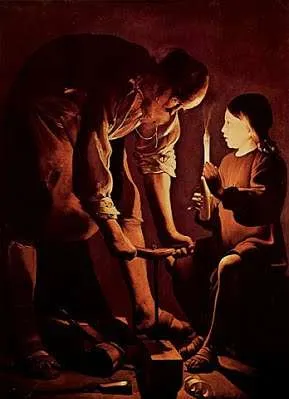
Every age has its challenges. Therefore, every age needs a role model to look up to and to help the faithful navigate the particular challenges of their day and age. During the nineteenth and twentieth centuries, Saint Joseph was especially held up to the faithful who engaged in the daily toil of work to support themselves and their families with dignity and love.

Work was not part of God’s original plan for humanity. Recall that when Adam and Eve were cast out of the Garden of Eden, God said to Adam, “Cursed is the ground because of you! In toil you shall eat its yield…” Thus, working “by the sweat of your brow” is a consequence of Original Sin. However, we must not see this consequence as something evil, but as a means by which we now fulfill our human mission. Human labor has dignity because it is an act of obedience to the will of God and is a participation in the work of God, the work of creation.

The invitation to turn to Saint Joseph as the patron saint of workers emerged over the past two centuries as societies went through drastic social and economic changes. Through the eighteenth century, most societies remained the same as they had always been. The majority of people tilled the land and raised animals to provide food for their families. Some engaged in various trades: a carpenter, blacksmith, tailor, baker, or shoemaker. With the rise of the Industrial Revolution in the nineteenth century, societies began to change. Machines were developed to perform tasks that had been performed by hand. Workers moved into cities to labor in factories of mass production, and many of the individual tradesmen were left behind. And though production increased, new abuses also arose. Child labor, long hours, unsafe work environments, and low wages were among the new problems. These problems especially affected family life. In response to these new societal problems, the Church held up Saint Joseph as a model for all to emulate.

In 1889, Pope Leo XIII pointed the faithful to Saint Joseph. Unchecked capitalism began to tear families apart as profit started to become the goal of work, rather than as a means of providing for one’s family. An even greater concern was the introduction of the philosophy of socialism, which was coupled with atheism. Socialism presented itself as a friend and ally to the worker, but it did so through objectively distorted means. It sought to eliminate religion, the family, and private ownership of property. Instead, each individual was to become a subject of the state, while the state took the place of God. Work was for the fatherland or motherland, not primarily to care for one’s family. In Saint Joseph, workers had someone to emulate. Saint Joseph did not work to get rich. He was not a servant of the state. He was not an oppressed laborer who needed liberating. He was a family man who found dignity in work as he provided for his family in a humble way.

On May 1, 1955, in an address to the Catholic Association of Italian Workers, Pope Pius XII took devotion to Saint Joseph one step further. He confronted the growing concerns posed by communism and its socialist philosophy on human labor and family life by instituting the Feast of Saint Joseph the Worker. “The humble craftsman of Nazareth not only personifies to God and the Holy Church the dignity of the laborer, but he is also always the provident guardian of you and your families.” May 1 (May Day) was chosen for the feast because socialist countries celebrated “International Workers’ Day” on that date. A Catholic feast, honoring the laborer in the person of Saint Joseph, was a fitting way of combating socialist ideology and restoring the dignity of labor to its proper place.

Though socialism and communism have faded in many parts of the world, they certainly have not gone away. Their philosophies continue to permeate many political systems. Unchecked capitalism also remains a threat to healthy human development and family life when the common good is overshadowed by selfish gain. The answer is simple: Go to Saint Joseph! We do not have to become intellectuals who comprehend all of the economic and political systems of our times. Instead, we must all turn to holy role models whom we can imitate. For the laborer and the family, Saint Joseph is a just man, a faithful spouse and father, a hard worker whose primary concern is for his family, a guardian and protector, an obedient servant of God, one who is humble and hidden from the spotlight, but faithful in all he does.

As we honor Saint Joseph the Worker, ponder your own call to engage in the dignity of work. As you do, put your work into proper perspective. What is the goal of your work? Do you work in an excessive way, seeking excessive gain? Do you grumble about your work and feel as though it is beneath you, holding you back from personal fulfillment? Strive for the virtuous way of Saint Joseph. Work hard to fulfill your vocation in life, and avoid excesses and extremes. We are made for love, for family, for faith, for charity, and for the glory of God and the salvation of souls. If your goals in life are anything other than these, then go to Saint Joseph the Worker and choose him as your model.

Source: https://mycatholic.life/saints/saints-of-the-liturgical-year/may-1—saint-joseph-the-worker/

Saint Joseph the Worker Read More »

John 14:1–2

Hope During the Uncertainties of Life

Jesus said to his disciples: “Do not let your hearts be troubled. You have faith in God; have faith also in me. In my Father’s house there are many dwelling places. If there were not, would I have told you that I am going to prepare a place for you?”

Reflection:

We all need hope, especially in the face of life’s uncertainties. The inspired virtue of hope is much more than wishful thinking. It’s a supernatural gift by which we are strengthened to persevere through challenges, trusting in God’s promises and His fidelity. Hope sustains us, even in the darkest and most painful moments.

In today’s Gospel, Jesus offers His disciples—and us—the antidote to fear and uncertainty: hope rooted in faith. His words at the Last Supper are intended to strengthen the Apostles for the sorrowful events of His Passion. Though they did not yet fully understand what was about to unfold, Jesus gave them this loving command: “Do not let your hearts be troubled. You have faith in God; have faith also in me.”

In the light of the Resurrection, imagine the Apostles reflecting on these words. They would have recalled the confusion and despair they experienced during Jesus’ arrest, crucifixion, and burial. But after encountering the risen Christ, their sorrow turned to joy, and their doubt to unshakable faith. In hindsight, they would have realized they didn’t need to let their hearts be troubled—they should have trusted in His promise.

The Apostles’ journey from fear and guilt to hope and strength is a reminder for us all. We, too, can look back on moments when we failed to trust in God during painful times. Despair, one of the most painful human experiences, extinguishes hope and leaves us feeling abandoned. But even in our failures, God is present, ready to transform our weakness into supernatural hope. By humbly confessing our lack of trust, we open our hearts to His healing grace and allow Him to prepare us for future trials.

Just as the Apostles grew in hope through their encounter with the risen Christ, so too did Mary, the Mother of Hope, model unwavering faith even in the midst of profound sorrow. Standing at the foot of the Cross, her heart was pierced with sorrow, but she remained firm in faith and trust. Her hope was based on her certainty that God’s plan would be fulfilled through her Son’s Passion. In times of trial, turn to Mary, who will guide you in placing your trust in her Son and in the eternal promises of His love.

Reflect today on Jesus’ loving command: “Do not let your hearts be troubled. You have faith in God; have faith also in me.” He has prepared a place for you in His Father’s house—a place where there will be no more sin and suffering. By keeping your eyes fixed on this eternal promise, you can overcome the fears and struggles of this life, trusting that God’s providence will guide you. Trust that He is already preparing a place for you in His Father’s house, and let this hope sustain you, transforming every sorrow into joy and every trial into a step closer to the eternal happiness that awaits you.

Source: https://catholic-daily-reflections.com/2026/04/30/hope-during-the-uncertainties-of-life/

John 14:1–2 Read More »