2023

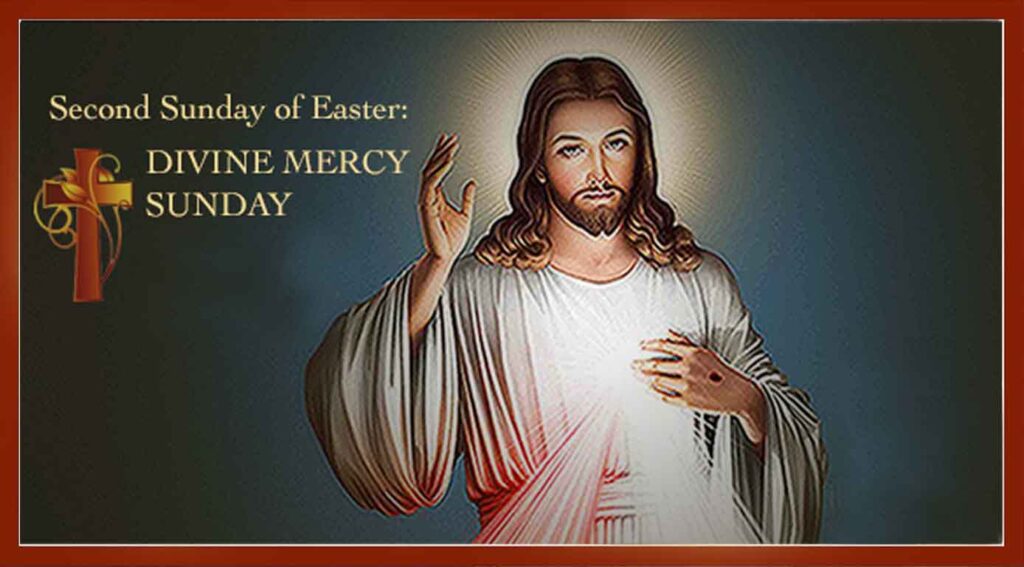
Easter Sunday – Second Sunday of Easter (Sunday of Divine Mercy)

Liturgy of the Word

First Reading: Acts 2:42-47

They devoted themselves
to the teaching of the apostles and to the communal life,
to the breaking of bread and to the prayers.
Awe came upon everyone,
and many wonders and signs were done through the apostles.
All who believed were together and had all things in common;
they would sell their property and possessions
and divide them among all according to each one’s need.
Every day they devoted themselves
to meeting together in the temple area
and to breaking bread in their homes.
They ate their meals with exultation and sincerity of heart,
praising God and enjoying favor with all the people.
And every day the Lord added to their number those who were being saved.

Responsorial Psalm: Psalm 118:2-4, 13-15, 22-24

Response– Give thanks to the LORD for he is good, his love is everlasting

Let the house of Israel say,
“His mercy endures forever.”
Let the house of Aaron say,
“His mercy endures forever.”
Let those who fear the LORD say,
“His mercy endures forever.”
R– Give thanks to the LORD for he is good, his love is everlasting

I was hard pressed and was falling,
but the LORD helped me.
My strength and my courage is the LORD,
and he has been my savior.
The joyful shout of victory
in the tents of the just:
R– Give thanks to the LORD for he is good, his love is everlasting

The stone which the builders rejected
has become the cornerstone.
By the LORD has this been done;
it is wonderful in our eyes.
This is the day the LORD has made;
let us be glad and rejoice in it.
R– Give thanks to the LORD for he is good, his love is everlasting

Second Reading: 1 Pt 1:3-9

Blessed be the God and Father of our Lord Jesus Christ,
who in his great mercy gave us a new birth to a living hope
through the resurrection of Jesus Christ from the dead,
to an inheritance that is imperishable, undefiled, and unfading,
kept in heaven for you
who by the power of God are safeguarded through faith,
to a salvation that is ready to be revealed in the final time.
In this you rejoice, although now for a little while
you may have to suffer through various trials,
so that the genuineness of your faith,
more precious than gold that is perishable even though tested by fire,
may prove to be for praise, glory, and honor
at the revelation of Jesus Christ.
Although you have not seen him you love him;
even though you do not see him now yet believe in him,
you rejoice with an indescribable and glorious joy,
as you attain the goal of your faith, the salvation of your souls.

Alleluia: Jn 20:29

Alleluia, alleluia. You believe in me, Thomas, because you have seen me, says the Lord;
blessed are they who have not seen me, but still believe! Alleluia, alleluia.

Gospel: Jn 20:19-31

A reading from the holy Gospel according to John

On the evening of that first day of the week,
when the doors were locked, where the disciples were,
for fear of the Jews,
Jesus came and stood in their midst
and said to them, “Peace be with you.”
When he had said this, he showed them his hands and his side.
The disciples rejoiced when they saw the Lord.
Jesus said to them again, “Peace be with you.
As the Father has sent me, so I send you.”
And when he had said this, he breathed on them and said to them,
“Receive the Holy Spirit.
Whose sins you forgive are forgiven them,
and whose sins you retain are retained.”

Thomas, called Didymus, one of the Twelve,
was not with them when Jesus came.
So the other disciples said to him, “We have seen the Lord.”
But he said to them,
“Unless I see the mark of the nails in his hands
and put my finger into the nailmarks
and put my hand into his side, I will not believe.”

Now a week later his disciples were again inside
and Thomas was with them.
Jesus came, although the doors were locked,
and stood in their midst and said, “Peace be with you.”
Then he said to Thomas, “Put your finger here and see my hands,
and bring your hand and put it into my side,
and do not be unbelieving, but believe.”
Thomas answered and said to him, “My Lord and my God!”
Jesus said to him, “Have you come to believe because you have seen me?
Blessed are those who have not seen and have believed.”

Now, Jesus did many other signs in the presence of his disciples
that are not written in this book.
But these are written that you may come to believe
that Jesus is the Christ, the Son of God,
and that through this belief you may have life in his name.

The Readings and Gospel were sourced from:

Easter Sunday – Second Sunday of Easter (Sunday of Divine Mercy) Read More »
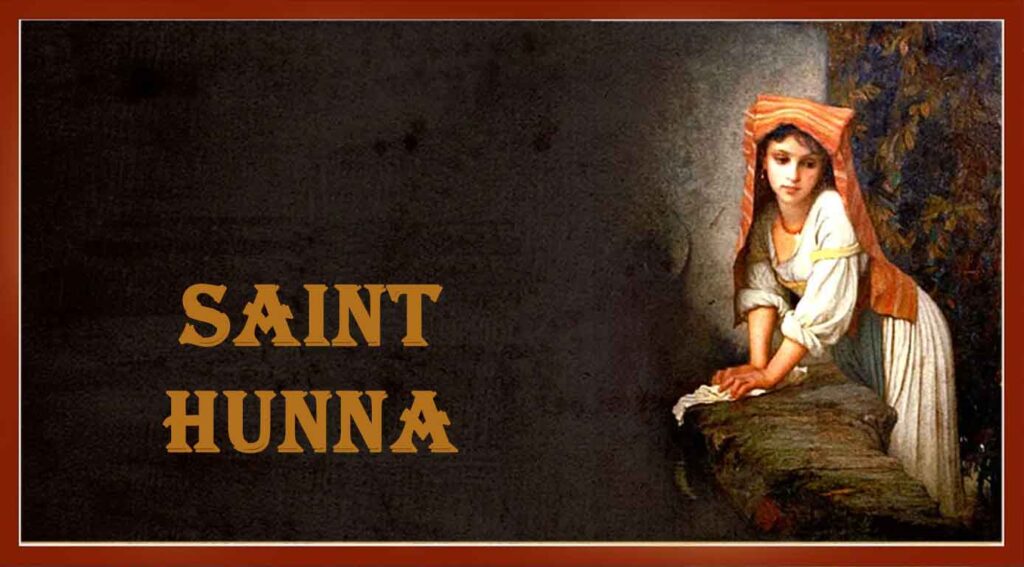
Saint Hunna

Saint Hunna was born in Alsace in eastern France. She was the daughter of a duke and born into “a privileged life”. She married Huno of Hunnaweyer, a nobleman and aristocrat. They had one son.

Her family was influenced by the former bishop and hermit Saint Deodatus of Nevers, who inspired her to serve her poor neighbors. In addition to caring for her family, home, and estate while her husband traveled for political and diplomatic reasons, she spent her time in prayer and visited her neighbors daily, caring for the sick and providing them with religious instruction, cooking, cleaning, bathing, and childcare, as well as washing and replacing their clothes, which earned her the name the “Holy Washerwoman”.

Scholar Jane Tibbetts Schulenburg placed Hunna in the tradition of what she called the “domestic saint” or “holy housekeeper”, pious and noble women in the Middle Ages, who like Hunna, conducted public roles such as founders and abbesses of convents, but whose “popular and local fame rested on her pious activity of washing the clothing of the poor”, from where she received her nickname. Hunna is the patron of laundresses

Sources:

https://en.wikipedia.org/wiki/Hunna
Dunbar, Agnes B.C. (1901). A Dictionary of Saintly Women. 1. London: George Bell & Sons. p. 397.

Saint Hunna Read More »

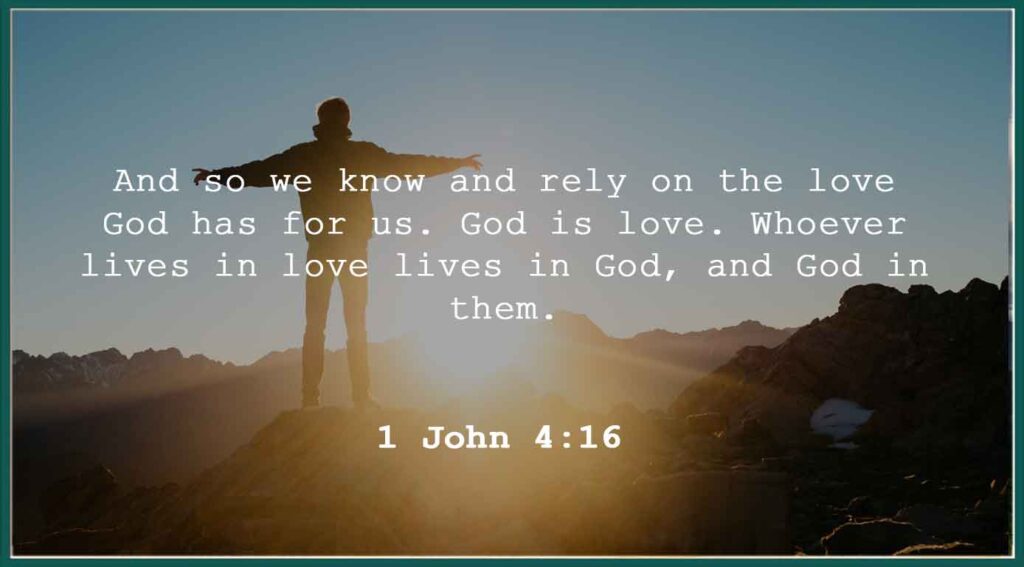
1 John 4:16

Verse:

“And so we know and rely on the love God has for us. God is love. Whoever lives in love lives in God, and God in them.” - 1 John 4:16

Prayer To Love As Jesus Loved

I pray that we may be united in spirit and in purpose, and that we do nothing from selfishness or empty conceit, but rather with humility of mind regard the needs of the other as more important than our own. This I ask in the name of Jesus, Who died for us all.

Amen.

1 John 4:16 Read More »

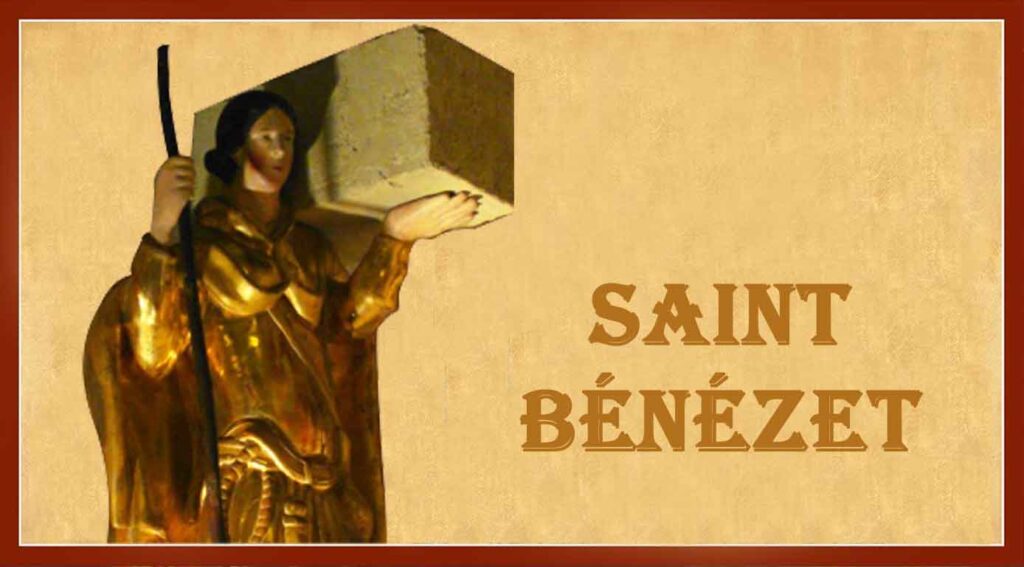
Saint Bénézet

Saint Bénézet was a shepherd boy who saw a vision during an eclipse in 1177 which led him to build a bridge over the Rhône River at Avignon.

He was told that angels would watch over his flocks in his absence. He built the bridge single-handedly; ecclesiastical and civil authorities refused to help him. Bénézet, it is said, lifted a huge stone into place, and announced it would be the start of the foundation. This would become the Pont Saint-Bénézet.

According to the legend, there were shouts of “Miracle! Miracle!” when Bénézet had laid the first stone. Eighteen miracles occurred in total: the blind had their vision restored, the deaf could hear again, cripples could walk; and hunchbacks had their backs straightened. Bénézet thus won support for his project from wealthy sponsors who, it is claimed, formed themselves into the Bridge-Building Brotherhood to fund its construction.

Saint Bénézet Read More »

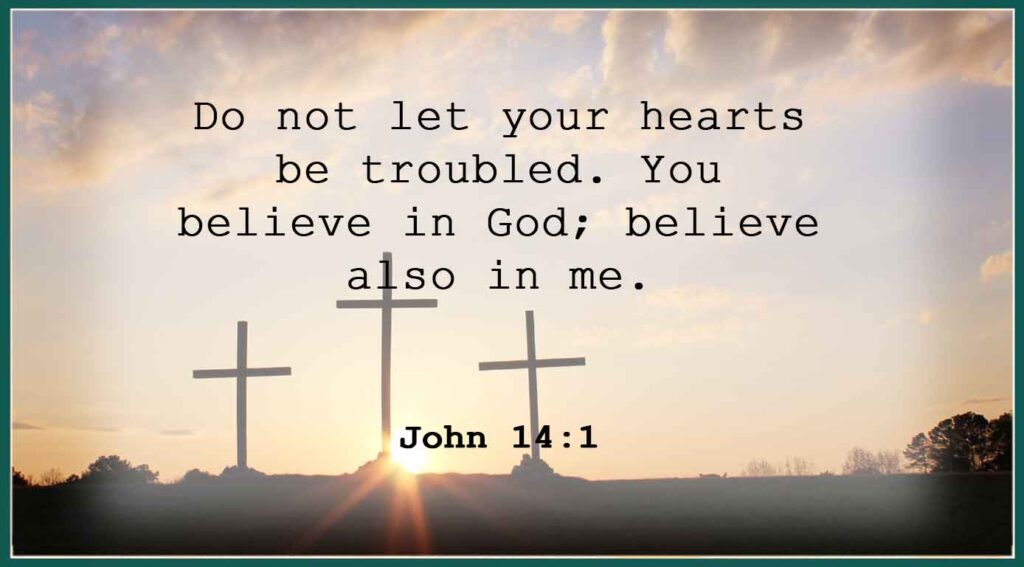
John 14:1

Verse:

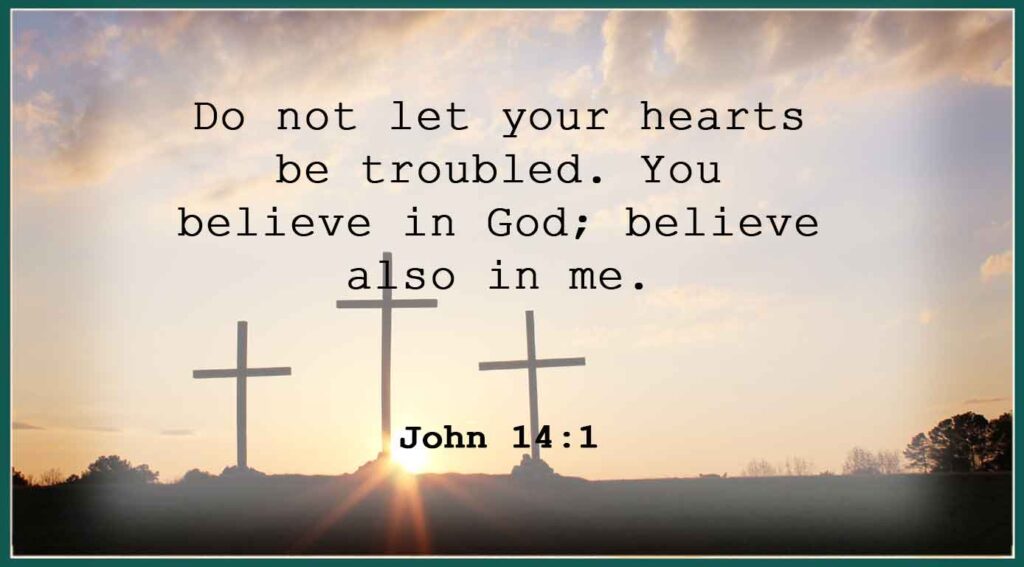
 “Do not let your hearts be troubled. You believe in God; believe also in me.” - John 14:1

Prayer For Unbelievers To Come To Faith In Jesus

I pray Lord, that in Your grace and mercy, You would convict the hearts of many today of the evils of sin, of the price that the Lord Jesus paid for their sins and of the judgement of condemnation on all who do not believe in the only begotten Son of God as Saviour.

John 14:1 Read More »

Saint Teresa of Los Andes

One needn’t live a long life to leave a deep imprint. Teresa of Los Andes is proof of that.

As a young girl growing up in the early 1900’s in Santiago, Chile, Juana Fernandez read an autobiography of a French-born saint—Thérèse, popularly known as the Little Flower. The experience deepened her desire to serve God and clarified the path she would follow. At age 19 Juana became a Carmelite nun, taking the name of Teresa.

The convent offered the simple lifestyle Teresa desired and the joy of living in a community of women completely devoted to God. She focused her days on prayer and sacrifice. “I am God’s,” she wrote in her diary. “He created me and is my beginning and my end.”

Toward the end of her short life, Teresa began an apostolate of letter-writing, sharing her thoughts on the spiritual life with many people. At age 20 she contracted typhus and quickly took her final vows. She died a short time later, during Holy Week.

Known as the “Flower of the Andes,” Teresa remains popular with the estimated 100,000 pilgrims who visit her shrine in Los Andes each year. Canonized in 1993 by Pope John Paul II, she is Chile’s first saint.

Sources:

https://www.franciscanmedia.org/saint-of-the-day/saint-teresa-of-los-andes/

Saint Teresa of Los Andes Read More »

Saint Stanislaus of Krakow

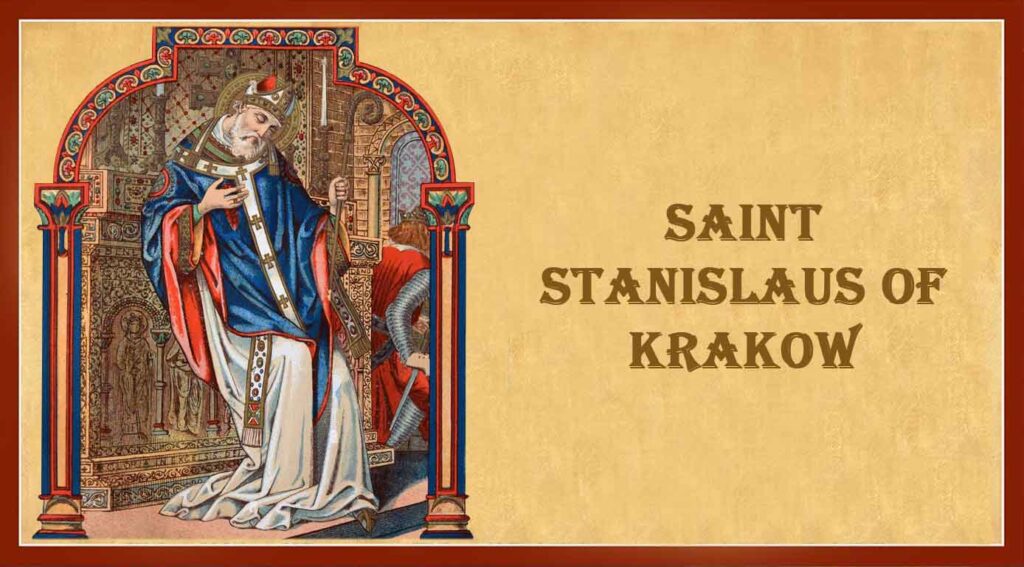
Saint Stanislaus of Krakow was born at Szczepanów, a village in Lesser Poland. He was the only son of the noble and pious Wielisław and Bogna. He was educated at a cathedral school in Gniezno (then the capital of Poland) and later, probably at Paris.

On his return to Poland, Stanislaus was ordained a priest by Lambert II Suła, Bishop of Kraków. Following his ordination, he was given a canonry in Kraków and became known for his preaching. He was subsequently made pastor of Czembocz near Kraków, canon and preacher at the cathedral, and later, vicar-general.

After the bishop’s death (1072), Stanislaus was elected his successor but accepted the office only at the explicit command of Pope Alexander II. Stanislaus was one of the earliest native Polish bishops. He also became a ducal advisor and had some influence on Polish politics.

Stanislaus’ major accomplishments included bringing papal legates to Poland, and reestablishment of a metropolitan see in Gniezno. He was the Bishop of Kraków known chiefly for having been martyred by the Polish king Bolesław II the Generous. Stanislaus is venerated in the Roman Catholic Church as Saint Stanislaus the Martyr.

Sources:

https://en.wikipedia.org/wiki/Stanislaus_of_Szczepan%C3%B3w
Britannica, The Editors of Encyclopaedia. "Saint Stanislaus of Kraków". Encyclopedia Britannica
Fr. Paolo O. Pirlo, SHMI (1997). "St. Stanislaus". My First Book of Saints. Sons of Holy Mary Immaculate - Quality Catholic Publications. pp. 80–81.

Saint Stanislaus of Krakow Read More »

1 Timothy 6:9

Verse:

1 Timothy 6:9
Those who want to get rich fall into temptation and a trap and into many foolish and harmful desires that plunge people into ruin and destruction.

Prayer To Foil Enemy Activities

Dear heavenly Father, we live in such evil days that I pray against all enemy activities that are bing done in secret, which are designed to harm  and to destroy others. Protect Your people we pray, bring the attacks of the enemy to nothing and foil all the plans and purposes that are harmful to others..

Lord we know that it is not Your will that any should perish but that all should come to repentance in Christ, and so we pray for the souls of those that are bound by the lies and deceit of the enemy and who are being manipulated by the deception of the evil one.

We ask that in Your grace and mercy those that have been blinded to the truth of the glorious gospel of Christ by the activities of the enemy would be brought into a knowledge of the saving gospel and come to know the Lord Jesus Christ as Saviour – we ask this for His praise and glory and in Jesus name,

Amen.

1 Timothy 6:9 Read More »