2023

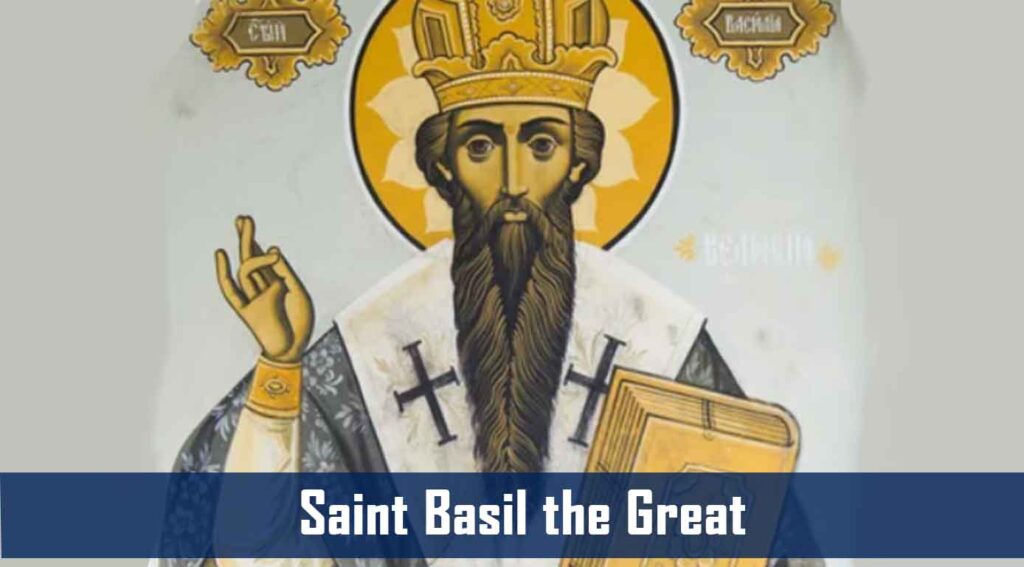
Saint Basil the Great

Saint Basil was on his way to becoming a famous teacher when he decided to begin a religious life of gospel poverty. After studying various modes of religious life, he founded what was probably the first monastery in Asia Minor. He is to monks of the East what Saint Benedict is to the West, and Basil’s principles influence Eastern monasticism today.
He was ordained a priest, assisted the archbishop of Caesarea—now southeastern Turkey—and ultimately became archbishop himself, in spite of opposition from some of the bishops under him, probably because they foresaw coming reforms.

Arianism, one of the most damaging heresies in the history of the Church which denied the divinity of Christ, was at its height. Emperor Valens persecuted orthodox believers, and put great pressure on Basil to remain silent and admit the heretics to communion. Basil remained firm, and Valens backed down. But trouble remained. When the great Saint Athanasius died, the mantle of defender of the faith against Arianism fell upon Basil. He strove mightily to unite and rally his fellow Catholics who were crushed by tyranny and torn by internal dissension. He was misunderstood, misrepresented, accused of heresy and ambition. Even appeals to the pope brought no response. “For my sins I seem to be unsuccessful in everything.”

Basil was tireless in pastoral care. He preached twice a day to huge crowds, built a hospital that was called a wonder of the world—as a youth he had organized famine relief and worked in a soup kitchen himself—and fought the prostitution business.
Basil was best known as an orator. Though not recognized greatly in his lifetime, his writings rightly place him among the great teachers of the Church. Seventy-two years after his death, the Council of Chalcedon described him as “the great Basil, minister of grace who has expounded the truth to the whole earth.

Saint Basil the Great Read More »
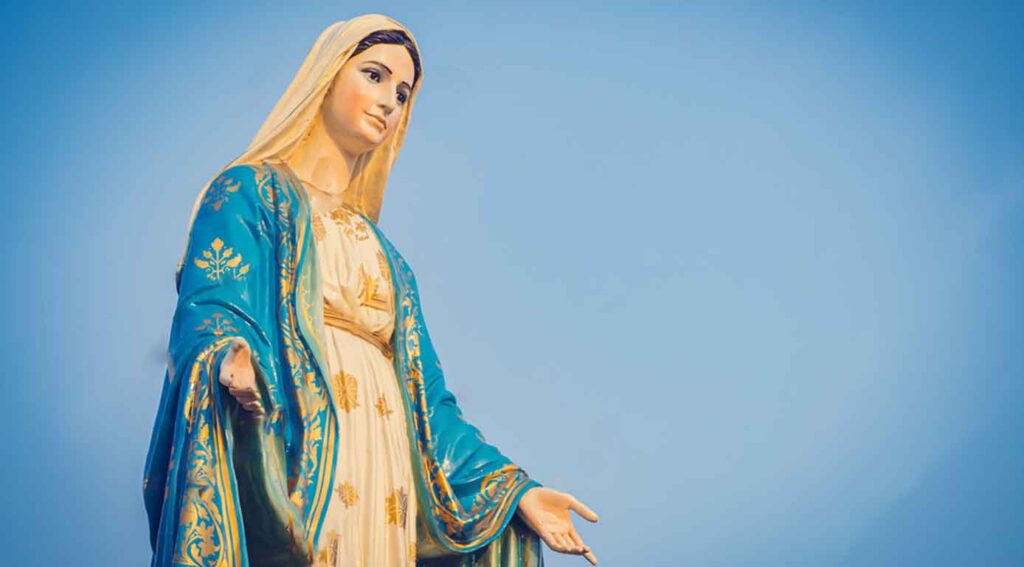
The Octave Day of Christmas, Solemnity of the Blessed Virgin Mary, Mother of God

Liturgy of the Word

First Reading: Nm 6:22-27

The LORD said to Moses:
“Speak to Aaron and his sons and tell them:
This is how you shall bless the Israelites.
Say to them:
The LORD bless you and keep you!
The LORD let his face shine upon
you, and be gracious to you!
The LORD look upon you kindly and
give you peace!
So shall they invoke my name upon the Israelites,
and I will bless them.”

Responsorial Psalm: Psalm 67:2-3,5,6,8

Response– May God bless us in his mercy

May God have pity on us and bless us;
may he let his face shine upon us.
So may your way be known upon earth;
among all nations, your salvation.
R– May God bless us in his mercy

May the nations be glad and exult
because you rule the peoples in equity;
the nations on the earth you guide.
R– May God bless us in his mercy

May the peoples praise you, O God;
may all the peoples praise you!
May God bless us,
and may all the ends of the earth fear him!
R– May God bless us in his mercy

Second Reading: Gal 4:4-7

Brothers and sisters:
When the fullness of time had come, God sent his Son,
born of a woman, born under the law,
to ransom those under the law,
so that we might receive adoption as sons.
As proof that you are sons,
God sent the Spirit of his Son into our hearts,
crying out, “Abba, Father!”
So you are no longer a slave but a son,
and if a son then also an heir, through God.

Alleluia:

 Alleluia, alleluia. In the past God spoke to our ancestors through the prophets;
in these last days, he has spoken to us through the Son. Alleluia, alleluia!

Gospel: Lk 2: 16-21

A reading from the holy Gospel according to Luke

The shepherds went in haste to Bethlehem and found Mary and Joseph,
and the infant lying in the manger.
When they saw this,
they made known the message
that had been told them about this child.
All who heard it were amazed
by what had been told them by the shepherds.
And Mary kept all these things,
reflecting on them in her heart.
Then the shepherds returned,
glorifying and praising God
for all they had heard and seen,
just as it had been told to them.

When eight days were completed for his circumcision,
he was named Jesus, the name given him by the angel
before he was conceived in the womb.

The Readings and Gospel were sourced from:

The Octave Day of Christmas, Solemnity of the Blessed Virgin Mary, Mother of God Read More »

Proverbs 21:26

Verse:

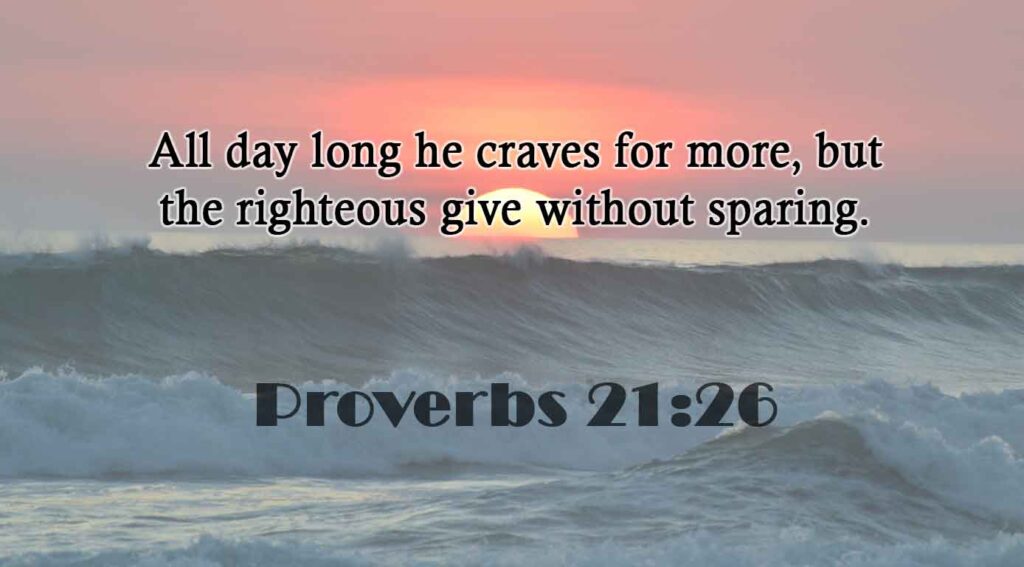
“All day long he craves for more, but the righteous give without sparing.” - Proverbs 21:26

Prayer For Generosity (Jandi’s Version of St. Ignatius of Loyola’s Prayer)

Dearest Lord, teach me to be generous. Teach me to serve You as I should. To give and not to count the cost. To fight and not to heed the wounds. To toil and not to seek for rest. To labor and ask not for reward. Save that of knowing that I do Your most holy will.

Sources:

Proverbs 21:26 Read More »

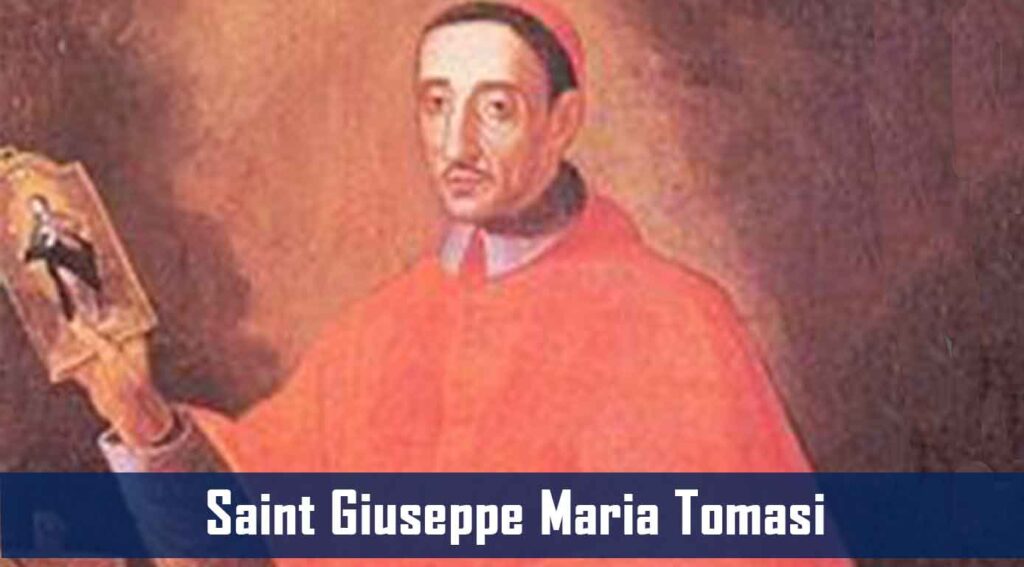
Saint Giuseppe Maria Tomasi

Saint Giuseppe Maria Tomasi was an Italian Theatine Catholic priest, scholar, reformer and cardinal. His scholarship was a significant source of the reforms in the liturgy of the Roman Catholic Church during the 20th century. He was beatified by Pope Pius VII in 1803, and was canonized by Pope John Paul II in 1986.

His life was oriented toward God from his first years. Formed and educated in the family home, where they did not lack riches or moral training, he gave proofs of a spirit very open to study and to piety. His parents cared greatly for this and for his own Christian formation and his instruction in the classical and modern languages, above all in the Spanish language, because he was destined by the family for the royal court of Madrid, as he was bound to inherit from his own father, as his title of nobility, that of Grandee of Spain.

But Tomasi’s own spirit aspired, even from youth, to be small in the Kingdom of God, and to serve not the kings of the earth but the King of heaven. He cultivated his pious desire in his heart until he obtained the consent of his father to follow his vocation to the religious life.

Saint Giuseppe Maria Tomasi taught catechism to the children of the poor in his titular church, also introducing its congregants to the use of Gregorian chant. He died in 1713, mourned by all, especially by Pope Clement, who so admired his sanctity that he had consulted him before accepting the papacy. He was buried in his titular church. The relics of his body, transferred in 1971 from the Basilica of his title of Ss. Silvestro e Martini ai Monti, are presently exposed for the veneration of the faithful in the Basilica of San Andrea della Valle of the Theatine Fathers, in Rome.

Sources:

Herbermann, Charles, ed. (1913). "Bl. Giuseppe Maria Tommasi". Catholic Encyclopedia. New York: Robert Appleton Company.
Biography at The Cardinals of the Holy Roman Church

Saint Giuseppe Maria Tomasi Read More »