2023

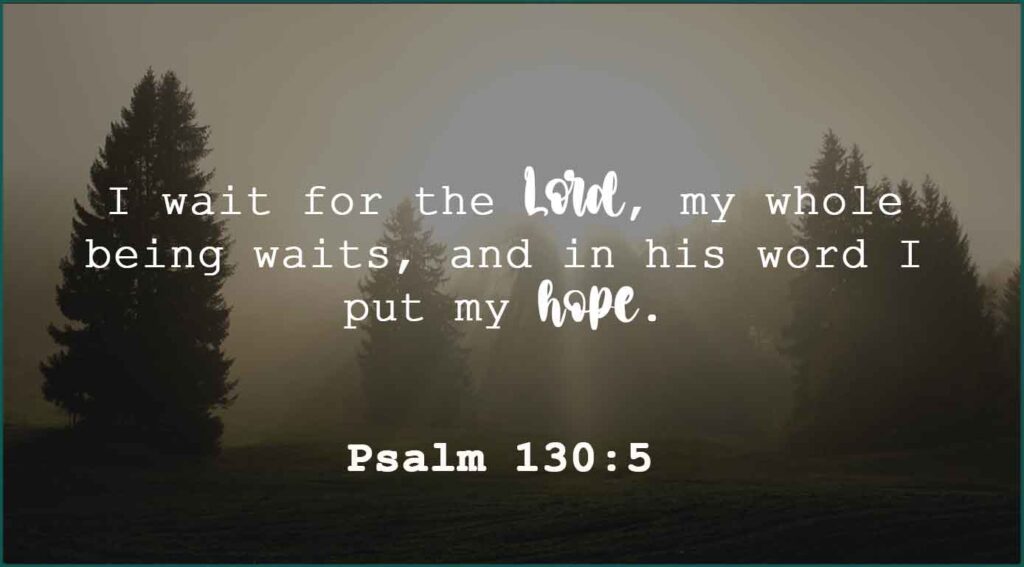
Psalm 130:5

Verse:

“I wait for the Lord, my whole being waits, and in his word I put my hope.” - Psalm 130:5

Prayer For Hope In God

Lord, thank You that by Your grace I have been made a new creation in Christ and thank You for the promise of hope that is set before me in Him. Thank You, that my hope was founded on You the moment I first believed, but forgive me Lord, for over the years I know I have drifted far away from You as I tried, in my own strength, to be the captain my own life and negotiate through its little surges and swells by my own skill and cunning. Lord, I ask Your forgiveness for being so careless with my relationship with You, for You alone deserve my praise and thanksgiving for You alone are the source of my life and the sphere of my hope. You are the faithful Shepherd of the sheep and the Rock upon Whom my hope is founded. Lord, I pray that as the intensity of life’s storms increase all around me, that I may cling ever closer to You, and rest all my hope upon You, for You alone are worthy. In Jesus' name I pray,

Amen.
Psalm 130:5 Read More »

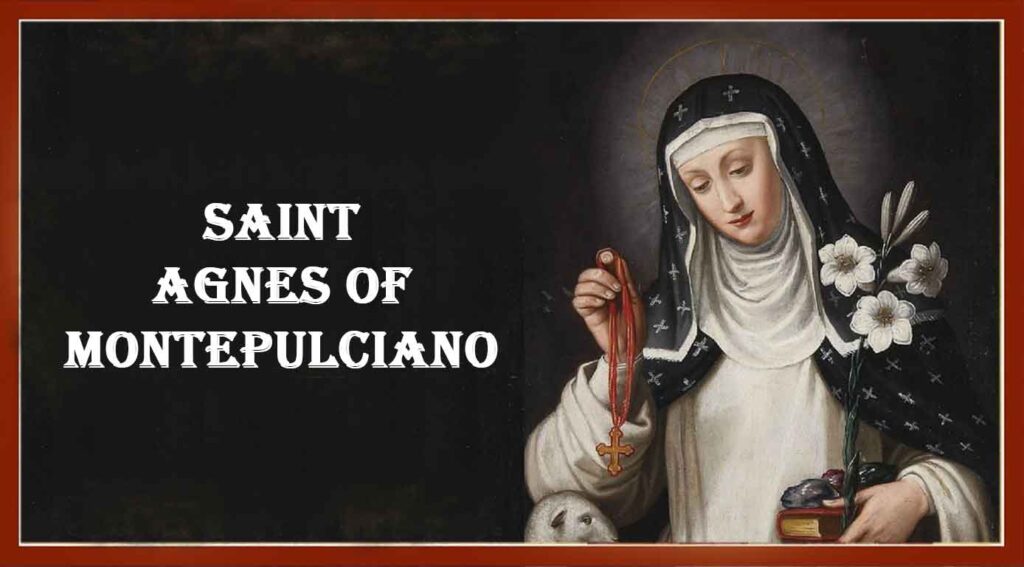
Saint Agnes of Montepulciano

Saint Agnes of Montepulciano was born in 1268 into the noble Segni family in Gracciano. At the age of nine, she convinced her parents to allow her to enter a Franciscan monastery of women in the city known as the “Sisters of the Sack”, after the rough religious habit they wore. They lived a simple contemplative life. She received the permission of the pope to be accepted into this life at such a young age, which was normally against Church law. At the age of fourteen she was appointed bursar.

In 1288 Agnes, despite her youth at only 20 years of age, was noted for her devotion to the Blessed Sacrament and deep life of prayer, and was elected as the prioress of the community. There she gained a reputation for performing miracles; people suffering from mental and physical ailments seemed cured by her presence. She was reported to have “multiplied loaves”, creating many from a few on numerous occasions, recalling the Gospel miracle of the loaves and fishes. She herself, however, suffered severe bouts of illness which lasted long periods of time.

In 1306, Agnes was recalled to head the monastery in Montepulciano. Agnes reached a high degree of contemplative prayer and is said to have been favoured with many visions. By 1316, Agnes’ health had declined so greatly that her doctor suggested taking the cure at the thermal springs in the neighbouring town of Chianciano Terme. While many of the other bathers reported being cured of their illnesses, Agnes herself received no benefit from the springs. Agnes died the following 20 April, at the age of 49.

Saint Agnes of Montepulciano Read More »

Mark 16:6

Verse:

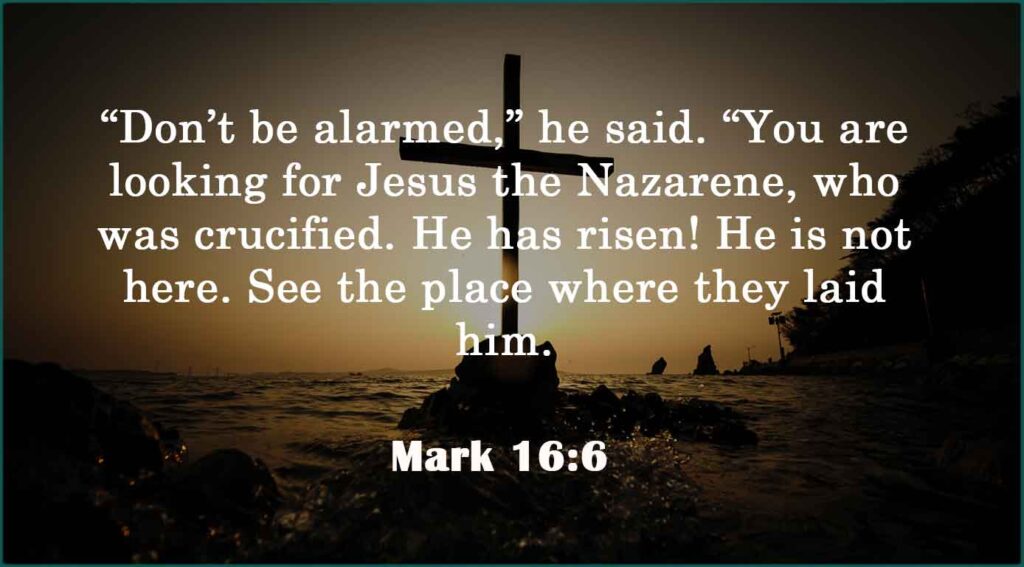
“Don’t be alarmed,” he said. “You are looking for Jesus the Nazarene, who was crucified. He has risen! He is not here. See the place where they laid him.” - Mark 16:6

Sources:

Simple Lord Jesus, I confess that I am a sinner and in need of salvation. I believe that You came to earth to seek and to save people who are lost in their sins, and I believe that You died on the cross as the substitute for my sins.

Amen.

Mark 16:6 Read More »

Saint Alphege of Canterbury

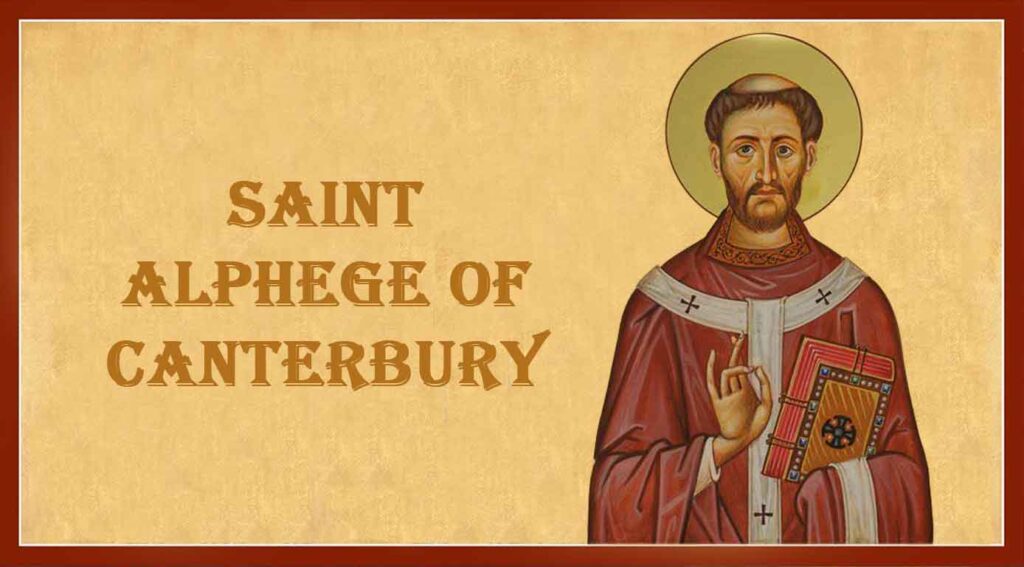
Saint Alphege of Canterbury was born around 953. He was an Anglo-Saxon Bishop of Winchester, later Archbishop of Canterbury. He became an anchorite before being elected abbot of Bath Abbey.

Saint Alphege became a monk early in life. He first entered the monastery of Deerhurst, but then moved to Bath, where he became an anchorite. Probably due to the influence of Dunstan, the Archbishop of Canterbury, he was elected Bishop of Winchester in 984 and was consecrated on 19 October that year.

While bishop he was largely responsible for the construction of a large organ in the cathedral, he also built and enlarged the city’s churches, and promoted the cult of Swithun and his own predecessor, Æthelwold of Winchester. While at Canterbury, he promoted the cult of Dunstan, ordering the writing of the second Life of Dunstan, which Adelard of Ghent composed between 1006 and 1011. He also introduced new practices into the liturgy, and was instrumental in the Witenagemot’s recognition of Wulfsige of Sherborne as a saint in about 1012.

In 1011, the Danes again raided England and Saint Alphege was taken prisoner and held captive for seven months. He refused to allow a ransom to be paid for his freedom, and as a result was killed on 19 April 1012 at Greenwich.

Saint Alphege of Canterbury Read More »

Ephesians 1:7

Verse:

“In him we have redemption through his blood, the forgiveness of sins, in accordance with the riches of God’s grace.” - Ephesians 1:7

Prayer For Grace And Mercy

Dear God, I am asking that Your grace and mercy would continue to follow me all the days of my life, as You have promised in You Word. Teach me to understand Your ways and grant me wisdom I pray, to live my life in a way that is pleasing and honouring to You.

Amen.

Ephesians 1:7 Read More »

Saint Athanasia of Aegina

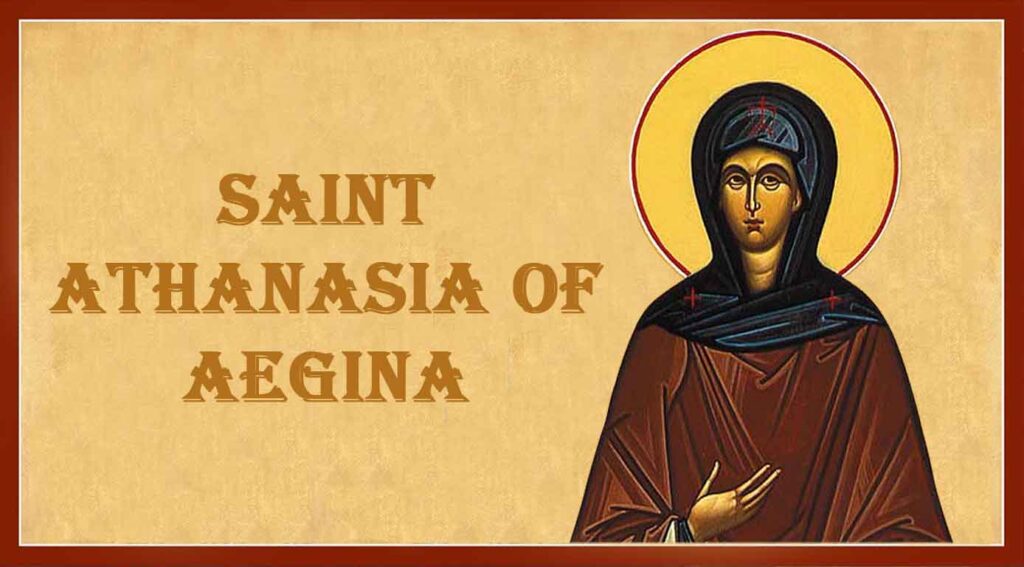
Saint Athanasia of Aegina was the daughter of Christian nobles, Niketas and Irene, and experienced the mystical union of a star merging with her heart while weaving at the loom when she was a young girl. She wanted a spiritual life, but an imperial edict required all single women of marriageable age to marry soldiers.

At 16 years old, at her parents urging, she complied and married a young officer. Sixteen days after her wedding, her husband was killed in a battle with raiding Arabs. She again married, this time to a deeply religious man who wished to become a monk and left to do so with her blessing.

St. Athanasia then gave away the bulk of her possessions, converted their home into a convent, and began building churches. She served as an abbess and was known for her miraculous healing of the sick and those seen as possessed. Her community later moved to Timia near the ancient church of Stephen the Protomartyr. Here crowds flocked to see her. As her fame grew, she moved to Constantinople seeking solitude as an anchoress in a cell for seven years. While walled away, she was an adviser to the Empress Theodora II. After seven years, she returned to Aegina where she died of natural causes three days later at Timia on 14 August 860.

Sources:

https://en.wikipedia.org/wiki/Athanasia_of_Aegina
Kirk, Martha Ann (2004). Women of Bible lands : a pilgrimage to compassion and wisdom. Collegeville, Minn.: Liturgical Press. ISBN 0814651569.

Saint Athanasia of Aegina Read More »

Proverbs 11:25

Verse:

“A generous person will prosper; whoever refreshes others will be refreshed.” - Proverbs 11:25

Prayer For Healing And Wholeness

Dear Lord, I know that You are a God Who heals all manner of sickness and illness through the power of Your Holy Spirit. I ask that by His power, You would send healing and wholeness to all who are afflicted at this time with illnesses and diseases.

Send comfort and strength at this time of difficulty. In Jesus' precious name,

Amen.

Proverbs 11:25 Read More »

Saint Anecitus

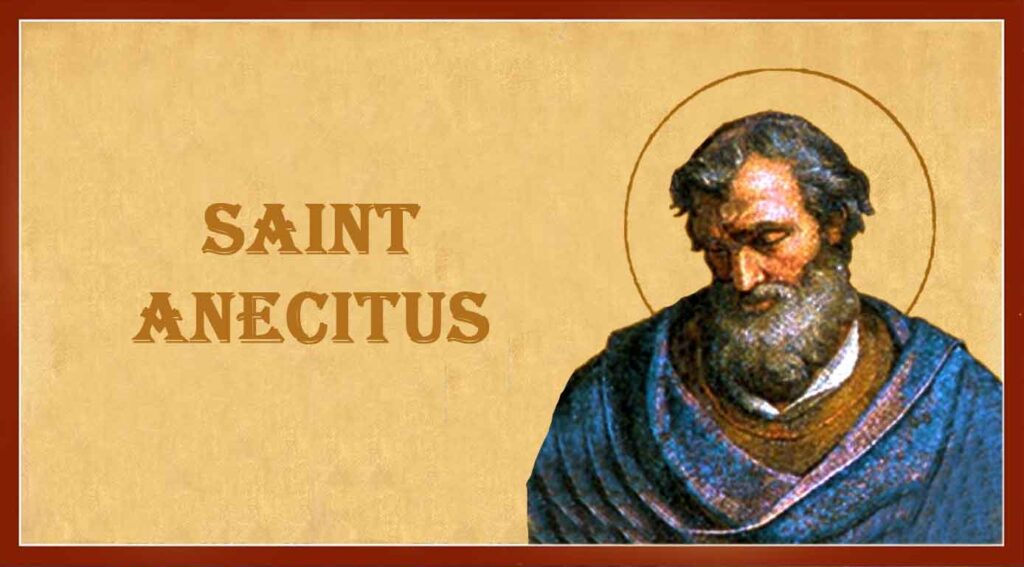
Saint Anecitus, or Pope Anicetus, was a Syrian from the city of Emesa.

According to Irenaeus, it was during his pontificate that the aged Polycarp of Smyrna, a disciple of John the Evangelist, visited Rome to discuss the celebration of Easter with Anicetus. Polycarp and his Church of Smyrna celebrated the crucifixion on the fourteenth day of Nisan, which coincides with Pesach (or Passover) regardless of which day of the week upon this date fell, while the Roman Church celebrated Easter on Sunday—the weekday of Jesus’s resurrection. The two did not agree on a common date, but Anicetus conceded to Polycarp and the Church of Smyrna the ability to retain the date to which they were accustomed. The controversy was to grow heated in the following centuries.

According to the Annuario Pontificio, the start of his papacy may have been 153. Anicetus actively opposed Gnosticism and Marcionism. He welcomed Polycarp of Smyrna to Rome to discuss the Easter controversy. According to church tradition, Anicetus suffered martyrdom during the reign of Emperor Lucius Verus, but there are no historical grounds for this account.

Sources:

https://en.wikipedia.org/wiki/Pope_Anicetus
Martyrologium Romanum (Libreria Editrice Vaticana 2001 ISBN 88-209-7210-7)
Campbell, Thomas (1907). "Pope St. Anicetus" in The Catholic Encyclopedia. Vol. 1. New York: Robert Appleton Company.

Saint Anecitus Read More »

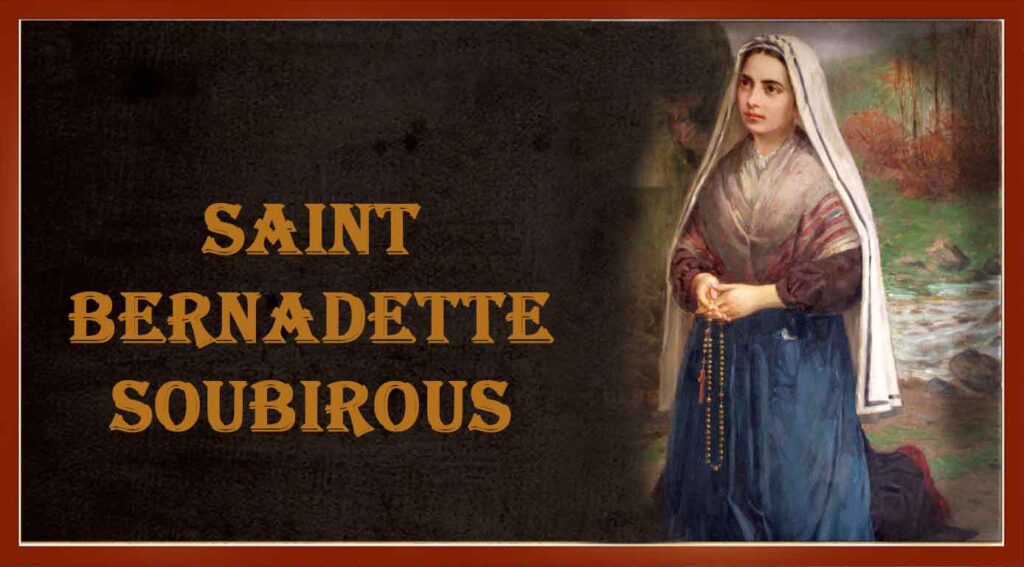
Saint Bernadette Soubirous

Bernadette Soubirous was born in 1844, the first child of an extremely poor miller in the town of Lourdes in southern France. The family was living in the basement of a dilapidated building when on February 11, 1858, the Blessed Virgin Mary appeared to Bernadette in a cave above the banks of the Gave River near Lourdes. Bernadette, 14 years old, was known as a virtuous girl though a dull student who had not even made her first Holy Communion. In poor health, she had suffered from asthma from an early age.

There were 18 appearances in all, the final one occurring on the feast of Our Lady of Mt. Carmel, July 16. Although Bernadette’s initial reports provoked skepticism, her daily visions of “the Lady” brought great crowds of the curious. The Lady, Bernadette explained, had instructed her to have a chapel built on the spot of the visions. There, the people were to come to wash in and drink of the water of the spring that had welled up from the very spot where Bernadette had been instructed to dig.

According to Bernadette, the Lady of her visions was a girl of 16 or 17 who wore a white robe with a blue sash. Yellow roses covered her feet, a large rosary was on her right arm. In the vision on March 25 she told Bernadette, “I am the Immaculate Conception.” It was only when the words were explained to her that Bernadette came to realize who the Lady was.

Few visions have ever undergone the scrutiny that these appearances of the Immaculate Virgin were subject to. Lourdes became one of the most popular Marian shrines in the world, attracting millions of visitors. Miracles were reported at the shrine and in the waters of the spring. After thorough investigation, Church authorities confirmed the authenticity of the apparitions in 1862.

During her life, Bernadette suffered much. She was hounded by the public as well as by civic officials until at last she was protected in a convent of nuns. Five years later, she petitioned to enter the Sisters of Notre Dame of Nevers. After a period of illness she was able to make the journey from Lourdes and enter the novitiate. But within four months of her arrival she was given the last rites of the Church and allowed to profess her vows. She recovered enough to become infirmarian and then sacristan, but chronic health problems persisted. She died on April 16, 1879, at the age of 35. Bernadette Soubirous was canonized in 1933.

Sources:

https://www.franciscanmedia.org/saint-of-the-day/saint-bernadette-soubirous/

Saint Bernadette Soubirous Read More »