Daily Saints

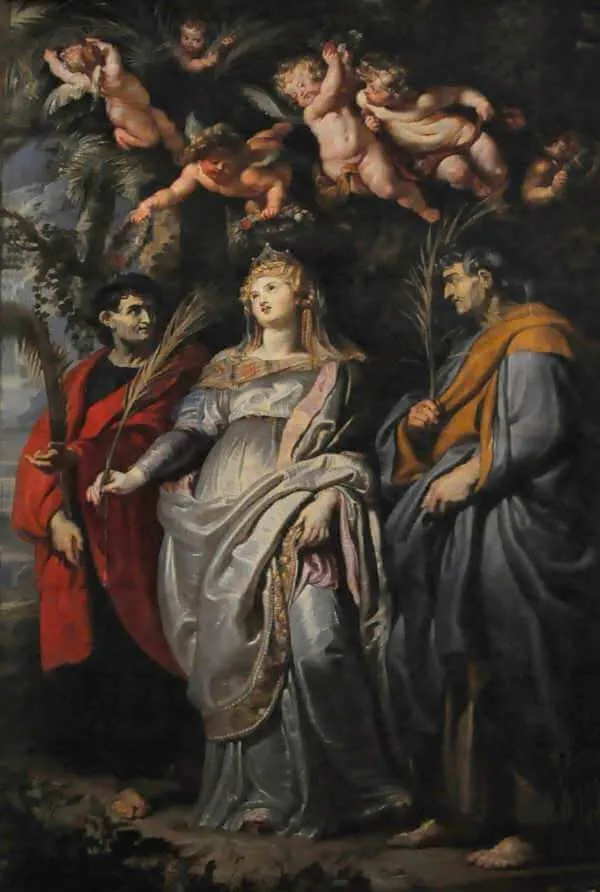
The Holy Family of Jesus, Mary, and Joseph

It is amazing that God chose to enter our fallen human condition by becoming Incarnate in the womb of the Blessed Virgin Mary. He was born of her, raised by her and Saint Joseph, acquired human knowledge through their teaching, worked with His hands, experienced the fullness of human society, and did so within the context of an earthly family. Jesus, Mary, and Joseph made up a sacred family, the Holy Family. Today’s feast continues our Christmas Day celebration. This feast falls within the octave of Christmas that culminates January 1 with the Solemnity of the Mother of God.

Though the earthly life shared by Jesus, Mary, and Joseph has always been a source of prayer and inspiration, the feast we celebrate today is relatively new. In 1890, Pope Leo XIII issued his encyclical Sapientiae Christianae (On Christians as Citizens) in which he emphasized the duties of Christians as citizens in a changing world. At that time, the holy father was concerned about the negative impact that the Industrial Revolution, secularism, and new political ideologies—such as communism—were having upon Christian citizens and the family in particular. He feared that the desire for economic advancement and the communistic separation of God from the political structures would result in the breakdown of the family, the fundamental building block of society. In that encyclical, the Holy Father stated:

This is a suitable moment for us to exhort especially heads of families to govern their households according to these precepts, and to be solicitous without failing for the right training of their children. The family may be regarded as the cradle of civil society, and it is in great measure within the circle of family life that the destiny of the States Is fostered. Whence it is that they who would break away from Christian Discipline are working to corrupt family life, and to destroy it utterly, root and branch.

In 1892, Pope Leo XIII issued an apostolic letter, Breve Neminem Fugit, in which he highlighted the importance of the Holy Family for the world as a model for every virtue necessary for human growth.

To all fathers of families, Joseph is verily the best model of paternal vigilance and care. In the most holy Virgin Mother of God, mothers may find an excellent example of love, modesty, resignation of spirit, and the perfecting of faith. And in Jesus, who was subject to his parents, the children of the family have a divine pattern of obedience which they can admire, reverence, and imitate.

In 1893, Pope Leo XIII instituted the Feast of the Holy Family as a liturgical celebration to be celebrated in any diocese that requested it. The feast continued to spread, bringing about a renewed appreciation for the sacredness of family life. In 1921, three years after the end of World War I, Pope Benedict XV, sharing the concerns of his predecessor Pope Leo XIII, added the Feast of the Holy Family to the universal Church calendar. 

In 1964, while making an apostolic visit to the Holy Land, Pope Paul VI gave a beautiful speech in Nazareth on the Holy Family. This speech is now included in the Office of Readings for the Feast of the Holy Family. He begins by saying, “Nazareth is a kind of school where we may begin to discover what Christ’s life was like and even to understand his Gospel. Here we can observe and ponder the simple appeal of the way God’s Son came to be known, profound yet full of hidden meaning.” In that speech, the Holy Father wanted to help make Jesus’ family life, culture, and daily interactions as a child tangible and relatable to all so that His childhood, along with the role of His parents, would be a source of reflection for the strengthening of the family.

In 1981, Pope John Paul II, in his apostolic exhortation Familiaris Consortio (The Role of the Christian Family in the Modern World), reinforced the concept of the family as the “domestic church” with its role in fostering prayer, teaching the faith, and nurturing Christian virtues. He highlighted that in the family, the Christian faith is first proclaimed to children, making the family vital to the mission of the Church, and the most fundamental institution in the world.

As we honor the Holy Family, one of the best ways to do so is to prayerfully ponder the daily life that the Holy Family shared. Because Scripture does not record many of their family interactions in Nazareth, much is left to our prayerful imagination. What we do know is that human familial virtue within the Holy Family, especially between mother and Son, was at a level of perfection. The kindness, respect, obedience, unity, charity, and every other Christian virtue that they lived must become the model for Christian living and for family life.

The Holy Family began with apparent scandal when Mary became pregnant while betrothed to Joseph. Mary and Joseph suffered through the gossip and misunderstandings this miraculous pregnancy brought with it. Though Joseph learned of this conception from an angel in a dream, it was his faith and righteousness that empowered him to remain faithful to Mary and love her with a pure heart. Their family began in Bethlehem, in poverty and rejection. They then fled to Egypt to protect their Child from the paranoia and cruelty of Herod. They later returned to Nazareth and lived faithfully with family and friends. Jesus learned the trade of woodworking from Joseph, grew in wisdom and knowledge, spoke with the elders in the Temple at the age of twelve, and remained obedient to his earthly parents. Saint Thomas Aquinas teaches us that Jesus had direct knowledge of the Beatific Vision from the moment of His conception and had the fullness of infused knowledge. But He also grew in acquired knowledge, learning with a human mind through sensory experience and conceptual understanding. Mary and Joseph watched this growth, participated in it, grew from it themselves, and Mary “pondered all these things in her heart” (Luke 2:51).

As you ponder their inner family dynamics, relationships, and charity, use them as a model of how best to relate to your own family. Some families more fully imitate those sacred virtues; others fall gravely short. Look into your own heart and ask the Holy Family to teach you how to show greater love to those in your family. Though you will never arrive at perfection, you can receive inspiration from their lives, leading to greater growth and unity, making your own family a greater source of strength for your Christian living.

Source: https://mycatholic.life/saints/saints-of-the-liturgical-year/the-holy-family-of-jesus-mary-and-joseph–feast/

The Holy Family of Jesus, Mary, and Joseph Read More »

Saint John the Apostle and Evangelist

Early First Century–c. 101; Patron Saint of arms manufacturers, art dealers, authors, basketmakers, bookbinders, booksellers, publishers, butchers, candlemakers, compositors, editors, engravers, friendships, glaziers, government officials, harvests, lithographers, notaries, painters, papermakers, printers, saddlemakers, scholars, sculptors, theologians, and winemakers; Invoked against burns, epilepsy, foot problems, hailstorms, and poisoning; Pre-Congregation canonization

Saint John the Apostle stands out from the other Apostles in many ways. He is believed to be the author of the Gospel of Saint John, three letters in the New Testament—John 1, 2, 3— and the Book of Revelation. In the Gospel attributed to him, he refers to himself not as “John,” but as “the one whom Jesus loved” (John 13:2319:2620:221:7). Tradition holds that he outlived the other Apostles, dying around the year 101. He is the only Apostle who died of natural causes rather than martyrdom. His writing style is mystical, reflective, and contemplative, and he includes rich symbolism. His Gospel and letters focus upon divine love and the intimacy to which we are called to love and be loved by God.

Little is known about John’s background other than what is mentioned in the Gospels. He was most likely from either Capernaum or Bethsaida, just north of the Sea of Galilee. He was a fisherman, along with his father, Zebedee, and his brother, James. He was a friend and fishing companion with Simon and Andrew. John’s mother was Salome, who might have been a sister to the Blessed Virgin Mary, making John and James cousins of Jesus.

John was likely a disciple of Jesus’ other cousin, John the Baptist, and it was the Baptist who pointed John and Andrew to Jesus: “The next day John was there again with two of his disciples, and as he watched Jesus walk by, he said, ‘Behold, the Lamb of God.’ The two disciples heard what he said and followed Jesus” (John 1:35–37). A few verses later we read, “Andrew, the brother of Simon Peter, was one of the two who heard John and followed Jesus.” The other disciple is not named, but most scholars believe that it was John, Andrew’s friend.

The Gospels of Matthew and Mark share a similar version of John’s calling. In both versions, Jesus encounters Simon and Andrew casting their net into the sea. He calls them and they immediately follow. Jesus then walks a little farther, sees James and John mending their nets with their father Zebedee, calls them, and they leave their father and follow Jesus immediately. Luke’s version adds more detail and differs slightly. Jesus gets into Simon’s boat and tells him to lower his net for a catch. He does so, despite not catching anything all night, and catches so many fish that Simon and the men in the boat have to call their friends—James, John, and Zebedee—to help them. After that, Andrew, Simon, James, and John become Jesus’ followers.

Once Jesus had called all of His Apostles, he named James and John as “Boanerges, that is, sons of thunder” (Mark 3:17). This designation might have been because they were excessively zealous. For example, they asked Jesus whether they should call down fire from heaven to consume a Samaritan town that would not welcome them (Luke 9:54), and they, along with their mother, asked to sit at Jesus’ right and left in His Kingdom (Matthew 20:20–23).

Though the Twelve Apostles accompany Jesus throughout His public ministry, Peter, James, and John emerge as His closest companions. Notably, Jesus brings only these three disciples with Him during important moments in His life and ministry: when He raises Jarius’ daughter from the dead, is transfigured in glory, and during the Agony in the Garden. Mark 13:3 also relates that Peter, Andrew, James, and John had a private conversation with Jesus about the signs of the end times.

After John and Andrew become Jesus’ followers, John is not mentioned again in his Gospel until the Last Supper when he leans on Jesus’ breast (John 13:23–25), an act that symbolizes John’s profound love of Christ. John then enters the Garden of Gethsemane with Peter and James while Jesus prays in agony. After witnessing Jesus’ arrest and trial, John is the only Apostle who stands before the Crucifix with Jesus’ mother. The others fled in fear. It was there that Jesus entrusted His mother to John’s care, “Woman, behold, your son” and “Behold, your mother” (John 19:26–27). After the Resurrection, John ran to the tomb ahead of Peter when Mary of Magdala informed the two of them that she had seen the risen Lord. John waited for Peter and permitted him to enter the tomb first (John 20:2–8). Finally, John is present at the miraculous catch of fish after the Resurrection (21:7, 20–24). It was at that resurrection appearance that Peter specifically asked Jesus about what would happen to John. Jesus replies, “What if I want him to remain until I come? What concern is it of yours? You follow me.” This reply led the disciples to believe that John would not die.

After Jesus’ Ascension, John is among those gathered in the upper room who receive the Holy Spirit at Pentecost (Acts 1:132:1–4). In Acts 3:1–11, John and Peter perform a miraculous healing of a lame man at the temple, leading to Peter’s powerful sermon to the crowd. In Acts 4, the priests, the captain of the temple guard, and the Sadducees detain John and Peter for a night in prison. The next day, the two boldly testify about Jesus before the high priests, asserting their duty to obey God over human orders. The authorities then released them for fear of the crowds. In Acts 8:14, just after the martyrdom of Stephen, Peter and John are sent to Samaria to pray for new believers to receive the Holy Spirit. This is the last mention of John in the Acts of the Apostles.

Though there is no reliable documentation about where John traveled and ministered after Samaria, most scholars believe that he and the Blessed Virgin Mary moved to Ephesus, in modern-day Turkey, and John spent the rest of his life caring for her and ministering throughout Asia Minor, which made up what is today western Turkey. This belief is especially based on the letters mentioned in the Book of Revelation that were written to seven churches he most likely helped establish: Ephesus (Revelation 2:1–7), Smyrna (Revelation 2:8–11), Pergamum (Revelation 2:12–17), Thyatira (Revelation 2:18–29), Sardis (Revelation 3:1–6), Philadelphia (Revelation 3:7–13), and Laodicea (Revelation 3:14–22). Walking to each of these cities, one after another, was about a 400-mile journey encircling western Asia Minor.

One tradition states that during the reign of Emperor Domitian (81–96), John was arrested and dropped in a boiling cauldron of oil. After he was miraculously unharmed, many witnesses converted to the faith. The emperor then exiled him to the Island of Patmos for a year, which is believed to be where he had mystical visions and wrote those visions down in the Book of Revelation, “I, John, your brother, who share with you the distress, the kingdom, and the endurance we have in Jesus, found myself on the island called Patmos because I proclaimed God’s word and gave testimony to Jesus” (Revelation 1:9). The Book of Revelation is an apocalyptic text filled with complex and vivid symbolic visions depicting the ultimate battle between good and evil and the triumph of God. It offers messages to seven churches in Asia Minor, presenting prophecies about the end times, the Second Coming of Christ, and the establishment of the New Heavens and New Earth, providing a hopeful and triumphant conclusion to the Christian biblical message.

The three letters attributed to John—1 John, 2 John, and 3 John—focus upon love, truth, and Christian fellowship. John describes God as Love and exhorts the reader to good Christian living. He warns against following false teachers, stresses the importance of following Christ’s teachings, and encourages the work of itinerant preachers and the responsibility of the communities to welcome them.

Today, near Ephesus, there is a pilgrim site called “Meryem Ana Evi” (House of Mary), which is believed to be the house in which John and the Blessed Virgin Mary lived and from which the Mother of God was assumed into Heaven. Another tradition states she was assumed into Heaven near Jerusalem. John lived to an old age, died of natural causes, and was buried near Ephesus in what are today the ruins of Saint John’s Basilica, Selçuk.

John was truly the beloved disciple of Christ, remained so throughout his long earthly life, and will be so forever in Heaven. An ancient story from shortly after Saint John’s death states that at the end of his life, Saint John continuously repeated to his flock, “My little children, love one another.” John’s life can be summed up with love. God is love. We must love God, and we must love one another. Love is everything. Ponder this love that Saint John had for his Lord and pray to him, asking him to intercede for you so that your love of God and others will greatly increase.

Source: https://mycatholic.life/saints/saints-of-the-liturgical-year/27-december-saint-john-the-apostle-and-evangelist–feast/

Saint John the Apostle and Evangelist Read More »

Saint Stephen, the First Martyr

Early First Century–c. 33–36; Patron Saint of altar servers, builders, casket makers, deacons, horses, masons, and quarrymen; Invoked against headaches; Pre-Congregation canonization

Saint Stephen, whom we honor today, is the first Christian martyr, thus giving him the unique title “Protomartyr.” All we know about Saint Stephen comes from the Acts of the Apostles, Chapters 6–7. His name is of Greek origin, suggesting that he was a Hellenistic Jew. Nothing else is known about Stephen’s early life. Stephen came on the scene within the early Church in Jerusalem, where he was chosen as a deacon to assist with the fair distribution of daily provisions within the Christian community so as to relieve the Apostles of that responsibility.

As Jesus walked the earth, His community of followers became a close-knit community. In order to devote themselves to following Jesus full-time, some of His disciples provided for the needs of the whole community (see Luke 8:3). After Jesus ascended into Heaven and sent the Holy Spirit, the Apostles remained in Jerusalem, and the community of believers continued to deepen their communal life. They ate together, celebrated the Eucharist, and shared their financial resources with each other.

The community of believers was of one heart and mind, and no one claimed that any of his possessions was his own, but they had everything in common. With great power the apostles bore witness to the resurrection of the Lord Jesus, and great favor was accorded them all. There was no needy person among them, for those who owned property or houses would sell them, bring the proceeds of the sale, and put them at the feet of the apostles, and they were distributed to each according to need (Acts 4:32–35).

The early Jerusalem community was made up of both Hebrew and Hellenistic Jews. Hebrew Jews were native to Judea and primarily spoke Aramaic as their common language. They closely adhered to traditional Jewish customs and used the Hebrew language in religious practices. The Hellenistic Jews typically spoke Greek and were influenced by Greek culture, due to their assimilation into the broader Greco-Roman society throughout the Roman Empire. Both Hellenists and Hebrews were converting to Christ and were living as one united people in Jerusalem. However, biases reportedly remained: “At that time, as the number of disciples continued to grow, the Hellenists complained against the Hebrews because their widows were being neglected in the daily distribution” (Acts 6:1).

Because the Apostles chose to devote themselves to prayer and the preaching of the Word, they asked the community to select “seven reputable men, filled with the Spirit and wisdom” (Acts 6:3). The Apostles then appointed them to the task of overseeing the daily distribution of provisions. The Apostles prayed and laid their hands on these seven men, ordaining them the Church’s first deacons. They were “Stephen, a man filled with faith and the Holy Spirit, also Philip, Prochorus, Nicanor, Timon, Parmenas, and Nicholas of Antioch, a convert to Judaism” (Acts 6:5). Some ancient traditions identify Stephen as the eldest and the leader of the others, making him what has become known as “Archdeacon.” Stephen was likely a Greek, so he might have been chosen, in part, to help ensure that the Hellenistic women, especially the widows, received their share of the daily distribution.

As a deacon, Stephen also preached the Word of God and performed many miracles. Various Hellenistic Jews even debated him in public, “but they could not withstand the wisdom and the spirit with which he spoke” (Acts 6:10). This so agitated them that they dragged him before the Sanhedrin, just as they had done to Jesus. The Sanhedrin was the highest religious, judicial, and legislative body within the Jewish community. The charges brought against Stephen were that he spoke against the Temple and the Law of Moses. As Stephen stood before the angry Sanhedrin, his face appeared like that of an angel.

Acts 7:1–53 presents a lengthy speech Stephen made before the Sanhedrin. It is one of the longest and most significant speeches in the New Testament. In that speech, Stephen traced the history of Israel from Abraham to Solomon, who built the Temple. He emphasized God’s actions that took place outside of the Temple, as well as Israel’s recurring disobedience. Of the Temple, he said, “the Most High does not dwell in houses made by human hands” (Acts 7:48). In other words, the Temple had outlived its purpose. The Most High came to us in the Person of Jesus, and Jesus is the New Temple and the New Priest Who offered Himself as the New and Perpetual Sacrifice. Stephen re-read and reinterpreted the Old Testament in the light of Christ. He was among the first followers of Christ to clearly unite the Old Testament with the unfolding New Testament. He also referred to the members of the Sanhedrin and those accusing him as “stiff-necked people.”

Recall from Jesus’ trial that the Sanhedrin, while under Roman occupation, could not condemn a person to death. The Romans reserved that to themselves. In Stephen’s case, his accusers were so infuriated that they immediately dragged him outside the city (probably the northern gate) and stoned him to death. This horrible situation, however, turned truly beautiful and glorious on account of Stephen’s faith. Before being dragged to the spot of his death, he looked up to Heaven and exclaimed, “Behold, I see the heavens opened and the Son of Man standing at the right hand of God” (Acts 7:56). Once they dragged him out and began stoning him, he prayed, “Lord Jesus, receive my spirit” and “Lord, do not hold this sin against them” (Acts 7:59–60). Notice the similarities to Jesus Who cried out from the Cross, “Father, forgive them…” (Luke 23:34) and “Father, into Your hands I commend my spirit” (Luke 23:46). As the author of the Gospel and the Acts of the Apostles,  it is clear from those passages that Saint Luke intended this connection.

Among those who consented to Saint Stephen’s martyrdom was the Pharisee Saul, who would later convert, become the great Apostle to the Gentiles, and go by his Roman name, Paul. After his conversion, Saint Paul built upon the teaching of Saint Stephen, developed it and deepened it, continuing the mission of one whom he helped persecute and kill. It is clear that Saint Stephen’s final prayer was heard by God and especially applied to Saul.

Saint Paul would later write in a letter to the Romans, “We know that all things work for good for those who love God, who are called according to his purpose” (Romans 8:28). Nothing truer could be said about Saint Stephen’s martyrdom. At first, there was great fear and chaos. “On that day, there broke out a severe persecution of the church in Jerusalem, and all were scattered throughout the countryside of Judea and Samaria, except the apostles” (Acts 8:1). The close Christian community scattered, running for their lives. In God’s wisdom, this scattering became the first great means of evangelization. Christians brought Christ within the temple of their souls to people far and wide. One by one, new hearts were converted, and the scattered community shared the New Law of Christ with others.

One tradition states that Saint Stephen was buried in the town of Beit Jimal, about twenty miles west of Jerusalem. Legend has it that in 415, a priest named Lucian had a dream in which Saint Stephen’s burial place was revealed to him. The priest brought his remains back to Jerusalem, and some years later Stephen was buried at the site of his martyrdom, in what is today the Church of Saint Étienne (French for Stephen). In his book, City of God, Saint Augustine says that some of Saint Stephen’s relics were brought to “waters of Tibilis,” which was most likely in North Africa. Augustine then recounts many stories of miracles that took place in the lives of those who encountered his relics.

As we honor the Church’s protomartyr, ponder the profound truth that God always brings good out of suffering when that suffering is prayerfully united to Christ. In honor of Saint Stephen, as you reflect upon his life and death, call to mind any sufferings you endure. Whether those are physical, mental or emotional, are caused by illness, persecution or any other source, seek to unite yourself and your sufferings to Christ. If part of your suffering results from the sins of others, pray the prayer Saint Stephen prayed, “Lord, do not hold this sin against them.” And throughout your life, pray with him, “Lord Jesus, receive my spirit.” Pray, also, for his intercession, especially for courage and strength to fulfill God’s will in your life.

Source: https://mycatholic.life/saints/saints-of-the-liturgical-year/26-december-saint-stephen-the-first-martyr–feast/

Saint Stephen, the First Martyr Read More »

Nativity of the Lord

Christmas Day is among the most celebrated feasts in the world. Everything else in life stops while the Christian world, in particular, celebrates the birth of the Savior of the World that took place over 2,000 years ago in the small town of Bethlehem. The first Christmas was celebrated by Mary and Joseph, but a multitude of angels saw to it that poor shepherds from the nearby fields joined the celebration as representatives of the entire Christian world to come. Though the Incarnation took place nine months prior when the Archangel Gabriel announced to the Blessed Virgin Mary that she would conceive a Child, that Child exited her sacred womb and breathed His first breath of air on that holy night.

It is amazing that God chose such a humble birth. He came into the world while His parents were about seventy miles away from their home and family in Nazareth after journeying to Bethlehem, the City of David, so they could fulfill the requirements of the census promulgated by the Roman emperor, Caesar Augustus. The census required all who lived within the Roman Empire to enroll in their hometown, in large part for taxation reasons. Joseph was from the house and lineage of King David, so he was required to go to David’s ancestral home, Bethlehem, to register with Mary, his betrothed wife. The fact that the Savior of the World permitted Himself to become subject to the rulers of the pagan Roman Empire reveals His profound humility. The Son of God’s perfection of humility is also revealed by the immediate circumstances of His birth. It took place not in a royal palace, not even in a nice home, but in a cave where animals dwelt.

The presence of the poor shepherds extends the Son of God’s humility even further and also reveals the intrinsic dignity of every person. In God’s eyes, every person is equal in dignity, and His life was for all people. From God’s perspective, poor shepherds offered Him just as much praise and honor as if the Roman emperor himself came to adore Him after His birth. The same remains true today. Every person is capable of offering honor and glory to God that do not depend upon social rank, wealth, or natural gifts. They depend upon that love and adoration that were found in the shepherds.

Jesus’ birth in Bethlehem was also a fulfillment of the Old Testament prophecy found in Micah 5:1(2): “But you, Bethlehem-Ephrathah least among the clans of Judah, from you shall come forth for me one who is to be ruler in Israel; Whose origin is from of old, from ancient times.” In God’s perfect foreknowledge and providence, He revealed the location of the birth of the Ruler of Israel through Micah, several centuries before.

The reason we celebrate the Solemnity of Christmas on December 25 is uncertain, but it might have been chosen in relation to the Solemnity of the Annunciation. One tradition states that the dating of the Annunciation on March 25 was chosen because early Christians believed Jesus died on that date. Some believe that Jewish thought at that time suggested that the greatest prophets died on the same day of the year they were created. Some have further suggested that March 25 was the date of the creation of Adam, the fall of Adam, the fall of the angels, the sacrifice of Isaac by Abraham, and the passing of the Israelites through the Red Sea. Whether this was the belief in the early Church and is the reason for choosing March 25 for the Annunciation (and Incarnation), making Jesus’ birth nine months later on December 25, is unable to be verified historically, but it is an inspiring thought to ponder from a symbolic perspective.

Others have suggested that December 25 was chosen because it closely aligned with the winter solstice, the day of the year with the least amount of sunlight in the northern hemisphere. It was during that darkest time of the year that the New Light came into the world to permeate the darkness. This symbolic view draws creation itself into the praise and glory of God.

A final hypothesis regarding the date of Christmas comes from the fourth century. Some records indicate Pope Julius I declared December 25 to be the date in 350, once the Roman Empire was becoming more Christianized and pagan practices were dwindling. The pagan festival Saturnalia, which was a three-day celebration of the winter solstice, was celebrated each year with great solemnity, and the pagan festival of Sol Invictus has been celebrated on December 25 since 274. It’s possible that Pope Julius wanted to offer an alternative Christian feast to replace these popular pagan ones.

Regardless of the actual historical reason that December 25 was chosen, it is now cemented within our Christian tradition. It’s also important to remember that the Church celebrates the greatest Solemnities for eight straight days, an octave. Thus, Christmas Day is December 25 through January 1. Jesus’ birth being the first day of the year is symbolically significant. Our calendar system is based on the date of Christ’s birth: Anno Domini (A.D.), meaning, “in the year of our Lord.”

As we celebrate this annual Solemnity, the historical accuracy of the date must give way to the liturgical calendar. God, in His perfection of humility, molds His grace around the structures that His Church has been inspired to create. For that reason, we can be confident that the December 25 liturgical Solemnity is a day in which an abundance of grace is poured forth upon those who believe and honor His birth. Commit yourself, this year and every year, to a celebration of Christmas that goes beyond mere gifts, good food, and gatherings. Choose to celebrate Christmas Day for eight straight days. Don’t pack away the decorations and nativity scene. Keep pondering the Christmas story. Prayerfully give thanks to God for His Incarnation and Birth. Make this Christmas celebration one that is permeated with faith, so that the Light of the World can permeate the darkness of the world in which you live.

Source: https://mycatholic.life/saints/saints-of-the-liturgical-year/25-december-nativity-of-the-lord–solemnity/

Nativity of the Lord Read More »

Saint Paola Elisabetta Cerioli

Profile

Paola was born to Italian nobility, the youngest of 16 children of Francesco Cerioli and Francesca Corniani; she was born with a heart condition and slight spinal deformity that gave her a lifetime of frail health. She was educated in Bergamo, Italy. On 30 April 1835, at age 19, she entered into an arranged marriage with 59 year old Gaetano Busecchi; he was a difficult man with poor health, and their 19-year marriage was a bit of a trial. She was a mother of three–one died in infancy, one at age one, and her son Carlo died in 1854 at age 16; her husband died a few months later. A wealthy widow alone, Paola began sharing her wealth with poor and caring for orphans and neglected children, sometimes taking them into her own home. Feeling a call to religious life, she took a vow of chastity on 25 December 1856, vows of poverty and obedience on 8 February 1857. She founded the Institute of the Sisters of the Holy Family in Comonte di Seriate, Bergamo, Italy in December 1867, taking taking the name Paola Elisabetta; it’s mission is to help abandoned children and work with new parents. She founded a corresponding men’s Congregation of the Holy Family on 4 November 1863.

Born

  • 28 January 1816 in Soncino, Cremona, Italy as Constanse Honorata Cerioli

Died

  • 24 December 1865 in Comonte di Seriate, Bergamo, Italy of natural causes

Venerated

  • 2 July 1939 by Pope Pius XII (decree of heroic virtues)

Beatified

  • 19 March 1950 by Pope Pius XII

Canonized

  • 16 May 2004 by Pope John Paul II

Source: https://catholicsaints.info/saint-paola-elisabetta-cerioli/

Saint Paola Elisabetta Cerioli Read More »

Saint John of Kanty (Cantius), Priest

c. 1390–1473; Patron Saint of teachers, students, priests, pilgrims, Lithuania, and Poland; Canonized by Pope Clement XIII on July 16, 1767

Jan Kanty (John Cantius in English) was born in 1390 in the small town of Kęty, in the Kingdom of Poland. Kęty is about ten miles south of Oświęcim, which the Nazis renamed Auschwitz, the location of the largest and most horrific concentration camp in World War II. Kęty is also thirteen miles west of Wadowice, where Pope Saint John Paul II was born 530 years later.

As a youth, John proved to be both intelligent and devout, receiving his early education in his hometown. Around the age of twenty-three, he enrolled in the Kraków Academy where he studied philosophy. Kraków Academy was the only university in the Kingdom of Poland at that time, being founded in 1364 by King Casimir III the Great. In 1817 it was renamed the Jagiellonian University and is where Pope John Paul II studied. During John Cantius’ studies, he was introduced to the spiritual movement called Devotio Moderna (Modern Devotion), which emphasized personal devotion, humility, and interior conversion, especially through the meditation upon Sacred Scripture and personal prayer.

Around the year 1418, John earned his doctorate in philosophy, taught philosophy classes at the Kraków Academy, and studied theology for three years. Upon completing his theological studies, John was ordained a priest and became the rector at the school of the Canons Regular of the Most Holy Sepulcher in Miechow, about twenty-five miles north of Kraków, where he served for about eight years. The Canons Regular of the Most Holy Sepulcher followed the Rule of Saint Augustine. One of Father John’s duties was to work as a copyist of Scripture and books, since the printing press had not yet been invented. As a copyist, Father John grew in an intimate knowledge of Sacred Scripture. He also copied the works of Saint Augustine, inspiring within him a deep love of Augustinian philosophy and theology. Throughout his life, Father John copied more that 18,000 pages of text that still exist, and most likely many more that do not. 

In 1429, Father John happily accepted a position at Kraków Academy. He became a beloved professor of Sacred Scripture, philosophy, and theology. His disposition was always humble, cheerful, serious, and godly. Most notably, Father John had a reputation for making complex philosophical and theological concepts accessible to his students, combining depth with clarity and practical application. He also continued his theological studies at the Kraków Academy, earning a doctorate in theology, and later fulfilled additional administrative responsibilities as the head of the Philosophy Department, and eventually as head of the Theology Department.

In addition to being an excellent professor, Father John took care of the spiritual needs of his students with compassion and concern. In the pulpit, Father John was known as a powerful preacher and a defender of orthodoxy. At that time, one of the raging debates within the Church was conciliarism, an assertion that the pope should submit to the authority of Church councils. Father John became a staunch defender of the papacy, which had a profound effect upon his colleagues and students.

Father John also became well known and well loved within the city of Kraków for his exceptional generosity and love of the poor. Whatever he had was theirs, minus the meager amount he needed to provide for his own needs. His clothing, money, and food were not off limits. One story relates that one time he even gave away his shoes to a poor person. When asked why he was going barefoot, he replied that a poor person needed his shoes more than he did.

Father John’s prayer life was greatly enhanced by his penitential life. He slept on the floor and ate very little. He made an 1,800-mile pilgrimage on foot to the Holy Land, carrying with him his one sack of belongings. He made four such pilgrimages to Rome, a mere 900-mile walk each way. 

As with many saints, miracles are also attributed to him. One legend relates that he came upon a poor young lady who was a servant to a strict and severe woman. While on an errand to fetch some milk, she accidentally dropped her jar, breaking it and spilling the milk. Father John had compassion for her, prayed over the jar, and miraculously fixed it. Even the milk was returned. Other stories relate miraculous healings of the sick and the recovery of stolen money. Many more miracles were attributed to his intercession by those who visited his tomb after his death. These later miracles drew pilgrims from across Europe to the university’s Collegiate Church of Saint Anne, where he was buried.

As we honor Saint John Cantius, ponder the fact that his attributes that made him so beloved were his humility, generosity, simplicity, concern for others, and diligence in his daily duty. These are qualities that we can all imitate in our own lives and are qualities that can produce saints. Consider any ways that you struggle with these qualities, and seek to imitate this humble servant of God.

Source: https://mycatholic.life/saints/saints-of-the-liturgical-year/23-december-saint-john-of-kanty-priest–optional-memorial/

Saint John of Kanty (Cantius), Priest Read More »

Saint Flavian of Acquapendente

Profile

Flavian was the father of Saint Bibiana and Saint Demetria; He was married to Saint Dafrosa of Acquapendente. He was a former prefect of imperial Rome. Julian the Apostate had him branded on the forehead as a slave for remaining loyal to his faith. He was exiled to Acquapendente, Tuscany, Italy. He was a martyr.

Died

  • 362 at Acquapendente, Italy of the results of torture and abuse
  • he collapsed and died while in prayer

Canonized

  • Pre-Congregation

Source: https://catholicsaints.info/saint-flavian-of-acquapendente/

Saint Flavian of Acquapendente Read More »

Saint Peter Canisius, Priest and Doctor

1521–1597; Patron Saint of the Catholic press, Germany, and writers of catechisms; Canonized and declared a Doctor of the Church by Pope Pius XI on May 21, 1925

On October 31, 1517, Father Martin Luther, a German Augustinian monk and theologian, nailed his Ninety-five Theses that criticized various Catholic Church practices to the door of the Castle Church in Wittenberg, Germany. This event is often considered to be the beginning of the Protestant Reformation that threw the Church into turmoil over the next century. Theological debates were fierce, the Church began to splinter, and cities and nations fought, leading to violence and deaths. Though the sixteenth century was chaotic for the faith, many saints emerged to defend the truth and reform the Church. We honor one of those saints today—Saint Peter Canisius.

Pieter Kanis (Peter) was born in the city of Nijmegen, in the Duchy of Guelders of the Holy Roman Empire, modern-day Netherlands. His father was well educated and served as the mayor of the town. Shortly after Peter’s birth, his mother died. In 1536, when Peter was fifteen, his father sent him to the University of Cologne, and for a short time to the University of Louvain, where he studied the arts, civil and canon law, and theology. In Cologne, Peter frequently visited the Cologne Charterhouse of the Carthusian monks of Saint Barbara. Though much of Germany had been thrown into turmoil as a result of the Protestant Reformation, the Cologne Charterhouse remained firmly Catholic. Peter especially learned from the monks a spirituality referred to as Devotio Moderna (Modern Devotion), which emphasized personal conversion, the internalization of faith, prayerful meditation on Christ’s life, simplicity, and humility. This spirituality would become a defining characteristic of Peter’s life and future ministry.

In 1540, at the age of nineteen, Peter received his Master’s Degree of Arts. His father wanted him to marry a wealthy noblewoman, but Peter’s deepening faith led him to make a personal commitment to a life of celibacy. That same year, the future Saints Ignatius of Loyola, Francis Xavier, Peter Faber, and four others co-founded what would become the Society of Jesus, or Jesuits. Over the next two decades, the Jesuits grew to an estimated 1,000 members, founded about thirty-five schools, and became missionaries to non-Christian territories. The Jesuits also played a significant role in the Catholic Counter-Reformation, becoming staunch defenders of the Catholic Church.

In 1543, Peter made a thirty-day retreat with the new Jesuit Father Peter Faber using the Spiritual Exercises written by Father Ignatius of Loyola. The primary goals of the Spiritual Exercises are personal conversion and the discernment of God’s will. They are especially designed to help a person arrive at a major life decision and resolution. Upon the completion of his thirty-day retreat, Peter Kanis discerned a call to enter the Jesuits. It was around that time that Peter began using the Latinized form of his name, Peter Canisius.

In 1545, the Holy Father opened the Council of Trent that helped lay the theological groundwork for the Catholic-Counter Reformation. The council clarified Catholic doctrines that were under attack due to the Protestant Reformation and enacted various reforms that were sorely needed within the Church. The Council of Trent continued to hold sessions until 1563.

In 1546, Peter Canisius was ordained a priest and was asked to attend the Council of Trent as an assistant to Cardinal Otto Truchsess von Waldburg, Bishop of Augsburg. In 1548, Peter went to Rome with Father Ignatius for further studies, and the following year was sent to Sicily where he assisted at the College of Messina, preaching and carrying out humble domestic duties. In 1549, he received his doctoral degree and made his final profession as a Jesuit.

Fully professed, well trained in Catholic doctrine, and intimately united to Christ through a life of personal prayer and devotion, Father Peter Canisius was ready for his life’s mission. At that time, Pope Paul III asked Father Ignatius of Loyola to recommend a Jesuit priest whom he could send to Germany to help renew the Catholic faith that was in turmoil. Father Peter Canisius was chosen. After meeting with the pope, Father Peter went to Saint Peter’s Basilica to pray to Saints Peter and Paul, asking them to make the apostolic blessing he received from the Holy Father permanent, so he could fulfill the daunting task ahead of him. He later wrote in his journal that he sensed great consolation at that moment. He had a conviction that he was being sent as an apostle to Germany, and that the Apostles Peter and Paul would accompany him.

In 1549, Father Peter set out for the Duchy of Bavaria, modern-day southern Germany, where he first served as dean, rector, and vice chancellor of the University of Ingolstadt. He quickly sought to personalize the faith and to win over hearts and minds. His concern for the students and faculty reached far beyond academics and good doctrine. He was also concerned with forming them spiritually, helping them come to know Christ through prayer and the Sacraments.

In 1554, he was asked to become the Bishop of Vienna, but he declined, preferring to continue his Jesuit mission of teaching and preaching. Instead, he served as the interim diocesan administrator for a year where he continued to share his intimate love for Christ and the people by engaging in pastoral work, such as serving in hospitals and prisons. It was there that he also took up the pen and began to write his influential German catechism: Summa Doctrinae Christianae (Summary of Christian Doctrine). This three-volume catechism was written for three different groups of people: theology students, older youth who were educated, and younger youth needing initial instruction. He wrote in a clear, concise, and down-to-earth way, using a question-and-answer format. One of Father Peter’s deep convictions was that those who had left the faith often did so out of ignorance, not out of ill-will. He believed that if their questions were answered with kindness and clarity, the true faith would once again be accepted. Pope Benedict XVI, a German born in 1927, said of these catechisms, “So it was that still in my father’s generation people in Germany were calling the Catechism simply ‘the Canisius.’ He really was the Catechist of Germany for centuries…”

After his time in Vienna, Father Peter worked nonstop. He founded the College of Prague in 1556, served as the first superior of the Jesuits in northern Germany, coordinated a network of Jesuit communities and colleges, was entrusted with diplomatic missions, and continued to contribute to the Council of Trent. In 1580, he moved to Fribourg, Switzerland, where he spent the last seventeen years of his life preaching and writing. His writings were voluminous, flooding Germany with devotionals, theological commentaries, spiritual texts, apologetic works, educational guides, and translations of Latin texts into German. He was so influential that 300 years after his death, Pope Leo XIII proclaimed him the “Second Apostle of Germany” (after Saint Boniface).

As we honor this great apostle of the Catholic faith, ponder the reasons for his success. He loved Christ, and he loved God’s people. He didn’t teach with arrogance or pride. He wasn’t harsh or heavy-handed. Instead, he won hearts as he won minds, gently but clearly leading people back to the faith, introducing them to the Person of Christ, and showing them the way to Heaven. Seek Saint Peter Canisius’ intercession today, praying that you, too, will become an evangelist in his mold. Commit yourself to sharing the Gospel with compassion, while never wavering from the truth.

Source: https://mycatholic.life/saints/saints-of-the-liturgical-year/21-december-saint-peter-canisius-priest-and-doctor–optional-memorial/

Saint Peter Canisius, Priest and Doctor Read More »

Saint Ursicinus of Saint-Ursanne

Profile

Ursicinus was a friend of Saint Columbanus. He was a missionary to Switzerland. He built a monastery at Saint Ursanne in the Swiss Juras, and served as its abbot. He could not bear wine nor those who served it to him.

Born

  • c.552 in Ireland

Died

  • c.625 near modern St-Ursanne, Jura, Switzerland of natural causes

Canonized

  • Pre-Congregation

Patronage

  • against stiff neck
  • in France
    – Besançon
  • in Germany
    – Mainz
  • in Switzerland
    – Basel
    – Saint-Ursanne

Representation

  • abbot with three lilies in his hand
  • abbot holding a book and fleur-de-lys, surrounded by fleur-de-lys

Source: https://catholicsaints.info/saint-ursicinus-of-saint-ursanne/

Saint Ursicinus of Saint-Ursanne Read More »

Saint Bernard Valeara of Teramo

Profile

Bernard was born to the nobility; He was the brother of Blessed Colomba of Mount Brancastello. He was a Benedictine monk at Monte Cassino abbey and a priest Bishop of Teramo, Italy in 1115. He was known as a zealous reformer, evangelist, and for his charity.

Born

  • c.1050 in the castle of Pagliara near Castelli, Isola del Gran Sasso, Teramo, Abruzzo, Italy

Died

  • 19 December 1122 of natural causes
  • buried in the chapel of Saint Anne in the Old Cathedral of Teramo, Italy
  • relics transferred to the new cathedral in 1174
  • relics transferred to a chapel devoted to Saint Bernard in 1776

Patronage

  • Teramo, Italy, city of
  • Teramo-Atri, Italy, diocese of

Source: https://catholicsaints.info/saint-bernard-valeara-of-teramo/

Saint Bernard Valeara of Teramo Read More »