Daily Saints

Saint Raymond of Peñafort, Priest

1175–1275; Patron Saint of attorneys, canonists, and medical record librarians; Canonized by Pope Clement VIII on April 29, 1601

He was a century old when he died, and his legacy and influence have lived on for many more centuries. Saint Raymond was an evangelist at heart, but he was an educator, lawyer, canonist, organizer, preacher, and penitent by trade. He served the Church in numerous ways throughout his 100 years.

Raymond was born into a noble family in a small town near Barcelona, Spain. He was well educated and began teaching philosophy at the age of twenty. In his thirties, he obtained a doctorate degree in both civil and canon law, becoming an admired teacher for several years. Raymond’s gifts were soon noticed by many people, saints and sinners alike. Among the sinners was the King of Aragon; among the saints were the Bishop of Barcelona and even the pope himself.

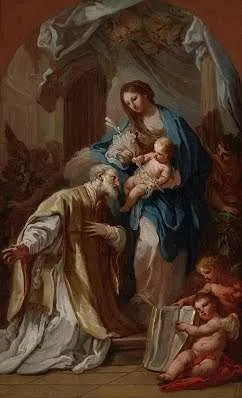
While Raymond was still a layman, the Bishop of Barcelona became aware of Raymond’s brilliance and excellent reputation as a professor in Bologna, Italy. The bishop called Raymond back home to Spain to be an archdeacon, grand vicar, and official in his home diocese. Soon after, in his forties, Raymond joined the Dominican Order and began his life as a friar. As a Dominican friar, he gained a reputation for being humble, obedient, and fervent in his devotion and service to others, especially the poor. When he asked his superiors to impose upon him some penance so that he could more fully imitate his Lord, Who was humbly obedient even unto death, the superiors gave him the penance of writing a manual for priests to help them be better confessors. Father Raymond thus composed a magnificent manual of moral theology for confessors, one of the first of its kind. In addition to writing about Confession, Fr. Raymond also became known as a great confessor himself.

Among his penitents was the King of Aragon. Legend has it that on one occasion, the King of Aragon took Fr. Raymond with him on a journey to the Island of Majorca. Though the king was a good man, he suffered from a weakness of sinning with women. Father Raymond confronted the king after he refused to abandon this sin. Father Raymond then asked permission to return to Barcelona. The king refused. At that, the saint was said to have placed his cloak on the sea, stepped onto his “ship,” and speedily sailed across the water to mainland Spain with lightning speed.

In his fifties, Fr. Raymond was summoned to Rome by Pope Gregory IX and was given the monumental task of organizing the many legal decrees of the Church into a single collection, something which had not been done for eighty years. Three years and five volumes later, the Decretals were completed and published by the pope. They became the basis of the Church’s canon law for centuries to come.

The pope was so pleased with Fr. Raymond that he appointed him the Archbishop of Tarragon in Spain. Father Raymond, whose only desire was to be a humble friar, pleaded with the pope to excuse him from the appointment. By divine providence, Fr. Raymond became quite sick before he was ordained a bishop, which helped convince the pope to permit him to remain a humble friar and to return home.

Three years later, while in his early sixties, Fr. Raymond was chosen to be the third Superior General of the Dominican Order. He held the position for only two years before retiring and returning to the life of a humble friar.

Father Raymond could finally do what he loved. He preached, evangelized, catechized, and heard confessions. He felt especially called to preach to Jews and Muslims and helped establish schools where his fellow friars could learn Hebrew and Arabic to help them better evangelize these non-Christians. To help this endeavor, he encouraged another soon-to-be saint, Saint Thomas Aquinas, to write one of his greatest works, Against the Gentiles, to provide a theological basis for this evangelization. When Fr. Raymond was in his early eighties, he wrote a letter to his Superior General stating that 10,000 Muslims had been converted and baptized through his evangelical efforts.

On his deathbed he was visited by princes, princesses, two kings, and one queen. He prayed and fasted continuously, and miracles were even attributed to his intercession. He now rests in Heaven while his earthly body lies in the Cathedral of Barcelona, Spain.

Source: https://mycatholic.life/saints/saints-of-the-liturgical-year/january-7-saint-raymond-of-penyafort/

Saint Raymond of Peñafort, Priest Read More »

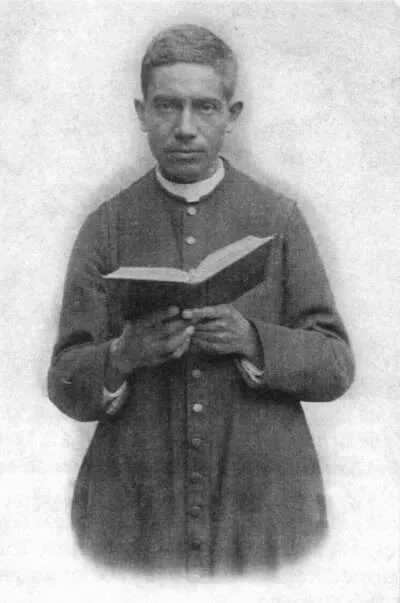
Saint André Bessette, Religious

1845–1937; Patron saint of family caregivers in Canada; Canonized by Pope Benedict XVI on October 17, 2010

During His Sermon on the Mount, Jesus said, “Knock and the door will be opened to you” (Matthew 7:7). In many ways, these words summarize the life of Saint André Bessette. The only caveat is that Brother André was the one opening the door for countless thousands of others during his life, not having the door opened for him. For forty years, Brother André was the doorkeeper at the Collège Notre-Dame in Côte-des-Neiges, Quebec, while serving as a professed Religious of the Congregation of the Holy Cross.

He was born Alfred Bessette in Saint-Grégoire d’Iberville, Quebec, Canada, and was the eighth of twelve children. His father was crushed by a falling tree and died when Alfred was only three. His mother died three years later of tuberculosis, leaving him and his siblings orphans. From birth, Alfred was a sickly child and remained so throughout his life. Most people thought he would die at a young age, but he lived until he was ninety-one!

Alfred had a distinct smile. It was serious, warm, welcoming, pleasant, and calming. He was a hard worker, but his poor health made it difficult for him to maintain a steady job. At the age of twenty-five, Alfred sought spiritual direction from his pastor, who encouraged him to present himself to the Congregation of the Holy Cross in Montreal for acceptance into religious life. The pastor sent along a letter to the superior, which said in part, “I am sending you a saint.” The problem was that Alfred could hardly read, and the order was a teaching order of well-educated men. After some initial hesitation, the superior welcomed him into the novitiate at the encouragement of the bishop.

Upon making his vows, Alfred chose the name Brother André, and his first assignment was one he would keep for the rest of his life—doorkeeper. In addition to minding the door, he spent his time washing floors and windows, cleaning lamps, carrying firewood, and delivering messages. He was a humble servant content to carry out the most menial of tasks.

How does an illiterate doorkeeper become a saint? Brother André’s path of holiness consisted of living the most attractive virtue of humility, of listening attentively to troubled hearts, of showing a compassion that lifted countless burdens, and of showing a gentleness that put even the worst sinner at ease. Above all, Brother André showed a love of God and trust in the intercession of Saint Joseph that was calm, steadfast, and more certain to him than life itself. In his role of doorkeeper, Brother André had the joy of interacting with countless people for forty years. Over and over, Brother André inspired faith in both the saint and the sinner, the proud and the humble, the well-to-do and the poorest of the poor. Through his lowliness, soul after soul was drawn to God. Every time a life was changed, Brother André gave the credit to Saint Joseph. “Go to Saint Joseph, he will help you,” he would say throughout his life.

Not only was the soul of Brother André filled with the most beautiful virtues, his prayers also worked countless miracles. When people spoke to Brother André and asked for his prayers, a surprising pattern began to emerge—his prayers were answered! The sick were healed, the lame could walk, problems did disappear, and hearts were converted. By the time of his death, the brothers of his order attributed as many as 10,000 miracles to his intercession. But, according to Brother André, it wasn’t he who worked the miracles but Saint Joseph.

At first, word of Brother André’s powerful prayers slowly trickled from person to person, but eventually his renown flowed like a river, roaring from one end of Canada to the other. Lines of people came streaming to him. He prayed for the sick, spent time with those who visited, went out of his way to speak to souls in need, and dispensed mercy and compassion to all. Towards the end of his life, this holy man who struggled with reading received as many as 80,000 letters each year from people asking for his prayers. He entrusted them all to Saint Joseph.

“It is with the smallest brushes that the artist paints the best paintings,” Brother André was fond of saying. The artist was God, and Brother André was the smallest and most humble brush. The living work of art God painted with Brother André was on full display at his wake and funeral. It is estimated that a million people paid their respects during the week that his body lay in state outside of St. Joseph’s Oratory! Brother André’s beautiful legacy was memorialized in a humble chapel he built to Saint Joseph. Over time, that chapel has been transformed and enlarged into the massive St. Joseph Oratory on Mount Royal near the Collège Notre-Dame. The Oratory sits on a hill and towers over its surroundings. It is crowned by one of the largest domes in the world and remains a place of pilgrimage and prayer. On the walls of its crypt hangs a moving testament to Brother André’s healing powers—hundreds of pairs of discarded crutches. The humble are not always exalted in this world, but Brother André truly was.

Source: https://mycatholic.life/saints/saints-of-the-liturgical-year/january-6-blessed-andr-bessette-religious-usa-optional-memorial/

Saint André Bessette, Religious Read More »

Saint André Bessette, Religious

1845–1937; Patron saint of family caregivers in Canada; Canonized by Pope Benedict XVI on October 17, 2010

During His Sermon on the Mount, Jesus said, “Knock and the door will be opened to you” (Matthew 7:7). In many ways, these words summarize the life of Saint André Bessette. The only caveat is that Brother André was the one opening the door for countless thousands of others during his life, not having the door opened for him. For forty years, Brother André was the doorkeeper at the Collège Notre-Dame in Côte-des-Neiges, Quebec, while serving as a professed Religious of the Congregation of the Holy Cross.

He was born Alfred Bessette in Saint-Grégoire d’Iberville, Quebec, Canada, and was the eighth of twelve children. His father was crushed by a falling tree and died when Alfred was only three. His mother died three years later of tuberculosis, leaving him and his siblings orphans. From birth, Alfred was a sickly child and remained so throughout his life. Most people thought he would die at a young age, but he lived until he was ninety-one!

Alfred had a distinct smile. It was serious, warm, welcoming, pleasant, and calming. He was a hard worker, but his poor health made it difficult for him to maintain a steady job. At the age of twenty-five, Alfred sought spiritual direction from his pastor, who encouraged him to present himself to the Congregation of the Holy Cross in Montreal for acceptance into religious life. The pastor sent along a letter to the superior, which said in part, “I am sending you a saint.” The problem was that Alfred could hardly read, and the order was a teaching order of well-educated men. After some initial hesitation, the superior welcomed him into the novitiate at the encouragement of the bishop.

Upon making his vows, Alfred chose the name Brother André, and his first assignment was one he would keep for the rest of his life—doorkeeper. In addition to minding the door, he spent his time washing floors and windows, cleaning lamps, carrying firewood, and delivering messages. He was a humble servant content to carry out the most menial of tasks.

How does an illiterate doorkeeper become a saint? Brother André’s path of holiness consisted of living the most attractive virtue of humility, of listening attentively to troubled hearts, of showing a compassion that lifted countless burdens, and of showing a gentleness that put even the worst sinner at ease. Above all, Brother André showed a love of God and trust in the intercession of Saint Joseph that was calm, steadfast, and more certain to him than life itself. In his role of doorkeeper, Brother André had the joy of interacting with countless people for forty years. Over and over, Brother André inspired faith in both the saint and the sinner, the proud and the humble, the well-to-do and the poorest of the poor. Through his lowliness, soul after soul was drawn to God. Every time a life was changed, Brother André gave the credit to Saint Joseph. “Go to Saint Joseph, he will help you,” he would say throughout his life.

Not only was the soul of Brother André filled with the most beautiful virtues, his prayers also worked countless miracles. When people spoke to Brother André and asked for his prayers, a surprising pattern began to emerge—his prayers were answered! The sick were healed, the lame could walk, problems did disappear, and hearts were converted. By the time of his death, the brothers of his order attributed as many as 10,000 miracles to his intercession. But, according to Brother André, it wasn’t he who worked the miracles but Saint Joseph.

At first, word of Brother André’s powerful prayers slowly trickled from person to person, but eventually his renown flowed like a river, roaring from one end of Canada to the other. Lines of people came streaming to him. He prayed for the sick, spent time with those who visited, went out of his way to speak to souls in need, and dispensed mercy and compassion to all. Towards the end of his life, this holy man who struggled with reading received as many as 80,000 letters each year from people asking for his prayers. He entrusted them all to Saint Joseph.

“It is with the smallest brushes that the artist paints the best paintings,” Brother André was fond of saying. The artist was God, and Brother André was the smallest and most humble brush. The living work of art God painted with Brother André was on full display at his wake and funeral. It is estimated that a million people paid their respects during the week that his body lay in state outside of St. Joseph’s Oratory! Brother André’s beautiful legacy was memorialized in a humble chapel he built to Saint Joseph. Over time, that chapel has been transformed and enlarged into the massive St. Joseph Oratory on Mount Royal near the Collège Notre-Dame. The Oratory sits on a hill and towers over its surroundings. It is crowned by one of the largest domes in the world and remains a place of pilgrimage and prayer. On the walls of its crypt hangs a moving testament to Brother André’s healing powers—hundreds of pairs of discarded crutches. The humble are not always exalted in this world, but Brother André truly was.

Source: https://mycatholic.life/saints/saints-of-the-liturgical-year/january-6-blessed-andr-bessette-religious-usa-optional-memorial/

Saint André Bessette, Religious Read More »

Epiphany of the Lord

All of God’s creation gives Him glory and praises Him by its very existence. Psalm 143 states, “Praise him, sun and moon; praise him, all shining stars. Praise him, highest heavens, you waters above the heavens. Let them all praise the LORD’s name; for he commanded and they were created…” Though creation gives praise to God simply by existing and thus, revealing its Creator, today’s solemnity commemorates the one moment in time when God used a star to manifest His eternal glory.

At the time of Jesus’ birth, it was commonly believed that a new star would appear whenever a new ruler was born. The Father in Heaven used this belief to honor His Son Who was born as the new King. The three Magi from the East were astrologers. When they saw this “new star,” they chose to follow it to discover the new King. Creation itself, in the form of a star, pointed the way, thus giving glory to the newborn King, manifesting Him to the whole world as symbolized by the Magi.

The word “Epiphany” means “manifestation.” Therefore, as we honor this moment in time when the Christ Child was made manifest to the world, we need to look into our own hearts. There, we discover Christ’s ongoing manifestation to us so that we can worship Him Who has also chosen to be born within our hearts. We must diligently seek out that manifestation of God within us and respond to it in the same ways that the Magi responded.

First of all, the Magi were determined. When they saw a sign from the heavens that pointed to a new King, they stopped everything and departed in haste to find Him. When God speaks to you and manifests Himself to you in some way, nothing could be more important than to be attentive to His voice and follow His manifestation with the same haste.

The Magi brought the Christ Child gifts of gold, frankincense, and myrrh. God was honored and glorified through His creation by the giving of these gifts. God created gold to manifest His beauty and dignity. It was a gift that symbolized kingship. When we ponder the natural gift of gold given to the Christ Child, we are inspired to give Him our own gift of symbolic gold by prayerfully acknowledging Him as our own King to whom we pledge our complete submission.

Made from the sap of trees found in India, northeastern Africa, and the Arabian peninsula, frankincense and myrrh are also fruits of God’s creation. Used in worship to symbolize prayers rising to heaven, frankincense symbolizes the Christ Child’s divinity. We offer frankincense to Christ when we acknowledge His divine nature, since He is God in the flesh. Often used in burial, myrrh honors the Christ Child Who came to give His life as a sacrifice for many. We offer myrrh to profess our belief in the saving power of Christ’s death on the Cross and our need for that gift of salvation.

As we celebrate the Solemnity of the Epiphany, try to see it as a historical event in which you are invited to share. God wants to manifest Himself to you today. When this happens, you must respond with faith and worship, giving God the greatest glory by giving Him your very life and offering Him your spiritual gifts of gold, frankincense, and myrrh.

Source: https://mycatholic.life/saints/saints-of-the-liturgical-year/january-6-epiphany/

Epiphany of the Lord Read More »

The Most Holy Name of Jesus

Everything about our divine Lord is holy, including His Name. It was the Archangel Gabriel who first spoke the name of Jesus to His mother, “Behold, you will conceive in your womb and bear a son, and you shall name him Jesus” (Luke 1:31). The Archangel was only a messenger, so the name of Jesus was given to Him by the Father in Heaven.

Saint Peter was one of the first Apostles to speak with authority in the Holy Name of Jesus when he healed a crippled man saying, “I have neither silver nor gold, but what I do have I give you: in the name of Jesus Christ the Nazorean, rise and walk” (Acts 3:6). Saint Paul also exalted the holy name of Jesus when he said, “…at the name of Jesus every knee should bend, of those in heaven and on earth and under the earth, and every tongue confess that Jesus Christ is Lord, to the glory of God the Father” (Philippians 2:9–10). Saint Paul preached with power in the name of Jesus so often that even some itinerant Jewish exorcists tried to imitate him by commanding demons, “I adjure you by the Jesus whom Paul preaches” (Acts 19:13). 

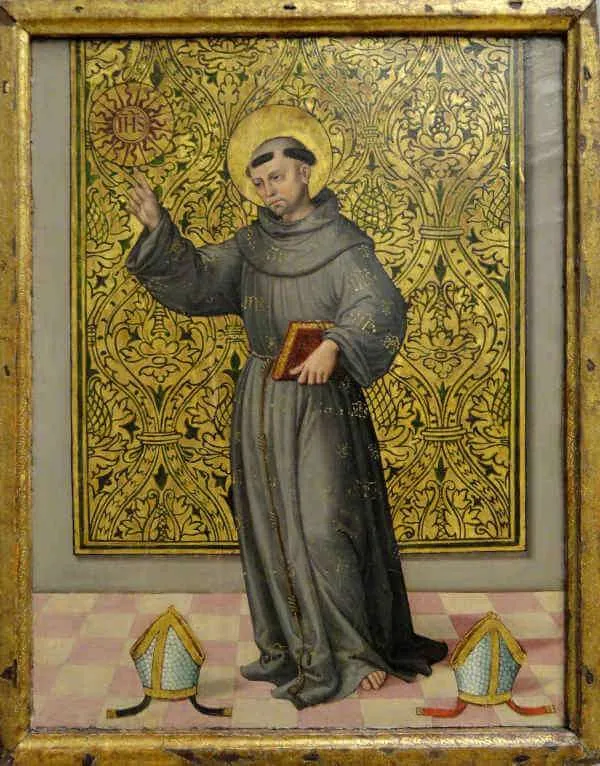
Throughout the history of the Church, Jesus’ name has been invoked as an instrument of personal faith in the Son of God, especially to command demons or simply to pray to Jesus in a repetitive and personal way. The liturgical Feast of the Most Holy Name of Jesus has been celebrated by the Church for many centuries, especially within various religious orders. In the fifteenth century, Saint Bernardine of Siena, a Franciscan friar, went on a preaching mission promoting devotion to the Most Holy Name. He encouraged people to revere Jesus’ name by placing the first three Greek letters of His name on their doors: IHS. Today, this Greek monogram of Jesus’ name is commonly seen in churches on tabernacles, altars, and in stained glass windows. In the sixteenth century, Saint Ignatius of Loyola had such a strong devotion to the Most Holy Name of Jesus that he adopted it as his seal as general of his newly founded order of the Jesuits; that monogram remains the Jesuits’ official seal today.

There is great power in the spoken name of Jesus. Repeating His name prayerfully or speaking it aloud brings Him close and gives you strength, provided you recite His name in faith. The name of Jesus casts out fear, arouses trust, and unites your heart to His. Sadly, the Most Holy Name of Jesus is so holy that the evil one often tempts people to invoke it as a curse when angry, without even considering what they are doing.

As we celebrate this holy memorial today, ponder the prayer below that is attributed to Saint Bernardine of Sienna, the Franciscan who spoke so fervently of Jesus’ name. Also, take time to close your eyes and prayerfully repeat His name over and over. As you go about your day, anytime you feel anxious or fearful, speak the name of Jesus. Know and believe that the divine name of our Lord brings Him close to you and bestows His grace in abundance.

Source: https://mycatholic.life/saints/saints-of-the-liturgical-year/january-3-the-most-holy-name-of-jesus/

The Most Holy Name of Jesus Read More »

Saints Basil the Great and Gregory Nazianzen, Bishops and Doctors

St. Basil: 329–379; Patron Saint of monks, hospital administrators, reformers, and Russia

St. Gregory: c. 329–389; Patron Saint of harvests and poets; Pre-Congregation canonizations

Saints Basil the Great and Gregory of Nazianzen were among the most devoted defenders of the faith in the fourth century. Both were bishops and both are now saints and doctors of the Church. These two men met while studying in Caesarea Cappadocia and strengthened their tight friendship in Athens. After Basil’s death, Gregory wrote of their bond, “We seemed to have one soul, inhabiting two bodies” (Orationes of Saint Gregory 43:20).

Both saints came from families of saints. Basil’s maternal grandmother was a martyr; his paternal grandmother, his parents, and three of his siblings are also saints. Gregory’s father was converted to Catholicism by his wife. After his conversion, he was ordained a priest and then consecrated as Bishop of Nazianzen. He served as bishop for about forty-five years, living into his nineties. These saintly parents had three children, all of whom became saints.

At the time that Saints Gregory and Basil lived, the Church, the body of Christ, was suffering from the pandemic of Arianism, a heresy that denied the divinity of Christ. This heresy was like a disease infecting the Church. Arianism entered the bloodstream of Christ’s body and weakened every limb and muscle, causing convulsions, violent outbursts, and deep divisions among both bishops and the faithful. The clear teaching and brave episcopal leadership of Saints Basil and Gregory helped the Church to heal, to eradicate this heresy, and to restore unity of faith in the East. But not all warmly welcomed their efforts. They both suffered greatly. From the emperor, many bishops, and other clergy and laity, they received many abuses, calumnies, physical attacks, and threats. Through it all, they remained faithful to their preaching and calm and focused in their resolve, restoring a deeper and more ancient unity to Christ’s faithful. Today, their voluminous writings are among the most inspiring, insightful, and convincing teachings of the early Church, particularly as they pertain to Christ’s divinity and the Most Holy Trinity.

These two men did not become saints simply because they were smart. They were also holy. And their holiness came from a life of deep prayer. After they both received an excellent education at the finest universities, they mutually sought to live as hermits, with Basil leading the way by forming what would become the model for monasticism in the East. They both spent years in solitude and prayer at different stages of their lives. Their interior communion with God through prayer, more than anything else, prepared them for their common mission.

Consider following the example of these two great saints by turning to God in prayer. Though you might not be called to become a hermit, you can certainly set aside time every day to focus on a deeper life of prayer. As you do, you will discover God calling you to approach Him more closely, and then entrusting you with some greater mission to be accomplished for His glory.

Source: https://mycatholic.life/saints/saints-of-the-liturgical-year/2-january-saints-basil-the-great-and-gregory-nazianzen-bishops-and-doctors-memorial/

Saints Basil the Great and Gregory Nazianzen, Bishops and Doctors Read More »

Solemnity of Mary, Mother of God

Holy Day of Obligation

Only a mother could begin to understand the great mystery and beauty of motherhood. But only one mother could begin to understand the unfathomable beauty of being the mother of the Son of God. After the birth of Jesus, the shepherds came to adore her Child and recounted how a multitude of heavenly hosts appeared to them, revealing that Mary’s Child was the Messiah. As Mary heard those words, she pondered them, reflected upon them, and kept them in her heart. This was but the first time we are told of Mary’s pondering heart after the birth of her Son, but we can be certain that she pondered Him over and over, entering ever more deeply into the mystery of her motherhood of the Son of God.

As the Mother of God, Mary’s prayerful pondering was beyond our comprehension. The bond she shared with her divine Son far surpassed a mere human bond. Jesus was not only her Son, He was also her Savior. Therefore, she adored Him as a mother loves her child, but also as a servant worships her God. The relationship between this unique mother and Son is infinitely awe-inspiring.

Our Blessed Mother is given the unique title of “Mother of God” first and foremost to express our faith in the divinity of Jesus. Jesus was both human and divine, but in Him these two natures were perfectly united. Therefore, one cannot say that Mary was only the mother of the humanity of Jesus, she was the mother of the Person. And that one Person was, at the same time, God and man.

Recall that once Jesus began His public ministry and was teaching, there was a woman in the crowd who cried out, “Blessed is the womb that carried you and the breasts at which you nursed.” Jesus corrected her by saying, “Rather, blessed are those who hear the word of God and observe it” (Luke 11:27). At first read, one could conclude that Jesus was downplaying the role of His own mother, but He was actually doing the opposite. Jesus was actually highlighting the most unifying aspect of His relationship with His mother. Mary was not His mother only in a biological sense. She wasn’t blessed only because she bore Him in her womb. Rather, her deepest union with her divine Son came from her spiritual union with His will and that of the Father in Heaven. She said, “Behold, I am the handmaid of the Lord. May it be done to me according to your word” (Luke 1:38). She heard the word of God and observed it perfectly. She did that at the Annunciation, she continued to do so as she raised her Child, and she did it most perfectly as she stood before the Cross, offering her dying Son to the Father for the salvation of the world. Mary’s motherhood was one that encompassed her whole being. It was one that united her to her Son in ways we will never fully comprehend.

Mary is the Mother of God and, therefore, is the mother of all of God’s children, including you. Honor and love your heavenly mother today and rejoice as you reflect upon this glorious queen and holy mother. As we celebrate this greatest saint in the history of the world, ponder the ponderer. Ponder her love for her Son. Ponder her obedience to His divine will. Ponder Him as her Savior. Ponder every human and divine aspect of their loving relationship. 

Source: https://mycatholic.life/saints/saints-of-the-liturgical-year/january-1—octave-day-of-christmas-solemnity-of-mary-mother-of-god/

Solemnity of Mary, Mother of God Read More »

Saint Sylvester I, Pope

c. Late Third Century–335; Patron Saint of animals, harvests, and stonemasons; Pre-Congregation canonization

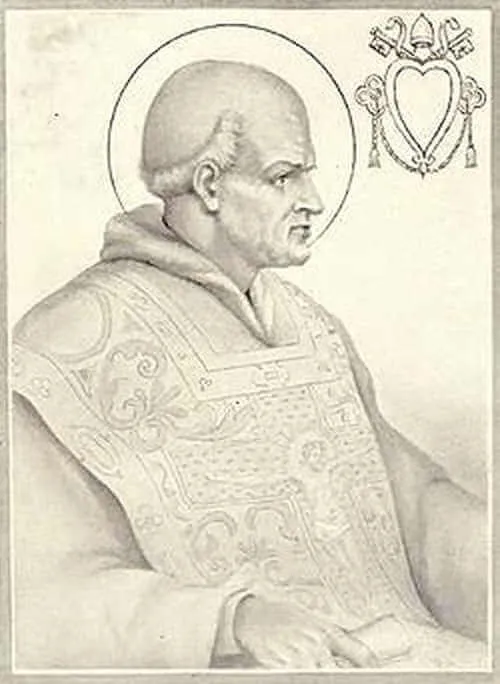
Little is known about the early life of Pope Saint Sylvester I, but many legends have emerged over the centuries. He is believed to have been born in Rome to Christian parents and raised as a devout follower of Christ. He was ordained a priest in Rome where he served during one of the severe persecutions of the Church.

In 303, Emperor Diocletian and his co-emperor Galerius issued a series of edicts outlawing Christianity. By that time, the Church had substantially expanded within the empire, although it was still a minority religion. The new edicts led to the destruction of churches, the burning of sacred texts, and legal punishments against Christians. When Christians were reported to the authorities, they were required to offer sacrifice to the Roman gods and renounce their faith. Those who refused were often imprisoned, tortured, and even killed.

In 312, the co-emperors of the West, Constantine and Maxentius, were at war, each making their own claim as ruler following Diocletian’s death the year before. Just prior to their final battle at the Milvian Bridge, Constantine, who was sympathetic toward Christianity, saw a sign in the sky that would change Christianity and the Roman Empire forever. Church historian Eusebius tells the famous story this way: 

About the time of the midday sun, when day was just turning, he [Constantine] said he saw with his own eyes, up in the sky and resting over the sun, a cross-shaped trophy formed from light, and a text attached to it which said, ‘By this conquer’…He was, he said, wondering to himself what the manifestation might mean; then, while he meditated, and thought long and hard, night overtook him. Thereupon, as he slept, the Christ of God appeared to him with the sign which had appeared in the sky, and urged him to make himself a copy of the sign which had appeared in the sky, and to use this a protection against the attacks of the enemy.

The sign was the cross. Constantine and his troops painted the cross on their shields, and his army was victorious. The following year, Constantine and Eastern Emperor Licinius issued the Edict of Milan that legalized Christianity. Constantine immediately began to work closely with Pope Miltiades. However, Pope Miltiades died in January of 314 and, within that same month, Sylvester was elected, making him the first pontiff whose entire papacy took place under the support and protection of the Roman emperor.

It is difficult to speak about Pope Sylvester’s papacy without intertwining it with Emperor Constantine the Great. Constantine had already given Pope Miltiades the palace of Empress Fausta in Rome for his residence, known as the Lateran Palace. Once Sylvester became pope, he took possession of the palace and expanded it with the support of Constantine. It was dedicated in 324, making it the official cathedral church and residence of the pope. Today it is named the Basilica of Saint John Lateran. With the support of Constantine, several other churches and chapels were built in Rome and the Holy Land, such as the Basilica of the Holy Cross in Jerusalem, Old St. Peter’s Basilica in Rome, and chapels built over the graves of martyrs. Constantine also furnished the churches well, while Pope Sylvester oversaw their construction and beautification.

Around the year 318, Arius, a priest in Alexandria, accused his bishop of heresy and preached that the Son of God was subordinate to the Father, lacking eternal divinity. After a local synod exiled Arius, he began to travel the empire, preaching his heresy and winning followers. Pope Sylvester and Emperor Constantine soon became aware of the controversy. In 325, with the pope’s blessing and support, the emperor called the first ecumenical council in Nicaea. Though Pope Sylvester did not personally attend, he sent papal delegates who presented his position and consented to the outcome of the council. The council addressed Arius’ heresy, which denied Christ’s divinity. A deacon from Alexandria named Athanasius strongly defended Christ’s divinity. The council of over 300 bishops formulated the Nicene Creed to affirm the Church’s faith. Only two bishops, along with Arius, refused to accept it and were exiled. Deacon Athanasius was soon after chosen as Bishop of Alexandria and is known today as Saint Athanasius.

Since Pope Sylvester was the first pope to serve the Church under the legal support of the emperor, and because he did so for twenty-one years, he is often seen as the first formal administrator of the Church. He had a palace, money, numerous converts, and the organizational support of the emperor. The centuries of persecution built the foundation of the Church, and Pope Sylvester began to build the actual structure of the Church.

One of the lasting effects of the relationship between Pope Sylvester and Emperor Constantine came from a forged eighth-century document called “The Donation of Constantine.” That document relates a story that Constantine was cured of leprosy by Pope Sylvester and, in gratitude, Constantine bestowed the pope with temporal power over Rome and the western part of the Roman Empire. Upon doing so, Constantine moved to Constantinople and ruled the Eastern part of the Empire. By the Middle Ages, this forged document greatly influenced the political and religious landscape of medieval Europe. Later popes and rulers used it to support the position that the pope was not only a spiritual ruler but also a temporal ruler in Rome and in much of Italy, and that all temporal rulers were subservient to the pope.

As we honor Pope Sylvester today, ponder the fact that in many ways, the Church we have today began with him. Though the faith was purified and articulated in the first centuries, the great basilicas, ecumenical councils, and organized administration of the Church began with Pope Sylvester. Pray for the Church today as we honor this important pope. The Church always has and always will be flawed in her members and leaders, but the fact that the Church has survived for more than 2,000 years is a testimony to its divine institution and a guarantee from Christ that the gates of hell will not prevail against it when Peter, in the person of the pope, remains in charge.

Source: https://mycatholic.life/saints/saints-of-the-liturgical-year/31-december-saint-sylvester-i-pope–optional-memorial/

Saint Sylvester I, Pope Read More »

Holy Innocents, Martyrs

AD 1; Patron Saints of babies, abandoned babies, children’s choirs, students, and altar servers; Invoked against ambition, jealousy; Pre-Congregation canonization

Herod the Great, King of Judea, was gripped by paranoia and insecurity. He jealously clung to his power and ruthlessly attacked anyone whom he saw as a threat, including his immediate family. In 35 BC, he drowned his brother-in-law who was the High Priest at that time, fearful of his popularity and influence over the people, making it look like an accident. In 29 BC, Herod began to suspect his beloved wife, Mariamne, of infidelity and plotting to take over the throne. She stood trial and was executed. Mariamne’s mother and grandfather were also executed. In 7 BC, Herod executed two of his own sons, Aristobulus and Alexander, and in 4 BC, Herod killed his son Antipater. Every execution was the result of Herod’s paranoid delusion that the person was plotting against him and seeking his throne.

Shortly after Jesus’ birth, the second chapter of the Gospel of Matthew relates the story of the Magi, the flight into Egypt, the Massacre of the infants, and the return of the Holy Family to Nazareth. We read, “When Jesus was born in Bethlehem of Judea, in the days of King Herod, behold, magi from the east arrived in Jerusalem, saying, ‘Where is the newborn king of the Jews? We saw his star at its rising and have come to do him homage’” (Matthew 2:1–2). Given Herod’s propensity for violence toward those whom he saw as a threat, he was the last person with whom the Magi should have shared their news regarding the “newborn king of the Jews.”

Upon hearing about the newborn king, Herod became greatly troubled and gathered the chief priests and scribes to learn from them where the promised king would be born. They answered him, “In Bethlehem of Judea…” (Matthew 2:5). Herod then set his wicked plan into motion. He called the Magi back, asked when the star first appeared, and ordered them to find the child and bring the babe to him so he could also do Him homage. The Magi did seek out and find the Christ Child, prostrated themselves before Him, did Him homage, and gave Him gifts of gold, frankincense, and myrrh. Afterward, the Magi were warned in a dream not to go back to Herod, so they returned to their homeland in the East by a different route.

Foiled in his attempt to kill the newborn king, Herod had to move to a more drastic plan. “When Herod realized that he had been deceived by the magi, he became furious. He ordered the massacre of all the boys in Bethlehem and its vicinity two years old and under, in accordance with the time he had ascertained from the magi” (Matthew 2:16). According to the early liturgies of the Eastern Churches, between 14,000 and 144,000 boys were massacred. However, those high numbers might only be symbolic. Given the fact that Bethlehem was a small town, possibly with fewer than 1,000 inhabitants, the number of boys under the age of two might have been closer to a couple of dozen. One legend states that Herod even killed one of his own sons at that time. The same legend continues that when the Roman Emperor Augustus heard of the act, he stated, “It is better to be Herod’s pig than son.”

Regardless of the actual number of boys killed, they are now honored as the first martyrs for Christ. The early deacon Saint Stephen, whose feast we celebrated two days ago, still retains the title of the first Christian martyr, given his baptism. But these children were the first to die on account of Christ. Of these infants, Saint Augustine said, “Herod accordingly kills many little children, in his determination to bring about the death of just one. And while he carried out this most celebrated and cruel slaughter of so many innocents, he was himself the first one he slew by such an utterly wicked deed” (Sermon 373). Within the wisdom and power of God, Herod will forever be condemned by his deed, and these children will forever be exalted.

As we continue our octave of Christmas, we celebrate the birth of Christ and yet acknowledge the great suffering that surrounded His earthly life. The devil and his fallen angels did everything they could to try to destroy God’s perfect plan of salvation. They stirred up hatred, jealousy, paranoia, and every other vile sin imaginable in an attempt to destroy our Lord’s mission. Their attack began at the time of Jesus’ birth and continued during his public ministry. In the end, Jesus’ apparent defeat turned into His glorious triumph. So also with these innocent children. Their cruel and tragic deaths have been transformed by God, and they will forever be honored in Heaven.

These Christmas martyrdoms speak to us today. Though peace and joy should ideally permeate this season, we must face the reality of hardships, persecutions, and other forms of suffering. Jesus’ birth does not remove suffering from our lives, but it does transform it, enabling us to share in the glorious sufferings of Saint Stephen, these Holy Innocents, and all saints who have united themselves most fully to Christ.

Source: https://mycatholic.life/saints/saints-of-the-liturgical-year/28-december-holy-innocents-martyrs–feast/

Holy Innocents, Martyrs Read More »

 Saint Thomas Becket, Bishop and Martyr

c. 1119–1170; Patron Saint of clergy; Canonized by Pope Alexander III on February 21, 1173

Thomas Becket (also called Thomas of London) was born in Cheapside, London, to middle-class parents of Norman descent. As a youth he enjoyed hunting with his father. At the age of ten, he was sent to the newly founded Merton Augustinian Priory just outside of London, where he received a thorough education in the liberal arts. At the age of twenty, he spent time studying in Paris, but due to financial difficulties, his father helped him find a job as a clerk for a family member. When Thomas was around the age of twenty-two, Archbishop Theobald of Canterbury hired him as a clerk. Thomas soon became the archbishop’s most trusted assistant. He was sent to Rome on several important diplomatic missions and to Bologna and Auxerre for studies in civil and canon law. In 1154, when Thomas was around the age of thirty-five, the archbishop ordained him as a deacon and appointed him as the Archdeacon of Canterbury.

In December 1154, twenty-one-year-old Henry II became King of England. At that time, England and Normandy had just ended a period of civil war, referred to as “The Anarchy.” As a result, England was politically divided and weakened. The new young king urgently needed a capable and strong chancellor to help him as he worked to reunite the kingdom, assert control, and implement legal and administrative reforms. For this daunting task, Archbishop Theobald of Canterbury recommended his archdeacon, Thomas Becket, for the job. The king accepted his recommendation, and Archdeacon Thomas Becket became the second most powerful civil authority in England.

As chancellor, Thomas oversaw the administration of the royal chancery, including the creation and issuance of official documents. He served as an important legal advisor to the king, held responsibility for the highest court of appeals, was the chief diplomat, represented the king in foreign and Church matters, and assisted in the kingdom’s financial matters. Chancellor Thomas Becket and King Henry II not only worked well together in the administration and reformation of the kingdom, they also became close friends. They enjoyed riding together, hunting, indulging in a luxurious lifestyle, and every form of comradery. Becket’s administrative skills helped the king reassert his control over the kingdom and even portions of the Church. The two fought side by side in battles and were said to be of one mind and heart in all that they did. Although Chancellor Becket retained his status as a deacon, his lifestyle was notably secular. Despite this, he was widely recognized as a man of faith and purity, even amidst his indulgences and various excesses.

In 1161, six years after Deacon Thomas became Chancellor of England, Archbishop Theobald of Canterbury died. The Archdiocese of Canterbury was the most important diocese in England, and the archbishop was considered the senior English bishop. Desirous of exerting even more influence and control over the Church in England, King Henry wanted his close friend, Chancellor Thomas Becket, to become archbishop. Henry presumed that Thomas would continue to act as his chancellor, helping the king to make further inroads into the Church’s governance. Thomas, however, was staunchly opposed to the idea. He knew of Henry’s intentions for the Church, and Becket also knew that if he were the archbishop, he would have to fulfill that role with the same strength as he had fulfilled the role of chancellor. In other words, he knew he would have to defend the Church against King Henry. The king appointed him anyway, and the pope confirmed his appointment. In June 1162, Becket was first ordained as a priest and, the very next day, consecrated as a bishop, assuming the role of Archbishop of Canterbury.

Within a year of his consecration, Archbishop Thomas began a profound spiritual transformation. He shed the luxuries he was accustomed to, devoted himself to prayer, fasted, and did penance. While the king wanted Thomas to remain as Chancellor of England so as to unite the two roles in one person at the service of the king, the archbishop refused and resigned his chancellorship. This angered the king, and their close friendship immediately began to suffer. Over the next year and a half, King Henry and Archbishop Thomas began to clash. The archbishop attempted to regain church property that had been seized by the king, asserted the independence of the Church, and argued that clerics who violated the law could only be tried in Church courts, not civil. In response, Henry began to harass the archbishop, impose arbitrary fines on him, and make false accusations of embezzlement.

In January 1164, King Henry issued sixteen decrees, known as the Constitutions of Clarendon, that sought to limit the powers of the Church and expand state authority. He required the bishops to consent to these decrees. While some bishops acquiesced, Archbishop Thomas Becket staunchly opposed them. In October of that same year, the king formalized his accusations and put Archbishop Thomas on trial in Northampton Castle. In a sham trial, Becket was found guilty of contempt of royal authority and misappropriation of funds during his time as Chancellor. With a guilty verdict, the king demanded Becket resign his archbishopric, which he refused to do. Instead, he hid and sailed to France where he took refuge in the court of King Louis VII. Shortly afterwards, Becket traveled to Sens, France, where Pope Alexander III was living in exile. The pope offered Archbishop Thomas his full support and permitted him to live in the Cistercian Abbey of Pontigny in Burgundy while negotiations took place with King Henry.

Over the next four years, negotiations among King Henry II, Pope Alexander III, and Archbishop Thomas Becket continued but made little progress. The archbishop continued to firmly oppose the Constitutions of Clarendon, and the king continued to insist on them. Archbishop Thomas did make some minor concessions, but it wasn’t until the pope sent a delegation to Henry that Henry finally agreed to permit Becket to return to Canterbury.

The faithful were overjoyed at the return of their archbishop, but soon after, tensions flared when Archbishop Becket excommunicated three bishops. These bishops had crowned King Henry’s son as the future king, an act traditionally reserved for the Archbishop of Canterbury, thus infringing upon his rights. When King Henry learned of the excommunication, he sent four knights to bring the archbishop to Winchester where he was to defend his actions. One tradition states that as the king gave his orders to the knights, he angrily said, “Will no one rid me of this turbulent priest?” The knights confronted the archbishop in his cathedral, but the archbishop refused to go with them. They then gathered their weapons and charged into the church saying, “Where is Thomas Becket, traitor to the King and country?” As soon as they reached him, the knights began to split open his skull while he clung to a pillar in the cathedral as the monks sang Vespers. His final words were, “For the name of Jesus and the protection of the church, I am ready to embrace death.” His brains spilled upon the cathedral floor, and a cleric who accompanied the knights then stepped upon Becket’s neck saying, “We can leave this place, knights, he will not get up again.”

Archbishop Becket was immediately praised as a martyr, and veneration of him quickly spread across England. Three years after Thomas Becket’s death, Pope Alexander III declared him a saint. Four years after Thomas Becket’s death, King Henry visited the saint’s tomb and did public penance for the role he played in his death. Saint Thomas Becket’s tomb became a popular place of pilgrimage in Europe, and numerous miracles were attributed to his intercession.

As we honor this heroic archbishop and saint of God, ponder the firm resolve that Saint Thomas had in defense of the Church. Guided by divine inspiration, he knew in his heart the necessity to resist the king’s unjust intrusion into the Church’s governance and administration. Honor Saint Thomas by invoking his intercession, praying fervently for the universal right to worship God freely, and for the Catholic Church’s liberty to spread the Gospel and administer the Sacraments unhindered.

Source: https://mycatholic.life/saints/saints-of-the-liturgical-year/29-december-saint-thomas-becket-bishop-and-martyr–optional-memorial/

 Saint Thomas Becket, Bishop and Martyr Read More »