Author name: Sani

The Ascension of Our Lord

Seventh Sunday of Easter

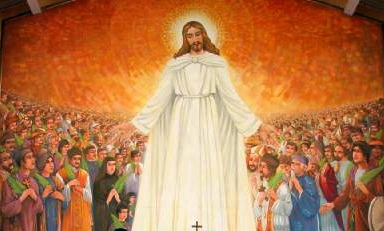
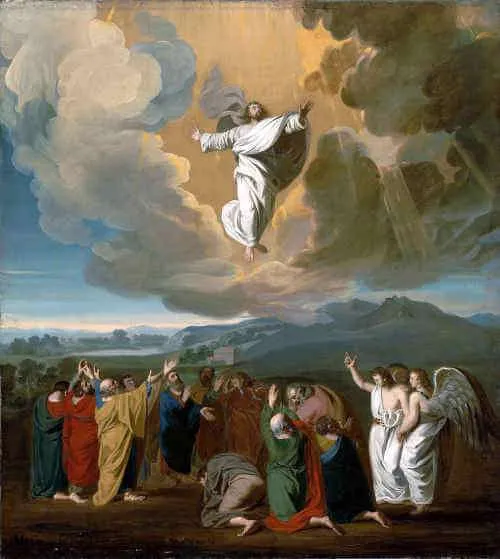
The Solemnity of the Ascension of the Lord commemorates the fortieth day after the Resurrection when Jesus ascended body and soul into Heaven and took His seat at the right hand of His Father. Traditionally, the location of the Ascension is believed to be less than a mile east of the Old City of Jerusalem, and that spot is marked by the Chapel of the Ascension, which is said to contain a miraculous imprint of the footprints of Christ before He ascended. The event of the Ascension is found in the Gospels and Acts (Mark 16:19–20Luke 24:50–53Acts 1:6–12). It is also alluded to in various other passages (John 6:62Ephesians 4:7–101 Timothy 3:161 Peter 3:21–22).

Only Jesus and His Blessed Mother have entered into the glories of Heaven, body and soul. Jesus’ Ascension implies that He did so by His own authority and power. The Blessed Virgin Mary’s Assumption implies that she entered Heaven, body and soul, by God’s power, and not her own.

The Ascension marks the completion of Jesus’ earthly mission. He first united His divine nature with human nature through the Incarnation at the moment of the Annunciation. Saint Thomas Aquinas teaches that from that moment on, Jesus, the Son of God, experienced three types of knowledge. First, being God, He had beatific knowledge, that is, a direct knowledge of His essence, the Father’s essence, and the Holy Spirit’s essence. Second, He had the perfection of infused knowledge, that is, a bestowal of all truths given to the angels in Heaven, especially those truths necessary for the completion of His divine mission. Third, He began to acquire learned knowledge, or experiential knowledge. This was the form of knowledge attained through His human nature from the senses and His human reason.

As Jesus fulfilled His mission through life, His learned knowledge continued to grow until it was perfected in human form. It was never imperfect in the sense of sin, but only in the sense of growth through human experience and human love. He experienced all things, allowed the perfection of His beatific and infused knowledge to guide His human experiences and brought those human experiences and knowledge to perfection. His free embrace of the Cross manifested the perfection of divine love in human form, and His Resurrection brought that perfect unity of human and divine love to a new and transformed resurrected state of human existence. But that was not all. Today we commemorate the fact that Jesus took His perfected human nature into the Beatific Vision, enabling humanity itself to follow. The Blessed Virgin Mary was the first to do so given her sinless state.

The final stage of the salvation of humanity will take place when Jesus returns to judge the living and the dead. At that time, every human body will rise, will endure the final purification and transformation, and will share in the new and resurrected state in which the faithful will be able to stand, body and soul, before the Most Holy Trinity and experience the fullness of the Beatific Vision forever. What Jesus has already accomplished in His human form is what we look forward to in hope at the end of time.

The Feast of the Ascension was celebrated annually from as early as apostolic times. Saint John Chrysostom, Saint Gregory of Nyssa, and Saint Augustine all attest to this fact. When the Council of Nicaea set the date for the celebration of the Resurrection in 325, it chose to keep Easter on the first Sunday after the first full moon occurring on or after the vernal equinox in spring. This decision also set the day for the Ascension being forty days after Easter, on a Thursday. Today, many ecclesiastical provinces transfer the Thursday celebration to the following Sunday to provide for a wider celebration.

Though every aspect of Christ’s life is shrouded in mysteries which will only be fully understood by the faithful when they stand before Him and behold the Beatific Vision, today we especially ponder this beautiful and profound mystery of our faith. As we celebrate the Ascension, try to prayerfully meditate upon the perfect unity of Jesus’ human and divine natures. Ponder further the truth that because the Son of God is both God and man, and He beholds His Father and the Holy Spirit as both God and man, He invites each of us to begin to share in that glorious vision. Only after we fully die in and with Him and rise to new life in and with Him will we be able to know Him clearly and share in His glorious resurrected and ascended life. Until that moment comes, it’s important to ponder that which is incomprehensible. We must know that we do not know, believe what is beyond belief, hope in that which is more than we can understand. God is a mystery; the Ascension is a mystery—but they are mysteries that must be penetrated by prayer. Do so today as we commemorate this holy culmination of the earthly life and mission of Christ.

Source: https://mycatholic.life/saints/saints-of-the-liturgical-year/the-ascension-of-the-lord/

The Ascension of Our Lord Read More »
Luke 24:46-49

Witnessing to the Gospel

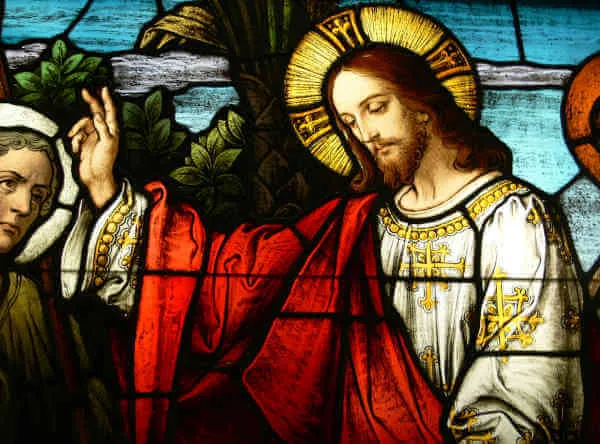
Jesus said to his disciples: “Thus it is written that the Christ would suffer and rise from the dead on the third day and that repentance, for the forgiveness of sins, would be preached in his name to all the nations, beginning from Jerusalem. You are witnesses of these things. And behold I am sending the promise of my Father upon you; but stay in the city until you are clothed with power from on high.”

Reflection:

And with that, the earthly mission of Jesus was completed and He ascended into Heaven. Or was it? Was His mission completed? Yes, but only in the sense that our Lord’s work of destroying death and offering new life was accomplished by His life, death and resurrection. Human nature was now invited to share in a new life of grace.

Prayerfully imagine standing on the mountain of the Ascension with our Lord. As you gaze upon Him, imagine that you were also present with Him throughout His public ministry. Imagine witnessing His many miracles, the way that He converted the hardest of hearts, the authority with which He spoke, His arrest, torture, death and then His Resurrection. Imagine seeing His hands and feet, once pierced, now radiating glory from those wounds. As you see our Lord in this way, imagine Him looking at you with love and saying to you that He has chosen to send you forth to the world to be a witness to Him and to all that you have seen and encountered. You are to go forth sharing the Good News of His life, death and resurrection with all whom you come in contact with.

First, our Lord has, indeed, shared His entire life with you. By reading the Gospels, you become a firsthand witness to all that Jesus did and accomplished. His Word is alive, and it reveals His very Person to you, just as it did to His first followers. Second, Jesus does call you to go forth and to share this living Gospel with the world. Therefore, it is important to ponder how you can do such a thing. How can you give witness to the Resurrection of Christ? How can you change lives? How can you continue the mission of Jesus Himself?

The promise given by our Lord to the disciples on the mountain of the Ascension is also a promise given to you. He is promising to send the Holy Spirit upon you so as to clothe you “with power from on high.” Only by receiving that power and using it fully will you be able to accomplish the mission that our Lord has given to you. Therefore, will you open yourself to the Holy Spirit and commit yourself to the continuation of Christ’s mission?

If we were to fully understand the mission we have received from Jesus, it would fill us with a holy fear. But too often the realization of what God wants of us fills us with an unholy fear instead. We think about evangelizing others, sharing our faith, witnessing to the truth by our actions, loving our enemies and living for the Gospel alone, and it can appear overwhelming. If that is the case with you, then know that this form of unholy fear can be dispelled so that the gift of holy fear can take its place. Holy fear is a gift of the Holy Spirit that inspires us to sense the awesomeness of God and the mission we are given by encountering it firsthand. It motivates us, encourages us and leaves us with wonder and awe. From there, this and every other gift of the Holy Spirit enables us to fulfill the unending mission of Christ.

Reflect, today, upon the particular mission that God has given to you. Prayerfully look at Jesus as He stands on the mountain of the Ascension and looks at you. As He does, let Him reveal to you not only His very Person but also your particular sharing in His ongoing mission of sharing the Good News to the ends of the earth. Receive that mission with courage, joy and holy fear. Reverence it, savor it, ponder it and accept it. Commit yourself to this glorious sharing in the life of Christ by committing yourself to become a witness to Christ until the end of your life on earth.

Source: https://catholic-daily-reflections.com/2025/05/28/witnessing-to-the-gospel-2/

Luke 24:46-49 Read More »

 Visitation of the Blessed Virgin Mary

Toward the end of the fourteenth century, the Church suffered from an internal conflict known as the Western Schism. In 1378, two men claimed to be the pope. Pope Urban VI resided in Rome, and the anti-pope Clement VII resided in Avignon, France. This division raged on until 1417 when the Council in Constance resolved the issue once and for all. Pope Urban VI instituted today’s feast, the Visitation of the Blessed Virgin Mary, in 1389 as a way of asking the universal Church to pray to the Blessed Virgin Mary for unity and peace.

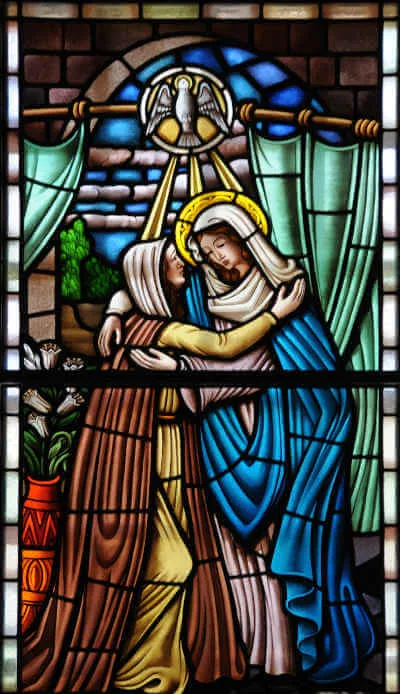
Though the immediate reason for the institution of this feast was internal Church conflict, its inspiration is the glorious story that Saint Luke recounts in the first chapter of his Gospel. After the Annunciation, God became man. Divinity united to humanity within the womb of the Blessed Mother. Most likely, Mary traveled to be with Elizabeth, her cousin, within a month of conceiving the Savior of the World. Thus, she traveled as a tabernacle of the Most High. Note that Luke tells us that she traveled “in haste.” On a spiritual level, we can see within this line a twofold action. First, though the Savior was but a tiny child within Mary’s womb, He was also God. He had divine knowledge. Thus, within His divinity, God the Son desired that His virginal mother not only go to Elizabeth to assist her in her pregnancy, but that she also go to her because the Son of God desired to sanctify John the Baptist within his mother’s womb. The first thing we see, therefore, in this journey “in haste” is the revelation of the Son of God’s desire to pour forth His sanctifying grace upon His precursor, John, within the womb. It was Jesus, within the womb, Who inspired His mother to make the journey so as to fulfill His divine will.

The “haste” also affected our Blessed Mother. She was filled with the Holy Spirit and carried the Eternal God within her womb. Therefore, her motherly heart would have sensed the longing of the will of her Divine Son within her womb to bestow His first gift of sanctifying grace upon John. As a result, she was compelled to travel quickly to Elizabeth so that her Son could fulfill His will.

When Mary reached Elizabeth, Elizabeth cried out, “Most blessed are you among women, and blessed is the fruit of your womb.” She went on to call Mary “the mother of my Lord” and to reveal that at the moment Mary greeted her, something amazing and spiritual took place within the child in her womb. John leapt for joy. Spiritual joy is a reaction to grace, and John encountered grace in that moment. Saint Thomas Aquinas holds the position that John the Baptist was delivered from Original Sin at that moment. In fact, he goes so far as to speculate that divine grace may have accelerated his use of human reason within the womb: “Perhaps also in this child the use of reason and will was so far accelerated that while yet in his mother’s womb he was able to acknowledge, believe, and consent, whereas in other children we have to wait for these things till they grow older: this again I count as a miraculous result of the divine power” (Summa Theologica 3.27.6).

In addition to the Visitation being a revelation to us about Saint John the Baptist and the Son of God’s desire to sanctify him in the womb, it also reveals much to us about the Blessed Mother. Immediately after her exchange with Elizabeth, Mary sings her Magnificat, in which she not only glorifies God for His greatness and perfect plan, but she also reveals the beauty of her own soul. The Blessed Mother speaks of her “lowliness” (humility) and the fact that “all ages” will call her blessed. She reveals that God has done “great things” for her because she had the gift of holy fear of the Lord. She goes on to reveal that in her lowly state, God will exalt her, as He will exalt all who humble themselves before Him.

As we celebrate this glorious feast, ponder first the great need the Church has for the intercession of the Blessed Virgin Mary. She is the Mediatrix of Grace, as Vatican II called her. She is the instrument through which grace entered the world in the Person of her Son. Just as Pope Urban VI saw a need to heal the Church through Mary’s intercession in the fourteenth century, so the Church is also in great need of healing today. Call upon her intercession for the Church as we honor her Visitation today.

Ponder, also, the expediency with which Mary traveled to Elizabeth to introduce her cousin and the child in her womb to the Savior. Too often, we take a lackadaisical approach to evangelization. We hesitate, remain uncertain and uncommitted, and lack zeal. Reflect upon the holy drive within Mary’s heart as she traveled to Elizabeth, and seek to imitate that same drive in your life. Allow the Holy Spirit to not only inspire you to share the love of Christ with others, but to also fill you with a sense of holy urgency. God’s Heart burns with a desire to be known, loved, and adored by His people. He wants to use you, as He did Mary, to become the instrument by which this happens in the hearts of those to whom God is sending you.

Source: https://mycatholic.life/saints/saints-of-the-liturgical-year/may-31—visitation-of-the-blessed-virgin-mary/

 Visitation of the Blessed Virgin Mary Read More »

Luke 1:39-42

Joy at the Presence of the Lord

Mary set out and traveled to the hill country in haste to a town of Judah, where she entered the house of Zechariah and greeted Elizabeth. When Elizabeth heard Mary’s greeting, the infant leaped in her womb, and Elizabeth, filled with the Holy Spirit, cried out in a loud voice and said, “Most blessed are you among women, and blessed is the fruit of your womb.” 

Reflection:

The beautiful feast we celebrate today depicts two miraculous pregnancies. One came about by the overshadowing of the Holy Spirit. The other was the miraculous conception in the womb of a woman who was advanced in years. The Scripture passage quoted above presents us with the initial encounter of Mary and Elizabeth as they greeted each other upon Mary’s arrival. Mary had traveled a long distance to be with her cousin for the last few months of Elizabeth’s pregnancy. And upon greeting Elizabeth, another miraculous event occurred. The baby in the womb of Elizabeth, Saint John the Baptist, “leaped for joy.” Thus, even prior to his birth, John began to fulfill his unique mission of preparing the way for the Lord. He did so at that moment by inspiring his own mother, Elizabeth, with a knowledge of the divine presence of the Savior within the womb of Mary.

Consider, especially, the conversations that these two holy women would have shared during their months together. Though we are given only a small insight into their initial conversation from the Scriptures, we can be certain that this was but a small sampling of what they would have discussed in much prayerful detail. In particular, their conversations would have contained a mutual sharing of the spiritual gift of joy.

Joy is much more than an emotion. It is spiritual in nature. It is not only an experience of something fun, it’s the experience of realizing the action of God in your life. Seeing God at work in wonderful ways leads to gratitude and rejoicing. This joy produces a strength and energy that is contagious and uplifting.

We must all strive to see the hand of God at work in our own lives so that our focus upon His divine actions will produce joy also. We need joy. We need to be strengthened by this gift so that we will be encouraged and strengthened as we daily strive to fulfill His will.

Reflect, today, upon the witness of joy that these two holy women give us. Know that you are called to share in the same joy as you humbly turn your attention to the ways in which God has blessed you. If you find that you lack joy in life, then consider where you allow your mind to wander throughout the day. Do you dwell on the past, on hurts, on problems and the like? If so, these thoughts will undoubtedly lead to depression and possibly even despair. Try to turn your mind to the action of God in your life. See the many blessings you have been given and savor those divine actions. Doing so will lead you to rejoice with Saint Elizabeth and our Blessed Mother.

Source: https://catholic-daily-reflections.com/2025/05/30/joy-at-the-presence-of-the-lord-4/

Luke 1:39-42 Read More »

Saint Joan of Arc

Profile

Joan was one of five children born to Jacques d’Arc and Isabelle Romee. She was a shepherdess and a mystic. From age 13, she received visions from Saint Margaret of Antioch, Saint Catherine of Alexandria, and Michael the Archangel.

In the early 15th century, England, in alliance with Burgundy, controlled most of what is modern France. In May 1428, Joan’s visions told her to find the true king of France and help him reclaim his throne. She resisted for more than three years, but finally went to Charles VII in Chinon and told him of her visions. Carrying a banner that read “Jesus, Mary”, she led troops from one battle to another. She was severely wounded, but her victories from 23 February 1429 to 23 May 1430 brought Charles VII to the throne. Captured by the Burgundians during the defense of Compiegne, she was sold to the English for 10 thousand francs. She was put on trial by an ecclesiastical court conducted by Cauchon, Bishop of Beauvais, a supporter of England, and was executed as a heretic. In 1456, her case was re-tried, and Joan was acquitted (23 years too late).

“About Jesus Christ and the Church, I simply know they’re just one thing, and we shouldn’t complicate the matter.” – Saint Joan of Arc, as recorded at her trial

Born

  • 6 January 1412 at Greux-Domremy, Lorraine, France

Died

  • burned alive on 30 May 1431 at Rouen, France

Beatified

  • 18 April 1909 by Pope Saint Pius X

Canonized

  • 16 May 1920 by Pope Benedict XV

Patronage

  • captives
  • imprisoned people
  • martyrs
  • opposition of Church authorities
  • people ridiculed for their piety
  • prisoners
  • rape victims
  • soldiers
  • France (proclaimed on 29 May 1962 by Pope John XXIII)
  • French Army (proclaimed on 25 January 1952 by Pope Pius XII)
  • Orléans, France
  • Women Appointed for Voluntary Emergency Service (WAVES)
  • Women’s Army Corps (WACs)

Prayers

  • Prayer for Faith

Representation

  • bareheaded girl in armour with sword, lance and/or banner

Source: https://catholicsaints.info/saint-joan-of-arc/

Saint Joan of Arc Read More »

John 16:21

The "Labor Pains" of God's Will

“When a woman is in labor, she is in anguish because her hour has arrived; but when she has given birth to a child, she no longer remembers the pain because of her joy that a child has been born into the world.”

Reflection:

This truth can certainly be extended to any form of anguish we experience for a good reason. Note that the pain experienced in childbirth is pain for a good and holy reason. Therefore, the pain is forgotten, in a sense, when the mother sees and holds her newborn child. That suffering is forgotten in the sense that it is transformed into joy by the birth of a child.

There is much in life that can cause anguish. In today’s Gospel, Jesus goes on to say to His disciples: “So you also are now in anguish.” He says this because He had just finished speaking to them about His coming departure to the Father and about the suffering that they would all experience in the form of persecution. But then He says to them that after He departs and they no longer see Him, they will then see Him again and will rejoice. And He says, “On that day you will not question me about anything.” This is an important line to understand.

Anguish, or any form of suffering, can tempt us to question our lives and even to question God. It is clear that after Jesus was killed, the disciples questioned everything. They were confused and frightened. All appeared to be lost. Then, to a lesser degree, after Jesus ascended into Heaven and prior to Him sending the Holy Spirit, the disciples would have also experienced confusion. Why did Jesus leave them? Why didn’t He stay longer? Who was going to lead them now? These and many other similar questions would have arisen in their minds.

So also with us, when things do not go as planned, or when things take a painful turn in our lives, we can immediately question and even doubt the perfect plan of God. If things fall apart because of our sin, then repentance is the remedy. But if things fall apart, in the sense that life becomes difficult, then we should especially listen to the words of Jesus today.

When anguish in life happens because we are fulfilling God’s will, we must see that anguish as a means to a much greater good. Just as the pains of childbirth lead to the gift of a child, so the pains of bringing forth God’s will in our lives will lead to the presence of God Himself. Patient endurance is a virtue that is especially important in this case. For example, the anguish of overcoming an addiction, or of praying when we don’t feel like praying, or of forgiving someone who hurt us are all examples of anguish turning into blessings. Very often, combatting our own selfish will is difficult. But the fruit of engaging in such a battle within us is joy. There is joy found in victory over sin. Joy is found in persevering in prayer. Joy is found in every difficulty we endure for the Kingdom of God. But the joy is not always our first experience. It is only experienced when we patiently endure the situation.

Reflect, today, upon any form of anguish you are currently enduring for the glory of God, or anything you are currently avoiding because it seems difficult to do. Do not shy away from these difficulties. See them as a means to a glorious end. Endure the “labor pains” of the purification and mission God is calling you to by looking beyond the difficulties you initially experience so that you will see the end result that awaits you.

Source: https://catholic-daily-reflections.com/2025/05/29/the-labor-pains-of-gods-will-3/

John 16:21 Read More »

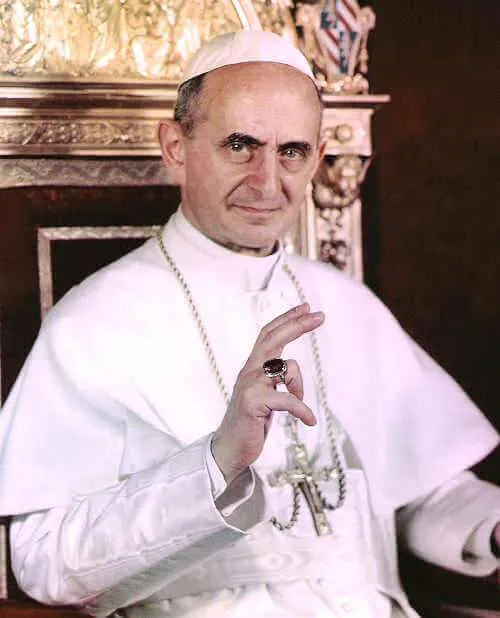
Saint Paul VI, Pope

1897–1978; Patron Saint of Vatican Council II; Canonized by Pope Francis on October 14, 2018

Giovanni Battista Montini was born in northern Italy, about fifty miles east of Milan. He was the second of three boys. His father was an attorney who ran a Catholic newspaper in the Province of Brescia and a member of the Italian Catholic Action, a lay organization that advocated for a greater influence of the Catholic faith within society. His mother was from a wealthy noble family, but her parents’ death when she was young resulted in her spending much of her teenage years in a boarding school in Milan run by French nuns. As a child, Giovanni was called “Battista” by his family. He was educated by Jesuits, and enjoyed sports and playing cards. When he was twelve, Battista was diagnosed with a chronic heart flutter and suffered from intestinal difficulties. He often missed long periods of school, spending time at the family villa and receiving private tutoring.

Though he had long thought of becoming a journalist like his father, Battista entered the seminary at the age of eighteen and was ordained a priest four years later. Shortly after his priestly ordination, Father Montini was sent to Rome to study canon law. Though ill health continued to plague him, he obtained his doctorate in canon law, studied for the Vatican diplomatic corps, briefly served at the Apostolic Nunciature in Warsaw, Poland, and then returned to Rome. In Rome, he began his service as a diplomat in the papal household under Pope Pius XI and assisted at the Supreme Tribunal of the Apostolic Signatura, the Holy Office, and the Secretariat of State. When Pope Pius XII was elected in 1939, Monsignor Montini worked with him daily, eventually acting as the pope’s de facto personal secretary.

In 1939, World War II broke out and Monsignor Montini assisted the pope as he navigated through the chaos. As thousands of refugees fled to Rome, Monsignor Montini organized the Vatican’s efforts to care for them, giving them shelter and food, keeping them hidden, and supporting their mental and spiritual needs. In 1952, Monsignor Montini was appointed Pro-Secretary of State for General Affairs and in 1954, was ordained the Archbishop of Milan and the Secretary of the Italian Bishops’ Conference. In Milan, Archbishop Montini’s organizational skills flourished. He built many new churches, organized diocesan-wide catechesis, and sought new and innovative ways to share the Word of God. In an attempt to confront the rise of Marxisit ideology, he showed great interest in upholding the dignity of the worker with his support of unions and immigrants. His ministry went beyond Catholics, seeking ways to reach out to other Christians, Jews, Muslims, and those without any faith.

When Pope Pius XII died in 1958, many people thought that Archbishop Montini would be a good successor. However, he was not a cardinal. It came to light later that Pope Pius XII had offered to make him a cardinal on at least two occasions, but Monsignor Montini had turned the office down. Therefore, when the college of cardinals entered the conclave to vote, they chose Cardinal Roncalli, the Patriarch of Venice, who took the name Pope John XXIII. Pope John was no stranger to Archbishop Montini and had a great fondness for him. Within a year of his papal election, the pope raised Archbishop Montini to the cardinalate and appointed him to various Vatican posts, in addition to being Archbishop of Milan. With those responsibilities, Cardinal Montini frequented the Vatican, continuing his service as a trusted papal advisor.

From 1958–1960, Cardinal Montini took a special interest in the Universal Church, making visits to several African countries, South America, the United States, and all parts of Europe. In 1961, Pope John XXIII appointed Cardinal Montini to a special commission meant to prepare for Vatican II. The pope had announced his intention to hold an ecumenical council just two years prior, much to the surprise of Cardinal Montini. Though uncertain of the wisdom of such a move, the cardinal was a loyal churchman and assisted in every way he could.

On October 11, 1962, Pope John XXIII formally opened the Second Vatican Council. In less than a year, however, the pope would die of stomach cancer. The pope’s vision for the council was to bring the ancient faith of the Church into closer connection to the modern world. He foresaw a new Pentecost, or a new springtime for the Church. The Holy Father also wanted to reach beyond the Catholic Church to seek greater union with people of all faiths and those with no faith at all. Though the central mission of the Church was to preach the saving message of Jesus Christ, he also saw the Church as a necessary institution sent by God to assist all peoples with the emerging issues of the day, such as modernization, communism, economic progress, war, and poverty. The Church needed to be an active force within every human and societal structure.

After the death of Pope John XXIII, Cardinal Montini was elected pope on June 21, 1963. His lifelong service to the Church prepared him well  for the task. As pope, he re-opened and presided over the remaining sessions of the Second Vatican Council and oversaw the implementation of its schema. He also implemented new liturgical rites for the sacraments and a new liturgical calendar. Pope Paul VI was the first traveling pope, making apostolic journeys to seventeen different countries. In the Holy Land, he met with the Greek Orthodox Patriarch Athenagora of Constantinople; the two mutually lifted the excommunications imposed upon the leaders of each Church since 1054. During the rest of his journeys he exhorted churches and nations to address world peace, social justice, poverty, illiteracy, ecumenism, and world unity.

Perhaps the most difficult decision Pope Paul VI made was the promulgation of the encyclical Humanae Vitae, in which he reiterated the long-standing Church teaching on contraception. Though many bishops and theologians recommended the moral acceptance of contraception, the pope prayerfully followed his conscience, which resulted in outrage among some, especially in the Western World. He stood firm and suffered quietly through it all. His encyclical included various prophecies about what would result from the liberal use of contraception: infidelity, moral decline, diminished respect for women, governmental abuse of power, and an erroneous belief that humans have an unlimited dominion over their own bodies. Those prophecies have all come true.

Pope Saint Paul VI was one of the first popes to face the many challenges and blessings that have come from modernization. He sought to keep the ancient faith of the Church ever ancient while also making it ever new and relevant to a world in need. He sought unity among Christians, peace among nations, and respect for the dignity of all. As we honor this recent saint, ponder the effects that he has directly had upon your life. His prayerful decisions, especially regarding the way we celebrate the liturgy, have led many to engage the sacraments in a more active way, participating more fully in the sacred offering of the Most Holy Body and Blood of Christ to the Father in Heaven. Nothing in life is more important than that.

Source: https://mycatholic.life/saints/saints-of-the-liturgical-year/saint-paul-vi/

Saint Paul VI, Pope Read More »

Luke 16:17-18

Deepening Your Understanding

So some of his disciples said to one another, “What does this mean that he is saying to us, ‘A little while and you will not see me, and again a little while and you will see me,’ and ‘Because I am going to the Father’?” So they said, “What is this ‘little while’ of which he speaks? We do not know what he means.”

Reflection:

How about you? Do you know what Jesus means? Or do you find that you are confused by what He said just like these disciples were? Though pride may tempt you to claim that you fully understand all that Jesus taught, the humble and honest truth is that you are probably very much like these disciples in their confusion. And that is not necessarily a bad place to be.

First, the confusion of these disciples shows they took Jesus seriously. They were not indifferent. They cared, were interested, wanted to understand, and must have had some level of faith in Jesus. Otherwise, they would have ignored Him. But they didn’t. They listened, tried to understand, discussed His teaching, thought about His words and humbly concluded that they didn’t understand.

Jesus is not critical of their confusion. He sees that they are trying and that they have some level of faith. And even though these disciples are confused, Jesus continues to speak to them in figures of speech rather than directly and clearly. One of the reasons that Jesus speaks in figurative language is because the message that He is teaching is profound and deep. It’s not something that can be quickly and easily understood and mastered. The mysteries of the Kingdom of Heaven are so deep, vast, profound and mystical that the only way to begin to understand them is to first have faith. Faith does not mean you fully understand everything. Faith is a supernatural gift by which you come to believe without fully seeing and understanding. The certainty comes from God, not from your own reasoning ability. But faith always leads to deeper understanding. Therefore, as these disciples professed their faith, they also came to understand. And even though Jesus speaks in this figurative way, these disciples ultimately made the choice to believe. Later in this chapter they conclude, “Now we realize that you know everything and that you do not need to have anyone question you. Because of this we believe that you came from God” (John 16:30).

If you find yourself confused about various matters of faith, God, morality, and the like, or if you find yourself confused about the various mysteries of life itself, or your life in particular, do not be afraid to admit to this confusion. Admitting confusion is the humble admittance of the truth, and this humility will be a helpful step toward the gift of faith.

Reflect, today, upon whether you struggle at all with indifference toward the mysteries of life. If so, commit yourself to be more like these disciples who intentionally grappled with all that Jesus spoke. Do not be afraid to admit your confusion and to place that confusion before our Lord. Strive to have the gift of faith and allow that spark of faith to become the pathway for your deeper understanding of the many mysteries of life.

Source: https://catholic-daily-reflections.com/2025/05/28/witnessing-to-the-gospel-2/

Luke 16:17-18 Read More »

Saint Phaolô Hanh

Profile

Paul was born to a Christian family in the apostolic vicariate of West Cochinchina (in modern Vietnam). Paul and two of his brothers joined a band of highwaymen and burglars, with Paul as their leader. When Paul insisted that the thieves return some of their loot to the poor, they betrayed him to the authorities, accusing him of treason by collaborating with the French. Arrested, Paul denied the treason but proclaimed himself a sinful Christian and refused to renounce his faith. He was tortured and martyred in the persecutions of emperor Tu-Duc.

Born

c.1826 in Cho Quán, Gia Ðinh, Vietnam

Died

beheaded on 28 May 1859 at Saigon (modern Ho Chi Minh City), Vietnam
buried in the cemetery at Cho Quán, Gia Ðinh, Vietnam

Venerated

2 August 1908 by Pope Pius X (decree of martyrdom)

Beatified

2 May 1909 by Pope Pius X as part of the Annamite Martyrs

Canonized

19 June 1988 by Pope John Paul II

Source: https://catholicsaints.info/saint-phaolo-hanh/

Saint Phaolô Hanh Read More »

John 16:12-13

The Best is Yet to Come

Jesus said to his disciples: “I have much more to tell you, but you cannot bear it now. But when he comes, the Spirit of truth, he will guide you to all truth.”

Reflection:

This passage still rings true for all of us today. God wants to reveal to us, within the depths of our consciences, the deepest, most profound and transforming truths that flow from the mind of the Father in Heaven. But we cannot bear it all now. Not fully. And eternity will be spent continually deepening our understanding of all that God reveals. And the process of this ongoing and deepening discovery will fill us with an ongoing and deepening joy. This will be our Heaven, but it must begin now.

First of all, it’s important to understand that God does “have much more to tell you.” Interestingly, coming to know how much you do not already know is itself a form of knowledge. Knowing that there is so much more, that God’s wisdom is infinitely beyond you, that the mind of God compared to yours is incomparable is itself a beautiful truth that must be understood. This truth should both humble you and also fill you with a holy awe of God and the infinite depth of wisdom, truth, beauty and glory contained within Him. This is an essential first step.

Furthermore, by saying that “you cannot bear it now” does not mean that you should not try to bear more and more of the truth that God wants to reveal. In fact, it’s a form of invitation, in that it indicates that there will come a time when you will be able to comprehend more. This should once again foster a hope and anticipation for all that remains hidden to be revealed. Humility in the face of the infinite God is necessary for growth in wisdom and knowledge of God.

How does this growth in wisdom and the knowledge of God happen? It happens by the power and working of the Holy Spirit. It is the “Spirit of truth” who will “guide you to all truth.” But even this statement, once again, implies that this is a process. It is the Spirit Who will “guide” you. And this guidance will continue throughout this life and on into eternity.

This teaching of our Lord begs the question: Have you begun the process? Have you begun to allow the Holy Spirit to guide you into the truth? Have there been concrete moments in your life when you came to know God in a new and profound way that could only have been possible by the power and working of God Himself?

Reflect, today, upon these essential questions. If you have had God the Holy Spirit speak clearly to You, then humble yourself before that truth. Pray for more wisdom and more knowledge of all that you do not know. And if you cannot relate to the idea of there being so much more that is beyond you, then humbly turn to our Lord and beg Him to begin to open your mind to all that He wants to say to you. The infinite mind of our God awaits you to be discovered and embraced. Begin the process today and let Him guide you into all truth.

Source: https://catholic-daily-reflections.com/2025/05/27/the-best-is-yet-to-come-4/

John 16:12-13 Read More »