Author name: Sani

The Most Holy Trinity

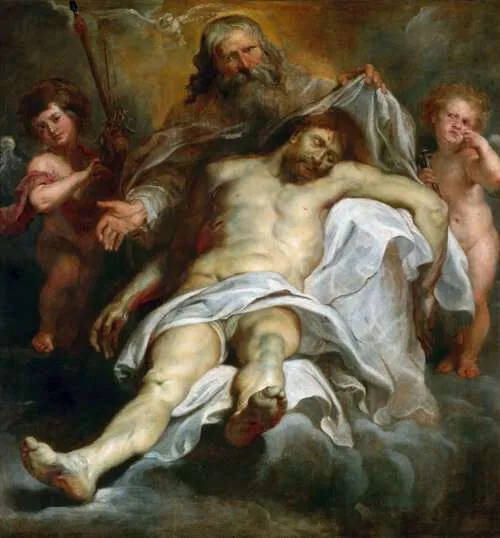
One of the most fiercely debated dogmas of our faith in the early centuries of the Church was on the nature of the Most Holy Trinity. Today’s solemnity did not enter the General Roman Calendar until the fourteenth century, partly because we are called to honor and worship the Most Holy Trinity every day and in every liturgy. But designating one Sunday on which we ponder the inner life of the Most Holy Trinity is an opportunity to renew and deepen our honor and worship.

The Trinity is first and foremost a mystery. As The Divine Mystery above all mysteries, we must begin by humbly acknowledging that we will never, not even in Heaven, have a complete understanding of God’s essence, His inner reality. Only God knows Himself fully. Not even the Blessed Virgin Mary or the highest choirs of angels see Him and know Him as He sees and knows Himself. Nonetheless, every creature, whether angel or human, is called to probe the mysteries of God to the fullest extent possible. In that probing, contemplating, and understanding, we discover the purpose of our lives and experience the fullness of beatitude to which we are called. God and God alone satisfies the hungry, weary, and seeking soul.

This might come as a surprise, but God is perfectly simple. Saint Thomas Aquinas, one of the Church’s greatest teachers, explains that angels, the physical world, and humans are made up of different material and immaterial parts that can change over time, making us a complex reality capable of internal and external disunity. God, however, is incapable of change, since He is Perfection. He is exactly Who He is, always has been, and will always be. This results in a divine simplicity and harmonious unity that is infinitely beyond His creation. God doesn’t need anything to exist because it is His very nature to exist as the unchanging, transcendent God.

Within this divine simplicity and perfect unity we can distinguish various attributes of God, noting that each attribute is perfectly united with the others in the most simple and complete way. God alone is all-powerful and has supreme authority over all creation. He alone perceives all potentiality within creation and within Himself. He is perfectly wise, just, and merciful. He is both completely beyond creation (transcendent) and intimately involved with every aspect of creation (immanent). God is the perfection of holiness and morality. He is the only standard of goodness and truth. He is present everywhere at all times—unchanging and eternal. God is Love.

This philosophically rich language attempts to describe God in His oneness—He is One God, not three Gods. The Father, Son, and Holy Spirit each share perfectly in the one divine nature, and all share the same divine attributes. To understand the profound mystery of the Trinity, we must start with the above oneness of God and then move into His threefold Personhood.

How can something be one and three at the same time? We know that God is one-in-three solely because this is the way the Scriptures reveal God to us. The Old Testament alluded to the threefold personhood of God, and Jesus explicitly identified the three persons as the Father, Son, and Holy Spirit. Without this revelation from our Lord, human reason alone could never arrive at the realization that God is One in Three.

In Sacred Scripture and Church teaching, God’s attributes and existence can be summed up as Love. “God is love” (1 John 4:8). Love cannot exist without a giver, a receiver, and the love that unites them. Hence, it is the very nature of God to love perfectly, to receive love perfectly, and to be love itself.

In the Trinity, the Father loves the Son, the Son loves the Father, and this mutual love is personified in the Holy Spirit. This “love” in God is defined by the Church as an “eternal begetting” and as an “eternal procession,” which are fundamentally different from an act of creation. The words “begetting” and “proceeding” are used to point to the relational origin of love. The Father eternally begets the Son, reflecting an eternal exchange of love. The Holy Spirit, then, proceeds from both the Father and the Son, emanating from their mutual love. These profound mysteries are articulated in the Nicene Creed:

I believe in one Lord Jesus Christ, the Only Begotten Son of God, born of the Father before all ages. God from God, Light from Light, true God from true God, begotten, not made, consubstantial with the Father; through him all things were made…I believe in the Holy Spirit, the Lord, the giver of life, who proceeds from the Father and the Son, who with the Father and the Son is adored and glorified, who has spoken through the prophets.

The formulation of the Trinitarian relationship in the Creed reveals the profound depth of God’s nature: God is of one essence, yet three distinct Persons. Each Person is involved in an eternal, loving relationship with the others. The mystery within this formulation requires contemplation, as it reveals a God Who is deeply relational and Whose very nature is to exist in a state of perfect, self-giving love.

If these definitions of God seem beyond your grasp, you are correct. They are. By God’s grace, these basic definitions of the Most Holy Trinity took shape, beginning with Church councils in the fourth and fifth centuries. Later, theologians such as Saint Augustine and Saint Thomas Aquinas deepened our understanding. However, even if you were to spend years studying the best theology on the Trinity, you would still only be able to comprehend a slight image of Who God is.

The best way to grow in a deeper understanding of God and all of reality is through the deepest forms of contemplative prayer. Contemplative prayer is not something you can simply turn on. It is an infused prayer that only God can bestow as He invites you to enter into His divine presence. Contemplative prayer begins with a profound purification process by which all sin is purged from one’s life, as well as all attachment to sin, and then all conceptual knowledge of God is eliminated so that the mind can gaze upon God through infused knowledge. This mystical prayer is well taught by the greatest saints of the Church, especially Saint John of the Cross and Saint Teresa of Ávila. Being drawn into the mystery of God’s inner life sometimes includes periods of mystical ecstasy, raptures, intellectual visions, and other mystical phenomena. Though few reach that height of prayer in this life, it’s helpful to know it is possible and to know that directly infused knowledge of God through mystical prayer is the only way to achieve some comprehension of the Most Holy Trinity.

As you strive to deepen your own prayer life, offer your praise to God the best you can. Profess your unwavering belief in the Creed, despite not fully understanding it. Most importantly, open your heart to God, Who is Love, and love Him in return with every power of your soul. By doing so, you will be on the slow and steady road to a mystical union of love with the Father, Son, and Holy Spirit.

Source: https://mycatholic.life/saints/saints-of-the-liturgical-year/first-sunday-after-pentecost-holy-trinity–solemnity/

The Most Holy Trinity Read More »
Matthew 28:19-20

The Essence of the Most Holy Trinity

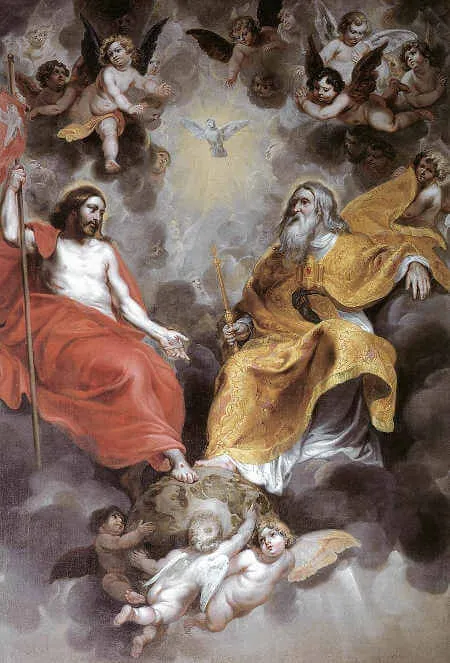
“All power in heaven and on earth has been given to me. Go, therefore, and make disciples of all nations, baptizing them in the name of the Father, and of the Son, and of the Holy Spirit, teaching them to observe all that I have commanded you. And behold, I am with you always, until the end of the age.”

Reflection:

Of all the great feasts we celebrate within the Church throughout the year, today’s Solemnity presents us with a Mystery that is so deep and transcendent that our eternity will be spent in perpetual contemplation. The Trinity, the life of the Father, Son and Holy Spirit, will never get old, never be fully understood, and will be the cause of our everlasting adoration and joy. Though the Church has used philosophical concepts to explain the Trinity, no human concept or description will ever fully explain Who God is. Though we can point to some general truths about God, we will never be able to fully depict the inner essence, depth, beauty and omnipotence of the Trinity.

As we consider that fact, it’s important to understand that the Trinity is not first a theological mystery we try to define. Rather, the Trinity is first a communion of Persons we are invited to know. We do not primarily come to know God through intellectual deduction. We come to know God through prayerful union with Him. Though theology is exceptionally useful and important, the essence of God is beyond any and every philosophical concept we can define.

The Father, Son and Holy Spirit are Persons. And as Persons, they want to be known. And they want to be known primarily through a life of deep and intimate prayer. Praying to One Person, of course, is praying to all, since they are One God. But we are, nonetheless, called to a relationship of love with the Father, the Son and the Holy Spirit. And though our feeble minds may not be able to fully comprehend the essence of God, He will draw us deeper and deeper into a knowledge of Him if we let Him.

Prayer often begins by saying prayers, by meditating upon Scripture, and by listening. But true prayer is something much deeper. True prayer is contemplative prayer that ultimately leads to divine union. Only God can initiate this form of prayer in our lives, and only God, through this deep form of prayer, can communicate Himself to us as He is. Some of the greatest mystics of our Church, such as Saint John of the Cross and Saint Teresa of Ávila, explain in their mystical theology that the deepest knowledge of God does not come through concepts or images. In fact, if we wish to obtain a knowledge of God in His essence, we must allow Him to purge every concept of Who He is so that the pure light of His essence can be poured forth upon our minds. This knowledge, they say, is beyond knowing “about” God. It’s the beginning of a knowledge “of” God.

Reflect, today, upon the Most Holy Trinity. As you do, say a prayer to God asking for a deeper and more intimate knowledge of Him. Ask Him to communicate to you His divine love and to open your mind and heart to a deeper understanding of Who He is. Try to humble yourself before the great Mystery of the inner life of God. Humility before the Mystery of God means that we know how little we know about Him and how little we know of Him. But that humble truth will help you move closer to the deeper relationship of love to which you are called.

Source: https://catholic-daily-reflections.com/2025/06/14/the-essence-of-the-most-holy-trinity-4/

Matthew 28:19-20 Read More »

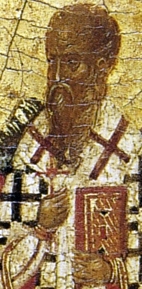
Saint Methodius of Constantinople

Profile

Methodius was educated in Syracuse, Sicily. While in Constantinople to seek a position at court, he felt the call to enter the religious life. He built a monastery and started a monastic community on the island of Chinos. Soon after finishing construction, Methodius was summoned by the Patriarch of Constantinople to help govern the diocese.

The Eastern Church was debating the use of icons in worship and as tools to bring the faithful closer to God. Methodius and the Patriarch of Constantinople worked against the iconoclasts, and together suffered nearly as much abuse as the images. They worked to unify and reconcile the sides. Methodius traveled to Rome, Italy to seek the Pope‘s help; during his absence, he was exiled. After seven years, he returned as Patriarch of Constantinople in 842, and continued to work for unity.

Born

  • 8th century at Syracuse, Sicily

Died

  • 847 of natural causes

Canonized

  • Pre-Congregation

Patronage

  • Chios, Greece

Source: https://catholicsaints.info/saint-methodius-of-constantinople/

Saint Methodius of Constantinople Read More »

Matthew 5:33-34

Daily Sincerity and Honesty

Jesus said to his disciples: “You have heard that it was said to your ancestors, Do not take a false oath, but make good to the Lord all that you vow. But I say to you, do not swear at all…” 

Reflection:

The purpose of an oath was to guarantee the truthfulness of the statement made. Sometimes this can be very good. For example, many of the Sacraments involve making a public vow before God and the Church. In these cases, the vow is a form of oath that is solemnized so as to invite the grace of God to enter and strengthen it. It becomes a way of making a public witness to one’s faith and an expression of one’s need for God’s grace to be faithful to the promise that is made.

Jesus is not speaking about these forms of public vows, oaths and promises in the Gospel today. Instead, He is addressing a practice that some engaged in, whereby they regularly swore on God’s name about the truthfulness of what they were saying. The problem with this is that it takes something solemn and sacred and carelessly turns it into something ordinary. There is no need to “swear to God” about everything one says.

First of all, if one feels a need to call on God’s name regularly so as to convince another of the truthfulness of their statements, then it is most likely the case that they do so because they are struggling with dishonesty. Oath-taking on a regular basis seems to presuppose a human tendency to lie. For that reason, it is not ideal to go about one’s daily interactions with this presupposition. Instead, as Christians we must strive for a fundamental disposition of truthfulness. Jesus concludes this Gospel teaching by saying, “Let your ‘Yes’ mean ‘Yes,’ and your ‘No’ mean ‘No.’ Anything more is from the Evil One.” In other words, work to become a person of true honesty and integrity. Be sincere in all of your dealings, and do not begin with a presupposition of dishonesty. Begin with the intention of complete honesty and sincerity, and that will suffice.

Furthermore, if one were to go about their day making one oath after another, swearing on God’s name to the truthfulness every time, this would have the effect of lessening the solemnity of those few times when this is a good and holy practice. Making public vows, such as marriage vows, or public promises, such as priests make, are unique and solemn. Publicly renewing our faith within the Church, taking an oath as one begins the responsibility of some public office, or any other more solemn opportunity for oath-taking should be seen as a special occasion. Therefore, our daily commitments must simply be the fruit of our honesty and integrity as persons.

Reflect, today, upon your own daily approach to honesty and sincerity. Do you go about your day with the goal of living in the truth, speaking the truth and seeking the truth? Are you honest with others, seeking good and clear communication with them? Ponder these questions and know that interior integrity requires these virtues of honesty and sincerity. Seek that integrity and others will benefit as they grow to trust you each and every day.

Source: https://catholic-daily-reflections.com/2025/06/13/daily-sincerity-and-honesty-2/

Matthew 5:33-34 Read More »

Saint Anthony of Padua, Priest and Doctor

1195–1231; Patron Saint of amputees, animals, mail, horses, expectant mothers, fishermen, harvests, lost articles, boatmen, and travelers, as well as the elderly, oppressed, poor, and starving; Canonized by Pope Gregory IX on 30 May 1232; Declared the Evangelizing Doctor of the Church by Pope Pius XII in 1946

Saint Anthony of Padua is one of the most revered saints within the Catholic Church. He was born in Lisbon, Portugal and was given the name Fernando Martins de Bulhões. His parents were wealthy nobility who provided a good education for him as a youth, most likely at the Cathedral school in Lisbon. At the age of fifteen, Fernando decided to enter religious life and joined the Canons Regular of St. Augustine, not far from his home. During his two years with the canons, he excelled in his studies and prayer. However, being so close to his home led to frequent visits from family and friends, prompting Fernando to desire greater solitude to more deeply embrace his vocation. He moved to Coimbra, just over 100 miles north of Lisbon, to join the Santa Cruz Monastery. At Santa Cruz, Fernando enjoyed nine years of excellent formation, studying, praying, and growing in virtue. After completing his formation in 1220, Fernando was ordained a priest.

During his nine years of formation in Coimbra, a small group from the newly-founded Franciscan Order took up residence nearby in a hut dedicated to Saint Anthony of Egypt. Fernando came to know these friars and was impressed by their simplicity, poverty, humility, and radical dedication to Christ. The Franciscans, founded by Saint Francis of Assisi only eleven years prior to their arrival in Coimbra, were a new and rapidly growing order within the Church. They were traveling preachers, relying upon divine providence rather than the income produced by large estates. They owned nothing except for the single piece of clothing they wore.

One day, news reached Coimbra that five Franciscan missionaries had been martyred in Morocco by Muslims. The King of Portugal ransomed their bodies, which were then brought back in a solemn procession to Coimbra for burial. The courage of these martyrs, coupled with the witness of their fellow friars, so impressed Fernando that he requested and received permission to leave the Canons Regular and join the Franciscans. He took the name Anthony after Saint Anthony of Egypt, the patron of the friars’ house in Coimbra.

Desiring to emulate these five martyrs, Father Anthony sailed to Morocco to preach to the Muslims. However, he soon fell seriously ill and required medical attention, prompting his return journey to Portugal. A storm blew his ship off course, resulting in a landing in Sicily instead. Shortly after Father Anthony recovered from his illness, Saint Francis called the famous “Chapter of Mats” in Assisi. Most of the Franciscan Friars attended, including one of their newest members, Father Anthony.

In 1209, Saint Francis founded his order with twelve members. By 1221, the number of Franciscan friars had grown to about 5,000. Such rapid growth brought not only zeal and enthusiasm, but also growing pains, divisions, and the need for clarity. At the General Chapter of Mats, Saint Francis resigned as the head of the order, turning leadership over to those he felt were more qualified. He preferred a life of greater humility, poverty, simplicity, and prayer. It was at that Chapter that Father Anthony and Brother Francis likely met for the first time. Shortly afterwards, Father Anthony was assigned to the hermitage of Monte Paola in Forli.

Anthony’s initial time in Forli was spent in solitude, study, and prayer. One day, due to confusion between the Dominicans and Franciscans, no one was assigned to preach at a first Mass in the local church. At the last minute, Father Anthony reluctantly agreed to preach. His sermon left the congregation in awe of his exceptional gift for preaching, his profound knowledge of the Sacred Scriptures, and his depth of holiness. From then on, Father Anthony became a well-known and sought-after preacher, changing many lives with his humble, down-to-earth, yet theologically profound preaching. He drew on the storehouse of wisdom from ancient saints but never presented himself in a proud or arrogant manner. His allegorical method of preaching sought to bring out the symbolic and hidden meanings of the text in a way that connected with people. His preaching and humble wisdom even caught the attention of Saint Francis, who was concerned about higher education for the friars, fearing that advanced studies could lead to pride and undermine the order’s mission. In Father Anthony, however, Francis found someone he could trust and put him in charge of the theological training of the friars preparing for ordination.

Father Anthony continued to preach far and wide for the next several years until his death at the age of thirty-five. One day, he was even invited to preach to the pope and the cardinals. During that sermon, Father Anthony was given the gift of tongues, enabling everyone present to understand him in his native language. Pope Gregory IX was so impressed with Anthony’s insight into Scripture that he referred to him as the “Ark of the Testament.” The pope asked Father Anthony to compose sermons for Sundays and feast days of the liturgical year, which he did in the form of outlines and commentaries on the Scriptures. It is those sermons that later led to him being named a Doctor of the Church with the unique title of “Evangelizing Doctor.”

Many other legends surround Father Anthony’s preaching and miracles. He is said to have preached to fish one day when the heretical townspeople had rejected him. When they saw the fish sticking their heads out of the water to listen attentively, the people converted. For this reason, he is often called the “Hammer of Heretics.” He is known as the patron saint of lost items because one day a friar stole a Gospel book from Father Anthony and when Father Anthony prayed for its return, the friar was so convicted in his heart that he returned it and repented.

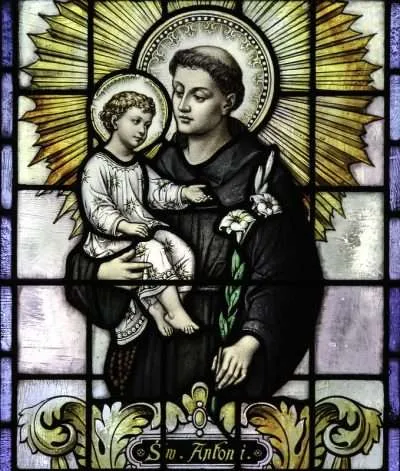
Saint Anthony is often depicted holding the Child Jesus, a portrayal inspired by an account of a friar who reportedly saw Anthony in deep prayer, conversing with the Christ Child. Sacred Scripture is also frequently featured in art as a symbol of his profound knowledge of Scripture. Lilies, signifying his poverty and chastity, are present in many depictions.

Although Saint Anthony lived just thirty-five years, God used him in powerful ways. His life bears testament to the idea that the quality of life supersedes its length. “Quality” of life can only be attained through grace, and Saint Anthony received an abundance of grace in his life. It’s worth reflecting on the importance of seeking as much holiness as possible in life. Too often, we pursue longevity rather than holiness. However, many of the great saints, including Saint Anthony, lived on this earth for only a brief period. As we honor this great saint, remember that God wants you to spend whatever time you have left on earth dedicated to growing in holiness and serving His holy will. Doing so will imbue your life with a quality that far surpasses mere longevity.

Source: https://mycatholic.life/saints/saints-of-the-liturgical-year/june-13–st-antony-of-padua/

Saint Anthony of Padua, Priest and Doctor Read More »

Matthew 5:29-30

The Love of Friendship

If your right eye causes you to sin, tear it out and throw it away. It is better for you to lose one of your members than to have your whole body thrown into Gehenna. And if your right hand causes you to sin, cut it off and throw it away. It is better for you to lose one of your members than to have your whole body go into Gehenna.

Reflection:

This imagery of tearing out your eye and cutting off your hand is clearly meant to get our attention. Though we can be certain that Jesus is not actually suggesting we mutilate our bodies, we should not hesitate to prayerfully ponder this imagery so as to understand the truths Jesus is speaking.

Saint Augustine, in reflecting upon this passage, states: “By the eye we must understand our most cherished friend…” Augustine further points out that Jesus specifically mentions the “right eye” as a way of denoting those friendships that have a “higher degree of affection” (Serm. in Mont. i. 13.). Thus, although friendship—especially very close friendship—is a gift, sometimes those close to us can become a source of sin or an occasion of sin. In that case, they are not truly friends, and it might be better to limit or even end that relationship rather than to allow it to lead us into sin.

Think about the people in your own life. Though we must love all people with the love of God, friendship is more than love. Friendship establishes a special bond with another and opens you up to their presence and influence in your life. When you establish a friendship, you allow another a certain influence in your life. When that influence is good, then the friendship produces much good fruit. But when that influence is evil, then that friendship becomes a danger to the good of your soul. In that case, it may need to be torn out or cut off so that you are not drawn into serious sin or even the occasion of sin.

When a friend in your life becomes an occasion of sin to you, your love for them must remain, but it must also change. Love, in this case, may take on the form of a loving rebuke, a withdrawal of your own heart, or a limiting of your interactions. But this is love. By analogy, when a person sins against God, their relationship with God also changes. God withdraws His friendship. He is less present to the person, and their internal communion diminishes or even ends when the sin is serious. This is not a lack of love on God’s part; it is simply the effect of sin. So also in our relations with another, when the grace of God is not mutually given and received between two people, then friendship in the truest sense is not possible. True friendship is always centered in God’s grace and dependent upon it. Therefore, when God is excluded from a relationship, that relationship must change from a true friendship to a relationship that imitates God’s love for a sinner. Mercy, compassion and forgiveness must continually be offered, but interior communion and unity will end. But this is love.

Reflect, today, upon those in your life whom God has given you to love. First, reflect upon those relationships that do have God at the center. These relationships will become true friendships and will produce an abundance of good fruit in your life. Rejoice in these friendships and give thanks to God for them. Second, reflect upon any relationship that does not bear good fruit. As you do, prayerfully consider how you approach that relationship. Do you attempt to maintain a “friendship” even though God is not able to be the center of that relationship? If so, ponder how God is calling you to change that relationship so that it more fully reflects the love God has for you and for that other person in your life.

Source: https://catholic-daily-reflections.com/2025/06/12/the-love-of-friendship-2/

Matthew 5:29-30 Read More »

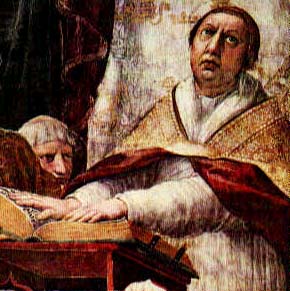
Pope Saint Leo III

Profile

Pope Leo III was the son of Atyuppius and Elizabeth. He was a priest, Cardinal, and a Papal treasurer. He was elected pope the day after his predecessor’s burial, probably so there would not be any outside interference with the decision of the cardinals.

Upon his election, he sent Charlemagne the keys of Saint Peter and the standard of the city of Rome, Italy indicating his choice of Charlemagne as protector of the city and the see. Charlemagne, with his letters of congratulations, sent a fortune which Leo used to build churches and found charitable institutions.

On 25 April 799, members of Pope Adrian I‘s family hired thugs to attack Leo in a procession. They scarred his face and tried to tear out his tongue and eyes to render him unfit for the papacy. He survived the attack, scarred but his tongue and eyes miraculously healed. He fled to Charlemagne‘s protection at Paderborn, Germany where his enemies tried to turn the king against him. When Leo recovered, Charlemagne escorted him back to Rome. In 800, he conducted a trial of Leo and of his accusers. There was no evidence of Leo’s guilt, but there was of his accusers, and they were imprisoned. On Christmas day in 800, Leo crowned Charlemagne emperor, marking the beginning of the Holy Roman Empire.

Born

  • at Rome, Italy

Papal Ascension

  • 26 December 795

Died

  • 12 June 816 relics at Saint Peter’s, Rome, Italy

Canonized

  • 1673 by Pope Clement X

Source: https://catholicsaints.info/pope-saint-leo-iii/

Pope Saint Leo III Read More »

Matthew 5:21-22

The Burden of Anger

“You have heard that it was said to your ancestors, You shall not kill; and whoever kills will be liable to judgment. But I say to you, whoever is angry with his brother will be liable to judgment, and whoever says to his brother, Raqa, will be answerable to the Sanhedrin, and whoever says, ‘You fool,’ will be liable to fiery Gehenna.” 

Reflection:

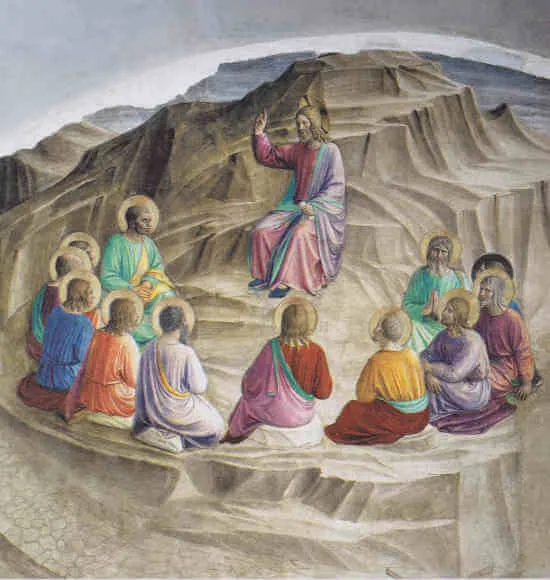
The passage quoted above gives us three deepening levels of sin that we commit against another. These sins were new teachings not contained in the Old Testament. By this teaching, Jesus’ call to radical holiness and love of neighbor is made very clear.

The first level of sin is simply to be “angry” interiorly. The sin of anger is an interior attitude of disgust toward another. Jesus says that the consequence of having anger toward another is that you will be “liable to judgment.” The second level of sin is when you say to another “Raqa.” This Aramaic word is difficult to translate but would include some form of expression of one’s anger toward another. It would be a derogatory way of saying to another that they are unintelligent or inferior. The third level of sin Jesus identifies is when you call another “fool.” This word is an even stronger expression of Raqa and would be a verbal criticism of them, indicating that the person is a lost soul in a moral sense. It’s a strong moral condemnation of another that is expressed.

So, do you struggle with anger? Jesus’ calling to freedom from all levels of this sin is a high one. There are many times in life when our passion of anger is stirred up for one reason or another, and that passion leads to one of these levels of sin. It’s a common temptation to want to condemn another with whom you are angry in the strongest way possible. 

It’s important to understand that this new teaching of Jesus is truly not a burden when understood and embraced. At first, it can seem that these laws of our Lord against anger are negative. That’s because lashing out at another gives a false sense of satisfaction, and these commands of our Lord, in a sense, “rob” us of that satisfaction. It can be a depressing thought to think about the moral obligation to forgive to the point that disordered anger disappears. But is it depressing? Is this law of our Lord a burden?

The deep truth is that what Jesus teaches us in this passage is, in many ways, more for our own good than that of others. Our anger toward another, be it interior, verbally critical or all-out condemning, can be hurtful toward the person with whom we are angry, but the damage these forms of anger do is far worse for us than them. Being angry, even interiorly, even if we put on a happy face, does great damage to our soul and our ability to be united to God. For that reason, it is not this new law of our Lord regarding anger that is the burden, it is the anger itself that is a heavy burden and a burden from which Jesus wants you free.

Reflect, today, upon the sin of anger. As you do, try to see your disordered anger as the real enemy rather than the person with whom you are angry. Pray to our Lord to free you from this enemy of the soul and seek the freedom that He wants to bestow.

Source: https://catholic-daily-reflections.com/2025/06/11/the-burden-of-anger-4/

Matthew 5:21-22 Read More »

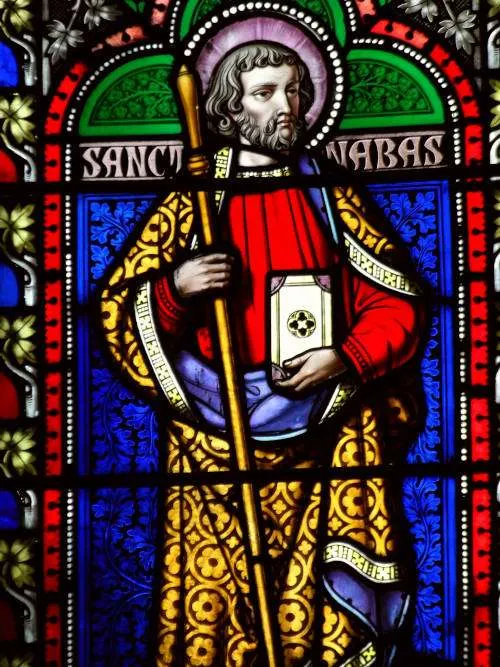
Saint Barnabas the Apostle

Early First Century–c. 61; Patron Saint of Cyprus, Antioch, and peacekeeping missions; Invoked against hailstorms; Pre-Congregation canonization

Saint Barnabas, originally named Joseph, was born on the isle of Cyprus and was a Jew of the tribe of Levi (see Acts 4:36). Nothing else is known about his early life. During Jesus’ public ministry, Joseph became His fervent follower and might have been one of the seventy-two disciples whom Jesus sent out on a mission (see Luke 10:1–24). After Pentecost, as the Church in Jerusalem began to grow, the Apostles changed Joseph’s name to Barnabas, which means “son of encouragement.” His name change might have occurred because Barnabas supported the Church when he “sold a piece of property that he owned, then brought the money and put it at the feet of the apostles” (Acts 4:37). This is the first mention of Barnabas in the New Testament.

Three years later, after Saint Paul had undergone his conversion to the Christian faith and spent three years fasting and praying in Arabia, he traveled to Jerusalem to consult with the Apostles. The Apostles and the Christian community were at first hesitant to receive him, for they were aware of the persecutions he had issued against the Church. Barnabas, however, “brought him to the apostles, and he reported to them how on the way he had seen the Lord and that he had spoken to him, and how in Damascus he had spoken out boldly in the name of Jesus” (Acts 9:27). After spending a short period of time in Jerusalem, Saint Paul returned to his hometown of Tarsus to avoid persecution. He remained in Tarsus for the next several years.

During that time, some of the Christians who left Jerusalem after the martyrdom of Saint Stephen traveled north to Antioch in Syria, where many Greek Gentiles lived. In Antioch, the Greek-speaking Christians began to preach the Word of God to the Gentiles. As a result, many of the Gentiles converted and accepted the faith. When the Apostles in Jerusalem heard about this, they sent Barnabas to minister to these new converts. Barnabas was so impressed that he went to find Saint Paul in Tarsus and brought him back to Antioch to help share the Good News. It was there, in Antioch, that the word “Christian” was first used, perhaps because the new converts were Gentiles who converted not to the Jewish faith, but directly to Christ.

After a year in Antioch, Paul and Barnabas returned to Jerusalem on a relief mission to assist those suffering from a famine. They brought with them money that was raised among the Christians in Antioch. After returning to Antioch, the Holy Spirit revealed to the Christian community that Paul and Barnabas were to be “set apart” for a special mission. The two were then ordained as bishops and sent forth on a mission, bringing with them Barnabas’ relative, John Mark, the Gospel writer. Over the next year, they traveled to Seleucia, Cyprus, Salamis, Paphos, Perga of Pamphylia, Antioch of Pisidia, Lystra, Derbe, Iconium, and back to Antioch, Syria. During this journey, they won many converts; some Greeks even tried to worship the two as gods. They also encountered opposition, including an unsuccessful attempt to kill Paul by stoning. The two later returned to Jerusalem to help settle disputes about Gentile converts before being sent off on another mission. Before the second journey, Barnabas and Paul disagreed about John Mark’s involvement in the mission, since John Mark had previously abandoned them for an unknown reason while in Pamphylia. The disagreement was so severe that Paul and Barnabas parted ways. Barnabas took John Mark with him to Cyprus, and Paul took Silas with him to Syria and Cilicia.

Nothing else is known for certain about Barnabas’ missionary activity with John Mark in Cyprus. Based on Paul’s first letter to the Corinthians and his letter to the Colossians, the disagreement the two had over John Mark did not have any lasting effect on their friendship. Even John Mark is later affectionately mentioned by Paul.

The only source we have that details Barnabas’ martyrdom comes from the fifth century, which makes its historicity uncertain. According to that tradition, Barnabas was preaching the Gospel around the year 61 and was arrested, dragged out of the city, and either burned to death or stoned. One tradition states that John Mark found his remains and buried them.

Another legend holds that in the year 478, Saint Barnabas appeared to the Archbishop of Cyprus and revealed the location of his burial to him. Archbishop Anthemios then found Saint Barnabas’ body incorrupt, holding the Gospel of Matthew. The Roman emperor then erected a church at the site and buried Saint Barnabas there. Though the church was later lost to history, excavations of the site have found a tomb believed to be that of Saint Barnabas. Saint Barnabas is the patron saint of Cyprus because he was the first missionary bishop on that island.

As we honor this great apostolic bishop, ponder the impact his ministry has had over time. Although the number of converts during his lifetime might have only been in the hundreds or thousands, the effect those converts had on subsequent generations multiplied over and over again. Saint Barnabas traveled, preached, baptized, celebrated the sacraments, and founded many Christian communities. He endured rejection, hardship, violence, and martyrdom, but he pressed on. His fervor stemmed from knowing his Lord, not only through his firsthand witness of Jesus’ ministry but also through his life of prayer and his reception of the Holy Spirit. Try to see his mission as one similar to yours. You, too, are called to zealously preach the Gospel to others. Do not hesitate to do so, no matter the cost. Pray that God uses you as He wills, and offer yourself to His service in imitation of this holy Apostle.

Source: https://mycatholic.life/saints/saints-of-the-liturgical-year/june-11—saint-barnabas-the-apostle/

Saint Barnabas the Apostle Read More »

Matthew 5:17-18

The New Law of Grace

Jesus said to his disciples: “Do not think that I have come to abolish the law or the prophets. I have come not to abolish but to fulfill. Amen, I say to you, until heaven and earth pass away, not the smallest letter or the smallest part of a letter will pass from the law, until all things have taken place.”

Reflection:

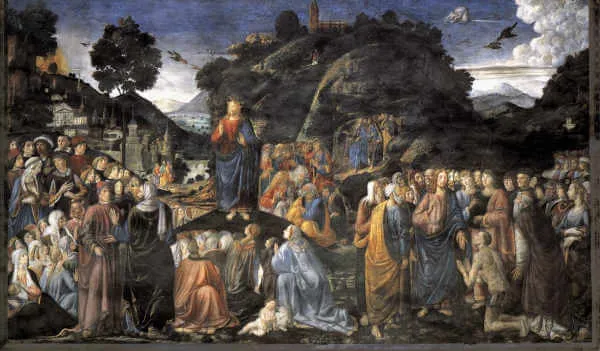
The law and the prophets, as found in the Old Testament, consists of three types. First, there are the moral laws, such as the Ten Commandments, that are primarily based on the natural law of God. By “natural law,” we mean that our human reason can understand their truthfulness, such as with “Thou shall not kill, steal, etc.” Second, there were many liturgical precepts that were laid down and practiced as a preparation for and prefiguration of their ultimate liturgical fulfillment. The fulfillment is now found in the sacramental life of the Church. Third, there were various legal precepts that gave specific directions on daily living. These laws include instructions on food, relations with others, how to treat foreigners, cleansings, purifications of utensils, tithing, and much more.

In our Gospel today, Jesus essentially says two things. First, regarding the legal and liturgical precepts, He says that He came to “fulfill” them. Thus, Christians are no longer bound by these Old Testament legal and liturgical laws, in that we are now called to a much higher fulfillment of them all. But as for the moral laws, especially those found in the Ten Commandments, not a single precept taught is abolished. Instead, these Commandments are deepened, and the call to moral perfection is now much clearer. It is for this reason that Jesus goes on to say, “Therefore, whoever breaks one of the least of these commandments and teaches others to do so will be called least in the Kingdom of heaven. But whoever obeys and teaches these commandments will be called greatest in the Kingdom of heaven.”

It’s important to understand that those who lived before the time of Christ were not held to the same standard as we are today. That’s because they did not enjoy the gift of grace that was won by the Cross and is bestowed by the Holy Spirit. Today, we have so much more and, for that reason, are called to a much greater life of holiness. For example, we no longer celebrate the Passover as a mere remembrance of what God did by setting the Israelites free from slavery to the Egyptians. Today, we celebrate the New Passover through our participation in the Holy Eucharist, and our “remembrance” goes beyond the simple recalling of a memory of old. Our remembrance is one that enables us to actually participate in the saving sacrifice of Christ. We share in the actual event and are partakers of the grace won on the Cross each time we celebrate the Holy Mass. And as for the moral laws of the Old Testament, they become the bottom line of morality. The upper limit is now much higher. We are to love our enemies and pray for those who persecute us. We are to lay down our lives for others and take up our crosses daily to follow Jesus. We are called to the perfection of sacrificial love, and that is only possible by our sharing in the very life, death and resurrection of Christ our Lord.

Reflect, today, upon the very high calling you have been given by our Lord. It’s not enough to simply do the bare minimum in our worship and moral life. Doing so may permit you to be “least in the Kingdom of heaven,” but God wants you to share in His greatness. He calls you to be among the “greatest in the Kingdom of heaven.” Do you understand your high calling? Do you have the perfection of holiness as your goal? Commit yourself to the full participation in the New Law of Christ and you will be eternally grateful that you did.

Source: https://catholic-daily-reflections.com/2025/06/10/the-new-law-of-grace-4/

Matthew 5:17-18 Read More »