Author name: Sani

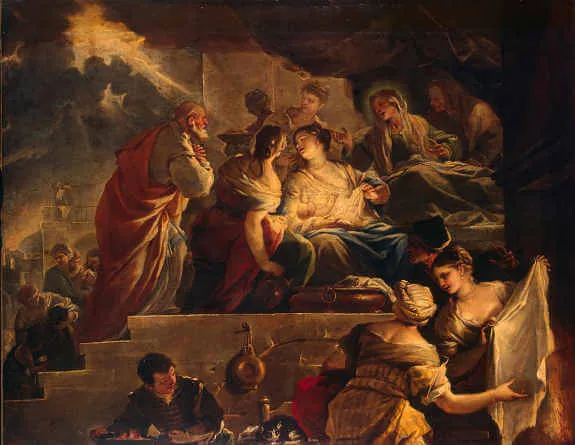
Birth of Saint John the Baptist

First Century; Patron Saint of baptism, bird dealers, converts, monastic life, motorways, printers, tailors, lambs, and prisoners Invoked against epilepsy, convulsions, hailstorms, and spasms; Pre-Congregation canonization

At the time of Saint John the Baptist’s birth, it was commonly thought that a woman’s inability to conceive was a sign of God’s disfavor and a punishment for sin. Although we know that’s not the case, it’s important to understand that God often brought forth great leaders from those who had long begged God for a child. Sarah was barren before conceiving Isaac. Rebekah was barren before giving birth to Esau and Jacob. Rachel was barren before giving birth to Joseph. Manoah’s wife was barren until she gave birth to Samson. And Hannah was barren until she gave birth to Samuel. Today’s solemnity celebrates one of the greatest births in history. Recall that Jesus himself would later say, “Amen, I say to you, among those born of women there has been none greater than John the Baptist” (Matthew 11:11).

When Elizabeth conceived John the Baptist, she and her husband, Zechariah, “were advanced in years” (Luke 1:7). The announcement of the child’s birth came to Zechariah when he was chosen by lot from his priestly clan to enter the Temple sanctuary to burn incense to the Lord. This was among the highest honors of the Old Testament priests. While in the sanctuary, the Archangel Gabriel, who stands before God, appeared to him to announce the good news. Zechariah was told that his wife would not only conceive and bear a son, but that his son “will be great in the sight of the Lord…be filled with the Holy Spirit even from his mother’s womb…turn many of the children of Israel to the Lord…will go before him in the spirit and power of Elijah…turn the hearts of fathers toward children…to prepare a people fit for the Lord” (Luke 1:15–17). This announcement of the birth of Saint John the Baptist was not only a joyous announcement, it was almost beyond belief. Zechariah certainly would have been sorrowful throughout his marriage that he had no children, and now an Archangel was telling him that his soon-to-be-conceived child would be great beyond belief. Of course, we know that Zechariah did, at first, disbelieve and was struck mute until John was born.

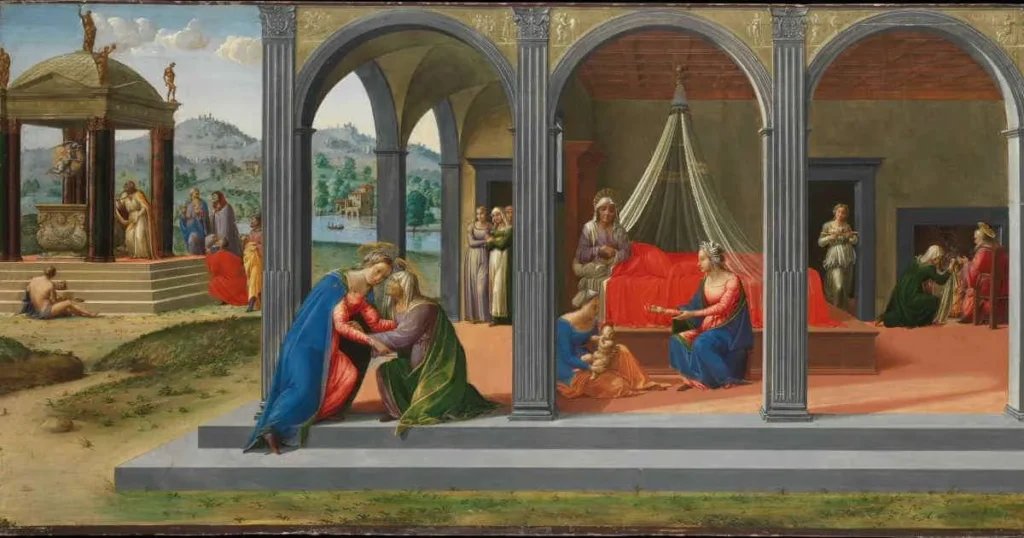
The next glorious chapter in the story of Saint John the Baptist came when that same Archangel, Gabriel, appeared to Mary, the Immaculate Conception, and announced that she would conceive the Savior of the World by the overshadowing of the Holy Spirit. After that announcement, Gabriel said to her, “And behold, Elizabeth, your relative, has also conceived a son in her old age, and this is the sixth month for her who was called barren; for nothing will be impossible for God” (Luke 1:36–37). This reveals the fact that, in the Father’s plan of salvation, John’s mission was intimately connected to that of Jesus. This is further confirmed when Mary travels in haste to her cousin Elizabeth to help her in the final months of her pregnancy. At the sound of Mary’s greeting, the unborn infant, John, leaped for joy in Elizabeth’s womb. Of this event, Saint Thomas Aquinas teaches that John was sanctified in the womb at that moment, meaning he was freed from sin and prepared for his sacred mission of preparing the way for Jesus’ ministry. Saint Thomas even goes so far as to speculate about that moment of sanctification as follows: “Perhaps also in this child the use of reason and will was so far accelerated that while in his mother’s womb he was able to acknowledge, believe, and consent, whereas in other children we have to wait for these things till they grow older: this again I count as a miraculous result of the divine power” (Summa Theologica 3.27.6).

John’s birth, which we celebrate today, was surrounded by mystery, amazement, awe, and intrigue. The reaction to John’s birth is recorded this way by Saint Luke: “Then fear came upon all their neighbors, and all these matters were discussed throughout the hill country of Judea. All who heard these things took them to heart, saying, ‘What, then, will this child be?’ For surely the hand of the Lord was with him” (Luke 1:65–66).

Other than the Solemnity of the Birth of Christ (Christmas), Saint John the Baptist is the only person whom the Church honors with a solemnity to celebrate his birth. Our Blessed Mother’s birth is celebrated with a feast, although her Immaculate Conception is commemorated with the greater honor of a solemnity. It is a great honor, indeed, to honor this unique man’s birth with the highest rank of celebration within our Church.

As we mark the birth of Saint John the Baptist, ponder this birthday from two perspectives. First, look at it from a Heavenly and eternal perspective. The angels and saints will forever glorify God for this great event and for the significant role that John played in the history of salvation. Second, look at it from a purely human perspective. Try to ponder the wonder and awe that would have enfolded Elizabeth and Zechariah. Consider their humanity. They were real people who became real parents and were told great things about their child. Despite that, John was still their child, just as Jesus was Mary’s Child. The proper perspective of every event we celebrate in salvation history is to unite the human and divine perspectives, the transcendent and the imminent, the personal and the supernatural, to more fully understand, participate in, and believe these glorious and historical events that have opened the gates of Heaven to all who have faith.

Source: https://mycatholic.life/saints/saints-of-the-liturgical-year/june-24—birth-of-saint-john-the-baptist/

Birth of Saint John the Baptist Read More »
Luke 1:65-66

Formed by the Hand of the Lord

All who heard these things took them to heart, saying, “What, then, will this child be?” For surely the hand of the Lord was with him. The child grew and became strong in spirit, and he was in the desert until the day of his manifestation to Israel.

Reflection:

John the Baptist was formed by the hand of the Lord. Saint Thomas Aquinas goes so far as to say that John was sanctified in the womb of his mother, Elizabeth, as is written: “He will be filled with the holy Spirit even from his mother’s womb” (Luke 1:15). From the moment that the Blessed Virgin Mary greeted Elizabeth and John leaped for joy, the hand of the Lord was upon John, making him holy and leading him to the fulfillment of God’s holy will.

John’s early life is not recorded for us, other than in the passage quoted above. We are told that he “grew and became strong in spirit, and he was in the desert until the day of his manifestation to Israel.” We should see in this passage the truth that John was not only sanctified within the womb of his mother but that, throughout his childhood and on into adulthood, he remained deeply united to God and was filled with the Holy Spirit.

Today we honor one particular aspect of John’s life—his birth. We know that he was blessed to not only be born into the blessed family of Elizabeth and Zechariah but that the Blessed Virgin Mary, the Mother of God, was also his relative and was present at his birth. Zechariah, his father, gave him the name “John” even though it would have been the custom to call him Zechariah after his father. Zechariah did this in obedience to the Archangel Gabriel, who appeared to him prior to John’s birth and instructed him to do so.

Great mystery and excitement surrounded the birth of John, and there is little doubt that those who were present at his birth would have been caught up in the intrigue and hope of who he would become. And John didn’t disappoint. It was of him that Jesus one day would say, “I tell you, among those born of women, no one is greater than John…” (Luke 7:28).

Though you may not have had the privilege of being sanctified in the womb of your mother, or to have had your father receive a revelation from the Archangel Gabriel prior to your birth, you are, nonetheless, called to be guided by the hand of the Lord each and every day. God wants you to become “strong in spirit” so that you can fulfill the unique will given to you. We honor the great saints, in part, because they give us an example of how to live. For that reason, we must see in each of their lives the model to which we must conform. The primary witness set by Saint John the Baptist is that he was unwaveringly obedient to God and to being formed by His hand. The result was the glorious fulfillment of his unique mission in life, all the way to giving his life as a martyr.

Reflect, today, upon the very real fact that, though you were not sanctified in the womb, you were sanctified by Baptism. From there, you were strengthened by the Spirit through Confirmation and are regularly fed by the Most Holy Eucharist. In many ways, you are just as blessed as John. Reflect upon the simple yet profound fact that God wants to use you for His holy mission. He gives to you some particular mission He has not entrusted to another. Say “Yes” to that mission today so that you, too, will be seen as “great” in the Kingdom of Heaven.

Source: https://catholic-daily-reflections.com/2025/06/23/formed-by-the-hand-of-the-lord-4/

Luke 1:65-66 Read More »

Saint Paulinus of Nola, Bishop

c. 354–431 Patron Saint of bellmakers Invoked by the people of Nola, Italy Pre-Congregation canonization

Pontius Meropius Anicius Paulinus, more simply known as Paulinus, was born in Bordeaux, modern-day France, into a noble senatorial family. Bordeaux, then part of the Roman Empire, was a major center for learning, culture, and trade. As a member of the nobility, Paulinus would have received an excellent education in preparation for a career in civil service. Among his teachers was the famous poet Ausonius, under whom he studied literature and rhetoric. Around the age of twenty-three, his career entered full swing when the Roman Emperor, Gratian, appointed him as a suffect consul at Rome, a position held in high esteem among the ruling class. A few years later, the emperor appointed him as governor of Campania, a region that included Naples and many surrounding cities, including Nola.

Though less important than many other cities when he was governor, Nola caught Paulinus’ attention because the townspeople had a great reverence for the third-century martyr Saint Felix who was buried there. Saint Felix was a priest likely martyred during the persecution of either Decius or Valerian between 251–260. Inspired by the locals’ devotion to Saint Felix, Paulinus built a road to make it easier for pilgrims to travel to his tomb, as well as a hospice where they could stay. Although Paulinus held an important position of power as governor, the faith and devotion that the people had for Saint Felix stirred in him a desire for something greater, leading him to inquire into the Catholic faith.

After the assassination of Roman Emperor Gratian in 383, Paulinus moved to Milan to study the Catholic faith, most likely under Saint Ambrose. He then returned home to Bordeaux where he continued his studies, was baptized by the bishop, and married Therasia, a noblewoman from Barcelona. Therasia’s strong faith greatly influenced Paulinus, helping him to grow closer to Christ and embrace a more radical life of prayer and asceticism. Not long after their marriage, Therasia gave birth to a son, but the child died within a week. This profound event, instead of leading them to anger or despair, prompted Paulinus and Therasia to deepen their devotion and trust in God. They felt God calling them to a more intense life of prayer and asceticism. Consequently, they sold most of their possessions, donated the money to the poor, and mutually agreed to live in abstinence as husband and wife.

While in Barcelona, Paulinus’ faith and good works became so well known that he was asked to become a priest. His ordination either took place in Barcelona or back in Campania, where Paulinus had been governor and where he first discovered the Catholic faith. In Campania, Paulinus and Therasia settled in Nola, Saint Felix’s burial site, since Paulinus attributed his conversion to Saint Felix.

In Nola, Paulinus and his wife began to spread the faith by embracing a new form of monastic life that they shared and invited others to join. They spread devotion to Saint Felix by constructing a monastic center for pilgrims, places of worship, and infrastructure to help with basic needs. They were very generous to the poor, even though they themselves chose to live in poverty. After Therasia died, Paulinus was chosen as bishop of Nola around 409, when he was about fifty-six years old. He would carry out this responsibility until his death, twenty-two years later.

As bishop of Nola, Paulinus continued to spread the Gospel and serve the poor with great generosity. He also used his education in poetry to write many faith-based poems and hymns. Though he was praised by many, some questioned the wisdom of his Christian vocation. His former teacher, the great poet Ausonius, saw his poverty and generosity toward the poor as irrational, and his abandonment of pagan poetry as an abandonment of poetry itself. However, Bishop Paulinus’ love for the poor was a much deeper realization of the value of material possessions and their purpose. As for his training in poetry, Bishop Paulinus used those natural talents for a much higher calling, putting them at the service of the Gospel.

Bishop Paulinus wrote many letters, some of which still exist. Most notably, he was in written communication with the great Saint Augustine of Hippo, who even mentioned Paulinus in his Christian classic, The City of God. Additionally, Paulinus corresponded with Saint Martin of Tours, Saint Jerome, and many others. Regarding Paulinus’s writings, Pope Benedict XVI said, “Saint Paulinus did not write theological treatises, but his poems and ample correspondence are rich in a lived theology, woven from God’s Word, constantly examined as a light for life. The sense of the Church as a mystery of unity emerges in particular from them. Paulinus lived communion above all through a pronounced practice of spiritual friendship. He was truly a master in this, making his life a crossroads of elect spirits…”

Saint Paulinus began his life with wealth, noble status, and civil power. When he saw the devotion that the faithful had toward Saint Felix, he realized there was more to life than the pursuits that had occupied him. When his wife and he tragically experienced the loss of their child, they didn’t turn to self-pity or anger. The couple used their loss as an opportunity to more fully abandon themselves to the will of God. When Paulinus’ wife died, he devoted himself even more fully to the service of God and His Church through his episcopal ministry and generosity to the poor and the pilgrims. He used his natural talents for the glory of God through his hymns, poetry, and extensive correspondence with others, and inspired others to join him in a life of prayer and asceticism.

As we honor Saint Paulinus today, ponder your own journey of faith. Looking back at life, especially at any challenges you have faced, have you allowed God’s grace to strengthen you through those challenges, or have you turned away as a result? Allow Saint Paulinus to inspire you on your journey, using every challenge and every natural gift for the sole purpose of glorifying God and fulfilling His perfect will.

Source: https://mycatholic.life/saints/saints-of-the-liturgical-year/june-22—saint-paulinus-of-nola-bishop/

Saint Paulinus of Nola, Bishop Read More »

Matthew 7:1-3

The Judgmental Heart

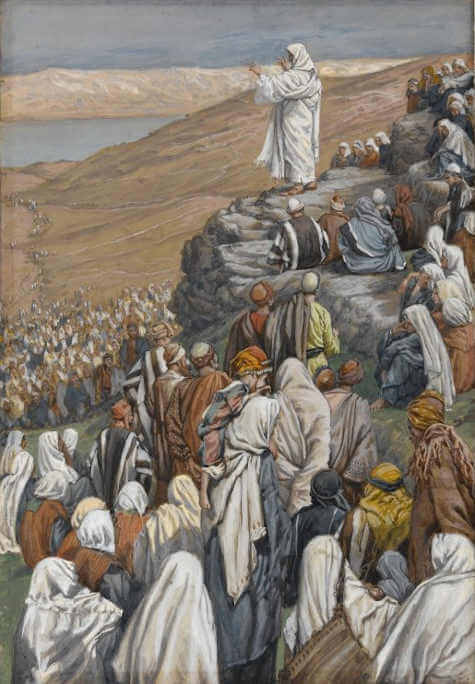
Jesus said to his disciples: “Stop judging, that you may not be judged. For as you judge, so will you be judged, and the measure with which you measure will be measured out to you. Why do you notice the splinter in your brother’s eye, but do not perceive the wooden beam in your own eye?”

Reflection:

Sadly, this tendency is far more common than most of us would like to admit. We live in a world in which it is very common to condemn, criticize and judge. This growing secular tendency, in turn, powerfully influences our thinking and actions.

Why is it so easy to judge others? Why is it so easy to see the failures of others, dwell on their sin, point out their weaknesses and speak of their faults to others? Perhaps part of the reason is that many people are not at peace within their own souls. In an unfortunate way, condemning another brings with it a certain twisted satisfaction. But it’s a “satisfaction” that will never satisfy. The desire to condemn, criticize and judge will only grow all the stronger the more these actions are committed. If you struggle with these sins, then listen to the words of Jesus. “Stop judging…”

Oftentimes the person who judges others does not even realize they are judging. This is why our Lord poses the question, “Why do you notice the splinter in your brother’s eye, but do not perceive the wooden beam in your own eye?” If that stings even a little bit, then know that our Lord asks that question of you. And He asks it with deep love for you, desiring that you will hear Him, understand, and respond. 

The truth is that being judgmental of others causes far more harm to the one who judges than to the one who is judged. Certainly being judged is not pleasant. But the act of being judged by others is not a sin. However, the act of judging others is a sin. And it can be a grave sin. This sin leaves the one who judges with an empty and angry heart. Love is lost in the soul who judges.

If these words seem unpleasant, that’s because they are. But sometimes we need to face the unpleasant truth in order to change. The Cross was unpleasant, but it was also the greatest act of love ever known. Facing our sin of judgmentalness is unpleasant, but doing so is the only way to be free. Honesty with ourselves is an act of love given to God, to ourselves and to those whom we need to stop judging.

Reflect, today, upon these challenging words from Jesus. Read the Scripture passage above a few times and then prayerfully ponder it. Use it as an examination of your own conscience. Try to be honest, humble and attentive to any ways that Jesus speaks this to you. Some will find that they have grave tendencies toward judgmentalness. Others will see less serious ways. But everyone who lacks complete perfection will find some ways in which they need to be more compassionate, merciful, forgiving and understanding of others. Be open to these truths and allow our Lord to lift the heavy burden of this sin from your own life.

Source: https://catholic-daily-reflections.com/2025/06/22/the-judgmental-heart-3/

Matthew 7:1-3 Read More »

The Solemnity of the Most Holy Body and Blood of Christ

First Reading Genesis 14:18-20

In those days, Melchizedek, king of Salem, brought out bread and wine,
and being a priest of God Most High,
he blessed Abram with these words:
            “Blessed be Abram by God Most High,
                        the creator of heaven and earth;
            and blessed be God Most High,
                        who delivered your foes into your hand.”
Then Abram gave him a tenth of everything.

Responsorial Psalm Psalms 110:1, 2, 3, 4

R (4b)  You are a priest for ever, in the line of Melchizedek.
The LORD said to my Lord: “Sit at my right hand
            till I make your enemies your footstool.”
You are a priest for ever, in the line of Melchizedek.
The scepter of your power the LORD will stretch forth from Zion:
            “Rule in the midst of your enemies.”
You are a priest for ever, in the line of Melchizedek.
“Yours is princely power in the day of your birth, in holy splendor;
            before the daystar, like the dew, I have begotten you.”
You are a priest for ever, in the line of Melchizedek.
The LORD has sworn, and he will not repent:
            “You are a priest forever, according to the order of  Melchizedek.”
You are a priest for ever, in the line of Melchizedek.

Second Reading 1 Corinthians 11:23-26

Brothers and sisters:
I received from the Lord what I also handed on to you,
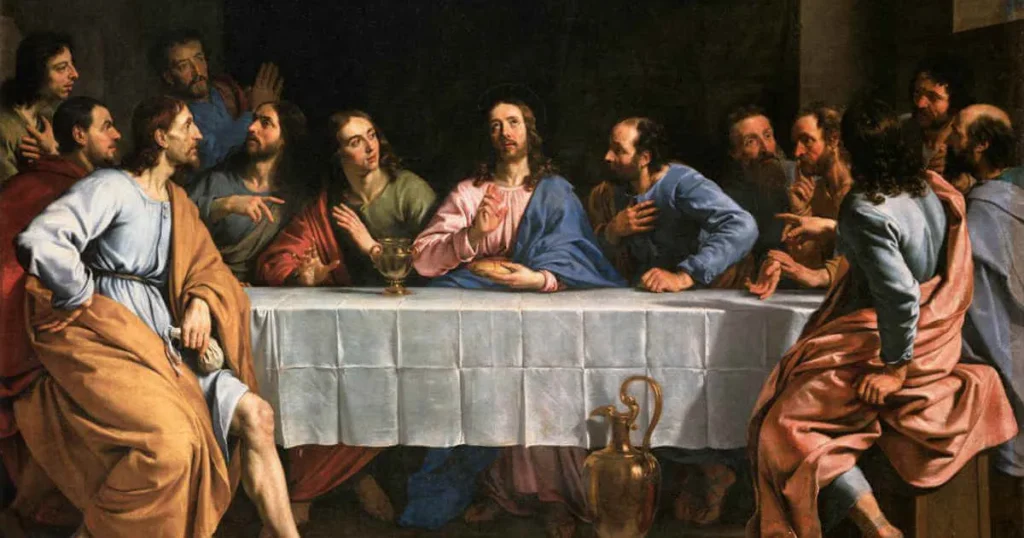
that the Lord Jesus, on the night he was handed over,
took bread, and, after he had given thanks,
broke it and said, “This is my body that is for you.
Do this in remembrance of me.”
In the same way also the cup, after supper, saying,
“This cup is the new covenant in my blood.
Do this, as often as you drink it, in remembrance of me.”
For as often as you eat this bread and drink the cup,
you proclaim the death of the Lord until he comes.

Sequence Lauda Sion

Laud, O Zion, your salvation,
Laud with hymns of exultation,
            Christ, your king and shepherd true:

Bring him all the praise you know,
He is more than you bestow.
            Never can you reach his due.

Special theme for glad thanksgiving
Is the quick’ning and the living
            Bread today before you set:

From his hands of old partaken,
As we know, by faith unshaken,
            Where the Twelve at supper met.

Full and clear ring out your chanting,
Joy nor sweetest grace be wanting,
            From your heart let praises burst:

For today the feast is holden,
When the institution olden
            Of that supper was rehearsed.

Here the new law’s new oblation,
By the new king’s revelation,
            Ends the form of ancient rite:

Now the new the old effaces,
Truth away the shadow chases,
            Light dispels the gloom of night.

What he did at supper seated,
Christ ordained to be repeated,
            His memorial ne’er to cease:

And his rule for guidance taking,
Bread and wine we hallow, making
            Thus our sacrifice of peace.

This the truth each Christian learns,
Bread into his flesh he turns,
            To his precious blood the wine:

Sight has fail’d, nor thought conceives,
But a dauntless faith believes,
            Resting on a pow’r divine.

Here beneath these signs are hidden
Priceless things to sense forbidden;
            Signs, not things are all we see:

Blood is poured and flesh is broken,
Yet in either wondrous token
            Christ entire we know to be.

Whoso of this food partakes,
Does not rend the Lord nor breaks;
            Christ is whole to all that taste:

Thousands are, as one, receivers,
One, as thousands of believers,
            Eats of him who cannot waste.

Bad and good the feast are sharing,
Of what divers dooms preparing,
            Endless death, or endless life.

Life to these, to those damnation,
See how like participation
            Is with unlike issues rife.

When the sacrament is broken,
Doubt not, but believe ‘tis spoken,
            That each sever’d outward token
            doth the very whole contain.

Nought the precious gift divides,
Breaking but the sign betides
            Jesus still the same abides,
            still unbroken does remain.

The shorter form of the sequence begins here.

Lo! the angel’s food is given
To the pilgrim who has striven;
            see the children’s bread from heaven,
            which on dogs may not be spent.

Truth the ancient types fulfilling,
Isaac bound, a victim willing,
            Paschal lamb, its lifeblood spilling,
            manna to the fathers sent.

Very bread, good shepherd, tend us,
Jesu, of your love befriend us,
            You refresh us, you defend us,
            Your eternal goodness send us
In the land of life to see.

You who all things can and know,
Who on earth such food bestow,
            Grant us with your saints, though lowest,
            Where the heav’nly feast you show,
Fellow heirs and guests to be. Amen. Alleluia.

Alleluia John 6:51

R. Alleluia, alleluia.
I am the living bread that came down from heaven, says the Lord;
whoever eats this bread will live forever.
R. Alleluia, alleluia.

Gospel Luke 9:11b-17

Jesus spoke to the crowds about the kingdom of God,
and he healed those who needed to be cured.
As the day was drawing to a close,
the Twelve approached him and said,
“Dismiss the crowd
so that they can go to the surrounding villages and farms
and find lodging and provisions;
for we are in a deserted place here.”
He said to them, “Give them some food yourselves.”
They replied, “Five loaves and two fish are all we have,
unless we ourselves go and buy food for all these people.”
Now the men there numbered about five thousand.
Then he said to his disciples,
“Have them sit down in groups of about fifty.”
They did so and made them all sit down.
Then taking the five loaves and the two fish,
and looking up to heaven,
he said the blessing over them, broke them,
and gave them to the disciples to set before the crowd.
They all ate and were satisfied.
And when the leftover fragments were picked up,
they filled twelve wicker baskets.

Source: https://bible.usccb.org/bible/readings/062225.cfm

The Solemnity of the Most Holy Body and Blood of Christ Read More »

The Most Holy Body and Blood of Christ

Of the greatest and most valuable treasures one could obtain in this world, nothing is more precious, more sacred, and more valuable than the Most Holy Body and Blood, Soul and Divinity of Jesus Christ, our Sovereign and Eucharistic Lord. Millions, billions, or even hundreds of trillions of dollars do not come close to the infinite value and transforming power of the Body and Blood of Christ. No amount of earthly wealth can buy happiness, but the Eucharist bestows it freely. No amount of money can purchase Heaven, but the Eucharist transforms you into a member of the Body of Christ Whom you consume, leading you to Heaven. At the end of our lives, when we stand before the Just Judge, we will realize the transforming power of this Gift. Those who adored Him and received Him faithfully in Communion will be forever grateful they did.

Human dignity demands that we show respect to one another, reverencing the presence of God in each person as a living tabernacle of the Lord. However, we do not bow down before God’s presence in others, nor do we kneel before them in adoration and worship. In this world, the only One Whom we worship and adore, in hidden yet physical form, is our Lord Who is fully present in the Eucharist. The Eucharist is not only a fraternal meal we share with one another, it’s a communion with God Himself that unites us with Him. It is that union with God that also unites us with every other person who is united to God through the sharing of the Most Holy Eucharist.

The Solemnity of Corpus Christi originated with a mystic named Saint Juliana of Cornillon. She was born near Liège, Belgium around the year 1191. At the age of five, she and her sister were orphaned and entrusted to the care of Augustinian nuns. Within that convent, Juliana grew in her faith, participated in Eucharistic adoration, and frequented Holy Communion. She eventually joined the Augustinians and became a nun herself.

At the age of sixteen, she had a mystical vision during Eucharistic adoration in which she saw the moon with a dark stripe. By divine intuition, she understood that the moon symbolized the Church’s life on earth, and the dark stripe symbolized the absence of a feast that was specifically dedicated to the Body and Blood of Christ. In the convent, she had the same vision several more times but kept it to herself for twenty years.

Around the age of thirty-six, she shared her vision with two friends, one a local hermit and the other a fellow nun. Together, these holy women grew deep in their love of Christ in the Eucharist, especially adoring His hidden presence and receiving Him frequently in Holy Communion. After sharing her vision with the bishop, he reluctantly approved a local annual feast in honor of the Blessed Sacrament, and some other bishops followed. However, as word spread about Juliana’s visions, her superior and some clergy opposed her. She had to leave the convent, taking refuge in various Cistercian monasteries for ten years.

In 1258, around the age of sixty-seven, Juliana was adoring Jesus in the Most Blessed Sacrament in her cell when she died and was taken into the unveiled presence of God in Heaven. Prior to her death, the local Archdeacon in Lièges, Jacques Pantaléon of Troyes, had become familiar with Juliana and believed that her visions were from God and that a universal feast of Corpus Christi was God’s will. In 1261, Archdeacon Jacques Pantaléon was elected pope and took the name Pope Urban IV.

In 1263, a Eucharistic miracle took place in Bolsena, Italy, about ten miles from where Pope Urban was residing in Orvieto in the Papal States, modern-day Italy. A German priest named Father Peter of Prague stopped at the church in Bolsena to offer Mass during a pilgrimage at the tomb of Saint Christina, a fourth-century martyr. By his own admission, he was struggling to believe in the true presence of Christ in the Eucharist. During the consecration, the host he was holding began to bleed and flow onto his hands and the linen corporal on the altar. He immediately went to Orvieto to reveal the miracle and his lack of faith to Pope Urban. Pope Urban absolved him and then sent a delegation to investigate the miracle. They brought the corporal back to the cathedral in Orvieto with great solemnity where it remains enshrined today.

In 1264, Pope Urban instituted the universal Solemnity of Corpus Christi and asked the renowned theologian Father Thomas Aquinas to compose the liturgical texts for the feast. Among the texts the future saint and doctor of the Church composed are the revered and frequently sung hymns, “Pange Lingua,” “Tantum Ergo,” “Panis Angelicus,” and “O Salutaris Hostia.” The Thursday after the Solemnity of the Most Holy Trinity was chosen for the annual feast in honor of the day that the Eucharist was instituted.

After the death of Pope Urban IV, the Solemnity of Corpus Christi was removed from the universal calendar for about fifty-three years until Pope John XXII added it back in 1317. Since that time, the solemnity has grown and become an important annual celebration that often includes Eucharistic processions, adoration, and Mass. In many locations where it is not a holy day of obligation, the solemnity is moved to the following Sunday so as to extend the celebration to the entire people of God. In 1869, Pope Pius IX canonized Saint Juliana of Lièges, adding even greater credence to her miraculous visions and solidifying the importance of this holy solemnity.

As we celebrate the Solemnity of Corpus Christi, spend time pondering the profound mystery of the true presence of Christ in the Eucharist. As we kneel before Him, we truly kneel before His throne in Heaven, despite the reality being veiled from our eyes. As we consume the Blessed Sacrament, we truly consume Christ Himself—Body and Blood, Soul and Divinity—and receive Him into our souls. Though we might not feel Him with our bodily senses, we must allow our spiritual sense of faith to grow so that our love for Him in this Most Precious Gift exponentially increases. Let’s conclude with the “Tantum Ergo,” which is taken from the last two verses of the beautiful hymn of Saint Thomas Aquinas, the “Pange Lingua:”

Down in adoration falling, Lo! the sacred Host we hail; Lo! o’er ancient forms departing, newer rites of grace prevail; faith for all defects supplying, where the feeble senses fail. To the everlasting Father, and the Son who reigns on high, with the Holy Ghost proceeding forth from Each eternally, be salvation, honor, blessing, might and endless majesty. Amen. Alleluia.

Source: https://mycatholic.life/saints/saints-of-the-liturgical-year/corpus-christi—body-and-blood-of-christ–solemnity/

The Most Holy Body and Blood of Christ Read More »

Mark 14:22-24

Wonder and Awe Before the Eucharist

While they were eating, he took bread, said the blessing, broke it, gave it to them, and said, “Take it; this is my body.” Then he took a cup, gave thanks, and gave it to them, and they all drank from it. He said to them, “This is my blood of the covenant, which will be shed for many.”

Reflection:

At the holy Mass, as soon as the priest pronounces the words of the consecration, transforming the bread and wine into the Body and Blood, Soul and Divinity of Jesus Christ our Lord, he genuflects, rises, and then says, “The mystery of faith.” What is “the mystery of faith?” Oftentimes, when we say that something is a mystery, we mean that the conclusion is hidden but that there are certain clues to help solve the mystery. And once the mystery is solved, everything is clear and it is no longer a mystery.

“The mystery of faith” is much different. Those words are spoken at Mass immediately after the consecration as a way of drawing the faithful into a holy awe and amazement of what just took place. But this mystery can only produce wonder and awe if the reality of what just took place is understood through the gift of faith. Faith is knowing and believing without perceiving the reality before us with our five senses or through logical deduction. In other words, faith produces true knowledge of a spiritual reality that can only be known, understood and believed through spiritual insight. Therefore, if we attend the Mass and have been gifted with the knowledge of faith, then as soon as the consecration of the bread and wine takes place, we will cry out interiorly, “My Lord and my God!” We will know that God the Son is present before us in a veiled way. Our eyes do not perceive, nor do any of our senses reveal to us the great reality before us. We cannot rationally deduce what just took place. Instead, we come to know and believe that the Son of God, the Savior of the World, is now present before us in His fullness, under the veil of mere bread and wine.

In addition to the divine presence of our Lord and our God, the entire Mystery of our Redemption is made present. Saint Pope John Paul II tells us that in this moment there is a “oneness in time” that links the Paschal Mystery, that is, the Life, Death and Resurrection of Jesus, to every moment that the Eucharist is celebrated and made present through the words of consecration. And that unity between each Mass and the Paschal Mystery “leads us to profound amazement and gratitude” (Ecclesia de Eucharistia, #5). Do you sense and experience this profound amazement and gratitude each time you attend the Holy Sacrifice of the Mass? Do you realize as you attend the Mass and as the words of consecration are spoken that the entire Mystery of your redemption is made present before you, hidden from your eyes but visible to your soul by faith? Do you understand that it is God the Second Person of the Most Holy Trinity Who descends to us to dwell with us in that moment of time in this glorious Sacrament?

Reflect, today, upon the hidden but real Mystery of Faith. Allow yourself to be drawn into a wonder and awe at what you are privileged to attend. Let your faith in the Most Holy Eucharist grow by being open to a deepening of this gift of faith through spiritual insight and belief. Behold this great Gift of the Eucharist with the eyes of faith and you will be drawn into the wonder and awe that God wants to bestow upon you.

Source: https://catholic-daily-reflections.com/2025/06/21/wonder-and-awe-before-the-eucharist-4/

Mark 14:22-24 Read More »

Saint Aloysius Gonzaga, Religious

1568–1591; Patron Saint of students, Christian youth, Jesuit novices, AIDS patients and caregivers; Invoked against eye troubles and epidemics; Canonized by Pope Benedict XIII on December 31, 1726

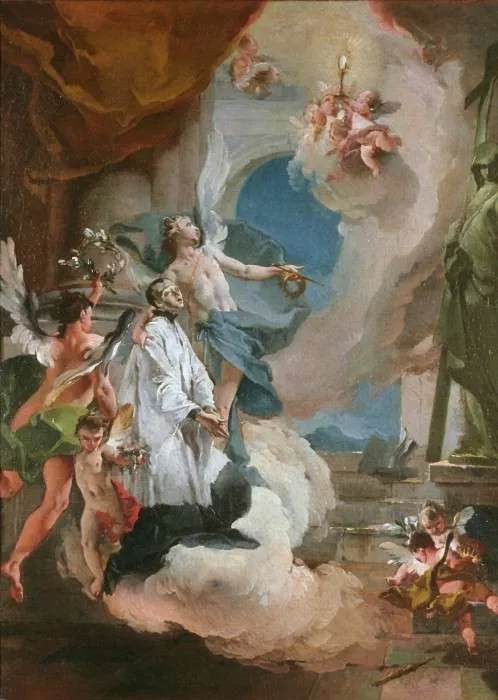
Luigi Gonzaga was the firstborn son of eight children, and the scion to a wealthy and noble inheritance. He was born into the Duchy of Mantua, modern-day northern Italy, which was ruled by his family, the princely House of Gonzaga. Luigi was the Italian version of his name; Aloysius was the Latin version. His father, Ferrante Gonzaga, was Governor of Milan, Viceroy of Sicily, and a general in the army of the Holy Roman Emperors Charles V and Philip II. As the oldest son, Luigi was expected to follow in his father’s footsteps through a military career. Ferrante began training Luigi as a soldier when Luigi was just four years old. Luigi’s mother, a devout Catholic, had different hopes for her son.

At the age of five, Luigi was sent to a military camp housing 3,000 soldiers to learn warfare and weaponry. He earned respect from the soldiers and often led them in marching, but he also picked up their rough language. When Luigi brought this language home, his mother promptly corrected him. Although the incident was somewhat innocent since he didn’t know what the words he repeated meant, his mother’s rebuke had a lasting influence on him and marked a turning point in his life. From that young age, he started to cultivate piety and a greater consciousness of moral living.

Luigi’s piety continued to flourish at the age of seven. He began to pray daily, reciting the Office of Our Lady, the penitential psalms, and many other devotions, often on his knees on a cold, hard floor. Around this time, he also endured an illness lasting about eighteen months, marked by fever and necessitating prolonged bed rest. Nevertheless, he never missed his daily prayers. Many who knew him in his childhood believed he never committed a mortal sin, given the depth of his devotion.

At the age of eight, Luigi and his younger brother were sent to Florence under the guardianship of the Grand Duke of Tuscany, Francesco I de’ Medici, a member of the influential Medici family. Florence was a thriving city, rich in culture and knowledge, exposing the boys to music, art, and science. Luigi and his brother served as pages in Francesco’s court, a role that involved household service, etiquette instruction, and establishment of important relationships for future benefits. Luigi studied Latin, literature, philosophy, and history, and was exposed to physical disciplines, such as fencing and horseback riding.

By the age of nine, however, Luigi—now using his Latin name, Aloysius—was demonstrating more interest in piety and the lives of the saints than in the worldly pursuits that made up his life at court. Most of his free time was spent learning about the faith and praying.

Ferrante brought his sons back home when Aloysius was eleven years old. After joining the court of Duke William Gonzaga of Mantua, Aloysius read a book of letters from Jesuit missionaries and was deeply moved by a letter from a Jesuit missionary from the Indies. Around this time, he made a private vow to live a celibate life devoted to God and resolved to renounce his firstborn rights. He began to embrace every virtue, especially purity, and he became so engrossed in catechetical studies and the lives of the saints that he began teaching catechism to other children.

At the age of twelve, Aloysius met then-cardinal and future saint, Charles Borromeo. After expressing his desire to be a Jesuit missionary and undergoing examination by the cardinal, Aloysius so impressed Cardinal Borromeo that he personally prepared the boy for and administered his First Holy Communion, encouraging him to receive the Eucharist frequently.

When Aloysius was thirteen, his father was required to accompany the empress of Austria to Spain and brought his children with him. The children became pages in the infant prince’s court. Aloysius continued his studies and prayer life in Spain and started to seriously consider becoming a Jesuit. His mother was thrilled when he shared this desire, but his father was enraged, even threatening physical violence. The issue was that Aloysius would need to renounce his inheritance and noble status to become a Jesuit. When some family members suggested he become a secular priest, noting that they could arrange for him to be a bishop, Aloysius refused. He felt called to the Jesuits and had no interest in the nobility’s courtly advancement, wealth, or worldly honors. When the Spanish infant prince died a year later, the family moved back to Italy.

Over the next few years, Aloysius’s piety grew, and his devotion to become a Jesuit solidified. His father and many others tried to dissuade him, even confining him for nine months. Eventually, through divine grace, hearts were softened, minds opened, and Aloysius’ father gave his reluctant consent. As a high-ranking noble, Aloysius could only renounce his inheritance and position with the emperor’s approval. Once granted, Aloysius passed his rank and inheritance to his brother and joined the Jesuit novitiate in Rome on November 25, 1585, at the age of eighteen.

Despite his noble background, Aloysius lived humbly in Rome. He advanced in prayer, often entering deep contemplation. He prayed before the Blessed Sacrament, grew in devotion to Our Lady, and always meditated on Christ’s Passion. He was obedient, manifested a pure and holy chastity, lived in poverty, and was charitable, especially towards the poor. He was also blessed to have the future Saint Robert Bellarmine as his spiritual director and teacher.

After briefly returning home to resolve a family dispute over land, Aloysius returned to Rome in 1591 when the bubonic plague was ravaging the city. Despite the widespread fear, Aloysius dedicated himself to caring for the sick, dismissing concerns for his own health. He undertook all necessary tasks to meet both the spiritual and physical needs of the sick, fulfilling his duties with profound joy. Eventually, he contracted the disease himself and endured much suffering. He embraced his suffering with much rejoicing and even prophesied the day of his death, which was revealed to him in a vision and occurred on the Octave day of the Solemnity of Corpus Christi when he was just twenty-three years old.

Saint Aloysius Gonzaga was wealthy in the things of this world and was promised everything this life could offer. However, he discovered something far more valuable—God—through a life of profound prayer and devotion. The wealth he obtained through his obedience to God’s will vastly exceeded anything he could inherit in this life. As we reflect on this youthful and holy Jesuit, consider your own dreams and desires. Like Saint Aloysius, are you prepared to relinquish everything to serve God’s will? Do you pursue genuine riches? Or are you preoccupied with the fleeting wealth of this world? Imitate this young saint’s example, and you will discover the same treasures he obtained through his fidelity to God’s will.

Source: https://mycatholic.life/saints/saints-of-the-liturgical-year/june-21–st-aloysius-gonzaga/

Saint Aloysius Gonzaga, Religious Read More »

Matthew 6:24

Singularly Devoted

Jesus said to his disciples: “No one can serve two masters. He will either hate one and love the other, or be devoted to one and despise the other. You cannot serve God and mammon.

Reflection:

Mammon is another word for money. Jesus is clear that you must choose to serve either God or money, but not both. A divided heart does not suffice. Saint John of the Cross, in His spiritual classic “Ascent to Mount Carmel,” explains something similar. He says that our desires must become completely purified to the point that all we desire is God and His holy will. Every other desire in life must be purged away so that we are singularly devoted to God. Does this mean that God and God alone should be the object of all of our love? Yes, indeed. But that truth must be properly understood.

When we consider the calling we have been given from God to love, it is true that we must love not only God but also many other things in life. We must love family, friends, neighbors, and even our enemies. Hopefully we also love other aspects of our lives, such as our vocation, our job, our home, a certain pastime, etc. So how do we love God with singular devotion when we also have many other things we must love?

The answer is quite simple. The love of God is such that when we make God the singular object of our love and devotion, the love we have for God will supernaturally overflow. This is the nature of the love of God. As we love God, we will find that God calls us to love Him by loving other people and even various aspects of our lives. As we love what God wills us to love and as we express our love for all that is contained in the will of God, we are still loving God with all our heart, mind, soul and strength.

But back to our Scripture above. Why is it that we cannot love God and money? “Mammon” in this passage must be understood as a love that becomes an unhealthy attachment and desire. Money is such that we can “love” it by allowing our desires for it to become disordered and, thus, exclude the will of God from that “love.” Money is not evil when it is used solely in accord with the will of God. In that case, the money we use will give God great glory. But when money, or any other object of our desire, begins to take on a life of its own, so to speak, then that desire will be at odds with our love of God. To love God and God alone means we love God and all that He wills us to love in life.

Reflect, today, upon the necessity of being singularly devoted to God. As you commit yourself to this exclusive love, consider also whom and what God calls you to love in and through Him. Where does His perfect will lead you, and how are you called to show your love of God through the love of others? Consider, also, any ways in which you have allowed an unhealthy attachment to money or anything else in life to distract you from the one and ultimate purpose of your life. Allow God to purge those unhealthy desires and false “loves” from your heart so that you will be free to love as you were made to love.

Source: https://catholic-daily-reflections.com/2025/06/20/singularly-devoted-3/ 

Matthew 6:24 Read More »

Saint John Fisher, Bishop and Martyr; Saint Thomas More, Martyr

Saint John Fisher: 1469–1535; Invoked for courage and by those who are persecuted; Saint Thomas More: 1478–1535; Patron Saint of statesmen, politicians, lawyers, civil servants, court clerks, adopted children, large families, stepparents, and difficult marriages; Canonized by Pope Pius XI on May 19, 1935

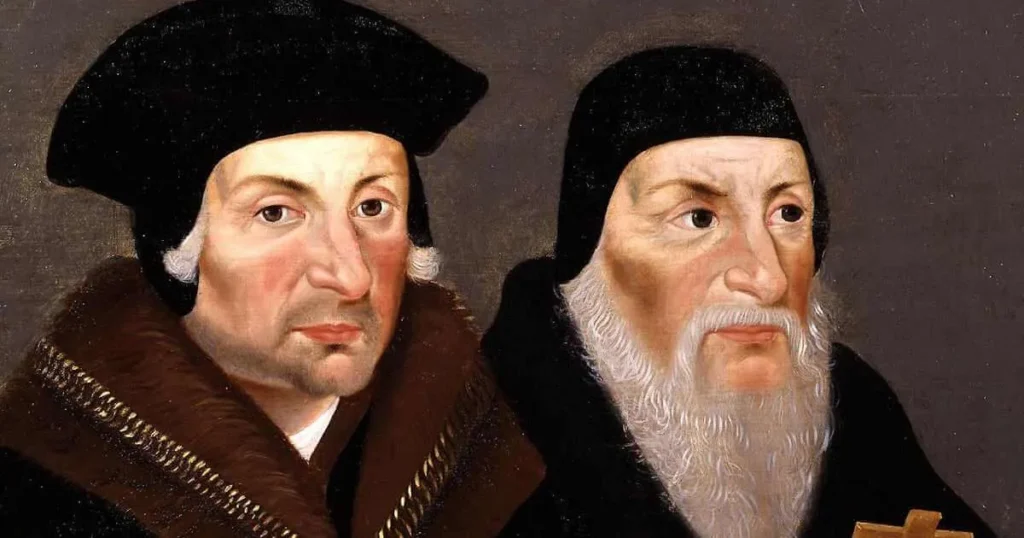
Throughout the 1400s, the Catholic Church played a central role in the religious, cultural, and political fabric of England. Magnificent churches were built, monasteries thrived, clergy wielded influence, religious holidays were nationalized, and the Catholic Church collaborated with the state, in union with Rome. However, the tide began to shift during the rule of King Henry VIII (1509–1547) when King Henry severed ties between the Church of England and Rome to secure his divorce and remarriage. One year later, in 1535, the king martyred two of England’s greatest Catholic saints who opposed him, both of whom we honor today.

John Fisher was born in Beverley, Yorkshire, England, in 1469. At the age of fifteen, Fisher enrolled in the University of Cambridge, where he pursued studies in theology. He was ordained a priest around the age of twenty-two. His academic excellence led to an invitation to remain at Cambridge, where he fulfilled roles as a chaplain, professor, and eventually Vice-Chancellor and Chancellor.

In 1504, when he was approximately thirty-five years old, Father Fisher was ordained a bishop and appointed to the Diocese of Rochester. Despite serving in one of the smallest and poorest dioceses in England, Bishop Fisher became renowned for his preaching, pastoral care, and adherence to orthodox faith.

Thomas More was born in London, England, in 1478. His father, a well-respected lawyer and judge, ensured that Thomas received an education at one of London’s finest schools. At the age of twelve, Thomas served in the household of Archbishop John Morton of Canterbury, who was also the Lord Chancellor of England. Thomas’ intelligence quickly became evident, leading to his enrollment at the University of Oxford to prepare for future legal studies. During this time, he developed a strong faith, influenced by the witness of the Carthusians monks, and he contemplated a monastic vocation himself. Although he eventually chose a career in law, his life of prayer and penitential practices blossomed.

In 1505, Thomas married Jane Colt, with whom he had four children. He began working in Parliament and gained a favorable reputation. In 1510, he was appointed as an undersheriff of London, one of the city’s highest law enforcement positions. Unfortunately, Jane passed away in 1511, leaving Thomas with four young children. He soon married Alice Middleton, who lovingly cared for his children as a mother.

Over the next twenty-one years, Thomas’ faith, family, and career thrived. He became a member of the King’s Council, was knighted by King Henry VIII, and was elected as Speaker of the House of Commons. In 1529, he became the first layman to hold the post of Lord Chancellor, the highest-ranking legal position in England. After serving for approximately three years, he resigned, citing reasons of health. His primary motivation, however, was his opposition to Henry VIII’s actions regarding the Catholic Church.

The seeds of trouble were sewn in 1501 when Arthur, Prince of Wales, the firstborn son of King Henry VII, married Catherine of Aragon. The couple expected to ascend to the throne as king and queen after Arthur’s father’s death. However, Prince Arthur died five months later, passing the right of succession to the throne to his younger brother, Henry. An arrangement was made for Henry to marry Catherine, his late brother’s wife, once Henry came of age. Although such a marriage was typically prohibited, the pope granted a dispensation, based on Catherine’s testimony that she and Arthur had never consummated their marriage.

In 1509, King Henry VII passed away, and his son, Henry VIII, assumed the throne and married Catherine. Over the next twenty years, they had six children, all of whom died as infants except for one daughter, Mary, who would later become queen. In 1527, King Henry VIII sought an annulment of his marriage to Catherine, contending that it was invalid because she had, indeed, consummated her marriage to Arthur, which she denied. Henry further asserted that his lack of a male heir was a consequence of this unlawful union, signaling divine displeasure. The pope rejected Henry’s request for an annulment, provoking Henry’s anger and intensifying conflicts between him and the pope, along with those who opposed Henry among the clergy and civil servants.

In 1532, King Henry appointed Thomas Cranmer as the Archbishop of Canterbury. Sympathetic to those who sought reform of the English Church and separation from Rome, Cranmer supported Henry’s desire for a divorce from Catherine. He declared Henry’s first marriage null and void and validated his subsequent marriage to Anne Boleyn in 1533. In 1534, with the backing of Parliament, King Henry VIII proclaimed himself the head of the Church in England, effectively severing ties with the pope and the Roman Catholic Church.

Today’s saints, Saints Thomas More and John Fisher, were among the few who refused to accept the king’s decisions. Bishop John Fisher firmly defended the bond of marriage, stating that he was willing to die, just as Saint John the Baptist did, for the defense of marriage. This outraged the king. Eventually, the king had Bishop Fisher arrested before he could publicly oppose the new queen’s coronation. Though he was initially released, he was arrested again on April 26, 1534, and remained in prison under extremely harsh conditions, deprived even of a priest to minister to him, until his death about fourteen months later. Before Fisher’s death, the pope declared him a cardinal as a way of adding pressure on the king to release him, but this only angered the king more. Cardinal Fisher’s defense was to remain silent and say nothing from prison. Eventually, he was tricked into speaking, confessing his opposition to the king, which led to his beheading. Every other bishop, except for two, gave their support to the king, bringing a painful end to the Catholic Church in England.

Like Cardinal Fisher, Thomas More refused to support the king’s claim that he was the head of the Church of England, and he refused to publicly support the coronation of the new queen. After More refused to attend the coronation, he was arrested and put on trial for treason. His defense was also to remain silent, but he was found guilty and executed about two weeks after Cardinal Fisher. Cardinal Fisher’s head had been mounted on London Bridge for two weeks after his death, but it was taken down and replaced by More’s upon More’s execution.

The fall of the Catholic Church in England is perhaps one of the saddest moments of Church history. However, because of the courage of these two martyrs, it is also one of the brightest. Though they were abandoned by most, they are now honored as saints and martyrs and will forever wear those glorious crowns in Heaven.

As we honor these two great martyrs, ponder their eternal perspective and willingness to endure suffering and death rather than compromise their faith. As you do, pray that you, too, will always live for the glory of God and the salvation of souls, even if it means hardship, suffering, or even death, preferring the glorious crown of righteousness in Heaven.

Source: https://mycatholic.life/saints/saints-of-the-liturgical-year/june-22—saints-john-fisher-bishop-and-martyr-and-thomas-more-martyr/

Saint John Fisher, Bishop and Martyr; Saint Thomas More, Martyr Read More »