Author name: Sani

Saint Mary Magdalene

First Century; Patron Saint of pharmacists, contemplatives, converts, glovemakers, hairdressers, penitent sinners, people ridiculed for their piety, perfumers, reformed prostitutes, tanners, women; Invoked against sexual temptations; Pre-Congregation canonization

Saint Mary Magdalene, also known as Magdalene or Mary of Magdala, is most likely named after the bustling fishing village of Magdala on the western edge of the Sea of Galilee. All information about Mary comes from the Gospels. Luke 8:1–3 introduces her as one of the many women who accompanied Jesus and the Twelve, providing for them out of their own resources. These women are said to have been “cured of evil spirits and infirmities,” and Mary is specifically noted to have been delivered from “seven demons.”

Being delivered from seven demons carries significant implications. It could mean that Mary was genuinely possessed, obsessed, or oppressed by seven distinct demons. The number seven also symbolizes perfection, implying she may have been completely possessed or that her deliverance from these demons, and from a life of sin and evil, was a perfect deliverance. In other words, she never returned to the sins from which Jesus delivered her. Some suggest that the seven demons represent the seven capital sins, implying that Mary had committed grave violations of all seven capital sins and was delivered from each of these sinful habits.

In the previous chapter of Luke’s Gospel, Luke 7:35–50, we are given the story of an anonymous “sinful woman” who interrupts a dinner that Jesus was attending at the house of Simon the Pharisee. This woman’s sin is not named, but her repentance is clear. She brings with her an “alabaster flask of ointment,” and stands “behind him at his feet,” weeping, washing Jesus’ feet with her tears, wiping them with her hair, and anointing them with the ointment. After a discourse with the Pharisee who was judging her and Jesus in his heart, Jesus tells Simon, “her many sins have been forgiven; hence, she has shown great love.” He then turns to her, forgives her, and sends her forth in peace.

Throughout the centuries, many have presumed that this sinful woman was Mary Magdalene. Though this is possible, and some say probable, there is no definitive way to know. This sinful woman might have been Mary of Bethany, the sister of Lazarus and Martha. It could have been a different woman not mentioned elsewhere in the Bible, or one of the other women who accompanied Jesus and provided for Him and the Twelve.

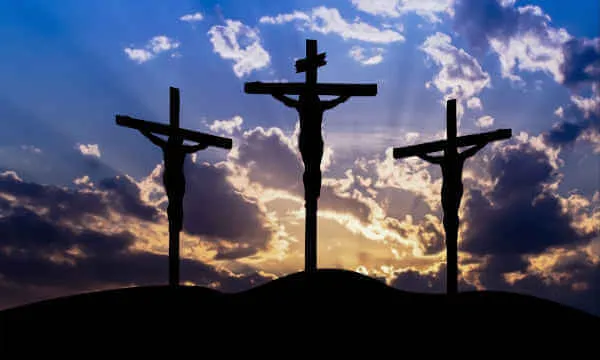
The second time that Mary Magdalene is explicitly mentioned in the Bible is at Jesus’ crucifixion. Matthew, Mark, and Luke state that she and other women were present and were looking on from a distance. John’s Gospel, however, states that she was standing close to the Cross next to Jesus’ mother and aunt: “Standing by the cross of Jesus were his mother and his mother’s sister, Mary the wife of Clopas, and Mary of Magdala” (John 19:25).

The third time Mary Magdalene is mentioned is after the Resurrection. Matthew, Mark, and Luke state that Mary Magdalene went to the tomb early on Sunday morning to anoint Jesus’ body and that she was accompanied by one or more other women. However, John’s Gospel states that she went alone, found the stone rolled away, and Jesus’ body missing. She then ran to tell Peter and John, who went to investigate and found the tomb empty, just as she had said. Peter and John left, but Mary sat by the tomb crying. Two angels appeared in the tomb and conversed with her. She then turned around and saw someone whom she mistook for the gardener and asked if he had taken Jesus’ body, but it was Jesus Himself. When Jesus said her name, “Mary!”, she recognized Him. Jesus told her, “Stop holding on to me, for I have not yet ascended to the Father. But go to my brothers and tell them, ‘I am going to my Father and your Father, to my God and your God’” (John 20:17). Mary quickly went and informed the disciples that she had seen the Lord.

Because it was Mary who was first sent to announce the Resurrection of Christ to the other disciples, Saint Thomas Aquinas referred to her as the “Apostle to the Apostles.” Though it could be inferred from the Bible that Mary Magdalene was the first to see the risen Lord, others hold that Jesus appeared first to His own Mother, the Blessed Virgin Mary, even though this is not explicitly stated in the Gospels. Pope Saint John Paul II addressed this, saying, “Indeed, it is legitimate to think that the Mother was probably the first person to whom the risen Jesus appeared. Could not Mary’s absence from the group of women who went to the tomb at dawn (cf. Mark 16:1Matthew 28:1) indicate that she had already met Jesus?” (General Audience, 3 April 1996). Nothing else is known about Mary Magdalene after this biblical account of Jesus’ Resurrection. One ancient tradition holds that she accompanied John and the Blessed Mother to Ephesus, where she spent the remainder of her days.

As we honor Saint Mary Magdalene, we especially celebrate God’s unlimited mercy. The encounter with Jesus changed Mary’s life forever. Jesus did not hesitate to associate Himself with this woman who was delivered from seven demons. Similarly, Jesus never hesitates to unite Himself with anyone who sincerely repents of their sins, regardless of their past actions. Mary’s life also tells us that there is hope for everyone. Before her transformation, many who knew her might have easily dismissed her as hopeless. Jesus didn’t do that with her, and He doesn’t do so with anyone. In 2016, Pope Francis elevated the memorial of Saint Mary Magdalene to the status of a Feast on the liturgical calendar. He did so during the Extraordinary Jubilee of Mercy as a way of highlighting the important role that Saint Mary Magdalene played in the Gospels, the depth of her love for Christ, and to highlight the Divine Mercy of God.

Reflect upon your own sins and the manifest sinfulness of others. For yourself, if you struggle with some habitual sin, know that freedom is possible. For others, if you have written anyone off, try to regain hope. Pray for that person and know that with Christ Jesus, all things are possible. Your prayers for and witness to those who are sinful can open the doors of Jesus’ mercy for them, giving them the chance they need to repent and to be bathed in the mercy of God.

Source: https://mycatholic.life/saints/saints-of-the-liturgical-year/july-22—saint-mary-magdalene/

Saint Mary Magdalene Read More »

John 20:11-12

Unwavering Fidelity

Mary stayed outside the tomb weeping. And as she wept, she bent over into the tomb and saw two angels in white sitting there, one at the head and one at the feet where the Body of Jesus had been.

Reflection:

Early in His ministry, Jesus cast seven demons out of Mary of Magdala. As a result, she became an exceptionally faithful follower of Jesus. She was most likely one of His followers who provided for Jesus and the disciples out of her own resources as they traveled. She listened to His teachings, witnessed His miracles, was present when He was condemned, stood at the foot of the Cross with Jesus’ mother, helped to prepare His body for burial and was the first person recorded in Scripture to whom Jesus appeared after His Resurrection.

The Gospel for today’s Mass tells the story of Mary going to the tomb early Sunday morning to complete the anointing of Jesus’ dead body as He laid in the tomb. But much to her surprise, the tomb was empty. Therefore, she ran to tell the Apostles, which makes Mary Magdalene the first of His followers to witness to the Resurrection. After telling the Apostles, she returned to the tomb with Peter and John; and, after Peter and John left, she remained outside the tomb weeping, as is mentioned in the Gospel passage quoted above.

Mary’s tears are beautiful. They are an expression of her deep devotion to her Lord. She did not yet understand that He had risen, but her fidelity to Jesus is a testimony to her love. Jesus had restored her dignity. He freed her from the seven demons who tormented her. She most likely had been a sinful woman in the past, but now she was singly devoted to the Savior of the World.

The witness of Mary of Magdala is one that should inspire us all. Though few people are possessed by seven demons, we are all tormented in one way or another. We all sin. We all are weak. We all have a past we regret. And we all are invited to do better. Mary’s “better” was a life that was given to Jesus with the utmost fidelity. She didn’t care if the authorities saw her at the foot of the Cross. If they were to persecute her as a result, it did not matter. She was faithful. She didn’t care if the soldiers would have harassed her when she went to the tomb to anoint the body of Jesus—she only thought of that last act of love she could offer Him. And when she saw Jesus risen and thought He was the gardener, she didn’t care if He saw her heartbroken and in tears—she only wanted to see the body of her Lord.

As a result of her unwavering fidelity, Jesus gave her a gift beyond imagination. He appeared to her, after being resurrected from the dead, and sent her to be an apostle to the Apostles. He sent her to go to the Apostles to tell them that Jesus had risen and that He was preparing to go to His Father in Heaven.

Reflect, today, upon the holy soul of this woman. She was a repentant sinner who turned her whole life around. She devoted everything to Jesus and, in return, received even more. In Heaven, Mary Magdalene will forever cling to Jesus and adore His Sacred Heart. May we all strive to imitate her by turning from our own life of sin and becoming unwaveringly faithful to our Lord.

Source: https://catholic-daily-reflections.com/2025/07/21/unwavering-fidelity-4/

John 20:11-12 Read More »

Saint Lawrence of Brindisi, Priest and Doctor

1559–1619; Patron Saint of Brindisi, Italy; Canonized by Pope Leo XIII in 1881; Proclaimed a Doctor of the Church by Pope John XXIII in 1959

Julius Caesar Russo was born in Brindisi, in the Kingdom of Naples, modern-day Italy, to a family of merchants. As a child, he studied under the Conventual Franciscans in Brindisi, impressing the friars with his oratory skills, which were often showcased during special events, such as Christmas. His father passed away when Julius was around seven years old. Later, he relocated to Venice, where he continued his education under the Capuchin Franciscans. It remains unclear whether he moved with his mother or if she had also died after entrusting his care to an uncle who was a priest.

In Venice, the Capuchins, a new branch of the Franciscans, aimed to adhere more strictly to the original Rule of Saint Francis, particularly in regard to poverty and simplicity. Under both the Conventuals and Capuchins, Julius demonstrated exceptional learning. In 1575, at the age of sixteen, he joined the Capuchins in Venice, adopting the name Brother Lawrence. He soon became recognized as an exceptional linguist, mastering Biblical languages such as Greek, Hebrew, Latin, and Syriac, along with fluency in Italian, German, Spanish, French, and Czech. One legend states that he memorized the entire Bible in its original languages. After seven years with the Capuchins, Brother Lawrence was ordained a priest in 1582.

After his ordination, Father Lawrence’s linguistic gifts were put to extensive use. He had not only mastered the Bible in its original languages but was also well versed in ancient Jewish Rabbinic literature and prominent Catholic theology, such as the Summa Theologica of Saint Thomas Aquinas and the works of the Fathers of the Church. His deep knowledge, coupled with his prayerful life and manifest virtues, turned him into an eloquent and persuasive preacher, earning the respect of many, including several Jewish rabbis.

Father Lawrence was entrusted with a multitude of responsibilities after his ordination. He served as the superior of the Capuchins in the province of Tuscany, a general counselor to the Capuchins in Rome, and later as the Minister General of the entire order. His profound knowledge of Hebrew and Rabbinic literature led the Pope to appoint him to minister to the Jews of Rome. In 1601, at the behest of the Holy Roman Emperor Rudolf II, he became a chaplain to the army defending the empire against the Ottoman Turks in Hungary. Not only did Father Lawrence inspire the troops, but he also led them into the Battle of Székesfehérvár, carrying a crucifix while on horseback. His leadership resulted in a victory for the Holy Roman Empire.

In 1605, the Pope sent Father Lawrence to Germany to assist in countering the Protestant Reformation. He collaborated with princes and kings to establish the Catholic League, aimed at defending the rights of Catholics and later resisting the Turkish invasion. A devout Franciscan, his ultimate goal was always to achieve peace, a task at which he excelled. He also worked in Vienna, Prague, and Graz, Austria. During these years, he clearly articulated the Church’s stance on papal primacy and its origin in Saint Peter, the role of bishops, the Catholic view on justification, and the necessity of good works for salvation. His defense of the Church was always rooted in his profound understanding of Sacred Scripture and the deposit of faith, tracing its development from the early Church Fathers up to his own time.

Father Lawrence’s influence wasn’t limited to academic circles. His deep prayer life, prolonged and reverent celebration of the Mass, and his ability to engage with the laity in a convincing and transformative manner, endeared him to countless people. His prayer was one of continuous contemplation, and miracles accompanied his ministry. Despite his numerous duties, his personal prayer life was the catalyst for his transformation into a great saint. In addition to his devout celebration of the Mass, during which he often fell into ecstasy, he had a profound devotion to the Blessed Virgin Mary, often saying of her, “May the Virgin Mary bless us with her pious offspring.”

Besides his administrative, consultative, military, and preaching roles, Father Lawrence was a prolific writer. Most notably, he left behind significant works on Mariology, sermons, commentaries on Sacred Scripture, defenses against heresies, and commentaries on Catholic theology, particularly on the teachings of Saint Thomas Aquinas.

Father Lawrence died in Portugal on his sixtieth birthday. His intellect and influence were so profound that during his canonization process, it was stated, “He can truly be numbered among the holy doctors of the Church.” Indeed, in 1959, Pope John XXIII recognized him as one of the Doctors of the Church, making him one of eight Franciscan saints to receive this honor.

Saint Lawrence is inspirational not only because of his intelligence but also because of his holiness. His brilliance, intertwined with his humble life of prayer, transformed him into a remarkable preacher, administrator, peacemaker, theologian, and defender of the faith. As we venerate this great Franciscan saint, reflect on the fact that Saint Lawrence was precisely what the Church needed during his era. He addressed wars, theological errors, mass departures from the Church, and confusion among the laity. Saint Lawrence was the right man for the task.

Just as God positioned Saint Lawrence in a unique historical period that needed him the most, God has also placed you in this moment in history. While you may not be called to fulfill the same duties as Saint Lawrence, you are called by God to use your unique gifts for His glory and the salvation of souls. Do not hesitate to respond generously to God’s will so that He can use you in ways beyond your imagination.

Source: https://mycatholic.life/saints/saints-of-the-liturgical-year/july-21—saint-lawrence-of-brindisi-priest-and-doctor/

Saint Lawrence of Brindisi, Priest and Doctor Read More »

Matthew 12:42

The Pursuit of God’s Wisdom

At the judgment the queen of the south will arise with this generation and condemn it, because she came from the ends of the earth to hear the wisdom of Solomon; and there is something greater than Solomon here.

Reflection:

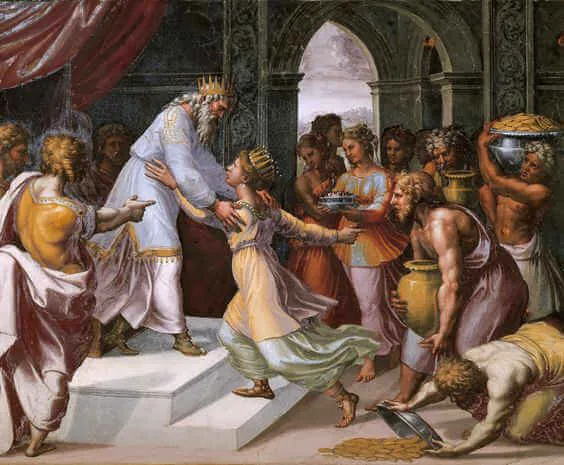
In this passage, Jesus refers to the Queen of Sheba who traveled about 1,400 miles from Southern Arabia, which was most likely located in either modern-day Yemen or Ethiopia, to meet King Solomon. The queen had heard much about Solomon, about his wealth and wisdom, and wanted to find out if all that she heard was true. So she made the long journey and stayed with him for about six months, according to tradition. After spending time with him, she was greatly impressed and bestowed upon him gifts of gold, spices and precious stones. She said to him, “I did not believe the report until I came and saw with my own eyes that not even the half had been told me. Your wisdom and prosperity surpass the report I heard” (1Kings 10:7).

This foreign queen was deeply impressed with Solomon. Her journey, gifts and words illustrate her deep respect for him and her admiration. Jesus uses this story to illustrate the simple fact that Jesus Himself is much greater than Solomon and that He should be treated in a way that far surpasses the way the queen treated Solomon. But Jesus also makes it clear that, at the Final Judgment, this queen will rise and condemn the scribes and Pharisees because they failed to see the wisdom and kingship of Jesus. Instead, they came to Jesus, seeking signs and proof of Who He was.

In our own lives, the witness of the Queen of Sheba should be a source of true inspiration. She was someone who was powerful and wealthy herself, and yet she wanted to learn from Solomon and to benefit from his great wisdom which was given him by God. She should inspire us to do all we can to daily turn to our Lord and to seek His wisdom.

Jesus’s wisdom flows to us in many ways. The Gospels are especially important as a source of the most important lessons for life. Personal prayer, reading about the lives of the saints, and study of the teachings of our Church are also essential ways in which we receive the wisdom given to us by God. As you think about the many ways that are available to you to grow in the wisdom of God, try to use the Queen of Sheba as an inspiration. Do you have her same zeal? Are you willing to devote much time and effort to the pursuit of holy learning? Do you desire to journey to Jesus in the way that she desired to journey to Solomon?

One of the greatest hindrances to this pursuit of holy wisdom is sloth, or laziness. It is becoming increasingly easy to engage our minds in mindless pursuits. Many people can easily spend many hours in front of the television, computer or mobile devices and waste precious time and energy. Zeal for God and the pursuit of the many truths of faith must become the cure for sloth in our lives. We must want to know. And we must do all we can to increase that holy desire within us.

Reflect, today, upon the long journey made by this queen in pursuit of the wisdom of Solomon. As you do, examine whether you exhibit the same zeal that she had and how devoted you are to the pursuit of the wisdom of God. Where you are lacking, let her witness inspire you. Jesus is infinitely greater and wiser than Solomon, and we have been given full access to Him through prayer and holy learning. If you will make that holy journey to our Lord, with much determination, then unlike the scribes and Pharisees, your day of judgment will be a glorious one.

Source: https://catholic-daily-reflections.com/2025/07/20/the-pursuit-of-gods-wisdom-3/

Matthew 12:42 Read More »

Sixteenth Sunday in Ordinary Time

First Reading Genesis 18:1-10a

The LORD appeared to Abraham by the terebinth of Mamre,
as he sat in the entrance of his tent,
while the day was growing hot.
Looking up, Abraham saw three men standing nearby.
When he saw them, he ran from the entrance of the tent to greet them;
and bowing to the ground, he said:
“Sir, if I may ask you this favor,
please do not go on past your servant.
Let some water be brought, that you may bathe your feet,
and then rest yourselves under the tree.
Now that you have come this close to your servant,
let me bring you a little food, that you may refresh yourselves;
and afterward you may go on your way.”
The men replied, “Very well, do as you have said.”

Abraham hastened into the tent and told Sarah,
“Quick, three measures of fine flour! Knead it and make rolls.”
He ran to the herd, picked out a tender, choice steer,
and gave it to a servant, who quickly prepared it.
Then Abraham got some curds and milk,
as well as the steer that had been prepared,
and set these before the three men;
and he waited on them under the tree while they ate.

They asked Abraham, “Where is your wife Sarah?”
He replied, “There in the tent.”
One of them said, “I will surely return to you about this time next year,
and Sarah will then have a son.

Responsorial Psalm Psalms 15:2-3, 3-4, 5

R.(1a) He who does justice will live in the presence of the Lord.
One who walks blamelessly and does justice;
who thinks the truth in his heart
and slanders not with his tongue.
R. He who does justice will live in the presence of the Lord.
Who harms not his fellow man,
nor takes up a reproach against his neighbor;
by whom the reprobate is despised,
while he honors those who fear the LORD.
R. He who does justice will live in the presence of the Lord.
Who lends not his money at usury
and accepts no bribe against the innocent.
One who does these things
shall never be disturbed.
R. He who does justice will live in the presence of the Lord.

Second Reading Colossians 1:24-28

Brothers and sisters:
Now I rejoice in my sufferings for your sake,
and in my flesh I am filling up
what is lacking in the afflictions of Christ
on behalf of his body, which is the church,
of which I am a minister
in accordance with God’s stewardship given to me
to bring to completion for you the word of God,
the mystery hidden from ages and from generations past.
But now it has been manifested to his holy ones,
to whom God chose to make known the riches of the glory
of this mystery among the Gentiles;
it is Christ in you, the hope for glory.
It is he whom we proclaim,
admonishing everyone and teaching everyone with all wisdom,
that we may present everyone perfect in Christ.

Alleluia Cf. Luke 8:15

R. Alleluia, alleluia.
Blessed are they who have kept the word with a generous heart
and yield a harvest through perseverance.
R. Alleluia, alleluia.

Gospel Luke 10:38-42

Jesus entered a village
where a woman whose name was Martha welcomed him.
She had a sister named Mary
who sat beside the Lord at his feet listening to him speak.
Martha, burdened with much serving, came to him and said,
“Lord, do you not care
that my sister has left me by myself to do the serving?
Tell her to help me.”
The Lord said to her in reply,
“Martha, Martha, you are anxious and worried about many things.
There is need of only one thing.
Mary has chosen the better part
and it will not be taken from her.”

Source: https://bible.usccb.org/bible/readings/072025.cfm

Sixteenth Sunday in Ordinary Time Read More »

Saint Apollinaris, Bishop and Martyr

First Century–c. 79 (Or possibly died late Second Century); Patron Saint of Ravenna and Emilia-Romagna, Italy; Invoked against gout, venereal disease, and epilepsy; Pre-Congregation canonization

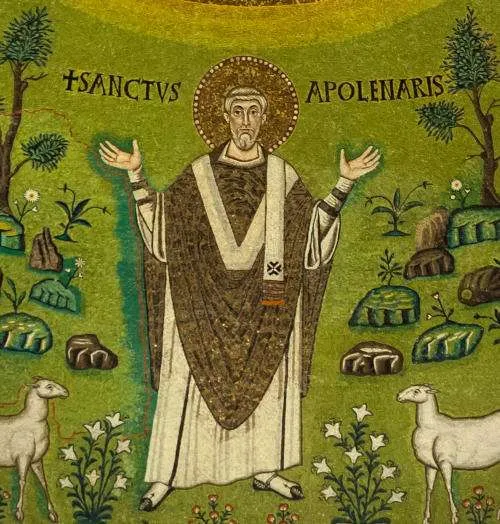
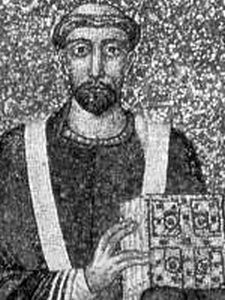
On May 9, 549, Bishop Maximian of Ravenna, located in modern-day Italy, dedicated a church to Saint Apollinaris. This church, one of the few Italian churches with a treasure of Byzantine art, still stands. Its greatest treasure, however, is the remains of the saint himself. Though little is certain about his life, he has been honored for centuries as the first bishop of Ravenna, and many have sought his intercession.

According to one tradition, Apollinaris was born in Antioch, in modern-day Turkey. Saints Paul and Barnabas preached in Antioch (Acts 11:26), and it was there that followers of Christ were first referred to as Christians. The Apostolic Constitutions, a document from the late fourth century, also notes that Saint Peter preached in Antioch and served as the town’s first bishop before becoming the first bishop of Rome. It’s possible that while in Antioch, Apollinaris was converted to the faith by Saint Peter, or even earlier by Jesus Himself, being one of the seventy-two sent out on mission by Jesus. Regardless, tradition states that Saint Peter ordained Apollinaris as a bishop and sent him to Ravenna to serve as that city’s first bishop.

In Ravenna, Bishop Apollinaris preached the Good News, attracting many converts. Like many early disciples, he was also a miracle worker. At that time, Ravenna was an important port city for the Roman Empire, replete with buildings, roads, aqueducts, bathhouses, and marketplaces. The predominant religion was that of the Roman Empire, honoring various pagan gods and goddesses with temples and rituals. Therefore, when Bishop Apollinaris arrived in Ravenna and began to preach the Gospel of Jesus Christ, many perceived Christianity as a direct threat to their way of life and beliefs. Citizens who opposed him beat him and drove him out of the city. Tradition holds that he was found close to death on the seashore, where fellow Christians rescued and hid him.

Despite this persecution and determined to complete his mission, Bishop Apollinaris returned to Ravenna. This time, he was captured, forced to walk on burning coals, and expelled from the city once again. He then traveled about sixty miles to the west to the town of modern-day Emilia-Romagna, where he continued his mission and won over many converts.

Undeterred from converting the people of Ravenna, Bishop Apollinaris returned for a third time, only to face great resistance again. This time, it is said that he was cut with knives and had scalding water poured on his wounds. After his persistent preaching of the Gospel, his abusers silenced him by beating his mouth with rocks. After several days chained in a dungeon, he was not only ejected from the city again but also placed on a ship to Greece, effectively ridding the citizens of Ravenna of him.

In Greece, Bishop Apollinaris continued his ministry of preaching and performing miracles. However, after winning over many converts, the local pagan priests complained that his presence was disrupting their communication with the gods and goddesses through their oracle. As a result, Bishop Apollinaris was placed on a ship and returned to Ravenna.

By the time Bishop Apollinaris returned to Ravenna, Vespasian was the Roman Emperor. While Emperor Vespasian did not engage in an empire-wide persecution of Christians, he was aware of the complaints against them. Legend has it that to address these new “pagans,” who were called Christians, Vespasian ordered the exile of certain Christians, including Bishop Apollinaris. After being dragged out of the city a fourth time, Apollinaris was beaten in Classis, just south of Ravenna, and again left for dead. Whether he died as a result of this final beating is unknown, but he is nonetheless honored as a martyr on the Church’s liturgical calendar. Saint Apollinaris is believed to have served as the first Bishop of Ravenna for twenty to twenty-six years. Other historical evidence from the seventh century suggests that he may have actually lived a century later, dying during the persecution of Emperor Septimius Severus in the late second century.

Though reliable data falls short in determining the historical accuracy of the legends attributed to Saint Apollinaris, the fact of his veneration has been well known at least since the sixth century, when the aforementioned Basilica in Ravenna was first dedicated. Popes in the sixth and seventh centuries encouraged his veneration. Other churches were built in his honor in Rome, Bologna, France, and Germany. Today, his intercession is still sought, and his relics are revered in the Basilica of Sant’Apollinare Nuovo, Ravenna.

As we honor this early bishop of the Church, consider the fact that his work of sharing the Gospel continues to have an effect upon many people. First, the converts he made helped spread the Gospel in the early Church, and the Church is what it is today because of such heroic saints. Second, his witness to the Gospel continues to inspire many who hear his story and become inspired by his life. As you seek his intercession today, commit to following his example. When you face opposition to the Gospel or hostility from the modern secular world towards your faith, stand strong and strive to remain strong in the faith, bearing witness in every way you are called.

Source: https://mycatholic.life/saints/saints-of-the-liturgical-year/july-20—saint-apollinaris-bishop-and-martyr/

Saint Apollinaris, Bishop and Martyr Read More »

Luke 10:38-39

Serving with Generosity

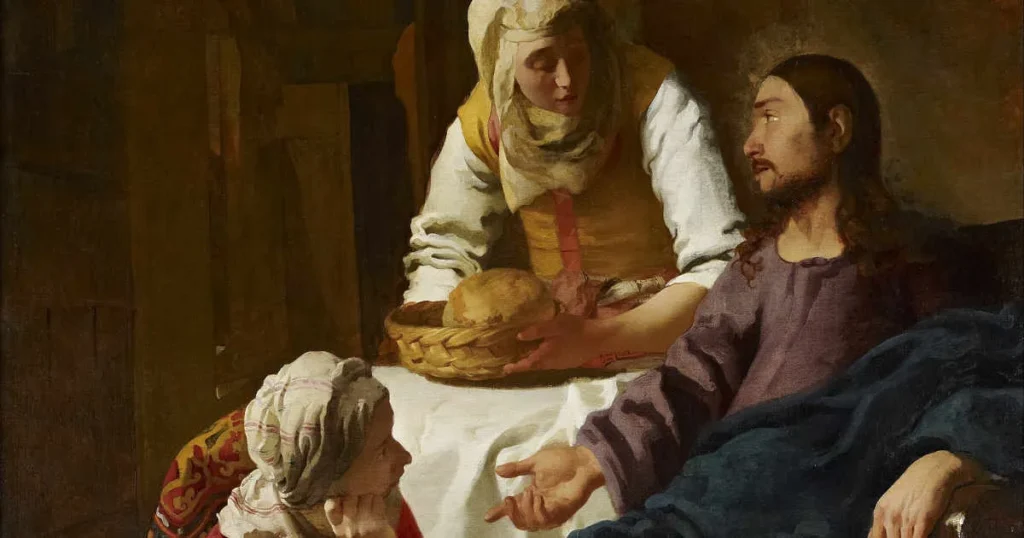
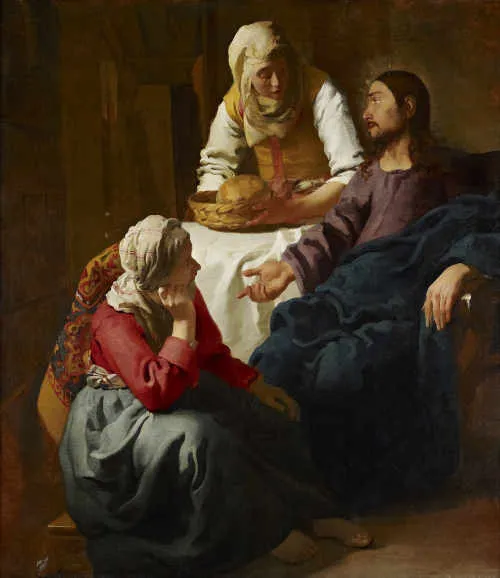
Jesus entered a village where a woman whose name was Martha welcomed him. She had a sister named Mary who sat beside the Lord at his feet listening to him speak.

Reflection:

It’s interesting that it was Martha who welcomed Jesus, but it was Mary who sat at His feet listening to Him. As the story goes on, we discover that Martha took her responsibility of hospitality seriously; she was very busy preparing a meal. But it appears that Mary needed a different form of hospitality from our Lord Himself. As Martha prepared to feed Jesus so as to care for His physical hunger, Mary sought to be fed by our Lord so as to feed her spiritual hunger. And interestingly, it was the generosity of Martha who was diligent in preparing the meal that made it possible for her sister to receive the spiritual food she longed for.

When we read this story, we can easily become critical of Martha because she complained to Jesus about her sister. It is easy to see Martha’s frustration in her words, “Lord, do you not care that my sister has left me by myself to do the serving? Tell her to help me.” And though Martha may have been a little impatient, Jesus’ response to her was gentle and corrective. “Martha, Martha, you are anxious and worried about many things. There is need of only one thing. Mary has chosen the better part and it will not be taken from her.” What was that “better part?” It was Mary’s prayerful attentiveness to Jesus. She was hungry for His teaching, and Jesus offered it to her in a very personal and loving way. And though this image of Mary before Jesus is a beautiful image to ponder and to use as a model of our own prayer, there is also something important to be said about Martha’s role in making Mary’s prayer possible.

Because Martha was diligent in taking care of the duties of hospitality, Mary felt the freedom to sit at Jesus’ feet. Perhaps the ideal response from Martha would have been to notice that Mary was being spiritually fed by our Lord and to rejoice in that fact, giving her the continued freedom to sit at Jesus’ feet. If Martha would have realized this, then she would have continued working in the background so that her sister could continue listening to Jesus. But even though Martha did interrupt this sacred moment for her sister, the fact remains that her initial diligence in taking care of preparing the meal did give Mary some time alone with Jesus.

In a similar way, we will all be given various opportunities in life to take care of the daily mundane tasks that are needed within a family or community. It is easy to fall into the trap of thinking that unless everyone does their equal part, then things are not fair. But being “fair” should not be our focus. True charity, especially within the family, means that, first and foremost, we look for opportunities to better the lives of those around us. For example, spending extra time cleaning a home so that others can enjoy it more adds much to family life. Or spending hours preparing a nice meal for family or friends may afford everyone the opportunity of time well spent together. These are only a couple of the countless ways that our diligence and generosity toward others is fruitful, especially within family life.

Reflect, today, upon these two women and the unique calling they each were given at the time of Jesus’ visit to their house. One was called to be fed by our Lord as she sat at His feet. The other was called to work hard so as to make it easier for her sister to receive that spiritual nourishment. Know that both of these callings are important. For that reason, if God calls you to be more like Martha at times, rejoice in that fact and work hard at serving in many ways. If God calls you to be more like Mary at times, then rejoice in those moments and sit prayerfully at the feet of our Lord, being fed by His holy Words.

Source: https://catholic-daily-reflections.com/2025/07/19/serving-with-generosity/

Luke 10:38-39 Read More »

Pope Saint Symmachus

Profile

Symmachus was the son of Fortunatus. He was baptized in Rome, Italy. He was the Archdeacon under Pope Anastasius II. He chosen 51st pope in 498.

An anti-pope, Laurentius, was elected the same day by a minority with Byzantine sympathies and with the support of Emperor Anastasius; King Theodoric the Great supported Symmachus who ascended to the throne. Any sort of campaigning for the papacy during the life of a sitting pope was outlawed by canon law. In 501, Senator Festus, a supporter of Laurentius, accused Symmachus of assorted crimes; the pope refused to answer the charges, claimed that secular rulers had no jurisdiction over a pope, and the Synodus Palmaris of 23 October 502 confirmed this decision. The schism with Laurentius continued for years, and at one point Theodoric installed the anti-pope in the Lateran Palace and proclaimed him the legal pontiff; Theodoric later decided that Laurentius was too Byzantine, and had him removed.

During all the turmoil, Symmachus spent largely to support bishops of Africa who were persecuted by the Arian Vandals. He also gave aid to northern Italians who suffered from the invasions of barbarians.

Born

  • in Sardinia, Kingdom of Odoacer (part of modern Italy)

Papal Ascension

  • 22 November 498

Died

  • 19 July 514 in Rome, Ostrogothic Kingdom (in modern Italy) of natural causes

Canonized

  • Pre-Congregation

Source: https://catholicsaints.info/pope-saint-symmachus/

Pope Saint Symmachus Read More »

Matthew 12:14-16

A Different Kind of Messiah

The Pharisees went out and took counsel against Jesus to put him to death. When Jesus realized this, he withdrew from that place. Many people followed him, and he cured them all, but he warned them not to make him known.

Reflection:

This passage goes on to say that Jesus withdrew to a more deserted place to fulfill the prophecy of Isaiah the Prophet (Isaiah 42:1–4). That prophecy is the first of what is referred to as “The Songs of the Suffering Servant.” In these songs or poems of Isaiah, the Messiah is presented to us as one who would be sent on a mission from God, would suffer injustice for the sake of others, would be rejected, and ultimately be vindicated and exalted. The mission of the Suffering Servant was to bring justice and salvation to all, including to the Gentiles.

At that time, the idea of a messianic king was still prominent in the minds of many. They anticipated the coming of a messiah who would be a political leader and would lead the people of Israel out of oppression, making them a free, prosperous and powerful nation. But Jesus acts in the opposite manner. Instead of raising up an army to combat the evil intentions of the Pharisees and to overthrow the Romans, Jesus withdrew from them and invited people to come to Him for healing and to receive His teachings.

Jesus perfectly fulfills the prophecy of Isaiah by becoming the Suffering Servant. And because His messianic role was much different than what many people had anticipated, Saint Matthew points us to the Old Testament prophecy of Isaiah as a way of clearly showing that Jesus truly was the promised Messiah. He was just not the form of messiah that many expected. He was One Who was humble and gentle of heart. He was One Who would redeem people by the Blood of His Cross. And He was One Who would extend salvation to all people, not only the people of Israel.

One lesson this teaches us is that even today we can have false expectations of God. It is easy for us to set forth our own idea of what God should do and what true justice demands. But we also read in Isaiah, “For my thoughts are not your thoughts, neither are your ways my ways, says the Lord. For as the heavens are higher than the earth, so are my ways higher than your ways and my thoughts than your thoughts” (Is. 55:8–9).

Just as it must have been difficult for the people of Israel to come to accept the promised Messiah as a servant Who suffers and Who redeems all people through that suffering, so it is often difficult for us to accept our Lord as He is. It is difficult to shed our own ideas of what we want God to do and this is especially difficult when He calls us to share in His own suffering and servanthood. To serve, suffer, sacrifice our lives, and the like can be difficult to accept. But this is the way of our Lord—it is the way of the Suffering Servant of God.

Reflect, today, upon your own expectations of God. Do you have a long list of things that you think God should do? Do you pray for that list of your ideas, thinking that if you only ask enough, God will grant your requests? If your requests flow from His perfect will, then praying for them in faith will bring them about. But if they flow more from you and your own ideas of what God should do, then all the prayers in the world will not bring them to be. If this is your struggle, then try to start anew by turning your eyes to the Servant Who Suffers for the salvation of all. Reflect upon the fact that God’s thoughts and ways are most often very far above your own thoughts and ways. Try to humble yourself before the Suffering Servant and abandon all ideas that do not flow from His Heart.

Source: https://catholic-daily-reflections.com/2025/07/18/a-different-kind-of-messiah-3/

Matthew 12:14-16 Read More »

Saint Camillus de Lellis, Priest

1550–1614; Patron Saint of the sick, hospitals, hospital workers, nurses, and nursing associations; Invoked against the vice of gambling; Canonized by Pope Benedict XIV on June 29, 1746

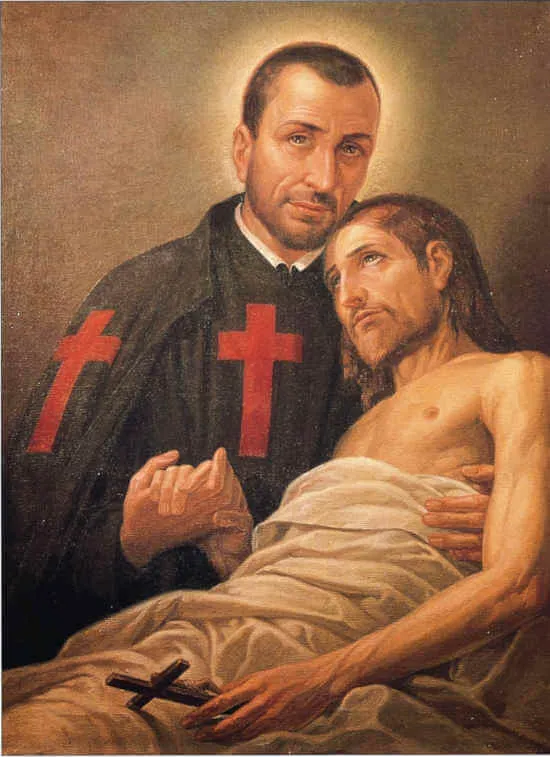
 Camillus was born in the Kingdom of Naples. His mother was in her late forties when he was born, and his father was a soldier who was often away from home. Before his birth, his mother had a dream that she would give birth to a son who would wear a red cross on his chest and lead others with the same cross. However, Camillus’ mother died when he was young, leaving him mostly on his own. In his teenage years, Camillus joined his father on military campaigns where he fell into the vice of gambling and constantly experienced destitution. He wounded his leg on one campaign, which never properly healed.

In Camillus’ mid-twenties, his military regiment was disbanded, and he found his way to a Franciscan friary where he obtained menial work. One day, a saintly friar spoke with him, saying, “God is everything. The rest is nothing. One should save one’s soul which does not die.” This had a profound impact on Camillus. Shortly afterward, he fell on his knees and prayed, “Lord, I have sinned. Forgive this great sinner! How unhappy I have been for so many years not to have known you and not to have loved you. Lord, give me time to weep for my sins for a long time.” After this initial conversion, he applied to the friars for admission as an apprentice, but his application was rejected due to his unhealed leg wound.

Since the wound on his leg was deemed incurable, Camillus traveled to Rome and found work at Saint James Hospital for the Incurable. There, he received treatment while caring for the sick and dying. He also began living a life of deep prayer and penance.

At that time, hospitals for the dying were not as they are today. Many hospital workers were society’s rejects. Caring for the sick and dying was considered a lowly and undesirable task, and many did it only to make a meager living, not as a sincere act of mercy. Camillus’s newfound faith and penitential life made him stand out in the hospital. He became such an inspiration that he was made the hospital’s director. As director, he tried to form a lay association of charitable hospital workers, but his efforts proved fruitless. Fortunately for him, he met Saint Philip Neri, who became his spiritual director. Saint Philip encouraged him in his work and suggested that he become a priest to bring his calling to fruition. Thus, with the help of Saint Philip, he found a benefactor, completed his theological studies, and was ordained a priest at the age of thirty-four.

As a priest, he and his group of merciful hospital workers began serving the sick at Holy Spirit Hospital in Rome. They made quite an impression. They served not for money or because they could find no other work. They served out of charity, according to the vocation given to them by God. In addition to caring for those at the hospital, they ministered to the homebound and to everyone they found sick or dying. In 1586, after Camillus had been a priest for only two years, Pope Sixtus V formally approved his new congregation, named the Order of Clerks Regular, Ministers of the Infirm (M.I.), later known as the Camillians. In addition to taking the traditional three vows of poverty, chastity, and obedience, they took a fourth vow of “service to the sick poor, including the plague-ridden, in their corporeal and spiritual needs, even at risk to their own life, having to do this out of sincere love for God.” In 1591, Pope Gregory XV raised the congregation to the level of a Religious Order. They wore a black habit with a large red cross over their chest, just as his mother had dreamt before he was born.

In the years that followed, Father Camillus and his new order of ministers to the infirm expanded to other hospitals and towns, cared for those suffering from various plagues, and tended to soldiers wounded in battle. By the time of Camillus’ death, the order had expanded throughout Italy and even into Hungary. Though his wounded leg remained a source of much suffering throughout his life, he never allowed it to deter him from his work, even if he had to crawl to a patient’s bedside. His holiness was evident, as were the gifts of prophecy and healing. After his death, religious sisters were formed according to his order’s charism, as were lay associations.

In his service of the poor and sick, Saint Camillus was serving Christ. When he ministered to those who were suffering the most, with the most repulsive infirmities, he was drawn to them as he was drawn to the suffering Christ. His tenderness and compassion did much for their physical well-being, but it did much more for their eternal souls.

As we honor this great founder and saintly convert, consider the contrast we find in his life. He was mostly abandoned and fell into grave sin as a youth, but God touched him and transformed him, doing great things through his life. As you consider his life, consider also your own weaknesses and sins and know that there is always hope for you and for others, and that God can transform your life in glorious ways, doing great things in and through you.

Source: https://mycatholic.life/saints/saints-of-the-liturgical-year/july-14—saint-camillus-de-lellis-priest/

Saint Camillus de Lellis, Priest Read More »