Author name: Sani

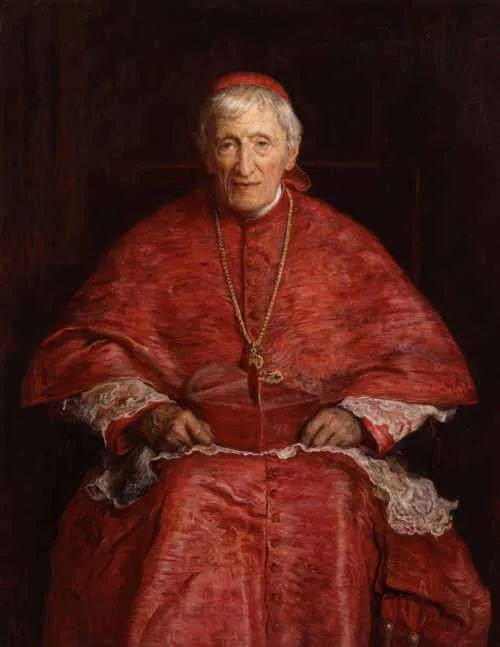
Saint John Henry Newman

1801–1890; Patron Saint of Newman Centers; Canonized by Pope Francis on October 13, 2019

John Henry Newman, born in London, England, was the eldest of three sons and had three sisters. His father was a banker, and his mother’s family were engravers and papermakers. His early education was given by his Anglican mother who was descended from French Calvinist Huguenots. As a child, he became well versed in the Bible, although his religious convictions were not definitive. At the age of seven, he was sent to Great Ealing School, a boarding school considered to be the best private school in England at that time. John was a serious student who loved to read, devouring everything from Arabian tales to philosophical and theological works. He especially loved stories that sparked his imagination.

When John Henry was fifteen, during his final year at Ealing, he went through a profound conversion. Of that conversion, he later wrote, “I fell under the influences of a definite creed, and received into my intellect impressions of dogma, which, through God’s mercy, have never been effaced or obscured” (Apologia #3). His conversion came through reading Evangelical books in which he came to a personal conviction about eternal glory. That year he continued to read and was introduced to Saint Augustine and other Church Fathers, though most of his reading was in Evangelical theology. His reading even led him to conclude that the “Pope was the Antichrist predicted by Daniel, St. Paul, and St. John.” Finally, he sensed that his life mission would require him to remain celibate, perhaps so he could be a missionary or for some other reason.

After his personal conversion, John Henry continued his studies at Trinity College, Oxford. Because he struggled, he graduated without distinctions. Desiring to continue with his intellectual pursuits, he began working as a private tutor and preparing for a fellowship at Oriel College, Oxford, which he received in 1822 at the age of twenty-one. In 1824, he was ordained an Anglican deacon and became a priest in 1825. After his Anglican ordination, he became curate of Saint Clement’s Church, Oxford. As curate, he assisted the parish priest with various pastoral duties, which gave him time to reflect upon his theological concepts within the context of real life with real people. His time as a curate won him much respect, and in 1828, he was appointed Vicar of the University Church of Saint Mary the Virgin, Oxford. He remained in this position until 1843.

In the early 1830s, some leaders within the Church of England were growing increasingly concerned about what appeared to be a laxity of faith among the Anglican community, as well as state interference in the Anglican Church. On July 14, 1833, an Anglican priest named John Keble preached a sermon at the University of Oxford that caught the interest of a number of Anglican leaders, including John Henry Newman. This sermon sparked what became known as the Oxford Movement. Over the next several years, John Henry and others began to write and publish “Tracts for the Times.” These tracts were a series of pamphlets that defended Anglican apostolic succession and argued for a return to the liturgical traditions with a renewed interest in the Church Fathers. Little by little, however, his writings appeared to sound more like Catholic teaching than Anglican. Though this caused controversy, John Henry continued to develop his doctrinal convictions.

It was Newman’s study and articulation of the teachings of the Church Fathers that had the biggest impact upon him. In 1842, he retired from his positions at Oxford and retreated to Littlemore, where he spent the next few years living a quasi-monastic life of prayer, study, and writing. After a thorough study of the Church Fathers and the development of the doctrines he deeply believed in, he was convinced that the Roman Catholic Church was the Church instituted by Christ. Despite the shock and disapproval of those close to him, on October 9, 1845, he was received into the Catholic Church in a small ceremony at Littlemore by Blessed Dominic Barberi. He then traveled to Rome for further studies, was ordained a Catholic priest in 1847, and returned to Birmingham, England, to form the Birmingham Oratory of St. Philip Neri in 1848.

In the years that followed, Father Newman helped found the Catholic University of Ireland and published the Apologia Pro Vita Sua, a theological defense of his personal conversion. He also published several other works, including The Idea of a University, in which he especially articulates the purpose of a university. He argued that a university was not just to teach useful knowledge but to cultivate the mind in its pursuit of knowledge, ultimately arriving at “a great and firm belief in the sovereignty of Truth.” It is for this reason that Catholic chaplaincies at colleges are called Newman Centers.

Before his death, Father Newman received two important honors. In 1877, he was given an honorary fellowship at Trinity College as a way of reconciling him with Oxford and his former colleagues. An even greater honor came in 1879 when Pope Leo XIII made him a cardinal, despite the fact that he was not a bishop.

Saint John Henry Newman could have lived a comfortable life as an Anglican priest and scholar. However, he chose to follow the convictions of faith that God planted in his mind and heart.

As we honor Saint John Henry Newman, ponder his process of personal discovery and conversion. We all need ongoing conversion and transformation. Allow Saint John Henry Newman’s courage to inspire you to always seek out the fullness of the truth and go wherever it leads you.

Source: https://mycatholic.life/saints/saints-of-the-liturgical-year/saint-john-henry-newman/

Saint John Henry Newman Read More »
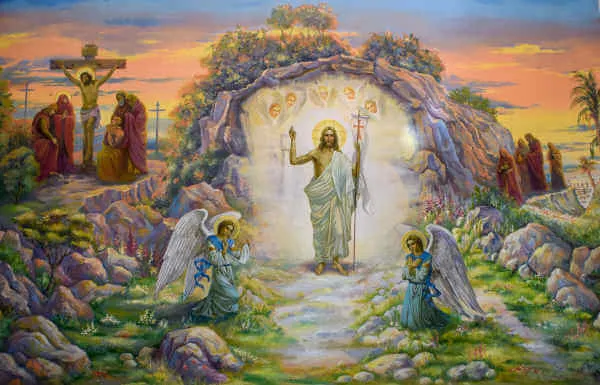
Luke 11:29-30

A Sign From God

“This generation is an evil generation; it seeks a sign, but no sign will be given it, except the sign of Jonah. Just as Jonah became a sign to the Ninevites, so will the Son of Man be to this generation.”

Reflection:

Do you ever find yourself looking for signs from God? Often when we go through life, navigating through the ups and downs we all experience, we can easily find ourselves looking for signs from God about what we should do about this or that. And though God certainly communicates to us at times through special graces that are signs from Heaven, the passage above gives clarity to what sign we must be most attentive to.

The simple message in this Gospel passage from our Lord is that we must discover the meaning of the most profound sign ever given and use that as the foundation of all our decisions in life. Jesus’ life, death, and resurrection were not only the source of eternal life, they are also the clearest sign we need as we make all of our decisions in life.

A sign is some action that reveals a deep and hidden mystery. One mystery that Jesus’ life, death and resurrection reveals is that if we are to share in the new life won for us by His Cross, then we must follow the example He set by living a life of selfless sacrifice, laying down our lives for others, so that they will discover and embrace the new life of Christ’s Resurrection. Practically speaking, if you find yourself looking for answers in life, seeking signs from God about what you should do at times, then turn your eyes to the life of Christ and ponder ways in which you can more fully imitate His life in every daily practical decision you make. This is true whether you are discerning some important decision in life or some small practical decision. 

It is common to engage in such a discernment by looking at ourselves in a more selfish way. It’s difficult to move away from this line of thinking, but if we are to use the “sign” of the Son of Man, then we will discern our life decisions very differently. When we use the life, death and resurrection of our Lord as the source of our discernment and decision making in life, then we will end up making decisions that imitate His selfless sacrifice of love. So if you are faced with a decision, you will not ponder what is easier or what you prefer; rather, you will ponder what is more selfless and best for others. What is it that best imitates the sacrificial love of Jesus?

Reflect, today, upon any decision you are trying to make. Then reflect upon how you are going about this decision. Do you use the witness Jesus gave to us as the foundation of your discernment? Do you reflect upon how you can lay your life down as a sacrificial gift for others? Do you look at love from the point of view of the Cross of our Lord and strive to imitate His glorious and selfless dedication to the salvation of those whom He loves? Seek to imitate our Lord, using the witness of His actions as the foundation of all of your discernment and decisions in life, and you will have discovered the only true sign you need to navigate the challenges of life.

Source: https://catholic-daily-reflections.com/2025/10/12/a-sign-from-god-4/

Luke 11:29-30 Read More »

Twenty-Eighth Sunday in Ordinary Time

First Reading 2 Kings 5:14-17

Naaman went down and plunged into the Jordan seven times
at the word of Elisha, the man of God.
His flesh became again like the flesh of a little child,
and he was clean of his leprosy.

Naaman returned with his whole retinue to the man of God.
On his arrival he stood before Elisha and said,
“Now I know that there is no God in all the earth,
except in Israel.
Please accept a gift from your servant.”

Elisha replied, “As the LORD lives whom I serve, I will not take it;”
and despite Naaman’s urging, he still refused.
Naaman said: “If you will not accept,
please let me, your servant, have two mule-loads of earth,
for I will no longer offer holocaust or sacrifice
to any other god except to the LORD.”
 

Responsorial Psalm Psalms 98:1, 2-3, 3-4

R. (cf. 2b) The Lord has revealed to the nations his saving power.
Sing to the LORD a new song,
for he has done wondrous deeds;
his right hand has won victory for him,
his holy arm.
R. The Lord has revealed to the nations his saving power.
The LORD has made his salvation known:
in the sight of the nations he has revealed his justice.
He has remembered his kindness and his faithfulness
toward the house of Israel.
R. The Lord has revealed to the nations his saving power.
All the ends of the earth have seen
the salvation by our God.
Sing joyfully to the LORD, all you lands:
break into song; sing praise.
R. The Lord has revealed to the nations his saving power.

Second Reading 2 Timothy 2:8-13

Beloved:
Remember Jesus Christ, raised from the dead, a descendant of David:
such is my gospel, for which I am suffering,
even to the point of chains, like a criminal.
But the word of God is not chained.
Therefore, I bear with everything for the sake of those who are chosen,
so that they too may obtain the salvation that is in Christ Jesus,
together with eternal glory.
This saying is trustworthy:
If we have died with him
we shall also live with him;
if we persevere
we shall also reign with him.
But if we deny him
he will deny us.
If we are unfaithful
he remains faithful,
for he cannot deny himself.

Alleluia 1 Thessalonians 5:18

R. Alleluia, alleluia.
In all circumstances, give thanks,
for this is the will of God for you in Christ Jesus.
R. Alleluia, alleluia.

Gospel Luke 17:11-19

As Jesus continued his journey to Jerusalem,
he traveled through Samaria and Galilee.
As he was entering a village, ten lepers met him.
They stood at a distance from him and raised their voices, saying,
“Jesus, Master! Have pity on us!”
And when he saw them, he said,
“Go show yourselves to the priests.”
As they were going they were cleansed.
And one of them, realizing he had been healed,
returned, glorifying God in a loud voice;
and he fell at the feet of Jesus and thanked him.
He was a Samaritan.
Jesus said in reply,
“Ten were cleansed, were they not?
Where are the other nine?
Has none but this foreigner returned to give thanks to God?”
Then he said to him, “Stand up and go;
your faith has saved you.”

Source: https://bible.usccb.org/bible/readings/101225.cfm

Twenty-Eighth Sunday in Ordinary Time Read More »

Saint John Leonardi, Priest

1541–1609; Patron Saint of pharmacists; Canonized by Pope Pius XI on April 17, 1938

The early sixteenth century saw the beginning of the Protestant Reformation, which resulted in religious and political chaos in northern Europe. Following the revolt of Martin Luther and others, the Catholic Church took a good look at itself and began a thorough process of internal reform. The foundation for this reform was laid by the Council of Trent during the years 1545–1563. Additionally, the Holy Spirit sparked a spiritual renewal of piety and personal devotion among the faithful, as well as the formation of several new religious orders, such as the Jesuits, Oratorians, Ursulines, Theatines, Barnabites, Somaschi Fathers, and the Discalced Carmelites. Among the newly formed religious orders was the Clerks Regular of the Mother of God, founded by today’s saint, Saint John Leonardi.

Giovanni (John) Leonardi was born into a middle-class family in the small town of Diecimo, Republic of Lucca, modern-day Italy. When John was four, the Council of Trent held its first session, and when he turned twenty-two, it held its last. Around the age of seventeen, John began studying to become a pharmacist, a well-respected occupation at that time. After ten years of study, he became certified and worked as a pharmacist’s assistant for the next few years. However, the work of providing medicine for the body soon deepened a desire he had held for years—the mission of providing spiritual medicine for the soul as a priest. After a few years of theological preparation, John was ordained a priest in 1572 at the age of thirty-one.

At the heart of Father Leonardi’s personal convictions was a desire to enter into a personal relationship with Christ. He not only lived this conviction, he also promoted it within his priestly ministry. After he was ordained, he served in his local parish in Lucca where he worked with youth and visited the sick and imprisoned. His devotion to Christ and desire for personal and ecclesiastical reform drew a group of young men whom he spiritually directed and formed in the faith. By 1574, the community of young men led to the formation of a group that would later evolve into a new diocesan congregation called the Clerks Regular of the Mother of God of Lucca. They rented the church of Santa Maria della Rosa, where a community life took shape.

Because the Council of Trent had recently concluded, mandating various reforms, a newly inspired religious order might seem like a good way to help implement those reforms. Indeed, it was! However, Father Leonardi and his companions soon discovered that not everyone in Lucca was ready for reform, and some saw the formation of this new congregation as a threat. Therefore, other religious and even civil authorities began to oppose it. Opposition became so fierce that Father John spent much of the rest of his life in exile from Lucca, by mandate of the local government. Change and internal Church reform are difficult. Father John pressed on, however, and eventually gained wider support, including support from the local bishop and the pope.

In 1583, the new congregation was canonically established by the Bishop of Lucca with the approval of Pope Gregory XIII. They were not yet a formal religious order, so they only took simple vows. They were, however, encouraged in their mission and worked to implement the reforms of the Council of Trent, including forming the Confraternity of Christian Doctrine within Lucca, just as many other saintly reformers had been doing in other dioceses.

Over the next two and a half decades, bishops, cardinals, and popes called upon Father Leonardi to assist with the reform of the Church, including other religious orders. Most of his later years were spent in Rome, due to ongoing opposition in Lucca. In Rome, he worked with the future Saint Philip Neri, founded a seminary for the Congregation for the Propagation of the Faith, and promoted Forty Hours Devotion and frequent Communion. In 1606, a serious plague ravaged Rome, and Father John contracted it while ministering to the sick. He remained sickly for the next few years, dying in 1609. In 1621, Pope Gregory XV elevated the Clerks Regular of the Mother of God of Lucca to the status of a religious order, enabling them to take formal vows. The congregation continues its good work today.

Saint John Leonardi was inspired by the Holy Spirit to assist in the reform of the Church and to foster a deeply personal relationship with Christ, especially through adoration of the Blessed Sacrament, frequent Communion, and good catechesis. It often happens that the work the Holy Spirit inspires in one person is then opposed by those who do not listen to the promptings of that same Spirit. The life of Saint John Leonardi displays a prime example of this conflict. His perseverance throughout lends more credence to his holiness and divine mission.

As we honor this religious founder and confessor, ponder the fact that God’s will is not always embraced by the world with open arms. Therefore, when we act as instruments of God’s will and Truth, others will not always embrace us. This opposition can, at times, lead to discouragement. As you ponder Saint John’s life today, allow his fidelity and perseverance in the face of persecution to inspire you to press on with the mission God has given to you. Reject discouragement, pray for courage, and seek to implement God’s will in your life.

Source: https://mycatholic.life/saints/saints-of-the-liturgical-year/october-9—saint-john-leonardi/

Saint John Leonardi, Priest Read More »

Luke 17:11-13

Praying for More than Our Needs

As Jesus continued his journey to Jerusalem, he traveled through Samaria and Galilee. As he was entering a village, ten lepers met him. They stood at a distance from him and raised their voices, saying, “Jesus, Master! Have pity on us!” 

Reflection:

This story begins very well for all ten of these lepers. For nine of them, it ends tragically. For one, it ends in an even better and more glorious way than it began.

The lepers represent us all. Their illness was a symbol of all sin and the consequences of sin. When the disease began, the lepers began to experience the effects of their disease. Discolored and thick dry skin, sores, and rashes would set in. Once detected, each leper was removed from the community to stop the spread of the disease and was only free to associate with other lepers. They no longer could gather freely with their loved ones as the lepers entered isolation and shame. Analogously, all sin has similar effects. Sin causes pain within our souls as we discover the growing wounds it causes. Sin affects our relationships and our ability to freely relate to those whom we love.

The initial cure for sin is simple. We cry out, “Jesus, Master! Have pity on me!” But that is only the first step. By curing the lepers, Jesus was showing us that He had power over our sin. He could forgive us and will forgive us when we seek His mercy. But forgiveness will end in tragedy if it does not lead us to faith and to a following of the will of God with zeal and determination. If we take the forgiveness of sins for granted, then we will be in an even more miserable state than before. The nine lepers who failed to return and give thanks to God represent those who do not convert their lives when touched by God’s merciful hand.

This story highlights the importance of our response to God when He does touch us. We must glorify God with a loud voice, fall on our knees before Him and express our deepest gratitude. When the one leper does this, Jesus says to him, “Stand up and go; your faith has saved you.” That mercy from our Lord was a mercy that touched his soul. It imparted the gift of faith and enabled this man to go forth and be healed with eternal graces.

Too often we turn to God in prayer only when we have a problem. Then, once the problem is taken care of, we pay little to no attention to our Lord. God’s role in our lives is not to fix our problems so that we can then go about our daily lives as normal. His mercy must evoke ongoing and profound gratitude. Gratitude to God is nothing other than an acknowledgement of the truth. We owe everything to God. Without Him, we are nothing. We are dead in our sins. Just one leper realized this and was blessed with the gift of faith that saved not only his body, but also his soul.

Reflect, today, upon the ways in which you turn to God in prayer. It is good to come to Him with your needs and problems. It is good to cry out “Jesus, Master! Have pity on me!” It is good to come to Him as the Physician of your soul and the source of healing you need. But that is not enough. In fact, if you stop there in your life of prayer, you will end in a most miserable state. You will be using God for your selfish advantage. Reflect upon whether you are able to take the next and most important step in faith. Do you come to Him when all is well? Do you praise Him with all your might for all that He has done for you? Do you fall on your knees before Him with the deepest gratitude in your heart? Reflect upon your prayer and seek to imitate this one leper. If you do, your faith will also save you and our Lord will invite you to rise and go forth, healed in the truest way possible.

Source: https://catholic-daily-reflections.com/2025/10/11/praying-for-more-than-our-needs/

Luke 17:11-13 Read More »

Saint John XXIII, Pope

1881–1963; Patron Saint of papal delegates; Canonized by Pope Francis on April 27, 2014

Angelo Giuseppe Roncalli was born in Sotto il Monte, a small village in the province of Bergamo, Italy. He came from a materially poor but spiritually rich family of tenant farmers who worked in vineyards and cornfields and who tended cattle. He was the fourth of thirteen children. As a child, he received an excellent education from his parish priest. He was confirmed at the age of eight and received his First Holy Communion a month and a half later. At the age of eleven, he began his eight years at a high school seminary in Bergamo. During this time, he also became a member of the Secular Franciscans. When he was fourteen, he began keeping a journal that he kept throughout his life and which was published after his death. One journal entry at the age of eighteen reflected, “And you, O God…opened my eyes to this light which sheds its radiance around me, you created me. So you are my Master and I am your creature. I am nothing without you, and through you I am all that I am. I can do nothing without you; indeed, if at every moment you did not support me I should slip back whence I came, into nothingness.”

At the age of nineteen, given Angelo’s strong potential for higher studies and priestly ordination, he received a scholarship to study at the Apollinaris Seminary in Rome. Shortly after Angelo arrived in Rome, his brother was drafted into military service. Because his brother was needed at home, Angelo volunteered to take his place and served for one year. After returning to Rome, he completed his studies for the priesthood, earning a doctorate in theology. He was ordained a priest on August 10, 1904, and completed studies in canon law the following year.

In 1905, Father Roncalli was appointed as the secretary to the Bishop of Bergamo and assigned to teach history and patrology in the Bergamo seminary. He served in these roles for the next ten years, assisting the bishop in numerous ways. He participated in a diocesan synod, helped edit the diocesan journal, La Vita Diocesana, assisted with pilgrimages, and engaged in various social works, about which his bishop was passionate. In 1910, he received the additional assignment of the pastoral care of the Catholic Action movement that sought to involve the laity in timely social needs within the Church and wider community. After ten years as a priest, he wrote in his journal, “My dominant thought, in my joy of having accomplished ten years as a priest, is this: I do not belong to myself, or to others; I belong to my Lord, for life and death. The dignity of the priesthood, the ten years full of graces which he has heaped upon me, such a poor, humble creature—all this convinces me that I must crush the self and devote all my energies to nothing else but work for the Kingdom of Jesus in the minds and hearts of men.”

In 1915, the year after the start of World War I, Father Roncalli was drafted into the Italian army, first as a medic, then as a chaplain for soldiers. Upon completing his service in 1918, he returned to Bergamo where he opened a hostel for students, taught in the seminary, and became a chaplain and spiritual director. 

In 1921, Father Roncalli’s life moved from service of his local church to the universal church. Pope Benedict XV called him to Rome and appointed him as the President for Italy of the central council of the Society for the Propagation of the Faith. In that role, he made many pastoral visits to the Italian dioceses, where he helped to organize missionary activity. In 1925, he was named a bishop by Pope Pius XI and assigned as the Apostolic Visitor to Bulgaria. He chose as his episcopal motto, Oboedientia et Pax (Obedience and Peace), which summarized his ministry for the rest of his life.

After nine years of service in Bulgaria, Bishop Roncalli was appointed as Apostolic Delegate in Turkey and Greece, where he not only cared for the Catholics but also entered into ongoing dialogue with Muslims and Eastern Orthodox. During World War II, he became especially concerned for the welfare of Jews and, according to some estimates, personally assisted several thousand Jews in escaping the Holocaust by providing them with forged baptismal certificates and visas in order to help get them to Palestine. Years later, his actions were honored by the State of Israel when, in 2011, he was posthumously awarded the honor “Righteous Among the Nations.”

In 1944, several months after France was liberated from Nazi Germany, Bishop Roncalli was appointed Apostolic Nuncio to France by Pope Pius XII, where he assisted with the liberated prisoners of war and helped France rebuild after four years of occupation. His love of priestly ministry shone forth during this time as he worked to inspire the faithful and help them renew their faith after an excruciating period of national suffering. He remained in France for nine years, was named a cardinal in 1953, and subsequently made Patriarch of Venice, a traditionally prestigious position in the Church. At the age of seventy-one, Cardinal Roncalli threw himself into the pastoral ministry in Venice, where he planned to spend the rest of his life.

When Pope Pius XII died in 1958, Cardinal Roncalli was among the cardinal-electors. To his surprise and that of many, the seventy-seven-year-old Cardinal Roncalli was elected pope and took the name of his father, Giovanni, making him Pope Giovanni (John) XXIII. He soon became known as the “good pope” because of his humble, kind, and active papacy. His pastoral heart led him to visit the sick and imprisoned, his diplomatic background enabled him to see the world as his family, and his courage led him to make profound changes within the Church and world.

During the four and a half years he served as pope, John XXIII issued eight encyclicals. Among them, two stand out. Mater et magistra (Mother and Teacher) addressed the Church’s role in social progress amidst a time of rapid technological change and increasing social and economic inequality. Pacem in terris (Peace on Earth) dealt with human dignity, rights, and responsibilities of all peoples and nations to seek peace and harmony. He also convened the first Synod of the Diocese of Rome and began a revision of the Code of Canon Law.

The greatest surprise during his papacy came just three months after he was elected when, on January 25, 1959, while making a pastoral visit to the Basilica of St. Paul Outside the Walls, he announced the twenty-third Ecumenical Council, which came to be known as Vatican II. In 1962, he wrote in his journal, “After three years of preparation, certainly laborious but also joyful and serene, we are now on the slopes of the sacred mountain. May the Lord give us strength to bring everything to a successful conclusion!” Though Pope John XXIII died before the conclusion of the Council, his courageous and pastoral heart is to be credited for the inspiration and instigation of the process that changed the Church in ways never seen before. Though some have criticized some aspects of the aftermath of Vatican II, this pastoral council, initiated by a pastoral pope, has transformed the Church in profound ways. Pope John XXIII was canonized in 2014 by Pope Francis, on the same day that Pope John Paul II was canonized. Many have suggested that their shared canonization prophetically illustrates that Saint John XXIII initiated the Council and Saint John Paul II definitively implemented it.

As we honor this holy pastor of the universal Church, ponder the amazing fact that God could use a poor, humble, and simple man in such a profound way. As a divine institution, God always has and always will guide the Church through the Vicar of Christ. Sinful and weak though even popes are, God’s grace suffices where human weakness is present. Pray for the pope today, and know that he is God’s gift to the Church in our day and age.

Source: https://mycatholic.life/saints/saints-of-the-liturgical-year/october-11—st-john-xxiii-pope/

Saint John XXIII, Pope Read More »

Luke 11:27-28

Living a Truly Blessed Life

While Jesus was speaking, a woman from the crowd called out and said to him, “Blessed is the womb that carried you and the breasts at which you nursed.” He replied, “Rather, blessed are those who hear the word of God and observe it.” 

Reflection:

This short Gospel reading reveals much about what makes one “blessed” in life. Specifically, Jesus considers those truly blessed who do two things: “hear the word of God” and then “observe it.” Though this seems quite obvious at first read, it is often harder than it seems.

The first step to a blessed life is hearing the Word of God. To “hear” implies that we do much more than become familiar with the Gospels. Hearing means we are not only aware of all that our Lord has revealed, it also means that we have truly internalized it, understanding all that our Lord requires of us.

Have you heard our Lord? It’s important to understand that the Gospel is alive. In other words, becoming familiar with the Word of God is not the same as reading some ancient book of lessons. Rather, hearing the Word of God means we hear a Person: the Son of God, speaking to us and guiding us each step of our lives. God’s Word is something that must speak to us every moment of every day, inspiring us to do this and avoid that. It is accomplished through a lifelong habit of prayerful communion with our Lord through which we are attentive to His voice always.

Hearing the very Person of the Son of God, the Word made flesh, necessarily implies that we also observe all that He speaks to us. In fact, failure to follow His continuous and gentle command to love will result in us being unable to clearly hear Him at all. We will become confused and will easily become directed by the many other voices in our world, unable to discern the glorious path chosen for us by our Lord.

Reflect, today, upon whether or not you struggle in any way with both hearing and observing the voice of God. If this is your struggle, then recommit yourself to a time of humble and wholehearted discovery. Tell our Lord that you are sorry for not being attentive to Him and set yourself on a mission to seek and find Him. Reject the confusion and anxiety of life, reject the many other voices of “wisdom” within our world, and listen for His gentle but clear voice. He is always speaking. He is always calling you. He is always present. Open the eyes of your soul and give Him your full attention. And when you sense Him speaking to you, respond with the utmost generosity and obedience. Doing so will result in you discovering what it means to be truly blessed by our Lord.

Source: https://catholic-daily-reflections.com/2025/10/10/living-a-truly-blessed-life-4/

Luke 11:27-28 Read More »

Blessed Marie Rose Durocher, Virgin

1811–1849; Patron Saint of sick people and those who have lost a parent; Beatified by Pope John Paul II May 23, 1982;

Eulalie Mélanie Durocher was the tenth of eleven children born into a well-to-do and devotedly Catholic farming family in Saint-Antoine-sur-Richelieu, an agricultural village located in the Montérégie region of Quebec, Canada, about thirty miles northwest of Montreal. Three of her siblings died young, one of her sisters became a nun, and three of her brothers became priests. Though her village had been under British rule since 1763, it maintained a strong French-Catholic identity, with the local church the social, educational, and spiritual gathering place.

As a child, Eulalie manifested a strong Catholic faith, good morals and judgment, and was friendly and well loved by those who knew her. Until the age of ten, she was homeschooled by her grandfather. When her grandfather died, she was sent to a boarding school run by the Congregation of Notre Dame in Saint Denis, just across the river. At age twelve, after receiving her First Holy Communion, she was once again tutored at home by a local priest for about four years, due to poor health. During that time, her sister Séraphine had moved to Montreal to attend a boarding school run by the sisters of the Congregation of Notre Dame, with the intent of entering their congregation when she completed her schooling. Eulalie, desiring to follow in her sister’s footsteps, went to the same boarding school at the age of sixteen. Though Séraphine ultimately entered the congregation, Eulalie struggled with chronic illness and had to return home after two years, ending her opportunity to enter the congregation as a religious sister. Though heartbroken, she maintained her strong faith and good character.

In 1830, shortly after Eulalie returned home from Montreal, her mother died, and Eulalie was thrust into the position of maintaining the household at the age of nineteen. A year later, when her brother, Father Théophile, became pastor of Saint-Mathieu parish in Belœil, fifteen miles south of the family home, he convinced his father and siblings to move in with him. For the next twelve years, Eulalie not only cared for the family, she also worked for the parish as her brother’s secretary, was attentive to the poor and sick, and helped organize many parish activities, including the education of the young. Her time working in this busy parish was fruitful in many ways. She saw firsthand the many issues facing the people of the parish and wider communities, especially the grave lack of formal education. This filled her heart with an ongoing desire to, once again, try to enter religious life. She especially became aware of the need for sisters who would dedicate themselves to the education of children, including the poor and those in rural communities. For her first ten years at the parish, her desire to fulfill this vocation grew within her.

In 1841, Eulalie was made aware of an attempt by the neighboring pastor in Longueuil to bring the teaching order of the Sisters of the Holy Names of Jesus and Mary from France to the diocese. Eulalie saw this as her opportunity, and she and a friend offered to join the congregation as soon as they arrived. However, the sisters ultimately declined the invitation, deciding to remain in France. 

Since the need for teaching sisters remained a high priority, the bishop of Montreal decided to start his own congregation. After meeting Eulalie, he was convinced that she would be an excellent first candidate. Eulalie agreed, and she and two other young women formed the beginning of the Sisters of the Holy Names of Jesus and Mary in Quebec. They not only used the same name as the congregation in France, they also adopted their rule of life.

On February 28, 1844, at the age of thirty-three, Eulalie became a novice, was clothed in the habit, and took the name Sister Marie-Rose. Joining her were two other women who took the names Sister Agnes and Sister Marie-Madeleine. They spent the next several months in formation under their spiritual director, Father Jean-Marie François Allard, a member of the Oblates of Mary who had recently arrived from France. On December 8, 1844, the novices took their first vows, and the bishop appointed Sister Marie-Rose as mother superior.

For the next six years, Mother Marie-Rose navigated many difficulties, including local church politics and calumnies, but remained steadfast in her commitment to raise up a congregation of sisters who would provide for the needs of the youth. She saw education and religious formation as the most pressing needs at that time and helped guide other young women in that mission.

At the time of her death, in 1849, from chronic ill-health, the Sisters of the Holy Names of Jesus and Mary numbered thirty teachers, seven novices, and seven postulants in four convents where they taught 448 students. After Mother Marie-Rose’s death, the order continued to expand. In 1944, a century after its founding, there were 3,367 teaching sisters in 212 institutions around the world, serving 57,299 students. In 1927, the informative process for the Cause of Mother Marie-Rose began, and in 1979, Pope John Paul II beatified her, paving the way for a future canonization.

Blessed Marie-Rose Durocher saw a need within her local community, sensed God calling her to address it, and acted upon His will once the time was right. Though she might have seen her initial inability to join the Congregation of Notre Dame as a roadblock, God used it as an opportunity to found a new religious order that would share the faith across Canada, the United States, and around the world.

As we honor this holy woman, ponder any roadblock you have experienced in life that, at first, was a disappointment. Entrust it to our Lord, and know that this might be nothing other than a detour to a more glorious way in which God wants to use you for His glory and the salvation of souls.

Source: https://mycatholic.life/saints/saints-of-the-liturgical-year/october-6—blessed-marie-rose-durocher-virgin/

Blessed Marie Rose Durocher, Virgin Read More »

Luke 11:23

Overcoming “Neutrality”

“Whoever is not with me is against me, and whoever does not gather with me scatters.”

Reflection:

These words are embedded within several powerful teachings of Jesus, but, in many ways, this single sentence can stand alone as an important Christian truth. Specifically, it tells us that we cannot be neutral in our position regarding Jesus and all that He has taught us. This is an important message in the world today.

Today, there seems to be a growing secular value that we might call “neutrality.” We are told by many in the world that we must accept any morality, any lifestyle, any choice that others make. And though it is true that we must always love and accept every person and treat them with the utmost dignity and respect, it is not true that we should be neutral to the choices and secular values that some choose to live and express. Sadly, when we do speak the full truth, especially the many moral truths our Lord has revealed, we are often labeled as judgmental. But this is not the truth.

This quote above from today’s Gospel makes it clear that we cannot remain indifferent to the teachings of our Lord and still remain in His good graces. In fact, Jesus makes it clear that the opposite is true. He says that if we are not with Him, meaning, if we do not accept all that He has revealed, then we are, in fact, against Him. Being neutral on matters of faith and morality is not actually being neutral at all. It’s a choice that some make that has the clear effect of separating them from Jesus.

For example, regarding matters of faith, if someone were to say, “I do not believe in the Eucharist,” then they are, in fact, rejecting God. And though it is not our duty to be their judge, it is our duty to acknowledge that they have expressed a belief contrary to the truth. They are in error, and if they persist in this error, then they do separate themselves from God. That’s what Jesus is saying.

The same is true regarding morality. There are many examples in the moral life that are becoming more and more blatant in their opposition to our Lord’s teaching. Thus, we must remind ourselves that when we reject a moral teaching given to us by our Lord, we reject Jesus Himself.

Jesus goes even further when He says that “whoever does not gather with me scatters.” In other words, it’s not enough to simply personally believe all that Jesus taught, we must also teach it to others. If we do not and if we, instead, offer a false form of “acceptance” of another’s error, then we are actually working against Jesus. We all have a moral duty to actively promote the truths of the Gospel given to us by our Lord.

Reflect, today, upon how fully you are “with” our Lord and “gather” with Him. Do you fully accept all that He has taught and also seek to gather many others for the Kingdom of God? If you do not see yourself actively believing in and participating in the mission of our Lord, then heed these words of Jesus and allow them to gently but firmly challenge you, so that you will more fully work to build up God’s Kingdom in your own heart and in the world all around you.

Source: https://catholic-daily-reflections.com/2025/10/09/overcoming-neutrality-4/

Luke 11:23 Read More »

Saint Denis, Bishop and Companions, Martyrs

Third Century; Patron Saint of France, Paris, and possessed people; Invoked against frenzy, headaches, hydrophobia, rabies, and strife; Pre-Congregation canonization

Saint Denis, whose Latin name is Dionysius, was most likely a Roman citizen who was born within the Roman Empire, possibly modern-day Italy. Nothing certain is known about his early life, and the mixture of fact and legend about his later life and martyrdom comes from at least the sixth century. He is believed to have been martyred sometime in the middle- to late-third century. Most sources suggest that he was martyred during the reign of Emperor Decius, who ruled from 249 to 251 and initiated a widespread persecution of Christians. Others suggest that his martyrdom might have been during the reign of Valerian, who ruled from 253 to 260 and also persecuted Christians. Still others suggest a later date. 

Pope Fabian served as pope from 236–250. As a layman and a farmer, he was an unlikely candidate for the papacy. However, he had traveled to Rome to attend the election of the new pope in 236, and, during the debate, a dove miraculously landed upon him. Everyone present believed this to be a divine sign, and he was immediately chosen by popular consent to be the new Vicar of Christ.

During his pontificate, Pope Fabian was deeply committed to evangelization. The sixth-century historian, Gregory of Tours, writes that Pope Fabian sent out seven bishops to evangelize seven cities in modern-day France: Tours, Arles, Narbonne, Toulouse, Paris, Clermont, and Limoges. Bishop Denis was sent to Lutetia (modern-day Paris) and made bishop of that territory. He brought with him two companions: a priest named Rusticus and a deacon named Eleutherius. Upon arrival, they took up residence in the heart of Lutetia on an island in the Seine River.

On that island, Bishop Denis and his companions built a church and began to celebrate the Sacred Liturgy. They preached the Gospel to the inhabitants and won over many converts to the faith. Not all approved of their success. The pagan priests, or druids, became envious and began to revolt. The druids practiced a mixture of Celtic and Roman polytheistic religions that promoted the worship of various gods and goddesses in natural settings, such as forests, rivers, and hilltops. Rituals often involved offerings of food, drink, or valuable objects to appease the gods and to seek favors. As a result of the druids’ envy, they stirred up the people who feared that if they did not put an end to this new religion, their gods and goddesses would be angered. 

The uproar led to the arrest and imprisonment of Bishop Denis, the priest Rusticus, and the deacon Eleutherius. While in prison, the men suffered many tortures in an attempt to get them to renounce their faith, but they remained strong. Finally, all three were beheaded on the highest hill in Lutetia, which would have been a druid holy place. Gregory of Tours writes it this way, “Blessed Dionysius, the bishop of the Parisians, after suffering various punishments for the name of Christ, ended his present life by the imminent sword.”

Two stories have emerged regarding the aftermath of Denis’ death. One pious legend states that after he was beheaded, he remained alive, picked up his head, and walked several miles to the cemetery in which he wanted to be buried. Along the way, as he walked carrying his head, he preached the Gospel and expressed his unwavering forgiveness of his persecutors.

Another story relates that after the three were beheaded, their bodies were thrown into the Seine River, but a pious woman named Catalla found their bodies and buried them in a nearby cemetery. A chapel was later built over their tombs. Regardless of which story is true, the spot quickly became a place of pilgrimage as Christianity spread in the fourth and fifth centuries. In 469, through the efforts of Saint Geneviève, a larger chapel was erected on the spot, and, over the centuries to come, the church was rebuilt and expanded. Today, the spot is marked by the Basilica of Saint-Denis, located in the northern suburbs of Paris. It became such an important place of pilgrimage and devotion over the centuries that kings, queens, and other royalty chose it as their burial place. For that reason, it is known as the “royal necropolis of France” because almost every French king and queen from the sixth to the nineteenth centuries is buried there, as well as other members of the royal family.

Saint Denis and his companions were early clerics, missionaries, and martyrs. Though they had a powerful effect upon the people of their time, their more profound effect came afterwards as faithful Christians were inspired by their witness and enthralled by their stories. Regardless of whether some details of their martyrdom are more legend than fact, their stories are inspirational. Though most historians deny the historicity of Saint Denis carrying his head, God is All-Powerful and could easily perform such a miracle. The greater miracle, however, is the witness they gave and the forgiveness this legend conveys.

As we honor Saint Denis and his companions, ponder the depth of your own faith and how willing you are to go, so as to embrace martyrdom rather than sin. Ponder, also, whether you are willing to forgive anyone and everyone who has sinned against you. These are the central messages of Saint Denis’ legend. Allow those messages to penetrate your own soul.

Source: https://mycatholic.life/saints/saints-of-the-liturgical-year/october-9—st-denis-and-companions/

Saint Denis, Bishop and Companions, Martyrs Read More »