Author name: Sani

All Saints’ Day

Holy Day of Obligation

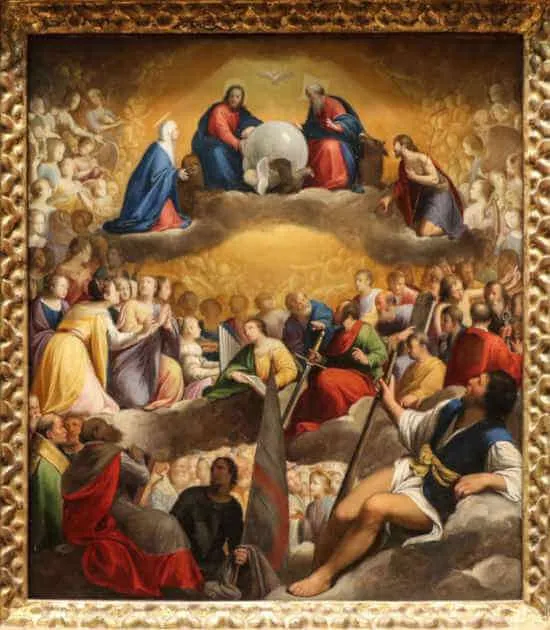
Today, we celebrate the Solemnity of All Saints, a celebration honoring all men and women who have entered Heaven. While this includes every soul in Heaven, the focus is particularly on those who led extraordinarily holy lives on earth and that the Church has canonized as saints. These individuals honored God in a variety of ways: through deep prayer and mystical union, through enduring martyrdom or other forms of religious persecution, and through acts of service, such as caring for the needy or teaching the faith. Some saints were powerful preachers or miracle workers. Others were leaders, some lived in obscurity, and still others experienced exile or made significant personal sacrifices for their faith. In various ways, these saints glorified God during their lifetimes.

By honoring this host of saintly witnesses, we honor and glorify God through their lives. By honoring them, we honor Him Who made them holy. This liturgical solemnity is but a foretaste of the eternal Solemnity of Heaven. Heaven will be the eternal glory of God through the lives of all His saints. In Heaven, the virtues, sacrifices, prayers, and selfless service of all the saints will radiate as beacons that eternally manifest the great mercy and goodness of God. The life of every saint in Heaven will become a continuous chorus of praise and worship of God, intertwined with the nine choirs of angelic hosts. With the Seraphim, Cherubim, and Thrones, the saints will cry “Holy, Holy, Holy…” With the Dominions, Virtues, and Powers, the saints will participate in God’s providential care of the New Heavens and Earth. With the Principalities, Archangels, and Guardian Angels, the saints will celebrate God’s protection and continuous communication with all of His sons and daughters. Heaven today, as well as the New Heavens and Earth at the end of time, will be nothing other than a continuous solemn celebration of all that God is in His essence and all that God has done in the lives of those who responded to His grace.

Honoring the saints also becomes an invitation to each one of us on earth to strive after the holiness the saints attained. The saints give us an example; their lives are a “how to” book in holiness. The lives of the “super saints”—such as the Blessed Virgin Mary and Saints Francis of Assisi, Catherine of Siena, Teresa of Ávila, Thérèse of Lisieux, Augustine of Hippo, and Thomas Aquinas—should be studied and pondered so that we can learn from their example.

We must also remember that, from Heaven, the saints become powerful intercessors for us on earth. It is true that God could deal directly with us without using the mediation of angels and saints. He chooses to use secondary causes, while He always remains the First Cause and Source of all grace. The saints and angels are among those secondary causes God chooses to mediate His grace. For that reason, we should rely upon their intercession. Doing so is an act of faith by which we profess our belief in God, using the saints and angels as His instruments.

Today’s solemnity has its roots in the earliest days of the Church. Even in the New Testament times, martyrs were honored by the community of believers, beginning with the deacon Saint Stephen, the first martyr. As the first century of the Church unfolded, others began to suffer persecution and death at the hands of Roman emperors, and the Church honored their deaths. In 64, Emperor Nero was the first to organize a persecution of Christians in Rome, taking the lives of Saints Peter and Paul, and many others. After this first persecution in Rome, other Roman emperors systematized various persecutions throughout the entire empire. The worst persecution took place under Emperor Diocletian from 303–311. During that persecution, churches and sacred texts were destroyed; Christians lost their property, legal rights, and lives; and those who were not killed were imprisoned and tortured. Some estimate that during the Diocletian persecutions, there were as many as 3,500 martyrs. Although there is no way to confirm the exact number, there were many.

In the fourth century, after Christianity was legalized in 313 by Emperor Constantine I, who became a Christian himself and began building churches and monuments to the martyrs, public devotion to the martyrs began to flourish. Their graves became churches and places of pilgrimage and prayer. On May 13, 609, Pope Boniface IV transformed the Pantheon in Rome, a former pagan temple, into a church dedicated to the Blessed Virgin Mary and all martyrs. The annual celebration of its dedication also honored the Blessed Virgin Mary and all martyrs. On November 1, 731, Pope Gregory III dedicated an oratory within Saint Peter’s Basilica to “all saints” that included the Apostles, martyrs, confessors, and all holy men and women throughout the world. This broadened the commemoration of the saints beyond the martyrs to all who lived saintly lives. In 844, Pope Gregory IV extended the November 1 celebration to the entire Church. In 1484, Pope Sixtus IV made November 1 a holy day of obligation for the entire Church and added a vigil day and octave to follow, making the celebration nine days in all. The vigil celebration for All Hallows’ Day was called All Hallows’ Eve, or Halloween. Unfortunately, in many places, Halloween has lost its Christian and saintly focus and has become a secular, and even pagan, celebration.

As we honor all the saints in Heaven today, ponder the fact that you are called to be among their company. The extent to which you become holy while on earth is the extent to which your life will be an eternal glorification of God. Seek a profound depth of holiness. Don’t just try to remain in a state of grace. Seek an abundance of grace. Strive to grow in virtue. Purge all sin, even small sins, from your life. Pray as often as you can. Read about the saints. Ponder the Scripture. Act with generosity and charity. Forgive everyone. And do everything you can to become the super saint God wants you to become.

Source: https://mycatholic.life/saints/saints-of-the-liturgical-year/november-1–all-saints/

All Saints’ Day Read More »

Matthew 5:1-3

Honoring All Saints

When Jesus saw the crowds, he went up the mountain, and after he had sat down, his disciples came to him. He began to teach them, saying: “Blessed are the poor in spirit, for theirs is the Kingdom of heaven.”

Reflection:

Today we celebrate one of the most glorious solemnities within our Church! Every saint, canonized or not, is honored today. Our Gospel passage lays out the path by which these saints entered Heaven. While on earth, these great men and women lived lives that were poor in spirit, filled with a holy mourning, meekness, a hunger and thirst for righteousness, mercy, peace, purity of heart and even persecution. Each one of these Beatitudes concludes by stating the reward that those who lived these qualities obtains: Heaven, comfort, satisfaction, mercy, seeing God, being children of God and rewards beyond what we can imagine in God’s Kingdom.

The Beatitudes invite us to the heights of holiness. They are not for the faint of heart or for those living a lukewarm spiritual life. These Beatitudes present us with the pinnacle of holy living and challenge us to the core. But every effort put into living these Beatitudes are worth it here on earth and ultimately in Heaven. Let’s look briefly at two of these Beatitudes.

The second Beatitude states that those “who mourn…will be comforted.” This is an interesting Beatitude. Why is it holy to mourn? Simply put, this form of holy mourning means that you not only have a holy sorrow for your own sins but that you have this holy sorrow as you see the many evils within our world. This is crucial today. First, it should be quite obvious that we must have holy sorrow for our own sins. Doing so means your conscience is working. And when your conscience is working, you will be compelled, by this holy sorrow, to acknowledge your offenses against God and work diligently to change. But we must also have a holy sorrow as we see the many evils within our world. Too often today there is a tendency to undermine this Beatitude by presenting universal acceptance of all things as a good. We are told we must not judge, and though that is true when it comes to judging another’s heart, a worldly presentation of this secular “virtue” attempts to lead us to downplay the objective nature of sin. Our secular world tempts us to ignore many objective moral truths by which God guides us into all truth. But as Christians, our first approach must be to despise all that our Lord taught was objectively morally evil. And when we do come face-to-face with immoral lifestyles, the appropriate response must be holy sorrow, not acceptance of grave sin. To mourn over another’s poor choices is a true act of charity toward them.

The fourth Beatitude calls us to “hunger and thirst for righteousness.” This means that we not only have a holy sorrow over our sins and the objective evils of our world, but that we also allow ourselves to be filled with a hunger and thirst for truth and holy living. This drive must become a burning motivation within us to do all we can to further the Kingdom of God everywhere. This Beatitude enables us to overcome indifference, inspiring us to bring about change in the face of all opposition. And this drive is fueled by charity and every other accompanying virtue.

Reflect, today, upon the beautiful truth that you are called to become a saint. And the surest path to sainthood is the Beatitudes. Read them carefully. Meditate upon them and know that they reveal to you how God is calling you to live. If one of these Beatitudes stands out to you, then spend time focusing upon it. Work to internalize these graces, and God will work wonders in your life, one day making this solemnity within our Church a true celebration of your life well lived.

Source: https://catholic-daily-reflections.com/2025/10/31/honoring-all-saints-4/

Matthew 5:1-3 Read More »

All Hallow’s Eve

Eve of the Feast of All Hallows, that is, All Saints Day. Because of the tradition of costuming and community gatherings, it has become popular in many locations that have little tradition of Christian holy days.

Source: https://catholicsaints.info/halloween/

All Hallow’s Eve Read More »

Luke 14:1

Uncomfortable Situations

On a sabbath Jesus went to dine at the home of one of the leading Pharisees, and the people there were observing him carefully.

Reflection:

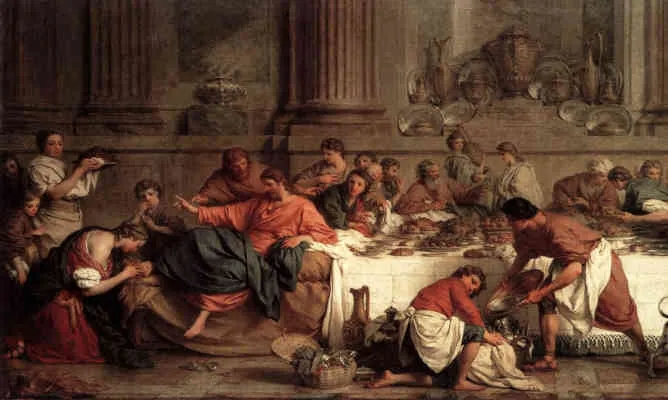
Jesus accepted an invitation from this prominent Pharisee to dine at his house. The people at the dinner were “observing him carefully.” It’s somewhat easy to picture the scene. For most people, being invited to a dinner with many strangers who are observing them carefully may leave them feeling quite uncomfortable and self-conscious. But Jesus showed up with perfect confidence and an unwavering commitment to share the Gospel. One thing we can learn from this dinner and Jesus’ disposition at it is that uncomfortable situations are actually great opportunities to share your faith. 

We will all have times when we are put in an uncomfortable situation. Imagine, for example, being invited to a party for a distant relative or a new neighbor. You decided to attend and knew that you would know very few people there. The tendency for those who are shy would be to show up, find someone they know, and then spend the rest of the time with that person. But consider what Jesus did. He probably knew very few people at this dinner. Jesus’ primary purpose in attending was not to just relax and have a fun time while He met new friends. Instead, His primary purpose was to preach His saving message to those in need. Thus, He went to those in need and did so with confidence.

Whether you are one who likes to socialize and meet new people, or are one who dreads such settings, consider the simple fact that these settings are wonderful opportunities to share your faith. Like our Lord, if you are willing to put yourself out there, entering situations that are new and unfamiliar, then you may start to discover that the opportunities abound. New settings and new people are new opportunities to evangelize. True, they are also opportunities to make new friends and enjoy yourself. But if you have a heart set on the desire to share the Gospel, then you will regularly look for new opportunities in which you can somehow share your faith with others.

Reflect, today, upon this simple Gospel scene of Jesus attending a dinner, with many people He did not know, for the purpose of sharing the faith with them. Imagine yourself joining our Lord at this meal. How would you have felt? Would you have been self-conscious and uncomfortable? Or would you have seen it as an opportunity to share the Gospel? Reflect upon how zealous you are in your efforts to evangelize others and recommit yourself to this holy endeavor. Tell our Lord you are ready and willing to be used by Him wherever He sends you and then try to see every new adventure and experience in life as a new opportunity to share Christ’s saving message with others.

Source: https://catholic-daily-reflections.com/2025/10/30/uncomfortable-situations-3/

Luke 14:1 Read More »

Saint Marcellus the Centurion

Profile

Marcellus was a Roman centurion at Tangiers (in modern Morocco). During a celebration of the emperor’s birthday, Marcellus refused to participate in the pagan offering ceremony. He threw away his arms and armor, openly declared himself a Christian, and was condemned to death. His condemnation led to the death of Saint Cassian.

Died

  • martyred c.298 at Tangiers, Morocco

Canonized

  • Pre-Congregation

Patronage

  • conscientious objectors
  • León, Spain (an early version of his story gave this as the site of his martyrdom)

Source: https://catholicsaints.info/saint-marcellus-the-centurion/

Saint Marcellus the Centurion Read More »

Luke 13:34

Protection, Healing and Salvation

“Jerusalem, Jerusalem, you who kill the prophets and stone those sent to you, how many times I yearned to gather your children together as a hen gathers her brood under her wings, but you were unwilling!”

Reflection:

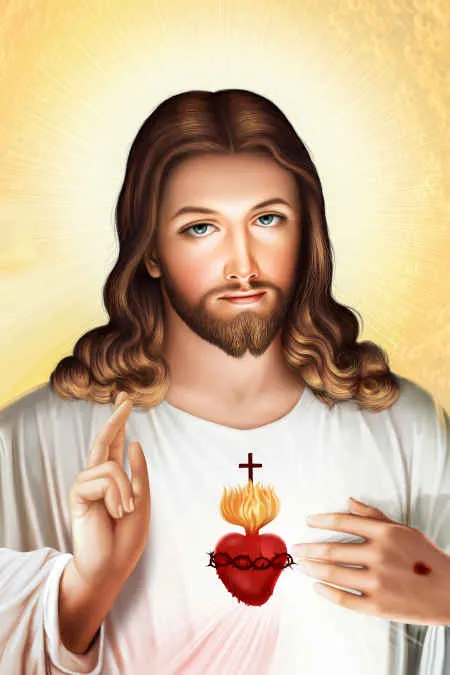
It’s helpful to ponder the Sacred Heart of Jesus. His heart is one that is strong and gentle, compassionate and just, merciful and truthful. In this Gospel passage, we are given a glimpse of Jesus’ love for the people of Jerusalem. He was not expressing His love for the city, but for the people in the city. It is clear that His deepest desire, His strong yearning, was that they allow Him to draw them close to Him so that He can protect them from all evil.

Jesus begins by speaking the word “Jerusalem” twice. This expresses deep compassion for the people of that city. It also expresses a lament that they have not turned to Him, remaining unwilling to change. Their refusal began long before Jesus walked the earth when their forefathers rejected the call of the prophets to repent and turn back to God. The stubbornness of their fathers continued with the people of Jesus’ day, and He experienced their rejection. This rejection did not lead Jesus to anger or condemnation as much as it led Him to holy sorrow.

The image of a hen gathering her brood under her wings is a lovely image to meditate upon. A mother hen protects her chicks with great courage and without concern for her own safety. When danger approaches, she extends her wings and covers the vulnerable chicks to protect them. Jesus uses this motherly image to express His desire to protect not only the people of Jerusalem, but all of us.

If Jesus yearned to gather the people together under his “wings” to protect them, then we should know, with certainty, that we need our Lord’s protection. He would not desire something that was unnecessary. He is not an overly protective God Who irrationally worries about His children. His concern is real and necessary, and we must know that we need His protection.

As you go about your daily life, do you feel as though you can handle life on your own? Do you act as an independent child who wants to separate yourself from the safety of your parents? Though we must all work to become responsible in life, we will never arrive at a point where we no longer need the protection of our loving God. The world in which we live is filled with dangers from which only God can protect us.

At the beginning of today’s Gospel, Jesus referred to Herod as a “fox.” That image must be seen in the context of Jesus desiring to act as a mother hen, protecting her brood. Jesus was told that Herod was trying to kill Him, but He clearly was not afraid of Herod. Of Herod’s desire to kill Jesus, Jesus said, “Go and tell that fox, ‘Behold, I cast out demons and I perform healings today and tomorrow, and on the third day I accomplish my purpose.’” As a protector, Jesus took authority over demons, performed healings and opened the gates of Heaven by rising from the dead on the third day. As we go through life, there will be many demons who seek to attack us. We will need many forms of healing, and without the gift of Jesus’ triumph over death itself, we will not be led to the glories of Heaven. Demons are real. Wounds are real. And the need for a Savior is real.

Reflect, today, upon the image of Jesus acting as a mother hen, extending His wings over you to protect you from the many temptations and diabolical attacks you will encounter in this world. Ponder the fact that you need His daily protection. The demons will never stop their attacks. Mental, emotional and spiritual wounds need His healing. Jesus is the only one Who can protect you and heal you so that He can then pour forth the gift of eternal life. Remain under His protective care, and allow Him to fulfill the yearnings of His Sacred Heart.

Source: https://catholic-daily-reflections.com/2025/10/29/protection-healing-and-salvation-2/

Luke 13:34 Read More »

Saint Narcissus of Jerusalem

Profile

Narcissus was a Bishop of Jerusalem, consecrated in c.180 when he was already an old man. Late in life, he was accused of a crime. None of the Christians in his diocese believed it, but Narcissus did not believe he should serve after being under such a cloud, and he became a desert hermit. After a complete acquittal, Narcissus returned to his see, older, weathered, but stronger and more zealous than ever, and served several more years. One Holy Saturday, he turned water into lamp oil so the Easter vigil services could be conducted. When his age began to wear on him, Narcissus begged God to send a bishop to help him. Saint Alexander of Cappadocia responded, and the two ruled the diocese together, Narcissus living to age 116.

Born

  • 99

Died

  • 215 of natural causes

Canonized

  • Pre-Congregation

Patronage

  • against insect bites

Representation

  • bishop holding a blossoming thistle
  • bishop with a pitcher of water
  • an angel carrying his soul to Heaven

Source: https://catholicsaints.info/saint-narcissus-of-jerusalem/

Saint Narcissus of Jerusalem Read More »

Luke 13:23-24

Entering the Narrow Gate

Someone asked him, “Lord, will only a few people be saved?” He answered them, “Strive to enter through the narrow gate, for many, I tell you, will attempt to enter but will not be strong enough.”

Reflection:

We should definitely take our Lord’s words spoken above to heart. It’s easy to presume we will be saved. It’s easy to simply presume that God is kind and that we are good people at heart and, therefore, salvation is assured. But that’s not what Jesus says.

So who will be saved? When we get to Heaven, God willing, we may be surprised at who is saved and who is not. This is clearly one of the messages of today’s Gospel. Jesus even goes so far to say that some, when they die, will assume they are going to enter into Heaven but will hear our Lord say to them, “I do not know where you are from. Depart from me, all you evildoers!” Again, we should take these words to heart.

One of the most dangerous sins we can fall into is presumption. Presumption is deadly because it has a double effect upon us. First, the person caught in presumption is one who has committed mortal sin but has not repented of it. But the presumptuous person also remains incapable of repentance because they refuse to acknowledge their sin. Their conscience is not working. They have blinders on and expect God to wear those same blinders. But God sees all things and judges accordingly.

The “narrow gate” of which Jesus speaks is a simile used by Jesus to tell us that it is not easy to obtain Heaven. It requires a concerted effort on our part as well as the infinite mercy of God. But regarding our part, the attainment of Heaven is only possible if we intentionally seek out the will of God and respond generously to Him. First, that means we confess and turn away from our sins. But from there, it means that we make every effort to fulfill God’s will in our lives.

If this is hard to accept, simply remind yourself that this teaching came directly from Jesus Himself. He is absolutely clear and means what He says. If that fills you with a sort of holy fear, then that is a good thing. “Holy fear” is a gift by which we have a well-ordered conscience that is able to identify those things in our lives that have become immovable obstacles to eternal salvation. The same well-ordered conscience will lead us to that narrow gate which is the only path to eternal life.

Reflect, today, upon the fact that we must all take eternal salvation seriously. If you find that you have become lax in your spiritual life, then use this Gospel as a motivation to change. Do not allow yourself to be one of those knocking at the gates of Heaven, only to realize that our Lord does not know you. Do all you can to eradicate the sin of presumption from your life, and your reward will be truly great in Heaven.

Source: https://catholic-daily-reflections.com/2025/10/28/entering-the-narrow-gate-3/

Luke 13:23-24 Read More »

Saint Simon and Saint Jude, Apostles

First Century; Patron Saint of curriers, woodcutters, and tanners (Simon); hopeless causes and hospital workers (Jude); Pre-Congregation canonization

Today, the Church honors Saints Simon and Jude, two of the Twelve Apostles chosen by our Lord. They were two of the first bishops through whom our Lord established His Church and from whom every bishop, priest, and deacon is a spiritual descendant.

Very little is known about these two Apostles, other than what is briefly mentioned about them in the New Testament, and even that is a little confusing. They are both listed among the Twelve whom Jesus names Apostles: Matthew 10:2–4Mark 3:16–19Luke 6:13–16Acts 1:13.

Today’s Simon is not Simon Peter, the Prince of the Apostles, but rather “Simon the Cananean” (Matthew and Mark) and “Simon the Zealot” (Luke and Acts). Both names mean the same thing. “Cananean” does not refer to the Land of Canaan but is a translation of an Aramaic word meaning “zealous.”

It’s interesting to note that Jesus chose a variety of different people as His Apostles. Perhaps the most stark contrast is found between Simon the Zealot and Matthew the tax collector. As a zealot, Simon would have been very committed to his Jewish identity and would have been firmly opposed to Roman oppression and taxation. He would have had an immediate aversion to Matthew, who previously served the Romans by collecting taxes for them from the Jews. The fact that Jesus did not choose like-minded Apostles shows His inclusion of all people. Jesus did not have a favorite type of person. He was not bound by cultural ties, ideologies, or social classes. He was not nationalistic in the sense of being a separatist or isolationist. He was interested in all people, those of every background and experience, and His Apostles reveal that fact. Jesus might have chosen Simon because He wanted to reach out to those who were firmly committed to their Jewish heritage, traditions, and beliefs, and Simon was able to reach those people.

Jude is referred to as “Judas son of James” (Luke and Acts) and “Thaddeus” (Matthew and Mark). The only other reference that is certain about Jude comes from John’s Gospel during the Last Supper in which Jude is referred to as “Judas, not the Iscariot…” (John 14:22). During the Last Supper, Jesus compassionately instructed His Apostles that He would soon be leaving them, but they should have courage and wait for His Advocate, the Holy Spirit. Jude, expressing a bit of confusion, asked Jesus, “Master, [then] what happened that you will reveal yourself to us and not to the world?” In other words, Jude was asking Jesus why He doesn’t just manifest His divinity to everyone, in a clear and convincing way, so that they will all believe in Him. Jesus’ answer is mysterious, but He essentially points out that belief in Him must come by the inspired gift of faith, and that obedience to that faith, and to the will of God, will result in divine union.

There is also a reference in two of the Gospels identifying Simon and Jude as Jesus’ brothers: “Is he not the carpenter’s son? Is not his mother named Mary and his brothers James, Joseph, Simon, and Judas?” (Matthew 13:55Mark 6:3). However, most scholars today believe these two are not the same as the Apostles but are cousins of Jesus. It was custom at that time to refer to one’s cousin as brother or sister. It is possible that the Judas identified as Jesus’ brother is the author of the Epistle of Jude in the New Testament, rather than the Apostle. However, that point is debated, and even Pope Benedict XVI at a General Audience in 2006 pointed to the tradition that the Epistle of Jude was, indeed, written by the Apostle. If that’s the case, then it might be that these two Judes are one and the same.

Regarding their deaths, nothing is known other than unreliable apocryphal sources, such as the Passion of Simon and Jude, and other fourth-century and later sources. One of the most common traditions is that Simon and Jude traveled to Persia to preach the Gospel and were both killed there in the year 65. Simon is traditionally believed to have been sawed in half, and Jude is traditionally believed to have been beaten with a club. They often appear in sacred art holding the instruments of their deaths. Other traditions state they ministered in Armenia, Beirut, Lebanon, Roman Britain, Egypt, and/or Samaria and died by arrows, crucifixion, and even a peaceful death.

The Epistle that has been traditionally attributed to Saint Jude the Apostle is a short but passionate letter in which he warns all Christians against immorality and heresy trying to enter the early Church. Some suggest it is for this reason that he is named Patron Saint of Hopeless Causes, because of his passionate plea. Another tradition states that because Jude shared a name with Judas Iscariot, the betrayer, Saint Jude’s intercession was rarely sought. However, after the intercession of every other Apostle and saint was sought, people in the early Church would turn to Saint Jude as their last hope. There are many ancient traditions holding that Saint Jude has provided many miracles throughout the centuries.

As we honor these Apostles, what we know for certain is that they were instrumental in the early Church. Being among the first bishops, they bore the sacred responsibility of transmitting the Sacraments and the teachings of Jesus to a nascent Church. One day in Heaven, we will see clearly the effects of their pastoral ministry. Today, we rejoice in what we do not fully know, trusting that their lives gave great glory to God and won the salvation of many souls.

Source: https://mycatholic.life/saints/saints-of-the-liturgical-year/october-28–sts-simon-and-jude/

Saint Simon and Saint Jude, Apostles Read More »

Luke 6:12

Sent Forth by Christ

Jesus went up to the mountain to pray, and he spent the night in prayer to God. When day came, he called his disciples to himself, and from them he chose Twelve, whom he also named Apostles…

Reflection:

Simon and Jude were among those very select few who were chosen by Jesus Himself to be His Apostles. Today’s Simon is not the same person as Simon Peter, and today’s Jude is not the same person as Judas Iscariot. Little is known about these two Apostles. Simon is referred to as a zealot in the Gospels, which could have meant he was a member of a more radical sect within Judaism. Jude is popularly known as the Patron Saint of Hopeless Causes. Some suggest this is because he was often the last Apostle to be prayed to by the early Christian faithful on account of the fact that he shared a name with Judas Iscariot, and praying to Jude reminded people of that betrayer. If that was the case, then in God’s providence, since Jude became the last Apostle to be prayed to, he also became the last hope for many and, thus, the patron saint for those with truly hopeless causes.

One tradition states that Saints Simon and Jude are linked together in the Roman Canon and also share the same feast day because they were both martyred together on the same day, possibly in Syria, Lebanon, or Persia. However, the true details of their missionary journeys and martyrdom is unclear. The one thing that is certain about these Apostles, however, is that they were Apostles. They were chosen by our Lord and appointed by Him as two of the first bishops of our Church and were given a mandate to share the Gospel to the ends of the earth.

From our perspective today, being one of those chosen Twelve is an incredible privilege. The effect of their ministry in establishing the first Christian communities has resulted in our worldwide universal Catholic Church. These men most likely did not realize the impact that their faithful service would have upon the world.

As we honor these two Apostles, we are also reminded that each one of us is called to go forth to proclaim the Gospel to the ends of the earth. We each do so in a way specific to the calling and mission that Christ has entrusted to us. We are each called to make an eternal difference in the lives of those whom we serve. And if we are faithful to our mission, we can be certain that the effects of our apostolic service will be felt in the lives of countless others until the end of the world.

Reflect, today, upon Jesus choosing these two men and appointing them as Apostles. As you do, listen to God’s voice as He also speaks to you. Do not underestimate the importance of accepting the mission that Jesus gives to you. Say “Yes” to Him in imitation of these two Apostles and know that your choice to serve our Lord in this way will not only have a great effect in your life, it will also have an effect in the lives of many others for all eternity. 

Source: https://catholic-daily-reflections.com/2025/10/27/sent-forth-by-christ-4/

Luke 6:12 Read More »