Author name: Sani

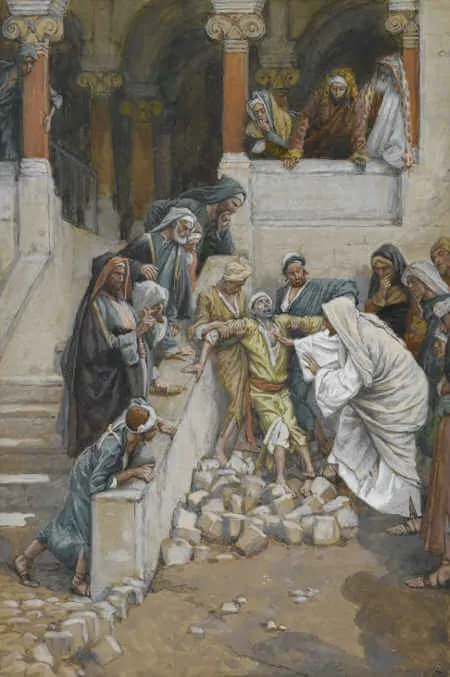
Mark 1:40-41

Be Made Clean

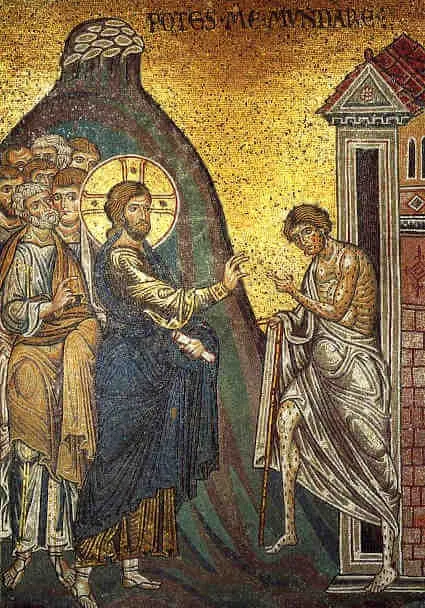
“A leper came to him and kneeling down begged him and said, ‘If you wish, you can make me clean.’ Moved with pity, he stretched out his hand, touched the leper, and said to him, ‘I do will it. Be made clean.’”

Reflection:

If we come to our divine Lord with faith, kneel down before Him and present our need to Him, then we also will receive the same response given to this leper: “I do will it. Be made clean.” These words should give us hope in the midst of any and every challenge in life.

What is it that our Lord wills for you? And what is it that He desires to make clean in your life? This story of the leper coming to Jesus does not mean that our Lord will grant any and every request we bring to Him. Instead, it reveals that He wills to make us clean of that which afflicts us the most.

Leprosy in this story should be seen as a symbol of the spiritual ills that afflict your soul. First and foremost, it should be seen as a symbol of the sin in your life that has become habitual and slowly does great damage to your soul.

At that time, leprosy not only caused grave physical damage to a person, but it also had the effect of isolating them from the community. They had to live apart from others who did not have the disease; and if they came near others, they had to show they were lepers by certain external signs so that people would not come in contact with them. Thus, leprosy had both personal and communal ramifications.

The same is true with many habitual sins. Sin does damage to our souls, but it also affects our relationships. For example, a person who is habitually harsh, judgmental, sarcastic or the like will experience the ill effects of these sins on their relationships.

Returning to the statement of Jesus above, consider that sin which not only affects your soul the most but also your relationships. To that sin, Jesus wishes to say to you, “Be made clean.” He wants to strengthen your relationship by cleansing the sin within your soul. And all it takes for Him to do that is for you to turn to Him on your knees and to present your sin to Him. This is especially true within the Sacrament of Reconciliation.

Reflect, today, upon your closest relationships in life. And then consider which of your sins most directly hurts those relationships. Whatever comes to mind, you can be certain that Jesus wants to rid you of that spiritual leprosy within your soul.

Source: https://catholic-daily-reflections.com/2024/01/10/be-made-clean-3/
Mark 1:40-41 Read More »

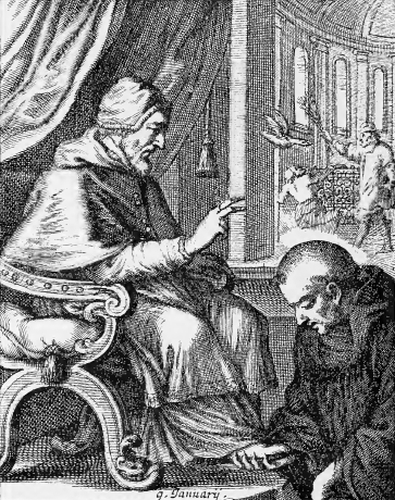
Saint William of Bourges

Profile

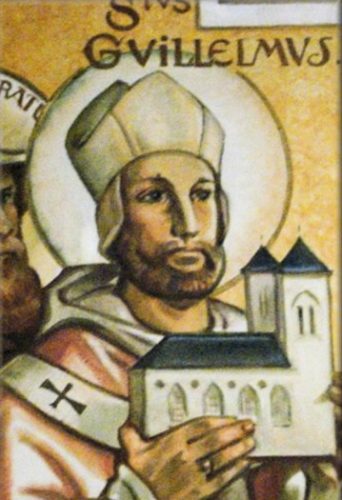
William was a member of the family of the Counts of Nevers. His father, Baldwin, planned a military life for him. He was educated by his maternal uncle, Peter the Hermit, archdeacon of Soissons, France. Drawn to religious life from an early age, William became a priest, canon in Soissons, and later in Paris.

William was a monk in the Order of Grandmont, noted for his austerities, his devotion to the Blessed Sacrament, and for the time spent praying at the altar. Internal dissension in the Order caused him to leave Grandmont for the recently formed Cistercians, taking the habit at Pontigny.

William was an abbot at Fontaine-Jean in Sens, France and at Chaalis near Senlis, France in 1187.

William was reluctant in being the Archbishop of Bourges, France in 1200, accepting the position only after receiving orders from the general of his order, and from Pope Innocent III. He lived an even more austere life, defended clerical rights against the state, cared personally for the poor, sick, imprisoned and debauched, and converted many Albigensians in his diocese to orthodox Christianity. Witnesses claim he performed 18 miracles during his life, and another 18 after his death.

Born

  • 12th century in Nevers, France

Died

  • 10 January 1209 at Bourges, France of natural causes while in prayer

Canonized

  • 17 May 1217 by Pope Honorius III

Source: https://en.wikipedia.org/wiki/William_of_Donjeon#/media/File:Saint_Guillaume_de_Bourges.jpg

Saint William of Bourges

Saint William of Bourges Read More »

Mark 1:32-34

More Demons Driven Out

“When it was evening, after sunset, they brought to him all who were ill or possessed by demons. The whole town was gathered at the door. He cured many who were sick with various diseases, and he drove out many demons, not permitting them to speak because they knew him.”

Reflection:

Today we read that Jesus once again “drove out many demons…” The passage then adds, “…not permitting them to speak because they knew him.” 

Why would Jesus not permit these demons to speak? Many of the early Church fathers explain that even though the demons had an understanding that Jesus was the promised Messiah, they did not understand fully what that meant and how He would accomplish His ultimate victory. Therefore, Jesus did not want them to speak only half-truths about Him, as the evil one often does, thus misleading the people. So Jesus always forbade these demons from speaking about Him publicly.

It’s important to understand that all of the demonic spirits failed to understand the full truth that it would be Jesus’ death that ultimately destroys death itself and sets all people free. For that reason, we see that these diabolical forces continually conspired against Jesus and tried to attack Him throughout His life. They stirred up Herod when Jesus was a baby, which forced Him into exile in Egypt.

Satan himself tempted Jesus just prior to the beginning of His public ministry so as to try to dissuade Jesus from His mission. There were many diabolical forces who continually attacked Jesus throughout His public ministry, especially through the ongoing hostility of the religious leaders at the time. And it can be presumed that these demons may have initially thought they won the battle when they accomplished their goal of having Jesus crucified. 

The truth, however, is that Jesus’ wisdom continually confounded these demons and ultimately transformed their evil act of having Him crucified into an ultimate victory over sin and death itself by rising from the dead. Satan and his demons are real, but compared to the truth and wisdom of God, these diabolical forces reveal their complete foolishness and weakness. Just like Jesus, we need to rebuke these tempters in our lives and command that they be silent. Too often we allow their half truths to mislead us and confuse us.

Reflect, today, upon the importance of confidently rebuking the evil one and the many lies he tempts us to believe. Rebuke him with the truth and authority of Christ and pay no attention to what he says.

Source: https://catholic-daily-reflections.com/2024/01/09/more-demons-driven-out-3/

Mark 1:32-34 Read More »

Saint Adrian of Canterbury

Profile

In the mid-640‘s, Adrian’s family fled to Naples, Italy ahead of the Arab invasion. He was quite young when he became a Benedictine monk. He was an abbot of Hiridanum, Isle of Nisida, Bay of Naples. He became acquainted with Emperor Constans II, who later introduced him to Pope Saint Vitalian. He later on became Vitalian’s advisor.

Adrian was twice offered the Archbishopric of Canterbury, England; he declined, citing unworthiness. When Saint Theodore of Tarsus was sent instead, Adrian went as his assistant with special support to aid the monastic movement in the region. 

Adrian was detained in France due to suspicions of espionage for the emperor. He arrived in England in 669. He became an abbot of Saint Peter‘s, a monastery founded by Augustine of Canterbury.

Adrian and Theodore were highly successful missionaries in largely pagan England. In addition, Adrian was a great teacher of languages, mathematics, poetry, astronomy, and Bible study. Under his leadership, the School of Canterbury became the center of English learning. He worked to unify the customs of the English with the Church, and to promote Roman customs.

Born

  • c.635 in Libya Cyrenaica, North Africa as Hadrian

Died

  • 9 January 710 of natural causes at Canterbury, England, and buried there
  • His tomb became a site of miracles.
  • His body was found incorrupt in 1091.

Canonized

  • Pre-Congregation

Patronage

  • Canterbury, England

Source: https://catholicsaints.info/saint-adrian-of-canterbury/

Saint Adrian of Canterbury Read More »

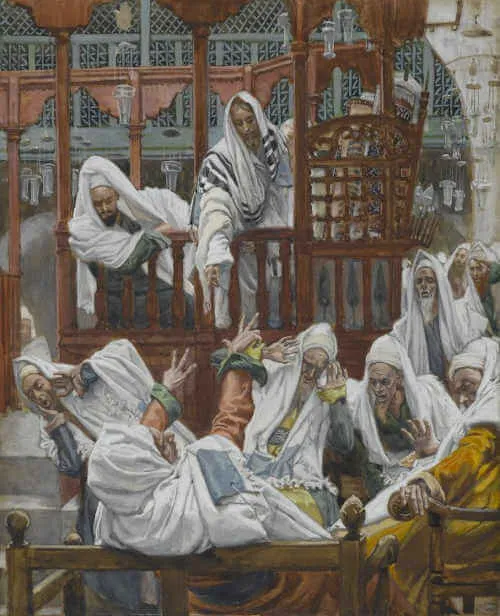
Mark 1:23-25

Confronting the Evil One

“In their synagogue was a man with an unclean spirit; he cried out, ‘What have you to do with us, Jesus of Nazareth? Have you come to destroy us? I know who you are–the Holy One of God!’ Jesus rebuked him and said, ‘Quiet!  Come out of him!’”

Reflection:

There were numerous times when Jesus directly confronted demons in the Scriptures. Each time He rebuked them and exercised His authority over them. The passage above illustrates one such case.

The fact that the devil shows himself over and over in the Gospels tells us that the evil one is real and needs to be dealt with appropriately. And the appropriate way to deal with the evil one and his fellow demons is to rebuke them with the authority of Christ Jesus Himself in a calm but definitive and authoritative way.

It’s very rare that the evil one makes himself fully manifest to us in the way that he did in the passage above to Jesus. The demon speaks directly through this man, which indicates that the man was fully possessed. And though we do not see this form of manifestation often, it doesn’t mean that the evil one is any less active today.

Instead, it shows that the authority of Christ is not being exercised by the Christian faithful to the extent that is necessary to combat the evil one. Instead, we often cower in the face of evil and fail to confidently and charitably stand our ground with Christ.

Why did this demon manifest himself in such a visible way? Because this demon was directly confronted with the authority of Jesus. The devil usually prefers to remain hidden and deceptive, presenting himself as an angel of light so that his evil ways are not known clearly. Those whom he controls often do not even know how much they are influenced by the evil one.

But when the evil one is confronted with the pure presence of Christ, with the Truth of the Gospel that sets us free, and with Jesus’ authority, this confrontation often forces the evil one to react by manifesting his evil.

Reflect, today, upon the fact that the evil one is constantly at work all around us. Consider the people and circumstances in your life where the pure and holy Truth of God is attacked and rejected. It is in those situations, more than any other, that Jesus wants to bestow upon you His divine authority to confront evil, rebuke it and take authority over it.

This is primarily done through prayer and deep trust in the power of God. Don’t be afraid to allow God to use you to confront the activity of the evil one in this world.

Source: https://catholic-daily-reflections.com/2024/01/08/confronting-the-evil-one-3/

Mark 1:23-25 Read More »

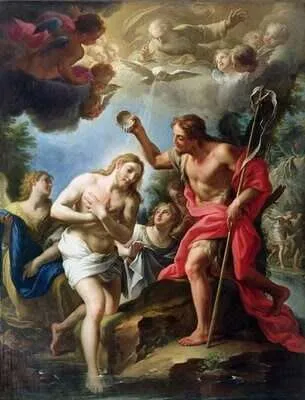
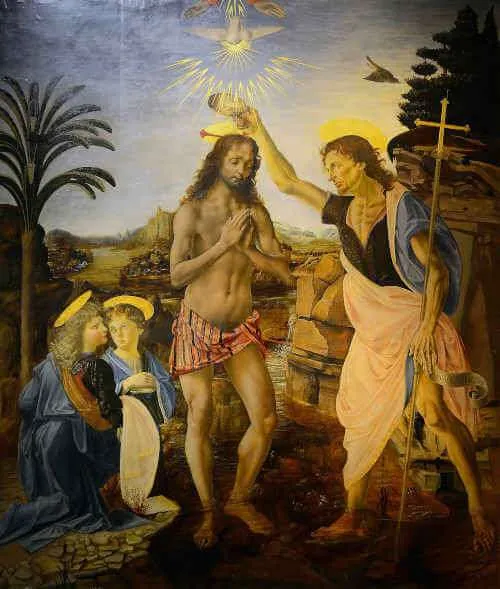
Baptism of the Lord

 The Feast of the Baptism of the Lord is a liturgical bridge that connects the Christmas season to Ordinary Time. During the Christmas season we pondered the Incarnation, Nativity, Presentation in the Temple, and Epiphany. Today, we see Jesus manifesting Himself to the world as He began His three years of public ministry.

Jesus begins His ministry through an act of deep solidarity with the fallen human race. John the Baptist had been preaching in the desert and offering a baptism of repentance. John’s baptism was not the same as our baptism today. Instead, it was only a sign of one’s willingness to turn away from sin and turn toward God. Jesus, of course, had nothing to repent of. He was sinless in every way. But that didn’t stop Him from freely choosing to receive the baptism of repentance. Why would He do that?

Simply put, Jesus chose to unite Himself with fallen humanity, taking upon Himself our own sins and suffering their consequences. He humbly allowed Himself to be identified as a sinner in need of repentance. This was done out of love for us and out of His longing to become one with us so that we could become one with Him.

By bowing His sacred head to receive the baptism of repentance, Jesus united Himself and His divinity to everyone who had already chosen to repent. And He gave power to every forthcoming act of repentance others would make, even until today. When we repent today, we meet Jesus in that same water of repentance.

It was not only the Eternal Son Who was present at that baptism of repentance, but the Father and the Holy Spirit as well. The Spirit descended upon Jesus in the form of a dove, and the Father’s Voice spoke to acknowledge His oneness with His Son.

Therefore, every time we make a humble act of repentance, such as when we combine the crucifixion, the Trinity, and holy water upon entering a church and blessing ourselves, we not only meet our Lord but also receive the outpouring of the Holy Spirit and share more fully in our adoption as sons and daughters of the Father in Heaven.

As we commemorate Jesus’ baptism liturgically, we celebrate the fact that our Christian baptism was the beginning of this new unity with the Holy Trinity. But we also celebrate our oneness with God, which is renewed every time we make an interior act of repentance for our sins. If we fully understood what happens every time we acknowledge our sins and repent of them, we would never grow tired of repenting. Every time we acknowledge and repent of our sin, we meet Christ anew, receive a greater outpouring of the Holy Spirit, and affirm and deepen our adoption by the Father in Heaven.

Source: https://mycatholic.life/saints/saints-of-the-liturgical-year/baptism-of-the-lord-feast/

Baptism of the Lord Read More »

Mark 1:9-11

You are My Beloved Son

“It happened in those days that Jesus came from Nazareth of Galilee and was baptized in the Jordan by John. On coming up out of the water he saw the heavens being torn open and the Spirit, like a dove, descending upon him. And a voice came from the heavens, “You are my beloved Son; with you I am well pleased.”

Reflection:

The Feast of the Baptism of the Lord concludes for us the Christmas Season and transitions us into the beginning of Ordinary Time. From a Scriptural point of view, this event in Jesus’ life is also a transitional moment from His hidden life in Nazareth to the beginning of His public ministry.

As we commemorate this glorious event, it’s important to ponder a simple question: Why was Jesus baptized? Recall that John’s baptism was one of repentance, an act by which he invited his followers to turn from sin and to turn to God. But Jesus was sinless, so what was the reason for His Baptism?

First of all, we see in the quoted passage above that Jesus’ true identity was made manifest through His humble act of baptism. “You are my beloved Son; with you I am well pleased,” spoke the voice of the Father in Heaven.

Furthermore, we are told that the Spirit descended upon Him in the form of a dove. Thus, Jesus’ baptism is in part a public declaration of Who He is. He is the Son of God, a divine Person Who is one with the Father and the Holy Spirit. This public testimony is an “epiphany,” a manifestation of His true identity for all to see as He prepares to begin His public ministry.

Second, by His baptism, Jesus’ incredible humility is made manifest. He is the Second Person of the Most Holy Trinity, but He allows Himself to become identified with sinners. By sharing in an act that was focused upon repentance, Jesus speaks volumes through His action of baptism. He came to unite Himself with us sinners, to enter our sin and to enter into our death. By entering the water, He symbolically enters into death itself, which is the result of our sin, and rises triumphantly, allowing us to also rise with Him to new life.

For this reason, Jesus’ baptism was a way of Him “baptizing” the waters, so to speak, so that water itself, from that moment onward, would be endowed with His divine presence and could be communicated to all who are baptized after Him. Therefore, sinful humanity is now able to meet divinity through baptism.

Lastly, when we share in this new baptism, through water that has now been sanctified by our divine Lord, we see in Jesus’ baptism a revelation of who we become in Him. Just as the Father spoke and declared Him as His Son, and just as the Holy Spirit descended upon Him, so also in our baptism we become the adopted children of the Father and are filled with the Holy Spirit. Thus, Jesus’ baptism gives clarity as to whom we become in Christian baptism.

Source: https://catholic-daily-reflections.com/2024/01/07/you-are-my-beloved-son-3/

Mark 1:9-11 Read More »

The Epiphany of the Lord

First Reading Is 60:1-6

Rise up in splendor, Jerusalem!  Your light has come,
the glory of the Lord shines upon you.
See, darkness covers the earth,
and thick clouds cover the peoples;
but upon you the LORD shines,
and over you appears his glory.

Nations shall walk by your light,
and kings by your shining radiance.
Raise your eyes and look about;
they all gather and come to you:
your sons come from afar,
and your daughters in the arms of their nurses.

Then you shall be radiant at what you see,
your heart shall throb and overflow,
for the riches of the sea shall be emptied out before you,
the wealth of nations shall be brought to you.

Caravans of camels shall fill you,
dromedaries from Midian and Ephah;
all from Sheba shall come
bearing gold and frankincense,
and proclaiming the praises of the LORD.

Responsorial Psalm Ps 72:1-2, 7-8, 10-11, 12-13.

R. (cf. 11)  Lord, every nation on earth will adore you.

O God, with your judgment endow the king,
and with your justice, the king’s son;
He shall govern your people with justice
and your afflicted ones with judgment.

R. Lord, every nation on earth will adore you.

Justice shall flower in his days,
and profound peace, till the moon be no more.
May he rule from sea to sea,
and from the River to the ends of the earth.

R. Lord, every nation on earth will adore you.

The kings of Tarshish and the Isles shall offer gifts;
the kings of Arabia and Seba shall bring tribute.
All kings shall pay him homage,
all nations shall serve him.

R. Lord, every nation on earth will adore you.

For he shall rescue the poor when he cries out,
and the afflicted when he has no one to help him.
He shall have pity for the lowly and the poor;
the lives of the poor he shall save.

R. Lord, every nation on earth will adore you.

Second Reading Eph 3:2-3a, 5-6

Brothers and sisters:
You have heard of the stewardship of God’s grace 
that was given to me for your benefit, 
namely, that the mystery was made known to me by revelation.
It was not made known to people in other generations 
as it has now been revealed
to his holy apostles and prophets by the Spirit: 
that the Gentiles are coheirs, members of the same body,
and copartners in the promise in Christ Jesus through the gospel.

Alleluia Mt 2:2

R. Alleluia, alleluia.

We saw his star at its rising
and have come to do him homage.

R. Alleluia, alleluia.

Gospel Mt 2:1-12

When Jesus was born in Bethlehem of Judea,
in the days of King Herod, 
behold, magi from the east arrived in Jerusalem, saying, 
“Where is the newborn king of the Jews?
We saw his star at its rising
and have come to do him homage.”

When King Herod heard this,
he was greatly troubled, 
and all Jerusalem with him.
Assembling all the chief priests and the scribes of the people, 
He inquired of them where the Christ was to be born.

They said to him, “In Bethlehem of Judea, 
for thus it has been written through the prophet:
And you, Bethlehem, land of Judah,
are by no means least among the rulers of Judah;
since from you shall come a ruler,
who is to shepherd my people Israel.
”

Then Herod called the magi secretly 
and ascertained from them the time of the star’s appearance.
He sent them to Bethlehem and said, 
“Go and search diligently for the child.
When you have found him, bring me word, 
that I too may go and do him homage.”

After their audience with the king they set out.
And behold, the star that they had seen at its rising preceded them, 
until it came and stopped over the place where the child was.

They were overjoyed at seeing the star, 
and on entering the house
they saw the child with Mary his mother.
They prostrated themselves and did him homage.

Then they opened their treasures 
and offered him gifts of gold, frankincense, and myrrh.
And having been warned in a dream not to return to Herod, 
they departed for their country by another way.

Source: https://bible.usccb.org/bible/readings/010724.cfm

The Epiphany of the Lord Read More »

Epiphany of the Lord

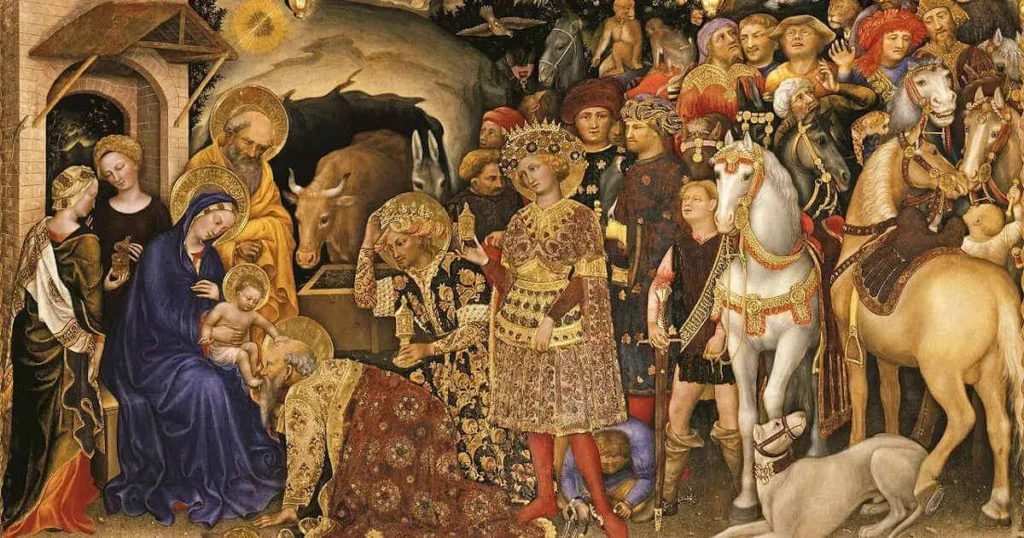
All of God’s creation gives Him glory and praises Him by its very existence. Psalm 143 states, “Praise him, sun and moon; praise him, all shining stars. Praise him, highest heavens, you waters above the heavens. Let them all praise the LORD’s name; for he commanded and they were created…” Though creation gives praise to God simply by existing and thus, revealing its Creator, today’s solemnity commemorates the one moment in time when God used a star to manifest His eternal glory.

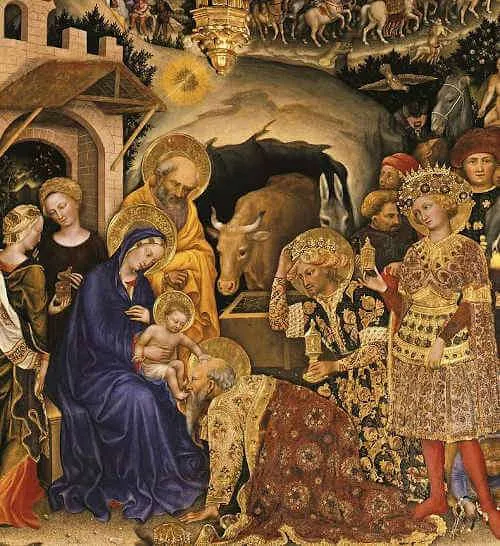
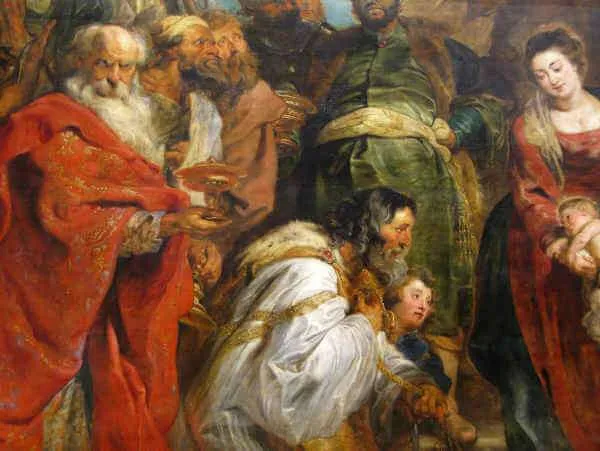
At the time of Jesus’ birth, it was commonly believed that a new star would appear whenever a new ruler was born. The Father in Heaven used this belief to honor His Son Who was born as the new King. The three Magi from the East were astrologers. When they saw this “new star,” they chose to follow it to discover the new King. Creation itself, in the form of a star, pointed the way, thus giving glory to the newborn King, manifesting Him to the whole world as symbolized by the Magi.

The word “Epiphany” means “manifestation.” Therefore, as we honor this moment in time when the Christ Child was made manifest to the world, we need to look into our own hearts. There, we discover Christ’s ongoing manifestation to us so that we can worship Him Who has also chosen to be born within our hearts. We must diligently seek out that manifestation of God within us and respond to it in the same ways that the Magi responded.

First of all, the Magi were determined. When they saw a sign from the heavens that pointed to a new King, they stopped everything and departed in haste to find Him. When God speaks to you and manifests Himself to you in some way, nothing could be more important than to be attentive to His voice and follow His manifestation with the same haste.

The Magi brought the Christ Child gifts of gold, frankincense, and myrrh. God was honored and glorified through His creation by the giving of these gifts. God created gold to manifest His beauty and dignity. It was a gift that symbolized kingship. When we ponder the natural gift of gold given to the Christ Child, we are inspired to give Him our own gift of symbolic gold by prayerfully acknowledging Him as our own King to whom we pledge our complete submission.

Made from the sap of trees found in India, northeastern Africa, and the Arabian peninsula, frankincense and myrrh are also fruits of God’s creation. Used in worship to symbolize prayers rising to heaven, frankincense symbolizes the Christ Child’s divinity. We offer frankincense to Christ when we acknowledge His divine nature, since He is God in the flesh. Often used in burial, myrrh honors the Christ Child Who came to give His life as a sacrifice for many. We offer myrrh to profess our belief in the saving power of Christ’s death on the Cross and our need for that gift of salvation.

As we celebrate the Solemnity of the Epiphany, try to see it as a historical event in which you are invited to share. God wants to manifest Himself to you today. When this happens, you must respond with faith and worship, giving God the greatest glory by giving Him your very life and offering Him your spiritual gifts of gold, frankincense, and myrrh.

Source: https://mycatholic.life/saints/saints-of-the-liturgical-year/january-6-epiphany/

Epiphany of the Lord Read More »

Matthew 2:1-2

A Manifestation to the World

“When Jesus was born in Bethlehem of Judea, in the days of King Herod, behold, magi from the east arrived in Jerusalem, saying, ‘Where is the newborn king of the Jews? We saw his star at its rising and have come to do him homage.'”

Reflection:

The Magi were most likely from Persia, modern-day Iran. They were men who regularly engaged in a study of the stars. They were not Jewish but were most likely aware of the popular belief of the Jewish people that a king would be born who would save them.

These Magi were called by God to encounter the Savior of the World. Interestingly, God used something very familiar to them as an instrument of their calling: the stars. It was among their belief that when someone of great importance was born, this birth was accompanied by a new star. So when they saw this new, bright and brilliant star, they were filled with curiosity and hope. One of the most significant aspects of this story is that they responded. God called them through the use of a star, and they chose to follow this sign, embarking on a long and arduous journey.

God often uses those things most familiar to us that are part of our daily life to send forth His calling. Recall, for example, that many of the Apostles were fishermen, and Jesus used their occupation to call them, making them “fishers of men.” He especially used the miraculous catch of fish to clearly indicate to them that they had a new calling.

In our own lives, God is constantly calling us to seek Him out and worship Him. He will often use some of the most ordinary parts of our lives to send forth that calling. How is He calling you? In what way is He sending you a star to follow? Many times when God speaks, we ignore His voice. We must learn from these Magi and diligently respond when He calls. We must not hesitate and must seek to daily be attentive to the ways that God invites us to deeper trust, surrender and worship.

Reflect, today, upon God’s call in your life. Are you listening? Are you responding? Are you ready and willing to abandon all else in life so as to serve His holy will? Seek Him, wait on Him and respond. Doing so will be the best decision you ever make.

Source: https://catholic-daily-reflections.com/2024/01/06/a-manifestation-to-the-world-3/

Matthew 2:1-2 Read More »