Author name: Sani

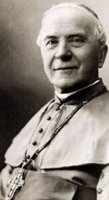
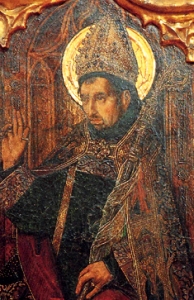
Saint Joseph Sebastian Pelczar

Profile

Joseph was raised in a pious family. He studied in Rzeszów, and entered the seminary at Przemysl in 1860. He was ordained on 17 July 1864 and became a Parish priest at Sambor.

Joseph transferred to Rome in 1866, and studied at the Collegium Romanum (Gregorian University) and the Institute of Saint Apollinaris (Lateran University). He was a doctor of theology and a canon lawyer.

Joseph became a professor at the seminary at Przemysl from 1869 to 1877, and at the University of Krakow from 1877 to 1899. He was known as a great educator who was always available to students. He became a dean of the Theology Department and Rector of the University of Krakow from 1882 to 1883.

All the while he was teaching, Joseph was still involved at the parish level. He worked with the Saint Vincent de Paul Society and was president of the Society for the Education of the People for 16 years. He started hundreds of libraries, delivered free lectures, published over a thousand books, wrote several books of history, theology and canon law himself, and started a school for servants.

He founded the Fraternity of Our Lady, Queen of the Polish Crown in 1891; the Fraternity cared for the poor, orphans, apprentices, servants, the sick and unemployed. With Blessed Klara Szczesna, he co-founded the Sister Servants of the Most Sacred Heart of Jesus on 15 April 1894 in Krakow to work with the sick and young women, and to spread devotion to the Sacred Heart of Jesus.

Joseph was the Bishop of Przemysl in 1900 until his death in 1924. He made frequent visits to the parishes, supported the religious orders, conducted three synods, and worked for the education and religious formation of his priests. He encouraged devotion to the Blessed Sacrament, Eucharistic devotions, the Sacred Heart of Jesus, and the Virgin Mary. He built and restored churches, built nurseries, kitchens, homeless shelters, schools for the poor, and gave tuition assistance to poor seminarians. He worked for the implementation of the social doctrine described in the writings of Pope Leo XIII. He left behind a large body of work including books, pastoral letters, sermons, addresses, prayers and other writings.

Born

  • 17 January 1842 at Korczyn bei Krosno, Poland

Died

  • 28 March 1924 at Przemysl, Poland
  • relics in Przemysl Cathedral

Canonized

  • 18 May 2003 by Pope John Paul II at the Vatican Basilica

Source: http://catholicsaints.mobi/calendar/28-march.htm

Saint Joseph Sebastian Pelczar Read More »

Exodus 12:11

Eucharistic Freedom

“This day shall be a memorial feast for you, which all your generations shall celebrate with pilgrimage to the LORD, as a perpetual institution.” 

Reflection:

The holy Triduum begins. Today we fulfill this Old Testament passage, revealing that the Passover would become “a perpetual institution.” This passage concludes our First Reading instruction from the LORD given to Moses and Aaron on how to prepare for the Israelites’ liberation from Egypt. Plague after plague had been inflicted upon the Egyptians, and none of them resulted in the Israelites being set free.

Therefore, the LORD instructed the Israelites to celebrate the first Passover by killing a year-old lamb, sprinkling its blood on their doorposts, and feasting on the flesh in preparation for the journey to the Promised Land. Today, we continue this Passover celebration as we share in the Sacrifice of the Lamb of God, Whose Blood has been shed, Whose flesh we consume, and Who leads us through the desert of life to the new and eternal Promised Land of Heaven.

Just as the first Passover was a prefiguration of the Sacrifice of the Lamb of God, so also the plagues that led up to the Passover present us with much meaning. At first, all the water in Egypt turned to blood. Then frogs, gnats, flies and pestilence covered the land. Boils covered the skin of humans and animals. Hail rained down, locusts covered the land, and finally darkness covered the land for three days.

None of these plagues was ultimately successful in convincing Pharaoh to let God’s people go; therefore, the final plague to be inflicted was the death of the firstborn. It was the blood of the paschal lamb, sprinkled on the doorposts of the Israelites’ houses that signaled to the angels to pass over their homes.

The plagues inflicted on Pharaoh and the Egyptians were severe. But because of their obstinacy, God continued until they changed. Recall, also, that even after the Israelites were set free, Pharaoh changed his mind and pursued them into the Red Sea where his army perished.

Though these prefiguring events might not be that pleasant to consider, they must be reflected upon. We must see in them God’s tireless and relentless efforts to set us free from sin. The obstinacy and oppression of Pharaoh are  clear signs of the oppressive evil within our world today, and within our own souls. When we seek to embrace the freedom to which we are called, we will be met with much temptation and oppression from the evil one, as well as from our own fallen human nature.

But if we trust in God, as Moses did, then we will be given all we need to begin the journey to freedom. Most specifically, the Flesh and Blood of the Son of Man is our Paschal Lamb. The Eucharist, which was instituted on Holy Thursday, protects us from the final death. Consuming the Body of Christ also strengthens us for our spiritual journeys. Without it, we have no protection from the evil one and lack the strength we need to be faithful on our journey.

Reflect, today, upon God’s incredible commitment to set you free. He came to earth, took on human form, offered His life in sacrifice, and now feeds you with His sacred flesh. Without the Eucharist as your spiritual food and His Sacred Blood covering you, you will not survive. We all need the Eucharist. We need the Bread of Heaven. We need the Body and Blood, Soul and Divinity of the Savior of the World. God went to the greatest length to save you. Accept His Gift that we especially commemorate and participate in today.

Source: https://catholic-daily-reflections.com/2024/03/27/eucharistic-freedom/

Exodus 12:11 Read More »

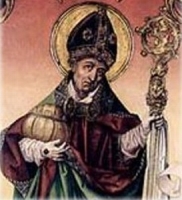
Saint Rupert of Salzburg

Profile
Rupert was a relative of Saint Ermentrude. Rupert became a Benedictine and Bishop of Worms, Germany. He was an evangelist to southern Germany.

In 696 Theodo, Duke of Bavaria, gave him the ruined town of Iuvavum, which Rupert rebuilt. There he founded the monastery of Saint Peter, serving as its first abbot, and a Benedictine convent. He worked with Saint Chuniald, Saint Vitalis of Salzburg, and Saint Gislar. To support the houses and his missionary work, he promoted the mining of salt, which led to the renaming of the place as Salzburg (salt mountain). He became the Bishop of Salzburg. and considered a confessor of the faith.

Born

  • probably in France

Died
718 in Salzburg, Austria

Patronage

• Salzburg, Austria, city of
• Salzburg, Austria, province of

Representation

  • man holding a container of salt (refers to Salzburg and the salt mining there)

Source: http://catholicsaints.mobi/calendar/27-march.htm

Saint Rupert of Salzburg Read More »

Matthew 26:14-16

Rejecting Empty Promises

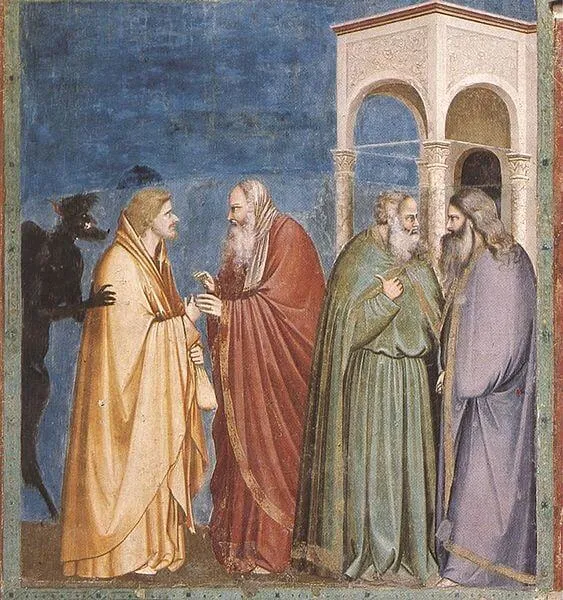
“One of the Twelve, who was called Judas Iscariot, went to the chief priests and said, ‘What are you willing to give me if I hand him over to you?’ They paid him thirty pieces of silver, and from that time on he looked for an opportunity to hand him over.”

Reflection:

The desire for money can become a powerful incentive to betray our Lord. In this Gospel passage, it seems clear that Judas’ betrayal was based on his desire for money. He most likely had some level of faith in our Lord, or he wouldn’t have become His disciple. But even if Judas did have some level of faith, his desire for money appeared to overshadow the faith he may have had.

One of the central lessons we can learn from Judas is that the desire for money is a powerful incentive for the decisions we make. So many of the great saints have taught us that the path to holiness consists, first, in a purification of all our disordered affections. And since one of the most powerful attachments that many struggle with is an attachment to money, this is an important desire to purify in all of our lives.

It’s true that material possessions are not evil when they are used for the fulfillment of God’s will. But the desire for more, for an excess, will always cloud our ability to see clearly the will of God and live for His glory alone.

Once Judas had betrayed our Lord and Jesus was arrested, recall that Judas “deeply regretted what he had done.” And during Jesus’ trial, Judas went back to the chief priests and said “I have sinned in betraying innocent blood” in an apparent attempt to stop the trial. But Jesus’ death was set in motion and could not be stopped. As a result, Judas returned the money and sadly went off to hang himself (See Matthew 27:3–5).

The desire Judas had for money clouded his thinking. And his sin did to him what sin always does. As soon as his sin of betrayal was done, Judas saw the consequences of that choice. And the consequences grieved him deeply. He learned that choosing sin ends with an empty promise. He realized that thirty pieces of silver was not worth the value of his soul. But of course, even then Judas could have repented and received the mercy of God. But he didn’t. He simply ended his life in ultimate despair.

Reflect, today, upon the witness of Judas. Use him as a source of meditation and self-examination this Holy Week. What is it in your life that you desire more than our Lord? What temptation clouds your thinking and leads you to choices that you know will end in emptiness? Strive to eradicate every disordered desire within you this day and choose wisely the will of God instead. Do not let yourself continue to believe the lies that keep you from making Jesus and His holy will the one and only focus of your life.

Source: https://catholic-daily-reflections.com/2024/03/26/rejecting-empty-promises-3/

Matthew 26:14-16 Read More »

Saint Braulio of Saragossa

Profile

Braulio was the son of Gregory of Osma, a Hispano-Roman bishop. He became a monk at Saint Engratia’s monastery, Zaragoza, Spain. He studied in Seville, Spain under Saint Isidore. He was ordained in 624 by his brother John, archbhishop of Zaragoza.

Braulio was the archdeacon to John. He became a Bishop in 631, and archbishop of Zaragoza. He was a noted scholar, writer, correspondent, and exceptional hagiographer. He was also an advisor to kings of Spain.

Braulio fought Arianism, and converted the Visigoths from the heresy. He attended councils in Toledo in 633, 636 and 638. He collaborated with Saint Isidore to create his encyclopedic work, the Etymologies, which partially led Isidore to be proffered as the patron of computers and the Internet. His eyesight became extremely poor as he aged; we have letters in which he complained bitterly of the loss, as it put a stop to his studies.

Born

  • c.590

Died

  • c.651 at Zaragoza, Spain of natural causes
  • buried in the church of Nuestra Senora Merced del Pilar

Patronage

in Spain

  • Aragon
  • Saragossa
  • University of Zaragoza

Canonized

  • Pre-Congregation

Source: https://catholicsaints.info/saint-braulio-of-saragossa/

Saint Braulio of Saragossa Read More »

John 13-31-32

The Glory of God in All Things

“Now is the Son of Man glorified, and God is glorified in him. If God is glorified in him, God will also glorify him in himself, and he will glorify him at once.”

Reflection:

Jesus speaks this line about Himself being glorified immediately after Judas leaves the supper to go forth to betray Him. Jesus had just finished washing the feet of His disciples, and soon He would finish the Last Supper, go to the Garden of Gethsemane, be arrested, beaten and crucified. And this was to all take place through the betrayal of one of the Twelve. Yet rather than speak of these pending events in a fearful or anxious way, Jesus points to the glory He will receive through them.

Everything in life has the potential to become an instrument of the glory of God. Even our sin can end in God’s glory when we repent and receive God’s forgiveness. It will not be our sin that glorifies God but His mercy poured forth from the Cross upon us that gives Him glory.

The same is true with the events of Holy Week. When looked at from a purely human perspective, what Jesus endured was tragic and horrific. One of His closest companions betrayed Him. The religious leaders of the time betrayed Him. The civil authorities betrayed Him. And all of the disciples except John fled in fear as Jesus was betrayed. But Jesus did not look at any of this through human eyes alone. He saw it all from the eternal perspective and clearly taught that all of these seemingly tragic events would end in His glory.

When we commit ourselves to the following of Christ, we can be assured that we will also share in His Cross. We will experience the sins of others, encounter mistreatment, and have to endure various sufferings. The question for us all as we have these encounters in life is whether we will endure them in anger and despair or with the hopeful confidence of our Lord. Again, everything in life has the potential to become an instrument of the glory of God. Nothing in life has the power to steal away that glory when we keep our eyes upon the will of God and His power to use all for His glory.

Reflect, today, upon your call in life to see everything from the divine perspective. If you are upset, angry, despairing or confused at times, know that God wants to bring clarity and grace to every situation. He wants to show you how you can share in His divine mission of transforming every evil into God’s glory. Seek out the ways that your life must give glory to God in everything, especially those things that seem incapable of being used for good. The more an experience in life seems incapable of being used for God’s glory, the more that experience is capable of giving true glory to God.

Source: https://catholic-daily-reflections.com/2024/03/25/the-glory-of-god-in-all-things-3/

John 13-31-32 Read More »

Annunciation of the Lord

In the fifth century, bishops engaged in a fierce theological debate over the unity of the divine and human natures of Christ, referred to as the “hypostatic union.” Nestorius, the Archbishop of Constantinople, argued that there were two underlying hypostases, or substances, in Christ, one human and one divine. He believed that the humanity of Christ was born of the Virgin Mary, but not His divinity.

Therefore, Nestorius believed Mary should only be called the “Christ-bearer” and not the “God-bearer” (Theotokos). Saint Cyril, the Archbishop of Alexandria, argued that the divine and human natures of Jesus were united in one hypostasis. Divinity and humanity were perfectly united and, therefore, Mary is properly called the Theotokos, or “Mother of God,” not just the “Mother of Christ.” God was born of her, not just His body.

Mary conceived a Person in her womb, and that Person was both God and man, perfectly united as one. In 431 the Church held a council at Ephesus at which Cyril’s position was adopted and Nestorius’ position was condemned. Nestorius was then removed as Archbishop of Constantinople.

The Solemnity we celebrate today came into practice around the time of this controversy, possibly as a way of emphasizing the theological teaching that emerged from the Council of Ephesus. Throughout Church history, when a theological truth is defined, that truth is then celebrated liturgically as a lived expression of the Church’s faith.

The date of this celebration is interesting. It is set nine months before Christmas, but most likely, the date of Christmas was set nine months after the Annunciation. Many early Christians believed that Jesus’ death occurred on March 25, and, therefore, His Incarnation must have also taken place on this day. Interestingly, as early as the third century, it has been suggested that March 25 was also the date of the creation of Adam, the fall of Adam, the fall of the angels, the sacrifice of Isaac by Abraham, and the passing of the Israelites through the Red Sea.

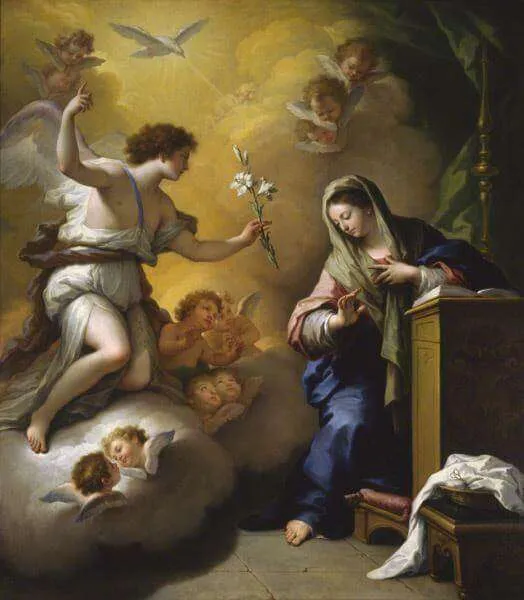
Today’s celebration of the Solemnity of the Annunciation of the Lord recalls the historical event of the Angel Gabriel appearing to the Virgin Mary, as found in Luke 1:26–38. It also celebrates the Church’s faith in the underlying reality that took place at that moment in time. It celebrates the Incarnation, making this solemnity not only a Marian solemnity, but first and foremost a Christological one. Though Christmas commemorates the birth of Christ, the Annunciation commemorates the Incarnation within the womb of the Blessed Virgin Mary.

Most certainly, this solemnity is also a Marian celebration. We celebrate the Virgin Mary’s perfect “Yes” to the plan of the Father. We celebrate her humility, obedience, docility, and especially her motherhood of God and man.

This solemnity is also a celebration of the Father in Heaven because it reveals the beginning of the pinnacle of His perfect plan of salvation. That moment in time, the moment of the Incarnation, holds significance beyond comprehension. This moment was in the mind of the Father in Heaven from all eternity and took place in a hidden way, known only to this lowly and humble virgin.

As we celebrate this glorious solemnity, ponder all these central mysteries of our faith. Faith must be celebrated, not only believed. It must be proclaimed, rejoiced in, loved, and lived. Profess your faith in the Incarnation and seek the intercession of the Virgin Mary. Ask her to pray for you that you may imitate her “Yes” to the will of the Father in Heaven, so that you can continue to bring forth His divine Son in your soul, so that He will continue to be made manifest to the world through you.

Source: https://mycatholic.life/saints/saints-of-the-liturgical-year/march-25-annunciation-of-the-lord/

Annunciation of the Lord Read More »

John 12:4-5

Expressing Your Love of God

Then Judas the Iscariot, one of his disciples, and the one who would betray him, said, “Why was this oil not sold for three hundred days’ wages and given to the poor?”

Reflection:

Jesus was with His disciples at the home of Lazarus, Martha and Mary. He regularly spent time at their home and was close to them. This meal took place just before Jesus entered into Jerusalem for the first Palm Sunday and Holy Week. It was six days before Jesus would die on the cross.

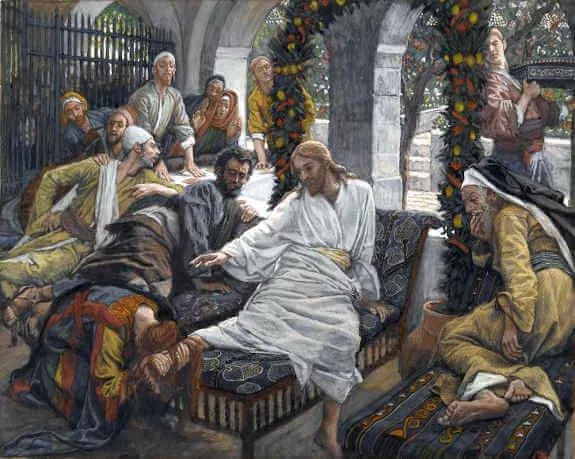
Recall that Lazarus had recently been raised from the dead by Jesus and also that Mary, Lazarus’ sister, was deeply devoted to Jesus and is recorded as the one who sat at His feet, while her sister Martha served. During this visit, Mary offered another act of devotion to Jesus when she anointed Him with “a liter of costly perfumed oil.” She offered Him an act of love and devotion. The Scripture passage above records Judas’ response as he also was at the meal. Jesus rebukes Judas and defends the act of devotion given by Mary, and the meal continues on. 

One clear lesson this teaches us is that nothing is too good for our Lord. It’s true that we must do our part to help care for the poor, but Jesus’ response to Judas is quite interesting. He says, “Leave her alone. Let her keep this for the day of my burial. You always have the poor with you, but you do not always have me.” Jesus was not downplaying the importance of caring for the poor; He was emphasizing the importance of offering acts of love and devotion to Him.

As we enter into this the holiest week of the year, we are given this image of Mary lavishing upon Jesus this liter of costly perfumed oil as a way of inviting us to do the same. Though we serve Christ in others who are in need, we must also seek to regularly offer Him devotion and love directly, even in ways that others may think is excessive. Honoring Him, expressing our love, spending time with various devotions, praying for extended periods of time, and even offering Him our financial resources are all ways in which we give Jesus the glory that is due Him.

Reflect, today, upon ways in which you can imitate this act of loving devotion offered by Mary to Jesus. In what ways can you pour forth in an abundant way your time, money, talents, and energy upon our Lord? How can you best express your devotion to Him this Holy Week? Seek out ways to do this directly for the one and simple reason that you love our Lord and want to express that love this week.

Source: https://catholic-daily-reflections.com/2024/03/24/expressing-your-love-of-god-3/

John 12:4-5 Read More »

Palm Sunday: Sixth Sunday of Lent

At the Procession with Palms - Gospel Mk 11:1-10

When Jesus and his disciples drew near to Jerusalem,
to Bethphage and Bethany at the Mount of Olives, 
he sent two of his disciples and said to them, 
“Go into the village opposite you,
and immediately on entering it, 
you will find a colt tethered on which no one has ever sat.
Untie it and bring it here.
If anyone should say to you,
‘Why are you doing this?’ reply,
‘The Master has need of it
and will send it back here at once.’”
So they went off 
and found a colt tethered at a gate outside on the street, 
and they untied it.
Some of the bystanders said to them, 
“What are you doing, untying the colt?”
They answered them just as Jesus had told them to, 
and they permitted them to do it.
So they brought the colt to Jesus
and put their cloaks over it.
And he sat on it.
Many people spread their cloaks on the road, 
and others spread leafy branches 
that they had cut from the fields.
Those preceding him as well as those following kept crying out:
    “Hosanna!
        Blessed is he who comes in the name of the Lord!
        Blessed is the kingdom of our father David that is to come!
    Hosanna in the highest!”

First Reading Isaiah 50:4-7

The Lord GOD has given me
    a well-trained tongue,
that I might know how to speak to the weary
    a word that will rouse them.
Morning after morning
    he opens my ear that I may hear;
and I have not rebelled,
    have not turned back.
I gave my back to those who beat me,
    my cheeks to those who plucked my beard;
my face I did not shield
    from buffets and spitting.

The Lord GOD is my help,
    therefore I am not disgraced;
I have set my face like flint,
    knowing that I shall not be put to shame.

Responsorial Psalm 22:8-9, 17-18, 19-20, 23-24

R. (2a)  My God, my God, why have you abandoned me?
All who see me scoff at me;
    they mock me with parted lips, they wag their heads:
“He relied on the LORD; let him deliver him,
    let him rescue him, if he loves him.”
R. My God, my God, why have you abandoned me?
Indeed, many dogs surround me,
    a pack of evildoers closes in upon me;
They have pierced my hands and my feet;
    I can count all my bones.
R. My God, my God, why have you abandoned me?
They divide my garments among them,
    and for my vesture they cast lots.
But you, O LORD, be not far from me;
    O my help, hasten to aid me.
R. My God, my God, why have you abandoned me?
I will proclaim your name to my brethren;
    in the midst of the assembly I will praise you:
“You who fear the LORD, praise him;
    all you descendants of Jacob, give glory to him;
    revere him, all you descendants of Israel!”
R. My God, my God, why have you abandoned me?

Second Reading Philippians 2:6-11

Christ Jesus, though he was in the form of God,
    did not regard equality with God
    something to be grasped.
Rather, he emptied himself,
    taking the form of a slave,
    coming in human likeness;
    and found human in appearance,
    he humbled himself,
    becoming obedient to the point of death,
    even death on a cross.
Because of this, God greatly exalted him
    and bestowed on him the name
    which is above every name,
    that at the name of Jesus
    every knee should bend,
    of those in heaven and on earth and under the earth,    
    and every tongue confess that
    Jesus Christ is Lord,
    to the glory of God the Father.

Verse before the Gospel Philippians 2:8-9

Christ became obedient to the point of death,
even death on a cross.
Because of this, God greatly exalted him
and bestowed on him the name which is above every name.

Gospel Mark 14:1—15:47

The Passover and the Feast of Unleavened Bread 
were to take place in two days’ time.
So the chief priests and the scribes were seeking a way 
to arrest him by treachery and put him to death.
They said, “Not during the festival, 
for fear that there may be a riot among the people.”

When he was in Bethany reclining at table 
in the house of Simon the leper, 
a woman came with an alabaster jar of perfumed oil,
costly genuine spikenard.
She broke the alabaster jar and poured it on his head.
There were some who were indignant.
“Why has there been this waste of perfumed oil?
It could have been sold for more than three hundred days’ wages 
and the money given to the poor.”
They were infuriated with her.
Jesus said, “Let her alone.
Why do you make trouble for her?
She has done a good thing for me.
The poor you will always have with you, 
and whenever you wish you can do good to them, 
but you will not always have me.
She has done what she could.
She has anticipated anointing my body for burial.
Amen, I say to you,
wherever the gospel is proclaimed to the whole world,
what she has done will be told in memory of her.”

Then Judas Iscariot, one of the Twelve, 
went off to the chief priests to hand him over to them.
When they heard him they were pleased and promised to pay him money.
Then he looked for an opportunity to hand him over.

On the first day of the Feast of Unleavened Bread, 
when they sacrificed the Passover lamb, 
his disciples said to him,
“Where do you want us to go
and prepare for you to eat the Passover?”
He sent two of his disciples and said to them, 
“Go into the city and a man will meet you,
carrying a jar of water.
Follow him.
Wherever he enters, say to the master of the house,
‘The Teacher says, “Where is my guest room
where I may eat the Passover with my disciples?”’
Then he will show you a large upper room furnished and ready.
Make the preparations for us there.”
The disciples then went off, entered the city, 
and found it just as he had told them; 
and they prepared the Passover.

When it was evening, he came with the Twelve. 
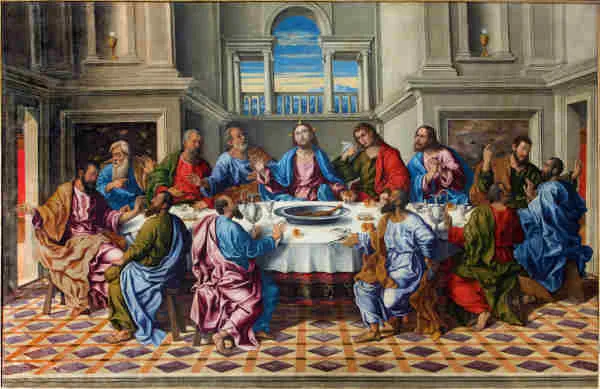
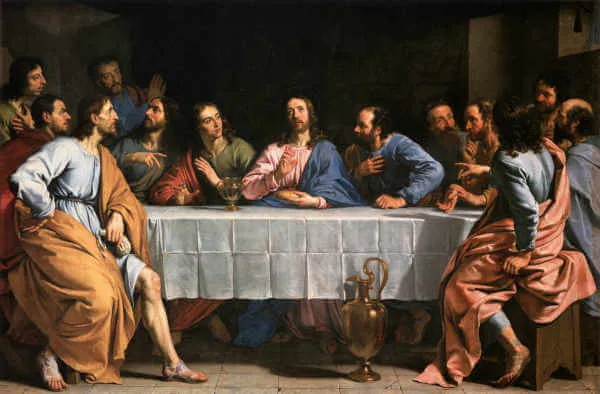
And as they reclined at table and were eating, Jesus said,
“Amen, I say to you, one of you will betray me, 
one who is eating with me.”
They began to be distressed and to say to him, one by one,
“Surely it is not I?”
He said to them,
“One of the Twelve, the one who dips with me into the dish.
For the Son of Man indeed goes, as it is written of him,
but woe to that man by whom the Son of Man is betrayed.
It would be better for that man if he had never been born.”

While they were eating,
he took bread, said the blessing,
broke it, and gave it to them, and said, 
“Take it; this is my body.”
Then he took a cup, gave thanks, and gave it to them, 
and they all drank from it.
He said to them,
“This is my blood of the covenant,
which will be shed for many.
Amen, I say to you,
I shall not drink again the fruit of the vine 
until the day when I drink it new in the kingdom of God.”
Then, after singing a hymn,
they went out to the Mount of Olives.

Then Jesus said to them, 
“All of you will have your faith shaken, for it is written:
    I will strike the shepherd,
        and the sheep will be dispersed.

But after I have been raised up,
I shall go before you to Galilee.”
Peter said to him, 
“Even though all should have their faith shaken,
mine will not be.”
Then Jesus said to him,
“Amen, I say to you, 
this very night before the cock crows twice
you will deny me three times.”
But he vehemently replied, 
“Even though I should have to die with you,
I will not deny you.”
And they all spoke similarly.

Then they came to a place named Gethsemane,
and he said to his disciples,
“Sit here while I pray.”
He took with him Peter, James, and John, 
and began to be troubled and distressed.
Then he said to them, “My soul is sorrowful even to death.
Remain here and keep watch.”
He advanced a little and fell to the ground and prayed
that if it were possible the hour might pass by him; 
he said, “Abba, Father, all things are possible to you.
Take this cup away from me,
but not what I will but what you will.”
When he returned he found them asleep.
He said to Peter, “Simon, are you asleep?
Could you not keep watch for one hour?
Watch and pray that you may not undergo the test.
The spirit is willing but the flesh is weak.”
Withdrawing again, he prayed, saying the same thing.
Then he returned once more and found them asleep, 
for they could not keep their eyes open 
and did not know what to answer him.
He returned a third time and said to them, 
“Are you still sleeping and taking your rest?
It is enough.  The hour has come.
Behold, the Son of Man is to be handed over to sinners.
Get up, let us go.
See, my betrayer is at hand.”

Then, while he was still speaking,
Judas, one of the Twelve, arrived, 
accompanied by a crowd with swords and clubs 
who had come from the chief priests,
the scribes, and the elders.
His betrayer had arranged a signal with them, saying, 
“The man I shall kiss is the one; 
arrest him and lead him away securely.”
He came and immediately went over to him and said,
“Rabbi.”  And he kissed him.
At this they laid hands on him and arrested him.
One of the bystanders drew his sword,
struck the high priest’s servant, and cut off his ear.
Jesus said to them in reply,
“Have you come out as against a robber, 
with swords and clubs, to seize me?
Day after day I was with you teaching in the temple area, 
yet you did not arrest me; 
but that the Scriptures may be fulfilled.”
And they all left him and fled.
Now a young man followed him
wearing nothing but a linen cloth about his body.
They seized him,
but he left the cloth behind and ran off naked.

They led Jesus away to the high priest,
and all the chief priests and the elders and the scribes came together.
Peter followed him at a distance into the high priest’s courtyard 
and was seated with the guards, warming himself at the fire.
The chief priests and the entire Sanhedrin
kept trying to obtain testimony against Jesus 
in order to put him to death, but they found none.
Many gave false witness against him,
but their testimony did not agree.
Some took the stand and testified falsely against him,
 alleging, “We heard him say,
‘I will destroy this temple made with hands
and within three days I will build another
not made with hands.’”
Even so their testimony did not agree.
The high priest rose before the assembly and questioned Jesus,
saying, “Have you no answer?
What are these men testifying against you?”
But he was silent and answered nothing.
Again the high priest asked him and said to him, 
“Are you the Christ, the son of the Blessed One?”
Then Jesus answered, “I am;
and ‘you will see the Son of Man
seated at the right hand of the Power
and coming with the clouds of heaven.’”
At that the high priest tore his garments and said,
“What further need have we of witnesses?
You have heard the blasphemy.
What do you think?”
They all condemned him as deserving to die.
Some began to spit on him.
They blindfolded him and struck him and said to him, “Prophesy!”
And the guards greeted him with blows.

While Peter was below in the courtyard,
one of the high priest’s maids came along.
Seeing Peter warming himself,
she looked intently at him and said,
“You too were with the Nazarene, Jesus.”
But he denied it saying,
“I neither know nor understand what you are talking about.”
So he went out into the outer court.
Then the cock crowed.
The maid saw him and began again to say to the bystanders,
“This man is one of them.”
Once again he denied it.
A little later the bystanders said to Peter once more,
“Surely you are one of them; for you too are a Galilean.”
He began to curse and to swear, 
“I do not know this man about whom you are talking.”
And immediately a cock crowed a second time.
Then Peter remembered the word that Jesus had said to him,
“Before the cock crows twice you will deny me three times.”
He broke down and wept.

As soon as morning came, 
the chief priests with the elders and the scribes, 
that is, the whole Sanhedrin held a council.
They bound Jesus, led him away, and handed him over to Pilate.
Pilate questioned him,
“Are you the king of the Jews?”
He said to him in reply, “You say so.”
The chief priests accused him of many things.
Again Pilate questioned him,
“Have you no answer?
See how many things they accuse you of.”
Jesus gave him no further answer, so that Pilate was amazed.

Now on the occasion of the feast he used to release to them
one prisoner whom they requested.
A man called Barabbas was then in prison 
along with the rebels who had committed murder in a rebellion.
The crowd came forward and began to ask him
to do for them as he was accustomed.
Pilate answered, 
“Do you want me to release to you the king of the Jews?”
For he knew that it was out of envy 
that the chief priests had handed him over.
But the chief priests stirred up the crowd 
to have him release Barabbas for them instead.
Pilate again said to them in reply,
“Then what do you want me to do 
with the man you call the king of the Jews?”
They shouted again, “Crucify him.”
Pilate said to them, “Why?  What evil has he done?”
They only shouted the louder, “Crucify him.”
So Pilate, wishing to satisfy the crowd,
released Barabbas to them and, after he had Jesus scourged,
handed him over to be crucified.

The soldiers led him away inside the palace, 
that is, the praetorium, and assembled the whole cohort.
They clothed him in purple and, 
weaving a crown of thorns, placed it on him.
They began to salute him with, “Hail, King of the Jews!” 
and kept striking his head with a reed and spitting upon him.
They knelt before him in homage.
And when they had mocked him,
they stripped him of the purple cloak,
dressed him in his own clothes,
and led him out to crucify him.

They pressed into service a passer-by, Simon,
a Cyrenian, who was coming in from the country,
the father of Alexander and Rufus,
to carry his cross.

They brought him to the place of Golgotha
— which is translated Place of the Skull —,
They gave him wine drugged with myrrh,
but he did not take it.
Then they crucified him and divided his garments 
by casting lots for them to see what each should take.
It was nine o’clock in the morning when they crucified him.
The inscription of the charge against him read,
“The King of the Jews.”
With him they crucified two revolutionaries, 
one on his right and one on his left.
Those passing by reviled him,
shaking their heads and saying,
“Aha!  You who would destroy the temple
and rebuild it in three days,
save yourself by coming down from the cross.”
Likewise the chief priests, with the scribes, 
mocked him among themselves and said, 
“He saved others; he cannot save himself.
Let the Christ, the King of Israel,
come down now from the cross
that we may see and believe.”
Those who were crucified with him also kept abusing him.

At noon darkness came over the whole land
until three in the afternoon.
And at three o’clock Jesus cried out in a loud voice, 
“Eloi, Eloi, lema sabachthani?”
which is translated,
“My God, my God, why have you forsaken me?”
Some of the bystanders who heard it said, 
“Look, he is calling Elijah.”
One of them ran, soaked a sponge with wine, put it on a reed 
and gave it to him to drink saying, 
“Wait, let us see if Elijah comes to take him down.”
Jesus gave a loud cry and breathed his last.

        Here all kneel and pause for a short time.

The veil of the sanctuary was torn in two from top to bottom.
When the centurion who stood facing him
saw how he  breathed his last he said, 
“Truly this man was the Son of God!”
There were also women looking on from a distance.
Among them were Mary Magdalene, 
Mary the mother of the younger James and of Joses, and Salome.
These women had followed him when he was in Galilee
and ministered to him.
There were also many other women
who had come up with him to Jerusalem.

When it was already evening,
since it was the day of preparation,
the day before the sabbath, Joseph of Arimathea,
a distinguished member of the council,
who was himself awaiting the kingdom of God,
came and courageously went to Pilate
and asked for the body of Jesus.
Pilate was amazed that he was already dead.
He summoned the centurion
and asked him if Jesus had already died.
And when he learned of it from the centurion, 
he gave the body to Joseph.
Having bought a linen cloth, he took him down,
wrapped him in the linen cloth,
and laid him in a tomb that had been hewn out of the rock.
Then he rolled a stone against the entrance to the tomb.
Mary Magdalene and Mary the mother of Joses
watched where he was laid.

Source: https://bible.usccb.org/bible/readings/032424.cfm
Palm Sunday: Sixth Sunday of Lent Read More »

Palm Sunday of the Lord’s Passion

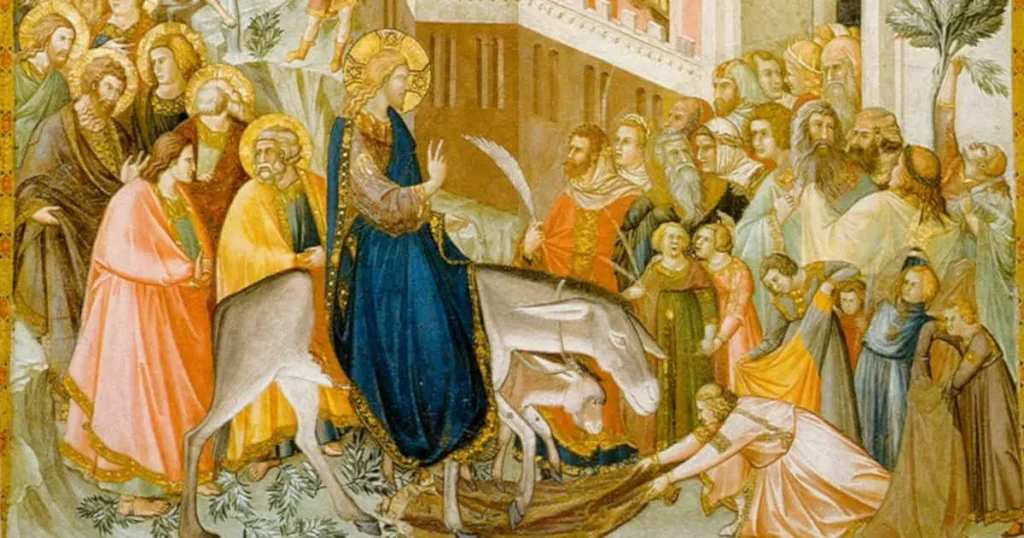
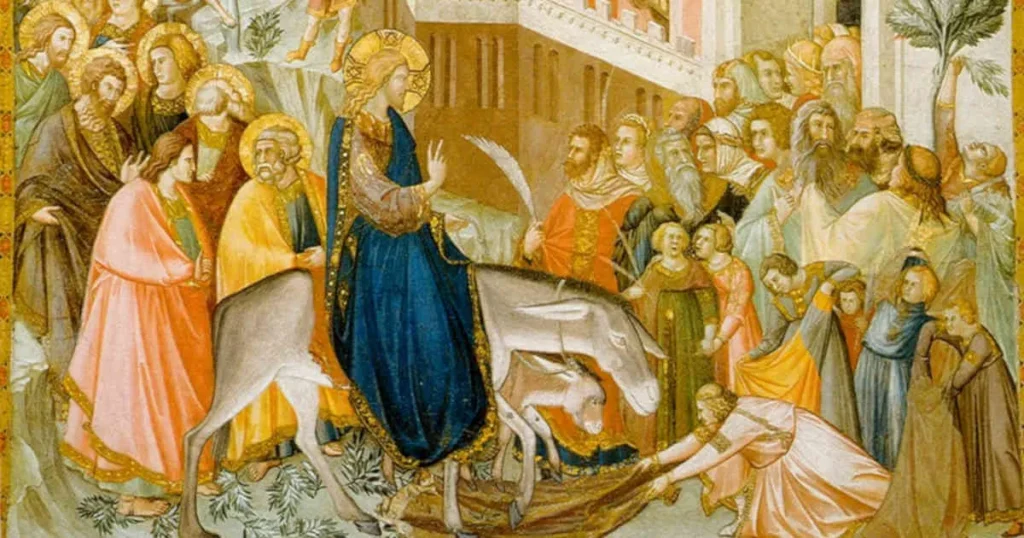
This day could be thought of as a day of contradiction. The Mass begins with the reading of Jesus’ triumphal entry into Jerusalem and His joyous reception by the crowds who strewed palm branches before Him, crying out, “Hosanna to the Son of David; blessed is he who comes in the name of the Lord; hosanna in the highest.” Today, this inspiring scene is commemorated by processions of the faithful carrying palm branches into their churches. The contradiction, however, is experienced as the full narrative of the Passion of Christ is read, culminating with Jesus’ death on the Cross.

But is it a contradiction? Is His glorious entrance into Jerusalem at the beginning of the week in any way opposed to His crucifixion? Certainly not. From a worldly perspective, for someone who lacks the ability to penetrate this mystery with the eyes of faith, the week ends in tragedy. But from the perspective of the Eternal Father, the welcome Jesus receives as He enters Jerusalem is the welcome given to the Savior of the World. His Cross would become the culmination of that act of salvation. For that reason, His entrance into that holy city was rightly celebrated with great joy, even though the people did not yet understand that the throne their new King would mount was the Cross.

As early as the fourth century, the diary of one traveler to Jerusalem records how the faithful reenacted Jesus’ triumphal entry:

And as the eleventh hour approaches, the passage from the Gospel is read, where the children, carrying branches and palms, met the Lord, saying; Blessed is He that cometh in the name of the Lord, and the bishop immediately rises, and all the people with him, and they all go on foot from the top of the Mount of Olives, all the people going before him with hymns and antiphons, answering one to another: Blessed is He that cometh in the Name of the Lord. And all the children in the neighborhood, even those who are too young to walk, are carried by their parents on their shoulders, all of them bearing branches, some of palms and some of olives, and thus the bishop is escorted in the same manner as the Lord was of old (The Pilgrimage of Etherea).

Though very few Christians are able to celebrate Passion Sunday in Jerusalem, walking from the Mount of Olives to the city gate, we are all invited to do so spiritually, meditatively, and interiorly. Our participation is not just the recalling of a historic event; it’s a real participation in that event. Our hearts must begin outside of Jerusalem’s gate today, and we must courageously and joyfully accompany our Lord into that holy city. During that first Holy Week, the people’s joy arose from their belief that Jesus would be an earthly ruler Who would free them from Roman oppression. Today, we are privileged to express our joyous acclamations as we spiritually accompany our Lord to the city of His crucifixion, because we know that Jesus’ Kingship is so much more than an earthly triumph. His triumph is an eternal one that invites us to share in His Eternity. His triumph is a sacrificial one that invites us to share in His Sacrificial Love. His triumph is a glorious one that invites us to share in the Glory of His Resurrection.

Walk with our Lord today into that holy city of Jerusalem. As you do, know that the earthly city of Jerusalem is also now a spiritual one. The events that took place there two millennia ago transcend and permeate all time. As a result, the events of Holy Week today are just as significant as they were long ago. Through the Mass, we are there. We walk with our Lord, witness all He accomplished, receive His Body and Blood sacrificed on the Cross and memorialized in the Eucharist, and are resurrected with Him on the third day. Commit yourself to this journey today, an eternal pilgrimage with our Lord to the Eternal City of Heaven.

Source: https://mycatholic.life/saints/saints-of-the-liturgical-year/palm-sunday-of-the-lords-passion

Palm Sunday of the Lord’s Passion Read More »