Author name: Sani

John 6:51

The Flesh of Our Lord

“I am the living bread that came down from heaven; whoever eats this bread will live forever; and the bread that I will give is my Flesh for the life of the world.”

Reflection:

Jesus was starting to stir up the emotions of some within the crowd. They began to ridicule Him because He had said that He was the “bread that had come down from heaven.” Thus, many of those who had sought Jesus out in hopes of another miraculous free meal began to murmur among themselves and ridicule Him. As a result, Jesus began to speak even more clearly and shockingly. He then went even further and said that He is not only the “living bread that came down from heaven” but that those who want to “live forever” must also eat His “Flesh.”

How would you have reacted to such a statement if you were among those within the crowd? Consider the fact that you would have recently seen, with your own eyes, the miracle of the multiplication of the loaves and fishes. Therefore, you would have realized that Jesus was someone special, to say the least. But how would you have reacted to this statement of Jesus, “and the bread that I will give is my Flesh for the life of the world,” if you had heard it spoken at that time? Most likely, your reaction would have been the same reaction that you have right now to the teaching of the Most Holy Eucharist.

Many who heard Jesus speak this way may have thought it was a bit of an unusual thing to say. Some would have reacted strongly, while others would have reacted with indifference. But some would have had an entirely different reaction. Some would have heard Jesus speak these new and shocking words, would have realized that they did not fully understand what He meant, but would have believed deeply on account of the gift of faith. Somehow they would have known, in the depths of their consciences, that they did indeed need to eat the Flesh of Him Who came down from Heaven since He was indeed the Bread of Life.

Believing in the Eucharist, in the fact that these tangible and visible gifts of the Sacred Host and the Precious Blood are, in fact, the Body and Blood, Soul and Divinity of the Eternal Son of God, can only happen through the interior and transforming gift of faith. How else can you believe such a teaching? How else could you believe that these words in today’s Gospel have come true? And that the reception of the Most Holy Eucharist is the pathway to eternal life? The gift of faith in the Most Holy Eucharist is the one and only way to understand, accept and deeply believe what our Lord has spoken in this Holy Gospel.

Reflect, today, upon Jesus speaking these most holy words for the first time: “…the bread that I will give is my Flesh for the life of the world.” As you prayerfully reflect upon these words, ponder how deeply you believe them. How deep is your faith in the Most Holy Eucharist? The Eucharist is the fulfillment of this passage, and our divine Lord invites you to not only believe in His holy words but to allow this truth to transform you in ways beyond what you could ever imagine.

Source: https://catholic-daily-reflections.com/2024/04/17/the-flesh-of-our-lord-3/

John 6:51 Read More »

Saint Robert of Molesme

Profile

Robert was born to the French nobility. He became a Benedictine monk in 1044. He was a prior of Moutiers-la-Celle Abbey and an Abbot of Saint-Michel-de-Tonnerre, but considered it to have lax standards. He was also a prior of Saint-Ayeul Abbey. In 1075, in an attempt to return to a simpler form of Benedictine life requested by a group of hermits from the forests around Colan, France, he helped found the monastery at Molesme, Burgundy. The group, especially Robert, gained a reputation for piety, which led to bequests of cash, which led to an increase in size of the monastery, which led to internal difficulties, and suddenly there were many brothers that objected to the severe life practiced by the founders. Robert twice left to live on his own, but was ordered back to his position by the pope.

In early 1098 Robert, Saint Stephen Harding, Saint Alberic of Citeaux and 18 other monks left Molesme, and on 21 March they founded the monastery of Cîteaux near Dijon, France, with the goal of living strictly by the Benedictine Rule, strict vows of poverty, and frequent retreats; Robert served as the first abbot. However, with conditions deteriorating at the Molesme house, he was re-assigned as abbot there in 1100 with a mandate to reform; he lived and worked there the rest of his life. Traditionally, he was considered as one of the founders of the Cistercians, the reform that developed at Citeaux.

Born

  • 1027 near Troyes, Champagne (in modern France)

Died

  • 21 March 1110 of natural causes

Canonized

  • 1222 by Pope Honorius III

Source: http://catholicsaints.mobi/calendar/17-april.htm

Saint Robert of Molesme Read More »

John 6:40

Holy Sight

“For this is the will of my Father, that everyone who sees the Son and believes in him may have eternal life, and I shall raise him on the last day.”

Reflection:

Do you believe in Jesus? Unquestionably the answer is “Yes.” However, to believe in our Lord is something that must deepen with every passing day. Therefore, if you do have faith in Jesus, you can also admit that you do not have faith enough. In this Gospel passage in which the “Bread of Life Discourse” is continued, Jesus calls us to do two things. First, we must see Him. Second, we must believe. Let’s start with the first.

When Jesus first spoke these words to the crowd, they did see His physical presence. But many of them did not see beyond the surface. They saw His miracles, heard His teaching, but very few saw the deeper reality of Jesus as the Son of the Eternal Father and the Savior of the World.

If you are to believe in our Lord and all that He is, then you must first see Him. One of the best ways to foster this “holy sight” of our Lord is to gaze at Him in the Most Holy Eucharist. When you attend Mass or spend time in adoration and  look upon the Most Holy Eucharist, what do you see? Do you see the Eternal Son? Do you see His holy divinity? Do you see your God and the Lord of all?

As we stand or kneel before our Lord, present in the Most Holy Eucharist, it’s easy to become distracted. It’s easy to allow our minds to wander to the many other aspects of our daily lives and to fail to see the eternal Son of God as He is present to us.

Reflect, today, upon the way you look at our Lord. If you want to deepen your faith, your belief, then start with your sight. Start by considering how you look at Jesus, present in the Most Holy Eucharist. If you are blessed to be with Him this day at the Holy Mass or in adoration, examine the way to see Him. Gaze at Him. Make an intentional act of faith in His divine presence. Acknowledge His Godhead, His glory, His holiness and His sacred presence. If you can look beyond the surface and lift the veil that covers His glory, then this holy gift of sight will give way, also, to the gift of profound faith.

Source: https://catholic-daily-reflections.com/2024/04/16/holy-sight-3/ 

John 6:40 Read More »

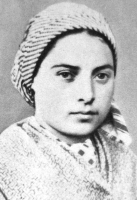
Saint Bernadette of Lourdes

Profile

Bernadette was the oldest of six children born to François and Louise Casterot, and grew up very poor. She was hired out as a servant from age 12 to 14. She was a shepherdess. On 11 February 1858, around the time of her first Communion, she received a vision of the Virgin; she received seventeen more in the next five months, and was led to a spring of healing waters. She moved into a house with the Sisters of Nevers at Lourdes where she lived, worked, and learned to read and write. The sisters cared for the sick and indigent, and at age 22 they admitted Bernadette into their order since she was both. Always sick herself, and often mistreated by her superiors, she died with a prayer for Mary’s aid. Since the appearances of Mary to young Bernadette in 1858, more than 200 million people have visited the shrine of Lourdes.

Born

  • 7 January 1844 at Lourdes, Hautes-Pyrénées, France

Died

  • 16 April 1879, Nevers, Nièvre, France of natural causes
  • body incorrupt
  • the sisters covered the body in wax, and it is on display in Nevers

Canonized

  • 8 December 1933 by Pope Pius XI

Patronage

  • against bodily ills, illness and sickness
  • against poverty
  • Lourdes, France
  • people ridiculed for their piety
  • poor people
  • shepherdesses
  • shepherds
  • sick people

Source: http://catholicsaints.mobi/calendar/16-april.htm

Saint Bernadette of Lourdes Read More »

John 6:34-35

The Bread of Life

So they said to Jesus, “Sir, give us this bread always.” Jesus said to them, “I am the bread of life; whoever comes to me will never hunger, and whoever believes in me will never thirst.”

Reflection:

Imagine if you were to never grow hungry or never thirst again. On a natural level, this would be an interesting reality. Of course, if you never had physical hunger or thirst, then you may never enjoy the delight of good food and drink. So why would anyone want to lose out on such delights?

Of course, Jesus was not speaking of natural food and drink, He was speaking of supernatural hunger and thirst. And He was not saying that the spiritual food and drink He came to give us would eliminate our ability to delight in spiritual fulfillment. On the contrary, Jesus was saying that the spiritual food and drink He was to provide would result in never-ending fulfillment and satisfaction.

Chapter 6 of John’s Gospel will continue to be read throughout this week, the Third Week of Easter. This chapter presents us with what is traditionally called the “Bread of Life Discourse.” It’s John’s deep, mystical and profound teaching on the Most Holy Eucharist.

First of all, it’s useful to look at this Gospel within its context. Recall that on the previous day, Jesus performed the miracle of the multiplication of the loaves and fishes, and a crowd of people who had been fed by Him were now seeking more food. Jesus uses their desire for more food to begin to teach them about the Most Holy Eucharist, and He wants to do the same for you.

Put yourself into this scene. What is it that you hunger and thirst for the most? Perhaps you have plenty of physical food, but perhaps you don’t. If you do, what else do you crave? What do you desire? When you have identified your deepest desires right now, use these desires to allow our Lord to teach you about the Bread of Life. It might be useful to say to our Lord, “Here are my current desires in life…” And then, allow yourself to hear Jesus say to you, “I want to give you so much more. I am what you truly long for. If you come to Me, you will have all your desires fulfilled and more.” This is essentially the conversation Jesus had with this crowd throughout John Chapter 6.

Do you believe that the Most Holy Eucharist is capable of fulfilling you on the deepest level? Too often we approach that Sacrament in a lazy and distracted way. As a result, we often fail to truly receive our Lord on a level that provides this deepest delight and satisfaction.

Reflect, today and throughout this week, upon your approach to Holy Communion. The Eucharist is Christ Himself. It’s a gift that has the potential to not only sustain us in every way but also to draw us into the greatest Heavenly delights. Believe Jesus’ words in this holy chapter of John’s Gospel. For if you deepen your belief in all that Jesus has said, you will begin to realize that all you crave in life will begin to be fulfilled by this precious gift in ways beyond your imagination.

Source: https://catholic-daily-reflections.com/2024/04/15/the-bread-of-life-2/

John 6:34-35 Read More »

Saint Cesar de Bus

Profile
Cesar was a middle child – the seventh of thirteen children, and raised as a pious child. He was a soldier at age 18, and fought in the war against the Huguenots. He joined the navy to fight in the siege of La Rochelle, but illness kept him from the fight. He lived for three years in Paris, France, devoted to poetry and painting and to wild and frivolous living. Back in his home town of Cavaillon, he took over the position of his late brother as canon of Salon, a position he wanted for its income and connections instead of its spiritual significance. One night while on his way to a masked ball, he passed a shrine where a small light was burning before an image of the Virgin Mary. He was suddenly overwhelmed by the memory that a friend, Antoinette Reveillade, had prayed fervently for his salvation. He realized that there was no way he could live a life offending God and then expect to be accepted in the end. There, on the road, he had a complete conversion.

Cesar was ordained in 1582. He was appointed canon in Avignon. He was profoundly affected reading a biography of Saint Charles Borromeo, and tried to take him as a model in all things, especially his devotion to catechesis. He worked as a catechist in Aix-in-Provence, France, an area in turmoil following the Religious Wars. Saint Francis de Sales called him “a star of the first magnitude in the firmament of Catechesis.” He founded the Ursulines of Province and the Fathers of Christian Doctrine (Doctrinarians). The Fathers were destroyed during the French Revolution, but an Italian branch, the Doctrinarian Fathers continues today with houses in Italy, France and Brazil.

Born

  • 3 February 1544 in Cavillon, Vaucluse, France

Died

  • Easter Sunday, 15 April 1607 in Avignon, Vaucluse, France of natural causes
  • interred in the church of Saint Mary in Monticelli in Rome, Italy

Canonized

  • 15 May 2022 by Pope
  • the canonization miracle involved the healing a young woman of “meningitis in patient with cerebral hemorrhage” in 2016 in Salerno, Italy

Patronage

  • catechists

Source: http://catholicsaints.mobi/calendar/15-april.htm 

Saint Cesar de Bus Read More »

John 6:25-27

Food for Eternity

“Rabbi, when did you get here?” Jesus answered them and said, “Amen, amen, I say to you, you are looking for me not because you saw signs but because you ate the loaves and were filled. Do not work for food that perishes but for the food that endures for eternal life, which the Son of Man will give you.”

Reflection:

What do you work for in life? That which ultimately perishes? Or that which is eternal? This is an important question to sincerely answer. Too often we spend most of our lives putting most of our time and energy into those things that have little value for eternity.

The day before the above quoted conversation, Jesus had multiplied the loaves and fishes and fed five thousand households. The people were so impressed that the next day, when they were hungry again, they came looking for Jesus and found Him on the other side of the lake. Jesus, of course, immediately understands the situation. He realizes that the crowd of people who found Him were more interested in another meal than they were in the spiritual food that is eternal. So Jesus gently uses the opportunity to give them this short lesson about what is most important. The “food that endures for eternal life” is ultimately faith in Jesus.

Imagine if you were one of those people who witnessed, first hand, the miracle of the multiplication of the loaves and fishes. What sort of an impact would that have had on you? Would it have drawn you into a deep faith in Jesus, the Son of God? Or would you have been more impressed with the free and miraculous food? What’s interesting is that Jesus feeds the five thousand when they are not expecting it and not desiring it. But when they do come expecting it and desiring it the next day, He refuses. Jesus refuses another miracle because He wants the people to look deeper to the eternal reality. 

In our own lives, living primarily for the deeper and eternal reality is often hard to do. It’s easy to keep our eyes on the superficial and less important aspects of life. How do I make more money? Or buy a new car? Or have a fancier meal? How can I better entertain myself? What new piece of clothing should I buy? And the list goes on. Of course none of these things are evil, but they are all passing and will not have an effect upon our eternal soul. And, in fact, if we give too much attention to the superficial and least important aspects of life, they will have the effect of distracting us from that which is most important.

Reflect, today, upon this challenge from Jesus. Do not work for that which perishes; work for that which is eternal. Look at your priorities in life. Where is your focus? What concerns you the most every day? Hopefully your greatest concern is to grow deeper in faith in the Son of God. Hopefully it is to live the charity that is eternal. If you honestly look at your life and the goals you have and see yourself overly concerned with the things of this world, then allow these words of our Lord to speak to you directly so that you are storing up riches for eternal life.

Source: https://catholic-daily-reflections.com/2024/04/14/food-for-eternity-3/

John 6:25-27 Read More »

Third Sunday of Easter

First Reading Acts 3:13-15, 17-19

Peter said to the people:
“The God of Abraham,
the God of Isaac, and the God of Jacob,
the God of our fathers, has glorified his servant Jesus,
whom you handed over and denied in Pilate’s presence
when he had decided to release him.
You denied the Holy and Righteous One
and asked that a murderer be released to you.
The author of life you put to death,
but God raised him from the dead; of this we are witnesses.
Now I know, brothers,
that you acted out of ignorance, just as your leaders did;
but God has thus brought to fulfillment
what he had announced beforehand
through the mouth of all the prophets,
that his Christ would suffer.
Repent, therefore, and be converted, that your sins may be wiped away.”

Responsorial Psalm Psalms 4:2, 4, 7-8, 9

R. (7a) Lord, let your face shine on us.

When I call, answer me, O my just God,
you who relieve me when I am in distress;
have pity on me, and hear my prayer!

R. Lord, let your face shine on us.

Know that the LORD does wonders for his faithful one;
the LORD will hear me when I call upon him.

R. Lord, let your face shine on us.

O LORD, let the light of your countenance shine upon us!
You put gladness into my heart.

R. Lord, let your face shine on us.

As soon as I lie down, I fall peacefully asleep,
for you alone, O LORD,
bring security to my dwelling.

R. Lord, let your face shine on us.

Second Reading 1 John 2:1-5a

My children, I am writing this to you
so that you may not commit sin.
But if anyone does sin, we have an Advocate with the Father,
Jesus Christ the righteous one.
He is expiation for our sins,
and not for our sins only but for those of the whole world.
The way we may be sure that we know him is to keep
his commandments.
Those who say, “I know him,” but do not keep his commandments
are liars, and the truth is not in them.
But whoever keeps his word,
the love of God is truly perfected in him.

Alleluia Cf. Lk 24:32

R. Alleluia, alleluia.

Lord Jesus, open the Scriptures to us;
make our hearts burn while you speak to us.

R. Alleluia, alleluia.

Gospel Luke 24:35-48

The two disciples recounted what had taken place on the way,
and how Jesus was made known to them
in the breaking of bread.

While they were still speaking about this,
he stood in their midst and said to them,
“Peace be with you.”
But they were startled and terrified
and thought that they were seeing a ghost.
Then he said to them, “Why are you troubled?
And why do questions arise in your hearts?
Look at my hands and my feet, that it is I myself.
Touch me and see, because a ghost does not have flesh and bones
as you can see I have.”
And as he said this,
he showed them his hands and his feet.
While they were still incredulous for joy and were amazed,
he asked them, “Have you anything here to eat?”
They gave him a piece of baked fish;
he took it and ate it in front of them.

He said to them,
“These are my words that I spoke to you while I was still with you,
that everything written about me in the law of Moses
and in the prophets and psalms must be fulfilled.”
Then he opened their minds to understand the Scriptures.
And he said to them,
“Thus it is written that the Christ would suffer
and rise from the dead on the third day
and that repentance, for the forgiveness of sins,
would be preached in his name
to all the nations, beginning from Jerusalem.
You are witnesses of these things.”

Source: https://bible.usccb.org/bible/readings/041424.cfm

Third Sunday of Easter Read More »

Saint Peter Gonzales

Profile

Peter was a Castilian nobility who mis-spent a worldly youth. He was educated by his uncle, the bishop of Astorga, Spain. He was a priest, primarily as a step to high office. He obtained special papal dispensation to become Canon of Palencia when he was officially still too young. During a grand Christmas Day entrance into the city, his horse was spooked by the noise of the crowds. It threw him in all his finery onto a dung-heap, much to the delight of the citizens who knew his was a political, not a spiritual appointment.

Dazed, filthy, humiliated, and with the undeniable understanding that his parishioners thought he was a hack, he withdrew from the world for a period of prayer and meditation. It worked. He had a true conversion experience and spent the rest of his life making up for his lost youth and the mockery he made of his position. He joined the Dominicans. His family and friends tried to draw him back to his old life and their planned pursuit of position, but he responded, “If you love me, follow me! If you cannot follow me, forget me!”

Peter was a confessor and court chaplain to King Saint Ferdinand III of Castile. He was against the opposition of more worldly courtiers, he reformed court life around the king. He worked for the Crusade against the Moors, accompanied Ferdinand into the battlefields, and then worked for humane treatment of Moorish prisoners.

A favourite of the king, Peter feared the honours and easy life would lead him to a return to his previous ways, so he left the court and evangelized to shepherds in the hills, along the waterfronts, and among Spanish and Portugese sailors who still venerate him and consider him their special patron, blending his story with that of Saint Elmo, and calling upon him for protection in the face of bad weather.

Legend says that when he lacked food for those in his charge, Peter would kneel and pray by a river; fish would leap onto the banks.

Born

  • 1190 at Astorga, Spain

Died

  • 15 April 1246 at Santiago de Compostela, Tui, Spain
    buried in the cathedral at Tuy, Spain

Canonized

  • 13 December 1741 by Pope Benedict XIV (cultus confirmed)

Patronage

  • boatmen, mariners, sailors, watermen
  • fisherman
  • Tui, Spain
  • Tui-Vigo, Spain, diocese of

Source: http://catholicsaints.mobi/calendar/14-april.htm

Saint Peter Gonzales Read More »

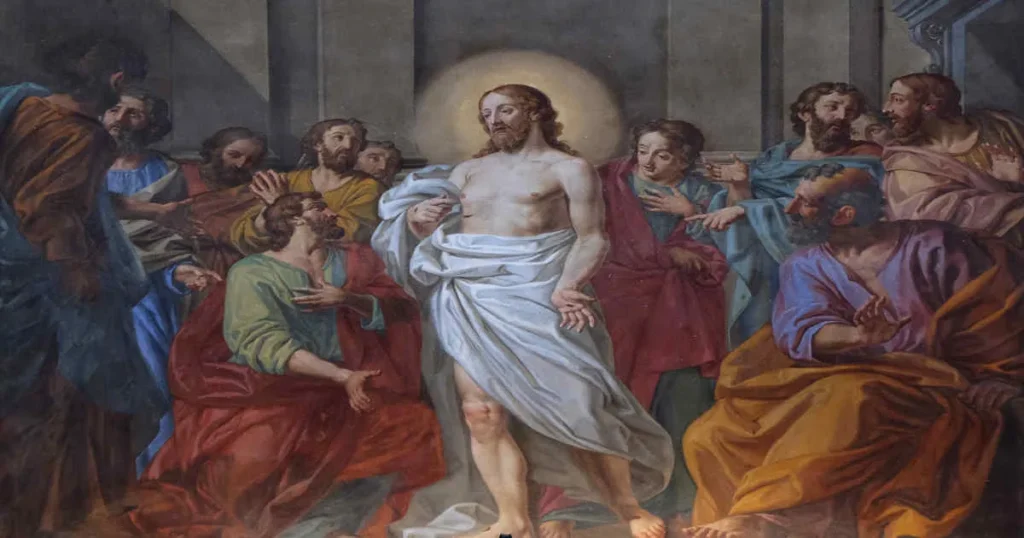
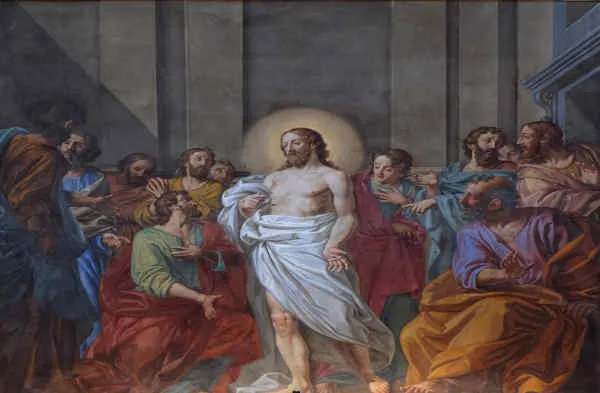
Luke 24:38-39

Spiritual Knowledge From Within

“Why are you troubled? And why do questions arise in your hearts? Look at my hands and my feet, that it is I myself. Touch me and see, because a ghost does not have flesh and bones as you can see I have.”

Reflection:

Imagine if Jesus appeared to you. What if He showed you the wounds in His hands and feet and invited you to touch Him so as to believe. Would you believe? Most likely you would, to a certain extent. It would be the beginning of an experience that could be life-changing, just as it was for these disciples. Our Lord’s appearance to the disciples led to their transformation from men who were confused and doubtful to men who were filled with joy and zeal. Eventually, they would go forth preaching about Jesus as witnesses to His death and Resurrection with courage and with a desire that all who heard them would turn to Jesus as their Savior.

In the first reading of today’s Mass, Saint Peter is recorded as doing this very thing. After healing a crippled man at the gate of the Temple, a crowd gathered in amazement and Peter preached to them about Jesus. He concluded His sermon by saying, “God has thus brought to fulfillment what he had announced beforehand through the mouth of all the prophets, that his Christ would suffer. Repent, therefore, and be converted, that your sins may be wiped away.”

Today, we are entrusted with the same mission given to our Lord’s disciples, and we must preach with the same zeal, courage and conviction with which they preached. First, we must become as certain as they were about Jesus’ triumph over sin and death. We must turn from all sin and believe that the fullness of life is found only in Christ Jesus. But then we must commit ourselves to the proclamation of this faith with every fiber of our being.

Begin by considering how deeply you believe in Jesus as the Savior of the World. Though it might be tempting to think that having Jesus appear to you in person would help deepen your faith in Him, the truth is that the first disciples were not primarily convinced because of the physical appearances of Jesus. Rather, this gift came primarily through the spiritual touching of their minds. After appearing to the disciples physically, we read that Jesus “opened their minds to understand the Scriptures.” This was what convinced them more than anything—the spiritual gift of understanding. And that gift is offered to you today, just as it was to the first followers of Jesus.

Saint Thomas Aquinas explains that the spiritual gift of understanding is a gift that reveals to us the very essence of God. He explains that it is a much deeper form of knowledge than that which is obtained through our five senses. Thus, simply seeing something with our eyes, touching it or hearing it is not nearly as convincing as the knowledge obtained through the spiritual gift of understanding. The gift of understanding enables us to “read inwardly” and to penetrate the very essence of something. For that reason, the physical appearance of Jesus might have been the first step toward believing, but it wasn’t until these same disciples encountered our Lord within their souls, perceiving the very essence of His Resurrection inwardly, that they were forever changed. Only this form of knowledge could then convince them to go forth and proclaim the message of salvation.

Reflect, today, upon your own knowledge of Jesus and the transforming power of His Resurrection in your life. Has God spoken to you within the depths of your soul? Have you perceived this inward knowledge and had your mind opened? Listen attentively to our Lord—not just with your ears but primarily with your spirit. It is there, within you, that you, like the first disciples, will come to know and believe in the life, death and resurrection of Christ so that you can then go forth empowered to proclaim these truths to others.

Source: https://catholic-daily-reflections.com/2024/04/13/spiritual-knowledge-from-within/

Luke 24:38-39 Read More »