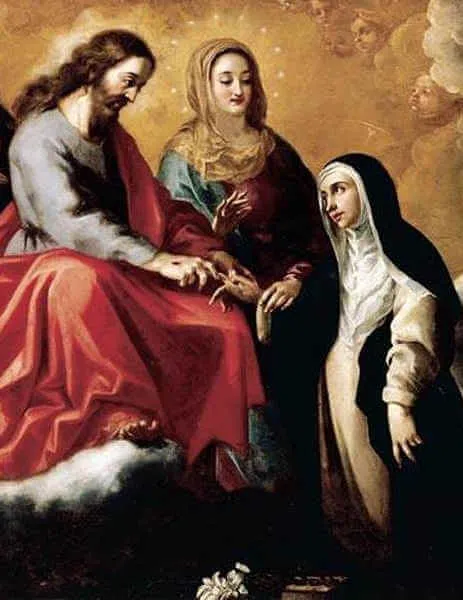
Saint Volusian of Tours
Saint Volusian of Tours Read More »
Profile
As a layman, Volusian suffered through years of a terrible marriage. He was an Imperial Roman senator at Tours, France.
Volusian was a Bishop of Tours in 488. He was exiled to Spain in 496 by Arian Visigoths. He may have been martyred, but records are unclear.
Died
Canonized
Patronage
Source: https://catholicsaints.info/saint-volusian-of-tours/
Saint Volusian of Tours Read More »
“He told his disciples to have a boat ready for him because of the crowd, so that they would not crush him. He had cured many and, as a result, those who had diseases were pressing upon him to touch him.”
Reflection:
It’s fascinating to ponder the enthusiasm that so many people had toward Jesus. In the passage above, we see Jesus asked His disciples to have a boat ready for Him so that He would not be crushed as He taught the crowd. He had been curing many who were sick, and the crowd was pressing upon Him to try to simply touch Him.
This scene provides us with an illustration of what must happen within our interior lives regarding our Lord. The people can be said to have been single-minded in their devotion to Jesus and fervent in their desire for Him. Granted, their desire may have been somewhat selfishly motivated by the desire for physical cures of their ailments and those of their loved ones, but nonetheless, their attraction was real and powerful, driving them to put their complete focus upon our Lord.
Jesus’ choice to get into a boat and distance Himself a bit from the crowd was also an act of love. Why? Because this act allowed Jesus to help them refocus upon His deeper mission. Though He did miracles out of compassion and so as to manifest His almighty power, His primary focus was to teach people and to lead them into the full Truth of the message He was preaching.
Therefore, by separating Himself from them, they were invited to listen to Him rather than just try to touch Him for the sake of a physical miracle. For Jesus, the spiritual wholeness He desired to give the crowd was of much greater significance than any physical healing He also gave.
In our own lives, Jesus may “separate” Himself from us in somewhat superficial ways so that we will be more open to the deeper and more transforming purpose of His life. For example, He may remove certain feelings of consolation or permit us to encounter some trial through which He seems to be less present to us. But when this happens, it is always so that we will turn to Him on a deeper level of trust and openness so as to be drawn more deeply into a relationship of love.
Reflect, today, upon how single-minded your devotion is to our Lord. From there, ponder, also, if you are more attached to the good feelings and consolations you seek or if your devotion is deeper, focused more on the transforming message our Lord wants to preach to you. See yourself on that shore, listening to Jesus speak, and allow His holy words to transform your life more deeply.
Source: https://catholic-daily-reflections.com/2024/01/17/single-minded-devotion-3/
Anthony was born into an upper-class Catholic home. His parents raised Anthony and his younger sister in a small village in southern Egypt. He received a basic education and was twenty years old when his parents suddenly died. He was left with a large inheritance and the responsibility of caring for his sister. Some months later, Anthony was attending Mass and heard the Gospel story of Jesus’ command to the rich young man: “If you wish to be perfect, go, sell what you have and give to the poor, and you will have treasure in heaven” (Matthew 19:21).
As Anthony heard these words, he knew Jesus was speaking directly to him. Shortly after, he gave away most of his property, sold almost everything else, and kept only what he needed to care for himself and his sister. But that’s not exactly what the Lord had commanded! Jesus said that perfection is obtained only if one were to sell everything and give it to the poor.
Not long afterward, Anthony was at Mass once again and heard the Gospel passage, “Do not worry about tomorrow; tomorrow will take care of itself” (Matthew 6:34). Again, he knew Jesus was speaking directly to him, so he gave away even the little he had saved back, entrusted his sister to the care of some holy women, and entered the desert to live a life of poverty, solitude, prayer, and mortification.
In that harsh desert landscape, the devil attacked him in countless ways. “Think about all the good you could have done with that money you gave away!” These were the words of the evil one, trying to deter Anthony from embracing his unique vocation as a hermit. Then the devil appeared to him in physical form and sent vile creatures to frighten him. Satan tempted Anthony with boredom, laziness, and even appeared as a female temptress to seduce him. Firm in prayer and mortification, Anthony fought off the devil and his manifestations. Though beaten senseless during these spiritual battles, he recovered in the care of some friends who visited him.
After spending fifteen years living in a desert cave once used as a tomb, Anthony retreated even deeper into solitude, spending another twenty years in self-imposed solitary confinement. He ate only bread that friends threw over the wall of the abandoned Roman fort he called home. He never opened his mouth to speak to anyone, for God called him to the unique life of complete solitude.
Eventually, Anthony’s holy example stirred up devotion and admiration in the hearts of others. Though they could not speak to him, many wanted to imitate him. They began to build huts nearby and imitate his vocation. Then, after twenty years of solitude, God directed Anthony to exit his fort and assist the other nearby hermits with their vocations. For the next five years, he instructed the new hermits on how to organize their lives.
Anthony then withdrew once again into seclusion for the last forty-five years of his very long life. However, this time he did accept visitors from time to time and even entered nearby cities to occasionally preach and teach. Most notably, he preached firmly against the rampant Arian heresy, directly opposed the emperor for persecuting Christians, and fearlessly offered himself up to be martyred.
God did not grant his desire for martyrdom, however. Instead, Anthony lived to the ripe old age of 105. He made a powerful impact upon the lives of many by his radical obedience to God’s will, through his life devoted to prayer, his embrace of poverty, his courageous preaching against heresy, and his assistance to those daring to live as hermits. He was so influential that another heroic saint of that time, the bishop Saint Athanasius, wrote a biography of Saint Anthony, supplying much of what we know about him today.
Source: https://mycatholic.life/saints/saints-of-the-liturgical-year/january-17-st-antony-patriarch-of-monks/
Saint Anthony of Egypt, Abbot Read More »
“Then he said to the Pharisees, ‘Is it lawful to do good on the sabbath rather than to do evil, to save life rather than to destroy it?’ But they remained silent. Looking around at them with anger and grieved at their hardness of heart, Jesus said to the man, ‘Stretch out your hand.’ He stretched it out and his hand was restored.”
Reflection:
Sin damages our relationship with God. But hardness of heart is even more damaging because it perpetuates the damage done by sin. And the harder one’s heart, the more permanent the damage.
In the passage above, Jesus was angry with the Pharisees. Oftentimes the passion of anger is sinful, resulting from impatience and a lack of charity. But at other times, the passion of anger can be good when it is motivated by love of others and hatred for their sin. In this case, Jesus was grieved by the hardness of heart of the Pharisees, and that grief motivated His holy anger.
His “holy” anger did not cause irrational criticism; rather, it drove Jesus to cure this man in the presence of the Pharisees so that they would soften their hearts and believe in Jesus. Sadly, it didn’t work. The very next line of the Gospel says, “The Pharisees went out and immediately took counsel with the Herodians against him to put him to death” (Mark 3:6).
Hardness of heart should be greatly avoided. The problem is that those who are hard of heart are usually not open to the fact that they are hard of heart. They are obstinate and stubborn, and oftentimes self-righteous. Therefore, when people suffer from this spiritual ailment, it is difficult for them to change, especially when confronted.
This Gospel passage offers you an important opportunity to look into your own heart with honesty. Only you and God need to be part of that interior introspection and conversation. Begin by reflecting upon the Pharisees and the poor example they set. From there, try to look at yourself with great honesty.
Are you obstinate? Are you hardened in your convictions to the point that you are unwilling to even consider that you may be wrong at times? Are there people in your life with whom you have entered into a conflict that still remains? If any of this rings true, then you may indeed suffer from the spiritual ill of a hardened heart.
Reflect, today, upon your own soul and your relationships with others with as much honesty as possible. Do not hesitate to let your guard down and be open to what God may want to say to you. And if you detect even the slightest tendency toward a hardened and stubborn heart, beg our Lord to enter in to soften it. Change like this is difficult, but the rewards of such a change are incalculable. Do not hesitate and do not wait. Change is worth it in the end.
Source: https://catholic-daily-reflections.com/2024/01/16/grieved-at-the-hardness-of-heart-3/
Profile
Nothing of Marcellus’ life before the papacy has survived the centuries. He was Pope at the end of the persecutions of Diocletian; the persecutions had so disrupted the Church that there had been a gap of over a year with no Pope.
Marcellus faced reconstituting the clergy which had been decimated and whose remnant had practiced their vocation covertly and with the expectation of martyrdom. He worked to recover and welcome back those who had denied the faith to keep from being murdered.
When a group of people apostatized before and during a period of persecution refused to do penance in order to return to the Church (they were known as the Lapsi), Marcellus refused to allow their return to the Church. This group had some political pull, and some caused such civil disruption that Emperor Maxentius exiled the Pope in order to settle the matter. Legend says that Marcellus was forced to work as a stable slave as punishment, but this appears to be fiction.
Marcellus was considered a martyr as he died of the terrible conditions he suffered in exile.
Papal Ascension
Died
Canonized
Patronage
Representation
Source: https://en.wikipedia.org/wiki/Pope_Marcellus_I#/media/File:Roma-sanmarcelloalcorso2.jpg
Pope Saint Marcellus I
Pope Saint Marcellus I Read More »
“As Jesus was passing through a field of grain on the sabbath, his disciples began to make a path while picking the heads of grain. At this the Pharisees said to him, ‘Look, why are they doing what is unlawful on the sabbath?’”
Reflection:
The Pharisees were greatly concerned about many things that were distortions of the law of God. The Third Commandment calls us to “Keep holy the Sabbath Day.” Furthermore, we read in Exodus 20:8–10 that we are not to do any work on the Sabbath but are to use that day for rest. From this Commandment, the Pharisees developed extensive commentary on what was permitted and what was forbidden to do on the Sabbath. They determined that picking the heads of grain was one of the forbidden actions.
In many countries today, the Sabbath rest has all but disappeared. Sadly, Sunday is rarely set aside any longer for a day of worship and rest with family and friends. For that reason, this hypercritical condemnation of the disciples by the Pharisees is hard to relate to.
The deeper spiritual issue seems to be the hyper “nitpicky” approach taken by the Pharisees. They were not so much concerned about honoring God on the Sabbath as they were interested in being judgmental and condemning. And though it may be rare today to find people overly scrupulous and nitpicky about the Sabbath rest, it’s often easy to find ourselves becoming nitpicky about many other things in life.
Consider your family and those who are closest to you. Are there things they do and habits they have formed that leave you constantly criticizing them? Sometimes we criticize others for actions that are clearly contrary to the laws of God. At different times, we criticize others on account of some exaggeration of fact on our part.
Though it is important to speak charitably against violations of the external law of God, we must be very careful not to set ourselves up as the judge and jury of others, especially when our criticism is based on a distortion of the truth or an exaggeration of something minor. In other words, we must be careful not to become nitpicky ourselves.
Reflect, today, upon any tendency you have in your relationships with those closest to you toward being excessive and distorted in your criticism. Do you find yourself obsessing over the apparent minor faults of others on a regular basis? Try to step back from criticism today and renew, instead, your practice of mercy toward all. If you do, you may actually discover that your judgments of others do not fully reflect the truth of God’s law.
Source: https://catholic-daily-reflections.com/2024/01/15/keeping-holy-the-sabbath-3/
Profile
Arnold felt an early call to the priesthood, and was ordained in August 1861. Well educated, he taught science and catechism for twelve years.
Arnold was a chaplain and director of the Ursuline convent at Kempen in 1873. He was the Director of the diocesan Apostleship of Prayer in 1874, and was an editor of a journal about missionary work in 1873.
Arnold established the religious congregation Society of the Divine Word in Steyl, Netherlands in 1875; it received papal approval in 1901. The Society, which soon had houses in the Netherlands, Austria, and Germany, was composed of missionary priests who worked in Tonga, New Guinea, Japan, Paraguay, and throughout North America.
In 1889, Arnold founded the Missionary Sisters, Servants of the Holy Ghost to assist the priests in their mission. The Sisters serve as teachers in mission lands, especially of young girls. With the help of Blessed Maria Virgo, Arnold formed the sisters a contemplative branch named Sister Servants of the Holy Spirit of Perpetual Adoration who devote themselves to adoration of the Blessed Sacrament, and prayer for the success of missionary efforts. These sisters are nicknamed Pink Sisters because of the color of their habit.
Born
Died
Venerated
Beatified
Canonized
Source: https://en.wikipedia.org/wiki/Arnold_Janssen#/media/File:Arnold_Janssen.jpg
Saint Arnold Janssen
Saint Arnold Janssen Read More »
“Can the wedding guests fast while the bridegroom is with them? As long as they have the bridegroom with them they cannot fast. But the days will come when the bridegroom is taken away from them, and then they will fast on that day.”
Reflection:
The passage above reveals Jesus’ response to the disciples of John the Baptist and some Pharisees who question Jesus about fasting. They point out that the disciples of John and the Pharisees each follow the Jewish laws on fasting, but Jesus’ disciples do not. Jesus’ answer goes to the heart of the new law on fasting.
Fasting is a wonderful spiritual practice. It helps to strengthen the will against disordered fleshly temptations and helps to bring purity to one’s soul. But it needs to be pointed out that fasting is not an eternal reality. One day, when we are face-to-face with God in Heaven, there will no longer be any need to fast or do any form of penance. But while on earth, we will struggle and fall and lose our way, and one of the best spiritual practices to help us return to Christ is prayer and fasting combined.
Fasting becomes necessary “when the bridegroom is taken away.” In other words, fasting is necessary when we sin and our union with Christ begins to fade. It is then that the personal sacrifice of fasting helps open our hearts once again to our Lord. This is especially true when habits of sin form and become deeply ingrained. Fasting adds much power to our prayer and stretches our souls so as to be able to receive the “new wine” of God’s grace where we need it the most.
Reflect, today, upon your approach to fasting and other penitential practices. Do you fast? Do you make regular sacrifices so as to strengthen your will and help you to turn more fully to Christ? Or has this healthy spiritual practice been somewhat neglected in your life? Renew your commitment to this holy endeavor today and God will work powerfully in your life.
Source: https://catholic-daily-reflections.com/2024/01/14/to-fast-or-not-to-fast-3/
Profile
Felix was the elder son of Hermias, a Syrian soldier who had retired to Nola, Italy. After his father‘s death, Felix sold off most of his property and possessions, gave the proceeds to the poor, and pursued a clerical vocation. He was ordained by, and worked with Saint Maximus of Nola.
When Maximus fled to the mountains to escape the persecution of Decius, Felix was arrested and beaten for his faith instead. Legend says he was freed by an angel so he could help his sick bishop. Felix hid Maximus from soldiers in a vacant building. When the two were safely inside, a spider quickly spun a web over the door, fooling the imperial forces into thinking it was long abandoned, and they left without finding the Christians. The two managed to hide from authorities until the persecution ended with the death of Decius in 251.
After Maximus‘ death, Felix was chosen as bishop of Nola, but declined, favoring Quintus, a “senior” priest who had seven days more experience than Felix. He worked to farm his remaining land, and gave most of the proceeds to people even poorer than himself. Much of the little information we have about Felix came from the letters and poetry of Saint Paulinus of Nola, who served at a porter at the door of a church dedicated to Saint Felix, and who gathered information about him from churchmen and pilgrims.
Though Felix died of natural causes, he is normally listed as a martyr because of the torture, imprisonment, and privations he experienced in the persecutions.
Born
Died
Canonized
Patronage
Representation
Source: https://catholicsaints.info/saint-felix-of-nola/
Saint Felix of Nola Read More »
Samuel was sleeping in the temple of the LORD
where the ark of God was.
The LORD called to Samuel, who answered, “Here I am.”
Samuel ran to Eli and said, “Here I am. You called me.”
“I did not call you, ” Eli said. “Go back to sleep.”
So he went back to sleep.
Again the LORD called Samuel, who rose and went to Eli.
“Here I am, ” he said. “You called me.”
But Eli answered, “I did not call you, my son. Go back to sleep.”
At that time Samuel was not familiar with the LORD,
because the LORD had not revealed anything to him as yet.
The LORD called Samuel again, for the third time.
Getting up and going to Eli, he said, “Here I am. You called me.”
Then Eli understood that the LORD was calling the youth.
So he said to Samuel, “Go to sleep, and if you are called, reply,
Speak, LORD, for your servant is listening.”
When Samuel went to sleep in his place,
the LORD came and revealed his presence,
calling out as before, “Samuel, Samuel!”
Samuel answered, “Speak, for your servant is listening.”
Samuel grew up, and the LORD was with him,
not permitting any word of his to be without effect.
R. (8a and 9a) Here am I, Lord; I come to do your will.
I have waited, waited for the LORD,
and he stooped toward me and heard my cry.
And he put a new song into my mouth,
a hymn to our God.
R. Here am I, Lord; I come to do your will.
Sacrifice or offering you wished not,
but ears open to obedience you gave me.
Holocausts or sin-offerings you sought not;
then said I, “Behold I come.”
R. Here am I, Lord; I come to do your will.
“In the written scroll it is prescribed for me,
to do your will, O my God, is my delight,
and your law is within my heart!”
R. Here am I, Lord; I come to do your will.
I announced your justice in the vast assembly;
I did not restrain my lips, as you, O LORD, know.
R. Here am I, Lord; I come to do your will.
Brothers and sisters:
The body is not for immorality, but for the Lord,
and the Lord is for the body;
God raised the Lord and will also raise us by his power.
Do you not know that your bodies are members of Christ?
But whoever is joined to the Lord becomes one Spirit with him.
Avoid immorality.
Every other sin a person commits is outside the body,
but the immoral person sins against his own body.
Do you not know that your body
is a temple of the Holy Spirit within you,
whom you have from God, and that you are not your own?
For you have been purchased at a price.
Therefore glorify God in your body.
R. Alleluia, alleluia.
We have found the Messiah:
Jesus Christ, who brings us truth and grace.
R. Alleluia, alleluia.
John was standing with two of his disciples,
and as he watched Jesus walk by, he said,
“Behold, the Lamb of God.”
The two disciples heard what he said and followed Jesus.
Jesus turned and saw them following him and said to them,
“What are you looking for?”
They said to him, “Rabbi” — which translated means Teacher —,
“where are you staying?”
He said to them, “Come, and you will see.”
So they went and saw where Jesus was staying,
and they stayed with him that day.
It was about four in the afternoon.
Andrew, the brother of Simon Peter,
was one of the two who heard John and followed Jesus.
He first found his own brother Simon and told him,
“We have found the Messiah” — which is translated Christ —.
Then he brought him to Jesus.
Jesus looked at him and said,
“You are Simon the son of John;
you will be called Cephas” — which is translated Peter.
Source: https://bible.usccb.org/bible/readings/011424.cfm
Second Sunday in Ordinary Time Read More »
Add San Jose Filipino Ministry as a new recipient, Send your donation using"donate@dosjfm.org"
Payable to - San Jose Filipino Ministry
Address - Poong Jesus Nazareno Filipino Catholic Center (PJNFCC); 3700 W. Orange Ave., Anaheim CA 92804
Poong Jesus Nazareno Filipino Catholic Center (PJNFCC); 3700 W. Orange Ave., Anaheim CA 92804
Phone: (657) 214-2507
Mobile (657) 208-2038
info@dosjfm.org
Poong Jesus Nazareno Filipino Catholic Center (PJNFCC); 3700 W. Orange Ave., Anaheim CA 92804
Phone: (657) 214-2507
Mobile (657) 208-2038
info@dosjfm.org
Add San Jose Filipino Ministry as a new recipient, Send your donation using"donate@dosjfm.org"
Payable to - San Jose Filipino Ministry
Address - 1235 S Magnolia Ave
Anaheim, CA 92804-5115
San Jose Filipino Ministry. All rights reserved. 2021 © Powered by Phoenix Virtual Solutions
Sponsored by EverClear Hospice and Palliative Care