Author name: Sani

John 6:40

Commemorating All Souls

“For this is the will of my Father, that everyone who sees the Son and believes in him may have eternal life, and I shall raise him on the last day.”

Reflection:

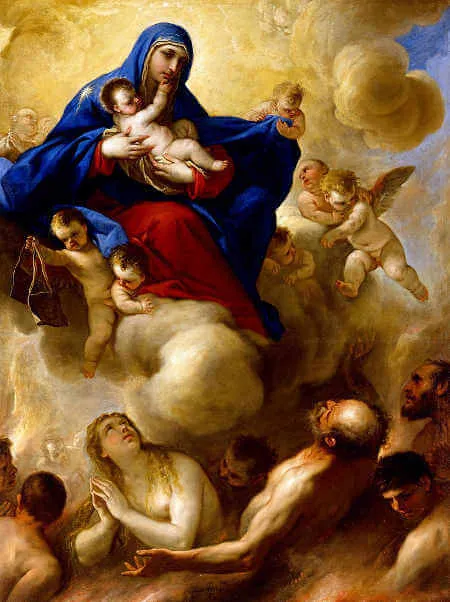
Yesterday’s Solemnity of All Saints gave us an opportunity to celebrate and rejoice in the fact that there are countless people who have gone before us who are now enjoying the glories of Heaven. These faithful souls lived lives that were grounded in God’s grace and have been fully purified of all sin. They now gaze at our good God face-to-face.

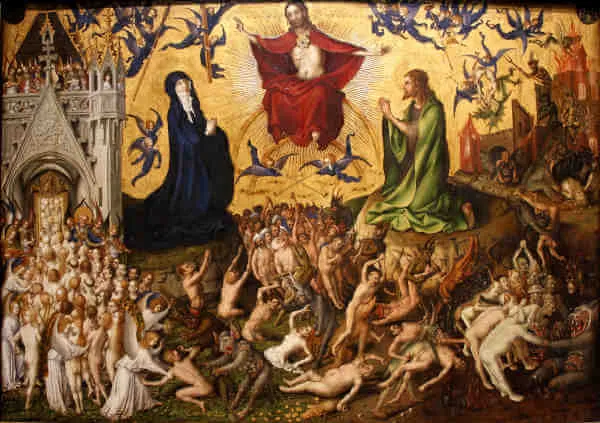
Today, we commemorate the fact that many who die in a state of grace are not immediately ready to stand before the glorious throne of God and see Him face-to-face. The only way this is possible is if every sin and every attachment to sin is purged from our souls. We must have nothing but pure charity alive within us if we are to enter the eternal glories of Heaven. But how many people die in such a state?

The Church, in her wisdom and holiness, has taught clearly through the centuries that when a person passes from this world to the next while still attached to less serious sin, they need to be fully purified in order to enter Heaven. This is Purgatory. The Catechism of the Catholic Church states: “All who die in God’s grace and friendship, but still imperfectly purified, are indeed assured of their eternal salvation; but after death they undergo purification, so as to achieve the holiness necessary to enter the joy of heaven. The Church gives the name Purgatory to this final purification of the elect, which is entirely different from the punishment of the damned” (#1030–31a).

For some, Purgatory can be a frightening and even confusing thought. Why doesn’t God, in His infinite mercy, simply take all our loved ones who followed Him straight to Heaven? The answer is simple. He does! And the path for them to Heaven is this incredible mercy of their final purification.

Purification of all attachment to sin within our soul is a mercy beyond what we can imagine. Through this final purification, God prepares the holy souls who have died for an eternity of joy. But this purification is necessary because God, in His love, does not want any soul to live eternally with even a minor attachment to sin. God wants us all free. The truth is that every sin on our soul, even the smallest one, is reason enough for us to be excluded from Heaven. So Purgatory must be seen as a final mercy from God by which He lifts every last burden that keeps us from perfect love, so that our eternity will be one of utmost freedom and ecstasy. God wants us to be filled only with the purity of love forever. Thus, upon our death, we are graced to enter into a final and intense purification of every minor sin, so that when we see God in all His glory, we will see Him with the perfection to which we are called. Purgatory is a gift, a grace, a mercy. It will be painful to go through in the same way that overcoming any sin is painful. But the good fruit of freedom from sin makes every final purification we must endure worth it a hundredfold and more.

Reflect, today, upon the spiritual truth that God wants you to be a saint. If you are among those few who die in a state in which you are purified from every sin, then be assured that you have already completed your purgatory on earth. But if you or your loved ones are among the many who still hold some minor attachment to sin at the time of death, then rejoice that God is not done with you yet. Anticipate with much gratitude the final purification that awaits and look forward to the freedom that ultimately comes from that purification.

Source: https://catholic-daily-reflections.com/2024/11/01/commemorating-all-souls-3/
John 6:40 Read More »

All Souls’ Day

Yesterday, the Church celebrated those men and women who have gone before us who now see God face to face in the Beatific Vision. Whether they are officially canonized or not, everyone in Heaven is a saint and will remain so for eternity, living lives of perfect communion with God and with everyone else in Heaven. There will be perfect order, knowledge, joy, love, and happiness forever. Too often in this life we lose focus on eternity. We easily become overly concerned about the here and now and fail to turn our eyes to Heaven, seeking to prepare ourselves fully for the day we die and come before God for our particular judgment.

Today, as we commemorate All Souls, we turn our eyes to those men and women who have gone before us in death but died before being fully purified of every venial sin and all of sin’s effects. The Catechism of the Catholic Church explains it this way: “All who die in God’s grace and friendship, but still imperfectly purified, are indeed assured of their eternal salvation; but after death they undergo purification, so as to achieve the holiness necessary to enter the joy of heaven. The Church gives the name Purgatory to this final purification of the elect, which is entirely different from the punishment of the damned.” (#1030–31).

All Souls’ Day should have a twofold focus for each of us. First and foremost, today’s commemoration is a call to prayer for those who have died and are being purified in final preparation for their entrance into the Beatific Vision. Though God has no need of our prayers, it is His divine will that we participate in the distribution of His grace. For that reason, He chooses to solicit our prayers and then answer them, making us active instruments of His purifying grace so needed by those in this world and in Purgatory. By praying for those in Purgatory, especially today, we are assured that God lavishes upon them all that they need for the complete purification of their souls. The Mass, and our participation in the Mass, is particularly powerful and is the ideal way to open the floodgates of mercy for our loved ones who have died and remain unperfected. Take this duty to pray for these “poor souls” seriously. A common secular heresy that permeates Western culture says that a good person goes to Heaven immediately after death or becomes an angel. This well-intentioned, but erroneous, belief leaves many souls unprayed for. Know that those souls are depending on your prayers, because God wants you to pray for them and lovingly share in their purification. Offer prayers fervently for those souls.

A second focus to have on All Souls’ Day is upon your own soul. Today’s commemoration reminds us of the importance of our ongoing deepening conversion. We are all called to be saints. Ideally, our central focus in life is to become a living saint and not wait to be fully purified in Purgatory. Becoming a saint today requires not only a lot from us, it requires everything. Absolutely everything! Becoming a saint here and now means that we diligently seek out every sinful attachment within our souls and annihilate them. It means we continuously seek God’s mercy, confess our sins, receive forgiveness, and then change our lives completely. This is no small task!

One of the best ways to understand Purgatory is by studying the teachings of the greatest masters of the spiritual life, especially Saint John of the Cross and Saint Teresa of Ávila. These two Doctors of the Church wrote extensively about the process a soul goes through on its way to divine union, also called mystical marriage. Saint Teresa does this by describing a series of seven interior dwelling places through which a person must travel, each one requiring a deeper level of purification, culminating with the soul entering the innermost dwelling place, the presence chamber, where divine union takes place and the soul is fully purified of everything that is not God. Only souls who have entered this innermost dwelling place in this life, and die while in that state of divine union, will avoid the purification of Purgatory.

Saint John of the Cross wrote extensively of the same process of purification, using different terminology. He described two main purifications a soul goes through on the journey toward perfection. The first is the dark night of the senses, by which every bodily sense and appetite is purified. The second is the dark night of the spirit, by which the intellect, memory, and will are fully purified by the perfection of infused faith, hope, and charity. Prior to the first purification, the soul is in the purgative way. While in between the two purifications, the soul is in the illuminative way. After completing the second purification, the soul enters the unitive way, or mystical marriage, which is the same as Saint Teresa’s seventh dwelling place.

The reason for painting this very broad overview of their detailed writings on the journey of a soul toward perfection is to emphasize the fact that perfection is, indeed, a long and difficult process, but a necessary one that must take place either in this life or in the next. Every person must come to the realization that personal sanctity must become not only each one’s first mission in life but the exclusive mission. When personal sanctity is a person’s exclusive mission, every other part of that person’s life falls into place. Virtues grow, love for family and friends increases, duties are perfectly fulfilled, and God is fully glorified.

As we participate today in this Commemoration of All Souls, commit yourself first to praying for those who have died and are in need of final purification. Purgatory is God’s act of final mercy for those whom He loves with a burning and purifying love. Your prayers open the floodgates of God’s love on those who need it the most. As you pray for those who have died, pray also for your own soul and ponder how fervently you seek to become transformed into a living saint. Though the journey to divine union is not a quick and easy one, it is a journey well worth it. Make it your exclusive mission in life, and know that if you do, you will never regret it.

Source: https://mycatholic.life/saints/saints-of-the-liturgical-year/november-2–all-souls/

All Souls’ Day Read More »

All Saints’ Day

Holy Day of Obligation

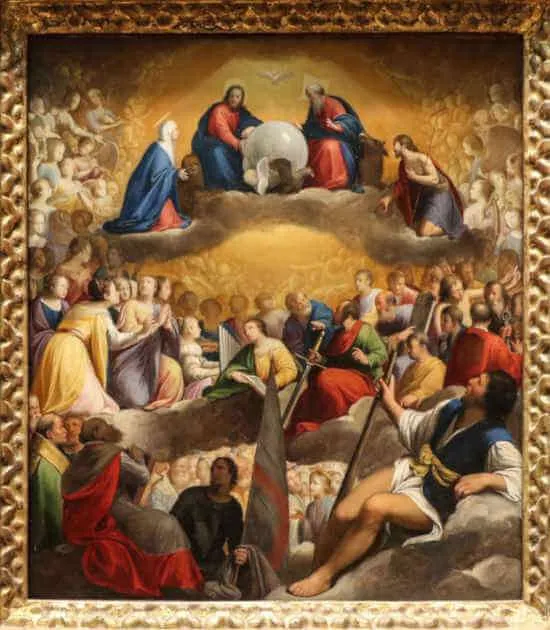
Today, we celebrate the Solemnity of All Saints, a celebration honoring all men and women who have entered Heaven. While this includes every soul in Heaven, the focus is particularly on those who led extraordinarily holy lives on earth and that the Church has canonized as saints. These individuals honored God in a variety of ways: through deep prayer and mystical union, through enduring martyrdom or other forms of religious persecution, and through acts of service, such as caring for the needy or teaching the faith. Some saints were powerful preachers or miracle workers. Others were leaders, some lived in obscurity, and still others experienced exile or made significant personal sacrifices for their faith. In various ways, these saints glorified God during their lifetimes.

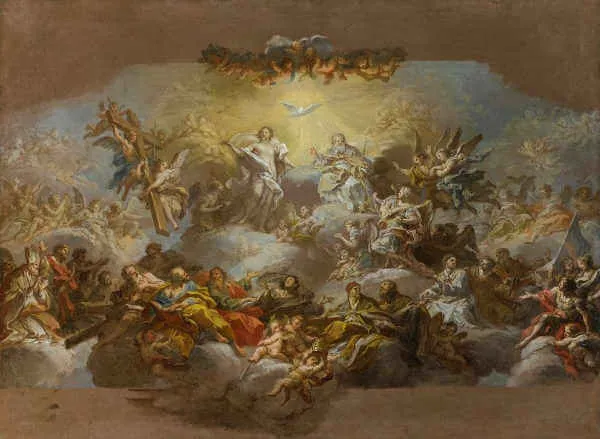
By honoring this host of saintly witnesses, we honor and glorify God through their lives. By honoring them, we honor Him Who made them holy. This liturgical solemnity is but a foretaste of the eternal Solemnity of Heaven. Heaven will be the eternal glory of God through the lives of all His saints. In Heaven, the virtues, sacrifices, prayers, and selfless service of all the saints will radiate as beacons that eternally manifest the great mercy and goodness of God. The life of every saint in Heaven will become a continuous chorus of praise and worship of God, intertwined with the nine choirs of angelic hosts. With the Seraphim, Cherubim, and Thrones, the saints will cry “Holy, Holy, Holy…” With the Dominions, Virtues, and Powers, the saints will participate in God’s providential care of the New Heavens and Earth. With the Principalities, Archangels, and Guardian Angels, the saints will celebrate God’s protection and continuous communication with all of His sons and daughters. Heaven today, as well as the New Heavens and Earth at the end of time, will be nothing other than a continuous solemn celebration of all that God is in His essence and all that God has done in the lives of those who responded to His grace.

Honoring the saints also becomes an invitation to each one of us on earth to strive after the holiness the saints attained. The saints give us an example; their lives are a “how to” book in holiness. The lives of the “super saints”—such as the Blessed Virgin Mary and Saints Francis of Assisi, Catherine of Siena, Teresa of Ávila, Thérèse of Lisieux, Augustine of Hippo, and Thomas Aquinas—should be studied and pondered so that we can learn from their example.

We must also remember that, from Heaven, the saints become powerful intercessors for us on earth. It is true that God could deal directly with us without using the mediation of angels and saints. He chooses to use secondary causes, while He always remains the First Cause and Source of all grace. The saints and angels are among those secondary causes God chooses to mediate His grace. For that reason, we should rely upon their intercession. Doing so is an act of faith by which we profess our belief in God, using the saints and angels as His instruments.

Today’s solemnity has its roots in the earliest days of the Church. Even in the New Testament times, martyrs were honored by the community of believers, beginning with the deacon Saint Stephen, the first martyr. As the first century of the Church unfolded, others began to suffer persecution and death at the hands of Roman emperors, and the Church honored their deaths. In 64, Emperor Nero was the first to organize a persecution of Christians in Rome, taking the lives of Saints Peter and Paul, and many others. After this first persecution in Rome, other Roman emperors systematized various persecutions throughout the entire empire. The worst persecution took place under Emperor Diocletian from 303–311. During that persecution, churches and sacred texts were destroyed; Christians lost their property, legal rights, and lives; and those who were not killed were imprisoned and tortured. Some estimate that during the Diocletian persecutions, there were as many as 3,500 martyrs. Although there is no way to confirm the exact number, there were many.

In the fourth century, after Christianity was legalized in 313 by Emperor Constantine I, who became a Christian himself and began building churches and monuments to the martyrs, public devotion to the martyrs began to flourish. Their graves became churches and places of pilgrimage and prayer. On May 13, 609, Pope Boniface IV transformed the Pantheon in Rome, a former pagan temple, into a church dedicated to the Blessed Virgin Mary and all martyrs. The annual celebration of its dedication also honored the Blessed Virgin Mary and all martyrs. On November 1, 731, Pope Gregory III dedicated an oratory within Saint Peter’s Basilica to “all saints” that included the Apostles, martyrs, confessors, and all holy men and women throughout the world. This broadened the commemoration of the saints beyond the martyrs to all who lived saintly lives. In 844, Pope Gregory IV extended the November 1 celebration to the entire Church. In 1484, Pope Sixtus IV made November 1 a holy day of obligation for the entire Church and added a vigil day and octave to follow, making the celebration nine days in all. The vigil celebration for All Hallows’ Day was called All Hallows’ Eve, or Halloween. Unfortunately, in many places, Halloween has lost its Christian and saintly focus and has become a secular, and even pagan, celebration.

As we honor all the saints in Heaven today, ponder the fact that you are called to be among their company. The extent to which you become holy while on earth is the extent to which your life will be an eternal glorification of God. Seek a profound depth of holiness. Don’t just try to remain in a state of grace. Seek an abundance of grace. Strive to grow in virtue. Purge all sin, even small sins, from your life. Pray as often as you can. Read about the saints. Ponder the Scripture. Act with generosity and charity. Forgive everyone. And do everything you can to become the super saint God wants you to become.

Source: https://mycatholic.life/saints/saints-of-the-liturgical-year/november-1–all-saints/

All Saints’ Day Read More »

Matthew 5:1-3

Honoring All Saints

When Jesus saw the crowds, he went up the mountain, and after he had sat down, his disciples came to him. He began to teach them, saying: “Blessed are the poor in spirit, for theirs is the Kingdom of heaven.”

Reflection:

Today we celebrate one of the most glorious solemnities within our Church! Every saint, canonized or not, is honored today. Our Gospel passage lays out the path by which these saints entered Heaven. While on earth, these great men and women lived lives that were poor in spirit, filled with a holy mourning, meekness, a hunger and thirst for righteousness, mercy, peace, purity of heart and even persecution. Each one of these Beatitudes concludes by stating the reward that those who lived these qualities obtains: Heaven, comfort, satisfaction, mercy, seeing God, being children of God and rewards beyond what we can imagine in God’s Kingdom.

The Beatitudes invite us to the heights of holiness. They are not for the faint of heart or for those living a lukewarm spiritual life. These Beatitudes present us with the pinnacle of holy living and challenge us to the core. But every effort put into living these Beatitudes are worth it here on earth and ultimately in Heaven. Let’s look briefly at two of these Beatitudes.

The second Beatitude states that those “who mourn…will be comforted.” This is an interesting Beatitude. Why is it holy to mourn? Simply put, this form of holy mourning means that you not only have a holy sorrow for your own sins but that you have this holy sorrow as you see the many evils within our world. This is crucial today. First, it should be quite obvious that we must have holy sorrow for our own sins. Doing so means your conscience is working. And when your conscience is working, you will be compelled, by this holy sorrow, to acknowledge your offenses against God and work diligently to change. But we must also have a holy sorrow as we see the many evils within our world. Too often today there is a tendency to undermine this Beatitude by presenting universal acceptance of all things as a good. We are told we must not judge, and though that is true when it comes to judging another’s heart, a worldly presentation of this secular “virtue” attempts to lead us to downplay the objective nature of sin. Our secular world tempts us to ignore many objective moral truths by which God guides us into all truth. But as Christians, our first approach must be to despise all that our Lord taught was objectively morally evil. And when we do come face-to-face with immoral lifestyles, the appropriate response must be holy sorrow, not acceptance of grave sin. To mourn over another’s poor choices is a true act of charity toward them.

The fourth Beatitude calls us to “hunger and thirst for righteousness.” This means that we not only have a holy sorrow over our sins and the objective evils of our world, but that we also allow ourselves to be filled with a hunger and thirst for truth and holy living. This drive must become a burning motivation within us to do all we can to further the Kingdom of God everywhere. This Beatitude enables us to overcome indifference, inspiring us to bring about change in the face of all opposition. And this drive is fueled by charity and every other accompanying virtue.

Reflect, today, upon the beautiful truth that you are called to become a saint. And the surest path to sainthood is the Beatitudes. Read them carefully. Meditate upon them and know that they reveal to you how God is calling you to live. If one of these Beatitudes stands out to you, then spend time focusing upon it. Work to internalize these graces, and God will work wonders in your life, one day making this solemnity within our Church a true celebration of your life well lived.

Source: https://catholic-daily-reflections.com/2024/10/31/honoring-all-saints-3/

Matthew 5:1-3 Read More »

Luke 13:34

Protection, Healing, and Salvation

“Jerusalem, Jerusalem, you who kill the prophets and stone those sent to you, how many times I yearned to gather your children together as a hen gathers her brood under her wings, but you were unwilling!”

Reflection:

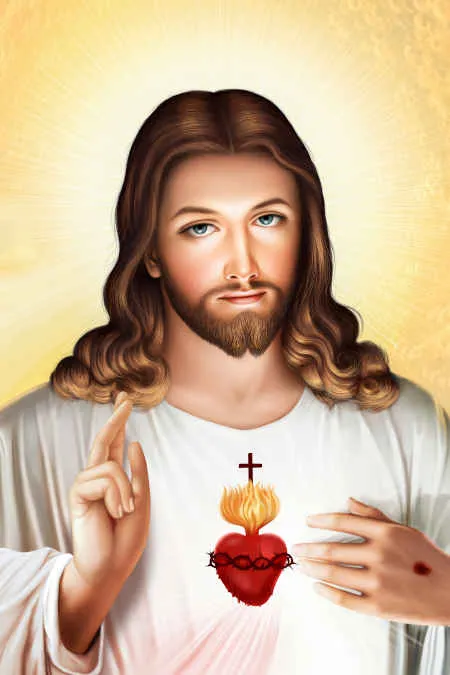
It’s helpful to ponder the Sacred Heart of Jesus. His heart is one that is strong and gentle, compassionate and just, merciful and truthful. In this Gospel passage, we are given a glimpse of Jesus’ love for the people of Jerusalem. He was not expressing His love for the city, but for the people in the city. It is clear that His deepest desire, His strong yearning, was that they allow Him to draw them close to Him so that He can protect them from all evil.

Jesus begins by speaking the word “Jerusalem” twice. This expresses deep compassion for the people of that city. It also expresses a lament that they have not turned to Him, remaining unwilling to change. Their refusal began long before Jesus walked the earth when their forefathers rejected the call of the prophets to repent and turn back to God. The stubbornness of their fathers continued with the people of Jesus’ day, and He experienced their rejection. This rejection did not lead Jesus to anger or condemnation as much as it led Him to holy sorrow.

The image of a hen gathering her brood under her wings is a lovely image to meditate upon. A mother hen protects her chicks with great courage and without concern for her own safety. When danger approaches, she extends her wings and covers the vulnerable chicks to protect them. Jesus uses this motherly image to express His desire to protect not only the people of Jerusalem, but all of us.

If Jesus yearned to gather the people together under his “wings” to protect them, then we should know, with certainty, that we need our Lord’s protection. He would not desire something that was unnecessary. He is not an overly protective God Who irrationally worries about His children. His concern is real and necessary, and we must know that we need His protection.

As you go about your daily life, do you feel as though you can handle life on your own? Do you act as an independent child who wants to separate yourself from the safety of your parents? Though we must all work to become responsible in life, we will never arrive at a point where we no longer need the protection of our loving God. The world in which we live is filled with dangers from which only God can protect us.

At the beginning of today’s Gospel, Jesus referred to Herod as a “fox.” That image must be seen in the context of Jesus desiring to act as a mother hen, protecting her brood. Jesus was told that Herod was trying to kill Him, but He clearly was not afraid of Herod. Of Herod’s desire to kill Jesus, Jesus said, “Go and tell that fox, ‘Behold, I cast out demons and I perform healings today and tomorrow, and on the third day I accomplish my purpose.’” As a protector, Jesus took authority over demons, performed healings and opened the gates of Heaven by rising from the dead on the third day. As we go through life, there will be many demons who seek to attack us. We will need many forms of healing, and without the gift of Jesus’ triumph over death itself, we will not be led to the glories of Heaven. Demons are real. Wounds are real. And the need for a Savior is real.

Reflect, today, upon the image of Jesus acting as a mother hen, extending His wings over you to protect you from the many temptations and diabolical attacks you will encounter in this world. Ponder the fact that you need His daily protection. The demons will never stop their attacks. Mental, emotional and spiritual wounds need His healing. Jesus is the only one Who can protect you and heal you so that He can then pour forth the gift of eternal life. Remain under His protective care, and allow Him to fulfill the yearnings of His Sacred Heart.

Source: https://catholic-daily-reflections.com/2024/10/30/protection-healing-and-salvation/

Luke 13:34 Read More »

Saint Alonso Rodriguez

Profile

Alonso was the third of eleven children in the family of the wealthy wool merchant Diego Rodriguez. He met Blessed Peter Faber when he was 10; the Father Faber prepared the boy for his First Communion. At age 14, Alonso was sent to study with Jesuits. Alonso’s father died within a year, and he returned home to learn and manage the business.

Alonso married Mary Suarez at age 26. His business suffered, and two of the couple’s children died in infancy; one son survived. He became a widower in his early 30’s, and his mother died soon after. He sold the business and moved in with his sisters; they helped Alonso raise his son, and taught their brother prayerful meditation.

When his son died, Alonso decided to follow his call to the religious life. He gave away what little he had left, and tried to join the Jesuits; he did not have the education they required, and was refused. He attended the College of Barcelona, but could not complete the work. Self-imposed austerities nearly destroyed his health. At age 60, he was ordered to begin sleeping in a bed instead of the chair, bench, or ground he had previously used. However, at the recommendation of Jesuit Father Luis Santander, Alonso became a Jesuit lay-brother, admitted on 31 January 1571 at Valencia, Spain, and began to study alongside children.

Alonso was a porter and doorkeeper at the Jesuit college of Montesión at Palma, Mallorca, Spain for 46 years, a duty which involved delivering packages, seeing to the lodging of travelers, and dispensing alms to the poor. From this humble post, he influenced many through the years. He was obsessed with the spiritual and given to extreme self-imposed austerities. He had a special devotion to Saint Ursula, and was so obedient to his superiors that when one told him to eat his plate, he tried to cut it with a knife and fork. He was the friend and roommate of Saint Peter Claver. He advised Peter to request missionary work in South America. He professed his final Jesuit vows at the age of 54.

Alonso was reputed to be healed by fervent prayer. The night before his death was spent in a visionary ecstasy. Some authors claim he wrote the Little Office of the Immaculate Conception, but his part was to make it more popular. He left behind a collection of manuscripts of journal entries, random thoughts, simple illustrations, and musings on things spiritual that are remarkable for their simplicity, sound, and correct doctine, and spiritual understanding; they were published as Spiritual Works of Blessed Alonso Rodriguez in Barcelona in 1885.

Born

  • 25 July 1532 at Segovia, Spain

Died

  • 31 October 1617 at Palma, Mallorca, Spain of natural causes
  • relics enshrined at Majorca

Venerated

  • 1626 by Pope Urban VIII

Beatified

  • 15 January 1825 by Pope Leo XII

Canonized

  • 15 January 1888 by Pope Leo XIII

Patronage

  • in Spain
    – Majorca, city of
    – Majorca, island of
    – Segovia

Representation

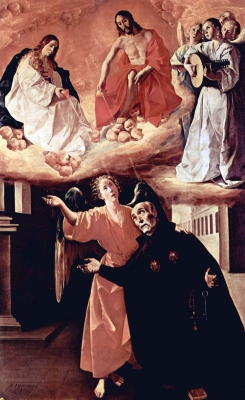
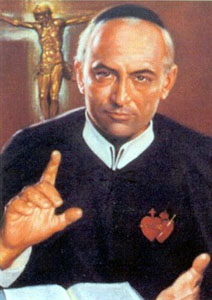
  • an old Jesuit with two hearts on his breast connected by rays of light to Christ and the Virgin

Source: https://catholicsaints.info/saint-alonso-rodriguez/

Saint Alonso Rodriguez Read More »

Saint Marcellus the Centurion

Profile

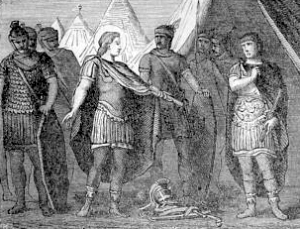
Marcellus was a Roman centurion at Tangiers (in modern Morocco). During a celebration of the emperor’s birthday, Marcellus refused to participate in the pagan offering ceremony. He threw away his arms and armour, openly declared himself a Christian, and was condemned to death. His condemnation led to the death of Saint Cassian.

Died

  • martyred c.298 at Tangiers, Morocco

Canonized

  • Pre-Congregation

Patronage

  • conscientious objectors
  • León, Spain (an early version of his story gave this as the site of his martyrdom)

Source: https://catholicsaints.info/saint-marcellus-the-centurion/

Saint Marcellus the Centurion Read More »

Luke 13:27

Entering the Narrow Gate

Someone asked him, “Lord, will only a few people be saved?” He answered them, “Strive to enter through the narrow gate, for many, I tell you, will attempt to enter but will not be strong enough.”

Reflection:

We should definitely take our Lord’s words spoken above to heart. It’s easy to presume we will be saved. It’s easy to simply presume that God is kind and that we are good people at heart and, therefore, salvation is assured. But that’s not what Jesus says.

So who will be saved? When we get to Heaven, God willing, we may be surprised at who is saved and who is not. This is clearly one of the messages of today’s Gospel. Jesus even goes so far to say that some, when they die, will assume they are going to enter into Heaven but will hear our Lord say to them, “I do not know where you are from. Depart from me, all you evildoers!” Again, we should take these words to heart.

One of the most dangerous sins we can fall into is presumption. Presumption is deadly because it has a double effect upon us. First, the person caught in presumption is one who has committed mortal sin but has not repented of it. But the presumptuous person also remains incapable of repentance because they refuse to acknowledge their sin. Their conscience is not working. They have blinders on and expect God to wear those same blinders. But God sees all things and judges accordingly.

The “narrow gate” of which Jesus speaks is a simile used by Jesus to tell us that it is not easy to obtain Heaven. It requires a concerted effort on our part as well as the infinite mercy of God. But regarding our part, the attainment of Heaven is only possible if we intentionally seek out the will of God and respond generously to Him. First, that means we confess and turn away from our sins. But from there, it means that we make every effort to fulfill God’s will in our lives.

If this is hard to accept, simply remind yourself that this teaching came directly from Jesus Himself. He is absolutely clear and means what He says. If that fills you with a sort of holy fear, then that is a good thing. “Holy fear” is a gift by which we have a well-ordered conscience that is able to identify those things in our lives that have become immovable obstacles to eternal salvation. The same well-ordered conscience will lead us to that narrow gate which is the only path to eternal life.

Reflect, today, upon the fact that we must all take eternal salvation seriously. If you find that you have become lax in your spiritual life, then use this Gospel as a motivation to change. Do not allow yourself to be one of those knocking at the gates of Heaven, only to realize that our Lord does not know you. Do all you can to eradicate the sin of presumption from your life, and your reward will be truly great in Heaven.

Source: https://catholic-daily-reflections.com/2024/10/29/entering-the-narrow-gate-2/

Luke 13:27 Read More »

Saint Gaetano Errico

Profile

Gaetano was the second of nine children born to Pasquale, a pasta factory manager, and Marie Marseglia Errico, who worked a weaving plush. He was a good child, pious, always ready to help his father at work, or his mother with his younger siblings. He felt a call to priesthood at age fourteen. He was turned away by the Capuchins and Redemptorists due to his youth. He studied at a diocesan seminary in Naples, Italy from age sixteen, walking five miles to class each day, and was ordained on 23 September 1815 in Naples.

Gaetano was a school teacher for twenty years. He was also the Parish priest at the church of Saint Cosmas and Damian. He was known for his devotion to the Sacrament of Reconciliation and ministry to the sick, his self-imposed austerities and penances. He made yearly retreats to the Redemptorist house in Pagani, Italy.

During his retreat in 1818, Saint Alphonsus Maria de Liguori appeared to him in a vision, and told him that God wanted Gaetano to build a new church, and to found a new religious congregation. While Gaetano initially received strong support from the local people, it faded in the face of fund-raising and work, and it wasn’t until 9 December 1830 that he dedicated and blessed the church Our Lady of Sorrows at Secondigliano; it has since become one of Italy‘s most popular pilgrimage sites.

Nearby, he built a small house for himself and a lay-brother who took care of the church; this was the beginning of the Missionaries of the Sacred Hearts of Jesus and Mary. The Missionaries received local approval on 14 March 1836, approval by the Congregation of Bishops on 30 June 1838, royal approval on 13 May 1840, and papal approval by Blessed Pope Pius IX on 7 August 1846. Gaetano served as first Superior General.

His beatification miracle occurred in southern Italy in January 1952 and involved a man with a perforated stomach wall. Just before emergency surgery, his wife slipped a relic of Father Gaetano under his pillow, and together they prayed for his intercession. His health began to improve immediately, and he was soon healed without medical intervention.

Born

  • 19 October 1791 in Secondigliano, Naples, Italy

Died

  • 10AM 29 October 1860 in Secondigliano, Naples, Italy of natural causes

Venerated

  • 4 October 1974 by Pope Paul VI (decree of heroic virtues)

Beatified

  • 14 April 2002 by Pope John Paul II

Canonized

  • Sunday 12 October 2008 by Pope Benedict XVI

Source: https://catholicsaints.info/saint-gaetano-errico/

Saint Gaetano Errico Read More »

Luke 13:18-19

Planting the Seed, Over and Over Again

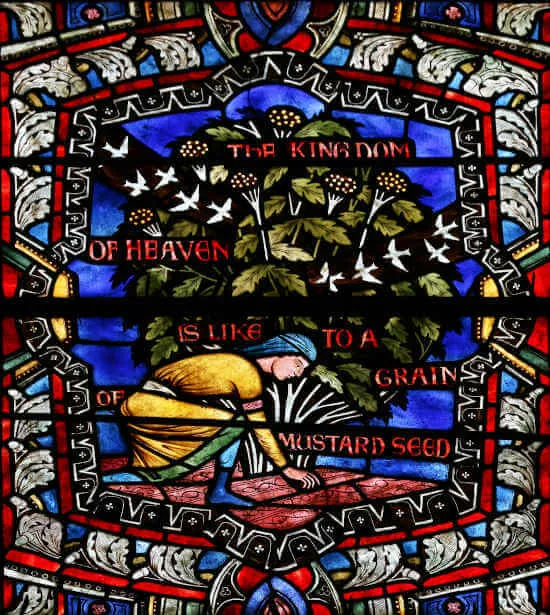
Jesus said, “What is the Kingdom of God like? To what can I compare it? It is like a mustard seed that a man took and planted in the garden. When it was fully grown, it became a large bush and the birds of the sky dwelt in its branches.”

Reflection:

This short parable should speak to many people far more than they realize. It should be a source of great encouragement to us all as we seek to build up the Kingdom of God through apostolic works.

The mustard seed is very small. At first, when someone holds it in their hand, they may not think much of it. But if they did plant it under ideal conditions, that seed could grow into a tree upwards of 20 feet tall.

Jesus uses this parable to teach us many lessons. One such lesson is that of our apostolic works of charity. When you think of the call of being an apostle for the Lord, spreading the Gospel to the ends of the earth, what comes to mind? Perhaps the first thought is of those who have been entrusted with a very large, public and vibrant ministry. In this case, it is easier to see the good fruit born of one’s apostolic works. But what about you? For most people, they may strive to love and serve others in every small way they can, and they fail to see the abundance of good fruit born from their efforts. When this happens, some may become discouraged and lose zeal for the spreading of the Gospel.

If this is you, then consider the mustard seed. Planting this small seed is representative of much of our apostolic endeavors. God calls us to do small acts of kindness, share our faith in subtle and even hidden ways, serve out of love even when it is unnoticed, and to do so without ceasing. Do these small acts bear fruit for the Kingdom of God? If you believe this parable of the mustard seed, then the answer must be a resounding “Yes.”

Many times in life, we will never see the full effects that our actions have on others. Our negative influence will affect them far more than we realize. And our loving acts of charity, by which we share our faith, will also affect people far more than we realize. Believing in the message of this Parable of the Mustard Seed should lead us to believe that planting those small seeds of faith, through our charity, virtues, and words, will indeed bear an abundance of good fruit, far more than we may ever know, until we enter the glories of Heaven. 

Reflect, today, upon your duty to daily plant the smallest seeds of faith and love. Do not get discouraged if your efforts do not bear abundantly obvious fruit. Simply commit yourself to the planting, over and over. Take delight in sowing the seed of faith and see this as your mission. If you do this throughout your life, from Heaven you will look back and be amazed at how God powerfully brought forth His Kingdom through those seemingly insignificant acts of faith and love.

Source: https://catholic-daily-reflections.com/2024/10/28/planting-the-seed-over-and-over-again-3/

Luke 13:18-19 Read More »