Author name: Sani

Matthew 9:30-31

The True Messiah

And their eyes were opened. Jesus warned them sternly, “See that no one knows about this.” But they went out and spread word of him through all that land.

Reflection:

Who is Jesus? This question is much more easily answered today than it was at the time Jesus walked the Earth. Today we are blessed with countless saints who have gone before us who have prayerfully and intelligently taught much about the person of Jesus. We know Him to be God, the Second Person of the Holy Trinity, the Savior of the World, the promised Messiah, the Sacrificial Lamb and so much more.

The Gospel above comes from the conclusion of the miracle in which Jesus healed two blind men. These men were overwhelmed with their cure, and their emotion overtook them. Jesus instructed them to “See that no one knows about this” miraculous healing. But their excitement could not be contained. It’s not that they were intentionally disobedient to Jesus; rather, they did not know how else to express their sincere gratitude other than to tell others about what Jesus had done.

One reason Jesus told them not to tell others about Him is because Jesus knew they did not fully understand Who He was. He knew that their testimony about Him would fail to present Him in the way that was most truthful. He was the Lamb of God. The Savior. The Messiah. The Sacrificial Lamb. He was the One Who came into this world to redeem us by the shedding of His blood. Many of the people, however, wanted a nationalistic “messiah” or a miracle worker alone. They wanted one who would save them from political oppression and make them a great earthly nation. But this was not Jesus’ mission.

Oftentimes we can also fall into the trap of misunderstanding Who Jesus is and Who He wants to be in our lives. We can want a “god” who will save us only from our daily struggles, injustices and temporal difficulties. We can want a “god” who acts in accord with our will and not vice versa. We want a “god” who will heal us and free us of every earthly burden. But Jesus taught clearly throughout His life that He would suffer and die. He taught us that we must take up our own crosses and follow Him. And He taught us that we are to die, embrace suffering, offer mercy, turn the other cheek, and find our glory in that which the world will never understand.

Reflect, today, upon whether Jesus would caution you about speaking too loudly about your vision of Who He is. Do you struggle with presenting a “god” who is not actually God? Or have you come to know the very Person of Christ our Lord to such an extent that you are able to give witness to Him Who died. Do you boast only in the Cross? Do you proclaim Christ crucified and preach only the deepest wisdom of humility, mercy and sacrifice? Recommit yourself to a true proclamation of Christ, setting aside any and all confused images of our saving God.

Source: https://catholic-daily-reflections.com/2024/12/05/the-true-messiah-3/

Matthew 9:30-31 Read More »

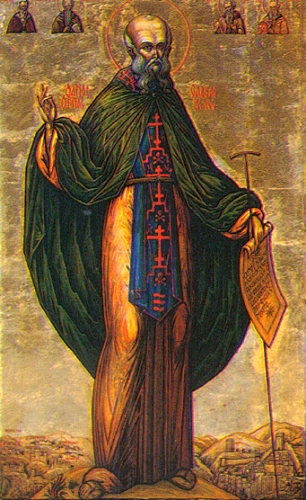
Saint Sabbas of Mar Saba

Profile

Sabbas was a spiritual student of Saint Euthymius the Great at age 20. He was an anchorite from age 30. He was living in a cave and devoting himself to prayer and manual labor. He wove ten willow baskets each day. On Saturdays, he would take them to the local monastery, led by Saint Euthymius, and trade them for a week’s food, and a week’s worth of willow wands for more baskets. He took over leadership of the monks upon the death of Saint Euthymius. He becamse the co-superior with Saint Theodosius over 1,000 monks and hermits in the region.

Sabbas was a simple man with little education, but with a firm belief in the spiritual benefits of simple living. The combination of his lack of education and his severe austerities caused some of his charges to rebel. Sabbas was tired of the squabbling. He missed his time in prayer, so he fled to TransJordania. There he found a cave inhabited by a lion; the lion moved on, finding a new home, and giving the cave to the holy man. A distorted version of this tale reached the rebellious monks; they seized on it, reported to the patriarch that Sabbas had been killed by a lion, and requested a new leader be appointed. As this message was being formally presented to the patriarch, Sabbas walked into the room. This led to a confrontation during which the complaints of the monks were aired. However, the patriach took Sabbas’s side, and the two restored order and discipline to the lives of the anchorites.

Sabbas led a peaceful uprising of 10,000 monks who demanded the end of the persecutions of Palestinian bishops of Anastatius I.

At age 90, Sabbas travelled to Constantinople where he successfully pled for clemency from Justinian for Samarians who were in revolt.

Born

  • 439 at Motalala, Cappadocia

Died

  • 532 of natural causes
  • relics enshrined in Venice, Italy

Canonized

  • Pre-Congregation

Representation

  • man holding the rule of his monastery in his hand
  • man seated at the edge of a cliff
  • man praying in a cave with a lion nearby

Source: https://catholicsaints.info/saint-sabbas-of-mar-saba/

Saint Sabbas of Mar Saba Read More »

Matthew 7:21

Authentic Christians

“Not everyone who says to me, ‘Lord, Lord,’ will enter the Kingdom of heaven, but only the one who does the will of my Father in heaven.”

Reflection:

It’s frightening to think of those of whom Jesus is speaking. Imagine arriving before the throne of God upon your passing from this earthly life and you cry out to Him, “Lord, Lord!” And you expect Him to smile and welcome you, but instead you come face-to-face with the reality of your ongoing and obstinate disobedience to the will of God throughout your life. You suddenly realize that you acted as if you were a Christian, but it was only an act. And now, on the day of judgment, the truth is made manifest for you and for all to see. A truly frightening scenario.

To whom will this happen? Of course, only our Lord knows. He is the one and only Just Judge. He and He alone knows a person’s heart, and judgment is left only to Him. But the fact that Jesus told us that “Not everyone” who expects to enter Heaven will enter should grab our attention.

Ideally, our lives are directed by a deep and pure love of God, and it is this love and this love alone that directs our lives. But when a pure love of God is not clearly present, then the next best thing may be a holy fear. The words spoken by Jesus should evoke this “holy fear” within each of us.

By “holy,” we mean that there is a certain fear that can motivate us to change our lives in an authentic way. It’s possible that we fool others, and maybe even fool ourselves, but we cannot fool God. God sees and knows all things, and He knows the answer to the one and only question that matters on the day of judgment: “Did I fulfill the will of the Father in Heaven?”

A common practice, recommended over and over by Saint Ignatius of Loyola, is to consider all our current decisions and actions from the point of view of the day of judgment. What would I wish I had done in that moment? The answer to that question is of essential importance to the way we live our lives today.

Reflect, today, upon that important question in your own life. “Am I fulfilling the will of the Father in Heaven?” What will I wish I had done, here and now, as I stand before the judgment seat of Christ? Whatever comes to mind, spend time with that and strive to deepen your resolve to whatever God reveals to you. Do not hesitate. Do not wait. Prepare now so that the day of Judgment will also be a day of exceeding joy and glory!

Source: https://catholic-daily-reflections.com/2024/12/04/authentic-christians-4/

Matthew 7:21 Read More »

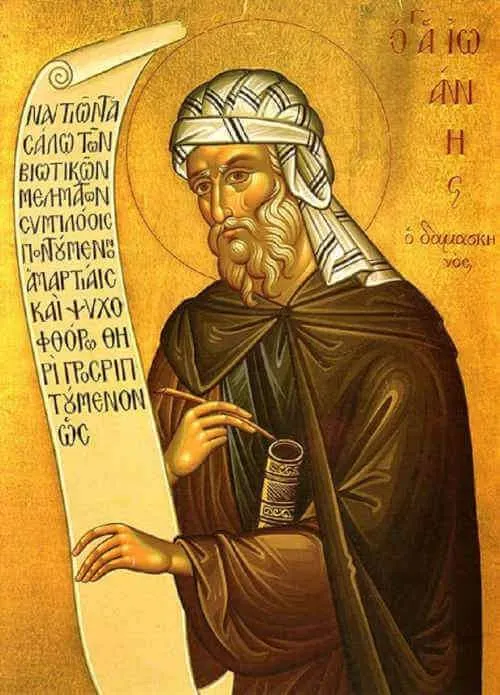
Saint John Damascene, Priest, Religious and Doctor

c. 676–749; Patron Saint of pharmacists, icon painters, and theology students; Pre-Congregation canonization; Declared a Doctor of the Church by Pope Leo XIII in 1890

In the early seventh century, Damascus, Syria, was a thriving city within the Eastern (Byzantine) Roman Empire. Being one of the oldest continuously inhabited cities in the world, the city enjoyed a rich cultural heritage and diversity. Being part of the Roman Empire, it was primarily Christian, with some Jews, small pockets of paganism, and heretical Christian sects. After the death of Muhammad in 632, Islamic conquerors expanded into the Roman Empire, capturing and occupying Damascus in 635. In 661, Damascus became the capital for the Umayyad Caliphate, leading to further Islamic influence in the region. Though Christians’ rights were restricted, they were permitted religious freedom under certain conditions and limitations, such as paying a special tax and wearing distinct clothing. They also occupied a lower legal status than Muslims. Some Christians, however, were given important roles in the government, especially financial administration, due to their Greek and Roman education and administrative skills that many Muslim leaders admired. It was into this historical situation that Saint John of Damascus (John Damascene) was born.

John was born to Christian parents who did not allow their Muslim rulers to affect their faith. In fact, John’s father was one of the Christians held in high esteem by the local rulers and was entrusted with important administrative responsibility by the Caliphate. During his early years, John is believed to have received an excellent education. He might have been educated in the faith by local clergy, also learning Greek and Roman philosophy. At some point, his father came across a slave named Cosmas for sale in the public market. Some records indicate that Cosmas was a highly educated monk from Sicily, who was captured on a raid. His father secured the monk’s release, perhaps by purchasing him at a high price, and entrusted his son’s education to Cosmas. Another youth, possibly an orphan whom John’s father cared for, studied alongside John. Cosmas was not only well-versed in theology, but also in philosophy, music, astronomy, and a variety of other subjects. John greatly advanced in learning under Cosmas. Given the Muslim control of Damascus, John also became well versed in Islamic law, culture, and theology.

When John’s father died, the Caliphate recognized John as a man of great learning and virtue. Like his father, John was given an important role in the city’s administration. John, however, became increasingly sensitive to the non-Christian environment and feared its influence. In his mid- to late-twenties, he resigned his position, sold his possessions, and retreated to the desert monastery of Mar Saba, near Jerusalem, taking Cosmas with him.

As a monk, John spent his first two decades growing in spiritual perfection. Under the guidance of his spiritual director, he embraced monastic disciplines, such as renouncing his own will, avoiding worldly attachments, dedicating all actions to God, rooting out pride, rejecting the seeking out of extraordinary spiritual experiences, eliminating worldly thoughts, and maintaining silence. He fulfilled every humble task his superiors assigned him. He studied, prayed, did penance, and continuously entrusted himself to His merciful God. He advanced so greatly in the spiritual life, humility, and learning, that his superiors deemed him worthy of priestly ordination, which was uncommon among the monks. They also believed that, as a priest, he could offer great service to the Church through ministry and writing. Thus, John was ordained and instructed by his superiors to address important theological issues within the Caliphate and Byzantine Empire.

According to various early sources, the first issue arose from Yazid ibn Abd al-Malik, the Islamic Umayyad Caliph, who opposed the use of icons and sacred images in Christian churches. One story relates that a Jewish magician from Tiberias promised Yazid a long life of fortune if he banned Christian icons within his caliphate. The Jews followed the Torah, which banned using images of God. Yazid took his advice and, in 721, issued an edict by which Christian icons were destroyed in churches across the caliphate. Shortly afterward, between the years 726–729, Byzantine Emperor Leo III, a very religious man, also became convinced that the veneration of sacred images was idolatry. Therefore, he issued his own series of edicts by which he outlawed icons and sacred images throughout the Byzantine Empire. The Patriarch of Constantinople opposed Leo, so Leo appointed a new patriarch on his own authority. The pope also opposed Leo, so grave tensions arose between East and West.

Under obedience, Father John wrote his first great work, Apologetic Treatises against those Decrying the Holy Images, in which he articulated in three treatises the rationale for the use of icons in a profoundly theological way but also in a way that the common layman could understand. In these treatises, Father John was the first to distinguish between latreia (worship), which is due only to God, and proskynesis (veneration), which can be directed towards sacred images representing divine figures. Because the Old Testament forbade the worship of idols or any images of God, Father John’s explanation had the effect of reconciling the Christian use of sacred images with the Old Testament prohibition. He argued that veneration of images was proper because of the Incarnation of the Son of God. In Old Testament times, the Incarnation had not yet taken place. Therefore, it was forbidden to use any material means to represent the unseen and immaterial God. In Christ, however, the invisible God became visible and material, sanctifying the physical world, thus endowing the physical world with the ability to reflect the majesty of God. Father John extended this logic to the veneration of images of the saints who now share in the glory of God’s divine life (See quote above).

Tradition holds that the Byzantine Emperor was so outraged at Father John’s condemnation of his decrees that he forged a letter in Father John’s name that implicated him in a planned attack against Damascus. When the Caliph received the letter, he ordered that Father John’s hand be cut off and mounted on a pole. Once the deed was done, Father John beseeched the Mother of God to intervene so he could continue writing. The next day, his hand was miraculously restored.

Five years after his death, John’s treatise was condemned by the Council of Hieria in 754, which was called by the Byzantine Emperor. In 787, however, John was fully exonerated at the Second Council of Nicaea, which ruled in favor of icon veneration and declared that the Council of Hieria was illegitimate, given the absence of the five patriarchs.

In addition to his writings against the iconoclasts, Saint John Damascene is known for his summary of the doctrinal teachings of the Early Church Fathers, called De Fide Orthodoxa (An Exact Exposition of the Orthodox Faith). Along with that work, he also wrote against heresies and on logic and philosophy. Further works include hymns, letters, commentaries, and sermons. Among his sermons is a series on the Blessed Virgin Mary. He was also critical of Islam, pointing out many of its flaws.

Saint John Damascene left behind a clear exposition of the faith of the Church that became a standard for study in the centuries to follow. None of that would have been possible, however, had he not first entered the monastery and perfected his spiritual life as a hermit. As we honor this great saint, reflect upon the foundation that you need to establish within your own spiritual life. Without that solid foundation of deep union with God, God will be limited in the ways He can use you. With that foundation established, great things can be done in and through you for the salvation of souls and the glory of God.

Source: https://mycatholic.life/saints/saints-of-the-liturgical-year/december-4—saint-john-damascene-priest-and-doctor–optional-memorial/

Saint John Damascene, Priest, Religious and Doctor Read More »

Matthew 15:36-37

A Miracle of Superabundance!

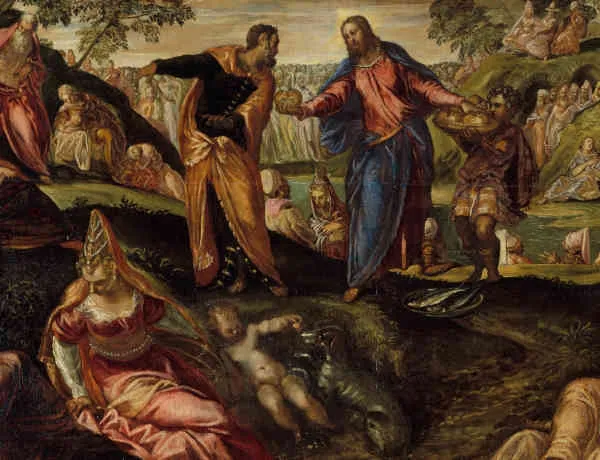
Then he took the seven loaves and the fish, gave thanks, broke the loaves, and gave them to the disciples, who in turn gave them to the crowds. They all ate and were satisfied. They picked up the fragments left over–seven baskets full.

Reflection:

This line concludes the second miracle of the multiplication of the loaves and fishes as told by Matthew. In this miracle, seven loaves and a few fish were multiplied to feed 4,000 men, not counting the women and children. And once everyone ate and was satisfied, seven full baskets remained.

It’s hard to underestimate the effect that this miracle had on those who were actually there. Perhaps many did not even know where the food came from. They just saw the baskets being passed, they took their fill, and passed the rest on to others. Though there are many important lessons we can take from this miracle, let’s consider one of them.

Recall that the crowds had been with Jesus for three days without food. They were amazed at Him as He taught and continually healed the sick in their presence. They were so amazed, in fact, that they showed no sign of leaving Him, despite the obvious hunger they must have been experiencing. This is a wonderful image of what we must seek to have in our interior life.

What is it that “amazes” you in life? What is it that you can do hour after hour without losing your attention? For these first disciples, it was the discovery of the very Person of Jesus that had this effect upon them. How about you? Have you ever found that the discovery of Jesus in prayer, or in the reading of Scripture, or through the witness of another, was so compelling that you became engrossed in His presence? Have you ever become so engrossed in our Lord that you thought of little else?

In Heaven, our eternity will be spent in a perpetual adoration and “amazement” of the glory of God. And we will never tire of being with Him, in awe of Him. But too often on Earth, we lose sight of the miraculous action of God in our lives and in the lives of those around us. Too often, instead, we become engrossed in sin, the effects of sin, hurt, scandal, division, hatred and those things that lead to despair.

Reflect, today, upon these first disciples of Jesus. Ponder, especially, their wonder and awe as they stayed with Him for three days without food. This draw of our Lord must take hold of you and overwhelm you so much that Jesus is the one and only central focus of your life. And when He is, all else falls into place and our Lord provides for your many other needs.

Source: https://catholic-daily-reflections.com/2024/12/03/a-miracle-of-superabundance-3/

Matthew 15:36-37 Read More »

Saint Francis Xavier, Priest

1506–1552; Patron Saint of foreign missions, missionaries, navigators, and parish missions; Invoked against plague epidemics; Canonized by Pope Gregory XV on March 12, 1622

Francisco de Jasso y Azpilicueta (Francis) was born into a noble family at the Castle of Xavier in the Kingdom of Navarre, the youngest of several children. His father was seneschal (administrator) to the royal court of the King of Navarre, giving him important administrative, financial, and judicial authority. In 1512, when Francis was six, the King of Aragon and regent of Castile attacked the Kingdom of Navarre, with devastating consequences for Francis’ family’s wealth and power. Three years later, Francis’ father died. At the age of nineteen, Francis moved to Paris to study philosophy and the arts. As was common at that time, he went by the name Francis Xavier, identifying himself with his place of origin, the Castle of Xavier.

Francis entered the University of Paris with secular ambitions. After being at the university for four years, Francis and his roommate, Peter Favre, welcomed a new student who was fifteen years older: Ignatius of Loyola. Ignatius had moved to Paris to study theology in preparation for priestly ordination after experiencing a radical conversion. After his conversion, Ignatius began to write down his experiences in what would become one of the greatest programs of conversion ever written: The Spiritual Exercises of Saint Ignatius of Loyola. After becoming roommates with Peter and Francis, Ignatius worked on the two men, attempting to convert them and encouraging them to join him in a new religious society he desired to form. Peter was receptive, but Francis was not. Through Ignatius’ persistence, Francis’ heart underwent conversion, and he sensed a call to embrace the priestly ministry.

After four years of study, Francis earned a master’s degree in 1530 and began teaching at the university. Four years later, Ignatius and six companions, including Francis, embraced a common mission to consecrate themselves to God and to live as companions. On the hill of Montmartre, overlooking the city of Paris, these seven men made private vows of poverty, chastity, and obedience to the Roman pontiff, with a commitment to convert the infidels in the Holy Land. Following these private vows, Francis spent the next three years studying theology before his ordination as a priest in 1537, at the age of thirty-one. Together with his companions, Ignatius drew up a formal rule of life for their new company in 1539, which was approved by Pope Paul III the following year, formally establishing the Society of Jesus, later referred to as the Jesuits, which means “Companions of Jesus.”

Central to Jesuit spirituality are Saint Ignatius’ Spiritual Exercises, based on his own conversion. Francis Xavier was among the first to use the exercises to deepen his prayer life and communion with God. The exercises, along with the spiritual support and encouragement from his brothers—especially Ignatius—transformed him into one of the greatest missionaries in the history of the Church.

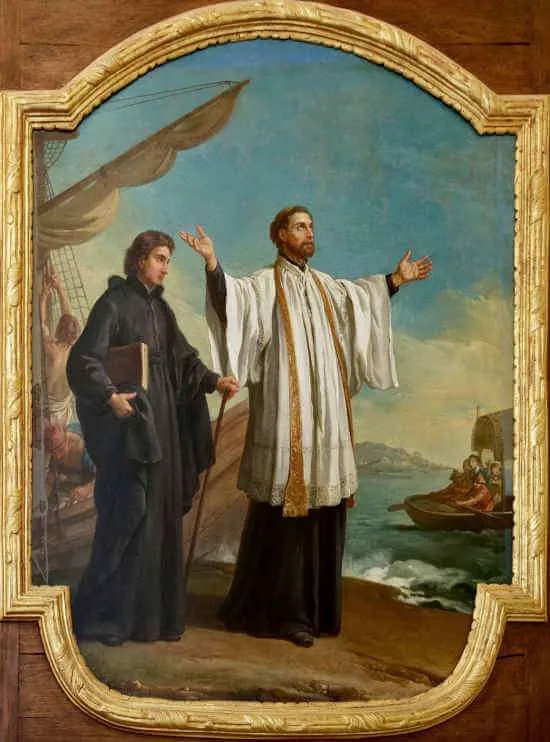
During his first three years as a priest, Father Francis Xavier cared for the poor and sick and deepened his prayer life, first in Venice and then in Rome. Decades earlier, Portuguese explorers had captured and colonized Goa, a city on India’s western coast. In 1540, the King of Portugal, upon hearing reports of immoral behavior among the Portuguese colonizers of Goa, petitioned the pope to send missionaries to Goa to assist. Seeing that the Society of Jesus was newly formed and young, the pope identified the Jesuits as the ideal group to send. Upon receiving the request, Father Ignatius of Loyola chose two of his first companions for the mission. When one became ill, Ignatius chose Father Francis instead, sending him to Portugal to have an audience with the king and queen. In 1541, at the age of thirty-five, after being named apostolic nuncio to the East by the pope, Father Francis and two Jesuits companions set sail to Mozambique and then to Goa, arriving on May 6, 1542.

For the next ten years, Father Francis’ missionary activity of traveling, preaching, converting, catechizing, building churches, baptizing, and miracle working were so extensive that he has since been referred to as another Saint Paul and the “Apostle to the East.” In 1904, Pope Pius X named him the patron saint of foreign missions. In addition to his ordinary missionary work of preaching, teaching, and administration of the Sacraments, stories abound about Father Francis healing the sick, calming a storm at sea, raising the dead, and preaching in tongues, a charism which enabled him to preach in his language while others heard him in their language.

Upon arriving at his first mission in Goa, Father Francis and his companions ministered to the Portuguese settlers. Though a bishop and diocesan priests were present, there was a need for preachers who would call the people to repentance. He began by tending the sick, which won the esteem of the people. He also called the children to himself by walking through town ringing a bell, inviting them to follow him to the church where he taught them about Jesus. The children, in turn, shared the faith with their family and friends. After several months, Father Francis became aware of numerous indigenous people along the southern coast and on the southern tip of India who had been baptized years earlier but were never catechized and formed in the faith. In a desire to minister to these natives, Father Francis and local priests from the seminary in Goa traveled south, teaching, offering the sacraments, and building dozens of churches with the help of the natives. Many unbaptized were converted, and thousands were baptized on that two-year mission. Though many welcomed him, others fiercely opposed him. At times, attempts were made on his life, but he persevered.

Over his decade of missionary activity, Father Francis set up missions in Malacca, in modern-day Malaysia; the Spice Islands, in modern-day Indonesia; Cochin and the coastal areas of modern-day Kerala, India; and the island of Sri Lanka. In 1548, Father Francis wrote a letter to his Jesuit brothers in Europe saying, “All the Portuguese merchants coming from Japan tell me that if I go there I shall do great service for God our Lord, more than with the pagans of India, for they are a very reasonable people.” Father Francis took their advice and set sail for Japan, arriving on August 15, 1549, at Kagoshima, making him the first foreign missionary to reach that land. He was accompanied by a Japanese convert named Anjiro (whose Christian name was Paul), a fellow Jesuit priest, and a lay brother. After spending many months learning the Japanese language and translating the Gospel into Japanese, he was able to make a considerable number of converts. Father Francis’ initial success in Japan was due to the fact that he learned and respected the local customs and culture, allowing him to more effectively share the Gospel in a way that the Japanese would embrace. Because of his foundational effort, the Catholic faith grew to number over 300,000 Japanese converts within the next sixty-five years. Saint Francis Xavier later wrote about the Japanese people: “These are the best people so far discovered, and it seems to me that among unbelievers no people can be found to excel them.” By the end of the century, however, Japanese Christians had undergone decades of severe persecution and hundreds of thousands of martyrdoms, so the Church went underground. The faith, however, was passed on from generation to generation, emerging once again in the public eye in the mid-nineteenth century.

In 1552, Father Francis received an invitation to travel to China to bring the Gospel to that land for the first time. During the journey, he fell ill and died on the island of Shangchuan, just off the coast of mainland China, at the age of forty-six.

Within ten years of intense missionary work, it is estimated that Saint Francis Xavier traveled about 38,000 miles on land and sea, being the first to bring the Gospel to many parts of Asia, baptizing about 30,000 souls. Though he wrote extensively to those he left behind in Europe, he never returned; once he left his family at the age of nineteen, he never saw them again. His life was a true sacrifice. His body was eventually brought back to Goa where it is buried and venerated today. In honor of his numerous baptisms, his arm was removed from his body in 1614 and is venerated at the Gesù, the Jesuit church in Rome.

Saint Francis Xavier was truly another Saint Paul to the Asian peoples. His constant traveling and founding of mission churches planted the seeds of faith deep in the soil he traversed. Though persecution stifled Catholicism’s later growth in Japan, that stifling ultimately deepened the resolve and faith of those persecuted. As we honor this great apostle of Christ, ponder all that he accomplished in ten short years. As you do, consider the next ten years of your own life, and rededicate yourself to the mission Christ has for you.

Source: https://mycatholic.life/saints/saints-of-the-liturgical-year/december-3—saint-francis-xavier-priest–memorial/

Saint Francis Xavier, Priest Read More »

Luke 10:23-24

The Eyes of Faith

Turning to the disciples in private he said, “Blessed are the eyes that see what you see.
For I say to you, many prophets and kings desired to see what you see, but did not see it, and to hear what you hear, but did not hear it.”

Reflection:

What did the disciples see that made their eyes “blessed?” Clearly, they were blessed to see our Lord. Jesus was the One promised by the prophets and kings of old, and now He was there, in flesh and bone, present for the disciples to see Him. Though we do not have the privilege to “see” our Lord in the same way that the disciples did some 2,000 years ago, we are privileged to see Him in countless other ways in our daily lives, if we only have “eyes that see” and ears to hear.

Since the time of Jesus’ appearance on Earth, in the flesh, so much has changed. The Apostles were eventually filled with the Holy Spirit and sent forth on a mission to change the world. The Church was established, the Sacraments were instituted, the teaching authority of Christ was exercised, and countless saints have given witness to the Truth with their lives. The past 2,000 years have been years in which Christ was continually made manifest to the world in countless ways.

Today, Christ is still present and continues to stand before us. If we have the eyes and ears of faith, we will not miss Him day in and day out. We will see and understand the countless ways that He speaks to us, leads us and guides us today. The first step toward this gift of sight and hearing is your desire. Do you desire the Truth? Do you desire to see Christ? Or are you satisfied with the many confusions of life that seek to distract you from what is most real and most life-changing?

Reflect, today, upon your desire. The prophets and kings of old “desired” to see the Messiah. We are privileged to have Him alive in our presence today, speaking to us and calling to us continually. Foster within yourself a desire for our Lord. Allow it to become a blazing flame which longs to consume all that is true and all that is good. Desire God. Desire His Truth. Desire His guiding hand in your life and allow Him to bless you beyond what you can fathom.

Source: https://catholic-daily-reflections.com/2024/12/02/the-eyes-of-faith-4/

Luke 10:23-24 Read More »

Saint Chromatius of Aquileia

Profile

Chromatius’ father died when the boy was an infant, and he was raised by his mother and large family of older siblings. He was ordained in c.387. He attended the Synod of Aquileia, and worked for the strong denunciation of Arianism that resulted from the synod. He became the bishop of Aquileia in 388.

Chromatius worked for peace with invading troops led by Alaric, and provided aid to those who suffered by being in his path. He was an active correspondent with Saint Ambrose of Milan. He was a friend of Saint Jerome, who dedicated several works to him. He was influential in the translation of early Christian works into Latin for wider use. He financed Saint Jerome‘s translation of the Bible, and Rufinus’ translation of Eusebius’ Ecclesiastical History. He wrote several respected scripture commentaries, seventeen of which survive. He was a friend of Saint John Chrysostom, supporting him and writing on his behalf against the unjust accusations of Emperor Arcadius.

Born

  • 4th century at Aquileia, Italy

Died

  • 2 December 407 in Italy of natural causes

Canonized

  • Pre-Congregation

Source: https://catholicsaints.info/saint-chromatius-of-aquileia/

Saint Chromatius of Aquileia Read More »

Matthew 8:8-9

The Authority of God

Lord, I am not worthy to have you enter under my roof; only say the word and my servant will be healed. For I too am a man subject to authority, with soldiers subject to me. And I say to one, ‘Go,’ and he goes; and to another, ‘Come here,’ and he comes; and to my slave, ‘Do this,’ and he does it.

Reflection:

These are words spoken by a man who is very familiar with the exercise of authority. He is a Roman centurion, and he states that he himself is “a man subject to authority” and that he also has soldiers who are subject to him. Thus, his daily life consists of following orders and giving orders that are to be obeyed.

When authority is exercised properly, it is a gift that helps to order society, family life, the life of the Church and even our personal lives. Of course, when authority is exercised improperly, in an oppressive and abusive way, it causes much damage. But the exercise of authority is, in and of itself, an act that has the potential to do much good.

Jesus Himself is quite impressed with the Roman centurion in the Gospel passage quoted above. Of him, Jesus states, “Amen, I say to you, in no one in Israel have I found such faith.” Imagine having the Son of God say that about you! Jesus is impressed, in part, because the centurion acknowledges that he is not worthy to have Jesus come to his house. This is humility, in that the centurion clearly perceives his unworthiness. But Jesus is also impressed because the man manifests a clear and certain faith in Jesus’ authority to heal his servant from a distance. He does not hesitate to profess his belief in this authority of our Lord.

In our own lives, we are often lacking in this area. We face a difficulty (such as the illness this centurion’s servant was enduring), and instead of turning to God with full and unwavering confidence, we turn in on ourselves. We become anxious, fearful, doubtful, confused and sometimes even angry. When any of these qualities are present, it is not because of the difficult situation we face; rather, it is because of our lack of faith and our lack of confidence in the all-powerful authority of our Lord.

In the case of the Roman centurion’s servant, it was the will of God that Jesus physically heal, and so He did. But in the countless daily challenges we face in life, God’s answers might be varied. One unwavering quality we must always have is a certain conviction that God desires to exercise His loving authority in our lives, in the way He chooses, if we trust Him and invite Him to take control.

Reflect, today, upon the perfection of the authority of Christ. Do you believe that He can exercise His perfection of power in your life? Do you believe that His authority is what is needed to order your life, your family, our Church and even our world? Prayerfully submit yourself to the authority of Christ this day and allow yourself to become amazed as you witness all that He is able to do.

Source: https://catholic-daily-reflections.com/2024/12/01/the-authority-of-god-5/

Matthew 8:8-9 Read More »

First Sunday of Advent

First Reading Jeremiah 33:14-16

The days are coming, says the LORD, 
    when I will fulfill the promise 
    I made to the house of Israel and Judah.
In those days, in that time, 
    I will raise up for David a just shoot ; 
    he shall do what is right and just in the land.
In those days Judah shall be safe 
    and Jerusalem shall dwell secure; 
    this is what they shall call her: 
    “The LORD our justice.”

Responsorial Psalm Psalms 25:4-5, 8-9, 10, 14

R. (1b)  To you, O Lord, I lift my soul.
Your ways, O LORD, make known to me;
   teach me your paths,
Guide me in your truth and teach me,
   for you are God my savior,
   and for you I wait all the day. 
R. To you, O Lord, I lift my soul.
Good and upright is the LORD;
   thus he shows sinners the way.
He guides the humble to justice,
   and teaches the humble his way. 
R. To you, O Lord, I lift my soul.
All the paths of the LORD are kindness and constancy
   toward those who keep his covenant and his decrees.
The friendship of the LORD is with those who fear him,
   and his covenant, for their instruction. 
R. To you, O Lord, I lift my soul.

Second Reading 1 Thessalonians 3:12—4:2

Brothers and sisters:
May the Lord make you increase and abound in love
for one another and for all,
just as we have for you, 
so as to strengthen your hearts, 
to be blameless in holiness before our God and Father 
at the coming of our Lord Jesus with all his holy ones.  Amen.

Finally, brothers and sisters, 
we earnestly ask and exhort you in the Lord Jesus that,
as you received from us 
how you should conduct yourselves to please God
and as you are conducting yourselves
you do so even more.
For you know what instructions we gave you through the Lord Jesus.

Alleluia Psalms 85:8

R. Alleluia, alleluia.
Show us, Lord, your love;
and grant us your salvation.
R. Alleluia, alleluia.

Gospel Luke 21:25-28, 34-36

Jesus said to his disciples:
“There will be signs in the sun, the moon, and the stars, 
and on earth nations will be in dismay, 
perplexed by the roaring of the sea and the waves.
People will die of fright 
in anticipation of what is coming upon the world, 
for the powers of the heavens will be shaken.
And then they will see the Son of Man 
coming in a cloud with power and great glory.
But when these signs begin to happen, 
stand erect and raise your heads 
because your redemption is at hand.

“Beware that your hearts do not become drowsy 
from carousing and drunkenness 
and the anxieties of daily life, 
and that day catch you by surprise like a trap.
For that day will assault everyone
who lives on the face of the earth.
Be vigilant at all times 
and pray that you have the strength 
to escape the tribulations that are imminent 
and to stand before the Son of Man.”

Source: https://bible.usccb.org/bible/readings/120124.cfm

First Sunday of Advent Read More »