Author name: Sani

Our Lady of Loreto

Patron Saint of aviators and builders

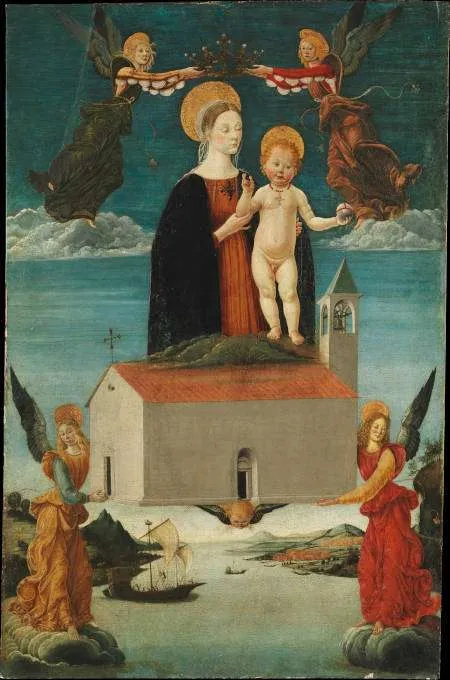
Today’s memorial celebrates one of the most revered relics within the Christian world—The Holy House of Loreto. This small house, which measures 31×13 feet, rests today in Loreto, Italy, inside the Basilica of the Holy House. In the first century, the Apostles revered the Holy House when it was attached to the opening of a cave that completed the home of Jesus, Mary, and Joseph in Nazareth. It is also believed to have been the place where the Annunciation took place, making it the location where the Word became flesh within the womb of the Blessed Virgin Mary. Some traditions also state that the Blessed Virgin Mary was born and raised in this house, but other traditions state she was born in Jerusalem and raised in the Temple. Within the house is the “Altar of the Apostles,” traditionally believed to have been built by the Apostles after the Ascension of Jesus into Heaven, with Saint Peter being the first to offer Mass there. There is also a wooden statue in the altar of the Blessed Virgin Mary holding the Christ Child. The statue of Our Lady of Loreto is a replica of the earlier statue that was destroyed in a fire in the early twentieth century.

This Holy House has a long and legendary history, the truth of which will only be known in Heaven. In the fourth century, one tradition holds that Emperor Constantine the Great, with the help of his mother Saint Helena, commissioned the building of a basilica over the Holy House in Nazareth at the same time the Church of the Holy Sepulchre was built in Jerusalem and the Church of the Nativity was built in Bethlehem. At least by the end of the fifth century, pilgrimages were made to the Holy House in Nazareth.

In the seventh century, Muslims invaded the Holy Land and destroyed the Church over the Holy House. The ruins remained until the Crusaders took back the Holy Land in the eleventh century and built a new Church over the Holy House. Muslims retook the territory of Nazareth in the late twelfth century but permitted the Franciscans to maintain the Holy House. In 1260, however, the invaders destroyed the basilica. Fighting continued until the Christian Crusaders were completely driven out in 1291.

Just prior to the Crusaders leaving the port of Acre, legend holds that on May 12, 1291, angels transferred the Holy House in Nazareth to the small town of Tersatto, modern-day Trsat, Croatia, where it remained for three and a half years. The locals were shocked at its arrival. When they entered, they saw the altar with a cedar statue of the Blessed Virgin Mary holding the Christ Child. A few days later, the Blessed Virgin Mary appeared to a priest in the Holy House, revealing to him its sacred origin. The Blessed Mother then healed the priest of an illness he had been suffering from as proof of what she had said. The Holy House quickly became a place of pilgrimage for the locals and a much-beloved object of devotion. The legend continues that on December 10, 1294, the house was once again picked up by angels and moved to Italy. The heartbroken people of Tersatto built a replica and wrote the words, “The Holy House of the Virgin Mary came from Nazareth on May 10, 1291, and stayed here until December 10, 1294.” Today the spot is marked by the Shrine of Our Lady of Trsat and a Franciscan monastery, which make up one of the most important pilgrim sites in Croatia. 

Upon the arrival of the Holy House in Italy, legend holds that it landed on a hillside overlooking the port of Ancona where it stayed for nine months. Today that spot has a shrine, and the town is called Posatora, from the Latin posat et ora, meaning “to land and pray.” The legend continues that in 1295, the Holy House moved about twenty miles south to a laurel grove near the town of Recanati. Eight months later, the Holy House was transported to a farm owned by two brothers of the Antici family, and four months later it was moved for the final time to the middle of a public road where it sits today, in modern-day Loreto, Italy. The name “Loreto,” could be derived from the Latin word lauretum, which means “place of laurels.”

Upon its final arrival, the people did not know where the house came from until the Blessed Virgin Mary appeared to a hermit, telling him the history and significance of the house. The hermit then told the townspeople, who verified the story by traveling to Tersatto and then to Nazareth. Today, the Holy House is enshrined in a marble frame; its marble exterior sits inside the large Basilica of the Holy House in Loreto.

In the year 1900, a member of the papal household is said to have discovered documents in the Vatican archives that offer a different story about the transfer of the Holy House. In 1291, just prior to the Crusaders leaving the Holy Land, a noble Byzantine family named the Angeli family paid for the removal of the relic and its transfer, probably by ship, to Croatia and then Italy. The name “Angeli,” which means “angels,” could account for the origin of the tradition that angels carried the house from Nazareth. Certainly, this is a very plausible explanation. However, it’s interesting to note that the eighteenth century mystic, Blessed Anne Catherine Emmerich, stated, “I have often in vision witnessed the transporting of the Holy House to Loreto. For a long time, I could not believe it, and yet I continued to see it. I saw the Holy House borne over the sea by seven angels. It had no foundation, but there was under it a shining surface of light…”

Before discounting the miraculous transportation of the house, it is worth noting some scientific evidence. First, the mortar and stones used in the walls of the house come from the Nazareth area and are not found anywhere in Italy. Second, there are no cracks in the walls, indicating they were never dismantled and glued back together. Third, the size of the house matches perfectly the foundation in Nazareth from where it is believed to have come, but it would have been difficult to rebuild the house to the original dimensions. Fourth, in the thirteenth century, transporting a house, without first completely dismantling it, would have been nearly impossible. Fifth, the house landed on a public road, and the road can be seen under the foundation of the house today. At that time, it was not permissible to build a house on a public road, so if it was reconstructed, why choose that spot? Lastly, the fact that there is such a strong tradition of devotion to the house in Croatia and also where the house initially landed in Italy suggests that the miraculous moving of the house truly took place. For these reasons, some might argue that the angelic transportation of the Holy House is actually a far more likely conclusion than the physical transportation of the house by the Crusaders at the direction of the Angeli family.

Regardless of how the Holy House arrived in Italy, it remains a place of deep devotion. Over the centuries, more than 150 canonized saints have made pilgrimages there. Many popes, kings, queens, and other royalty have visited the House, and countless others have been inspired by the story. 

As we celebrate this Holy House today and honor the image of Our Lady of Loreto that resides in that house, ponder Jesus, Mary, and Joseph living there. That house should be seen as an image of our souls in which the Christ Child lives and dwells. When Christ lives within us, our homes will better reflect the environment of the home of the Holy Family. The charity and every other virtue lived within the walls of that home must also permeate our lives, families, and our entire world. Only through the prayers of the Blessed Virgin Mary and the grace of her divine Son will this be possible.

Source: https://mycatholic.life/saints/saints-of-the-liturgical-year/our-lady-of-loreto/

Our Lady of Loreto Read More »
Matthew 18:12

The Joy of Our Lord

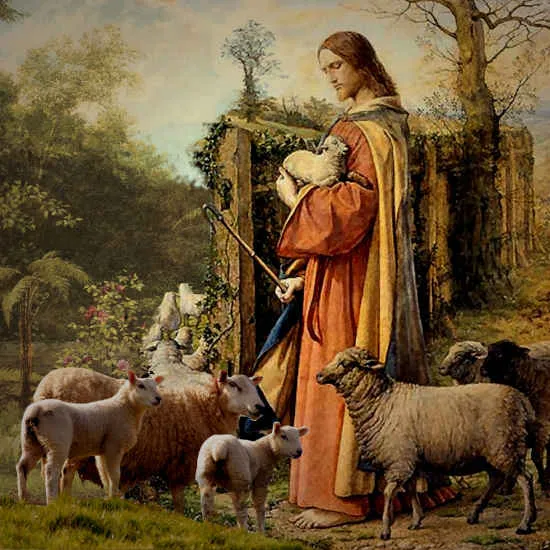
“Jesus said to his disciples: “What is your opinion? If a man has a hundred sheep and one of them goes astray, will he not leave the ninety-nine in the hills and go in search of the stray?”

Reflection:

This Gospel passage goes on to say that the man who finds that one stray sheep “rejoices more over it than over the ninety-nine that did not stray.” At first, this might seem unfair. Why not primarily rejoice over the ninety-nine who did not stray? Saint Hillary, in commenting on this passage, interprets the man who sought out the one stray sheep as the Son of God. He left the “ninety-nine,” meaning the glory of the hosts of Heaven, to descend to earth to seek out straying humanity. Humanity as a whole is that one lost sheep. That includes us all.

The first thing this interpretation reveals to us is that the Son of God was clearly sent on a mission to seek out each and every one of us after we strayed far from the Father in Heaven. The Father did not sit back and wait for us to return. Rather, He sent the Son on a diligent mission of seeking us out to bring us back into His divine fold.

As we reflect upon this passage, it is important to see the zeal and determination of our Lord as He seeks us out. Do you see this in your own life? Sometimes we can fall into the trap of thinking that it is primarily our responsibility to seek out God. And though we certainly have this responsibility, our duty is made much easier when we understand how passionately our Lord seeks us out and desires to find us when we stray. Only in Heaven will we fully understand all that our Lord has done to seek us out, day in and day out. But for now, we must strive to understand this spiritual truth so that we will be more open to Jesus’ diligent search for us.

A second thing this passage reveals is the joy in the Heart of the Son of God every time He finds us and carries us away from our sin. Too often we can fall into the trap of seeing God as a judgmental God who is angry at us and condemning. But if we understand the extent to which the Son of God went, so as to find us when we stray, and if we can understand the joy in His heart upon finding us and carrying us away from sin, then we will more readily open ourselves to Him, to His gentle invitations, and to His merciful Heart every time He comes to us by grace.

Reflect, today, upon the great anticipation in the Heart of our Lord as He personally seeks you out. The anticipation is that of joy—the joy that He is filled with as He picks you up and gently carries you back to the Father. Allow this joy in the Heart of our Lord to come to fruition so that you will share in this abundance of joy.

Source: https://catholic-daily-reflections.com/2024/12/09/the-joy-of-our-lord-2/

Matthew 18:12 Read More »

Immaculate Conception of the Blessed Virgin Mary

c. 15 BC; Patron Saint of the United States, clothmakers, clothworkers, coopers, upholsterers, the Amazon rainforest, and numerous dioceses, cities, and countries

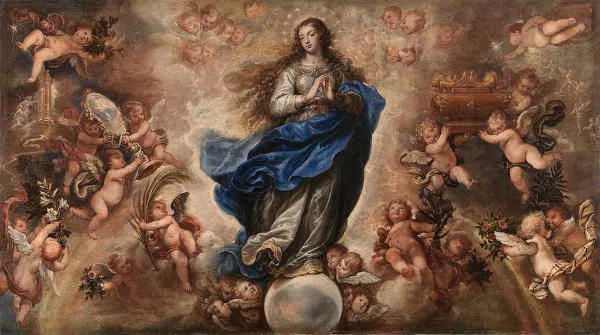
In 1854, Pope Pius IX issued an apostolic constitution called Ineffabilis Deus by which he declared the Immaculate Conception of the Blessed Virgin Mary to be a dogma of faith. This definition was a response to the longstanding devotion and theological consensus that had built up over the centuries. By declaring a dogma of faith, the Holy Father used his highest papal teaching authority, binding every Catholic to accept this teaching. 

Ineffabilis Deus begins by stating that the creation of the Blessed Virgin Mary was in the mind of God from all eternity. She is the Father’s “singular delight,” and “under God, one cannot even imagine anything greater, and which, outside of God, no mind can succeed in comprehending fully.” This statement should leave us with a profound faith in the Immaculate Conception and an acknowledgment of the great and incomprehensible mystery we celebrate. Only in Heaven, as we behold the Beatific Vision, will our minds also behold the beauty and profound mystery of God’s greatest act of creation in the person of the Mother of God. Her life is not an end in itself. She is not worshiped. She is not God. She is, however, to be loved and honored in a singularly unique way, for she is God’s most glorious creation and will be honored as such forever.

The first thing we must know about our Immaculate Mother is that she needed a Savior, just as all humans do. Her Savior is her Son, just as He is our Savior. However, in her, salvation was given “by a singular grace and privilege.” We are saved by the washing away of original sin through baptism. The Blessed Virgin Mary was preserved from original sin from the first moment of her conception. Her salvation transcended time in that the merits of salvation won by her Son Jesus’ Incarnation, death, and resurrection saved her from original sin at the very moment of her creation.

Mary’s role is first alluded to in the book of Genesis. We read about the fall of Adam and Eve, introducing Original Sin into human nature, thus requiring a Savior. Genesis 3:15 presents what many have called the Protoevangelium or “First Gospel” because, in mysterious language, it presents Christ as the New Adam and the Blessed Virgin Mary as the new Eve: “I will put enmity between you and the woman, and between your offspring and hers; They will strike at your head, while you strike at their heel.” The “enmity” between the serpent and the “woman” reveals Mary’s complete opposition to the evil one and to sin. The “offspring” is Jesus and He will crush the head of satan, destroying sin and evil forever. This passage also reveals that Jesus invites His mother to participate in this act of salvation in a unique way. “They will strike at your head…” implying both Jesus and the Blessed Virgin Mary overcame sin and satan together, by the power of God, but through the motherhood of Mary, the new mother of all the living and the mother of those in the new order of grace.

The Blessed Virgin Mary has also been traditionally seen as the new Ark of the Covenant. The first Ark was a sacred vessel that contained the Ten Commandments, manna, and Aaron’s rod. The Ark was a symbol of God’s divine presence that only the High Priest could approach once a year after rigorous purification rituals. The Blessed Virgin Mary, being the new Ark of the Covenant, should also be treated with the greatest veneration, for she bore the divine within her womb and He came forth from her own body. Only the Great High Priest, Jesus her Son, could dare to approach and dwell within her.

At the Annunciation, the Archangel Gabriel came to the Virgin and said, “Hail, full of grace, the Lord is with you!” (Luke 1:28). This passage points to the Immaculate nature of the Blessed Virgin Mary. To be “full of grace” affirms the fact that grace so permeated Mary’s soul that sin had no place within her. Not only was she created free from sin, she also remained sinless throughout her life through the merit of her ongoing assent to God. Her prayerful response to the archangel was not only her response at that moment but was her continuous response to God throughout her life, “Behold, I am the handmaid of the Lord; let it be to me according to your word” (Luke 1:38).

From at least the seventh century, churches in the East celebrated in the liturgy Mary’s conception in Saint Anne’s womb. The Church in the West soon followed, emphasizing the immaculate nature of her conception. In the fifteenth century, Pope Sixtus IV approved a liturgical celebration for the Feast of the Immaculate Conception and then extended that feast to the entire Western Church. In the centuries that followed, successive popes issued clearer teachings in support of the definition of the Immaculate Conception. Because of this ongoing and deepening definition of the Immaculate Conception, Pope Pius IX lifted this teaching to the highest level possible when he issued Ineffabilis Deus in 1854.

If we turn again to the beginning of that constitution in which the Holy Father said that “no mind can succeed in comprehending fully” the Blessed Virgin Mary, then we will realize that the little we know and understand about her remains a deep mystery that we will only fully comprehend in Heaven. Therefore, as we honor the Immaculate Conception and Mary’s immaculate nature, we also must anticipate a continual unfolding of who she is. The dogma of the Immaculate Conception was not the end but the beginning. After that pronouncement, subsequent popes have continued to deepen their teaching on her. In 1904, Pope Pius X spoke of Mary as the Mediatrix of Graces. In 1950, Pope Pius XII defined the dogma of the Assumption of the Blessed Virgin Mary into Heaven; in 1954, he established the Feast of the Queenship of Mary. Vatican II spoke of Mary as Mother of the Church and the Mediatrix of Grace.

As we celebrate this great Solemnity of the Immaculate Conception, try to ponder the incomprehensible nature of the Mother of God. Knowing that she is an impenetrable mystery will help us honor her with the reverence and awe she deserves. The best news of all to ponder is that this perfect creation of God is not a distant icon to adore, she is our own caring mother, a mediatrix of God’s grace. Her tender care for her children will never waver, and her intercession will always bring to us all good things we need to achieve salvation.

Source: https://mycatholic.life/saints/saints-of-the-liturgical-year/8-december-immaculate-conception-of-the-blessed-virgin-mary–solemnity/

Immaculate Conception of the Blessed Virgin Mary Read More »

Luke 1:26-28

Full of God's Grace

The angel Gabriel was sent from God to a town of Galilee called Nazareth, to a virgin betrothed to a man named Joseph, of the house of David, and the virgin’s name was Mary. And coming to her, he said, “Hail, full of grace! The Lord is with you.”

Reflection:

What does it mean to be “full of grace?” This is a question at the heart of our solemn celebration today.

Today we honor the Blessed Virgin Mary, the Mother of the Savior of the World, under the unique title of “The Immaculate Conception.” This title acknowledges that grace filled her soul from the moment of her conception, thus preserving her from the stain of sin. Though this truth had been held for centuries among the Catholic faithful, it was solemnly declared as a dogma of our faith on December 8, 1854, by Pope Pius IX. In his dogmatic declaration he stated:

We declare, pronounce, and define that the doctrine which holds that the most Blessed Virgin Mary, in the first instance of her conception, by a singular grace and privilege granted by Almighty God, in view of the merits of Jesus Christ, the Savior of the human race, was preserved free from all stain of original sin, is a doctrine revealed by God and therefore to be believed firmly and constantly by all the faithful.

By raising this doctrine of our faith to the level of a dogma, the holy father declared that this truth is to be held as certain by all the faithful. It is a truth that is found in the words of the angel Gabriel, “Hail, full of grace!” To be “full” of grace means just that. Full! 100%. Interestingly, the Holy Father did not say that Mary was born in a state of Original Innocence as were Adam and Eve before they fell into Original Sin. Instead, the Blessed Virgin Mary is declared to be preserved from sin by “a singular grace.” Though she had not yet conceived her Son, the grace that He would win for humanity by His Cross and Resurrection was declared to have transcended time so as to heal our Blessed Mother at the moment of her conception, preserving her of even the stain of Original Sin, by the gift of grace.

Why would God do this? Because no stain of sin could be mingled with the Second Person of the Most Holy Trinity. And if the Blessed Virgin Mary were to become a fitting instrument by which God unites with our human nature, then she needed to be preserved from all sin. Additionally, she remained in grace throughout her life, refusing to ever turn from God by her own free will.

As we celebrate this dogma of our faith today, turn your eyes and heart to our Blessed Mother by simply pondering those words spoken by the angel: “Hail, full of grace!” Ponder them, this day, reflecting upon them over and over in your heart. Imagine the beauty of the soul of Mary. Imagine the perfect grace-filled virtue she enjoyed in her humanity. Imagine her perfect faith, perfect hope and perfect charity. Reflect upon every word she spoke, being inspired and directed by God. She truly is The Immaculate Conception. Honor her as such this day and always.

Source: https://catholic-daily-reflections.com/2024/12/08/full-of-gods-grace-4/

Luke 1:26-28 Read More »

Second Sunday of Advent

First Reading Baruch 5:1-9

Jerusalem, take off your robe of mourning and misery;
    put on the splendor of glory from God forever:
wrapped in the cloak of justice from God,
    bear on your head the mitre
    that displays the glory of the eternal name.
For God will show all the earth your splendor:
    you will be named by God forever
    the peace of justice, the glory of God’s worship.
    
Up, Jerusalem! stand upon the heights;
    look to the east and see your children
gathered from the east and the west
    at the word of the Holy One,
    rejoicing that they are remembered by God.
Led away on foot by their enemies they left you:
    but God will bring them back to you
    borne aloft in glory as on royal thrones.
For God has commanded
    that every lofty mountain be made low,
and that the age-old depths and gorges
    be filled to level ground,
    that Israel may advance secure in the glory of God.
The forests and every fragrant kind of tree
    have overshadowed Israel at God’s command;
for God is leading Israel in joy
    by the light of his glory,
    with his mercy and justice for company.

Responsorial Psalm Psalms 126:1-2, 2-3, 4-5, 6

R. (3)  The Lord has done great things for us; we are filled with joy.
When the LORD brought back the captives of Zion,
   we were like men dreaming.
Then our mouth was filled with laughter,
   and our tongue with rejoicing. 
R. The Lord has done great things for us; we are filled with joy.
Then they said among the nations,
  “The LORD has done great things for them.”
The LORD has done great things for us;
   we are glad indeed. 
R. The Lord has done great things for us; we are filled with joy.
Restore our fortunes, O LORD,
   like the torrents in the southern desert.
Those who sow in tears
   shall reap rejoicing. 
R. The Lord has done great things for us; we are filled with joy.
Although they go forth weeping,
   carrying the seed to be sown,
They shall come back rejoicing,
   carrying their sheaves.
R. The Lord has done great things for us; we are filled with joy.

Second Reading Philippians 1:4-6, 8-11

Brothers and sisters:
I pray always with joy in my every prayer for all of you, 
because of your partnership for the gospel 
from the first day until now.
I am confident of this,
that the one who began a good work in you
will continue to complete it 
until the day of Christ Jesus.
God is my witness, 
how I long for all of you with the affection of Christ Jesus.
And this is my prayer:
that your love may increase ever more and more 
in knowledge and every kind of perception, 
to discern what is of value, 
so that you may be pure and blameless for the day of Christ, 
filled with the fruit of righteousness 
that comes through Jesus Christ 
for the glory and praise of God.

Alleluia Luke 3:4, 6

R. Alleluia, alleluia.
Prepare the way of the Lord, make straight his paths:
all flesh shall see the salvation of God.
R. Alleluia, alleluia.

Gospel Luke 3:1-6

In the fifteenth year of the reign of Tiberius Caesar, 
when Pontius Pilate was governor of Judea, 
and Herod was tetrarch of Galilee,
and his brother Philip tetrarch of the region
of Ituraea and Trachonitis, 
and Lysanias was tetrarch of Abilene, 
during the high priesthood of Annas and Caiaphas, 
the word of God came to John the son of Zechariah in the desert.
John went throughout the whole region of the Jordan, 
proclaiming a baptism of repentance for the forgiveness of sins, 
as it is written in the book of the words of the prophet Isaiah:
    A voice of one crying out in the desert:
    “Prepare the way of the Lord,
        make straight his paths.
    Every valley shall be filled
        and every mountain and hill shall be made low.
    The winding roads shall be made straight,
        and the rough ways made smooth,
    and all flesh shall see the salvation of God.”

Source: https://bible.usccb.org/bible/readings/120824.cfm

Second Sunday of Advent Read More »

Saint Juan Diego, Hermit

1474–1548; Patron Saint of Indigenous peoples; Canonized by Pope John Paul II on July 31, 2002

From 1428 until 1521, the Aztec Empire flourished in what is today central Mexico. The empire was formally established by the Triple Alliance among the city-states of Tenochtitlan, Texcoco, and Tlacopan, which enabled them to exert regional control. The empire featured a complex social hierarchy, advanced agricultural techniques, and an extensive tribute system, whereby conquered peoples paid taxes and performed labor for their conquerors. Grand temples and pyramids were erected, and elaborate polytheistic rituals were part of community life. Tenochtitlan, the capital, was an awe-inspiring city built on an island in Lake Texcoco, in what is now Mexico City. It was into this cultural environment that today’s saint, Juan Diego, was born and raised.

Juan Diego was born in the city of Cuautlitlán, just north of Tenochtitlan. He was given the name Cuauhtlatoatzin at birth, which means “the talking eagle.” Little else is known about his childhood and early years. Given his upbringing within the Aztec Empire, Cuauhtlatoatzin would most likely have been involved in farming, as he was of the peasant class, and would have participated in the rich cultural heritage of the Chichimeca people.

In 1521, Hernán Cortés, the Spanish conquistador, successfully defeated the Aztec Empire by capturing Tenochtitlan. His army of Spanish soldiers received aid from the indigenous Tlaxcalans, who were unhappy with their Aztec rulers. Smallpox also played a role in the Aztec defeat; the disease had spread among the indigenous peoples years earlier upon the arrival of the Spaniards. Since the Aztec people had no immunity, many died, making it easier for Cortés to conquer them. Once New Spain was established, a new Spanish capital was built on Tenochtitlan’s ruins.

Shortly after the founding of New Spain, twelve Franciscan missionaries arrived and began to evangelize. The friars served the needs of the Spaniards but also focused their efforts on evangelizing the natives. Around the year 1524, Cuauhtlatoatzin and his wife were among those to hear the Gospel and receive baptism. They received Christian names, Juan Diego and María Lucía.

In 1528, Bishop Juan de Zumárraga arrived in Mexico City from Spain, becoming the colony’s first bishop. Under Bishop de Zumárraga, the Franciscans continued to share the Gospel with the natives, but conversions were challenging since many of the Spanish settlers treated the natives cruelly. Although the bishop and Franciscans tried to defend the rights and dignity of the indigenous, they often met with strong resistance from the Spanish colonizers. Divine intervention was needed.

After his baptism, Juan Diego began the practice of walking from his home to the Franciscan mission in Tlatelolco to receive ongoing religious instruction and attend daily Mass. On December 9, 1531, Juan was making one such journey. When he passed by Tepeyac Hill, much to his surprise, he encountered a heavenly woman who appeared as a mestiza (a mixture of Spanish and Indigenous features) and spoke in the local Nahuatl language. She announced herself as the Ever-Virgin Mary, Mother of God, and instructed Juan to go to the bishop and tell him to build a chapel on Tepeyac Hill. Juan fulfilled her request, but the bishop was hesitant. Later that evening, as Juan was returning home, the Mother of God appeared to him again, and he informed her that he had failed to convince the bishop. He suggested that she pick someone of more importance for her mission. The Mother of God assured him that he was her choice and asked him to return to the bishop. He went the following morning and repeated the request. This time, the bishop appeared to be open but asked for a sign to prove the apparition was truly from Heaven. Juan returned to the Mother of God, and she agreed to provide a sign the following day.

The next day, December 11, Juan Diego’s uncle, Juan Bernardino, became ill. Juan Diego tended to him, so he was unable to meet his heavenly visitor at Tepeyac Hill. During the night, Juan Bernardino took a turn for the worse and was on the verge of dying. Early on the morning of December 12, Juan Diego set off for Tlatelolco to get a priest to administer the last sacraments to his uncle. Since he was in a hurry and because he had failed to return to the Mother of God on Tepeyac Hill on December 11, Juan took a different route around the hill to try to avoid her.

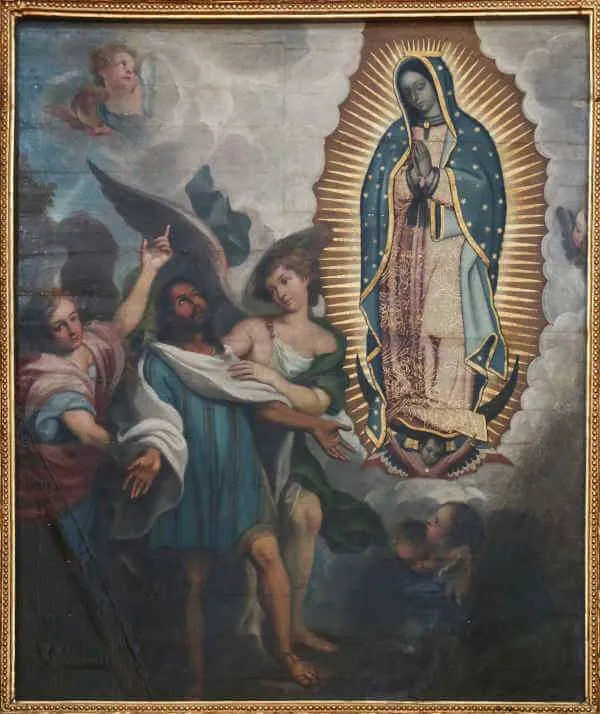
As he journeyed, the Mother of God appeared to him on the alternate route and asked where he was going. Juan shared the news about his uncle, explaining that his illness was the reason he had failed to show up the previous day for the promised sign. The Mother of God lovingly scolded Juan for his lack of faith, saying to him, “Am I not here, I who am your mother?” She informed him that his uncle had already recovered from his illness and then instructed Juan to climb the hill where he would find flowers not usually in bloom at that time of year. Sure enough, on the rocky peak where normally only weeds and cacti grew, there were beautiful roses. Juan picked them and placed them in his cloak, called a tilma. When he climbed down, the Mother of God rearranged the flowers and told him to bring them to the bishop as his sign. When Juan was brought into the presence of the bishop, he opened his tilma, and the flowers fell to the ground. At the same time, an image of the Mother of God appeared on the tilma, just as she had appeared to Juan. The bishop immediately fell to his knees and believed.

The following day, Juan Diego went to check on his uncle and found him fully recovered. His uncle informed him that the Mother of God had appeared to him also and healed him. She instructed him to present himself to the bishop and tell the bishop about the apparition and his miraculous healing.

After keeping Juan Diego’s tilma in his private chapel at first, the bishop had a small chapel erected on the Tepeyac Hill. On December 26, 1531, he led a procession with the tilma to the chapel. On the way, a man in the procession was accidentally struck in the neck with an arrow that was intended to be part of a display in honor of the Mother of God. The wound was serious and his death was imminent. He was placed before the holy image, the arrow was removed, those gathered beseeched the Mother of God to heal him, and he instantaneously recovered.

This entire experience profoundly affected Juan Diego. Prior to the apparition he already had a strong faith, but afterwards it became even stronger. According to some early sources, Juan Diego’s wife had passed away in 1529, two years prior to the apparition. After the apparition, Juan received permission from the bishop to erect a small hut near the chapel where he lived for the next sixteen years as a hermit, caring for the chapel and image, and welcoming visitors who came to venerate it. According to the official biography from the Vatican that was prepared on the occasion of Saint Juan Diego’s canonization, “Juan Diego received the grace of interior enlightenment and from that moment, he began a life dedicated to prayer and the practice of virtue and boundless love of God and neighbor.”

Today, Saint Juan Diego’s tilma is enshrined in the Basilica of Our Lady of Guadalupe in Mexico City. The tilma itself is truly miraculous. Although it was made of plant fibers that normally disintegrate after about fifteen years, it remains in perfect shape today. The image does not have any brush marks, instead appearing to have been miraculously imprinted upon the fiber. Perhaps the greatest miracle is that this apparition helped bring about the Christianization of the Americas, especially Mexico. By appearing as a mixed race of Spanish and Indigenous, Our Lady offered an invitation to the Indigenous to accept the Gospel from the Spaniards. She bridged the gap between the two cultures and won over many souls.

As we honor Saint Juan Diego, we also anticipate the Feast of Our Lady of Guadalupe in three days, on December 12. Today, however, we ponder this humble and simple man who quickly responded to the grace of God when the Franciscan friars shared the Gospel with him and lovingly responded to the wishes of the Mother of God. His first conversion took place at baptism, but his second conversion could be said to have taken place after the apparition when he more fully dedicated himself to a life of prayer and service of God. Ponder the amazing fact that the Ever-Virgin Mary, Mother of God, chose the humblest of her sons to be the instrument of the greatest of miracles. As you do, know that God can do great things through you if you humble yourself in imitation of Saint Juan Diego.

Source: https://mycatholic.life/saints/saints-of-the-liturgical-year/9-december-saint-juan-diego–optional-memorial/

Saint Juan Diego, Hermit Read More »

Luke 3:5-6

Removing the Obstacles to Grace

Every valley shall be filled and every mountain and hill shall be made low. The winding roads shall be made straight, and the rough ways made smooth, and all flesh shall see the salvation of God.

Reflection:

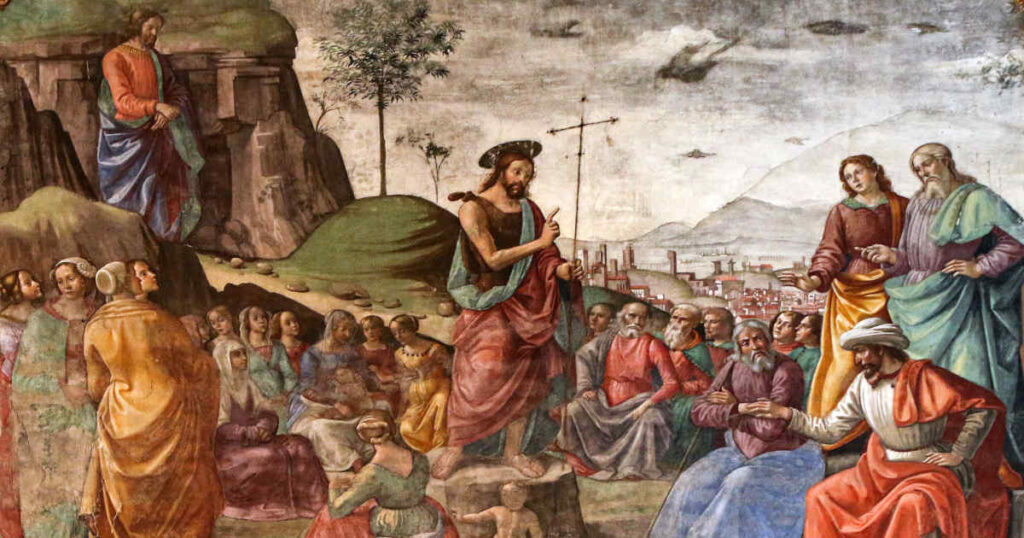
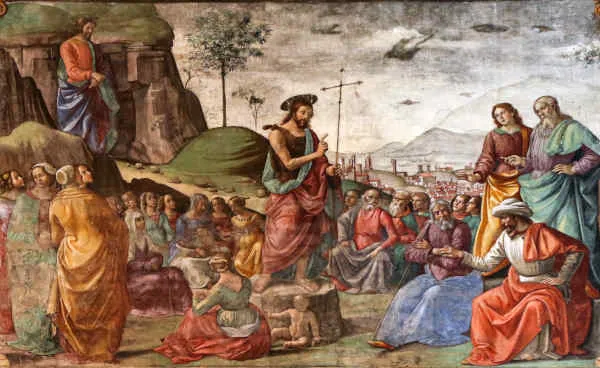
These, the words of the prophet Isaiah, were spoken about the mission of Saint John the Baptist. John was to “Prepare the way of the Lord” and to “make straight his paths.” In prophesying this, Isaiah goes on to give this very descriptive image of John’s ministry. It would be one that levels mountains and valleys, straightens every winding road, and smooths out the rough terrain. In other words, John came to remove every obstacle to God, making it easy to encounter the Messiah.

How does John complete this mission? By calling the people of that time to the dry and empty desert where all the false allurements cease to exist. This is done by detachment from the many sins and temptations they faced. Their repentance was an act by which the people humbled themselves before God, admitted their sins and acknowledged their need for a Savior. This humble admission, coupled with the commitment to change their ways, prepared heart after heart for the grace and mercy that came through Christ the Lord.

Today, there are countless obstacles to grace that so many people encounter. Some have been drawn into the satisfactions of earthly riches and material comforts and find little need for God. Others have very little that this world can offer but are consumed with a desire for money and the passing comforts it promises. And still others are drawn into many other forms of sins and false satisfactions. But there are some who are like a dry and deserted desert, just waiting to soak up the gentle rain of God’s grace. These are those who have sought to detach themselves from the false promises of this world and remain “empty” and “dry” so as to be prepared for the abundance of grace when it comes. These holy souls have heeded the call to repentance and have humbly acknowledged their need for the Savior.

Reflect, today, upon whether or not your soul is like that dry and barren desert, detached from all the false and passing satisfactions of this world, and prepared to soak up the mercy and grace of God alone. Repentance brings forth detachment, and detachment prepares the soul for God. When one is truly detached and free from the many obstacles to God, then the road from God to your soul will be straight and easily traveled. Reflect upon your soul today and where you see unhealthy attachments. Repent with all your heart so that you are among those most fully ready for an abundance of the grace and mercy of God.

Source: https://catholic-daily-reflections.com/2024/12/07/removing-the-obstacles-to-grace/

Luke 3:5-6 Read More »

Saint Ambrose, Bishop and Doctor

c. 339–c. 397; Patron Saint of beekeepers, bishops, candlemakers, domestic animals, geese, honey cake bakers, learning, livestock, police officers, schoolchildren, security personnel, starlings, and wax refiners; Pre-Congregation canonization

 In 1298, Pope Boniface VIII named today’s saint as one of the four original Doctors of the Church, along with Saints Augustine, Jerome, and Gregory the Great, cementing his importance in the history of the Church. Ambrose was born into a prominent family, with his father, Aurelius, serving as the Praetorian Prefect governing Gaul, France, and beyond. Ambrose was raised in a household of faith and learning. While his father was governor, his mother took Ambrose to Rome to receive a strong education in rhetoric, law, and literature to prepare him for an important political career. A legend from his infancy states that a swarm of bees landed on his face and left a drop of honey, which his parents interpreted as a sign of future greatness and eloquence. As was common at that time, Ambrose was not baptized as an infant but remained a catechumen even into his adult years.

When Ambrose was around the age of thirty, he was appointed as Governor of the Provinces of Emilia and Liguria, a region that included Milan. This position was considered a stepping stone to higher political roles. While Ambrose served as governor, the Church was suffering from internal divisions due to the ongoing effects of the Arian heresy. Despite Arianism’s condemnation in 325 at the Council of Nicaea, many laity, clergy, and even bishops refused to reject the heresy and accept the Nicene Creed. 

In 374, when Ambrose was about thirty-five, the Arian Bishop of Milan passed away. The city found itself in religious turmoil between the Arians and the Catholics. Ambrose, concerned for the peace of the city, personally offered to supervise the election of a new bishop. The eloquence with which he handled the situation had an unexpected effect. Both sides respected him—Catholics for his faith and Arians for his honor. As a result, the crowd began chanting “Ambrose for bishop!” Frightened, Ambrose fled. He argued that he had no theological training and had not even been baptized. However, when Emperor Gratian approved his appointment, Ambrose reluctantly agreed. He was baptized, ordained as a priest, and then consecrated a bishop.

After his consecration, Bishop Ambrose began an intense period of theological and scriptural study. Because he was already well versed in Greek, Latin, and the classics, he quickly mastered Catholic theology. He was also quick to learn the Old Testament and the progression of salvation history. His approach to the Scriptures was unique in that he often read it silently, reflecting upon the meaning in his heart. At that time, Scripture was normally read aloud. This practice of interiorly reading Scripture is known today as lectio divina and has become the standard method of praying with the Scriptures. This interior reading of Scripture, coupled with his  training in rhetoric, proved invaluable when he became a preacher, drawing large crowds to packed churches. Ambrose fully committed himself to his new ecclesiastical mission. He quickly realized that he not only needed to learn and proclaim the orthodox faith, he also needed to live it. Shortly after his ordination, he gave away most of his wealth and land, only keeping what was necessary to ensure the well-being of his sister and family.

Though the Arians had hoped they could win him over to support their side, Bishop Ambrose quickly took the orthodox position, rejecting Arianism. He saw that the Arians were divisive in the community and that he must be the source of true unity and the leader of the faith. He spent much time shepherding the people of his diocese and the rest of his time praying and studying the Word of God.

As Bishop Ambrose’s reputation spread, he caught the attention of Augustine of Hippo, who followed the philosophy of Manichaeism. Augustine moved to Milan to take up a teaching position and began to listen to Bishop Ambrose preach. Augustine’s mother, Monica, had relentlessly prayed for her son’s conversion and asked Bishop Ambrose to intervene. Though Bishop Ambrose’s preaching and teaching had a powerful effect upon Augustine, it was the bishop’s personal life that affected Augustine the most. Augustine later wrote of the bishop:

I arrived in Milan and encountered Bishop Ambrose, a man celebrated globally as one of the finest individuals and a devout servant of Yours. His eloquent sermons richly provided Your people with the core teachings of Your wisdom, the joy of Your grace, and a profound spiritual enrichment akin to uplifting wine. Unbeknownst to me, it was by Your guidance that I was led to him, so that through him I could knowingly be led to You. This man of God welcomed me with fatherly warmth and extended to me the kindness befitting a bishop upon my arrival (Confessions Book V)

Augustine saw in Bishop Ambrose not only a man filled with wisdom and understanding, which were qualities that Augustine had been searching for his whole life, but also a man who cherished those eternal truths in his heart and lived them out. For example, when he saw the bishop reading the Scriptures silently, he sensed he was truly internalizing the message. This led Augustine to open the Scriptures and ponder them himself, leading to his conversion and baptism and to his being celebrated as one of the most influential saints in the history of the Church and even upon the whole of Western culture.

Bishop Ambrose also held great influence over the Roman emperors. Emperor Gratian had a good friendship with Ambrose and was the one who told him to accept his election as bishop. Bishop Ambrose later successfully encouraged the emperor to remove the pagan Altar of Victory from the Roman Senate. When Emperor Valentinian II came to power as a youth, his Arian mother, Empress Justina, acted as his regent. In her support of Arianism, Justina ordered Bishop Ambrose to turn over a church in Milan to the Arian bishop. He refused, writing to her, “If you demand my person, I am ready to submit: carry me to prison or to death, I will not resist; but I will never betray the Church of Christ.” Bishop Ambrose and his people locked themselves in the church and refused to leave. Saint Augustine wrote of this incident in the Confessions, saying, “The devout people kept watch in the Church, ready to die with their Bishop Thy servant” (Book IX). Seeing no way to convince the bishop and his people, the empress acquiesced.

In 380, Emperor Theodosius issued the Edict of Thessalonica, making Nicene Christianity the official religion of the Roman Empire, outlawing Arianism. Though Theodosius was an orthodox Christian, in 390 he committed a horrible atrocity, ordering a massacre in Thessalonica. When Bishop Ambrose found out, he wrote to Theodosius, demanding he do public penance and informing him he was forbidden to receive the Sacraments until he did so. The emperor complied.

In addition to being an outstanding pastor to his people and a powerful preacher, Saint Ambrose left behind a wealth of writings that have had a great impact on the Church’s theological tradition. In his writings, he is especially known for his refutation of Arianism and his teaching on the true nature of Christ and the Holy Spirit. He also wrote on the Sacraments, virginity, ethics, penance, and the duties of the clergy, and penned commentaries on Sacred Scripture. He left behind many letters of great importance, composed hymns, and wrote beautifully about our Blessed Mother.

As we ponder the life of Saint Ambrose, reflect upon his sudden and unexpected election as Bishop of Milan. Though he had his eyes on an important political career, God’s will was different; therefore, Ambrose cooperated with the divine will. As you ponder his life, consider any ways that your own will differs from God’s will for you. As you do, try to imitate Saint Ambrose by choosing the divine will and letting go of your own preferences and plans.

Source: https://mycatholic.life/saints/saints-of-the-liturgical-year/7-december-saint-ambrose-bishop-and-doctor–memorial/

Saint Ambrose, Bishop and Doctor Read More »

Matthew 9:37-38

On Mission From Christ

“The harvest is abundant but the laborers are few; so ask the master of the harvest to send out laborers for his harvest.”

Reflection:

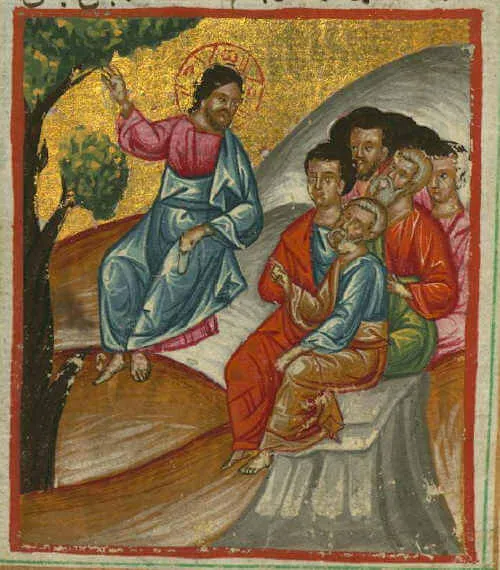
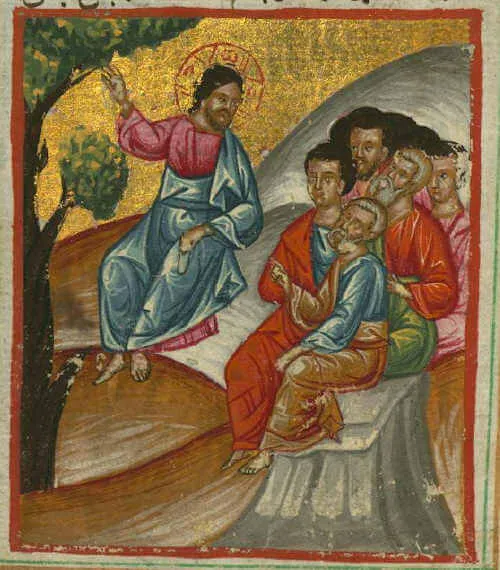
What does God want of you? What is your mission? Some fervent Christians may dream of becoming a popular evangelist. Some may dream of doing heroic acts of charity that are praised by all. And others may wish to live a very quiet and hidden life of faith, close to family and friends. But what does God want of YOU?

In the passage above, Jesus exhorts His disciples to pray for “laborers for his harvest.” You can be certain that you are among the “laborers” of which our Lord speaks. It’s easy to think that this mission is for others, such as priests, religious and full-time lay evangelists. It’s easy for many to conclude that they do not have much to offer. But nothing could be further from the truth.

God wants to use you in exceptionally glorious ways.  Yes, “exceptionally glorious!” Of course, that does not mean that you will be the next most popular YouTube evangelist or enter the spotlight like Saint Mother Teresa did. But the work God wants of you is just as real and just as important as any of the greatest saints of old or who are alive today.

Holiness of life is discovered in prayer but also in action. As you pray each and every day and grow closer to Christ, He will exhort you to “Cure the sick, raise the dead, cleanse lepers, drive out demons” (Matthew 10:8), as today’s Gospel goes on to state. But He will call you to do this in the unique way within your own vocation. Your daily duty is not to be ignored. So who in your daily encounters are those who are the sick, the dead, the lepers and the possessed? Most likely they are all around you, to one extent or another. Take, for example, those who are “lepers.” These are those who are the “rejects” of society. Our world can be harsh and cruel, and some may find themselves feeling lost and alone. Who do you know who may fall into this category? Who needs a bit of encouragement, understanding and compassion? God has given you a daily duty that He has not given to another, and, for that reason, there are some who need your love. Look for them, reach out to them, share Christ with them, be there for them.

Reflect, today, upon this exceptionally glorious calling you have been given to be Christ to another. Embrace this duty of love. See yourself as one called to be a laborer for Christ and commit yourself to the full and glorious fulfillment of this mission, no matter how it is to be lived out in your life.

Source: https://catholic-daily-reflections.com/2024/12/06/on-mission-from-christ-4/

Matthew 9:37-38 Read More »

Saint Nicholas, Bishop

c. 270–c. 346; Patron Saint of children, sailors, merchants, archers, repentant thieves, brewers, pawnbrokers, unmarried people, Russia, and numerous countries and cities; Pre-Congregation canonization

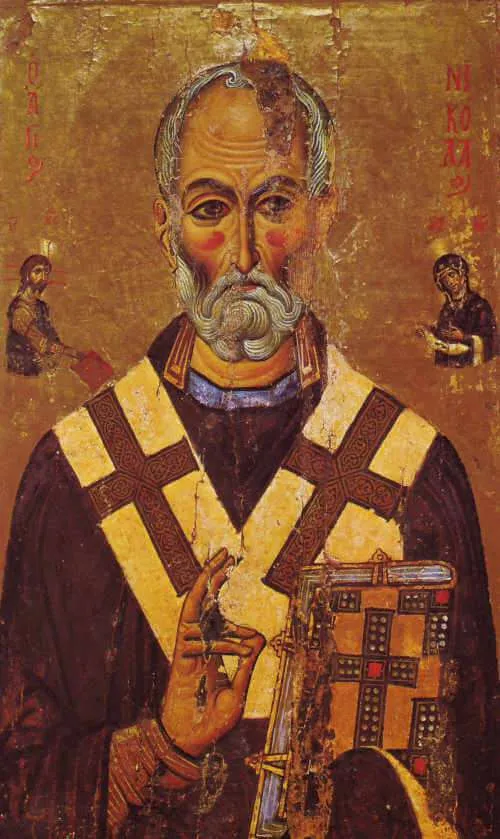
Saint Nicholas of Myra, also known as Nicholas of Bari, Nicholas the Wonderworker, and Saint Nick, was a fourth-century bishop in Myra, Asia Minor, modern-day Demre, Turkey. His life is also the origin of the legend of Santa Claus. By the sixth century, his tomb had become widely venerated because of the numerous reported miracles worked through his intercession. In the eleventh century, his body was transferred to Bari, Italy, where it remains today. To this day, his bodily remains excrete a liquid, at first thought to be an oil but now believed to be water, which is collected, mixed with holy water, and distributed to the faithful in bottles every May 9, the day his remains arrived in Bari. The liquid is commonly referred to as the “Manna of Saint Nicholas” and is believed to contain miraculous healing power. For this reason, along with the mythical character of Santa Claus, he remains a highly venerated saint within the Church. 

Very little is known about Saint Nicholas that is historically verifiable. What we do know is that he was the Bishop of Myra, most likely suffered imprisonment during the persecution of Roman Emperor Diocletian, and was one of the bishops who attended the Council of Nicaea in 325. In addition to these historical details, many later legends have developed about his life. 

Nicholas was born into an affluent and devout Christian family. When Nicholas was young, his parents died from an epidemic, leaving him an orphan and heir to his family wealth. Conscious of the exhortation Jesus gave to the rich young man to “sell what you have and give to the poor,” Nicholas did exactly that. He sold his inheritance and distributed it to those in need. Some accounts of his life state that his uncle instead was the Bishop of Myra and that he ordained Nicholas a priest.

One popular legend is that among the recipients of his wealth were three girls whose father could not afford dowries for them to be married. Their future options were grim and included the possibility of their resorting to prostitution to survive. When Nicholas found out about this dire situation, he threw a bag of gold through the window of their home that the father used as a dowry for his first daughter. Nicholas then did this a second time. After the second daughter was married, the father stayed up all night waiting for a third bag of money. When Nicholas threw the third bag through the window, the father ran out and thanked him. Nicholas asked him not to tell anyone. One version of the story states that each night, the bag of gold landed in stockings hung by the fire to dry, leading to the Christmas tradition of placing stockings out for Saint Nick, who secretly fills them.

In another popular story, Nicholas was traveling to the Holy Land by ship. A storm suddenly arose, and the crew were fearful for their lives. Nicholas prayed, and the storm ceased. For this reason, Saint Nicholas is patron saint of sailors and those taking sea voyages.

How Nicholas became a bishop is a mystery. One version of the story is that shortly after Father Nicholas’ return from the Holy Land, the bishop of Myra died. The clergy of Myra then gathered to pick a successor. During their meeting, God inspired them to pick the first person to enter their church the following morning. Because Father Nicholas had spent the entire night in prayer, he was the first person in the church and was chosen bishop.

During his time as Bishop of Myra, a great persecution broke out in the Roman Empire under Emperor Diocletian. In 303, Diocletian, Maximian, Galerius, and Constantius—who made up a tetrarchy that governed the whole Roman Empire—issued a series of edicts outlawing Christianity and imposing the penalties of torture and death on those who practiced the faith. This was the last and the most violent persecution of Christians in the Roman Empire. At some point, between the years of 303 and 306, Bishop Nicholas was among those arrested and tortured. In 305, Diocletian renounced the throne, and in 306, Caesar Constantius died. Constantius’ son, Constantine, then became Caesar in his place and ordered Bishop Nicholas’ release. In 312, Constantine is said to have seen a vision of the Cross with the words, “In this sign, you will conquer.” In 313, he and his co-emperor ​​Licinius issued the Edict of Milan, granting religious tolerance to Christians.

An early list of the bishops who attended the Council of Nicaea in 325 includes Bishop Nicholas. That council was called to address the heresy of Arianism that denied the full divinity of Christ, asserting that the Son was a created being and not co-eternal with the Father. Some legends relate that Bishop Nicholas was so appalled by the Arians at the council that he slapped one of them across the face, was imprisoned for that act, but was released by Jesus and the Blessed Virgin Mary. Other accounts state that the heretic he slapped was Arius himself. The slap is a common motif in sacred art, including Orthodox iconography.

Other legends abound about Saint Nicholas. He is said to have won the release of various individuals unjustly condemned to death, going so far as to stay the sword of the executioner. During a famine, an evil butcher killed three children and pickled their remains to sell them as ham. Bishop Nicholas intervened and raised the pickled children from the dead. While shocking to the modern hearer, the story was widely told in the Middle Ages. An image of that miracle is found in sacred art and is one of the reasons many came to consider Saint Nicholas as the patron saint of children. Still another story relates that during another famine, a ship full of wheat for the emperor arrived in Myra. Bishop Nicholas convinced the sailors to give him enough to feed the people for two years, promising them that the emperor would still receive all his wheat. When the trusting sailors delivered the rest of the wheat to the emperor, it weighed the same as when it was loaded, despite much of it having been given to the people of Myra.

Bishop Nicholas died on or around December 6, 346 (the year of death varies by source), and was canonized by popular acclaim. His feast day became a day when the faithful performed charitable works, especially toward children, a custom that continues today. In 1054, the Catholic Church split between the East and West, resulting in the Catholic and Orthodox Churches. This left the remains of Saint Nicholas in the hands of the Orthodox. In 1071, the Seljuk Turks captured Orthodox-controlled Myra. In 1087, fearful that the Turks would mistreat the relics of their revered saint, Catholic Italian sailors from Bari took part of Saint Nicholas’s remains from his Myra tomb and brought them to Bari, Italy, where the pope later had a church built in the saint’s honor.

Though most of what we know about Saint Nicholas’ life is legendary rather than historically certain, those legends have added much to the faith of the people of God throughout the centuries. These tales have inspired faith and hope and have led to numerous reported miracles.

As we honor this saintly bishop from 1,700 years ago, ponder the faith of the people of God throughout those centuries who have benefitted from the sacred art, pilgrimages to his tomb, and the miraculous Manna of Saint Nicholas. Allow the longtime devotion to him to inspire you, entrusting yourself more fully to his intercession, as well as the intercession of all the saints of Heaven.

Source: https://mycatholic.life/saints/saints-of-the-liturgical-year/december-6—saint-nicholas-bishop–optional-memorial/

Saint Nicholas, Bishop Read More »