Author name: Sani

Luke 24:45-48

Becoming a Witness to the Truth

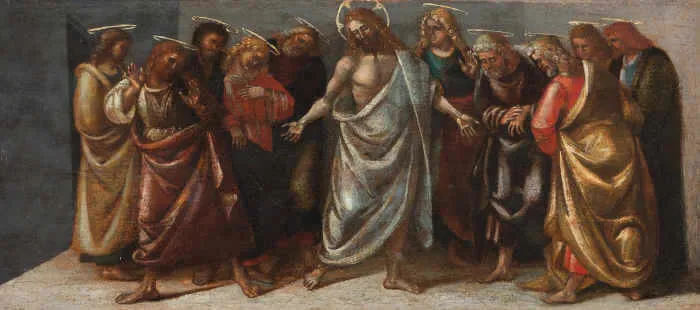
Then he opened their minds to understand the Scriptures. And he said to them, “Thus it is written that the Christ would suffer and rise from the dead on the third day and that repentance, for the forgiveness of sins, would be preached in his name to all the nations, beginning from Jerusalem. You are witnesses of these things.”

Reflection:

Jesus once again appears to a group of His disciples, and He once again gets straight to the point. He “opened their minds” so that they would understand all that the Scriptures revealed about Him. He helped them to see that His death and Resurrection were fulfillments of the teachings of Moses and the prophets. And then Jesus says something new: “You are witnesses of these things.”

As we saw in yesterday’s Gospel, it’s clear that the disciples did not yet understand why Jesus had to die and then rise again. They were still in shock and traumatized by these events. Therefore, Jesus had to carefully explain to His disciples the meaning of what had just taken place. They needed to understand this on a level that they couldn’t comprehend by themselves. They needed Jesus’ clear and detailed explanation as well as a special grace by which their minds would be opened to an understanding of these profound mysteries of faith.

We are no different than these disciples. It’s easy to believe in Jesus for insufficient reasons which only result in superficial faith. Some believe simply because that’s what they were taught when they were young. Some believe because it makes them feel better to believe. Some believe because they don’t know of anything better to believe. But then there are those who believe for the right reason. Like the disciples in this resurrection appearance, they have listened to Jesus speak clearly and in detail to them, such as through their study of Scripture, the Catechism, or other holy sources, and then they were given a special grace from God that “opened their minds” to an understanding that goes far beyond human rational abilities alone. Are you one of those people?

If you are, then you have another duty. Not only must you continue to internalize these truths, allowing them to deepen and change your own life completely and totally, but you must also become a “witness” to these things. When you grow in an authentic knowledge of the faith revealed by our Lord, you must also share it with others. Real faith must be shared!

Reflect, today, upon this powerful resurrection appearance. As you do, ponder whether or not you have allowed our Lord to speak to you in the same way that He did to these disciples, and whether or not you have truly internalized all that He has spoken to you and explained to you. If you are among this grouping of people, reflect also upon your duty to be a witness of these truths to others.  Jesus wants to appear in His resurrected form to many others, but He especially does this, today, through the mediation of His faithful followers who are now sent forth to be witnesses to Christ and His glorious Resurrection.

Source: https://catholic-daily-reflections.com/2025/04/23/becoming-a-witness-to-the-truth-4/

Luke 24:45-48 Read More »

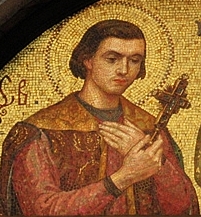
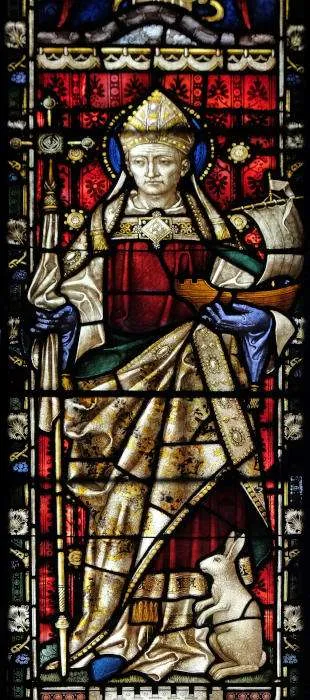
Saint Adalbert, Bishop and Martyr

c. 956–997; Patron Saint of Poland, Hungary, and the Czech Republic; Canonized by Pope Sylvester II in 999

Duke Slavník and his wife Střezislava, the parents of today’s saint, both came from noble ruling families in the Duchy of Bohemia, present-day Czech Republic. They had five sons, one of whom was Vojtěch. As a youth, Vojtěch became quite ill, so his faith-filled parents dedicated him to God as a priest if God would heal him. Vojtěch did recover and was sent to Magdeburg, Germany, to study under Bishop Adalbert, the first bishop of that diocese. During his ten years of study, Vojtěch grew in knowledge and holiness. He spent long hours in prayer and was very devoted to the care of the poor. Vojtěch had such a great respect for the Bishop of Magdeburg that he took his name when he received the Sacrament of Confirmation. Bishop Adalbert of Magdeburg was later canonized a saint, as was his student, Saint Adalbert of Prague, whose feast we celebrate today.

When the Bishop of Magdeburg died in 981, the young Adalbert returned home to Bohemia and was ordained a priest two years later by the Bishop of Prague. Soon after, the Bishop of Prague became quite ill and on his deathbed was filled with a fear of hell. He had lived a worldly life, seeking riches and comfort rather than holiness. The bishop’s dying witness had an effect upon Father Adalbert, causing him to deepen his commitment to the pursuit of holiness through penance, prayer, and simplicity of life. Shortly thereafter, Father Adalbert was chosen as the next bishop of Prague. Though resistant at first, he eventually accepted and was ordained a bishop in 983. It is said that once he became a bishop, Adalbert rarely smiled. He later remarked, “It is an easy thing to wear the mitre and a cross; but it is a most dreadful circumstance to have an account to give of a bishopric to the Judge of the living and the dead.” He truly felt the weight of his responsibility.

Bishop Adalbert was, at first, joyfully welcomed in Prague. From the beginning of his bishopric, he embraced a life of simplicity, prayed and fasted often, slept on the floor as penance, preached almost every day, and frequently visited the sick and imprisoned. Though the people in his diocese were Christian, they had not been Christian for long, and many of them held on to their former pagan ways. They commonly practiced polygamy, idolatry, slavery, and various other immoralities. Bishop Adalbert worked hard to address these evils but was met with such strong resistance that he had to flee to Rome. In Rome, the Holy Father permitted him to enter the Benedictine monastery of Saint Boniface. As a bishop-monk, he humbled himself, performing the most menial tasks in the monastery. During this time, he might have also visited Hungary to preach the Gospel, where he is believed to have baptized the soon-to-be king and future Saint Stephen of Hungary.

After about five years in the monastery, the pope sent Bishop Adalbert back to Prague with the instruction that, if the people remained hostile, he could once again leave. Bishop Adalbert arrived in Prague and was, at first, received with great joy. But after renewing the fight against the evils in his diocese, his life was again threatened. As a result, he returned to Rome and reentered the Benedictine monastery where he was made prior. Not long after, he traveled to Poland to assist his friend Duke Bolesław I and exercised his episcopacy in Gniezno, Poland.

After converting many in Poland, Bishop Adalbert obeyed Boleslaw’s wish that he travel north into Prussian territory along the Black Sea to convert the rough pagans of that land. Poland had just recently become a Christian nation, and Duke Bolesław wanted to convert the Prussians and bring them under his rule. The Prussians were a religious people who believed that everything in the created world had spirits. Animals, trees, and lands were revered and worshiped. Pagan priests practiced magic rituals, seeking favors from these countless spirits and also regularly sought to communicate with the dead. One fourteenth-century missionary described the Prussian people this way: “Because they did not know God, therefore, in their error, they worshiped every creature as divine, namely the sun, moon and stars, thunder, birds, even four-legged animals, even the toad. They also had forests, fields and bodies of water, which they held so sacred that they neither chopped wood nor dared to cultivate fields or fish in them” (Father Peter of Dusburg).

When Bishop Adalbert arrived in Prussia, his preaching was initially successful. However, his life was soon threatened, and he had to move on to other places. He continued to endure the wrath of the locals, including a pagan priest who saw him as a threat to their way of life. That pagan priest, together with a mob, killed the bishop one day, cut off his head, and placed it on a pole. Two years later, Bolesław I bought Adalbert’s body from the pagans at the cost of the weight of his body in gold. Once his body was back in Poland, Bishop Adalbert’s funeral was celebrated, and he was buried in the Cathedral of Gniezno. In 999, Pope Sylvester II canonized him a saint, and a year later, the Holy Roman Emperor Otto III came to the Cathedral of Gniezno and prayed at Saint Adalbert’s grave. Devotion to him rapidly grew, and his intercession for the newly converted lands in which he ministered was readily sought for centuries.

Though in some lights Saint Adalbert’s ministry as a bishop could be judged as unsuccessful, his courage, fidelity to the Gospel, and the shedding of his blood are credited for the ongoing conversion of many throughout Bohemia, Poland, and Hungary. In the late second century, the famous Christian writer Tertulian wrote, “The blood of martyrs is the seed of Christians.” Though the preaching of God’s Word opens minds and hearts to the Truth, history shows that the joyful embrace of suffering, especially martyrdom for the Gospel, powerfully nourishes the seeds of the Word of God that has been preached. Saint Adalbert first sowed the seed of God’s Word and then watered those seeds with his blood. The result was that the lands in which he ministered began to grow abundantly in the faith of Christ, becoming Christian nations for the centuries that followed.

As you ponder Saint Adalbert’s life, consider whether you find any similarities in your life. Do you work to share the Gospel with family and friends, only to find your efforts bear little or no evident fruit? If so, take inspiration from today’s saint, and follow his example of courageous dedication to the end, laying down your life sacrificially so that the witness of your love will nourish the seed that God has sown through you.

Source: https://mycatholic.life/saints/saints-of-the-liturgical-year/april-23-saint-adalbert-bishop-and-martyr/
Saint Adalbert, Bishop and Martyr Read More »

Luke 24:30-31

The Word of God Burning Within

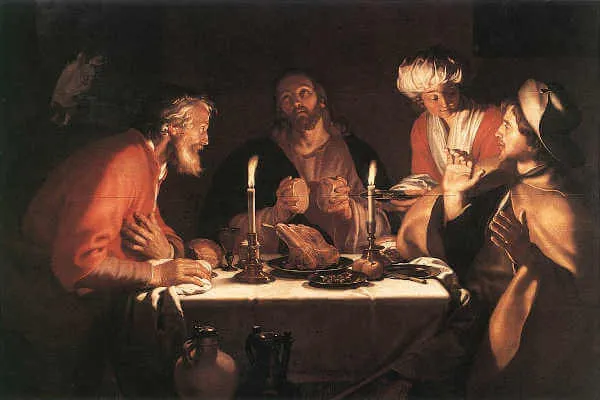
And it happened that, while he was with them at table, he took bread, said the blessing, broke it, and gave it to them. With that their eyes were opened and they recognized him, but he vanished from their sight. Then they said to each other, “Were not our hearts burning within us while he spoke to us on the way and opened the Scriptures to us?”

Reflection:

Two of Jesus’ disciples had been discussing the events of the past week as they walked the seven-mile journey along the road from Jerusalem to Emmaus. They previously had hoped that Jesus was the one Who would redeem Israel—but then He was killed. And three days later, there were rumors of His Resurrection, which only left them confused. As they journeyed, Jesus appeared to the two disciples, but they did not recognize Him at first. His identity was hidden from their eyes. Jesus listened to them and expressed sorrow at their lack of understanding, so He explained to them the teachings of Moses and the prophets and that the Messiah needed to suffer, die and rise on the third day. As Jesus spoke, the disciples began to understand, and their hearts burned within them. Finally, in the gift of the Holy Eucharist, in the breaking of the Bread, their eyes were opened to see that it was Jesus with them.

Why did Jesus hide His risen presence from these disciples? It appears that He did so because they lacked faith. They said, “…we were hoping that he would be the one to redeem Israel.”  But the Crucifixion was too much for them to handle. They could not comprehend why the Redeemer had to suffer as Jesus did, so they began to doubt.

Too often we are like these disciples who are confused about matters of faith and who struggle with doubts. For that reason, we must see ourselves in the persons of these disciples as they walked the road to Emmaus. Jesus offered these disciples a wonderful gift of mercy by helping them to understand His saving act. He explained to them all that was taught in Scripture regarding Him. And as these disciples listened to Jesus teach them, they slowly came to believe.

We, too, must allow Jesus to teach us about the transforming power of His death and Resurrection. We must listen attentively and allow our hearts to burn within us as we listen to His holy Word. Only in this way will we come to the level of faith we need to more fully comprehend and accept the transforming power of the Paschal Mystery.

Reflect, today, upon these disciples and their need to reflect upon the Word of God so as to understand, believe and have their eyes opened. Know that you need this same grace. You need to spend time with our Lord, immersed in His Word, listening to His voice, so that you will come to believe more fully. Allow the message of Jesus’ death and Resurrection to burn within you so that you, too, will come to believe.

Source: https://catholic-daily-reflections.com/2025/04/22/the-word-of-god-burning-within-4/

Luke 24:30-31 Read More »

Saint Epipodius of Lyon

Profile

Epipodius was a friend of and worker with Saint Alexander of Lyon. He was imprisoned, tortured, and martyred during the persecutions of Marcus Aurelius. Though he never joined an order, Epipodius was a confirmed celibate bachelor, devoting his time to work with and for God. He was betrayed to imperial authorities by a servant. He was a martyr.

Born

  • 2nd century at Lyon, France

Died

  • beheaded in 178
  • relics at the church of Saint Irenaeus at Lyon, France
  • miracles reported at the tomb

Canonized

  • Pre-Congregation

Patronage

  • bachelors
  • betrayal victims
  • torture victims

Source: https://catholicsaints.info/saint-epipodius-of-lyon/

Saint Epipodius of Lyon Read More »

John 20:17

Cling to Jesus Now!

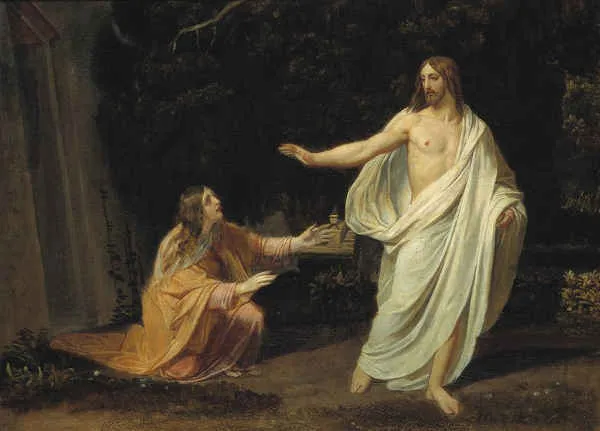
Jesus said to her, “Stop holding on to me, for I have not yet ascended to the Father. But go to my brothers and tell them, ‘I am going to my Father and your Father, to my God and your God.’”

Reflection:

Mary of Magdala was one of the first persons to whom Jesus appeared. She was deeply devoted to Him, especially because of the great mercy He offered her when He forgave her manifest sins and expelled seven demons from her. After He had done that, Mary became a devout follower and was one of the few who remained faithful to Him, even as He hung upon the Cross.

On the first day of the week, the Sunday after the Crucifixion, Mary came to the tomb to anoint Jesus’ body in accord with Jewish custom. But when she arrived, Jesus’ body was gone. And when Jesus appeared to her as she was weeping, she didn’t immediately recognize Him, for He had His new glorified body. But when Jesus spoke her name, Mary, she recognized Him. But rather than embracing her, Jesus said, “Stop holding on to me…” Why would Jesus say this?

Even though Mary’s attachment and devotion to Jesus was beautiful and holy, it wasn’t yet perfected. She wanted her Lord Whom she had come to know and followed. She wanted her former relationship with Jesus to be returned to her. But for this reason, Jesus said, “Stop holding on to me…” Jesus wanted much more. He was telling her that her relationship with Him was soon to change for the better. No longer would He simply be her earthly companion; instead, He would soon live within her, dwell within her very heart, become one with her, and be her Bridegroom for eternity. But this could only happen once Jesus ascended to the Father in Heaven to complete His divine mission of salvation.

At times, we also seek favors from our Lord that are purely temporal. Though we do need to trust Him for “our daily bread,” meaning, for all the basic necessities of life, we must realize that the gifts God wants to give us far surpass anything in this world. The supernatural gift of grace, the gift of the Indwelling of the Most Holy Trinity, the gift of oneness with our Lord is what we are made for and is the end goal and desire of our Lord.

Reflect, today, upon these words Jesus spoke to Mary: “Stop holding on to me, for I have not yet ascended to the Father.” But do so with the knowledge that, now, Jesus has indeed ascended to the Father. Therefore, He now invites us all to cling to Him as He reigns in Heaven. Ponder the deep desire in the heart of our Lord that you cling to Him with every fiber of your being. He wants to dwell within you, to become one with you and to transform you in every way. This holy union is now being enjoyed for all eternity by Saint Mary of Magdala, and this same gift is being offered to you. Cling to Him and never let go, for this will be your eternal joy.

Source: https://catholic-daily-reflections.com/2025/04/21/cling-to-jesus-now-4/

John 20:17 Read More »

 Saint Anselm of Canterbury, Bishop and Doctor of the Church

c. 1033–1109; Especially invoked by scholastic philosophers and in Canterbury; Possibly canonized prior to 1170; canonization confirmed by Pope Alexander VI on October 4, 1494; Declared a Doctor of the Church by Pope Clement XI in 1720

He was an Italian, Frenchman, and Englishman; a monk, prior, abbot, archbishop, philosopher, theologian, and spiritual writer; today he is a saint, a Doctor of the Church, and commonly referred to as the “Father of Scholasticism.” Anselm was born into a noble family in the town of Aosta, located in the Italian Alps. As a youth, his devout mother set a pious example which he readily followed. When Anselm was fifteen, he wanted to enter the monastic life, but his father would not give consent. So the abbot refused his entrance. His mother had since passed, so she could not intervene. Disillusioned, Anselm’s faith wavered for the next several years. Coming to his senses, he pursued studies in France and eventually arrived at the Benedictine Abbey of Bec around the age of twenty-six. Anselm quickly became close to and a devoted student of the prior, Lanfranc. When Anselm’s father died, Anselm was in a quandary about what to do. Should he return home to receive the inheritance of his father’s estate and put it to good use? Or should he abandon it and become a monk? Lanfranc directed him to a holy bishop for spiritual advice, and Anselm decided on religious life. He returned to the Abbey of Bec and became a monk at the age of twenty-seven.

After Anselm enjoyed three blessed years of monastic life, Lanfranc, the prior, was appointed abbot of another abbey. Anselm was chosen as the prior of Bec at the age of thirty under the elderly founding abbot, Herluin. Though some of the monks disapproved of this appointment due to Anselm’s youth, his wisdom, personality, heartfelt kindness, and holiness soon won them over. He remained the prior for the next fifteen years.

As prior, Anselm studied, prayed, taught, and administered the abbey remarkably well. He was such a success that the Abbey of Bec became one of the most respected institutions in all of Europe. At Bec, Anselm wrote seven of his thirteen works, including two of his most famous ones: Monologion and Proslogion. Anselm had a profound faith, fueled by a life of intense mystical prayer, and it was his prayer and faith that directed his thinking and writing. He believed that unless God first revealed Himself, our minds could never grasp Him, could never grasp Truth.

One of Anselm’s greatest philosophical contributions is his ontological argument for the existence of God. In his first great work, Monologion, Anselm argued that we can arrive at the existence of God using deductive reasoning. For example, if we consider the idea of “good,” we are aware of varying degrees of goodness. Therefore, there must be that which is supreme goodness itself. This supreme good must also be responsible for all else that is good. God is that Goodness. He does not simply have goodness, He is Goodness. In his great work, Proslogion, Anselm began with the concept of a being than which no greater can be conceived. From that concept, he goes through logical deductions that lead him to conclude that a being than which no greater can be conceived necessarily exists. This argument has been one of the most discussed and contested arguments in philosophy.

Philosophy was not Anselm’s only love. He was also a profound spiritual writer, theologian, and composer of many beautiful prayers. His spiritual writings are not only theoretical, they are also personal and intimate. His deep love for God and for our Blessed Mother shines through.

In 1078, Abbot Herluin died and Anselm was elected his successor by the unanimous consent of the monks, a role he would valiantly fulfill for the next fifteen years. As abbot, Anselm periodically traveled on various properties that had been donated to the abbey across the English Channel. His counsel was also regularly sought out by the English king and his good friend Lanfranc, who had since been made the Archbishop of Canterbury. Anselm’s visits to Canterbury, coupled with the domineering intellectual influence of the Abbey of Bec, made him the ideal successor to Archbishop Lanfranc of Canterbury. When Lanfranc died, Anselm became the next Archbishop of Canterbury at the age of sixty.

Anselm’s consecration as archbishop was at first delayed because of conflicts with King William II regarding the confiscation of church property and the king’s perceived right to appoint bishops independently of the pope. King William eventually became quite ill, and, for fear of hell, he repented, and Anselm was installed. Once installed as Archbishop of Canterbury, Anselm came into conflict with King William once again and was exiled from his see. After the death of King William, the new king, King Henry, welcomed Anselm back, but Anselm soon found himself engaged in yet another dispute about the appointment of new bishops. He was once again exiled. Even in exile, God used Archbishop Anselm in powerful ways. He continued writing beautiful and profound theology, defended the nature of the Trinity at a Church council in Rome, and acted as a counselor to the pope. His times in exile also gave a lasting witness to the truths for which he was exiled. That witness not only had an impact on those in his time but also for the generations to follow. Anselm’s final years were more peaceful after he and the king worked out a compromise, and he returned to his see in Canterbury.

Saint Anselm is considered a “confessor” because he suffered for his defense of the Church and the Gospel. He fiercely defended the autonomous spiritual authority of the Church and refused to participate in financial abuses between the state and church. In addition to being a confessor, Saint Anselm’s writings continue to have a profound impact upon the Church. He stands out as one of the greatest theologians between Saint Augustine and Saint Thomas Aquinas. His prayers inflame hearts with deep devotion. His love for our Blessed Mother is inspiring. His theological explanation of the Trinity, grace, truth, and the Incarnation have provided a firm foundation for a deeper understanding of our faith. Above all, we can ponder Saint Anselm’s deep conviction that when faith in God comes first, understanding follows. If you struggle in life in any way, follow this saint’s example by placing your trust in God first, and then wait upon Him to lead you.

Source: https://mycatholic.life/saints/saints-of-the-liturgical-year/april-21-st-anselm-archbishop/

 Saint Anselm of Canterbury, Bishop and Doctor of the Church Read More »

Matthew 28:12-14

Humility in the Face of the Resurrection

The chief priests assembled with the elders and took counsel; then they gave a large sum of money to the soldiers, telling them, “You are to say, ‘His disciples came by night and stole him while we were asleep.’ And if this gets to the ears of the governor, we will satisfy him and keep you out of trouble.”

Reflection:

The Lord of all rose from the grave, conquering sin and death, making it possible for us all to share in His glorious Resurrection! Death had lost. Satan had lost. The corrupt religious leaders had lost. And all those who believed in Jesus now had their eternal hope renewed. Sadly, though, what was the greatest victory ever known for humanity, a victory that opened the doors to eternal glory for all who believe, could not be accepted by the chief priests and elders of the people. They saw to His death, and, now that He had risen, they scrambled to do all they could to hide that truth.

Pride is hard to overcome. When a person professes they are right, when in fact they are wrong, and when they are then confronted with their error, the sin of pride will inevitably tempt them to further sin. This is what we see today in this passage from our Gospel. The chief priests and elders were informed by the soldiers that when the women came to the tomb early in the morning, there was a great earthquake, and they saw an angel of the Lord descend from Heaven, roll back the stone, and sit on it. When they saw this, “The guards were shaken with fear of him and became like dead men” (Matthew 28:4). And after they heard the angel tell the women that Jesus had risen, the guards went off to tell the chief priests and elders.

After all the miracles and powerful preaching of Jesus, you would think that the chief priests and elders would have believed. But they didn’t. And then, after hearing the testimony of these soldiers, you would think they would have fallen on their knees, repented of their hardness of hearts, and come to believe. But they didn’t. They doubled down in their sin and added sin upon sin.

Some forms of sin can more easily be admitted, especially sins of weakness. When one is weak and falls, it may not be always easy to overcome that sin in the future, but it is easier to acknowledge it as sin when it is caused by human weakness. But a sin of weakness is much different than a sin of obstinate pride. Obstinate pride is not only hard to overcome, it’s hard to admit. It’s hard to admit our sin when it is based on our obstinacy and pride. As a result, this type of sin often leads to other sins such as ongoing deception, manipulation and anger. This is illustrated by these chief priests and elders. But if you can humble yourself and admit your sin when it comes from your pride, that humility can have a powerful and transformative effect upon your life.

Reflect, today, upon these chief priests and elders of the people. Try to ponder their hardness of heart and the sad situation they found themselves in as they attempted to cover up their error and sin. Resolve never to fall into this form of sin yourself. However, if this is a struggle for you, seek humility so that you can be freed of this heavy burden by the grace of the Resurrection of our Lord.

Source: https://catholic-daily-reflections.com/2025/04/20/humility-in-the-face-of-the-resurrection-4/

Matthew 28:12-14 Read More »

The Resurrection of the Lord

First Reading Acts 10:34a, 37-43

Peter proceeded to speak and said:
“You know what has happened all over Judea,
beginning in Galilee after the baptism
that John preached,
how God anointed Jesus of Nazareth
with the Holy Spirit and power.
He went about doing good
and healing all those oppressed by the devil,
for God was with him.
We are witnesses of all that he did
both in the country of the Jews and in Jerusalem.
They put him to death by hanging him on a tree.
This man God raised on the third day and granted that he be visible,
not to all the people, but to us,
the witnesses chosen by God in advance,
who ate and drank with him after he rose from the dead.
He commissioned us to preach to the people
and testify that he is the one appointed by God
as judge of the living and the dead.
To him all the prophets bear witness,
that everyone who believes in him
will receive forgiveness of sins through his name.”

Responsorial Psalm Psalms 118:1-2, 16-17, 22-23

R. (24) This is the day the Lord has made; let us rejoice and be glad.
or:
R. Alleluia.
Give thanks to the LORD, for he is good,
for his mercy endures forever.
Let the house of Israel say,
“His mercy endures forever.”
R. This is the day the Lord has made; let us rejoice and be glad.
or:
R. Alleluia.
“The right hand of the LORD has struck with power;
the right hand of the LORD is exalted.
I shall not die, but live,
and declare the works of the LORD.”
R. This is the day the Lord has made; let us rejoice and be glad.
or:
R. Alleluia.
The stone which the builders rejected
has become the cornerstone.
By the LORD has this been done;
it is wonderful in our eyes.
R. This is the day the Lord has made; let us rejoice and be glad.
or:
R. Alleluia.

Second Reading Colossians 3:1-4

Brothers and sisters:
If then you were raised with Christ, seek what is above,
where Christ is seated at the right hand of God.
Think of what is above, not of what is on earth.
For you have died, and your life is hidden with Christ in God.
When Christ your life appears,
then you too will appear with him in glory.

Sequence - Victimæ paschali laudes

Christians, to the Paschal Victim
Offer your thankful praises!
A Lamb the sheep redeems;
Christ, who only is sinless,
Reconciles sinners to the Father.
Death and life have contended in that combat stupendous:
The Prince of life, who died, reigns immortal.
Speak, Mary, declaring
What you saw, wayfaring.
“The tomb of Christ, who is living,
The glory of Jesus’ resurrection;
bright angels attesting,
The shroud and napkin resting.
Yes, Christ my hope is arisen;
to Galilee he goes before you.”
Christ indeed from death is risen, our new life obtaining.
Have mercy, victor King, ever reigning!
Amen. Alleluia.

Alleluia cf. 1 Corinthians 5:7

R. Alleluia, alleluia.
Christ, our paschal lamb, has been sacrificed;
let us then feast with joy in the Lord.
R. Alleluia, alleluia.

Gospel John 20:1-9

On the first day of the week,
Mary of Magdala came to the tomb early in the morning,
while it was still dark,
and saw the stone removed from the tomb.
So she ran and went to Simon Peter
and to the other disciple whom Jesus loved, and told them,
“They have taken the Lord from the tomb,
and we don’t know where they put him.”
So Peter and the other disciple went out and came to the tomb.
They both ran, but the other disciple ran faster than Peter
and arrived at the tomb first;
he bent down and saw the burial cloths there, but did not go in.
When Simon Peter arrived after him,
he went into the tomb and saw the burial cloths there,
and the cloth that had covered his head,
not with the burial cloths but rolled up in a separate place.
Then the other disciple also went in,
the one who had arrived at the tomb first,
and he saw and believed.
For they did not yet understand the Scripture
that he had to rise from the dead.

Source: https://bible.usccb.org/bible/readings/042025.cfm

The Resurrection of the Lord Read More »

Easter Sunday

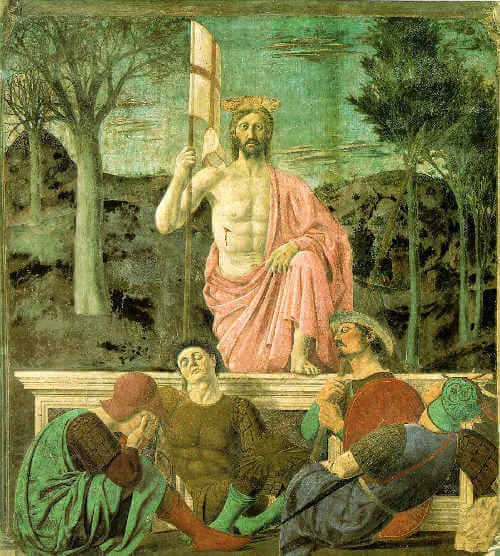
Today’s glorious solemnity is the ultimate cause of all joy, fulfillment, happiness, and glory. If Jesus only died on the Cross, destroying death, something would be missing—the restoration of life into a transformed and glorified living. Easter is not only about the forgiveness of sins, it’s about the temporal and eternal glorification of every human soul who dies and rises with Christ. When we focus upon the Gospel and consider the many lessons Jesus taught and the example He set, the Cross is often considered the difficult message and Easter the easy message. But is it?

The message of the Cross, as presented to us through both Jesus’ teachings and His lived example, is certainly challenging. Each one of us is called to the same depth of selfless surrender of our lives to the Father’s will. We must each die completely to ourselves, be purified from every sin and every attachment to sin, from every bad habit and every worldly thought, and from everything that is not God and God alone. When our calling to die with Christ and to embrace His Cross is clearly understood, as it has been by the saints, it is likely that Christians become overwhelmed at the seemingly daunting and impossible task of dying in and with Christ.

When it comes to the Resurrection, one might be tempted to say that it is easy to accept the message it presents. New life in Christ, the fullness of joy, complete transformation, and eternal beatitude in Heaven—these initially appear easy to embrace. However, the challenge that the profound reality of Easter presents to us is that we can be certain that our current understanding of what it means to share in the Resurrection of Christ is but the faintest shadow of the reality. In truth, very few people in this life have come close to understanding the glory to which we are called on account of the Resurrection. Saints Francis of Assisi, Catherine of Sienna, John of the Cross, Thérèse of Lisieux, to name a few, are among those who penetrated the mystery of Easter while still here on earth. They achieved this spiritual knowledge only by fully dying with Christ through a life of profound prayer, penance, and charity that completely united their souls to the Most Holy Trinity.

As we celebrate Easter, it is important to know that we do not yet know all that is promised to us by the Resurrection of Christ. If we can at least know that, then our spiritual appetites will make us hungry to know. Too often, Christians go through life satisfied with the most basic understanding of the Gospel. We know that God became man, lived His life, gathered followers, taught and performed miracles, died on the Cross, rose again, ascended into Heaven, and sent the Holy Spirit. Furthermore, we have hope in His promise that if we remain in His grace, then we will share in Heaven after we die. But this is an exceptionally incomplete view of the full reality that has been comprehended in this life by the saints. It is their understanding we must seek with every power of our souls.

What does it mean to share in the new life of Christ? What does it mean to share in the glory of the Resurrection? What will Heaven be like for those who enter into the highest realms of glory in this life compared to those who only do the basics? What will the New Heavens and the New Earth be like when Jesus returns in all His glory for the Final Judgment? If these are questions you have never deeply pondered and probed, then know that the answers that await you are more glorious than you could ever imagine. In other words, if you were to sit quietly and spend all day trying to imagine the best and most glorious life, trying to use your mind to draw a picture of the happiness and full joy of Heaven, you can be certain that you could never even come close to imagining the reality. That humble fact ought not discourage you; it should fill your conscience with a desire to know what you do not know. That is the first step.

A deep and vast spiritual comprehension of the joy of sharing fully in the Resurrection of Christ can only be given to us by a direct infusion of grace by God Himself. When a soul receives this infused knowledge, they become so overwhelmed with wonder and awe that they realize that committing even the smallest sin is absolute foolishness and is the path to the loss of everything. They realize that if they were to gain everything this world has to offer—every comfort, wealth, power, and prestige—they would be absolutely miserable compared to the person who shares fully in the Resurrection. They realize that the only thing worth anything is the complete abandonment of one’s life to the will of God, a willingness to suffer anything and everything for Christ, to serve and not be served, to forgive everyone completely, to love with every fiber of their being, and to continuously remain in a state of prayerful recollection with God.

If living such a life seems impossible, it’s not. It only seems that way when we fail to grasp the prize that awaits those who strive for the perfection of divine union. The Easter message and mystery is not just about being good and happy. It’s not just about trusting in the hope of Heaven after we die. The fullness of the message and mystery of Easter can only be understood if we begin the long and difficult journey toward divine union. Only those who begin it in haste have a chance of completing it. Begin it today by acknowledging that there is so much that you do not know. There is so much that God is calling you to and wants to bestow upon you. There is more joy in the Resurrection of Christ than anything else in life. Don’t aim for the lowly and passing things of life—aim for the highest heights of glory. Seek to understand the Resurrection this Easter so that you will be able to share more fully in the higher grades of glory that God wants to bestow upon you.

Source: https://mycatholic.life/saints/saints-of-the-liturgical-year/easter-sunday/

Easter Sunday Read More »

Matthew 28:1-4

The Message of the Angels

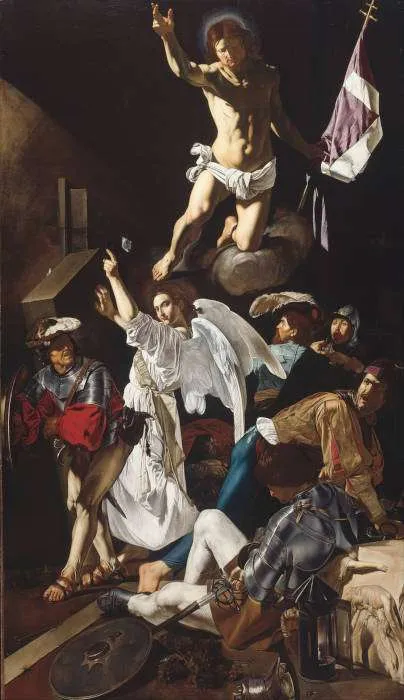
After the sabbath, as the first day of the week was dawning, Mary Magdalene and the other Mary came to see the tomb. And behold, there was a great earthquake; for an angel of the Lord descended from heaven, approached, rolled back the stone, and sat upon it. His appearance was like lightning and his clothing was white as snow. The guards were shaken with fear of him and became like dead men.

Reflection:

The angels of God have been present at the most significant moments of human history. There are numerous mentions of angels in the Old Testament. In the New Testament, the Incarnation of the Savior of the World was announced by an archangel. Myriads of angels were present at His birth. An angel spoke to Saint Joseph on four different occasions. As Jesus began His public ministry and overcame the temptations of the devil in the desert, angels from Heaven came to minister to Him. When Jesus prayed in solitude, especially during His agony in the garden, He was comforted by angels. At the empty tomb, it was an angel who first announced the good news that our Lord had risen. And at the end of time, it will be the angels of God who bring forth God’s justice.

Today’s angelic salutation to Mary Magdalene and the other Mary at the empty tomb should teach us that the message of the Resurrection is among the most important lessons we can ever learn. Furthermore, the message of this angel, given to these holy women, was intended not only for them, it is also spoken to us today.

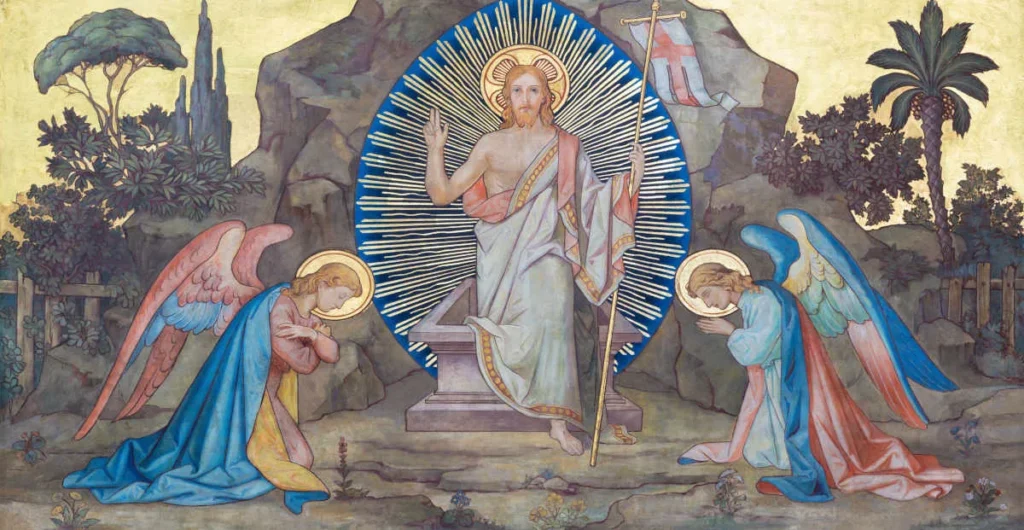
The angel made an appearance that depicts absolute power and sanctity. He arrived with the speed of lightning. His countenance was radiant with Heavenly light. He instantly moved the large stone and sat upon it, pointing these holy women to the empty tomb. Today, if we have the eyes of faith, we will also receive an interior revelation from Heaven, just as these women did. Though we will not see with our eyes what they saw, we will see and hear through faith all that was spoken to them. 

The message of the Resurrection of Christ is being spoken to you today. Do you hear it? Do you comprehend the voice of this angel from Heaven? If you do, the first thing you will hear are the words, “Do not be afraid!” Fear is one of the greatest obstacles to the reception of the Word of God in our lives. The evil one sows fear; the angels of God dispel it. So begin by considering whether fear clouds your ability to receive the Word of God.

The angel then said, “I know that you are seeking Jesus the crucified.” In other words, these women had not yet understood the Resurrection. They were still seeking the dead body of our Lord. Similarly, we often find ourselves focusing upon our losses, sufferings and trials. As a result, it can be difficult for us to see the ways that our Lord desires to transform the crosses in our lives and bring from them the glory of the Resurrection. The angel then said, “He is not here, for he has been raised just as he said.” When we allow God to transform every cross in our lives, those crosses and sufferings disappear as they give way to the new life God brings forth from them.

Finally, the angel tells the women, “Come and see the place where he lay. Then go quickly and tell his disciples, ‘He has been raised from the dead…’” When we come to faith in the death and Resurrection of Christ, we cannot keep it to ourselves. We must go forth and proclaim the Resurrection of Christ to others. It cannot be contained.

Reflect, today, upon the most glorious, awe-inspiring, life-changing message of Christ’s Resurrection. If you find that you do not understand this message, then this Easter Season is an important time for you. It must be a time in which you dispel any fear that clouds your thinking. It must be a time when you listen most attentively in faith. It must be a time when you hear God speak to you about His glorious triumph over sin and death. It must be a time when you more fully penetrate the mystery of the Resurrection. And it must be a time when you recommit yourself to go forth and share that message with others. Listen to the angels of God. Receive their message and allow Christ’s Resurrection to change your life forever.

Source: https://catholic-daily-reflections.com/2025/04/19/the-message-of-the-angels/

Matthew 28:1-4 Read More »